The story of the invention of the term, 'deepfunk' is probably only known among fans and practitioners of this niche-genre. In short, it all started in the 1990s when DJs like Keb Darge, Mark 'Snowboy' Cotgrove and others began spinning obscure and feral Funk 45 RPM singles from local American bands, ostensibly generating another sub-category branch off of the mighty Northern Soul tree. The dance-club phenomenon inevitably spilled over to contemporary groups on the funk scene which immediately tried to record their music the way their idols did. The 'rare groove' and 'acid jazz' movements had run their course and there was a concerted effort to reinstate primitive idiomatic styles and techniques into the music, most notably by 90s funk collective The Poets of Rhythm. As more years passed by the number of bands steadily increased (although in tiny numbers, compared to the mainstream market). Almost every country had a representative with the majority of them coming from the United Kingdom. The deepfunk sound was still a niche, however a very few bands made it onto the mainstream charts, most notably Sharon Jones & the Dap Kings.
At the height of the retro-soul movement a questionable development took place. As more bands arrived on the scene, the production became more and more polished and pop-ish. Some of that squeaky-clean tidiness began to creep into the recordings, encouraged in part by the signature sounds of the digital recording technology available at that time. Some bands even tried to jump onto the possibility of promoting their music as 'deepfunk' although they were actually playing slick, funky pop music. This way some people who thought they were listening to raw, energetic funk actually felt quite ambushed when hit with real deepfunk. In fact, a certain percentage of funk music produced within the past 20 years does not deserve to be described as 'deepfunk' at all. Fortunately there were (and are) some pleasant exceptions which did not just imitate but actually rendered amazing funk music just like some of the finest funk combos of the 1960s and 70s.
One of those creative minds is without a doubt Joel Ricci aka Lucky Brown. Originally from Seattle, Washington, USA, he has enriched the deepfunk community since the mid-2000s with his stellar abilities. He is not only an amazing musician playing multiple instruments, but also a brilliant composer, arranger, and producer too. But for us here at Tramp he is much more, a close friend and remarkable human being. Whenever we were struggling, whether with the label or in private life, Joel and his musical work helped us to overcome everything and to keep going our path.
So here we are in 2023. The songs you are listening to right now are the complete Space Dream collection, split into two parts, representing the two living-room recording sessions from which his 2011 Tramp Records debut was compiled. Each fully remastered album contains unreleased material and comes with brand new, beautifully reimagined artwork by Ricci himself, housed in an authentic 1960s tip-on cover. A first class product from a first class musician for the discerning funk enthusiast.
Cerca:funky instruments
The story of the invention of the term, 'deepfunk' is probably only known among fans and practitioners of this niche-genre. In short, it all started in the 1990s when DJs like Keb Darge, Mark 'Snowboy' Cotgrove and others began spinning obscure and feral Funk 45 RPM singles from local American bands, ostensibly generating another sub-category branch off of the mighty Northern Soul tree. The dance-club phenomenon inevitably spilled over to contemporary groups on the funk scene which immediately tried to record their music the way their idols did. The 'rare groove' and 'acid jazz' movements had run their course and there was a concerted effort to reinstate primitive idiomatic styles and techniques into the music, most notably by 90s funk collective The Poets of Rhythm. As more years passed by the number of bands steadily increased (although in tiny numbers, compared to the mainstream market). Almost every country had a representative with the majority of them coming from the United Kingdom. The deepfunk sound was still a niche, however a very few bands made it onto the mainstream charts, most notably Sharon Jones & the Dap Kings.
At the height of the retro-soul movement a questionable development took place. As more bands arrived on the scene, the production became more and more polished and pop-ish. Some of that squeaky-clean tidiness began to creep into the recordings, encouraged in part by the signature sounds of the digital recording technology available at that time. Some bands even tried to jump onto the possibility of promoting their music as 'deepfunk' although they were actually playing slick, funky pop music. This way some people who thought they were listening to raw, energetic funk actually felt quite ambushed when hit with real deepfunk. In fact, a certain percentage of funk music produced within the past 20 years does not deserve to be described as 'deepfunk' at all. Fortunately there were (and are) some pleasant exceptions which did not just imitate but actually rendered amazing funk music just like some of the finest funk combos of the 1960s and 70s.
One of those creative minds is without a doubt Joel Ricci aka Lucky Brown. Originally from Seattle, Washington, USA, he has enriched the deepfunk community since the mid-2000s with his stellar abilities. He is not only an amazing musician playing multiple instruments, but also a brilliant composer, arranger, and producer too. But for us here at Tramp he is much more, a close friend and remarkable human being. Whenever we were struggling, whether with the label or in private life, Joel and his musical work helped us to overcome everything and to keep going our path.
So here we are in 2023. The songs you are listening to right now are the complete Space Dream collection, split into two parts, representing the two living-room recording sessions from which his 2011 Tramp Records debut was compiled. Each fully remastered album contains unreleased material and comes with brand new, beautifully reimagined artwork by Ricci himself, housed in an authentic 1960s tip-on cover. A first class product from a first class musician for the discerning funk enthusiast.
- A1: Rythmiques N° 4 2 03
- A2: Rythmiques N° 5 2 03
- A3: Rythmiques N° 6 2 10
- A4: Rythmiques N° 7 1 48
- A5: Rythmiques N° 8 3 50
- A6: Rythmiques N° 9 2 45
- A7: Piano + Piano 2 30
- B1: Auto Rythmiques 3 45
- B2: Rythmiques N° 10 2 00
- B3: Rythmiques N° 11 2 10
- B4: Océan Horizon 2 45
- B5: Super Carrousel 1 40
- B6: Gay Shopping 2 10
- B7: Suspense N° 1 3 50
Part of Tele Music Reissue Campaign, 2023 first time reissue, 140g vinyl
Wow! Pierre-Alain Dahan & Mat Camison's Rythmiques is another iconic release in the hallowed Tele Music catalogue. First appearing in 1973, it features tense funk, blunted jazz and heavy breaks all the way. Considered the rightful sequel to Continental Pop Sound, it's a vital album for producers and DJs; and you can probably guess that RHYTHM is central to the record's presentation. And you can really taste what's rhythm, to borrow a phrase. French drummer, percussionist and composer Pierre-Alain Dahan was a key member of the legendary Arpadys, Disco & Co, Voyage, Tumblack (with Wally Badarou, Mallia et al!) and Jef Gilson Septet whilst his partner here, Mat Camison, was a pioneering synth LORD. So, you know this Be With reissue is absolutely crucial.
The album picks up from where Continental Pop Sound left us, opening with the tense, stabbing thriller-funk of "Rythmiques N° 4". The dubbier "Rythmiques N° 5" is no less electric and definitely has a spacey air of wonky funk about it with the slightly off-kilter rolling piano. "Rythmiques N° 6" is more percussive-focussed with a brilliantly hypnotic opening that really stretches the drama out. “Rythmique N° 7” alternates between fast-paced, skipping drums and slo-mo funk, always with the clavinet high up in the mix. Wicked. The dope jazz of “Rythmique N° 8” truly mesmerises with licks of electric piano, funky bass flourishes and varied percussion. “Rythmique N° 9” has great, sloppy-yet-hard intro drums which sound like something Daft Punk could've pilfered circa Human After All, punctuated by a guitar rock refrain that repeats til the end but is never overdone. The A-Side closes with the beautiful, melancholic "Piano + Piano", a reflective jazzy piano track which could easily open a wide-ranging set this autumn and many after it. Stunning.
Opening Side B, "Auto Rythmiques" is a hectic yet compelling funk workout but it's all about the frankly devastating breakbeats on “Rythmiques N° 10 & N° 11” with effortlessly twisted funk bass lines over open drum breaks and enough tension and rhythmic switch-ups to keep your neck-snapping and your mind lifted. Downright essential. Taking leave from the heavy funk break action, the pastoral "Océan Horizon" is perhaps an unfairly overlooked highlight. A gorgeous, softly-aquatic, ambient gem, it's gently percussive with warm, floaty keys decorating the mellow rhythmic bed. The mercifully brief "Super Carrousel" is harmless fun-fair-funk but perhaps best skipped over whilst the intriguingly titled "Gay Shopping" is another throwaway exercise in inexcusable jaunt whilst. To close out this memorable set, thankfully, we're left with "Suspense N° 1" to get us back on course with its unsurprisingly tense mix of urgent stringed instruments that flirt with rhythm and melody yet the longer the track goes on. Deep.
One of the very best French drummers ever, Pierre-Alain Dahan began his career at the Blue Note in Paris with Sonny Stitt, Dexter Gordon and Daniel Humair. Some start, eh?! He also participated in the recording of Serge Gainsbourg's cult album 'La Ballade de Melody Nelson' before going on to make countless KILLER library funk records and be a key member in the legendary Arpadys, Disco & Co, Voyage, Tumblack (with Wally Badarou, Sauveur Mallia et al), Jef Gilson Septet (alongside Henri Texier) and many more. Some pedigree.
The audio for Rythmiques has been remastered by Be With regular Simon Francis, ensuring this release sounds better than ever. Cicely Balston's expert skills have made sure nothing is lost in the cut whilst the original, iconic Tele Music house sleeve has been restored here at Be With HQ as the finishing touch to this long overdue re-issue.
Attarazat Addahabia & Faradjallah's album came to us as quite a mystery. Our friends from Radio Martiko got access to the studio archive of the Boussiphone label and a reel labeled “Faradjallah” was among the items they had found there. After listening to the selection of reels they borrowed, Radio Martiko felt it was not a fit for their label and helped us licensing it from Mr. Boussiphone instead. We knew nothing about the band. We just had the reel with the music but very little information. What we knew was that the music was incredible and very unique. Gnawa sounds were combined with funky electronic guitars, very dense layers of percussions and female backing vocals more reminiscent of musical styles further south than Morocco. We started asking around whether anyone knew the band with no immediate success until we asked Tony Day, a musician from Morocco who helped us during our search for Fadoul’s family. His sharp memory came through once again, remembering all the names of the Attarazat Addahabia band members and even how to contact the bands singer and leader Abdelakabir Faradjallah. After visiting him at his home in Casablanca with our Moroccan colleague Sabrina multiple times, he shared his personal story. His father arrived in Casablanca from Aqqa at the age of six and his mother came from Essaouira. Abdelakabir was born in the neighbourhood of Benjdia in 1942. Abdelakabir Faradjallah studied fine arts in Casablanca, graduating in 1962. He also played soccer in the second team of "Jeunesse Societe One". His brother-in-law Ibrahim Sadr worked for one of the biggest football teams of the time in Morocco called "Moroco Sportive Union", which allowed him to travel to France occasionally. While Ibrahim was never part of the band he brought along a few instruments from trips.
Yet the majority of the instruments they could not afford to buy were build by Faradjallah and Abderrazak, Faradjallah's brother who passed away early. For instance they had built a Spanish guitar and a drum made of wood barrel and sheepskin by themselves.During the 1950s Faradjallah was booked as a singer for surprise parties with friends. He started to write his first songs including "L’gnawi" in 1967 and wanted to make people discover Gnawa culture, or maybe rather his take on the culture to be more exact. Faradjallah recalls his first interaction with the genre in the streets of the Dern neighbourhood, where he used to go to elementary school. Gnawa is one of the essential musical genres of Morocco. It combines ritual poetry with traditional dances and music linked with a spiritual foundation. Musically a lot of influences originated from West Africa as well as Sudan. Gnawa is usually played by a selection of specific instruments such as the qaraqab (large iron castanets centrally associated with the music), the hajhouj (a three string lute), guembri loudaâ (a three stringed bass instrument) and the tbel (large drums). People would put shells on their clothes and instruments and use incense at their parties. "Sidi darbo lalla - lala derbo khadem..." came from Gnawa verses Faradjallah used to sing when he was 14. The lyrics tackle a global (im)balance of power and the question of social status in this course. The band Attarazat Addahabia was formed in 1968. The original line-up included 14 members, all from the same family. They played their first small concerts here and there starting in 1969. Later in 1973 they performed bigger shows for instance at the Municipal Theatre followed by the "Al Massira Show" at Velodrome Stadium in downtown Casablanca. Their first album "Al Hadaoui" (the one you are listening to) was recorded at Boussiphone studios in 1972 and was never released before. Nobody seems to remember the exact reason why Boussiphone ended up deciding not to put the album out. The album's title track also served as the basis for Fadoul's "Maktoub Lah", who frequented the same circles as the band for some time.
Their shows sometimes could go as long as 12 hours, starting at 5pm in the afternoon, with an occasional break here and there. In the 1980s the band took a brief break. Faradjallah recalled the reason for that break like this: "Zaki, the bands drummer, had fallen in love with a young girl from Mohammedia. Soon after, he fell very ill. The group members were convinced that the girl had given him ‘s'hor’ (a kind of local Moroccan version of "black magic"). For four years, the whole group stopped playing. It was unthinkable to find another drummer to replace Zaki, even temporarily." So they waited four years for Zaki to "get back on his feet" before going back on stage. Apart from very few gigs here and there Faradjallah stopped playing music in the mid 1990s. Some members from the younger generations formed a new band and still play frequently to this day. Faradjallah runs a television repair shop coupled offerings beverages and snacks in the Belevedere /Ains Sbaa district of Casablanca. While Faradjallah was primarily a musician, he would work for the local cinema and paint their posters for new movies by hand and he designed all artworks and cover posters of the band.
And this eventually led to him participating actively in our first exhibition dealing with Habibi Funk’s work in Dubai 2018. He helped us by creating calligraphic complementations on large photo prints for that show.
Stoned Part I was the first self-released album from lost soul phenomenon Lewis Taylor. His third album proper, it was initially released on his own label Slow Reality in 2002 and it's been licensed to Be With for this long-awaited double LP release, its first ever vinyl edition. The songs are varied, hook filled and outstanding. Beloved by his legions of diehard fans, it's nothing short of a masterpiece.
After parting ways with Island, and without a label deal, Lewis went back to his home studio and began to record Stoned Part I in 2001. Co-written and co-produced with longtime collaborator Sabina Smyth, Lewis sings and plays all the instruments on this beautiful, emotional and very human album. It represents Lewis at his most accessible and finds him in the middle ground between his two Island releases. In some ways, Stoned Part I distills the best of his musical sensibilities. The flawless production is dense, layered and very early-2000s slick. The bottom end is thick, funky and sexy.
The complex, proggy-soul of title track "Stoned" opens the album and instantly captivates. Deep swinging funk with truly sweet soulful vocals, complemented by wah-wah guitar and swelling acidic synths. As Lewis himself told us, the ad libs at the end of the track were a nod to Paul McCartney at the end of "Hey Jude". Fan favourite "Positively Beautiful" has shades of Curtis and Marvin; its richly layered harmonies propelled by a simple, metronomic click-track that gives way to a more fully fleshed beat for the magnificent coda.
The slow, sweeping majesty of "Lewis IV" is all moody atmosphere, featuring dense, richly textured music and heavenly multi-tracked harmonies. The stop-you-in-your-tracks incredible "Send Me An Angel" could have been a huge AM radio hit, beautifully crafted sophisticated soul-pop songwriting in the vein of the very best Sade records. Yep! *That good* The smooth, psychedelia-lite "Til The Morning Light" is a gorgeous, sun-dappled love song, layered with Lewis' distinctive honey drenched vocals and, again, the type of record you could've easily heard all over the radio at the time of initial release.
The remarkable, wide-eyed "Shame" packs so many shifting styles into one song, it has to be heard to be believed. Opening in a laconic, breezy style, not unlike a Dallas Austin or Rodney Jerkins produced R&B hit of the day, it morphs into a heavy psych-soul Soulaquarians wig-out (the solo bearing an uncanny resemblance to Carlos Santana’s on "She’s Not There") before elegantly sliding into string-assisted symphonic soul and then back around again. And again. Sheer brilliance. The sublime, gentle head-nod funk-soul of "When Will I Ever Learn" (Part 1) is a strikingly well-turned-out tune, a neat, sweet bass-driven guitar-soul jam that ensures our jaw won't be leaving the floor anytime soon. "Lovin’ U More" sounds like a classic turn-of-the-century Neptunes production, the likes of which they'd lay on for JT BITD. A Latin-tinged groover with more than a little Nile Rodgers-driven slick funk stylings, it's yet another instant Lewis bomb with those gorgeous harmonies and chart-friendly irresistible key-changes to boot. Another indisputable (non-)HIT!
The funky seductive swagger of "From The Day We Met - Part II" opens the final side of wax, giving way to the gigantic buzzing synth-funk beast "Lovelight", a track so insouciantly mighty it should have been a massive hit for someone. Wait, what's that? Robbie Williams covered it? Ah, OK, well, I guess that says something about the effortless pop genius contained within. Containing a seemingly unnoticed nod to Kraftwerk’s "Computer World", it's Lewis's favourite song on the album. It's easy to hear why: "Sabina’s production totally nails it. I love the restraint and the subtlety, and that mixture of warmth and sweetness from the singing against the slightly cold, yet beautiful airy-ness of the backing track." To close this phenomenal album, the twisted electronic soul of "Sheneverdid" marries Lewis's beautiful falsetto to his virtuoso playing and an easy-cum-ominous musical backdrop. Stunning.
Simon Francis’s vinyl mastering, approved by Lewis himself, presents the eleven tracks over a double LP so, as ever, it sounds sensational. The records have been cut by Cicely Balston at Air Studios and pressed at Record Industry. Allow Lewis Taylor to get you Stoned.
Edition OF 500 copies, Comes with insert and download code.
An album that sounds like The Menahan Street Band playing in a tropical jungle, at dawn, right at the point when the first rays of sunlight penetrate the dark depths of the forest. During the 2022 summer of natural disasters, under an unprecedented heatwave, and haunted by news reports of ancient relics, sunken ships, and hunger stones resurfacing as rivers dried-up all-over Europe, Amsterdam based multi-instrumentalist producer Alex Figueira started to hear uncanny metallic vibrations And eerie melodies of untraceable origins, day and night. He recalls nightmares of winged creatures inside timeless structures of Escherian architectures playing cosmic instruments amidst tropical storms
and acid rains. As the visions came more often, his wife reported that he babbled during his sleep about South American demon Yurupari. Soon, Alex found himself in a sleepless state and decided to cleanse the studio, with hallowed rites and
the intense burning of Palo Santo. After almost burning the studio down, he turned to his neighbourhood’s most experienced psychic, seeking answers. He was told there were “cosmic entities” trying to manifest a message “too complex for us to understand in this dimension” and the only way he could find peace was to deliver those messages in a decipherable form. It was then he decided to transmute his hallucinations into music, an all-or-nothing cathartic solution.
Alex entered a feverish dream, fuelled by the kaleidoscopic motion of the cosmos, ancient meteor showers, and visions of forgotten interstellar South American gods. He remembers very little of the work, but the outcome is this record. Entirely composed, recorded, produced, and mixed in a frenetic nine-day studio stint.
How the experts describe it:
”Just when outernational vinyl vampires thought they had it all sewn up, the metronomic makeshift
magician known as Alex Figueira unravels the entire fabric of your record collection to expose a gaping
hole where PUNKUMBIA and Transplant-Tropicalia should be. Reducing an expansive palette of
influences to a recipe that tastes wildly exotic but comfortably over-familiar, Alex’s roles as both
scavenger and chef, bookend a whole ensemble of other highly adept musical personalities in between.
Discover this record NOW, or wait until all your friends (or enemies) recommend it to you later.”
Andy Votel (Finders Keepers)
“Incendiary, lysergic takes on South American and Caribbean music from one of the scene's truly
authentic and eccentric producers. You can always count on Venezuelan-born, Amsterdam-based,
multi-instrumentalist, music-fanatic Alex Figueira to surprise and innovate, whilst consistently keeping it
true and real. The former Fumaça Preta drummer & front-man's debut solo album does not disappoint!”
Miles Cleret (Soundway)
“The one man band Alex Figueira comes through with some major flavors on this one. Cumbia beats and
psychedelic elements with that Latin touch of soul & Funk!”
Kenny Dope (Masters at Work)
“I really respect Alex Figueira’s DIY ethos. From running his own little funky recordstore to running his
own label and making his own music by playing every instrument himself. I was already a fan of the song
“Aprende” which he released on 7 inch and with“Mentallogenic” he takes it a step further in that same
vibe. From songs like “La Culebra” making use of a vocoder in his typical latin sound to songs like
“Serious” playing with rhythmic changes and topping it off with some synth flavors. A lovely and fun
album”.
Antal (Rush Hour).
Alternative Hip Hop Artist Rebel ACA Channels his Pain in "Migraine" ft. Spragga Benz, Rodney P
LONDON - The word "migraine" can make you twinge, especially if you experience the pounding head, vertigo, and tinnitus associated with migraines. Imagine if you put all those feelings into music - that is what Rebel ACA did with his latest single, "Migraine."
Rebel ACA's new single flows through his twenty-year journey of advising on international tax by day and rapping and producing by night. Perhaps, the ACA stands for his accounting qualification.
Dropping in April, there will be two versions, an original version and a DJ Phantasy Remix of "Migraine" on streaming platforms. Depending on the version, "Migraine" is a musical representation of a severe headache. The drum and bass mix features a funky, constant drone throughout the track, while the original version is a funk-latent hip-hop song.
"I suffer very badly from migraines every week," said Rebel ACA. "To me, it was logical to write a song about migraines. The lyrics talk about what it feels like by using synthesizers to bring out the feeling of a migraine."
Joining Rebel ACA on the single is Spragga Benz and Rodney P. The duo shares their thoughts on using marijuana to cure a migraine. While Rebel ACA acknowledges he is not a medical doctor, studies have shown that smoking weed can reduce migraine pain.
"We talk about smoking weed to fight the migraine," he said. "The lyrics revolve around what it feels like to have one in your head. Doctors have told me that migraines are caused by triggers like alcohol and getting f*cked up. Then you get a migraine and now you get more f*cked up on pills or weed to feel better." This revolving cycle spirals throughout the single.
Born and raised in the UK, Rebel ACA experienced London's musical melting pot from birth. Hailing from northwest London, he was exposed to the rich Caribbean influence and massive underground music scene.
From squat parties to illegal raves, London's music was all mashed up, and Rebel ACA soaked up every genre and cultural influence. As a result, he is a successful singer/songwriter/producer who fuses hip hop, reggae, and indie sounds to create his unique style.
"Where I come from, the UK hip hop is like the 90s hip hop in America," he stated. "There is a hip hop scene that talks about poetry. I'm trying to keep it real with my lyrics and talk about things that are important other than guns, money, and bitches."
Rebel ACA's music is versatile but uniquely his own by utilizing numerous live instruments and coming in hard with a big boom-bap sound. The Rebel ACA sound is born by adding a funk influence on his tracks aligned with funky bass. On "Migraine," he uses some vintage 70s French influence vibes to give the single a flavor of its own. There is nothing out there like "Migraine."
Rebel ACA records under Buttercuts Records, a company he owns and operates. The London-based production company has been "bashing out buttery beats" since 2000. Buttercuts Records is the go-to place for releasing hip hop, reggae, breaks, funk, soul, and folk records with a tongue-in-cheek attitude and marketing that surpasses witty wordplay.
As "Migraine" gains international attention, it is easy to understand how Rebel ACA combines old and new hip hop with effortless flows and brilliant lyrics. Maybe the world is ready for an international tax advisor who drops bars and vibes out to some wicked rhymes.
Make sure to stay connected to Rebel ACA on all platforms for new music, videos, and social posts.
a A1. DJ PHANTASY VOCAL MIXfeat. Rebel ACA
b A2. DJ PHANTASY DUB MIXfeat. Rebel ACA
[c] A3. DJ PHANTASY INSTRUMENTAL MIX [feat. Rebel ACA]
[d] B1. OLD KOOL F U NKY MIX [feat. Rebel ACA]
[e] B2. OLD KOOL F U NKY INSTRUMENTAL [feat. Rebel ACA]
[feat. Rebel ACA]
- A1: Andrzej Marko - Dhamma (3:33)
- A2: Andre Mikola - Circulation (3:30)
- A3: Andrzej Marko - Magic Scenery (5:12)
- A4: Andre Mikola - Longing For Tomorrow (3:35)
- A5: Andre Mikola - Nocturnal Flowers (3:39)
- B1: Andre Mikola - Fly Me To The Sun (3:46)
- B2: Andre Mikola - Birth Of A Butterfly (3:44)
- B3: Andre Mikola - Riding On A Sunbeam (3:52)
- B4: Andre Mikola - Osmosis (4:33)
- B5: Andre Mikola - Solar Heating (3:36)
Fly Me To The Sun is a breathtaking German library gem from the hallowed Coloursound label. Originally out in 1983 it features two Polish composers, Andrzej Marko and André Mikola. If outré synth-funk is your thing, you need this record.
Almost blindingly luminous with positive vibes and radiant optimism, Fly Me to the Sun is a collection of funky, sun-dappled compositions for synthesizer and live instruments like drums, bass and guitar. A dope blend of beatbox driven future jazz and electro pop.
The wonderfully sleaze-adjacent opener "Dhamma" includes some grandiose piano chords amid floating ambient sounds a la Steve Hillage with slick drums entering the fray at a languid pace. "Circulation" sounds like Bowie ran into Chaz Jankel during an extended stay in Los Angeles, the Thin White Duke emerging out of a studio at 6am, bleary-eyed and clutching this filthy, bleepy instrumental of sonic smut. "Magic Scenery" is as delicate and astounding as the title suggests, a deep ambient movement conjuring halcyon images of rolling fields with abundant fauna and flora; acid-tinged visions of intense colour and natural beauty. Cool, slo-mo breaks adorn the strutting melancholy of “Longing for Tomorrow” and “Nocturnal Flowers” to close out Side A.
Skip the title track, which opens up Side B, and head straight to “Birth of a Butterfly” for a slice of creeping digi-dub-soul niceness. This should've been front and centre of that Personal Space compilation a decade ago. Raising both the tempo and the temperature, “Riding on a Sunbeam” continues in the mesmerising cosmic funk style before "Osmosis", one of the clear stand-outs, presents a fine vintage synth solo over a mellow funky rubberband beat. The closing track, "Solar Heating", warms things up with slapped bass and bold drum machine beats and the synth lends Sci-Fi vibes to the dark dub-funk-reggae rhythm.
As David Hollander, in Unusual Sounds: The Hidden History of Library Music, states, Coloursound was "founded in 1979 by composer, music lawyer, and vibraphonist Gunter Greffenius. A Munich-based library with a reputation for releasing innovative and ambitious music, it catered largely to the market for experimental sounds, its first release was 1980’s Biomechanoid, an abstract synthesizer excursion by Joel Vandroogenbroeck, of the pioneering kosmische band Brainticket. The record — complete with imposing, anonymous title and unearthly H.R. Giger cover art — set the tone for the label’s progressive leanings. The label’s catalogue stands as a tribute to the unfettered creative license that libraries were able to provide to forward-thinking musicians who, frustrated by the whims and constraints of the commercial scene, found complete freedom in the world of production music."
As with all our library music re-issues, the audio for Fly Me To The Sun comes from the original analogue tapes and has been remastered for vinyl by Be With regular Simon Francis. Richard Robinson has brought the original Coloursound sleeve back to life in all its metallic silver glory.
- A1: Wide Open Space Motion (2:19)
- A2: Incessant Efforts (2:28)
- A3: Pink Sails (2:09)
- A4: Relaxed Mood (4:18)
- A5: Transiency (1:14)
- A6: Driving Sequences (3:26)
- A7: Action And Suspense (2:06)
- B1: Southern Mentality (2:43)
- B2: Hovering (2:13)
- B3: Bows (4:30)
- B4: Outset (1:39)
- B5: Constellation (1:38)
- B6: Changing Directions (2:39)
- B7: Neutral Position (1:49)
- B8: Departure For Universe (2:10)Or Universe (2:10)
They say: "Contemporary synthesizer sounds illustrating wide open space activities, environment and research."
We say: Panoramic proto-techno underwater-electro library dynamite.
One of the hardest pulls on the seminal Coloursound, Open Space Motion (Underscores) isn't just regarded as one of the best releases from library-funk overlord Klaus Weiss. It's one of the very best library records ever.
As cult as it gets when it comes to library music, the Klaus Weiss sound was built on top of sometimes funky, sometimes frenetic, but always hard-hitting drums. AND YET! Open Space Motion departs from his drum-heavy approach by being completely...BEATLESS! That's right, the virtuoso beat smith, Mr "drumcrazy of Deutschland", a man known for snapping necks at will, crafted one of the most horizontally sumptuous, elegantly sweeping electronic masterpieces, sans-drums, a good decade before chill-out rooms became a thing. It features organic instruments married to pulsing synth bass atop brilliantly subdued yet irresistibly funky percussion. Possessing a very special vibe, that's at once futuristic yet cinematic, it overflows with atmosphere.
The highlights - unsurprisingly - are many. The very first track - the unstoppable "Wide Open Space Motion" - is a sinister, string-fried electro bomb that rides an unrelenting bass loop. "Incessant Efforts" is more reflective, with pastoral yet probing flutes atop strutting synth chords and head-nod percussion that really swings. The heavenly, uber-kosmiche "Pink Sails" hovers over swirling neon-synthy-strings and yet more unobtrusive percussion. The beautiful "Transiency" is a dramatic piano-led underscore, its creeping unease created by patient strings, unhurried percussion and some wonderfully strident keys. "Driving Sequences" is perhaps the key tune here, and if the Detroit crew weren't listening to this staggering piece then, well, imagine if they *were*.
The bubbling rhythms of "Southern Mentality", at first ominous, give way to a more optimistic vibe as the movement progresses. The lush, gorgeous "Bows" is deep-sea slow-motion magic whilst the bright-eyed "Outset" feels as fresh as the dawn, and no less beautiful. How these tracks haven't been gobbled up by sample-driven producers is beyond us. Equally calming is the sweeping majesty of "Constellation", again conjuring images of being at one with and fully beguiled by the wonders of nature, of space, of underwater worlds. "Changing Directions" is another fidgety, propulsive non-Detroit beatless bomb.
As with all our library music re-issues, the audio for Open Space Motion comes from the original analogue tapes and has been remastered for vinyl by Be With regular Simon Francis. Richard Robinson has brought the original Coloursound sleeve back to life in all its metallic silver glory.
Rheinzand are back with their electrifying new album
Upon turning on 'Atlantis Atlantis', the oh so welcome spectre of recently departed Maria Mendola - the airy chanteuse of the beloved Baccara - seems to appear. Charlotte Caluwaerts, a voice of similar purity proffers the message: “We’ll be alright” on their first single, offering a salve to the troubles the world has faced in recent years.
As with their previous work, melody is key. Rich arrangements abound, with Reinhard Vanbergen’s light and funky crevices detailing a home that feels cozy, inviting the listener into the best, most unexpected club around; the one in their living room with all their closest friends. The “Max Berlin” of the group, Mo Disko, is no stranger to bringing this kind of intimacy to his events and freewheeling DJ sets for decades in Gent, Belgium. Once again his spirit pushes the record into that inviting place where inhibition dissolves, (aka you can really freak out).
Much of Reinhard Vanbergen’s recent output for Music for Dreams has expertly traversed the forgotten worlds of virtuoso led experimental records; full lengths with tracks that maestros like DJ Harvey undoubtedly treasure. There are glimpses of these danceable instrumental improvisational landscapes such as ”Orange Bun”.
One thing about Rheinzand is that they are musicians driven to make dance music that harkens back to a moment when real players appeared on dance music records. These were musicians devoted to their instruments, the kind who made love to them on stage, unafraid of modulations, bombast, histrionics even (cue Elefantasi).
Slower subdued numbers reiterate the “journey to Atlantis” we are on, such as the a cover of “Love Games” an honest low slung boogie take on the track.
One of the biggest takeaways from 'Atlantis Atlantis' is the excavation of the real fun that was had in dance music before the advent of loop based technology. Epic chord progressions, singing songs in multiple languages - these are musicians exploring the colour palette of the entire Pantone spectrum, not only shades of grey and black. Are you up to see the world in colour, brave enough for a journey to Atlantis? Welcome aboard, Rheinzand are here to invite you to do so.
Part 3[24,79 €]
Rhythm master Klaus Weiss knew he had a good thing going with NIAGARA. The first album was a gathering of every outstanding drummer and percussionist he could get hold of and despite the fact that there were only rhythm instruments featured , it became quite a memorable and unique record. Now for the second album “S.U.B.” he felt he had to go other ways, and recorded with a complete rock outfit plus the one or another brass instrument. ‘S.U.B.’ is definitely worth being traded for 180,00 Euros and more among collectors for a clean original and when the needle hits the groove you will realize why. There is a tightly woven web of rhythms from drums and percussions, as the solid and ever pulsating base with a laid back but really present bass guitar adding more depth and power to the beats and clean rhythm guitars with a nifty wah wah effect for the extra kick. From time to time the guitars fire off a memorable steaming riff on top of the rhythm pulse and the horns answer the call for arms. You really have to look at the backcover to find out that this is a German outfit instead of one of these utterly hot and hip US funk rock cult bands of the time. NIAGARA aka Klaus Weiss waive the vocals so it is an instrumental record you face with ‘S.U.B’, but then this band goes so wild in some of the compositions, that you will be left breathless on your knees by all these simmering performances. Each musician participating in this project is a professional, but they all let the music erupt into a climax of sound you can only achieve, when you put your whole heart and soul into it. A masterpiece of funky and utterly unleashed rock music from the early 70s.
"Matasuna Records" returns to Mexico for a third time to dig for rare treasures. They got their hands on a special gem - two obscure Latin/Jazzfunk tunes by a band called "Colorado" from "Mexico City". The songs were released in 1976 on the Mexican label Peerless and the super rare original 7inch is virtually unavailable. Fortunately, the release is finally available for the first time as an official reissue in a remastered edition. An unjustly under-the-radar Latin jazzfunk highlight!
The song "Colorado", named after the band, opens the "A-side" of the single. The hypnotic fender rhodes puts the listener in the right mood right from the start, before the drums and percussion set the rhythm. The horns also add depth and melodiousness before the song takes a turn and reveals its funky side with guitars, synths and bass. A nice guitar solo also reveals the affinity for rock music without losing sight of the vibe of the song or tipping it a different direction. Definitely a fabulous song that comes up with a lot of ideas and inspirations, offering an unexpected richness in the under 3-minute running time.
The "B-side" also continues musically energetic in the same way with "Para Ti". Here, too, you can feel and hear the playfulness and experimentation of these extraordinary musicians. Atmospherically dense passages alternate with quieter phases and solo parts, before the tension rises again and literally explodes. As in the song "Colorado", rhodes, brass, guitars & bass offer a great and varied interplay. The secret highlight, however, might be the drum and percussion parts in the middle of the track, which will surely enchant not only the B-Boys and B-Girls.
Artist info:
The internet, a source of almost endless knowledge, offers no information about the band Colorado. All the more fortunate that one of the band's founding members, "Emilio Espinosa Becerra", provides detailed info for the reissue.
In 1968 the three brothers "Luis", "Francisco" and "Emilio Espinosa Becerra" from Mexico City started to rehearse together to play wellknown rock & pop songs at friends or family parties. At first, they played on Japanese guitars and a Teisco bass borrowed from a school friend. They saved up money to then buy guitar & bass amps and a microphone, which they always had to rent until then. However, the budget was only enough for Mexican replicas of the legendary Fender Bassman and the Fender Super Reverb. Original equipment was simply unaffordable.
Shortly thereafter, more members joined the band. Three musicians from the school band "Tepeyac": "Marco Nieto Bermudez" (trumpet), "Raymundo Mier Garza" (tenor saxophone) and "Alfonso Romero" (trombone). Another classmate named "Carlos Mauricio Fernández Ordóñez", who studied piano, also joined the group. His father had a chemical factory in the United States and helped bring equipment (amplifiers and a Farfisa Fast 5 organ) - hidden in the back of a truck - to Mexico. In the time that followed, more instruments were acquired, including bass and guitars (from Gibson, Rickenbacher and Fender) and microphones (from Shure) for vocals and horns.
With a larger band and new equipment, they played many parties in their district of "Lindavista" in "Mexico City" and neighboring areas from 1970 to 1973, as well as gigs at various festivals and school events. The group's band name at the time was "Sound Core Brass". However, more and more often people with turntables and speakers showed up at parties, which were also able to heat up. The so-called "Sonideros", a sound system culture that was emerging in the 1960s, charged less than a multi-piece live band, so the band's performances declined.
During those years, three other "Espinosa Becerra" family members joined the band: "Jorge Rafael" (trombone), "Sergio Alejandro" (tenor saxophone) and "Felipe de Jesus" (drums and percussion).
A brother of the musicians, "Carlos Espinosa Becerra", studied electrical engineering at the University. Together with another fellow student, he designed and built a 10-channel console with a variety of functions and features that far surpassed the devices available at the time. They also went to the US again to buy JBL speakers & tweeters to build their own sound system. On another trip to Los Angeles, they bought Phase Linear amplifiers, which offered enormous power by the standards of the time and had an extremely low distortion factor. With this equipment they could turn up the volume really loud and noise-free.
This was also the time when they stopped playing music from English bands & youth groups and changed their repertoire completely. They played mambos, chachachas, pasodobles and tangos on special occasions in big ballrooms and halls. Also, every now and then they hired a string quartet of well-known Mexican violinists to provide the musical entertainment at dinner events.
During those years, classmate "Pablo Rached Diaz" joined the band, playing tenor saxophone. Pablo was very active and organized many parties. He was also the one who helped the band to record on the Mexican label "Peerless". So in 1975 they were asked by Peerles Records to record their own songs. They had recorded a total of 12 songs - six of these songs were released on three vinyl singles (45rpm). Most of the songs were composed by "Gustavo Ruiz de Chavez Sr.". The band was asked to adopt a more commercial name, and so they had chosen the band name "Colorado". In the course of the releases, the band made some promotional tours and appeared in shows on "Televisa", the most important television station in Mexico in those years.
Later, several members of "Colorado" graduated and began to pursue regular professions. They didn't stop playing at events, but priority was given to more formal duties and the band was no longer as active as it had been in its heyday.
About 8 years ago, the band got back together to play again. The next generation of musicians also joined the band: two sons, a nephew and a brother-in-law of the original band members. Currently, they are back playing at friends' parties and family gatherings in Mexico City.
Jazz organist ‘Brother’ Jack McDuff (born Eugene McDuffy in 1926 September 17, 1926 – January 23, 2001) was second only to the infamous Jimmy Smith in terms of fame and the impact he made with the King of keyboard instruments - the Hammond B-3 Organ. Self-taught on the organ, he recorded with Willis Jackson & Roland Kirk in the late ’50s and early ’60s, cutting high calibre souljazz dates for Prestige Records, and later Argo / Cadet. Blue Note and Verve Records. McDuff can also take the credit for launching the career of a particularly gifted young jazz guitarist when he recruited George Benson to his own quartet, which resulted in Benson's first solo deal in the mid 1960’s.
‘Live At Parnells’ is made up of 15 tracks selected from a week-long engagement in June 1982, featuring Danny Wollinski on sax, guitarist Henry Johnson and Garrick King on the drums. Stylistically, Jack and his group cover a lot of ground, especially for an organ quartet – from beautifully old school funky, gritty blues with tracks like Walkin’ The Dog & Blues 1 & 8, jazz standards like April In Paris, and A Night In Tunisia through to some frenetic and distinctly edgy fast paced jazz fusion type numbers - Make It Good and Untitled D Minor - and this reflects how Jack's ears were open to the newer, freer sounds that had developed in jazz and reflected in some of his recordings as ‘The Heatin’ System’ – as several tracks have modal and fusion touches that sound remarkably current. Soul Bank’s Greg Boraman explains the 23 year old back story to how this amazing release of previously unreleased music by a bona fide jazz legend came about.
“I first heard these live recordings in 1999, when I came across Scott Hawthorn’s ’s jazz organ website, where he had made available his personal recordings of Jack and his band playing at Parnell’s in Seattle in 1982. It was amazing to have this music to check out – despite the obvious shortcomings with the condition of the recordings themselves”.
- A1: Gole Yakh
- A2: Dar Enteha
- A3: Hajme Khali
- A4: Paiz
- B1: Leila
- B2: Del Dareh Pir Misheh
- B3: Akhm Nakon
- B4: Shirin Joon
- E1: Saraabe Toe
- E2: Reyhan
- E3: Baroona
- F1: Khaar
- F2: Havar Havar
- F3: Ashiooneh
- C1: Ghazal F4. Bachehaye Khoobe Koocheh
- C2: Tavalode Yek Seda
- C3: Mosafere Shar Baran
- D1: Saghe
- D2: Entezar
- D3: Niyayesh
Repressed , please note price increase, all orders have been cancelled, please re-order! Pre-Revolution Psychedelic Rock from Iran: 1972 - 1979
Now-Again Records is proud to present Back from the Brink, the only legitimately licensed collection of the godfather of Iranian psychedelic rock, Kourosh Yaghmaei. Known within the Iranian diaspora simply by his first name, Kourosh’s Pre-Revolution recordings were thought lost after Islamic fundamentalists took control of Iran. They weren’t: Kourosh had protected them – along with key ephemera from the 70’s. Their collection here - spread over two CDs, a 3-LP and a 4x7” box set - bolstered by Kourosh’s first person recollections of Iran’s 70s rock scene and its death after the Revolution, tells the story of an immensely talented artist’s desire to persevere in the face of terrible adversity.
Kourosh Yaghmaei and his brothers Kamran and Kambiz were amongst the few inspired Iranian musicians determined to change Tehran’s musical landscape in the late 60’s and early 70’s. The trio, armed with rented, second-hand instruments and records by The Ventures, The Kinks, The Doors, merged Western garage rock, psychedelia and Iranian folkloric music to create a sound unlike anything that came before them. Later, inspired by the unlikely duo of Elton John and James Taylor, Kourosh’s music took a sophisticated turn, and he churned out funky, progressive rock that is as imminently enjoyable as it is impossible to categorize.
His star on the rise was knocked off course by the Revolution, and its backdrop of Islamic fundamentalists burning record companies and harassing musicians. But while most Pre-Revolution musicians – including his brothers – fled Iran in 1979, Kourosh stayed, loyal to the country of his birth. He has suffered a performance and recording ban for twenty-two out of the last thirty-two years. Yet he remains stoic and resolved to continue bolstering Iranian musical tradition.
Kourosh still lives in Tehran and is pleased that his story – and his glorious 70s recordings – will finally spread the world over.
- A1: Hungry & Ready (Feat Melvin Taylor)
- A2: Can't Take No More (Feat Marcus King)
- A3: I'm As Good As Gone (Feat Buddy Miller)
- A4: Got To Find A Better Way (Feat Scarlet Rivera)
- A5: One Special Lady (Feat Jake Shimabukuro)
- B1: Chills & Thrills (Feat Mike Campbell)
- B2: A Quitter Never Wins
- B3: Deep Blues Sea (Feat Scarlet Rivera)
- B4: Driving Wheel (Feat Melvin Taylor)
- B5: The Sun Is Shining Down (Feat Carolyn Wonderland)
On his latest album, 'The Sun is Shining Down', Blues legend John Mayall
teams up with a stellar cast to deliver a funky soulful affair punctuated by
brass, violins, harmonica and electric ukulele
Special guests include, The Heartbreakers' Mike Campbell, fast rising roots rocker
Marcus King, Americana icon Buddy Miller, Scarlet Rivera of Bob Dylan's Rolling
Thunder Review, Chicago blues guitar mainstay Melvin Taylor and Hawaiian
ukulele star Jake Shimabukuro. Also on hand are Mayall's longtime dynamic
Chicago rhythm section of Greg Rzab on bass guitar and Jay Davenport on drums
with Austin's multi-talented and charismatic Carolyn Wonderland on guitar.
Recorded at Robby Krieger's (The Doors) Horse Latitudes studio with Grammy
nominated Producer Eric Corne, 'The Sun is Shining Down' is Mayall's 5th studio
album for Forty Below Records, a fruitful partnership that began with 2014's A
Special Life.
"I couldn't be happier with the new record," exclaims Mayall. "I can't wait to share
it with my fans. Each one of these special guests brings something unique to the
album and our team works so well together. I think you can hear that chemistry in
the music," raves Mayall.
The album explores a range of styles and eclectic instruments with guests
Scarlet Rivera's violin, Jake Shimabukaro's electric ukulele and Mike Campbell,
Marcus King, Buddy Miller and Melvin Taylor on guitars. As significant as each of
these guest turns is, however, they can't overshadow Mayall's own spirited vocals,
iconic harmonica and lyrical keyboard work.
strumentalist Teddy Lasry's story is noteworthy not just in regards to the music he released, but in the ways approached the craft of composing and experimenting with sounds and sonics.
Always intrigued with the capabilities of instruments, their groove and their feel, it was very much his family’s influence that helped to fuel these life long affections. As a performer in a parisien cabaret, Teddy’s father Jacques would mingle with giants like Serge
Gainsbourg and Charlie Chaplin (impressed by his ability to improvise, Chaplin wanted him to become his accompanist, but the pianist politely refused). Jacques and his wife (Teddy’s mother Yvonne), would later become members of the innovative experimental group Les Structures Sonores, and surround their children’s lives with sounds. Electronic music was still in its infancy and Les Structures Sonores, with their resonators that produced long, mysterious tones, were deemed ‘cosmic’. It was the era of the launching of the first Russian Sputnik and every time a radio or television station wanted music for their science fiction programs, they turned to one of their compositions. Showing a natural ability with multi instrumentalism, Teddy was rewarded with a spot in the band, allowing him to really explore unconventional methods of composition.
Following a brief stint with Ariane Mnouchkine's avant-garde Théâtre du Soleil after graduating school, Teddy joined the pioneering prog band Magma, with whom he would record three groundbreaking records during the early 1970s (According to former member
Laurent Thibault, their album Mëkanïk Dëstruktïẁ Kömmandöh and its sound were strong influences on David Bowie during the recording
of Low and Iggy Pop’s The Idiot at Hérouville). Despite the successes with these projects, Teddy was constantly searching for new ways
of expressing himself through music, leading him into the beginnings of a solo career that would last the better part of three decades.
Teddy’s transition into his solo career came with contrasting fortunes, in that he was now becoming a music to image composer but with the unfortunate realisation that his eyesight was gradually worsening (due to being diagnosed with retinitis pigmentosa at an early age). Nonetheless, his solo career would begin in 1975, and for the rest of the decade his sound would become increasingly mired in electrified Funk-Fusion and its endless sonic possibilities. The resulting music would serve to highlight Teddy’s love affair with the possibilities found within tireless instrumentation, with the flute and particularly synthesisers becoming a mini-obession of his (he once spent a 7,000 Francs loan, which was meant to be spent on fixing his roof, on synths).
To this day Teddy continues to record and experiment with music, a passion which in many ways has never left his sid, even at the age of 75. His career was one that was fuelled by innate curiosity and an intrinsic desire to discover new methods of expressionism, be it through the realms of Jazz-Funk, ambient electronics, Swing music or indeed through the medium of instrumentation itself. On this compilation, we look to encapsulate the essence of his innovative sound, and from start to finish a sense of his ingenious approach to composing structure and mood is made abundantly clear. The funk-jazz fusion style that embodied the majority of his 70s work is on full display here, with the vibrant flute driven "Los Angeles", the Miles Davis inspired "Blue Theme", the progressive and driving
"Chamonix", and the deeply intricate "Krazy Kat", along with one of his finest 80s slow jams, "Funky Ghost". Two cuts off the ‘Back To
Amazonia’ album are also featured (Teddy’s last album including his Prophet T8, Yamaha DX7 and Oberheim drum machines). "Raising
Sun in Bali" and the title piece both emphasise an ever present passion for synthesisers. "Birds of Space", a standout track off the e=mc2 album, closes the comp, and is a fitting way to end this journey.
Pulled together in close collaboration with Teddy and his family, this collection of songs looks to introduce new listeners to his work and we are proud to present this limited and carefully remastered compilation on vinyl, including extensive liner notes.
Soopasoul is a legendary name inthe UK funk scene. Originally known as a producer in electronic music circles, Danny Soopasoul stuck gold one day, putting together a band to record in a session where everything was played in live and loops and plug-ins were dropped in favour of real instruments and talented players. The final piece in the puzzle was realised when he stumbled upon on a local horn section so steeped in tradition and quality that it was immediately obvious they would bring the final magical ingredient to the table. Once they were brought in, the instant classic LP 'Twin Stix' was born.
Pleas for 7"vinyl singles from this revered album have been a constant since it's release. However calls for the album to make it's debut on vinyl too have gone unheard until now. This floor-shuffling, hip-swaying, jazz funk party monster is packed with funky beats and some seriously hefty signature brass action. Add the sassy vocals from ladies like Dionne Charles (Record Kicks /Tru Thoughts) and Sitzka, and you're guaranteed to discover that this gem of an album will be enjoyed for the foreseeable future.
- A1: Back Street Kids
- A2: You Won’t Change Me
- A3: It’s Alright
- A4: Gypsy
- B1: All Moving Parts (Stand Still)
- B2: Rock ‘N’ Roll Doctor
- B3: She’s Gone
- B4: Dirty Women
- C1: Back Street Kids (Steven Wilson Mix)
- C2: You Won’t Change Me (Steven Wilson Mix)
- C3: It’s Alright (Mono Version)*
- C4: Gypsy (Steven Wilson Mix)
- D1: All Moving Parts (Stand Still)
- D2: Rock ‘N’ Roll Doctor (Steven Wilson Mix)
- D3: She’s Gone (Steven Wilson Mix)
- D4: Dirty Women (Steven Wilson Mix)
- E1: Back Street Kids (Alternative Mix)
- E2: You Won’t Change Me (Alternative Mix)
- E3: Gypsy (Alternative Mix)
- E4: All Moving Parts (Stand Still) (Alternative Mix)
- F1: Rock ‘N’ Roll Doctor (Alternative Mix)
- F2: She’s Gone (Outtake Version)
- F3: Dirty Women (Alternative Mix)
- F4: She’s Gone (Instrumental Mix)
- G1: Symptom Of The Universe
- G2: War Pigs
- G3: Gypsy
- H1: Black Sabbath
- H2: All Moving Parts (Stand Still)
- I1: Dirty Women
- I2: Drum Solo / Guitar Solo
- J1: Electric Funeral
- J2: Snowblind
- J3: Children Of The Grave
Technical Ecstasy by Black Sabbath, limited edition, remastered, new mix, 90 mins of unreleased outtakes, alt mixes, live tracks from Ozzy, Tony, Geezer and Bill plus extensive book, tour program and poster. LP set on 180g vinyl.
In the summer of 1976, Ozzy Osbourne, Tony Iommi, Geezer Butler and Bill Ward headed to Miami to record Technical Ecstasy at the famed Criteria Studios. The band was coming off a world tour for their previous album, Sabotage, that had found their live performances evolving to include keyboards and synthesizers. These newly incorporated instruments and sounds were then introduced into the recording process on Technical Ecstasy. The new songs encompassed a wide range of styles from the hard charging “Back Street Kids” and single ballad “It’s Alright,” to the funky “All Moving Parts (Stand Still)” and progressive rock “Gypsy.” The Deluxe Edition presents a newly remastered version of the eight-track album, along with an entirely new mix of the album created by Steven Wilson using the original analogue tapes.
With eight previously unreleased outtakes and alternative mixes. Among those are different mixes of “You Won’t Change Me” and “Rock ’n’ Roll Doctor,” as well as both outtake and instrumental versions for “She’s Gone.” The collection concludes with 10 previously unreleased live tracks recorded during the 1976-77 World Tour. The songs touch on different eras of the band’s history with early tracks like “Black Sabbath”, “War Pigs” (from Paranoid), “Symptom Of The Universe”, “Snowblind” and “Children Of The Grave” alongside new songs “Gypsy” and “Dirty Women.”
The collection comes with an extensive hardback book featuring artwork, liner notes, rare memorabilia and photos from the era, plus a replica of the 1976-77 world tour concert book and a large colour poster of the iconic Hipgnosis (Storm Thorgerson/Aubrey Powell/Peter Christopherson) futuristic robots image which is perfect for framing.
Black Sabbath embraced change in 1976 when the heavy metal innovators started managing themselves and began exploring different sounds on the band’s seventh studio album, Technical Ecstasy.
BMG honours this daring album with a collection that includes a newly remastered version of the original, a brand-new mix by Steven Wilson, plus more than 90 minutes of previously unreleased outtakes, alternative mixes and live tracks. TECHNICAL ECSTASY: SUPER DELUXE EDITION will be available as a 4CD box set and 5LP box set on 180g black vinyl.
Contents:
Vinyl box set includes:
Original album newly remastered
New Mix LP
Outtakes and Alternative Mixes LP
2LP live concert from the World Tour 1976 - 77
40-page book with photos, artwork and liner notes
Technical Ecstasy colour poster
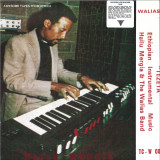
From their genesis as members of the Venus club in-house band in the early 70s, Hailu Mergia and the Walias Band were at the forefront of the musical revolution during an era where modern instruments and foreign styles superseded the traditional fare to become the staple sound of Ethiopia. No one would argue that the Walias were the trailblazing powerhouse of modern Ethiopian music. They were the first band to form independently without affiliation to a theatre house, a club or a hotel; unprecedented and risky as they had to raise all funding for expenses by themselves including buying equipment. They were the first to release full instrumental albums, considered to be commercially unviable at the time. They opened their own recording studio, with band members Melake Gebre and Mahmoud Aman doubling as technical buffs during sessions. They were also the first independent band to tour abroad. In short, they were the pioneers every band tried to emulate; some more successfully than others.
Odds are, any Ethiopian over the age of 35 who had access to TV or radio by the early 90s, will instantly recognize the sound of Walias. What is not a given is, how many would actually identify the band itself. Barely a day went by without hearing the Walias either in the background on radio or as an accompaniment to various programs on TV.
This Tezeta album, the band’s second recording, released in 1975, is one of those that have been impossible to find for nearly three decades. Sourced by Awesome Tapes From Africa and expertly remastered by Jessica Thompson, its unique and funky renditions of standards and popular songs of the day are so quintessentially Walias, flavorful and evocative. Hailu's melodic organ, unashamedly front and center in every track, makes even the complex pieces accessible.
Profoundly engaging; it's an immersive trip down memory lane for those of us getting reacquainted with it, while also an enthralling and gratifying experience for fresh ears.
Virtually unknown recording outside Ethiopia.
Documents Mergia & Walias legendary early period.
Follow-up to reissue of hugely popular seminal Ethiopian instrumentals LP Tche Belew (ATFA012)
Cassette-only, released in 1975 on the band’s in-house label to fund their record store.
Beautifully-rendered instrumentals of classic Ethiopian standards.
From their genesis as members of the Venus club in-house band in the early 70s, Hailu Mergia and the Walias Band were at the forefront of the musical revolution during an era where modern instruments and foreign styles superseded the traditional fare to become the staple sound of Ethiopia. No one would argue that the Walias were the trailblazing powerhouse of modern Ethiopian music. They were the first band to form independently without affiliation to a theatre house, a club or a hotel; unprecedented and risky as they had to raise all funding for expenses by themselves including buying equipment. They were the first to release full instrumental albums, considered to be commercially unviable at the time. They opened their own recording studio, with band members Melake Gebre and Mahmoud Aman doubling as technical buffs during sessions. They were also the first independent band to tour abroad. In short, they were the pioneers every band tried to emulate; some more successfully than others.
Odds are, any Ethiopian over the age of 35 who had access to TV or radio by the early 90s, will instantly recognize the sound of Walias. What is not a given is, how many would actually identify the band itself. Barely a day went by without hearing the Walias either in the background on radio or as an accompaniment to various programs on TV.
This Tezeta album, the band’s second recording, released in 1975, is one of those that have been impossible to find for nearly three decades. Sourced by Awesome Tapes From Africa and expertly remastered by Jessica Thompson, its unique and funky renditions of standards and popular songs of the day are so quintessentially Walias, flavorful and evocative. Hailu's melodic organ, unashamedly front and center in every track, makes even the complex pieces accessible.
Profoundly engaging; it's an immersive trip down memory lane for those of us getting reacquainted with it, while also an enthralling and gratifying experience for fresh ears.
Virtually unknown recording outside Ethiopia.
Documents Mergia & Walias legendary early period.
Follow-up to reissue of hugely popular seminal Ethiopian instrumentals LP Tche Belew (ATFA012)
Cassette-only, released in 1975 on the band’s in-house label to fund their record store.
Beautifully-rendered instrumentals of classic Ethiopian standards.
ntroducing a joint label Buena Gente Recordings (BG-01) and Sheweytrax (shew-33) connection! Side A - BUENA GENTE side featuring new Los Angeles producer, IVAN AM, with two DJ friendly cuts - "Exceed" a straight up tech-funky cut leading to 2nd track "Mourning Rain" perfect for rolling into the mornings. SideB - SHEWEYTRAX side features two by DELICATE INSTRUMENTS - a remastered version of tripped out "High Life" and last cut goes deep with "Turnaway" previously only available digitally. Solid beat focused 12" for the floors! Limited edition vinyl!
Unknown recording outside Ethiopia which documents Mergia Hailu & The Walias legendary early period. Beautifully-rendered instrumentals of classic Ethiopian standards, "Tezeta"is the follow-up reissue of the hugely popular seminal Ethiopian instrumentals LP "Tche Belew" (ATFA012). It was a Cassette-only release in 1975 on the band's in-house label, to fund their record store. From their genesis as members of the Venus club in-house band in the early 70s, Hailu Mergia and the Walias Band were at the forefront of the musical revolution during an era where modern instruments and foreign styles superseded the traditional fare to become the staple sound of Ethiopia. No one would argue that the Walias were the trailblazing powerhouse of modern Ethiopian music. They were the first band to form independently without affiliation to a theatre house, a club or a hotel; unprecedented and risky as they had to raise all funding for expenses by themselves including buying equipment. They were the first to release full instrumental albums, considered to be commercially unviable at the time. They opened their own recording studio, with band members Melake Gebre and Mahmoud Aman doubling as technical buffs during sessions. They were also the first independent band to tour abroad. In short, they were the pioneers every band tried to emulate; some more successfully than others. Odds are, any Ethiopian over the age of 35 who had access to TV or radio by the early 90s, will instantly recognize the sound of Walias. What is not a given is, how many would actually identify the band itself. Barely a day went by without hearing the Walias either in the background on radio or as an accompaniment to various programs on TV. This Tezeta album, the band's second recording, released in 1975, is one of those that have been impossible to find for nearly three decades. Sourced by Awesome Tapes From Africa and expertly remastered by Jessica Thompson, its unique and funky renditions of standards and popular songs of the day are so quintessentially Walias, flavorful and evocative. Hailu's melodic organ, unashamedly front and center in every track, makes even the complex pieces accessible. Profoundly engaging; it's an immersive trip down memory lane for those of us getting reacquainted with it, while also an enthralling and gratifying experience for fresh ears.
- 1: Capitalism A..f
- 2: The Flood
- 3: Two Minutes To Midnight
- 4: Riffin On Jimi
- 5: De-Escalate And Dialogue Now
- 6: Music Is The Sound Of Life
- 7: I Nt Ernationalism
- 8: Mutual Aid
- 9: Weed
- 10: Lamenting Autotuned Life
- 11: Musica Sin Fronteras
- 12: Noise Dancer
- 13: Who Controls The Past
- 14: The Ol' Mass Extinction Blues
- 15: Robot Flamenco Shit
- 16: The Chickens Are Coming Home
- 17: The Machine
- 18: From Civilization To Barbarism
Consolidated, the political dance/industrial music band from the early 90ties joined again for a studio session in San Francisco last summer, resulting in a new album. 'We're Already There'. The first release on Consolidated's own label 'The End Of Records'. What else to expect, the new recordings are an innovating mix of industrial, to hip-hop, to rock and funk with mixtures of live instruments and electronics. Topped with left political activism and politically radical lyrics address issues such as America, Covid and ecocide with song The Flood, demand *'Free Music, Stop America'* with Musica Sin Frontieras & welcome guest vocalist GRETA THUNBERG on the track The 'ol Mass Extinction Blues. The album starts in 'traditional Consolidatedgroove' with the song 'Capitalism A.F.', a mix of beats, industrial sounds and hiphop. Followed by funkypop songs, danceable industrial jams, techno beats, reggae and blues influences plus a remarkable noise track. Main musicians are Adam Sherburne (guitar/vocals) and Mark Pistel (synths/beats) backed by Lynn Farmer (Meat Beat Manifesto) on drums, who replaces the original drummer Phil Steir. The complete album is recorded, mixed and mastered by Mark Pistel at 'Room 5' in San Francisco. The cover shows art paintings from Ayelet Hay (front) and William Kendall (back). On 'We're Already There' Consolidated plays more music than ever. "I have zero interest in being in a band, especially my own_" "I had to develop a different way to be involved with music for aesthetic and mental health reasons_" "FREE MUSIC! is not to the detriment of artists, it's literally the end of artists-as anyone perceives them in the last 500 years" -Adam Sherburne - Consolidated are known for their live performances, in which a microphone is passed among audience members to discuss, rebut, argue or elaborate on song topics. Consolidated: Adam Sherburne & Mark Pistel.
Legendary Turkish psych innovators Moğollar grace the Artone Studios in Haarlem for a masterclass in the original Anadolu psych roots, cutting a compendium of their rawest hits and most-wanted psychedelic rock classics – including the J.Dilla-sampled ‘Haliç’te Güneşin Batışı’ – for the latest edition of Night Dreamer’s essential Direct-to-Disc series.
In the beginning, there was Moğollar.
Formed at the end of 1967 with five young musicians, Moğollar were the original Anadolu psych originators. They were the first Turkish pop band who tried to blend the microtonal folklore and traditional instruments of rural Anatolia with Western pop and rock; they were the first Turkish psychedelic band to achieve overseas recognition, winning the prestigious French Grand Prix Du Disque in 1971 after a period in Paris; and they coined the very phrase ‘Anadolu Pop’ with their first album release. They were radical, innovative, and hugely popular, and when the great artists of the Turkish rock revolution appeared on the scene, Moğollar were already there – stars including Barış Manço, Selda, Cem Karaca and Ersen all recorded with them or briefly joined the line-up. Moğollar were and are the undisputed pioneers of the style.
More than fifty years after first forming, Moğollar materialised in the Artone Studios to give a masterclass in fuzzed-out folklore and Turkish psychedelic roots for Night Dreamer’s Direct-to-Disc series – a fitting follow-up to Night Dreamer’s BaBa ZuLa set, coming straight from the group who laid the foundations of the genre.
In 1971, having already released numerous singles, they secured an album deal with French label Guild International du Disques. Travelling to Paris that year, they recorded their first major statement, Danses Et Rythmes de la Turquie d’Hier à Aujourd’hui, a set later released in Turkey as Anadolu Pop. The album won a prestigious French award – the Grand Prix du Disque from the L’Académie Charles Cros, an honour that had been won in the past by Jimi Hendrix, Pink Floyd and Soft Machine. Moğollar, and Anadolu psychedelic pop, had arrived on the international scene.
In 1976, after many more releases and line-up changes, and pressured by an increasingly difficult political situation in Turkey, the group dissolved for seventeen years, and various members dispersing to exile in Paris and Berlin. However, after a petition from their fanbase asked them to reform, they agreed to play a comeback concert in 1993. It was a huge success, and reunited, they went on to record some of their greatest work. Led today by original member Cahit Berkay alongside original bass player Taner Öngür, and joined by Cem Karaca’s son Emrah, Moğollar continue to push their uniquely original brand of fuzz-scorched folk-rock and crackling Anadolu psychedelia forward into a new millennium.
For this Night Dreamer session, Moğollar spent two days in the Artone studios, recording sides A and B on the first day, and C and D on day two. With BaBa ZuLa’s Murat Ertel adding contemporary sonic punch behind the boards, the band revisited their most renowned hits to lay down energised new versions, and dusted off some of the most sought-after cuts from their enormous catalogue. The result is a showcase set by a band that are one of true pioneers in global psychedelic rock, and a masterclass in the true roots of the Anadolu psych sound: fuzzed-out, committed, and straight from the source.
Highlights of the set include:
-‘Haliç’te Güneşin Batışı’, an Anadolu psych classic which was first issued as the b-side to the ‘Ternek’ single in 1970, before being recorded again for the Danses Et Rythmes de la Turquie d’Hier à Aujourd’hui LP in 1971. A tense slab of roughneck psychedelia, the final breakdown of the original recording was sampled by none other than J. Dilla for the ‘Intro’ cut on Welcome To Detroit.
-‘Gel Gel’, a 1974 song with head-nodding tempo change, originally featuring Cem Karaca. It is here voiced by his son Emrah Karaca, now a permanent member of Moğollar.
-‘Çığrık’, a 1972 cut which originally appeared on one of Moğollar’s most coveted singles, is a funky psych-rock workout with an unforgettably riff, a ringing guitar motif, and twist of Led Zeppelin.
-‘Düm Tek’, the title track of the bands second full LP (Düm Tek, 1975), a raw psych screamer, laced with hardcore davul drum patterns.
-‘Bi’Sey Yapmali’, first recorded for the 1996 Dört Renk album, became the anthem of huge street protests that took place in Turkey that year after an investigation uncovered a huge network of state, police and mafia corruption.
-‘Dinleyiverin Gari’, a hit from the 1994 come-back album Moğollar 94, addresses a notorious corruption scandal of the era.
Latin tinged California funk band Magnum has seens its reputation blossom since the original releas of their LP "Fully Loaded" An exuberant band of individually talented musicians working in an expansive and comfortable environment, they give a loose funky overlay to a grounded R&B and Jazz sound that included a variety of instruments including whistles, that lift the music to an exciting , hypnotic groove.
Based in San Pedro Bay, California, Magnum origianlly consisted of brothers Michael Greene (multi-instrumentalist and youngest in the group) playing piano, organ, percussion and vocals and Harold Greene on bass, with Kevin "Cornbread" Thornton on lead and rhythm guitars and doing the arrangements, Vance Wormley on trombone, organ, piano and percussion and with George Chaney on congos & bongos; Thurron Mallory, playing tenor, alto sax and electricfied percussion, joined six months later and brought with him the rest of the Magnum Horn esemble with Lamont Payne on trumpet as well as percussion.
Reissue of this long lost funky Afrobeat/Reggae classic from 1978
For fans of Fela Kuti, Peter Tosh, Bob Marley, Segun Bucknor
The year is 1978 and one hot thing from the musical underground is Reggae music from Jamaica, the USA or the UK, where most of the acts had musicians of Caribbean descent. Reggae had the groove, the rebel spirit, and the relaxed attitude all in one, to enchant a big part of the world’s inhabitants. And while at least Jamaica as a relatively poor and so-called "Third World“ country proved to spawn Reggae acts of the highest quality, literally nobody dared to look further and dig deeper into the underground except of a few maniacs who were not satisfied with spinning Marley over and over again. And maybe they stumbled over the 1970s Afro Beat sound from countries like Zambia or Nigeria and then got interested. What did they find in the simmering metropolises of this still mysterious continent? Somewhere in Nigeria, they would have certainly caught a glimpse of mind-blowing performances of The Sea Lions, a six-piece group mixing the then hip Reggae and Afro Beat styles to generate fresh and furious music with a hypnotizing atmosphere.
Polyrhythmic beat patterns build the foundation, the utterly fruitful soil for the heartwarming melodies wailed out by the guitars and the commanding vocals with their conjuring charm. Great organ work builds the link between the groove section and the melody instruments. You can imagine what a pleasant experience this band might have been live back in 1978 when their sole album "Free The People“ got released. And this album, of which copies in only good conditions already fetch prices of $450, while nice clean pieces might go up to $1200, lives up to the expectations one might have from watching a live show by the Sea Lions. The sound is vivid, transparent, powerful, and clean enough to make the music a real pleasure listening to, but earthy enough to present nothing but the band going wild here. The songs all have a similar pace, not too fast, but swinging and pulsating to spread their energy to and among the listeners. The melodies are simple but come from the depth of the heart. This feels typical for African 70s music and despite being kind of reduced, these melodies keep haunting you still even hours after the record been taken off the turntable and put back into its sleeve. They bring images of an ever pulsating city by night, warm climate, palm trees, people at the bar, a witches cauldron of sounds, smells, voice, and pictures. And you feel the magic floating through the air while this groove will not let you go so easily.
You can either dance your soul out to this ultimate reissue or you can sit down, listen and let the music tell you a story of the dark corners of the big city, the narrow alleys that lead you into a boiling labyrinth of mystical dreams. And in songs like "You Can Make It If You Try“ you will find the whole magic of the African world, a world so fascinating for us Europeans but still so unapproachable in some ways and dangerous for the weak. Do not try to resist, this is your pleasure. Grab a copy and the Sea Lions will carry you off to their place. I haven’t heard such a killer Afro Beat and Reggae album with songs this exciting and wild in a long time. If you equally love Peter Tosh, Bob Marley, Segun Bucknor, and Fela Kuti, look no further. Here is the spiritual essence of all these great artists merged into one giant act.
Something a little different from Athens of the North, Crisrail (Chris Rael) is an almost-LP of mad out there funky post punk from Silver Spring, Maryland, USA. Rated and played this out for some time but it has remained mostly under the radar due to scarcity. I could compare it to The Cure but it's so much more. 500 ONLY
"Playing instruments didn't come naturally to me, but I loved it so much I kept doing it and got better. When I started composing seriously in my early twenties, I didn't have much confidence in my voice or instrumental abilities, but my imagination was on fire and I was determined to create music that sounded like nothing else. I would find my place in the constellation of sound by carving a niche that was so unique, musical virtuosity wouldn't be a factor. I was inspired by Tom Scott of the Muffins, Maryland's legendary progressive jazz quartet, and owner of Black Pond Studios in Rockville, where Game of Music was recorded. It was my first solo release; I played everything except Tom's horn and flute parts. Lacking confidence to perform, I was very much a studio rat and became facile at overdubbing solo tracks. New music reviewers praised it at the time, but its distribution was limited and it's been out of print for decades. Listening now, it's more musically muscular than it felt to me at the time. It's incredibly gratifying that more people can hear it again, thanks to Athens of the North." - Chris Rael
Lamunai Records is proud to announce Titik Api, the 2nd opus of the Indonesian master Harry Roesli, recorded in 1975. Political activist, prominent member of the Tradisi Baru Movement (New Tradition) who
emerged in the 1970s, Harry Roesli worked with musicians, poets, playwrights who were commited to experimenting indonesian traditional culture. Titik Api is another successful effort to blend Indonesian's traditional instruments, such as gamelan, with Western music from progressive to funky hypnotic groove.
- 1: Frusciante
- 2: Funky As Me Feat. Nico The Beast & Dj Mysterons
- 3: Status Quote Feat. S Squair Blaq & Dj Hypercutz
- 4: Cruisin’ Through The City Feat. 1989Tre & Lisa Spykers
- 5: Blue Gardenia
- 6: On Fire Feat. Amira Lacrima
- 7: Instant Feat. Mantique
- 8: Cat With A Box Feat. Lady Emz
- 9: Skg Landing
- 10: Thrilled Feat. Mic Bles & Dj Moya
- 11: For Sale
Mr. Collage’s debut solo album “Layers” takes a traditional Hip-Hop approach, utilizing samples as well as recorded instruments. “Layers” is a sonic painting consisting of dusty vinyl memories and future plane tickets. Funky beats and basslines, afro percussions and a second-hand synth are layered to complete the musical background of the album.
Is that all? Def not! The album features some very talented artists from the USA, Australia, Spain, Greece and Belgium. The rappers Nico The Beast, S Squair Blaq, Mic Bles and 1989TRE get funky on Collage’s beats and lady MC Amira Lacrima with her mellow raps gets into a story telling.
Soul comes strong in the album too with Lady EMZ cherishing life over a Northern Soul-inspired beat and Mantique spicing up the funkiness with her deep voice. Not to mention vocalist Lisa Spykers adding an extra R&B/Soul vibe by joining forces with 1989TRE.
On the wheels of steel, the IDA World Finalists - Fly Immigrants (DJ Mysterons and DJ Hypercutz) and the heavy artillery of scratching of Mind The Wax, DJ Moya take care of the scratches in the album.
Layers will be released on vinyl by label Mind The Wax in December 2019, and includes 11 tracks.
When it comes to underground New York Disco, Donna McGhee's highly sought-after 1978 LP, "Make It Last Forever," ranks among the best in the genre, thanks to Donna’s singing and the production skills of legendary producers Greg Carmichael and Patrick Adams.
Featuring five songs penned by the producing pair, it's got their quintessential Disco sound of the late 70s topped by Donna McGhee's superb vocals. These have also blessed recordings by The Fatback Band, Phreek, Bumblebee Unlimited and The Universal Robot Band around the same time.
The album has been an elusive affair since it first came out in 1978 and this is one the first times in decades it is widely available in its original form with newly remastered audio. Donna McGhee has been one of the key female singers of the New York disco scene, gracing several cult albums with her superb singing. The Brooklyn native began her career singing Gospel in her grandmother's choir from an early age, honing her skills and making a name for herself locally as a talented singer.
Her first break in the industry came when she was spotted by bass player Johnny Flippin, who invited her to join his band.
The group was none other than The Fatback Band led by drummer Bill Curtis. This was 1975 and the album was "Raising Hell."
McGhee's vocals can be heard throughout the album including the dancefloor classic "(Are You Ready) Do The Bus Stop" and after this initial collaboration, she stayed with the group for a another few years recording “Night Fever” in 1976 and touring with them all around the country. Following an encounter with producer Greg Carmichael, Donna McGhee jumped ship and started working with the prolific producer and his partner Patrick Adams.
A string of collaborations followed with singles and albums that have become the stuff of legend over the years: Donna can indeed be heard singing with Bumblebee Unlimited, Universal robot Band and on Phreek's classic self-titled album from 1978, singing on the track "May My Love Be With You."
In 1978, After Greg Carmichael set up his own label, Red Greg Records, he and Adams decided to get McGhee in the recording studio and produce her first solo album. With the pair playing most of the instruments, they got five tracks out of the session. The result, "Make It Last Forever" is an all-time Adams/Carmichael classic: funky disco arrangements with a touch of synths over a pulsating groove magnified by McGhee's superb sexy singing.
All five tracks have become classics in their own right.
Following the Stardancer EP and his remix for All I Need To Get High by Damian Lazarus & The Ancient Moons, Ae:ther unveils his most accomplished and daring work yet on the highly anticipated debut album Me released on Crosstown Rebels. Blazing a trail with his natural aptitude for crafting emotive, captivating compositions that have landed him releases on Crosstown Rebels Afterlife and Fabric, Ae:ther presents his debut LP. The album is a painstakingly produced collection of haunting melodies and narcotic rhythms that display his love and inspiration for ambient electronica, deep underground music and introspective atmospheres, culminating in dreamlike soundscapes programmed with taut percussion. The album begins on Stardancer, setting the tone with gentle keys and space influenced licks that portray a cosmonaut ascending into the stratosphere. This moves into the glistening, atmospheric Finferli, where synths depict aliens conversing in a distant, just-discovered world. Sub-aquatic ambient fills We’ll be Together, boosts of energy and intricate melodies weave in and out of the vocal, locked to the dubby groove. Ice cold subtlety and the otherworldly electronics of Costes drip slowly like water down a pane of glass. A mood of relaxation and weightlessness continues on Tina, a tender beat combined with pattering echoed chimes. N.62, a special ethereal piece, features warm chords and reduced percussion, gradually developing like the morning sun rising. Mysterious, playful charm unfurls on Elf, progressive harmony teases towards a crescendo before dropping back into the hypnotic beat. Clark is light and airy, funky melody constructing an interplanetary anthem. Stimulating a brooding mood, fuzzy clicks and glitches dance on the deep bass of Spektre II, conveying dust spraying off the surface of a moon landing. The shimmering ripples of electronica on title track Me fuse with delicate human vocals creating a heart-warming, personal account of Ae:ther’s relationship with his instruments. Trademark bleeps and blips wash over natural broken beats in one last final call to his utopia in the album outro.
Returning to his original Electro disguise Electro Nation, Thomas P. Heckmann returns with fresh and brand new material after 20 years! All that you love in original funky Electro is there, Robot voices (done with an ultra rare Texas Instruments Magic Wand), fat Bass, spacey effects and smooth as silk pads ! Enjoy the ride and stay tuned for more to come !
Electrocute Soundplates was never gone, but waiting in dark shades of the distopian underground...
On July 26th the top-ranking leftfield star Clark will release ‘Kiri Variations’, via his own label Throttle Records – and as always, he has musically metamorphosized into something fresh and new.
This album of plaintive beauty, eerie wyrd arcadian horror and childlike outsider music epitomises his constant ability to flip-the-script and coherently organise an abundance of new ideas.
Mysterious and morbidly beautiful pieces driven by piano, harpsichord, clarinet, strings, electronics and voice are interspersed with fabulously unusual and highly original curveballs:
Odd-in-a-brilliant-way, the faux naïve ‘Kiri’s Glee’, evokes traveling minstrels of yore accidentally eating the wrong ‘shrooms, and ‘Coffin Knocker’ has diffracted psych feel, like David Axelrod’s work with the Electric Prunes, but chopped, screwed and scorched.
‘Forebode Knocker’ is darkly funky, like the kind of lost diggers’ nugget unearthed and sampled by RZA, whilst the sonically-perfect ‘Primary Pluck’ unfurls exquisitely, swaying slowly ever forward like a funeral march.
‘Cannibal Homecoming’ is nothing short of Clark’s most song-based composition ever, featuring augmented human voice as evident elsewhere and also a fully-fledged vocal sung by him.
‘Kiri Variations’ started life as the score to the BAFTA-nominated TV program ‘Kiri’, but only a small (and highly effective) portion of the music recorded was used – intentionally sparingly – by director Euros Lyn. That first incarnation has since grown and morphed intosomething entirely of its own being; a proper artist album.
“In addition to my usual methods of controlled randomness and tangential ideas, the TV commission was a prominent spark for new approaches. It’s a great balancing contrast with the solipsistic studio album”, Clark explains.
The record allows simplicity and playfulness to shine through: “It’s a skeleton of an album, reduced to bare essentials, although it started out rather dense - the thing that takes time is making it succinct."explains Clark. “Certain parts are also what you could call anti muso – for example the recorder on ‘Kiri’s Glee’ is totally out of tune – but it sounds so colourful. I can’t resist the primary paint of acoustic instruments; it’s an antidote to frictionless digital music.
The Jazz Diaries is proud to announce NYC’s favorite underground papi Toribio will be releasing his sophomore EP June 14th 2019. Hot of-the-heels of his Gator Boots 12” for Soul Clap, which received hands in the air support from Seth Troxler, Adam Port, and Soul Clap, Toribio makes you feel at home in the club with his expressive new EP - Capicua!
Growing up playing Dominican percussion instruments from an early age, and being a staple DJ in the NYC circuit for the last 7+ years playing with a who’s who of DJs (Danny Krivit, Rick Wilhite, Louie Vega etc), Toribio expands the palette of what dance music is, fusing his Dominican roots, afro-cuban latin riddims and 90s hip-hop to create a cultural melting pot that signals a change in the guard for NYC House Music.
As Toribio rightly puts…
“Capicua!” is an expression Dominicans yell as they slam the last domino of a certain hand with belligerent righteousness. It means you win on both sides of the table no matter which way you look at it. Top to bottom. This my musical way of saying in a Dominican style... I won on both sides with this record.
This is certainly true of EP opener ‘Get Up’, which hits you on the upside with a nasty dose of p-funk over a bed of live and programmed house riddims. The record showcases Toribio’s penchant for the funky, yet rhythmically inquisitive. It is this trademark sound that permeates the record and continues its way through the acid tinged ‘Make Your Mark’, where long time friend and collaborator Byron the Aquarius steps in on remix duties - providing a lush reprise from the frenetic afro-cuban percussion found in the original mix.
Last but not least, Toribio rounds of the EP with a sensual, take your girl home cover of ‘Household’ by Totally Enormous Extinct Dinosaurs. The tune showcases the broad depth of Toribio’s musical portrait, prominently featuring his voice and guitar, further giving credence to the musicality and diasporic nature of the new Nu York, and further cementing Toribio’s place in it for years to come.
Following their hotly tipped 2018 debut album 'On' - Altin Gün returns with an exhilarating second album. 'Gece' firmly establishes the band as essential interpreters of the Anatolian rock and folk legacy and as a leading voice in the emergent global psych-rock scene. Explosive, funky and transcendent.
Some words from the label:
The world is rarely what it seems. A quick glance doesn't always reveal the full truth. To find that, you need to burrow deeper. Listen to Altin Gün, for example: they sound utterly Turkish, but only one of the Netherlands based band's six members was actually born there. And while their new album, Gece, is absolutely electric, filled with funk-like grooves and explosive psychedelic textures, what they play - by their own estimation - is folk music.
'It really is,' insists band founder and bass player Jasper Verhulst. 'The songs come out of a long tradition. This is music that tries to be a voice for a lot of other people.'
While most of the material here has been a familiar part of Turkish life for many years - some of it associated with the late national icon Neset Ertas - it's definitely never been heard like this before. This music is electric Turkish history, shot through with a heady buzz of 21st century intensity.
Pumping, flowing, a new and leading voice in the emergent global psych scene.
'We do have a weak spot for the music of the late '60s and '70s,' Verhulst admits. 'With all the instruments and effects that arrived then, it was an exciting time. Everything was new, and it still feels fresh. We're not trying to copy it, but these are the sounds we like and we're trying to make them our own.'
And what they create really is theirs. Altin Gün radically reimagine an entire tradition. The electric saz (a three-string Turkish lute) and voice of Erdinç Ecevit (who has Turkish roots) is urgent and immediately distinctive, while keyboards, guitar, bass, drums, and percussion power the surging rhythms and Merve Dasdemir (born and raised in Istanbul) sings with the mesmerizing power of a young Grace Slick. This isn't music that seduces the listener: it demands attention.
Altin Gün - the name translates as 'golden day' - are focused, relentless and absolutely assured in what they do. What is remarkable is the band has only existed for two years and didn't play in public until November 2017; now they have almost 200 shows under their belt. It all grew from Verhulst's obsession with Turkish music. He'd been aware of it for some time but a trip to Istanbul while playing in another band gave him the chance to discover so much more. But Verhulst wasn't content to just listen, he had a vision for what the music could be. And Altin Gün was born.
'For me, finding out about this music is crate digging,' he admits. 'None of it is widely available in the Netherlands. Of course, since our singers are Turkish, they know many of these pieces. All this is part of the country's musical past, their heritage, like 'House of The Rising Sun' is in America.'
As Verhulst delves deeper and deeper into old Turkish music, he's constantly seeking out things that grab his ear.
'I'm listening for something we can change and make into our own. You have to understand that most of these songs have had hundreds of different interpretations over the years. We need something that will make people stop and listen, as if it's the first time they've heard it.'
It's a testament to Altin Gün's work and vision that everything on Gece sounds so cohesive. They bring together music from many different Anatolian sources (the only original is the improvised piece 'Soför Bey') so that it bristles with the power and tightness of a rock band; echoing new textures and radiating a spectrum of vibrant color (ironic, as gece means 'night' in Turkish). It's the sound of a band both committed to its sources and excitedly transforming them. It's the sound of Altin Gün. Incandescent and sweltering.
Creating the band's sound is very much a collaborative process, Verhulst explains.
'Sometimes me or the singer will come in with a demo of our ideas. Sometimes an idea will just come up and we'll work on it together at rehearsals. However we start, it's always finished by the whole band. We can feel very quickly if it's going to work, if this is really our song.'
Just how Altin Gün can collectively spark and burn is evident in the YouTube concert video they made for the legendary Seattle radio station KEXP. In just under 20 minutes they set out their irresistible manifesto for an electrified, contemporary Turkish folk rock. It's utterly compelling. And with around 800,000 views, it has helped make them known around the world.
'It certainly got us a lot of attention,' Verhulst agrees. 'I think a lot of that interest originally came from Turkey, plenty of people there shared it.'
That might be how it began, but it's not the whole tale. The waves have spread far beyond the Bosphorus. What started out as a deep passion for Turkish folk and psychedelia has taken on a resonance that now travels widely. The band has played all over Europe, has ventured to Turkey and Australia and will soon bring their music to North America for the first time.
'Not a lot of other bands are doing what we do,' he says, 'playing songs in that style and seeing folk music in the same way.'
- A1: Ich Will Dir Helfen
- A2: A La Manière (With Roya Arab)
- A3: Ondine
- B1: Aspiration (With Mona Soyoc)
- B2: One Of These Days (With Hafdis Huld)
- B3: Théorème
- B4: Mortel Battement / Nocturne (With Alain Bashung)
- C1: Organique
- C2: The Watcher (With Mona Soyoc)
- C3: Qu’est-Ce Qui M’a Pris (With Philippe Poirier)
- D1: Xr 116 / Messe Rouge
- D2: Untitled
- D3: Ondine (Alt Take)
- D4: Piasong
The sensitive mountain » (la montagne sensible) is the nickname Alain Bashung came up with for Arnaud Rebotini. At the height of his fame, after the success of Fantaisie Militaire in 1998, Bashung readily agreed to create an album with Rebotini. The two men didn’t know each other; their record label had introduced them. Bashung brought in “Mortel Battement” and “Nocturne,” two poems by Jean Tardieu, which he recited in a voice simultaneously warm and flat, and Arnaud produced an impressionist soundscape that ended with an apocalypse of metal. Bashung was so proud of their collaboration that he offered to give several interviews to promote the record. Today, listening back to this moving Léo Ferré influenced "talking singing" exercise, it’s hard not to hear the template for L'Imprudence, the album that Bashung went on to record with Rebotini two years later. In a similar way, the album Organique sparked a productive partnership between Rebotini and filmmaker Robin Campillo, which resulted in their being awarded a César for Best Original Music in 2018. The director, who trusted Rebotini to create the soundtracks for his films Eastern Boys and 120 Beats per Minute, never kept his love for the 2000 record a secret.
Yet it’s an understatement to say that when it was released, Organique was not in the spirit of times. That year was all about the French touch. The funky samples of Modjo’s “Lady” and Superfunk’s “Lucky Star” ruled the sweaty dancefloors. Although Rebotini was familiar with the electronic scene, he had something else in mind when he set about creating Organique. Under his own name or under the pseudonyms Aleph, Avalanche, Black Strobe, Maison Laffitte, and of course Zend Avesta, he had already released several quite bizarre and experimental techno, house, or jungle maxi singles on pioneering labels like P.O.F., Source, and Artefact, run by his friend Jérôme Mestre’s, whom he had met back when both were working as record salesmen at Rough Trade’s ephemeral Parisian store. It was at Artefact, still financed at the time by Barclay and Universal, that he naturally proposed this record project, which was a bit "different." It was his first real album.
Arnaud Rebotini has never hidden his love-hate relationship with the electronic scene. He’s a fan of rave music, Rex, and later Pulp, but he listens mostly to metal and contemporary music, mainly American minimalists such as Terry Riley, Philip Glass, Steve Reich. He wanted to mix this genre with a more French aesthetic inspired by Debussy, whose unconventionality fascinates him. From the first suspended guitar note of Organique, you can pick up another influence, possibly poppier. In the style of Mark Hollis, the erratic leader of Talk Talk, whose only solo album’s silences and dissonances left their mark two years earlier, we hear the fingers touching the keys of the clarinet on “Ondine.” The instruments have presence, character. Nothing is smooth. Everything is organic.
Although it’s sometimes labeled as electronica because of Rebotini’s career, there’s nothing digital about Organique. No "pro tools" editing or samples, only programmed drums and some synth layering. And his guest vocalists. Playing the role of electro producer, he invited Bashung, of course, to join him on the album, but also Roya Arab, who Rebotini first spotted while she was playing in Archive, and her sister Leila, Gus Gus alum Hafdis Huld, Kat Onoma’s Philippe Poirier on the “Samuel Hall” inspired track “Qu’est ce qui m’a pris,” and former KaS Product member Mona Soyoc.
The frustration of a tour where he had "little to do on stage," the desire to sing himself, and the creation of the Black Strobe project, a haunting mix of blues and rock, stopped Zend Avesta from putting out another album. Eighteen years later, the Organique we rediscover today has lost nothing of its strangeness, nor beauty. When it came out, Bashung said, "What is interesting for a musician is to feel that you have a piece of wasteland in front of you, something to clear.” That remains true today.
Night Drive encourages you to enjoy the ride with your car windows down, and volume & bass at
the highest volume possible. Cruise the back roads during Sunset hours, or through some city
lights, as the album titled track 'Night Drive' gives you a warm & fuzzy funky feeling from head to
toe.
'Moving And Dancing' will surely make you move every limb in your body, and it's set to be a
dance floor jam in 2018 & beyond. This melodic groove & retrofit tempo features Brian Ellis on
guitar & Chini on Vocoder & production, setting the upbeat tone for the remaining tracks off the
album. 'Freak Out' features the iconic Linn Drum, who pulsates a heavy groov & Moog bass line
from start to finish. Crunchy vocoder lines, soft pads from the Oberheim, and Chini's experimental
live drumming at the end is sure to make your body move.
'High Life' brings an arrangement of synthesized vocal pads from the Sought-after Korg DVP-1,
which will make you feel like your head is in the clouds. A four on the floor disco tempo from the
LINN drum, a catchy delayed lead & dry bass line form a psychedelic tinge & feeling. This track sets
itself apart, and hopes to please music lovers everywhere. 'Waiting All Night' features Portugal's
underground Funk front man Sair, while Boy Dude (Adam Chini's brother) lays a funky bass line
over the top from start to finish. 'Wanna Do Ya' is a track strictly for the Break dancers & Poppers.
Layered vintage drum machines, Jonzun Crew sounding vocoder parts, and a dirty bass line, set an
aggressive mood for the second to last track. Chini takes you on a wild ride, while closing this track
out with his heartfelt lead solo. 'Clap Boogie' was meant for the 1970's. Chini drives the tune with a
loose style of live drumming, Stevie Wonder influenced clavinet work, dirty bass lines, Brazilian
instruments, live percussion, and more. Cruise in a low-rider & turn the volume up. This tune sets
the tone for what's to come from Chini's future production & style, and will leave you wanting more.
New Aussie label, Corella Records, run by producer/DJ Blind Tiger (formerly Captn K) is broadening the repertoire with a second release, a new indie disco
12" single, Forbidden Fruit.
Forbidden Fruit - Field of Fruit Mix, is the one to check out. It's an indie dance/nu-disco excursion with driving bass and piano. Reverb slathered vocals from Steve Hensby
and dreamy strings make this track an uplifting 8 minute journey.
With a touch of early Chicago House in the piano stabs, Georgio Moroder in the rhythm, the drive of Underworld and repetitive elements reminiscent of Field.
Forbidden Fruit - Original Mix, is serving up some classic disco with funky synth bass, driving drums and percussion and the full range of vocalist Steve Hensby makes this a great dance floor mover.
Forbidden Fruit - Fruit Jam Mix, Blind Tiger delivers party jam vibes. Complete with electro drum machine, party goers and warped electric guitar from Luke
Dux. It's a fun, stripped-back remix, that feels like the guys have stumbled on a vintage drum machine and a bunch of instruments at a house party and start cooking up a fruity jam.
A little of something for everyone on this one, check it out.
2x12"
An artist as versatile as Alex Krüger is a rare find these days, not only did he release numerous EP's and albums as Tigerskin or Korsakow since the mid 90s, he's also been on the forefront of the 'Dub Techno' movement since 1999 with outings on classic labels such as 'Raum...Musik", 'Force Tracks' and '3B/ United States of Mars". Now ten years after his last album on 'Opossum Recordings' Alex is back with this well crafted genre bending full length 'Caves & Cages". From deep techno cuts through rippling ambient excursions to funky reggae infused live jams with Haushausen this work is yet another milestone in the creative bubble Alex lives in (i.e. his studio). A predominantly analogue producer, Alex recorded most sounds for 'Caves & Cages' on his modular synths and vintage gear at Organic Domain during 2017 and early 2018. Throughout the album tension ebbs and flows effortlessly via syncopated subs, analogue improvisation, subtle chord stabs and sustained swells interspersed with textured field and home recordings. The ambient opener 'Intra' sets the tone for the album. Rich with alien atmospheres, distant soundscapes, out of reach voices and licks of live instruments dug up from numerous recordings dating back as far as 30 years, even before Alex started his electronic journey. The sojourn ventures deeper from there. Subaquatic dub techno is the mood on 'King's Cave", 'Helix' and 'In Air' only surfacing ever so slightly for moments of clarity where shimmering tops and glistening synth lines shed some light on the steady grooves. The tracks 'Future History' and 'Transition State CIV' border on deep house territory.
Well before Shuggie Otis (Born Johnny Alexander Veliotes, Jr.) cut his debut album, musicianship and performance had long been a part of his life. The son of rhythm and blues legend Johnny Otis, Shuggie learned to play guitar as early as the age of two, and performed professionally with his father's band at eleven. Throughout his long and illustrious career he'd performed on records for the
likes of Frank Zappa, Al Kooper, Etta James, and George Duke, to name a few. In spite of all this, widespread mainstream success eluded Shuggie for much of his career. His most famous release to date is his 1974 album Inspiration/Information, which would experience new resurgent life in 2001. Those willing to dig a little deeper however, would discover hidden gold in his earlier releases, especially in the album directly before Inspiration/Information, his sophomore 1971 release Freedom Flight. As with his debut, Freedom Flight was produced by Shuggie's father Johnny Otis, and built upon the distinct sounds of his debut album: lush, baroque, string section arrangements, paired with hard funk rhythms, and funky blues melodies, with the majority of the instruments once again performed by Shuggie himself. The album also featured backing from premium session greats like George Duke and Aynsley Dunbar, and the track "Strawberry Letter 23". which became a Billboard hit for The Brothers Johnson 3 years later. An unearthed treasure of deft, technical skill, and virtuosic composition.