Samuel L Session and Van Czar drop a four-track techno EP on Unrilis that showcases a deeper and more hypnotic sound with dystopian atmosphere and driving percussion. Rino Cerrone launched the Unrilis record label over 15 years ago, and part of the label's back catalogue is its iconic Rilis series. 2022 sees the relaunch of the Rilis series that has a focus on underground DJ tools with raw analogue sounds. The Rilis series was originally launched in 1999, and was restricted to a concept on only 10 releases, each pressing a limited run of vinyl. It was hugely popular with each one often selling out in only a week and picking up DJ support by people ranging from Jeff Mills to Richie Hawtin. Those first 10 releases were focused on Rino Cerrone's own music, but since his retirement from the industry, the revitalised Rilis series will welcome other artists whose sound matches the label's underground concept.
This latest release in the Rilis series features collaborative tracks by Samuel L Session and Van Czar who have previously teamed up for releases on other imprints ranging from Marco Bailey's MB Elektronics to Ben Sims' Hardgrooves. Both are also successful solo artists, Sweden's Samuel L Session being well-known for his headline DJ sets at clubs around the world, along with the music he has released via iconic imprints such as Slam's Soma, Shlomi Aber's Be As One, Len Faki's Figure and Emmanuel's ARTS plus his own imprints SLS, Cycle, New Soil, and Klap Klap Belgium's Van Czar is also an accomplished DJ who is well-established across Europe and he has also released music on respected record labels ranging from Kevin Saunderson's KMS Records as well as the classic imprint, Yin Yang.
'Air Raid' opens the release with its eerie pads, spine-tingling melody loop and machine-driven percussion. It's got a raw aesthetic with dramatic claps and snare fills that add to the building suspense.
'18-022' is a dark and stripped back track with modulating synth textures layered with fast-flowing high-end percussion. Its pounding kick drum and clap rhythms add rigid structure to its expansive atmosphere and dance floor focused groove.
'Route 200' has thrashing cymbals punishing claps and rippling pads that create a stripped back groove submerged in deep atmosphere. Rich with analogue textures and gritty sound design, its relentless energy is tailor made for club sound systems.
'Objectivism' closes out the release with it's funky bassline and bleeping melody. Whirling textures and fluttering percussion maintain an unrelenting tension that's driven forward by the pounding kick drum.
quête:funky people
FanFar'On : 'Musician and born in the south of France, Fabien Gienero is the first artist signed of FanFar’on Records, he has delivered a three tracks ep include a Silat Beksi remix. Into the music world, the magic happened when you can navigate & collaborate through different vibes. Already supported by people like Chez Damier or Ben Vedren, the young producer located in Paris now has shown his skills & brought different types of vibe, you will first notice the typical groove coming from a bass player, injecting his musical & funky background with "Nice After", and "Milode" which is more on a Rominimal vibe and also different.
And let the Fanfare begin!'
Big support by:
Raresh, Vlad Caia, Jennifer Loveless, Francois K, Thor, DJ Autumn, Per Hammar, Andrey Pushkarev, Tobi Neumenn, Jorge Savoretti, Rossko, Satoshi Tomiie, Rich NxT, Enzo Siragusa, Julietta, OHM, Terry Francis, Ilario Alicante, Mr. V, Dubtil, Okain...
Reissue of Elizio De Buzios's "Tamanquiro". Remastered and pressed on 45 RPM!
Sitting a good 90-minute drive away from Rio de Janeiro’s crowded beaches and packed tourist hot-spots, Campo Grande is not a neighbourhood that attracts travellers from around the World. Traditionally it is home to the city’s lower middle-class, whose aspirations of moving up the social ladder were played out in a suburb that has always been solidly working-class.
Campo Grande is home to Elizio De Buzios, a Brazilian musician who started playing music in the late 1970s and early 1980s. De Buzios began as a drummer, before learning to play guitar and starting to compose and sing his own music. When he turned 18, De Buzios joined a local band formed by some of his friends and other like-minded local musicians: Sol da Terra. The band mostly played samba in neighbourhood bars and small venues around Camp Grande, but De Buzios was interested in more than just samba. While he naturally admired great samba composers such as Cartola and Beth Carvalho, his musical pass went far beyond Brazil’s national music. He also loved MPB and bossa-nova and at home he listed to Joäo Bosco, Milton Nascimento, Luis Melodia, Tom Jobim, and many bossa-nova singers.
In 1980 De Buzios was noticed by a local representative of international major label Polygram, who gave him the opportunity to record two songs. He was excited, so started searching for inspiration for the songs he would eventually lay down. He found that inspiration close to home while passing a neighbourhood shop which made and sold clogs. After noticing a display of then fashionable Portuguese clogs outside the store, De Buzios popped inside to talk to the owner. It turned out that he was a tamanqueiro – as clog-makers are traditionally called in his native Portugal – and was as passionate about music as he was about the footwear he made. Thus inspired, De Buzios returned home to work more on the lyrics and music.
The next day, he headed into the studio to record the song, with Vale Ribeiro, who later went on to produce tracks for Marcos Valle, behind the desk. With Ribeiro’s assistance, De Buzios managed to record two songs in one day: ‘Tamanqueiro’ and ‘Sou Um Louco’, a ballad with English lyrics blended into the mostly Portuguese text. From the start, it was clear that ‘Tamanqueiro’ would be the single’s A-side. Incredibly catchy and funky, with some subtle disco elements, the song remained distinctively Brazilian thanks to the use of the cuíca. Listening back all these years on, De Buzios’ lyrics seem almost spontaneous, carry the track forward, and make it almost impossible not to sing along. Its infectiousness and funkiness made it an instant hit with the first few people to hear it.
When it was released, responses to the song were enthusiastic, even if it never became the Brazil-wide smash it should have been. It resonated well in the local clubs and on the radio, but unfortunately the marketing was handled by an inexperienced Polygram employee who failed to adequately promote the track. As a result, the record sank without trace and De Buzios’ dreams of stardom evaporated. Having just started a family, he realized he could not live off the uncertainty of being a musician. Instead, he got a job at city hall as a civil servant, a role he continued until his retirement a few years ago. ‘Tamanqueiro’ and ‘Sou Um Louco’ remain the only two songs he ever recorded.
In the early 2000s, with the rise of diggers’ culture, ‘Tamanqueiro’ slowly surfaced again. It became a sought after, hard to find seven-inch single, finding its way onto the airwaves once more and into the ears of a new generation of listeners. Some started appreciating the song so much that it was referred to as the “best-Jorge-Ben-song-Jorge-Ben-never-recorded”. And they are right: ‘Tamanqueiro’ does have that Jorge Ben-straight-forwardness. It’s a completely honest song that’s almost impossible not to fall in love with. Thanks to this remastered reissue on Rush Hour, De Buzios may now get the props his sole record so richly deserves.
Now for the good news: De Buzios is still singing in local bars and clubs in and around Campo Grande. He is surprised, but also incredibly proud, that the record he had almost forgotten about is appreciated so much by a group of music lovers he didn’t even know existed. But above all, he is happy that more than 40 years after the recording session, the record lives on – not only on this re-release, but also in his weekend sets in the bars of Campo Grande.
Sam Interface (formerly known as SNØW) returns to the seminal R&S Records following the success of last year’s R&S Presents: More Time Records Vol 1, which was a 4 track compilation featuring Ahadadream, Bala Bala Boyz, Bryte & SNØW.
He is the co-founder of London’s More Time Records, on which he has released much of his own music as SNØW (including collaborations with Zed Bias, Fox, Dread MC & more) and can also be found monthly on Rinse FM and Reprezent Radio playing a range of percussive genres including UK Funky, GQOM, Kuduro, Afrobeats and more.
The name change takes him closer to his first alias Interface, under which he had DnB hits with the likes of DJ Die and more, he explains: “When i first released music back in my early DnB days I used the alias “Interface” and so many people still call me Sam Interface - it feels like the most natural name for me.”
The lead track “Underground” (which samples an announcement from the tube) references a range of London-centric genres, combining polyrhythmic percussion with an extremely upfront bass sound which draws influence from and exxagerates recent drill productions.
“Finally”, a collaboration with an old friend & prolific DnB producer Break follows, bringing frantic motion to the release. The third track “Crud” utilises Sam’s signature gully bass production, flooding the speakers with low end on the drop. The EP wraps up with “Pink Dolphins” - a euphoric dancefloor moment which channels the energy and emotion of jungle, drawing on some of Sam’s earliest rave influences.
red vinyl[10,29 €]
The Cryovac machine operates independently to service the world with an original strain of techno. Our people are pioneers of their own sound and seasoned veterans of its' cause. This cause is the basis for our action and the motivation for our vinyl. Cryovac believes the vinyl format is the truest way to take in our music, and this is why we take great care to personally craft our own plates and photograph our own art. The Cryovac approach and stance make it a true oddity in a world of commodities, and we hope you realize, feel, and respect our work.
Andy Vaz is a rebel from the city of Cologne. He is a creator of techno labels that follow their own path and challenge the standard dogma. His version of the techno sound has gone from stark and funky minimalism to synth cascades and housey feels. Andy Vaz is the perfect choice to collaborate with Andy Garcia. Garcia's brand crunchy soul tech mixed with vocal nonsense is the yin to Vaz's yang. These like minds share a name, a spirit, and a drive to keep moving forward no matter the cost.
- A1: Les Masques - Il Faut Tenir (1969)
- A2: Isabelle Aubret - Casa Forte (1971)
- A3: Christianne Legrand - Hlm Et Ciné Roman (1972)
- A4: Jean Constantin - Pas Tant D'chichi Ponpon (1972)
- A5: Billy Nencioli & Baden Powell - Si Rien Ne Va (1969)
- B1-: Marpessa Dawn - Le Petit Cuica (1963)
- B2: Jean-Pierre Sabar - Vai Vai (1974)
- B3: Sophia Loren - De Jour En Jour (1963)
- B4: Isabelle - Jusqu’à La Tombée Du Jour (1969)
- B5: Sylvia Fels - Corto Maltesse (1974)
- C1: Frank Gérard - Comme Une Samba (1972)
- C2: Ann Sorel - La Poupée Des Favellas (1971)
- C3: Charles Level - Un Enfant Café Au Lait (1971)
- C4: Andrea Parisy - Les Mains Qui Font Du Bien (1970)
- C5: Audrey Arno - Quand Jean-Paul Rentrera (1969)
- C6: Aldo Frank - T’as Vu Ce Printemps (1970)
- D1: Christianne Legrand - Cent Mille Poissons Dans Ton Filet (1972)
- D2: Clarinha - Lemenja (1970)
- D3: Hit Parade Des Enfants - Aquarela (1976)
- D4: Jean-Pierre Lang - Tendresse (1965)
- D5: Magalie Noël - Une Énorme Samba (1970)
- D6: Françoise Legrand - La Lune
Ever since the late 1950s bossa-nova revolution, Brazil’s influence on French music has been undeniable. Pierre Barouh, Georges Moustaki and a vast array of lesser known artists, all made the Musica Popular Brasileira (MPB) an axis of promotion at the service of a cool and metaphysical, modern and mixed Brazilian lifestyle. Some were seduced by the poetic languors of the bossa, some were looking for fun, and others just loved the American hybridization of jazz-bossa, jazz-samba.
What is bossa nova? One of its creators, Joao Gilberto said: "Its style, cadence, everything is samba. At the very start, we didn't call it bossa nova, we sang a little samba made up of a single note - Samba de uma nota so .... The discussion around the origins of bossa nova is therefore useless”. It is nevertheless useful to remember that these magnificent Brazilian songs, which the guitarist describes as samba, were shifted and balanced around improbable chords. "I like things that lean, the in-betweens that limp with grace," said Pierre Barrouh, quoting Jean Cocteau.
With emotion, arrangements for violin and supple guitar licks, bossa nova rapidly changed. A transformation that can be heard in the Tchic, tchic, French Bossa Nova 1963-1974 compilation, the result of a cultural reappropriation, which traveled through the United States and supplemented itself in France.
A musical revolution that has remained significant, bossa nova was born in Rio. From 1956 to 1961, Brazil lived through its golden years. In five years, the country had invented its modernist style. Elected president in 1956, Juscelino Kubitschek de Oliveira, an elegant man with a broad forehead, brandished a promising slogan: "Fifty years of progress in five years". He quickly got to work. Not worried about increasing debt, he launched the project for a new federal capital, Brasilia, designed by the communist architect Oscar Niemeyer. Volkswagen opened state-of-the-art factories and created the “fusquinha”, the Beetle. In Rio, the Vespa made its first appearance. The Arpoador Surf Club crew run into the “girl” from Ipanema, Helô Pinheiro - the tanned garota ("chick"), between a flower and mermaid, who at 17 walked by the Veloso bar, where the fiery author and composer, Tom Jobim and Vinicius de Moraes, were getting drunk on whiskey. From then on, bossa symbolized cool.
In 1958, Joao Gilberto recorded Chega de Saudade, which the directors of Philips denied, calling it "music for fagots". The marketing director, who believed in it, secretly pressed 3000 78-inch vinyls and distributed them at schools around Rio, creating a tidal wave.
American jazzmen then took over. In particular, trumpeter Dizzy Gillespie and guitarist Charlie Byrd. In November 1962, the Brazilian Ministry of Foreign Affairs funded a "Bossa-Nova" concert at Carnegie Hall in New York, inviting the genre’s pioneers. Unprepared, the show soon turned to disaster. But the troupe was invited to the White House by Jackie Kennedy. The first lady loved "the new beat" and in particular Maria Ninguem, a song by Carlos Lyra, later covered by Brigitte Bardot.
In Brazil, the 1964 military coup quickly ended this euphoria. The destructive atmosphere that ensued pushed many Brazilian musicians to leave, if not to exile. Thus, Tom Jobim, Sergio Mendes and Joao Gilberto arrived to the United States. In New York, Joao Gilberto met saxophonist Stan Getz. At the time, he was married to the Bahianese Astrud Weinert Gilberto, who had a German father. She had never sung before, but she knew how to speak English. Getz therefore asked her to replace her husband on The Girl From Ipanema. The Getz/Gilberto record with Tom Jobim on piano, was released in March 1964. Phil Ramone, the "pope of pop" was in charge of sound.
Bossa nova arrived in Paris through the classic “guitar-voice” channel (Pierre Barouh, Baden Powell, Moustaki…) But France loved jazz and Paris had already welcomed its American contributors. All these good people were to pass through Saint-Germain-des-Prés. The cabaret l'Escale became the Mecca of Latin American sound where one could find Pierre Barrouh and his friends, such as the Camara Trio, samba-jazz aces, whose only record was published by the Saravah label. With a band strangely called Les Masques (a band that included Nicole Croisille and Pierre Vassiliu, among others), the Camara Trio recorded an interesting Brazilian Sound, including the track Il faut tenir which is present on this tasty compilation of rarities.
Other enlightened musicians can also be found on the compilation, such as Jean-Pierre Sabar (songwriter for Hardy, Auffray, Leforestier ...) and the French pop rock organist Balthazar. In 1975, Sabar recorded Aurinkoinen Musiikkimatka on a Finnish label, which featured the crazy Vai, Vai, included on this record. We are now following the footsteps of Brazilian electronic musicians such as Sergio Mendes, Eumir Deodato or Marcos Valle who created funk and disco sounds on their keyboards and synthesizers. A style that influenced Véronique Sanson when she wrote Jusqu’à la Tombée de la nuit in 1969 for Isabelle de Funès, the niece of Louis and a great friend of Michel Berger - Sanson did end up singing this track on her 1992 Sans Regret record.
The pinnacle of exoticism and travel, Sylvia Fels’ Corto Maltese includes bongos, sea mist and ocean sounds. The title was taken from Jacky Chalard’s concept album written in 1974, Je suis vivant, mais j’ai peur (I am alive, but I am scared), based on Gilbert Deflez’s science fiction novel.
However, bossa nova extended the scope of popularity. "In the 1970s, I was a fan of Sergio Mendes, Getz / Gilberto. I fell in love with this music that I knew because I had been an orchestral singer, " explained Isabelle Aubret, who in 1971 delivered a composite record of covers by the very funky Jorge Ben, Orfeu Negro, Tom Jobim, Vinicius de Morais and Jean Ferrat. "I recorded this album for Meys Records in Paris, far from Brazil, with wonderful musicians, François Raubert, Roland Vincent, Alain Goraguer...". The latter wrote the arrangements for Casa Forte, a very percussive title borrowed from Edu Lobo, one of the initiators of the bossa who spent time in California. "Jazz and bossa came together and produced very rhythmic music. I love singing, it allows me to dream, to have fun, to feel a high on stage, and these songs brought me joy, made me swing, my singing felt like a dance.”
The world tours of French singers and their desire for the tropics, often brought them to Rio with its hills, forests, caipirinhas and tanned bodies. There are surprises though, like this Iemenja (Iemenja is the goddess of the sea in the Afro-Brazilian candomblé religion). Not unlike the composer and musician Jean-Pierre Lang, based in Sao Paulo, Claire Chevalier taught Brazil to Brazil. In 1970, the singer and painter published a 45-inch vinyl, Mon mari et mes amants (My husband and my lovers), under the improbable pseudonym of Clarinha (little Claire). She was then living in Rio, with her husband, Joël Leibovitz, who founded a band called Azimuth, and who owned a record label specialized in "sambas enredos" songs for samba school parades.
For its B side, she asked Pierre Perret to come up with lyrics for a song composed by Carlos Imperial: "Oh goddess of the sea, o goddess Iemenja, I bring a white rose to adorn your long hair ..." . "Perret came to see us, and we had fun, remembers Joël Leibovitz. We wrote Lemenja for fun, we recorded it at the Havaí studio, behind the Central do Brasil the central station. Erlon Chaves, the arranger who worked with Elis Regina, joined us" adding his share of Afro-Brazilian percussions and funky brass to the mix.
There is a common misunderstanding in Franco-Brazilian history: that bossa, admittedly hedonistic, is perceived as funny, even though the poets who wrote the texts are often philosophizing on the human condition. Its French interpreters pull it towards a carnival inspired universe, far removed from its fundamental essence. Thus, Jean Constantin covered the famous Samba da minha terra, an ode to the art of samba written by the classic Bahian composer Dorival Caymmi, renaming it with the enticing title of Pas tant de tchi tchi pompon: "On your pier there is no tchi tchi / when you arch your back, you know everything is alright ”(lyrics by Gérard Calvi). This expedited bossa aims for the absurd, but retains a certain elegance.
Indeed, Jean Constantin was not an idiot, the rather large man had a huge mustache and liked fantasy, (Les pantoufles à papa, Le pacha, inspired by cha-cha-cha-cha, salsa and jazz) but he was also the lyricist of Mon manège à moi interpreted by Edith Piaf, the composer of Mon Truc en plume by Zizi Jeanmaire and the soundtrack of François Truffaut’s 400 Blows. Le Poulpe, published in 1970, from which this bossa is extract, was arranged by Jean-Claude Vannier, an accomplice of Serge Gainsbourg’s Melody Nelson. In short: "There is enough of samba / By looking at the parasol / Because my poor cabeza / Is going to die in the sun".
Even the American actress Marpessa Down, who was at the heart of the bossa nova revolution with her role as Euridyce in Marcel Camus’ film Orfeu Negro, winner of the 1959 Cannes Palme d'or, fed the clichée with Je voudrais parler au petit cuica - "Tell me how you manage to always make people want to dance / It's true, I must admit that I cannot resist your magic" - in consequence, once can hear the cuica, a little drum inherited from the Bantu.
But bossa nova had many angles. Societal, of course, pushing actresses who were symbols of women's liberation like Brigitte Bardot, Jeanne Moreau, or Sophia Loren to engage in the exercise of accelerated bossa. In February of 1963, Sophia Loren made a record in French in Rome, Je ne t'aime plus, featuring the song De jour en jour, a bossa written by two Italians, Armando Trovajoli and Tino Fornai, which was released a little later by Barclay. Bossa accompanied the 1960s, a decade of moral liberation. Ann Sorel, who interpreted La Poupée des favellas, caused a sensation with L’amour à plusieurs, a provocative song written by Frédéric Bottom and Jean-Claude Vannier. As for the actress Andrea Parisy, she displayed her bourgeois cheekiness in Marcel Carné's Les Tricheurs before interpreting Les mains qui font du bien. And Magalie Noël, the friend of Boris Vian, who sung Johnny fais-moi mal, was hired to sing Une énorme Samba, composed by Alain Goraguer (arranger to Gainsbourg, Bobby Lapointe and Jean Ferrat) with lyrics by Frédéric Botton.
But in the end, of what wood is bossa nova made of? The answer is given by Christianne Legrand, daughter of Raymond the conductor, and sister to Michel the composer: "With me, with jà" - jà means "immediately" in Portuguese. In 1972, the singer, an expert in vocal jazz and a member of the Double Six, published Le Brésil de Christianne Legrand. Two songs included on the Tchic Tchic compilation that demonstrate how bossa, jazz, funk, rock, etc. work like a swiss army knife: the music is used to denounce broken systems, or miracles, HLM et ciné roman, Cent mille poissons dans ton filet, two songs from the O Cafona soundtrack, a successful telenovela broadcast, at the time in black and white, on TV Globo. The first was adapted in French by the fighter and friend of the Legrand tribe, Agnès Varda. The second is content with a play on words, jostling them into a summer fun.
Véronique Mortaigne
- A1: Rhythm-Al-Ism (Intro) (1:40)
- A2: We Still Party (5:13)
- A3: So Many Wayz (5:41)
- A4: Hand In Hand (4:18)
- B1: Down, Down, Down (4:43)
- B2: You’z A Ganxta (4:22)
- B3: I Useta Know Her (3:50)
- B4: No Doubt (4:12)
- C1: Speed (3:21)
- C2: Whateva U Do (7:47)
- C3: Thinkin’ Bout U (4:05)
- C4: El’s Interlude (4:05)
- D1: Medley For A “V” (The P***Y Medley) (6:27)
- D2: Bombudd Ii (2:59)
- D3: Get 2Getha Again (4:41)
- D4: Reprise (Medley For A “V”) (2:39)
2026 Repress
DJ Quik is a giant of West Coast hip-hop. With his fourth album Rhythm-Al-Ism he created his masterpiece, a perfect hip-hop album. As Quik explains, “the name Rhythm-Al-Ism alone tells you what I was doing. I was mixing up rhythms. I was meshing R&B with hip-hop and jazz. And a little bit of comedy”. It’s absolutely sensational and as with a lot of mid-90s albums those original vinyl copies are now rare so here’s the Be With re-issue.
A preternaturally gifted producer/rapper, DJ Quik has produced scores of LA gangsta rap classics. He’s released platinum and gold records of his own, as well as helped craft them for the likes of Tupac, Snoop Dogg, and Dr Dre. Quik has always been quirkier and more interesting than his gangsta rap peers, both musically and lyrically. An old-school funk producer at heart, he’s also incredibly nice on the mic. His raps often deal in boasts, jokes and good times but also cover his beefs, his trials and his trauma. Partying and pain, all mixed up. DJing and producing hype beat tapes from age 14, Quik’s tracks blended the languid funk and rubbery synths of Zapp and George Clinton with a gangsta aesthetic, creating a more danceable foil to Compton’s more typical nihilistic hedonism. Ultimately, his records sound custom engineered to drift out over sun-soaked barbecues.
Released in 1998 on Profile, Rhythm-Al-Ism was the closest Quik ever got to making a commercial splash. “You’z A Ganxta” and “Hand in Hand” made radio waves across the country and the less radio-friendly tracks like “Medley For A ‘V’” were bumping out of car stereos. Combining his soulful, jazzy P-Funk/G-Funk beats with his effortlessly smooth flow, Rhythm-Al-Ism was the quintessential West Coast Party. Squelchy synths, bouncy bass, monstrously knocking drums and freaky keys - this is peaking acidic party-rap, straight out the gate. Music for gliding, for skating, for time with your people and your poison. Sunshine. No cares. BBQs. Heavy smoke in the air. Dripping with wit and good humour. A real swing to the vibe.
The album opens with Quik setting out his mission statement with “Rhythm-Al-Ism (Intro)”, telling us what this is all about before the self-explanatory “We Still Party” rocks the spot. It’s definitely all about the party here, complete with Quik’s signature head-nod/body-moving beat. Next up, the undeniable laidback funk and dripping swing of groove-laden “So Many Wayz”. This positively slaps.
Then we get to the three huge singles. The R&B-tinged radio-friendly minor-hit “Hand In Hand” closes the first side only for the flip to get straight into the rolling and scratching of bleepy computer-funk banger “Down, Down, Down” (featuring a particularly nice use of Howard Johnson’s epochal “So Fine”). The effortlessly smooth, flute and guitar-laced “You’z A Ganxta” completes the trio. Next up the fast-paced, vocoder-enhanced, woulda-beena-global-hit “I Useta Know Her”. This coulda (shoulda) been a single too. Head-nod funk workout “No Doubt”, with its ace sample of Prince's “Sexy Dancer”, closes out the second side.
“Speed” races out the gate on the second disc, sampling Edwin Birdsong’s “Rapper Dapper Snapper” in a harder, better, faster, stronger way than those daft Parisian punks. Amphetamine-swift raps over soaring, string-drenched b-boy beats. A total anthem. Up next, the staggering, near 8-minute laconic, lounge-y sax-rap of “Whateva U Do” cools things down and smooths things out with its flute wrapping around a sample of Smokey Robinson’s “So In Love” and some oh-so-classy lounge-piano tinkling. And speaking of smooth, things don’t get much smoother than the blissfully melodic glider-anthem “Thinkin’ ’Bout U” riding that ace flip of SWV’s “Use Your Heart”. Exceptional.
The exquisite funky-flute-slapper “Medley for a ‘V’ (The P***Y Medley)” opens the fourth and final side, with star turns from Snoop Dogg and a typically suave Nate Dogg. It’s followed by the supremely skanked-out “Bombudd II”, a beautifully sweet reggae-fuelled ode to the herb. “Get 2Getha Again” is slick funk. Stunning.
This 2022 Be With double LP re-issue has been mastered for vinyl by Simon Francis, cut by Pete Norman and pressed at Record Industry. Unusual for the time, Rhythm-Al-Ism was originally pressed as a double and we’ve reproduced the original LA vibe picture sleeve and insert to match.
As that original front cover says, this is “over 70 minutes of commercial free music” and it’s absolutely perfect from start to finish. There are no stand-out tracks here. It’s all gold.
: Rhythm-al-ism (2LP)
Black Vinyl[14,50 €]
Stank In Here
Have no fear, the stank is here! Temu & Mofak are bringing it with their new single “Stank In Here”. Serving as a long-awaited follow-up to their first collaboration back in 2015, “On the Come Up”, the duo returns with an even smoother, soulful yet futuristic dance smash meticulously composed by Mofak for people of all ages to enjoy. Meanwhile, Temu addresses the listeners directly with a message of love and togetherness while echoing back to the era of EWF, Kool & The Gang, Zapp & Roger, and The Gap Band.
Heralds of the Stank
Temu is back on the scene with his new solo single “Heralds Of The Stank”. Temu recalls the first moments when the stank hit him personally and credits the ones who introduced him as its heralds — his parents — in an infectious funky tribute song. (Ever heard something so good it made you frown and pucker your lips while nodding your head? That’s the stank face!) Standing ten toes firm on his Funk roots, Temu both lyrically and musically draws inspiration from George Clinton, Sly & the Family Stone, Jackson 5, Prince, and James Brown. Be on the lookout for his upcoming album titled “HERALDS”.
black vinyl[10,29 €]
The Cryovac machine operates independently to service the world with an original strain of techno. Our people are pioneers of their own sound and seasoned veterans of its' cause. This cause is the basis for our action and the motivation for our vinyl. Cryovac believes the vinyl format is the truest way to take in our music, and this is why we take great care to personally craft our own plates and photograph our own art. The Cryovac approach and stance make it a true oddity in a world of commodities, and we hope you realize, feel, and respect our work.
Andy Vaz is a rebel from the city of Cologne. He is a creator of techno labels that follow their own path and challenge the standard dogma. His version of the techno sound has gone from stark and funky minimalism to synth cascades and housey feels. Andy Vaz is the perfect choice to collaborate with Andy Garcia. Garcia's brand crunchy soul tech mixed with vocal nonsense is the yin to Vaz's yang. These like minds share a name, a spirit, and a drive to keep moving forward no matter the cost.
The tapes for “Ronnie McNeir Makes A Move” were found in Mickey Stevenson’s extensive master tape collection. A full new LP of classic McNeir is an absolute treat for his many soul fans; particularly in Europe where he is so admired.
Ronnie recorded over twenty tracks with Mickey Stevenson’s production company in 1971. Eleven of these were featured on his RCA LP “Ronnie McNeir”, but another ten were left in the vaults.
The title track, ‘Let’s Make A Move’ is an urgent, exciting funk sound, composed with Ronnie’s frequent writing partner, Andre Moore. ‘I’m Sorry’ is an earlier version of ‘Gone Away’ which featured on the 1972 RCA “Ronnie McNeir” LP, without the female singer’s vocal response track.
‘Say You’ is the Motown song first recorded by the Monitors in 1965. It has a more laid-back treatment here, giving it a whole new dimension. We issued the single version on a Kent Select 45 in 2022; both versions are featured on the CD. Another re-envisaged Motown number is ‘The Girl’s Alright With Me’ which features Hodges, James, Smith & Crawford’s backing vocals − as do other tracks on this album. Surprisingly, Bob Dylan’s ‘Blowing In The Wind’ is also covered; in a pleasing, jaunty treatment.
‘My Day Will Come’ is a slow-burning number Ronnie co-wrote with his wife Mona. It is one he is particularly proud of and has been picked up by modern soul DJs as a potential crossover hit. ‘Tell Your Mama’ is a sensuous, Marvin Gaye-influenced groove, while ‘East Side, West Side’ is more streetwise, dealing with the social problems that face many young people.
As a multi-instrumentalist, heavily influenced by jazz, it comes as no surprise that Ronnie would record two jazz / soul instrumental jams which he simply named ‘Ronnie’s Bag #1’ and ‘Ronnie’s Bag #2’. The tracks are keyboard-lead, piano and possibly organ – or more likely one of the early synthesisers that Ronnie pioneered. ‘Ronnie’s Bag #1’ is more jazz-oriented, while ‘Ronnie’s Bag #2’ goes funky.
For the first time ever, Marcal's "Thought Control" is available on vinyl to commemorate Enemy Records' 20th anniversary. Previously only available digitally, the EP figures some of Marcal's biggest tracks such as "Seroto"and "Manta Ray." This ep is part of a limited series of reissues and first pressings from the label's back catalog, headed by Dustin Zahn.
"Thought Control" takes on a slightly deeper and heady direction than his previous output for Rekids or Uncage. However, the drums are still slammin' and every detail is crystal-clear. Marcal's natural progression shows he is more in control of his sound than ever before.
Manta Ray starts the EP with swinging drums and shots in the dark that will keep people marching through the night. Nevoa is the most melodic cut on the record. It's moody, wandering, and tripped out enough to disassociate you from reality. Robotic Thinking is as rigged as it is funky. The strong, pedaling, unified groove is laced with vowel formants and pulsing sinewaves. Closing out the EP is Seroto, a steady headsdown tribal workout for those trying to find their way through the late-night fog
- A1: Chic – Le Freak (Edit)
- A2: Sister Sledge – We Are Family (Single Edit)
- A3: Gloria Gaynor - I Will Survive (Single Version)
- A4: Sylvester – You Make Me Feel (Mighty Real)
- A5: Chaka Khan – I'm Every Woman
- A6: Candi Staton – Young Hearts Run Free
- A7: Diana Ross - Upside Down
- A8: Sheila & B. Devotion – Spacer (7'' Edit)
- B1: Amii Stewart – Knock On Wood (7” Edit)
- B2: The Three Degrees - Givin' Up Givin' In
- B3: Eruption - I Can't Stand The Rain
- B4: Boney M. - Daddy Cool
- B5: Village People – Ymca
- B6: Michael Zager Band - Let's All Chant
- B7: Lipps Inc. - Funkytown (Single Version)
- B8: Dee D. Jackson - Automatic Lover
- C1: Donna Summer - Macarthur Park (Single Version)
- C2: Earth, Wind & Fire With The Emotions - Boogie Wonderland
- C3: Mcfadden & Whitehead - Ain't No Stoppin' Us Now (Single Version)
- C4: Marvin Gaye - Got To Give It Up
- C5: Harold Melvin & The Blue Notes Featuring Teddy Pendergrass - The Love I Lost (Single Version)
- C6: George Mccrae – Rock Your Baby
- C7: Tina Charles - I Love To Love
- C8: Andrea True Connection - More, More, More (Single Version)
- D3: A Taste Of Honey - Boogie Oogie Oogie
- D4: Diana Ross - Love Hangover
- D5: Grace Jones - I Need A Man
- D6: Amanda Lear - Follow Me (Single Version)
- D7: Patrick Juvet – I Love America
- D8: Frantique - Strut Your Funky Stuff (Single Version)
- E1: Baccara - Yes Sir, I Can Boogie
- E2: Belle Epoque – Black Is Black
- E3: Alicia Bridges - I Love The Nightlife (Disco 'Round) (Single Version)
- E4: Rose Royce - Car Wash (Single Version)
- E5: The Real Thing – Can You Feel The Force (7” Single Version)
- E6: Kool & The Gang - Ladies Night (Edit)
- E7: Barry White - You See The Trouble With Me (Single Version)
- E8: Yvonne Elliman - If I Can't Have You
- F1: Elton John - Are You Ready For Love ('79 Version Radio Edit)
- F2: Heatwave - Boogie Nights
- F3: The Emotions - Best Of My Love
- F4: Labelle - Lady Marmalade (Single Version)
- F5: Cheryl Lynn - Got To Be Real
- F6: Odyssey - Native New Yorker
- F7: Thelma Houston - Don't Leave Me This Way (Single Version)
- F8: Donna Summer - Last Dance (Single Version)
- D1: Frankie Valli & The Four Seasons – December, 1963 (Oh, What A Night)
- D2: The Trammps – Disco Inferno (Single Edit)
NOW Music proudly presents the next release in our “NOW That’s What I Call An Era” series – NOW That's What I Call An Era - Disco: 1973-1980 – a dazzling celebration of the golden age of disco.
This stunning 3LP set, pressed on blue, violet and pink vinyl, showcases 48 essential tracks that lit up the dancefloors, charts, and airwaves at the height of disco fever — an era when glittering anthems, euphoric grooves, and iconic vocal performances defined nightlife around the world.
LP1 opens in iconic style with Chic’s monumental ‘Le Freak’ followed by Sister Sledge’s equally legendary ‘We Are Family’, and Gloria Gaynor’s empowering #1 ‘I Will Survive’. Anthems follow from Sylvester with ‘You Make Me Feel (Mighty Real)’ and Chaka Khan with ‘I’m Every Woman’, ahead of the timeless ‘Young Hearts Run Free’ by Candi Staton and the first side finishes with production by Chic’s Nile Rodgers and Bernard Edwards on massive hits for Diana Ross with ‘Upside Down’, and Sheila & B. Devotion with ‘Spacer’. Flip the LP over for Amii Stewart’s version of ‘Knock On Wood’ followed by The Three Degrees, Eruption and the first smash from Boney M., ‘Daddy Cool’. The Village People topped the chart with ‘YMCA’ which has become an enduring party favourite, which leads to the infectious ‘Let’s All Chant’ from the Michael Zager Band, Lipps Inc. with ‘Funkytown’ and to close the first LP, sci-fi disco from Dee D. Jackson with ‘Automatic Lover’.
LP2 begins with Donna Summer’s epic version of ‘MacArthur Park’, before Earth, Wind & Fire with The Emotions bring pure euphoria on ‘Boogie Wonderland’, and McFadden & Whitehead with the floor-filling ‘Ain’t No Stoppin’ Us Now’. Great vocals from Marvin Gaye and Harold Melvin & The Blue Notes come ahead of George McCrae’s ‘Rock Your Baby’, one of the collections’ earliest and inspirational moments. UK artist Tina Charles hit the top with ‘I Love To Love’, and Andrea True Connection complete the side with the ear-worm ‘More More More’ whilst over on the other side legends Frankie Valli & The Four Seasons hit dancefloor gold and the #1 spot with ‘December, 1963 (Oh, What A Night)’, ahead of The Trammps with their era-defining ‘Disco Inferno’. A Taste Of Honey, Grace Jones and a second appearance from Diana Ross are up next – before the LP closes with an enduring classic, ‘Follow Me’ from Amanda Lear, Patrick Juvet’s ‘I Love America’, and Frantique with ‘Strut Your Funky Stuff’.
LP3 bursts to life with the international smash and UK #1, ‘Yes Sir, I Can Boogie’ from Baccara, before a huge hit cover from Belle Epoque with ‘Black Is Black’. Next; Alicia Bridges, Rose Royce and UK chart toppers The Real Thing, ahead of funk-infused disco brilliance from Kool & The Gang and Barry White – whilst the side closer is Yvonne Elliman’s ‘If I Can’t Have You’, from the Saturday Night Fever soundtrack and over on the final side there’s a stellar run of Disco nuggets: kicking off with Elton John’s irresistible ‘Are You Ready For Love’, originally released in 1979 and a #1 in 2003 along with ‘Boogie Nights’ from Heatwave, The Emotions with ‘Best Of My Love’, and LaBelle’s influential ‘Lady Marmalade’. The anthemic ‘Got To Be Real’ from Cheryl Lynn is next ahead of the trio of closing tracks: Odyssey with the sublime ‘Native New Yorker’, Thelma Houston’s Grammy-winning ‘Don’t Leave Me This Way’, and fittingly, Donna Summer’s iconic ‘Last Dance’, ending the collection in perfect style.
An unforgettable journey through the songs that defined the dancefloor: NOW That’s What I Call An Era – Disco: 1973-1980 — the definitive celebration of disco’s golden age.
- A1: Zen Experience - People Won't You Come Along
- A2: Motion Blue - Scream
- B1: Direct 2 Disc - Excuse Me (Stab Mix)
- B2: Darwin Chamber & Dj Utopia - Tribute (Dj Utopia's Mix)
- B3: Octo Octa - Cabin Dance
- C1: Eris Drew - Hope In A Smoke Filled Room
- C2: Toka Project - Toka Love Project
- D1: Eskimos & Egypt - Fall From Grace (Moby Mix - Distresse
- D2: Eris Drew - Momentary Phase Transition
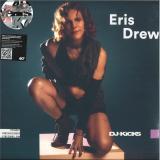
The next instalment in the classic DJ-Kicks series is a selection of rapturous house, blissed-out breaks, and transcendent rave from the high priestess of the motherbeat herself, Chicago"s Eris Drew. DJ, producer, musician, long-time resident at Chicago"s Smartbar, and co-creator of the T4T LUV NRG party and label, Eris Drew has been DJing since the early 90s, and has since taken her ecstatic house and high-energy, uncompromising mixing style to clubs, raves, and festivals worldwide. Eris" DJ-Kicks mix is 79 minutes of, as she puts it "the funky, emotional, ecstatic house-and-breaks backbone that defines my sound", and includes tracks, remixes, and exclusives by Moby, Calisto, DJ Garth, Onionz, DJ Who, Kair, Hoof, and Toka Project, as well as from Eris herself and partner Octo Octa. The result of countless hours of digging, her selection delves into the rattling breaks, rave stabs, and haunting strings of classic and lost "90s hybrid house-and-breaks jams, and matches them with more recent digs, the mix moving back and forth between emotive, bittersweet, and evocative, to raw, tough, and twisted with consummate ease.
- A1: Transformation Time
- A2: Ámame
- A3: Love Me Like I Love You
- A4: Renacer (Feat. Combo Chimbita)
- A5: Funky People
- A6: Anger Problem
- B1: Sad Boy
- B2: Your Day Will Come (Feat. N8Noface)
- B3: Ride
- B4: Over You
- B5: Life And Death
- B6: Doris
Nach Jahren als Frontmann der beliebten L.A.-Band Chicano Batman schlägt Bardo mit "Transformation Time", seinem ersten Soloalbum bei Stones Throw, ein neues Kapitel auf.
Mit einer Mischung aus lateinamerikanischen Rhythmen, Funk-Grooves, Indie-Rock und Punk-Attitüde spiegelt seine Musik seine Wurzeln in Kalifornien, Mexiko und Kolumbien wider und schöpft aus einer lebendigen Mischung von Einflüssen - von R&B und klassischem Rock der 70er- und 80er-Jahre bis hin zu Cumbia, Vallenato und Salsa.
Schwarzes Vinyl mit Retro-Marketing-Aufkleber und bedrucktem Textblatt.
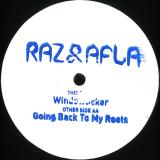
Wah Wah 45s present two very special cover versions from our beloved Afro-electronic duo, Raz & Afla, available on 12" vinyl for the very first time! Having recently released their sophomore LP, Echoes Of Resistance, to great acclaim and support ranging from Nick Grimshaw on BBC 6 Music to Tash LC on BBC Radio 1, and the follow up remix project Remixes Of Resistance, the pair offer up their unique takes on two very different slices of club culture on twelve inches of wax.
First up, the pair tackle Aphex Twin's sleazy and sinister turn-of-the-century dance floor bomb Windowlicker and take it somewhere completely unexpected, as Raz explains:
"We wanted to go to a different place from our influences for this one. When we told people we will cover this tune everyone said 'but how?!' In Raz & Afla style. We had an idea of what elements to recreate from the original and how we can reference it within our spectrum of sounds. It was so much fun to do and really kicks off at our live shows."
It's a heavily percussive reinterpretation, replete with spooky wordless vocals, funky guitars and spine tingling synths that builds into something of a future Afro-house anthem, whilst respecting the genius of the original recording.
On the flip, Going Back To My Roots has become a mainstay in Raz & Afla's live sets, and means a lot to them personally, as Raz once again explains:
"We love this song. The lyrics resonate with us, talking about the meaning of connection to a land and its people. The history of this song is also fascinating, from Hugh Masekela and Orlando Julius through Odyssey and Richie Havens. We wanted to give it our own flavour. You can't choose your heritage and where you are born. It is always a part of you and we like to celebrate that."
Written and first recorded by Lamont Dozier in 1977, Going Back To My Roots was famously covered by Richie Havens in 1980 before becoming a huge crossover hit when interpreted by disco outfit Odyssey in 1981. Raz & Afla very much give their version their own unique dance floor feeling. It's one which has received much support on BBC 6 Music.
- A1: Super Strut - Apostles
- A2: Escucha Mi Funk - The Hightower Set
- A3: Testify - Mains Ignition
- A4: Russian Roulette - Night Trains Featuring Afrika Bambaataa
- B1: From The Ghetto (Modern Tone Family Mix) - Dread Filmstone
- B2: Delancey Street .. The Theme - The Ballastic Brothers
- B3: Trans Euro X-Press (Ballistic Step) - X-Press 2
- B4: Farside - Jaziac Sunflowers
Back in the early 1990s as Acid Jazz began a period of extraordinary commercial success where acts like the Brand New Heavies and Jamiroquai sold millions of records, and US groups such as A Tribe Called Quest, The Roots and Digable Planets were actively influenced by what was being played in London, the whole scene was being fuelled by a small number of clubs, led by Gilles Peterson’s Sunday afternoons at Dingwalls but taking in nights in Leeds, Bari, Munich, Tokyo, Stockholm and New York. In those clubs funky jazz, latin boogaloo and 70s soul soundracks competed for time on the dance floor with import records from New York, and the latest sounds coming out of bedrooms and makeshift basement studios that created contemporary sounds out of the past.
Acid Jazz’s Eddie Piller and Dean Rudland have put together this compilation of the sort of sounds that we were playing at the time. They are releases on Acid Jazz and other label’s that surrounded the scene and they were mainly made by people we knew from either around the club scene, behind the counters of our favourite record shops, or from trips to New York or Europe. They range from The Ballistic Brother anthem ‘Blacker’ to the jazz house of A-Zel - a Roger Sanchez mix that still sounds fresh today. We have the Humble Soul’s instrumental version of ‘Beads Things And Flowers’ which at the time was only available as a DJ special on Acetate. There is the presence of A Man Called Adam before they went to Ibiza, and the early Mo’ Wax (before they went Trip Hop) single by Marden Hill ‘Come On’.
These records could fill a dance floor in seconds and we feel that they are today largely forgotten, as they were non-album, underground club records. It’s time to celebrate them!
Nick Bike hops aboard his groove machine once again here for another superb run out, this time with his Italian mate Stan Brega on Chosen Spokes. 'Big Bizniss' gets going with a super cool and laid back downtempo, disco and funky fusion. Lavish horns, cowbells, sultry chords and effortlessly vibey vocals all make it an instantly lovable and hip-swinging summer classic. Flip it over and you'll find 'Forever & Ever', which is an epic, cosmic, Balearic, ambient and blissed out cover of a David Bowie mega-hit. Proggy guitars draw out the me option and make it a perfect end of the night tune to send people home teary-eyed but euphoric.
- 1: Home Of The Brave
- 2: Georgia Song
- 3: Country Tune
- 4: Gossamer Wings
- 5: Our Lives Are Shaped By What We Love
- 6: Wondrous Castles
- 7: Battened Ships
- 8: Sunny California Woman
- 9: Black Top Island (Of The West)
- 10: Broken Road
Motown’s L.A.-based Mowest label lasted less than two years, but managed in that short time to release some of the most adventurous music the company ever put out. And probably the most intrepid—and nowadays, adored—Mowest release of them all was the 1992 self-titled release from Odyssey. This one-off brought elite West Coast sessionmen like Wrecking Crew mainstay Don Peake, one-time Chicago member Donnie Dacus, and arranger/orchestrator extraordinaire Gene Page together with a bunch of West Coast hippie rockers (as Peake says, “We were invited to lunch, introduced to some nice people and told we were going to form a band”).
The happy result was a record that has appeared on more deejay turntables than you can count, a one-of-a-kind blend of funky Motown bottom with a spacy sensibility and sound that fits right in next to, say, the latest Khruangbin album on your psychedelic chill playlist even as it activates your 5th Dimension sunshine pop endorphins. The single “Our Lives Are Shaped by What We Love” is probably the pick to click, but the whole album is a total vibe. We’re reissuing Odyssey for the first time ever in the U.S. (the Japanese have long been all over this album) in blue-green “ocean spray” vinyl, complete with original album art including the lyric insert. Remastered for the format by Mike Milchner at Sonic Vision, and pressed at Gotta Groove Records for superior sound. A must!
- A1: Free Your Mind
- A2: Your Fantasy
- A3: Nursery Rhymes
- A4: Magic
- B1: Funky Bone
- B2: Backup N Funktown
- B3: Bump-A-Rump Ability
- B4: Crisis
In 1979, Record Player privately pressed and issued a solitary 45 on their Gem City Records imprint in Dayton, Ohio. Though they had recorded a host of other songs, and were on the verge of signing to a major label, their trajectory stalled and the band splintered by the early 1980s. In the early 2000s, Record Player principle Charles Jackson surfaced with their unreleased songs. Todate, only two Record Player songs have been reissued, as part of Now-Again's long-running Soul Cal series. Now, the entirety of their oeuvre is presented here as Free Your Mind, and their story detailed in words by Bret Sjerven. This is a special release for us at Now-Again, and will be perfect for any fan of the deep disco scene that birthed the likes of Luther Davis, Edge of Daybreak, Tomorrow's People, Split Decision Band, and so many others issued by us, Numero Group, and other like minded labels.
- A1: Pharoah Jones
- A2: Ghost Gospel
- A3: Ill Feeling
- A4: Capital Punishment
- A5: Do Not Adjust
- A6: Cool Green Trees
- A7: Chill Scratch
- A8: Poisonous Fumes
- A9: Welcome Aboard The Starship
- B1: Keep On Runnin
- B2: Sounds Impossible
- B3: Painted Faces
- B4: The Knew Style
- B5: Chicken Wing Blues Sauce
- B6: Kool Breeze
- B7: Sexx Bullets
- B8: Soul Child
- B9: Take Off Runnin
- B10: Centurian
- B11: Bozack
- B12: Church
- B13: Splash One
- B14: Hank
- B15: 73 Goatee
"Chasing the funky symphonies that filled my head and my dreams..."
December 25th, 2023 - an Instagram post. Stimulator Jones shared half a dozen FIRE tracks from his beat tape archive. We were immediately drawn to the rough hewn boom bap.
"I'd release that", Rob commented.
Hours of material was shared and the result is this: Cool Green Trees (1999-2005). A collection of beats and loops Stimulator Jones created between the ages of 14-20 at home in his basement, bedroom and computer room in Roanoke, Virginia.
You will not believe the profound soulful genius contained within these naive schoolboy melodies.
December 25th, 1998 - 25 years ago to the day and his much-coveted Yamaha SU10 sampler was finally bestowed upon young Stimmy AKA Sam Lunsford: "I immediately hooked up a CD Walkman to the input jack and looped the beginning two bars of Grover Washington Jr.'s "Mercy Mercy Me". I don't know what exactly was so thrilling about hearing two measures of music repeating over and over but it was so infectious and hypnotizing and enthralling to me. I'll never forget that ecstatic rush of making my first loop - an uncontrollable, gleeful smile plastered all over my face." When you hear the pocket breakbeat symphonies featured here on Cool Green Trees, you'll feel the same sense of frisson.
In the wake of his Stones Throw breakthrough - Exotic Worlds & Master Treasures - Stimulator Jones was pegged by many as a 90s throwback artist. However, he literally IS a 90s artist. He's been recording music most of his life and he's now 40. He created the bulk of Cool Green Trees as a teenager. Everything before 2004 was recorded when Sam was still in school. He was in 8th grade when he made the 1999 tracks - he didn't even have his learner's permit. This album is a snapshot of a young man in a simpler time. Things were still mysterious back then and he was flying blind, relying on his ears and having to figure things out for himself: "I had no road map for becoming a beatmaker. I have been collecting music since I was a kid, I am a lifelong digger and seeker of cool and interesting sounds. I was there in the golden age of Hip Hop, and while I may have been a suburban white kid in Roanoke, Virginia, I was tuned in and I bought so many classic albums when they came out. I was attracted to Hip Hop because of the musical and poetic quality. I was hypnotized by the rhythms, partially because I was a drummer. I didn't brag about collecting my breakbeat records or making beats - it was something I did in isolation. It wasn't something I generally wanted to bring attention to and it didn't really score me any cool points. I certainly wasn't flexing on social media about it."
Hell, he can do that now!
Opener "Pharoah Jones" was inspired by Yesterday's New Quintet and Madlib's ability to capture that classic 70s sound whilst playing all the instruments. Sam created this one stoned afternoon by laying down a 2 bar loop and a shaker loop on his Yamaha SU700 sampler. He hung a microphone from the ceiling and played his Yamaha Stage Custom drum kit over the top before adding ender Rhodes and playing his dad's Selmer tenor sax through an Electro Harmonix Memory Man echo pedal. Yes! Up next, "Ghost Gospel" utilises a dope loop from a gospel record and adds some soul-funk drums overtop, whilst working that filter knob. Says Sam: "The loop reminded me of something Ghostface would rap over. The sample was in 3/4 waltz time but I flipped it for a 4/4 groove, a technique I picked up from RZA. "Ill Feeling" uses sped-up pieces from a dusty old funk record and putting them over a classic NOLA drum loop; gain chopping up a slow, bluesy 3/4 time signature and bending it to a 4/4 groove. Classy shit. "Capital Punishment" features drums tapped in live, inspired by MF Doom's Special Herbs series. "Do Not Adjust" consists loops found on a compilation of 70s French music at Happy's Flea Market, a classic Roanoke digging spot.
The sublime, evocative title track, "Cool Green Trees" was created when Sam was still living at home. He dumped samples off his SU10 into the family desktop and arranged them in a demo version of Pro Tools: "This track was sort of my ode to the DJ Shadow style of sample based production. Super spacey, slow, and moody. The heavily filtered drums were inspired by Alec Empire's 'Low on Ice' album. I later added some scratches and sounds from a Spider Man storybook record." "Chill Scratch" snags the final bit of a bossanova record and pairs it with a drum loop before adding experimental scratching run through an Electro Harmonix Memory Man echo pedal. "Poisonous Fumes" was made using a sampler, mixer and a turntable; a kind of mixtape beat collage with added scratches and sounds from various records. Using dialogue from superhero records was a nod to Madlib. "Welcome Aboard The Starship" is dark, downtempo trip-hop with a spooky bent. Sam paired a slow, hard drum loop with a guitar sample grabbed off a psychedelic rock record. To finish, he added various backwards sounds and weird atmospheric effects and a little scratching. Swoon.
Side B opens with "Keep On Runnin", made on a borrowed Roland SP202 sampler. Having always loved the sound of the Lo-Fi filter on those machines, reminiscent of the Emu SP1200, Sam always imagined Del or another of the Hieroglyphics crew rapping over this beat. You can certainly hear why. "Sounds Impossible" sees Sam experimenting with layering multiple kick samples at different volumes to create patterns similar to those heard by Showbiz and Lord Finesse during their God-level 1995 period. "Painted Faces" was made by chopping up a REDACTED record which he had gotten from Happy's Flea Market and paired it with a REDACTED drum loop. By the time Sam recorded "The Knew Style", he had acquired a shitty old 1960s portable turntable off eBay. It didn't function properly when he bought it but his brother opened it up, cleaned it out and got it working: "I remember he told me that there was a bunch of sand inside of it when he opened it up, as if its previous owner had taken it to the beach. I would take that turntable on my Happy's Flea Market digs so I could preview records...that's how I found this loop."
"Chicken Wing Blues Sauce" loops up a classic blues joint and pairs it with some REDACTED drums. A bit of filtering and arranging et voilà! "Kool Breeze", from 1999, is one of Sam's oldest surviving beats, as is "Sexx Bullets". The Roots sampled the same record, leaving Sam frustrated yet vindicated. "Soul Child" was an early SU10 creation, looping a dusty old Soul Children 45 and pairing it with 70s rock drum loops to great effect. "Take Off Runnin" was another loop found digging with a portable turntable. Paired with some boom bap drums it makes for a hypnotic head-nod groove. "Centurian" was intended to be a little beat interlude a la Pete Rock. The sample is from a sun-dappled soft-psych record and it's paired with a Robin Trower drum loop that just happens to fit perfectly. Sometimes you slap things together kind of haphazardly and magic happens. "Bozack" was the first beat Sam made using Pro Tools, his first foray into using chopped sounds instead of loops, an exciting new world. "Church" is beat interlude using a Phil Upchurch loop with the "Long Red" drums - a favourite break of Dilla et al. Sam was really on a tear in late 2004, probably because he was unemployed and phoneless and able to just make beats all day. He made "Splash One" on a borrowed Yamaha SU700 and again was experimenting with tapping the drums in live with his fingers, instead of using a loop or sequenced pattern. Channeling 9th Wonder, Sam used a water splash sound effect from a Batman record as a percussive element, hence the title (also a 13th Floor Elevators reference). The main loop is a backwards portion of one of his favourite Roy Ayers songs.
"Hank" is another fun little beat interlude thing, created on a borrowed Roland SP202 sampler with the fantastic Lo-Fi effect that resembled the Emu SP1200 at a fraction of the price. "73 goatee", from 99, is another of his oldest surviving beats, created in his bedroom with his Yamaha SU10 and his brother's Vestax MR-300 4-track recorder: "This one will always feel special. I can remember having a feeling all the way back then on the night that I created it that this was a solid beat with a catchy loop. There was something in the Fender Rhodes melody that resonated with me emotionally, and I had never heard a producer sample that portion before. I felt like I had found my own unique sound, my own unique loop. It came from an Ahmad Jamal '73. I actually even recorded myself rapping and scratching over this beat way back then, I still have that version in all its imperfect sloppy glory."
Sam explains just how much these tracks mean to him: "They all have immense historical and sentimental value and I'm proud of them. These beats come from an innocent, simple time when I was just figuring out how to craft these sounds. They're something very personal to me. They are the initial part of a journey that I really was taking *alone*. There was no YouTube. I couldn't Google shit. I didn't even know any other beatmakers, producers or DJs in my town that could teach me anything. It was always just me, alone, in a room with some equipment - chasing the funky symphonies that filled my head and my dreams. What I was doing wasn't cool. Most of my peers thought I was a weirdo and couldn't care less. Creating these sounds was an anti-social endeavour. In a sense, I felt like it was me against the world, and all I had to instruct and assist me were the recordings produced by my heroes - RZA, DJ Premier, Erick Sermon, Beatminerz, Showbiz, Diamond D, Beatnuts, Prince Paul, The Bomb Squad, Pete Rock, Q-Tip, E-Swift, Mista Lawnge, DJ Shadow, Cut Chemist, Peanut Butter Wolf, El-P and so many more...I dedicate this collection to them, and to my older brother Joe who has always been a musical and technical guiding light for me.
This was a time before every kid was a self-described producer and beatmaker, before everyone had a DAW, before Kanye and "chipmunk soul", before Red Bull beat battles, before there was any social media beyond chat rooms and AOL Instant Messenger, before Soundcloud, before SP-404 mania, before lo-fi beats to study to, before Splice, before targeted ads for MIDI chord packs, etc. In 99 when I told people that I had a sampler and made beats I was mostly met with bewildered confusion and indifference. Kids and adults alike would wonder why I got this weird machine for Christmas instead of something worthwhile like a Playstation or a mountain bike or even a guitar for that matter because at least that could be used to make "real music". Back then, sampling was still not widely respected as an art form - it was seen as lazy, talentless and unoriginal at best and outright criminal theft at worst. I had gotten respect for playing drums and guitar and things of that nature but this was a step in the wrong direction in the eyes of many."
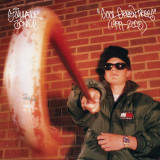
The cover photo is a picture of Sam standing on his back porch in the latter part of 1998, just before he got his first sampler. He was 13 years old, in 8th grade. His dad took the picture with his 35mm film camera: "I actually wanted to be pointing my dad's .22 pistol at the camera lens but he wouldn't let me. He gave me an old walking cane to use instead. The Tommy Hilfiger puffer jacket came from the lost and found at William Fleming High School where my mom worked as a secretary. I was thrilled when she brought it home because we never spent money on expensive name brand clothing like that - we were for the most part strictly a sale rack, bargain bin, thrift store, yard sale, flea market kind of family when it came to clothes. My watch is some cheap off-brand fake gold department store watch." Mastering for this vinyl edition was overseen by Be With regular Simon Francis and it was cut by the esteemed Cicely Balston at Abbey Road Studios to be pressed in the Netherlands by Record Industry.