Far Out Radio Systems, the musical project by Thomas Neyens, is set to make waves with the release of his anticipated second album, "Mariana No Death." This transformative musical journey invites listeners to explore the depths of the Mariana Trench, where the protagonist seeks solace amidst the chaotic realities of our world. Drawing inspiration from the roots of early techno and lo-fi electronica, Thomas Neyens showcases a unique sound palette, embracing a DIY and raw production style. "Mariana No Death" is a testament to pure machine music that delivers a powerful message of honesty and a hopeful outlook for brighter days ahead.
Поиск:future death
Все
Specimen Records will kick off with "Zero Plague" January 2024 after a long hiatus from 2022 through to 2024. Specimen are now proud to present such a prolific artist as MANASYt whose level production has reached so many labels, along with extensive Dj work throughout Europe.
Zero Plague - another neurovision broadcast by replicant agent MANASYt. The opener - is a dystopian death march anthem, guided by a rolling snare, thick kick and throbbing bass. Arpeggios sounding like wasps on acid hover in the background, adding to the atmosphere of imminent danger!
Angellust - a hectic breathless industrial electro monster. Fuzzy distorted bass is driving us through a dark desolate territory. Complete with chaotic claps, minor synth stabs, a siren-like clinical pad and Petar's hopeless vocals (reminiscent of his days fronting metal bands).
Next is the Pestilent Mix for SNS Sensation new wave masterpiece "Mirror Radio". Sebastian is also the voice of UK duo Heartbreak (with synth wizard Ali Renault). Petar says : "It's a very impulsive work that sounds nothing like the original! Blending two different beats, mangled voices and psychotic off-kilter leads. Total madness."
First on the flip is the Novichok Mix for Poladroid. Petar and Vadim go way back to Roulette Rekordz in 2003, so this colab is natural, to say the least. It's the only time where the tempo slows down a bit on this EP. Bubbling worm-like bass, metallic percussion, cold windy pads and a classic electro lead take you on a journey to a soulless barren planet.
At last "In Deep Tongues". A heady schizophrenic exercise. A commanding beat, a grotesque polka bass followed by a paranoid synth lead pull you through a darkened maze with no exit. Underwater gurgles and fearsome corroded effects fill the air, no escape!
After 20 years, MANASYt hasn't slowed down or mellowed his intense immoderate sound one bit! And "Zero Plague" is undoubtedly a true testament to that!
He is an artist who couldn't care less about trends or hype, and whose main driving forces authenticate passion for this genre. Some of his tunes resemble future horror movie soundtrack, others a visit to a mental clinic, but most sound like what hostile aliens would listen to while attacking Earth.
Bulgarian dark mastermind Petar Tassev Manayst has been rocking his brand of Nuroelktro since 2003. He is responsible for a vast array of menacing titles on labels such as Touching' Bass, Kommando 6, Musar, and the infamous Bunker, along with 40 others.
MANASYt is currently based in Xiamen, China.
*Repress*
An artist as imaginative and unique as Ana Mazzotti doesn’t come around often. Dubbed a “super-musician” by fellow Brazilian virtuoso Hermeto Pascoal, Mazzotti’s short but rich musical career culminated in just two studio albums: Ninguem Vai Me Segurar (1974), and Ana Mazzotti (1977). Outside circles of Brazilian funk aficionados, these two gems of spellbinding samba-jazz, lysergic funk and trippy bossa have remained relatively obscure. This was partly as a result of Mazzotti’s premature death (she lost her battle with cancer in her mid-thirties), but also due to financial restraints and the prejudice she faced as a female songwriter in a fundamentally sexist society.
Born in Caixas, in Brazil’s Rio Grande do Sul municipality, Mazzotti began to play the accordion aged five, before moving with prodigious ease onto the piano. By the age of twelve she was already conducting her convent school’s choir, and at twenty-one she led her city’s premier chorus, the Coral Bento Goncalves. When rock and roll hit South America in the sixties, a young Mazzotti was one of the early adopters, fronting various guitar groups including an all female Beatles cover band, and an eclectic, eight-piece psychedelic group Desenvolvemento. Before moving to Sao Paulo to start her career proper, Mazzotti met drummer, producer and fellow music educator Romido Santos, who she would later marry. Romildo introduced Mazzotti to jazz, and music by the likes of Chick Corea and Hermeto Pascoal who she would later befriend and perform with.
In 1974 Mazzotti recorded her first album Ninguem Vai Me Segurar (1974), enlisting the in-demand arrangement talents of Azymuth’s original keyboard maestro Jose Roberto Bertrami who co-wrote several of the tracks and plays organ, piano and synthesizers on the album. It also features Azymuth’s bassist Alex Malheiros and percussionist Ariovaldo Contestini, with Romildo Santos who produced the album on drums. Recorded in Estudio Haway around the same time Azymuth recorded their debut album there, it’s no wonder the samba jazz-funk pioneer’s distinctive aesthetic is present throughout, and Mazzotti’s sensational compositions are made even more beautiful for it.
Kicking off with the swirling samba-jazz-dance masterpiece ‘Agora Ou Nunca Mais’, the album hosts several groove-heavy Brazilian cult-classics including ‘Roda Mundo’ and ‘Eu Sou Mais Eu’. Deeper moments come in the form of the alluring future soul synth sounds on ‘Bairro Negro’ and ‘Sou’, and Mazzotti’s tender, hallucinatory version of ‘Feel Like Making Love’ (made famous by Roberta Flack) perfectly reflecting the idiosyncratic genius Mazzotti achieved with Bertrami’s visionary arrangements, and Romildo’s impeccable production approach.
Far Out Recordings is proud to present the official reissue of this cult favourite Brazilian treasure. Remastered and pressed to 180g vinyl, Ninguem Vai Me Segurar (1974) will be available on vinyl LP, CD and digitally from 13th September.
Milano-Bristol connection Bristol NormCore deliver their 8th release, following up heavy hitters from Katatonic Silentio and Kelan, with this tripped out, hi-tek and deftly future-facing, cyberpunk-styled LP of grime and afx type ambience and rhyhtmics, from the producer known as FFT.
The Blood of Heroes is a amalgamation of artists re-envisioning worlds first created in the Rutger Hauer film by the same name. In “Nine Cities”, the trilogy is completed. The first self-titled album depicted the PRESENT post-apocalypse as depicted in the film. The second album,The Waking Nightmare, showed the world during the actual apocalypse in the PAST that led to the times in the film. This third album is the FUTURE – further past even post-apocalypse – “Nine Cities buried deep underground” – what had survived, and how did these cities evolve beyond the world-ending criteria of their creation and burial? Past the film inspired storyline, we have for the first time in many years, 2 members of the original Napalm Death collaborating with each other: guitarist Justin K. Broadrick is joined by Scorn beat master Mick Harris. With Submeged on bass, and Enduser on keyboards, the frame is set. Joined by all the artists depicted below, including returning vocalist Dr. Israel, and Fear Factory’s Burton C. Bell, this cast is full of surprising interactions, all masterfully mixed by Dadub’s Daniele Antezza. Original artwork is an extended booklet by Khomatech; these Nine Cities are a world of their own, illustrated by one of the masters of fantasial art.
Active in the mid-80’s and heavily influenced by the British post-punk dissonant style and the Belgian cold-wave melancholic atmosphere, The Ultimate Dreamers resurrected during the COVID lock-down, releasing a selection of good old demo songs on their “Live Happily While Waiting For Death” release. A dynamic impulse that brought them not only back on stage but also into the studio to work on new material. The magic is back!
The Ultimate Dreamers feel stronger than ever and enjoy uniting past, present and future on this exciting “Echoing Reverie” album, on which they reach a subtle balance between light and darkness: a poignant cold wave fusion of futuristic danceable dream pop with a retro noisy post-punk attitude with surrealistic introspective cynical lyrics dealing with fleeting life, melancholic solitude and other inner demons..
The new songs intelligently merge nostalgic cold wave chills and alluring poignant vocals with carrying basslines and irresistible danceable beats to become “less is more” addictive tunes that capture you in no time. If you like bands such as New Order, The Cure, Minimal Compact, Trisomie 21 or yet Section 25, “Echoing Reverie” comes highly recommended for a timeless dusk sonic experience at the crossroads of darkness and brightness.
See the magic operate and let The Ultimate Dreamers carry you in their echoing reverie…
Mystical, minimal house offering hailing from South Africa in the mid-2000s courtesy of Cape Town indie labels Sharp-Flat and Roastin' Records.
RockArt was a hybrid-electro performance art project that emerged during a golden age for electronic music in the Cape, the post-Y2K scene spurred by the maverick African Dope record label that marked the rise of cult outsiders Felix Laband and Tudor Watkins Jones. Harnessing the combined powers of seasoned jazz musicians Hilton Schilder and Alex van Heerden, RockArt cooked up a signature futurist formula laced with musical bows and voice samples that was unmistakably indigenous. Intended as a companion to the group's Future Cape album of 2006, House was conceived as a long-form soundscape of tribal electronica that could stand alone on its own merits but also provide a backdrop for live instrumental improvisation. The project was shelved following the untimely death of Alex van Heerden in 2009 but emerges from Hilton Schilder's archive as a reminder of the duo's profound collaborative alchemy.
Running at 28 minutes over two sides of 12-inch maxi cut at 45RPM, House is available as a boutique vinyl offering with a psychedelic art sleeve pressed in a first edition of 300 copies.
Finnish Heavy Metal legends, Spiritus Mortis unveil a grand–scale epic of antique Doom on 16th of September via Svart Records.
Erecting a new monolith in the halls of Doom Metal history with their fifth album The Great Seal, Spiritus Mortis certify true classic status as one of the scene’s modern greats.
There are few modern-day bands that can be uttered under the same breath as the giants of Traditional Doom and Heavy Metal like Spiritus Mortis. Formed in 1987 as Rigor Mortis they can firmly attest to having been “the first Finnish Doom Metal band”, uncovering hallowed ground before the later imitators. Carrying the banner of powerful true Metal, the likes of which stands proudly next to the masters such as Dio era Sabbath, Solitude Aeturnus and Trouble, Spiritus Mortis have established a tradition of catchy song-writing and consummate knowledge of sacred riff-craft. The Great Seal is a collosal album which Spiritus Mortis describes as “a rite of collective suicide and an orgy of self-immolation” and plumbs the depths of epic sorrow with gargantuan slabs of igneous riffs and emotional vocals.
Synonymous with classic Finnish Doom bands like Reverend Bizarre, whose singer Albert Witchfinder intoned previous albums’ vocals, Spiritus Mortis continue to define and cement their formidable legacy. Albert’s replacement, Kimmo Perämäki is more than worthy of the consecrated robes he inherits, delivering a performance which is flawlessly dominating and instantly gratifying. Tracks like Martyrdom Operation and Visions Of Immortality see Perämäki boldly carving his own name in the stone tablets of future history, marrying the riffs of the Maijala brothers and guitarist Kari Lavila with the splendor of magnificent melancholy that Spiritus Mortis is so known and admired for.
Not only will true devotees of the Spiritus Mortis Doom church be raising their fists with full hearts, but those who seek knowledge of the faithful spirit of real Metal can surely look no further than within The Great Seal.
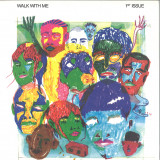
ALI presents its first Various Artists under the project "Walk With Me".
Pressed with Green Vinyl Records
100% recyclable records / 90% energy saving / less waste during production process.
Tiger Stripes follows up ‘Baby’ with a quintuplet of aces on Drumcode.
Death, taxes and Tiger Stripes crafting dancefloor weapons for Adam Beyer’s Drumcode and Truesoul labels. Not many things in life are certain, but we’ve always counted on Mikael Nordgren knocking it out of the park. Last year’s ‘Baby’ EP was a label highlight, while in March he released ‘Sneaking Hotdogs Into People’s Pocket’, which mined the spirit of ‘90s-drenched euphoria and was a standout on Truesoul. Now he’s back dropping heat on DC.
Taking the retro vibes of Hotdogs into more techno-orientated territory, he bunkered down with his family in the Swedish forest, setting up a makeshift studio in the kitchen. From this, the five-track ‘Into Desolation’ was born. Beginning with ‘Recluse’, it combines steely bass rumbles with old skool stabs and a heady vocal from Mikaela Rahmqvist. ‘Basshunter’ is propelled by galloping bass and a catchy undulating melodic loop and is brilliant in its effective simplicity.
‘Into The Early Night’ is a pearl, comprising deep compression-heavy bass stabs, perky percussion and a rousing vocal, making it a winner at festivals so far this summer, including Awakenings. ‘Ignition’ fires on all cylinders with a wicked arpeggiated hook and pounding drums. ‘Ride’ is a nostalgic nod to the past as trance-inspired chords marry deliciously with crunchy future-focused techno.
Mannequin's 100th - a comp looking forward featuring an international and serious cast... BIG TIP!
The modern synthwave scene would be significantly poorer without the keen ear and tireless efforts of the Mannequin label run by Alessandro Adriani. Geographically situated within the nerve centers of Rome and Berlin, yet with a musical spirit that easily transcends these boundary lines, Mannequin's back catalog has been an important component in the modular assemblage that makes up electronics-based independent music in the 21st century, and an important reference point for those who need to defend against the lazy accusations that this such is purely retro' in its form and content. Recent accolades and accomplishments - being named Resident Advisor's label of the month' for May of this year, starting the 'Death of the Machines' 12' series, and being given the 'green light' for bi-monthly parties at the Säule room in Berghain - have been earned through Mannequin's unflagging commitment to sonic diversity and Adriani's own realization that the anxious and sharp-edged sounds associated with, say, the Cold War of the 1980s can convey a completely different message today. Adriani says it best when claiming that there is no such thing as 'old' or 'new' music...only the music of now'. With this cogent statement of intent, Mannequin continues to go on exploratory missions to find the best and most relevant aspects of genres like acid, industrial, EBM, post-punk, coldwave and still more.
Which brings us to Mannequin's newest project and 100th release overall: the Waves of the Future double LP compilation, which itself is not a conventional retrospective collection. Case in point - none of the artists appearing on this collection have put out their own releases on Mannequin yet, despite acting as Mannequin's unofficial ambassadors (via DJ sets and other means). This makes the set even more compelling rather than less so, since it shows how Mannequin fits into a larger picture that includes other scene leaders and label owners including Beau Wanzer, Willie Burns (WT Records), Silent Servant (Jealous God) and Ron Morelli (L.I.E.S.). Of equal importance is how Waves of the Future projects a sense of aesthetic resilience and continuity, showcasing just how well the current artists allied with Mannequin employ and re-interpret the sonic lexicon that appears on that label's reissues of 'classic' acts such as Nocturnal Emissions, Bourbonese Qualk, Din A Testbild and Doris Norton.
However, none of this would matter as much if the music itself didn't have strong potential for lighting a blaze in the dark corners of the human imagination, and of course for forcing bodies into motion. Each track here pivots around a couple of key sound elements that seem to set the stage for the next track to come: see the sputtering / chopped ghost voices on Morelli's Charges Won't Stick,' which easily informs the slicing drone and authoritarian beat of Shawn O' Sullivan's Ill Fit,' which then lays down the emotional foundation for the sequencer-powered With You' from An-I & Adriani or the glassy landscape of Illum Sphere's Exhaustion'. Elsewhere, the wired mischief of Not Waving intersects easily with the spherical electro-funk and coded commands of Beau Wanzer. When all the disparate parts of Waves of the Future are soldered together, it perfectly illustrates Mannequin's non-linear philosophy and Adriani's suggestion that Mannequin listeners directly engage with the music rather than trying too hard to analyze or dissect it.
UILTY RAZORS, BONA FIDE PUNKS.
Writings on the topic that go off in all directions, mind-numbing lectures given by academics, and testimonies, most of them heavily doctored, from those who “lived through that era”: so many people today fantasize about the early days of punk in our country… This blessed moment when no one had yet thought of flaunting a ridiculous green mohawk, taking Sid Vicious as a hero, or – even worse – making the so-called alternative scene both festive and boorish. There was no such thing in 1976 or 1977, when it wasn’t easy to get hold of the first 45s by the Pistols or the Clash. Few people were aware of what was happening on the fringes of the fringes at the time. Malcolm McLaren was virtually unknown, and having short hair made you seem strange. Who knew then that rock music, which had taken a very bad turn since the early 1970s, would once again become an essential element of liberation? That, thanks to short and fast songs, it would once again rediscover that primitive, social side that was so hated by older generations? Who knew that, besides a few loners who read the music press (it was even better if they read it in English) and frequented the right record stores? Many of these formed bands, because it was impossible to do otherwise. We quickly went from listening to the Velvet Underground to trying to play the Stooges’ intros. It’s a somewhat collective story, even though there weren’t many people to start it.
The Guilty Razors were among those who took part in this initial upheaval in Paris. They were far from being the worst. They had something special and even released a single that was well above the national average. They also had enough songs to fill an album, the one you’re holding. In everyone’s opinion, they were definitely not among the punk impostors that followed in their wake. They were, at least, genuine and credible.
Guilty Razors, Parisian punk band (1975-1978). To understand something about their somewhat linear but very energetic sound, we might need to talk about the context in which it was born and, more broadly, recall the boredom (a theme that would become capital in punk songs) coupled with the desire to blow everything off, which were the basis for the formation of bands playing a rejuvenated rock music ; about the passion for a few records by the Kinks or the early Who, by the Stooges, by the Velvet mostly, which set you apart from the crowd.
And of course, we should remember this new wave, which was promoted by a few articles in the specialized press and some cutting-edge record stores, coming from New York or London, whose small but powerful influence could be felt in Paris and in a handful of isolated places in the provinces, lulled to sleep by so many appalling things, from Tangerine Dream to President Giscard d’Estaing...
In 1975-76, French music was, as almost always, in a sorry state ; it was still dominated by Johnny Hallyday and Sylvie Vartan. Local rock music was also rather bleak, apart from Bijou and Little Bob who tried to revive this small scene with poorly sound-engineered gigs played to almost no one.
In the working class suburbs at the time, it was mainly hard rock music played to 11 that helped people forget about their gruelling shifts at the factory. Here and there, on the outskirts of major cities, you still could find a few rockers with sideburns wearing black armbands since the death of Gene Vincent, but it wasn’t a proper mass movement, just a source of real danger to anyone they came across who wasn't like them. In August 1976, a festival unlike any other took place in Mont-de-Marsan – the First European Punk Festival as the poster said – with almost as many people on stage as in the audience. Yet, on that day, a quasi historical event happened, when, under the blazing afternoon sun, a band of unknowns called The Damned made an unprecedented noise in the arena, reminiscent of the chaotic Stooges in their early adolescence. They were the first genuine punk band to perform in our country: from then on, anything was possible, almost anything seemed permissible.
It makes sense that the four+1 members of Guilty Razors, who initially amplified acoustic guitars with crappy tape recorder microphones, would adopt punk music (pronounced paink in French) naturally and instinctively, since it combines liberating noise with speed of execution and – crucially – a very healthy sense of rebellion (the protesters of May 1968 proclaimed, and it was even a slogan, that they weren’t against old people, but against what had made them grow old. In the mid-1970s, it seemed normal and obvious that old people should now ALSO be targeted!!!).
At the time, the desire to fight back, and break down authority and apathy, was either red or black, often taking the form of leafleting, tumultuous general assemblies in the schoolyard, and massive or shabby demonstrations, most of the time overflowing with an exciting vitality that sometimes turned into fights with the riot police. Indeed, soon after the end of the Vietnam War and following Pinochet’s coup in Chile, all over France, Trotskyist and anarcho-libertarian fervour was firmly entrenched among parts of the educated youth population, who were equally rebellious and troublemakers whenever they had the chance. It should also be noted that when the single "Anarchy in the UK" was first heard, even though not many of us had access to it, both the title and its explosive sound immediately resonated with some of those troublemakers crying out for ANARCHY!!! Meanwhile, the left-wing majority still equated punks with reckless young neo-Nazis. Of course, the widely circulated photos in the mainstream press of Siouxsie Sioux with her swastikas didn’t necessarily help to win over the theorists of the Great Revolution. It took Joe Strummer to introduce The Clash as an anti-racist, anti-fascist and anti-ignorance band for the rejection of old-school revolutionaries to fade a little.
The Lycée Jean-Baptiste Say at Porte d’Auteuil, despite being located in the very posh and very exclusive 16th arrondissement of Paris, didn’t escape these "committed" upheavals, which doubled as the perfect outlet for the less timid members of this generation.
“Back then, politics were fun,” says Tristam Nada, who studied there and went on to become Guilty Razors’ frontman. “Jean-Baptiste was the leftist high-school in the neighbourhood. When the far right guys from the GUD came down there, the Communist League guys from elsewhere helped us fight them off.”
Anything that could challenge authority was fair game and of course, strikes for just about any reason would lead to increasingly frequent truancy (with a definitive farewell to education that would soon follow). Tristam Nada spent his 10th and 11th unfinished grades with José Perez, who had come from Spain, where his father, a janitor, had been sentenced to death by Franco. “José steered my tastes towards solid acts such as The Who. Like most teenagers, I had previously absorbed just about everything that came my way, from Yes to Led Zeppelin to Genesis. I was exploring… And then one day, he told me that he and his brother Carlos wanted to start a rock band.” The Perez brothers already played guitar. “Of course, they were Spanish!”, jokes their singer. “Then, somewhat reluctantly, José took up the bass and we were soon joined by Jano – who called himself Jano Homicid – who took up the rhythm guitar.” Several drummers would later join this core of not easily intimidated young guys who didn’t let adversity get the better of them.
The first rehearsals of the newly named Guilty Razors took place in the bedroom of a Perez aunt. There, the three rookies tried to cover a few standards, songs that often were an integral part of their lives. During a first, short gig, in front of a bewildered audience of tough old-school rockers, they launched into a clunky version of the Velvet Underground's “Heroin”. Challenge or recklessness? A bit of both, probably… And then, step by step, their limited repertoire expanded as they decided to write their own songs, sung in a not always very accurate or academic English, but who cared about proper grammar or the right vocabulary, since what truly mattered was to make the words sound as good as possible while playing very, very fast music? And spitting out those words in a language that left no doubt as to what it conveyed mattered as well.
Trying their hand a the kind of rock music disliked by most of the neighbourhood, making noise, being fiercely provocative: they still belonged to a tiny clique who, at this very moment, had chosen to impose this difference. And there were very few places in France or elsewhere, where one could witness the first stirrings of something that wasn’t a trend yet, let alone a movement.
In the provinces, in late 1976 or early 1977, there couldn’t be more than thirty record stores that were a bit more discerning than average, where you could hear this new kind of short-haired rock music called “punk”. The old clientele, who previously had no problem coming in to buy the latest McCartney or Aerosmith LP, now felt a little less comfortable there…
In Paris, these enlightened places were quite rare and often located nex to what would become the Forum des Halles, a big shopping mall. Between three aging sex workers, a couple of second-hand clothes shops, sellers of hippie paraphernalia and small fashion designers, the good word was loudly spread in two pioneering places – propagators of what was still only a new underground movement. Historically, the first one was the Open Market, a kind of poorly, but tastefully stocked cave. Speakers blasted out the sound of sixties garage bands from the Nuggets compilation (a crucial reference for José Perez) or the badly dressed English kids of Eddie and the Hot Rods. This black-painted den was opened a few years earlier by Marc Zermati, a character who wasn’t always in a sunny disposition, but always quite radical in his (good) choices and his opinions. He founded the independent label Skydog and was one of the promoters of the Mont-de-Marsan punk festivals. Not far from there was Harry Cover, another store more in tune with the new New York scene, which was amply covered in the house fanzine, Rock News (even though it was in it that the photos of the Sex Pistols were first published in France).
It was a favorite hang-out of the Perez brothers and Tristam Nada, as the latter explained. “It’s at Harry Cover’s that we first heard the Pistols and Clash’s 45s, and after that, we decided to start writing our first songs. If they could do it, so could we!”
The sonic shocks that were “Anarchy in the UK”, “White Riot” or the Buzzcocks’s EP, “Spiral Scratch” – which Guilty Razors' sound is reminiscent of – were soon to be amplified by an unparalleled visual shock. In April 1977, right after the release of their first LP, The Clash performed at the Palais des Glaces in Paris, during a punk night organised by Marc Zermati. For many who were there, it was the gig of a lifetime…
Of course, Guilty Razors and Tristam were in the audience: “That concert was fabulous… We Parisian punks were almost all dressed in black and white, with white shirts, skinny leather ties, bikers jackets or light jackets, etc. The Clash, on the other hand, wore colourful clothes. Well, the next day, at the Gibus, you’d spot everyone who had been at this concert, but they weren’t wearing anything black, they were all wearing colours.”
It makes sense to mention the Gibus club, as Guilty Razors often played there (sometimes in front of a hostile audience). It was also the only place in Paris that regularly scheduled new Parisian or Anglo-Saxon acts, such as Generation X, Siouxsie and the Banshees, the Slits, and Johnny Thunders who would become a kind of messed-up mascot for the venue. A little later, in 1978, the Rose Bonbon – formerly the Nashville – also attracted nightly owls in search of electric thrills… In 1977, the iconic but not necessarily excellent Asphalt Jungle often played at the Gibus, sometimes sharing the bill with Metal Urbain, the only band whose aura would later transcend the French borders (“I saw them as the French Sex Pistols,” said Geoff Travis, head of their British label Rough Trade). Already established in this small scene, Metal Urbain helped the young and restless Guilty Razors who had just arrived. Guitarist for Metal Urbain Hermann Schwartz remembers it: “They were younger than us, we were a bit like their mentors even if it’s too strong a word… At least they were credible. We thought they were good, and they had good songs which reminded of the Buzzcocks that I liked a lot. But at some point, they started hanging out with the Hells Angels. That’s when we stopped following them.”
The break-up was mutual, since, Guilty Razors, for their part, were shocked when they saw a fringe element of the audience at Metal Urbain concerts who repeatedly shouted “Sieg Heil” and gave Nazi salutes. These provocations, even still minor (the bulk of the skinhead crowd would later make their presence felt during concerts), weren’t really to the liking of the Perez brothers, whose anti-fascist convictions were firmly rooted. Some things are non-negotiable.
A few months earlier (in July 1978), Guilty Razors had nevertheless opened very successfully for Metal Urbain at the Bus Palladium, a more traditonally old-school rock night-club. But, as was sometimes the case back then, the night turned into a mass brawl when suburban rockers came to “beat up punks”.
Back then, Parisian nights weren’t always sweet and serene.
So, after opening as best as they could for The Jam (their sound having been ruined by the PA system), our local heroes were – once again – met outside by a horde of greasers out to get them. “Thankfully,” says Tristam, “we were with our roadies, motorless bikers who acted as a protective barrier. We were chased in the neighbouring streets and the whole thing ended in front of a bar, with the owner coming out with a rifle…”
Although Tristam and the Perez brothers narrowly escaped various, potentially bloody, incidents, they weren’t completely innocent of wrongdoing either. They still find amusing their mugging of two strangers in the street for example (“We were broke and we simply wanted to buy tickets for the Heartbreakers concert that night,” says Tristam). It so happened that their victims were two key figures in the rock business at the time: radio presenter Alain Manneval and music publisher Philippe Constantin. They filed a complaint and sought monetary compensation, but somehow the band’s manager, the skilful but very controversial Alexis, managed to get the complaint withdrawn and Guilty Razors ended up signing with Constantin with a substantial advance.
They also signed with Polydor and the label released in 1978 their only three-track 45, featuring “I Don't Wanna be A Rich”, “Hurts and Noises” and “Provocate” (songs that exuded perpetual rebellion and an unquenchable desire for “class” confrontation). It was a very good record, but due to a lack of promotion (radio stations didn’t play French artists singing in English), it didn’t sell very well. Only 800 copies were allegedly sold and the rest of the stock was pulped… Initially, the three tracks were to be included on a LP that never came to be, since they were dropped by Polydor (“Let’s say we sometimes caused a ruckus in their offices!” laughs Tristam.) In order to perfect the long-awaited LP, the band recorded demos of other tracks. There was a cover of Pink Floyd's “Lucifer Sam” from the Syd Barrett era – proof of an enduring love for the sixties’ greats –, “Wake Up” a hangover tale and “Bad Heart” about the Baader-Meinhof gang, whose actions had a profound impact on the era and on a generation seeking extreme dissent... On the album you’re now discovering, you can also hear five previously unreleased tracks recorded a bit later during an extended and freezing stay in Madrid, in a makeshift studio with the invaluable help of a drummer also acting as sound engineer. He was both an enthusiastic old hippie and a proper whizz at sound engineering. Here too, certain influences from the fifties and sixties (Link Wray, the Troggs) are more than obvious in the band’s music.
Shortly after a final stormy and rather barbaric (on the audience’s side) “Punk night” at the Olympia in June 1978, Tristam left the band ; his bandmates continued without him for a short while.
But like most pioneering punk bands of the era, Guilty Razors eventually split up for good after three years (besides once in Spain, they’d only played in Paris). The reason for ceasing business activities were more or less the same for everyone: there were no venues outside one’s small circuit to play this kind of rock music, which was still frightening, unknown, or of little interest to most people. The chances of recording an LP were virtually null, since major labels were only signing unoriginal but reassuring sub-Téléphone clones, and the smaller ones were only interested in progressive rock or French chanson for youth clubs. And what about self-production? No one in our small safety-pinned world had thought about it yet. There wasn’t enough money to embark on that sort of venture anyway.
So yes, the early days of punk in France were truly No Future!
With Alouette!, Les Louanges attempts to make sense of his human condition and Québécois identity by bringing guitars and Joual (the French language dialect spoken in Québec) to the forefront while still fuelling his signature grooves. More rock-oriented than his previous albums, this third effort is luminous yet rich in sounds, emotion and political commentary. It unfolds through a journey that will lead Loulou to encounter universal experiences such as illness, death, and true love.
The album is also the result of an artistic quest that began during a period of self-reflection, when Vincent Roberge (aka Les Louanges or Loulou) seized the opportunity to take a break after his last extended tour. Alongside the existential questions typical of someone approaching their thirties came a rediscovery of the classics—from Leonard Cohen and Prince to Richard Desjardins and the nursery rhyme that gives the album its name–, followed by total exploration. In addition to playing most of the instruments himself, the singer-songwriter revived obscure Quebec records through sampling and got to experiment with actual sound recording. Roberge co-produced Alouette! with his long-time collaborator Félix Petit (because why change a winning formula).
Four years after the success of his sophomore album Crash, Les Louanges returns more confident than ever, thanks to a renewed cultural and emotional baggage that allows him to reflect on the past to better engage with the present, while also enjoying it to the fullest. All of this, without overlooking the future, which he foresees with hope despite the collective challenges that await us.
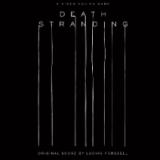
- 1: Once, There Was An Explosion
- 2: Alone We Have No Future
- 3: Bridges
- 4: Soulless Meat Puppet
- 5: Beached Things
- 6: Chiral Carcass Culling
- 7: The Face Of Our New Hope
- 8: John
- 9: An Endless Beach
- 10: Heartman
- 11: The Severed Bond
- 1: Claws Of The Dead
- 2: Fragile
- 3: Stick Vs Rope
- 4: A Final Waltz
- 5: Strands
- 6: Lou
- 7: Bb's Theme
- 1: Flower Of Fingers
- 2: Cargo High
- 3: Demens
- 4: Decentralized By Nature
- 5: Mules
- 6: Porter Syndrome
- 9: Stepping Stones
- 10: Frozen Space
- 11: The Timefall
- 7: Chiralium
- 8: Spatial Awareness
- 1: F.c.i./ The Awakening
- 2: Annihilation Of Civilization
- 3: Living Good
- 4: Future Shock
- 5: Holy Trials
- 6: Gone Shooting
- 7: Parricide
- 8: Unauthorized Exploitation
- 9: B.o.h.i.c.a. (Bonus Track)
- 10: Run Again (Bonus Track)
- 11: Sloe-Death (Bonus Track)
- 12: Rise Above (Bonus Track)
EvilDead fans, listen up: 27 March 2026 will see the re-release by the American thrash metal act of their cult album ‘Annihilation Of Civilization’ including a number of bonus tracks. The original recordings date back to 1989 and have been remastered by Bill Metoyer (Slayer, Armored Saint). Remastered, 4 Bonus Tracks
- Svensk Drm
- Balderdom (Tres Jolie)
- Rerun Of Forever (Stravinsky)
- Vi Er Et Kollektiv
- 5: Lidskjalv
Green Vinyl, limited to 500 copies. New album from the psychedelic, progressive folk rock band from Skien, Norway! The day belongs to the night The four songs on side A came about in November 2022 for a winter solstice celebration at Oslo Badstuforening. Our take on this was that the solstice invites reflections on the relationship between night and day. Does the day spring out of the darkness of the preceding night or does the night follow and swallow the light of the day? Is it Saturday Night or Sunday Morning? Are we running from the past or catching up with the future? Moving from A to B, Lidskjalv has existed as a demo since the 90s. Many versions have been made, but this is the first proper recording of the song. The passage of time is the future becoming the present. It moves forward in circles like a rolling wheel. Balder, Osiris and Jesus are all vegetation gods emulating the turn of the seasons in their eternal return. After the death of winter, life emerges anew. But not only this; there is also the promise of each dawn bringing a Better Day. According to Snorre, after the Fimbul Winter and Ragnarok, there is a new Earth. From the ashes emerges a better place. This holds also the idea of progress. It is at the core of being a prog band; each album is an improvement on the last, an exploration of new territory, a different perspective.
Deluxe Box Set featuring 69 tracks over TWELVE 12" LP's! We're at it once again, going all out with 12 mind melting color pressings and deluxe packaging with extra goodies: RAINBOW FOIL NUMBERED BOX Hand numbered box, Rainbow Splatter Vinyl is Limited to 1000 copies DELUXE COLOR PRESSINGS Hypnotic Rainbow Splatter vinyl pressings with unique op art label for each 12" PHOTO SLEEVES Each 12" in a custom photo inner-sleeve, with 35mm photos by Bob Greco (@picturemanbob) DELUXE 24" x 24" POSTER With polaroid film photos from the festival by Bob Greco BONUS BOOTLEG STICKER Sourced from poster created by Ernie Houk (@leftiesmudges), originally made for Field of Visions 'Mirage City' MIXED & MASTERED Mixed from multi-track stems and mastered for vinyl by Craig Lawrence
- 01: Le Bleu Du Ciel Central
- 02: Ils Chevauchaient Le Vent
- 03: La Mémoire De La Mer
- 04: Fin De Partie
- 05: Le Dialogue Des Machines
- 06: Autoroute B
- 07: Le Lendemain De L&Apos;Explosion
- 08: Perdus Dans Des Rêves Inutiles
- 09: En Attendant L&Apos;Envahisseur
- 10: Les Contrées Solitaires
- 11: L&Apos;Ancienne Voie Romaine
- 12: L&Apos;Ultime Archipel
Michel Houellebecq is, of course, well-known for his novels, translated into more than 40 languages, and his Goncourt Prize (The Map and the Territory, 2010), but perhaps less so for his debut album, released exactly a quarter of a century ago on Tricatel label. One can sense the influence of Serge Gainsbourg's L'Homme à la Tête de Chou, a disillusioned Procol Harum and a world-weary Burt Bacharach hovering over Houellebecq's poems in Présence Humaine, a now cult classic album orchestrated by Bertrand Burgalat and the musicians of Eiffel. Twelve thousand copies sold and a few concerts later, the writer decided (or so we thought) to bid farewell to the stage, only to generate more media attention though his literary success. Frédéric Lo is, of course, known as an exceptional lyricist, composer, arranger, and producer, author of a sublime fourth solo album (L'Outrebleu, released last March) and a master of collaborative work, notably with Bill Pritchard, Peter Doherty and Daniel Darc. Initially, Michel Houellebecq and Frédéric Lo met for the tribute album that the latter was planning for the tenth anniversary of Daniel Darc's death, but their recording of "Psalm XXIII" was, to their great disappointment, rejected by the label and therefore did not appear on the final version of Cœur Sacré (2023). Fortunately, every cloud has a silver lining, and the two men decided to take their collaboration a step further. Lo decided to set the writer's words to music, in his studio in Pantin. Raw, stripped-down music draped in electronica, adorned with piano and antediluvian drum machines, often minimalist, sometimes repetitive, provides the perfect backdrop for twelve tracks that question and reflect on humanity's past and future (if indeed there is one). Reflections on the human condition, 21st-century style, a work of speculative fiction conceived by two eternally modern "young lads," Souvenez-Vous de l'Homme (Remember Man) is an album that might occasionally evoke The Stranglers' La Folie, and, given the title, that's probably no coincidence. But above all, it's a hypnotic and melancholic album, uncompromising and captivating. Most importantly, it's an album like no other.
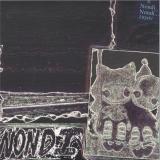
Following her acclaimed 2023 release Flood City Trax, a dreamy, lo-fi take on footwork inspired by the crumbling rust-belt city she calls home, Nondi returns to Planet Mu with her second self-titled album, Nondi…While Nondi… retains some of the hazy, nostalgic atmosphere of Flood City Trax, it pushes her sound in bold new directions. “I made this album to capture the sense of freedom I used to get from music when I was first discovering it all,” Nondi says. “It’s meant to be cute, fun, kinda weird and emotional — but most of all, it’s a presentation of some of the prettiest tracks I’ve made.” Though she hasn’t really experienced club culture where she lives, her impressionistic productions evoke the surreal, lingering sounds of a night out — the melodic haze that hums in your ears as you drift off to sleep. Lo-fi and melodic, yet fluid and free, her music carries a sense of flight and intuitive logic. Nondi’s influences range widely — Actress, Aphex Twin, footwork, and the stranger edges of dub techno are all felt, yet she hallucinates them through her own weathered, dreamlike lens. Her tracks often build from clashing loops that evolve and transform organically, or from familiar genre elements reshaped by her instinct for misty, heart-wrenching melody. Some moments stay closer to genre, like Broken Future 175, a drum-and-bass tear-out that dissolves into lush, blurred chords, or Just Hanging Out, a bruised and beautiful take on 2-step. Lead single Tree Festival feels like a blown-out fusion of rave energy and sped-up new-age bliss, while Death Juke drifts through off-beat vocal samples, pulsing drums and 8-bit FX, reminiscent of early Steve Reich reimagined through a Game Boy. Nondi… is a uniquely moving and exploratory album that expands her sonic world even further. Lo-fi yet luminous, playful yet profound.
- They Listen
- Roots Entwined
- Our Times
- New Birth
- Lonely Oak Part 1
- On And On
- Dust To Dust
- Interconnected
- Lonely Oak Part 2
Inspired by Thomas Hardy"s poem Transformations, ETERNAL BIRTH is Eliza Marshall"s debut solo album and a powerful statement on connection, ancestry and renewal. The album traces the cycles of life from conception to death, revering the natural world as a living archive of our ancestors and exploring the unseen bonds that connect past, present and future generations. Across the record, Marshall creates a rich, cinematic soundscape blending classical, folk and world traditions with flutes, whistles, bansuri, spoken word, percussion and electronics. Produced by Ivor Novello Award recipient Graeme Pleeth, the album features an international line-up of world-class musicians including Ady Thioune and Ansumana Suso (Senegal / The Gambia), Drew Morgan and Donal Rogers (USA / UK), Johnny Kalsi (UK) and Lena Jonsson (Sweden). Influences range from Steve Reich to Paul Simon, while remaining rooted in Marshall"s distinctive compositional voice.