Foil Jacket - Red, Cyan and Black Merge with Splatter. Das bahnbrechende Album Spiritual Healing von DEATH, ursprünglich 1990 veröffentlicht. Es markiert eine neue Wendung in der DEATH-Diskografie, die eine sauberere Produktion, ein neues Maß an grenzüberschreitendem musikalischem Können und Songwriting-Fähigkeiten einleitete, die zuvor von einer Metal-Band unvorstellbar waren. Spiritual Healing setzt den Standard für Riffs, verrückte Taktwechsel und natürlich die meisterhaften Gitarrensoli von Frontmann Chuck Schuldiner.
quête:future death
DRIFT. Is British-Italian producer Nathalia Bruno, releasing music under the guise since 2015. Her 'techno-pop' EPs 'Black Devotion' and 'Genderland' released with Avant! records were the first explorations in finding the sound of DRIFT. but as the name suggests, is in constant flux. In 2020 'Symbiosis' the debut record was released on Hamburg's Tapete Records, an assemblage of lo-fi futurism reflecting on the breakdown of communication and interaction Nathalia felt was increasing around her. Channelling classic industrial electronica, haunting melodies, using samples, field recordings and curated sound as a 'canvas to rewire the vision of the future as colourful and old, ceremonial and rust beaten. A shrine like ornament and clinical machine language plaited together.'. In 2022 DRIFT. Self released 'The nature of things', a 30 minute piece entitled 'CTRL/ Algorhythm of love' written and produced for designer Mona Cordes' 'Cellusion' show for London fashion week. "_a journey into the dark heart of the dancefloor. The glimmering bass-heavy trance of its opening section could be classic Underworld, while its ambient center is genuinely Eno-esque. And then it all kicks off again as a Berlin school style banger. It's terrific" says Electronic Sound Magazine. This year, 2023 will give birth to DRIFT.'s second album released with God Unknown records '11 points In Time' written for and based on disappeared artist Rosi Crucci, compiled of sounds/field recordings recorded onto cassettes found in the attic of the home she last lived at, interpreted into song using some of her poetry and journal entries of what was happening in the world around her, attempting to finally give Rosi a voice. PRESS Louder Than War album review 'Symbiosis' (2020) "...blends passion with precision to create a tapestry of machine-made sounds that are bursting with ideas and filled with emotion. "We live in times where nothing means nothing," she sings on Visualise The Invisible. "And nothing is true." Never more so than now...Over the course of its ten tracks, Symbiosis draws from pretty much every strand of electronic music throughout its 50-year history" Shindig Magazine review 'Symbiosis' 2020 "A brilliant, fascinating album" Post Punk Magazine review 'Symbiosis' 2020 "is an exercise in disjointed meditation, a trip through the doors of the spirit lodge and inner workings of the human psyche." Pop Matters Review 'Symbiosis' 2020 "...One track in particular, "In Orbit", speaks to this new disturbing unknown we are creating. A distorted, three-note death knell drives it as repeated knocking seems to come from a dank tunnel. If it sounds bleak, it's likely also to be therapeutic and finds common ground with the entrancing industrial thud of Throbbing Gristle or Third Eye Foundation..."
London noise-rock quartet USA Nails have announced their upcoming album Feel Worse’, out March 22nd 2024. It’s the first album on their new label One Little Independent Records (home to anarcho-punk bands both old and new; Crass, Bad Breeding and more). The band have forged a considerable reputation since their formation in 2013 from their South London base, comprising of members of Kong, Future Of The Left, Blacklisters, Death Pedals and Silent Front.
‘Feel Worse’ explores schadenfreude; the pleasure derived from another person’s misfortune. With this, they use new material to attack austerity and UK authoritarianism, consumer culture (particularly the consumption of quick fix reality TV and hyper-capitalist agendas), youth culture and bullying, and more. They do so with their intense and unmistakable brand of abrasive, chaotic post-hardcore. There’s a raw and uncompromising energy to USA Nails, and ‘Feel Worse’ is their most powerful and vital album to date.
London noise-rock quartet USA Nails have announced their upcoming album Feel Worse’, out March 22nd 2024. It’s the first album on their new label One Little Independent Records (home to anarcho-punk bands both old and new; Crass, Bad Breeding and more). The band have forged a considerable reputation since their formation in 2013 from their South London base, comprising of members of Kong, Future Of The Left, Blacklisters, Death Pedals and Silent Front.
‘Feel Worse’ explores schadenfreude; the pleasure derived from another person’s misfortune. With this, they use new material to attack austerity and UK authoritarianism, consumer culture (particularly the consumption of quick fix reality TV and hyper-capitalist agendas), youth culture and bullying, and more. They do so with their intense and unmistakable brand of abrasive, chaotic post-hardcore. There’s a raw and uncompromising energy to USA Nails, and ‘Feel Worse’ is their most powerful and vital album to date.
HJirok is a mythical figure, conceived as a fictional character by Iranian-born Kurdish singer and artist Hani Mojahedy. Together with versatile music producer And Toma of Mouse On Mars, she combined a variety of sounds collected during their joint travels to Iraqi Kurdistan and elsewhere with heavily processed recordings of Sufi drum rhythms and setar melodies. The result is a driving, dubbed-out, and deeply intricate soundscape that perfectly sets the stage for Mojahedy's extended, unconventional vocal techniques and polyglot lyrics. Both informed by tradition and rigorously forward-looking, »Hjirok« (with a lowercase J) is at once a profoundly personal album and a universal utopian promise. As a ghost from the past, HJirok draws on Mojtahedy's memories to mould a new future out of them.
The foundation for »Hjirok« was laid in the city of Erbil in the Kurdish part of Iraq. During one of their stays in the region, Mojahedy and Toma recorded the three percussionists Hadi Alizadeh, Jawad Salkhordeh and Serdar Saydan as well as setar player Ali Choolaei from Motahedy's backing band while they were playingthe rhythms and notes that she had grown up with in the house of her grandfather in the Iranian city of Sanandaj. Her memories of that place revolve around hypnotic Sufi music, dervishes in deep trance, and ecstatic singing. Much like this music seemed to open a portal to other dimensions, the inhabitants of the house lived in a sort of alternative reality: It provided them with a hideaway from political circumstances. Following the Iranian revolution in 1979, a Kurdish rebellion ensued but was met with the utmost brutality by the new regime, which resulted in the death of thousands.
It is no coincidence that the music on »Hirok« would draw on rhythmic patterns that were passed on from one generation to the next for hundreds of years. »The project is rooted in the figures of the Sufi dervishes and thus a culture that precedes today's political, social, cultural, and religious systems,« explains Mohtahedy. »The Sufi sound travelled around the entire world. I like to think of it as a dialogue between peoples-one based on the rhythms of the drums and the sound of their voices.« Toma adds that by electronically transforming the recordings and enriching them with field recordings from both rural and urban spaces, they were able to use the stories told by the drums and the setar to create an entirely new narrative.
The story told by these eight pieces is hence a deeply personal, but also inherently political one. Moitahedy herself left Iran in 2004 and relocated to Berlin in 2010. Having continued to use her art as a platform to tirelessly advocate for the rights of the Kurdish people and women under oppressive regimes, she has not been allowed to return to her country of origin ever since. »Hani is singing for equality and there are people who are afraid of that-her femininity, her strength.« Toma says. Much like earlier Hirok sound installations addressed human-made climate change and other systemic ills, also »Hjirok« can hardly be disconnected from far-reaching struggles for liberation and equality.
This is also true on a thematic and even linguistic level. »The lyrics are about a promise,« Mojahedy says, citing Kurdish writer Ebdulla Pesêw as an inspiration. »At their core, these are about that day on which violence and fear become a thing of the past; what they tell you is ot not give up, to keep hoping,« she adds. The promise embedded in them is an emancipatory one. These contents are mirrored on a linguistic level: The lyrics were written in both Kurdish and Farsi, blurring the lines between the two languages and thus, Kurdish and Persian cultures.
Mojahedy, or rather HJirok, conveys these philosophical themes with elegance. Herversatile vocal performance is only loosely basedo n established styles. »Of course everything started with traditional rhythms, but we kept pushing things further and further, so Idid the same with my voice,« Mojahedy explains. »There were no boundaries.« The same can be said of the field recordings that she and Toma used. Whether it's conversations between members of the Pesmerge, the Kurdish armed forces, having a chat in meadow full of bunnies or the humming and buzzing of metropolises like Tehran: »Hirok« paints a sonic picture that is quite literally autopian one; that of a non-place in which different soundscapes, cultures and ways of life coexist peacefully.
What the album conjures up from Mojahedy's memory is not only a very specific place during a unique time in history as experienced by a single person. It is also ametaphorical home open to anyone who wishes to enter - promise of a better, more egalitarian future for everyone. Hence, HJirok will bring it on tour, presenting the material as an audio-visual live show that makes use of the photo and video material that Mojahedy and Toma have collected during their travels through Kurdistan.ja
- A1: Jiving Juniors Sweet As An Angel
- A2: Alton & Eddie My Heaven
- A3: Higgs & Wilson When You Tell Me Baby
- A4: Lloyd Adams I Wish Your Picture Was You
- A5: The Moonlighters Don't You Know
- A6: Ricketts & Rowe Dream Girl
- A7: Annette & Shenley The First Time We Met
- B1: Belltones I'll Always Call Your Name
- B2: Ruddy & Sketto Little Schoolgirl
- B3: Derrick & Patsy Crying In The Chapel
- B4: The Blues Busters I've Done You Wrong
- B5: Jiving Juniors My Sweet Angel
- B6: Higgs & Wilson Change Of Mind
- B7: Wilfred Jackie Edwards Never Go Away
Repress
A third and final volume of Jamaican doo wop & R&B records taken from the late 50s and early 60s.
These records represent a period in which sound-systems were beginning to dominate the island, with Duke Reid and Sir Coxsone Dodd stepping up their rivalry by beginning to make and release their own records rather than rely on US imports for use in their dances. Many of these records are definitely more-or-less imitations of the American records, as the uniquely Jamaican ska sound was yet to take hold - however many of the future stars of ska, rocksteady and reggae were beginning to cut their teeth in the industry on these records, incl. Alton Ellis, Derrick Morgan, Derrick Harriott and more, and provide a unique view into the fledgling independent record industry culture in Jamaica that would prove to be unbelievably prolific and unparalleled for an island of it's size.
DOODSESKADER (Dutch for “Death Squad”) is a merging of the minds of Tim De Gieter (Amenra, Much Luv Studio) and Sigfried Burroughs (Kapitan Korsakov, Paard).
Throughout their three years of existence, DOODSESKADER has been relentlessly pushing the envelope of what it means to be a “heavy” band. From the grunge-infused sludge on their EP “MMXX : Year Zero” to the punishing blend of hiphop and hardcore of their debut album “Year One” and the sonic onslaught of relentless rapping on standalone singles such as “FLF” and “Still Haven’t Killed Myself”, they’re breaking free of any form of categorization.
The duo has been compared to genre-defying trailblazers such as Ghostemane, Show Me The Body, and Ho99o9, however, they clearly bring their own sonic palette to the table.
The red thread in all of this has been their brutally honest and introspective lyrics. Far from your run-of-the mill type of band, DOODSESKADER uses their instrumentation as a sonic backdrop for the emotion and message they try to convey; their music serves as a mirror for life itself. Sometimes brutal, sometimes fragile, sometimes energizing, but always unexpected.
Now, on March 8th, with the arrival of their sophomore album “Year Two”, DOODSESKADER takes things up another couple of notches. From silky-soft “Pastel Prison” to the absolute carnage of “The Sheer Horror Of The Human Condition”, this record is a testament to both their creativity and their will to leave their mark on this world. It’s a trip in every sense of the word, tapping into even more genres such as R&B, techno, hardcore punk, and moody ballads reminiscent of the 90s, all blended seamlessly in their musical vocabulary and making for a sonic journey unlike anything you’ve heard before.
Where their last record “Year One” saw the duo struggling with their inner demons both past and present, “Year Two” is an undeniable display of progress; not only introspectively, but also musically. De Gieter and Burroughs sound outright bloodthirsty, ready to take on anyone in their way. Tracks like “Bone Pipe” or “I Ask With My Mouth, I’ll Take With My Fist” paint a vivid picture of the band’s will to plot their own their path through this world, while at the same time slowly coming to terms with their pasts on tracks like “Peine” or “People Have Poisoned My Mind To A Point Where I Can No Longer Function”. “Year Two” undeniably sees DOODSESKADER’s promise fulfilled: it’s both a complete teardown of genres and boundaries, a sonic wrecking ball wielded by two people trying to get better.
Live, DOODSESKADER proves to be an absolute must see, translating into their sold out AB-release and a sleuth shows over Europe playing with acts such as Brutus and Amenra and on the stages of festivals such as Hellfest (FR), Mystic Fest (PL), Lokerse Feesten (BE), Fluff Fest (CZ) and much more.
The Pheromoans are tenants of an unruly domain. Over the last 18 years the group have evolved from garage rock primitivists to auteurs of their own curious sound; a frothy brew of loose electronics, refractory rock and humdrum musing. Their songs are mutable, capricious, unreliable narrations, often withholding as much as they reveal. Russell Walker’s understated vocal has always been the band’s unifying focus, it is wry, unsparing and wilfully honest. Walker’s lyrics are an observational tour de force, sometimes droll, yet often tipping over into unlikely pathos. With previous releases on Upset The Rhythm, Convulsive and Alter, 2024 will witness The Pheromoans return with lucky album number 13, entitled ‘Wyrd Psearch’ (out March 1st on Upset The Rhythm).
‘Wyrd Psearch’ was recorded in Lewes throughout 2023. This was undertaken by founding member James Tranmer, his keen instinct for how the band should sound shaping many of the creative decisions. Joined by new guitarist Henry Holmes, the five piece doubled down on a decidedly breezy, melodic approach. Scott Reeve’s drumming is ever brisk, whilst Daniel Bolger explores AOR peripheries on keyboard and bass. “Wyrd Psearch finds us on relatively zestful form” affirms Walker “whether it be merrily recalling the Jason Williamson / Tim Lovejoy Covid summit, or mentally bathing in the pleasures of lunch hours spent strapped to a listening post in Borders.” With The Pheromoans there is always a familiarity at play, only broken and reassembled, like a bygone sitcom gone rogue in your memory. This contributes to the group’s peculiarly British outsider perspective, one that shouts from the sidelines, but never goes unnoticed.
Subjects covered lyrically on ‘Wyrd Psearch’ include “mid-life crises, male pattern baldness, and thwarted artistic and personal ambitions” according to Walker himself. “Nothing is off limits for scrutiny, even rural arts communities” he concludes. Lead single ‘Downtown’ swings with chiming guitars and finds Walker mid-breakdown trying to persuade a loved one to accompany him into the town centre to collect controlled medication and wind back the clock to happier times. “I want to keep you in cotton wool until pay day” he confides. ‘Cropped to Death’ and ‘Father Austin’ are ruminative and more relaxed in nature, whilst ‘Twibbon Wife’ is a more energetic effort, all jabbed synth chords, circuitous basslines and rampant drum fills. ‘Faith in the Future’ similarly bounds along with reverie.
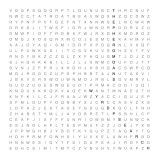
Walker claims that the album’s title is an expression of his frustration at the ubiquity of people claiming things are eerie or weird / wyrd in the present cultural milieu. The artwork for the record is designed as an actual word search too, a knowing nod to how we all grapple for meaning amongst the absurdity of each day. Leaning into ‘weird’ as a coping mechanism is not on The Pheromoans’ agenda however. This album holds little sway with the supernatural, it’s not enough. The overriding impression given by ‘Wyrd Psearch’ is of a band renewed with ideas. There’s no trouble finding the right words, they’re hitting their mark, keeping up with the commentary. ‘Wyrd Psearch’ is a document of The Pheromoans mastering their unquiet moment.
« Tas Malonumas »
Lithuanian word
Def: meaning That Pleasure
Example: conversation between a young, inexperienced person and an elderly person who’s near death’s door. The old one is telling the young one how life is an unceasing search for pleasure.
Track: takes the form of a mental stroll that takes you far, far away.
« Room of Men Eaters »
Human expression of cannibalism
Def: absurd situation in which men and women eat each other in a room
Track: the contrast between the absurdity of the situation and the apparent normality of speech told by the vocoded voice of Shkema is just astonishing.
« Sarka Syrkaza »
From the future
Def: meaning “super sarcasm”
Example: one day you wake up in the morning and you feel that something within you has changed. All seems to be nonsense and you start to look at everything through the grey glasses of sarcasm. One might look enjoying oneself, but in reality this is an extremely draining state of mind.
Track: musical expression of that state of mind
« Je n’aime pas les fêtes »
World expression
Def: parties are boring
Track: Shkema remix of his friend Afrodelic is a wacky version that contrasts French lyrics talking about how disastrous parties feel with a beat that just makes you want to dance.
Hi-NRG synth pioneer Patrick Cowley moved away from his usual robotic steeliness on 1982’s “Primitive World,” drawing instead on the groove rock of early 1970s gay discos. It’s a percussion track influenced by Baba- tunde Olatunji’s 1959 hit “Jin-Go-Lo-Ba,” made more famous by Santana’s 1969 cover. Cowley updated the sound for the 1980s with electronics and drum machines but kept the playful attitude of the original. Two choirs of voices chant back and forth to each other, giving Cowley a chance to include many of his friends from the San Francisco dance music community.
This has been DJ Hifi Sean’s year, with a best-selling album with David McAlmont , count- less live gigs and high-profile remixes to his name. His interpretation of Cowley’s “Primitive World” can be counted among his best, bringing an intense TB-303 acid house vibe that perfectly complements Cowley’s weird electronic blips and bleeps. The effect is a disorienting mix of psychedelic 70’s groove, 80s synth pop, and 90s tacky house vibes. “Primitive World,” is one of the brilliant standouts on Cowley’s final record, Mind Warp, the so-called “death album” written as his health was rapidly sinking. Hifi Sean’s new remixes pay tribute to Cowley’s genius while fusing the track even more strongly to dance music’s electronic future.
London band Those Unfortunates release their second album, Welcome to Woodberry Down, on October 27th through Gare Du Nord Records, on LP accompanied by a limited edition photobook.
Welcome to Woodberry Down is a collection of songs about the eponymous housing estate in the London Borough of Hackney. Singer/lyricist Ben Brill’s family were among Woodberry Down’s first residents in 1950. Dubbed the estate of the future, and built on land that had previously been the preserve of the wealthy, Woodberry Down’s social homes were emblematic of a new post war optimism.
Brill’s family called Woodberry Down home for over 50 years, eventually seeing the estate fall into managed decline. Not long after his grandmother’s death in 2006, the bulldozers moved in, and the foundations were laid for a new, privately owned housing development.
Brill started work on this project in 2016. At the time a Hackney resident, he spent countless early mornings walking round the condemned – but still not quite empty - estate, and watching a new version of the future rise in its place. He took photographs, and started writing songs, inspired equally by the liminal spaces he explored, and the utopian ideals of the London County Council planners.
The band will be celebrating the album’s launch with friend Paolo Ruiu at Margate’s Tom Thumb Theatre on October 27th, and London’s Betsey Trotwood on October 28th.
For more than 30 years, singer-songwriter and guitar hero Mary Timony has cut a distinctive path through the world of independent music, most recently as vocalist and guitarist of acclaimed garage-pop power trio Ex Hex (Merge) but also as a member of seminal postpunk band Autoclave (Dischord), celebrated leader of the deeply influential Helium (Matador), multifaceted solo artist (Matador, Lookout!, Kill Rock Stars), and a co-founder of supergroup Wild Flag (Merge). Described by Sleater-Kinney's Carrie Brownstein as "Mary Shelley with a guitar" and dubbed "a trailblazer and an innovator" by Lindsey Jordan a.k.a. Snail Mail, Timony has distinguished herself as one of her generation's most influential. Although she has remained a cult hero and critical favorite since the early '90s, Timony's many triumphs have long been counterbalanced by crippling doubt and self-nullification. Her fifth solo album, Untame the Tiger, approaches these emotions head on. Her first solo release in 15 years is a startling document of an artist fully coming into her own power during the fourth decade of her career. It is the product of lessons learned during life-altering struggle. The mystical, acoustic-driven Untame the Tiger emerged after the dissolution of a long-term relationship and was bookended by the deaths of Timony's father and mother. The album was recorded during a two-year period during which she was the primary caregiver for her ailing parents. The tectonic psychic shift Mary experienced due to this loss informs many of her lyrics. Standout track "No Thirds" "is a song about losing everything and having to keep on going," says Timony. "I wanted the verses to sound like a wide-open barren space, like driving across a desert, because that is what the song is about - losing people and the feeling that your future is a giant, wide-open blank space." The stripped-back acoustic instrumentation of "The Guest" conjures Sweetheart-era Byrds. Timony describes it as a song sung directly to loneliness: "I was imagining loneliness as a house guest who keeps knocking on your door. I thought it would be funny to say loneliness is the only one who always comes back." Untame the Tiger does not eschew Timony's guitar hero reputation; in fact, "Summer" relishes in it, a straight-up banger that you'd be half tempted to call "no frills" until its initial garage rock stomp breaks into the unexpected bliss of a twin guitar solo conclusion. "I wanted the recording to have the energy of the Kinks, early Dio and Elf, or Rory Gallagher," she explains. "I was also listening to a lot of Gerry Rafferty's first solo album and was inspired to have two simultaneous guitar solos." Untame the Tiger picks up the thread woven through Timony's freak-folk-anticipating solo albums of the early '00s. Basic tracks were recorded at Studio 606 in Los Angeles, with Timony backed by Dave Mattacks, drummer of legendary British folk-rock band Fairport Convention. "Mattacks is a hero of mine and one of my favorite musicians of all time. He is a true legend. I never in a million years thought he'd agree to play on my record," says Timony. "Before the session, I had a panic attack and had to go sit alone in the parking lot_ Once we started playing together, it felt so great that the fear subsided and turned into excitement. His playing felt instantly familiar, which makes sense because it's the foundation of many of my favorite records." Untame the Tiger was produced by Mary Timony, Joe Wong, and Dennis Kane. The album was recorded over the course of two years at Studio 606, Magpie Cage, 38North, and in Mary's basement Additional engineering by J. Robbins (Jawbox, Burning Airlines). Musicians include Chad Molter (Faraquet, Medications), David Christian (Karen O, Hospitality), and Brian Betancourt (Cass McCombs, Devendra Banhart, Hospitality). The album was mixed by Dave Fridmann (MGMT, The Flaming Lips, Mercury Rev), Dennis Kane, and John Agnello (Dinosaur Jr., Kurt Vile, Waxahatchee).
- A1: Niche News
- A2: 1954: Godzilla Attacks Tokyo - Reconstruction
- A3: 1966: Godzilla Attacks Tokai - Government's Decision
- A4: 1996: Godzilla Attacks Osaka
- A5: Superior Officer Miyagawa's Demise
- A6: Main Title
- A7: Scout
- A8: Special G Task Force
- A9: Unfortunate Disaster
- A10: G Confirmation I
- A11: Test Preparation
- A12: Black Hole Gun Engaged
- A13: The Late Night Abnormality
- A14: Dumping The Egg
- A15: Identification Tag
- A16: Cell Division
- A17: Meganulon
- A18: Kiriko And Jun
- A19: G Confirmation Ii
- A20: The Griffon Mobilizes
- B1: Godzilla Surfaces
- B2: Transmitter Installed
- B3: Dimension Tide
- B4: Submerged Shibuya
- B5: The Underwater Search In Shibuya - Godzilla In The Trench
- B6: Leading
- B7: Fight Of The Meganula
- B8: Starting The Dimension Tide
- B9: Godzilla X Meganula
- B10: The Dimension Tide Fires
- B11: Immortal Godzilla
- B12: Larval Growth
- B13: Megaguirus Is Born
- B14: Ultra-High Frequency
- B15: The Ultimate Combat Form
- B16: Godzilla To Tokyo
- C1: Godzilla Lands In Odaiba
- C2: Godzilla X Megaguirus I
- C3: The Effect Of Ultra-High Frequency
- C4: Godzilla X Megaguirus Ii
- C5: Godzilla X Megaguirus Iii
- C6: Godzilla X Megaguirus Iv
- C7: Program Restored - Conclusion
- C8: The Falling Dimension Tide
- C9: Kiriko's Decision - Lock On
- C10: Dimension Tide X Godzilla
- C11: A Moment Of Victory
- C12: End Credits
Godzilla returns once more to face the combined might of Japan's most extraordinary scientists in the second picture of the Millennium-era: GODZILLA VS. MEGAGUIRUS. Looking for new ways to defeat the Big G, the JSDF invent an incredible new weapon called Dimension Tide, which creates a miniature black hole that will transport Godzilla far away from Earth. However, a byproduct of weapon testing leads to thousands of winged insects invading Tokyo and attacking Godzilla. The Big G fights back, but their new queen appears, now kaiju-sized due to Godzilla's atomic breath. A thrilling battle then occurs as Godzilla goes head-to-head with Megaguirus while the JSDF frantically works to disappear both monsters forever.
GODZILLA VS. MEGAGUIRUS saw the introduction of composer Michiru Oshima into the franchise with a fantastic score that built on previous Toho musical traditions with a view to the future. While using music composed by the great Akira Ifukube for two sequences, Oshima also unveiled her own theme for Godzilla. First heard in a slow and foreboding mode, it's quickly unleashed in gigantic low tones, as terrifying and inevitable as the Big G himself. Soaring heroic material represents the JSDF and their advanced Griffon aircraft, while powerful brass is used for the threat of Megaguirus. Cementing Oshima's reputation as a great composer, GODZILLA VS. MEGAGUIRUS is a classic of kaiju musical mayhem. - Charlie Brigden
Composed by Michiru Oshima
Artwork by Attack Peter
Manufactured in Czech Republic
Musica Per Immagini is about to go beyond vinyl reissues of soundtracks and music libraries, with a brand new series of products.
From 2024 onwards, it will release a series of albums of contemporary and electronic music often "inspired by" different sources, both sonic, if not literary and cinematographic. A way to embrace the future without forgetting the past.
Heinrich Dressel's “Polarlys” is the first album of unreleased tracks published by Musica Per Immagini, or a soundtrack for a imaginary noir film set in the icy waters of northern Europe, inspired by the book “The Mystery of the Polarlys” by Georges Simenon. Drones and ethereal atmospheres are paired with a cinematic background in order to describe the frost of the northern seas and the restlessness of the journey: beyond the classic analog sounds, a specific use of additive and vector synthesis particularly in vogue during the Nineties and typical of vintage synthesizers.
Repress on cream and black galaxy vinyl, limited to 500 copies. PHOBOPHILIC's abrasive explorations of existentialism and the limits of human consciousness are a welcome feature of the currently thriving US death metal scene. The influence of death metal's forefathers is evident in PHOBOPHILIC's full throttle output, but their gaze is fixed firmly on the future - wherever it may take them... Since their 2016 formation PHOBOPHLIC have steadily accumulated early releases in the shape of two demos, 2019's Undimensioned Identities EP and a split release with Canada's Sedimentum, all the while honing their craft out across the North American touring circuit - featuring live stints with Gatecreeper and Mutilated respectively, as well as appearances at LDB Fest and Philadelphia Death Nexus - positioning themselves among US death metals most intriguing young acts. Across Enveloping Absurdity's runtime PHOBOPHILIC's quest for elucidation is explored in punishingly heavy fashion across tracks such as Those Which Stare Back, Nauseating Despair and Survive in Obscurity. But for all of the Midwestern group's old school death metal artisanship and lyrical angst, there is a fundamental rejection of misplaced nihilism in the form of quieter and reflective passages throughout. No better is this showcased than mid-album track Individuation's calm before the storm, which offers up Enveloping Absurdity's most contemplative moment.
Very limited vinyl pressing, 500 copies, housed in a full colour sleeve & printed inner sleeve & download. CD in a 4 panel digipack with a 4 page lyric booklet. New Heavy Sounds are always on the lookout for new bands that are looking to push the boundaries of what is considered as inhabiting the ‘heavy’ or ‘metal’ spectrum’. Stuff that pricks up the ears, a bold new voice within a maelstrom of genres and sub-genres. We believe we have found such a band. New York-based GUHTS (pronounced ‘guts’) declare themselves to be an ‘avant-garde post-metal project, delivering larger than life sounds through, deeply emotional music’. We are thrilled to be able to deliver that statement in the form of their debut album ‘Regeneration’. By their own admission, GUHTS' musical style is influenced not only by iconic metal bands like Gojira, Cult of Luna, YOB and Deftones, but more unconventional acts like Bjork, Subrosa, Isis, Julie Christmas, and even PJ Harvey. It’s undoubtedly heavy, with a strong feminist streak, it’s cathartic and weighty, a formidable debut for such a new band. Founded in 2020 as a passion project by Scott Prater (Witchkiss), and Amber Burns (Witchkiss) and then Dan Shaneyfelt (Black Mountain Hunger), GUHTS became its members’ main focus following the release of their first EP 'Blood Feather' which itself received rave reviews from the likes of Decibel Magazine, Invisible Oranges, The Obelisk, Cvlt Nation, and more. Brian Clemens Sleaping Dreaming) & Daniel Martinez (Nefariant) joined GUHTS in 2022 and the band swiftly started booking tours and making plans to record 'Regeneration'. Since then GUHTS have been steadily making a name for themselves with their powerful live performances., sharing stages with the likes of Yob, Cave in, Marissa Nadler, plus appearances at the Maryland Doom Fest, Crucial Fest and Ohio Doomed and Stoned Fest. ‘Regeneration’ is set to cement their status as one of the coolest and most interesting bands on the scene. Of the album, vocalist Amber says. "Regeneration" symbolizes the power of self-renewal, often overlooked. Embracing it means shedding old layers and welcoming new beginnings. Without this, life stagnates and is “sustaining”. Through regeneration, change becomes empowering, allowing new facets to emerge. It's a courageous, transformative process, inspiring others to overcome fear and embrace change. The album embodies the human spirit's resilience and capacity for growth. Musically ‘Regeneration’ is a powerful and intense series of songs, topped off by some seriously powerhouse and expressive vocal performances. It’s slow-moving chords, moving like sheets through sludge. High guitar lines above, ranging from piercing and shimmering to nasty. Drums pound but not without groove. There are strings, pianos and synths widening the palette. Atmospheric sludge, Metalgaze, maybe, but there’s also that link to the New York Noise lineage from The Velvets and Sonic Youth, becoming a type of post-hardcore in the process, while gaining a connection to metal partly due to the sheer heaviness. A raft of creative experimentation that pushes beyond the realm of post-metal. And then of course, the very first thing that hits you is Amber Gardner's unbelievable, hypnotising vocals - as scary as a banshee while also intimate and persuasive. Amber means it for sure and almost dominates the proceedings. Her lyrics are eclectic, thoughtful. Immersed in women's narratives frombooks like "Women Who Run With the Wolves" or works like "On Our Best Behavior" by Elise Loehnen. Amber advocates stepping beyond comfort zones, believing it's transformative for individuals and vital for Earth's future. Hokey occult rock it is not. In short ‘Regeneration’ is a bold and startling debut, that will reward and enthral listeners the deeper they delve into its many layers.
What I can say about TORRES is I think the music comes from a convicted place. Not convicted meaning a person is narrowly and foolishly committed to an ideal, or unshakably convinced of themselves, or a zealot, or stubborn. I mean dedicated, I mean: If TORRES' music gets weird, gets brainy, gets funny, gets defiant, provokes, deliberately scandalizes, employs the crass to undermine the austere, courts lofty philosophical truth-it's all done with the conviction of an artist with the (essential) belief in the worth of their task. I think you can hear it in the songs, someone reaching, leaning over the boundary between known and not, probing the almighty. After a decade and six studio albums and however many one-offs and tours and articles read and conversations had, the parts of this pursuit I've been able to observe are all marked by a dedication to creation that treats the act-ongoing-with as much preciousness as the evidence of the act that is left in a record. The modes of being are different: heartbroken, broke, furious (right- and unrighteously), awestruck by love, compelled by desire. sometimes resigned to death, sometimes fascinated by and reverent of the future. Sometimes viscerally present, other times suspended in heady awareness, poised on a fulcrum of observation and participation in the phenomenon that aliveness is. The tools are the same: instruments that growl and shriek and moan, a lyrical voice shouting, swooning, chuckling, snarling as the moment commands. TORRES' music-making is conducted in a melodic vocabulary unique to itself-methods, equipment, circumstances shifting around the impulse to affirm the self within the world, to make art that bears all these little artifacts of the divine and of the real and show it to people and know it is valuable. I think that's what Mackenzie's music does. And I think it's just incredibly good music to listen to. -Julien Baker TORRES is the pseudonym of Mackenzie Scott. She was born January 23, 1991, and lives in Brooklyn, New York, with her wife Jenna, stepson Silas, and puppy Sylvia. She has been releasing albums and performing as TORRES since 2013. What an enormous room is TORRES' sixth studio album (her third with Merge). It was recorded in September and October 2022 at Stadium Heights Sound in Durham, North Carolina. It was engineered by Ryan Pickett, produced by Mackenzie Scott and Sarah Jaffe, mixed by TJ Allen in Bristol, UK, and mastered by Heba Kadry in NYC. The album contains 10 songs. Mackenzie wrote all of them. Sarah played bass guitar, synths, drums, organ, and piano. Mackenzie sang vocals, played guitar, bass, synths, organ, piano, and programmed drums. Additional synth bass, tambourine, and shakers were played by TJ Allen.
- A1: Snooper - Running
- A2: Big Special - This Here Ain’t Water
- A3: Moin - No Neck
- A4: Avalon Emerson - Sandrail Silhouette
- A5: The Lost Days - For Today
- A6: Cindy - Why Not Now
- A7: Tapir - Untitled
- B1: Sofie Royer - Mio
- B2: Jellyskin - Bringer Of Brine
- B3: Red Axes - Hey
- B4: Lynks - Small Talk
- B5: Joshua Idehen - Don’t You Give Up On Me
- B6: Kara Jackson - Why Does The Earth Give Us People To Love?
Während die Lichter für 2023 ausgehen und wir ins Jahr 2024 vordringen, melden sich die Rough Trade-Shops mit ihrer jährlichen Counter Culture-Auswahl zurück. Die LP enthält 13, die Doppel-CD ganze 35 Tracks. Alles ist abgedeckt, von der chaotischen Partywut von Snooper über den aus den Fugen geratenen Metal von Pest Control bis zum biertrinkenden Spaßfest der Mary Wallopers. Du bekommst Lip Critic im Death-Grips-Style, ein elfminütiges Sludge-Workout von Slift, den Badu-Future-Soul von Liv.e und die 'new kids on the black' Lifeguard mit ihrer einzigartigen Interpretation von Post-Punk. Wie immer leben und atmen die Rough Trade-Shops neue Musik und diese Serie steht dafür.
Scandinavian jawbreakers Harmagedon offer up a nightmare future on their debut album Dystopian Dreams, with a refreshingly modern concoction of melodic death metal and crust punk. Three piece riff machine from Stockholm Sweden, Harmagedon is a raw festering carcass of dynamic grind and roll. Featuring members of Martyrdöd and Freedom raising hell once again, Harmagedon’s debut record Dystopian Dreams is a fusion of heaviness that is difficult to pin down but makes all the damn sense in the world! With focus on primal minimalism but maximum animalism, Dystopian Dreams is the ground zero of an explosive power trio summoning raw energy into being. With no frills and no gimmicks, just relentless heaviness, Harmagedon is a matured brew of “crust punk” or “d-beat” (“kängpunk” for the diehards) infused with ravishing death-metal. Dystopian Dreams is made by adepts of distortion and grime to be imbibed by connoisseurs of rage and chord-fury. Recorded live at their own studio, Dystopian Dreams was conjured with the help of Fred Forsberg of Mass Worship at the controls, capturing Harmagedon’s wildfire and blending this dense stew together. With the addition of Magnus Lindberg of Cult of Luna mastering it, Dystopian Dreams has that exceptional flavour of a future classic, where all the cogs and wheels of this merciless weapon fire on all cylinders. Black Sabbath, Entombed, Neurosis & High on Fire spring to mind, as the calibre of Harmadgedon’s riff whirlwind is of the finest quality, the antithesis of royalty but epic and majestic in delivery. Dystopian Dreams’ hulking magnetism leads you expertly to headbang and worship at the altar of timeless metal, without the slightest remnant of doubt. Songs like Reptilian and Controlled Chaos groove and churn, but pack a hell of a concrete punch, with nihilistic, gravelled guitars and spewing vocals of molten brimstone. Guitarist and vocalist Tim Rosenquist says: “Controlled Chaos is about propaganda actions and distractions but Reptilian is about how hard work makes you into this emotionless beast of a being. That song is best served blasting on the factory floor or in the car on your way to the office! Reptilian’s themes are at the core of what Harmagedon is about”. Look to the masters to deliver true heavyweight metal when the current scene lacks enough muscle and teeth. From a band made up of underground titans, Harmagedon is drawn from the well of eternal heaviness, living in death forever, what nightmares are made of. Harmagedon is: Tim Rosenquist - Guitars & Vocals Magnus Berglund - Bass Jens Bäckelin - Drums
- A1: Melt Session #1 Feat Robert Glasper Lyrics
- A2: Walkin
- A3: Worst Come To Worst
- A4: John Wayne Feat Buzzy Lee
- A5: The Last Lyrics
- A6: Mental Feat Bridget Perez & Saul Williams
- B1: Troubles Feat T-Pain
- B2: Ain’t No Way Feat 6Lack, Jasiah, Jid & Rico Nasty
- B3: X-Wing
- B4: Angelz
- B5: The Smell Of Death
- B6: Sanjuro Feat 454
- B7: Zatoichi Feat Slowthai
- B8: The Ills Lyrics
„Melt My Eyez See Your Future“ ist das bisher reifste und ambitionierteste Album von Denzel Curry. Aufgenommen im Laufe der Pandemie, zeigt Denzel sein Wachstum als Künstler und Mensch. Die Tracks, die aus einer Fülle von Einflüssen entstanden sind, unterstreichen seine Vielseitigkeit und seinen breit gefächerten Geschmack, der alles von Drum’n’Bass bis Trap umfasst.
Um diese Vision zu untermauern und die Bandbreite seines künstlerischen Schaffens zu zeigen, hat Denzel eine Vielzahl von Kollaborateuren engagiert und sich als einer der bahnbrechendsten Rapper der Szene etabliert.
First time on vinyl!
Newly remastered. LP housed in a gatefold jacket.
Featuring Herbie Hancock, Martha Reeves, Alphonse Mouzon, Chuck Rainey, Patryce “Choc’let” Banks, Carlos Morales, and members of The Pointer Sisters.
In the 1970s, Betty Davis defied genre and gender by pushing her voice to extremes and embracing the erotic. She articulated a kind of pre-punk, funk-blues fusion that had yet to be normalized in mainstream music – a style that few musicians have come close to replicating. As one of the first Black women to write, arrange, and produce her own albums, Betty was a visionary who disregarded industry boundaries and constraints. Raw, unapologetic and in full control, Betty paved the way for generations of future artists who said “funk you” to the music industry and social norms.
In 1979, when Davis entered an L.A. studio to record her fifth and final album, she was reeling from a series of setbacks. Three years earlier, after recording her fourth album, Is It Love Or Desire, Davis was dropped from her label and the LP was subsequently shelved. In 1978, her beloved band Funk House went their separate ways. Looking for a fresh start, Davis relocated to Hollywood to focus on songwriting. Before long, British manager Simon Lait (Toni Basil), offered to fund her next project.
With renewed vigor, Davis reunited with former Funk House guitarist Carlos Morales and brought together industry veterans like fusion drummer Alphonse Mouzon and session bassist Chuck Rainey. Old friends Anita and Bonnie Pointer (The Pointer Sisters) and Patryce “Choc’let” Banks joined Davis on vocals, as did Motown legend Martha Reeves. The resulting album, Crashin’ From Passion, was her most musically diverse, blending elements of reggae and calypso (“I’ve Danced Before”), jazz (“Hangin’ Out in Hollywood,” “Tell Me a Few Things”), dark synth-pop (“She’s a Woman”), and even disco (“All I Do Is Think of You”). Equally exploratory are Davis’ vocals, as she trades in her signature sass and snarls for more nuanced stylings.
Among the album’s few funk tracks is “Quintessence of Hip,” in which Davis hails musicians like Bob Dylan, Billie Holiday, Stevie Wonder, and John Coltrane, while deftly integrating elements of their work. The song also offers a moment of stark vulnerability, as she sings, “Isn’t rich? Isn’t it queer? Losing my timing so late in my career.” It would prove to be a prophetic line in the months to follow.
The mixing process was mired by artistic differences and then cut short, amid the death of Davis’ beloved father. Bereft and exasperated, Davis returned home for the funeral, setting into motion her retirement from the music industry. Crashin’ From Passion, meanwhile, would be shelved for 15 years and licensed for a CD-only release, without Davis’ consent, in the ‘90s. This 2023 edition of the album, made with Davis’ full approval and cooperation, marks its first official release and first time ever on vinyl. The package was designed by GRAMMY®-winning artist, Masaki Koike, while the album cover features an incredible shot of Betty captured in London in the mid-1970s by renowned photographer Kate Simon.
Crashin’ From Passion was remastered by Dave Cooley at Elysian Masters and pressed on vinyl at Record Technology, Inc. (RTI). The accompanying booklet includes a treasure trove of rare photos from the era, plus lyrics, and new liner notes by writer, ethnomusicologist, and Betty’s close friend, Danielle Maggio, who integrates interviews that she conducted with Davis, marking her last ever interviews.
Malian and French pair Siraba unveil their much-anticipated self-titled debut LP on Damian Lazarus’ Secret Teachings label, a 10-track odyssey fusing Mali’s rich musical traditions with cutting-edge electronic music.
Malian hunter Boubacar Samake and Damien Vandesande, one half of the French electronic band dOP, have won plenty of plaudits for the early singles taken from their debut album as duo Siraba. Those singles, spanning across the summer months, have found the pair bring the traditional sound of the Wassoulou - a river valley of West Africa - to the electronic world after 20 years of friendship. The music comes with an important underlying message of love and respect and results in spellbinding tracks that move heart, body and soul, finding a perfect home on Secret Teachings - a left-of-centre alternative label to Lazarus’ celebrated and often more club- focused Crosstown Rebels. With the arrival of the full album, the pair exhibit and showcase the emotional breadth and depth of their music, with detailed explorations of organic textures and native sounds merged with future-focused ideas and concepts.
The title track opens with an atmospheric mix of spoken words and spine-tingling chords that bring rich Afro flavours, while ‘Dounoiia’ is a languid groove made from hand drums and pixelated synth leads that cast a fine spell. The slow-blooming ‘Bani’ brings rich Malian blues and melancholic horns, while ‘Komafly’ is a rich mix of acoustic strings and broken beats that transports you to a hot and dusty landscape. A vital component of the sounds of the Wassoulou, the indigenous stringed instrument the Ngoni features again on the rousing ‘Nanse’ as spiritual vocals sung in Bambara rouse the soul.
‘Djandjo’ is another rich infusion of Malian culture with simmering electronics to make for something both ancient sounding yet futuristic, and the hypnotic ‘Ngana Fôlly’ with its rich bass is a song ‘dedicated to those who fight for the well-being of their families, for unity... a song for the people who also fight a great disease, between life and death’. The sublime ‘Toro’ is a wavy groove perfect for sundown - a deep and inviting sound rich in soulful vocals and dreamy melodies, while ‘Tolonawoulile’ is driven by the intense strumming of the Ngoni with busy hand claps and hurried drums and last of all ‘Fo Te Mokobana’ sinks into a heart-warming slow groove with sweeping strings and Malian percussion all overlaid with impassioned vocals.
A rich listening experience, Siraba’s debut album is an immersive journey and absorbing dive into the minds of two artists breaking new grounds while spotlighting native traditions and musical techniques spanning hundreds of years.
GREEN AND WHITE MARBLE VINYL.
The Beths occupy a warm, energetic sonic space between joyful hooks, sun-soaked harmonies, and acerbic lyrics. Their debut album Future Me Hates Me, forthcoming on Carpark Records, delivers an astonishment of roadtrip-ready pleasures, each song hitting your ears with an exhilarating endorphin rush like the first time you heard Slanted and Enchanted or 'Cannonball.'
Front and center on these ten infectious tracks is lead singer and primary songwriter Elizabeth Stokes. Stokes has previously worked in other genres within Auckland's rich and varied music scene, recently playing in a folk outfit, but it was in exploring the angst-ridden sounds of her youth that she found her place. 'Fronting this kind of band was a new experience for me,' says Stokes. 'I never thought I had the right voice for it.'
From the irresistible title track to future singles 'Happy Unhappy' and 'You Wouldn't Like Me,' Stokes commands a vocal range that spans from the brash confidence of Joan Jett to the disarming vulnerability of Jenny Lewis. Further honeying Future Me Hates Me's dark lyrics that explore complex topics like being newly alone and the self-defeating anticipation of impending regret, ecstatic vocal harmonies bubble up like in the greatest pop and R+B of the '60s, while inverting the trope of the 'sad dude singer accompanied by a homogenous girl-sound.'
All four members of The Beths studied jazz at university, resulting in a toolkit of deft instrumental chops and tricked-out arrangements that operate on a level rarely found in guitar-pop. Beths guitarist and studio guru Jonathan Pearce (whose other acts as producer include recent Captured Tracks signing Wax Chattels) brings it all home with an approach that's equal parts seasoned perfectionist and D.I.Y.
'There's a lot of sad sincerity in the lyrics,' she continues, 'that relies on the music having a light heart and sense of humor to keep it from being too earnest.' Channeling their stew of personal-canon heroes while drawing inspiration from contemporaries like Alvvays and Courtney Barnett, The Beths serve up deeply emotional lyrics packaged within heavenly sounds that delight in probing the limits of the pop form. 'That's another New Zealand thing,' Stokes concludes with a laugh. 'We're putting our hearts on our sleeves—and then apologizing for it.'
Long regarded as one of the OG Heavyweights of the SBDM scene, KRAANIUM are the epitome of what Slamming Brutal Death Metal is supposed to be. Abhorrent lyrics, disgusting vocals and brutal cacophony... Coming out of Norway, but with members from across Europe, KRAANIUM mix a putrid blend of acid gargling gutterals, concrete heavy slams and machine gun blastbeats into what can only be described as one of the heaviest bands Europe has to offer. 'Scriptures of Vicennial Defilement' bludgeons the listener in the most barbaric way possible and does not let up for a second. A future genre classic.
Death metal is the great undead of subgenres: rising, again and again, to take revenge on the living with maximum violence. Servants of the zombie code and masters of old school brutality, Germany’s ENDSEEKER have made their intent to kill again more than apparent over the last nine years. Formed in Hamburg in 2014, the quintet have swiftly built a reputation as one of European death metal’s most dynamic wrecking crews. From the aspirational evisceration of first full-length Flesh Hammer Prophecy, to Metal Blade debut The Harvest in 2019, and the widely acclaimed Mount Carcass two years later, Endseeker have cooked up such a formidable formula that their rise to glory seems almost inevitable. But like everyone else, they were stopped in their tracks by the Covid pandemic and its aftermath. As that global horrorshow fades in the rear-view, Endseeker are poised to return with their most crushing and charismatic album to date: Global Worming Death metal is a serious business and Global Worming is Endseeker’s most focused and sophisticated offering to date. Nonetheless, there is always room in the underground sewers for a brain-eating monster or two, and fans of zombie-centric death metal will be more than satisfied with the new album’s brilliant, bloody contents. Consumed in its belligerent entirety, Global Worming soon emits the acrid stench of a future classic. Endseeker have stayed true to their deathly roots, while also writing some of the most imaginative songs in their history. Supremely catchy but as brutal and ugly as the arcane gods demand, Global Worming promises to burrow under the world’s skin with maximum force.

Coming straight from the warm city of Lisbon, Portugal, The Voynich Code is a four-piece deathcore band that masterfully blends elements of Metal, Deathcore, and Progressive to deliver an enthralling and unpredictable sound. The Voynich Code's music is characterized by its blend of technical proficiency and emotional depth with heavy guitar riffs, groovy drums and mysterious keyboards that are sure to captivate the fans of heavy music.
Death metal is the great undead of subgenres: rising, again and again, to take revenge on the living with maximum violence. Servants of the zombie code and masters of old school brutality, Germany’s ENDSEEKER have made their intent to kill again more than apparent over the last nine years. Formed in Hamburg in 2014, the quintet have swiftly built a reputation as one of European death metal’s most dynamic wrecking crews. From the aspirational evisceration of first full-length Flesh Hammer Prophecy, to Metal Blade debut The Harvest in 2019, and the widely acclaimed Mount Carcass two years later, Endseeker have cooked up such a formidable formula that their rise to glory seems almost inevitable. But like everyone else, they were stopped in their tracks by the Covid pandemic and its aftermath. As that global horrorshow fades in the rear-view, Endseeker are poised to return with their most crushing and charismatic album to date: Global Worming Death metal is a serious business and Global Worming is Endseeker’s most focused and sophisticated offering to date. Nonetheless, there is always room in the underground sewers for a brain-eating monster or two, and fans of zombie-centric death metal will be more than satisfied with the new album’s brilliant, bloody contents. Consumed in its belligerent entirety, Global Worming soon emits the acrid stench of a future classic. Endseeker have stayed true to their deathly roots, while also writing some of the most imaginative songs in their history. Supremely catchy but as brutal and ugly as the arcane gods demand, Global Worming promises to burrow under the world’s skin with maximum force.
Having tackled the music of KRAFTWERK on their 2022 album "The Twang Machine", THE ROUTES have applied their sound (described by IGGY POP as "beat-you-to-death surf music" on his BBC Radio 6 show) to the genius of PETE SHELLEY and BUZZCOCKS.
"Reverberation Addict" sees fifteen BUZZCOCKS- songs reimagined and rearranged as 60s surf guitar instrumental bangers (a la THE VENTURES, DICK DALE, TERAUCHI TAKESHI, LINK WRAY, THE SURFARIS and THE ASTRONAUTS and more). Prepare to be taken on a wild musical trip where "Orgasm Addict" and "Fast Cars" are transformed into the background music of a 60s drag race movie, "Just Lust" is presented all "Hey Bo Diddley!", and "What Do I Get" gets the ENNIO MORRICONE inspired spaghetti western treatment...
You don't have to be a fan of BUZZCOCKS to enjoy these tunes, and likewise if you're a BUZZCOCKS- fan you don't need to be a fan of surf music to enjoy them.
Finally, as most punks out there will instantly notice, the record cover is a reworking of that of the BUZZCOCKS single "Orgasm Addict".
And what better endorsement or seal of approval is there than having UK graphic design icon Malcolm Garrett MBE RDI himself onboard for the design? Yes, it's the real deal!
Whether you see it as musical blasphemy or musical alchemy, THE ROUTES have provided the world with another potential future cult classic, destined to irk or jerk future generations for years to come.
Repress on green vinyl of GGGOLDDD's fourth album, Why Aren't You Laughing'. The Dutch ensemble marry hypnotic gothic vibes with soulful heavy rock, overlaid with atmospheric, often dream-like vocals. The multi-faceted album is complex in its construction, but by enlisting producer Jaime Gomez Arellano (Paradise Lost), each element is given ample room to breathe and indeed shine. GOLD's fourth album, Why Aren't You Laughing?, produced by Jaime Gomez Arellano (Paradise Lost, Grave Pleasures). The Dutch ensemble marry hypnotic gothic vibes with soulful heavy rock, overlaid with atmospheric, often dream-like vocals. Available on CD & LP. Recalling the experimentalism of Godspeed You! Black Emperor, the dark and sweet beauty of Kristin Hersh and Throwing Muses, but firmly rooted in a powerful, yet artsy rock vibe, GOLD have tapped into something truly unique.
‘Reach For The Sun’, their debut album, helmed by produced by Paul Leavitt (All Time Low, Circa Survive) cemented ‘The Dangerous Summer’ in the Pop-Punk scene. Blending melodic rock, pop-punk and emo, lyricist and vocalist AJ Perdomo explored a wide range of themes in ‘Reach For The Sun’, including love (‘Never Feel Alone’), life (‘Settle Down’), death (‘The Permanent Rain’), the past, the future. What makes ‘Reach For the Sun’ truly remarkable is its universal appeal and resonance. The album consistently garners recognition on lists of essential pop-punk and emo releases, often being mentioned alongside legendary records by Green Day, Paramore and Sunny Day Real Estate. For fans of Taking Back Sunday, The Starting Line, The Wonder Years
Sublime ethereal minimalism from Hiroyuki Onogawa on this retrospective compilation album for
Mana, the first dedicated release and remaster of his soundtrack compositions.
The album August in the Water: Music for Film 1995-2005 plots a decade of Onogawa’s compositions for films by the renowned filmmaker Gakuryū Ishii (formally known as Sogo Ishii). Ishii’s leftfield and trailblazing cinema has proven highly influential - Crazy Thunder Road (1980) is frequently cited as the starting pistol for the Japanese cyberpunk genre - and unfathomably difficult to source outside of Japan. This, coupled with the mysterious and artistic nature of the films, has seen him build a cult-like following. Most of his oeuvre remains undistributed outside Japan, though Third Window Films has recently taken great strides toward making some titles available internationally.
This retrospective publication, sequenced into an album by Onogawa himself, spans a fertile period of collaboration with Ishii, through soundtracks for three remarkable films: August in the Water (1995), Labyrinth of Dreams (1997), and Mirrored Mind (2005). Each feels texturally and sensually linked with the spiritual, ambient, dreamlike quality that lingers in Onogawa’s music.
The sound Onogawa conjures for these films is elegant and patient, often minimal or essential in form, but saturated in a poetic emotion and atmosphere that feels strange and otherworldly, touched by the metaphysical in subtle ways. Boundaries are crossed between New Age and science fiction, locating a blissfulness, melancholy and paranoia within the same spectrum, and moving toward an enchanting sense of mood and colour.
It’s notable that the compositions on this album straddle the millennium, and the mix of divine and uncertain themes in the music carry that currency. New listeners might hear links to Mark Snow’s compositional work for the X-Files and Millennium, or other celebrated future-facing and future-fearing Japanese anime or cyberpunk.
Onogawa’s music adds great depth and tenor to the sensory experience of the films themselves, but it stands just as strongly as a listening experience on its own terms, a virtuosic example of ambient that changes in hue when turned in the light. Remarkably, and in similar circumstances to Ishii, Onogawa’s work has never been widely available outside of (always highly enthusiastic) underground fan posts, usually sourced from extremely limited and private CDs limited to Japan. This retrospective seeks to remedy that, and hopes to achieve recognition for Onogawa as one of the great composers of the last three decades.
Onogawa continues to work in film, both in the creation of soundtracks, and now as a producer and director. He composed the music for Koji Fukada’s Harmonium (2016), which won the Jury Prize in the Un Certain Regard section at the Cannes Film Festival, as well as for Fukada’s A Girl Missing (2019). As a director, he received the Grand Prize for Best Short Film in the Noves Visions category at the Sitges Festival in 2022 for Flashback Before Death (Guu), co-directed with Rii Ishihara.'
A Crimson Shore is Saåad’s first studio album since Présence/Absente in 2018. In the interim, Toulouse-based composer and producer Romain Barbot has enriched his experience as an artist through multiple collaborations, the composition of soundtracks and commissioned pieces, as well his involvement with the bands FOUDRE! and Sables Noirs.
This new chapter in the artist’s discography reflects this artistic maturity, evoking the project’s finest ambient recordings while revealing a new, unfiltered and decisive personality. Saåad’s use of a more direct musical language (exclusively electronic on this album) is intended to lay bare the inner life of its creator: the tracks are structured in a cycle of loops, vibrations and drones which respond to and confront each other like the torments of existence, torn between the twilight of sombre music reduced to its purest function of catharsis and the dawn of a new, luminous narrative journey.
A Crimson Shore is a raw, all-encompassing album, shot through with the fear of death, of growing old, of accepting it, of grief — past, present, imagined and future — and the search for a transcendental refuge.
It’s been nearly eight years since the last Mondo Drag album came out. In that time, the Bay Area psych-prog band toured the US and Europe, performed at major festivals and—once again—reformed their rhythm section. But in the context of the band’s nearly two-decade existence, this period may have been the most fraught. Vocalist and keyboardist John Gamiño lost friends and family members. Meanwhile, humanity suffered the throes of a global pandemic. “It was a dark chapter,” he recalls. “I was going through a lot of stuff personally—there’s been a lot of death, loss of family members, and grief. Plus, the band was inactive. It felt like time was slipping away from me. I felt like I was wasting my opportunities. I felt like I wasn’t participating in my story as much as I could have.” This feeling of time slipping away is the prevailing theme on Mondo Drag’s new album, Through the Hourglass. “For me, Through the Hourglass really encompasses the quarantine/pandemic years,” Gamiño says. “But in a way that includes a couple of years before that for us, because the band was stagnant during that time. Living with that was really impactful on our daily lives. So, the album is reflective. It’s looking at time—past, present, future.” Luckily, Mondo Drag emerged from this dour period reborn. Freshly energized by bassist Conor Riley (formerly of San Diego psych squad Astra, currently of Birth), who joined in 2018, and drummer Jimmy Perez, who joined in 2022, Gamiño and guitarists Jake Sheley and Nolan Girard have triumphed over the seemingly inexorable pull of time’s passage. “Astra was the one contemporary band that we felt was on the same tip as us,” Gamiño says. “We saw the similarities and felt the same vibe. Conor moved to San Francisco in 2018 and heard we were looking for a bassist, so we got in touch. For us, it was like, ‘The synth player from Astra wants to play bass for us?’ We couldn’t think of anybody more perfect.” Perez, meanwhile, brings deep psych-prog knowledge and impeccable skill. “He’s an amazing drummer, and he allowed us to do what we’ve been trying to do,” Gamiño says. “Before he came along, it was like, ‘Where are the drummers who like psych and prog and can play dynamically?’ We ended up trying out metal drummers, but they couldn’t swing. Jimmy was the final piece of the puzzle.” The result is a dazzling and often plaintive rumination on the hours, days, and years—not to mention experiences—that comprise a lifetime. Two-part opener “Burning Daylight” smolders with melancholy, offering a whirl of multi-colored and hallucinatory imagery. “It’s about the California wildfires and a feeling of helplessness,” Gamiño explains. “There’s a juxtaposition between the dark lyricism and upbeat music which is meant to imply a sort of delusional state—and choosing our own delusion to overcome the crushing despair of reality.” Eleven-minute centerpiece “Passages” is a sprawling prog-rock adventure, festooned with lofty guitar melodies, sweeping organ flourishes and a delicately finger-picked outro. But the heaviest song, thematically speaking, might be the mournful and hypnotic “Death in Spring,” which borrows its title from the like-named Catalan novel. “In the novel, people are placed inside opened trees and their mouths filled with cement before they die to prevent their souls from escaping,” Gamiño explains. “The song is about three people I knew who lost their lives to gun violence, addiction, and mental health. It’s my way of cementing their souls in song form.” Mondo Drag fans might be surprised by this blend of hard reality with literary surrealism, but it’s a perfect example of how the last several years have impacted Mondo Drag—and Gamiño in particular. “On all of our previous albums, the lyrical content is more psychedelic and out there,” he acknowledges. “This is the most personal stuff I’ve ever done, so I’m definitely feeling vulnerable on this one.” The title Through the Hourglass comes from the opening of the long-running soap opera Days of Our Lives. It’s less inspired by a predilection for daytime TV than Gamiño’s connection with his late mother, who passed during the time since the last album. “I used to watch Days of Our Lives with her everyday growing up,” he explains. “The song is kind of a reinterpretation of the theme song, although it’s different enough that probably no one will catch it. Now that I’m getting older, I like to put these little Easter eggs in the songs for myself and for archival purposes—for memories.” Through the Hourglass was tracked at El Studio in San Francisco, with an additional ten days of recording at the band’s rehearsal space, which doubles as a hybrid analog-digital recording studio. The album was engineered and mixed by Phil Becker, drummer of space-punk mainstays Pins Of Light. “We’re still here,” Gamiño says. “We’ve been in the studio working on our craft and honing our skills. Now we’re re-emerging for the next stage of our life cycle.”
Factory Benelux presents a limited crystal clear vinyl edition of Dark Light, the eighth studio album from post-punk trailblazers Section 25, originally released in 2013.
Recorded in 2012, Dark Light would be the band’s first collection of new material since the tragic loss of founder Larry Cassidy in 2010, and marked a return to the smooth electro and synth-pop textures first explored on their seminal 1984 album From the Hip. These echoes are amplified by the presence of co-vocalists Beth and Jo Cassidy, as well as a sublime cover image by iconic artist/designer Peter Saville.
Much of Dark Light was produced in collaboration with remixer Derek Miller (aka Outernationale), and includes new versions of single tracks Colour Movement Sex & Violence and Inner Drive. Other stand-out cuts include future pop classic My Outrage, also released as a single on Record Store Day.
“A revelation. The group were once doomy post-punks whose 1984 electronic album From the Hip anticipated house music and thrilled New York clubland. Now the deaths of singers Larry and Jenny Cassidy have inspired their daughter Bethany to carry on the family business and give the band a makeover. The collision of the original members’ brittle rhythms and the angelic voices of Bethany and similarly fresh-faced co-singer Jo takes recent material into shimmering club-pop heaven” (The Guardian, 2014)
Now released on vinyl for the very first time, FBN 145 is limited to just 500 copies pressed on crystal clear vinyl. The digital copy contains several bonus tracks.
András Cséfalvay makes simple music with a potent atmosphere. A well-known figure in the Slovak underground (artistic, literary and music) scene, he returns after years of silence with a collection of intense songs. It's music which tackles both fantasy concepts and environmental trauma; Cséfalvay, armed only with the voice of a bard and his own hand-made guitar, will kindle your imagination and take you to the most unexpected corners of your mind.
More than a singer, on 'Future Role of the Church in the Forthcoming Enviromental Transformation' Cséfalvay acts like a narrator, wearing his heart on his sleeve. He sings of his hate of percussion instruments, Jupiter and other planets, tells tales of guns and love, nature and Mithrandir. His unique style is completely absorbing, despite the minimal, traditional set-up known from his live performances. Existential, yet light, these twelve songs mark a welcome return of a fascinating artist who presents his own vision of the past, present and future – it's bleak and existential, but also filled with purity and honesty that's impossible to resist.
'Future Role of the Church in the Forthcoming Environmental Transformation' is András Cséfalvay's second album, and his first for the sincere label Weltschmerzen.credits
Made when mono was still king, Bob Dylan's self-titled 1962 debut is as understated of an entrance as any significant musician as ever made. Already well-versed in American roots music, Dylan simultaneously pays homage to tradition and extends it by putting his own stamp on classic material that metaphorically functions as the soil of our contemporary songs and styles. Free of ego, and performed with masterful conviction, Bob Dylan ranks with the debut efforts of similar artistic giants Elvis Presley and the Rolling Stones.
Mastered from the original master tapes, pressed at RTI, and limited to 3,000 copies, Mobile Fidelity's restored 180g mono 45RPM 2LP version brings the contents of this seminal release as closest as they've ever come to master tape-quality in the original mono configuration. Transparent to the source, the simple sounds of Dylan's voice, acoustic guitar, and harmonica take on lifelike perspective and directness – the "husk and bark" to which Robert Shelton referred in his now-legendary New York Times review of a Dylan appearance at Gerde's Folk City. MoFi has made possible an inexpensive time-traveling trip back to the Greenwich Village coffeehouses and folk clubs in which Dylan cut his teeth, albeit in much better fidelity and without any annoying background chatter. Wider grooves mean more information reaches your ears.
As the preferred mix at the time of the recording, the mono version presents Dylan as he and his producers originally intended. Since the separation of the stereo versions isn't as sharp, the mono edition places Dylan's vocals in the heart of the musical action and as one with the accompaniment. It paints listeners an incredibly accurate portrait of the attention-getting, concrete mass of sound that features no artificial panning and straight-ahead immersion into the music. This is how almost everyone first heard this timeless album – making the mono mix all the more historically valuable and truthful.
Much has been made of the commercial indifference that greeted the album upon its low-key release. Yet focusing on sales figures and the reaction of a public not yet hip to Dylan's name or music is to miss the forest for the trees. Distinguished from the era's other folk efforts by way of the determination, brazenness, and lived-through-this worldliness Dylan approaches the material and sings the songs, Dylan lays the groundwork for the path he'd soon trailblaze and everyone else would follow.
By nodding to Woody Guthrie at the same time he completely re-imagines a sobering tune such as Blind Lemon Jefferson's "See That My Grave Is Kept Clean," Dylan straddles the past and future. He also displays, with challenging authority and savant-like expertise, the ability to handle weighty topics such as death, sorrow, and lamentation with the vaudeville flair, bluesy mannerisms, and poignant command of an artist three times his age.
As Dylan scholar and pop-culture critic Greil Marcus observed in 2010, "Everybody knew Joan Baez and the Kingston Trio; if you knew Bob Dylan, you knew something other people didn't, something that soon enough everybody had to know. Within a year, an album could put an adjective in front of the singer's name as if it were already common coin." It all starts here.
Track List