Heavyweight psychedelic improvisers EarthBall are back with their third and most monstrous record to date: ‘Outside Over There’, released on Upset The Rhythm (Nov 7th). Born from the haunted basements of Nanaimo, Canada, the quintet thrives on spontaneity, shaping improvisation into jagged hallucinations and ecstatic eruptions.
Recorded live-off-the-floor in 2024 in Jeremy, Izzy, and Kellen’s basement, and mixed by drummer John Brennan, ‘Outside Over There’ is an album that feels both summoned and inevitable. Each track lands with uncanny purpose, as if uncovered rather than written.
The opener, 100%, features a cameo from comedian and English icon Stewart Lee, who lent his blessing for the band to use a fragment of his stand-up. The album was mastered by John Dieterich (Deerhoof), with liner text contributed by longtime comrade John Olson (Wolf Eyes). Olson describes the album in his unmistakable style:
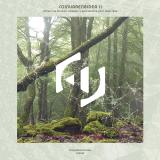
“This eight-track odyssey unfolds like a dreamscape, where whispered incantations brush against the shadowy fringes of the cosmos, and wild, Cézanne-inspired rock anthems erupt like geysers of color in the midst of a western warm and wet rain storm… culminating in the sprawling eleven minute masterpiece, ‘And The Music Shall Untune The Sky,’ aptly dubbed the Earth Crusher. A creation so utterly deconstructed and intertwined with the pulse of nature itself that if AI was called upon to conceive ‘Outside Over There’ anew, it would just spit back, “F.U. in Tree Font”. An enchanting invitation for even the flat-earthers to join the circle, if only just a little.”
EarthBall’s trajectory has been relentless. Their 2024 album ‘It’s Yours’ was praised by The Quietus as “fully aggressive and fully life-affirming,” and by The Wire as "a boisterous mind-melting album”. The band’s live double set LP ‘Actual Earth Music Vol. 1 & 2’ (2025) captured blistering performances: a performance opening for Wolf Eyes at the Fox Cabaret, and a Café OTO improvised throw-down featuring Chris Corsano and Steve Beresford. These releases on their own confirm them as one of Canada’s most vital experimental exports, not to mention the impressive self-released discography on their Bandcamp. The band’s reach has stretched far beyond their west coast roots with a UK tour May 2024, plus this past June, EarthBall closed Montreal’s Suoni Per Il Popolo Festival alongside Pulitzer Prize-winning composer Raven Chacon. This November they will perform at Le Guess Who? Festival in Utrecht, with a European tour to follow (tour dates below). Outside of EarthBall, each member carries their own torch. Jeremy Van Wyck, founding member of the legendary Shearing Pinx, has toured extensively, released over 100 records, and has been a vital force in the Vancouver and West Coast underground for the past 25 years. He and Isabel Ford (Izzy) play together not only in EarthBall, but also in Psychedelic Dirt, Shearing Pinx, Behaviours, and Crotch.
John Brennan collaborates widely, including recently with Endlings (Raven Chacon and John Dieterich), Evichen (Victoria Shen), Francesco Fonassi, Plan Your Future (with Greg Saunier of Deerhoof), Brennan/Corsano duo and Physics with John Dieterich. Kellen Maclaughlin performs with KVMP and Ora Corgan, while saxophonist Liam Murphy is a west coast staple, playing with the best across Vancouver Island and the mainland. On three of the tracks of ‘Outside Over There’, the band is joined by their comrade Justin Patterson, who also plays with Brennan in the duo Modale. This cross-pollination fuels EarthBall’s sound - a collective improvisation, psychically overdriven, and grinding into bloom.
Outside Over There’ is more than an album though, it is a ritual, a gathering of sound at the forest’s edge; where feedback, saxophone screams, and ecstatic vocals dissolve the boundary between chaos and clarity. EarthBall invite you into their circle, to share in the joyful terror of spontaneous creation. ‘Outside Over There’ will be released on November 7th through Upset The Rhythm digitally and as a limited blue-in-black vinyl LP.
Buscar:future disco vol 4
- 1
Analog Fingerprints Vol. 0 is a compilation bringing together the early 2000s works of Marco Passarani under his Analog Fingerprints alias, collecting key tracks originally released on Rome’s Plasmek and Pigna labels.
For Numbers, the story starts long before the label itself. In their formative years, digging in Glasgow’s Rubadub, Passarani’s records felt like dispatches from a future city. Releases on his own Nature Records and on labels such as Generator and Interr-Ference Communications were mind blowing: rooted in Detroit techno, Chicago house and electro, yet pushing somewhere new. Much like fellow travellers Autechre, who would remix him in 2001, Passarani’s music balanced machine funk with restless experimentation.
Information was scarce, and you would hear these records first on the dancefloor or at listening stations in shops like Rubadub. Print fanzines like Ear and early web outposts such as Forcefield offered only fragments. But there was a palpable axis forming between Detroit techno and a new European wave of record labels including Skam, Rephlex, Clone, Viewlexx and Nature itself. It was the sound that defined Saturday nights at Rubadub’s ‘69’ parties in Paisley, just outside of Glasgow.
Passarani’s records, in particular, were instrumental in bringing together the future Numbers co-founders. Richard had already booked him pre-Numbers; meanwhile Calum (Spencer) and Jack (Jackmaster), then 16/17 year olds working alternate Saturdays in Rubadub, were so enamoured with the Roman sound that they travelled to Rome for the Bitz Festival in 2003 to seek out Passarani and Lory D at their source.
The first Analog Fingerprints release landed as a 12” on Plasmek in 2001, following the fractured, IDM-leaning 6 Katun material. For Passarani, the project marked a recalibration. A DJ first and foremost, he had moved into production via early computer setups, from a Commodore Amiga through primitive PC audio, Cubase and Logic, later experimenting with Ableton. The IDM scene had offered a playground for trial and error, but there was always a tension between abstraction and the dancefloor. Analog Fingerprints became the bridge: still intelligent, but with more dance than distance. After years of broken beats and complex arrangements, he wanted directness without surrendering identity.
Working closely with Francesco de Bellis and Mario Pierro in the Pigneto district, the trio formed Pigna as a vehicle for reclaiming a more accessible dance sound, deliberately steering away from the minimal wave beginning to dominate Europe. Sessions were fast, instinctive, often stretching late into the night with friends dropping by. It was a studio as social space, production as collective energy.
“In that constant search for balance, Analog Fingerprints was my way of expressing something closer to the classic dance floor. The track 'Tribute' - a tribute to my favourite early Detroit techno track of all time, 'First Bass' by Separate Minds - came after I realised I had almost lost my connection with the dance floor. The simplest step was to take inspiration from early Chicago and Detroit and twist it in our Roman ‘Pigna’ way. My goal was to create more accessible dancefloor tracks by mixing my unconscious Italo roots with my teenage love for that early US sound, ensuring the result was as far as possible from the minimal sound that was starting to dominate everywhere.” - Marco Passarani
Technically, the Analog Fingerprints tracks span a transitional era: Roland TR-909, SH-101 and Alpha Juno hardware met early software experiments. A Novation Drumstation rack stood in for the unattainable TR-808, syncing with TB-303 and TR-606. Yet the true secret weapon was Jeskola Buzz, a tracker-style modular environment that allowed step-by-step parameter control and strange melodic constructions, later exported into the audio sequencer. Even the lead on ‘Tribute’ came from an early PPG Wave-style plugin. It was hybrid thinking at a moment when digital tools still felt unstable but full of possibility for technologists like Passarani.
Behind the music sat Finalfrontier, a loose Roman collective orbiting Nature and Plasmek. Distribution and production were intertwined; importing obscure records into Italy built connections with like-minded outsiders across Europe and the US. Expensive phone bills and fax machines forged an “electronix network” that linked Rome to Clone, Viewlexx, Skam, Rephlex, Rubadub and Detroit’s Underground Resistance. There was a shared sense of survival and resistance, of operating against commercial systems.
Passarani recalls “The first time I found a sheet of paper inside an Underground Resistance 12” with info about upcoming releases... and a huge picture of Spock on the back. Imagine that: you love the music, you love Star Trek, and there’s someone on the other side of the ocean sharing those same values and sounds. It was the perfect match. We even gave our original company the suffix ‘Finalfrontier’: that says it all.”
Feedback in that era arrived physically: distributor faxes, conversations with visiting DJs, the experience of playing abroad and meeting kids who had connected with the records. Glasgow became a key node in a scattered outlier network. Passarani personally brought the first two Nature releases to Fat Cat in London, playing them in-store. Shortly after, a fax arrived from Rubadub in Glasgow requesting copies.
“I still remember that phone buzz and the fax paper slowly sliding out, with someone I didn’t know saying they wanted 75 copies of Nature 001. Or like the time we got a fax from the Rephlex crew just saying, “Hello Nature Records, Keep up the good work.” That was how we knew the message was getting through. It was a fantastic feeling; just one piece of thermal fax paper as an analog notification - the mood for the entire week would change.” - Passarani
The connection to Glasgow has since stretched across generations. As Passarani reflects, links often fracture as scenes renew themselves, but in Glasgow something different happened. New and old mixed seamlessly. There was a visible trust in what came before, and a willingness to carry it forward rather than discard it. Observed from Rome, it was deeply encouraging.
Analog Fingerprints Vol. 0 captures that moment of exchange: Rome to Glasgow, Detroit to Europe, experiment to dancefloor. It documents an artist recalibrating his sound and a network of scenes discovering one another in real time, connected by vinyl, faxes and shared intent.
- A1: Design - Premonition
- A2: Vision - Lucifer’s Friend
- A3: Richard Bone - Alien Girl
- A4: John Howard - I Tune Into You
- A5: Ian North - We’re Not Lonely
- A6: Selwin Image - The Unknown
- B1: Harry Kakoulli - I’m On A Rocket
- B2: Rich Wilde - The Lady Wants To Be Alone
- B3: Billy London - Woman
- B4: Alan Burnham - Science Fiction
- B5: The Microbes - Computer
- B6: The Goo-Q - I’m A Computer
- C1: Gerry & The Holograms - Gerry & The Holograms
- C2: The Warlord - The Ultimate Warlord
- C3: Die Marinas - Fred From Jupiter
- C4: Dee Jay Bert & Eagle - I Am Your Master
- C5: Peta Lily & Michael Process - I Am A Time Bomb
- C6: Sole Sister - It’s Not What You Are But How
- D1: Alasdair Riddell - Do You Read Me?
- D2: Karel Fialka - Armband (The Mystery Song)
- D3: John Springate - My Life
- D4: Idncandescent Luminaire - Famous Names
- D5: Disco Volante - No Motion
- D6: Dream Unit - A Drop In The Ocean
2025 REPRESS ON TRANSPARENT GREEN VINYL
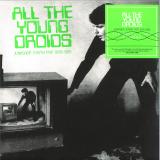
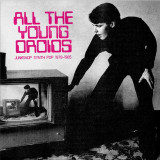
Compiled by Philip King “And then came the rise of synth pop : blokes with dodgy haircuts hunched over keyboard-operated machines stuffed with wires and do-it-yourself tone oscillators making sounds like a brood of geese passing gas in a wind tunnel. Whoopee! This is the way the ‘70s ended : not with a blood-curdling bang bang but with a cheap, synthesized, emasculating whimper.” NICK KENT, NME. All The Young Droids: Junkshop Synth Pop 1978-1985 is a new compilation that charts the underbelly of the epoch-defining sound of the synthesiser in 80s popular music. Compiled by Philip King (previously seen compiling All The Young Droogs, Glitterbest and Boobs - The Junkshop Glam Discotheque), the music here connects the dots between DIY synth enthusiasts grappling with new, cheap synthesisers at the tail-end of punk and wannabe, jobbing songwriters enthral to the new music pioneered by Gary Numan, Depeche Mode and Daniel Miller’s Mute Records. Featuring rare tracks of auto-didactic progressive pop music, proto-techno punk, shoot-for-the-stars-land-in-the-gutter chart flops and heralded, underground synth classics, School Daze paints a picture of beautiful failure. Complete with extensive sleeve notes written by King and never before seen imagery, all 24 tracks were remastered by RPM in-house engineer Simon Murphy, many from vinyl copies due to lost master tapes. The story told on All The Young Droids is one of the dawning opportunity presented by both the emergence to the market of cheaper analog synthesisers and the distribution networks plus indie labels that exploded with the advent of punk music in 1976. While the music that sprouted out all over the globe in the wake of these factors was decried as fake, plastic, a refutation of punk’s guitar-led revolution, it’s telling that much of the music on All The Young Droids.. was created in bedrooms, ramshackle studios and home-made set ups with often borrowed equipment. In the era of record labels jumping to capitalise on the success of The Sex Pistols, The Clash (both on major labels, of course) these artists struggled to stand out from a new gold-rush with next to no budget or PR team. With radio and labels desperate for the new Yazoo, what resulted was a testament to necessity being the mother of invention. At the time, the synthesiser was the music of the future, a shiny new machine that could paint like an orchestra with a single finger and a 4-track. In the hands of Manchester avant-pranksters Gerry & The Holograms it’s a pulsing, sardonic weapon.. the only instrument on the Messthetics classic lampooning of New Wave fashion. In Hamburg, a 16 year old Andreas Dorau used it to write and record (with his female classmates on vocals) a global smash in Fred Vom Jupiter (later licensed to Mute Records). The hard-to-find English version (Fred From Jupiter, natch) is included here. Many artists with alreadystoried careers caught the bug and recorded synthesiser-fuelled peons to space, computers, the future and, of course, love-interests. Harry Kakoulli, late of Squeeze, recorded a solo album in 1979 that included the incredible power-synth-pop smash-that-never-smashed I’m On A Rocket. Similarly, Ian North of Neo and American Power Pop stalwarts Milk ’n’ Cookies bought a Korg MS20 and used a tape machine to record We’re Not Lonely, an absolute lost-classic of minimal synth pop. We’re Not Lonely also features on the Junkshop Synth Pop sampler 7” twinned with John Howard unreleased track You Will See, released April 12th 2025. There are plenty of compilation debuts in evidence. Sole Sister were a mysterious trio who were featured on the Scaling Triangles compilation of female-fronted, queer-adjacent post-punk / underground music that also featured The Petticoats. Selwin Image were from San Francisco and featured members of the recently defunct power pop/punk group The Pushups. Their stupidly catchy The Unknown fizzes with New Wave energy - think XTC to Sparks but remains unreleased until now. Dream Unit’s A Drop In The Ocean is an early synth wave cut, positively teaming with Joy Division instrumentation, previously only released on a long-forgotten and super rare, self-released EP. Incandescent Luminaire’s Famous Names belies an archetypal struggle of a small-town trying to make it in a cruel industry but is a thrilling New Romantic-Synth Wave cross over with a OMD gloominess that’s a joy to hear. Feminist Minimal Wave track I Am A Time Bomb by performance artist Peta Lilly and Michael Chance is a revelation destined for new found cult status. It was released on 7” and lost until now. The flipside to the subterranean, never-made-it synth pop mentioned above are the ambitious, even fruity attempts at success that have a perennial elegance to their confidence. New Jersey-ite Billy London (real name Ed Barth) tried to cash in on the synth boom with Woman, released by a major label, a lurching new wave track built on the Louie Louie rhythm and a wonderfully camp Lou Reedstyle sleazy vocal before exploding in the synthesised chorus. The song bombed but with a chorus like this, you have to wonder why? Ex-Glitter Band member John Springate’s My Life is truly epic, with doomed chord progressions and massive sounding drums turning into at least 3 different songs in the course of the track. Before you wonder what’s going on the song resolves with a glorious return to the main refrain. The dry-ice-dressed dance floor is well catered for too. Design’s Premonition and Vision’s Lucifer’s Friend are stone-cold minimal synth bangers, well loved but given a new lease of life here. The Warlord’s The Ultimate Warlord was released in 1978, a homespun proto Hi NRG banger that was later re-recorded by The Immortals in Canada who had a club hit with it. One-man- band Disco Volante’s No Motion was re-issued by Synth wave label Medical in 2012 but makes its first vinyl compilation appearance here. Close your eyes and you can imagine what Lawrence of Felt would have sounded like with some cheap Korgs a little earlier in his career. Gibraltar-based trio The Microbes imagined a computer programming people to dance - how prescient - and ended up with a propulsive, robo-funk track with splendid rubbery bass playing over a tectonic drum machine. Previously picked up by Belgian label Stroom TV, Dee Jay Bert & Eagle’s heavily Euro-accented I Am Your Master demands the listener to “come to paradise!” In a frankly terrifying manner. All The Young Droids is the first compilation to peel away from the narrative that dour, Minimal Synth and Cold Wave were the only musical children of the first rush of synth pop. Philip King and School Daze Records describe a much more complicated world: along with the austere, Brutalist children of Daniel Miller (who produced Alan Burnham’s Bowie-Low-influenced Science Fiction here) was a plethora of desperate cash-ins, accidental mainstream hits, ambitious pop dramas and major label punts that went nowhere. Crucially, the compilation blurs the line between junk and treasure. What if the two things are interchangeable. What if it’s all science fiction?
Hot on the heels of Luv (LuvLuv) comes a sublime new Drum Chums from midland's madlads Wrekin Havoc.
Over the years we've shared great tunes, fun times and A-grade dance floor debauchery with these permanent party people (our first encounter almost exactly like that Spiderman pointing meme) so it made more sense than we usually do to invite them aboard the V*nga bus for some Balearic-Disco edit excellence.
Things kick off with the sexy throb of 'Shine A Light', a stonewashed funk workout complete with Paisley guitars, Troutman bass grunts and some big time blue-eyed soul vocals. It's a bit like an extended and unheard collaboration between George Michael and Tears For Fears recorded immediately after a particularly heavy night at Future. Unsurprising perhaps that this one's been getting a whole lot of love from DJ Harvey.
'Mars Bar Party' grabs you by the hips from the first bar of its swaying Mediterranean house rhythm, then tugs at every single one of your heartstrings with melancholic pads and a silken vocal croon. Fuuuuuuckin' hell! Sorry, was totally bewitched by the primal power of piano house magic - it's like John Rocca was in the room for a second. Armed with an awesome arrangement and clocking in at ten massive minutes, this may be the ultimate Balearic house journey.
If all this wasn't enough to have you stocking up on 5-HTP and sinus rinse, those crafty cats close the set out with the shimmering disco euphoria of 'Leccy Meet Her'. The bottom end pulses endlessly, Cowley synths trill and a crystal clear Vox soar above, sending us far off into mirrorball orbit. If this isn't a hit at Horse Meat, we'll neck a bottle of poppers and never eat a tomato again.
Each and every track Wrekin Havoc touch is a pearler, but we're particularly chuffed with ourselves for snapping this top trio up.
100% Drum Fun Guaranteed. .
- A1: West India Company - My Shooting Star
- A2: Bappi Lahiri - Rama Rama
- A3: Sharlene Boodram - Chamkay 'D' Chutney (Turbotito & Ragz Remix)
- B1: Kuljit Bhamra - Dholdrums
- B2: Mantra - Mantra
- B3: Heera - Beat The Rhythm (Check It Out)
- C1: Lady M - Kali Raat (Edit)
- C2: Johnny Zee - Billo To Meri Aan
- C3: Turbotito & Ragz Ft Manjeet Kondal - Pyaar
- C4: Sangeeta - Calling (Turbotito & Ragz Remix)
- D1: The Jets Orkhestra - X-290 (Turbotito & Ragz Remix)
- D2: Fantasy Nite Club - O My Baby
- D3: Deepak Khazanchi Ft Asha Puthli - Bass Fire (On And On) (Turbotito & Ragz Remix)
Naya Beat Records reveals Volume 2 of its critically acclaimed series dedicated to South Asian dance and electronic music. Label founders Turbotito and Ragz have curated an exceptional 13-track compilation with a focus on an overlooked era of house and electronic music released between '88 and '94.
While Volume 1 explored early 80s Balearic, synth pop, and disco, Volume 2 uncovers lost or forgotten future classics from later in the decade. The release spotlights a unique era in the late 80s and early 90s when fertile cross-cultural collaboration abounded in diasporic communities in cities like London and New York and when South Asian music was infused with acid house, New Beat, and dub.
There is a true wealth of sounds here, from The Jets Orkhestra’s organ-fuelled house workout ‘X-290’ to the downtempo splendour of the Asha Bhosle fronted West India Company. Lady M lends the Hindi house track and arpeggiated wonder of ‘Kali Raat’ and Mantra’s eponymously titled cut is a hypnotic gem. Featuring other scintillating Balearic house, dub, and street soul from the likes of Asha Puthli, Bappi Lahiri, Johnny Zee, and Kuljit Bhamra, this double album is a treasure of never-before-reissued and previously impossible-to-find holy grails.
Often "too Asian for mainstream success in the West, and too Western for success in Asia," the pioneering music from this time was frequently released to short-lived success or relative anonymity. Naya Beat founders Filip Nikolic (aka Turbotito) and Raghav Mani (aka Ragz) have spent the last four years endlessly hunting through dusty records, obscure cassettes, and unreleased studio tapes to deliver a reference release for contemporary collectors, tastemakers, and bold selectors looking for fresh sounds.
Featuring an incredible gatefold package with Naya Beat’s trademark stunning artwork and exhaustive liner notes, the 2LP release has been cut to vinyl for the discerning DJ and listener by Grammy-nominated Frank Merritt from The Carvery, London.
Naya Beat Records is focused on uncovering foundational dance and electronic music from the subcontinent and South Asian diaspora through reissues, remixes and compilations. Success came immediately with ‘Naya Beat Volume 1’, which was named Vinyl Factory’s number 1 reissue of 2021, and has been followed up with more fascinating releases such as a two-part remix project with disco-jazz legend Asha Puthli, a scintillating bhangra acid house EP with Mr. Scruff, a reissue of Pinky Ann Rihal’s 1985 Hindi new wave album, and the superb Bollywood compilation ‘Awaaz Series 1
- A1: Lovetempo - Same Ole Love (365 Days A Year) (Extended Summer Breeze Mix)
- A2: Nicholas Cangiano - Falling Behind
- A3: Poolside - Ventura Highway Blues (Monsieur Van Pratt Dub)
- B1: Prep & Eddie Chacon - Call It (Turbotito Rem
- B2: Moi Je - Découvre
- B3: Turbotito - Time Starts Moving Slow
- C1: Young Gun Silver Fox - Curious
- C2: B U.m.p. - Give A Little Love A Lot
- C3: Woolfy Vs Projections - Seeds
- C4: 1-900 - Breakin' 84
- D1: Goodvibes Sound - Stay For One More Night (Matt Hughes Remix)
- D2: Moods & Nic Hanson - Music Never Looked So Good Good
- D3: Bowaswell - Over When The Night Is Gone
- D4: Joel Sarakula - Hands Of Love (Phil Martin Remix)
- D5: Kimchii - Do You Ever
lim. 2xLP colored yellow and oxblood vinyl with Poster, Sticker & Mp3 Download!
We are back with another chapter in our ongoing series of unearthing smooth vibes from all over the world, this time we go back to the FUTURE for you with: THE SUNSET MANIFESTO Volume 2. After a five year break mainly concentrating on the late 70s/early 80s Westcoast Soul/Yacht/AOR sound, we finally dive deep into the modern world of our beloved sister-label Too Slow To Disco NEO (for the third time after 2018s TSTD NEO - En France and 2020s The Sunset Manifesto excursions). But of course it wasn't a real 5 year break since the first Sunset Manifesto compilation, as in the meantime we also released a few digital TSTD Neo singles, and - more importantly - our "Too Slow To Disco NEO - FM" playlist on spotify (handcurated by Dj Supermarkt every week and now hosting more than 1500 tracks of mellow, modern sunshine vibes) was growing steadily and becoming a new, important fixpoint in the TSTD musical universe. TSTD NEO is the outlet Dj Supermarkt is using to unearth modern laidback, smooth, sunny slow disco vibes with a soulful Westcoast/Balearic touch. For him TSTD always has been about a laidback vibe/feeling, not a certain time period in musical history. And that sunny Westcoast vibe we dug out on those traditional TSTD compilations has become a huge influence to so many modern artists. So it makes sense that we present the cream of new slo/mo NuDisco/Sunset Disco/Daytime Disco acts in the TSTD format, a luxurious compilation, with artists from all across the globe: Not only from the two homelands of that modern slow disco sound, Los Angeles/California and France, but also from Beijing, Montreal, Mexico, London, New York, Stockholm, Rotterdam… the moon, you name it! This music is more a state of mind, a feeling, then a geographical thing. We are happy and really excited to annouce the following passengers are on board with exclusive tracks: Poolside, Woolfy, Prep & Eddie Chacon, Turbotito, Young Gun Silver Fox, Lovetempo, Kimchii, Goodvibes Sound a.m.m.
- A1: Design - Premonition
- A2: Vision - Lucifer’s Friend
- A3: Richard Bone - Alien Girl
- A4: John Howard - I Tune Into You
- A5: Ian North - We’re Not Lonely
- A6: Selwin Image - The Unknown
- B1: Harry Kakoulli - I’m On A Rocket
- B2: Rich Wilde - The Lady Wants To Be Alone
- B3: Billy London - Woman
- B4: Alan Burnham - Science Fiction
- B5: The Microbes - Computer
- B6: The Goo-Q - I’m A Computer
- C1: Gerry & The Holograms - Gerry & The Holograms
- C2: The Warlord - The Ultimate Warlord
- C3: Die Marinas - Fred From Jupiter
- C4: Dee Jay Bert & Eagle - I Am Your Master
- C5: Peta Lily & Michael Process - I Am A Time Bomb
- C6: Sole Sister - It’s Not What You Are But How
- D1: Alasdair Riddell - Do You Read Me?
- D2: Karel Fialka - Armband (The Mystery Song)
- D3: John Springate - My Life
- D4: Incandescent Luminaire - Famous Names
- D5: Disco Volante - No Motion
- D6: Dream Unit - A Drop In The Ocean
MB Crystal Vinyl[32,73 €]
LTD Trans Pink Vinyl[32,82 €]
LTD Trans Pink Vinyl[27,69 €]
Compiled by Philip King
“And then came the rise of synth pop : blokes with dodgy haircuts hunched over keyboard-operated
machines stuffed with wires and do-it-yourself tone oscillators making sounds like a brood of geese
passing gas in a wind tunnel. Whoopee! This is the way the ‘70s ended : not with a blood-curdling bang
bang but with a cheap, synthesized, emasculating whimper.”
NICK KENT, NME.
All The Young Droids: Junkshop Synth Pop 1978-1985 is a new compilation that charts the
underbelly of the epoch-defining sound of the synthesiser in 80s popular music. Compiled by Philip
King (previously seen compiling All The Young Droogs, Glitterbest and Boobs - The Junkshop
Glam Discotheque), the music here connects the dots between DIY synth enthusiasts grappling with
new, cheap synthesisers at the tail-end of punk and wannabe, jobbing songwriters enthral to the new
music pioneered by Gary Numan, Depeche Mode and Daniel Miller’s Mute Records. Featuring rare
tracks of auto-didactic progressive pop music, proto-techno punk, shoot-for-the-stars-land-in-the-gutter
chart flops and heralded, underground synth classics, School Daze paints a picture of beautiful failure.
Complete with extensive sleeve notes written by King and never before seen imagery, all 24 tracks
were remastered by RPM in-house engineer Simon Murphy, many from vinyl copies due to lost master
tapes. The story told on All The Young Droids is one of the dawning opportunity presented by both the
emergence to the market of cheaper analog synthesisers and the distribution networks plus indie labels
that exploded with the advent of punk music in 1976. While the music that sprouted out all over the
globe in the wake of these factors was decried as fake, plastic, a refutation of punk’s guitar-led
revolution, it’s telling that much of the music on All The Young Droids.. was created in bedrooms,
ramshackle studios and home-made set ups with often borrowed equipment. In the era of record labels
jumping to capitalise on the success of The Sex Pistols, The Clash (both on major labels, of course)
these artists struggled to stand out from a new gold-rush with next to no budget or PR team. With radio
and labels desperate for the new Yazoo, what resulted was a testament to necessity being the mother
of invention.
At the time, the synthesiser was the music of the future, a shiny new machine that could paint like an
orchestra with a single finger and a 4-track. In the hands of Manchester avant-pranksters Gerry & The
Holograms it’s a pulsing, sardonic weapon.. the only instrument on the Messthetics classic lampooning
of New Wave fashion. In Hamburg, a 16 year old Andreas Dorau used it to write and record (with his
female classmates on vocals) a global smash in Fred Vom Jupiter (later licensed to Mute Records).
The hard-to-find English version (Fred From Jupiter, natch) is included here. Many artists with alreadystoried careers caught the bug and recorded synthesiser-fuelled peons to space, computers, the future
and, of course, love-interests. Harry Kakoulli, late of Squeeze, recorded a solo album in 1979 that
included the incredible power-synth-pop smash-that-never-smashed I’m On A Rocket. Similarly, Ian
North of Neo and American Power Pop stalwarts Milk ’n’ Cookies bought a Korg MS20 and used a
tape machine to record We’re Not Lonely, an absolute lost-classic of minimal synth pop. We’re Not
Lonely also features on the Junkshop Synth Pop sampler 7” twinned with John Howard unreleased
track You Will See, released April 12th 2025.
There are plenty of compilation debuts in evidence. Sole Sister were a mysterious trio who were
featured on the Scaling Triangles compilation of female-fronted, queer-adjacent post-punk /
underground music that also featured The Petticoats. Selwin Image were from San Francisco and
featured members of the recently defunct power pop/punk group The Pushups. Their stupidly catchy
The Unknown fizzes with New Wave energy - think XTC to Sparks but remains unreleased until now.
Dream Unit’s A Drop In The Ocean is an early synth wave cut, positively teaming with Joy Division
instrumentation, previously only released on a long-forgotten and super rare, self-released EP.
Incandescent Luminaire’s Famous Names belies an archetypal struggle of a small-town trying to
make it in a cruel industry but is a thrilling New Romantic-Synth Wave cross over with a OMD
gloominess that’s a joy to hear. Feminist Minimal Wave track I Am A Time Bomb by performance artist
Peta Lilly and Michael Chance is a revelation destined for new found cult status. It was released on 7”
and lost until now.
The flipside to the subterranean, never-made-it synth pop mentioned above are the ambitious, even
fruity attempts at success that have a perennial elegance to their confidence. New Jersey-ite Billy
London (real name Ed Barth) tried to cash in on the synth boom with Woman, released by a major
label, a lurching new wave track built on the Louie Louie rhythm and a wonderfully camp Lou Reedstyle sleazy vocal before exploding in the synthesised chorus. The song bombed but with a chorus like
this, you have to wonder why? Ex-Glitter Band member John Springate’s My Life is truly epic, with
doomed chord progressions and massive sounding drums turning into at least 3 different songs in the
course of the track. Before you wonder what’s going on the song resolves with a glorious return to the
main refrain.
The dry-ice-dressed dance floor is well catered for too. Design’s Premonition and Vision’s Lucifer’s
Friend are stone-cold minimal synth bangers, well loved but given a new lease of life here. The
Warlord’s The Ultimate Warlord was released in 1978, a homespun proto Hi NRG banger that was
later re-recorded by The Immortals in Canada who had a club hit with it. One-man- band Disco
Volante’s No Motion was re-issued by Synth wave label Medical in 2012 but makes its first vinyl
compilation appearance here. Close your eyes and you can imagine what Lawrence of Felt would have
sounded like with some cheap Korgs a little earlier in his career. Gibraltar-based trio The Microbes
imagined a computer programming people to dance - how prescient - and ended up with a propulsive,
robo-funk track with splendid rubbery bass playing over a tectonic drum machine. Previously picked up
by Belgian label Stroom TV, Dee Jay Bert & Eagle’s heavily Euro-accented I Am Your Master
demands the listener to “come to paradise!” In a frankly terrifying manner.
All The Young Droids is the first compilation to peel away from the narrative that dour, Minimal Synth
and Cold Wave were the only musical children of the first rush of synth pop. Philip King and School
Daze Records describe a much more complicated world: along with the austere, Brutalist children of
Daniel Miller (who produced Alan Burnham’s Bowie-Low-influenced Science Fiction here) was a
plethora of desperate cash-ins, accidental mainstream hits, ambitious pop dramas and major label
punts that went nowhere. Crucially, the compilation blurs the line between junk and treasure. What if the
two things are interchangeable. What if it’s all science fiction?
In this electrifying 2024, Flexi is still spinning, louder and prouder, as it marks 40 years of igniting dancefloors and fueling underground happiness. From its humble beginnings as a haven for vinyl enthusiasts to a cultural stronghold amidst the turbulent waves of the music industry, Flexi has become a name synonymous with passion, resilience, and the relentless pursuit of quality sound. To honor this milestone, Flexi’s indie label, Flexi Cuts, is dropping a second, limited-edition compilation. Aptly named "Musica Solida," this collection is spread across three or possibly four lush 12-inch samplers, each showcasing a handpicked selection of tracks from Flexi's cherished circle of artists and producers. This release is more than just a celebration; it’s a declaration—a call to arms to keep the spirit of the scene alive and thriving in Italy and beyond, against all odds.
"Musica Solida #2" doesn't just hold tracks—it’s got stories, moments, and grooves that demand movement. Each cut is a slice of that raw, unpolished energy that Flexi has championed for four decades.
Featured Artists on Musica Solida #2
Minimono: The powerhouse duo of Fabio Della Torre (founder of Bosconi Records) and Ennio Colaci take us on a hypnotic journey with their floor-filling "Before Morning." It’s the kind of track that keeps the dancefloor alive until the break of dawn.
DJ Rou: Going minimal yet impactful, DJ Rou delivers "Elastic Body," a dancefloor-ready cut that blends a stripped-back groove with robotic vocals—a futuristic twist that keeps things unpredictable.
Relative: Flexi’s proud owner kicks things off with an electro track that was conceived, birthed, and brought to life in a single whirlwind afternoon—an anthem for those who live for the moment.
Delphi: One half of the renowned Tiger & Woods, Delphi isn’t afraid to dive deep with a heavy-hitting house track, loaded with acid stabs and thick, pulsating basslines. A track that’s both a nod to the past and a push towards the future.
The record will be released in about 200 vinyl copies no more.
Packaged in the classic discobag 2- holes, with a distinctive letterpress print in a beautiful red cover.
As the tenth candle flickers atop the torta alla panna, Archeo Recordings play the Uno reverse card, breaking with tradition to give us a gift in celebration of its birthday: the first in a series of exquisite EPs on which the label's favourite contemporaries pay homage to past masters. Each re-polished gem is plucked either directly from the beatific back catalogue of the fine Florentine label or is at least Archeo-adjacent, perhaps a sign of future wonders to come. Like a musical version of Janus, who can be found at the heart of Bertoldo di Giovanni's frieze in the Medici villa, Archeo Recordings will continue to look forwards and backwards to provide sublime sounds for us all.
Pepe Maina officially joined the Archeo family in 2019 with the much-needed reissue of his 1979 masterpiece Scerizza (AR015), but his astounding music has been a constant companion to label head Manu for much longer. An inter-dimensional, multi-instrumental maverick, Maina weaves the frayed edges of prog rock, new age, organic jazz and global minimalism into a shimmering tapestry all of his own. The results are spread across fifty years and almost as many albums, largely self-released and always absolutely untarnished by commercial concerns.
Based in a small village in the hills of Brianza, just north of Milan, Maina translates the beauty of his surroundings into transformative tone poems, and the folkloric fusion of "The Infinite", originally released on his 2014 CD Tales From The Hill, is the perfect example of his practice. It opens with a recitation of Giacomo Leopardi's 1825s poem "L'Infinito" by famed Italian actor Vittorio Gassman. A leading figure in the romantic movement, Leopardi explores the idea of time and space within the natural world, and the peace that comes with an appreciation of the immensity of eternity. Manu, longtime digger and now a burgeoning producer, expands upon the original with tribal percussion, chirping electronics and a spheric bassline, folding Maina's elegant strings and gossamer pads into a new arrangement suited for a slow dance under the stars.
Unless you had a well-trained ear tuned to Italy's avant-jazz scene, chances are your first encounter with innovative flautist Roberto Aglieri came via the 2017 Archeo reissue of hisalmost untraceable LP Ragapadani (AR011). It's a true testament to Manu's digging credentials that he snatched this masterpiece out of the esoteric atmosphere and brought it attention it so richly deserved. A delicate union of digital synthesis and versatile flute - be it soft and silvery or
brilliant and clear - the 1987 album was a shapeshifting masterpiece, replaying scenes from Virgil, Verdi, Visconti and Pasolini with a neon glow. Quintessentially Italian, but uncanny and previously unimagined - Penthouse and Portico perhaps. Powered by a percolating prototechno sequence, cascading keys, hallucinogenic vocal snippets and a variety of tonal timbres from Roberto's reed, "Danza N. 1" long deserved the praise reserved for Jean-Luc Ponty's pinnacle, so many thanks to Manu for our collective introduction. The tall task of reinterpreting this particular paragon falls to Perugian polymath Daniele Tomassini AKA Feel Fly, whose peerless skills as both producer and musician have delighted DJs and dancers alike. Hot on the heels of his diverse and definitive remixes of Tony Esposito for AR027, Daniele delivers a radical rework of "Danza N. 1" perfect for both day rave sunshine and full moon party alike. Enhanced by snapping breaks and a rattling kick, the bassline gurgle emerges as a progressive powerhouse, laying the foundation for the trilling flute and circular keys to cast a psychedelic spell. As the slow-Goa revival picks up pace, this one is way ahead of the pack.
Archeo take us all the way back to the start of its story here - well almost. Though it bore the stamp AR001 (2015), this Radio Band reissue actually hit shelves months after Tony Esposito's "Je-Na' / Pagaia"; a false start perhaps but a true classic all the same. Radio Band were a group of DJs from Florence who all sailed the airways of Radio Fantasy in 1984 and whose one and only release was this super groovy slice of Italo-boogie. Following the example of Milanese DJs Band of Jocks but far surpassing their formulaic funk fizzle, Radio Band employed an intergalactic bassline, cosmic keys and that undeniably Italian style of rapping to deliver a sophisticated party-starter which even found its way to disco deity Ron Hardy. Back to the here and now, and if you've found yourself pumping an ecstatic fist to a supercharged Italian epic of late, chances are its from the mind of the mysterious Radiomarc. Operating on the ascendent Popcorn Groove imprint, this shadowy figure steers his country's lost classics into peaktime territories, finding a sweet spot between late Italo-disco, early Italo-house and contemporary cool. Pushing the tempo with a club-ready 4/4, setting the sequencer to stun and supplementing the original melodies with a series of synth riffs, the mystery producer send this one into orbit. Radio Band - Radio Rap - Radiomarc, the circle is complete.
Few have done more to develop cross-cultural musical exchange than Futuro Antico. A collaborative venture from musician, archeologist and ethnomusicologist Walter Maioli, keyboardist and tonal theoretician Riccardo Sinigaglia and multi-disciplinary artist and composer Gabin Dabiré, Futuro Antico formed in Milan in 1979, combining ancient international folkloric traditions with otherworldly electronics. The result is an arresting melange of Mediterranean, African and Asian instrumentation, mimicked by esoteric synth tones and hypnotic minimalism, which the group perfected on their acclaimed 1990 LP Dai Primitivi All'Elettronica. The meditative and transportive "Pan Tuning" belongs to their largely overlooked 2005 CD only release Intonazioni Archetipe, and has been amongst Manu's most loved tracks from the first moment he heard it. Who else is better placed to reshape this evocative opus into an immersive, transcendental dance floor journey than label favourites Mushrooms Project? The duo sows the original elements into a sprawling fifteen minute fusion of séance and science, at times propulsive with a ritualist rhythm of tuned percussion and crunching drum machine at others drifting off into ethereal ambience. Mushrooms Project continue to push the boundaries of the Afro-cosmic style, and this remix marks a new zenith.
- A1: Inaya Day & Robin S - Right Now (A Director’s Cut Master)
- A2: Director’s Cut Pres Inaya Day & Duane Harden - Good Feelin (Frankie Knuckles & Eric Kupper Director’s Cut Mix)
- B1: Peyton & Director’s Cut - Beautiful (Original Mix)
- B2: Frankie Knuckles Pres Director’s Cut Starring Inaya Day - Let’s Stay Home (Tony Humphries ‘Work & Play Mix)
- C1: Dbow - Get Involved (Director’s Cut Classic House Mix)
- C2: Marko Militano - Good People (Director’s Cut Signature Mix)
- D1: Vintage Lounge Orchestra - Dreams (Director’s Cut Classic Mix)
- D2: Art Department Pres Martina Topley Bird Feat. Mark Lanegan &
There are few people across the globe, who will have not been touched by the work of Frankie Knuckles. Forever regarded as ‘The Godfather of House’ for his unrivalled contribution to the house music we know today; what started as an underground movement in Chicago has grown to international heights thanks to Frankie. His records earned him recognition on a global scale, allowing him to work with some of the globes biggest names including the likes of Diana Ross, Whitney Houston and Michael Jackson.
Frankie passed away in Chicago on 31st March 2014 leaving behind one of the greatest house music legacies spanning almost four decades. Now he is commemorated by long time writing and production partner Eric Kupper. Eric, himself a seasoned DJ producer and writer, has worked on over 116 Billboard #1 Dance Records and played a pivotal role in many of Frankie’s productions. Having both worked together for many years they established themselves as ‘Director’s Cut’ from 2011 and set about producing original releases and remixes based on the classic ‘Def Mix’ sound while sharing equal credits for their creations.
Together they re-produced and re-purposed classic cuts for modern dancefloors, with reworks including tracks from Marshall Jefferson, Ashford & Simpson, Artful & Ridney and The Sunburst Band, alongside Frankie Knuckles originals. These releases have now been brought together by Eric to feature on special album called ‘The Directors Cut Collection’ on SoSure Music.
For the third volume classic cuts such as Inaya Day & Robin S. - Right Now (A Director’s Cut Master) and Marko Militano - Good People (Director’s Cut Signature Mix) are nestled alongside equally absorbing Directors Cut mixes of Vintage Lounge Orchestra covering 'Dreams' and Art Department pres. Martina Topley Bird feat. Mark Lanegan & Warpaint covering 'Crystalised'.
The Director’s Cut Collection is a fitting tribute to commemorate the seventh anniversary of Frankie’s passing whilst giving Eric a platform to tell his side of the creative story. This album is to be released in collaboration with The Frankie Knuckles Foundation who work to continuing Frankie’s legacy well into the future.
DJ Feedback:
Dixon - 5/5 - "Classic"
The Black Madonna - 5/5 - "Love you Frankie!!!"
Laurent Garnier - 5/5 - "“niiiiiiiiiiiiiiiiiiiiiiiiice OHHHH SOOOOO NIIIIIIIIIIIIICE !!!!!”
Honey Dijon - 5/5 - "Iconic!!!!!!"
Axel Boman - 5/5 - "It's all about love - not about emotions!!!!
Adam Beyer - 5/5 - "<3"
Space Dimension Controller - 5/5 - "Always"
Tensnake - 5/5 - "Classic Love It"
Jonny Rock - 5/5 - "Hot!!!"
Prins Thomas - 4/5 - "very nice! fresh take on an all-time classic"
Len Faki - 5/5 - "It's been a while listening to this masterpiece - and yes - it's timeless and I love the new touch on the new version. thanks Frankie!"
robdabank (Radio 1) - 5/5 - “One of my all time faves and great mixes here!”
Severino Panzetta (Horse Meat Disco) - 5/5 - "OH YASS!!"
Matthias Tanzmann - 5/5 - "Can't believe it has been five years already. Legendary
Michael Serafini - 4/5 - "Excellant Retouch on this!!!"
Ease-Nightmares On Wax - 4/5 - "Timeless classic for a true legend RIP x"
Timo Maas - 5/5 - "well...classic!"
Tiefschwarz - 5/5 "bless Frankie Knuckles!!"
Red Rack'em - 4/5 - "Love this new version. Really tasteful. Well done!"
Nomadico's "Shards" remembers the future of Techno beginning with restlessness and urgency. A time where disco, funk, hip-hop and electro rocked hood parties via boomboxes, DIY recordings and sound systems.
Our culture has since been shattered into shards that must be reconstructed, reshaped, remixed and reconnected. The A-side launches with the broken techno of “Somos Cosmos” then onto the hi-tech funk of “Antivenom” and “Volcanismo” followed by the b-boy breaks of “Radiotron”.
The B-side explores UR inspired electro on “Disconnected” and “Electroreceptor” followed by dark and moody “Hyper Cypher” and “Tlalocan”.
2023 Repress
Taking the basics from the past we seed our future. Apparently the songs hosted in this 12" are just techno tracks but the man behind them knows what he is doing.
Expect the unexpected: trap breaks, Chicago swinged rhythms, epic breaks and a lot of cowbell. All out of the ordinary to surprise the crowd, the listener and your neighbor if you play it loud enough during lockdown. All written and produced by one of those underrated genius who has studied and mastered the history and culture of rave music.
Dj Plant Texture is a sublime vinyl DJ, he owns a record store in the south of Italy and his prolific producer catalog along genres speaks for itself. Honored to have him in this second edition of Música Techno para Discoteca Presenting his new alias A.662
Disruptive techno music for believers, disc-jockeys and collectors. Play under your own risk.
2023 Repress
Almost 2 years after the success of the album The Tony Allen Experiments and a few months after the release of the 7inch Amore, Nu Guinea returns to the scene with a new LP published by their newborn label NG RECORDS.
After touring the world looking for sounds suitable for their vibrations, NU GUINEA decided to go back to square one, Napoli, where Massimo Di Lena and Lucio Aquilina were born and raised. They watched their city from a distance reconstructing its energy from their studio in
Berlin, calibrating the synths on the meridian of Vesuvius, the volcano that has always protected and threatened Napoli.
Nuova Napoli is the result of a long musical research that has become a historical investigation on the sound that shaped Napoli during the ‘70s and ‘80s, starting from the contamination of genres (disco, jazz-funk, African rhythms) which ended up in Nu Guinea’s DNA.
In this album the synthesizers fill the spaces between the past and the future, tightening in a single body acoustic instruments, electronics and voices in Neapolitan dialect. It is the first time that the duo has worked with such a large group of musicians, some of whom are exponents of the contemporary Neapolitan scene.
WARNING: We recommend listening to Nuova Napoli while walking in the alleys of Napoli’s
historic center, around wet clothes hanging and street vendors on tiny three-wheelers.
- A1: Ryuichi Sakamoto - The End Of Asia
- A2: Mariah - Shinzo No Tobira
- A3: Chika Asamoto - Self Control
- A4: Jun Fukamachi - Treasure Hunter
- B1: Yumi Murata - Watashi No Bus
- B2: Hitomi 'Penny' Tohyama - Rainy Driver
- B3: Yumi Seino - La Maison Est En Ruine
- B4: Kyoko Furuya - Tokyo
- C1: Kazue Itoh - Chinatown Rose
- C2: Kazumi Watanabe - Tokyo Joe
- C3: Juicy Fruits - Jenie Gets Amgry
- C4: Haruo Chikada & Vibra-Tones - Soul Life
- D1: Colored Music - Heartbeat
- D2: Akira Sakata - Room
- D3: Yasuaki Shimizu - Semi Tori No Hi
- D4: Shigeo Sekito - The Word Ii
Repress!
A MAJOR EXPLORATION OF TOKYO'S CUTTING EDGE 80S SOUND THROUGH THE MUSIC OF CULT JAPANESE LABEL NIPPON COLUMBIA AND ITS BETTER DAYS IMPRINT, SELECTED BY BRITISH RADIO PRESENTER AND DJ NICK LUSCOMBE.
‘Tokyo Dreaming’ is a superb selection picked from the highly collectible Nippon Columbia label and its Better Days sub-label. For the occasion, we’ve teamed up with journalist and Japanese music expert Nick Luscombe who was granted rare access to the much-guarded Nippon Columbia's vaults for a masterful selection encapsulating the fascinating sound of Tokyo in the late 70s and 80s. The selection mixes electro, synth-pop, funk and ambient and features such artists as Ryuichi Sakamoto, Mariah, Shigeo Sekito, Juicy Fruits, Hitomi "Penny" Tohyama and Yumi Murata. The tracklist includes many sought-after rarities and hidden gems which have never been released outside of Japan and the set has been newly remastered by Nippon Columbia. The album has been designed by famed London-based designer Optigram and is annotated by Nick.
Nippon Columbia, one of Japan's oldest music labels is also one of its most collectible thanks to its sub-label Better Days which, in the late 70s, became a hotbed for Tokyo's new generation of pop artists eager to experiment with ambient, electro and funk. Armed with a string of new Japanese-made synthesizers and drum machines that would soon take the world by storm, they made cutting-edge music, which has since become highly sought-after by a new generation of Japanese music lovers. Nick Luscombe, who has long been a leading advocate of Japanese music from this era, has handpicked a selection of some of the sharpest music released on these labels at the time.
According to Nick, “Tokyo Dreaming is a look back to an incredible era of Japanese music, that still sounds and feels like the future. It was a moment when brand-new music tech from Japan helped forge new ideas and experiments that permeated pop, soul and jazz and helped create new forms of music including electro and techno. The perfect meeting point that would help create a new soundtrack for modern living.“
?The selection starts with "The End of Asia" by Ryuichi Sakamoto from his 1978 ground-breaking debut "Thousand Knives Of" (reissued last year by Wewantsounds). The track became a staple of Sakamoto's and YMO's live shows and was even re-recorded by the group for their 1980 album 'X Multiplies'. The track is followed by Mariah's cult Armenian folk flavoured synth pop classic "Shinzo No Tobira" (1983), which first spread outside of Japan when the Scottish DJ duo Optimo started playing the track regularly at their shows.
?Chika Asamoto's "Self Control" (1988) and Jun Fukamachi's "Treasure Hunter" (1985) are perfect songs in the synth-pop canon, while Yumi Murata's rendition of Akiko Yano's "Watashi No Bus" and Hitomi "Penny" Tohyama's "Rainy Driver" both from 1981, move closer towards the slicker, funkier sound of City Pop.
?'Tokyo Dreaming' superbly showcases the breadth of 80s Japanese music and the way electro pop was a playing ground for musicians to experiment with many styles, as showcased by Akira Sakata's dub-enfused "Room" from 1980, Kazumi Watanabe's discoid "Tokyo Joe" (1980) and Juicy Fruits' "kawai" robotic Techno pop song "Jenie Gets Angry".
?The selection flows effortlessly between many shades of synth and ends with two cult classics in the form of Yasuaki Shimizu's "Semi Tori No Hi" and Shigeo Sekito's ambient-jazz masterpiece "The Word II" from his highly sought-after album "Kareinaru Electone (The Word) Vol.2" which, although recorded in 1975, perfectly announces the synth revolution to come. Tokyo Dreaming showcases the groundbreaking sounds of a city turned giant sonic lab which was restlessly inventing the music of the future.
Nick Luscombe is a highly respected and in-demand music influencer who discovers great music from all over the world and shares it internationally through his many radio shows and DJ sets. He has been in charge of music selection for various radio programs since 1999, and from 2010 - 2019, was the DJ for the popular BBC Radio music program "Late Junction”. He has also curated and presented music shows for Monocle and British Airways radio stations. He has worked as both Chief Music Editor at iTunes and Director of Music at London’s Institute of Contemporary Art, and is the founder of MSCTY.
Heavyweight psychedelic improvisers EarthBall are back with their third and most monstrous record to date: ‘Outside Over There’, released on Upset The Rhythm (Nov 7th). Born from the haunted basements of Nanaimo, Canada, the quintet thrives on spontaneity, shaping improvisation into jagged hallucinations and ecstatic eruptions.
Recorded live-off-the-floor in 2024 in Jeremy, Izzy, and Kellen’s basement, and mixed by drummer John Brennan, ‘Outside Over There’ is an album that feels both summoned and inevitable. Each track lands with uncanny purpose, as if uncovered rather than written.
The opener, 100%, features a cameo from comedian and English icon Stewart Lee, who lent his blessing for the band to use a fragment of his stand-up. The album was mastered by John Dieterich (Deerhoof), with liner text contributed by longtime comrade John Olson (Wolf Eyes). Olson describes the album in his unmistakable style:
“This eight-track odyssey unfolds like a dreamscape, where whispered incantations brush against the shadowy fringes of the cosmos, and wild, Cézanne-inspired rock anthems erupt like geysers of color in the midst of a western warm and wet rain storm… culminating in the sprawling eleven minute masterpiece, ‘And The Music Shall Untune The Sky,’ aptly dubbed the Earth Crusher. A creation so utterly deconstructed and intertwined with the pulse of nature itself that if AI was called upon to conceive ‘Outside Over There’ anew, it would just spit back, “F.U. in Tree Font”. An enchanting invitation for even the flat-earthers to join the circle, if only just a little.”
EarthBall’s trajectory has been relentless. Their 2024 album ‘It’s Yours’ was praised by The Quietus as “fully aggressive and fully life-affirming,” and by The Wire as "a boisterous mind-melting album”. The band’s live double set LP ‘Actual Earth Music Vol. 1 & 2’ (2025) captured blistering performances: a performance opening for Wolf Eyes at the Fox Cabaret, and a Café OTO improvised throw-down featuring Chris Corsano and Steve Beresford. These releases on their own confirm them as one of Canada’s most vital experimental exports, not to mention the impressive self-released discography on their Bandcamp. The band’s reach has stretched far beyond their west coast roots with a UK tour May 2024, plus this past June, EarthBall closed Montreal’s Suoni Per Il Popolo Festival alongside Pulitzer Prize-winning composer Raven Chacon. This November they will perform at Le Guess Who? Festival in Utrecht, with a European tour to follow (tour dates below). Outside of EarthBall, each member carries their own torch. Jeremy Van Wyck, founding member of the legendary Shearing Pinx, has toured extensively, released over 100 records, and has been a vital force in the Vancouver and West Coast underground for the past 25 years. He and Isabel Ford (Izzy) play together not only in EarthBall, but also in Psychedelic Dirt, Shearing Pinx, Behaviours, and Crotch.
John Brennan collaborates widely, including recently with Endlings (Raven Chacon and John Dieterich), Evichen (Victoria Shen), Francesco Fonassi, Plan Your Future (with Greg Saunier of Deerhoof), Brennan/Corsano duo and Physics with John Dieterich. Kellen Maclaughlin performs with KVMP and Ora Corgan, while saxophonist Liam Murphy is a west coast staple, playing with the best across Vancouver Island and the mainland. On three of the tracks of ‘Outside Over There’, the band is joined by their comrade Justin Patterson, who also plays with Brennan in the duo Modale. This cross-pollination fuels EarthBall’s sound - a collective improvisation, psychically overdriven, and grinding into bloom.
Outside Over There’ is more than an album though, it is a ritual, a gathering of sound at the forest’s edge; where feedback, saxophone screams, and ecstatic vocals dissolve the boundary between chaos and clarity. EarthBall invite you into their circle, to share in the joyful terror of spontaneous creation. ‘Outside Over There’ will be released on November 7th through Upset The Rhythm digitally and as a limited blue-in-black vinyl LP.
- Hasiera 00:50
- 2: Iratzarri 0:37
- Sarrakio 02:10
- Dantza Bihurritua 03:50
- Desagertu 03:18
- Meditazioa I 02:09
- Besarkatu Ninduzun (Cdr Y Basandere Ahotsak) 03:50
- Meditazioa Ii 02:53
- Ametza Iii 02:06
- Oroipen 04:04
- Fallen Gaza 03:09
- Atseginzale Dantza 02:14
- Sua Eta Heriotza 00:59
- Agur Maria (Cdr Y Basandere Ahotsak) 03:55
- Bukaerako Dantza 04:03
- Amaiera 00:36
Una interpretación de Soinuarenbidea II debería partir de esta premisa: todo es posible, nada es aleatorio, y en sí mismo es un imposible de aleatoriedades. El escenario planteado explora la idea de realidad aumentada desde una percepción sonora, ambiental y colectiva. La obra transita hacia adelante y hacia atrás recreando experiencias extintas de porvenir incierto, tratando de facilitar un fin pacificador. Cada pieza sonora se crea, se despliega, se repliega y se destruye, en una torsión permanente de toda la realidad que hace posible cada fragmento musical, cada identidad acústica, cada espacio sonoro. Lo onírico, la ficción, y el viaje están continuamente presentes, y es en el transitar de cada fragmento donde se produce el diálogo de la exposición musical. Los elementos de esta ficción se recrean continuamente, en un continuum donde se entrelazan y se van contorsionando a medida que crecen o decrecen con cada fragmento de síntesis concreta. Los temas explícitamente musicales son el magma que conduce a dar voluptuosidad al disco, siendo la piel un contexto o límite que en sí mismo fluctúa indefinidamente en texturas y configuraciones posibles. Y la urdimbre del silencio es la síntesis que está continuamente presente y que trata de cohesionar los fragmentos en continua colisión expresiva. Las grabaciones de campo proporcionan el material sonoro concreto, y como un fractal sonoro cada una de ellas ofrece diferentes grados de interpretación que a su vez conduce a nuevos fragmentos y nuevas creaciones. Así que se puede pensar que esta es una síntesis de una posible realidad, pero interpretable en infinidad de maneras. Un movimiento y una estaticidad implícitas que generan estructuras y dinámicas acústicas. Lo que se escucha no es real, pero en sí mismo forma parte de la realidad, creando un escenario expectante. Lo cinematográfico, plástico y teatral, danzante y dinámico cobra importancia en este juego, porque se trata de contar una historia, una experiencia recreada desde los puntos de vista del arte visual. Es a su vez hilo conductor y entretenimiento, discurso político y puro divertimento. Es desde este espacio de convivencia artística que tiene sentido la totalidad y justifica el formato sonoro planteado. La contradicción de la obra es patente en el formato, y es a su vez el planteamiento de una accidentalidad en el devenir vital. Contenedor de Ruido recoge todas estas contradicciones y las manifiesta en la obra Soinuarenbidea II. Es una historia sonora, es un cuento acústico. Es un fragmento de vitalidad en imágenes audibles. Es una invitación a la reflexión, a la crítica, al disfrute, a la meditación, a la celebración. Y sobre todo es esperanzadora apreciación de la realidad como algo maleable que confeccionamos colectivamente, que requiere de una paciente observación y la participación colectiva global, en un mundo finito pleno de diversidades y del que ignoramos prácticamente todo, al que deberíamos volver con respeto y devoción.
Soinuarenbidea II-ren interpretazio batek premisa honetatik abiatu beharko luke: dena da posible, ezer ez da ausazkoa, eta, berez, ausazkotasun ezinezko bat da. Planteatutako agertokiak errealitate areagotuaren ideia aztertzen du, soinu-, ingurumen- eta talde-pertzepzio batetik abiatuta. Lanak aurrera eta atzera egiten du, etorkizun zalantzagarriko esperientzia desagertuak birsortuz eta helburu baketsua lortzen saiatuz. Soinu-pieza bakoitza sortu, hedatu, tolestu eta suntsitu egiten da, musika-zati bakoitza, identitate akustiko bakoitza eta soinu-espazio bakoitza ahalbidetzen dituen errealitate osoaren etengabeko bihurdura batean. Onirikoa, fikzioa eta bidaia etengabe daude presente, eta pasarte bakoitzaren joan-etorrian gertatzen da musika-erakusketaren elkarrizketa. Fikzio honen elementuak etengabe birsortzen dira, continuum batean, non sintesi zati zehatz bakoitzarekin hazi edo txikitu ahala elkar lotzen eta bihurritzen diren. Esplizituki musikalak diren gaiak diskoari atsegintasuna ematera eramaten duen magma dira, azala testuingurua edo muga izanik, testura eta konfigurazio posibleetan mugarik gabe aldatzen dena. Eta isiltasunaren irazkia etengabe presente dagoen sintesia da, zatiak etengabeko adierazpen-talkan kohesionatzen saiatzen dena. Landa-grabazioek soinu-material zehatza ematen dute, eta soinu-fraktal batek bezala, horietako bakoitzak interpretazio-maila desberdinak eskaintzen ditu, eta horrek, aldi berean, zati eta sorkuntza berrietara eramaten du. Beraz, pentsa daiteke errealitate posible baten sintesia dela, baina hamaika modutan interpreta daitekeena. Egitura eta dinamika akustikoak sortzen dituzten mugimendu eta estatikotasun inplizitu bat. Entzuten dena ez da erreala, baina, berez, errealitatearen parte da, eta agertoki espektakularra sortzen du. Zinematografikoak, plastikoak eta antzerkikoak, dantzariak eta dinamikoak garrantzia hartzen dute joko honetan, ikusizko artearen ikuspegitik birsortutako istorio bat, esperientzia bat, kontatzea baita helburua. Aldi berean, hari gidaria eta entretenimendua da, diskurtso politikoa eta dibertimendu hutsa. Elkarbizitzarako espazio artistiko honetatik osotasunak zentzua du eta planteatutako soinu-formatua justifikatzen du. Obraren kontraesana nabarmena da formatuan, eta, aldi berean, bizi-bilakaeran istripu-tasa bat planteatzea da. Zarata-edukiontziak kontraesan horiek guztiak jasotzen ditu eta Soinuarenbidea II obran adierazten ditu. Soinu istorio bat da, ipuin akustiko bat. Bizitasun zati bat da, irudi entzungarrietan. Hausnarketarako, kritikarako, gozamenerako, meditaziorako eta ospakizunerako gonbidapena da. Eta, batez ere, itxaropentsua da errealitatea modu kolektiboan egiten dugun gauza xaflakor gisa hautematea, behaketa pazientea eta partaidetza kolektibo globala eskatzen dituena, dibertsitatez betetako mundu mugatu batean, ia guztia kontuan hartzen ez duguna, eta errespetuz eta debozioz itzuli beharko genukeena.
An interpretation of Soinuarenbidea II should start from this premise: everything is possible, nothing is random, and in itself is an impossible randomness. The proposed scenario explores the idea of augmented reality from a sonic, environmental, and collective perception. The work moves back and forth, recreating extinct experiences of an uncertain future, seeking to facilitate a peaceful end. Each sound piece is created, unfolds, retreats, and is destroyed, in a permanent twisting of all reality that makes each musical fragment, each acoustic identity, each sonic space possible. The dreamlike, the fictional, and the journey are continually present, and it is in the transit of each fragment that the dialogue of the musical exposition takes place. The elements of this fiction are continually recreated, in a continuum where they intertwine and contort as they grow or diminish with each fragment of concrete synthesis. The explicitly musical themes are the magma that leads to the work's voluptuousness, the skin being a context or boundary that in itself fluctuates indefinitely in possible textures and configurations. And the warp of silence is the synthesis that is continually present and seeks to unite the fragments in a continuous expressive collision. The field recordings provide the concrete sound material, and like a sonic fractal, each one offers different degrees of interpretation that in turn lead to new fragments and new creations. So one can think of this as a synthesis of a possible reality, but interpretable in an infinite number of ways. An implicit movement and staticity that generate acoustic structures and dynamics. What is heard is not real, but in itself is part of reality, creating an expectant scenario. The cinematic, plastic and theatrical, dance and dynamic aspects take on importance in this game, because it is about telling a story, an experience recreated from the perspective of visual art. It is at once a common thread and entertainment, political discourse and pure entertainment. It is from this space of artistic coexistence that the whole makes sense and justifies the proposed sound format. The contradiction of the work is evident in its format, and it is, in turn, the presentation of an accidentality in the course of life. Noise Container gathers all these contradictions and manifests them in the work Soinuarenbidea II. It is a sound story, an acoustic tale. It is a fragment of vitality in audible images. It is an invitation to reflection, to critique, to enjoyment, to meditation, to celebration. And above all, it is a hopeful appreciation of reality as something malleable that we collectively craft, requiring patient observation and global collective participation, in a finite world full of diversity and of which we know practically nothing, to which we should return with respect and devotion.
Paisajes sonoros, diseño sonoro, drones y música grabada, realizada y arreglada para Contenedor de Ruido por David Aranaz. Coro: Basandere Ahotsak. Producido y mezclado por David Aranaz. Mástering: Estanis Elorza. Fotografía: David Aranaz. Texto: David Aranaz. Traducción: Saioa Aranaz Oreja. Trabajo y Diseño artístico: Cristina Martinez. Edición: Contenedor de Ruido Producciones y Sarbide Music. Distribución: Contenedor de Ruido.
Contenedor de Ruido agradece el apoyo en la realización de Soinuarenbidea II al coro Basandere Ahotsak y en especial a Eva Orbara Goicoa.
Soinuarenbidea II está dedicado al pueblo palestino.
Paisajes y objetos Sonoros, samplers y otras músicas transformadas para Soinuarenbidea II
Burlada: Paseos sonoros matinales por Merindad de Sangüesa, Calle Mayor, Capuchinas, Parque Uranga y varias iglesias y plazas. Pasajes del cotidiano: basura de papel, cristal y plástico.
Pamplona: Cementerio de San José. CEIP Sanduzelai /// Quinto Real: Fábrica de Armas, Puerto de Urkiaga y alrededores. Suite del silencio, bosques en movimiento /// Fábrica de armas de Orbaiceta: regatas, biosques, paseo sonoro hasta regata /// Belate: Puerto de Belate y alrededores. Vacas en pradera junto a las turberas /// Bardenas Reales: Suite de guitarra y Suite del silencio, estepa desértica /// Austria: Tranvías de Graz y Viena. Muchedumbre del metro de Viena.
Voces cinematográficas de: Matanza en Texas, Robocop, Espíritu Sagrado, Solo los Amantes Sobreviven, Voces de Gaza, Yojimbo, Terciopelo Azul, Los 7 Magníficos.
La pista A2 está dedicada a la memoria de David Lynch.
La pista B4 está dedicada a Eva Orbara Goicoa.
Pista A4: Contiene interpretaciones de piano de Three Piano Pieces Op.11 de Arnold Schoenberg.
Pista A5: Es una interpretación expandida con síntesis FM del Concerto Op. 24 - Etwas lebhaft - de Anton Webern.
Pista A7: Contiene la canción Besarkatu ninduzun (Letra de Josune López y música de Josu Elberdin) en interpretación de Basandere Ahotsak en la iglesia de Burutain bajo la tormenta.
Pista B2: Contiene la canción Recuerdos de la Alhambra (Fernando Tárrega) en interpretación torsionada de David Aranaz Sarasa.
Pista B14: Contiene la canción Agur María (Letra y Música de Estíbaliz Robles “Estitxu” y arreglo exclusivo de Alfonso Ortiz para Basandere Ahotsak) en interpretación de Basandere Ahotsak.
Equipamiento para Soinuarenbidea II.
Micros de condensador SE7, configuración XY y ORTF; Micros de cinta ORTIZ LUTHIER configuración XY y Blumlein; Grabadoras MARANTZ y ZOOM; Sintetizadores y samplers Elektron MONOMACHINE SPS-1, MACHINEDRUM SFX6 y MODEL:SAMPLES. Dave Smith MOPHO. Torso Electronics S-4. Sintetizador Modular 333 DIY; Guitarra clásica ALHAMBRA 6P; Esculturas Sonoras tipo Baschet, cristal y metales; Mesa Soundcraft FX16ii; Interface de Audio RME Babyface Pro FS; DAW Logic Pro; Procesamiento de modelado analógico con Acústica Audio, Waves, Softube, Brainworx, Sonible, Analog Obsesion, Tokio Dawn. Metering de Logic y RME DigiCheck . Amplificación Hafler PRO2400. Monitorización BW DM602 S3. Mezcla digital; Mastering híbrido.
- A1: Robert Pico - Le Chien Fidèle
- A2: Annie Girardot - La Femme Faux Cils
- A3: Spauv Georges - Je Suis L'état
- A4: Zoé - Zoé
- A5: Jacques Da Sylva - Fou
- A6: Valentin - Je Suis Un Vagabond
- A7: Jacques Malia - Histoire De Gitan
- A8: Bernard Jamet - Raison Legale
- B1: Jean-Pierre Lebort - Barbara Au Chapeau Rose
- B2: Les Concentrés - Fils De Dégénérés
- B3: Les Missiles - Publicité
- B4: Hegessipe - Le Credi D'hegessipe
- B5: Marechalement Votre - Ethero Disco
- B6: Mamlouk - Decollez Les
- B7: Mozaique - L'amour Nu
- B8: Jean-Marc Garrigues - Je Dis Non
- B9: Penuel - Astronef 328
The journey through French-speaking pop archives continues with this fifth volume, packed with fuzz, gimmicks, and dissent. Far from the charts, the selected tracks display a great creative freedom, often backed by corrosive humor. Welcome to the surprising, kaleidoscopic, and colorful world of the late sixties and early seventies, Wizzz!
Born in Montauban, Robert Pico stumbled into music by chance when he met René Vaneste, then artistic director at Pathé-Marconi. René brought him to Paris to record his first 45 RPM EP in 1964. A year later, Pierre Perret introduced him to Vogue, where he recorded his second album with Claude Nougaro’s orchestra. Sylvie Vartan then introduced him to RCA, where he recorded four singles, including the astonishing "Chien Fidèle," a track backed by a hair-rising fuzz guitar. Alongside his solo career, he also composed for other artists like Alain Delon (the song was recorded but remains unreleased), Magali Noël, Bourvil, and Georges Guétary. In the Paris of the sixties, he mingled with Mireille Darc, Elsa Martinelli, Marie Laforêt, France Gall, Françoise Hardy, Petula Clark, Régine, Dani, Serge Gainsbourg, Joe Dassin, Franck Fernandel, Charles Level, and Roland Vincent. Despite his efforts and winning a Grand Prix Sacem for his final record, Robert Pico didn’t achieve the expected success in show business and decided to leave Paris and return to the Southwest, where he devoted himself to writing. He is the author of 23 books (including Delon et Compagnie, Jean-Marc Savary Editions 2025, a memoir about his youth and his many encounters). Today, he is relieved to never have become a celebrity and devotes himself to his work with passion.
In 1969, the Franco-Italian movie Erotissimo was released, directed by Gérard Pirès (who later directed Taxi in 1998, written and produced by Luc Besson). This pop comedy features Annie Girardot, Jean Yanne, Francis Blanche, Serge Gainsbourg, Nicole Croisille, Jacques Martin, and Patrick Topaloff. The soundtrack was written by Michel Polnareff and William Sheller, with lyrics by Jean-Lou Dabadie. "La Femme Faux-cils," performed by Annie Girardot. It recounts the feelings of a rich CEO's wife who seeks to develop her sex appeal under the influence of advertisement and magazines. Groovy, sparkling and light, this track, with ITS lush arrangements humorously critiques consumer society and feminine beauty standards.
“Je suis l’Etat” (1967) is the flagship track of the first EP by singer-songwriter Spauv Georges, aka Georges Larriaga, better known as Jim Larriaga (1941-2022). Born into a family of bakers, the young man was initially planning to become a hairdresser when he discovered English-speaking music through Elvis Presley and the Beatles. After this revelation, he decided he would become a songwriter and gave himself five years to succeed. He recorded his first two EP’s independently for RCA under the pseudonym Spauv Georges; meaning “that poor George”, a nickname given to him by the mother of her friend Jean-Pierre Prévotat (future drummer of the Players, Triangle, or Johnny Hallyday). Portraying a depressed and eccentric young man, Spauv Georges created corrosive and amusing songs that didn’t reach a wide audience, despite a TV appearance with Jean-Christophe Averty.
Supported by his loyal friend and fellow songwriter Jean-Max Rivière, Georges Larriaga met the future singer Carlos in the early '70s, then Sylvie Vartan’s assistant. He wrote songs for Carlos, including the popular "La vie est belle," "Y’a des indiens partout," and "La cantine", which went onto become a huge hit in 1972. He also composed for Claude François (“Anne-Marie”, 1971), Charlotte Julian (“Fleur de province”, 1972), helped launch child singer Roméo (who sold 4 million records), and later wrote the hit "Pas besoin d’éducation sexuelle" (1975) for the young Julie Bataille. In 1971, Jim recorded an album for Disc'Az: “L’univers étrange et fou de Jim Larriaga”, which featured pop gems like “La maison de mon père”.
The story of the song "Zoé" began when Pierre Dorsay, artistic director at Vogue Records, asked Swiss singer and musician Pierre Alain to write a song for a new female singer. The inspiration came when he realized that Zoé (the artist's name) was also the name of France's first atomic battery, created in 1948, which consisted of uranium oxide immersed in heavy water! The lyrics reflect a bubbling energy that must be handled with caution, while the instrumentation echoes this atomic theme, notably with the use of a theremin.
Zoé’s career lasted only as long as a single 45 RPM, but it seems Christine Fontane was the vocalist behind this pseudonym, who is known for several EPs, a good "popcorn" album in 1964, and a handful of children’s singles in the '70s. Regardless, the photograph on the cover is of a different girl entirely.
Later, Pierre Alain continued his career, writing songs for himself, Marie Laforêt, Danièle Licari, Alice Dona, Arlette Zola (3rd place in Eurovision 1982), and achieving multiple gold and platinum records in Canada. Also an inventor with several patents, president of the Romande Academy, and head of the French Alliance in Geneva, he now composes atonal music, books, and poetry. Moreover, he is also the host of "Les Mardis de Pierre Alain" at "Le P'tit Music'Hohl" in Geneva.
Filled with oriental choruses and fuzz guitar, "Fou" is from Jacques Da Sylva's only EP released by Vogue in 1967. Despite the quality of this recording, all traces of this singer disappear after this first effort.
Valentin is a baroque pop singer born in Belgium. He is the songwriter and composer of most of the tracks on his three singles released in the late 60s in Canada. A legend says that he reincarnated himself as Jacky Valentin during the 1970s for a rock'n'roll revival career in Belgium, but his older brother sadly debunked this story. Valentin's first two singles were arranged by Claude Rogen, a Parisian session pianist who had come to Canada to promote the song “Mister A Gogo”, a cover of David Bowie’s “Laughing Gnome”, adapted by singer Delphine, his wife at the time. Far from his usual network, Claude Rogen arranged music for Polydor, including the arrangements for “Je suis un vagabond” in 1969, a jerk tune with string arrangements and a furious optimism.
Jacques Malia wrote, composed, and recorded his only 45 EP for Festival in 1966. “Histoire de gitan” is an incredible beat track with bohemian scat that tells the story of a gypsy musician who came to Paris to make it in the Music-Hall, to no avail. The hero of the song and its author probably shared a similar fate, as Jacques Malia faded into anonymity after this remarkable attempt.
Bernard Jamet recorded two EPs for Barclay in the late sixties and co-wrote several songs with Christine Pilzer, Pascal Danel, and prolific songwriters Michel Delancray and Mya Simile. The track “Raison Légale” (1968), his masterpiece, immerses the listener in a courtroom right when a murderer is being judged, with jerk rhythm and free arrangements. A unique, paranoid, judicial, and psychedelic oddity.
Jean-Pierre Lebrot-Millers started his career in show business in 1967 as a singer and songwriter for the Philips label. After three singles, he wrote several songs of a new kind with his friend Pierre Halioche, in the midst of the sexual liberation movement and the democratization of drugs. With provocative lyrics, “Les filles du hasard” and “Barbara au Chapeau Rose” were released on a Philips singles in 1968. The character of Barbara was inspired by a queen of Parisian nightlife during the psychedelic years: model Charlotte Martin, who dated Eric Clapton from 1965 to 1968, then Jimmy Page from 1970 to 1983. Jean-Claude Petit’s arrangements, with a table-filled intro, soul brass, and Hendrixian guitar, emphasize the flamboyance of a hedonistic and sexy character, whose dog is named Junkie because “Junkie est un nom exquis”! The track was recorded live in three takes with a full orchestra.
Upon its release, the record was censored by Europe 1 and RTL due to its references to drug use. Jean-Pierre Lebrot was then banned from the airwaves and later dismissed by his record label. He changed his artist name to Jean-Pierre Millers, while his companion Pierre Halioche became D. Dolby for a new dreamy composition, “Chilla”, which Jean-Pierre produced himself with arrangements by Jean Musy. Once again, the song was immediately censored everywhere. After this setback, he decided to stop singing and started taking on odd jobs to support his Swedish wife and their son until the day he met Jean-Pierre Martin, then production manager at Decca, who had worked with Manu Dibango. Martin offered Jean-Pierre Lebrot-Millers, then employed at Rank Xerox, the position of artistic director at Decca. He accepted and became, a year later, promotion director (radio, press, TV). He worked on Julio Iglesias’s first album for Decca, which became a massive hit and allowed him to meet Claude Carrère. The latter asked him to write new songs and find their performers, much like a “talent scout.” It’s through him that Jean-Pierre discovered Julie Pietri and Corinne Hermès. He composed “Ma Pompadour” for Ringo, Sheila’s husband, and took the microphone again for the syncope hit “Rendez-Vous” in 1982.
That same year, Jean-Pierre Lebrot-Millers tried to release a track for which he had heavily gone into debt: “Si la vie est un cadeau”. Having recorded it in London, he presented it to numerous professionals, all of whom refused to get involved. The same thing happened with Antenne 2 and the Sacem when he proposed the song as France’s entry for Eurovision. He then met Haïm Saban, who was producing cartoon soundtracks and had just launched the Goldorak theme song. Saban, having listened to the song, declared it had the potential to become a hit. He sent Jean-Pierre and Corinne Hermès to meet the CEO of the Luxembourg radio and television network. The latter received them, asked to hear a verse and chorus a cappella in his office, and immediately hired them to represent Luxembourg at Eurovision 1983. They reworked the arrangements and recorded a new version with Haïm Saban as co-producer. The song ended up winning Eurovision 1983, a great comeback for our hero. He continued producing and hung out with the band Nacash in Belgium when a couple came to introduce their daughter for an impromptu audition in a hotel room. The girl sang “Les démons de minuit” while dancing to a radio cassette. Impressed, he had her take singing lessons for a year and composed a song for her (for which he had the melody and title, but no lyrics). This required him to go on the hunt for a lyricist, who ended up being Guy Carlier. They recorded the song, which was initially a ballad, at Bernard Estardy’s CBE studio, and gave the singer a new name: Melody. They showed the song around their industry network without success. Later, Estardy called Jean-Pierre to suggest changing the rhythm and making it pop-rock. Orlando, Dalida’s brother, liked the result and decided to co-produce the track. “Y’a pas que les grands qui rêvent » became a classic hit. The song has since been covered by Juliette Armanet (as a ballad, like the original) and Valentina.
Born into an aristocratic Breton family, Hervé Mettais-Cartier worked as a DJ at Queen Kiss, a nightclub in Poitiers, where he formed the band Les Concentrés with Michel (an actor) and Christian (a radio technician). Together, they created a repertoire of whimsical songs (“Ma bique est morte”, “J’suis un salaud”, “Fils de dégénéré”...) that they performed on stage dressed in white (in homage to “concentrated milk”). They performed at Bliboquet and Olympia in 1968 for the 10th edition of the “Relais de la chanson Française” organized by L’Humanité-Dimanche and Nous les Garçons et les Filles, sponsored by Pepsi Cola. Winners in the author-composer category, alongside Danish singer Dorte, their visibility allowed them to record a 45, and appear on television in Jean-Christophe Averty’s show. The A-side of the disc features Bruno le ravageur, a casatchok dedicated to Bruno Caquatrix, the director of Olympia, nicknamed in the song “Coq Atroce” or “croque-actrices”. The B-side is dedicated to “Fils de dégénéré”, a quirky tribute to Hervé's aristocratic roots, mixing absurdity with sophisticated vocal harmonies.
After Les Concentrés, Hervé Mettais-Cartier formed the duo La Paire et sa Bêtise with his friend Olivier Robert. They performed in Parisian cabarets and toured with Pierre Vassiliu. In the late 1970s, Hervé began a solo career. He recorded two albums for the Motors label in 1978 and 1979, which did not achieve their anticipated success due to lack of promotion. In 1980, he met Bernadette, with whom he started a family and created a “Chansons à voir” (songs to see) show that he performed until his death at the end of 2024.
Publicité comes from the final EP by the Missiles (Ducretet Thomson, 1966), a disc that also includes “La (nouvelle) guerre de cent ans”, featured on Volume 4 of our Wizzz! series. Please refer to the booklet for the story of the band.
“He’s 1.82 meters tall, 28 years old, weighs 135 kg, is black and Belgian”: this is the description of singer Hegesippe on the back of his sole single (Decca, 1967). He appears on the album cover wearing a Greek toga, like a hippie gag – we are at the end of the year 1967. In “Le crédo d’Hegesippe”, this former bodyguard of Antoine and the Charlots plays the delightful card of the thick brute converted to Flower-Power and non-violence, with arrangements by Jean-Daniel Mercier, aka Paul Mille.
“Ethéro-disco” was released on a promotional record for clients of the Maréchal company (Liège, Belgium) for the New Year 1979. Over a funky rhythm, celebrity impersonations (Brigitte Bardot, Jacques Dutronc, Fernandel…) deliver an enigmatic text about pharmaceutical products like ether, bismuth, and aspartate. The track was composed by Dan Sarravah (responsible for Joanna's “Hold-up inusité” featured on Wizzz! Volume 3) and Tony Talado, who was also a singer (one 45 in 1967), songwriter (with over a dozen credits between 1964 and 1985 in various styles from surf music to disco), author (Devenez Végétarien, Dricot Editions, 1985), ad designer, and psychologist.
Décollez-les is on the A-side of Mamlouk's only single, a pseudonym for Marsel Hurten, who is known for his work on several EPs in the late sixties, as well as composing music for Hervé Vilard’s “Capri, c’est fini”, Claude Channes' “La Haine”, Annie Philippe’s “On m’a toujours dit”, and Nancy Holloway’s “Panne de Cœur”.
This strange song, with Afrobeat horns and absurd dialogues between a chef and his kitchen staff, is the result of a collaboration between Marsel Hurten and one of his neighbors, a photographer from Pavillon-sous-Bois (93), where the musician settled after returning from the Algerian War. A music video was shot to promote the record.
Marsel Hurten was born in Tourcoing (59) into a musical family. At a young age, he joined the brass band founded by his grandfather, playing the piston before studying trumpet at the conservatory, as well as teaching himself how to play the guitar. As an orchestra musician, he toured in France, Belgium, Germany, and England. He released a series of solo 45’s between 1965 and 1968 for the DMF and Az labels before stopping recording to focus on working for other artists (Gilles Olivier, Noëlle Cordier…).
“L’amour nu” (Vogue, 1971) is the work of the short-lived Belgian band Mozaïque. The track, written by singer Jacques Albin, closely resembles another of his compositions, “Carré Blanc”, which he recorded in 1969 for Disc’AZ.
Represented by the Lumi Son micro-label based in Marignane (Côte d'Azur), Jean-Marc Garrigues released two 45 RPMs in the late sixties, defending the French jerk sound. The song “Je dis Non” is a short, joyful ode to youth, pop music, and rebellion.
Songwriter and performer Jacques Penuel released three singles. The first one, “Astronef 328” (Fontana, 1969), features a dizzying series of chords punctuated by sound effects, a sci-fi story, and arrangements by Jean-Claude Vannier.
We would like to sincerely thank Pierre Alain, Moon Blaha, Marsel Hurten, Bastien Larriaga, Jean-Pierre Lebrot-Millers, Bernadette Mettais-Cartier, Robert Pico, Olivier Robert, Claude Rogen, Micky Segura.
- A1: Jonathan Kaspar – Her
- B1: Robag Wruhme – Ratibor Numida
- B2: Ja Ck - Neverland
- A1: Butch – Straight Tripping
- B1: Josh Wink – Self Acceptance
- B2: Raxon – Believe In Mi
- A1: Dino Lenny – Sayonara Chicago
- B1: Extrawelt – Mindwear
- B2: Frank Sonic & Dist_42 – Silberschwein
- A1: Guy J – Alive Again
- B1: Riccardo De Polo – Melancholia
- B2: Johannes Volk – Vaporized Memories
- A1: Harvey Mckay – Tears In Rain
- B1: Damiano Von Erckert - Mad Man (I Told You What I Know)
- B2: Fedele - Zommerfest 25
Vol.2[89,03 €]
For its 25th anniversary, Cocoon Recordings returns to its roots with an elaborate vinyl LP box set, marking the first part of a two-volume anniversary project. 25 Years Cocoon Recordings – Volume
One brings together exclusive contributions from international artists who have defined the sound and diversity of the label over the past two decades, complemented by fresh talents who are helping to shape its future.
Over the span of 25 years, Cocoon Recordings has created a catalog that now comprises hundreds of releases, 12-inches, albums, mix CDs, and iconic compilation box sets, always bridging past, present, and future. While firmly rooted in techno and house, the label has also provided space for electronica,
ambient, and other evolving genres.
25 Years Cocoon Recordings – Volume One is more than just a compilation. It is both a homage to the label’s history and a glimpse into what lies ahead. With exclusive tracks that embody the Cocoon sound in all its depth and complexity, this release marks a milestone in the legacy of one of electronic
music’s most influential labels, arguably the strongest compilation in Cocoon’s history. To mark this special occasion, Sven Väth’s label presents the first of two carefully curated volumes, uniting 15 exclusive tracks from international artists in celebration of nearly three decades of Cocoon
Recordings. The luxurious 5x12" box set features a spectral-reflective foil finish and includes contributions from renowned names such as Butch, Robag Wruhme, Josh Wink, Guy J, and Dino Lenny, alongside longtime companions of the label including Extrawelt, Harvey McKay, Johannes
Volk, and Raxon. New discoveries of recent years, Jonathan Kaspar and Riccardo De Polo, enrich the release in their own distinctive ways. The compilation is completed by the unmistakable talents of Damiano von Erckert, Fedele, and ja:ck, who provide the perfect conclusion to the first of two parts.
This release sets the stage for what's next: a daring diptych where musical voices emerge, shining with originality and passion, carrying the spirit forward. The story is just beginning. Something special is on the horizon. One can only wonder which artists will shine on the second chapter.
Cosmic Voodoo is an immersive musical experience that combines the best of cosmic disco with the pulsating energy of contemporary electronica. Through alternating synthesizers and acoustic instruments, this project presents an irresistible arsenal of sound.
This is the second volume of four that will create a unique graphic work created by the famous Aldo Drudi.
Written and produced by Daniele Baldelli, undisputed master of cosmic-disco, and Mattia “Matta” Dallara, sound explorer and producer of Cosmic Temple, this EP is a journey that evokes dreamy and nostalgic atmospheres, perfectly in line with disco roots.
The tracks unfold between enveloping grooves, spacey synthesizers and rhythms that pay homage to the 1980s, generating a sound that is both classic and innovative. An electronic tribal ritual, a dancing spell that can transport the listener to a parallel universe full of psychedelic sounds and magnetic beats.
Ideal for those who like to lose themselves in the depths of sound and be guided by vibrations that oscillate between past and future.
- A1: 100%
- A2: Helsinki
- A3: Outside Over There
- A4: Seeing Docks Unlock
- A5: Hellfire Relations
- B1: Where I Come From
- B2: Behind The Mall
- B3: And Music Shall Untune The Sky
Heavyweight psychedelic improvisers EarthBall are back with their third and most monstrous record to date: ‘Outside Over There’, released on Upset The Rhythm (Nov 7th). Born from the haunted basements of Nanaimo, Canada, the quintet thrives on spontaneity, shaping improvisation into jagged hallucinations and ecstatic eruptions.
Recorded live-off-the-floor in 2024 in Jeremy, Izzy, and Kellen’s basement, and mixed by drummer John Brennan, ‘Outside Over There’ is an album that feels both summoned and inevitable. Each track lands with uncanny purpose, as if uncovered rather than written.
The opener, 100%, features a cameo from comedian and English icon Stewart Lee, who lent his blessing for the band to use a fragment of his stand-up. The album was mastered by John Dieterich (Deerhoof), with liner text contributed by longtime comrade John Olson (Wolf Eyes). Olson describes the album in his unmistakable style:
“This eight-track odyssey unfolds like a dreamscape, where whispered incantations brush against the shadowy fringes of the cosmos, and wild, Cézanne-inspired rock anthems erupt like geysers of color in the midst of a western warm and wet rain storm… culminating in the sprawling eleven minute masterpiece, ‘And The Music Shall Untune The Sky,’ aptly dubbed the Earth Crusher. A creation so utterly deconstructed and intertwined with the pulse of nature itself that if AI was called upon to conceive ‘Outside Over There’ anew, it would just spit back, “F.U. in Tree Font”. An enchanting invitation for even the flat-earthers to join the circle, if only just a little.”
EarthBall’s trajectory has been relentless. Their 2024 album ‘It’s Yours’ was praised by The Quietus as “fully aggressive and fully life-affirming,” and by The Wire as "a boisterous mind-melting album”. The band’s live double set LP ‘Actual Earth Music Vol. 1 & 2’ (2025) captured blistering performances: a performance opening for Wolf Eyes at the Fox Cabaret, and a Café OTO improvised throw-down featuring Chris Corsano and Steve Beresford. These releases on their own confirm them as one of Canada’s most vital experimental exports, not to mention the impressive self-released discography on their Bandcamp. The band’s reach has stretched far beyond their west coast roots with a UK tour May 2024, plus this past June, EarthBall closed Montreal’s Suoni Per Il Popolo Festival alongside Pulitzer Prize-winning composer Raven Chacon. This November they will perform at Le Guess Who? Festival in Utrecht, with a European tour to follow (tour dates below). Outside of EarthBall, each member carries their own torch. Jeremy Van Wyck, founding member of the legendary Shearing Pinx, has toured extensively, released over 100 records, and has been a vital force in the Vancouver and West Coast underground for the past 25 years. He and Isabel Ford (Izzy) play together not only in EarthBall, but also in Psychedelic Dirt, Shearing Pinx, Behaviours, and Crotch.
John Brennan collaborates widely, including recently with Endlings (Raven Chacon and John Dieterich), Evichen (Victoria Shen), Francesco Fonassi, Plan Your Future (with Greg Saunier of Deerhoof), Brennan/Corsano duo and Physics with John Dieterich. Kellen Maclaughlin performs with KVMP and Ora Corgan, while saxophonist Liam Murphy is a west coast staple, playing with the best across Vancouver Island and the mainland. On three of the tracks of ‘Outside Over There’, the band is joined by their comrade Justin Patterson, who also plays with Brennan in the duo Modale. This cross-pollination fuels EarthBall’s sound - a collective improvisation, psychically overdriven, and grinding into bloom.
Outside Over There’ is more than an album though, it is a ritual, a gathering of sound at the forest’s edge; where feedback, saxophone screams, and ecstatic vocals dissolve the boundary between chaos and clarity. EarthBall invite you into their circle, to share in the joyful terror of spontaneous creation. ‘Outside Over There’ will be released on November 7th through Upset The Rhythm digitally and as a limited blue-in-black vinyl LP.
- A1: Isolée - Beau Mot Plage (Freeform Reform Parts I & Ii)
- A2: Greenskeepers - Bang In Your Face?
- B1: Iz & Diz - Mouth (Brad Pepe Remix For Friends)
- B2: Markus Nikolai - Bushes (The First Re-Creation) (Version 1.2)
- C1: Folamour - Devoted To U
- C2: Crazy P - One True Light
- D1: Girls Of The Internet - When U Go
- D2: Sophie Lloyd Feat. Dames Brown - Calling Out
Following Volume 1, this second instalment of Classic’s 30th Anniversary series dives even deeper into the label’s visionary, genre-bending catalogue—balancing pioneering remixes, cult favourites, and future classics.
Once again, this 2x12” release is beautifully presented in a raw reverse board sleeve, a tactile nod to Classic’s earliest releases. Inside, are deep teal and green GMUND card stock inner sleeves with embossed detailing elevate the package into a collector’s item worthy of the music it holds.
Record One opens with one of the most revered remixes in house history. Isolee’s ‘Beau Mot Plage’ (Freeform Reform Parts 1 & 2), originally licensed from Germany’s Playhouse and lovingly reworked by Freeform Five’s Anu Pillai with a live ensemble. It’s a sprawling, euphoric journey that helped define Classic’s international reach and is still widely regarded as one of the greatest house records ever pressed.
Up next is Greenskeepers’ off-kilter banger ‘Bang in Your Face?’, showcasing the quirky, ‘G-swing’ sound for which James Curd and his crew became known for during their long-standing relationship with the label.
On the flip, Pépé Bradock’s jaw-dropping rework of Iz & Diz’s ‘Mouth’ takes center stage—a remix composed entirely from human sounds, equal parts sensual and surreal. Universally praised, it’s a masterclass in sonic innovation and remains one of the most acclaimed house remixes of all time.
The side closes with Markus Nikolai’s beloved ‘Bushes’, The First Re-Creation (Version 1.2) by Classic co founder Derrick Carter—a distinctive and maximalist edit that draws out the Latin horns, strings, and quirky vocals, turning a cult hit into a distinctly ‘Classic’ anthem.
Record Two captures Classic’s renewed energy in the 2010s.
Folamour’s ‘Devoted To U’ from his Umami LP is a 10-minute odyssey in groove—warm, progressive, and cinematic, with soaring piano lines and narrative richness.
Then comes Crazy P’s ‘One True Light’, shimmering with spacey textures, cosmic energy, and the deep, effortless groove the band has perfected over decades.
On Side D, we have Girls of the Internet’s lush and emotionally rich ‘When U Go’, blending soulful vocals with clean, spacious production that balances melancholy with movement.
Closing out Volume 2 is Sophie Lloyd’s now iconic ‘Calling Out’, featuring the unstoppable vocal force of Dames Brown. A modern gospel-disco-house anthem, the track glows with raw energy, live instrumentation, and spiritual fire—cementing its place as one of Classic’s defining moments of the last decade.
d B2. Markus Nikolai - Bushes (Derrick Carter's First Re-Creation) Version 1.2
- A1: Home & Garden Ft. Collette - Sexuality...he's 2 Young (Jt's Porno Beat Down Remix)
- A2: Brett Johnson - Jiffy Pop
- B1: Tiefschwarz - Acid Soul
- B2: Roy Davis Jr. - About Love (Solid Groove Remix)
- C1: Jt Donaldson Ft. Liv.e - Stay Inside
- C2: Dam Swindle - Hey Mister
- D1: Luke Solomon & Amp Fiddler - Come On Over
- D2: Honey Dijon Ft. Dave Giles Ii, Cor.ece & Mike Dunn - Work
The third and final volume of Classic’s 30th Anniversary vinyl series brings the party full circle - blending deep catalogue cuts, future-forward house, and tracks from the label’s tight-knit family of collaborators.
Like the volumes before it, this 2x12” release arrives in a raw reverse board outer sleeve, a nod to the aesthetic of Classic’s earliest releases. Inside, bold yellow and red GMUND card stock inner sleeves with embossed detailing reflect the label’s long-standing commitment to design, artistry, and collectability.
Record One kicks off with a certified Classic family affair. Home & Garden’s ‘Sexuality...He's 2 Young’ features the unmistakable voice of DJ Colette, a staple of Classic’s early era. Included here is JT Donaldson’s Porno Beat Down Remix—a stripped, low-slung rework with an irresistibly funky bass line and pure dance floor chemistry.
Brett Johnson’s ‘Jiffy Pop’, from his legendary Bounce! EP, follows up with a jittery, swaggering groove that epitomises Brett’s playful, funk-laced production style. Infectious, weird, and entirely unforgettable.
On the flip, Tiefschwarz’s ‘Acid Soul’ delivers a moody, muscular roller. Originally released during their prolific run on Classic in the early 2000s, it fuses baritone sax stabs, a Berlin-borne bass line, and a sultry vocal into a deeply spiritual house cut.
Roy Davis Jr. closes Side B with the propulsive ‘About Love’ (Solid Groove Remix)—a tough and driving interpretation by Dave Taylor that’s long been a DJ favourite in the Classic vaults.
Record Two showcases Classic’s more recent sonic evolutions. JT Donaldson’s return to the label in 2019 came with ‘Stay Inside’, a rich and breezy groove featuring the soulful voice of Liv.e. It’s an elegant and understated slice of modern house with timeless appeal.
Then comes Dam Swindle’s funk-charged ‘Hey Mister’. A punchy, bass-driven jam built around a 70s reggae-disco vocal sample. Raw and infectious, it’s been lighting up dance floors worldwide since its release.
Luke Solomon’s catalogue on Classic is vast, but ‘Come on Over’, his collaboration with Amp Fiddler, earns its place here. Seeing vinyl release for the first time, this cut overflows with musicality. Amp’s passionate vocal, free-time breakdowns, and deep funk grooves deliver pure emotional punch.
And to close, a modern masterpiece: Honey Dijon’s ‘Work’ (Extended Mix), taken from her ‘Black Girl Magic’ LP. Featuring Dave Giles II, Cor.Ece, and Mike Dunn, this powerhouse track brings together fierce vocal performances, live instrumentation, and top-tier production. It embodies everything Classic stands for: collaboration and innovation on the dance floor.
- A1: Sheila Chandra – The Awakening
- A2: Babla & His Orchestra – Sabko Maloom Hain Main Sharabi Nahin
- A3: Nazia Hassan And Zobeb Hassan - Dosti
- A4: Pinky Ann Rihal – The Indian Dance
- B1: Arundhati Bhaumik – Kaga Bole Mera (Turbito & Ragz Rework)
- B2: Musarrat – Hosh Nahin Hai Ji Mujhe
- B3: Remo – Jungle Days
- C1: Asha Puthli – Chipko Chipko
- C2: Manjeet Kondal – Ishkaan De Mamle
- C3: Shakti – Pi Pi (Turbotito & Ragz Rework)
- D1: East-West – Can't Face The Night (Club Mix)
- D2: Bappi Lahiri & Suresh – Thottu Thottu Aadavaa (Turbotito & Ragz Rework)
- D3: Mangal – Masti Bhara Sama Hai (Turbotito & Ragz Rework)
Naya Beat Records is proud to present its release Naya Beat Volume 1: South Asian Dance and Electronic Music 1983-1992. This is the first in a series of compilations and full-length album reissues dedicated to uncovering hidden electronic and dance music gems from the overlooked ‘80s and ‘90s South Asian music scene.
The compilation features future classics from India, Pakistan, the U.K., Canada, Guyana and Suriname released between 1983 and 1992. From East-West’s dancefloor filler "Can't Face The Night (Club Mix)" to Remo’s balearic masterpiece "Jungle Days" (off his seminal album Bombay City!) to other disco, synth-pop, and balearic dancefloor bangers from artists like Babla & His Orchestra, Sheila Chandra, Bappi Lahiri and Asha Puthli to name a few, this double album includes highly sought after, previously never reissued and otherwise impossible to find grails.
The double album has been mastered by multi Grammy-nominated Frank Merritt at his mastering studio The Carvery and includes some killer remixes and edits by Naya Beat co-founders Turbotito and Ragz.
Turbotito and Ragz have this to say about the release: “We’ve spent the last year meticulously remastering some of the coolest finds from our collection and have had the honor of working in close partnership with many of the original artists. We are beyond excited to bring this music out to a new generation of dance and electronic music lovers.”
Founded by former Poolside member Filip Nikolic (Turbotito) and DJ and record collector Raghav Mani (Ragz) Naya Beat (loosely translated from Hindi as “New Beat”) is building on the success of seminal South Asian dance and electronic reissues like Rupa Disco Jazz and Charanjit Singh’s iconic Ten Ragas To A Disco Beat. Turbotito and Ragz have spent years digging for records in the most unusual places, from the crowded and dusty markets of New Delhi, Mumbai and Chennai to the Guyanese corner shops in Jamaica, Queens, to the Surinamese record stores in Amsterdam and the South Asian communities of London and Birmingham. They have amassed an exceptionally deep treasure trove of dance and groove-based music that has never been reissued
- A1: Design - Premonition
- A2: Vision - Lucifer’s Friend
- A3: Richard Bone - Alien Girl
- A4: John Howard - I Tune Into You
- A5: Ian North - We’re Not Lonely
- A6: Selwin Image - The Unknown
- B1: Harry Kakoulli - I’m On A Rocket
- B2: Rich Wilde - The Lady Wants To Be Alone
- B3: Billy London - Woman
- B4: Alan Burnham - Science Fiction
- B5: The Microbes - Computer
- B6: The Goo-Q - I’m A Computer
- C1: Gerry & The Holograms - Gerry & The Holograms
- C2: The Warlord - The Ultimate Warlord
- C3: Die Marinas - Fred From Jupiter
- C4: Dee Jay Bert & Eagle - I Am Your Master
- C5: Peta Lily & Michael Process - I Am A Time Bomb
- C6: Sole Sister - It’s Not What You Are But How
- D1: Alasdair Riddell - Do You Read Me?
- D2: Karel Fialka - Armband (The Mystery Song)
- D3: John Springate - My Life
- D4: Idncandescent Luminaire - Famous Names
- D5: Disco Volante - No Motion
- D6: Dream Unit - A Drop In The Ocean
Compiled by Philip King
“And then came the rise of synth pop : blokes with dodgy haircuts hunched over keyboard-operated
machines stuffed with wires and do-it-yourself tone oscillators making sounds like a brood of geese
passing gas in a wind tunnel. Whoopee! This is the way the ‘70s ended : not with a blood-curdling bang
bang but with a cheap, synthesized, emasculating whimper.”
NICK KENT, NME.
All The Young Droids: Junkshop Synth Pop 1978-1985 is a new compilation that charts the
underbelly of the epoch-defining sound of the synthesiser in 80s popular music. Compiled by Philip
King (previously seen compiling All The Young Droogs, Glitterbest and Boobs - The Junkshop
Glam Discotheque), the music here connects the dots between DIY synth enthusiasts grappling with
new, cheap synthesisers at the tail-end of punk and wannabe, jobbing songwriters enthral to the new
music pioneered by Gary Numan, Depeche Mode and Daniel Miller’s Mute Records. Featuring rare
tracks of auto-didactic progressive pop music, proto-techno punk, shoot-for-the-stars-land-in-the-gutter
chart flops and heralded, underground synth classics, School Daze paints a picture of beautiful failure.
Complete with extensive sleeve notes written by King and never before seen imagery, all 24 tracks
were remastered by RPM in-house engineer Simon Murphy, many from vinyl copies due to lost master
tapes. The story told on All The Young Droids is one of the dawning opportunity presented by both the
emergence to the market of cheaper analog synthesisers and the distribution networks plus indie labels
that exploded with the advent of punk music in 1976. While the music that sprouted out all over the
globe in the wake of these factors was decried as fake, plastic, a refutation of punk’s guitar-led
revolution, it’s telling that much of the music on All The Young Droids.. was created in bedrooms,
ramshackle studios and home-made set ups with often borrowed equipment. In the era of record labels
jumping to capitalise on the success of The Sex Pistols, The Clash (both on major labels, of course)
these artists struggled to stand out from a new gold-rush with next to no budget or PR team. With radio
and labels desperate for the new Yazoo, what resulted was a testament to necessity being the mother
of invention.
At the time, the synthesiser was the music of the future, a shiny new machine that could paint like an
orchestra with a single finger and a 4-track. In the hands of Manchester avant-pranksters Gerry & The
Holograms it’s a pulsing, sardonic weapon.. the only instrument on the Messthetics classic lampooning
of New Wave fashion. In Hamburg, a 16 year old Andreas Dorau used it to write and record (with his
female classmates on vocals) a global smash in Fred Vom Jupiter (later licensed to Mute Records).
The hard-to-find English version (Fred From Jupiter, natch) is included here. Many artists with alreadystoried careers caught the bug and recorded synthesiser-fuelled peons to space, computers, the future
and, of course, love-interests. Harry Kakoulli, late of Squeeze, recorded a solo album in 1979 that
included the incredible power-synth-pop smash-that-never-smashed I’m On A Rocket. Similarly, Ian
North of Neo and American Power Pop stalwarts Milk ’n’ Cookies bought a Korg MS20 and used a
tape machine to record We’re Not Lonely, an absolute lost-classic of minimal synth pop. We’re Not
Lonely also features on the Junkshop Synth Pop sampler 7” twinned with John Howard unreleased
track You Will See, released April 12th 2025.
There are plenty of compilation debuts in evidence. Sole Sister were a mysterious trio who were
featured on the Scaling Triangles compilation of female-fronted, queer-adjacent post-punk /
underground music that also featured The Petticoats. Selwin Image were from San Francisco and
featured members of the recently defunct power pop/punk group The Pushups. Their stupidly catchy
The Unknown fizzes with New Wave energy - think XTC to Sparks but remains unreleased until now.
Dream Unit’s A Drop In The Ocean is an early synth wave cut, positively teaming with Joy Division
instrumentation, previously only released on a long-forgotten and super rare, self-released EP.
Incandescent Luminaire’s Famous Names belies an archetypal struggle of a small-town trying to
make it in a cruel industry but is a thrilling New Romantic-Synth Wave cross over with a OMD
gloominess that’s a joy to hear. Feminist Minimal Wave track I Am A Time Bomb by performance artist
Peta Lilly and Michael Chance is a revelation destined for new found cult status. It was released on 7”
and lost until now.
The flipside to the subterranean, never-made-it synth pop mentioned above are the ambitious, even
fruity attempts at success that have a perennial elegance to their confidence. New Jersey-ite Billy
London (real name Ed Barth) tried to cash in on the synth boom with Woman, released by a major
label, a lurching new wave track built on the Louie Louie rhythm and a wonderfully camp Lou Reedstyle sleazy vocal before exploding in the synthesised chorus. The song bombed but with a chorus like
this, you have to wonder why? Ex-Glitter Band member John Springate’s My Life is truly epic, with
doomed chord progressions and massive sounding drums turning into at least 3 different songs in the
course of the track. Before you wonder what’s going on the song resolves with a glorious return to the
main refrain.
The dry-ice-dressed dance floor is well catered for too. Design’s Premonition and Vision’s Lucifer’s
Friend are stone-cold minimal synth bangers, well loved but given a new lease of life here. The
Warlord’s The Ultimate Warlord was released in 1978, a homespun proto Hi NRG banger that was
later re-recorded by The Immortals in Canada who had a club hit with it. One-man- band Disco
Volante’s No Motion was re-issued by Synth wave label Medical in 2012 but makes its first vinyl
compilation appearance here. Close your eyes and you can imagine what Lawrence of Felt would have
sounded like with some cheap Korgs a little earlier in his career. Gibraltar-based trio The Microbes
imagined a computer programming people to dance - how prescient - and ended up with a propulsive,
robo-funk track with splendid rubbery bass playing over a tectonic drum machine. Previously picked up
by Belgian label Stroom TV, Dee Jay Bert & Eagle’s heavily Euro-accented I Am Your Master
demands the listener to “come to paradise!” In a frankly terrifying manner.
All The Young Droids is the first compilation to peel away from the narrative that dour, Minimal Synth
and Cold Wave were the only musical children of the first rush of synth pop. Philip King and School
Daze Records describe a much more complicated world: along with the austere, Brutalist children of
Daniel Miller (who produced Alan Burnham’s Bowie-Low-influenced Science Fiction here) was a
plethora of desperate cash-ins, accidental mainstream hits, ambitious pop dramas and major label
punts that went nowhere. Crucially, the compilation blurs the line between junk and treasure. What if the
two things are interchangeable. What if it’s all science fiction?
- A1: Design - Premonition
- A2: Vision - Lucifer’s Friend
- A3: Richard Bone - Alien Girl
- A4: John Howard - I Tune Into You
- A5: Ian North - We’re Not Lonely
- A6: Selwin | Image - The Unknown
- B1: Harry Kakoulli - I’m On A Rocket
- B2: Rich Wilde - The Lady Wants To Be Alone
- B3: Billy London - Woman
- B4: Alan Burnham - Science Fiction
- B5: The Microbes - Computer
- B6: The Goo-Q - I’m A Computer
- C1: Gerry & The Holograms - Gerry & The Holograms
- C2: The Warlord - The Ultimate Warlord
- C3: Die Marinas - Fred From Jupiter
- C4: Dee Jay Bert & Eagle - I Am Your Master
- C5: Peta Lily & Michael Process - I Am A Time Bomb
- C6: Sole Sister - It’s Not What You Are But How
- D1: Alasdair Riddell - Do You Read Me?
- D2: Karel Fialka - Armband (The Mystery Song)
- D3: John Springate - My Life
- D4: Incandescent Luminaire - Famous Names
- D5: Disco Volante - No Motion
- D6: Dream Unit - A Drop In The Ocean
Compiled by Philip King
“And then came the rise of synth pop : blokes with dodgy haircuts hunched over keyboard-operated
machines stuffed with wires and do-it-yourself tone oscillators making sounds like a brood of geese
passing gas in a wind tunnel. Whoopee! This is the way the ‘70s ended : not with a blood-curdling bang
bang but with a cheap, synthesized, emasculating whimper.”
NICK KENT, NME.
All The Young Droids: Junkshop Synth Pop 1978-1985 is a new compilation that charts the
underbelly of the epoch-defining sound of the synthesiser in 80s popular music. Compiled by Philip
King (previously seen compiling All The Young Droogs, Glitterbest and Boobs - The Junkshop
Glam Discotheque), the music here connects the dots between DIY synth enthusiasts grappling with
new, cheap synthesisers at the tail-end of punk and wannabe, jobbing songwriters enthral to the new
music pioneered by Gary Numan, Depeche Mode and Daniel Miller’s Mute Records. Featuring rare
tracks of auto-didactic progressive pop music, proto-techno punk, shoot-for-the-stars-land-in-the-gutter
chart flops and heralded, underground synth classics, School Daze paints a picture of beautiful failure.
Complete with extensive sleeve notes written by King and never before seen imagery, all 24 tracks
were remastered by RPM in-house engineer Simon Murphy, many from vinyl copies due to lost master
tapes. The story told on All The Young Droids is one of the dawning opportunity presented by both the
emergence to the market of cheaper analog synthesisers and the distribution networks plus indie labels
that exploded with the advent of punk music in 1976. While the music that sprouted out all over the
globe in the wake of these factors was decried as fake, plastic, a refutation of punk’s guitar-led
revolution, it’s telling that much of the music on All The Young Droids.. was created in bedrooms,
ramshackle studios and home-made set ups with often borrowed equipment. In the era of record labels
jumping to capitalise on the success of The Sex Pistols, The Clash (both on major labels, of course)
these artists struggled to stand out from a new gold-rush with next to no budget or PR team. With radio
and labels desperate for the new Yazoo, what resulted was a testament to necessity being the mother
of invention.
At the time, the synthesiser was the music of the future, a shiny new machine that could paint like an
orchestra with a single finger and a 4-track. In the hands of Manchester avant-pranksters Gerry & The
Holograms it’s a pulsing, sardonic weapon.. the only instrument on the Messthetics classic lampooning
of New Wave fashion. In Hamburg, a 16 year old Andreas Dorau used it to write and record (with his
female classmates on vocals) a global smash in Fred Vom Jupiter (later licensed to Mute Records).
The hard-to-find English version (Fred From Jupiter, natch) is included here. Many artists with alreadystoried careers caught the bug and recorded synthesiser-fuelled peons to space, computers, the future
and, of course, love-interests. Harry Kakoulli, late of Squeeze, recorded a solo album in 1979 that
included the incredible power-synth-pop smash-that-never-smashed I’m On A Rocket. Similarly, Ian
North of Neo and American Power Pop stalwarts Milk ’n’ Cookies bought a Korg MS20 and used a
tape machine to record We’re Not Lonely, an absolute lost-classic of minimal synth pop. We’re Not
Lonely also features on the Junkshop Synth Pop sampler 7” twinned with John Howard unreleased
track You Will See, released April 12th 2025.
There are plenty of compilation debuts in evidence. Sole Sister were a mysterious trio who were
featured on the Scaling Triangles compilation of female-fronted, queer-adjacent post-punk /
underground music that also featured The Petticoats. Selwin Image were from San Francisco and
featured members of the recently defunct power pop/punk group The Pushups. Their stupidly catchy
The Unknown fizzes with New Wave energy - think XTC to Sparks but remains unreleased until now.
Dream Unit’s A Drop In The Ocean is an early synth wave cut, positively teaming with Joy Division
instrumentation, previously only released on a long-forgotten and super rare, self-released EP.
Incandescent Luminaire’s Famous Names belies an archetypal struggle of a small-town trying to
make it in a cruel industry but is a thrilling New Romantic-Synth Wave cross over with a OMD
gloominess that’s a joy to hear. Feminist Minimal Wave track I Am A Time Bomb by performance artist
Peta Lilly and Michael Chance is a revelation destined for new found cult status. It was released on 7”
and lost until now.
The flipside to the subterranean, never-made-it synth pop mentioned above are the ambitious, even
fruity attempts at success that have a perennial elegance to their confidence. New Jersey-ite Billy
London (real name Ed Barth) tried to cash in on the synth boom with Woman, released by a major
label, a lurching new wave track built on the Louie Louie rhythm and a wonderfully camp Lou Reedstyle sleazy vocal before exploding in the synthesised chorus. The song bombed but with a chorus like
this, you have to wonder why? Ex-Glitter Band member John Springate’s My Life is truly epic, with
doomed chord progressions and massive sounding drums turning into at least 3 different songs in the
course of the track. Before you wonder what’s going on the song resolves with a glorious return to the
main refrain.
The dry-ice-dressed dance floor is well catered for too. Design’s Premonition and Vision’s Lucifer’s
Friend are stone-cold minimal synth bangers, well loved but given a new lease of life here. The
Warlord’s The Ultimate Warlord was released in 1978, a homespun proto Hi NRG banger that was
later re-recorded by The Immortals in Canada who had a club hit with it. One-man- band Disco
Volante’s No Motion was re-issued by Synth wave label Medical in 2012 but makes its first vinyl
compilation appearance here. Close your eyes and you can imagine what Lawrence of Felt would have
sounded like with some cheap Korgs a little earlier in his career. Gibraltar-based trio The Microbes
imagined a computer programming people to dance - how prescient - and ended up with a propulsive,
robo-funk track with splendid rubbery bass playing over a tectonic drum machine. Previously picked up
by Belgian label Stroom TV, Dee Jay Bert & Eagle’s heavily Euro-accented I Am Your Master
demands the listener to “come to paradise!” In a frankly terrifying manner.
All The Young Droids is the first compilation to peel away from the narrative that dour, Minimal Synth
and Cold Wave were the only musical children of the first rush of synth pop. Philip King and School
Daze Records describe a much more complicated world: along with the austere, Brutalist children of
Daniel Miller (who produced Alan Burnham’s Bowie-Low-influenced Science Fiction here) was a
plethora of desperate cash-ins, accidental mainstream hits, ambitious pop dramas and major label
punts that went nowhere. Crucially, the compilation blurs the line between junk and treasure. What if the
two things are interchangeable. What if it’s all science fiction?
On the occasion of the celebration of the tenth anniversary of our work, in cooperation with PGP-RTS, we prepared a quite special edition: Max And Intro-Return To The Future 1984-1994 LP collects 12 tracks of this legendary Belgrade synth-pop group on high-quality 180-gram vinyl, remastered from the original master tapes with a handful of extras: the record comes with a rare interview from 1985, a lyrics sheet, and phenomenal unreleased photos by Goran Basarić and Max’s Poster.
- Severely Lifeless
- Face For Later
- Godship
- The Betterment Plan
- Mind - Tool - Weapon
- Chaos Engine
- Recollections Of The Future
- Obscurer
- Science Of Discontent
Da Taylor Nordberg und Jeramie Kling den Titel der 1992er Massacre-EP "Inhuman Condition" als Namen für ihre neue Band wählten, nachdem sie das Death-Metal-Flaggschiff 2020 verlassen hatten, erscheint es plausibel, dass in den letzten fünf Jahren an diesem bewährten Old-School-Sound festgehalten haben. Das dritte Inhuman-Condition-Album "Mind Trap" ist jedoch mehr als nur Massacre 2.0 und markiert eine Steigerung auf allen Ebenen. Die Tatsache, dass sich das ursprüngliche Trio, das durch den altgedienten Bassisten Terry Butler (zu verschiedenen Zeiten ebenfalls Mitglied von Massacre) vervollständigt wird, bei der Arbeit an neuem Material nie Ziele setzt, hat sich als Segen erwiesen: "Wir haben das Gefühl, dass wir unsere Identität gefunden haben und endlich über die Verbindung zu Massacre hinweg sind", sagt Nordberg. "Beim Schreiben, Aufnehmen, Mischen und so weiter wurde nichts überstürzt. Dieses Album zeichnet sich durch eine gewisse Behaglichkeit aus, hat aber immer noch diese knallharte Kante." Die Songs auf "Mind Trap" sind dem Gitarristen zufolge ein "Kommentar zu der Welt, in der wir leben". "Einige meiner Texte befassen sich mit dem erdrückenden Einfluss der Technologie auf unsere Spezies. Die Platte hat alles - Blut, Eingeweide, Serienmörder, Sci-Fi-Horror, schlechte Menschen." Die Band produzierte das Album vollständig in ihrem eigenen Studio, und das Ergebnis kann sich mehr als hören lassen. "Mind Trap" kommt mit einem weiteren bestechenden Artwork von Dan Goldsworthy (Accept, Alestorm) und zeugt von der besonderen Chemie des produktiven Duos hinter Inhuman Condition.
Cosmic Voodoo is an immersive musical experience that combines the best of cosmic disco with the pulsating energy of contemporary electronica. Through alternating synthesizers and acoustic instruments, this project presents an irresistible arsenal of sounds.
This is the first of four volumes that will come together in a unique graphic artwork created by the acclaimed Aldo Drudi.
Written and produced by Daniele Baldelli, undisputed master of cosmic-disco, and Mattia “Matta” Dallara, sound explorer and producer of Cosmic Temple, this EP is a journey that evokes dreamy and nostalgic atmospheres, perfectly in line with disco roots.
The tracks unfold between enveloping grooves, spacey synthesizers and rhythms that pay homage to the 1980s, generating a sound that is both classic and innovative. An electronic tribal ritual, a dancing spell that can transport the listener to a parallel universe full of psychedelic sounds and magnetic beats.
Ideal for those who like to lose themselves in the depths of sound and be guided by vibrations that oscillate between past and future.
First released over 30 years ago, this EP, as with Volumes 1,2 & 3, is where The Future Sound Of London started in 1991, these tracks under their pseudonyms. All four tracks were instrumental in establishing a new genre of electronica within dance music. They were ahead of their time and extremely progressive, and here three decades later they are making an impression. All four tracks are iconic, and big influences to the hardcore scene that followed. This edition of The Pulse EP is the first reissue in this original vinyl form since 1992, those initial pressings now expensive on Discogs. Genuine underground hardcore/rave history on vinyl to obtain one more time, all sounding as fresh today as it did back in the early 90s.
- A1: Distorted Clamor 21 52
- B1: Sweet Elephant 08 43
- B2: The Horizon Did It 05 45
- B3: Electromagnetic Ride 09 58
- C1: Your Hand In My Peace 05 27
- C2: And The Volcano 07 18
- C3: Hat Lives In Me 04 54
- D1: Quiet Races 06 59
- D2: Reen Stones 04 09
- D3: Look For What Is In Me From The Earth 05 04
- D4: Memory Crusher 06 45
'Distorted Clamor', the latest full-length album from legendary Spanish ambient composer Suso Saiz. Marking his eighth release with our label, the album showcases Saiz at his spellbinding best, continuing a prolific creative phase in a career that spans over 40 years.
Building upon 'Resonant Bodies' and 'Nothing Is Objective', his most recent full length releases for Music From Memory, Saiz's dedication to experimentation and conceptual approach to sound lie at the centre of 'Distorted Clamor'.
Discussing his process and the concept behind the album, Saiz says: “Thousands of beings cry out for their lives, for the sustainability of their habitats, for their future. Their
clamouring together generates a distorted, deafening and incomprehensible noise. Trying to go deeper into that distortion and understand all the voices and discover the strength and beauty in all of them. This was the first image I had when I started composing Distorted Clamor. Can distortion and all those sounds (clicks, clips, ticks, tocs, pluks, crashes) that we normally discard, generate beauty? This question has also accompanied the entire whole project.”
The transit of sound through various materials is also central to the work, with Saiz using water, wood, and metals as filters and sound-transforming pedals. The album was created without the use of synthesizers, relying entirely on acoustic sounds that were transformed in an unnatural way to achieve something completely new.
Spanning eleven compositions, Saiz's mastery of timbre and ability to paint layers of sound with the subtlest of touches stand out unmistakably to the listener. As always, his radiant drones are a nest of hidden feelings; they glisten with complex emotions and textures, teasing out moods of vulnerability and hope.
Sleeve art and design by Michael Willis.
Colombian artist Kabinett brings a soul and harmonic proposal in the many forms of alternative disco and house through embellished productions and DJ sets finding himself every time as medium for all possibilities.
Involved in music from an early age through classical music, while being exposed and inspired by his older brothers in the many forms of what electronic music was developing, Nicolás, his given name, knew that his future and purpose was only going to be around what matters him the most, music. After learning different instruments in the early years and through a mix of self-education and formal education in contemporary music and music production, as well his first steps as a DJ, at age 20 he was ready to get involved in Colombia's capital electronic music scene as curator, DJ, label owner and music producer.
Founder of vinyl house label Nómada Records next to established artist such as Felipe Gordon & Joint4nine, his mentors, Kabinett have been fed enough to developed a full curation career working for Kaputt Club, El Coq & W Hotels, and more recently Casa Cruxada where he has helped to develop an identity for each which as of today has only enriched the local scene.
More recently as head of Kaputt.wav, his new label, which is now house of artist such as Curses, Iñigo Vontier, Theus Mago, Dombrance, Damon Jee, among many more, promises to keep growing and develope music overseas.
As of his personal artist career, have count on releases in labels such as Glitterbox, Midnight Riot Records, Partyfine, Platino Records, Duro, Playground, Sonido Moderna and more recently in Prins Thomas own label, Intersnajonal which will release his third solo EP in summer 2024.
With a deep understanding and experience on the music scene and a strong influence on dance genres, Kabinett and his music transcends the listeners souls and dive deep into a conscious dance.
First released over 30 years ago, this EP, as with Volumes 1 & 2, is where The Future Sound Of London started in 1991, these tracks under their pseudonyms. All four tracks were instrumental in establishing a new genre of electronica within dance music. They were ahead of their time and extremely progressive, and here three decades later they are making an impression. “Calcium” transcendental and otherworldly, “Owl” described as ‘one of the greatest breakbeat hardcore tracks ever created’. This edition of The Pulse EP is the first reissue in this original vinyl form since 1991, those initial pressings now expensive on Discogs. Genuine underground hardcore/rave history on vinyl to obtain one more time.
Following on from his percussion driven 'Rhythm Trainx Vol 2' EP on the renowned Running Back Ketiov returns with something special for the fourth outing on his own self-titled label. The 'King Of Hypocrisy' LP is a journey of personal development and musical discovery built around soundscapes, field recordings and new monotone arrangements. From the start the Ketiov alias has been about free expression and musical direction and in stark contrast to the Running Back EP this record shows the broad spectrum of the artist's influences and inspirations. Each track holds a special meaning and background story, written in private and kept private until totally finished. From the spooky vocals of 'the Wait' to the blissed-out guitars of 'Today' and the analogue arpeggiators of 'Dual Morality' the ten short tracks come together as an exceptional personal listening experience, which leave us wondering... what else does Ketiov have in store for the future
Tim Tucker and Bachflora team up for this brilliantly boogie-infused new collection of cosmic disco sounds and future house delights. It's a collection that shows off their considerable songwriting skills as well as production chops as the tunes blend a far-sighted sense of futurism with a hint of melodic nostalgia. Some are part starters like the playful 'Star Key' while some are more laid back and funky sounds like 'Cosmic Dreaming, Now We Jamming!' All in all, they make for an adventurous and cinematic journey that takes mind, body and soul up and away amongst the stars.
- A1: Quiero Emborracharme 03 59
- A2: Caminando De La Mano 03 44
- A3: Hoy Te Toca Sufrir 03 39
- A4: Mi Barrio 02 52
- A5: Reina De Mi Corazón 03 22
- A6: Lindas Mujeres 03 19
- B1: Recuerdos 03 19
- B2: Solo Me Has Dejado 02 55
- B3: Un Recuerdo Para Ti 02 54
- B4: Amor No Me Dejes 03 19
- B5: Chanchullo 03 16
- B6: Romeo Y Julieta 02 55
In the story of Los Sanders, many sources can be found to understand the emergence of “chicha”, a style associated with the life of migrants in the city that saw its heyday in the 1980s, but also to understand the connections between youth music, “new ola”, and rock with tropical rhythms.
Los Sanders serve as a bridge between periods and styles, and their ability to adapt to musical genres and reinvent them has given them a unique style. Los Sanders de Ñaña reflect a Lima that was transforming, giving way to a new face and a new urban soundtrack.
In the universe of Peruvian tropical music, one can distinguish a wide variety of styles. One of the most unique is known as the “carretero” style, also referred to as the “Carretera Central” sound, which alludes to the sound developed by a series of musical groups that became known during the 1970s in the areas surrounding this major highway. At that time, this area received a large influx of migrants from the provinces who came to the capital in search of a better future. The initiators of this carretero style were Los Sanders de Ñaña, and following them, other groups emerged, not only creating a unique style but also establishing a circuit.
In this electrifying 2024, we're buzzing with excitement as we celebrate 40 years of Flexi, the record emporium that's weathered countless storms amidst the ever-shifting tides of the music industry, catering to vinyl aficionados across the ages. Alongside the raves and swag, no doubt, there's a killer compilation dropping on the indie label "Flexi Cuts," dubbed evocatively as "Musica Solida" spread across 3 or perhaps 4 12-inch samplers, boasting a carefully curated selection of singles from cherished Flexi-affiliated artists and producers. The vision? To cultivate a virtuous movement of sublime tunes, echoing the fervor and zeal to persist within the realm of quality that Flexi embodies within the Italian scene, alongside kindred spirits... despite the daunting challenges of the market in recent years.
Musica Solida # 1 showcases
DJ Rocca: One of the most solid producers on the panorama, a respected maestro of the clubbing scene in Italy and worldwide.
Club Soda: Live electronic ensemble, still dreamin' from their latest EP 'Basso e Batteria', which packs an unreleased track recorded directly from their house-flavoured jam sessions.
Lex (Athens) & Locke : A Greek producer who is well established in today's dance house scene, with quality-vibey releases and a very nice and classy and groovy sound. We will definitely hear from him in the future!
Hiroyuki Kato: Emerging Osaka-based multi-instrumentalist makes his debut with a very punchy and catchy track!
The Mechanical Man (feat. Bob Vito) : Neapolitan super producer. Raw-sounding, gritty, powerful and never dull, a pleasure to have him with us.
The record will be released in about 200 vinyl copies no more.
Packaged in the classic discobag 2- holes, with a distinctive letterpress print in a beautiful silver cover.
Compiled by Simone Guerra aka Relative
Mastered by Francesco Brini (except track B1, Mastered by Marco Spaventi)
Distributed by Rubadub, Glasgow
Pressed by Desslab
Design by GLZ
- 1: The Three ‘O’ Clock - Jet Fighter
- 2: The Rain Parade - Don’t Feel Bad
- 3: True West - Lucifer Sam
- 4: Bangles - Going Down To Liverpool
- 5: Thin White Rope - Down In The Desert
- 6: Game Theory - 24
- 7: The Dream Syndicate - Definitely Clean
- 8: The Long Ryders - Too Close To The Light
- 9: Green On Red - Illustrated Crawling
- 10: 28Th Day - Pages Turn
- 11: The Dream Syndicate - That’s What You Always Say
- 12: The Pandoras - In And Out Of My Life (In A Day)
- 13: The Long Ryders - Ivory Tower
- 14: The Three ‘O’ Clock - With A Cantaloupe Girlfriend
- 15: Bangles - All About You
- 16: The Rain Parade - Talking In My Sleep
- 17: The Three ‘O’ Clock - Her Heads Revolving
- 18: True West - Shot You Down
- 19: Wednesday Week - If Only
- 20: Thin White Rope - Exploring The Axis
- 21: The Rain Parade - Mystic Green
- 22: Green On Red - Lost World
Futurismo proudly present a celebration of the Paisley Underground scene with TWISTED DREAM MACHINE The Paisley Underground / California’s Psychedelic Renaissance: 1982-1986, the next volume in their Altered Vision compilation series.
This collection draws from the neo psychedelic movement that took hold in California during the early to mid 80’s, one that melded the psychedelia, country, garage rock, avant-garde and pop of the 60’s with the DIY ethos of the then burgeoning punk scene, a hypnotic amalgamation of sound that came in staunch contrast to the blown out sonic excesses of the time.
Twisted Dream Machine takes you on a trip from the city to the desert, as the kaleidoscope of noise drifts from the The Dream Syndicate’s Velvet Underground inspired take on Crazy Horse and The Three O’Clock’s chiming baroque powerpop, to Rain Parade’s dreamy Beatlesesque melodies and the Bangles hook-laden Love inspired pop. Also featured are the wondrous sounds of Green On Red, The Long Ryder’s, Game Theory, True West, Thin White Rope and others highly worth your attention. If you are not familiar with some of the bands here, you will surely question how that is possible. The Paisley Underground, if anything, encapsulated a certain musical mindset, an outlook where the past and the future would collide in the moment. This thread would bond the bands, yet each honed it’s own sound in a twisted incarnation of the seeds planted two decades earlier. Whilst the ‘scene’ did remain contained, its influence did in fact spread throughout mainstream culture as the Bangles stuck a chord into the heart of MTV, whilst Prince took inspiration from the movement in his own songwriting and the naming of Paisley Park, as well as signing The Three O’Clock to his label and writing one of the Bangles biggest hits.
As you listen to the tracks on Twisted Dream Machine you will be reminded that there is still music left to discover and inspire, this compilation is aimed to hopefully delight longtime fans, as well as ignite a passion for those new to the bands. The Paisley Underground was the sound of neo psychedelic rock, it was subterranean pop...in
the classic sense, it was alternative rock before the term existed, a distillation of the fundamentals present at the dawn of rock ‘n’ roll, with a twist. The bands of the Paisley Underground may have been writing out of their own time, but as you listen to them in today’s context these songs should be heard as landmarks, rather than throwbacks. After all, nothing this good should stay underground. This 2xLP comes on limited edition coloured vinyl, it is housed in a gloss laminated outer sleeve with colour inner sleeves and contains a large fold-out poster with unseen photos and liner notes by Lisa Fancher of Frontier. Also available on CD with Gloss laminated Sleeve and Fold Out Poster.
- A1: Dreaming Of Mars
- A2: Deep Star Deception
- A3: Cryogenic Dream
- A4: Super Ultra Spaceman Theme
- A5: The Future 1995
- A6: Portal To A World Of Sand
- A7: Mysterious Forces From Beyond
- A8: Charting A Course To Elsewhere
- B1: My Zero G Love
- B2: Message From Planet Xs
- B3: Planet Of The Pterodactyls
- B4: Downtown Lost In The City Of Lizards
- B5: Electric Sheep
- B6: Theme From Constellation 7
- B7: Beyond The Known Universe
- B8: Secrets Of The Cosmos
The follow up album to 2019's Dusted Jazz Volume 3. Pressed on 180 gram, White & Orange Marbled Vinyl. Jenova 7 emerges once again as a beacon of auditory innovation with his latest opus, Lost Sci-Fi Movie Themes. Released under the banner of Cold Busted, this collection of 16 tracks serves as a time machine, whisking listeners away on a journey through dimensions both familiar and uncharted since his last foray with 2019's Dusted Jazz Vol. 3. Jenova 7 has meticulously crafted an album that resonates with the essence of ‘90s trip hop nostalgia while propelling us into the cosmos of futuristic soundscapes. The album's standout tracks—“The Future 1995,” “My Zero G Love,” and “Downtown Lost In The City Of Lizards”—are masterclasses in genre-blending and atmospheric storytelling. "The Future 1995" envelops one in a nebula of boom-bap beats, cosmic sound effects, and b-movie vibes, creating a sonic experience that feels like intercepting radio signals from a distant, funk-infused galaxy. Meanwhile, “My Zero G Love” floats the listener through the velvety darkness of space with its sexy lounge feel, portamento synth lines, and the undeniable funk that glimmers under starlight—evoking the sensation of grooving in weightlessness. Then, there's “Downtown Lost In The City Of Lizards,” a track that saunters through the urban jungle with sparkling keys, evocative guitar spurts, and strutting jazz bass, painting a picture as vivid and surreal as its title suggests. Jenova 7's skill lies in his ability to fuse moody, jazz-inflected samples with grooves that draw one into a distinctly atmospheric sound—a cinematic journey through time, space, and emotion. His tracks are experiences, wrapping the listener in a cocoon of vibrant soundscapes that are both introspective and expansive. Lost Sci-Fi Movie Themes is an invitation to explore the unknown, to lose oneself in the depths of imagination and emerge on the other side transformed. For DJs looking to transport their audience to another dimension and for music fans yearning for a taste of nostalgia wrapped in the allure of the future, Jenova 7's latest release is a must-discover treasure. Dive in and let the odyssey begin
- A1: Mode - Lo-Fi Odyssey (Stallions Remix)
- A2: Georgie Red - We'll Work It Out
- B1: Peter Jacques Band - Mighty Fine
- B2: Mozaika - Never See You Again
- B3: Pino Presti Ft. Roxy Robinson - You Know Why (Disco Version)
- C1: Twice Of Love - 24 Hours From Culture
- C2: Backbeat Convention - Love And Happiness (Quartz Ddub All Over Mix)
- D1: Chris & Cosey - Exotika (12" Mix)
- D2: Tavares - I Wanna See You Soon
- D3: Brass Construction - Now Is Tomorrow (Anticipation)
In The face of adverse clubbing conditions the irrepressible deejay harvey releases volume three of the mercury rising compilation triptych. Representing what could’ve been and what shall be in the hallowed hall which is Freddys nightclub pikes Ibiza in the future.
Put it on, turn it up, feel the magic till we meet again.
First released over 30 years ago, this EP is where The Future Sound Of London started before “Papua New Guinea” later in 1991. All four tracks were instrumental in establishing a new genre of electronica within dance music. They were ahead of their time and extremely progressive, and here three decades later they are making an impression. “Pulse State” has been described as the ‘best bleep track ever made’, and at the time dominated the airwaves on London pirate stations.
First reissue in original format since 1991!!
First released over 30 years ago, this EP, as with Volume 1, is where The Future Sound Of London started before “Papua New Guinea” later in 1991. All four tracks were instrumental in establishing a new genre of electronica within dance music. They were ahead of their time and extremely progressive, and here three decades later they are making an impression. “Stolen Beats” is a hypnotic roller with all the jazz, bleeps and bass you could want, still a regular Radio 1 ‘Essential Mix’ track, and “I’ve Become What You Were” pure hard hitting UK techno from the heyday of this music in the early 90s and the blueprint for the deep jungle sound to emerge later.
This edition of The Pulse EP is the first reissue in its original vinyl form since 1991, those initial pressings now expensive on Discogs.
Introducing "Uprising Volume 2" by Zaratustra, the Highly Anticipated Second Installment of the Acclaimed Series on Skylax Records. Following the Groundbreaking Success of "Uprising Volume 1" in the Indie Dance Scene, Zaratustra Returns With a Collection of Tracks That Push the Boundaries of Genres, Inspired by Indie Dance, Italo Disco, Ebm, New Beat, Acid, and Ethnic Music. Prepare to Be Captivated by the Infectious Energy of "Uprising Volume 2." the Ep Opens With the Mesmerizing "Dark Clouds" (Club Mix), Reminiscent of the Futuristic Vibes of I-F's "Space Invaders Are Smoking Grass" and the Early 2000s Brilliance of Tiga. the Instrumental Version of "Amours Electroniques" Takes You on a Nostalgic Journey, Evoking the Spirit of Miss Kittin & the Hacker's Iconic Sound. Emilio Van Rijsel Delivers an Astounding Acid Trance Techno Remix of "Dark Clouds," Surpassing Expectations and Becoming an Undeniable Highlight of the Ep. for an Extra Treat, Those Who Purchase the Vinyl on Our Bandcamp Will Receive the Full Instrumental Version of "Dark Clouds," the Vocal Version of "Amours Electroniques" (Feat. Angst for Greta), and the Vocal Version of Naranja's Remix. Speaking of Naranja, the Ep Features a Dynamic and Uptempo Remix of "Amours Electroniques" (Instrumental) by the Talented Producer. Naranja's Remix Infuses the Track With a Pulsating Rhythm and Compelling Grooves, Elevating the Energy to New Heights While Maintaining the Essence of the Original. It's a Captivating Reinterpretation That Will Ignite Dancefloors and Leave Listeners Craving More. "Uprising Volume 2" Is a Powerful Testament to Zaratustra's Ability to Revive the Spirit of the Early 2000s New Wave and Electroclash Era. Each Track Encapsulates the Essence of That Time, Infusing It With a Modern Touch That Will Leave Listeners Craving More. Join the Uprising and Immerse Yourself in the Electrifying Soundscapes of Zaratustra. This Vinyl Release Is a Must-Have for Any Music Enthusiast Seeking a Sonic Adventure That Defies Genres and Rekindles the Spirit of a Bygone Era. Grab Your Copy of "Uprising Volume 2" and Witness the Evolution of Zaratustra's Artistic Prowess, as He Continues to Shape the Future of Electronic Music....
Emotional Rescue dives back into one of its specialties, the formative years of Post Punk and Dub influenced music, presenting the, to date, unheralded Skinbat Scramble. The rarity of the unknown, the discovery of rich, lost music, it is a delight to release a compilation of the band's previously unreleased recordings. A snapshot of time, a journey that covers several decades of friendship but is concentrated here on the fertile 80's scene.
Forged around the friendship of Mark Eason and Fergus Crockford, but with ever changing line-ups, flowing in and out during misspent youths, self-taught playing, falling in and out of bands, travelling that well-worn journey from Home Counties boredom to the excitement of a rough edged London, taking in as music as possible, from Motown on to the The Velvet Underground, The Rolling Stones, Bowie, Pink Floyd, Gong and Fripp & Eno, before Dr Feelgood, Eddie & The Hotrods and a dose of John Peel led to discovering Dub and Punk and witnessing that short-lived burst of creativity at the Roxy Club, Marquee or Vortex and exploring back to early Rock'n'Roll, Rockabilly and old Surf'n'Soul, alongside the likes of Wire and Suicide.
As the Post-Punk sounds mixed simultaneously with Two-Tone, local Art College gave way to university and the early struggles of finding a way in the late 70s / early 80s of Thatcher's Britain. Music was central, Skinbat Scramble finally appearing, morphing from numerous teen bands, early studio excursions of tape loops and effects leading to the first recording sessions in 1981.
The slower tempos, introspection, open structures, and shimmering experimentation of Post Punk were pivotal. John Foxx's early Ultravox, Siouxsies' "Lord's Prayer" period and The Electric Chairs seminal "So Many Ways", influenced to a freer future. PIL, ACR, Section 25 and Pink Military let imaginations briefly roam.
'Far out and weird', those first recordings made at Leeds Uni's Fine Arts Dept utilized Revoxes, Tandberg, MiniMoog and even a borrowed drummer. This was followed up with completed sessions at Elephant Studios in London, forming the basis of this compilation.
The tight scattergun rhythms on opener Submit, in both Vocal and short Dub mix, bely an unreleased band. Taught and crisp, it's like a song you've heard propelling open-minded, leftfield dancefloors for years.
The writing, musicianship and studio mastery displayed on North By Northwest and Skiddadle should not be music unreleased for almost 40 years. In North Dub and closer, Pixie Boot Dub their understanding of the opportunities of dub Reggae are clearly apparent, ethereal music wormholes for late night smokers.
However, it is in Basement Voltaire that the band step out time. Recorded in 1986 this is a 9-minute proto-techno wonder that mixes all their psychedelic meets punk youth in a crescendo of crashing claps and rolling toms that is of a time and so far ahead of its time.
And that was that, after 6 gigs, including a couple at the infamous St Martins, to an audience total you can fit on one hand, the band's first incantation closed and the master tapes were stored for several decades, waiting for "The Psychedelic Pirates" to finally surface.
- A1: Sahar - Soul Work (Aera Remix) Mp3
- A2: Sahar - Different Days (Hardt Antoine Remix)
- B1: Presia - To Love (John Falke Remix)
- C1: Mironas - Get Movin (Tom Peters Remix)
- C2: Mironas - Adam (Argia Remix)
- D1: Ivory - Hyper (Upercent Remix)
- D2: Imeïa - Aleph Mim Iane (Auggië Remix)
- E1: Clavis - Art Of Duplicity (Dj Counselling Remix)
- E2: Alican- Floridiana (Gunce Aci Remix)
- F1: Alican - Stronger (Edone Remix)
- F2: Aldebaran - Volo Onirico (Colossio Remix)
As the beats echo through time, Isolate proudly marks its fifth anniversary with a resounding celebration of creativity. Five years of great music, unforgettable events, and unwavering support from our dedicated community have brought us to this momentous occasion.
With gratitude for the boundless talents of our artists, the steadfast support from our community, and the dedication of our team, Isolate reflects on this joyful journey. Building on the anticipation we shared earlier this year, we are excited to unveil the grand finale—a remix compilation that breathes new life into some of our most cherished tracks.
This compilation isn't just a retrospective; it's a heartfelt exploration of Isolate's history. From melodic transformations to rhythmic reinterpretations, this remix compilation stands as a tribute to the nuanced fusion of emotions and relationships intricately woven into the fabric of our musical community.
Isolate's fifth anniversary transcends being a mere marker of our past; it stands as a promise for the future. It's a strong affirmation of our dedicated commitment to supporting emerging talent, offering a platform for them to share their distinctive musical stories. In this celebration, we see not just where we've been, but where we're heading—a future that echoes with the distinct voices of those yet to be discovered.
Stay curious, join the rhythm, and come celebrate with us
In our little history, the number 7, besides a kind of esoteric fascination, has marked important milestones in our evolutionary journey. This is why Raw Culture has decided to pay homage in grand style to its seventh year as an independent sound guarantor. To do so, it weaves a co-production with Oderso Rubini, historical memory of the Italian New Wave and head of Italian Records in the 80s. Out of this synergy comes our 24th release, Ping Pong, a dancefloor of dissonant bounces, where free-form suggestions, electronics and rhythmic improvisation find synthesis in a high-intensity competitive match. Starting from the sampling of Korean ping pong matches and the voices of the speakers, Renzini and Passini build a framework where the sound or voice of the electronically harmonised hoover amalgamates with powerful and syncopated drumming, a sound experiment poised between improvisational heavy jazz and Korean-style electronics.
The record is ideally divided into two converging visions highlighting the duplicity of the game, side A or Master Ping collects the first improvisations made by the duo in 2018 leaving almost unchanged the improvisational spirit close to a kind of degenerate free jazz. Side B or Master Pong made later explores more musical forms, with influences of the krautrock and electronic disco matrix, and sees the collaboration with other musicians from Bologna’s historic rock scene such as Gianluca Patini (Surprize, Slava Trudu, Volkwerk Folletto) on guitars, Giorgio Lavagna on vocals (Gaznevada, Stupid Set) and Enrico Serotti on electronic samples (Confusional Quartet, Stupid Set).
Presenting the third volume of forward-thinking electronics and peerless Jungle / D&B expressionism from iconoclastic Bristol producer and DJ, Krust. An artist who has always been pushing the sonic envelope while keeping dancefloors fully locked.
Introducing 'Irrational Numbers,' a meticulously curated collection of five parts, available on both vinyl and digital formats. This compilation is a treasure trove of hand-picked records and archival gems from Krust's extensive discography, thoughtfully remastered and presented anew for both devoted fans and newcomers.
'Irrational Numbers' features a dizzying array of self-released 12" cuts, exclusive unreleased VIPs and dub-plates, alongside epic major label widescreen classics. It's an unmissable journey through the sonic output of one of the UK's most distinctive and forward-looking producers.
Volume 3 serves us a plethora of unmissable highlights from Krust's enviable back catalogue. From the raw jump-up chaos of 'Rukus', the early rolling business of 'The Resister' to the epic genre defying voyage that is 'Soul In Motion', no stone is left unturned on what is - once again - an essential purchase for any serious lover of electronic music.
For longtime Krust enthusiasts, this project serves as a fond reminder of the boundless creativity and originality that flourished during the early 1990s and beyond. For those new to his work, it presents an enthralling introduction to innovative electronic music that has comfortably set the tone for generations to come. Get ready to experience the evolution of sound and immerse yourself in the visionary artistry of Krust.
- A1: Intro 1
- A2: Intro 2
- A3: Insane
- A4: What Is This
- A5: Tainted (Feat. Dwele)
- A6: La La
- B1: All-Ta-Ment
- B2: Disco
- B3: Trinity (Interlude)
- B4: One
- B5: Hoes
- C1: Star (Interlude) (Feat. T. Banks)
- C2: Star (Feat. Dwele)
- C3: Slumber
- C4: Let's
- C5: S.o.u.l
- C6: 80S Skit
- D1: Unisex
- D2: Love U Hate
- D3: Get Live
- D4: Harmony
- D5: Who Are We (Interlude)
In the early 2000s, Slum Village was riding high on the success of their Fantastic and Fantastic Vol. 2 releases and upped the ante with the release of Trinity (Past, Present And Future). Despite Jay Dee’s starting to pursue solo efforts, the production team assembled for Trinity kept the Slum vibe found on the Fantastic albums alive. Producers on the release include Hi-Tek, Waajeed, Scott Storch, Karriem Riggins, T3, Black Milk, Young R.J., Shelton ""Ess"" Rivers with a significant contribution from Jay Dee himself.
- 1: Lovesickness
- 2: Let Her Go (Feat. James Blake)
- 3: Leave The Club (Feat. Lil Durk & Glorilla)
- 4: Me (Feat. Kali Uchis)
- 5: Go Down (Feat. Tisakorean)
- 6: Time Heals All
- 7: Leather Coat
- 8: Honeymoon
- 9: Private Landing (Feat. Justin Bieber & Future)
- 10: Slow Motion (Feat. Wizkid)
- 11: Do It Right
- 12: If I Had (Feat. Charlie Wilson)
- 13: Company Pt. 3
- 14: Bus Stop (Feat. Brent Faiyaz)
- 15: Cinderella (Feat. Toro Y Moi)
- 16: Encouragement
Regeln sind dazu da, gebrochen zu werden, und Grenzen existieren, damit man sie überschreiten kann.
Wer wüsste das besser als Caleb Zackery Toliver alias Don Toliver , der alle Hürden und Hindernisse in Lichtgeschwindigkeit überquert. Der vielfach Platin-ausgezeichnete Sänger, Songwriter und Künstler aus Houston, Texas hat sich von einer Underground-Instanz zum Superstar entwickelt - unbestreitbar, unzähmbar und mit einem unnachahmlichen Stil ausgestattet, der von Hip-Hop-Hochglanz, intergalaktischem R&B, progressivem Pop und einem guten Schuss Rockstar-Attitüde geprägt ist. Selbst in dieser Branche voller extrovertierter Sonderlinge gibt es niemanden, der klingt, aussieht und sich anfühlt wie Don.
Sein Vehikel für den nächsten Überschalltrip: das neue Album "LOVE SICK" . Auf seinem dritten Werk stellt Toliver visuelle Anleihen aus der Disco-Kultur, Mafia-Filmen und dem opulenten Design der 70er-Jahre in einen zeitgemäßen Kontext. Das Album erzählt die Geschichte von Don, der ein Speiselokal führt, das "Love Sick Diner", und nun plant, in die Nachtclubszene einzusteigen. Dabei gerät er jedoch mit dem Gesetz in Konflikt. "LOVE SICK" nimmt uns mit in eine Welt, die so facettenreich und einzigartig ist wie der Künstler Don Toliver selbst.
- A1: Vampire Weekend - A-Punk
- A2: The Cribs - Another Number
- A3: Razorlight - Golden Touch
- A4: Mystery Jets - Young Love (Feat Laura Marling)
- A5: Klaxons - Golden Skans
- A6: Modest Mouse - Float On
- A7: Kaiser Chiefs - Ruby
- B1: The Ting Tings - Shut Up & Let Me Go
- B2: Electric Six - Danger! High Voltage (Soulchild Radio Mix)
- B3: Lcd Soundsystem - Daft Punk Is Playing At My House
- B4: Hard-Fi - Hard To Beat
- B5: Editors - Blood
- C1: Mgmt - Kids
- C2: Basement Jaxx - Where's Your Head At
- C3: The Rapture - House Of Jealous Lovers
- C4: The Futureheads - Hounds Of Love
- C5: Interpol - Slow Hands
- C6: The Fratellis - Chelsea Dagger
- D1: Kasabian - Club Foot
- D2: Yeah Yeah Yeahs - Heads Will Roll (A-Trak Remix Radio Edit)
- D3: Bloc Party - Banquet
- D4: The Wombats - Moving To New York
- D5: The Libertines - Don't Look Back Into The Sun
- D6: Jet - Are You Gonna Be My Girl
Spatial & Co is a synth-drizzled, spaced-out bass-heavy discoid-funk masterpiece from French disco lord and Arpadys maestro Sauveur Mallia. Recorded for French library label Tele Music, in 1979, it's by turns cosmic funk and creeping crime funk, bursting with low slung, k-i-l-l-e-r basslines, loping drum breaks and sparkling percussion. It's so funky it hurts.
Confidently swaggering out the gate is "Future Vision", with its loping yet dextrous bassline across strutting beats setting the scene. "Cosmic News", with its live crowd noises over killer bass work is reminiscent of Bernard & Nile's "Chic Cheer". The bass vs synth workout "Baby Bass" increases the propulsion whilst the dark and mysterious vibes of "Star Odyssey" serve as cosmic respite from being overpowered by funk. The temperature and tempo are raised with the bouncing sophisticated funk of "Meteor One", a slinky interstellar instrumental of the highest order before the sultry, melodic "Bass For Love" offers some attractive slow-mo sleaze to close out the first side.
Opening up Side B, the menacing, beatless "Space Alert" sounds like all those sci-fi theme tunes from your childhood, synthesised into one glorious (black) whole. "Galaxy Wars" is next, another majestic cosmic gem, sans drums. The ultra-percussive flex of "All The Bass" sees the return of the frenetic funky bass and neck-snapping drums. The stretched out funk of "O.V.N.I. Telex" is irresistible and cavernous in scope whilst the swirling, dramatic "Galactics" is an ominous yet melodic wonder. The throwaway funk-lite "Animals Bass" is a bit of a daft way to close out this otherwise flawless set but, hey, flirting with perfection is probably always more fun than actually achieving it.
Sauveur Mallia is a crucial figure in the history of electronic and dance music and a hugely underrated French library bass player and composer from the Arpadys / Voyage crew. This is just the beginning of Be With's Mallia - Tele Music reissue campaign!
The audio for Spatial & Co Vol. 1 has been remastered by Be With regular Simon Francis, ensuring the punch of Sauveur's bass and those sick drums come through to the fullest. Pete Norman’s expert skills has made sure nothing is lost in the cut whilst the original and iconic sleeve has been restored here at Be With HQ as the finishing touch to this long overdue re-issue.
All of us carry a piece of where we’re from with us, but these parcels of fallow land often in a uniquely mysterious way become the prey that nourishes our aspirations. Agnès Gayraud a refined thinker by day that transforms into la Féline at night left Tarbes many years ago in search of greener pastures. After making a name for herself with Adieu l’Enfance (2014), Triomphe (2017), and Vie Future (2019), the author and musician has evolved once again. Her latest release Tarbes reinvents the circle of life and challenges our preconceived notions. She welcomes us to her hometown with sweet and clear melodies over the backdrop of an electronic hum, reminiscent of Mark Twain classic Tom Sawyer. Tarbes is no more than a listen away. Physically prevented from returning to her hometown by the viral threat we all know all too well, Agnès found her way back with a small Electone home organ. The constraints of off-peak hours that called for some DIY savvy, slowly but surely, roused her spirit. With a drum machine, a bass and a guitar, she succeeded in making the young girl inside her smile again. With 13 songs and just as many adventures Tarbes is a concept album that tells the story of a young woman’s formative years, as spent in her hometown. The returning hymn doesn’t only imprint nostalgia, it paints the full emotional portrait of a town. Because for Agnès, Tarbes is not just her theater, but her whole world, showing how fiercely protective she is of her hometown in the song Solazur. Under a magnifying glass of emotion, and with the sentimental testimony that is La Panthère des Pyrénées, the artiste shows us the skeletons in our own closets. Tarbes, more than a brief stopover in a rail journey to the coast, broaches issues that touch on abandonment, desertification, aging and redevelopment that many French towns and cities face today. Alexandre Guirkinger’s photographs serve as album art that illustrates this strangely unique singularity. While fine-tuning this collection of stories, in an oh-so-intimate album where solitude rips away the mask of confidence, Agnès found solace in uniting with other spirits. For 3 songs Tarbes, Jeanne d’Albret and Fum, inspired by an Occitan poem of Louisa Paulin (1888-1944), she invited the young voices of Conservatoire Henri Duparc a building she knows intimately, despite never feeling allowed to enter as a child to breathe the energy of their adolescence into this record. She also collaborated with Lyon’s own François Virot to imbue his delicate rhythms into her work, as well as Belgian guitarist Mocke Depret. Lastly, La Féline entrusted the last production stages to her eternal partner in music, Xavier Thiry, with Stéphane “Alf” Briat on the mixing board. The final piece has a complex tranquility, surrounded by non-verbality, with Jeanne d’Albret, Louisa Paulin and the Pyrénées safeguarding Agnes’ secrets. With the calm reassurance of her metamorphoses, La Féline delivers a slice of silence to her town, serving as both her cradle and theater. Tarbes’ Théâtre des Nouveautés is where Agnès Gayraud, La Féline, has decided to present Tarbes to its residents on October 14, 2022. While “nouveautés” evokes newness, this theater is reminiscent of a future which is already outdated, where modernity is only vague and fictional, carrying reminders of French haute-kitsch accordionist Yvette Horner, whose parents were the caretakers of what was then called the Cani Eldorado a bastion of virtue through the 30s, with its lineup of Catholic films. However, by the 60s, it would have become a temple of pornographic cinema. Tarbes, “Les Nouveautés”, end card. In the mid 90s, then 16 years old, Agnès discovered the volatile dust and the ghosts of the past that were hidden in this apostate theater. This phantom bequeathed song the teenager with the gift of her undeniable talent at her first appearance on stage a high school performance of a guitar-laden ballad sung in Spanish, a language her Andalusian mother has infused her with. On October 14, 2022, Agnès returns to the stage, bass in hand and joined by François Virot (drums), Mocke Depret (guitar), Léa Moreau (keyboard) and the Conservatoire de Tarbes singers to perform the album in its entirety
- A1: Logic System - Unit
- A2: Kraftwerk - Computerwelt (2009 Remastered
- B1: Whodini - Magic's Wand
- B2: Rocker's Revenger - Walking On Sunshine (Feat Donnie Calvin
- C1: Klein & Mbo - Dirty Talk (European Connection
- D1: Liaisons Dangereuses - Los Niños Del Parque
- D2: Yello - Bostich
- E1: The The - Giant
- F1: The Residents - Kaw-Liga
- G1: Clan Of Xymox - Stranger
- G2: A Split - Second - Flesh
- H1: Severed Heads - Dead Eyes Opened
- H2: The Weathermen - Poison!
- I1: New Order - Blue Monday
- J1: Anne Clark - Our Darkness
- J2: 16 Bit - Where Are You?
- K1: Phuture - We Are Phuture
- K2: Model 500 - No Ufo's (Vocal
- L1: Frankie Knuckles Feat Jamie Principle - Your Love
- L2: Quest - Mind Games (Street Mix
- M1: Jasper Van't Hof - Pili Pili
- N1: Guem Et Zaka Percussion - Le Serpent
- N2: Hugh Masekela - Don't Go Lose It Baby
- O1: Sly & Robbie - Make 'Em Move
- Q1: The Ecstasy Club - Jesus Loves The Acid
- R1: Foremost Poets - Reason To Be Dismal?
- S1: Lhasa - The Attic
- S2: A Guy Called Gerald - Voodoo Ray
- T1: M/A/R/R/S - Pump Up The Volume - Usa 12" Mix
- T2: Bobby Konders - Nervous Acid
- U1: Meat Beat Manifesto - Helter Skelter
- V1: Raze - Break 4 Love
- W1: Sueño Latino With Manuel Goettsching Performing E2-E4 - Sueño Latino (Paradise Version
- X1: Off - Electrica Salsa
- O2: Brian Eno - David Byrne - Help Me Somebody
- P1: Primal Scream - Loaded (Andy Weatherall Mix
For this uniquely personal retrospective spread over twelve vinyl discs, Sven Väth takes us back to the early days of his DJ career. On What I Used To Play we meet great pioneers of electronic music, gifted percussionists, obscure wave bands, and innovative producers of a bygone 'new electronic' era. Rough beats and irresistible grooves from the identification stage of house, techno, and acid remind us not just how far electronic music has evolved over the past four decades, but how great it was to dance to EBM, techno, and house for the very first time.
If there is one protagonist of the electronic music scene who has remained curious, innovative and at the very cutting edge of music for over four decades, it's Sven Väth. His multi-layered artist albums and Sound of the Season mix compilations have been defining the genre for over two decades, and even today, he is constantly on the lookout for the next top tune to add to the highlights of his next set. At least, that's the case when he's not producing them himself as an artist or remixer. "Actually, it's always been part of my DNA to think ahead," and nothing had been further from his mind than looking back at his past, but when in spring of 2020 the international DJ circuit had to be scaled down to virtually zero, the 'restless traveler' suddenly had time. Time to stop and reflect on "how it actually was back then, at the very beginning of my career..."
"It was a great trip and with every track, beautiful memories came flooding back".
In the London apartment, he had just moved into, Sven has set up a "little music room", where he cocooned himself for several days, "to look way back for the first time and review my musical journey through the eighties, so to speak."
The interim result was six thematically oriented playlists with a grand total of 120 tracks from 'early 80s' to 'Balearic late 80s', together with excursions into afrobeat, European new wave, and EBM sounds and a few epochal techno/house tracks from the USA in between. From these 'Best of Sven Väth's favorites', the project What I Used To Play crystallized. Sven remembers how the Cocoon team reacted to his proposal: "They found the idea of making a compilation out of it MEGA from the beginning and everyone said 'Sven, go for it', but then, of course, the work really started, namely, to clear the rights and to get clean sounding masters of the up to 40-year-old tracks. There was also disappointment, of course. We couldn't clear certain titles because the rights holders in the USA had fallen out with each other or simply disappeared from the scene. In short, it wasn't easy, but now I can safely say we got the most important tracks."
Finally, after two years of research, curation, design, and administrative fine-tuning, the "little retrospective" from 1981 to 1990 is available. The exquisitely packaged, and three-kilo heavy box set is not only physically impressive, WIUTP is also the definitive record of Sven Väth's musical development. On each of the twenty-four sides of vinyl, you can trace track by track, what influenced him during which phase, and how he took off as a DJ from his parents' Queen's Pub straight into the spotlight at Dorian Gray. There and at Vogue (later OMEN), Sven became the style-defining player in the DJ booth that he still is today.
1981 - 1990: Future Sounds of Now
In the early eighties, the crowd in clubs like Vogue and Dorian Gray danced to what nowadays we call 'dance classics' - mainly disco, funk, soul, and chart pop. It was up to a new generation of DJs, including Sven Väth, the youngest protagonist in the Rhine-Main area at the time, to create their own club-ready music mix. Good new tracks and potential floor-fillers were rarities that had to be sought out and found, in order to prove oneself worthy.
Without MP3s, internet streaming, or other digital download possibilities, music didn't just gravitate to the DJ, instead, it had to be tracked down. In well-stocked record stores in Frankfurt and Wiesbaden or even in Amsterdam, London, or New York, Sven and friends sourced the material for countless magical nights. On WIUTP we can follow Sven's very personal journey through this wild, innovative era in which synth-pop, funk, hip-hop, and disco were successively replaced as 'club music' by house, techno, acid, and breakbeat. By the end of the decade, it was clear to see that these once exotic 'fringe' phenomena would soon become 'mass' phenomena.
Early 80s
Dirty Talk by the Italian-American duo Klein & M.B.O. represents the most innovative phase of the Italo-disco genre in the early eighties like no other track. Mario Boncaldo (I) and Tony Carrasco relied entirely on the original synthetic drum and percussion sounds of the Roland TR-808, coupled with the raunchy vocals of Rossana Casale and guitar accents of Davide Piatto. Of course, other tracks from this period were also influential in style, most notably Unit by Logic System, which worked as the perfect soundtrack to the laser lighting system at the legendary Dorian Gray club. With stomping beats and robotic rap interludes, Bostich by Yello also belongs on Sven's eternal playlist - after all, it caught the attention of Afrikaa Bambaataa, who invited the Swiss duo to perform at the Roxy in New York in 1983.
EBM Wave - Mid 80s
From today's point of view, the almost ten-minute-long, downtempo track Giant by Matt Johnson's band project The The, would probably not be considered an obvious club classic. However, a closer (re)listen reveals the rhythmic intricacies of the percussion overdubs by JG Thirlwell (aka Foetus) on Johnson's composition, and it becomes clear why this exceptional piece of music is one of Sven's absolute favorites. Other classics from this phase include Kaw-Liga by the mysterious The Residents, the hypnotic-synthetic Our Darkness by Anne Clark (and David Harrow), and last but not least, the somber, monotonous anthem Where Are You? by 16Bit, one of Sven Väth's projects together with Michael Münzing, Luca Anzilotti from 1986.
US House - Late 80s
You certainly can't talk about Chicago house without mentioning Frankie Knuckles. The resident DJ at the Warehouse not only gave the name to an entire genre, but also produced epochal floor fillers on the Trax label like the timeless Your Love, sung (and moaned) by Jamie Principle. Acid house protagonists Phuture also hail from Chicago, and on We Are Phuture (also released on Trax) we hear the chirping acid sounds of the legendary Roland TB-303 in full effect. Another featured classic is No UFO's by Detroit's Model 500 aka Juan Atkins, who is rightly considered the 'Godfather of Techno' even if the genre-defining track from 1985 still breathes with the spirit of hip-hop and electro from the first breakdance era.
Afrobeat
Le Serpent, by Algerian-born Abdelmadjid Guemguem, is a track that sounds completely different from everything else on WIUTP. Made in 1978, it's a monumental, rousing groove created without bass or synths, just with five congas! Even though Guem sadly passed away in 2021, his immortal, acoustic beats are understood all over the world and will continue to enrich many thousands of DJ sets for years to come. Another classic that not only Sven appreciates beyond measure is Hugh Masekela's Don't Go Lose it, Baby. In addition to being one of the most important jazz pioneers, the trumpeter and freedom fighter from Johannesburg was very experimental, integrating electronic sounds into his music in later years, in a similar vein to Miles Davis and Herbie Hancock. Dutch jazz pianist Jasper van't Hof's afrobeat project Pili Pili has also aged well. The trance-like, almost sixteen-minute-long track of the same name, manages to fill a whole side on the seventh of twelve vinyl discs in the WIUTP box.
UK-US-Euro - Late 80s
Time for a change of scene, in the truest sense of the word, and from a musical perspective, this section is like landing on another planet. First up is Andrew Weatherall's classic remix of Primal Scream's Loaded, featuring the iconic Peter Fonda sample (lifted from the 1966 biker film Wild Angels) that came to personify the mood triggered by the British Second Summer of Love in the late eighties: "We wanna be free to do what we wanna do, and we wanna get loaded...". This period also saw the emergence of M/A/R/R/S whose only single, 1987's Pump Up The Volume, became a club classic with support from DJ legend CJ Mackintosh. In this most eclectic of sections, we also encounter New York house and reggae producer Bobby Konders and his seminal Nervous Acid.
Balearic - Late 80s
Those who know him, know that Sven had already lost his heart to the 'magic island' of Ibiza as a teenager, so with that in mind, the WIUTP project couldn't end without a Balearic chapter. Inspired by Manuel Göttsching's E2-E4, the immortal, eponymously titled Sueño Latino belongs in there without question. Equally popular on the island was, and still is Break 4 Love by Raze, which thinking about it, would also fit perfectly into the house chapter. Last, but not least, there's an overdue reunion with Sven Väth himself, in his role as frontman of the successful Frankfurt trio OFF. Together with Michael Münzing and Luca Anzilotti (later of Snap!) this 'Organization For Fun' created the off-the-wall club hit Electric Salsa in 1986 which incidentally turned into an international chart smash, putting Sven in the enviable position of having to decide between pop stardom and a DJ career. Well, we all know how that decision turned out and the rest, as they say, is history. A not insignificant part of his story is What I Used To Play. Enjoy!
‘Advanced Process’ presents itself as a distinguished LP, oozing with Marcello Giordani’s innate talent to evolve the classic Italo Disco sound into consistently ear catching productions of the future.
With a warm welcome from the shimmering synths of ‘Morning News’ and a defined, driving bassline, you know you are safely sitting in Giordani’s passenger seat.
Crisp, analog drum machines and glistening synthwork are a constant.
Giordani captivates you with compelling arrangements and considered hints to electro in the likes of ‘Metamorphosis’. Powerful vocals from Fred Ventura and Ready In LED feature on the two alluring singles ‘Mysterious Calls (In The Night)’ and ‘Fase Rem’. Encapsulating, intelligent acid work is heard in ‘Forbidden Pleasures’. Marcello’s clear love for analogue authenticity is at the forefront of this LP.
Delicately positioned arrangements and intelligent melodic pay offs in tracks like ‘Terza Classe’ are a plenty. A seasoned knowledge and intuition of the nature of the nightclub is apparent with the energy sustained throughout ‘Advanced Process’. A beautiful melt of golden era Italo Disco and Detroit Techno is heard in the sweltering melodic brilliance of ‘Via Mecenate’.
The title track is an immersive journey preparing you for the final side of the LP.
Sizzling keys and pulsating basslines drive this record making it hard to lower the volume. The dazzling, ethereal chimes of the final track ‘Aperitivo In Gracia’ are enticing and filled with picturesque mediterranean imagery.
Being no stranger to the inner workings of a packed out dancefloor Marcello Giordani delivers an immense, infectious LP. ‘Advanced Process’ truly lives up to its fitting title.
Brandneues Album des US-Future-Funk-Produzenten Yung Bae featuring Channel Tres, EarthGang, Jon Batiste, AWOLNATION, Cosmo's Midnight, Pink Sweat$, u.a. 'Groove Continental: Side A' ist ein Sommeralbum voller Wohlfühl-Disco, Funk, Hip-Hop & Soul. Yung Bae, ein Vertreter des Vaporwave-Subgenres Future Funk, kombiniert Electro-Funk-Sounds mit japanischen 1980er City-Pop-Samples zu einem verspielten Disco-Pop. Bierfarbenes 180g Vinyl.
- 1: Bluthardino - In Space No One Can Hear You Eat Ice Crea
- 2: Bluthardino - Disco Volante
- 3: Bluthardino & Future Franz - Urlaub Auf Dem Autohof
- 4: Bluthardino - Jurassic Gigolo
- 5: Bluthardino - Circuito Cosmico
- 6: Bluthardino - Blue Sunshine
- 7: Bluthardino - Computer Beach Party
- 8: Bluthardino & Yvy Pop - L'amour En Bas (Hommage À Jean
- 9: Bluthardino - Brain Damage Control
- 10: Bluthardino - (Get Some) Fantasie
BLUTHARDINO, Komponist, Arrangeur und Multiinstrumentalist von MONDO SANGUE, erhebt mit DISCO VOLANTE 80 seinen Retro-Sound in völlig neue Sphären und erweitert die filmische Epik seiner Band mit Einflüssen von Soul, Funk und spacigem 80er-Jahre House. Herausgekommen ist ein vorwiegend instrumentales Producer-Debutalbum. Der groovende Retro-Cocktail eines Sound-Wizards, der hier einmal mehr ein enormes Gespür für den Sound der 70er und 80er Jahre beweist. Gesangliche Unterstützung gibt"s von Indie-Ikone FUTURE FRANZ und - erstmals auf französisch - von Bandkollegin YVY POP.
This fifth volume fulfills the first year of hard work for
reasearching, mastering and above all to bring back up to the
listeners many lost “disco” gems.
The selection, never banal as usual when it comes to the
Cosmic Disco Machine series, includes Edgar Froese
"Videophonic”, Tom Ware "Chinatown", Future World
Ochestra "Mister Y" and many other historical pieces, and fo
the first time an unreleased track too.
So dear collectors and djs, let yourself travel into the world o
that alternative disco that you have proven to appreciate so
much.
As always, limited edition vinyl, this time marbled green
pressed.
Lubree revisits the original motif of Hypress with luminous calculation, launching a series of new releases in the near future. Thus, the first release features electro ballads dipped in gentle rawness along with disco bangers and EBM-styled acid house. The original tracks are produced by "Volta Cab" and the remixes by Rotterdam's DJ Overdose and Venezuelan-born and Barcelona-based DJ/producer Cardopusher.
Tropical Disco continue to rewrite the disco handbook as they clock up an impressive quarter century of vinyl releases with a sublime Volume 25 of their series.
Featuring four disco cuts laced with jazz, funk, touches of electro and lots of dancefloor swagger it perfectly continues to build and diversify the sound of the series. Getting in on the party are a trio of Italian disco lovers Musta, an artist whose releases regularly set the disco and house charts alight, alongside the highly rated Corrado Alunni and the mysterious Fun Kool both of whom also hail from Italy.
Opening proceedings, and in stellar form, is co-label boss Sartorial whose ‘Hootin N Tootin’ is a real jazz funk gem. Incessant piano riffs, a groove of a bassline which edges towards acidic in places, guitar licks aplenty and choppy drums all combine for a track which could be played anywhere from a jazz inspired pool party to the funkiest of clubs. ‘Hootin N Tootin’ is as musical as it is dance worthy, two very handy traits which will see it survive the ever onwards march of time.
Musta’s ‘El Matador’ meanwhile has a high energy, fun-filled approach to life. It’s a track which very much defies pigeon holing but which comes from the same effusive family of earworms as Samin’s ‘Heater’ and may well prove to be just as big a breakthrough hit if it lands in the right hands over the summer. It’s very much a track with a big mischievous smile on its sun worshiping face.
Corrado Alunni’s ‘Funk Decision (Dub Mix)’ falls very much into the early Soulfuric camp of Soulful house music, a sound which Tropical Disco has regularly flirted with recently with some fantastic results. Divine live sax, guitar loops and ass shakin’ bass all merge perfectly for a very classy six = minutes of shimmering dancefloor groove.
Fun Kool’s ‘Low Tow’ sees out the EP and takes us off on an 80’s inspired electro journey. Stabby synths, subtle cowbell and Vangelis-esque keys all combine for a track which brings Metro Area’s take on the genre immediately to mind. ‘Low Toe’ deserves all the plaudits which undoubtedly come its way, a future classic for sure.
That Tropical Disco keep conjuring up EP’s of this quality is a major cause for celebration in itself. Disco in 2022 is a progressively more and more interesting place to live given the multifarious avenues which it continues to open up and this EP is a perfect example of the depth, diversity and incredible quality of a genre overflowing with passion. We very much hope that the first 25 volumes are only the beginning.
Renowned German artist Jonathan Kaspar will make an eagerly-awaited return to Kompakt next month via his Umfang EP, with the four-track offering acting as his first full-length solo release on the label since March 2021. “My third Kompakt EP feels particularly special as it is the first time I’m releasing on my home label with dancefloors being open again. The result is four different tracks producing four different vibes, each of which transport my pandemic desires into today’s world.” - Jonathan Kaspar.
The title track leads the way, taking the form of a retro-leaning cut that features whirring synth stabs throughout. Kupfer comes next, a track packed full of emotive chords and a delicate underlying bassline, before Am Raster leads us to the dancefloor and beyond courtesy of minimal-laced kick patterns. Gemach, Gemach Herr Rabe ends proceedings on an incandescent note, as symphonic keys combine with intermittent crow samples to form a slice of wholesome, nature-inspired musical bliss.
Hailing from Bonn, Germany, Jonathan Kaspar is an integral part of the scene in Cologne. He is a resident at the city’s renowned Gewölbe club and also one of the current main figures at the legendary Kompakt label. His discography boasts releases on some of contemporary dance music’s most esteemed labels, including Innervisions, Cocoon Recordings and Crosstown Rebels to name a few, whilst performances at Watergate (Berlin), NDSM (Amsterdam) and Extrema Festival (Hasselt) have brought his sound to global audiences. The Umfang EP proves exactly why he has become one of Germany’s most exciting prospects in recent times and with a highlight year ahead, the future certainly shines bright for Jonathan.
Jonathan Kaspar ist mit einer neuen EP zurück auf KOMPAKT. Die vier Tracks unter dem Titel “Umfang EP” sind seine erste Solo-Veröffentlichung auf dem Label seit März 2021.
"Meine dritte KOMPAKT EP fühlt sich als etwas ganz Besonderes an, weil es das erste Mal ist, dass ich etwas auf meinem Heimatlabel veröffentliche und die Clubs wieder geöffnet sind. Dabei herausgekommen sind vier verschiedene Tracks mit vier unterschiedlichen Stimmungen, die meine pandemischen Sehnsüchte in die Jetztzeit transportieren", so Jonathan Kaspar.
Den Anfang macht der Titeltrack, retro-orientiert und mit flirrenden Synth-Stabs. Es folgt “Kupfer”, ein Track voller gefühlvoller Akkorde und einer zarten Bassline, bevor “Am Raster” uns mit minimalistischen Patterns auf die Tanzfläche und darüber hinaus führt. Mit “Gemach, Gemach Herr Rabe” schließt sich der Kreis, ein Stück glühender musikalischer Glückseligkeit, in dem sich symphonische Keys mit hier und da eingestreuten Samples von Krähen verbinden.
Der aus Bonn stammende Jonathan Kaspar ist fester Bestandteil der Kölner Elektro-Szene. Er ist Resident im renommierten Gewölbe Club und einer der aktuellen Protagonisten des KOMPAKT Labels. Seine Diskographie umfasst Veröffentlichungen auf einigen der angesehensten Labels der zeitgenössischen elektronischen Tanzmusik, darunter Innervisions, Cocoon Recordings und Crosstown Rebels, um nur einige zu nennen. Als DJ ist Jonathan international in den wichtigsten Clubs und auf den renommiertesten Festivals unterwegs, um seinen Sound einem weltweiten Publikum nahezubringen. Die “Umfang EP” ist ein neuerlicher Beweis, warum Kaspar in letzter Zeit zu einem der aufregendsten Produzenten aus Deutschland geworden ist. Dass ihm als Künstler weiterhin Großes bevorsteht, dem sollte nichts entgegenstehen.
Black Vinyl[21,22 €]
Cabaret Voltaire co-founder Stephen Mallinder's second solo outing for Dais further distills his signature fusion of minimal synth, oblique wordplay, and "wonky disco" into a riveting rhythm suite ripe for our Age of Escalation: Tick Tick Tick. Channeling the temporal malaise of lockdown through a lusher palette of modular electronics and stereo strings, the songs embrace ambiguity and plasticity, loose systems of percolating circuitry and airless funk. Recorded across a handful of sessions at Meme Tune Studios in Cornwall with frequent collaborator Benge (aka Ben Edwards), Mallinder cites no guiding aesthetic premise for the collection beyond "cowbell on every track, and entirely no reverb." From the first coiled cybernetic groove of opener "Contact," the album's spatial dynamics are disorienting and asymmetrical, alternately cold and sensual, opiated and claustrophobic. But, throughout, "rhythm is the default, the bedrock, the building block-even the melodies are rhythmic." Across 40-plus years of electronic musicianship, Mallinder's sense of timing and tempo has honed into a rare tier of mastery, limber and fluid but knotted with strange frictions. Shades of Detroit technoid industrial ("ringdropp," "Shock To The Body") crossfade into now avy punk-funk ("Guernica Gallery," "Galaxy," "The Trial"), bad trip IDM ("Wasteland"), and jittery vapor house ("Hush"), at the threshold of modes both familiar and foreign. Lyrically the record is equally evasive, rich with allusions and associative linguistics, surveying liquid notions of societal noise, ecological ruin, art world pretension, and the trials of daily life. But the lack of fixed meaning remains Mallinder's main muse: "Music should draw you in; lyrics should make you think. Most interpretation is misinterpretation." This is music of countdowns and comedowns, fleeting pleasures and opaque futures, observing the great decline while dancing on its ashes. Flux is deathless and forever; the rest, illusion: "I will be a constant figure / Flickering a moving picture / Turning in your head forever / Split apart but held together."
Red Vinyl[22,48 €]
Cabaret Voltaire co-founder Stephen Mallinder's second solo outing for Dais further distills his signature fusion of minimal synth, oblique wordplay, and "wonky disco" into a riveting rhythm suite ripe for our Age of Escalation: Tick Tick Tick. Channeling the temporal malaise of lockdown through a lusher palette of modular electronics and stereo strings, the songs embrace ambiguity and plasticity, loose systems of percolating circuitry and airless funk. Recorded across a handful of sessions at Meme Tune Studios in Cornwall with frequent collaborator Benge (aka Ben Edwards), Mallinder cites no guiding aesthetic premise for the collection beyond "cowbell on every track, and entirely no reverb." From the first coiled cybernetic groove of opener "Contact," the album's spatial dynamics are disorienting and asymmetrical, alternately cold and sensual, opiated and claustrophobic. But, throughout, "rhythm is the default, the bedrock, the building block-even the melodies are rhythmic." Across 40-plus years of electronic musicianship, Mallinder's sense of timing and tempo has honed into a rare tier of mastery, limber and fluid but knotted with strange frictions. Shades of Detroit technoid industrial ("ringdropp," "Shock To The Body") crossfade into now avy punk-funk ("Guernica Gallery," "Galaxy," "The Trial"), bad trip IDM ("Wasteland"), and jittery vapor house ("Hush"), at the threshold of modes both familiar and foreign. Lyrically the record is equally evasive, rich with allusions and associative linguistics, surveying liquid notions of societal noise, ecological ruin, art world pretension, and the trials of daily life. But the lack of fixed meaning remains Mallinder's main muse: "Music should draw you in; lyrics should make you think. Most interpretation is misinterpretation." This is music of countdowns and comedowns, fleeting pleasures and opaque futures, observing the great decline while dancing on its ashes. Flux is deathless and forever; the rest, illusion: "I will be a constant figure / Flickering a moving picture / Turning in your head forever / Split apart but held together."
Vol. 17 - Special Remix EP[14,24 €]
Vol. 18[12,56 €]
Vol. 21[12,19 €]
Vol. 22[14,50 €]
Vol. 24[17,61 €]
Volume 20 of Attack the Dancefloor kicks off with what we think will be a future classic – ‘Atlantia’ by Level 42’s Mike Lindup. A stunning mid-tempo boogie cut with great spacey production, excellent lyrics and an extended mix by Dave Lee.
Next up is Lazywax’s synth heavy, 80s soul style rework of the forthcoming Raw Essence ‘Do it Again’, the original being featured on Produced With Love 2.
Flip it over for Dave’s much played take of Jungle’s crossover hit ‘Keep Moving’, which gives the song an authentic bassline driven disco mix. Last up Chicago’s Emmaculate delivers a live instrumentation filled afro disco version of Doug Willis feat Zeke Manyika ‘Dougswana’.
It's debut time!
Making his first appearance on wax is Manchester's hottest property, Approach Release. When he isn't creating cross-genre chaos behind the decks, this genial gee mans the tram, so you gotta know he's comfortable at the controls.
In addition to a clean drivers license, the man is in possession of some seriously deep crates and this three-tracker sees him pick out a few obscurities in serious need of some scalpel.
The A side serves up the swooning space disco of 'Krypton Factor', a mid-tempo trip into the mirror ball nebula which pairs sweet female vox and dramatic sax with malfunctioning electronics and chest height bass riffs. File it under set opener, sci-fi frother and future anthem!
Over on the B side, A.R. indulges in a little beatific boogie via 'Coma', an outer national excursion building from bubbling bass and classy keys into the eventual heart-swelling vocal, an arms aloft moment if ever we've heard one.
We've been dropping this anywhere there's a CDJ and are just as happy as you lot to have it on wax. Approach Release makes it three hits out of three on the B2, as a slept-on slice of synth-pop Francais gets a necessary extension and leaves its lame chorus on the cutting room floor. Tune in for taut drum machines, playful melodies and a chic vocal.
100% Drum Fun Guaranteed.
Slam collaborate with Hector Oaks, 999999999, Keith Tucker (AKA Optic Nerve), Amelie Lens, Rebekah, AnD & Perc, for a new five part Soma Records project LOUDER THAN CHAOS.
On March 2020 the world was abruptly thrown into collective disarray. The Pandemic stopped almost everything dead in its tracks. No social gatherings, self isolation, a sense of panic and bewilderment prevailed. An industry that had become so dependent on human connection and unity, was suddenly switched off and put on pause for an unforeseeable future.
It was in this climate that The Louder Than Chaos project was born, facilitated by Soma Records head honchos and techno protagonists Slam. A collaborative project with friends, colleagues and contemporaries normally only seen at airports, or events, now brought together under a completely different set of circumstances, allowing for a purposeful connection in a time of disconnect. The focus of the project is built on a powerful mutual participation, remotely constructed over time and fully intended for holding court on peak time dance floors when they inevitably return. That time has now finally come.
The Louder Than Chaos project is a series of 5 releases, on 12 vinyl" & Digital, to be released monthly via Soma Records. Featuring collaborations between Slam & Hector Oaks, Slam & 999999999 Slam & Keith Tucker (AKA Optic Nerve), + more to follow.
Each EP features specially commissioned artwork from German based artist PPP Panic, which consolidates into one constructive piece over the 5 releases.
Slam collaborate with Hector Oaks, 999999999, Keith Tucker (AKA Optic Nerve), Amelie Lens, Rebekah, AnD & Perc, for a new five part Soma Records project LOUDER THAN CHAOS.
On March 2020 the world was abruptly thrown into collective disarray. The Pandemic stopped almost everything dead in its tracks. No social gatherings, self isolation, a sense of panic and bewilderment prevailed. An industry that had become so dependent on human connection and unity, was suddenly switched off and put on pause for an unforeseeable future.
It was in this climate that The Louder Than Chaos project was born, facilitated by Soma Records head honchos and techno protagonists Slam. A collaborative project with friends, colleagues and contemporaries normally only seen at airports, or events, now brought together under a completely different set of circumstances, allowing for a purposeful connection in a time of disconnect. The focus of the project is built on a powerful mutual participation, remotely constructed over time and fully intended for holding court on peak time dance floors when they inevitably return. That time has now finally come.
The Louder Than Chaos project is a series of 5 releases, on 12 vinyl" & Digital, to be released monthly via Soma Records. Featuring collaborations between Slam & Hector Oaks, Slam & 999999999 Slam & Keith Tucker (AKA Optic Nerve), + more to follow.
Each EP features specially commissioned artwork from German based artist PPP Panic, which consolidates into one constructive piece over the 5 releases.
Slam collaborate with Hector Oaks, 999999999, Keith Tucker (AKA Optic Nerve), Amelie Lens, Rebekah, AnD & Perc, for a new five part Soma Records project LOUDER THAN CHAOS.
On March 2020 the world was abruptly thrown into collective disarray. The Pandemic stopped almost everything dead in its tracks. No social gatherings, self isolation, a sense of panic and bewilderment prevailed. An industry that had become so dependent on human connection and unity, was suddenly switched off and put on pause for an unforeseeable future.
It was in this climate that The Louder Than Chaos project was born, facilitated by Soma Records head honchos and techno protagonists Slam. A collaborative project with friends, colleagues and contemporaries normally only seen at airports, or events, now brought together under a completely different set of circumstances, allowing for a purposeful connection in a time of disconnect. The focus of the project is built on a powerful mutual participation, remotely constructed over time and fully intended for holding court on peak time dance floors when they inevitably return. That time has now finally come.
The Louder Than Chaos project is a series of 5 releases, on 12 vinyl" & Digital, to be released monthly via Soma Records. Featuring collaborations between Slam & Hector Oaks, Slam & 999999999 Slam & Keith Tucker (AKA Optic Nerve), + more to follow.
Each EP features specially commissioned artwork from German based artist PPP Panic, which consolidates into one constructive piece over the 5 releases.
Hospital Records are excited to unveil the third instalment of their ‘Future Symptoms’ VA EP series. Pressing deeper into their journey to discover and showcase some of the very best talent within the world of drum & bass, ‘Future Symptoms Vol. 3’ features Nectax, MYKOOL & Lost Child, Mr Joseph & Phoebe Freya, and Jam Thieves.
Slam collaborate with Hector Oaks, 999999999, Keith Tucker (AKA Optic Nerve), Amelie Lens, Rebekah, AnD & Perc, for a new five part Soma Records project LOUDER THAN CHAOS.
On March 2020 the world was abruptly thrown into collective disarray. The Pandemic stopped almost everything dead in its tracks. No social gatherings, self isolation, a sense of panic and bewilderment prevailed. An industry that had become so dependent on human connection and unity, was suddenly switched off and put on pause for an unforeseeable future.
It was in this climate that The Louder Than Chaos project was born, facilitated by Soma Records head honchos and techno protagonists Slam. A collaborative project with friends, colleagues and contemporaries normally only seen at airports, or events, now brought together under a completely different set of circumstances, allowing for a purposeful connection in a time of disconnect. The focus of the project is built on a powerful mutual participation, remotely constructed over time and fully intended for holding court on peak time dance floors when they inevitably return. That time has now finally come.
The Louder Than Chaos project is a series of 5 releases, on 12 vinyl" & Digital, to be released monthly via Soma Records. Featuring collaborations between Slam & Hector Oaks, Slam & 999999999 Slam & Keith Tucker (AKA Optic Nerve), + more to follow.
Each EP features specially commissioned artwork from German based artist PPP Panic, which consolidates into one constructive piece over the 5 releases.
- A1: Bukkha - All For Jah
- A2: Bukkha - Dub For Jah
- B1: Bukkha & Fada Jep Feat Mowty Mahlyka - Bun Di
- B2: Bukkha & Fada Jep Feat Jahwind All-Stars - Bun Di Horns
- C1: Bukkha - Conquering Lion
- C2: Bukkha - Conquering Dub
- C3: Bukkha & Bungalo Dub & I-Keys Dub - The Highest Master (Raw Mix)
- D1: Bukkha & Bungalo Dub & I-Keys Dub Feat Don Fe - The Highest Flute
- D2: Bukkha Feat Hazeldub - The System
- D3: Bukkha - Dub System
Ready to chant down Babylon with musical fire and brimstone, none other than Bukkha returns to the revered Moonshine Recordings with a truckload full of sound system music in Roots Dub and Stepper style. Ten organic heavyweight cuts on 2x12" - strictly dubwise, no compromise!
Originally from the US and now residing in Spain, a musical veteran with a career spanning more than a decade, it's safe to say Bukkha runs things when it comes to fuelling sound systems. On top of his long-standing involvement in the thunderous Moonshine Rec. discography, the prolific artist maintains a consistent record of top-shelf releases on numerous famed record labels within the global melting pot of Dub-influenced dance music, including System Music, Dub-Stuy, Lion Charge, and so on. His 'In Roots Vol. 1' debut LP features seven talented guest artists from around the globe, the extended Dub family in full force and effect - connected to Bukkha through previous projects, shared tours and overall engagement in the scene. The symbiotic nature of the collaborations can be heard and felt as big stacks of speakers lend their voice to the musical message. Rebellious sounds for the healing of the nation. In a conscious stepper style, the release marches through original future classics - whether instrumental or led by the Rastafarian teachings of Mowty Mahlyka, anthem brass melodies by JahWind All-Stars, harmonica meditation by Hazeldub or Don Fe's notoriously brilliant flute virtuosity. With true to the roots delay and reverb effects in the original Dub fashion, the album pays tribute to the technique pioneered by the likes of King Tubby, nothing less than a next-generation torchbearer. Sound system music, as timeless as its cultural heritage.
Von Annie Mac, Bonobo und Gorillaz bis hin zum Billboard, NME, Crack, Mixmag oder DJ Mag wird TSHA als eines der aufregendsten Talente aus Großbritannien gehandelt. Ihre kommende EP, „OnlyL“, die am 27. August 2021 auf Ninja Tune erscheint, zeigt eine selbstbewusste Kreative, die ihr eigenes Gefühl und ihren Sound ständig weiterentwickelt und verfeinert.
Die Veröffentlichung folgt auf einen fulminanten Lauf der jungen Künstlerin, zu dem auch der Start ihrer neuen, zweimonatlich erscheinenden „Jackfruit Radio“-Show auf Apple Music gehört, die Ausstrahlung ihres ersten BBC Essential Mix’ sowie die Ernennung zum „Future Artist“ von BBC Radio 1 im Januar 2021 und zum „Star of 2020“ durch BBC Introducing. Ihre letzte EP, „Flowers“, vom letzten Jahr, schaffte es auf mehrere Jahresendlisten und wurde von Billboard, NME, NPR, Resident Advisor, Mixmag, DJ Mag und vielen mehr gelobt.
Auf dem Titeltrack der EP, „OnlyL“, zeigt sich TSHAs angeborenes Talent, genreübergreifenden, stilvollen elektronischen Pop zu produzieren. Die Vocals von NIMMO alias Sarah Nimmo und Reva Gauntlett sind ein sofortiger Ohrwurm, wobei TSHA die düsteren Lyrics einem Upbeat-Instrumental des Tracks gegenüberstellt. „Power“ spielt mit einer weiteren Liebe von TSHA: Clubmusik. „I Know“ zeigt eine weitere Facette von TSHAs außergewöhnlichen Produktionsfähigkeiten. Die hier vollzogene perfekte Verbindung von Live-Musik und Elektronik ist ein wunderschön strukturiertes und melancholisches Werk, das um ein wunderschönes Hang-Trommel-Motiv herum aufgebaut ist.
- Lilafarbenes Standardvinyl im Disco Sleeve. Artwork von Felicity Marshall.
- A1: Laurie Spiegel - 'Fly By
- A2: Pedro Vian & Pierre Bastien - 'Memory
- A3: Lyra Pramuk - 'Cage
- A4: Chassol - 'Ya!
- A5: Nicolas Godin & Pierre Rousseau - 'Page Turner
- A6: Pascal Comelade - 'Segons Com
- A7: Visible Cloaks - 'Lifeworld
- A8: Raül Refree - 'Vid2020
- A9: Lucrecia Dalt - 'Cosa
- A10: Kelman Duran - 'Dead Cat
- A11: Lafawndah - 'The Super Lady From Nameless-Town
- B1: Ryuichi Sakamoto - 'Silence
Ltd Black Vinyl Gatefold edition + 32 Page Booklet + Download Code
The LP contains original compositions by Ryuichi Sakamoto, Pascal Comelade, Laurie Spiegel, Lyra Pramuk, Chassol, Nicolas Godin and Pierre Rousseau, Pedro Vian and Pierre Bastien, Visible Cloaks, Kelman Duran, Raul Refree, Lucrecia Dalt, Lafawndah.
+ a booklet with writings by contemporary thinkers like Shumon Basar, François J. Bonnet, and pictures by, Araki, Juergen Teller, Elizaveta Porodina, Dani Pujalte, P Jack Davison, Zhong Lin, Alessandra Sanguinetti, Adrià Cañameras, Javier Tles among others. Lacquer cut by Josh Bonati & Mastered by Rashad Becker
'PRSNT' is a unique global artistic project combining the input of artists across the worlds of music, video and written word which acts as a statement on how we, as consumers, engage with music in the 21st century. Vital electronic musicians including Ryuichi Sakamoto, Lafawndah, Lyra Pramuk, Lucrecia Dalt and Visible Cloaks have each contributed tracks, which are approximately 32 seconds long.
The concept was devised by Created By Us and the Barcelona-based label Modern Obscure Music. They read a study which identified that the overwhelming volume of instantly accessible information online is shortening attention spans and altering how audiences engage with music digitally. Their curiosity about the state of online consumption developed further on discovering that around a third of all listeners using digital platforms skip to the next track, within the first 30 seconds of playing.
Each musician was given a fascinating challenge to create engaging compositions with real artistic merit, inside the confines of this shortened span. Akin to Brian Eno's famous Windows 95 start-up music, the time constraints are crucial, and the compositions are deceptively complex and more substantial than expectations of their nano nature would suggest.
'PRSNT' acts as a critique of flighty feed culture, but is simultaneously constructive, providing something which is either proposed solution, or "if you can't beat 'em join 'em" resignation. Every artist has interpreted the brief differently, resulting in an intriguing blueprint for the potential future of digital music. Could abbreviated micro compositions satisfy, inspire and nourish like their longer counterparts? They certainly take up much less of listeners' busy lives, which are often spent tackling ever-increasing workloads.
“Montreal’s genre-defying post-rock combo BIG|BRAVE could very well be the most noteworthy recent heavy curiosity to come out of the city in recent years.” - NOISEY
“…combines elements of Björk, Neurosis and Sunn O))) into a cohesive whole; but this whole is an ever evolving and challenging sonic mass.
- THE QUIETUS
Minimalism and instinct, structure/freedom and meticulous timing form the cornerstones of their precise, rhythmical sound.
Lyrically, the album explores the weight of race and gender, endurance and navigating other people’s behaviours, observation and protest. The band further comment “this album involves what it means navigating the outside world in a racialized body and what it does to the psyche as a whole while finding individual worth within this reality.”
This time featuring the core trio Robin Wattie, Mathieu Ball and Tasy Hudson, for their most collaborative record they’ve made so far. The band elaborate “having cut our teeth in very different musical backgrounds respectively, our intuitions vary, which has an interesting effect on our individual approaches and ears.”
For this record, BIG | BRAVE once again made the trek down to Rhode Island to record with Seth Manchester at Machines with Magnets. They remark “we fully trust his instinct as an engineer and his creative output, getting to experiment with textures, concepts, layers, and with pretty much every single recorded sound, the process of making records with Seth is an absolute journey and pleasure.”
With the initial seeds planted in 2012, with no other goal than simply experimenting with the instruments in their possession, Robin Wattie and Mathieu Ball started writing subtle ambient/minimalistic folk songs together. When long time friend Louis Alexandre Beauregard joined on drums, the goal still remained to play as tranquil as possible. After an incident where Wattie’s acoustic guitar broke, and having borrowed a friend’s electric as a replacement, larger amps that Ball had in storage from previous bands started to get incorporated to the outfit. Now with amplitude as a compositional tool, BB never lost interest in the power of minimalism and fragility. It became clear that loud volume would become just as effective as the lowest possible ones and the juxtaposition of both would become something BB still uses as their main MO to this day.
After self-releasing Feral Verdure in 2014, the band had the opportunity to open for Thee Silver Mt Zion in Montreal QC. After which, Efrim Manuel Menuck found something meaningful in the members and the band and invited them to open on future shows with Mt Zion and with Godspeed! You Black Emperor.
In 2015, the band entered the studio with Menuck and recorded “Au De La”. With no home for the record, they decided to take a chance in writing to Southern Lord. As luck would have it, Greg Anderson happened upon their email among hundreds and responded. Since then, the band has had a home with Southern Lord Records. (Along with Au De La, Southern Lord has released Ardor in 2017, A Gaze Among Them in 2019 and VITAL in 2021).
After Beauregard’s departure in 2018, the band traveled down to Rhode Island with Loel Campbell on drums to make a first record with Seth Manchester at Machines with Magnets. After the album’s release, with Campbell unable to tour, Tasy Hudson joined the ranks and the band spent most of the year touring their 2019 album “A Gaze Among Them”.
In 2020, the core trio of Ball, Wattie and Hudson once again made the trek down to Machines with Magnets to record their 5th LP “VITAL”.
Since their inception, the band has had many honours and privileges of touring a number of times in North America and Europe with bands such as Sunn O))), MY DISCO, The Body, Thou, Primitive Man and Thee Silver Mt Zion.
- A1: Laurie Spiegel - Fly By
- A10: Kelman Duran - Dead Cat
- A11: Lafawndah - The Super Lady From Nameless-Town
- A2: Pedro Vian & Pierre Bastien - Memory
- A3: Lyra Pramuk - Cage
- A4: Chassol - Ya!
- A5: Nicolas Godin & Pierre Rousseau - Page Turner
- A6: Pascal Comelade - Segons Com
- A7: Visible Cloaks - Lifeworld
- A8: Raul Refree - Vid2020
- A9: Lucrecia Dalt - Cosa
- B1: Ryuichi Sakamoto - Silence
Ltd White Vinyl Gatefold edition + 32 Page Booklet + Download Code
The LP contains original compositions by Ryuichi Sakamoto, Pascal Comelade, Laurie Spiegel, Lyra Pramuk, Chassol, Nicolas Godin and Pierre Rousseau, Pedro Vian and Pierre Bastien, Visible Cloaks, Kelman Duran, Raul Refree, Lucrecia Dalt, Lafawndah.
+ a booklet with writings by contemporary thinkers like Shumon Basar, François J. Bonnet, and pictures by, Araki, Juergen Teller, Elizaveta Porodina, Dani Pujalte, P Jack Davison, Zhong Lin, Alessandra Sanguinetti, Adrià Cañameras, Javier Tles among others. Lacquer cut by Josh Bonati & Mastered by Rashad Becker
'PRSNT' is a unique global artistic project combining the input of artists across the worlds of music, video and written word which acts as a statement on how we, as consumers, engage with music in the 21st century. Vital electronic musicians including Ryuichi Sakamoto, Lafawndah, Lyra Pramuk, Lucrecia Dalt and Visible Cloaks have each contributed tracks, which are approximately 32 seconds long.
The concept was devised by Created By Us and the Barcelona-based label Modern Obscure Music. They read a study which identified that the overwhelming volume of instantly accessible information online is shortening attention spans and altering how audiences engage with music digitally. Their curiosity about the state of online consumption developed further on discovering that around a third of all listeners using digital platforms skip to the next track, within the first 30 seconds of playing.
Each musician was given a fascinating challenge to create engaging compositions with real artistic merit, inside the confines of this shortened span. Akin to Brian Eno's famous Windows 95 start-up music, the time constraints are crucial, and the compositions are deceptively complex and more substantial than expectations of their nano nature would suggest.
'PRSNT' acts as a critique of flighty feed culture, but is simultaneously constructive, providing something which is either proposed solution, or "if you can't beat 'em join 'em" resignation. Every artist has interpreted the brief differently, resulting in an intriguing blueprint for the potential future of digital music. Could abbreviated micro compositions satisfy, inspire and nourish like their longer counterparts? They certainly take up much less of listeners' busy lives, which are often spent tackling ever-increasing workloads.
- A1: Radiorama - Vampires (Swedish Remix)
- A2: Fake - Donna Rouge (Remix)
- A3: Den Harrow - Future Brain (Maxi Version)
- A4: Savage - Only You (Extended Version)
- B1: Duke Lake - Do You (Vocal)
- B2: Jonathan Gable - Central Park (Maxi Version)
- B3: Brian Ice - Over Again
- B4: Hysterical Fit - Come & Make Me High (Vocal Version)
- C1: Ken Laszlo - Tonight (Vocal Version)
- C2: Torrevado - Living In The Shuttle (Extended Version)
- C3: Fokewulf 190 - Body Heat (Vocal Version)
- C4: Cosa Rosa - Toledo Girl (Vocal)
- D1: Italian Boys - Forever Lovers (Extended Vocal Version)
- D2: Martinelli - Cenerentola (Cinderella) (Cinderella)
- D3: Air Mail - Flash In Your Mind
- D4: Scotch - Mirage (Mix Version)
Auch ZYX Italo Disco: Best Of Vol. 2 gibt es wieder als 2LP-Set
in farbigem Vinyl. 16 unvergessene Hits und Raritäten aus den 80er Jahren in bester analoger Soundqualität. Mit dabei sind diesmal: Radiorama, Fake, Den Harrow, Hysterical Fit, Jonathan Gable, Italian Boys, Scotch uvm.
Die GRAMMY-nominierte Band CHA WA veröffentlicht mit ,My People" eine neue Song-Kollektion, die aus der reichen und lebendigen Straßenkultur von New Orleans schöpft. ,My People" vereint zeitgenössische Klänge mit der Musik von Straßenparaden und der Mardi Gras Indianer-Gemeinschaft - einer Gruppe schwarzer New Orleaner, die mit ihrer Kleidung, ihrer Musik und ihrem Dialekt den indianischen Stämmen Respekt zollen. Vollgepackt mit einer lebendigen Ansammlung von New Orleans-Klängen und -Geschichten, schöpft diese Sammlung neuer Originalsongs aus den Grooves von New Orleans-Funkbands der 70er Jahre wie The Meters (besonders bei Stücken wie ,Wildman" und ,Bow Down") und nimmt deutliche Einflüsse aus der Geschichte der Stadt mit Brass-Band-Musik, Jazz, R&B, Hip-Hop, Rock, Soul und afrikanisch inspirierten Arrangements (einschließlich einer relaxten Coverversion von Bob Dylans ,Masters Of War" in diesem Stil). Cha Wa wurde von Bandleader Joe Gelini kurz vor der Veröffentlichung des 2018 erschienenen Debütalbums ,Spyboy" gegründet, das 2020 bei den GRAMMYs mit einer Nominierung für das beste regionale Roots-Album ausgezeichnet wurde. ENG The next generation of New Orleans music shares a bold vision for the future with a reverence for the past. It builds upon tradition to bring something unique to the world. The future of New Orleans music is Cha Wa, a Mardi Gras Indian funk band that takes the music of the streets into the 21st century, with guests like Alvin Youngblood Hart and Anjelika Jelly Joseph. On "My People", the band tries to "take the influence of Monk and Bo and Willie Tee [from the original Wild Magnolias] back in the day, when they were interpreting the music of their time - the deep funk, disco, Afrobeat and tinges of reggae," says drummer & bandleader Joe Gelini. "And we're also trying to interpret and write new music that we're inspired to play that's relevant to our generation, and our current social environment." "My People" feels like pure joy, a distillation of generations of New Orleans expression, but it also never fails to remind us how hard-won that joy was and still is: not least in the tense, funky and explosive title track, with its declaration "My people, we're still here." "Mardi Gras Indian songs are inherently songs about freedom," Gelini says. "And that struggle is as relevant today as it's ever been."
Back in 2018, Four Flies Records unearthed the previously unheard 'Africa Oscura', considered by many as the "dark side" of 'Zoo Folle' – Giuliano Sorgini's masterpiece (reissued by Four Flies Records in 2016) – and partly recorded during the same session in 1974.
The original work portrays a fictional and mysterious continent, providing a soundtrack tinged with dark
moods and cosmic shades. 'Africa Oscura' was entirely recorded by the composer, who played all instruments in his studio in Rome. This resulted in a formal spareness, a minimalism that gives it a
modern quality, something which makes it stand the test of time, or at least resonate with contemporary taste.
Since its release, 'Africa Oscura' has become a classic – a pivotal release not only within Sorgini's discography, but also one that made his name more known and accessible to a new generation of music professionals, DJs and fans of electronic music.
Four Flies have thus decided to celebrate its modernity with a double 12" featuring 7 reworks by six of Italy's most visionary DJs/producers: Jolly Mare, L.U.C.A. (aka Francisco), pAd, Painé, and Quiroga & Dario Bass.
The original tracks have been reworked with different approaches, sometimes into full reinterpretations, and with demanding dance floors in mind. The result is a stunning collection of electronic, cosmic, downtempo and Balearic reworks that preserve the spirit of the original versions while projecting them into the future.
The Bees are a textbook case of the chew and spit cycle that was the late 80’s South African music industry. Although their unknown story is likely unique, it is just as likely that it is no different to that of many other young artists who dreamed of getting their music heard at the time.
By 1988, the independent record label was no longer as uncommon as it had been at the beginning of the decade. As the 80s went on, more seasoned A&R reps and Producers that had gained experience and connections from their work under major labels would be trying to cash in on a market they helped create. Without the need of big rooms or expensive recording equipment, the digital advancements allowed many Producers to open or work in smaller studios and promote unknown artists under their own imprints. They would then have their catalogs marketed and distributed by the same major labels they had been working for just years prior. This would open up the possibility of a new era of stars as potential talent no longer had to be pitched to major labels in hopes of them taking a chance on a new signee over their already established artists. With the market growing and a struggle to keep up with the demand for new sounds this agreement would allow the major labels to put new emerging artists or groups on their catalog with little investment and high reward if it happened to be a hit.
ON Records was just one of the independent players at the time. Ronnie Robot had just signed the unlikely trio The Bees in hopes of adding a hit group to his label roster that consisted of solo acts. Despite the debut’s fresh house inspired sound, it failed to catch on was outsold by the bubblegum disco the label was known for. Over the years unsold back stock and promos would build up with the distributor. Luckily this allowed sealed copies from the label’s catalog to survive into the 90s when the distributor’s stock was unloaded and picked up by legendary Johannesburg jazz shop Kohinoor. Here sealed copies of the Bees first attempt sat under appreciated for over 20 years before becoming a hot title after they started circulating online and became club staples. This is how the first album of an unknown group with no success was able to become a collectors item and earn a reissue over 25 years later.
With their first record behind them The Bees were ready move forward and get back into the studio. A suggestion from producers had the trio change camps and go work with the newly formed Creative Sound Recordings, the label that promised “Music for the Future” and ended up being an essential studio in the early years of Kwaito. They would work with producer Chris Ghelakis and guitarist George Vardas, while a young Marvin Moses sat behind the desk. Musically the sophomore album was as good as a follow up as you could get. Building on the first album, Mashonisa delivers catchy melodies backed by heavy drum programming that would score points with any Pantsula. The Black Box inspired “ Never Give Up” was one of two tracks chosen to be pressed as the promo for the album, hoping to trick listeners with their catchy version of the hit( A year later the label would release their first volume of Black Box covers sang by neo soul diva BB, it would be a great seller). The label printed up an unknown amount of these in a last attempt to push the release in Shabeens and on Radio. The cheaper route of flooding the market with promo copies would only pay off 25 years later when unplayed copies started being rediscovered and had survived the years in a quantity that original run of the full album could not. Once again it was clear that with no mainstream appeal, the quality of the music on its own was not enough to garner any success at the time. The album flopped worse than their first and failed to make it past it’s initial run, making it one of the harder titles to get from the CSR catalog.
Mashonisa would be the last attempt from the Bees. They would disappear from the scene as quickly as they appeared. Of the three members it is only known that lead Singer Solomon Phiri continued in music fronting a wave dance group before he mysteriously vanished in 1993, never to be heard from again. Through a combination of luck and circumstance the group, which is unknown in South Africa to even the most plugged in musicians, producers and radio hosts of the time, managed to finally get some of the recognition they deserved 30 years later. Unfortunately this small blip of fame would happen with none of the band members present to give their side of the story, or even aware of how their two albums became popular enough to be printed on different continents in a new millennia. The Bees suffered the same fate as countless other artists of the time, who thanks to emerging independent labels and willing producers were given an opportunity to have a short career, only to be replaced by the meat grinder of the music industry when they failed to produce a hit.
I remember the first time I read W.E.B. DuBois eclectic masterpiece The Souls of Black Folk. The way in which this Weberian scholar flowed from personal account to prose to sociological analysis to music and even political intervention has had a lasting impact on my own work as a cultural anthropologist. It made me understand that as scholars we must use different means in order to give expression to the totality of the lived experience: There is only so much in an academic text.
The experience of alienation has always been at the heart of my scholarly and artistic practice. I have used academic writing, lecturing, theatre performance and electronic improvisation to understand and represent it as a theoretical concept, postcolonial condition and lived experience. I believe, some issues need to be told like a story, some analyzed in most abstract terms and others need to be sung like a gospel. The medium changes the message.
In this sense, I guess, I’m a singing cultural anthropologist.
For some time now I have been engaged in the use of dystopian themes and sounds to paint a sonic picture of structural racism and whiteness of our present. But recently I have grown weary of this Ballardian idea of Future Now and the resulting phantasmagorian aesthetics myself and others have been invested in. The widespread availability of Digital Audio Workstations, sequencers, loopers and delay pedals has lead us into a futuristic cul de sac best described by Mark Fisher as the very absence of future.
Likewise, I am most skeptical of the “naturalist” countermovement, the return of folk. Especially in Germany, I am convinced there is no such thing as an innocent or progressive folk musical expression as it is always connected to the idea of the homeland (“Heimat”) which in turn produces the colony. It seems to me, the current zeitgeist is stuck between a “museum of a dystopian future” and a “museum of an idealized past”, but I wanted to sing about the present.
So, I involuntarily returned to pop music in its two-folded meaning of something popular and addressing not an essentialist notion of “Volk” or its woke cousin “communities”, but society as a whole.
I entered the studio just with a few lo-fi sounding melodies and rhythms from my circuit bent CASIO synthesizer. I had no clue what the finished product would sound like. But as soon as Markus started drumming, in a way strangely reminding me of CAN’s Ethnographic Forgery Series, my uptight sounds were suddenly embedded within a warmer global sound spectrum. The alien at home and abroad and the strange overlapped: We were seeing one and the same sound differently but were gently held together by Tobias’ producing.
Making music is about building coalitions. It’s about suggesting an articulation of styles, sounds and people, that hasn’t materialized, yet, but may help us in the current crisis: I wanted Amon Düül II to send their drug induced archangel thunderbird to rescue the refugees, that had tried to escape the police by climbing up a tree in Munich in 2016. I wanted Sun Ra to taunt far-right protesters in Chemnitz in 2018. And I wanted to mourn the loss of a former kebab shop cum discotheque that served as proof that there is such a thing as a minoritarian universalism.
SCHLAND IS THE PLACE FOR ME is a pop album featuring songs of alienation, not only as a tragic experience, but as a pop-cultural promise. Maybe Bill Callahan sung it best, “I am Star Wars today, I am no longer English grey”. I want those who suffer from alienation to stand in alliance with those who seek alienation, and vice-versa. A coalition, that tolerates the possibility that we are moved by the same groove for contrary reasons.
Fehler Kuti
Munich, Autumn 2019
Music by Julian Warner, Markus Acher & Tobias Siegert
Saxophone on RINDERMARKT by Franz Brunner
Trombone on RINDERMARKT and IL by Matthias Götz
Recorded and mixed by Tobias Siegert in Munich.
SONTAGSFAVORIT mixed by Dario Albiez in Dusseldorf.
Mastered by Duphonic in Augsburg.
Artwork by Atelier Grande, Munich.
- A1: Aurora Feat Madjo
- A2 5: Th Season Feat Fakear
- A3: Typical Boy Feat Zefire
- A4: Nobu Feat Grems & 20Syl
- A5: Free Flow Feat Sara Lugo
- A6: I Thought Feat Unno
- A7: What Eva Feat Mr J Medeiros
- B1: Lying
- B2: Maluca
- B3: Illa Beez
- B4: The Source Feat T3 & Illa J
- B5: Va Volver
- B6: Fonk Jedi Feat Declaime & Georgia Anne Muldrow
- B7: Ouroboros
New LP from French beat-makers La Fine Equipe featuring Illa J, T3, 20Syl, Mr J Medeiros, Georgia Anne Muldrow, Fakear ...
Let's be clear: La Fine Equipe is a band. The numerous hats wore by its four members are so various that it could mislead one's. Indeed, surrounding Blanka, oOgo, Chomsky and Mr. Gib, there are recording studios, collaborations, lives, side-projects... There is also and especially a whole universe built during the past ten years around their passion for beatmaking, embodied by the release of « 5th Season », new album.
So yes, La Fine Equipe is a band, but it's also much more than that.
Since their creation in 2006 and their first album « La Boulangerie » two years later, the four producers became inevitable when you think about a new scene breaking the barriers between musical genders. Hip Hop is at the heart of their craft, corner stone of their musical background and inspirations where the paths of J Dilla, Madlib, Flying Lotus, Kaytranada and the turntablists A-Trak, C2C and Birdy Nam Nam are crossing ways. Two things gather La Fine Equipe and those big names, the constant need of collaboration with other artists, and this thirst of discovery, main feature of the digger.
From 2008 to 2014, La Fine Equipe mastered its craft with the « Boulangerie », compilation gathering 34 beatmakers on 113 tracks. They also work on the creation of the label Nowadays Records (Fakear, Skence, Unno, Clément Bazin, Leska, Douchka...) and released more than 75 EPs and LPs in five years.
With an outrageous number of shows across the world, tour in Asia, South America, collaborations with several international artists... Their success changed the game: Whereas many producers coming from this environment where isolated, La Fine Equipe federated a growing scene and became its reference.
After years spent paving the way for other artists and creating a structure that could support the growth of a musical scene, they decided to go further and launch a new era with « 5th Season ».
Because the band works with eight hands and four brains, there's nothing surprising in the fact that the album sounds like a condensed of each and everyone inspirations and experiences, from hip hop and sampling, to electronica, jazz and Latinas inspirations. If homogeneity is the new trend, La Fine Equipe isn't ready to sacrifice its wishes to fit the mould.
« 5th Season » is also a glance at the world looking over our planet's current state, the cosmos, the vegetal and these things that are greater and stronger than us, and the things and behaviour that could led to our loss.
It's an almost apocalyptic vision of our future, but full of optimism at the same time. There is something solar and cinematographic in this album, a format that goes beyond the one chosen before, closer to playlist and compilations such as the three Boulangerie opuses remind us.
Loyal to their status of ambassadors, the four beatmakers keep on inviting other artists to complete their universe. Illa J and T3, respectively brother and partner (Slum Village) of the late J. Dilla, make the connection between a glorious past and the future embodied by La Fine Equipe on the track « The Source ». With « Aurora », it's the solemn and mystical voice of Madjo that take this electro-pop track to another level. The American rapper Mr. J. Medeiros on the boom bap anthem « What Eva », the Montrealer ZeFire on « Typical », each and every artists brings its stone to the edifice of « 5th Season », giving to the album a limitless and freed musical richness.
But to release an album isn't enough. In parallel, each member of La Fine Equipe continues to fulfil its multiples tasks and work on a new concept live show bringing a scenic and visual show in addition to their music. It is what the artists looking toward the future do, and La Fine Equipe is looking straight ahead.
_________________________________________________________________________
TRACK BY TRACK
AURORA (Ft. Madjo)
Already remixed by the quatuor on the beautiful track « Choose The Heart », it's Madjo's turn to be invited by La Fine Equipe for a collaboration. Her mystical voice, which fragility paradoxically seems to strengthen its power, turns the track into an epic pop anthem.
NOBU (Ft. Grems & 20syl)
The association of these three names seems obvious, like a family reunion. Grems did the visual of the anniversary box of La Boulangerie, 20syl (C2C, Hocus Pocus) was one of the beatmakers who took part in the project.
This time, the two big brothers are side by side behind the mic, for the first French speaking collaboration of La Fine Equipe.
On this trapy/footwork beat, the two rappers ring the alarm before it's too late to save our house, the earth.
THE SOURCE (Ft. T3 & Illa J)
In the family of Hip Hop jewels of 5th Season, here is one coming from the USA. Fans of J Dilla and Slum Village since the first hour, La Fine Equipe pays its respects to its influences by inviting T3 and Illa J. Respectively member of Slum Village and brother of the legendary Detroit producer, these two MCs build a bridge between the eras and let their sharpened flows confuse our perception of time.
5TH SEASON (Ft. Fakear)
A second collaboration with their little brother from the Nowadays Family, Fakear. Eponymous title, it represents the universe of both entities, true road trip through Fakearians melodies and La Fine Equipe's funk declined in five seasons.
TYPICAL BOY (Ft. ZeFire)
With « Typical Boy », La Fine Equipe express its love for House music with chopped rhythms and a heavy but swaying bass line. The freed track oscillate between power and lightness. A beat that quickly becomes ZeFire's playground. The Montreal singer, already heard on Her's tracks, brings a missing r'n'b touch to create the perfect chemistry.
Originally released in 1993 by Hani AlBader on his first label Super Doppler Communications. It was primitively programed on 8track sequencer then recorded on a 4 track tape machine in his spare bedroom studio in Denver, Colorado. Only 300 hundred copies were pressed initially. It was not an easy record to sell to distributors at the time due to the various genres & sounds on it. Mailed out few promos to a handpicked list of names. One of them was dj Dubfire whom at the time was starting as Deep Dish. One morning in spring of 93' Hani received a phone call from Ali Shirazinia aka Dubfire who was full of compliments & requested similar tracks for his label.26 years later Hani's name became internationally known & till this day continues to produce & remix under many aliases while running his own label Soterios Records. In 2017 Hani started receiving several purchase requests from seekers of this record. Thanks to Discog they were able to find out who to contact.Jeep Warehouse Beats Vol:1 is now in high demand among techno / rave fans and some deejays are offering up to $110 per copy. Unfortunately it's out of stock. Due to the serge of interest by deejays and collectors, SDc is back! Repressing of this highly sought after piece of vinyl are ready to ship. Hani have also found buried deep in the vault an unreleased Jeep Warehouse Beats Vol:2 plus an extended version of the mainly requested track 1 on B-side called Vector Selector that will be released on future Jeep Warehouse Beats Vol: 1.5 with some help from Synchrophone in France.Here's a quote from the info sheet included in all promo mail-outs back in 1993. 'The Super Doppler Communications laboratory is the brainchild of Hani - technics technician extraordinary Hani takes no shorts on the beats. He deals with compounds and elements from the periodic table of dance. House, techno, trance, garage, and funk groove can be expected to oose from the test tube. SDc has been experimenting with the innovative styles of Burrito revolution, veggie tracks and the erotic magic of Miles Blacklove. SDc is a mile above sea level. All music is the property of the universe. Adults need not be present during lab because they just would not understand these
serenitatem, the fifteenth installment of FRKWYS, RVNG Intl.'s collaboration series pairing intergenerational artists in creative conversation, joins Visible Cloaks with Yoshio Ojima and Satsuki Shibano, two trailblazers of the Japanese avantgarde music and visual arts scenes of the 1980s and 90s.
Yoshio Ojima began his career as a composer of environmental and ambient music, with a particular interest, and optimism, in the possibilities of generative software. His compositional pursuit of human synthesis with computerized forms was realized in its fullest potential alongside Satsuki Shibano, a pianist renowned for her interpretations of Erik Satie and Claude Debussy. Together, they were among a handful of influential Japanese artists whose innovations still resonate, if not more vibrantly than ever, well beyond the tightly-knit scene's original core. In the early 90s, Ojima was among the programmers of the influential satellite radio experiment St. Giga, a constantly-evolving sonic landscape that combined field recordings and sound collage with occasional readings of Japanese poetry. Satsuki was a regular reader for the station. This musical terrarium bloomed out of sight in a small Tokyo studio, a greenhouse of sound with no set start or finish time that audiences could tune into, absorb, and immerse.
The perpetual flow state of St. Giga — recordings of which Ojima shared with Visible Cloaks — would be highly influential to serenitatem's constitution. As Visible Cloaks, the Portland, Oregon duo of Spencer Doran and Ryan Carlile have developed their own set of creative strategies that form an aesthetic fuse point between human intention, aleatoric composition, and improvisation.
These are notions most recently reflected in 2017's Reassemblage and Lex, a respective album and EP in which the duo combined generative software and virtual representations of global instruments into lacy, interlocking patterns. Long time admirers of Ojima's work on albums like 1988's Une Collection Des Chainons, Doran and Carlile discovered after an online introduction that they shared with Yoshio and Satsuki an abiding interest in pre-classical composers, the Lovely Music, Ltd. label, and the British avant-garde, as well as a mutual respect for one another's techniques and processes.
The four musicians met in Tokyo, Japan at Sounduno Studios in December 2017, at the tail end of Visible Cloaks' first Japanese tour, to commence work on serenitatem. Leading up to the studio sessions, Doran and Carlile sent Ojima processed sound sketches recorded while on a European tour, which Yoshio would add to and return. Visible Cloaks would then fold Yoshio's edits back into the original compositions, which Doran and Carlile brought to the exploratory recording session. During that week together in Tokyo, the quartet made use of a number of creative strategies — 'echoing sound together,' as Yoshio puts it. Among the strategies, MIDI randomization gave the quartet melodic lines and what Doran calls 'randomized clouds,' or 'tightly grouped notes that become smeared tonal clusters functioning more like chords in themselves.' Carlile would also feed Ojima and Satsuki's text into Wotja, a generative music software which produced a MIDI language around which the quartet expanded their compositions.
'The aim,' Doran says of serenitatem, 'was to make a work that was not specifically ambient (or environmental), but something more multi-hued, weaving these deconstructive concepts into an album that has a deeper architecture underpinning it.' Accordingly, serenitatem is a marvelously sharp record, its sutures between human and machine virtually impossible to find but suggested everywhere you turn. The collaboration among Ojima, Satsuki, and Visible Cloaks is both musically and conceptually inseparable from the technology that made it possible. Throughout the album, Shibano's playing resonates like Satie's, her rhythms cascading like drops from leaves an hour after the rain. Overtones are stretched and warped like modeling clay, then spun around and shown off from multiple angles.
A single soaring note might seem to be suddenly plunged underwater, its richness of sound made shallow and its sharp edges blunted. Pittering chimes and rapidly warping vocal samples hang in the luxuriously glossy space, water trickles from ear-toear, familiar melodies rise from nothing and dissolve before they can be traced. With the depth of its emotional charge, serenitatem burns away the easy cynicism of the day, presenting itself as the kind of delocalized work of art the internet promised us decades ago — a synthesis of artistic visions, technological sophistication, futurist ambition, and, occasionally, ancient polyphony. Listening to it can feel a bit like tuning in to a 21st Century version of St. Giga: It's a place where the future still grows.
Visible Cloaks, Yoshio Ojima, and Satsuki Shibano's serenitatem, FRKWYS Vol. 15, will be available across LP, CD, and digital formats on April 5, 2019. The quartet will perform select live shows throughout 2019.
- A1: Síria (Diana Combo): Por Riba (Beira Baixa)
- A2: Random Gods: Gazulo À Estronca Da Santosa (Beira Alta E Trás Os Montes)
- A3: Ondness: Malta Inquieta (Beira Litoral)
- A4: Filho Da Mãe: Manta (Outras Regiões)
- B1: Live Low: Montemor (Baixo Alentejo)
- B2: Banha Da Cobra - Asylo (Alto Alentejo)
- B3: Fantasma: Lamento Das Beiras (Beiras)
- B4: Gonzo - Tromba Rota
- B5: Luis Natero - Pastagens Sonoroas Ii
In 1959 Michel Giacometti moved to Portugal and dedicated the following thirty years of his life recording traditional music all over the country. In the present decade Portuguese music has been thriving and finally travelling abroad, long gone are the days those hidden gems were kept in secret in this distant corner of Europe. The discovery of current Portuguese music sparked an interest to Portuguese music, past and present.
With both of those ideas in mind, Giacometti and the interest in Portuguese music, 'Antologia de Música Atípica Portuguesa' creates an anthology of current sounds to the future. You can see it as history being made or a broad catalog of sounds that live and breathe the experimental and electronic that is happening in Portugal. The first step happened two years ago with the releasing of the first volume on this anthology, 'O Trabalho' ('The Labour') and we now move onto Vol. 2, 'Regiões' ('Regions'), with each track connecting with a different province from Portugal.
Some names return to this volume, like Live Low with the beautifully haunting 'Montemor' or Gonzo (our own Gonçalo F. Cardoso), affirming his path in building detailed and processed field recordings music. More than a list of names, or songs, this second volume of 'Antologia de Música Atípica Portuguesa' recreates a passage throughout different landscapes of Portugal, constantly leaving a trail of past, present and future. The trail doesn't limit itself to the music, but to the traditions contained in the sounds and the stories spelled by the words.
The beautifully slowed haunting-waltz 'Por Riba', by Síria (Diana Combo), sets everything in motion and builds the way to Random Gods' upbeat march 'Gazulo à Estronca da Santosa'. 'Malta Inquieta' (Ondness) embraces the most modern/contemporary side of this volume, proving that 'Regiões' goes beyond the idea of catalog or even its own concept of 'anthology' and provides music that's hard to categorize or even judge by modern standards. We are not afraid to say it: 'Malta Inquieta' is an experimental jazz-electronic modern gem.
It's followed by the guitar of Rui Carvalho, aka Filho da Mãe, with 'Manta', closing the A side with one of his enchantments. B side strikes with the aforementioned 'Montemor', setting the tone for a different trip, building up on more abstract and freeform music by Banha da Cobra ('Asylo'), Fantama ('Lamento das Beiras') and the track by Gonzo. 'Regiões' finishes with the right tone, fields recordings worked by Luís Antero, that tie the connection between Giacometti and the now - with the now still happening and building up on the story of the future 'Antologia de Música Atípica Portuguesa'.
Night Drive encourages you to enjoy the ride with your car windows down, and volume & bass at
the highest volume possible. Cruise the back roads during Sunset hours, or through some city
lights, as the album titled track 'Night Drive' gives you a warm & fuzzy funky feeling from head to
toe.
'Moving And Dancing' will surely make you move every limb in your body, and it's set to be a
dance floor jam in 2018 & beyond. This melodic groove & retrofit tempo features Brian Ellis on
guitar & Chini on Vocoder & production, setting the upbeat tone for the remaining tracks off the
album. 'Freak Out' features the iconic Linn Drum, who pulsates a heavy groov & Moog bass line
from start to finish. Crunchy vocoder lines, soft pads from the Oberheim, and Chini's experimental
live drumming at the end is sure to make your body move.
'High Life' brings an arrangement of synthesized vocal pads from the Sought-after Korg DVP-1,
which will make you feel like your head is in the clouds. A four on the floor disco tempo from the
LINN drum, a catchy delayed lead & dry bass line form a psychedelic tinge & feeling. This track sets
itself apart, and hopes to please music lovers everywhere. 'Waiting All Night' features Portugal's
underground Funk front man Sair, while Boy Dude (Adam Chini's brother) lays a funky bass line
over the top from start to finish. 'Wanna Do Ya' is a track strictly for the Break dancers & Poppers.
Layered vintage drum machines, Jonzun Crew sounding vocoder parts, and a dirty bass line, set an
aggressive mood for the second to last track. Chini takes you on a wild ride, while closing this track
out with his heartfelt lead solo. 'Clap Boogie' was meant for the 1970's. Chini drives the tune with a
loose style of live drumming, Stevie Wonder influenced clavinet work, dirty bass lines, Brazilian
instruments, live percussion, and more. Cruise in a low-rider & turn the volume up. This tune sets
the tone for what's to come from Chini's future production & style, and will leave you wanting more.
- A1: Salute (Feat Mc Gq)
- A2: Better Life (Feat Maduk & I-Kay)
- A3: Holy Star
- A4: Hold Up The Crown (Feat Ky Lenz)
- B1: Just A Step Away (Feat Ownglow)
- B2: Starting It Over (Feat Hannah Symons)
- B3: Devil's Drop
- B4: Money Calling Me (Feat Times X Two)
- C1: Many Signs (Feat Pete Josef)
- C2: Roll The Drums
- C3: Lizard Steppa
- D1: Idragon
- D2: Supreme
- D3: Atomic Funk
- D4: Tranquility (Feat Scarboy)
Drum & bass pioneer and Hospital Record's crown jewel Danny Byrd is back! He's set 2018 ablaze with monolith anthems 'Devil's Drop', 'Salute' ft MC GQ and 'Hold Up The Crown' ft Ky Lenz, now he proudly presents his first album in five years.
A 15-track funk-fuelled compendium of rolling dancefloor-fillers that tributes to the jungle foundation moulding his early discography. Collaborations with the likes of I-Kay, Maduk, Ownglow, Times x Two and MC GQ, fuse with powerful
doses of Danny's hip-hop and R&B infused 174BPM productions. 'Atomic Funk' is undoubtedly Mr Byrd's finest work to date and includes one of the biggest future D+B anthems 'Holy Star' that's brought to life with vocal delights from MC Foxy.
'Just A Step Away' (ft. Ownglow) has become a silver bullet for the Byrd, taking a spotlight in his DJ sets as his finishing move. With its gorgeous vocals, volatile rave synths and humming sub-bass, it's not hard to see why. However, that's
far from the only weapon in this legend's locker. 'Roll The Drums' is a certified sub shaker bringing a fierce bassline and thundering percussion, plus there's raw jungle madness with 'In The Meantime' (ft. Hannah Symons). With fifteen incredible tracks from Hospital Records' longest standing signing, 'Atomic Funk'
is Danny Byrd at his best. Crafted for the dancefloor and Feel-good from start to finish, a must-have for a true Hospital fan.
KosmoramaDisco Vol. 1 is the first of a series of compilations that KosmoramaDisco label wants to release from this year to the near future. The Vol. 1 shows a sampler of few of the first tracks produced by different electronic artists. The label presents a wide range of electronic styles all with a spaceship common ground, from Italo to Dark Disco and Slow Mo all wrapped in club dancing format
For our fourth release, we're pleased to welcome The Showfa inside the Excursions kitchen, to cook us up something sizzling for your mind, body & soul. Wielding a nifty set of disco scissors, he's selected the finest of gospel cuts and brought them neatly to the boil, serving up three delectable dishes of hot spiritual gumbo. Soul food of the highest calibre.
Taking us to church straight off the bat, 'Thankful' builds and builds along an infectiously uplifting piano-heavy hook, an edit that bubbles away effortlessly akin to a Moodyman-esque disco groove, perfectly crafted for the dancefloor.
'He'll Answer' drops the tempo and tone to something slower & lower, lending its sound to that of the most proficient beat-masters, incorporating moody synths and haunting strings, in a true future gospel style and pattern.
The last serving on the plate is 'Jus' A Little Talk' - a cheeky flip of a classic that's destined to make the AOR diggers and connoisseurs salivate profusely. This retro yacht rock bumper closes out this joyously ethereal platter perfectly.
Already finding its way into the crates of selectors such as Gilles Peterson, Horse Meat Disco and Patrick Forge, it's also received love in Mixmag and across the airwaves, from NTS to Mi-Soul to Rinse FM.
Another essential Excursion on wax, and one that will never leave the box.
Visible Cloaks' Reassemblage is a collection of delicately rendered passages of silence and sound that invokes - and invites - consciousness. The foundation of the duo's second album is gently poured upon the ground their musical predecessors explored, using the materials of chance operations, MIDI translation,' and other generative principles that favor inclusive musical environments over the narrowly constrained.
In 2010, Spencer Doran, one part of Visible Cloaks alongside Ryan Carlile, prepared the first volume of Fairlights, Mallets, and Bamboo, a mixtape indicated by Doran as an investigation into fourth-world undercurrents in Japanese ambient and pop music, years 1980 - 1986.' These mixes contextualized the outré orbit of Yellow Magic Orchestra-related solo projects and their abstract, radiant forays as forever futuristic modes of music.
Reassemblage evokes similar musical futures celebrated on the Fairlights mixes, but does so observantly rather than reverently. The title Reassemblage, for example, is taken from a film essay by Trinh T. Minh-ha, which explores the impossibility of ascribing meaning to ethnographic images. The author aims to speak nearby' rather than speak about.' In other words, to embrace lapses of understanding, and realize that the impulse to map direct meaning across a cultural gap often results in further disconnect.
In an effort to speak nearby' rather than speak about,' Visible Cloaks filters and forms source material to become young again. Often the duo strip tonal elements of their specificity or randomize melodies so they become stirring and lucid. Essential patterns emerge, conscious experience heightens. In these moments, the musical language of Reassemblage finds unlimited resonance and presents a path to uninhabited realities.
The origin of this language could be described as translingual or polyglottal, working within the eastern / western feedback loop of influence, Fourth World ambiguity, and the universality of human emotion. Incorporating an international array of virtual instruments to advance the idea of panglobalism through digital simulation, tones and colors cohere into a living, breathing pool of sensorial experience in Visible Cloaks' environs.
Beyond embracing the fluidity of worldly musical influences, Visible Cloaks works fluently between mediums. The contribution of stalwart digital and installation artist Brenna Murphy's dream dimensions to Reassemblage's cover artwork and surrounding videos extends the album's exploration of global headspace into a visual, visceral reality.
August 2016 saw Running Back release a first volume of live tracks from Redshape, but January 2017 sees the much loved artist return to Delsin, his most regard label, for a second offering of the same. This time the EP has one track made in Paris, and one in London, and both are filled with the sort of beautifully bleak and lo-fi sounds that have made this man such a standout artist over the years. Up first is 'London,' a chugging track that builds in pressurised layers of coarse hi hats, gurgling bass and pinging kick drums. It is a hypnotic groove that teases you as elements drop in and out and hisses of static and broken little guitar riffs add some cheeky funk. On the flip-side, 'Paris' is much more playful, with colourful pixelated melodies dancing about the mix, industrial drums working down low and steppy synths fleshing things out. Overall it sounds like a future disco for inebriated robots and is one of Redshape's more party starting tracks.
Already doing the rounds and the damage for a while, Unleashed Tapes Vol. 1 is finally officially available. A special treat from the Tiger's lair with a different and darker twist, that seeks out the darker and more dodgy discotheques on the side streets and in the backyards, where the trough has no flush and the mirror balls have never been cleaned. Automatic rhythms and electronic dancing sound made years after the future. Make up your own mind!
Those disco specialists at To Rack & Ruin are back in business, kicking off their 2016 campaign with an absolute scorcher from Moscovite producer Phil Gerus. After making waves with a string of releases for the likes of Futureboogie and Sonar Kollektiv, Gerus arrives at the Mancunian edit institution in fine form, ready to take over the world with a quartet of fully loaded floor movers for all you dancing fools.
Going hard and heavy from the off, Phil introduces himself with the tumbling toms and zero gravity sequences of 'Delicious Wishes', a neon tinged reshape of an Angelic original. Working the loops and FX like a pro, the Russian sprinkles space dust all over this camp cosmic classic, packing a whole host of extra oomph in the warp drive! "Bossy Lady" Phil turns his attention to Italo, setting pulses racing and feet stomping with the space age sound of . Playing free and easy with the pitch control, the Moscow magician conjures up a space disco body mover complete with tripped out vocals, chunky guitar and nebulous synth lines. Sticking with the moods and grooves of the Mediterranean,
Over on the flip we have "Stop! Let's Slow Down" powering into the peak time in a shimmer of sequins as it supercharges a boogie vintage for the modern DJ. The finest floor shaking boogie reheat since Tiger & Woods last hit a hole in one, this is gonna raise the temperature at any party worth its salt. Phil takes us home with a spaced out version of an all time Italo classic. Reworking the percussion and looping up that low slung baseline, our host supercharges the groove for modern club deployment, rounding off another essential release from your favourite edit imprint.
Pressed on Black Vinyl with hand stamped logo & info
in the past ten years lots of little and big stories happened in the music culture. house literally disappeared almost from the scene in order to come back as strong as never before.
minimal morphed back into techno while leaving the question mark why the term minimal ever got invented. some originators like frankie knuckles or romanthony passed away, while others like larry heard just stopped to perform.
in-between countless new artists appeared, twisted dance music with new perspectives on the old, and released their fresh ideas on even more countless labels out there in the void called music market.
one of the rare platforms that stayed solid as a rock in all these years is mule musiq, the tokyo based label that spreads miscellaneous sound vibes that long from jazz to disco, house, and unobtrusive ambient since 2004.
with a versatile artist roster consisting of producers such as henrik schwarz, lawrence, dj sprinkles, dj jus-ed, kuniyuki, eddie c, roedelius, or new kids on the blog like barnt or lord of the isles the japan based record company developed a status of her own for being one of the most free spirited organisations in contemporary music.
'if the music is good, any kind of music is welcome. i don't like labels which release one style music.'
mule musiq's mastermind toshiya kawasaki once said in a rare interview. now he celebrates a ten years of freedom jubilee with the sixth instalment of his famed 'i'm starting to feel ok' compilation serial. a real massive international anniversary celebration that is ventilating all what happened in the past ten years in order to form something that travels right into the future. and that is where mule musiq tries to be since a decade to tell some unheard musical stories that stay for good even when the future is long past.
- 1