Here at Mr Bongo we have been inundated with people asking us to reissue this release. Ana Frango Elétrico's petit cult classic masterpiece 'Little Electric Chicken Heart' from 2019, which was only ever released on vinyl and CD in Brazil and Japan, has fast become a collector's item.
Well received by fans, DJs, and reviewers on release, The Needle Drop expressed "Ana Frango Elétrico's authentically vintage fusion of chamber pop, rock, samba and jazz is a real blast!" listing it as one of its Top 50 Albums of 2019. The album's reputation has been slowly building ever since, gaining a Latin Grammy nomination in 2020, and now solidly cementing itself as a gem of contemporary Brazilian music.
Across the albums nine tracks, Ana blends elements and influences from MPB, Tropicália, indie rock, punk and pop, forging them together with a sumptuous dose of her signature style. The finesse of 'Saudade' kicks off the LP, one of Ana's most known tracks to a non-Brazilian audience. A sublime opener, beginning with a spellbinding piano solo before transcending into a beautiful dream-laden slice of warmth, complete with luscious jazzy horns and deft vocal delivery. ‘Promessa e previsões’ follows, the only track on the album not to be written by Ana, instead being penned by Chico França. It’s a swelling and sweeping twilight groover, building and breaking across absorbing peaks.
Other highlights on the album include the anthemic 'Chocolate', which was a firm favourite with a packed sing-along crowd when we heard Ana perform it live. Elsewhere, 'Se No Cinema' hits with its quirky allure, charm and catchy melodies before transforming into a carnival spirit.
Tapping into the richness of Brazil’s new wave of musical energy, the album also includes a heavyweight lineup of collaborations with artists such as Dora Morelenbaum (Bala Desejo), Tim Bernardes, Antonio Neves and Guilherme Lirio to name but a few.
A short, sweet and refreshing record, that leaves nothing to waste, marrying playful ideas with poignant themes. 'Little Electric Chicken Heart' is a future classic and will beguile fans of ‘70s Brazilian recordings, Gal Costa, Mac DeMarco, Stereolab, Superorganism, Caetano Veloso and more.
Cerca:future jazz
While most of the bands (Orpheus, Ultimate Spinach, Beacon Street Union) associated with producer Alan Lorber’s “Bosstown Sound” signed with MGM Records, Listening recorded their only album in 1968 with Vanguard. And it’s a highly prized one, at that, with original copies selling for triple figures. One reason for that is, unlike many of their more poppy Boston-based peers, Listening boasted an original, swirling, hard-edged sound, full of jazzy and even proggy passages, and keyboardist/singer/ songwriter Michael Tschudin’s lyrics were openly countercultural. That’s future (post-Lou Reed) Velvet Underground member Walter Powers on bass, and blues wunderkind Peter Malick on guitar. A talented band, underappreciated at the time… in other words, right up our Real Gone alley! Coke clear with yellow swirl vinyl pressing, limited to 700 copies. First U.S. reissue!
Magic Combo is a vinyl-only label that specializes in limited edition edits of iconic original tracks, symbolizing the rich diversity of musical genres such as Afro, Funk, Jazz, Blues, R&B, and Classic House. This label is a melting pot of emotions, love, and musical improvisations, brought to you by a dynamic combination of emerging Italian and international musicians, DJs, and producers. Each release is a carefully curated selection that represents the soul of its genre, offering a unique listening experience that transcends the ordinary.
The Magic Combo label is not just about music; it’s about creating a connection between the listener and the sounds that have shaped generations. Our limited edition vinyl are a testament to the enduring power of music and the magic that happens when different cultures and sounds collide. It’s a celebration of the past, present, and future of music, encapsulating the essence of each genre while pushing the boundaries of what’s possible. Join us on a journey through sound with Magic Combo, where every record is a story, every beat a heartbeat, and every spin a new discovery. This is where the magic of vinyl comes alive, and where the love for music is immortalized in every groove.
The large and humanistic ensemble Black Lives , led by bassist Reggie Washington (brother of drummer Kenny Washington) and his wife Stefany Calembert, is working to fulfil a dream - some would say a utopia - that is as much musical as it is social. Musicians from the U.S., Africa, the Caribbean, and Europe are united by a common language in their fight for equality and justice. It's about the future of our societies, which are lost in the excesses of all-consuming materialism and mistrust of others. A natural convergence of musical and cultural aesthetics - jazz, soul, funk, hip hop, blues - is shaping a declaration of love and an act of resistance. Hearts beat fast and fists are raised high! The watchwords call for a world of unity, peace, and freedom. It's a strong belief in tomorrow. 'If you unite and struggle, it's possible to change.'
DJ Support: Gilles Peterson (BBC Radio 6 Music), Tom Ravenscroft/Deb Grant – New Music Fix (BBC Radio 6 Music), Huey Morgan (BBC Radio 6 Music)
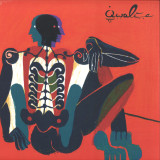
Cut from material recorded in April 2021 at Fish Factory studios in London, the album’s title Abbreviations nods to the editing and post-production processes that trimmed the original recordings into seven succinct and intricate tracks. Making space for collaborators Ernesto Marichales (percussion), Miryam Solomon (vocals) and Valeria Pozzo (Violin, viola), it builds on the critically-acclaimed success of Sound & Reason (supported by Gilles Peterson and Mary Anne Hobbs) to bring out different shades of the group’s shape-shifting sound.
‘Elevator Company’ condenses twenty-minutes of jamming around Tal Janes’ hypnotic guitar line into a low-lit lounge groove that subverts the tropes of elevator music associated with some forms of easy listening jazz. Featuring Solomon’s wordless vocals, the piece blurs the lines between ambient and improvised music, creating a warm and intimate atmosphere reminiscent of classic RnB recordings.
On a different tip, ‘The Spin’ is a trance-like freak-out drawing on the final reserves of energy at the tail end of two days of solid recording. Reflecting guitarist Janes’ idea that "music really starts happening after a while, once you feel like you have nothing left to offer," the hypnotic rhythm section sets the tone for an fraught and frazzled guitar solo that seems to dissolve the very edges of time and space in the process.
An album that speaks to Qwalia’s endless capacity for self-renewal and uninhibited expression, Abbreviations takes its cue from the group’s name to communicate something ineffable about the nature of music, rhythm and sound that must be experienced to be truly understood.
- A1: She Walks In Beauty
- A2: The Heart Of The Matter
- B1: What's That
- B2: Walking Way
After playing with Mingus, Coltrane, Lady Day and Abbey Lincoln, inventive jazz pianist Mal Waldron moved to Europe and first reached Japan in 1970, where he met Idahoborn double-bassist Gary Peacock, who had played with Art Pepper, Bud Shank, Bill Evans and free-jazz giant, Albert Ayler before moving to Japan to study zen buddhism. First Encounter, recorded in Tokyo in 1971 for French producer Herve Bergerat, shows that the intense pairing was quite natural, the harmonic dissonance of Waldron’s “She Walks In Beauty” contrasted by the up-tempo groove of Peacock’s “What’s That”; future Native Son founder Hiroshi Murakami makes important contribution on drums.
Stefano De Santis kicks off this Best Of Various with Murk, as the name suggests its a dark workout from one of Rome’s finest producers. Following that are Batavia Collective from Jakarta. When we first heard the live demo for this we were blown away and had to get it out on TLM. Batavia Collective are Elfa Zulham on drums, Doni Joesran on keys and Kenny Gabriel on synth bass. All mixed by Stefano De Santis. Rounding off the A side we have Cormac Fulton and his follow up to Perplexed on TLM025 with a new track called Loungeware. Based in Salford this is another atmospheric track from Cormac featuring Netherlands born but now Rio de Janeiro based flautist Floor Polder. Floor also appeared on Steve Conry’s rework of Guinu - Eletromadinga which featured on Colin Curtis Presents Jazz Dance Fusion 4 Part 2. Loungeware was mixed by Steve Conry and Matt Cox. Onto the AA side and we have Montreal resident Mike Perras with Soullous, a superb dancefloor track, live drums and amazing keys, in fact everything you want from house music. Next up is Future Jazz Ensemble from Vibo Valentia who follow on from their Rough Time EP TLM028 and appearance on TLM030 with another broken jazz monster of a track called Over The Rainbow. Finishing off side AA is Takahiro Fuchigami from Fukuoka with another fine track called Outer Heaven, a great follow up to Strange Acquaintance which was on TLM034.
Black Truffle is thrilled to present the first vinyl reissue of David Rosenboom’s unique Future Travel, originally released on the short-lived Detroit label Street Records in 1981 and here presented in an expanded edition with an additional LP of wild, previously unheard live and studio material from the same period.
Future Travel emerged from the confluence of two important streams in Rosenboom’s work at this time. First, his exploration of ‘propositional music’, defined as ‘complete cognitive models of music’ that start from the radical question, ‘What is music?’ In this case, the music belongs to the universe of Rosenboom’s In the Beginning (1978-1981), in which proportional relationships determine the material available to the composer in all musical parameters (harmonic relationships, melodic shapes, rhythmic subdivisions, dynamics, and so on). Second, the work documents a key moment in Rosenboom’s long collaboration with synthesizer pioneer Don Buchla. Having played a role in developing concepts for some of the modules of the Buchla 300 Series Electric Music Box (an innovative analogue modular system controlled by micro-processors), Rosenboom went on to write the software for Buchla’s hybrid analogue-digital keyboard synthesiser, the Touché, the instrument heard most prominently here.
In a way that no purely analogue synthesizer could, the 300 Series and Touché allowed Rosenboom to work with the In the Beginning algorithms in real time, the synthesizers becoming ‘intelligent instruments’ that actively collaborate with the performer. Developing the open structures of the electronic pieces from In the Beginning, Future Travel explored the possibilities of simply ‘playing the system’, recording live at Francis Ford Coppola’s Zoetrope studio in San Francisco. Working from loose sketches, Rosenboom added acoustic instruments to the electronic sounds and, on some pieces, the processed voice of Jacqueline Humbert. Like Rosenboom’s collaboration with Humbert on the abstracted synth-chanson of Daytime Viewing, this music set out deliberately to challenge the ‘stratified and illusorily coagulated identities in the musical culture of the time,’ refusing distinctions between ‘serious’ and popular music. But where Daytime Viewing achieves this in part through genre references, Future Travel is bracingly sui generis, existing in a unique universe where radical formalisation à la Xenakis spontaneously gives rise to expressive jazz harmonies and old-timey folk melodies.
The crystalline quality of many of the Touché sounds gives Future Travel a sparkling, immediately enticing surface, its layers of shifting ostinato patterns pulsating outside conventional meter, rippling like waves on the surface of water. On opener ‘Station Oaxaca’, ping-ponging synth arpeggios and hand percussion accompany a sentimental violin melody, abruptly overtaken by layered keyboard runs, before the entry of tinkling marimba-like sounds reframe the scene as sci-fi Martin Denny exotica. ‘Time Arroyo’ begins as an austere study in staccato synth sounds in multiple overlapping tempi, reminiscent of Ligeti’s famous ‘clock’ rhythmic effects. Before long, it opens up into a melodic passage with the gentle heroism of classic Roedelius, which proves to be only a brief interlude before the layers of rhythmically distinct synthesiser patterns begin to build and accelerate into an increasingly dense cacophony. The wildest twists and turns are saved for the epic closer ‘Nova Wind’, where the arrangement focuses on Rosenboom’s virtuoso piano playing, perfectly embodying the project’s radical disregard of stylistic orthodoxies as he moves from hyperactive pointillistic flurries to a kind of space-age gospel.
At several points throughout the record, the distinctive voice of Jacqueline Humbert is heard reading passages from the text component of In the Beginning, a dialogue between The Double (an embodiment of humanity’s timeless desire to replicate itself in spiritual and technological copies) and two Spirit Characters. Fittingly, as all are conceived as embodiments of a future form of techno-human collective consciousness, distinctions between the three characters are not immediately evident in Humbert’s delivery, just as the music blurs the boundaries between intelligent computing and human spontaneity. Adorned with a striking retro-futurist cover (and here accompanied by extensive new liner notes and archival images), Future Travel is a time capsule of radical imaginings at the birth of our digital age, reminding us of utopian possibilities of which our own present seems so often to fall short.
JAZZ MONEY, the debut album from multiinstrumentalist, composer, and producer Zacchae'us Paul is an irreverent, fresh take on "America's classical music" that speaks to the 24 year old artist’s deep-beyond-his-years understanding of Black music and the African diaspora. Paul stretches and bends jazz sounds around the Atlanta hip-hop he grew up with, the gospel sounds and philosophies that have long shaped his music making, and the Caribbean rhythms he learned studying in Puerto Rico. He has created a wholly personal sound that is youthful, and thoughtful all at once.
"When you listen to this album, listen to it again," Paul says. "A lot of the songs have multiple meanings, and I'd love for people to have different perspectives on them." Made with a cast of improvising upstarts and veterans that includes the album's executive producer, Terri Lyne Carrington, fellow Atlanta native and Candid recording artist Morgan Guerin and Paul's fiancée and star vocalist Melanie Charles, Jazz Money is jazz music for this, and future, generations.
2024 Reissue
redux packaging. aja monet's poems are a work of gravity. They are a fundamental for which all things are attracted, considered upon and enacted towards. Her work moves, constantly, between origin and outcome, allowing them to exist in converse. In her debut album when the poems do what they do, we glimpse her indefatigable commitment to speak. Those thematic origins of this album at times center around Black resistance, love and the inexhaustible quest for joy.In when the poems do what they do aja monet appears as a woman of letters and storm, her poems do not roar in pentameter - but rather in storm surge because, "Who's got time for poems when the world is on fire?!." And this work isn't one to pull apart into one liners, these are poems of things felt. There is a fullness here that can't be encapsulated in even the boundaries that language offers. aja monet is a griot, a storyteller, a chronicler, and your grandmother telling you about her first love all at once. These are baby making poems - literally the spring enacting upon the cherry trees. These are poems of urgency and want and the rallying cry to demolish the insidious systems from which our futures seem to be wrought, in other words, "If we had a sense of humor we'd be more radical. More migrant than citizen we'd breathe the air clean and ration our resources...we would melt ALL the guns." You will find yourself readying arms because of these poems, and simultaneously mourning the unstoppable loss of names already destined to be immortalized. aja monet crafts a work as she always does, that can be entered from many doors. These aren't poems for poets, but poems for everyone.She is joined in effort on this album by musicians Christian Scott (trumpet), Samora Pinderhughes (piano), Elena Pinderhughes (flute), Luques Curtis (bass), Weedie Braimah (djembe) and Marcus Gilmore (drums). Together creating music that is insistent and unrelenting. There are songs reminiscent of jazz club virtuosity and melee, others of a healing balm in gilead, and the chords of Castaway move like that of the call to intercessory prayer.
First released over 30 years ago, this EP is where The Future Sound Of London started before “Papua New Guinea” later in 1991. All four tracks were instrumental in establishing a new genre of electronica within dance music. They were ahead of their time and extremely progressive, and here three decades later they are making an impression. “Pulse State” has been described as the ‘best bleep track ever made’, and at the time dominated the airwaves on London pirate stations.
First reissue in original format since 1991!!
First released over 30 years ago, this EP, as with Volume 1, is where The Future Sound Of London started before “Papua New Guinea” later in 1991. All four tracks were instrumental in establishing a new genre of electronica within dance music. They were ahead of their time and extremely progressive, and here three decades later they are making an impression. “Stolen Beats” is a hypnotic roller with all the jazz, bleeps and bass you could want, still a regular Radio 1 ‘Essential Mix’ track, and “I’ve Become What You Were” pure hard hitting UK techno from the heyday of this music in the early 90s and the blueprint for the deep jungle sound to emerge later.
This edition of The Pulse EP is the first reissue in its original vinyl form since 1991, those initial pressings now expensive on Discogs.
First time on vinyl!
Newly remastered. LP housed in a gatefold jacket.
Featuring Herbie Hancock, Martha Reeves, Alphonse Mouzon, Chuck Rainey, Patryce “Choc’let” Banks, Carlos Morales, and members of The Pointer Sisters.
In the 1970s, Betty Davis defied genre and gender by pushing her voice to extremes and embracing the erotic. She articulated a kind of pre-punk, funk-blues fusion that had yet to be normalized in mainstream music – a style that few musicians have come close to replicating. As one of the first Black women to write, arrange, and produce her own albums, Betty was a visionary who disregarded industry boundaries and constraints. Raw, unapologetic and in full control, Betty paved the way for generations of future artists who said “funk you” to the music industry and social norms.
In 1979, when Davis entered an L.A. studio to record her fifth and final album, she was reeling from a series of setbacks. Three years earlier, after recording her fourth album, Is It Love Or Desire, Davis was dropped from her label and the LP was subsequently shelved. In 1978, her beloved band Funk House went their separate ways. Looking for a fresh start, Davis relocated to Hollywood to focus on songwriting. Before long, British manager Simon Lait (Toni Basil), offered to fund her next project.
With renewed vigor, Davis reunited with former Funk House guitarist Carlos Morales and brought together industry veterans like fusion drummer Alphonse Mouzon and session bassist Chuck Rainey. Old friends Anita and Bonnie Pointer (The Pointer Sisters) and Patryce “Choc’let” Banks joined Davis on vocals, as did Motown legend Martha Reeves. The resulting album, Crashin’ From Passion, was her most musically diverse, blending elements of reggae and calypso (“I’ve Danced Before”), jazz (“Hangin’ Out in Hollywood,” “Tell Me a Few Things”), dark synth-pop (“She’s a Woman”), and even disco (“All I Do Is Think of You”). Equally exploratory are Davis’ vocals, as she trades in her signature sass and snarls for more nuanced stylings.
Among the album’s few funk tracks is “Quintessence of Hip,” in which Davis hails musicians like Bob Dylan, Billie Holiday, Stevie Wonder, and John Coltrane, while deftly integrating elements of their work. The song also offers a moment of stark vulnerability, as she sings, “Isn’t rich? Isn’t it queer? Losing my timing so late in my career.” It would prove to be a prophetic line in the months to follow.
The mixing process was mired by artistic differences and then cut short, amid the death of Davis’ beloved father. Bereft and exasperated, Davis returned home for the funeral, setting into motion her retirement from the music industry. Crashin’ From Passion, meanwhile, would be shelved for 15 years and licensed for a CD-only release, without Davis’ consent, in the ‘90s. This 2023 edition of the album, made with Davis’ full approval and cooperation, marks its first official release and first time ever on vinyl. The package was designed by GRAMMY®-winning artist, Masaki Koike, while the album cover features an incredible shot of Betty captured in London in the mid-1970s by renowned photographer Kate Simon.
Crashin’ From Passion was remastered by Dave Cooley at Elysian Masters and pressed on vinyl at Record Technology, Inc. (RTI). The accompanying booklet includes a treasure trove of rare photos from the era, plus lyrics, and new liner notes by writer, ethnomusicologist, and Betty’s close friend, Danielle Maggio, who integrates interviews that she conducted with Davis, marking her last ever interviews.
First time on vinyl!
Newly remastered. LP housed in a gatefold jacket.
Featuring Herbie Hancock, Martha Reeves, Alphonse Mouzon, Chuck Rainey, Patryce “Choc’let” Banks, Carlos Morales, and members of The Pointer Sisters.
In the 1970s, Betty Davis defied genre and gender by pushing her voice to extremes and embracing the erotic. She articulated a kind of pre-punk, funk-blues fusion that had yet to be normalized in mainstream music – a style that few musicians have come close to replicating. As one of the first Black women to write, arrange, and produce her own albums, Betty was a visionary who disregarded industry boundaries and constraints. Raw, unapologetic and in full control, Betty paved the way for generations of future artists who said “funk you” to the music industry and social norms.
In 1979, when Davis entered an L.A. studio to record her fifth and final album, she was reeling from a series of setbacks. Three years earlier, after recording her fourth album, Is It Love Or Desire, Davis was dropped from her label and the LP was subsequently shelved. In 1978, her beloved band Funk House went their separate ways. Looking for a fresh start, Davis relocated to Hollywood to focus on songwriting. Before long, British manager Simon Lait (Toni Basil), offered to fund her next project.
With renewed vigor, Davis reunited with former Funk House guitarist Carlos Morales and brought together industry veterans like fusion drummer Alphonse Mouzon and session bassist Chuck Rainey. Old friends Anita and Bonnie Pointer (The Pointer Sisters) and Patryce “Choc’let” Banks joined Davis on vocals, as did Motown legend Martha Reeves. The resulting album, Crashin’ From Passion, was her most musically diverse, blending elements of reggae and calypso (“I’ve Danced Before”), jazz (“Hangin’ Out in Hollywood,” “Tell Me a Few Things”), dark synth-pop (“She’s a Woman”), and even disco (“All I Do Is Think of You”). Equally exploratory are Davis’ vocals, as she trades in her signature sass and snarls for more nuanced stylings.
Among the album’s few funk tracks is “Quintessence of Hip,” in which Davis hails musicians like Bob Dylan, Billie Holiday, Stevie Wonder, and John Coltrane, while deftly integrating elements of their work. The song also offers a moment of stark vulnerability, as she sings, “Isn’t rich? Isn’t it queer? Losing my timing so late in my career.” It would prove to be a prophetic line in the months to follow.
The mixing process was mired by artistic differences and then cut short, amid the death of Davis’ beloved father. Bereft and exasperated, Davis returned home for the funeral, setting into motion her retirement from the music industry. Crashin’ From Passion, meanwhile, would be shelved for 15 years and licensed for a CD-only release, without Davis’ consent, in the ‘90s. This 2023 edition of the album, made with Davis’ full approval and cooperation, marks its first official release and first time ever on vinyl. The package was designed by GRAMMY®-winning artist, Masaki Koike, while the album cover features an incredible shot of Betty captured in London in the mid-1970s by renowned photographer Kate Simon.
Crashin’ From Passion was remastered by Dave Cooley at Elysian Masters and pressed on vinyl at Record Technology, Inc. (RTI). The accompanying booklet includes a treasure trove of rare photos from the era, plus lyrics, and new liner notes by writer, ethnomusicologist, and Betty’s close friend, Danielle Maggio, who integrates interviews that she conducted with Davis, marking her last ever interviews.
Repress!
First leak of B. Bravo & Bay Area singer Rojai's upcoming Kool Customer project on Bastard Jazz that brings in the sounds of future funk, 80s boogie, and little bit of strip club sleaze. "Blackberry" is a dancefloor smasher with a big bassline, funky guitar licks, horn section and a hella catchy chorus. 7" drops early August and full project mid September.
A bit more than half a decade on from his widely acclaimed debut Vanishing Points from 2018, Swiss guitarist, composer, and improv musician Manuel Troller releases his new record Halcyon Future. A rhythmically dense and ambiguous, yet joyful ride for unstable times, a plea for warmth and hopeful resistance.
Troller’s mode of incorporating, zooming in, and expanding on small elements from improvised sessions creates a multilayered work of driving rhythms and abstract, vibrating textures. Opening with Halcyon Future I’s distinctive open pulse, this first piece guides us through subtle harmonic shifts that are almost unrecognizable as they take place over extended time, overlapping and creating a sense of ambiguity until the piece reaches an almost optimistic level with Mario Hänni’s unexpected introduction of driving acoustic drums. Relentlessly and with increasing excitement, heavy electronic 80s bass drums and an armada of layered hi-hats push them on, leading to the all-incorporating melodic finale.
The two long pieces Halcyon Future I and Halcyon Future II focus on forward momentum. In between them stands DNA, a purposely directionless contemplation on emotion as such. It is raw, naked, and confrontational, with a tender and subtly changing chord progression creating intimacy and proximity, abstraction and warmth, like a beautifully vibrant hologram for the listener to walk around in.
The B-side with its 20-minute Halcyon Future II features playful futuristic guitars, enhancing and challenging the stereo image that Troller is already well-known for. As it’s given time to develop and take root, the ever-varying guitar interactions densify and the staccato patterns jump out of the speakers with joy, creating excitement and building momentum. Compared to Side A, things turn to a slightly more complex rhythmical, melodic, and harmonic feel here. There are easy references, such as Manuel Göttsching’s E2-E4 or Pat Metheny performing Steve Reich’s Electric Counterpoint, but Troller goes a different and very much more concrete way. Although the piece has been recorded in various places and through a long process of overdubbing, there is an astonishingly strong live feel to it, from beginning to the end, from the slow rise to the full spectrum and the almost krautrock-like finale. Improvisers Hans Koch on soprano saxophone and Michael Flury on heavily fuzzed trombone join in, while Troller and Mario Hänni on many guitars, bass, drum machines, and acoustic drums provide a joyous driving entity, not giving up until it all breaks down again. There is overkill and brute force, though never without depth and a vision of future.
In the musical scope of Halcyon Future, there is no need for an absolute definition of things. A continuously changing interpretation of repetitive and variable elements fading in and out of focus tells a story of an excited sense of acceptance. Feelings of transcendence stem from Troller’s layering of constantly shifting rhythmic structures with unforeseen improvised harmonic changes. Drum machine parts overlayed with acoustic drums shift between musical modes, anchoring the album on the verge of a jazz-influenced, motorik, post-ECM balearic plateau. Abstract textural elements gently swirl around and behind all that is rhythm, providing a submissive counterpoint. As with much of Troller’s work, Halcyon Future is an album that unfolds slowly, revealing more of its richness, detail, and subtle beauty at each listen.
Halcyon Future is a joint release by three:four records and meakusma.
- 1: Different Type Time (Prod. Quelle Chris & Cavalier)
- 2: Custard Spoon (Prod. Quelle Chris)
- 3: Can’t Leave It Alone Feat. Eric Jaye (Prod. Glassc!Ty)
- 4: Come Proper (Prod. Jacob Rochester)
- 5: Touchtones (Prod. Aummaah)
- 6: Déjà Vu / Tydro ‘97 (Prod. Messiah Muzik / Quelle Chris)
- 7: Doodoo Damien (Prod. Quelle Chris)
- 8: Baby I’m Home (Prod. Wino Willy)
- 9: Yeah Boiii (Prod. Quelle Chris)
- 10: All Things Considered (Prod. Wino Willy)
- 11: Pears (Prod. Malik Abdul-Rahmaan)
- 12: Told You (Prod. Fushou)
- 13: Badvice (Prod. Low Key)
- 14: Think About It Feat. Billzegypt (Prod. Obliv)
- 15: Up From Here / 7Th Ward Spyboy (Prod. Ahwlee / Quelle Chris)
- 16: Manigaults / I Miss Them (Prod. Ruffiankick)
- 17: Lazaroos (Prod. Vinny Cuzns)
- 18: Bespoke Feat. Dominic Minix (Prod. Hann_11)
- 19: 50 Bags Feat. Lord Chilla (Prod. Child Actor)
- 20: Axiom / My Gawd (Prod. Glassc!Ty / Quelle Chris)
- 21: Flourish (Prod. Quelle Chris)
"It seemed that if I didn’t somehow repeat the process of greatness, and do so immediately, multiple times away to satisfy playlist and binge watch culture, then I “wasn’t shit”. After a while I was like “nah this doesn’t feel good,… I don’t know if I am finding joy in this”. I would record songs and not release them, obsess over sessions recorded in my home with 30 takes of vocals and wake up only to delete them. When it began to feel right I found solace in an epiphany that I was not obligated to operate at any other wavelength. I am moving on a different type of time, and that doesn’t expire." -Cavalier
For heads of a certain time period of NYC hip-hop, Brooklyn born, New Orleans-based rapper and songwriter, Cavalier was the one that got away. The outrageously talented artist whose name and reputation preceded him everywhere you went in the scene. The rapper who everyone knew was so dope that he had to blow, but who never seemed concerned with any of that. The pretty boy draped in Polo who stole every live show with a feather in his hair and a mouth full of gold fronts. The cat so dedicated to his own independence that even indie labels stopped trying to sign him and projects came when they came, but when they came they were undeniable.
Cavalier was THAT guy for a lot of us; a silver-tongued philosopher with an eye for the poignant details of black life and a delivery as effortless as a young Ken Griffey’s swing. All that said, it never really felt like Cav had that moment in the spotlight that we always assumed was coming. After chiseling away through headier cult corners of the NYC hip-hop scene Cavalier was recognized for his memorable co-pilot to Quelle Chris’ 2013 Mello Music debut, Niggas Is Men. The critically acclaimed LP helped propel Quelle Chris into the forefront of indie hip-hop (and also happened to be the first production credits for Messiah Muzik). Cav followed up with his first full length, Chief, which sports a notable Raekwon feature but also early work from producers like Ohbliv and Tall Black Guy. A relocation to New Orleans and partnership with producer/vocalist Iman Omari yielded two more projects: 2015’s Lemonade EP and Private Stock in 2018. Great records all; eagerly sought by collectors and signal boosted by influential media like OkayPlayer, Solange’s Saint Heron, and Pitchfork. Cavalier’s bonafides have never been in question, but his new album Different Type Time feels like a revelation—a sonic suspension bridge between his rich history and the artform’s future.
Different Type Time doesn’t sound like the future though, its vibrations are somewhere all their own. It sounds like jazz, like a conversation overheard in roti shop, or a pool hall, or the foyer of your old building on a fall day, front door propped open with a brick. The blues is in there too, and the south—the American South, and theGlobal South, and South Brooklyn. It’s not that it sounds like the past, but you can hear everything that came before in the thick of the basslines and the yearning of the keys. Different Type Time also doesn’t sound like now, it sounds like RIGHT NOW; the bounce of the lyrics like the staccato of basketball in the park, carried on a spring breeze.
Although he doesn’t rap on DTT, Quelle Chris plays a pivotal role; producing eight songs and serving as associate producer/consigliere to Cav throughout the creative process. “There is no time wasted in explaining things when I collaborate with Quelle. He understands the universe I am in and the realities I want to create. He’s in them. And I don’t think I can envision one without him,” Cavalier explains. Messiah Muzik, Wino Willy, Ohbliv, Ahwlee, Child Actor, Fushou and several other producers round out the credits, all lending their talents to the album’s spaciously soulful sound. At the center of all these alchemies is Cavalier, nimbly dancing in and out of pockets like a sidewalk game of jumprope. Different Type Time is a masterclass in this thing we call hip-hop; daring and original, yet always standing deeply rooted in the culture.
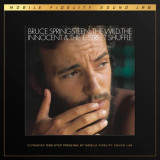
Released only eight months after his exhilarating debut, Bruce Springsteen's The Wild, the Innocent & the E Street Shuffle contains rousing dispatches from the boardwalk, the street, the beach, and the bedroom. It explodes with energy, dares to dream, teases with humour, crackles with tragedy, clings to hope, and overflows with discovery, youthfulness, and personality. It features an unforgettable cast of characters — corner boys, teenage hustlers, doomed lovers, jazz men, junk men, factory girls, fortune tellers, alley cats, pimps, escorts, and more — illuminated by vivid colour, breathtaking detail, and poetic action.
Musically, the heartfelt 1973 record is inhabited by sympathetic vignettes and cinematic arrangements steeped in rock 'n' roll, soul, jazz, and R&B. It finds the New Jersey native looking beyond the parameters of his preceding record and seeking to move on from environments he knows well (and chronicles here) by rushing headlong toward unknown territories, adventures, and people. Underpinned by the singer-guitarist's ambitious poetic enterprise and will to succeed, The Wild, the Innocent & the E Street Shuffle is the album on which Springsteen becomes the Boss.
Mastered on Mobile Fidelity's renowned mastering system, pressed at RTI on MoFi SuperVinyl, and strictly limited to 7,500 numbered copies, Mobile Fidelity's UltraDisc One-Step 180g 33RPM LP set is the definitive-sounding version of Springsteen's sophomore record. Benefitting from SuperVinyl’s nearly non-existent noise floor, superb groove definition, and dead-quiet surfaces, The Wild, the Innocent & the E Street Shuffle plays with a clarity, energy, presence, and openness that complement the expressiveness, dynamics, and scope of the seven restless songs that comprise a work Rolling Stone ranked the 345th Greatest Album of All Time.
Beyond the audiophile sonics that practically place you behind the console at 914 Sound Studios — listen to the separation between the instruments, natural decay of the notes, interplay within the widescreen soundstaging, and nothing-to-lose youthfulness of Springsteen’s voice — this reissue takes seriously this record’s influential merit by presenting it in packaging that underlines its status. Tucked in a beautiful slipcase, the LP is housed in a special foil-stamped jacket with faithful-to-the-original graphics. This reissue is made for listeners who prize sound quality and who want to engage themselves in everything involved with the invigorating set that busted Springsteen loose from the club circuit and landed him on the radio
Determined to liberate anyone within earshot and unafraid to come on strong, The Wild, the Innocent & the E Street Shuffle serves as the debut of the E Street Band — not only heard but seen for the first time by most of the public courtesy of the back-cover photograph. This is where saxophonist Clarence Clemons, organist-accordionist Danny Federici, and pianist David Sancious step out of the shadows — and drummer Vini Lopez and bassist Garry Tallent again stoke a fiery rhythmic engine that helps drive the untamed, reimagined big-band swing of “Kitty’s Back,” breathless R&B thrust of “Rosalita (Come Out Tonight),” and carefree dance steps of the funky “The E Street Shuffle.”
Of course, the main attraction remains a then-24-year-old visionary on the precipice of becoming a sensation and turning a then-bloated rock scene on its head. Recorded over three months while Springsteen and company were busy touring his debut LP, The Wild, the Innocent & the E Street Shuffle reflects the high-octane approach the vocalist embraced onstage and drifts away from the label-dictated acoustic-based frameworks of his debut. The set also witnesses Springsteen deepening his observational skills, with narratives such as the romantically tinged “4th of July, Asbury Park (Sandy)” and redemptive epic “Incident on 57th Street” mirroring changes taking place in the singer’s own life, small towns, and America at large.
A thrilling collision of memories, reflections, and composites — Sandy, Rosalita, and the latter’s parents are all based on actual people Springsteen knew, as is the community depicted in the opening track — the aptly titled The Wild, the Innocent & the E Street Shuffle resonates decades on due to its truths, authenticity, and spirit. Those characteristics — as well as the fact that many of its lengthy songs come on as the equivalent of sweaty, feverish soul revue that won’t stop until you’ve been exhausted — also explain how this now-iconic album triumphed over the reservations of industry “experts” that both demanded Springsteen re-record it and instructed deejays not to play it.
Yet there’d be no stopping a record that saw the past, present, and future, a band whose will would not be denied, and a phenomenon who was born to run. A never-ending invitation to act real cool and stay up all night, The Wild, the Innocent & the E Street Shuffle always feels alright.
- Utsuro Bune
- Music In Motion
- Farewell
- Leaving
The Gothenburg, Sweden based psychedelic rock combo Hollow Ship returns with Animated Music, a new EP and the follow-up to their acclaimed 2020 debut LP Future Remains which was praised by ex Prog Magazine, Shindig! and Raven Sings the Blues. With the band’s unique rhythm-driven blend of psychedelic rock and prog, with traces of jazz and hard rock as well as a myriad of other influences, at he forefront Animated Music pushes the band further into the instrumental realm than before. A cinematic journey over the space of 20 minutes, the music was originally written as an aural companion to the band’s Space Motion show visuals before being reworked into the shape of the Animated Music EP. With the band’s upcoming second full-length due in the winter, Animated Music showcases the band’s instrumental storytelling at great effect, further establishing the band at the orefront of the Swedish psychedelic scene alongside luminaries such as Dungen and Goat. Animated Music is due out on May 31 via Swedish indie label PNKSLM Recordings (7ebra, Chemtrails, ShitKid etc) on limited edition splatter vinyl (limited to 500 units worldwide) and digitally.
DJ Support: Gilles Peterson, Sean Johnston, Jaye Ward, Max Essa and Francois K
Limited to 300 copies
Having been long-time admirers of one another from afar, Hell Yeah and Michele Mininni finally come together for Pop Archetypes. It is a multifaceted debut album that collides broken beats, worldly rhythms, jazz, eastern melodies, live drums and much more into one thrilling 15-track opus that arrives on May 31st.
Italian artist Mininni has always had a leftfield take on electronic music and imbued it with rhythms, melodies and instruments from around the globe. He has released it on cult labels like R&S, Optimo Trax, Internasjonal and Curle Recordings but has saved his magnificent debut album for Hell Yeah. It is much more than a collection of sounds he has already explored and instead finds him heading off into all new territory without losing his signature sense of inventive and beguiling rhythm and melody. It is a multicultural journey that takes in heterogeneous styles and diverse influences but distills them all into one cohesive album with its own unique storyline.
Says Mininni of the record, 'I wanted each track to be like pieces of a unique, multifaceted picture, like walking through train cars or progressing through the levels of a video game, all filtered through my own vision and concentrated into 36 minutes. I wanted a pop album rooted in the extraordinary richness of popular music and projected into the future, a continuum where pieces communicate with each other and are received by the ears in symbiotic balance.'
Despite that concept, the album is a spontaneous listen full of surprises, left turns and original ideas that all hold together in thrilling fashion. It kicks off with the tumbling jazz drums and swirling synths of 'Spinning Around Cotton Candy', takes in mellifluous melodic layers and broken beats on 'Golden Room' and 'Slipped Air' casts you adrift amongst gorgeous piano keys and refracted vocals on the suspensory 'Vertigo'. There are jungle interludes with Eastern string melodies like 'Bangkok Tempo', lavish fusions of organic and synthetic sounds on 'Kundalini' and more charming Far Eastern rhythms on 'Muting Cat'. 'Congoflash' brings electrifying cosmic rays to busy hand drum patterns, 'The Magic Of Synesthesia' combines dark amen breaks and bright and uplifting flutes while 'Carousel Of Tears' douses you in watery melodies and celestial pads that awaken the soul.
Pop Archetypes is an adventurous work packed with meticulous and infinite details but all with an overarching narrative that makes it far more than the sum of its parts.
With her third Gondwana album, "Constellation", Manchester"s Caoilfhionn Rose has come of age as an artist, digging deep to find experimental new ways of expressing her wonder at nature"s beauty, her love of music in all its diversity, and her belief in the restorative powers that both afford in the troubled post-COVID world. The ten tracks on "Constellation" feel rooted in a knowledge of folk, jazz and all the twentieth century"s classic tunesmiths, and yet they seem to create a magical, otherworldly space of her own imagining, blending Caoilfhionn"s core piano with synths, and pitting a live rhythm section and saxophone embellishments against ambient samples and future-facing production techniques.