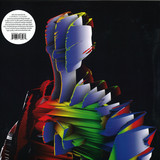
To be released on World Mental Health Day, part of the album's proceeds will be donated to a UK-based mental health charity. 'I often wonder how sadness moves through people,' Emika says, 'through time, through stories and history, and if it's something that becomes us rather than coming from us.'
% of album sales will be donated to charity Help Musicians UK
emikarecords. com Invites fans to anonymously share their experiences of depression and create a waterfall of comments inspired by the song Wash It All Away
Studio video promoting the album via Soundcloud, Autumn
Live / DJ video, promoting the album with Beatport, Autumn
Live streaming of the album from Emika's studio via FB, Insta, YT, September.
Bookings by Christopher at Melt Bookings. Team chose to give fans time to listen to the album first, shows starting early 2019, special album show with live band and dome visuals planned in the Berlin Planetarium Feb 2019. A few promo shows summer / fall 2018.
Boiler Room live show as part of Open Dance Floor series tbc
* Given its years of manifestation behind the scenes of other projects, Falling In Love With Sadness reflects a renewed understanding of Emika's own genealogy, kindred lineage and its connection to modernity. Marking a drastic departure from the menacing, stripped-down qualities of albums past, Dva and Drei, Emika has surfaced with a new upwelling of sound gracing the bittersweet, melancholic and sanguine.
* With the interplay of myriad genres both rhythmically and melodically intertwining between spacey, dub tinged Promises, lush synth pop hooks on Escape and the title track's soulful electro, a full spectrum of musicology remains primary to the ever-evolving chroma of Emika's umbrous sound.
* Further characterised by the breathy sibilance and sultry tones of Emika's noirish, vocal aesthetic, the album navigates through the morose and trappings of misanthropy by illuminating a narrative of emotional resilience and recovery.
* Co-produced with Robert Witschakowski of The Exaltics, and continuing her collaboration with guitarist Chris Lockington (as heard on Drei and Dva), Falling In Love With Sadness provides a fifth solo album for Emika, but moreover, defines itself as an overture for her future works.
quête:future mode
- A1: N'écrire Que Du Vent
- A2: La Visite Au Musée
- A3: And Then The Wind
- A4: Chienne De Vie
- A5: Quand Natalia Peint
- A6: Thème Entre Deux Chants
- A7: Les Sanglots Du Locataire
- B1: John Doe
- B2: C'était À L'aube
- B3: Le Dialogue Des Joueurs De Cartes
- B4: Et L'obscurité Toute Entière Pour Me Rappeler Cela
- B5: Le Train Ne S'arrêtera Plus
- B6: L'oubli
- B7: Chryséléphantines
- B8: D'un Pas Chancelant
Le Raccourci is a welcome introduction to the world of modern classical identity Sebastian Gandera. The impressionist landscapes of a sensitive soul self-reflecting, these miniature compositions alternate across a rudimentary set up of piano, field recorder, sampler and four track. Melancholic utterings hastily captured some 100km east of Paris. Classically trained by the same teacher as his parents, Gandera first began recording in the confines of his university dorm room, inspired by a C60 from friend and future collaborator Bernard Odot (A Gethsémani). Humbly existing without sparing a thought to music industry or career, Gandera's personal effects surfaced via the European and US cassette networks from 1988 to 1994. Impressively accomplished for the DIY scene they orbited, these tapes were issued in scant quantities, rendering his pieces as private secrets shared and duplicated in small concentric circles. Aside from a sole, avowedly traumatic performance, the material was never shared in a live context.
- A1: Setaoc Mass - Far Away From Yesterday
- A2: Juxta Position - Hexagon
- B1: Roman Poncet - Turn Down
- B2: Viers - Moomin Trash
- B3: Nocow - Metha
- C1: Kirilik - Batut
- C2: Lady Starlight - D5-12
- D1: Ubx127 - Vectors
- D2: Len Faki - Robot Evolution
- E1: Pablo Mateo - Anfang Ende Immer
- E2: Shlomi Aber - 3000 Reasons Why
- F1: Nocow - Run Far
- F2: Truncate - Bassline
- G1: Lewis Fautzi - Modern Humans
- G2: Jeroen Search - Rubidium
- H1: Amotik - Neela
- H2: Setaoc Mass - Silence
4x12" Set , Special 15th Anniversary Edition, with Special Deluxe 4 Gatefold, shrink wrapped incl Download Card
Celebrating its 15th anniversary as well as the monolithic catalogue 100, Figure releases a gem-packed compilation featuring 15 artists who are shaping the current sound of the label. Ranging from machine-driven stompers courtesy of Juxta Position, Kirilik or Lady Starlight, to punchy electro by Viers and UBX127, to Nocow's signature style wavey melancho-electronics, or the straight-up high-voltage-techno of Shlomi Aber, Lewis Fautzi and captain Len Faki himself, all adequately framed by Setaoc Mass' beautiful ambient pieces - this 4 LP-set encompasses everything Figure both past, present and future. Arriving in a unique gatefolded sleeve that carries the exclusive handmade visual art by Munich artist Julia Schewalie. Whether long time fan or newly recruited follower, this one is a must-have entry in every techno-lover's collection.
Standards & Practices is proud to present the inaugural release on its new sister imprint, Double Standards, from NYC-based producer Jake Reif (Device Control). His third release working under this alias, Reif manages to amalgamate his dance music obsessions (EBM, bleep techno, Chicago house) in a totally unique way that feels fresh and idiosyncratic, avoiding simple genre exercises or nostalgia for the sake of it.
Lead track 'Spirit Module' is perhaps the finest summation of Reif's aesthetic yet: a mixture of bleepy, raw techno that, with its wild vocal samples and wide, 808-driven groove, comes across like a tougher, more modern take on the classic Sheffield/Richard H. Kirk/Robert Gordon sound. Label partner Ken Meier's first outing here as a remixer is a smashing success his version strips things down, keeping most elements of the original intact, but adds a driving, almost double-time metronomic machine rhythm that's aimed squarely at the dancefloor. On the flip, 'Tension' and 'Symmetry Obsession' row the boat further out, with their synapse-frying tones and jagged, randomized sequences reminiscent of Freddy Fresh at his best. All in all, a future classic destined to find favor with adventurous house and techno DJs alike.
It is said that every generation casts its mind back to a previous era in times of crisis; the resources that will allow us to decode the questions of our moment may lie in the myths of another era.
Le Renard Bleu, the new musical and cinematic collaboration between Lafawndah and composer Midori Takada, and filmmakers Partel Oliva, takes a cross- generational echo as ground zero for recovering a crucial myth for uncertain times: the blue fox.
As transmitted by Takada, the fox appears in both ancient Senegalese and Japanese folktales as the trickster archetype; belonging both to the heavens and to the earth, the fox is the agent of chaotic good, shaking the world up when its energy has become stagnant. Above all else, the fox is famous for its cunning nature.
Renard Bleu marks the first new music released by Takada in nearly twenty years; it would be difficult to overstate the importance of her return to the public eye. Her first solo record, 1983's Through the Looking Glass, has been rediscovered and heralded as a lost classic; the influence of her percussion trio, the Mkwaju Ensemble, continues to permeate and inspire a new generation entranced by its lucid beauty, playfulness, and sensual patience. Takada has performed in numerous film score orchestras, including the ensemble for Akira Kurasawa's Dreams, coincidentally a key influence on Renard Bleu.
In the ensuing years, Takada has worked closely with theater group the Suzuki Company of Toga on productions of Electra and King Lear, an experience, she says, that allowed her to pursue 'a unity of music, body and space.' Recent live solo performances have evinced the depths of her exploration of all three.
Equally, it is Lafawndah's freedom of tone, decentralized maps of ancient and modern music cultures, and alloying of devotional intensity with modern songcraft casts her as a distinct relative of Midori Takada's.
Over the course of two EPs, self- directed music videos, and countless live performances, Lafawndah has drawn out an uncompromising exploration of how theater, situational intervention, and choreography can amplify the affective palate of forward pop music. One can trace the influence of artists such as Meredith Monk, Carlos Sara, and Andy Kaufman as much as musical antecedents AR Rahmann, Missy Elliott, or Geinoh Yamashirogumi.
It is in a mutual commitment to this unity that Lafawndah, Takada and Partel Oliva find fertile aesthetic common ground.
The music of Renard Bleu originated in Takada's preoccupation with the legend of the fox; after constructing a vivid instrumental composition dramatizing the spirit animal's journeys through waterphone, bells, marimba and various forms of drums, Lafawndah responded - in her inimitable mix of fairytale and undertow-- with melodies and lyrics capturing a dialogue between her and the fox himself. Eventually, the duo met in Tokyo for a week of communing with the material at Avaco Creative Studios, where new elements were composed on site.
Created in partnership with KENZO and premiered today via their channels, it was Partel Oliva who imagined a contemporary cinematic frame for the myth of the fox to re- appear, creating a hybrid of choreography and narrative around Takada and Lafawndah's performance of their joint composition (also titled Le Renard Bleu.) Returning to film in Japan for the third time, Partel Oliva's moving image work (Club Ark Eternal, The Pike and the Shield) has set the standard for and revolutionized the fashion art film. Their deployment of original music, dance, and a highly stylized mis en scene coalesces here in the casting of Los Angeles krump artist Qwenga as the eponymous fox, stalking the halls of the ancient Noh theater in which Takada and Lafawnda's performance takes place.
Why call up the myth of the fox now In Le Renard Bleu, Lafawndah and Takada's collapsing of distance between generations, styles, and milieus intimates that the relationship to time must be shaken. The future lies in fragments in the past; to remember is to recover it; the fox rises to thicken the plot.
The music on this EP was conceived in China, between 1989 and 1993. The original tracks were mixed to DAT in real time, in a small neighbour-proof studio inside my apartment in Macau, a 19th floor with a view to the hurricanes. There's a small, unexpected or improbable story behind each track, some little magic fused with the local atmosphere, certainly guaranteeing their lasting authenticity 25 years later.
TAIPEI DISCO
Late 80s Guangzhou was an exotic city where the traditional past coexisted in harmony with the present and even already with the future.
I'd rather spend my weekends in Guangzhou than diving into Hong Kong consumerism - as most ex-pats in Macau did. I took a cab at the border and travelled 150 Km through chaotic roads with family and friends until reaching the hot, humid, mega South China metropolis.
We ate on street joints in the evenings, went on to a karaoke bar and ended up at Taipei Disco, the only proper club in town. All the others were inside hotels and played generic music or they were seedy, sleazy, smoky cabarets.
Taipei Disco used to be a cinema and played cantonese pop music and anglo-saxon pop/rock (that was new). The spacious dance floor was generously lighted, the atmosphere was airy and modern. Boys and girls were in the habit of dancing in pairs, one in front of the other, observing a respectful yet sensual distance. When the girl took a few steps back, the boy went along and vice versa. With legs and feet (more than the upper bodies) synchronized with the music, they never exceeded in extroversion. Cool.
I always carried a MicroComposer and a portable DAT recorder in my travels through China and weekends in Canton. Any spontaneous musical idea was imediately recorded and memorized. The MicroComposer allowed multitrack recording, which was very handy on the road. Based on the emphatic choreography of Taipei Disco's dancers, i started to compose a rhythm track while sitting at a table, with headphones, listening to Cantopop in the background. As if by magic - not a rare occasion in music - everything began fitting together. Odd as it may seem, the track ended up sounding more germanic (Kraftwerkian) than Cantonese pop.
The story ends in a circle: the cantonese DJ at Taipei Disco, whom i used to ask to play certain records, wanted to play my music at the disco when it was basically only just a rhythm track and little else. From a cupboard under his set up he took out a battered keyboard (unrecognizable brand) and invited me to play over the track with the available sounds on the keyboard. The circle was complete, with Cantonese clubbers happily dancing forwards and backwards, as if it were another Cantopop hit.
I didn't get payed but the house offered us free ice cream cups in which little Portuguese flags were sticked.
The track would be finished later, in studio, with vocoder strings ensemble and synth solos.
TAIPEI DISCO (LIVE)
The live version of 'Taipei Disco' was recorded during a live set at the China Pop venue, in Macau, 1993. China Pop was a rock club built in the ample space of an old fishing warehouse, located in the labyrinthic Inner Harbour area. It was decorated with large Mao Zedong and Cultural Revolution posters and memorabilia and had a unique atmosphere, fusing Pop Art with film noir. We began our performance at 1AM, pretty early for Macau's nightlife standards. We were lucky. An audience showed up. And in Macau there were always several friends among the audience, which tranformed a musical performance into a relaxed party.
The atmosphere was particularly surreal on that night. The front row was dominated by French Crazy Horse dancers, a sort of Oriental Moulin Rouge. The girls had finished their last performance of the evening at the Crazy Horse and were still energized from their show. During our performance, right in front of us and perfectly synched, we could hear the famous irreverent screams of can-can dancers. You always had to expect the unexpected in Macau.
RED MAMBO (IMPROMPTU)
I was familiar with the Portuguese-speaking African countries well before having lived in China. I found myself returning several times to one in particular, always attracted by its magic and very distinct, identitary culture and music: Cape Verde.
During the early years of DWART a lot of the inspiration for drum machine rhythms (Roland's TR series) came from African music, especially from new musical trends that gained full autonomy with Cape Verde's independence from Portugal, as was the case with funaná.
I had the privilege of having known and befriended some of the greatest Capeverdian composers, musicians and singers during the 70s and 80s, such as Bana, Luís Morais, Cesária Évora, Paulino Vieira, Chico Serra, Tito Paris, and historical bands such as Bulimundo (ambassadors of funaná) and Os Tubarões (great innovators of morna, coladera and funaná, with the sonic impact of an afro-beat big band).
When Luís Filipe de Barros began playing Os Tubarões for the first time on Portuguese radio, that was the turning point for African music in Portugal. The 'Tabanca' album was so widely heard and talked about that it quickly got a Portuguese release through one of the big labels of the time.
The mystic of this band from the Santiago Island would reach the East. Os Tubarões played to a packed room in Macau in 1992, and after the bombastic gig we arranged a dinner and party at my place.
We ate and drank generously and the moment came for a jam session at the small studio on the 19th floor. Because Os Tubarões didn't all fit in the studio, we recorded an impromptu with only three of the musicians: Tótó Silva (electric guitar), Mário Russo Bettencourt (bass) and Zeca Couto (piano). And there we were improvising without barriers, suddenly detached from cultural roots, labels and constraints, a truly unique moment. The track is now being released exactly as it was recorded, imbued with the real communion between the musicians. And it could only be titled 'Red Mambo'. I wish to dedicate it to the memory of Ildo Lobo and Jaime do Rosário, founders of Os Tubarões, sadly and too soon departed from the land of music.
The Moment We've Been Waiting For. Youngsta's Sentry Records Continues To Set The Pace And Raise The Standard With One Of The Most Sought-after Artists In The Current Dub And Dubstep Scene. After Releases On Institutions Such As Deep Medi, System And Zamzam Sounds - Egoless Is Back For Another 12' Shell. Revealing The Next Masterpiece Of The Croatian Heavyweight, The Prolific Imprint Welcomes Its Next Family Member And Two Mammoth Tracks. From Vintage Fx To On-the-fly Arrangements And Live Instruments - Egoless' Production Style Encapsulates The Jamaican Roots, Transferring Its Spirit Into The Modern Era.
Heading Straight Into The Abyss Of 'decolonize', We're Being Greeted With Tastefully Overdriven Tape Hiss, Obscured By Reverb. Oriental, Sitar-esque String Plucks Take Form, Wielding An Increasingly Inquisitive Nature. Alongside The Organic, Percussive Swing The String Plucks Cease For A Moment - A Fierce Vocal Statement Excites The Air As The Full Intensity Of This Sonic Weapon Hits The Speakers And Every Last Fibre In Your Body. The Superbly Orchestrated Arrangement Flows In A Continuous Groove, Led Onward By Haunting Surges And Psychedelic Flute Arpeggios. On Top Of The Stomping Foundation, Longing Spheres Conclude The Anthem And Leave Us Crave For A Rewind.
Turning To 'global' - The Alarm Bells Of An Apocalyptic Future Reverberate Into To Your Ears. Gargantuan Drone Pulses Lead The Way For Tribal, Acoustic Drums To Stir The Dance. A Daunting Swing Hurls Its Monumental Weight. Deeply Imbued With Rhythm - The Meticulously Crafted Sound Design Leaves Us Dancing In Awe. Life-like, Vibrant Flute Performances Form A Harmonic Composition Of Exceeding Quality, Sure To Fire Up Any Dance. Polished By Creative Vocal Sampling And Egoless' Fine-tuned Sense Of Controlling Tension & Release - These Tracks Will Stand The Test Of Time - For This Year And Beyond.
New album from Anthony Ferraro aka Astronauts, etc, who for most of his music career, served as Toro y Moi's keyboardist, with this album 'Living In Symbol' being his debut solo record.
Sonically, the album weaves its influences into an alien drapery. 'The Border' introduces Latin psychedelia to a groove à la David Axelrod, setting the stage for a vocal performance that manages to be equal parts Lee Hazlewood and HAL 9000. On 'The Room', a Borgesian story gets dressed up in an eerily graceful string arrangement reminiscent of Les Baxter. And 'Who I Talk To' nods to George Harrison in a soft rocking arrangement that supports Ferraro's ghostly croon.
Living In Symbol Is An Ode To Ambiguity, The Future, And Saying 'so Long' To The Known. A Member Of The Last Generation To Experience Life Before Total Interconnectedness, Anthony Ferraro (digitally Known As Tony Peppers) Aims To Be A Bridge Between Two Very Different Realities.
The Spirit Of Change Is Especially Pronounced In California's Bay Area, Where Technologies Dawn And Disruption Is The Noblest Goal. Critics And Advocates Of All Stripes Write Columns And Fill Talk Radio Hours With Their Analyses Of The Times. Ferraro Is A Funny Case: A Sometimes Luddite With A Romantic Streak, He Would Probably Be A Doomsayer If It Weren't For His Being Situated In The Middle Of It All. As It Happens, He Ended Up Writing A Generative Music Algorithm That Sold On Auction At The Smithsonian For $5,000.
His Take On Tomorrow Is Nonjudgmental, Meditative, Imaginative. It Keeps Away From Unqualified Hope Or Outright Alarmism, Choosing Instead To Embrace The Indeterminacy As Food For Dreaming.
Ferraro's Friendship With Chaz Bear, Who Co-produced The Album, Began Modestly Enough: Bear Walked Into The Coffee Shop Where Ferraro Worked While Attending Uc Berkeley. The Two Became Friends, And When Ferraro Graduated The Following Summer, He Signed On As Touring Keyboardist For Toro Y Moi. Musical Bonds Were Forged Over The Next Few Years, And The Pair Began Collaborating On What Would Become Living In Symbol.
Living In Symbol Is A Series Of Rooms, A Choose-your-own-tomorrow Story. Step In And Peer Through Its Open Doors.
The young Dutch DJ & producer Lewski debuts on Darko Esser's Wolfskuil Limited series with 'Folkloric Human' EP presenting four fine Electro / Techno cuts.The title track opens the EP with a blend of old school electro and distinctly modern techno, featuring rhythmic bouncy beats and a playful built up perfect for the floor, followed by 'Phase Mistress', a vintage sounding beauty with captivating bass sequences and plenty of analog flavor.'EreBus' kicks off the B-side with its twisted drive, cyborg samples and sinister attitude that justifies it's name been derived from the mythological god of darkness. The atmospheric, Detroit flavored 'Decommissioned Androids' rounds the EP off with tight basslines and relentless analog madness.Lewski's debut EP on Patron Records last year gained support by the likes of Ben UFO, DJ Stingray and Umwelt. Lewski is part of a select cut of young artists who are absorbing electro's legacy, carrying it into the future and with his release on Wolfskuil Limited we can be sure that the future looks very promising.
Following on from the release of FBA21 Collected Works 1996 -2017, which was released November 2017 Matthew Puffett decided to wrap up the project, with a handpicked selection of artists to remix key tracks from the compilation. Amongst these figures are some significant influences on Puffett`s early years The set includes Kirk Degiorgio, whose reworking of 'Cross Dissolve' reimagines the track in full machine mode, serving up a slab of driving techno for the main room. A fan since the early 90s, Kirk and Matt have been in contact over the years, culminating to this powerful re-creation. Steven Rutter (B12) has also reworked 'Cross Dissolve', but in contrast to Degiorgio, Rutter's mix brings out an almost abstracted, ambient mood, a characteristically expressive and textured piece from one of the leading figures in UK electronica. Hardway Bros, Sean Johnston (Andy Weatherall's partner in 'A Love From Outer Space) tackles 'Mourning', a piece of melancholic euphoria. In typical Johnston style, Sean slows it all down, bringing it to a mid-tempo Balearic vibe. A big influence on Matthew in the 1990s, Lee Grainge used to work at the infamous Fat Cat records. A renowned arbiter of sounds, Grainge turned Matt onto countless records from Detroit and beyond, which was crucial in shaping FBA's sound. Here, he remixes 'Diagram', in a manner reminiscent of classic dub techno, Basic Channel. Another influence on FBA's sound is former Eevo Lute Muzique boss from Eindhoven, Stefan Robbers. FBA recorded a mini album for EevoNext in 2009, and the pair team up again here to reinvent 'Machines Can Help'.
- A1: Back To The Day (Feat. Elliott Cole)
- A2: Baby Be Mine (Feat. Juliette Ashby)
- A3: Only You & Me (Feat. Wax, Alyssa Marie & Camila Recchio)
- A4: Over & Out (Feat. Ed Martin)
- A5: Don't Do Me Over (Feat. Nick Corbin)
- A6: The Messin' Around Intermission
- B1: Back In Business (Feat. Wax & Herbal T)
- B2: Reach Out (Talk Louder) (Feat. Elliott Cole)
- B3: Home (Feat. Nick Corbin)
- B4: Good Love (Feat. Emma Noble)
- B5: Take It Up A Notch (Feat. Wax & Herbal T)
Never one to be constrained by musical genres, multi-instrumentalist, composer and producer Adam Gibbons (aka Lack of Afro) has taken it up several notches with his sixth studio record 'Jack of All Trades', a multi-genre tour de force that combines soul, funk, hip-hop, disco, rock and everything in-between, all wrapped up in his signature chunky production to create arguably his finest work to date.
The album is blessed with some incredible vocal performances. Regular collaborator Elliott Cole, Nick Corbin (formally of New Street Adventure), ex I Am Giant vocalist Ed Martin, Wax & Herbal T, Alyssa Marie, Camila Recchio, Juliette Ashby & Emma Noble are all on scintillating form on an album that is crammed full of infectious hooks, top musicianship, and more importantly, vibe by the bucketload!
Classic soul ('Back To The Day', 'Reach Out'), hip-hop ('Back In Business', 'Take It Up A Notch'), disco ('Only You & Me'), rock ('Over & Out'), modern soul ('Baby Be Mine'), folk ('Home') and a healthy dose of funk ('The Messin' Around Intermission', 'Good Love'), all combine to create an album that is stuffed with gorgeous phonic gems of all varieties and represents a definite step up from anything he has done before.
Packed full of beautiful horns and lush strings (and all recorded onto tape through a 1970's mixing desk), 'Jack of All Trades' is Adam doing what he does best and then some - blending the old and new to come up with a crossover classic that's entirely his own, whilst all the while ensuring that the songwriting takes centre stage.
Lack of Afro continues to go from strength to strength. 2016's 'Hello Baby' picked up a BBC 6 Music 'Album Of The Year' nomination & appeared in the Top 10 of the iTunes R&B / Soul chart in 21 countries worldwide.
His music also continues to be in high demand across all aspects of film & TV by networks such as ABC, Fox, NBC, Sony Pictures & the BBC. More recently he has signed to licensing label A Remarkable Idea, an imprint of Universal Music alongside artists such as Maximo Park, Pulled Apart By Horses, Alt J & label boss Benson Taylor. A remix of his 2011 song 'P.A.R.T.Y' by French duo Ofenbach (released on Warner Music in March) is all set to be one of 2018's tracks of the year, whilst his debut album 'Press On' (2007) has just been given 'classic' status by Future Music Magazine.
'Jack of All Trades' is supported by a live band UK tour in May & also at various festivals throughout the summer.
- A1: The Hell Raisers - Syd Dale
- A2: The Eyelash - Johnny Hawksworth
- A3: Walk In A Nightmare - Syd Dale
- A4: Beat Street - Johnny Hawksworth
- A5: Walk And Talk - Syd Dale
- A6: Big Bass Guitar - Bill Martin / Phil Coulter
- A7: Mr. Chestertons Dog - Bill Martin / Phil Coulter
- A8: Mods & Rockers - Bill Martin / Phil Coulter
- A9: L.s.d. - Bill Martin / Phil Coulter
- B1: Stand By - David Lindup
- B2: Take A Goosie Gander - Syd Dale
- B3: Juggernaut - David Lindup
- B4: Grand Prix - Johnny Pearson
- B5: Veiled Threat - David Lindup
- B6: Sixth Sense - David Lindup
- B7: Funky Flight - Keith Mansfield
- B8: Raver - Alan Hawkshaw
- B9: The Washington Affair - Syd Dale
Way back in 1967, an animated superhero cartoon was released into the world. It was created by Grantray-Lawrence Animation and was based on a web-spinning, crime fighting blue and red dressed character that had originated in1962, in Marvel Comics by Stan Lee and Steve Ditko. This amazing series (that we're not allowed to mention the name of for legal reasons) ran on ABC TV in the USA, then Canada, then a few years later started to spread its web further, running here in the UK throughout summer holidays, after school and possibly early mornings at weekends in the late 1970s. The series then got released on VHS video (and probably Betamax too) in the mid 1980s and still continues to spin its animated magic around the world through further broadcasts, YouTube and DVDs.
The series was notoriously low budget, with animated errors everywhere and numerous scenes, sequences and backgrounds being re-used all the time, often across the same episode. Even a certain spider logo on a costume would appear with six legs, then eight legs later on, then back to six again in the same show.
Series One opened with a newly written spider theme, a classic, hooky song all about doing whatever spiders can, and had, as Big George (RIP) once pointed out to me, a set of session singers falling slightly out of time with the backing track after the first verse. Series One also featured background music by jobbing composers Bob Harris and Ray Ellis but these cues and master tapes are now believed to be lost.
After Series One the company Grantray-Lawrence went bankrupt, so the amazing spider series (that we're not allowed to mention for legal reasons) was taken on by producer Steve Krantz. He brought in new talent, including animation director Ralph Bakshi who later went on to turn a Robert Crumb strip cartoon into the feature Fritz The Cat. Krantz also slashed the already cripplingly small spider budget, and brought in the idea of using economic library music. Here, thanks possibly to an independent sync agent (it has been suggested that a company called Music Sound Track Services may have been the one) production turned to the KPM catalogue. This was one of the few really established library catalogues around at the time with a modern edge, it was full of fabulous, modern dramatic music tracks - often all on the same LP. But more importantly all the tracks were far longer than the one minute musical cuts that many of the fledgling USA library companies were issuing at the time. Not only would this KPM music be efficient, affordable and very easy to use, it would also mean syndication worldwide would not be held up by any future musical issues. Krantz produced two amazing spider series (that we're not allowed to mention for legal reasons), and both were smothered with KPM music. In fact barely a spider second goes by without music playing in either the background or foreground.
For many years I - and many nostalgic others - have been thinking about putting this vinyl album together. For many enthusiasts this really is formative music - a junior foray into hip swinging crime jazz and esoteric musical grooviness. I've also read on line accounts by DJs from WFMU on the trail of original spider master tapes, and there's even a whole forum dedicated to Spidey-Jazz'. Then recently I was looking at an old spider tracklist and realized that several of my favourite KPM cues were there including Syd Dale's Hell Raisers' and Walk And Talk', both from one of the most elusive and desirable KPM albums of all time (yes, you just try and find yourself a copy of KPM 1002 right now), so I decided to push on and get the album made.
So, what features on this Spider-Jazz Lp Well it's music from the amazing TV series we are not allowed to mention for legal reasons, BUT, not music from Series One. No, but it is all from Series Two and Series Three. From looking at archival cue sheets, over 50 tracks from various early KPM 1000 series albums were used across episodes. I've distilled this down into one exciting and enthralling LP, and if this works a further Spider Jazz album may well swing in to production. If you're interested (and I'm sure you may well be) cues here came from KPM1001, KPM1002, KPM1015, KPM1017, KPM1018 and KPM1043 and were composed by master library composers of the era - Dale, Hawkshaw, Hawksworth, Mansfield etc.
And if you are listening over there in the USA, you may well recognize many of the cues here not just from the amazing TV series (that we're not allowed to mention for legal reasons) but also from classic 1960s and 1970s NFL highlight shows that we are allowed to mention.
- A1: Heron Dance
- A2: Twilight Song
- A3: Yes—Singing
- A4: Dragonfly Song
- A5: A Homesick Song
- A6: The Willows
- A7: Lullaby—Lahel
- B1: Long Singing
- B2: The Quail Song
- B3: A Teaching Poem
- B4: A River Song
- B5: Sun Dance Poem
- B6: A Music Of The Eighth House
Music and Poetry of the Kesh is the documentation of an invented Pacific Coast peoples from a far distant time, and the soundtrack of famed science fiction author, Ursula K. Le Guin's Always Coming Home In the novel, the story of Stone Telling, a young woman of the Kesh, is woven within a larger anthropological folklore and fantasy. The ways of the Kesh were originally presented in 1985 as a five hundred plus page book accompanied with illustrations of instruments and tools, maps, a glossary of terms, recipes, poems, an alphabet (Le Guin's conlang, so she could write non-English lyrics), and with early editions, a cassette of field recordings' and indigenous song. Le Guin wanted to hear the people she'd imagined, she embarked on an elaborate process with her friend Todd Barton to invoke their spirit and tradition.
For Music and Poetry of the Kesh, the words and lyrics are attributed to Le Guin as composed by Barton, an Oregon-based musician, composer and Buchla synthesist (the two worked together previously on public radio projects). But the cassette notes credit the sounds and voices to the world of the Kesh, making origins ambiguous. For instance, The River Song' description reads, The prominent rhythm instrument is the doubure binga, a set of nine brass bowls struck with cloth-covered wooden mallets, here played by Ready.' According to writer and long-time friend of LeGuin, Moe Bowstern (who pens the liners for the Freedom To Spend edition of Kesh), Barton built and then taught himself to play several instruments of Le Guin's design, among them the seven-foot horn known to the Kesh as the Houmbúta and the Wéosai Medoud Teyahi bone flute.' Barton's crafting of original instruments lends an other-worldly texture to the recordings of the Kesh, not unlike fellow builders Bobby Brown and Lonnie Holley. Bowstern notes, Other musician / makers have crafted their own Kesh instruments after encountering the earlier cassette recordings that accompanied some editions of the book.' Both Barton and Le Guin are sensitive to the sovereignty of indigenous Californians and were careful not to trample the traditions of the Tolowa people who lived in the valley long before the Kesh. You research deeply, and then you bring your own voice to the table,' said Barton. Within the Kesh culture, the numbers four and five shape the lives, society and rituals. Barton composed loosely around these numbers, patiently listening to the land of Napa Valley for signs and audio signals from the natural elements. Todd incorporated ambient sounds of the creek by Le Guin's house and a campfire they built together. The songs of Kesh are joyful, soothing and meditative, while the instrumental works drift far past the imaginary lands. Heron Dance' is an uplifting first track, featuring a Wéosai Medoud Teyahi (made from a deer or lamb thigh bone with a cattail reed) and the great Houmbúta (used for theatre and ceremony). A Music of the Eighth House' sends gossamer waves of the faintest sounds to float on the wind.' Like the languages invented in the vocal work of Anna Homler, Meredith Monk, and Elizabeth Fraser, the Kesh songs and poems play with the shape of voice.
The Music and Poetry of the Kesh cassette was meant to accompany and enhance the experience of reading Always Coming Home. Presented in this edition as a long-playing album, where only traces of the book linger (the jacket offers some of Le Guin's illustration, and a letterpressed bookmark featuring the the narrative modes of western civilization and the Kesh valley is included), the music alone breaking the silence of what might be. It can transport—offering a landscape for imagining a future homecoming. One in which we are balanced, peaceful, and tend to the earth and its creatures. A line from the Sun Dance poem reminds us, We are nothing much without one another.' Freedom To Spend gives new life to the recordings of the Kesh people in the first ever vinyl edition of Music and Poetry of the Kesh, out on LP, and digital formats on March 23, 2018. The LP will include a deluxe spot printed jacket with illustrations from Always Coming Home, a facsimile of the original lyric sheet, liner notes by Moe Bowstern, multi-format digital download code and a limited edition bookmark letter pressed by Stumptown Printers in Portland, OR.
This past Monday, January 22, Ursula passed from this realm to another leaving a life spent building and exploring other worlds while challenging social concepts of the real word she inhabited.
Freedom To Spend had been working under Ursula's enthusiastic endorsement and with Todd Barton, her musical collaborator on Kesh, to give the music that accompanied her 1985 epoch a new life. With the Le Guin family's encouragement to move forward with our planned release, we are humbled to play this small role in sharing Ursula's work.
As Pete Swanson, one third of Freedom To Spend, stated, Ursula's legacy is her work which transformed the world, and this is another piece of the universe that her imagination birthed becoming real.' Listen to A Teaching Poem / Heron Dance' below.
Prairie is the project of multi-instrumentalist and producer Marc Jacobs, hailing from Brussels with roots in The Netherlands. He previously released an EP (I'm so in love I almost forgot I survived a Disaster - 2013) and an LP (Like a Pack of Hounds - 2015) on the Berlin imprint Shitkatapult. On stage, Prairie plays with two or three musicians and together they re-create a free association of musical ideas and atmospheres. Prairie has played in selected venues and festivals across Europe and toured with Apparat in 2016.If the apocalypse was painted in several layers of pastel gouache, its soundtrack might be PRAIRIE's Flash Flood. Listening to the album, we drift through a series of frozen landscapes that gesture at a post-apocalyptic ambience. This is a kind of blackened music that has been left to sediment, excavated from traces in ice core samples. Flash Flood showcases a deep sensitivity to narrative and rich cinematic textures as Marc Jacobs returns with palimpsestic sonic layers. It has been three years since PRAIRIE's last release—the 2015 Cormac McCarthy-inspired Like a Pack of Hounds—and it is clear that it has been several years of pensive reflection. Now, PRAIRIE takes the sentiment of his 2012 debut, I'm So In Love I Almost Forgot I Survived A Disaster, several steps further: it is after the apocalypse, and no one has survived. And yet with Flash Flood, we can hear the hum of this impossible future.
'After the Flash Flood' introduces the sonic ruins of distorted guitars, field recordings, drum programming and synths that create the textures of the entire album. The melancholic and subdued black metal churn of 'Raindeath' becomes the cold backdrop for unnerving, paranoiac speech. The third track, 'Sisters', foregrounds this coldness while slowly moving away toward alternate vistas where the acoustic timbres of the saz-driven 'A Permanent War Economy' take over. 'Underwater Body Hunting' and 'Rabid Ibrahim' are hard hitting beat-oriented tracks that insist on burning slow. There is a patience with PRAIRIE's FLASH FLOOD that is difficult to deny. The lamentation of 'Elephants Will Rise Again' perhaps signals that it is not only the human that is lost after catastrophe. The album closes with 'Hard Water: Cracked Ice' and 'Hayashi Clock'. The former is a beautiful coalescence of clean harmonious tones and softly overdriven drums, while the latter brings us back to a meditative state, drifting through the final pastel tapestry.
"... his cosmos is located somewhere between Bohren & der Club of Gore and Sunn O))), ambient is as familiar to him as brachial sounds, and he is as much acquainted with guitars as with synths and modern technology" (GROOVE)
"... Like Ben Frost, (Prairie) exudes a certain harshness while tempering his work with moments of sublime beauty. This isn't club material, it's music for the hammer in one's hand, the confrontation of the demon, the soul-shattering revelation." (A Closer Listen)
- A1: If You're Going To The City
- A2: Sad Little Girl
- A3: Psychedelic
- A4: Listen Here
- A5: The Hipster
- B1: Kozo's Waltz
- B2: Terra Firma Irma
- B3: Now At Last
- B4: Mi Hermano
- C1: A Walk On The Wild Side
- C2: Get Up Off Your Knees
- C3: Sphynx
- C4: Look At Me, Look At You
- C5: Trees And Grass And Things
- D1: Bend Your Head Down Low
- D2: Chains
- D3: Just In Time To See The Sun
- D4: Mother Of The Future
- D5: The Rhythm Changes
When Acid Jazz founder Eddie Piller asked Martin Freeman ('The Hobbit', 'Sherlock', 'The Office') to do a jazz radio show they could hardly imagine the response. From around the world emails and tweets inundated the show and they swore to themselves that they couldn't leave it there.
Now, two years on, this compilation of their favourite jazz has
arrived. From the rolling hard bop of Lee Morgan and Art Blakey, via screaming soul organ, jazz funk original acid jazz onwards to the post modern spiritual jazz of Kasami Washington, this is an incredible journey.
Released on double CD, digital download and double vinyl with
deluxe gatefold packaging, this is the album that will launch Acid
Jazz's 30th Anniversary celebrations.
Scottish producer & DJ Graeme Clark AKA The Revenge releases his second album 'When The Thrill Comes' on his own Roar Groove imprint on 11th May 2018.
'When The Thrill Comes' is a demonstration of a producer achieving a point of maturity in their work, able to exercise a sense of restraint, to allow for their sound to have space. It is also the opportunity for The Revenge to explore his own electronic music roots with a deeper pared-back sound more in touch with his earliest production experiences in house and techno.
Clark is no novice to the art of production and the sweaty alchemy of animating bodies on dance floors. He has been producing and playing electronic music since 1995, in many forms, though is well known for 'some of finest modern disco dubs and re-edits on the block' (DJ Mag). This passion for dusty disco and deep cuts is reflected in his long-standing collaboration with Craig Smith as 6th Borough Project which has yielded 3 albums and provided the foundation for the influential but now defunct Instruments Of Rapture label.
2015 was a momentous year for Clark with the release of his debut album 'Love That Will Not Die' on his own Roar Groove imprint. The LP picked up 'Best British Album' from DJ Mag, was shortlisted for Scottish Album Of The Year and drew support from leading DJs including Jackmaster, John Talabot, Solomun, Craig Richards, Axel Boman amongst others. Recent production work has both cemented and extended his reputation; with his future-facing remix for Auntie Flo being re-touched by Dixon for the Philomena label and his two EP's for Berlin's Dirt Crew Recordings reinforcing his love for solid club jams
Samosa Records return with De Gama's new 'Funktastic' EP, a disco and funk groove machine of an EP. Ever since his game changing 'Afrika' release back in 2010, De Gama has been turning heads and this new EP shows why he continues to do so. Not only is it filled with fantastic music but it is only the fourth release on his own label, Samosa Records. Continuing his own form, it is also shows a continuing commitment to great music from the new label and is sure to keep everyone watching to see what they do in the future.
The EP opens with 'Son Of A Slave', a deeply grooving and moving throwback to heyday's of funk. The multi-layered groove will call to mind the heights of dirty groove typical of the Ohio disco-funk bands in the second half of the 70's, reimagined in a way thoroughly suited to the modern dancefloor. '1972' follows, a nod to the same era. It opens in a far murkier manner than 'Son Of A Slave' and exudes a far more modern feeling than the opener. Before long, the irresistible Afro-carribean grooves join in and get your head and shoulders swaying and bobbing, the kind of sound which characterized the Cosmic Wave era. Keys join in and plant a firm smile on your face. This is the other side of soul music.
De Gama closes off the EP with 'Star-Buk' and some handheld percussion. Funky guitar follows in before the big synth and kick join in. Where can the groove go next The bassline answers this question by taking it into outer space. 'Funktastic', it does what it says on the tin.
- Latest ambient work from Fred Welton Warmsley III, formely known as Lee Bannon (hip hop producer and collaborator with Joey Bada$$, Souls Of Mischief, Hieroglyphics, and others)
- Former albums on labels such as Hospital Productions, Ninja Tune, NON
- Has received praise from Pitchfork, NPR, Boomkat
- Northern California electronic producer Fred Welton Warmsley III's solo work as Dedekind Cut
(pronounced dead-da-ken cut') has evolved from fractured industrial design into increasingly subdued and sublime ambient meditations across two years of dedicated activity. His second full-length collection, Tahoe—so named after the mountain lake town he now calls home—swells with widescreen grandeur, evoking vistas both inner and outer. There are echoes of his earlier, more tempestuous mode in tracks like MMXIX' and Spiral' but overall the album skews panoramic and pensive, muted synthetic mists contoured with choral melody, field recordings, and radiant drone. His compositional instincts feel alternately classical, contemporary, and conflicted, befitting an artist whose discography spans labels as divergent as Hospital Productions, Ninja Tune, and NON.
- Warmsley characterizes Tahoe as a time peace,' sifting through the past, the present, future, and fantasy.' Recorded primarily in New York, with additional sessions sourced from Berlin, Cambridge, and Placer County, California.
Partition', appropriately produced by label owner Deepak Sharma is gritty and raw, centered on being a powerfully effective DJ tool. It symbolizes a nod to the label's past and longevity but more so signals the future territory and modern world the imprint will reside in.
To commemorate the memorable occasion, one of techno's most authoritative, important and reputable producers, Developer of Modularz distinction has provided two heavy-duty remixes. Additionally, label staple Yuuki Sakai delivers an extraordinary remix to round out a historic release from Hidden Recordings.
Montreal electronic duo Essaie Pas are back with their fifth album (their second on DFA Records).
Essaie pas always seek out fresh challenges. After all, there's a whole universe of sounds, sights, and new ideas to explore. Emerging from Montreal's sprawling electronic scene, the duo - Marie Davidson and Pierre Guerineau- feel completely free to express themselves, to sketch out hitherto unmapped musical regions.
Forthcoming album New Path takes this one step further. The duo's fifth album to date - and second on powerhouse label DFA Records -is loosely based on Philip K. Dick's A Scanner Darkly', a classic of dystopian science fiction.
I read the book a long time ago, maybe 15 years ago, and it had a strong impression on me,' explains Pierre. In our previous work we always looked to music as inspiration in our lives, but this time we felt the desire to try something different, that's not based on ourselves but on someone else's universe. It was going to be more conceptual, more political.'
New Path touches on personal ground, on addiction, loss, and the lingering strength of identity within late capitalism's mass media paranoia. It pins down the central character's destructive addiction, using this as a metaphor to explore the dichotomous rupture between our inner lives and our social environment, one that is often fed and soothed by drug abuse, social media, or any kind of dependence.
I think it touches us on many levels,' Pierre continues. We can talk about drug addiction issues, we can talk about the mass surveillance world we live in, but there's also the experience of loss, of grief. I was surprised by how the book felt so modern and accurate to the time we live in right now. Dick's visions of surveillance are the reality of social control today.'
It's a record that continually ties itself in knots, a puzzle that is outwardly beguiling while the solutions remain inherently allusive. As Pierre points out, it's even present in the title. I like the fact that it sounds optimistic, but in the book it's actually an illusion,' he explains.
But it's a challenge met with humour, picking up on the wry elements of Philip K. Dick's own writing - witness the subtle wit of songs such as 'Complet Brouillé', 'Les Agents Des Stups' or as in 'Futur Parlé's tripped-out lyrics, offsetting intense themes with something a little more playful.
The conceptual nature of New Path belies the subtle personal shifts within the band. A husband and wife duo, Essaie pas thrive on freedom, on parting to focus on outside projects in Montreal and Berlin before returning renewed, flushed with fresh inspiration.
Both personally and for Essaie pas it's good that both of us have separate projects,' he explains. Marie has been constantly touring solo for the last year. On my side I've been producing other people's music (Bernardino Femminielli, Pelada or Sleazy to name a few). Collaborating in the studio with talented people with unique aesthetics and different creative processes is really refreshing as an artist.'
The complexity of the project mirrors the complexities within Essaie pas' career to date - forever unpredictable, their wiry, individual sound offers a tangled vision of tomorrow's aesthetics. I think this was the main challenge,' muses Pierre. To adapt what we've been doing live, which before was always changing, and corner it, make it cohesive'.
Ultimately, what the duo want is a challenge, to be forced to raise their expectations again and again, to look continually to the future. This is cold music for cold times, yet beneath this lies a continual search for the humane.
We got to know Dan Only, an exciting emerging artist from the Toronto underground, when he collaborated with Jesse Futerman on our recent 'Deep Love 2017 compilation. His debut record, released on Adam Marshall's 'New Kanada' imprint, introduced his deep instinct for electronic music and unique, boundless approach to deep house. An avid collector of old school gear you can hear the analogue warmth throughout this intricately detailed yet heavy hitting four-tracker. 'It's Clear' opens. A solid House jam, its thumping drums and resonating melodies follow a steady bass groove ready to heat up the dance floor. 'Be Major...Believe' leads in more gently before warbling key lines and synth details layer over gritty percussion pushing the mood closer and closer to bursting. This one conjures images of summer nights and distant coast lines. On the B, simmering vocals and tropical rhythms dance amongst straight forward house energies on 'Don't You Understand". Rich with subtleties, it's somehow smooth while seriously impactful. Finally we have 'Truffles". A very modern twist on Disco vs House it's an original Italo infused gem with an edit feel, that maintains the vibe of an 80s era hedonistic night throughout. Perfect as a peak time mood elevator or blissful, hands-in-the-air closing record. We're convinced Dan Only's future is bright and are overwhelmed by the quality and musicality of this, his first solo EP on Dirt Crew Recordings.
Khalab has arrived OntheCorner with 'Zaire'.
'Zaire' is the beginning of a new narrative for the artist. In this first chapter Khalab creates urgent compositions with layers of sound from the past, present and future. 'Zaire' is underpinned by an intensely pounding heart of other-worldly percussion. The collaged loops frenetically jab in syncopation breaking off when the inherent swing casts its discrete groove to summon the dance. Unrelenting waves of synthlines, basslines and rhythm find harmony amongst the melodic chants and distortion.
Already making Gilles Peterson's 'All Winners' list on BBC 6 Music'Zaire' is a breathtaking nucleus for airwaves, dancefloors and, any digital devices masquerading as abeatbox. The tracks 'Aeh' and 'Night in the Jungle' are the vessel from which the heat of 'Zaire' steams. DJ Khalab has departed and with 'Zaire' Khalab has arrived On the Corner.
The two remixes on this EP offer magnified oppositions to the friction that Khalab seamlessly stiches into his tapestries of sound. The bass frequencies that Medlarbounces across his electro dirge, taking day into night, contrasts with the harmony and light of Will LV's journeying remix that drives through the troposphere.
'Zaire' is a prelude of the forthcoming 'Black Noise 2084' and the freeing of a narrative shackled in chains for centuries. Phrases of historic recordings collaged with future electronics and the analogue depth and artistic voices of the present makes this a ground breaking work of future music. The archive recordings bare a stark reminder of the need to face the barbaric recesses of modern human history. The many voices of Khalab's 'Black Noise 2084' are coming to be heard.
Belgian musician Dijf Sanders pens and produces soundtracks for distant, far-flung places that brood with exotica, psychedelia, jazz and electronica. His new album 'JAVA', is a psychedelic and modern search for the sounds of the homonymous Indonesian island. Armed with a set of field recorders, Dijf traveled to every urban and rural corner of Indonesia in the spring of this year. As a contemporary incarnation of ethnomusicologist Alan Lomax, he collected an impressive repertory of recordings, commissioned by the Europalia Arts Festival and KAAP Creative Compass. 'Kacapi', 'Kendang', 'Angklung', 'Calung' or 'Gamelan' are not the names of indigenous tropical diseases by the way, but those of local instruments that Dijf encountered on his adventurous musical quest. For two weeks the American expert ethnographer Palmer Keen stood by Dijf through his total immersion into the island's colourful culture and rich, ceremonial traditions. On his return to Belgium, Dijf headed straight back into the studio with the gathered material and invited some of his musical soulmates to put the icing on the cake. It is no coincidence that the three guests - Nathan Daems, Filip Vandebril and Simon Segers - are all part of Black Flower, a band that famously flirts with Oriental sounds. From hours and hours of field recordings, Dijf distilled ten psychedelic pieces which ride on waves of ecstasy and trance, and bridge the gap between two worlds. Tribal rhythms and warm melodies are fused to a seamless and beautiful musical work in utopia. The Brugge-born, Gentbrugge-based musician is one of those great Flemish talents. In the past, he earned his stripes with Teddiedrum and The Violent Husbands and has produced bands like Kenji Minogue and Blackie & The Oohoos. He has also released music under his own name including the critically acclaimed album 'Moonlit Planetarium'. Welcome to Dijf Sanders' wonderful journey into future exotica.
ossession Records proudly present the new album by Soft Riot, entitled 'The Outsider In The Mirrors'.Soft Riot is the stylised musical alter-ego of JJD, Canadian by birth and an ex-resident of London and Sheffield, now based in Glasgow (so not unfamiliar with sites of post-industrial decay!). With over twenty years of playing in various post-punk and synth-punk bands, he has been crafting the sound of Soft Riot since the early turn of the decade, releasing a slew of albums across a multitude of labels and touring obsessively around Europe and beyond.With 'The Outsider In The Mirrors', his sixth full-length, he has found a new home for his sound on Possession Records, a fledgling Glasgow imprint founded by JJD, Claudia Nova (aka Hausfrau) and Andy Brown (Ubre Blanca). Their aim is to bring together their pool of musical talents and provide a more permanent home for their future creative endeavours, whether it be music, video or otherwise and to experiment with what it is to be a 'label' in the ever evolving 21st century. Future projects and releases will see them getting a select group of their peers and friends involved in Possession's focused vision, locally or from further afield.'The Outsider...' is a consolidation of all the stylistic elements Soft Riot has pursued in the past; the manic propulsive energy of 'Waiting For Something Terrible To Happen', the infectious, off-kilter dynamics of opener 'The Eyes On The Walls' and the pulsing, elegiac synth washes of 'The Saddest Music In The World'. Throughout the album Soft Riot fuses his maximalist sonic palette with a sharp-edged sense of post-punk anxiety, unique synth interplay and brooding, claustrophobic new-wave dread. Comparisons to musical kindred spirits like John Foxx, DAF, early Depeche Mode, Fad Gadget and Virgin-era Cabaret Voltaire would be analogous, but JJD is defiantly fusing these basic references into something highly idiosyncratic and personal.
The music on 'The Outsider...' is evocative of an kind of nostalgic futurism, of a refusal to give up on a desire for the future (dystopic or otherwise) and the unpredictable nature of the urban situation. The music is tense, synthetic and precise, embodying and exploring issues of isolation, urban alienation and social paranoia. Yet despite these dark thematic preoccupations the Soft Riot sound is not without its warmth and humour. Wry and self aware without irony, the songs are hook laden, infuriatingly catchy and designed for dancing as much for static listening. It is a peculiarly Soft Riot take on the electro pop sound that will engross and captivate any adventurous listener.
Mellow Waves, Cornelius' first album in over 11 years will be available in a limited deluxe edition pop-up gatefold vinyl (including phenakistoscope animation insert), standard package on 180g, CD and cassette format on January 26, 2018. The album, released July 21, 2017, was previously a digital only release. Pre-orders for these formats are available now.
Cornelius announced eight North American tour dates for March 2018, including shows in Mexico City for the NRMAL Festival, New York's Irving Plaza, the Carnegie Music Hall at Pittsburgh's Andy Warhol Museum, and LA's Fonda Theater.
Filmed live at his record release shows at Tokyo's Liquid Room, Helix / Spiral' captures the Cornelius live experience, with its Kraftwerk-esque roboticism and immersive visuals meticulously synchronized with the performance from The Cornelius Group.
For the uninitiated, Cornelius is the brainchild of Japanese multi-instrumentalist Keigo Oyamada. A performing musician since his teens, Oyamada created his creative alter-ego (the name is an homage to the Planet of the Apes), in the early 1990s from the ashes of his previous project, Flipper's Guitar.
With the 1997 release of Fantasma, Cornelius gained international recognition for his cut and paste style reminiscent of American counterparts Beck and The Beastie Boys and was released internationally by Matador Records. Being called a "modern day Brian Wilson" for his orchestral-style arrangements and production techniques, Cornelius subsequently became one of the most sought after producer/remixers in the world, working with a wide range of artists including Blur, Beck, Bloc Party, MGMT, and James Brown.
With 2002's Point, Cornelius' music took a quantum shift, going from sampling found sounds' to looping organic elements and creating lush soundscapes. Using water drops as the rhythmic backbone of Drop' on his vocoder-infused cover of Brazil', the album dazed and amazed fans and set the path for the next phase of his career.
2007 brought this philosophy to an even higher level with the release of Sensuous. Cornelius' live shows are known around the world for spectacular visuals (all perfectly synchronized to the performance), custom lighting that doesn't simply augment the performance, but becomes another instrument within it, and a full band of equally talented and diverse players.
The companion piece to the album Sensurround + B Sides, earned the nomination for Best Surround Sound Album' at the 2009 GRAMMY Awards.
The summer of 2016 saw the release of Fantasma Remastered, on Lefse Records. The package, a 2LP reissue of his classic album, also included 4 additional outtakes and earned Pitchfork's Best New Reissue'.
Cornelius has recorded music for Edgar Wright's Scott Pilgrim vs. the World, scored the anime mega-film Ghost in the Shell Arise, performed as the backbone of Yoko Ono's reformed Plastic Ono Band, played the Hollywood Bowl with Yellow Magic Orchestra, and co-wrote and produced the Japanese artist salyu x salyu.
- A1: Tender Surrender (3:59)
- A2: Let's Talk About Privileges (4:03)
- A3: Mona-Lisa's Smile (3:10)
- A4: Memory Foam (3:45)
- A5: American Express (4:34)
- A6: Money Never Dreams (3:09)
- B1: Not Today Satan (4:28)
- B2: Think Pink (3:14)
- B3: Modern World (2:46)
- B4: Inner Cities (3:59)
- B5: Theory Of Life (3:41)
- B6: Afterlife (3:34)
That we live in a world changed is beyond question. Since 2015's Zenith, Berlin-based songwriter Molly Nilsson has surrendered to the world, traveling from Mexico to Glasgow, observing the changing socio-political landscape and imagining a better world. For an artist who has so successfully created her own environment and gradually let others in, her 8th studio album Imaginations sees Nilsson directly engaging with her surroundings, engendering change and allowing love in. Imaginations dreams big, recasting storming, stadium-sized pop into the internal language of the solo auteur. Imaginations is not escapism, it's a kaleidoscope and an alternative view, an agent of change.Opener Tender Surrender encapsulates Imaginations, a tango on the ruins of the past, like many of Nilsson's best songs a collision between the political and personal. Though potentially a love song, there's a glowing anger in the lines I want your ruin, I want destruction, I won't be through until we mend this...' this is rapturous transformation, order and chaos. Molly has built an almost 10 year career on perfectly summing up how we feel and this is no different... Who else could write a song about privilege (Let's Talk About Privileges) and make a heart-rending chorus of It's never being afraid of the police, it's expecting every thank you, every please.' The artist's vision on this album is perhaps more forceful than the emotionally fragile moments of previous album Zenith, at times exemplified on songs like Memory Foam, a bright, driving pop song that belies themes of nostalgia and the past, reminding us that Molly alone can make us feel so welcome in loneliness. If there's overt anger in songs like Money Never Sleeps, an anthem for a post-capitalist utopia if ever there was one, there's also seams of optimism sewn into the album's genetic code. Any revolutionary will tell you that anger alone achieves nothing - Nilsson's mission on Imaginations is to offer some alternatives we can hold close. Not Today Satan is a song about accepting love as the agent of change, Don't be sad, but do get mad at all the small men who act so tall, in the end they always fall, there ain't no sin in giving in to love, that's just how we're winning the fight.' Love can be visceral, a weapon with which to fight the power.On Imaginations Molly is recasting her interior monologue as a prism through which to see the world, a means to live differently and to reject the status quo. We can Think Pink, change our destiny together. This is an optimism about the future when we need it the most. New boys, new girls.. give me your smile and I'll give you mine' Clearly, we are living through a transformation but with alchemists like Molly Nilsson, we're never alone in the process.
Visible Cloaks' Lex proposes a utopian dream language and its accompanying sound, a limitless, delicate space developed by fluid musical techniques and subconscious voices. The six pieces comprising Lex simulate a more peaceful future, their mysteries telling a new tale in an unknown but imaginable melodic language. Visible Cloaks are the Portland-based musicians Spencer Doran and Ryan Carlile. Utilizing software-based composition rooted in randomization, MIDI-translation and chance operations, the duo has established an improbable humanist mode of music from esoteric processes. Following their self-titled debut album, Visible Cloaks offered Reassemblage, an album simultaneously honoring the post-Yellow Magic Orchestra school of avant musical adventure and diverging from it. Veering from the paths cleared by Japanese and Italian electronic pop and ambient artists of the mid-80s / early-90s, Reassemblage established Visible Cloaks' own camp in a forest of deep sound canopied by trees grown from synthetic seeds.The sound represented on Lex is webbed with sculptural arrangements and interpolated by the sounds of alien speech. These strange and serene utterances were created by Doran feeding a chain of multiple dialects and accents through a language translation software to create an auditory poetry of an evolved place and time.
Lex features both the final version of this process and earlier, simplified experiments with it ( Keys'). The idea - building on 'fourth world' or 'global village' type concepts - was to create a projected language that was a fusion of many,' Doran explains. The result was a very disorienting form of non-language that amplifies the lapses in meaning that occur with the inaccuracy of auto-translation software.'
Permutate Lex, a companion short film to Lex made by Visible Cloaks in collaboration with artist Brenna Murphy (who also created the artwork for Reassemblage and several virtualist videos for the album), is an integral counterpart, both visualizing an aesthetic alive with human form and guiding the sonic experience of the first five pieces: Wheel,' Frame,' Transient,' Keys,' and title track Lex.' World,' the longest piece presented on Lex, is redrawn from a generative composition originally produced for an installation Doran made with Murphy.
The original work incorporates LFOs and randomized MIDI-information, and was intended to variate indefinitely. In this 'fixed' version, World' provides a more conclusive view into the impossible musical environments Visible Cloaks make real. Longer than any track on
Reassemblage, World' expresses the deepening, patient intimations suggested by Lex.
Doran says the Lex attempts to communicate the essence of a world distant enough that it can't be captured or comprehended from the present, appearing only surreal and inscrutable.' The statement reveals a broader musical philosophy fueling this new moment, an awakened voice woven through complex melodic shapes and phrases establishes communication between listeners and the unknown, here presented by Visible Cloaks as sounds coloring the very edge of the envisionable.
In recent years Moiré has become an integral figure in re-imagining club music. The enigmatic artist has travelled a note-perfect path and in just a few years has collaborated with fundamental record labels such as R&S, Werk Discs and Rush Hour. After his second and long awaited album "No Future" (Ghostly International, 2017), Moiré's "BBOY EDITS 01" is the first signing on C.E.E. The four track EP is comprised of unreleased material designed for the dance floor and provides continuity to his much prized Neversleep series. Club Excursionista de l'Electrònica (C.E.E.) is a moral, spiritual and cultural entity founded in 1875 in Vall de Camprodon. C.E.E. includes thousands of anonymous members who are organized into subdivisions and enjoy Sunday excursions into nature to end the weekend, where the joys of nightlife give way to clean air and mountain pursuits. C.E.E. can be described as "electronica folklorists", with a select catalogue of sounds from across the continent and beyond that represent an ethnographical journey through the most modern treatments of songs and popular dances practiced in clubs and tents all over the region.
Hertz Collision takes over the third release on Kwartz's label Order&Devotion. The Italian duo, whom have released on labels such as Frozen Border, deliver a moderated charming trip leaded by melodies. On the B side the label honcho and Polegroup affiliated, Kwartz, assumes the remix duties. Adding some electric sounds and increasing the intensity delivered by the original. Undoubtedly this two tracker shapes even more the already reputable sound signature of the imprint, with a prospect to the future.
After nearly a decade in the making, Zomby finally dispatches Mercury's Rainbow, his astonishing and uniquely formulated dedication to Wiley's series of Eskibeat releases, a.k.a. the cornerstone of grime.
Originally recorded over an intense couple of weeks while suffering from circadian dysrhythmia,
Mercury's Rainbow documents Zomby riffing on intricately hand-programmed arpeggios, using theories of colour and its relation to the sonic chromatic spectrum - the circle of fifths - to place an expressively avant spin on the Wiley Kat's slyding Triton squares and frozen, post-garage drum patterns.
Rather than simply imitating Wiley's foundational unit of grime currency, Zomby innovates with a structure of bewildering, modal styles, refracting 16 diamond-cut permutations according to a colour-sound spectrum of tonalities. In the process he effectively loosens up and liquifies the Eski riddim, rendering its bones and sinew in varying states of reactive, physical deliquescence or GIF-like micro-organisms.
For dancers and DJs, the fluid contours and viscous, displaced rhythmic anticipation of Mercury's Rainbow suggests myriad geometries for movement in-the-mix, and serves to single-handedly put to sleep a whole genre of also-ran, prosaic 'future grime' thru its methodical, inventively ground-up construction.
While it's difficult to say with certainty, if Mercury's Rainbow was issued at the same time it was created, it may have arguably altered the course of UK grime instrumentals in much the same way
Wiley's original template coined a whole new genre, essentially making it the last word in grime futurism, proper.
The wait is finally over. The greatest living female voice in African music, Oumou Sangare releases a new album "Mogoya" (meaning "people today") on a new record label with an all-new production team and a wonderful new set of songs.
The power of Oumou's voice and the potency of her message remain as strong as ever and, while her sound is rooted deep in the continuity of Malian tradition, Mogoya has a strong new sound. Co-produced by Andreas Unge in Stockholm and by the French production collective A.l.b.e.r.t. (who have worked with among others Air, Tony Allen, Charlotte Gainsbourg, Beck, Franz Ferdinand) in Paris, it draws on a rich musical heritage whilst also looking to the future.
"We wanted to emphasise the raw power of Oumou's voice and songs. We wanted to find a new modernity" says co-producer Ludovic Bruni, one of the three members of A.l.b.e.r.t. with Vincent Taurelle and Vincent Taeger.
On the album, traditional African instruments - the kamele n'goni (harp), karignan (metal scraper) and calabash percussion - are augmented by electric guitar, bass, keyboards and synths with Tony Allen on drums. As Oumou puts it, "This time round I wanted to go for more of a modern sound, to satisfy young people in Mali but being careful, all the while, to respect my culture and tradition".
The songs describe what Oumou knows best human relationships. She addresses difficult topics with incredible frankness - jealousy, ingratitude and betrayal never afraid to sing about the day-to-day problems faced by African society, particularly women.
Oumou has a high international profile, touring all over the world, collaborating with artists such as Alicia Keys, Tracy Chapman, Bela Fleck and Dee Dee Bridgewater and featuring on the soundtrack of Toni Morrison's Beloved. She is a Goodwill Ambassador for the United Nations Food and Agricultural Organisation and has three businesses in Mali a range of SUVs called 'Oum-Sang', a hotel in Bamako and 'Oumou Sangare 769, Rice', grown in her own fields.
She has released six albums on the World Circuit label: Moussolou, meaning "women"(1990), Ko Sira (1993), Worotan (1996), Oumou (2003), Seya (2009) and Kounadi (2012).
Music is at the absolute centre of Oumou's life: "without it I'm nothing and nothing can take it from me" and Mogoya represents an exciting new chapter in her career, something which she approaches with a mixture of boldness, humility and confidence."It was new for me because my music has never had this kind of arrangement and sound before. I've been totally in the tradition for years now so to get out of that and have a look around elsewhere was a total pleasure," Oumou Sangare.
There is no end to composer Peter Broderick's creative output, and so we present to you his new album titled All Together Again — available worldwide on November 17th 2017 via Erased Tapes.They say music takes you on a journey, and this collection of commissioned work by Peter quite literally does that. From a ferry boat ride in Istanbul, to walking down the aisle at a wedding, these songs were created for particular situations, yet Peter found a way to work without any sort of limitations and on his own erms. The result is an assortment of works from the past ten years, coming together as one: Peter's new album. Words from Peter, October 2017: Ever since I started releasing records in 2007 (10 years ago now!), people have contacted me periodically to ask if I'd be interested in making music to accompany their projects. Most of these projects have been things like films, dance pieces and theatre plays . . . but every so often I get the odd request for something a little different. Peter, would you write a song for my wedding My one year anniversary A ferry boat ride
In early 2015 I was asked to perform 12 minutes of music during a runway show as part of New York Fashion Week. I agreed and began composing a 12-minute piece which I could perform on my own with a few different instruments and some looping pedals. I made a recording of the piece and sent it over to my contacts at the fashion show . . . but a few days before I was to fly out to New York, they wrote back and told me they actually just wanted me to play a few older songs that they were already familiar with. Feeling slightly disappointed, I shelved the other piece, giving it the title If I Were A Runway Model.It is with great pleasure that I now present this piece in a collection of commissioned works spanning the last decade . . . it's All Together Again. This group of oddball works does indeed include a couple pieces written for weddings (Our Future In Wedlock and The Walk), and a song someone asked me to write as a gift for his wife on their first year wedding anniversary (Emily). And indeed, there's a 17-minute piece written to accompany a ferry boat ride in Istanbul (A Ride On The Bosphorus). A few of the pieces were written for films (Robbie's Song, Atlantic and Seeing Things), and one for a kind of interactive installation (Unsung Heroes).In my early days of recording, I took pride in playing all the different instruments myself and doing the recording myself as well. And then at some point I started branching out, working with other musicians and recording engineers. But this record is very dear to me in that it's a return to that original approach . . . playing all the different instruments myself, working with my limits on each one, and my own limits in recording and mixing. I've always held a broad curiosity for all different instruments and all different styles of music, and if nothing else I hope this record will portray that curiosity, and my pure love for this thing we call music. Can you dig it The cover art was made by Peter himself in his hometown of Portland, Oregon, by cutting and sticking different coloured paper fragments to depict the individuality of each track.
Music From Memory's final 12" for 2017 is a reissue of Dub Oven's self released, and sadly one-off, 1983 EP 'Skin N Bones'.
.
Pioneers in the Post Punk Industrial and New Wave scene in 1980's San Francisco, Gary Miles (Voice Farm) and Blaise Smith (Minimal Man), met at San Francisco's notorious 181 Club in December of 1982. This straight/same sex/swing-both-ways late night dive bar was tucked away in one of the city's most risky, drug riddled neighbourhoods. Stationed near the SF Museum of modern Art it attracted a wild audience of local patrons, aspiring young artists and music heads. In the thick of all this the duo felt impartial to a lot what was going on musically and set out to produce electronic music that could break through the "somewhat exhausted post disco sound that was then competing in the local San Francisco clubs". Enlisting soul vocalist Celeste Miller, the duo were also inspired by Lee 'Scratch' Perry / Upsetters dub tracks being produced in Jamaica and created a unique breed of avant guard hybrid New Wave/Electronic Funk.
With it's influences seemingly as much rooted in the past and the present as it was focused on the future, Dub Oven formed a distinct, mystical approach to music intended for the dance floor. All three tracks on this 12" embody a signature groove and an inventive synthesized abstraction to express a languishing urban unsettledness and spiritual awareness. Recorded at L7 Studios in San Francisco with the assistance of the the studio's in house producer Marco Perry (who currently now works with Bjork) the record was unfortunately overlooked by A&R at several major and even local labels and was finally self-released in very limited quantities. Utilising analog electronics and instrumentation, the record draws on elements of dub, new wave, soul and funk to create a sound that is uncategorizable and one that was perhaps simply too forward thinking for it's time.
- A1: Violinbwoy - Fyetisov
- A2: Violinbwoy - Moonspel
- B1: Violinbwoy - Dubplate
- B2: Violinbwoy Feat. Marina P - Gone
- C1: Violinbwoy Feat. Junior Dread - Sound System
- C2: Violinbwoy - Rig Alert
- D1: Violinbwoy Feat. Dan I - Wanted
- D2: Violinbwoy - Run & Hide
- E1: Violinbwoy - Død
- E2: Violinbwoy Feat. Rider Shafique - Find The Way
- F1: Violinbwoy Feat. Sis I-Leen - Babylon
- F2: Violinbwoy - Surfacing
Brewing another supremely heavy release on the horizon, Moonshine Recordings is stealing the spotlight once again. Proudly presenting Violinbwoy's first solo album, unadulterated sound system pressure at its finest. Slavic chants and drum rhythms meet the unrivaled power of Violinbwoy's eccentric take on modern bass music 'Fyetisov' kicks off the stellar 3x12" release with a high-powered Stepper emission. Setting the tone with a rumbling bassline and supremely energetic lead instrumentation, full force sound system music down to its core. Shining in a different light, 'Moonspell' reveals its melancholic nature gradually intensifying through otherworldly percussion and anthemic vocal sample placements. Stripped down to its bare bones,'Dubplate' unleashes its detuned, percussive shackles for a massive onslaught of four-to-the-floor, while keeping true to Jamaica's music roots. Warbling tape echo spheres and excellence in emotive expression Violinbwoy's collaboration with singer Marina P turns out to be an anthem by itself enthralling, whoever gets caught into the midst of this hymn of a track. Not backing down one step from the established level of quality, 'Sound System' featuring Junior Dread excels once more in a crystal-clear demonstration of modern roots music mandatory repeat listening. Rejoicing in simplicity, 'Rig Alert' holds true to what the name suggests - cinematic bass meditation, fluidly scaling with the size of its speaker counterpart. Moving on to Dan s vocal skills in 'Wanted': Rastafarian wisdom chanting along a skanking rhythm and orchestral atmosphere. Ethereal bells being submerged in moving air and scattered white noise, 'Run & Hide' demonstrates a more experimental side within the LP exhibiting Downtempo/Ambient inclinations in a magnificent combination with Dub characteristics, only increasing in energy to the call of the dub siren. Ready for more, the title track 'dod' captures us within the expressive, introductory playing of the violin, deserting it for echoes and sub oscillations alike. Calling upon the prowess of Rider Shafique, his harmonic toasting is being escorted by a forward-minded halftime groove in 'Find The Way'. Topping the LP off with Sis' excellence in telling a story through song on a hypnotic instrumental. The nature of last tunes is often powerful, serving to concede with an explosion, appropriate of the session as is the case with 'Surfacing' closing off the monumental EP with visceral lead movements, setting the tone alongside driving drums and one more murderous bassline, sure of receiving countless rewinds in the near future. Encompassing a plethora of current Roots- Dub- and Steppa- influenced styles, Moonshine's next LP installment is sure to be received for what it is: a definitive, quality expedition of what's firing up dance floors around the globe.
- A1: Prince Fatty - The Model
- A2: The Hempolics - Love To Sing (Mungo's Hi Fi Ft Solo Banton Remix)
- A3: Danny T & Tradesman Ft Dark Angel - Follow Me
- A4: Viktorious Ft Parly B - What A Ting
- A5: Disrupt Ft Zeb & Scotty - Jah Run Tings
- A6: Led Piperz Ft Solo Banton - Dub Invasion (Subactive Remix)
- B1: Mungo's Hi Fi Ft Sugar Minott & Daddy Freddy - Raggamuffin Rock
- B2: Stalawa Ft Delroy Melody - Buss Shot
- B3: Naram Ft Tenor Youthman - Golden Rule
- B4: Mungo's Hi Fi Ft Mr Williamz - Give Thanks To Jah
- B5: Bim One Ft Macka B - Don't Stop The Sound
- B6: Obf Ft Charlie P - Dub Controller (Future Mix)
Here at Scotch Bonnet Records we love Reggae music's rich heritage. Not only is it is as strong today as it ever has been, soundsystem culture has now spread to every corner of the world. To celebrate this we have compiled a few musically important releases from some of the key musicians and producers that have influenced and nourished Scotch Bonnet records since the start. Some have appeared on single, some are dubs that Mungo's Hi Fi couldn't stop playing on the Soundsystem, and there are some brand new pieces to keep it crispy fresh. The end result is Puffers Choice.
Dalmata Daniel's next up is a collaboration with the Bristol-born - weirdo disco guy' Antoni Maiovvi and also a contribution of Heinrich Dressel who is an unavoidable column of Rome's electronic music scene.Maiovvi's Pleasure Model project is all about youth - replaced by Blade Runner-esque replicas. His first release under this moniker was - Kendo Dynamics' on 100% Silk in 2016. It aimed for presenting a persuasive world of fiber optic paranoia and technoid effacement.DD006 is the next level of the concept and the first time on vinyl. The tracks are driven by the characteristic haggard drum machine's sound on side A with a melancholic or dark synth themes what becomes a dreamy melody in the - Prism Riot' on side B. The remix by Heinrich Dressel is a turn back directly into the darkness, but it is faster and more like a film soundtrack with his own characteristics, of course. The whole EP has a strong vintage mood and sound.
It can be said that Update 1.1 is definitely dystopian, coming from the future of our past.
Having made her mark on Brazil's rich musical legacy with three best-selling albums to date, Rio's original nu-bossa queen returns with a tour de force of golden-era Brazilian soul music. From the spiritual swing of the early pioneers of modern Samba, to the dizzying hedonism of Brazil's eighties disco/boogie craze, Clareia is a life-affirming journey through the rich and varied sounds Sabrina Malheiros has been immersed in since she can remember. For her most up-lifting and danceable album to date, Sabrina has (as always) enlisted her father Alex Malheiros - bassist of samba jazz-funk legends Azymuth - and visionary London based producer Daniel Maunick (aka Dokta Venom), son of Incognito's Bluey.
Sabrina Malheiros' career has often been characterised by her place in the succession of those special Brazilian women who, with unmistakable talent and effortless grace, have encapsulated the magical energy of Brazil with their voices. Elis Regina, Astrud Gilberto, and Joyce all had it, and Sabrina Malheiros has it in spades.'(MOJO) With her debut album Equilibria in 2005, Sabrina arrived on a wave of instant acclaim, carving out her place as the pioneering voice of a new brand of Brazilian soul music, rooted in the traditions of samba and bossa, but with an edge of contemporary electronic sophistication. Sabrina's innovative nu-bossa sound would continue with the 2006 remix album 'Vibrasons' followed by sophomore 'New Morning' - declared the best album of summer 2008'(Evening Standard), before 2011's best-seller Dreaming.
Six years on, Sabrina returns with Clareia. Itmeans to clear, light, brighten or illuminate, which, after seeing Brazil and the rest of the world go through some very difficult times, is exactly what the writing of this album brought to my life.' All tracks are written by either Sabrina, or in collaboration with her father Alex Malheiros and producer Daniel Maunick. Written and recorded in Niteroi, Brazil, overlooking Gunabara Bay and Rio's beaches, mountains and forests, the music basks in its surroundings and sings of ecological beauty, peace and sanctuary. Echoing Sabrina's emphasis on clarity, Alex notes that the album's title represents an appeal to the minds of our civilization today, to clear our thoughts for good and for peace.'
This pursuit of clarity continued into the studio: It took a little longer than usual' notes Sabrina, which was good in way, as all my previous albums were recorded in rush and we usually had a week for pre-production and another week in the studio, which always gave me the feeling that I could do better. With this album it was different... we took our time.'
Sabrina's unmistakable voice has never sounded better. Packed out with high-octane swinging samba-soul, like the title-track and 'Salve O Mar', the album also features some bottom-heavy Brazilian boogie cuts, like rejoicing album opener 'Celebrar' which harks back to some of Marcos Valle's cult '80s disco output, and 'Sol Ceu E Mar' is a Tania Maria-esque future classic of scorching latin-funk. Mellower moments are found in 'Em Paz', on which Sabrina's beguiling harmonies find an anchor in the rhythmic acoustic guitar of Ze Carlos', who Sabrina heralds as being the best guitarist I have ever worked with'. Azymuth's keyboardist Kiko Continentino's deft Rhodes, piano, organ and synth playing, add ever more textures of distinctly Brazilian brilliance throughout, while tropical brass and flute arrangements on cool bossa-jazz movers 'Vai Maria' and 'Sandore', come from Brazilian saxophone legend Leo Gandleman, a man who has worked with everyone from Gal Costa to Gilberto Gil. The rhythm section combines Daniel Maunick's seamless drum programming and the organic polyrhythms of Brazilian percussion legend Jakare, all punctuated by Alex Malheiros' inimitable (occasionally slapped) jazz-funk bass, giving the album its irresistibly danceable pulse.
Set for release at the height of summer this year, Clareia is an intergenerational masterclass of Brazil's soulful spectrum, led by a pioneering voice of today's scene on the very top of her game. The up-lifting compositions, which take inspiration from the stunning natural beauty amongst which the album was made, and the call for the clarity of mind needed to preserve it, are enriched by this special team of some of Brazil's most established musicians. Like the sun breaking through tropical storm-clouds, Clareia is a vessel of joy, as Sabrina puts it simply, I hope Clareia brightens the soul of whoever listens to it. That's the spirit of this album.'
The debut vinyl release from label Supervoid Records, out August 21st, 2017, has already made some waves, with two of its three tracks finding their way onto several prominent mixes, including Ben Sims' Run It Red' and Resident Advisor's 513th podcast, performed by Markus Suckut. The release has also been given the nod by other heavy-hitters, including members of the Droid Behavior crew and a Berghain resident. Label owner and artist Dustmite has been remixed by Audio Injection and long ago, Distance. His track Bare appeared on Photek's DJ Kicks.
The music of 7073 was largely inspired by the experience of an intimate, 6+ hour set by Jeff Mills in a US warehouse some years back. There is a feeling one can get in such a setting, with the right sound, the right DJ and the right people - a feeling that anyone who is reading this is probably familiar with - where at some point in the night, when people are in their own worlds, it feels as though at any moment the building could just lift into the sky. Simply put, the track entitled '7073' is Dustmite's attempt to capture some of that magic. Tracks 'Advanced Persistent Threat' and 'Lightwall' stand out as fast, sci-fi-inspired techno drivers, a modern take on early 2000's fast-paced, irreverent but melodic bangers.
Having worked in the video game industry for over a decade, Dustmite has taken a unique approach to pushing his vinyl-based label apart from the rest: each record has its own unique QR code, which, when scanned, will contribute to the unlocking of bonus content via a modern, interactive visual experience on the Supervoid website. Not only does this mean each record has its own distinct identity, which can be used in interesting ways, but those who purchase a future Supervoid release will have a singular narrative across their collection, which the label can use as a seed for generating content, experiences and rewards, unique to each individual.
- A1: Gil Scott-Heron - The Revolution Will Not Be Televised
- A2: Mandingo Griot Society With Don Cherry - Sounds From The Bush
- A3: Roy Ayers Ubiquity - Red, Black And Green
- A4: Philip Cohran And The Artistic Heritage Ensemble - Malcolm X
- B1: Sarah Webster Fabio - Sweet Songs
- B2: Phil Ranelin - Vibes From The Tribe
- B3: Horace Tapscott With The Pan Afrikan Peoples Arkestra - Desert Fairy Princess
- C1: David Mcknight - Strong Men
- C2: Joe Henderson - Black Narcissus
- C3: Oneness Of Juju - African Rhythms
- D1: Doug Carn - Suratal Ihklas
- D2: Duke Edwards And The Young Ones - Is It Too Late
- D3: Carlos Garnett - Mother Of The Future
Underground Jazz, Street Funk & The Roots Of Rap 1968-79. Soul Jazz Records' new release 'Soul of a Nation: Afro-Centric Visions in the Age of Black Power' is released in conjunction with a major worldwide art exhibition, Soul of A Nation: Art in the The Age of Black Power which takes place at the Tate Modern, London, UK (July-Oct 2017) and The Brooklyn Museum, New York, USA.
The album shows how the ideals of the civil rights movement, black power and black nationalism influenced the evolvement of radical African-American music in the United States of America in the intensely political and revolutionary period at the end of the 1960s following the assassinations of Malcolm X, Martin Luther King and the rise of the Black Panther party.
Featuring groundbreaking artists such as Gil Scott-Heron, Roy Ayers, Don Cherry, Oneness of Juju, Sarah Webster Fabio, Horace Tapscott, Phil Ranelin and many others, Soul of A Nation shows how political themes led to the rise of 'conscious' black music as new afro-centric styles combined the musical radicalism and spirituality of John Coltrane and radical avant-garde jazz music alongside the intense funk and soul of James Brown and Aretha Franklin and the urban poetry and proto-rap of the streets.
The Soul of a Nation exhibition draws on the links between Black art forms - art, music, poetry - and how they came together during the civil rights and black power era as part of the wider black arts movement across the United States.
Iconic African-Amercian revolutionary figures such as Martin Luther King, Malcolm X and Angela Davis, John Coltrane, Muhammad Ali all appear in the radical artworks of Barkley L. Hendricks, Romare Bearden, Norman Lewis, Lorraine O'Grady and Betye Saar.
A selection of original radical jazz record sleeves artworks which appear in Soul Jazz Records' earlier groundbreaking Freedom, Rhythm and Sound - Revolutionary Jazz Original Cover Art book will also be on show at the Tate, London throughout the exhibition. The Freedom, Rhythm and Sound book is also newly back-in-print in conjunction with this major exhibition and the release of the Soul of a Nation album.
Stuart Baker (founder of Soul Jazz Records) will appear on the panel of Jazz for Soul of a Nation: Art in the Age of Black Power discussion at the gallery as part of the show. Soul of a Nation comes with extensive sleeve-notes and exclusive photography in a large 36-page outsize booklet and slipcase. Double gatefold vinyl album edition comes with full colour inners + bonus download code and includes full sleeve-notes/photography.
- A1: Intro
- A2: Love That I'm In (Feat. Andy Cooper)
- A3: Since You've Been Gone
- A4: Entitled To That
- A5: Get Down On You
- A6: Push On
- A7: Main Event (Feat. Andy Cooper)
- B1: Hold You Close
- B2: Buzzsaw (Andy Cooper)
- B3: Allergic Interlude
- B4: It Won't Be Me (Feat. Andy Cooper)
- B5: Funky Feeling
- B6: Remedy (Feat. Dr Syntax)
- B7: Get On The Floor
The Allergies' debut album introduced the world to the way they effortlessly fuse funk, soul, disco, hip-hop and breaks into dancefloor-ready nuggets of ear candy. Taking classic sounds and reshaping for the modern age is the signature that won them plaudits across the globe.
Not ones to rest on their laurels, it hasn't taken long for them to deliver more of the goods on their second full-length album, 'Push On'. As well as taking the successful formula of the first record and expanding on the sound with raw Funk, Psych, Northern Soul, and Boogie influences, The Allergies enlisted two giants of underground Hip-Hop to bless mics on the album as well.
After a hugely successful collaboration on their debut LP, once again the dynamic lyricism and production skills of the inimitable Andy Cooper (Ugly Duckling) are present and correct in this new collection. Besides bringing the party on tracks like 'Main Event', he also settles scores with 'It Won't Be Me', before destroying all-comers on the battle Rap behemoth, 'Buzzsaw'. Also joining in on the action is UK MC veteran, Dr Syntax (The Mouse Outfit, Foreign Beggars) who prescribes some more healthy Hip-Hop advice on the track 'Remedy'.
Other highlights include the vintage Soul stomper, 'Entitled to That', Sixties uptempo groover, 'Hold You Close', and the fantastic little strutter, 'Get Down On You'. All in all it's a brand new set of future classics from your new favourite funky beatmakers, The Allergies.
Perfect Records is a new label run by bass music producer TMSV. As you're able to hear from PRF001, the label's focus is well-crafted electronic music that embraces the beauty of imperfection.
"Modification" is a much anticipated 140 BPM soundsystem smasher with a heavy bassline, dissonant synth sounds and frantic percussion. It's been played in clubs around the world by DJs such as Kahn & Neek, Mala, Joe Nice and VIVEK.
"Doom Clone" is a perfect example of TMSV's current sound. Sitting at 160 BPM and driven by a relentless wobbly bassline, it's clearly inspired by dubstep and jungle and perhaps even a bit of old school hip-hop.
Finishing off the EP is "Junglis", a modern-sounding homage to hardcore and jungle and the foundation the genres provided in the early to mid 90s for the evolution of the sound that Perfect Records aims to champion.
PRF001 is a taste of things to come from Perfect Records: perfectly imperfect chest-rattling electronic music, at any tempo, firmly rooted in the past while embracing the future.
Seasoned memory athletes will no doubt recall the Turbo's past affiliation with the former Soviet Union (Proxy, Tiga Tigayevich Khristorozhdestvensky), and recent geopolitical developments have prompted the label to once again hedge its bets. Our A&R team spent countless hours sifting through layer after layer of Russian underground music, a shocking amount of which turned out to be fake SoundCloud accounts from producers based in Florida. In fact, our best intelligence suggests that Dimitri Veimar may be the only person making music in Russia today. For the 30 minutes a day he is not trading in politically moderate Twitter-bot futures, Veimar produces dark, raw-dog electro. He has already released music with Omnidisc and Renate, so it makes little sense to us why we have to communicate with him via a mole in the Canadian embassy in Moscow, which is further complicated by the fact that the mole is also an aspiring DJ/producer whom we have to keep happy at all costs. You have no idea how much has been sacrificed in order to shield you from the realpolitik of international dance music.
(180 gr) Talamanca System are the unlikely trio of Gerd Janson, Phillip Lauer of Tuff City Kids and Mark Barrott. Their sole release in late 2014 became one of the best selling on the International Feel imprint. My Past Is Your Future brings them back together for a trio of magical productions that cumulate the power of their production skills and winks at a forthcoming album coming on the imprint this summer.
Talamanca System are the unlikely trio of Gerd Janson, Phillip Lauer of Tuff City Kids and Mark Barrott. Their sole release in late 2014 became one of the best selling on the International Feel imprint. My Past Is Your Future brings them back together for a trio of magical productions that cumulate the power of their production skills and winks at a forthcoming album coming on the imprint this summer.
Talamanca System's debut set them alight across the dance music press and the follow up catapults their distinctive take on modern dance music back into the current consciousness. The EP delivers a nirvanic state, with My Past Is Your Future's use of delicate chords, cascading keys and effortless groove. This is a divine record, paired with a Beatless Stars Is Space mix that strips it back to its core and the Chukka Chukka Dance mix squares up to the dancefloor with an end of night classic.
Best known for his burgeoning Running Back imprint, Gerd Janson is a DJ's DJ, a connoisseur of dance music with an inimitable style that cross genres. His production partner Phillip Lauer forms part of Tuff City Kids and Black Spuma, who have also released on International Feel, with a style that fuses the rhythms of house music with bold melodies to form structured songs. The result is music that can sit comfortably in many worlds.
Mark Barrott started out in the mid 90's as Future Loop Foundation and since has composed music for numerous films & TV shows and founded one of the world's leading music consultancies. His highly-respected International Feel label has featured albums from the likes of DJ Harvey and Jose Padilla, with a huge portion of the releases dedicated to Barrott's own anonymous pseudonyms. Barrott's Sketches from an Island project has gained support from Pitchfork, the Fader, the Guardian and even the Financial Times for its bold and quirky take on Balearic music.
The three of them form an exhilarating partnership in Talamanca System and this EP gives a snapshot into their forthcoming album due to be released on International Feel in May 2017.
- A1: Our Understanding
- A2: Ngc1277
- A3: Captured Rotation
- B1: Approaching Lights
- B2: Gravity Zone
- B3: Goldene Spirale
- C1: Beyond Language
- C2: Standard Model
- C3: Future Teller
- D1: Superstring Theory
- D2: Stadt Des Orion
- D3: The Mirror
- E1: Goldene Spirale (Substance Remix)
- E2: Ngc1277 (Architectural Remix)
- F1: Stadt Des Orion (Rivet Remix)
- F2: Superstring Theory (Zero Mass Remix) S
3x12"
I did not know what achievements, what mockery, even what tortures awaited me. I knew nothing, and I persisted in the faith that the time of cruel miracles was not past .
Stanislaw Lem (Solaris, 1961).
This paragraph from Solaris, the novel written in 1961 by Stanislav Lem, is the starting point for the concept this 30drop album has been built upon. Science fiction masters like Lem are one of the greatest influences for the artist, who devised this album after the mental challenges that humans should overcome in a future: encounter with beings from other civilizations: capable of interacting with us in a totally unthinkable way so far.
Away from what many a sci-fi blockbuster depicts, this work revolves around the idea that such meeting with alien species will be eminently a mental experience that will shock not only our cultural values but also our very own perceptions about what space/time/reality is a mindbending experience where everything we knew before dissolves around us and propels us to uncharted grounds. Terra incognita so far.
Bypassing the random track collection syndrome that plagues many of today s so-called techno albums this LP was conceived and devised from it s very beginning as a full, complete work in itself, best enjoyed in it s totality. A story-telling journey (very much in the tradition of seminal / genre-defining albums as UR s X-102) were tracks lead you to one another. Tracks can be enjoyed on their own, being all suited for dancefloor and dj-sets alike, but take a complete different meaning when put in the right context within the album.
Musically this long-player combines stripped-down rhythms, sweeping pads and hypnotical bleeping sequences woven together in an intrincate but subtle way, a fashion that harks back to the classic minimalist yet complex mid-90 s sound of Hood, Mills and T.Dixon sounds appealing both the mind and the feet.
Classic and futuristic at the same time, this is a compelling journey that opens with the eerie atmospheres of Our Understanding before really taking off with the cadential NGC1277. The hypnotic Captured Rotation sets the pace for the rest of album which oscillates between the exhilarating cosmic groove of Beyond Language and the contemplative stasis of The Mirror. Other highlights include the entrancing Goldene Spirale or the furiously busy Approaching Light.
The whole package is further rounded up by a set of remixes which showcase the different directions taken by techno producers this days: from Substance s solid Berlin-style to Architectural s spaced-out visions via Rivet s hard-hitting club bangers and Zero Mass abrassive experiments.
Text by: Dj Zero.
A handful of cables, laptops and a few dusty machines are all it takes to make music. On Stiff Little Spinners Vol. 8 this is proven once again with seven exclusive tracks by Thomas Atzmann, Rampue, Kalipo, Krink, Paradise Hippies, Gimmix and Monopohl. The eighth edition of the Stiff Little Spinners compilation is ready for the next demolition party with a mix of modern deep house, slow jams & dreamy techno future classics. 01 Thomas Atzmann - Skagerrak After a longer release break, Thomas Atzmann delivers the first sure shot of this record. Skaggerrak convinces from the beginning with spheric ambience and tom-tom grooves, dissolving in a wash of big synth emotions. 02 Rampue - Der König und der Vogel King Rampue dishes out an A+ Slow Jam. Minimalistic in the beginning, this track leadsyou directly via screwed vocals to a cosmic breakdown of intoxicating emotions. All of it with a beautifully relaxed bpm. 03 Kalipo - Gernkraftwerk The manifold producer is on the ticket as per ususal - this time with a detroit-y neo trance attack. With the appropriate volume this tune can lead to loss of gravity. 04 Krink - Dazed This track is tuning feedback into filters and synth stabs in your face as if there was no tomorrow. Some tunes will always instill hope that's it's possible to dance forever and never go home. 05 Paradise Hippies - Prosecco Mate The last hippies of Hamburg bring proof that two rad dudes together make an extremely rad pair.
Visible Cloaks' Reassemblage is a collection of delicately rendered passages of silence and sound that invokes - and invites - consciousness. The foundation of the duo's second album is gently poured upon the ground their musical predecessors explored, using the materials of chance operations, MIDI translation,' and other generative principles that favor inclusive musical environments over the narrowly constrained.
In 2010, Spencer Doran, one part of Visible Cloaks alongside Ryan Carlile, prepared the first volume of Fairlights, Mallets, and Bamboo, a mixtape indicated by Doran as an investigation into fourth-world undercurrents in Japanese ambient and pop music, years 1980 - 1986.' These mixes contextualized the outré orbit of Yellow Magic Orchestra-related solo projects and their abstract, radiant forays as forever futuristic modes of music.
Reassemblage evokes similar musical futures celebrated on the Fairlights mixes, but does so observantly rather than reverently. The title Reassemblage, for example, is taken from a film essay by Trinh T. Minh-ha, which explores the impossibility of ascribing meaning to ethnographic images. The author aims to speak nearby' rather than speak about.' In other words, to embrace lapses of understanding, and realize that the impulse to map direct meaning across a cultural gap often results in further disconnect.
In an effort to speak nearby' rather than speak about,' Visible Cloaks filters and forms source material to become young again. Often the duo strip tonal elements of their specificity or randomize melodies so they become stirring and lucid. Essential patterns emerge, conscious experience heightens. In these moments, the musical language of Reassemblage finds unlimited resonance and presents a path to uninhabited realities.
The origin of this language could be described as translingual or polyglottal, working within the eastern / western feedback loop of influence, Fourth World ambiguity, and the universality of human emotion. Incorporating an international array of virtual instruments to advance the idea of panglobalism through digital simulation, tones and colors cohere into a living, breathing pool of sensorial experience in Visible Cloaks' environs.
Beyond embracing the fluidity of worldly musical influences, Visible Cloaks works fluently between mediums. The contribution of stalwart digital and installation artist Brenna Murphy's dream dimensions to Reassemblage's cover artwork and surrounding videos extends the album's exploration of global headspace into a visual, visceral reality.
PT.6 of the Warehouse Traxx Series brings 4 mega bombs and a revamped logo. Heavy bass-lines, deep slamming beats, wicked stabs and pumped-up grooves. Everything you need to destroy any rave floor, with a perfect balance between classic underground and contemporary swag. Bridging the gap between house and techno, this record will save lives and club-nights.
- A1: Hidden Element - Intro
- A2: Hidden Element - The Night
- A3: Hidden Element - Sunday
- A4: Hidden Element Feat. Kiyomi - Without You
- A5: Hidden Element & Detail - Zago
- A6: Hidden Element - Across The Universe
- A7: Hidden Element - Who Knows
- B1: Hidden Element - Bridge
- B2: Hidden Element Feat. John Lamonica - The Next Day
- B3: Hidden Element - No More Drama
- B4: Hidden Element & Physical Illusion - Long Way Home
- B5: Hidden Element & Sunchase Feat. Scoda Galina - Quiet Place
- B6: Hidden Element - Aura
Call it future-step. Call it deep-step. Call it autonomic. Call it whatever you wish, but one thing is for sure - Hidden Element hailing straight from Kiev, Ukraine fail to make their music disappoint. With a fresh take on electronic sounds ranging from breathtaking beat-less layers to +/- 170 BPM heavy hitters, these two have been making waves in the industry for some time already, releasing on 22:22, Alphacut, Med School, Pinecone Moonshine, and Translation - to name a few. But it is Absys Records that is the home for their full-length album entitled 'Together'. The release is a collection of 13 amazing pieces of work, each hitting a slightly different tone, but making a wonderfully coherent whole. An entity that is enjoyed best when all of its components are played together, as the title suggests. The album focuses in majority on a rather home-listening experience, with tracks like 'Aura' or 'The Night' setting the pace for a pleasant evening chill and boosting the laid-back mood even further with "Quite Place" or 'Without You feat Kiyomi' - both infused with lovely vocals - that can serve well as modern-day lullabies. But there are also more lively accents ('Long Way Home with Physical Illusion', 'Who Knows'), traces of live instrumentation ('The Next Day feat John LaMonica'), or ambient ('Bridge'). All in all, you get a fantastic cross-section of contemporary electronic music, a masterfully composed package of nothing but pure listening pleasure.
Next installment of Rex Ilusivi archive uncoverings - This time a live concert from SNP (srpsko narodno pozoriste / serbian national theatre) in Novi Sad, Serbia. Again it's a sublime masterclass in layering and mixing from the much revered King Of Illusion. TIP!
.
'To this day Rex Ilusivii remains an enigma of the global music culture, caught between late cold war electronic spheres, classic and the power of found sound. A musician from the Southeast European counterculture, whose art today seems to be the worldly intelligence of the modern age. Listening to the early music of Mitar Subotic sounds like catching the future even tough you know here sounds the past. How can somebody be light years ahead of most of his contemporaries in terms of individuality and uncompromising vision, creating such musical narratives with a feeling for outernational space' It must have been the signs of his time in Yugoslavia, that lead him to compositions in which two or more antithetic forces fight each other for the cause of an unheard harmony that melts industrial, sample art, Musique concr'te and ambient. His 'Koncert SNP' from 1983 demonstrates his ingeniousness to the core ' about 38 minutes of experiment and appeal that move playful between demonstrative frankness and seductive sensuality. You hear pulsating synthesizer bliss, widescreen sample art full of Bosch-like images and elusively drama catchiness that absorbs deep. So deep that words can't express their meaning. Only notes can spell out the score. Listening to his live recording several times without a break reveals also a story arc of literary transcendence. And as transcendence is something beyond speech, the music of Rex Ilusivii can't be narrowed down in phrases. Only one thing must be recommended: surrender to it and it will surrender to you.
Michael Leuffen in June 2016
Series-A was the duo of Sam Anderson aka DJ Maestro and Dave Webb aka Kid Fresh. Sam and Dave both grew up listening to the sounds of the Electrifying Mojo on WJLB in Detroit. They met in 1983 at a DJ gig that they were both hired to play. In 1986, they collaborated on the Nu-Sound II Crew project. After developing a friendship with Juan Atkins, they became hip to the emerging new club sounds that were to become electro and techno.Their subsequent project, Series-A, was named after different car model numbers, but also hints at the evolution of humankind into a new species.
In 1987, Series-A recorded the single Evolution 5 Technology' at Spectrum Sounds Studio in St. Clair Shores, Michigan. Their set up was a vocoder, E-mu Emulator III, Roland 909 drum machine, and an Otari 24-Track recorder. They landed a record deal with Satellite Records in Burbank, California, which had been founded by Pete Moore of The Miracles. After pressing 50 promotional copies, the label ran into financial problems, and the record never reached a full release. Taking cues Kraftwerk, Grand Master DST, Grandmaster Flash & Jam Master Jay, Series-A created dark electro beats in an era when sampling appeared to be the future of music. Lyrically the song addresses our species' entry into the technological age. For this EP reissue, the 7' Mix and Dub Mix are included on the A-side. On the flip is a new remix by prolific Ann Arbor producer JTC, an alias of Tadd Mullinix (aka Dabrye, SK-1, & Charles Manier). JTC speeds up and expands the song to seven minutes. Drawing on influences from Ron Hardy to Jeff Mills, he drives around suburban techno landscapes while simultaneously launching the listener into deep space.
All songs have been remastered for vinyl by George Horn at Fantasy Studios in Berkeley. The jacket is specially designed by Eloise Leigh and features a cyborg fossil motif with RGB color band and gradients. Each copy includes a post card with with notes.
Those disco specialists at To Rack & Ruin are back in business, kicking off their 2016 campaign with an absolute scorcher from Moscovite producer Phil Gerus. After making waves with a string of releases for the likes of Futureboogie and Sonar Kollektiv, Gerus arrives at the Mancunian edit institution in fine form, ready to take over the world with a quartet of fully loaded floor movers for all you dancing fools.
Going hard and heavy from the off, Phil introduces himself with the tumbling toms and zero gravity sequences of 'Delicious Wishes', a neon tinged reshape of an Angelic original. Working the loops and FX like a pro, the Russian sprinkles space dust all over this camp cosmic classic, packing a whole host of extra oomph in the warp drive! "Bossy Lady" Phil turns his attention to Italo, setting pulses racing and feet stomping with the space age sound of . Playing free and easy with the pitch control, the Moscow magician conjures up a space disco body mover complete with tripped out vocals, chunky guitar and nebulous synth lines. Sticking with the moods and grooves of the Mediterranean,
Over on the flip we have "Stop! Let's Slow Down" powering into the peak time in a shimmer of sequins as it supercharges a boogie vintage for the modern DJ. The finest floor shaking boogie reheat since Tiger & Woods last hit a hole in one, this is gonna raise the temperature at any party worth its salt. Phil takes us home with a spaced out version of an all time Italo classic. Reworking the percussion and looping up that low slung baseline, our host supercharges the groove for modern club deployment, rounding off another essential release from your favourite edit imprint.
Pressed on Black Vinyl with hand stamped logo & info
Dusky's 17 Steps present Floor To Floor. Featuring tracks from Velvit, Trevino, Lo Shea, Hugo Massein and Alan Fitzpatrick, Floor To Floor compiles 12 tracks that approach the modern house and techno aesthetic with a UK edge.
Joining the dots between electronica-leaning sounds, melodic house and warm-up grooves to moody techno, looping tech house tools and broken beats, Floor To Floor represents a snapshot of current UK House and Techno sound worlds - all heavily road tested in Dusky's DJ sets. Carefully compiled over a 12 month period, each track combines artistic individuality with dancefloor utility.
A statement of intent for 17 Steps future dancefloor visions, Floor To Floor journeys from the dark, brooding atmospherics of Velvit's 'Looking Glass' and Dusky's own stripped back 'Mount Belzoni to the quirky warehouse techno of Christian Piers' 'Tooth Decay' and Trevino's militant 'Ojak'.
In 2006, Tim Arndt released the first Near the Paren- thesis album "Go Out and See". Arndt had intended to follow up that release with a more beatless ambient album, where percussion was left to the side and com- position took center stage. A shelved Idea that we now get the benefit of a full ten years later.
This new album Helical is the realization of Arndt's stripped down ambient concept. Helical features Arndt's characteristic experimental modem classical instrumentation and compositional style, but slows things down and stretches them out. The focus on the organic is clear, but moments of ethereal breath weave in and out and prevent the album from becoming too self aware.
Helical, as a loose reference to the geometric structure of our very DNA and it contains themes that are driven by a recent discovery of Arndt's past and ancestry. The release seamlessly stitches all of these concepts together and marks an unique release and new direction for Arndt's Near the Parenthesis.
Helical will be available in limited transparent coke bottle green and opaque grey vinyl flavors as well as compact disc on May 20th.
-7th album from bay area experimental composer Tim Arnt.
-Limited Grey and Coke bottle Clear Vinyl
-Near The Parenthesis has 3 tracks with over a million plays on Spotify.
In the years since the release of Adrian Younge's Something About April, he has been coined America's black genius: the evocation of analog vestige in a digital era. His majestic music has garnered him reverence, likened to Ennio Morricone's best work and the Beatles' tenacity to create new sounds. Fortuitously, Something About April has made an indelible impression on modern vinyl heads and producers alike, being sampled by DJ Premier, Jay-Z, Common, 50 Cent and more. The Something About April brand is an axiom to the modern 'Breakbeat' and Linear Labs is happy to announce its successor: Something About April II. Recorded with Younge's collection of rare instruments, Something About April II advances his musical paradigm with enterprising concepts and grander compositions — it synthesizes the boundaries between dark American soul and classic European cinema. With effervescent conviction, Younge executes with an array of entrancing vocalists: Laetitia Sadier (Stereolab) and Bilal perform duets on 'Step Beyond' and 'La Ballade,' reminiscent of Serge Gainsborg and Jane Birkin; Raphael Saadiq blends 'Black Jazz' vocals with psychedelic soul on 'Magic Music;' Israeli star, Karolina, delivers haunting chants over concertos like 'Hear my love' and 'Winter is Here;' Loren Oden croons as if the apparent ghost of Donnie Hathaway created one last love song, 'Sandrine.' Younge is the experimental spirit of the modernist vanguard, looking at the past to create the future. What this album extrapolates, from vinyl culture, will become further magnified by its sampling down the line. Something About April II will replace the former as a holy grail for producers and collectors alike.
Dutch power duo Doms & Deykers a.k.a Steffi and Martyn step up to the plate with a brand new action packed offering. Following up their "Fonts for the People EP" and their track "Whirling" on Ostgut Ton's Zehn LP, the two take their continuous collaboration to a new level. The three tracks on "Dedicated to those who feel" see Steffi and Martyn recognizing their respective strengths, combining their 90s heritage with a vision of the future, modern techno soul with all its flaws and bright euphoric moments. "Dedicated to those who feel" serves as the introduction to a full length Doms & Deykers LP, scheduled for later this year.
The last part of the dancer's trilogy: With Border One's 'Throw' Ressort Imprint closes it's triplette on the definition of modern Techno's different sound colours. And it's getting more and more playful.
Border One might be a new name popping up here and there recently but the young Belgian DJ and producer is by no means a newbie to the scene. Knowing that it is no wonder that his debut on Ressort Imprint sounds very sophisticated and mature as his three original drafts show a very classical illustration about his passion for Techno music.
The title track 'Throw' starts of with a playful yet unobtrusive melody and shows the Ghent-based producer's ability for shifting moods with very subtile yet effective measures. 'Morphosis', on the other hand, gives a real club momentum while 'Tube' is succeeding with topping itself bar by bar. All of this is rounded up by a big room take from one of our favourites, being Thomas Hessler. It is save to say: We will hear a lot about Border One in the future.
The perfect Christmas gift for discerning fans of cutting edge analogue electronica. And Kraftwerk!
Radioland was initially devised as a breathtaking audio-visual live experience by the Anglo-French trio of Matthew Bourne (synthesisers, voice), Franck Vigroux (electronics) and visual artist Antoine Schmitt.
The original music has been transformed with hurricanes of modulated electronics, earth-shattering bass frequencies, vocoders ebbing and throbbing and the occasional drop into periods of eerie near-silence.
Using a variety of vintage analogue synthesisers and electronics, they have recreated the futuristic, industrial world of ominous darkness and dazzling light imagined by Kraftwerk in 1975 and reconstructed in this bold new manifestation for 2015.
The album is mastered by Denis Blackham, who mastered Kraftwerk's classic 1974 album Autobahn
The LP edition is limited to just 1,000 copies for the world in a deluxe gatefold sleeve with a CD included
Both versions include liner notes by David Stubbs, author of Future Days: Krautrock and the Building of Modern Germany, and photographs and images from the project
The album cover artwork is taken from the video work of Antoine Schmitt, creator of the captivating visuals that are a vital component of the Radioland performance
Matthew Bourne and Franck Vigroux's impressive collective CV boasts collaborations with artists such as John Zorn, Nostalgia 77, Marc Ribot, Annette Peacock, Elliot Sharp, Mika Vainio, Ben Miller and Zeena Parkins
More Radioland shows are expected to follow the release in 2016
There are some elements in electronic music that make them timeless, elements that if melted togheter they can give an impressive result, to the mind and to the body. Sawlin - Ursprung is the first album of the career of Sawlin, after his debut in 2010 he evolved like a wonderful orchid, an orchid that never followed the flow of the other flowers around him, but found his own way to the music. Ursprung is the result of an interminable evolution in the mind of the artist, 8 elements that complete a circle
builded on a very mysterious athmosphere, like a film that you never saw, but you always had in your head,
something more bigger then a memory, and something more deep then a picture. This 8 elements are the blueprint of the work that comes from the background of the artist, Deep raw imaginary pictures, mixed with oldschool wallpapers of a new wall based on an old concrete. Sawlin Mix the new to the old in a way that no-one can do, and probably no-one risked to do. This is the power of an artist that needs more attention and more time, you can feel at the first listening
that there is something really big going on, but you need time to understand what he wanted to create, miticulous details that he wanted to paint, in a way that we cannot see them at first, but we find them quite impressive after.
Sawlin present himslef in the most modern way he can, no compromises, he don't want to please you, he want to paint the future. in the most Artistic way possible. This is Sawlin - Ursprung LP on ARTS.
- A1: Interview - Salut Des Salauds
- A2: Philippe Krootchey - Qu'est Ce Qu'il A (D'plus Que Moi Ce Négro-Là)
- A3: Gérard Vincent - Gérard Vincent Pas Gérard Vincent
- A4: Style - Playboy En Détresse
- B1: Pierre-Edouard - A Mon Age Déjà Fatigué
- B2: Casino - Pât Impérial
- B3: Bianca - La Fourmi
- B4: Trigo & Friends - La Dégaine
- B5: Hugues Hamilton - Je M'laisse Aller
- C1: Pascal Davoz - Cinéma
- C2: Anisette - Scratch Au Standard
- C3: Pilou - Ça Va
- C4: Henriette Coulouvrat - Miam Miam Goody
- D1: New Paradise - Easy Life
- D2: Gérard Vincent - Tas Qu'à Fermer Ta Gueule
- D3: Ich - Ma Vie Dans Un Bocal
- D4: Attaché Case - Les Crabes
- D5: Yannick Chevalier - Ecoute Le Son Du Soleilv
This is France in the Mitterrand years: fashions fleet as fast as governments. In the early eighties, the happy-go-lucky gather the nectar of each and every new release.
Believing in a bright future for videotex, and loosened up by the sexy talks broadcasted on the budding pirate radios, the new generation dreams of dance floors and holiday clubs. French Boogie, which preserves the spirit of these years of boodle and bunkum, is the ideal soundtrack to their dreams.
What the web now refers to as French Boogie is some synthetic funk reflecting the spirit of those days when nothing was impossible, or so it seemed. Its syncopated flow heralded the dawning of French rap. Often considered as some kind of post-disco, inspired as much by black music as by new wave, this carefree pop music with bawdy lyrics indulged in simple pleasures: holidays, swank and sun were recurrent themes. Totally in tune with its time, it incidentally glorified luxury, success, and a certain consumerism embodied, for instance, in Bernard Tapie.
In popular clubs such as La Main Bleue in Montreuil, or L'Echappatoire in Clichy-sous-Bois - where Micky Milan could be seen behind the decks - an enthusiastic audience discovered this new sonic wave, influenced as much by French pop as by Sugar Hill Gang or Kurtis Blow. The artists who first launched the movement engaged in it wholeheartedly, but as often the case with new music trends in France, humour and casualness quickly became a decoy to impose a new style. This explosive mixture, in which startling and typically Frenchy French lyrics go along New-York-style tunes, is sometimes reminiscent of the kinky comedies directed by Max Pécas or Claude Zidi. On this prolific scene, partly originating from the Jewish community, everybody was looking for success, trying to hit the jackpot with what was to hand. Famous media personalities, one-hit wonders or John Does in quest of fame, all had a go at French Boogie - more or less successfully. Apart from « Vacances j'oublie tout » by Elégance, « Un fait divers et rien de plus » by Le Club, or « Chacun fait ce qui lui plaît » by Chagrin d'amour (produced by Patrick Bruel), very few songs became hits: the story of funk in France is that of a half-baked robbery.
In this myriad of new musicians, the very young François Feldman and Phil Barney pioneered a fresh and hybrid style. Other well-known artists like Gérard Blanc from Martin Circus (Attaché Case), Richard de Bordeaux (Ich), or Jean-Pierre Massiera (Anisette, Pirate Scratch Band, Mandrake, Scratch Man...) added an eccentric touch to this sound-wave, making it often entertaining, and sometimes showy.
Capture d'écran 2015-10-26 à 12.55.43Singers like Agathe (the author of 'La Fourmi' and of the hit song 'Je ne veux pas rentrer chez moi seule') were far more than just window dressing. They even tried to give an ironic and subversive twist to this rather harmless genre. The very vindictive rebel Gérard Vincent shared in this spirit, but as a whole, French Boogie became associated with nonchalance and sauciness. Thus, Stéphane Collaro, Gérard Jugnot, Alain Gillot Pétré and other TV clowns would clumsily contribute to this French variation on funky sounds. In a few but intense years, French Boogie gave all the tips to party with style.
If some hits made it possible for the happy few to get a real house under truly exotic palm trees, the wave actually ebbed away very quickly, leaving quite a few musicians stranded on the shore. Whether they were sincerely motivated, or simply opportunistic, they had failed. In 1984, French Boogie was already breathless, and got merged with other genres: on the one hand, rap and breakdance adapted its flow to a more urban world, especially with Sydney's show, H.I.P.H.O.P, and Dee Nasty's broadcasts on Radio Nova; on the other, italo, new beat and house began to rule over dance floors, even more strongly asserting the will to develop music for clubs.
Squeezed in between the age of disco and that of modern electronic music, French Boogie was a transitional phase, but it remains an amazingly refreshing testimony to the intermingling of pop and underground cultures. The genre was hastily categorized as anecdotal in spite of its pioneering synthetic groove and matchless bass lines. An attentive ear will discover the poetry of the ephemeral beyond the eccentricities of the genre, as well as a certain unexpected avant-gardism. At the origin of major music trends, always cheerful and catchy, French Boogie is what you need to party.
- A1: Abayomy - Obatala (Pd)
- A2: Zebrabeat_Zebrabeat Afro - Amazônia Orquestra (Zebrabeat)
- A3: Burro Morto - Lúcifer Colômbia (Daniel Jesi/Burro Morto)
- A4: Ive Seixas - Cervejas Populares (Ive Seixas)
- B1: Iconili - O Rei De Tupanga (Iconili)
- B2: Zulumbi - Zulumbi (Rodrigo Brandão / Lúcio Maia / Pg / Dengue)
- B3: Passo Torto - Faria Lima Pra Cá (Kiko Dinucci / Rodrigo Campos)
- B4: André Sampaio E Os Afromandinga - Ecos De Niafunke (André Sampaio)
- B5: Fabrício - Feito Tamborim, Pará Céu (Fabrício.)
Over the past few decades, there has been a seismic shift in Brazil's musical landscape. A plethora of varying musical undergrounds has developed across the nation. While Rio and São Paulo have been overwhelmed with networks of talented musicians for a long time, creative life is now bursting all over the country. Amplificador exists to document and propagate the wonderfully diverse music currently blossoming from Brazil's vivacious and geographically varied musical undergrounds. Presenting an up-to date insight into Brazilian music, this compilation draws together some of the components of 'Novíssima Música Brasileira' (brand new Brazilian music), ranging from afro-grooves to rock, to modern samba and MPB. The music reaches back across Brazil's incredibly rich musical and cultural traditions, while also taking in influence from other movements around the globe.
Having begun life in 2012 as a Brazilian music blog run by Marcelo Monteiro, Eduardo Rodrigues, Mateus Campos, and Ricardo Calazans, the aim of Amplificador is to document and propel to wider audiences, Brazilian music of the '00s and '10s generation. This is a task made more significant by obvious changes in the way music is consumed. 'People are no longer obliged to listen to what the radio and TV are presenting. There is a whole new generation that wants to listen to new bands and new sounds and we try to connect those bands with other bands, producers, fans and even the mainstream.' These changes in technology and the way music is discovered and shared have developed parallel to the proliferation of these emerging scenes. The ostensible decentralization of the music industry means the promoting and filtering work of journalists and blogs, like Amplificador, have become increasingly important, as people try to keep up with the tsunami of new music and media flooding the country on a daily basis.
Marcelo uses the example of the Mangue Beat movement to explain a trend in contemporary Brazilian music that looks both inwards, to Brazil's own musical traditions and outwards, to movements around the world to create a novel, localised identity: 'The 90's Pernambuco art-social movement was inspired by Coco, Maracatu and Forró all mixed with modern riffs and grooves. The mythical
revolutionary Chico Science, his Nação Zumbi, Mundo Livre, Siba, and many others do this blend perfectly. There are also the references to the older generations and masters - Gil, Caetano, Luiz Gonzaga, João Gilberto, Tim Maia, Jorge Benjor - as a constant inspiration for all bands.' This is very much the case for the Brazilian artists of today.
Music is unquestionably informed by place. Brazil has always been famed for its regional differences in this sense. Indeed there are still pronounced variations between the scenes of Rio, Sao Paulo, Natal, Goiânia, Belo Horizonte and Belém for example, there are also great divergences within cities and while technology has brought changes to the way musical influences are shared, there are cultural differences, rooted in folkloric traditions, that aren't going away. Expressing his appreciation for this fact, while highlighting the potential of Brazil's spread of musical flavours, Marcelo explains that 'what we have now is new ingredients to make an even better mixture.'
This compilation heavily features music from a scene in Brazil's current musical make-up, which draws inspiration from African music, particularly Afro-beat music. Abayomy Afrobeat Orchestra from Rio formed because of their shared love of the music of Fela Kuti, uniting initially in 2009 for a jam session in his honour. But what sets Abayomy apart from other groups of a similar nature, is the fact that their sound also brings with it the songs and rhythms of candomblé. In this sense, Abayomy was the first band of its kind. The thirteen members of the orchestra have a palpable current of Rio's musical heritage - its rhythms and culture - running through them. So while their sound is distinctly African, it is also inherently Brazilian. Similarly, Zebrabeat Afro-Amazônia Orquestra draw upon traditional guitarradas and carimbos from the state of Pará and fuse these with the poly-rhythms of Afrobeat to create another regional hybrid, which stays true to both its Amazonian and African roots, yet which results in a very fresh, Brazilian sound. From Belo Horizonte (capital of Minas Gerais), Iconilli are another key band on Brazil's Afro-groove scene. With influences as varied as funk, jazz and psychedelic rock, congado, mining harmonies, maracatu, coco, ijexá, carimbó, Iconilli somehow manage to balance all of these sounds in such a way that makes it impossible to pin them down. From the Northeastern city of Joao Pessao, Parayba, Burro Morto's pshychadelic afro sound leans more towards rock and funk influences, with hint of regional Brazilian rhythms such as frevo and forro. They add another flavour to the Brazilian afro-groove scene: just one of the many exciting facets of Novíssima Música Brasileira.
While African-inspired music features heavily on the compilation, it is just one of the many styles within. Ive Seixas has a fresh approach to MPB, based on traditional rhythms and instrumentation, punctuated by a pop sensibility, coupled with a powerful female vocal. As an artist she is a product of a 'Do It Yourself' outlook to creativity, taken from her love of rock growing up. In 2013 she embarked on a project of street performance: wandering, like a lonely troubadour with just her guitar. Ive and her project began to gain notoriety and shortly after, her first EP was recorded, featuring some important names of South Rio's underground scene. 'Cervejas Populares' taken from the EP, is a beautiful, sombre piece of modern Brazilian pop, with a traditional samba rhythm. Another artist of the new MPB scene is Fabricio, from the city of Vitoria, who's 'Feito Tamborim' melds rock and funk and is also clearly reminiscent of the old Brazilian masters. It's an appreciation for the national musical heritage, alongside a keen ear for melody and an acceptance of foreign influences that results in these promising new sounds of Brazilian MPB.
Sao Paulo's super group of the underground 'Passo Torto' have been at the helm of an emerging scene in the city: an innovative approach to samba which draws in and experiments with afro grooves, jazz melodies and rock structures. Their sound is naturally very Brazilian, but the nylon twang of Faira Lima Pra Ca, interspersed with ominous strings and light rolling percussion, seems reminiscent of Captain Beefheart or Tom Waits, as the band lament their frustrations with their native city through their music.
The Future of Novíssima Música Brasileira looks very bright. The main challenge (and purpose of this album) is to get the music beyond Brazil's underground and into view of international audiences. In the last 10 years this goal has become somewhat more attainable, as the Brazilian government has begun to see the internationalisation of the nation's culture as a strategic objective, with public projects gaining increased investment and backing. The continuing project of Amplificador is to reinforce this international bridge by writing, filtering and promoting the scene as a whole. There is a wealth of great music currently blooming in Brazil and using new media tools, Marcelo and the team, alongside many others, will passionately continue to get the voices of Brazil's underground heard.
Cute Heels is the solo project of Bogota´ born, experimental producer Victor Lenis. Since the early 2000's Lenis has been working on a myriad of electronic projects, including the management of the labels Black Leather Records and Romance Moderne, in his current home of Brussels. Drawing on the influences of the radical punk scene that surrounded him growing up in Columbia while nurturing his passion for synthesizers and drum machines, Lenis developed the broody, gloomy brand of electro-techno that is Cute Heels. Deemed by Juan Atkins as ''the new blood and spirit for the next step in techno music'' Cute Heels has released various digital only releases over the years, as well as his first vinyl release, an EP on Gooiland Elektro. His debut album Spiritual, rides the line between cold electro-techno and left field electronic body music. Inspired by equal parts Liaisons Dangereuses and Drexciya, Spiritual takes the listener on a journey over 8 tracks and 40 minutes of music. Listening to "Spiritual" you can see why. The songs on this full length reveal a sublime influence from Detroit techno, early Chicago house and new wave; advanced electronics for the dance floor, pumping and sophisticated. The album was recorded and mixed by Victor at Sensorium Studio in Zagreb, Croatia in November 2013. Each song has been mastered for vinyl at Fantasy Studios in Berkeley by George Horn. Each LP is packaged in a custom-made jacket by our in-house designer Eloise Leigh and incorporates the geometry of analog synthesizers and celestial rose patterns.
The bomb that should have dropped way back when. After a career spanning almost two decades DJ Overdose debuts on Creme with his first full length album, upon which we remark with carefully considered understatement: 'A veritable tour de resistance in film noir electronics, Bizarro World is a dank and dark alley made flesh. Overdose's heavy soulful beats and soundscapes snatch your dreams right from under you like a shadowy kleptomaniac, masterfully pairing melancholy and ennui with fear and voyeuristic tiger-lurking-in-the-bushes paranoia. So lock up your future plans or you might very well find yourself without any'. For those who don't know, DJ Overdose is one of the OG's of the La Haya underground, one half of Novamen and the other half of The Hasbeens with classic and sought after releases on Bunker, Viewlexx, Murder Capital, Clone and Strange Life to name a few. In his spare time he doubles as a hand model for Bruce Willis.
Hello listeners, blunt heads, fly ladies and prisoners..... This is the future of the music industry. Not the music, just the idea of the artists writing their own PR faffle. Next year I'll probably have to carry my own bags on tour too.......tragic. I have had a few years of working on other projects and shuffling about in loose trousers, but now I feel the time has come to release some more music for feet and floors. What I should say is that every time I tried to write techno/house/moonbeat in the last couple of years, everything came out as shitty tech-house.....The brain was just in an alternate mode, a mode for classical music and melody, but now it seems to have come back to techno so I here present some of its recent outpourings. It belched out Polka the first night I got back to Scotland, having left London. BabaYaga is named after a sinister-as-hell witch from a Russian story book we had as kids (check http://en.wikipedia.org/wiki/Baba_Yaga) clearly designed to traumatise young minds. My traumatised mind made this tune, so it has come full circle. Mu is slower, for lazy, emotional dancers. I hope you will enjoy them and the excellent Sons of Tiki mix of Polka that accompanies them..... Send all hate mail to Vakant, I don't read it. Alex
REPRESSED !!
Blank Code Records launches with its first release Circle 1 by label artist Mutate. Circle 1 is the first in a series of releases by Mutate and features remixes by Drumcell, Audio Injection, and Bas Mooy Detroit has always had a definitive voice in the future sound of techno, and this debut release from Blank Code is a prime example of both the latest from Detroit, and its international allegiances exemplified by three brilliant remixes from some of techno's most accomplished modern artists.