Kelman Duran introduces LA’s Holodec to his Scorpio Red label with a debut album of flickering R&B torchsongs and ambient trap-soul that aches in a very special way. RIYL Dawuna, Burial, Junior Boys, MssingNo, claire rousay, Joy O, Triad God, Sampha…
The smouldering ’All Dogs Come From Wolves’ is a definitive statement by a quietly gifted artist who operates inside the long shadow of late ‘90s US R&B and the space where it intersects ambient, neo-classical, and the weightless bass interzones of contemporary UK club music. Bare boned and bathed in a dusky Californian half-light, the album’s 11 songs feel unnervingly stark yet full of tongue-tip sensuality, making a virtue of negative space and atmosphere with a lo-fi soundtrack-like quality that evokes the idea of nostalgic reflection as the route to the future; “a reminder to look to the past to remember where you’re from, to see where you’re going.”
Holodec's been assembling rugged dancefloor constructions for years now, teetering between 2-step, jungle, nu-rnb, and vaporous ambient forms, but rarely has he been as pointed or full-bodied as he is on ‘All Dogs Come From Wolves’. It's an album that can't possibly be cleaved from the place where it comes from, documenting LA's immigrant experience (Holodec is Asian-American), and finding thematic common ground with Space Afrika's "Honest Labour", absorbing prismatic reflections of footwork, rnb and hip-hop instead of trip-hop and dub techno.
Holodec croons soulfully over muted piano motifs on 'Tiles', evoking the spirit of Sampha or Dawuna, but with a gaseous glamor that's unmistakably Californian. The mood carries into 'The Wild', utilising wistful pads and saturated noise but refusing to let his music sink into the background. If you feel yourself drifting, there's inevitably a voice, a womp, or a stifled drum sound to drag you back into its presence. 'Bounce' is rhythmically heavy, but still somehow smudged around the edges; beats don't so much pump as fray, the closer you listen the more you hear it falling out of time and just out of space. It's more like a memory of neon-hued dance forms than a replication of the thing itself.
Even at the album’s rudest, the flinty jungle drums of ‘Black Market’ still remain desiccated, just out-of-reach, suggesting not telling, in a way that makes the album’s other highlights such as the vaporous R&B voice note of ‘And My Angel Dies Too’ or the shivering baroque figures of ‘Spirit’ so unusually seductive with their nuanced grasp of inference and a reserve of humility.
Suche:future past
Utter presents the extraordinary audio-visual project 'SuperEverything*' by multi-media artists The Light Surgeons.
'SuperEverything*' is a live cinema performance piece that explores identity, ritual and place in relation to Malaysia’s past, present and future. Commissioned by The British Council in 2011, it was created in collaboration with a group of Malaysian audio and visual artists. Over the past decade, the project has toured to various film and new media arts festivals internationally.
'SuperEverything*' is a fusion of music, field recordings, documentary filmmaking and real-time moving image manipulation that together transports its audiences through a series of universal narratives; exploring themes of tradition and modernity, globalisation and development, race and national identity, to consumer culture and belief.
'SuperEverything*' surveys our human condition to reveal what unites and divides us. It weaves together a rich kaleidoscope of stories, sounds, images and smells live on stage. It is a truly immersive, cross disciplinary performative artwork that reflects on how our complex identities are formed through ritual in relation to our rapidly evolving physical and psychological environments.
'SuperEverything*' poses many questions about how people form a sense of identity in a world increasingly dominated by information networks and fast changing social and economic landscapes.
This limited edition vinyl and digital album features the nine original tracks that make up the musical score to this groundbreaking live cinema project, fusing traditional South East Asian instruments with field recordings, electronica and western classical string instruments.
Accompanying the record is a 24 page full colour booklet and double-sided poster, housed in a gatefold sleeve. The booklet contains quotes from the narrative interviewees whose voices are interwoven throughout the performance. These quotes accompany images from the production and performances to help illustrate the musical journey and allow you to contemplate the themes and ideas explored in this work. The poster design features a collection of filmstrips taken from the video material in the show with a single striking album image photo on the reverse.
The release is also accompanied by a previously unavailable film of the full live cinema performance recorded at Hackney Empire in collaboration with The Barbican in 2013.
- A1: Logic System - Unit
- A2: Kraftwerk - Computerwelt (2009 Remastered
- B1: Whodini - Magic's Wand
- B2: Rocker's Revenger - Walking On Sunshine (Feat Donnie Calvin
- C1: Klein & Mbo - Dirty Talk (European Connection
- D1: Liaisons Dangereuses - Los Niños Del Parque
- D2: Yello - Bostich
- E1: The The - Giant
- F1: The Residents - Kaw-Liga
- G1: Clan Of Xymox - Stranger
- G2: A Split - Second - Flesh
- H1: Severed Heads - Dead Eyes Opened
- H2: The Weathermen - Poison!
- I1: New Order - Blue Monday
- J1: Anne Clark - Our Darkness
- J2: 16 Bit - Where Are You?
- K1: Phuture - We Are Phuture
- K2: Model 500 - No Ufo's (Vocal
- L1: Frankie Knuckles Feat Jamie Principle - Your Love
- L2: Quest - Mind Games (Street Mix
- M1: Jasper Van't Hof - Pili Pili
- N1: Guem Et Zaka Percussion - Le Serpent
- N2: Hugh Masekela - Don't Go Lose It Baby
- O1: Sly & Robbie - Make 'Em Move
- Q1: The Ecstasy Club - Jesus Loves The Acid
- R1: Foremost Poets - Reason To Be Dismal?
- S1: Lhasa - The Attic
- S2: A Guy Called Gerald - Voodoo Ray
- T1: M/A/R/R/S - Pump Up The Volume - Usa 12" Mix
- T2: Bobby Konders - Nervous Acid
- U1: Meat Beat Manifesto - Helter Skelter
- V1: Raze - Break 4 Love
- W1: Sueño Latino With Manuel Goettsching Performing E2-E4 - Sueño Latino (Paradise Version
- X1: Off - Electrica Salsa
- O2: Brian Eno - David Byrne - Help Me Somebody
- P1: Primal Scream - Loaded (Andy Weatherall Mix
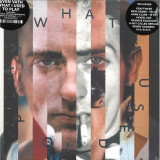
For this uniquely personal retrospective spread over twelve vinyl discs, Sven Väth takes us back to the early days of his DJ career. On What I Used To Play we meet great pioneers of electronic music, gifted percussionists, obscure wave bands, and innovative producers of a bygone 'new electronic' era. Rough beats and irresistible grooves from the identification stage of house, techno, and acid remind us not just how far electronic music has evolved over the past four decades, but how great it was to dance to EBM, techno, and house for the very first time.
If there is one protagonist of the electronic music scene who has remained curious, innovative and at the very cutting edge of music for over four decades, it's Sven Väth. His multi-layered artist albums and Sound of the Season mix compilations have been defining the genre for over two decades, and even today, he is constantly on the lookout for the next top tune to add to the highlights of his next set. At least, that's the case when he's not producing them himself as an artist or remixer. "Actually, it's always been part of my DNA to think ahead," and nothing had been further from his mind than looking back at his past, but when in spring of 2020 the international DJ circuit had to be scaled down to virtually zero, the 'restless traveler' suddenly had time. Time to stop and reflect on "how it actually was back then, at the very beginning of my career..."
"It was a great trip and with every track, beautiful memories came flooding back".
In the London apartment, he had just moved into, Sven has set up a "little music room", where he cocooned himself for several days, "to look way back for the first time and review my musical journey through the eighties, so to speak."
The interim result was six thematically oriented playlists with a grand total of 120 tracks from 'early 80s' to 'Balearic late 80s', together with excursions into afrobeat, European new wave, and EBM sounds and a few epochal techno/house tracks from the USA in between. From these 'Best of Sven Väth's favorites', the project What I Used To Play crystallized. Sven remembers how the Cocoon team reacted to his proposal: "They found the idea of making a compilation out of it MEGA from the beginning and everyone said 'Sven, go for it', but then, of course, the work really started, namely, to clear the rights and to get clean sounding masters of the up to 40-year-old tracks. There was also disappointment, of course. We couldn't clear certain titles because the rights holders in the USA had fallen out with each other or simply disappeared from the scene. In short, it wasn't easy, but now I can safely say we got the most important tracks."
Finally, after two years of research, curation, design, and administrative fine-tuning, the "little retrospective" from 1981 to 1990 is available. The exquisitely packaged, and three-kilo heavy box set is not only physically impressive, WIUTP is also the definitive record of Sven Väth's musical development. On each of the twenty-four sides of vinyl, you can trace track by track, what influenced him during which phase, and how he took off as a DJ from his parents' Queen's Pub straight into the spotlight at Dorian Gray. There and at Vogue (later OMEN), Sven became the style-defining player in the DJ booth that he still is today.
1981 - 1990: Future Sounds of Now
In the early eighties, the crowd in clubs like Vogue and Dorian Gray danced to what nowadays we call 'dance classics' - mainly disco, funk, soul, and chart pop. It was up to a new generation of DJs, including Sven Väth, the youngest protagonist in the Rhine-Main area at the time, to create their own club-ready music mix. Good new tracks and potential floor-fillers were rarities that had to be sought out and found, in order to prove oneself worthy.
Without MP3s, internet streaming, or other digital download possibilities, music didn't just gravitate to the DJ, instead, it had to be tracked down. In well-stocked record stores in Frankfurt and Wiesbaden or even in Amsterdam, London, or New York, Sven and friends sourced the material for countless magical nights. On WIUTP we can follow Sven's very personal journey through this wild, innovative era in which synth-pop, funk, hip-hop, and disco were successively replaced as 'club music' by house, techno, acid, and breakbeat. By the end of the decade, it was clear to see that these once exotic 'fringe' phenomena would soon become 'mass' phenomena.
Early 80s
Dirty Talk by the Italian-American duo Klein & M.B.O. represents the most innovative phase of the Italo-disco genre in the early eighties like no other track. Mario Boncaldo (I) and Tony Carrasco relied entirely on the original synthetic drum and percussion sounds of the Roland TR-808, coupled with the raunchy vocals of Rossana Casale and guitar accents of Davide Piatto. Of course, other tracks from this period were also influential in style, most notably Unit by Logic System, which worked as the perfect soundtrack to the laser lighting system at the legendary Dorian Gray club. With stomping beats and robotic rap interludes, Bostich by Yello also belongs on Sven's eternal playlist - after all, it caught the attention of Afrikaa Bambaataa, who invited the Swiss duo to perform at the Roxy in New York in 1983.
EBM Wave - Mid 80s
From today's point of view, the almost ten-minute-long, downtempo track Giant by Matt Johnson's band project The The, would probably not be considered an obvious club classic. However, a closer (re)listen reveals the rhythmic intricacies of the percussion overdubs by JG Thirlwell (aka Foetus) on Johnson's composition, and it becomes clear why this exceptional piece of music is one of Sven's absolute favorites. Other classics from this phase include Kaw-Liga by the mysterious The Residents, the hypnotic-synthetic Our Darkness by Anne Clark (and David Harrow), and last but not least, the somber, monotonous anthem Where Are You? by 16Bit, one of Sven Väth's projects together with Michael Münzing, Luca Anzilotti from 1986.
US House - Late 80s
You certainly can't talk about Chicago house without mentioning Frankie Knuckles. The resident DJ at the Warehouse not only gave the name to an entire genre, but also produced epochal floor fillers on the Trax label like the timeless Your Love, sung (and moaned) by Jamie Principle. Acid house protagonists Phuture also hail from Chicago, and on We Are Phuture (also released on Trax) we hear the chirping acid sounds of the legendary Roland TB-303 in full effect. Another featured classic is No UFO's by Detroit's Model 500 aka Juan Atkins, who is rightly considered the 'Godfather of Techno' even if the genre-defining track from 1985 still breathes with the spirit of hip-hop and electro from the first breakdance era.
Afrobeat
Le Serpent, by Algerian-born Abdelmadjid Guemguem, is a track that sounds completely different from everything else on WIUTP. Made in 1978, it's a monumental, rousing groove created without bass or synths, just with five congas! Even though Guem sadly passed away in 2021, his immortal, acoustic beats are understood all over the world and will continue to enrich many thousands of DJ sets for years to come. Another classic that not only Sven appreciates beyond measure is Hugh Masekela's Don't Go Lose it, Baby. In addition to being one of the most important jazz pioneers, the trumpeter and freedom fighter from Johannesburg was very experimental, integrating electronic sounds into his music in later years, in a similar vein to Miles Davis and Herbie Hancock. Dutch jazz pianist Jasper van't Hof's afrobeat project Pili Pili has also aged well. The trance-like, almost sixteen-minute-long track of the same name, manages to fill a whole side on the seventh of twelve vinyl discs in the WIUTP box.
UK-US-Euro - Late 80s
Time for a change of scene, in the truest sense of the word, and from a musical perspective, this section is like landing on another planet. First up is Andrew Weatherall's classic remix of Primal Scream's Loaded, featuring the iconic Peter Fonda sample (lifted from the 1966 biker film Wild Angels) that came to personify the mood triggered by the British Second Summer of Love in the late eighties: "We wanna be free to do what we wanna do, and we wanna get loaded...". This period also saw the emergence of M/A/R/R/S whose only single, 1987's Pump Up The Volume, became a club classic with support from DJ legend CJ Mackintosh. In this most eclectic of sections, we also encounter New York house and reggae producer Bobby Konders and his seminal Nervous Acid.
Balearic - Late 80s
Those who know him, know that Sven had already lost his heart to the 'magic island' of Ibiza as a teenager, so with that in mind, the WIUTP project couldn't end without a Balearic chapter. Inspired by Manuel Göttsching's E2-E4, the immortal, eponymously titled Sueño Latino belongs in there without question. Equally popular on the island was, and still is Break 4 Love by Raze, which thinking about it, would also fit perfectly into the house chapter. Last, but not least, there's an overdue reunion with Sven Väth himself, in his role as frontman of the successful Frankfurt trio OFF. Together with Michael Münzing and Luca Anzilotti (later of Snap!) this 'Organization For Fun' created the off-the-wall club hit Electric Salsa in 1986 which incidentally turned into an international chart smash, putting Sven in the enviable position of having to decide between pop stardom and a DJ career. Well, we all know how that decision turned out and the rest, as they say, is history. A not insignificant part of his story is What I Used To Play. Enjoy!
still haven't met, nor spoken, all we know he's a he. the music is a unique blend of the best sounds in pop, rock, and hip hop, occasionally sprinkled with vintage greek lyra and polish spoken word. this could either lead us to find out more about him, or simply lead us up the garden path. one thing we know for sure, much though his past remains a blur, he most definitely is a beacon for our future. #ournameisleonidas - Kitsuné Musique -
Portuguese multi-instrumentalist, DJ and producer Pedro
Ricardo releases his debut album, Soprem Bons Ventos, on
Soundway Records.
Currently based in Berlin, Pedro Ricardo has been releasing
music for the past eight years under different aliases via labels
such as Wolf Music and his own imprint Hear, Sense and Feel.
An eclectic DJ and selector, he hosts a radio show on South
London’s radio Balamii, guested on Mafalda’s NTS show and
can be found playing in clubs across all Europe.
Stylistically, Ricardo became entranced with jazz from an early
age, while also becoming enamoured with folk music – rooted
in his Portugal childhood, now encompassing sounds from
Cape Verde, Brazil, and Spain along the way. He intertwines
these instrumental influences with field recordings, and
electronics, on Soprem Bons Ventos.
“The album translates to ‘Good Winds Blow’, shares Ricardo.
“This idea of good winds blowing is intertwined with the
feeling of missing something, and sadness. On a positive note,
there is still an overarching sense that happiness also lies
ahead. Soprem Bons Ventos represents an ode to the past, to
those who came before me, connecting with my present and
imagining the future."
- A1: Reclaim Your Heart
- A2: Mansions
- A3: Where Do We Go?
- A4: Cocaine Killa (Feat. Peking Duk)
- A5: Stand 'Em Up (Feat. What So Not)
- A6: I Feel Electric (Feat. Moxie Raia)
- B1: Emergency Calls Only (Feat. Van Dyke Parks)
- B2: Freaknever (Feat. Purplegirl)
- B3: D4Ngrsb0Y (Feat. This Week In The Universe)
- B4: When We Take Over / 5. Someone Call An Ambulance
- B6: Those Thieving Birds, Pt. 3
Following on from the standout second Ciao Italia compilation, the mighty Rebirth bring together another collection of tracks that surf between the past, present and future, highlighting the importance and continued influence of the Italo dream house world. Alternate versions, unheard gems, certified classics and pure class as you’d expect from the likes of Nikita Warren, Alex Neri, Marco Baroni, Deseo, Lorenzo Morresi, Anxious and Spinapsys.
With One Day, Fucked Up have delivered one of the most energizing and intricate albums of their career, a massive-sounding record that arrives in deceptively small confines. The Canadian hardcore legends have been known for their epic scale in the past, so it might be a surprise that Fucked Up’s sixth studio album is their shortest to date, written and recorded in the confines of one literal day (hence the title). Don’t mistake size for substance, though: The band’s sound has only gotten bigger, more hard-charging, with even denser thickets of melody. “I wanted to see what I could record in literally one day.” That singular idea came to mind for guitarist Mike Haliechuk in the closing months of 2019. Haliechuk got himself into a studio and proceeded to write and record the record’s ten tracks over three eight-hour sessions, reconnecting with the core the band’s songwriting essence in the process. Initially, Fucked Up vocalist Damian Abraham was also set to complete his vocals in similar fashion—that is, before the lockdowns of 2020 took place. As it turns out, the isolation yielded creative dividends, as Abraham returned to contributing lyrics as well for the first time since 2014’s Glass Boys. “It almost felt like it might be the last time I’d ever get to record vocals for anything,” Abraham says of the stakes he felt while putting his part to tape, before reflecting on how he approached the lyrical process: “What do I want to say to friends who aren’t here anymore? What do I want to say to myself?” Over swarms of tuneful noise that evoke Sonic Youth circa Daydream Nation, Abraham lets loose on gentrification in “Lords of Kensington,” which was inspired by an “incredible” Toronto neighborhood that was regularly subject to life-ruining police surveillance and structural violence. “The police chief during that era he just opened a cannabis store,” Abraham explains. “It’s so cynical and gross, what society has come to but by being in a band, we’re culpable in changing the neighborhood, too, since the punk spaces and cool happenings that pop up are part of gentrification. Are you building a culture? Or are you ruining something that’s already been there?” Then there’s the dusky burn of “Cicada,” a sonic cousin to Dose Your Dreams’ excellent standout “The One I Want Will Come for Me” that features Haliechuk taking lead-vocal duty. The song is dedicated to lost friends, and in his words, it’s about “what life is like after you lose people, and our responsibility to carry them forward into the future, using the things they taught us as a light. I like to imagine the sound of cicadas as a metaphor for our strange life in the subculture we all just live these weird little hidden lives under the dirt, and then once in a generation, one of us gets to bust out of the dirt and intone their song so loud that it can be heard all over.” One Day is an undeniable work of confidence from a band that continues to operate at the top of their game, making music that’s guaranteed to last a lifetime and beyond.
- A1: Mercy (Feat Laurel Halo)
- A2: Marilyn Monroe's Leg (Beauty Elsewhere) (Beauty Elsewhere)
- A3: Noise Of You
- B1: Story Of Blood (Feat Weyes Blood)
- B2: Time Stands Still (Feat Sylvan Esso)
- B3: Moonstruck (Nico's Song)
- C1: Everlasting Days (Feat Animal Collective)
- C2: Night Crawling
- C3: Not The End Of The World
- D1: I Know You're Happy (Feat Tei Shi)
- D2: The Legal Status Of Ice (Feat Fat White Family)
- D3: Out Your Window
Violet Vinyl[25,84 €]
For nearly 60 years, John Cale has been reimagining how his music is made, sounds, and even works. MERCY, Cale’s first full album in a decade, moves through true dark-night-of-the-soul electronic torment toward vulnerable love songs and hopeful considerations for the future with the help of some of music’s most curious young minds. Cale has always searched for new ways to explore old ideas of alienation, hurt, and joy; MERCY is the latest transfixing find of this unsatisfied mind.
John Cale announces MERCY, his first new album of original songs in a decade, out January 20th via Double Six / Domino. For nearly 60 years, or at least since he was a young Welshman who moved to New York and formed The Velvet Underground, Cale has been reinventing his music with dazzling and inspiring regularity. There was the bewitching chamber folk of Paris 1919 followed instantly by the gnarled rock of Fear, the provocative and spare song cycle Music for a New Society followed more than 30 years later by mighty and unabashed electronic updates. Once again, here is Cale, reimagining how his music is made, sounds, and even works. His engrossing 12-track MERCY moves through true dark-night-of-the-soul electronics toward vulnerable love songs and hopeful considerations for the future.
On MERCY, Cale enlists some of music’s most curious young minds: Animal Collective, Sylvan Esso, Laurel Halo, Tei Shi, Actress. They’re only some of the astounding cast here, brilliant musicians who climb inside Cale’s consummate vision of the world and help him redecorate there. Cale turned 80 in March, and he’s watched as many peers have passed away, particularly during the last decade. MERCY is the continuation of a long career’s work with wonder. Cale has always searched for new ways to explore old ideas of alienation, hurt, and joy; MERCY is the latest transfixing find of this unsatisfied mind.
The writings and recordings that shaped MERCY piled up for years, as Cale watched society totter at the brink of dystopia. Trump and Brexit, Covid and climate change, civil rights and right-wing extremism—Cale let the bad news of the day filter into his lines, whether that meant contemplating the sovereignty and legal status of sea ice melting near the poles or the unhinged arming of Americans. Lessons from a life (still being) richly lived floated to the fore, too, nodded to on the previously released “NIGHT CRAWLING.” If we’re always regretting our past, aren’t we conscripting ourselves to permanent disappointment?
During “STORY OF BLOOD,” after the piano prelude gives way to a frame-rattling beat and synthesizers that feel like sunshine splashed across a snowfield, the voices of Cale and Weyes Blood’s Natalie Mering slide past one another, two phantoms trying to find a partner amid the modern din. “Swing your soul,” they both sing in aspiration. In the final verse, Cale remembers this existence is not just about himself. “I’m going back to get them, my friends in the morning. Bring them with me into the light.” The accompanying video by Emmy-winning director Jethro Waters is a mix of disturbing and serene featuring both Cale and Weyes Blood. Its deep tones and religious images emphasize the track’s dark, spiritual mood.
Cale elaborates: “I’d been listening to Weyes Blood’s latest record and remembered Natalie’s puritanical vocals. I thought if I could get her to come and sing with me on the ‘Swing your soul’ section, and a few other harmonies, it would be beautiful. What I got from her was something else! Once I understood the versatility in her voice, it was as if I’d written the song with her in mind all along. Her range and fearless approach to tonality was an unexpected surprise. There’s even a little passage in there where she’s a dead-ringer for Nico.”
On their transformative debut album Nakshatra, violinists Trina Basu and Arun Ramamurthy reach both deep into their past and high into the celestial realm, culminating in a lush and spiritual collaboration that bridges traditions and defies genres
A Sanskrit word evocative of constellations, stars, and interconnectedness, nakshatra perfectly encapsulates the album's expansive sound, which quite surprisingly, is made by just two violins vibrating together in sublime harmony.
Profoundly intimate yet bearing a cinematic gravitas, this work five years in the making conveys a feeling of two souls in conversation spanning hundreds of years into the past and the future. Basu (Karavika) and Ramamurthy (Arun Ramamurthy Trio) are deeply rooted in traditions of South Indian classical music, Western chamber music, and jazz, uniquely positioning them to create a sound that feels ancient, orchestral, and contemporary or as The New Yorker put it, "free- flowing and globe- spanning.
Through the duo's grounding in tradition paired with their fluency in improvisation, the compositions on Nakshatra have a clear architecture, which allows space for
their two violins to be deliciously indiscernible while shining individually. Basu
says of the duo's collaboration, our hope for our music is to be a meeting point for
the tradition of South Indian classical music raga music that Arun comes from
and Western classical music and creative improvisation that I come from, and
bring these pieces together in a way that creates a sound that reflects who we
are, a sound that reflects our multicultural background, and our experiences in
this world."
To celebrate the 10th anniversary of Cloud Nothings' seminal album, Attack On Memory, the band has announced a very special limited edition vinyl pressing. 3000 copies worldwide.
It’s housed in a foil jacket with all new colorized artwork, is pressed on Sky Blue vinyl, and includes two bonus flexi 7"s with two never-before-released tracks, "You Will Turn" and "Jambalaya" from the original sessions at Steve Albini's Electrical Audio.
In 2009, Cleveland’s Dylan Baldi began writing and recording lo-fi power-pop songs in his parents’ basement, dubbing the project Cloud Nothings. His music quickly started making the Internet rounds, and fans and critics alike took note of his pithy songcraft, infectiously catchy melodies, and youthful enthusiasm. Baldi soon released a string of 7”s, a split cassette, and an EP before putting out Turning On—a compilation spanning about a year’s worth of work—on Carpark in 2010. January 2011 saw the release of Cloud Nothings’ self- titled debut LP, which, put next to Turning On, found Baldi cleaning up his lo-fi aesthetic, pairing his tales of affinitive confusion with a more pristine aural clarity. In the interval since the release of Cloud Nothings, Baldi has toured widely and put a great deal of focus on his live show, a detail that heavily shapes the music of his follow-up album, Attack on Memory.
After playing the same sets nightly for months on end, Baldi saw the rigidity of his early work, and he wanted to create arrangements that would allow for more improvisation and variability when played on the road. To accomplish this desired malleability, the entire band decamped to Chicago—where the album was recorded with Steve Albini—and all lent a hand in the songwriting process. The product of these sessions is a record boasting features that, even at a glance, mark a sea change in the band’s sound: higher fidelity, a track clocking in at almost nine minutes, an instrumental, and an overall more plaintive air. The songs move along fluidly, and Baldi sounds assured as he brings his vocals up in the mix, allowing himself to hold out long notes and put some grain into his voice. Minor key melodies abound, drums emphatically contribute much more than mere timekeeping, and the guitar work is much more adventurous than that of previous releases.
For all of early Cloud Nothings’ fun and fervor, Baldi admits that it never sounded like most of the music he listens to. With Attack on Memory, he wanted to remedy this anomaly, and in setting out to do so, Baldi and co. created an album that showed vast growth for a very young band.
‘Questionably a hardcore band’ is how Daddy’s Boy describe themselves, and one listen to their discombobulatingly brilliant debut LP should answer all your questions as to what that could possibly mean. Recorded with Steve Albini at Electrical Audio, GREAT NEWS! is the sound of punk folding in on itself and racing through sounds you might have previously identified with dumb genre tags like post-punk and possibly even no-wave - except this isn’t either of those things. It rages smartly and discordantly across a wide terrain of undulating rhythms and coruscating rifferema, eventually settling on something that’s… well, kinda uniquely Daddy’s Boy. So what makes this sound? Specifically, four humans who are too clever to simply follow the ‘three chords, now form a band’ template without trying to fuck up the corners (and work their way into the centre). Members of Split Feet, Retreaters and Fake Limbs pile up together to create this delicious cacophony, and you’ll be glad they did. When vocalist Jes Skolnik intones, “I’m so fucking important,” you know it’s drenched in venomous irony, but it’s difficult not to agree: GREAT NEWS! feels like a record that’ll last way beyond those ‘best of the year’ lists and continue to pulverise your eardrums for years to come. It’s the sort of record that felt like the future when Touch & Go Records pushed hardcore past its knuckleheaded limitations 40 years ago, and still feels like no one ever really caught up. It’s the riffs from Cows’ Cunning Stunts, cribbing notes from Crass’ Feeding Of The 5,000, with vocal delivery pitched to ‘gloriously matter-of-fact’. Oh, and no spoilers, but in Skolnik, Daddy’s Boy might just have one of the smartest lyricists in (questionable) hardcore right now. Mark my words, this is some record. Will Fitzpatrick
Repress! Little Barrie And Malcolm Catto Team Up For Seven Tracks Of Breaks And Sci-Fi Fuzz For Maverick Producer Madlib's Label
Quatermass Seven, the meeting of minds between guitarist Barrie Cadogan, bassist Lewis Wharton and drummer Malcolm Catto represents a re-birth of sorts for Little Barrie, with these their first recordings since 2017’s Death Express and the untimely passing of their gifted drummer and friend Virgil Howe. As Lewis explains, the sessions played a part in the healing process, a way to re-connect through music without any intentions to necessarily come away with a finished record. “It was good to get in the studio again after such a long break especially as we didn’t go in with any agenda or expectations,” he explains. There was no preconceptions that we would make a new Little Barrie record, it was just an opportunity to work on some things Barrie had written for fun with zero pressure.” With most tracks recorded live with minimal overdubs, and produced by Malcolm at his Quatermass studios, The Heliocentrics’ main man brings new flavour to the band’s rhythm section by blending his power behind the drum kit and his expansive skills behind the mixing desk to take Little Barrie’s music forward into new territories. Recorded on Catto’s treasure trove of analogue gear, and mastered onto ¼” tape, the overall effect is guitar, bass and drums finding a sweet spot where genres collide, delivering a record that takes the influences of the past and pushes them towards somewhere more contemporary. “I definitely hear in Barrie’s songs a lot of common musical ground’” explains Malcolm. “It felt like a great thing to do, work with Malcolm while we’re figuring out what we wanna do,” Barrie concludes, “let’s just go in and do some playing and see what happens, and we came out with more than we ever intended.” Quatermass Seven delivers a dark, deep and expansive set of grooves, layered with frazzled and flawless guitar and flowing melodies, as well as pointing toward a future of exciting new musical opportunities. “Still here, so fine, just a little darker state of mind” sings Cadogan on ‘Steel Drum’, words which sum up hope in times of uncertainty, whilst unintentionally offering a perfect description of Quartermass Seven.
The four-piece known as Man…or Astro-Man? have been using the pandemic to conduct more research at Astro Labs and a by-product is a new vinyl single! The B-side features a cover by Solid Space. Space 1991. The year the future finally begins! You now indeed live in the future. The past is so outdated and we all know how fleeting the present is, so seriously... why not live in the future? In fact, the first ever computer “website” was created this very year. Soon enough, everyone will have their own personal “website” or “webspace” that will reside in its own virtual “domain.” Think of it: everyone in the whole world will be now be digitally connected and able to interact in just a matter of a few minutes. Dear citizens of the past and present: we want to welcome you all. Enjoy the future. The future is now.
- A1: Noonday Yellows
- A2: Rain
- A3: Dusk
- A4: The Jantzen Rag (Raccoons)
- A5: Pleasant, This Garden
- B1: Bedroom Of The Absent Child Lost Creek Suite
- B2: Bedroom Of The Absent Child Lost Creek Suite Into The Groves
- B3: Bedroom Of The Absent Child Lost Creek Suite Warm Pathways
- B4: Bedroom Of The Absent Child Lost Creek Suite Sunny Banks
- B5: Bedroom Of The Absent Child Lost Creek Suite Fragrant Duff
- B6: Bedroom Of The Absent Child Lost Creek Suite Beaver's Pond
- B7: Track 12
Black Vinyl[22,48 €]
Written and recorded between 1972 and 1982 in Western Oregon, Back to the Woodlands is a previously unreleased, and nearly lost, album made by Ernest Hood during the same era as his near mythical album Neighborhoods . A visionary combination of field recordings, zithers, and synthesizers, Back to the Woodlands offers an unprecedented depth of access to this singular artistic mind. Born into a musical family, Ernest Hood began a promising career as a jazz guitarist during the 1940s, touring internationally with his brother Bill Hood and the saxophonist Charlie Barnet , before contracting polio in his late twenties. The disease left Ernest unable to play the guitar and confined him to a wheelchair for the rest of his life. It also forced him to adapt and innovate around his musical practices in the face of adversity; Hood's value of sound matured with a remarkably democratic and nonhierarchical approach and application. Taking up the zither, a less physically-demanding stringed instrument to the guitar, embarking upon the unprecedented process of incorporating field recordings into his work as early as 1956, and eventually discovering the synthesizer, Hood's music became imbued with optimism and subtle cultural critique. This ethos and technique - refined over the coming decades - would lay the groundwork for a sprawling body of radio work, mail order recordings for homebound listeners, and Neighborhoods , self- issued as a small vinyl edition in 1975. Where Neighborhoods , a nostalgic opus, drawing from a well of collective memory of the 1950s, is defined by traces of human activity, Back to the Woodlands leaves the modern world behind, delving into Hood's love for nature. Only recently discovered in his archives, the album dramatically expands his concept of "musical cinematography," imagistically triggering states of sensory memory from within its zither and synthesizer melodies, intertwined with field recordings made during Hood's extensive travels throughout Oregon. If Neighborhoods is a retreat into the gauzy joys of a romanticized past, Back to the Woodlands is an immersion in the timeless sanctuary of the natural world. A fascinating counterpoint to its predecessor, Back to the Woodlands brings us even closer to Hood's belief in the transportive qualities of sound; that field recordings could serve as a vehicle for the imagination and liberation, particularly for those with similar mobile disabilities as his own. Across the album's twelve compositions, the rippling instrumental harmonics - shifting between abstraction and playful melody - fold so seamlessly into the birdsong, bubbling brooks, and other environmental ambiences, that they often give the impression of having been recording within the landscapes toward which they whisper. Falling somewhere between the immersive calm of healing music and New Age, the creative field recording practices of sound ecologists world building for Folkways, and the jazz infected ambiences during Obscure / Editions EG's highest heights, Back to the Woodlands sculpts an singular proximity of music for its moment; a form of ambient sonic realism that draws the consciousness toward its surroundings as much as within. Working closely with his estate to maintain his original vision, Freedom to Spend has restored and remastered this never before released, lost masterpiece by Ernest Hood from the original tapes. Ernest Hood's Back to the Woodlands will be issued on vinyl, as well as on CD in combination with its contemporary Where the Woods Begin , with new liner notes by Michael Klausman . On behalf of Ernest Hood and Freedom To Spend, a portion of the proceeds from this release will benefit Oregon Wild, an organization dedicated to protecting and restoring Oregon's wildlands, wildlife, and waters as an enduring legacy for future generations.
‘Albino Sound concocts textual delights in shades of metal on his forthcoming EP for Turnend Tapes.
The ‘Metallurgy’ EP forthcoming on Turnend Tapes sees Japanese artist Hirotaka Umetani transmit four club orientated tracks through a UK bass lens, delineating from past musical excursions and so marking a turning point of his works.
Indicative of this shift is the vast and varied sources of inspiration Hirotaka has tapped into in creating ‘Metallurgy’. Translating visual into sound through Hirotaka’s own experience, bare witness to granular detail made macro through swathes of sound design kinetically akin to the flurry of mineral-rich hot water springs, seething in chemical harmony.
Entwining impressions of the past with forecasts of the future Hirotaka deftly connects the dots between the sounds stemming from the alchemy of metal and it’s interplay with the natural environment as we proceed ever closer to organic-synthetic assimilation.’
For his debut album Dip Shim digs deep into his past for his most personal release yet, drawing on his childhood in Spain for a genre-bending album of electronics, combining influences from house, techno, electro, downtempo, and ambient to create one of the year’s most essential releases.
Dip Shim, who also runs the Bolero record store in Malmo, Sweden, pushes and tweaks those silver boxes to create music with one foot in the past but looking to the future, from the fluid acid house of Dalaplan Jam and Bubble Gate, uptempo electro jams like BDP Fast Life and Tusso Arcade Force, to meditative joints such as One For Regen and Impossible Connection.
But although the album is eclectic, these 12 tracks are underpinned by Dip Shim’s unique hardware-led sound, proving he’s an artist with depth and longevity.
Vector Lovers has remained a firm favourite of the underground electronic music scene cognoscenti and holds a coveted place among the most hallowed of record shelves, and with good reason. Since the early 2000s Martin Wheeler has explored a sparse audio wasteland in order to develop a new sonic palette that looks outward to electro, IDM and ambient.
After self-releasing a handful of his own productions on the Iwari label, Wheeler’s career defining album was signed by British label Soma in 2005, leading to the first great revival of 90s IDM. Capsule for One' was an unrivalled masterpiece that perfectly synthesised the heritage of the Hardcore Continuum with renewed airs and degree of clarity that ushered in a new millennia and sound. It arrived as a worthy successor to the venerated Warp artists of the time, while embracing new panoramas and technologies.
Capsule for One' is a melancholic album, with an almost cosmic spirituality that provokes daydreaming. From its opening track 'City Lights From a Train' it welcomes the listener onto an infinite journey at the speed of light, connecting the past, present and future, folding time and space and painting neon cities populated by cyborgs. The album reaches its zenith with 'Melodies and Memory', featuring Wheeler’s very own voice, which has arguably become one of this century’s greatest electronic ballads to date. In fact, the impact of 'Capsule for One' was such that Tracey Thorn commissioned him to produce her song 'Easy', from the album 'Out of the Woods' Virgin, 2007.
For its forthcoming release on Lapsus Records, Martin Wheeler has remixed each and every song on 'Capsule for One', as well as adding two previously unreleased tracks 'A Simulation' and 'Perfect Score', both produced around the same epoch. This extra special release, with artwork redesigned by Josep Basora, features a double marbled vinyl and a limited edition insert print.
The Infamous Stringdusters aus Nashville gelten als eine der besten und innovativsten Bluegrass-Bands unserer Zeit, sie traten mit Dolly Parton, Earl Scruggs und Bobby Osborne auf, belegten mehrmals die #1 der US-Bluegrass-Charts und erhielten 2018 sogar einen Grammy Award für das beste Bluegrass-Album. Nun veröffentlichen sie das Weihnachtsalbum "Dust The Halls" mit 10 zeitlosen Xmas-Klassikern in ihrem unverwechselbaren, groovy Style.
"With a nod to the past and a firm foot down on the gas toward the future, the 'Dusters... don't leave bluegrass behind, they're stretching it from within." - New York Times