Infernal Sounds show no sign of letting up during 2020 as they present their 5th release of the year, this time with a debutant to the label, SWR. The relatively unknown artist (formerly known as Widowmaker) has been making fluctuations since arriving on the scene - his release with Cocobolo Sound receiving high plaudits as he created two tracks which perfectly paid homage to the original '06 sound. As for his Square Soulja EP for IFS022, he's plated up four cuts that showcase his vast variety in skill and sound, taking influence from grime and lacing a future sound within his productions. Whether you prefer the more surreal sounds of 'Vertigo', the downplayed filth on 'Isshin's Theme', or the more in your face skankers in both 'Square Soulja' and Cypher Zero', this is a 12" you'll want to be packing.
Having already received heavy support from the likes of Truth, N-Type, and many other reputable artists in the scene, this is an insta-bag.
Buscar:future sound
On the Corner Records was awarded 'Label of the Year' at the Worldwide Awards 2018. OtC is a story of artists and scenes that goes way beyond being a record label. DJ and label owner Pete On the Corner has created a home for innovative, bordercrossing, genre pushing artists. The OtC vision is to bring music to the world that is knocking at the 'Door To The Cosmos'. The label is an inimitable mixture of Miles Davis 'call it what you want' attitude, Sun Ra's Afro Futurism and the ecstatic soul lifting influence of black music on electronic dance music. On 'Door To The Cosmos - Dancefloor Sampler' Pete has curated a volume of cuts from present and future label family. This first in the series, is not just knocking at the door but giving it a kick! It's club music referencing the source, be it Detroit, or UK bass culture combined with future sounds rising from cosmopolitan hotbeds of sonic heat. On this maxi EP Venezuela meets India via New York, the street sound of Dar Es Salaam, Tanzania pulses through UK Jungle. Undergrounds pushing the dance, breaking borders and genre alike. Rhythms from the ancestors channelled for future times.
- A1: Fireflies & Palmwine
- A2: Big Man (Feat Shungudzo)
- A3: Patty Cake
- A4: Rebosando (Feat Chico Mann)
- A5: Body Yako (Feat Kongo Elektro & Thornato)
- A6: Ghost Dance
- B1: Fly Where You Want (Feat Jesse Royal)
- B2: Mi Poni (Feat Zuzuka Poderosa)
- B3: Makubenjalo (Feat Ongx & Epplesauce)
- B4: Yalla (Feat Karenbe)
- B5: Come Along (Feat Sye Elaine Spence)
- B6: Ghazal (Feat Alsarah)
- B7: New Story
The globetrotting beat maestro is back, with a truckload of tropical vibes and the irresistibly danceable soundtrack to your Summer! 3 years after releasing his groundbreaking collaborative album with singer Chico Mann (which landed him live sets on Boiler Room & KCRW's Morning Becomes Eclectic as well as a feature on NYTimes "Best Songs Of The Week") DJ/producer Captain Planet returns with NO VISA, set to drop June 26th on Bastard Jazz Recordings. In his trademark "Gumbo Funk" sound, the album mixes rhythms and musical styles from the Caribbean, Latin America, the Middle East and Africa, over highly danceable electronic beats, all firmly rooted in the hip hop, dancehall and house music that the Captain grew up playing as a DJ. Seamlessly bouncing from Brazilian Baile Funk, to Afrobeat, to Roots Reggae and Latin House, the entire record delivers the uplifting feel of one of the Captain's legendary boundary-crossing DJ sets. Building on these traditions he draws from, the Captain has created something fully original and unique.
NO VISA, the 5th full-length album from producer Charlie Wilder (aka Captain Planet), is both a return to form and a launchpad into the future. With 13 songs that feature vocalists from around the world, long-time fans will recognize several previous collaborators as well as the global influences that have always been central to Captain Planet's music. New friends, like prolific Zimbabwean-American singer Shungudzo (who has recent hits with Oliver Heldens & Rudimental), and Jamaican reggae star Jesse Royal, bring powerful subversive messages to the music as well. Showcasing the Captain's production chops and songwriting talents equally, the album unveils a unique musical landscape, a place where our political boundaries and cultural hierarchies begin to dissolve, where foreign languages mingle together and deep rooted traditions dance with the future.
With NO VISA, Captain Planet unveils a fully matured and truly unique form of electronic music- one that bridges gaps between worldwide cultural diasporas as well as contemporary dance music sub-genres (house, hip hop, dancehall & global bass). Throughout every Captain Planet song, it's clear to hear his inspired appreciation for breaking the boundaries between genres and bridging continents through rhythm.
Black Truffle is pleased to announce a new solo album by Eiko Ishibashi, her first for the label, following on from the duo recording Ichida alongside bassist Darin Gray. Hyakki Yagyō (Night Parade of One Hundred Demons) was produced for the ‘Japan Supernatural’ exhibition at The Art Gallery of New South Wales, Sydney focusing on ghost stories and folklore from the Edo period onwards. As with The Dream My Bones Dream (Drag City, 2018), the album is a response to troubling questions about Japanese history, and the influence of the past upon the present, but finds Ishibashi shifting further away from her earlier piano-led songwriting and showing a deepening interest in electronics and audio collaging.
The two sidelong parts of Hyakki Yagyō feature layered synthesisers, acoustic instrumentation, recited verse and field recordings, at times densely mixed but always with a subtle interplay of changing elements. The influence of European and American forerunners as diverse as Alvin Curran, David Behrman and Strafe Für Rebellion can be traced, yet at the same time Ishibashi evokes the flute and string sounds associated with Japanese storytelling, and draws directly on the subversive literary tradition of Kyoka (‘mad poetry’) with a verse by the 15th-century poet Ikkyū Sōjun repeated throughout the album. Revisiting what has gone before, re-thinking what is possible musically, as a way of articulating what else might be possible in the future.
As Ishibashi’s liner notes make clear, the album reflects an attention to persistent dangers, myths and evasions in Japanese culture – as well as the lurking uncertainties that might threaten positive change. This would seem to be manifested in the emerging melodies soon met by dissonance, erratic collisions and near silence, as well as the eerie manipulation of the double-tracked vocals. Ishibashi’s underlying concerns ring true more widely of course. Hyakki Yagyō is a work of multiplicities, and mystery, a landscape where nothing is as it seems at first, and everything is vulnerable to sudden violent interruptions.
The album was produced with regular collaborators Jim O’Rourke (double bass) and Joe Talia (percussion), and features dancer and choreographer Ryuichi Fujimura performing Ikkyū’s satirical tanka. O’Rourke’s immersive mix creates a three-dimensional effect, with Ishibashi’s various sound sources enmeshing and interacting in captivating ways.
Pressed on coloured vinyl and presented in a deluxe package with an inner sleeve featuring and artist portrait and liner notes from Eiko Ishibashi. Cover and label design by Shuhei Abe.
Back cover design by Lasse Marhaug. Mixed and mastered by Jim O’Rourke.
key selling points:
- Black Truffle is pleased to announce a new solo album by Eiko Ishibashi, her first since her acclaimed 2018 Drag City release The Dream My Bones Dream.
- This album finds Ishibashi shifting further away from her earlier piano-led songwriting and showing a deepening interest in electronics and audio collaging.
- Hyakki Yagyō (Night Parade of One Hundred Demons) was produced for the ‘Japan Supernatural’ exhibition at The Art Gallery of New South Wales, Sydney focusing on ghost stories and folklore from the Edo period onwards and is a response to troubling questions about Japanese history, and the influence of the past upon the present.
- Produced with regular collaborators Jim O’Rourke (double bass) and Joe Talia (percussion), O’Rourke’s immersive mix creates a three-dimensional effect, with Ishibashi’s various sound sources enmeshing and interacting in captivating ways.
- The two sidelong parts of Hyakki Yagyō feature layered synthesisers, acoustic instrumentation, recited verse and field recordings, at times densely mixed but always with a subtle interplay of changing elements, hinting at an influence of European and American forerunners as diverse as Alvin Curran, David Behrman and Strafe Für Rebellion.
- Pressed on coloured vinyl and presented in a deluxe package with an inner sleeve featuring an artist portrait and liner notes from Eiko Ishibashi. Mixed and mastered by Jim O’Rourke.
- A1: Oneness Of Juju - African Rhythms (Album Version)
- A2: Oneness Of Juju - Follow Me
- A3: Oneness Of Juju – Nooky
- B1: Oneness Of Juju – River Luv Rite
- B2: Roach Om – No Name #3 / Love Is… / My Nigger & Me
- B3: Juju – Nairobi / Chants
- C1: Oneness Of Juju – Chants / Don’t Give Up
- C2: Oneness Of Juju – Be About The Future
- C3: Juju & The Space Rangers – Got To Be Right On It (Original 45 Version)
- D1: Oneness Of Juju – Space Jungle Funk
- D2: Oneness Of Juju – West Wind (Previously Unreleased)
- E1: Juju & The Space Rangers – Plastic (Original 45 Version)
- E2: Plunky & Oneness Of Juju – Every Way But Loose (Original Version)
- E3: Okyerema Asante Feat Plunky – Sabi (Black Fire Mix)
- F1: Okyerema Asante Feat Plunky – Asante Sana
- F2: Oneness Of Juju – Bootsie’s Lament (Unreleased Version)
Strut kick off a brand new deal with the seminal independent black jazz and soul label Black Fire in May with 'African Rhythms 1970-1982', a comprehensive 2CD / 3LP compilation of Oneness Of Juju, led by Plunky J. Branch. Tracing their career from the band's earliest work in 1970 with South African exiled jazzman Ndikho Xaba in San Francisco, the compilation covers the band's journey to New York's loft jazz scene, forming Juju and releasing two landmark albums of hard-hitting percussive jazz on Strata-East. "I saw myself as a cultural warrior," explains Plunky. "We studied about Africa and tried to infuse our music with an African spirit." Moving back to his hometown of Richmond, Virginia during the mid-'70s, Plunky drew in a superb new group of musicians and vocalists and created the band's new incarnation, Oneness Of Juju, retaining the African influence but fusing his sound with funk and R'n'B on the classic 'African Rhythms' album. "We realised that, if we put a backbeat to the Afro-Cuban rhythms, people in Richmond and Washington D.C. could be drawn into it; it didn't change anything about our message." The change would lead to a series of enduring soul-jazz classics on Jimmy Gray's Black Fire label, including 'River Luv Rite', 'Plastic' and 'Don't Give Up' and their biggest crossover international hit, 'Every Way But Loose' in 1982, later famously remixed by Larry Levan. The band received renewed interest in their music during the mid-'80s as Washington D.C.'s go-go innovators cited the band as a major influence and rare groove DJs revived their albums for London dancefloors.
DNGDNGDNG is Dengue Dengue Dengue's new alias for this release of extra sensory perception. The duo have projected rhythmic visions of lost continents, unknown worlds and the unseeable past and future that is present all around us. By channeling rhythmic patterns from the matrix they're able to translate the waves of radiation around us which originated at the cosmic event which created the universe. DNGDNGDNG reach deep into their sonic imagination to draw from interlocking time signatures and variant tempos. From the cosmic interference and mathematics DNGDNGDNG create a polyrhythmic theme that brings the sound of continents lost and imagined to our ears. Dengue Dengue Dengue have established themselves as one of the most pioneering artists on the leftfield electronic scene in recent years with heavyweight support by the likes of Boiler Room, Resident Advisor and Bandcamp weekly.
Attraktors are JFlower: Antronhy: Jhon:
Former members of Six.BySeven: Bivouac: Julian Cope: The Selecter: Nectarine No9
Inspired by Minimalism: Fripp: Eno: Marcel Duchamp: Krautrock: Proto-Punk: Soundscores: Sci-Fi: Computer Science.
Like many electronic artists, Ryan Lee West aka Rival Consoles spent his early years experimenting with IDM, glitch and dance, but one consistent element in his musical journey has been his desire to create a more organic, humanised sound. Through these experimentations he has found a process of producing electronic music that feels close to this urge. Restricting himself to a small selection of analogue equipment, West engages his hands directly with instruments and is very selective about what he then records into the computer. He reduces musical parts even further, leaving enough space around the sound for it to breath.
‘Odyssey’ is a reflection of West’s quest to create atmosphere and space from minimal arrangements. ‘I don’t like music to sound overly laboured, so I restrict how much is going on. I’m kind of obsessed with the idea of reduction.’ The new 5-track EP was mastered by Naweed and will be released worldwide on October 21 in the form of a 12" Vinyl and Download via Erased Tapes.
‘Odyssey’ and ‘Voyager’ are both incredibly stripped down and have a great sense of space throughout them. It's all about using the right ingredients at the right points in time. A lot of these ingredients are short recordings, such as ice cracking, mechanical clicks, clicks from synth errors, sounds of debris, guitar plucks etc., which interact with the simple arrangements and create little hints of rhythm. I also love the technique of swelling in music, but I realised that hardly anyone has done that in electronic music. So when I first got the synth to swell in and out with the opening chords of ‘Philip’, it was a great moment. Because it creates a human mood in a matter of seconds, which is very difficult to do with electronic sounds. That track is very important to me, and I think it will influence how I make music in the future.’ – Ryan Lee West
West will perform alongside his contemporary composer mates Ólafur Arnalds and Nils Frahm for a special electronic Erased Tapes night as part of London’s The Hydra series on October 18. The same day will also see a special in-store event at Phonica Records, where West will showcase the ‘Odyssey’ EP amongst other tracks on his beloved analogue gear, joined by South London artist Supermundane creating a live art piece in the shop window.
Following a high-pressure drop on Sneaker Social Club in 2019, bass-toting instigator Low End Activist steps up with his most expansive release yet.
His sound is a perfect amalgam of elements from the hardcore continuum – at times a dark and malevolent brainstorm of grubby drums dragged through crusty samplers, future-weary textural scrapes, moody splashes of pads and of course bucketloads of crushing subs, lows and low mids all designed to rock you from the waist down. You'll hear spectres of culture past lurking in the shadows – a trip hop skit from a gaunt figure here, a riotous brawl of grime MCs there – and feel the decades of soundsystem absorption seeping off the platters. It's like the LEA reached capacity and these productions were what happened when the sponge got squeezed.
One voice cuts a more prominent figure up front though – the peerless Flowdan, lending some powerful bars to Game Theory. What needs to be said about the Pay As You Go / Roll Deep mastermind you don't already know? His flow is mightier than any sword you care to step with.
Speaking of platters, this particular release marks the first vinyl pressing for Seagrave since the BOA 12" Warp Purpose Vol. 1 back in 2015 (slated for a repress – don't sleep!). It's an occasion worth toasting, building on a powerful and varied catalogue of sub-heavy sonics operating well outside the mainstream in service to naught but the sound, all packaged in a full-colour sleeve. As an expansive double pack of seven sure shots, it's also a fitting document of a subversive operative bringing some devastating angles to the hardcore tradition.
- Oli Warwick.
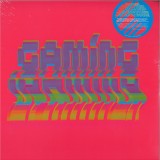
Following January’s acclaimed vinyl debut from Exterior and summer’s much-loved Kota Motomura EP, Edinburgh’s Hobbes Music label ends 2019 with its first album release, also a debut, from GAMING, a fresh new braindance electronica project straight outta Glasgow, from producer and musician Alan Bryden.
GAMING is a new solo outing that brings together a lifelong love of music and technology and creating left field, rhythmic electronica. It’s the sound of IDM, nineties techno and mensch maschine computer music that is as spontaneous as it is programmed.
“Scenes From A Deserted City is a collection of tracks that started as a set of riffs, loops, rhythms and grooves and unfurled around a sense of growing unease about the future of the urban environment around me.
It’s an album that started out as sound…and ended up as a way of telling stories about the age of anxiety we live in, how our world is changing, and how we find a way through that.
This is DIY electronica from Glasgow – it was made on a growing collection of digital and analogue synths and FX units, including a bunch of modular racks, each with its own idiosyncrasies and character that belies the assumption of the binary.
The studio where it was recorded – an abandoned, and often very cold, school building reclaimed by the community some twenty years ago – offered up stories of resilience, even when all seems lost. (I’m not sure what the mice contributed but they definitely climbed in and out of some synths).
This album is ultimately about my changing relationship with Glasgow, a city I’ve lived in for more than 25 years. It’s about how I feel now about the increasing sense of urban decay and how the city can be a very isolating place. It’s about how I reflect on my younger creative self trying to find a direction but mainly feeling a sense of dislocation and not fitting in. And it’s about the questions I have about how that relationship is changing, how it will be forced to move forward.
The result is a soundtrack for walking home on your own, in that headphone bubble when it’s just you focusing on that music that makes sense to you alone. It’s for early in the morning, after the night before, or going to work with the memories of that slipping and sliding inside your head. It’s about how it feels to be both elated and lonely, to be lost in the familiar, despairingly hopeful.”
ALAN BRYDEN (Glasgow, August ‘19)
Funnuvojere's latest instalment, Minority Resist, comes from Czech Republic and it's signed by Martin Ku?ka under his moniker Goodbye Mirage. Martin has been performing and producing ambient and synthy compositions under his real name for many years, releasing a few LPs for the US cassette labels Sacred Phrases and Origin Peoples, mostly influenced by writing, drawing and photography, as well as by the rhythms of village life.? Funnuvojere's new ethereal EP interweaves nostalgia for the past and reflections on the present. The EP is imbued with Martin's memories of discovering Berlin's Love Parade, the golden cradle of 90s trance and progressive house. Emotional tension and unexpected polymeters characterise the EP, with minimalistic notes rippling back from a distant future. Careful design produces a unique sound and grain that will blissfully envelop those lucky enough to hear it played.?
French synth-pop talent Lucien & The Kimono Orchestra unveils his new solo piano album, a journey into cinematic soundscapes
Alone at the piano, Lucien takes us on a very personal album in a deep and quiet reverie. We spend a soft winter morning in his company, reminiscing about tender childhood memories.
Between previously unreleased tracks and revisited Kimono Orchestra pieces, "Piano Matinée" concludes a trilogy of recordings which have barely been released, while paving the way for a wider future. Universal, sensitive, cinematographic, the piano language spoken here by Lucien opens us to his musical world in a light that is both more authentic and accessible.
The album also tells us a personal story. That of a grandfather - an exceptional pianist but forced to give up his career when the Second World War broke out - who passed on to him a taste for music in his early childhood, before passing away.
Many years later, Lucien came across old cassette recordings of his eldest son, soon afterwards having a disturbing dream in which he swore he had had a dialogue with him and decided to go his own way. The self-taught musician spent a whole year honing his piano skills before deciding to freeze his performance in the summer of 2019 at the legendary Steinway at the Studios Saint-Germain.
Drawing freely on all his influences - jazz, funk, classical, cinema - Lucien's "Piano Matinée" is a special object, as intimate as it is melodious.
Startisha introduces Naeem as a restlessly creative artist with an impressionistic, genre-bending album. As a complete work, Startisha exemplifies artistic daring and emotional intelligence while exploring new ideas and sounds, and philosophically excavating the artist's histories. Startisha may be loaded with impressive collaborations and left-field sounds, but don't get it twisted_this music comes straight from Naeem's heart, representing the journey he's taken to get to this point as well as what lies in the future for him. Baltimore-hailing Naeem Juwan has spent much of the last decade stretching his creative legs in a variety of ways: he's hit the road with artists ranging from the Avalanches and Bon Iver to Big Red Machine and Mouse on Mars, took part in a 37d03d residency in Berlin, and was selected as the music resident in 2019 for New York's Pioneer Works space. Through it all, he's been building the songs that make up Startisha, a record a half-decade in the making that featured Juwan pulling from creative circles all across the U.S. to craft a truly unique document of sound. After studio sessions in Philadelphia and New York, Juwan decamped to Minneapolis and holed up in Justin Vernon's home studio, where Startisha continued to come together with contributions from Vernon, Ryan Olson (Gayngs, Polica), Swamp Dogg, Velvet Negroni, Francis and the Lights, and regular collaborators Amanda Blank and Micah James.
While the ongoing global pandemic means our chances to gather and dance beneath deep blue skies are likely to be limited, there’s never been a greater need for warm, positive and life-affirming music. NuNorthern Soul has decided to do its bit by offering up a brand new 'Summer Selections' sampler that’s packed to the rafters with magical musical treats lifted from some of the label’s most potent forthcoming releases.
The EP begins with something rather special from Canadian producer Igor B: a gentle, sunrise-ready soundscape rich in languid hand percussion, bubbly synthesizer lines and glistening guitars. Entitled 'Deep Breath', the track is just one of the many highlights you’ll find on his forthcoming debut album, “Stranded Seaside”.
There’s a similarly tactile and immersive feel to 'Early Morning Ferry' by George Koutalieris, a Greek producer whose debut album 'Stop, Look, Listen' will be released by NuNorthern Soul later in the year. On his contribution to 'Summer Selections Two', Koutalieris wraps lilting, sun-soaked guitar solos and soft-touch electronics around a chunky groove that doffs a cap to the more laidback end of the 1970s West Coast rock spectrum.
Next up, long-time friend of the family Chris Coco delivers a stunning interpretation of 'Dinum', an overlooked neo-classical/ambient fusion track by Faroe Islands-based producer Kristian Blak’s Yggdrasil project. Coco’s simmering, string-drenched re-imagining is featured here as a teaser of NuNorthern Soul’s reissue of the 2014 track in the autumn, which will also feature a mind-blowing 10-minute rework by Mike Salta – an artist who is also featured on 'Summer Selections Two'.
This time round you’ll find Salta collaborating with Mortale on the starry, EP-ending ambient bliss of 'Bells of Burgibba', a deliciously drowsy mixture of twinkling electric piano motifs, chiming lead lines and woozy pads taken from the forthcoming “Celestial Hike EP”. It paddles in similar sonic waters to label boss Phil Cooper’s stretched-out, slo-mo Balearic dub of new signing Faint Waves’ 'Aphrodesia', a teaser of the artist’s “Islands In Time EP” which can be found elsewhere on 'Summer Selections Two'.
No NuNorthern Soul label sampler would be complete without a contribution from BJ Smith, an artist who has been with the imprint from its earliest days. Smith returns to the imprint with another reminder of his uncanny ability to deliver ear-catching cover versions that re-cast classic cuts as loved-up rays of Balearic sunshine. This time round Smith takes us on a huggable shuffle through Prefab Sprout’s 'All the World Loves Lovers', re-imagining it as a future Balearic anthem and a summer 2020 sing-along. It’s not only a sneak peak of what we can expect from 'Dedication to the Greats Volume 3', his first covers collection for nigh on six years, but also a life-affirming highlight of an EP that oozes musical positivity from start to finish.
- A1: Muriel - Alton & Eddie
- A2: Dearest Darling - Jiving Juniors
- A3: Are You Mine - The Echoes & Celestials
- A4: Dearest Beverley - Jimmy Cliff
- A5: Send Me - Keith & Enid
- A6: Midnight Love - The Downbeats
- A7: Til The End Of Time - Chuck & Dobby
- B1: Album Of Memory - The Mellowlarks
- B2: True Love - Horthens & Stranger
- B3: Diamonds & Pearls - Dobby Dobson
- B4: I'm Going Back - The Charmers
- B5: Pleading For Mercy - The Blues Busters
- B6: Do You Know - Owen & Millie
- B7: Heavenly Angel - Laurel Aitken
A collection of Jamaican doo wop & R&B records taken from the late 50s and early 60s. These records represent a period in which soundsystems were just starting to dominate the island, with Duke Reid and Sir Coxsone stepping up their rivalry by beginning to make and release their own records rather than rely on US imports for use in their dances. Many of these records are definitely more-or-less imitations of the American records, as the uniquely Jamaican ska sound was yet to take hold - however many of the future stars of ska, rocksteady and reggae were beginning to cut their teeth in the industry on these records, incl. Jimmy Cliff, Derrick Harriott, Alton Ellis and more, and they provide a unique view into the fledgling independent record industry culture in Jamaica that would prove to be unbelievably proflific and unparalleled for an island of it's size.
Siegmar Fricke has made a name for himself in the tape culture since 1981 - with a mixture of Musique-Concrète and Post-Industrial. As a former label owner of "Bestattungsinstitut" he released numerous works that went beyond EBM, Electro, Techno and Ambient. In the heyday of the netlabels he focused mainly on his own productions, which he then made available as free downloads. Since 2002 Siegmar has been active with clinical sound experiments under the pseudonym "Pharmakustik". In 2005 he started his collaboration with Maurizio Bianchi from Milan, who has dedicated himself to "industrial decomposition" since 1979. For his Time Compression EP on Infoline, Siegmar Fricke has unearthed compositions from the period 1992-1994 and curated them anew. A phase in which he listened to the radio day and night and connected his sampler to the stereo to record material around the clock. He listened to many radio shows from England or Holland, which often broadcasted techno, trance and acid. At that time those sounds were new territory for him. He recorded inspiring sequences at first go, edited them and then let them flow into his own productions. The result was "future-pop collages mixed with sequencer-controlled trance and sampled voices", to put it in the words of Siegmar Fricke.
The Bees are a textbook case of the chew and spit cycle that was the late 80’s South African music industry. Although their unknown story is likely unique, it is just as likely that it is no different to that of many other young artists who dreamed of getting their music heard at the time.
By 1988, the independent record label was no longer as uncommon as it had been at the beginning of the decade. As the 80s went on, more seasoned A&R reps and Producers that had gained experience and connections from their work under major labels would be trying to cash in on a market they helped create. Without the need of big rooms or expensive recording equipment, the digital advancements allowed many Producers to open or work in smaller studios and promote unknown artists under their own imprints. They would then have their catalogs marketed and distributed by the same major labels they had been working for just years prior. This would open up the possibility of a new era of stars as potential talent no longer had to be pitched to major labels in hopes of them taking a chance on a new signee over their already established artists. With the market growing and a struggle to keep up with the demand for new sounds this agreement would allow the major labels to put new emerging artists or groups on their catalog with little investment and high reward if it happened to be a hit.
ON Records was just one of the independent players at the time. Ronnie Robot had just signed the unlikely trio The Bees in hopes of adding a hit group to his label roster that consisted of solo acts. Despite the debut’s fresh house inspired sound, it failed to catch on was outsold by the bubblegum disco the label was known for. Over the years unsold back stock and promos would build up with the distributor. Luckily this allowed sealed copies from the label’s catalog to survive into the 90s when the distributor’s stock was unloaded and picked up by legendary Johannesburg jazz shop Kohinoor. Here sealed copies of the Bees first attempt sat under appreciated for over 20 years before becoming a hot title after they started circulating online and became club staples. This is how the first album of an unknown group with no success was able to become a collectors item and earn a reissue over 25 years later.
With their first record behind them The Bees were ready move forward and get back into the studio. A suggestion from producers had the trio change camps and go work with the newly formed Creative Sound Recordings, the label that promised “Music for the Future” and ended up being an essential studio in the early years of Kwaito. They would work with producer Chris Ghelakis and guitarist George Vardas, while a young Marvin Moses sat behind the desk. Musically the sophomore album was as good as a follow up as you could get. Building on the first album, Mashonisa delivers catchy melodies backed by heavy drum programming that would score points with any Pantsula. The Black Box inspired “ Never Give Up” was one of two tracks chosen to be pressed as the promo for the album, hoping to trick listeners with their catchy version of the hit( A year later the label would release their first volume of Black Box covers sang by neo soul diva BB, it would be a great seller). The label printed up an unknown amount of these in a last attempt to push the release in Shabeens and on Radio. The cheaper route of flooding the market with promo copies would only pay off 25 years later when unplayed copies started being rediscovered and had survived the years in a quantity that original run of the full album could not. Once again it was clear that with no mainstream appeal, the quality of the music on its own was not enough to garner any success at the time. The album flopped worse than their first and failed to make it past it’s initial run, making it one of the harder titles to get from the CSR catalog.
Mashonisa would be the last attempt from the Bees. They would disappear from the scene as quickly as they appeared. Of the three members it is only known that lead Singer Solomon Phiri continued in music fronting a wave dance group before he mysteriously vanished in 1993, never to be heard from again. Through a combination of luck and circumstance the group, which is unknown in South Africa to even the most plugged in musicians, producers and radio hosts of the time, managed to finally get some of the recognition they deserved 30 years later. Unfortunately this small blip of fame would happen with none of the band members present to give their side of the story, or even aware of how their two albums became popular enough to be printed on different continents in a new millennia. The Bees suffered the same fate as countless other artists of the time, who thanks to emerging independent labels and willing producers were given an opportunity to have a short career, only to be replaced by the meat grinder of the music industry when they failed to produce a hit.
‘Reality Tunnels’ is a concept that was originally introduced by Robert Anton Wilson in his 1983 book ‘Prometheus Rising’. In essence, the concept of a reality tunnel relates to an idea on how we create our own perspective – the subjective filter that we each apply to the world around us; the things we perceive and what our consciousness deems worthy of attention, IE what we see and hear is entirely relative to what we do not.
At points angular and uncompromising with levels in the red, frequencies pushed out and EQ curves stretched into strange new shapes, Pinch mixes both low and hi fi on this boldly distinct sonic statement. It sees him flexing years of production skills – but unconventionally so – knowing well that safe predictability and rounded polish don’t get the most interesting results.
Dark trip hop Bristolia segues into blistering jungle on album opener ‘Entangled Particles’, before planet-hopping onto the spiky insidious grimestep of ‘All Man Got’, featuring the rugged rasp of OG warhorse Trim.
Beginning a triptych of future techno, ‘Accelerated Culture’ offers the album’s most relatively straightforward moment, albeit one of scorching, anthemic dancefloor heat. Delving deeper into the vortex is the synapse sparking wobbler ‘Returnity’, before ‘Finding Space’ reaches to the cosmos’ far-flung, glowing outlands.
Back to an urban reality is ‘Party’, where a subtly menacing sense of dread is ignited by Killa P’s incremental flow, which ramps-up and pairs-back the intensity in unexpected ways. Still moving freely between different realities, ‘Back To Beyond’ is beautiful gloaming ambience, executed with equal fine-tuned grace as the genre’s masters.
Jamaican vocalist Inezi lends sweet tones to the slow burning, roots-meets-modern-bass spiritual ‘Change Is A Must’, and on ‘Non-Terrestrial Forms’ an atmospheric, misty steppers intro segues stealthily into fiercely dystopian, amen-fuelled jungle tekno; marking one of several surprise attacks on the album, where a subtle-slight-of hand shoots the intensity level dynamically up.Closing as it begins, the album is bookended by a piece that recalls the dark, intricate soundscapes of Massive Attack’s ‘Mezzanine’ and Tricky’s ‘Maxinquaye’ – found here in ‘The Last One’s scorched, smoky rocker.
Hit the vinyl double pack for an exclusive and quite unique sounding 120bpm glitchy techno roller featuring man like Trim once again and live cello recordings.