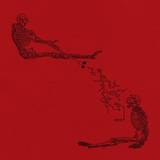
"The kind of melancholia I'm talking about, by contrast, consists not in giving up on desire, but in refusing to yield. It consists, that is to say, in a refusal to adjust to what current conditions call 'reality' - even if the cost of that refusal is that you feel like an outcast in your own time." (Mark Fisher, Ghosts Of My Life, Zero Books 2014, p. 24) In Ghosts of My Life: Writings on Depression, Hauntology and Lost Futures', the author Mark Fisher outlines - to put it in a big way - a resistant melancholy. This stands in contrast to leftist melancholy resignation', as well as something which Fisher does not talk about: its common masculine counterpart, habitual post-left cynicism - as in seen it all before'. Fisher calls this hauntological melancholy. Haunting, spooks, ghosts and apparitions are an almost constant presence on I Started Wearing Black', the second album by the Cologne-based artist Sonae (pronounced so-nah'). The term hauntology shares a fate with retro-futurism when it comes to inflationary overuse and abuse. It's a conceptual container that looks good and can hold a lot, indeed, too much. Furthermore, hauntology has its peak season behind it, a term on the threshold of its expiration date. Nevertheless, I would like to rehabilitate hauntology and use it properly to characterize I Started Wearing Black', because the term is rarely as compelling to describe music as is the case here. The most recent other example could be Asiatisch' by Fatma Al Qadiri, but with a completely different frame of reference. What are the ghosts of this music It rustles, crackles, ruffles, crunches, rattles, scrapes, sometimes a beat emerges from the constant noise, sometimes an obscure voice mumbles incomprehensibly, sometimes a melancholy piano figure is prevented by this noise from coming too much to the foreground. It definitely is eerie - to bring into play another term used by Fisher in the title of his latest book, The Weird and the Eerie'. In British pop-jargon, eerie first occurred to me more often when referring to particularly leftfield, spooky and... well... ghostly dub, a bass-heavy, echoing noise, from Augustus Pablo to Creation Rebel to Burial. Unlike the Wald & Wagner records by Wolfgang Voigt, Sonae is not a kind of neo-romantic veiling with a tendency for escapist nebula. It is more a noise of latency. The noise signals a latent - not necessarily acute - threat, a latent uneasiness about... yes... about what About a System Immanent Value Defect' That's the name of a track on I Started Wearing Black' where something that sounds like a French Horn (or a foghorn) battles for attention through or against the background noise. An email from Sonae: The piece 'System Immanent Value Defect' should actually be called 'I See Turkey'. I wrote it for my fellow student Elif - she is a pianist and Gezi Park activist from Istanbul. Through her I witnessed the inner conflict and agitation that political circumstances can create: her feelings of guilt when there was an attack, with her safe in Germany as a student, watching the events from afar. It was horrible. When her mother begged her not to come home because she feared for her safety, I felt a cold shiver run down my spine. I started with the piece from this mood, beginning with the piano, then the noise (modulated sinusoidal curves), which reminded me of waves and the then heatedly discussed Mediterranean sea: atmospheric, melancholy motifs. In contrast is the anger, the pressure, represented in corresponding sounds - hopefully audible! - During this time I started to think about world views as they can be found around the globe, in how far they held by societies and their political representation. I realized that I know of no political system that is actually about the people and what would do them good. It's always about positions, power, money. I thought that was a lot more frightening on a global scale than merely viewing Turkey in isolation. That's why the piece is called "System Immanent Value Defect", because our world suffers from precisely that. Everywhere, it's all about the wrong things.' Between the wrong things there are happy moments. In the title track, after 184 seconds of rattling and hissing, a beat is unleashed, like an arrow released from a spanned bow, a beatific relief, if there is such a thing. White Trash Rouge Noir' first meanders along spookily, then after 144 seconds it transforms itself into a distant cousin of Einstu¨rzende Neubauten's Yu¨ Gung', but there is no Big Male Ego to be fed here, and the black in the album title is a completely different type of black from that of the Neubauten. Furthermore, I Started Wearing Black' was finished long before the black dresses were worn at the Golden Globes as a sign of protest against sexual violence. Sonae writes that she herself started wearing black some time ago. Her reasons are so-called personal ones: ... resulting from an individual situation (lovesickness), I started to wear black (gaining weight and feeling ugly).' The political dimension of gaining weight, feeling ugly and therefore dressing in black in I Started Wearing Black' lurks within the noise and never becomes explicit and only rarely manifest - or a manifesto. Sonae writes about the track We Are Here': A piece for minorities... in this case, considering the current pop-feminist discourse, explicitly for women. Female artists have long been saying loud and clear that 'we are here' and 'electronic music is not a boys club!' But this pop-feminist moment should only be seen as one part of the dedication of the piece. It is for minorities, for the oppressed, who didn't belong enough.'
Klaus Walter
quête:futurism
ossession Records proudly present the new album by Soft Riot, entitled 'The Outsider In The Mirrors'.Soft Riot is the stylised musical alter-ego of JJD, Canadian by birth and an ex-resident of London and Sheffield, now based in Glasgow (so not unfamiliar with sites of post-industrial decay!). With over twenty years of playing in various post-punk and synth-punk bands, he has been crafting the sound of Soft Riot since the early turn of the decade, releasing a slew of albums across a multitude of labels and touring obsessively around Europe and beyond.With 'The Outsider In The Mirrors', his sixth full-length, he has found a new home for his sound on Possession Records, a fledgling Glasgow imprint founded by JJD, Claudia Nova (aka Hausfrau) and Andy Brown (Ubre Blanca). Their aim is to bring together their pool of musical talents and provide a more permanent home for their future creative endeavours, whether it be music, video or otherwise and to experiment with what it is to be a 'label' in the ever evolving 21st century. Future projects and releases will see them getting a select group of their peers and friends involved in Possession's focused vision, locally or from further afield.'The Outsider...' is a consolidation of all the stylistic elements Soft Riot has pursued in the past; the manic propulsive energy of 'Waiting For Something Terrible To Happen', the infectious, off-kilter dynamics of opener 'The Eyes On The Walls' and the pulsing, elegiac synth washes of 'The Saddest Music In The World'. Throughout the album Soft Riot fuses his maximalist sonic palette with a sharp-edged sense of post-punk anxiety, unique synth interplay and brooding, claustrophobic new-wave dread. Comparisons to musical kindred spirits like John Foxx, DAF, early Depeche Mode, Fad Gadget and Virgin-era Cabaret Voltaire would be analogous, but JJD is defiantly fusing these basic references into something highly idiosyncratic and personal.
The music on 'The Outsider...' is evocative of an kind of nostalgic futurism, of a refusal to give up on a desire for the future (dystopic or otherwise) and the unpredictable nature of the urban situation. The music is tense, synthetic and precise, embodying and exploring issues of isolation, urban alienation and social paranoia. Yet despite these dark thematic preoccupations the Soft Riot sound is not without its warmth and humour. Wry and self aware without irony, the songs are hook laden, infuriatingly catchy and designed for dancing as much for static listening. It is a peculiarly Soft Riot take on the electro pop sound that will engross and captivate any adventurous listener.
After nearly a decade in the making, Zomby finally dispatches Mercury's Rainbow, his astonishing and uniquely formulated dedication to Wiley's series of Eskibeat releases, a.k.a. the cornerstone of grime.
Originally recorded over an intense couple of weeks while suffering from circadian dysrhythmia,
Mercury's Rainbow documents Zomby riffing on intricately hand-programmed arpeggios, using theories of colour and its relation to the sonic chromatic spectrum - the circle of fifths - to place an expressively avant spin on the Wiley Kat's slyding Triton squares and frozen, post-garage drum patterns.
Rather than simply imitating Wiley's foundational unit of grime currency, Zomby innovates with a structure of bewildering, modal styles, refracting 16 diamond-cut permutations according to a colour-sound spectrum of tonalities. In the process he effectively loosens up and liquifies the Eski riddim, rendering its bones and sinew in varying states of reactive, physical deliquescence or GIF-like micro-organisms.
For dancers and DJs, the fluid contours and viscous, displaced rhythmic anticipation of Mercury's Rainbow suggests myriad geometries for movement in-the-mix, and serves to single-handedly put to sleep a whole genre of also-ran, prosaic 'future grime' thru its methodical, inventively ground-up construction.
While it's difficult to say with certainty, if Mercury's Rainbow was issued at the same time it was created, it may have arguably altered the course of UK grime instrumentals in much the same way
Wiley's original template coined a whole new genre, essentially making it the last word in grime futurism, proper.
After the last years widely appreciated 12 with two extraterrestrial dancefloor cuts on Jon Rust's Levels imprint and a handful of now hard-to-find 7 releases, the estonian musician/producer Ruutu Poiss returns to his minimal funk and leftfield synth-pop roots releasing a debut EP on International Major Label. The six selected homerecordings from 2011-2016 reflect almost a chronological and kaleidoscopic journey through the authors musical explorations, instrumental storytelling and unique sound design, imaginatively non-locking to existing genres. From subtle vocals to vicious toms; celestial soundscapes over restless rubbery bass; shimmering synths over polyrhythmic structures - an environment of romantic futurism and organic transformation appears, surrounded by a warm psychedelic sound palette. Previous releases played and supported by Secretsundaze, Benji B, James Blake, Mary-Anne Hobbs, Call Super, Omar-S and many others.
Philippe Hallais returns to Modern Love with a new album, the first under his own name following his label debut as Low Jack with Lighthouse Stories in early 2016.
It's by some distance his most important work to date, setting aside the squashed dancefloor productions of his Low Jack Alias for an album of emotive, indefinable ambient pieces.
After working through different subcultural musical languages as Low Jack, this time Philippe takes inspiration from the TV biopics of high-performance athletes for an album of exceptional
emotive impact; somewhere between pastiche, tragedy and electronic futurism.
Fascinated by the sports documentaries mass-produced by the US TV channel ESPN, Hallais transcribed and amplified its dramatic recipes. These form the material of tearful soap operas
which develop the same narrative ad nauseam; the rise to the top, the betrayal, decline, salvation, comeback and, ultimately, nostalgia and regret. The TV formatting reduces the life of these high level athletes to a generic tale, transforming them into impersonators of their own lives through extreme use of editing, slow motion and musical themes.
Divided into four sides (and eleven tracks) acting as parts in a greek tragedy, the album delves into the dislocations of the mythology of sports and its achievement in mass entertainment; whereby the hero becomes a dispensable and mimetic body. Hallais delves into this unusual portrayal of triviality and disaster, naivety and cynicism that make the real life and ordeals of the hero indistinguishable from their scripted form on TV.
This obsession with storytelling and the creation of bigger than life characters forms the narrative of 'An American Hero', a parable for our times.
Rising Amsterdam-based star Esther Duijn leads the charge with a hypnotic, understated slice of dub techno that grooves in all the right places. Label boss Brothers' Vibe then steps up with a sharp-edged, percussion led workout that blooms into a fulsome, acidic jam laced with techno futurism and pure machine soul. German production duo youANDme are regular collaborators with Brothers' Vibe, and here they join forces for the tough, drum-pounding Playing With Toys. Rodriguez also takes the opportunity to unveil the Silent Rodgerz alias, championing the Toad Red vision with a daring, experimental trip through abstractmodular-synthesizer processes that build towards a jacking rhythmic throw-down.
Six years after his last album on Miasmah, Schattenspieler, it's great to find Marcus Fjellström resurrected after several long years spent composing his audio-visual opera Boris Christ.
Born out of shattered dreams and an obscured vision of the future, Skelektikon is a delirious yet lucid exploration of the farthest and most conflicted reaches of the heart, teeming with confusion, passion, and ghostly shadows. Being no conventional composer in any way, Marcus stumbles further down his musical domain of detuned orchestral (re-)arrangements and pain-inducing synth passages, arriving at a most unique and personal result. Where Schattenspieler gave way to noir filled alleyways, Skelektikon fills them with paranoia. It's the sound of Limbo, of dancing amoebas, of deviant skeletons, nostalgia and futurism, or quite possibly none of that.
Inhabited by the bizarre and the beautiful, Marcus's music is a blurred yet encouraging representation of how you can never trust your own feelings - or eyes and ears for that matter. And yet, we can't shake the idea that the truth is to be found somewhere within this alien language, as delivered to us through the speakers. Opening our eyes after the final track has dissipated, we wouldn't be surprised to find someone or something there, staring at us, in silent and unsettling knowledge.
Mint Condition - A brand new record label focussed on excavating the outer fringes of classic House and Techno. Unreleased mixes, classics and overlooked gems mined from the last 20+ of contemporary dance music are the order of the day. From Chicago, Detroit and New York to London and beyond, Mint Condition have got their expert digging hats on to bring you exclusive heat and those rarer than rare jams that have been on your wants list for years! Dig in....
Arthur Forests name should be more widely known in the world of dance music, the man lent his expert to touch to more than one classic record emanating from Detroit during his time and has quietly left an indelible fingerprint on House and Techno history. Here at Mint Condition and for our third release we are extremely proud to present one of Art Forest's (in our opinion) finest moments - The majestic, futuristic 'Expectations' EP. Released in 1992, this 4 track EP has always been sought after by Detroit lovers worldwide. Often very difficult to track down and commanding high prices on the second hand market, this 12" is a real rarity. Showcasing a style that stands out from a lot of records released around the same period "Expectations" still sounds so killer today. Listen to "Flow with me" on the b-side, an insanely deep, melancholic piece of Detroit house, steeped in motor city futurism (those synth pads!) and with an otherworldly vocal performance from Dan Carter it ticks all the boxes, absolutely sublime and worth the admission fee here alone. Stunning.
If you're up to your neck in the history of Detroit dance music, or if you've literally just stumbled upon this entire world of amazing music (Welcome!) you'll want a piece of this. Beautifully crafted deepness from a quiet master of the artform, what's not to dig MC003 has been reissued with the permission and involvement of Arthur Forest and remastered by London's very own Curvepusher. 100% legit, licensed and released. Dug, remastered, repackaged and brought to you by the caring folks at your new favourite reissue label - Mint Condition!
'Mint Condition - We're out there'
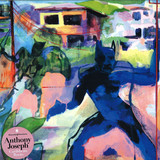
Strut team up for the first time with respected French label Heavenly Sweetness for the brand new album by the inspired poet, novelist and musician, Anthony Joseph.The Caribbean is an influence that runs through Joseph's discography, obliquely or headon, suggested or on full display. It resonates on each of his albums, from the furious trance of 'Bird Head Son' to the more polished 'Time'. On 'Caribbean Roots', he has now decided to turn a guiding thread and a reference point into a communications cable - a powerful bond that makes light of distance and braves the seas to link his island to that of his friends in the Caribbean arc, dancing to the strains of tumbélé and mendé only a few miles
from Port of Spain where people live it up to rapso and soca beats. Caribbean Roots' represents a return to his roots for Anthony Joseph, who has always remained true to a powerful, deep-seated sense of his Caribbean identity. Having started
out as a joint project with the outstanding percussionist Roger Raspail (Cesaria Evora, Papa Wemba, Kassav), 'Caribbean Roots' swiftly grew into a creative force incorporating
the rhythms, sounds and vibes that rock the Caribbean from San Fernando, Scarborough, Kingston and Les Abymes to Port-au-Prince and Havana. Backed by a band made up
of a blend of local musicians, the album attempts to unite the different islands into a single entity whilst ensuring that the identity of each is in no way diluted by the mix instead creating a richer and stronger alloy. The saxophones of Shabaka Hutchings (The
Heliocentrics) and Jason Yarde, the trumpet of Yvon Guillard (Magma), the bass of Mike Clinton (Salif Keita) and the trombone of Pierre Chabrèle (Creole Jazz Orchestra) all combine to form a group of Caribbean All Stars to which Andy Narrell, the master of the steel pans, brings ringing drum beats. The album features bursts of catchy rhythms and slow percussive riff progressions, as on a film soundtrack, incandescent voodoo funk and rhythmic high-speed frenzies shot through with free-jazz sax. This reunion of the Caribbean diaspora was never meant to come up with a formula divisible into eleven separate tracks - its goal was to explore and discover new sounds. And all of this under Anthony Joseph's guidance, as he spins his lyrical blend of afro-futurism and surrealism, commemorating the Caribbean people's sometimes violent resistance to colonialism. Anthony Joseph, one moment a chronicler reciting his text against a background of simple percussion, the next a storyteller possessed by the power of a hypnotic bassline, then an adventurer chanting among mangroves where the rhythm section and the brass have created an impenetrable thicket. At turns, an MC too, strutting to a fat, throbbing groove in vocal tandem with Sly Johnson or David Rudder to pay tribute to Mighty Sparrow, the undisputed and indisputable king of calypso
Raime's second album, Tooth, arrives June 10, 2016 on 2xLP, CD and digital formats. The widescreen melancholia of their 2012 debut, Quarter Turns Over A Living Line, gives way to an urgent and focussed futurism, in the shape of eight fiercely uptempo, minimal, meticulously crafted electro-acoustic rhythm tracks. The DNA of dub-techno, garage/grime and post-hardcore rock music spliced into sleek and predatory new forms.
No let-up, no hesitation. Needlepoint guitar, deftly junglist drum programming, brooding synths and lethal sub-bass drive the engine. The production is immaculate, high definition. No hiss, no obscuring drones or extraneous noise: the music of Tooth is wide-open and exposed. The seeds of its supple dancehall biomechanics can be found in the self-titled 2013 EP by Raime side-project Moin, an ahead-of-its-time synthesis of art-rock and soundsystem sensibilities, but Tooth pushes the template further, binding the disparate elements together so tightly that they become indistinguishable from one another.
If Quarter Turns was an album that confronted total loss and self-destruction, even longed for it, then Tooth is the sound of resistance and counter-attack: cunning, quick, resolute, calling upon stealth as much as brute-force. At a time when so many pay lip service to experimentation without ever fully committing themselves or their work to it, Raime return from three years of deep, dedicated studio research with a bold and original new music: staunch, rude, and way out in front.
Richard Sen's last outing on (Emotional) Especial - the bleep revival brilliance of "Songs of Pressure" - was something of a stone cold killer, so hopes are naturally high for this belated follow-up. The title track again digs deep for inspiration, doffing a cap to the starry futurism of Detroit, psychedelic acid and the drum-machine driven jack of early Chicago house. The flipside Dub of the same track takes it into uncharted territory, with hazy, drawn-out chords and post-production effects only serving to emphasize the heavy nature of Sen's vintage groove. Bonus "Shoc Horracore" explores similar territory, while offering a knowing wink towards obscure 1980s horror movie soundtracks and the bold synthesizer lines of Italo-disco.
Following Secret Chapter, Architectural's debut LP, and the release of Amour in 2015 with the Dutch imprint Wolfskuil, we are delighted to bring you release number 7 which continues a saga of EPs that are very effective on the dance floor without renouncing to their atmospheric and experimental roots. Presented in an elegant 10" transparent vinyl, its two tracks, 7.1 and 7.2, share the limelight and will both leave the dance floor in ruins.
In 7.1 Architectural goes back to his roots with marked low lead lines that star in a very intense episode. The resulting sound is dense and compact, and connects the American essence and feel to European abstract futurism. Many will define this track as pure Architectural.
7.2 is not suitable for heart patients. Its intense and rhythmical bassline can put the listener in a hypnotic state for several minutes waiting for something to happen. The repetitive rhythm from the start is so strong it becomes strongly addictive. The track evolves towards an end worthy of a terror movie, where the snare provides an aggressive beat complemented by striking atmospheres.
Both tracks are the perfect weapon for any DJ willing to put to the test the best sound equipments.
Toby Tobias has been responsible for some fine quality music over the past 10 years with labels such as Rekids, Nang, Let's Play House and Quintessentials all dropping his unique brand of raw, analogue house and techno. A DJ's DJ who always seems to pull out a lesser known gem and make it sound like a classic, Toby knows his music as well as his studio, inside out. We've been proud to deliver three EP's from him on Delusions but we all felt the time was right for a full length, especially considering that 7 years have passed since his debut LP Space Shuffle on Rekids. Toby fully embraced the scope and breadth that an LP affords a producer, holing up in his Hackney studio and losing himself in his machines. Rising Son is the result of those sessions and it's brilliant!
From the opening machine funk of The Wonder featuring vocals from Atwell we can hear that Toby is quite sure about the direction he's taken for the LP. 808 beats bring vintage electro vibes whilst Atwell's vocal hints at the golden era of Chicago house, adding a soulful touch to the rigid groove. Love Affair continues the theme of off-world utopia where the droids have a heart and soul and sing torch songs of love lost, the Moroder-esque influences bringing a retro sheen to the LP. As we continue through tracks such as Sloflava and Sending Signals we find blissful, downtempo jams which perfectly soundtrack this imagined night time world which Toby seems so happy to immerse himself and his listeners in.
I Robot follows, providing the one cover version on the LP from the Alan Parsons Project as well as being an LP defining focal point. A track which shows that when the machines are working for you, it could just be a perfect world. But Broken Computer soon shows us what can happen when things go wrong. Incidentally, this is from a genuine computer crash which Toby managed to capture using his phone. A beautiful glitch in the system which spewed out such a mournful noise and a very happy accident that would be completely impossible to create if you set out to try.
As we continue we're treated to the likes of Friday Analogue Jam, Whisper It and Weird Danger, all echoing bleeps, squelching bass notes, heavenly pads and precision beats. In some ways we get a feeling of a land that time forgot, in others something of sublime beauty and futurism. That Toby can paint pictures with his music in this way speaks volumes, knowing instinctively when to draw out a mood or feeling or flip things on their head to command your attention and beg another listen. And another.....
Kicking off with acid-soaked stepper 'X ', DA05 sees the UK imprint continue to explore the darker recesses of the dancefloor. A bottom end as deep as you like combines with razor-sharp percussion on this basement techno workout. The sound design of 'black science (version)' warps the bleep techno blueprint into a swaggering half time roller before 'black science' itself arrives. This dramatic piece merges tense, Millsian atmospherics with stratospheric strings to create a timeless piece of expansive sci-fi techno. The filth-ridden 'debris', a bottom-heavy groove for those of a serious disposition, rounds off another killer four track salvo of techno futurism from this on-point label.
Various(Julian M,Ange Siddhar&Illan Nicciani,Jepe,Salvatore Freda)
*2* Ain't No Wall High Enough Part 2
Reminiscent of a time where we were releasing 4-tracks sampler every month (remember the Secret Gems From The Vault) It is naturally that we thought about a various artists sampler in order to introduce the new wild bunch,
Julian M, is french and is taking over right now, releasing here his first track on Briquerouge, But the man is no beginner, having released on Catwash, Homecoming, Denote, to name but a few and of course recently on our own RZ Muzik, His music is deep, acid, techy and ready to please any crowd, Ange Siddhar is working for Laboratory Records and works with legendary artists such as Ron Carroll, Paul Johnson or Chris Count and now teams up with Illan Nicciani on several House project, They have a strong vinyl lovers community following their releases and just joined the label with 'The Show'
Jepe was one half of John Waynes who already release on Brique Rouge and is now one of the most respected producer from Portugal, Actually living in Berlin, he has released on Get Physical, Blossom Kollektiv or MuleMuziq, Jepe's tracks have a very high level of quality, True House Music,
And last but not least, our good friend from Switzerland, mr Salvatore Freda, With the machine-driven futurism of Detroit in his step, and the bounce of Chicago in his shadow, Salvatore Freda is a pure vinyl DJ from Lausanne, Switzerland. With a production career that began in 1997, Freda has built up an impressive discography over the years. His music has touched some of techno and house's most respected labels including Trapez, Music Man Records, Liebe Detail, Freerange, Area Remote, Push Communications, Dessous, Nightvision, and Cadenza.
Early Support:
Dubfire / Nacho Marco / Matthias Vogt / Tyree Cooper / Ame / Clive Henry / Renato Cohen / llorca / Blacksoul & many more
Under their exael moniker, Berlin-based producer Naemi makes highly imaginative music that can be seen as a study in contrasts - precise, hyper-detailed drum programming sits atop fuzzy, organic pools of ambience, virtuosic futurism is wrung from a falling apart laptop. Following a string of excellent releases, both solo and in group settings, “Flowered Knife Shadows” features eight productions that feel like the full realization of the project, demonstrating the artist’s range and knack for vivid, pressurized productions. From the dextrous, chops-flexing “Koch Metish” to the sanguine “Reality’s Sweetheart,” Naemi’s clarity of vision and instantly recognizable aesthetic are delivered here with remarkable potency. Frost on the window, whispers in the dark.