LTD EDITION TRANSPARENT VINYL
"We want to make people feel good about things that we feel terrible about." says David Brewis, who has co-led the band Field Music with his brother Peter since 2004. It's a statement which seems particularly fitting to their latest album, Flat White Moon released on 23 April via Memphis Industries. Sporadic sessions for the album began in late 2019 at the pair's studio in Sunderland, slotted between rehearsals and touring. The initial recordings pushed a looser performance aspect to the fore, inspired by some of their very first musical loves; Free, Fleetwood Mac, Led Zeppelin and The Beatles; old tapes and LPs pilfered from their parents' shelves. But a balance between performance and construction has always been an essential part of Field Music. By March 2020, recording had already begun for most of the album's tracks and, with touring for Making A New World winding down, Peter and David were ready to plough on and finish the record. The playfulness that's evident in much of Flat White Moon's music became a way to offset the darkness and the sadness of many of the lyrics. Much of the album is plainly about loss and grief, and also about the guilt and isolation which comes with that. Those personal upheavals are apparent on songs like Out of the Frame, where the loss of a loved one is felt more deeply because they can't be found in photographs and compounded by the suspicion that you caused their absence, or on When You Last Heard From a Linda, which details the confusion of being unable to penetrate a best friend's loneliness in the darkest of circumstances. Some songs are more impressionistic. Orion From The Streets combines Studio Ghibli, a documentary about Cary Grant and an excess of wine to become a hallucinogenic treatise on memory and guilt.. Others, such as Not When You're In Love, are more descriptive. Here, the narrator guides us through slide-projected scenes, questioning the ideas and semantics of 'love' as well the reliability of his own memory. The result is a generous record of bounteous musical ideas, in many ways Field Music's most immediately gratifying to date.
Search:g 23
‘Any Other City’ by Life Without Buildings, the only
album recorded in their brief existence, is
repressed and available again. Originally released
on Tugboat Records (a Rough Trade affiliated
label) in February 2001, ‘Any Other City’ has slowly
become a widely admired cult album.
Life Without Buildings formed in Glasgow in 1999,
they existed for three years and then split in 2002,
having released just one album and three double A
side singles, yet they’ve continued to build a
strong underground following in the years since,
which has culminated in copies of the original
album on vinyl changing hands for exorbitant
figures and numerous musicians citing it as a
major influence and inspiration.
Frontwoman Sue Tomkins’ unique vocal delivery
which is somewhere between talking and singing,
a kind of narrative, combined with the often spiky,
course backing that the rest of the band provide,
tends to prove magnetic after a few listens.
Life Without Buildings managed to be utterly
unique in the sound they made and ultimately
that’s what has made this album’s reputation grow
over time to be deemed absorbing, timeless and
utterly essential listening.
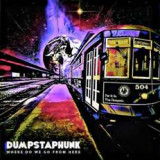
"Where Do We Go From Here" is Dumpstaphunk's first album in seven years. It will be released on April 23, 2021 on The Funk Garage, an imprint of Mascot Label Group.
Over its past 17 years, Dumpstaphunk has earned its reputation as the most well-regarded next-generation New Orleans live powerhouse, the type of band whose live shows attract sit-ins from legends like Carlos Santana, Bob Weir and Trombone Shorty. Alongside Hall, Daniels, Alex Wasily, Ryan Nyther and drummer Devin Trusclair, cousins Ivan and Ian Neville have built upon their family’s iconic NOLA legacy as they’ve transformed Dumpstaphunk into the city’s pre-eminent 21st-century funk-fusion export.
The band’s mix of classic and modern influences can be heard throughout the party-friendly mix of R&B, funk, rock, swamp-pop and blues of "Where Do We Go From Here," from the slap-bass rave "Make It After All" to the band's contemporary renderings of NOLA R&B rarities (the 1975 Blackmail gem "Let’s Get At It") and early Seventies classics (Sly and the Family Stone's "In Time”).
‘Where Do We Go From Here’ is perhaps the best evidence yet of Dumpstaphunk’s ability to strengthen and transform their singular NOLA roots in combination with the deeper outside musical and philosophical influences on which the band is founded.
The term "Guitar Hero" is bandied about loosely these days. Seems like all you have to do is look good holding the thing and you qualify. But if you ask the actual guitar heroes---like Brian May, Jeff Beck, and Eric Clapton---who THEIR Guitar Heroes are, Steve Cropper is definitely on the shortlist. If all he had done were the records with Otis Redding that would be enough, but shortly thereafter he was leaving his fingerprints on records by Wilson Pickett, Sam & Dave, Johnny Taylor, Albert King, and virtually anybody worthy who came within earshot of Memphis. He was a Guitarist's Guitarist, and a Songwriter's Songwriter.
Fire It Up is Steve Cropper's first album of new Soul/R&B material in 10 years. The album was produced by Steve and Jon Tiven, and will be released worldwide on April 23, 2021 via Mascot Label Group/Provogue.
"Tex Crick will release his debut singer-songwriter album, ‘Live In… New York City’, on April 23rd as the first artist signed to Mac’s Record Label.
‘Live In… New York City’ was written & recorded entirely on an 8-track recorder by Crick in his New York City apartment over the span of four-weeks during the winter of 2018. Performing the majority of instruments himself, Crick has delicately created a world of delusion within the walls of his New York City apartment. ‘Live In… New York City’ was compiled from these original recordings & additional instruments were added thereafter. Early versions of the album were heard by Mac DeMarco who offered to mix the album in his home studio in Los Angeles"
Mit .Maidan?g vero.ffentlicht die da.nische Post-Rock-Band BOUNDARIES am 23.04.2021 ihr Debu.talbum auf Vinyl. Der Longplayer ist ein hemmungsloses Rockalbum u.ber all die Ungestu.mheiten, die wir in uns und um uns herum aktuell erleben. Oder, um es mit den Worten der VISIONS zu sagen: BOUNDARIES sind .Weltschmerz zum Ho.ren?g. Dabei kombinieren die Da.nen das was sie am besten ko.nnen: Post-Rock mit neuen Einflu.ssen. Der Albumtitel .Maidan?g (gesprochen: /m...d..n/) beschreibt dabei eine Fla.che in oder bei einer Stadt, die fu.r o.ffentliche Versammlungen und Proteste genutzt wird, und soll auch musikalisch und inhaltlich genau diese Funktion u.bernehmen. Von aufreibenden Implosionen im Song "Harness" bis hin zur klaustrophobischen Einsamkeit im Track "Indefinite Hours", vermitteln BOUNDARIES eine breite Gefu.hlswelt, die in jedem von uns zu finden ist.
Afrosound's mission was to emulate the guitar-heavy tropical sounds emanating from Perú and Ecuador at the time. To add to the hippie vibe, there were plenty of whacky improvised vocal asides (called 'inspiraciones'), plus custom fuzz, wah-wah, flange and echo effects boxes for the guitar and keyboards. A barrage of odd sounding synths, drum machines and other electronic flourishes were also sprinkled in to spice up the proceedings. The dozen tracks on Afrosound's debut long play make for a surprisingly diverse palette from which these Colombian musicians painted their daring portrait of Peruvian cumbia, returning the favor in bold colors that still resonate almost 50 years later. "La danza de los mirlos" kicks off with most famous Afrosound hit of all, 'Caliventura', a genius blend of funk and cumbia. Aside from the cumbia amazónica title tune, there are several other covers including three popular songs by Nelson y Sus Estrellas, plus radically reimagined versions of various Colombian costeño classics published by Fuentes. Mario "Pachanga" provides a sad but still groove-oriented Christmas son montuno / cumbia hybrid while Fruko brings us the bomba-funk ditty 'El chorrillo' and the rocking cumbia andina gem 'Cabeza de chorlito' where Sepúlveda channels Enrique Delgado. Fruko collaborator Hernán "Hercovalle" Colorado Vallejo rounds things out with the melancholic psychedelic cumbia 'Esperando por ti', proving that every tropical party has to have its down side as well. The record was also released in the US, Ecuador, Perú, Panamá, Mexico and Venezuela, and probably had an influence of its own, at least in South America. The cover of this lovingly restored reissue features the artwork for the Peruvian edition, which was licensed and issued by Lima's El Virrey label in 1974. The original Fuentes artwork, with a far more outrageous "cheesecake" image, can be seen on the back cover.
Sometimes a work of art comes unintentionally from a place from deep within the soul. It meanders and flops onto a table and sits and waits for its birth.
The album begins with "Wait Till The Stars Burn", a planetary ode to the Sun. The second track "Tribute to the Pharoahs Den", is a requiem for Danny Ray Thompson (R.I.P.) of the Sun Ra Arkestra, his music and legacy now floating above us in the infinity of space. Both tracks and featuring Marshall Allen and Knoel Scott (of the Sun Ra Arkestra).
The album ends with a requiem for Hal Willner (R.I.P.) whose devotion to celebrating the weird and insane was like an insatiable thirst leading to deep introspection and joy in harmony and sonic dissidence.
These compositions have all come from this place inside my bipolar, seroquil ridden mind. It is as much a tribute to the great composers who have inspired me; Alice Coltrane, Rahsaan Roland Kirk, Philip Kelan Cohran, Bernard Herrmann, Ennio Morricone, Miles Davis, Sun Ra, John Carpenter, Quincy Jones, Old Bollywood, Film Noir, to name just a few. In my 23 years of being a composer of music I have had the great opportunity to score several films all of which never got any commercial fame. These films were made from the blood and sweat of film directors and their crews who tirelessly made incredible documents that were ultimately ignored by humanity. But that never stopped them nor will it stop me. These tracks are from the infinite celluloid that runs deep in my mind, body and soul. In my lifetime i never thought i would see the deaths of "Celluloid" or "analog recording". I refuse to accept the coroner reports on said fatalities, so here is my offering to the canon of cinematic overtures and analog self-preservation, for the films in our heads yet to be made.
- A1: Fred Ventura - The Years (Go By)
- A2: Duke Lake - Do You (Short Edit)
- A3: Decadance Vs Italoconnection - On And On (Fears Keep On)
- A4: Wish Key - Orient Express
- B1: Felli - Diamond In The Night (Short Edit)
- B2: 23Rd Underpass - A Chase
- B3: Flexx - Forever Stars Today
- B4: Nico Band - Let It Show (Short Edit)
- A1: Harry Wolfman - Upstream (2021 Version)
- A2: Kiwi - We Are Here
- A3: Jad & The - 232 (Raw Tool)
- B1: Karl Hector & Nicolas Tounga - Ngunga Yeti Fofa (The Joaquin Joe Claussell's Electric Afrika Version (2021 Version)
- B2: Vito & Druzzi - Night Masquerade
- C1: The Barking Dogs - Mamarracho Feat Marcelo Burlon (2021 Version)
- C2: Capablanca & T Keeler - No Hay Ritmo
- C3: Kapote - Besamo Fly
- D1: Hard Ton - Food Of Love (Dj Sprinkles Grub Dub (2021 Version)
- D2: Munk - The Bolero Bunuel (Red Axes Remix)
- D3: Art Alfie - Dance To The Conga (Edit)
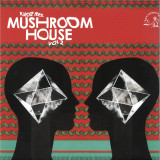
The MUSHROOM HOUSE compilation is a collection of balearic, afro and cosmic disco tracks that have been released on several Toy Tonics EPs over the last 5 years. Toy Tonics now releases some of these EPs on a double vinyl together. This is the second part. Featuring eleven tracks. (Vol 1 was released in 2020.)
Original tracks and remixes by friends of the label: Kiwi, Red Axes, Karl Hector, Hugo Capablanca, Harry Wolfman. Very special contributions by New York's legendary Joe Claussell and fashion designer Marcelo Burlon, who contributed the vocals to a song by Milan’s Barking Dogs. Art Alfie from Studio Barnhus is featured also with an exclusive track and legendary DJ Sprinkles with a magic rework of a Hard Ton song.
A few of the tracks had been already released on Gomma records. The now sleeping indie-electronica label that was the „mother“ of Toy Tonics records. Some were made exclusively for Toy Tonics.
- A1: Ashe 1:42
- A2: Death Returns... 3:06
- A3: Satanic Magick Attack 3:30
- A4: Electric Phantoms 4:17
- A5: Mystifier (White Night City) 4:13
- B1: Cursed Be Thy Kingdom 2:56
- B2: Valley Of The Ravens 5:23
- B3: Metal Burner 3:03
- B4: The Widow's Blade 5:20
- B5: Sign Of The Wolf 2:48
- C1: Ashe 1:42
- C2: Death Returns... 3:06
- C3: Satanic Magick Attack 3:30
- C4: Electric Phantoms 4:17
- C5: Mystifier (White Night City) 4:13
- D1: Cursed Be Thy Kingdom 2:56
- D2: Valley Of The Ravens 5:23
- D3: Metal Burner 3:03
- D4: The Widow's Blade
2012 tracks for the first time on vinyl in an edition of 200 copies
These tracks where once included on a CD-R that came with the first 100 S.M. Nurse 12" EP’s “30th Anniversary 1980-1983” (Domestica Records) - now remastered and better sounding, available for the first time on vinyl including an extra track!
Robby Horsfall († 2013): lyrics, vocals
Menko Konings: compositions, instruments
* remix (2021) by Rude 66
** remake S.M. Nurse track
Far Out Recordings is delighted to present Mora!, and for the first time ever on vinyl Mora! II. Mexican-American percussionist and former member of the Sun Ra Arkestra, Francisco Mora Catlett originally recorded and released his debut solo LP as a private press in 1987, but the sequel he recorded over the course of the next few years with an expanded Detroit jazz brass section was shelved for decades to follow. A pan-American melting pot of hypnotic afro-cuban rhythms, frenetic batucadas and fiery sambas, Mora I & II are holy grails of latin jazz, masterminded by an unsung hero of the genre.
Born in Washington DC, 1947, Francisco Mora Jr is the eldest child of two highly prominent Mexican artists, Francisco Mora Sr and Elizabeth Catlett, to whom this project was dedicated. Being born into a mixed heritage bohemian family provided Mora Jr with what he called a “creative, progressive, and healthy arts environment”, building the foundations for a fascinating career journey ahead. Mora grew up in Mexico City where he began working as a session musician for Capitol Records in 1968, before moving to study at Berklee Music College in Boston, MA in 1970. Once he’d completed his studies in 1973, he very briefly returned to Mexico City with the best intentions of cultivating an avant-garde movement in the city, but when the Sun Ra Arkestra came to perform, Mora ended up leaving with the band to tour the world for the next seven years, a decent innings within a group famous for its constantly evolving line up.
Settling in Detroit after his years with the Arkestra, Francisco set to work on his self-titled debut, gathering an ensemble of musicians that included keyboardist Kenny Cox, founder of the legendary Strata Records, esteemed bassist Rodney Whitaker of the Roy Hargrove Quintet and percussionists Jerome Le Duff, Alberto Nacif, and Emile Borde. The album openly embraces and unites the broad spectrum of improvisation, rhythm, and jazz that has thrived throughout the American continents for centuries. In Mora’s own words the album intended to “manifest the African heritage presence in the American continent.” Epitomising this outlook, album opener ‘Afra Jum’ deploys a melody based on Haitian, African and Native American motifs, which is expanded upon by the soulful excellence of the Detroit veterans Cox and Whitaker, amidst a backdrop of afro-cuban inspired percussion.
The sequel Mora II was recorded shortly after with an expanded line up that included trumpet legend Marcus Belgrave, famed for his work with Ray Charles, Charles Mingus, Hank Crawford, Eddie Russ and Wendell Harrison. Continuing the concept of the first album, the follow up moves deeper into South America with the samba jazz dance belter ‘Amazona’, led by the rich vocals of Francisco’s wife Teresa Mora. The ‘Afra Jum’ concept is further explored, with the original motifs beefed up by the additional horns, and interspersions of Sun Ra inspired rumbling free improvisations. This follow up album remained shelved until 2005, when Mora put it out as a now obscure CD titled River Drum, but only now has it been given the high quality vinyl treatment it so deserves, presented as the sequel to Mora! as originally intended.
Through the 90s and into the the 21st century Mora would continue his Pan-American explorations, moving toward a more electronic afro-futurist direction as part of Detroit techno pioneer Carl Craig’s Innerzone Orchestra. Mora also worked with Carl Craig, moog synth wizard Craig Taborn, and his former Arkestra colleague, the legendary Marshall Allen, to form the Innerzone Orchestra spin-off Outerzone, released in 2007 on Premier Cru Records. Mora I & II will be out as two vinyl LPs, CD and digitally 16th April 2021.
- Mother
- Hold On
- I Found Out
- Working Class Hero
- Isolation
- Remember
- Love
- Well Well Well
- Look At Me
- God
- My Mummy’s Dead
- Mother / Take 61
- Hold On / Take 2
- I Found Out / Take 1
- Working Class Hero / Take 1
- Isolation / Take 23
- Remember / Rehearsal 1
- Love / Take 8
- Well Well Well / Take 2
- Look At Me / Take 2
- God / Take 27
- My Mummy’s Dead / Take 2
John Lennon’s classic debut solo album, featuring John Lennon, Ringo Starr, Klaus Voormann, Billy Preston & Phil Spector. Completely remixed from the original multitracks at Abbey Road Studios by triple GRAMMY Award winning engineer Paul Hicks, overseen by producer Yoko Ono Lennon.
2LP gatefold edition includes a second LP of outtakes.
All mastered at half-speed, pressed on 180gm vinyl, with a booklet and WAR IS OVER! poster.
Slaughter in the Vatican is the debut studio album by American heavy metal band Exhorder. It was released on October 23, 1990 through Roadrunner Records. The album received favourable reviews, and saw the band being compared to heavy metal legends Pantera. AllMusic noted Exhorder’s “death metal-style double kick drums, chugging guitar riffs played at both slow and blistering tempos, and, to top it all off, the gruff but very expressive lead vocals of frontman Kyle Thomas”. The album was inducted into the Decibel Magazine Hall of Fame in 2018.
Slaughter in the Vatican is available as a limited edition of
2000 numbered copies on silver coloured vinyl.
- A1: Nocturne In C-Sharp Minor, B. 49
- A2: Nocturne In E Minor, Op. 72, No. 1
- A3: Nocturne In C Minor, Op. 48, No. 1
- B1: Ballade No. 2 In F Major, Op. 38
- B2: Ballade No. 1 In G Minor, Op. 23
- C1: Waltz In A Minor, Op. 34, No. 2
- C2: Prélude In E Minor, Op. 28, No. 4
- Grande Polonaise For Piano And Orchestra (Preceded By An Andante Spianato), Op. 22
- C3: Andante Spianato In G Major. Tranquillo
- D1: Grande Polonaise In E-Flat Major. Molto Allegro
- D2: Moving To The Ghetto Oct. 31, 1940
- D3: Mazurka In A Minor, Op. 17, No. 4
The Pianist is a 2002 biographical drama film, directed by Roman Polanski. It is based on the autobiographical book The Pianist, a World War II memoir by the Polish-Jewish pianist and composer Władysław Szpilman. The film was a co-production between France, the United Kingdom, Germany, and Poland.
The Pianist was met with significant critical praise and received multiple awards and nominations. It was awarded the Palme d’Or at the 2002
Cannes Film Festival. At the 75th Academy Awards, The Pianist won Oscars for Best Director (Polanski), Best Adapted Screenplay (Ronald Harwood), and Best Actor (Adam Brody), and was also nominated for four other awards, including the Academy Award for Best Picture. It also won the BAFTA Award for Best Film and BAFTA Award for Best Direction in
2003 and seven French Césars including Best Picture, Best Director, and
Best Actor for Brody.
- A1: Die Gefühle Haben Schweigepflicht 3:33
- A2: Wenn Du Mich Willst (Dann Küss Mich Doch) 3:07
- A3: Bittersüße Zärtlichkeit 3:41
- A4: Kilimandscharo 3:10
- B1: Warum Nur Träumen 3:33
- B2: Wenn Du Mich Berührst 4:06
- B3: Diese Nacht Soll Nie Enden 3:23
- B4: Du Hast Mich Tausendmal Belogen 3:46
- C1: Tango Amore 3:30
- C2: Ich Sterbe Nicht Noch Mal 3:39
- C3: Vielleicht Ein Traum Zu Viel 3:26
- C4: Und Wenn Ich Geh 3:36
- D1: Geh Doch, Wenn Du Sie Liebst 3:13
- D2: Auch Heute Noch 4:36
- D3: Andrea Berg Partymix
Fortunately for us, Dmytro Nikolaienko agreed to open up the jewellery boxes of his tape-loop archive for his debut album on Faitiche. What came to light was a collection of dreamy glittering gems, masterfully presented using the compositional possibilities of analogue tape machines. Some may consider a tape machine to be limited as a musical instrument, but Rings makes a convincing case with its sure-handed use of the available parameters – moving tape over the tape head mechanically and manually, cutting loops, manipulating timbre and creating noise by means of saturation. The results are eleven blurred, repetitive, rhythmic patterns that can be understood as an intervention against digital precision, as mechanical irregularities and background noise become musical events.
For those familiar with Nikolaienko’s work, his nostalgic approach here will come as no surprise: born in Ukraine and now based in Estonia, he has chosen a historical medium (that has been enjoying a renaissance for some years now) to record historical-sounding sequences. The way he manages his own back catalogue is similarly archival, documenting the chronology of his tape loops in such a way as to leave no doubt as to their advanced age. And then there are his two wonderful labels Muscut and Shukai, the latter being an archival project releasing electroacoustic obscurities from the Soviet past. Which brings us back full circle …