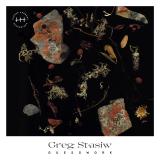
Experimental musician Greg Stasiw presents his debut album of radiant, free-flowing electronics ‘Guesswork’. Music for psychoactive exploration made over a four year period, incorporating ambient, minimalism, intricate sound design & Japanese environmental music. An exceptional listening experience of wonder, tranquility, melancholy & discovery, contemplating the relationship between sound & space.
Greg Stasiw is an experimental musician, visual artist and writer from New England, Northeastern USA. An itinerant polymath, Stasiw has spent time living, working and traveling in New York, Tokyo, Toronto, Paris, Boston, and Bratislava. As well as studying anthropology, animation and illustration, Stasiw has always had a close connection with music.
His earliest musical involvements started with ambient music on Sunday drives, microcassettes, the Windows 98 Sound Recorder and free play with Casio keyboards. Then came a formative procession of piano lessons, orchestras, choirs, taiko, metal, indie rock, tinnitus, and ultimately; the acquisition of music production software.
With his debut album ‘Guesswork’, the aural and visual inspirations that underpin Stasiw's creative life intersect, in a pure, radiant soundworld of space, depth and immaculate clarity. Futuristic, pellucid soundscapes incorporating ambient, minimalism, intricate sound design, and Japanese environmental music are deftly arranged with evanescent chimes, serene tone float, suspended organ notes and curious sci-fi resonances.
Like stepping into some space age meditation garden, if soundtracked by the likes of Hiroshi Yoshimura, Harold Budd, Norman McLaren, and Pauline Anna Strom, the thirteen tracks of ‘Guesswork’ create an exceptional listening experience of wide-eyed wonder, sleek tranquility, gentle melancholy, and singular discovery.
quête:g connection
- A1: Take The Leap (Asot Year Mix 2025 Intro)
- A2: Let It Be For Love
- A3: Love
- A4: Illuminate
- A5: Love Me Endless
- A6: Start A Fire
- A7: Deep Shadow
- A8: Everything I Wanted
- A9: Turning
- A10: I'm A Freak
- A11: Dust
- A12: Find You
- A13: What's The Matter?
- A14: Heavy
- A15: Missing Part Of Me
- A16: Sound Of You
- A17: Follow The Light
- A18: Let You Down
- A19: Take Off
- A20: Keep The Faith
- A21: I'm On Fire
- A22: Shattered
- A23: We Are Free
- A24: Taking Back Control
- A27: Desolate Lands
- A28: End Of Time
- A29: Angels (Vip Mix)
- A30: Utopia (Korolova Remix)
- A31: Dream A Little Dream (Vip Club Mix)
- A32: Left Of Us
- A33: Kidz (Camelphat Remix)
- A34: The Lines
- A35: Ta Que Na
- A36: Ignite
- A37: My Life
- A38: Elysian
- A39: Deepest Blue
- A40: Super Powers (Giuseppe Ottaviani Remix)
- A41: Mix The Master
- A42: The Light On The Other Side (Asot Year Mix 2025 Outro)
- A25: Let Your Mind Be Free
- A26: All Night
We stumble, we doubt, we fall - but within those moments lies the spark of transformation. It isn't just change. It's courage. It's fire. And that same bravery is at the core of the twenty- second instalment of Armin van Buuren's annual year mix series. Opening with a powerful narration that sets the stage for transformation, this 113- track journey takes you through the sounds that breathe courage, reinvention, and unshakable energy. From uplifting anthems and emotive vocal tracks to driving, boundary-pushing tech-trance, the mix features productions from Armin van Buuren, Adam Beyer, KI/ KI, Ferry Corsten, Joris Voorn, Hardwell, Svenson & Gielen, Hannah Laing, Factor B, Mauro Picotto, and others. Collaborations with artists such as Bon Jovi, Martin Garrix, Sam Gray, and Malou highlight the spirit of connection and reinvention, while tracks such as "Set Me Free (Rising Star Remix)", "Put Your Bassline", "Holding The Light", "Marama (Moon & Stars)", and "Missing Part Of Me" demonstrate the power to transform moments into memories. Whether through soaring melodies or relentless grooves, this mix invites you to take the leap, embrace the unknown, and let the music guide your own transformation. All together, in A State of Trance.
- A1: Give It To Me Baby
- A2: Ghetto Life
- B1: Make Love To Me
- B2: Mr. Policeman
- C1: Super Freak
- C2: Fire And Desire
- D1: Call Me Up
- D2: Below The Funk (Pass The J)
Rick James Blends Brazen Attitude, Fearless Sexuality, and Shrewd Charisma on Street Songs:
Punk-Funk Album Aims for the Hips and Head, Includes the Timeless Hit “Super Freak”
Sourced from the Original Master Tapes and Strictly Limited to 4,000 Numbered Copies:
Mobile Fidelity’s 180g 45RPM 2LP Set Presents 1981 Smash in Audiophile Sound for the First Time
1/4” / 30 IPS analogue master to DSD 256 to analogue console to lathe
“Punk funk” was a relatively unknown concept before 1981. But once Street Songs took the charts by storm that year, the world soon knew about what became Rick James’ signature style. And how. True to its name, Street Songs blends outspoken sexuality, brazen attitude, and edgy commentary amid contagious R&B-fueled arrangements that simultaneously aim for the hips, head, and various nether regions. And it’s never sounded better.
Sourced from the original master tapes, strictly limited to 4,000 numbered copies, pressed at Fidelity Record Pressing, and housed in a Stoughton gatefold jacket, Mobile Fidelity’s 180g 45RPM 2LP set presents James’ platinum-certified effort in audiophile quality for the first time. Playing with crisp dynamics, lively textures, airy headroom, and revealing clarity, this collectible edition of the record that stayed at the No. 1 spot on the R&B Album Charts for 20 weeks invites you to get closer to music that beckons you to turn your space into a private dance floor.
Then again, you’ll likely be so taken by how the taut bass lines, snappy rhythms, and four-on-the-floor beats — all rendered in stunning detail and with full-bodied architecture — come across with such accuracy and presence, you might stay pinned to your seat. On this pressing, the soundstaging, imaging, and lit-fuse energy of Street Songs reach new heights. Everything from the rubbery feel of the guitar lines to the depth of James’ temperature-raising vocals to the scale of the horn charts emerges as if James and his ace session crew set up in your room.
The Buffalo native and his ensemble waste no time getting their message across. On the album-opening “Give It to Me Baby,” James and company lay down a mix of sleek funk and pulsing disco that practically activates the bright lights of a discotheque and stimulates the libido of anyone within earshot. Having reached No. 1 on the Billboard Hot Soul charts, the song is pure sex — and just one of the carnal delights on a record that embraces the subject as fearlessly as James does his identity.
Of course, the most famous of James’ erotic excursions — the timeless “Super Freak” — hit No. 1 on Hot Dance Club Play charts, No. 16 on the Hot 100, and, later, No. 153 on Rolling Stone’s list of the Top 500 Songs of All Time. Bolstered by a quavering keyboard theme and electro riffs, the much-sampled track worms itself inside your muscles with smile-inducing subject matter, gliding vocals, nimble movements, a hot tenor-saxophone solo, and backing vocals by the Temptations.
The iconic Motown group isn’t the only celebrated guest artist on the Grammy-nominated Street Songs. James’ then-labelmate, Stevie Wonder, lends harmonica to the frank sociopolitical narrative on “Mr. Policeman,” a protest tune that also manages to stroll ’n’ strut via simmering organ, staggering brass accents, and James’ gritty vocal performance. In addition to contributing backing vocals on several cuts, Teena Marie turns in one of the album’s signature moments on “Fire and Desire,” a romantic old-school duet with James that impresses with smoothness, sensitivity, and smokiness.
High-profile colleagues aside, James remains the undisputed star, a figure whose leather-and-latex attire, braided hair, and natural swagger made him misunderstood by some in the mainstream and embraced by everyone in the know as a true original. As a testament to his magnetism and skills, his charisma and rawness seemingly seep through every note, whether on the balladic sweep of the risqué “Make Love to Me” or strident, poke-and-prod persuasion of the moonwalking “Call Me Up.”
On the closing “Below the Funk (Pass the J),” an uptempo autobiographical tale that addresses the visionary musician’s second-favorite love, the singer acknowledges his upbringing and inseparable connection with his roots — an homage to where he began and a toast to where he’s gone.
Rick James, keepin’ it real on Street Songs, still as real as it gets.
Don’t believe your ears - Pepper’s Ghost is the latest offering from NYC project Nuke Watch.
Whatever you think it is - it is not. By the same token it really can be whatever you want - electronica, jazz, improv, noise, new age, ambient - it’s none and all of these. Like the primitive visual illusion it’s named for - Pepper’s Ghost is a projection of a thing, it’s not the thing.
The Nuke Watch method - like that of Aaron Anderson and Chris Hontos’ other primary project Beat Detectives - leans almost entirely on live improvisation, with some advanced studio alchemy in post. Where the Beat Detectives palette draws from club music tropes, Nuke Watch blends recognizable tones (hand drums, woodwinds, keys, fretless bass) with sounds of providence unknown, the line between organic and synthesized instrumentation unintelligibly smudged. What is real and what is projection? It’s hard to say. What do our ears tell us? This is where we arrive at Pepper’s Ghost.
Warped as the sounds may be, the playing belies a crew of deeply expressive, learned improvisers who have their craft honed. Their friendship and psychic connection enhances the ritualistic rhythms, mutant modular synthesis, nimble keyboard runs, absurdist sampling and unidentified skronk. They’re wonderfully complemented across several tracks on this set by Cole Pulice’s levitational, sublime saxophone.
As unhinged as this might all appear, once the mind and music meet on the same wavelength this is profoundly moving, energizing and uplifting Alive Music that recalibrates the sense of what music can be.
Nuke Watch is Aaron Anderson and Chris Hontos, with an array of friendly guests. They’ve released records as Nuke Watch on The Trilogy Tapes, Commend and Moon Glyph. As Beat Detectives they’ve released records on Not Not Fun, 100% Silk and their own studio imprint NYPD Records.
Pepper's Ghost was written and produced by Aaron Anderson and Chris Hontos. Additional instrumentation on these recordings by Cole Police, Leonard King, Eric Timothy Carlson, Chris Farstad and William Statler. It was mixed by Chris Hontos and mastered by Jack Callahan. Painting on the cover is “The Unity Of Being” (2020), by Ry Fyan. Design and layout by Aaron Anderson.
RIYL - Musical illusions, puzzles and magic tricks, downtempo, music of the spheres, good journey, Eddie Harris, Ketron, "world building", orange sunshine, suspension of disbelief.
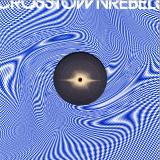
Franky Wah returns to Crosstown Rebels and reunites with Kuuda on ‘Light Years’.
Dropping on 13th February 2026, the two-tracker sees the acclaimed UK producer continue his collaborative journey alongside the impressive Brighton-based collective for both his and their second appearance on Damian Lazarus’ revered imprint.
Having made a splash with his impactful label debut last summer, Franky Wah returns to Damian Lazarus’ Crosstown Rebels imprint with ‘Light Years’, a two-track EP that explores emotion and movement with measured confidence. The release sees the Yorkshire-born producer further embed himself within the Crosstown universe, delivering a project built on patience, progression, and feeling, where every moment earns its weight.
The EP opens with the title track, a wide-screen, hypnotic solo burner that balances uplifting melodic energy with weighty, driving grooves. Built for long moments on the floor, the track unfolds, allowing atmosphere and tension to do the heavy lifting while maintaining a clear sense of momentum throughout. On the flip, Franky reunites with longtime collaborators, producer-songwriter-vocalist trio Kuuda, for their second outing alongside him on Crosstown Rebels with ‘House In My Veins’. Continuing a partnership rooted in shared musical language and emotional depth, the Brighton-based trio is central to the track, bringing drive, earworm vocals, and a distinctive identity, woven seamlessly throughout Franky’s cinematic production - grounding expansive moments with human connection.
Following heavy support from Pete Tong on his Crosstown Rebels debut, and a recent invitation to host Tong’s flagship BBC R1 show at the start of 2026, Franky continues to assert himself as an artist equally at home in club culture’s most intimate spaces and its widest-reaching platforms. Meanwhile, Kuuda continue their impressive start to 2026, hot on the heels of their recent collaboration with Hot Since 82 on Bedrock. This latest partnership delivers a focused yet expressive statement, music designed to breathe, to move, and to resonate long after the lights come up.
Dictaphone are back with their 6th full length called "Unstable". In the 25th year of the project Brussels born composer and mastermind Oliver Doerell is surrounded again by a lot of musicians & friends. Roger Döring is there, his clarinet and saxophone play has always been a trademark sound of the band - also Alexander Stolze's ghostly violins. The dark atmosphere and experimental sound of the new album is a reference to the 80s belgian art music scene, which Doerell had the luck to experience in his formative years. Minimal jazz meets musique concrete meets a postpunk mind. On this new album “Unstable“ more voices and vocals than usual can be heard - especially Helga Raimondi (who already sang on the last album “Goats and Distortions 5") . As a collage artist she is also responsible for the visual side of Dictaphone - she designed the cover artwork and the visuals for the live shows.
The Brussels-Berlin-Teheran connection: Other guests on "Unstable" are the voices of Kaveh Ghaemi and Ashkan Afsharian, who Doerell met during a modern ballet production by Modjgan Hashemian (2008). The trumpet of Shahab Anousha can be heard in the track “La fin“ - Oliver Doerell and Shahab Anousha also share the spoken words Project “Noufān”. For nearly 20 years Oliver Doerell is linked to the Iranian Diaspora in Berlin and the Dictaphone track “Rattle” from the classic album “ Poems from a rooftop “ (2012) has been a hit in Teherans underground scene since the beginning. Furthermore the title track “Unstable“ is a homage to Ian Curtis of Joy Division. The words of this piece are based on the setlist of Joy Divisions last show.
Dictaphone played more than two hundred shows all over the world (including festivals Mutek, Transmediale, Unsound , Benicassim and many others). Their music can be heard in countless films, tv series and theatre pieces - (“the responder“ (BBC) , “the love he knows” (Ali Mohammad) , “Don´t move“ (Modjgan Hashemian) , Ring (Felix Ruckert) among others.
- 1: Other Ways Of Landing
- 2: M4 Windy
- 3: To Earth Will You Tell Me When We Land
- 4: (Easily) Moved
- 5: Milk, Blue
Pem is a multidisciplinary artist, songwriter, and gardener whose work fuses organic and stylized elements. Her music is rooted in nature, shaped by long days tending gardens and observing seasonal cycles. Initial ideas emerge as “pocket sketches” — spontaneous melodies recorded while gardening — later evolving into full compositions.
Her EP other ways of landing emphasizes textural depth, world-building, and her distinctive vocal agility. Themes of belonging and rootlessness permeate her work, inspired by her transient lifestyle and connection to gardens.
Pem’s sound blends ethereal alt-balladry with soul and folk influences, underpinned by raw singer-songwriter foundations. Her hypnotic tremolo vocal technique adds an uncanny, esoteric quality. Live, she delivers arresting performances marked by stylized detachment and emotional tension, complemented by self-made costumes and lyrical motifs of fabric and fragility.
Influences range from Nick Drake and Vashti Bunyan to Cocteau Twins, Mazzy Star, and Björk. Her music explores cyclicism, mythology, and planetary themes, merging her real-world gardening experience with mystical undertones.
- 1: Cynty And The Monkees - Lady Lady
- 2: Johnny Osbourne - Buddy Bye
- 3: Dennis Brown - West Bound Train
- 4: Tenor Saw - Golden Hen
- 5: The Interns - Nothing Is Impossible
- 6: Tall T & The Touchers - Touching The President
- 7: Papa San - Give Her Credit
- 8: Dennis Brown - Wolf & Leopard
- 9: Sister Nancy - Transport Connection
- 10: Tetrack - You're Gonna Lose
- 11: The Bleechers - Come Into My Parlour
- 12: Sandra Reid - Ooh Boy
- 13: Dave And Ansel Collins - Doing Your Own Thing
- 14: Prince Mohammed - Come Mek We Rub A Dub
- 15: Junior Byles - Long Way
- 16: Xterminator - Love Line Version
- 17: The Uniques - Queen Majesty
600% Dynamite is the critically acclaimed Soul Jazz Records compilation series of Jamaican music, praised for its eclectic selection of upbeat reggae, ska, soul, rocksteady, dancehall, funk and dub satisfying both connoisseurs and newcomers alike.Originally released in 2003 this album has been out of print for nearly 20 years making it one of the most-collectible of Soul Jazz Records" Dynamite! Series. This is the first ever Color Vinyl edition of this classic album.Party classics and non-stop reggae anthems such as Tenor Saw"s "Golden Hen", The Uniques "Queen Majesty", Johnny Osbourne"s "Buddy Bye" and many more, 600% Dynamite is an addictive mix of well-known classics and rarities.Classic artists such as Dennis Brown, Johnny Osbourne, I Roy, Yabby You and Tenor Saw which feature alongside classic and rare tracks by lesser known artists such as Tall T and The Touchers, Prince Mohammed and more.
- 1: Lost Future
- 2: Slow Deep Dive (Intro Version)
- 3: Lonely Choice
- 4: In Motion
- 5: Twisted Plans (Car Park Version)
- 6: Grief Process
- 7: Distorted Idea (Maxi In Prague Version)
- 8: Absent Mind
- 9: Acceptance
- 10: Event Flow
- 11: Slow Deep Dive (Alex Version)
- 12: Deep Dive (Jsk Version)
- 13: Twisted Plans (Red Club Version)
- 14: Strange Love
Political thriller Je Suis Karl, produced by German director Christian Schwochow, has a strong Czech connection. The soundtrack has been created by Czech musician and composer Tomáš Dvořák, a.k.a. Floex, who joined forces with British composer and pianist Tom Hodge. The soundtrack for Je Suis Karl will be released on September 16, 2021.
"In this project, Tom and I built on music that we wrote together three years ago for the album A Portrait Of John Doe. While this was the first feature film for me, Tom has extensive experience with composing music for movies and series," commented Dvořák.
Co-produced by the Czech company Negativ and filmed in part in the Czech Republic, the movie features characters played by Czech actresses Anna Fialová and Elizaveta Maximová. The picture makes use of the story of a young German girl, Maxi, and her family to draw attention to rising extremism among right-wing nationalists. Je Suis Karl was premiered during this year's Berlinale film festival in the Berlinale Special section.
At the director's initiative, music for Je Suis Karl was composed based on the script before the emergence of the COVID-19 pandemic. “Christian Schwochow asked for a demo, but when Tom and I set to work in Prague, we came up with a huge amount of inspired stuff within a short time, and the music became the foundation of the soundtrack. Because of the pandemic, the music itself was created on a long-distance basis. It was a game of ping pong of sorts," Dvořák added.
The soundtrack for Je Suis Karl features a unique timbre, far from the traditional symphonic sound. Instead, the sonic design relies on a fusion of dark, discordant, dirty sounds that present the symphony orchestra in a novel fashion.
Floex and Hodge created a database of loops, sounds, soundscapes, and sonic experiments with no specific compositional context. In composing music for individual scenes, they used this musical database, remixed themes and versions of compositions, and worked with vintage equipment, such as the Yamaha MT4X cassette player. Considering the large quantity of music recorded, the album contains 14 compositions from the movie itself, plus bonus tracks that did not make it into the film.
Tomáš Dvořák, a.k.a. Floex, is a Czech clarinetist, composer, producer, and multimedia artist, the recipient of multiple Anděl Music Awards. His discography includes two long-play records, Pocustone and Zorya, soundtracks for the games Samorost 2, Machinarium, Samorost 3, Pilgrims, and Papetura, remix albums, and extended-play records. In 2018, he joined forces with Tom Hodge to release the album A Portrait Of John Doe.
British composer, pianist, and clarinetist Tom Hodge challenges the boundaries of contemporary experimental music. He composes music for film, series, documentaries, advertising, and ballet. His most recent projects include the soundtrack for Je Suis Karl and music for the movie The Mauritanian filmed by director Kevin Macdonald. He has released several solo albums, including Piano Interrupted and Second Moon of Winter, and has pursued a long-term collaborative partnership with musician Max Cooper.
- 1: Human Rights
- 2: Being
- 3: Human Impact
- 4: Filia
- 5: Human Spirit
- 6: Human Nature
- 7: Human Instinct
Denmark s forward forward-thinking trio Human Being Human return with a luminous new collaboration featuring acclaimed American saxophonist Chris Cheek. Rooted in lyricism, groove, and connection, Being captures the essence of what it means to create music as a shared act of humanity. Formed by bassist Torben Bjornskov, pianist Esben Tjalve, and drummer Frederik Bülow, Human Being Human have quickly earned a reputation as one of Europe s most distinctive piano trios. Their blend of Nordic lyricism and modern rhythmic vitality has drawn international acclaim for its compositional voice and cohesive ensemble sound. On Being , the trio expand their world through the unmistakable voice of Chris Cheek - a player known for his warm tone and intuitive lyricism, whose credits include work with Paul Motian, Brad Mehldau, and Charlie Haden. A long long-time admirer of Cheek s work and humility, Bjornskov reached out and invited him to Denmark to collaborate with the trio. In the studio, the chemistry was undeniable, as most of the album s tracks were captured in just one or two takes, preserving a sense of immediacy and spontaneity. Reflecting on what it means to be human, our capacity to make decisions and shape the world around us, as well as the damage our species has done to our planet, the quartet channels a spirit of contemplation and rediscovery through elegant, organic compositions. Tracks like Human Rights showcase the group s deft interplay and melodic clarity, while the tender ballad Being highlights Cheek s burnished tone and Tjalve s spacious harmonic sense. On Filia , a duo between bass and saxophone, the music unfolds in weightless dialogue and pure musical empathy. True to the group s name, Being reflects on what it means to live, connect, and create as humans in a complex world. The essence of music is working together, being open, being positive, and wanting to experience new things, things," says Bjornskov. That s essentially what jazz is - it s influenced by any and every culture in the world, every kind of music and race, and every person is part of it.
- Fragmentarium
- Run
- Such Is Fate
- Stilleben
- Concession
- Recover
- Rebuild
- Shimmering (For Mm)
Danish bassist and composer Jesper Thorn has become one of Scandinavia s most distinctive musical voices, known for blending introspective storytelling with the understated lyricism of Nordic jazz. His award award-winning albums Boy and Dragor earned international praise for their emotional honesty and cinematic depth, establishing a sound world where fragility, melancholy, and quiet beauty intertwine. A deeply personal meditation on the search for calm, connection, and meaning in a world that often feels overwhelming, the album continues his exploration of sound as refuge, a place to pause, reflect, and breathe. Joined by long long-term collaborators Marc Méan (piano), Andreas Bernitt (violin), Cecilie Strange (saxophone), and Maj Berit Guassora (trumpet), Thorn reunites with producer Mette Damm and engineer August Wanngren to craft an atmosphere both intimate and expansive. Where 2023" s Dragor confronted the ghosts of Thorn s past, STILLE (meaning quiet " or silent " in Danish) looks outward - and inward - toward reflection. For me, music has always been a refuge, Thorn writes. It s a place where I can reflect and immerse myself - both as a listener and, maybe even more, as a composer. Each composition functions as a kind of musical still image : fragments of emotion captured in time, responding to both the chaos and fragile beauty of the modern world. From the flickering calm of Fragmentarium , to the urgent, primal fear of Run (written as wildfires swept through California) to the tender domestic peace of Stilleben , these pieces balance melancholy and hope in equal measure. Thorn s writing continues to thrive on collaboration and trust. Such is Fate emerged from a discarded melodic fragment, reimagined through the expressive playing of Bernitt on violin. Recover and Rebuild form a quiet hymn to resilience, with Guassora and Strange lending understated, breath breath-like power to the ensemble. The closing track, Shimmering (for MM) MM), is dedicated to pianist Marc Méan, a constant presence in Thorn s projects since 2014 and, as Thorn puts it, the touch and sound I hear in my head when I compose ". I wanted to create a space that feels like silence, peace and quiet in a noisy world that often moves faster than it feels possible to keep up with. says Thorn.
AUMATRA
The vibration that links the invisible. A shared pulse between mind, body and machine. AUMATRA is neither a place nor an object. It is a living structure: a sonic ritual activated when the pulses of different minds fall into sync.
A space where every sound becomes a frequency, and every frequency becomes a connection.
Inspired by the ancestral and shaped by the digital, AUMATRA is a weave of intensity, discipline and collective creation-an echo from the past projected toward what has yet to be name
Following the widely acclaimed release of Body Shell in Spring 2025, Carré returns to Tempa, for a new EP, ‘Hibiscus’, featuring a collaborative track with LA-artist Bbyafricka, highlighting the synergy of West Coast Rap & London Soundsystem culture.
Connected by warmth and groove that define where Carré is musically right now, each of the four tracks on ‘Hibiscus’ stands on its own, yet together they continue to showcase Carré’s flair for producing sleek dubstep with melodic verve. From the shimmering ‘Warm Light’, the razor-sharp edge of ‘X Effect’, the deep stepper ‘Ride It Out’ to the stripped back ‘Hibiscus’ which glows with the addition of Bbyafricka’s sultry vocals, the EP is a concise statement of Carré’s evolving sound.
Speaking about the collaboration, Carré says, “I’d been a fan of Bbyafricka’s sound, style, and tone — tracks like ‘Baton Rouge’ and ‘Dumbo’ really stood out to me — and I could already imagine how her voice would fit with my production. The fact that she’s from LA made the connection feel even more natural. When I reached out, she was down straight away and came back with something I genuinely loved. She captured the energy of the track perfectly, and together I think we created something that feels authentic and even better than I’d imagined.”
For Bbyafricka, working on ‘Hibiscus’ was a moment of overcoming writer's block, “this song was me coming out of it on a weekend spent in Joshua tree, sitting outside looking at the view and the solar panels. I think you can envision what my view was when you play the song,” she explains.
Carré’s next outing on Tempa is a welcome return, signifying the home run she’s on as a producer and marking another impressive instalment in the producer's growing catalogue. In the last three years, Carré has quickly become a leading figure in the contemporary wave of artists pushing the true school Dubstep sound to new places and new audiences, expanding on the roots laid down by the likes of Skream, Benga, and Loefah.
A chance meeting in Mexico City set Points of Inaccessibility into motion. When Ibero-American composer Rafael Anton Irisarri crossed paths with Dutch media artist Jaco Schilp at MUTEK in 2024, a conversation about how technology shapes perception revealed an unexpected common ground. Schilp invited Irisarri to a spring 2025 residency at Uncloud, the Utrecht-based collective he co-founded, where Irisarri's sound began to take form amid an environment shaped by Schilp’s visual research.
The Uncloud studio was located inside the former Pieter Baan Centre, a forensic psychiatric prison where suspects of violent crimes were once confined. Its long history of silence and containment shaped the atmosphere in which the project developed. Within this setting, Irisarri coaxed long bowed-guitar tones through a network of pedals and looping systems. The raw gestures thickened into a vaporous and architectural field of sound. Schilp processed the material through a custom point-cloud software patch that produced images in continuous flux. The visuals flickered, dissolved and reformed like memories that resist coherence, functioning as a digital Rorschach that reflected the observer’s own perception.
Amid these spectral echoes, the project evolved into an examination of how the past persists within present signals. Memory endures as residue and interference, continually shaping perception even when its source has faded.
Schilp’s visual process required a continuous stream of sound in real time. Irisarri improvised throughout the residency, generating material that allowed the visuals to develop in parallel. Once back in his New York studio, he began shaping the recordings by carving pathways through the improvisations and mapping selected passages into MIDI. This process allowed him to build outward from the bowed-guitar material with minimal overdubs, adding Prophet 5 textures, Moog bass and strings that expanded the harmonic field while keeping the original performances at the center. To refine the structure, Abul Mogard provided editorial input, working with Irisarri’s stems to guide transitions and strengthen the overall pacing. The material, originally created under conditions of immediacy and constraint, evolved into a fully realized work through careful revision, patience and sustained reworking.
The title engages the geographic concept of the Poles of Inaccessibility, locations defined solely by their distance from all surrounding points. Irisarri adapts this idea to the conditions of digital life, where new forms of inaccessibility arise through the informational enclosures that structure perception. What appears to be a fully connected network often produces a deeper kind of separation, one shaped by the filtering logic of the systems that mediate experience. In this sense, the digital sphere mirrors its geographic counterpart. We inhabit spaces saturated with signals, yet the possibility of genuine contact becomes increasingly remote.
At its core, Points of Inaccessibility considers what can be understood as the new rituals of capitalist realism. Irisarri uses the term digital shamanism to describe the forms of simulated connection that organize contemporary life. These systems promise comfort through algorithms, influencers and AI interlocutors, yet they often reproduce the same conditions that generate loneliness in the first place. What appears as connection becomes the echo of connection, a sequence of gestures that imitate solidarity while withholding it. Like the geographic poles, these rituals are defined by distance. They pull us into environments where everything is illuminated, yet meaningful proximity becomes increasingly rare. In this sense, the work approaches a hauntology of the present, a reflection on futures that have stalled and intimacies that have been thinned by the algorithmic infrastructures that surround us.
This thematic tension unfolds across the album’s four movements. Faded Ghosts of Clouds introduces the work with textures that rise and dissipate in slow cycles, creating an atmosphere that resists clear definition. Breaking the Unison occupies a pivotal position in the sequence and focuses on the moment when the individual and the system fall out of alignment. Its shifting patterns trace the scattering of signals that once suggested connection, revealing the instability at the heart of contemporary perception. Signals from a Distant Afterglow forms the center of the album and features vocals by Karen Vogt, whose presence enters the sound field like a fragile transmission shaped by distance and delay. The closing piece, Memory Strands, follows motifs that appear, recede and briefly intersect before returning to quiet. Across these movements, the album outlines a landscape in which emergence and disappearance continually inform one another.
Listening to Points of Inaccessibility is an encounter with a sound field that is constantly in flux. Elements surface briefly, shift position and recede, creating a sense of motion that resists stable interpretation. The music moves between closeness and vastness, carrying traces of memory while withholding a clear point of resolution.
The album’s visual identity completes the project’s conceptual arc. In Mexico City, where Irisarri and Schilp first met, Daniel Castrejón transformed stills from Schilp’s point-cloud visuals into the cover image. The final artwork captures a single suspended frame of the digital material, a moment extracted from a field that is normally in constant motion. Its surface recalls the texture and abstraction found in the work of Catalan artist Antoni Tàpies, where material presence and erasure coexist within the same plane.
What emerges is a work that examines the tension between technological systems and human presence. Points of Inaccessibility asks whether connection is still possible within environments shaped by mediation and delay, or whether we have become isolated points within the very networks that promise proximity. What possibilities for relation persist within environments organized by algorithms and interruption? And how are we meant to understand presence when so much of it is constructed at a distance?
Points of Inaccessibility will be released on BioVinyl on February 6, 2026, with audiovisual performances planned throughout 2026.
Mastered by Stephan Mathieu
Artwork by Jaco Schilp
Design and layout by Daniel Castrejón
Artist photo by Iulia Alexandra Magheru.
Allowing yourself to find meaning or beauty in the mundane is an act of generosity, Whether it’s seeing a smiling face in an electrical outlet socket, or discerning cosmic design amidst the forest floor detritus, it comes from a place of kindness to yourself and senses – and openness to hidden spirit of the world. These tracks came together during a period of intense personal change for adaa, rooted in a fruitful reflection on the connections between spirit and body, “feeling my flesh so I can feel and understand my spirit,” as adaa puts it. The sense of a crossover and clash of multiple connected realities – on-screens, on-line, on-earth, off-world, after-life – unites adaa’s multifaceted productions.
Ostensibly an assemblage of found sounds. scribbled thoughts and poems from diaries, and musial snippets, the album's scattered production reflects adaa’s own many mirror worlds. Field recording sit behind most tracks, alongside VST synths, guitars, and a variety of voices, from adaa’s own mangled vox to EVP samples taken from YouTube (recorded sounds believed to be spirits or paranormal activity), all processed to varying degrees.
While the music was mostly produced either in adaa’s studio in Providence, Rhode Island, or in bed, the field recordings bring the outside world in. The result of walks in the woods, hum of roads and highways, hiss of beaches, warmth of walks with friends and past lovers “around the East Coast”. It sits behind tracks like ‘sight’ where a lilting piano lin bobs atop a pond of rustling and distant whistles. Is that birdsong? Or ghosts? Saccharine hyperpop arpeggiation crossfades sharply into noise guitar squall. Angelic demon voices yawn into a hefty crescendo. Pure drones duet with gales of undefinable field sounds.
“Sometimes I feel like a seed in frosted soil,” says adaa. “If i choose to be optimistic.”
A house is something that is so deeply temporary, yet it can hold so much energy. How do we carry or leave behind those energies while transitioning into new spaces? How does each space we occupy for some time shape us and how do we tear ourselves away from it and its influence once it’s time to go? These are some of the core questions behind CC Sorensen’s new album for mappa, ‘Phantom Rooms’ – it’s a record about movement, change, transformation, family, juxtapositions… but most of all, home.
CC Sorensen was reflecting a lot on their childhood home in rural Kansas, USA while working on this music. The album could be characterised by a familial, chamber feel and both of CC Sorensen’s brothers, Ryan and Nyal Ruehlen, make an appearance on ‘Phantom Rooms’, among other instrumentalists. Using a wide palette of sounds – CC Sorensen alone in charge of keyboards, software instruments, voice, electronics, percussion, trumpet, guitar and field recordings, in addition to guests on pedal steel, voice, chimes, saxophone and drumset – the American musician crafts music as mysterious as it is inviting. The idea behind it would be almost surrealist – ghostly rooms in houses where we live – if we all didn’t know exactly what CC Sorensen means. Home isn’t something concrete, but it’s also not just an abstract concept. It’s a space beyond space; home in itself is a phantom room we enter. And what enables us to enter is the object of exploration here.
CC Sorensen’s approach is playful – tracks like “Beat Bot” and “Plastic Portals” are almost fun – but also contemplative. They make thoughtful, meandering chamber music intertwined with field recordings and electronics. Reeds, strings and percussion often set the atmosphere – sometimes airy, gentle, at other points more insistent – as the music grapples with departure, instability, deep reflection and imagined future spaces. Especially in the closing “Bexar” there’s a tangible yearning for a stable home, a longing to rekindle and keep ablaze this beautiful familial connection to a physical place. It’s both music that invites to reflect and music that in itself reflects; desires, hopes and dreams.
Nina Wilson, better known as Ninajirachi, is a 26-year-old Australian electronic producer who released her debut album I Love My Computer earlier this year via NLV Records. A concept record built on her connection with her PC, swiping between genres of EDM, tech-house, speed garage, dubstep, and hyperpop. Wilson builds on the legacy of early-2000s and 2010s Australian electronic artists like PNAU and Flume using technology as a medium, a motif, and a mirror for reflection. Between remixing Princess Nokia, Deadmau5 & The Neptunes, releasing on Nina Las V egas’ NLV Records and RL Grime’s Sable V alley, Ninajirachi has performed at Lollapalooza, EDC, Laneway, Listen Out, Splendour, Falls Festival, and more and toured with Mallrat, Charli XCX, Porter Robinson and Cashmere Cat.
- 1: Sunshine Kisses
- 2: Louisiana Hound Dog
- 3: Two Of Hearts
- 4: Anything Without You
- 5: Baby, Please Don't Go
- 6: I Went To The Levee
- 7: Deep River
- 8: Tall Lonesome Cowboy
- 9: Lovely Lonely
Sabine McCalla creates her own version of multi-cultural American roots music. It's a sound that crosses borderlines, pulling everything from Brazilian samba to southern soul to British rock & roll into its orbit. On Don't Call Me Baby, Sabine filters those influences through the lens of her Haitian heritage and her music community of New Orleans, creating a debut album that's every bit as multi-faceted as the woman who wrote its songs.
The daughter of first-generation Haitian immigrants, Sabine was raised in the suburbs of New York City, where she grew up alongside her sister Leyla McCalla (Sons of Our Native Daughters, Carolina Chocolate Drops). Introduced to chamber music at an early age, Sabine began playing classical violin in orchestras, music camps, and conservatory classes as an 8 year old. Back at home, she filled her head with Motown classics, girl group hits, Bob Marley albums, Beatles standards, and Haitian folk music. It was a wide constellation of sound that spanned more than a half century, and Sabine made it all her own, drawn to the connections binding everything together.
Don't Call Me Baby shines a light on those connections. The follow-up to her critically-acclaimed Folk EP, whose pre-war sound earned her a slot at the Newport Folk Festival in 2019, the album transcends genre and generation, creating a raw, rich mix of country, R&B, folk, and soul that exists on its own timeline. Co-produced by Sam Doores of the Deslondes and featuring a cast of New Orleans’ most spirited and gifted (including guest vocals from Riley Downing, Leyla McCalla, and The Lostines), Sabine McCalla reaches beyond her beloved New Orleans Americana scene with Don't Call Me Baby, building a bridge between the world-spanning sounds that have captured her attention.
Stoop Kid is the jangly indie rock project of Diest-born Jens Rubens. After Camp Careful (2021) and Mount Cope (2023), Stoop Kid returns with his third full-length album Office Overdue, a ten-song collection that captures the quiet fatigue, flickering humor, and
fragile hope of keeping it together in a world that won't slow down.
'Office Overdue' is a collection of songs Jens made at home in his modest home studio. For this album, he wanted to let go of pressure and expectations more than ever, and only work on music when he genuinely felt like it.No fancy studio, no producer, just walking upstairs and messing around. The result doesn't always sound perfectly polished: the drums are sometimes clumsily programmed and more than a few wrong notes made it onto the record. The guitars were allowed to hit a bit harder this time, with the '90s slacker vibes coming through more prominently. The result is a record that feels raw and honest, and above all, was made purely out of enthusiasm.
Office Overdue explores the attempt to keep functioning in everyday life while the world around us feels on the verge of collapse. The songs move between mental exhaustion and self-reflection, carried by a dry, sometimes bitter humour that helps lighten the weight. The album focuses on repetition and routine, and on the tension between wanting to care for others and being trapped inside one's own head. Themes of anxiety, guilt and dissociation recur throughout, but are always accompanied by small moments of connection, gentle resistance and acceptance. Office Overdue embraces the mess, the doubt and the false notes, without drawing grand conclusions. Not everything is resolved, but the persistence remains.