2025 Repress
Founded by Rene Wise, Moving Pressure is a record label aimed to explore the immersive dialogue between soundsystem music and the human body, celebrating the profound connection of sound and movement.
As the inaugural release, Moving Pressure 01 serves as a sonic diary showcasing Rene Wise's music storytelling. Each track on the EP contributes to a harmonious blend of innovation and restraint, inviting listeners to embark on a captivating journey through the artistry of sound and rhythm. Sometimes, it's the space between the notes that resonate the loudest.
Поиск:g connection
Все
To All That We Lose And All We Fight For is the debut album by Vera Logdanidi - the
culmination of nearly two decades of musical evolution. Her journey began in the world of drum & bass and jungle, gradually expanding into deep explorations of house, dub techno, and techno. Over the years, Vera has performed on leading stages across Ukraine and internationally, while also mentoring a new generation of DJs and producers, hosting radio shows, and supporting the scene through her label and community work.
This album was written during a time of deep upheaval. The outbreak of full-scale war forced Vera to leave behind a well-established life and begin again on the international stage. While the music often feels dreamy and introspective, To All That We Lose And All We Fight For is a profoundly personal record - a sonic refuge shaped by grief, uncertainty, and resilience.
The album doesn't follow formulas; it's driven by intuition, texture, and a genuine connection to sound. It's rich, emotional, and occasionally unexpected. The tracks form the core of Vera's current live set, which has resonated at major festivals such as Draaimolen or Strichka - captivating audiences with its depth and subtle, immersive energy.
The cover art, created in close collaboration with Vera's longtime visual team, is a real
photograph - not a digital effect. It captures the tension between anxiety and hope: a glance back, and a step forward into the unknown. This visual metaphor reflects the emotional landscape of the album - the fragility of what's been lost, and the courage to embrace what lies ahead.
This release also marks a new chapter for Rhythm Buro Records - one that moves towards music that is more personal, intimate, and unconstrained by expectations.
To All That We Lose And All We Fight For is released alongside another important Rhythm Buro release: RB011 - Your Curves EP by Na Nich. Ukrainian producer Oleksandr Pavlenko, formerly known as Sunchase, returns to his roots in broken beats and bass music, blending them with house and techno sensibilities. The four-track EP ranges from deep grooves to melancholic late-night moods - a compelling counterpoint to Vera's album and a testament to the label's evolving identity.
Order RB012 n
Ostinato as resistance: Rafael Anton Irisarri’s landmark work reimagined. Marking the tenth anniversary of the American composer’s critically acclaimed album 'A Fragile Geography', this new edition arrives renewed, both sonically and visually.
First released in 2015 (Room40) during a period of personal upheaval and creative reinvention, it endures as a testament to resilience, transformation, and the connection we hold with the places that shape us.
Written in the aftermath of a devastating theft, A Fragile Geography was born out of loss. Just days before a cross-country move to New York, Irisarri’s entire Seattle-based studio was wiped out. Instruments. Recordings. Archives. Gone without a trace. He arrived on the East Coast to an empty room and the daunting task of starting over.
“This album wasn’t just a record; it was a lifeline,” Irisarri reflects. “It became a way to process the emotional chaos that followed: uprooting, instability, and ultimately, the slow, intuitive rebuilding of a life.”
Composed and recorded in the rural woods of the Hudson Valley, the album took shape in seclusion, surrounded by nature, and through a process guided by improvisation. Embracing limitations, Irisarri wove textural layers of field recordings with half-remembered melodies from his Seattle years, piecing them together like fragments of memory. Tracks like “Displacement,” “Hiatus,” and “Persistence” juxtaposed haunting stillness with restless momentum, mapping an inner terrain of grief, catharsis, and rebirth.
Among its defining sounds is “Empire Systems,” a monumental centerpiece built around a simple four-chord progression, organ textures, and guitar drones. Gradually, the track expands into layers of immersive loops and thick, enveloping distortion that wash over the listener like a rolling wave. Often cited as the album’s most majestic passage, it captures Irisarri at his most sonically ambitious. With a harmonically saturated structure crafted from restraint and repetition, it remains one of his most recognizable compositions: an exercise in the art of maximal minimalism.
From the outset, “Reprisal” received praise from BBC’s Mary Anne Hobbs, who championed the track on her radio show. Her support played a key role in introducing Irisarri’s work to wider audiences and solidifying his place within the lineage of electronic, drone, and experimental sound artists. A slow-burning elegy, the piece emerges from a haze of distortion and sub-bass, with dense, unrelenting drones carrying a sense of mounting tension. Just as it seems to collapse under its own weight, flickers of guitar emerge like distant light through fog. It’s a meditation on dissonance, resolve, and the elusive possibility of release.
The closing track, “Secretly Wishing for Rain,” is steeped in saudade: a longing for Seattle’s dour grey skies, lush green landscapes, and desaturated sunsets. Through it, Irisarri mourns a vanished chapter of life bound to the city, a time documented in scattered mementos and cherished collections, now permanently gone. A reflection on what could never be recovered: an era lost to time. Julia Kent’s looped cello motifs added a melancholic warmth to the track, marking the first collaboration between the two artists and sparking a musical dialogue that would keep growing in the years that followed.
More than a career highlight, A Fragile Geography has laid the foundation for Black Knoll studio, which Irisarri rebuilt from the ground up. The studio has since grown into a creative hub for countless projects, with Irisarri engineering records for iconic music figures like Terry Riley, Ryuichi Sakamoto, William Basinski, MONO, Devendra Banhart, Grouper, Emeralds, Steve Hauschildt, Julianna Barwick, and many others. Carried by its lasting influence, the album has quietly captured the ear of a younger generation, its sound and emotional arc finding new listeners in unexpected corners.
The album’s new visual language was reimagined in collaboration with Mexico City–based designer Daniel Castrejón. Irisarri captured ghostly images at Gaztelugatxeko Doniene, a historic coastal site in Bermeo, Euskal Herria. Castrejón then treated the photographs with distressed textures and spectral overlays. The final artwork channels the rugged, elemental forces that shaped both the music and Irisarri’s aesthetic, renewing his ties to ancestral ground inspired by the Basque homeland of his bloodline.
Mastered by Stephan Mathieu with exceptional attention to detail, this anniversary edition uncovers every nuance in the sound design, enhancing clarity and presence. With each listen, new elements emerge, inviting discovery and reconnection.
“I don’t experience this album as a document of grief anymore,” says Irisarri. “I hear adaptation and I'm reminded that when everything falls apart, something meaningful, maybe even beautiful, can emerge.”
- A1: Zombie Radio
- A2: In My Cage
- A3: Demon Possession
- A4: Corpus Domini (Instrumental Version)
- B1: Lobotomics
- B2: Vortex
- B3: A Sakris (Instrumental Demo Version)
- B4: Mother Church Klinik (Instrumental Version)
- C1: Blind Oracle (Instrumental Version)
- C2: Tranz Anima (Instrumental Version)
- C3: The Lost Tribes
- D1: Mindgun (Instrumental Version)
- D2: Super Collider
- D3: Silent Mind
Infoline proudly presents a compilation of tracks by Deo Cadaver on double 12' inch vinyl LP! Active from 1987 to 1993, Geneva-based trio Deo Cadaver stood at the vanguard of Switzerland’s electronic body music scene. Formed at just 17 years old, the group drew early influence from the visceral intensity of acts like The Young Gods, Front 242, Laibach, and Skinny Puppy—but quickly forged a sound and performative presence entirely their own. Their live shows became infamous: loud, theatrical, and uncompromising. Covered in grey-green clay and fake blood, suspended from chains, or locked in cages wired with sensors, projections, and video monitors, Deo Cadaver unleashed chaotic storms of samples, distorted drum machines, live percussion, and seismic basslines. At the center stood a vocalist whose voice and energy pushed the limits of physical endurance. Despite their undeniable force, Deo Cadaver remained largely unknown beyond their immediate circles. “There was no support structure—barely any venues, press, or labels for what we were doing,” they reflect. “Apart from our parents and a few community associations, we were completely on our own.” The internet, still confined, offered no relief. Connections were built face-to-face, and tapes were copied by hand. Still, the band found kinship in the Swiss experimental collective MXP, alongside other likeminded outliers pushing electronics beyond the dancefloor. Their spirit was one of invention, defiance, and independence.
While Belgium reveled in its New Beat wave and the UK fell into euphoric ecstasy, Deo Cadaver raged in the shadows—loud, isolated, and ahead of their time. This compilation finally brings their work into the light: a long- overdue snapshot of an uncompromising force from the margins of EBM history
We celebrate our 10th anniversary with the 3rd and brand new deluxe version of the 'Family Matters' series. No anniversary release would be complete without a signature track from Innershades. He has been a cornerstone of the label since day one. Betonkust embodies our Dutch-Belgian connection in many ways and with Breezeway Cafe he delivers yet another melodic gem. Brussels Based dj and producer DC Salas is the new kid on the 9300 block. He delivers a New Beat infused banger that nails our labels distinctive sound: raw, melodic, and steeped in what Legowelt once called 'Flemish greyness'. To top it all off, there's a timeless piano-driven masterpiece by After Club, a heartfelt tribute to the legendary Belgian nightclub Carat. Limited to 300 copies!
- 1: 20 Season
- 2: Otherworld
- 3: See Me Old
- 4: Beautiful & Treacherous
- 5: Reincarnated
- 6: Abigail
- 7: Couch Interlude
- 8: Oh No!
- 9: New Bliss
- 10: Miss Universe
- 11: Feel Through
- 12: Aurora
- 13: Running With Scissors
Running with Scissors is a cathartic heart ache and, ultimately, a therapeutic exploration of what it means to be alive—to love, to grieve, to regret, and to grow. It pulses with rawness and authenticity, sincerity and honesty, offering both solace and strength to anyone navigating their own emotional journey.
Running with Scissors is the third full-length album from Canadian trio Afternoon Bike Ride. Residing in Montreal, the group is made up of Lia (vocals, guitar, programming), David (vocals, guitar, drums, programming), and Éloi (vocals, keys, drums, programming). Since their formation in 2019, the band has released numerous projects where indie rock blends with acoustic pop, ambient field recordings, and lofi folk.
With each track on the new album, the three artists explore the rollercoaster ride of life’s most profound lessons—falling in and out of love, embracing grief, and navigating the complex spectrum of human emotion. The album feels like a series of journal entries, capturing moments of vulnerability, self-discovery, and personal growth. A lot has changed since their formation in 2019 but their hearts are still in the right place. Lead singer and songwriter Lia reflects on the bittersweet realization that life is an ongoing journey and we’ll never have all the answers, but we can still find meaning through love, meaningful connection, and the lessons that shape us. If life is one big lesson, then according to Lia, "I guess these songs are some classes I've taken."
The twelve song soundscape blends raw, emotional acoustic elements with subtle electronic layers and indie rock grunge, creating a textured blend that feels as vast and intimate as the album’s themes. It’s an immersive record that shifts perspectives, from the micro to the macro, zooming out to explore the universe and zooming in on the personal experiences that define our lives. Throughout the album, ABR explores the beauty of feeling deeply while embracing both the intensity of emotion and the struggles of finding purpose. "I'm finding my way through this world now," says Lia, "with the comfort of knowing I'll never know it all.”
- 1: Rosewater
- 2: Sky!
- 3: Mercury Rising
- 4: Jane Bear
- 5: My Ghost & Its Crawling
Impressed is proud to present Cousin Tony's Brand New Firebird's fourth album - Rosewater Crocodile, in partnership with our friends at Double Drummer. Cousin Tony's Brand New Firebird is one of Melbourne's most loved bands of the past decade. Lachy Rose's inspiring and moving songs, and the band's joyous live performances make for lifelong memories. Known for their soaring live sets, euphoric horns, and Lachy Rose’s soul-stirring vocals, Cousin Tony’s Brand New Firebird have carved out a reputation as one of Australia’s most emotionally resonant and joy-filled live acts. Their last hometown show saw over 1300 fans pack out The Northcote Theatre. To celebrate the release of their highly anticipated fourth album, Rosewater Crocodile, the beloved Melbourne five-piece will hit the road in 2025 for a national run of shows that promises to be nothing short of unforgettable. Expect brand new tracks, fan favourites, and all the heart, energy and connection you’ve come to love. As Upside Adelaide put it: “These songs soar live — harmonies, synth and sax in perfect unison.”
Der aus Harlem/New York stammende Pianist Freddie Redd (1928-2021) wurde 1959 durch die Musik
bekannt, die er für das mit mehreren Preisen ausgezeichnete Off-Broadway-Theaterstück “The Connection” geschrieben hatte. Der Soundtrack des Theaterstücks, in dem es um das Leben heroinabhängiger
Jazzmusiker geht, erschien ein Jahr später bei Blue Note. Noch im selben Jahr spielte der von Charlie
Parker, Thelonious Monk und Bud Powell beeinflusste Pianist mit “Shades Of Redd” sein zweites Album für
das Label ein. Darauf stellte er sein kompositorisches Können mit einem formidablen Hard-Bop-Quintett
noch nachhaltiger unter Beweis.
- In The Rural Pattern
- What To Look For Outside
- Birds In General: And The Rook
- Outline Of Nature
- Moths That Rally To A Soundless Call
- Rotating Seasons
- All The Animals Under A Fractal Sky
First released on August 18, 2023, "Outline of Nature" started as an experiment in building a modular synthesizer system and ended up as a voltage controlled outpouring of love for the natural world. Sylvan-born and pastoral-powered, sap-blooded and lightning-charged, this album grew out of the damp florescent corners of the woods, each note and sound, a fractal extension of their seedling sounds. It was nurtured into being at The Twilight Research Centre, a studio facility situated on the border of Somerset and Dorset. During Covid lockdown 1.0, I spent the outdoor hours we were permitted, wandering through the centre's surroundings, in the green lanes, woodlands and corridors of the wilds with their wary and flickering inhabitants, beneath the distant eyes of the soaring buzzards and the hulking red kites. I didn't expect it, but it was in the quiet, ferociously vibrant dens of nature, that I found a deeply profound connection with the natural world. It once again made sense to feel as much a part of the woods as the trees were; I felt like a natural entity in its habitat again, not something I'd properly felt since running wild through the gullies, dells and fells of the Midlands as a child. And I became afflicted with a powerful urge to build strange electronic sound systems that were organic, chaotic, fractal and in some way reflective of the awesome natural systems that surround us and surround the centre. I plugged in the modular, and went searching for signs of life. Adding to this, just before the lockdowns, I stumbled across a three volume nature encyclopedia in a local charity shop, called "Outline of Nature in the British Isles" by Sir John Hammerton. The sub-heading reads "A Comprehensive Photo-Survey of the Varied Life of Field and Hedgerow, Moor and Mountain, River, Pond and Sea", and it's a stunning collection of grainy photographs, beautiful illustrations and wondrously poetic writing, some of which inspired track titles and of course, the album title. I also rekindled my love of Ladybird nature books such as the "What to Look for in Spring/Summer/Autumn/Winter" series, "Birds and How They Live" and "Butterflies, Moths and Other Insects", rebuilding a small collection I had as a child and discovering numerous volumes new to me. Between the two literary sources, I had a rich well of imagery, writing and pastoral nostalgia to draw from; and coupled with the extended sessions of blissing out in my own heavily ecstatic awe descended on me in the sheer grandness of the wilderness, I set about enticing out of the woods an album of phosphorescent electrical music, abundant with comparatively microscopic, but persistent and wild life-forces.
DK takes ‘em to church! The connections between Black Gospel traditions and dance music are strong and deep, and in this latest masterclass from the Mr. K Edits series Danny Krivit explores two under-the-radar but powerful examples. After the success of his disco-funk hit ‘This Feelin’, the Washington DC-based Frank Hooker turned from the club to the chapel, releasing a full-length album of worship music set to the early ’80s sound of post-disco boogie. ‘Rise and Shine’ is a clear precursor to piano house — full of energy and giving all the hands in the air vibes of the best gospel. Danny’s edit extends the too short original and adds a sneaky isolation of the chorus vocals for an extra theatrical touch. Also hailing from the DC area, Lafreda’s ‘Church Girl Church’ is a quirky 12-inch from 1983 that has remained largely undiscovered, just the sort of left-field pick you’d expect the deep digging Krivit to have lurking in his crates. Mr. K’s edit melds Lafreda’s impassioned vocals with the stomping dub version to create an unexpectedly powerful cut that is the very embodiment of fierce.
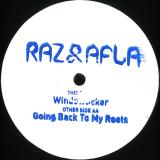
Wah Wah 45s present two very special cover versions from our beloved Afro-electronic duo, Raz & Afla, available on 12" vinyl for the very first time! Having recently released their sophomore LP, Echoes Of Resistance, to great acclaim and support ranging from Nick Grimshaw on BBC 6 Music to Tash LC on BBC Radio 1, and the follow up remix project Remixes Of Resistance, the pair offer up their unique takes on two very different slices of club culture on twelve inches of wax.
First up, the pair tackle Aphex Twin's sleazy and sinister turn-of-the-century dance floor bomb Windowlicker and take it somewhere completely unexpected, as Raz explains:
"We wanted to go to a different place from our influences for this one. When we told people we will cover this tune everyone said 'but how?!' In Raz & Afla style. We had an idea of what elements to recreate from the original and how we can reference it within our spectrum of sounds. It was so much fun to do and really kicks off at our live shows."
It's a heavily percussive reinterpretation, replete with spooky wordless vocals, funky guitars and spine tingling synths that builds into something of a future Afro-house anthem, whilst respecting the genius of the original recording.
On the flip, Going Back To My Roots has become a mainstay in Raz & Afla's live sets, and means a lot to them personally, as Raz once again explains:
"We love this song. The lyrics resonate with us, talking about the meaning of connection to a land and its people. The history of this song is also fascinating, from Hugh Masekela and Orlando Julius through Odyssey and Richie Havens. We wanted to give it our own flavour. You can't choose your heritage and where you are born. It is always a part of you and we like to celebrate that."
Written and first recorded by Lamont Dozier in 1977, Going Back To My Roots was famously covered by Richie Havens in 1980 before becoming a huge crossover hit when interpreted by disco outfit Odyssey in 1981. Raz & Afla very much give their version their own unique dance floor feeling. It's one which has received much support on BBC 6 Music.
- A1: Malavoi - Te Traigo Guajira
- A2: Los Caraibes - Donde
- A3: Tropicana - Amor En Chachacha
- A4: Ryco Jazz - Wachi Wara
- A5: Eugene Balthazar - Dap Pignan
- A6: Roger Jaffort - Oye Mi Consejo
- A7: Les Kings - Oriza
- B1: Les Supers Jaguars - Tatalibaba
- B2: Super Combo De Pointe A Pitre - Serrana
- B3: L'ensemble Abricot - Se Quedo Boogaloo
- B4: Henri Guedon - Bilonga
- B5: Les Aiglons - Pensando En Ti
- B6: Los Martiniquenos - Caterate
In Guadeloupe, many people think that jazz and ka music are like a ring and a finger. To some extent, the same could be said about so called Latin music and the music played in the French West Indies.
Both aesthetics were born in the Caribbean and bear so many connections that they can easily be considered cousins. In constant dialogue, there are lots of examples of their fruitful alliance and have been for a while. The English country dance that used to be practiced in European lounges came to be called kadrille in Martinique and contradanza in Cuba. They both featured additional percussion instruments inherited from the transatlantic deportation. Drawing from shared feelings about the same traumatized identity – later to be creolized – it would be hard not to assume that they were meant to inspire each other. The golden age of the orchestras that graced the Pigalle nights during the interwar period further proves the point. As soon as the 1930s, Havana-born Don Barreto naturally mixed danzón and biguine music in a combo based at Melody's Bar. In the following decade, Félix Valvert, a conductor who was born and raised in Basse-Terre in Guadelupe, also worked wonders in Montparnasse with La Coupole, which was an orchestra made up of eclectic musicians. Afro- Caribbean performers of various origins were often hired on rhythm and brass sections in jazz bands, which used to enliven the typical French balls of the capital. In the 1930s and onwards, Rico’s Creole Band was one of them.
Martinican violinist-clarinettist Ernest Léardée, who would become the king of biguine music as well as the main figure of French Uncle Ben's TV commercials (a dark stigma of post-colonial stereotypes), had musicians from the whole Caribbean sphere play at his Bal Blomet – and they all enchanted "ces Zazous-là" (according the words of Léardée's biguine-calypso piece). In les Antilles (French for French West Indies), music history started to speed up in the 1950s, when trade expanded and radio stations grew bigger. The Guadelupean and Martiniquais youth tuned in their old galena radio sets to South American and Caribbean music. As for the women traders, les pacotilleuses, they bought and sold goods across different islands (the "passing of items through various hands" was thought to be most pleasurable) and brought back countless sounds in their luggage. Such was the case of Madame Balthazar, who once returned from Puerto Rico with the first 45rpm and 33rpm to ever enter Martinique.
Out of this adventure was created the famous Martinican label La Maison des Merengues, a music business she opened and undertook with her husband and which proved to be a major landmark. At the end of the 1950s, in Puerto Rico, Marius Cultier competed in the Piano International Contest playing a version of Monk's Round 'Midnight. He won the first prize and this distinction foreshadowed everything that was to come. Cultier, the heretic Monk of jazz, was quickly praised for writing superb melodies, always tinged with a twist that conferred a unique sound to his music. It didn't take long for the gifted self-taught musician to get to play with Los Cubanos, making a name for himself thanks to his impressive maestria on merengues.
The rest is history. Besides, in the late 1950s, Frantz Charles-Denis, born into the upper middle class in Saint-Pierre and better known by his first name Francisco, went back home after working at La Cabane Cubaine – a club located rue Fontaine where he had caught the Latin fever. Francisco's music was therefore heavily marked by his Cuban cousins' influence, which gave the combos he led a specific style and also led to renewal. Things were swinging hard in La Savane, located in the main square in Fort-de-France. He set up the Shango club close by and tested out the biguine lélé there, a new music formula spiced up with Latin rhythms. Soon afterwards, fate had him fly to Puerto Rico and Venezuela.
As for percussionist Henri Guédon (percussions were only a part of his many talents), he was born in Fort-de-France in May 22nd 1944, the day marking the celebration of the abolition of slavery. As an old man, he could remember that in " his father's Teppaz, a lot of hectic 6/8 music was constantly playing...". In the opening lines of his Lettre à Dizzy, a small illustrated collection of writings published by Del Arco, he highlighted the huge impact that cubop had on him as a teenage boy, around 1960. He eventually turned out to be the lider maximo in La Contesta, a big band steeped in Latin jazz. He was also the one who originated the word zouk to describe music which brought the sound of the New York barrio to Paris. It was the culmination of a journey that started in Sainte-Marie: "a mythical place for bélé, the equivalent of Cuban guaguancó". In the early 1960s, the tertiary economy developed to the detriment of agriculture. Yet rural life was where roots music emerged in Martinique and in Guadeloupe.
Record companies played a major part in the process of Latin versions sweeping across the islands – before reaching everywhere else. Producer Célini, boss of the great Aux Ondes label, and Marcel Mavounzy, both the head of Émeraude records - a firm which was founded in 1953 - as well as the brother of famous saxophonist Robert Mavounzy, were big names to bear in mind. Although there were many of them - all of whom are featured on this record - Henri Debs was definitely the major figure in the recording adventure. He proved to be so influential that he even got compared to Berry Gordy. In the mid 1950s, when he acquired his first Teppaz, he worked on his first compositions: a bolero and a chachacha. Then, he became the one man who made people discover Caribbean music, from calypso to merengue. He was among the first ones to rush out to San Juan, Puerto Rico, to buy records and distribute them through a store run by one of his brothers in Fort-de-France. He had members of the Fania All Star come and perform there, which he was madly proud about. He was also the first one to pay attention to Haitian music, such as compas direct and various other rhythms which would soon flood the market. As a result, many of the combos hitting his legendary studio would end up boosted by widespread "Afro-Latin" rhythms. However, he never denied his identity: gwo ka drums were given a major role, although they were instruments which had long been banned from the "official" music spheres. The present selection bears witness to such a creative swarming. Here are fourteen tracks of untimely yet unprecedented cross-fertilization: all types of music rooted in the Creole archipelago have found their way, whatsoever, to the tracklisting. Whether originating from the city or being more rural, they all go back to what Edouard Glissant, in an interview about the place of West Indian music in the Afro-American scope, called "the trace of singing, the one which got erased by slavery." "It is so in jazz, but also in reggae, calypso, biguine, salsa... This trace also manifests through the drums, whether Guadelupean, Dominican, Jamaican or Cuban... None of them being quite the same. They all point to the idea of a trace, seeking it out and connecting to each other through it. This is the hallmark of the African diaspora: its ability to create something new, in relation to itself, out of a trace. It may be the memory of a rhythm, the crafting of a drum, a means of expression which doesn't resort to an old language but to the modalities of it." The opening track features one of the emblematic orchestras of this aesthetic identity, criscrossing many music types from the archipelago. The 1974 Ray Barretto guajira – Ray Barretto was a major New York drummer influenced by Charlie Parker and Chano Pozzo – is magnificently performed by Malavoi, a legendary Fayolais group (i.e from Fort-de-France). Additionally, the compilation ends on a piece by Los Martiniqueños de Francisco. It symbolically closes the circle as it is a genuine potomitan of Martinique culture which also functions as a tireless campaigner for Afro-Caribbean music. Practicing the danmyé rounds (a kind of capoeiria) to the rhythm of the bèlè drum, it delivers a terrific Caterete, a kind of champeta of Afro- Colombian obedience which was originally composed by Colombian Fabián Ramón Veloz Fernández for the group Wgenda Kenya. The icing on the cake is Brazilian Marku Ribas, who found refuge in Martinique in the early 1970s, bringing his singing to the last trance-inducing track. These two "versions" convey the whole tone of a selection composed of rarities and classics of the tropicalized genre, swarming with tonic accents and convoluted rhythms. It is the sort of cocktail that the West Indians never failed to spice up with their own ingredients. For instance, the Los Caraïbes cover of Dónde, a famous Cuban theme composed by producer Ernesto Duarte Brito, has a typical violin and features renowned Martinique singer Joby Valente and his piquant voice.
The track used to be – or so we think – their only existing 45rpm. The meaningful Amor en chachachá by L'Ensemble Tropicana, a band which included Haitian musicians among whom was composer and leader Michel Desgrotte, also recalls how Latin music was pervasive in the tropics in the mid-1960s. They were the ones keeping people dancing at Le Cocoteraie in Guadelupe and La Bananeraie in Martinique. Around the same time, another "foreign" band, Congolese Freddy Mars N'Kounkou's Ryco Jazz, achieved some success on both islands by covering Latin jazz classics – such as their adaptation of Wachi Wara, a "soul sauce" by Dizzy Gillespie and Chano Pozo whose interweaving of strings and percussions can have anyone hit the dancefloor. How can you resist Dap Pinian indeed, a powerful guaguancó by Eugene Balthazar, performed by the Tropicana Orchestra and published by the Martinique-founded La Maison des Merengues? It also acts as a symbol of the maelstrom at work. Going by the name Paco et L'orchestre Cachunga, Roger Jaffory used to play guaguancó too: his Fania-inspired Oye mi consejo is one example of his style. Baila!!!!! Dancing was also one of the Kings' focus points. Oriza is a Puerto Rican bomba and a "classic" originally composed by Nuevayorquino trumpeter Ernie Agosto, which reserves major space for brasses, giving it a special sheen.
Emerging from the New York barrios crucible was also La Perfecta, a Martinique group originating from Trinidad, whose name directly references the totemic Eddie Palmieri figure as well as his own band, also called La Perfecta. Here they borrow Toumbadora from Colombian producer and composer Efraín Lancheros and interpret it by emphasizing percussions, which set fire to the track even more than the wind instruments. The same goes for Martinique's Super Jaguars, who use Tatalibaba – a composition by Cuban guitarist Florencio "Picolo" Santana which was made famous by Celia Cruz & La Sonora Matencera – as a pretext for sending their cadences into a frenzy. In a more typically salsa vein, the Super Combo, a famous Guadelupean orchestra from Pointe-Noire that was formed around the Desplan family and had Roger Plonquitte and Elie Bianay on board, adapt Serana, a theme by Roberto Angleró Pepín, a Puerto Rican composer, singer and musician also known for his song Soy Boricua. Here again, their vision comes close to surpassing the original. In the 1970s, L'Ensemble Abricot provided a handful of tracks of different syles, hence reaching the pinnacle of the art of achieving variety and giving pleasure. They played boleros, biguines, compas direct, guaguancó and even a good old boogaloo - the type they wanted to keep close to their hearts for ever, "pour toujours", as they sang along together in one of their songs. Léon Bertide's Martinican ensemble excelled at the boogaloo which had been composed by Puerto Rican saxophonist Hector Santos for the legendary El Gran Combo.
Three years later, in 1972, Henri Guédon, with the help of Paul Rosine on the vibraphone, tackled the Bilongo made famous by Eddie Palmieri. Such a classic!!!!! And so were the Aiglons, the band from Guadelupe: choosing to execute Pensando en tí, a composition by Dominican Aniceto Batista, on a cooler tempo than the original, they noticeably used a wonderfully (un)tuned keyboard in place of the accordion. On the high-value collectible single – the first one released by Les Aiglons under the Duli Disc label – there is a sticker classifying the track under the generic name "Afro". Now that is what we call a symbol. Jacques Denis
Tasmin - Tezeta
The debut album is a journey through layers of influences connected by the band members bringing the sound of Ethio-Jazz, Afrobeat, Percussion, Dub and Tribal Music with an electronica sauce are interwoven, all mixed together in a delicate balance that creates a cinematic soulful and one-of a kind aesthetic blend from the connection of several worlds
The name "Tezeta" is taken from the well-known Ethiopian musical scale, which served as a major inspiration for the writing. This scale symbolizes nostalgia, longing & love songs and serves as a starting point that resonates a quiet pain and longing for a far away place, but still feels like home. In the case of Hadar and Tushiner, this is a tangible longing and the African sounds are woven into them like a second language
The approach to the production of the album reflects loyalty to the tradition of classic studio recordings that include tape reels, field recordings, African percussion, flutes, saxophone and old synthesizers combined with guitars and drums. Every recorded sound went through a filter of precision, listening, and searching for depth that is both technical and emotional
Their music always takes place in the present, it is a living, open moment, connected at the same time to what is heard in the distance from the winds of the Gulf of the African continent and through the streets of Tel Aviv, inviting listeners into a space where emotion and rhythm move together as one
Eran Hadar guitars, synths, percussion, sound
Eylon Tushiner saxophone, flute, keys
Dror Tshuva bass guitar
Omri Gondor drums
NECHTO returns with its second 12” vinyl compilation, continuing the mission of presenting forward-thinking techno from both rising talents and trusted names. Each of the six tracks adds a unique voice to the raw and honest collection.
Mecha opens the record with “All My Love”, a hypnotic debut techno track shaped by years in drum and bass. Contakt follows with “Peak Jam”, a one-take hardware jam built around the warmth of a signature synth. “16th Symphony” by Human Safari is a jazz-influenced cut intended for special moments in a DJ set. Unspent delivers “Moog Gorning”, a track that shifts from percussive 4x4 to broken rhythm, carrying deep personal emotion. ARGIE’s “Strangers” captures the tension of connection and distance with layered percussion and melody. Franz Jäger closes with “Get Simon to sync”, a rave-influenced hybrid track designed for peak-time impact.
With contributions from the UK, Poland, Malta, France, the Netherlands, and Sweden, this compilation once again highlights NECHTO’s dedication to showcasing both emerging and established artists while pushing the boundaries of modern techno.
- Woozy
- Pistachios
- Big Tings (Feat Tune-Yards)
- J.o.y
- Assumptions
- Gratitude
- Ask 4 Help
- Palma Wise
- Dsntrlymttr
- Untitled (Swirl)
- Sun Baby
JayWood - the nom de plume of Jeremy Haywood-Smith - is embracing new pastures having moved his music-making from Winnipeg, Manitoba to Montreal, and his new album Leo Negro chimes with a different tone as it looks to reconnect the self and grapple with one's identity. Marking a moment of meaningful change where controlled chaos takes the lead, it philosophises on what it truly means to be an experimentalist building a multi-faceted world where genre is infinite through sounds braver, more playful, and truthful than he's dared deliver before. Despite its astute sampling with layers of twists and turns, Leo Negro doesn't showboat but roars in the presence of vulnerability as it considers one's absolutes as a way of navigating the identity crisis. "Always looking for attention, I admit it, I can't help it, I'm a Leo," he reasons between vintage hip-hop scrubs on `Pistachios,' recalling a childhood need to be the centre of attention then stepping out of the spotlight as a grown-up. "Leos are confident and sure about themselves, but this record isn't that; so really, when translated, the title inspires `black confidence.' It's an uncomfortable, weird, and surreal term which bends the truth and embodies everything within." Experimenting in both life and music, Leo Negro and its first cut, `Big Tings' (feat. California, art-pop duo Tune-Yards) couldn't be further from 2023's Grow On EP and the previous year's slick LP Slingshot. Moving with flow akin to D'Angelo with Toro Y Moi textures, its twinkling intro of whirling synth and playful approach circles back to Jeremy's adolescence when he'd reverse, slow down, and speed up his favourite songs through the media player on his computer. Encouraged by his musical squad Will Grierson, Arthur Antony, Brett Ticzon, and enlisting his stylist and thrifter friends to capture the Leo Negro aesthetic, JayWood's big `in' for 2025 is collaboration, with the tight-knit crew of likeminded musical colleagues captured in session photo grins beaming from his Instagram grid. Nominated for Canada's coveted Polaris Music Prize, it'd be easy to be the cowardly lion; to rinse and repeat what's worked up to this point. But for JayWood, leaning into his natural `what if?' curiosity to make up his own rules as he goes along ("I never really knew what they were to begin with") and venture into honesty's unsafe space to seek comfort, confidence and make even greater connections, really is the only option. After all, he can't help it; he's a Leo.
Brbko, one of the UK underground’s most enigmatic artists, shares his debut album ‘BRAK VS. BRAK’ via acclaimed label Scenic Route. The release is accompanied by new focus track ‘JOGA 07’ a bold, introspective moment marking a turning point in the project’s emotional arc.
BRAK VS. BRAK is a genre-fluid meditation on life, death, and duality, using the afterlife as a metaphor for ego, rebirth, and reflection. Its title nods to an episode of Samurai Jack, where the hero confronts a darker version of himself, a fitting metaphor for Brbko’s own exploration of internal conflict. “It’s about realizing that your demons aren’t always from outside,” he says. “Sometimes they’re of your own making.”
Written across Manchester, Lewisham, Paris, and New York, the album moves through raw vulnerability and surreal visions. It opens with ‘BONSAM 2’ a raw intro tackling power, appropriation, and immortality, before ‘POWER OF 6’ reflects on clout and connection. The title track pits Brbko against his own shadow, while ‘BUZZ LIGHTYEAR’ distills ego and isolation into a dreamy freestyle. ‘DARK CLARITY’ offers bittersweet closure through minimalist production and vivid intimacy. The mood shifts with ‘JOGA 07’, where faith and lightness emerge as redemption.
Manchester-born and Lewisham-based, Brbko has quietly shaped UK underground music: from pirate radio and stage curation to collaborations with Alice Glass, Zed Bias, and Andrew Aged. GQ calls him “an essential part of underground music,” while Dazed praises him as “a stir in the contemporary grime scene.”
With ‘BRAK VS. BRAK’, Brbko delivers his most personal and expansive work to date.
- A1: Flowering On The Threshold
- A2: Water Under Birth
- A3: Dreamtime
- A4: Thinking Of You
- B1: Alive And Well
- B2: The Beautiful Side Of Loneliness
- B3: Time For A Change
- B4: Get Back Today
- C1: Time To Wake
- C2: Lust Wonderlust Wonder
- C3: Trying To Discover
- C4: The Light
- C5: Lost And Found In The Sun
- D1: Universe
- D2: Crystal Clear Eyes
- D3: Loves Return
- D4: You Have Always Known The Way
Emerging from the shadows of a small apartment in Chicago’s South Side Pilsen neighborhood in 1999, Winterlight was produced and mixed by Daniel Thompson over the course of three years, from 1999 to 2002. It’s an intimate and evocative album that captures a pivotal chapter in Thompson’s life and echoes the spirit of a formative era in the underground music scene.
Thompson’s journey began in the heat of Houston, Texas, where his love for sound quickly became an obsession. By the late ’90s, he was among the first DJs in Houston to champion the sound of Chicago house, often driving long distances from Texas to Chicago in search of records, inspiration, and connection. These trips—equal parts pilgrimage and education—eventually led him to relocate to Chicago, where his artistic vision would fully take shape. Winterlight is the direct result of that move. Crafted over several years, the album embodies a raw, hands-on approach to production, built from analog synths, outboard gear, and hours of meticulous layering. Thompson leaned on tools like the Kurzweil K2000, SE-1, Juno-106, and classic processors such as the DP4 and TC Electronic units, shaping each track with
care and intention.
Blending atmospheric textures with hypnotic rhythm and subtle experimental flourishes, Winterlight captures the sound of an artist deeply engaged with his tools and surroundings. His extensive vinyl collection—over 3,000 records—served as both palette and inspiration, with carefully chosen samples lending further depth and narrative to the music. Now set for release across all digital platforms and as a limited double 12" vinyl edition through Berlin’s Word & Sound, Winterlight invites listeners into a soundscape that is both immersive and personal. More than just an album, it is a sonic document of a moment in time—rich in tone, memory, and intent. For those willing to listen deeply, Winterlight offers a rare window into the underground spirit of the early 2000s and the inner world of a producer finding his voice.
- 1: No Faith
- 2: Shadow Boxing
- 3: Sugarcoated
- 4: Deadwire
Nu-hardcore quintet, Bodyweb, are the sound of someone’s nervous system on the verge of breakdown—hyperactive, tormented and unflinchingly vulnerable. Born out of the Leeds hardcore scene, they’re a shape-shifting alloy of jagged emotion and precision chaos. What began as late-night jams between Louis Hardy (Higher Power, Big Cheese, Fate) and Ben Jones (Pest Control) eventually mutated into train_wreck_simulation, a debut EP filled with frantic breakdowns and nu-metal swag that felt like the soundtrack to a digital exorcism. The final piece of the puzzle came from Hardy’s estranged childhood friend, pq. His twisted samples and synthetic textures are haunted and disturbed, injecting cyberpunk soul into hardcore flesh. Contorting through several iterations in the following years, the band absorbed Luke Thompson (Stiff Meds) on drums, filmmaker Tom Hobson on guitar and Naomi Macleod (Empire State Bastard) on bass, and laid down their first collective offering. deadwired is due out on Flatspot Records later this year. Bodyweb's second EP is a violent thesis on connection and pain that sends Hardy’s unfiltered vocals through heaven and hell. Four overstimulating tracks run a gamut of styles and influences from Slipknot to Björk, constantly lane-switching between dizzying heaviness, ambient soundscapes and brain-burrowing hooks. Entirely self-produced, deadwired upgrades the sonic formula laid down on the last record and raises the question: what else could exist in Bodyweb’s twisted roadmap? Nothing seems impossible. What seems important, however, is retaining the rawness in a style that can often turn sterile. “We still wanted it to sound very human. It had to be well produced but not cold and lifeless.” shares Hardy. “We didn’t use a click track. All guitars were real amps with microphones. We tried to make everything as real and raw as possible, we recorded using all the same gear we use when playing live too to really capture the energy of how it feels when we jam together." ‘Deadwired’ is a snapshot of violent implosion. Four ADHD-fuelled transmissions from the edge of spiritual collapse. It drags metallic hardcore through glitched-out ambience to confront ego death, generational trauma, and the violence of being alive. On stage, Bodyweb don’t just perform, they purge. Raucous live electronics meld with digitally contorted guitars. Breakbeats meet breakdowns—no backing track in sight. Bodyweb enable a collective catharsis. Mosh, dance, dive, scream, heal. A physical therapy session screamed into the void.
- 1: Diamonds Cutting Diamonds
- 2: Tell Me I Exist
- 3: Can You Find Her Place
- 4: Edge Of The Throne
- 5: Kiss The Future
- 6: The Time
- 7: Give It Back To You
- 8: Floating Dream
- 9: Green Is The Colour
The album introduced a lush, complex dream world that the singer, composer, and producer created and inhabited largely on her own. She produced all the songs, and wrote and performed everything on the self-released collection outside of a re-imagined cover of Pink Floyd’s “Green is the Colour” and 2 other tracks (“The Time,” “Give It Back To You”), which started as instrumentals written by Survive’s Kyle Dixon (who composed the Stranger Things soundtrack with his bandmate Michael Stein), to which Ainsworth wrote melodies and added lyrics. Ainsworth, who’s relocated to Los Angeles from Toronto since 2017’s Darling of the Afterglow, explains that the collection revealed itself to her “as a play taking place in Mother Nature’s vanishing home,” aka Phantom Forest, and that she’s singing from 3 perspectives: herself, Mother Nature, and Greek Chorus. For instance, of the album’s opener, “Diamonds Cutting Diamonds,” she explains: “The Greek Chorus sets the scene, narrating and offering direction on how to enter Phantom Forest. It’s my hope that the listener will imagine the narration to be directed to them as well, as they begin the journey of the album.” You’ll get a sense of this from the collection’s edenic cover art and the playful, pastoral video for the album’s first single, “Can You Find Her Place.” Its inspiration came from Ainsworth’s love for Italian Renaissance painter Botticelli’s 15-century masterpiece “Primavera,” an allegorical representation of the burgeoning fertility of the earth in spring. She notes: “The video features the Greek gods of the painting in a choreographed Baroque style dance.” Keeping with the personal feel of the collection, her sister Abby Ainsworth directed the clip. In line with the classical and historical depths of Phantom Forest, Ainsworth, who holds a Masters Degree in film scoring composition from NYU and studied composition as an undergrad at McGill, notes that although the album might be considered pop, she approached it as an orchestrator. “Even if I’m dealing purely with synths,” she says, “The songs are like a score, each one an evolving journey. I love to use strings so I’ve included my string arrangements on ‘Tell Me I Exist’ and ‘Can You Find Her Place.’ I recorded live musicians on drums, bass, and guitar on ‘Edge of the Throne,’ ‘The Time,’ and ‘Floating Dream,’ and wove those live elements into my programmed elements.” Phantom Forest is a beautiful, vast collection that mixes the historical and the hands on, with hooks about the apocalypse and people obsessively using face-recognition software to see what paintings their face match with, in search of some kind of connection. It’s a journey that holds up to close listening (and lyric reading) and to dance floors, but that can also exist on a purely emotional plane. In all cases, it asks that you listen, and take some kind of action.
Marja Ahti is a Swedish artist living in Turku, Finland. She works with found sounds, objects and electronics, creating auditory assemblages that reveal a profound sensitivity to sound’s tactile potential. This new record sees her palette expand to include more recognisable acoustic instrumentation, albeit working in collaboration with musicians who are already reconfiguring how those instruments can sound.
Touch This Fragrant Surface of Earth has its roots in a tape piece presented at Lampo in Chicago. Ahti then started working with Isak Hedtjärn (clarinet), Ryan Packard (percussion) and My Hellgren (cello) at the electronic music studios (EMS) in Stockholm. Incorporating recordings from those sessions, Ahti presented a new iteration of the work at the Seventh Edition Festival for Other Music in February 2024 with the trio performing live on stage whilst Ahti helmed the mixing desk, spatialising a specially made tape part through the INA GRM’s Acousmonium speaker orchestra. The piece has since gone through several further iterations before arriving at the version we have here on the LP's B-side where immense bass pressure and high frequency tones buffer restless amplified breath and scrape that folds over itself with extraordinary dynamics and subterranean activity before giving way to gorgeous resonant forms and passages of ritual purpose and sheer, unmistakeable beauty.
The A-side is Touch This Fragrant Surface of Earth’s gentle double. Still Life with Poppies, Mirror and Two Clouds offers a companion reconfiguration of Ahti’s resynthesised percussion sustain and the same recordings of Hedtjärn and Hellgren from EMS, but here they’re nestled in a sonic landscape of calm and restraint that gives them a wholly other character. Ahti also draws on older recordings she’d made of Sholto Dobie’s diy pipe organs and uses these to create repeating patterns and flourishes of sliding pitches that emerge unexpected out of cycling passages of Ahti’s clear struck metal, destabilising electronic interventions and minimal piano figures.
Marja Ahti: “I’ve been fascinated with the kind of elemental quality the sounds I'm using have such as airy sounds or earthy, wooden sounds. These qualities can also be found in wind instruments and percussion and the musicians I worked with on Touch This Fragrant Surface of Earth are really good at enhancing these qualities in their playing. I wanted to have this connection between found sounds, field recordings, or pre-recorded sounds, objects, and material, and see where these sounds might meet each other, and hopefully blend is a natural way without a divide between instrumental music, or acoustic music, or electronic music. But also, when you bring in people they come with their personalities and their ideas which is also energizing and brings surprising things into the collaboration that I couldn't come up with myself. I was really interested in making this a proper collaboration and not just coming up with the piece and giving it to them. We had the sessions at EMS where we could share ideas and Isak, Ryan and My could bring in their own ideas. Making recordings there gave me time to process these ideas and to also approach them in the same way that I would work with any other sound.”