Search:g english

Styles
All
Less - Living In The Matrix 2x12"

As The Matrix ushered in the new millennium, voices of apocalypse and optimism alike wrestled for the narrative high ground over what the future held in store. Ever more inclined toward skepticism than hope, we have since grown prone to withdrawing in exhaustion when confronted by such gargantuan expectations — “lost in the Matrix,” if you will.

Less’s new album opens by building a bridge back to his previous album “Stranger” (released on the “Freude am Tanzen” label and conceived as an imaginary Blade Runner soundtrack). In the intro, breathy references from vocalist Alice immediately set the tone for the journey ahead: Electro, High Energy, Acid, Chicago, Italo Disco.

A full-fledged club album quickly unfolds—one that invites the listener to dance and switch off, while at the same time, if you allow it, provoking reflection through its lyrics. Now a Berlin-based artist with Thuringian roots, Less draws on deacades of DJ experience and channels it deftly into ten tracks. Less (real name Stefan Leßner) isn’t afraid to go “old school.” Classic touches like vocoder effects are as integral here as Alice’s irresistibly
cool spoken-word vocals—delivered in English (“I Care”, “Mirror, Mirror”) and German (“Alles was du willst”). This retro spirit even extends to his remix of the French-language Underground Cottage track “Canada (2003 Less Remix)” which surfaced in DJ Hell’s setlists last year—bringing things full circle.

“Living in the Matrix” on Lebensfreude Records is not merely a nostalgic reference to times past, but also counters exhaustion with a sense of trust in the future. It is, in essence, a call — an appeal — not to lose oneself in any kind of ‘Matrix.’ Accordingly, the album will be released both digitally and analog. The latter will come as a 180g double vinyl with a high-quality, thematically appropriate gatefold cover.

In Stock

On Stock and ready to ship

29,37
WE JAZZ MAGAZINE - ISSUE 14:

128 pages, 170 x 240 mm in size and printed on 140g Edixion paper with laminated 300g Invercote covers.

All articles presented in English. Includes a collection of Sun Ra pieces by Francis Gooding, Mats Gustafsson, Rui Miguel Abreu, Stewart Smith and Joshua Lane, rare Sun Ra Arkestra photos by Guy Stevens, Larry Stabbins by Dave Waller, Angélique Kidjo by Rob Garratt, Heli Hartikainen by Wif Stenger, Alan Wilkinson by Daniel Spicer, Black Artists Group by David Mittleman, Mike Stern by Rob Garratt, album reviews, book reviews, live reviews, photo essay & more.

In Stock

On Stock and ready to ship

21,43
MIRO - LUCKY GUY

MIRO

LUCKY GUY

12inchDSM027
Disco Segreta
08.07.2025

Disco Segreta is incredibly excited to introduce you a truly astonishing disco treasure from the vaults of Mario Baldoni aka Miro (Pat & Pats, Phil Sun, Govindo).

Originally recorded in June 1979 and previously unreleased, “Lucky Guy” was a demo track recorded by Miro in two versions (italian and english) with the creme de la creme of the session musicians of the era: Derek Wilson (drums), Ken Stage (guitar), Mike Logan (keyboards), plus the heavenly backing vocals of Nora Orlandi e i 4+4, to be considered for a release which was then mysteriously cancelled.

“Lucky Guy” is a display of the incredibly overlooked talent of Miro and a perfect time capsule of the 1979 “rosko” sound, when disco was mutating to incorporate rock elements, in the same vein of coeval productions such as Mauro Malavasi’s “Revanche” or Daniele Besquet’s Giants “Backdoor Man” projects.

The first-ever release of “Lucky Guy” will feature the English and Italian original demo versions plus a contemporary remix of “Lucky Guy” by italian mastermind Marcello Giordani (Italo Deviance, Circle Point Circle / Marvin & Guy, Maurizio & Dandolo, Marcelo).

Continuing its authenticly deep italian disco archaeology work, Disco Segreta offers you the incredible opportunity to own an authentic piece of the true Italian disco sound, exactly 45 years after its original recording! Don’t miss this thermonuclear dancefloor bomb!

In Stock

On Stock and ready to ship

15,34
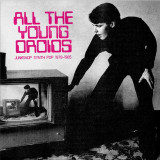
VARIOUS - ALL THE YOUNG DROIDS: JUNKSHOP SYNTH POP 1978-1985 (LP 2x12")
 
24
also available

MB Crystal Vinyl[32,73 €]

LTD Trans Pink Vinyl[32,82 €]

LTD Trans Pink Vinyl[27,69 €]


Compiled by Philip King
“And then came the rise of synth pop : blokes with dodgy haircuts hunched over keyboard-operated
machines stuffed with wires and do-it-yourself tone oscillators making sounds like a brood of geese
passing gas in a wind tunnel. Whoopee! This is the way the ‘70s ended : not with a blood-curdling bang
bang but with a cheap, synthesized, emasculating whimper.”
NICK KENT, NME.

All The Young Droids: Junkshop Synth Pop 1978-1985 is a new compilation that charts the
underbelly of the epoch-defining sound of the synthesiser in 80s popular music. Compiled by Philip
King (previously seen compiling All The Young Droogs, Glitterbest and Boobs - The Junkshop
Glam Discotheque), the music here connects the dots between DIY synth enthusiasts grappling with
new, cheap synthesisers at the tail-end of punk and wannabe, jobbing songwriters enthral to the new
music pioneered by Gary Numan, Depeche Mode and Daniel Miller’s Mute Records. Featuring rare
tracks of auto-didactic progressive pop music, proto-techno punk, shoot-for-the-stars-land-in-the-gutter
chart flops and heralded, underground synth classics, School Daze paints a picture of beautiful failure.
Complete with extensive sleeve notes written by King and never before seen imagery, all 24 tracks
were remastered by RPM in-house engineer Simon Murphy, many from vinyl copies due to lost master
tapes. The story told on All The Young Droids is one of the dawning opportunity presented by both the
emergence to the market of cheaper analog synthesisers and the distribution networks plus indie labels
that exploded with the advent of punk music in 1976. While the music that sprouted out all over the
globe in the wake of these factors was decried as fake, plastic, a refutation of punk’s guitar-led
revolution, it’s telling that much of the music on All The Young Droids.. was created in bedrooms,
ramshackle studios and home-made set ups with often borrowed equipment. In the era of record labels
jumping to capitalise on the success of The Sex Pistols, The Clash (both on major labels, of course)
these artists struggled to stand out from a new gold-rush with next to no budget or PR team. With radio
and labels desperate for the new Yazoo, what resulted was a testament to necessity being the mother
of invention.

At the time, the synthesiser was the music of the future, a shiny new machine that could paint like an
orchestra with a single finger and a 4-track. In the hands of Manchester avant-pranksters Gerry & The
Holograms it’s a pulsing, sardonic weapon.. the only instrument on the Messthetics classic lampooning
of New Wave fashion. In Hamburg, a 16 year old Andreas Dorau used it to write and record (with his
female classmates on vocals) a global smash in Fred Vom Jupiter (later licensed to Mute Records).
The hard-to-find English version (Fred From Jupiter, natch) is included here. Many artists with alreadystoried careers caught the bug and recorded synthesiser-fuelled peons to space, computers, the future
and, of course, love-interests. Harry Kakoulli, late of Squeeze, recorded a solo album in 1979 that
included the incredible power-synth-pop smash-that-never-smashed I’m On A Rocket. Similarly, Ian
North of Neo and American Power Pop stalwarts Milk ’n’ Cookies bought a Korg MS20 and used a
tape machine to record We’re Not Lonely, an absolute lost-classic of minimal synth pop. We’re Not
Lonely also features on the Junkshop Synth Pop sampler 7” twinned with John Howard unreleased
track You Will See, released April 12th 2025.

There are plenty of compilation debuts in evidence. Sole Sister were a mysterious trio who were
featured on the Scaling Triangles compilation of female-fronted, queer-adjacent post-punk /
underground music that also featured The Petticoats. Selwin Image were from San Francisco and
featured members of the recently defunct power pop/punk group The Pushups. Their stupidly catchy
The Unknown fizzes with New Wave energy - think XTC to Sparks but remains unreleased until now.
Dream Unit’s A Drop In The Ocean is an early synth wave cut, positively teaming with Joy Division
instrumentation, previously only released on a long-forgotten and super rare, self-released EP.
Incandescent Luminaire’s Famous Names belies an archetypal struggle of a small-town trying to
make it in a cruel industry but is a thrilling New Romantic-Synth Wave cross over with a OMD
gloominess that’s a joy to hear. Feminist Minimal Wave track I Am A Time Bomb by performance artist
Peta Lilly and Michael Chance is a revelation destined for new found cult status. It was released on 7”
and lost until now.

The flipside to the subterranean, never-made-it synth pop mentioned above are the ambitious, even
fruity attempts at success that have a perennial elegance to their confidence. New Jersey-ite Billy
London (real name Ed Barth) tried to cash in on the synth boom with Woman, released by a major
label, a lurching new wave track built on the Louie Louie rhythm and a wonderfully camp Lou Reedstyle sleazy vocal before exploding in the synthesised chorus. The song bombed but with a chorus like
this, you have to wonder why? Ex-Glitter Band member John Springate’s My Life is truly epic, with
doomed chord progressions and massive sounding drums turning into at least 3 different songs in the
course of the track. Before you wonder what’s going on the song resolves with a glorious return to the
main refrain.

The dry-ice-dressed dance floor is well catered for too. Design’s Premonition and Vision’s Lucifer’s
Friend are stone-cold minimal synth bangers, well loved but given a new lease of life here. The
Warlord’s The Ultimate Warlord was released in 1978, a homespun proto Hi NRG banger that was
later re-recorded by The Immortals in Canada who had a club hit with it. One-man- band Disco
Volante’s No Motion was re-issued by Synth wave label Medical in 2012 but makes its first vinyl
compilation appearance here. Close your eyes and you can imagine what Lawrence of Felt would have
sounded like with some cheap Korgs a little earlier in his career. Gibraltar-based trio The Microbes
imagined a computer programming people to dance - how prescient - and ended up with a propulsive,
robo-funk track with splendid rubbery bass playing over a tectonic drum machine. Previously picked up
by Belgian label Stroom TV, Dee Jay Bert & Eagle’s heavily Euro-accented I Am Your Master
demands the listener to “come to paradise!” In a frankly terrifying manner.
All The Young Droids is the first compilation to peel away from the narrative that dour, Minimal Synth
and Cold Wave were the only musical children of the first rush of synth pop. Philip King and School
Daze Records describe a much more complicated world: along with the austere, Brutalist children of
Daniel Miller (who produced Alan Burnham’s Bowie-Low-influenced Science Fiction here) was a
plethora of desperate cash-ins, accidental mainstream hits, ambitious pop dramas and major label
punts that went nowhere. Crucially, the compilation blurs the line between junk and treasure. What if the
two things are interchangeable. What if it’s all science fiction?

In Stock

On Stock and ready to ship

27,69
Lone Capture Library - All Natures Most Mundane Materials (LP, Insert)

A Colourful Storm proudly presents a remastered first-time vinyl editions of Lone Capture Library's modern-day DIY environmental masterpiece, All Natures Most Mundane Materials. "Environmental"? While this certainly wasn't recorded for dinner party ambience nor was it commissioned by Harrods, it does document a haphazard wander through the English countryside, feeling the air and the earth, detaching oneself from confinement and attempting to make sense of it all. Its protagonist is Rory Salter, London's restless improvisor extraordinaire, who has contributed to dozens of solo and collaborative releases in an ecosystem branched from his Infant Tree private press. Under his alias Malvern Brume, he is responsible for some of the most enchanting sides of contemporary concrète that's graced our ears: dérives revealing beauty and curiosity within London's urban banality. And while we'd argue that Lone Capture Library applies this approach but seeks the peculiar within the pastoral, there also lies a certain hermetic recklessness, with its disruptive details and discarded sonic bric-a-brac.

"I'd walked from Swindon to Avebury and back, which is about a 21-mile round trip. I'd been a muppet and did the whole thing down the A4361, which is not a road suitable for walking on - there was a lot of jumping into the hedges to avoid lorries. Turned out, there was a really nice walk across the fields I could have done instead. But maybe that sums it up quite well. Instinctive and very impulsive. The day following, I was at home and recorded it in single takes, improvised and straight to the tape. There was a good deal of significance for me in walking to the stones, passing the Hackpen Horse, being in the landscape and dealing with some brain rot after being stuck in a house, anxious and depressed. There was a sense of freedom and detachment. It was all about the materials of the earth and the body and fucking the brain off for a bit - just wanting to move between places. I dunno, it's all very cliché."

In Stock

On Stock and ready to ship

20,59
Various - LCR001

Various

LCR001

12inchLCR001
Le Chatroom
13.06.2025

Le Chatroom, a record label established in 2016 by the English producer Kouslin, searches for the missing link between underground bass music and outer national sounds. Its music is defined by the blend of synthetic and organic tones, modern / classic instruments and low- end heavy percussive rhythms.

Pushing artists from all around the globe that share the same love for this newfound sound, Kouslin's aim with Le Chatroom is to promote musical diversity, open-mindedness and experimentation at a time when unity between cultures is crucial. With 'LCR001' the label advances into a new physical environment from which this release should be experienced.

Real talk and native percussion establish the steady climax of 'Brothers', the A-side of Le Chatroom's inaugural wax release. Kouslin cuts through this sediment with a bright flute, before the state of the sound switches into something far darker and meditative. By placing several samples at irregular intervals, the Londoner achieves a fascinating charm that'll unite us all.

Booming bass in 'Gyals' lingers with a steady pace while percy tribal hits forge a raw groove that's far from common. With this movement, the producer from Bristol disintegrates the sense of a generic production and sticks to his true nature. Through this it becomes clear that Galtier has his polyrhythms down to a science.

Londoner Sheik clinches the B-side with a craze that unveils a nearly psychotic sense of sample architecture. Pushing crystal clear 808 kicks in- between the haunting atmospheres and a wall of pressure simply becomes one of his most inventive takes documented on wax. If you love to swerve through a minefield, the odd 'Oxram' would be your favourite pick off this first outline.

The three producers that feature on 'LCR001' pass on their fundamentals to conjure Le Chatroom's philosophy red-handed. Together they do the imprint's name justice by handing over critical bass repertoire that'll excite many!

In Stock

On Stock and ready to ship

11,72
Layton Giordani / Bart Skils - Deadly Valentine

Two Drumcode mainstays, Layton Giordani & Bart Skils, join forces on rapturous but dark-edged techno thriller ‘Deadly Valentine’. Skils is globally renowned for his chart-invading take-no-prisoners techno. The Dutch producer’s last release on Beyer’s imprint was the 2024 ‘Sakura’ EP comprising collaborations with SUDO and Drunken Kong. Giordani, also a chart topper, at the forefront of an exciting new genre-bending sound, combines influences of melodic house, progressive, and indie dance with techno. His last DC outing was a recent rework of the seminal ‘Let’s Go Dancing’ from Tiga and Audion, and the otherworldly but peak time ‘Freaks At Night’ single last June.

The duo have a history of playing B2B at massive events like Drumcode, Loveland and Awakenings. This is their first collaborative standalone single (their ‘Midnight Magic’ was on Layton’s 2020 Drumcode LP). 'I was listening to Spotify and going through an indie dance rabbit hole’ Layton says. ‘I stumbled upon this track, was instantly hooked, and knew Bart was the right guy to collaborate with on this record.’ ‘Layton sent me the vocal idea and I turned it into an arrangement with a rolling groove’ Bart says. ‘After that the track was updated several times and mixed with a new vocalist for release.’ ‘Deadly Valentine’: complex, steady percussion with insistent techno beat gives a dark questioning edge to the high, sweet vocal, fast, echoing, often layered or harmonising with itself, singing the apparently romantic wedding ceremony lyrics in French & English.

In Stock

On Stock and ready to ship

14,24
Victoria Keddie - Pshal, P’shaw

»White Noise« is a cooperation project between raster-media and the Max Planck Institute for Empirical Aesthetics. Artistic sound projects generated in the context of the scientific research institute will appear at irregular intervals. The themes and questions of empirical aesthetics research are taken up, questioned or challenged in very different ways. »White Noise« is conceived as an audio archive of the MPIEA artists in residence which records the artistic works on vinyl and documents the respective concepts and working methods in text form.

Victioria Keddie’s »Pshal P’shaw« (white noise #002) is a multimedia exploration delving into phonetic expression’s auditory and rhythmic nuances of phonetic expressions through an amalgamation of text, sound, video, data, and customized learning software. Drawing inspiration from the painter and architectural theorist Hermann Finsterlin who made speculative architectural renderings, the project originated during a residency at the Max Planck Institute of Empirical Aesthetics in Frankfurt in 2023.

The project’s engagement with the sonic landscape of the eight diphthongs in US English, documented through recorded sessions at EEG labs with participants of diverse international backgrounds, is not just a technical analyses. The applied script for the recording session, infused with a contemporary Western US dialect, ventures beyond, exploring the primal essence of phonetic expression and its impact on the oral landscape of mouth, throat, and tongue.

This work focuses on the spoken aspect of language: the art of oration, conversation, and mimicry. It reflects the beauty of our perpetual change, speaking directly to our humanity and the raw, tender moments of existence. It embraces the awkward, beautiful and vulnerable essence of our shared human experience.

Victoria Keddie is a multidisciplinary artist delving into sound, video, installation, and performance. Her work uncovers hidden narratives within ordinary artifacts and spaces, emphasizing their role in shaping our collective story. The examination of acoustic phenomena and language is a recurring theme in her artistic work. Keddie’s current projects navigate the acoustic complexity of language and dialects.

For over a decade, Keddie was co-director of E.S.P. TV, exploring the televisual medium for performance and sound. Keddie has performed and exhibited internationally. Recent fellowships include the NYSCA/NYFA for Music/Sound (2022), the Max Planck Institute for Empirical Aesthetics (2023), and the Bemis Center for Contemporary Art, Sound Art and Experimental Music Fellowship (2024).

»White Noise«, 40 p. magazine English/German, vinyl LP, cardboard box

In Stock

On Stock and ready to ship

44,83
Francis Bebey - Tresor Magnetique LP 2x12"

"Trésor Magnétique" ist eine Zusammenstellung unveröffentlichter Tracks und vernachlässigter Schätze aus dem Vermächtnis des legendären, kamerunisch-französischen Musikers/Schriftstellers Francis Bebey. Sorgfältig digitalisiert in den Abbey Road Studios, strahlen sie eine Klarheit und Dringlichkeit aus, die den Jahrzehnten seit ihrer Entstehung bis zur Jetztzeit trotzt. "Trésor Magnétique" ist keine verstaubte Retrospektive, sondern ein lebendiger, atmender Dialog mit der Gegenwart und der perfekte Einstieg in eine umfangreiche Diskografie, die sich fliessend zwischen tanzbarem Afro-Funk, folkloristischen Gesängen, politisch aufgeladenen Kommentaren und schimmernden elektronischen Erkundungen bewegt. Francis Bebey war seiner Zeit nicht nur voraus – er prägte seine eigene Zeit. Wir entdecken hier nicht nur verlorene Artefakte, sondern werden mit Ideen konfrontiert, die heute noch radikal und relevant sind.

In Stock

On Stock and ready to ship

29,20
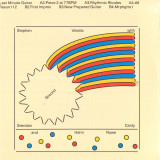
Stephen Vitiello with Brendan Canty and Hahn Rowe - Second

When you’re running a label, a demo occasionally comes across your desk that makes you reconsider everything you thought your label was all about. For Balmat, such was the case with this stunning album from Stephen Vitiello, Brendan Canty, and Hahn Rowe. It sounds like nothing we’ve released so far—and that very otherness opened up a whole new world of possibilities for us.

Fans of ambient, experimental electronic music, and sound art will be familiar with Vitiello, a New York native, long based in Virginia, who has collaborated with a cross-generational list of greats: Taylor Deupree, Steve Roden, Lawrence English, Tetsu Inoue, Nam June Paik, Ryuichi Sakamoto, Pauline Oliveros, and many more. On labels like 12k, Room40, and Sub Rosa, he has explored a wide range of minimalism, microsound, lowercase, ambient, improv, and other styles. But this album is something different. It may begin in ambient-adjacent territory, but it quickly veers off, and it just keeps zigzagging, taking on elements of krautrock, post-punk, dub, and the groove-heavy interplay of groups like Natural Information Society and 75 Dollar Bill.

This stylistic turn is thanks in large part to Vitiello’s choice of collaborators. “We’re coming from three different schools,” Vitiello says: “sound art, art rock, and punk rock.”

Active since the early 1980s, Rowe—a violinist, guitarist, and producer/engineer—has played with, or manned the boards for, a frankly jaw-dropping list of musicians: Herbie Hancock, Gil Scott-Heron, the Last Poets, Roy Ayers, John Zorn, Glenn Branca, Swans, Live Skull, Brian Eno, David Byrne, Anohni, R.E.M., Yoko Ono, and many more. But he might be most closely associated with Hugo Largo, a one-of-a-kind New York quartet—two basses, vocals, and Rowe’s violin—that in the late 1980s helped lay the groundwork for what would eventually become known as post-rock.

Canty, of course, is the legendary drummer of Fugazi, the visionary DC post-hardcore group, as well as Rites of Spring before them, and, currently, the Messthetics, a Dischord-signed instrumental trio with guitarist Anthony Pirog and Fugazi bassist Joe Lally.

Vitiello’s trio first collaborated on First, a 17-minute piece released on the Longform Editions label in 2023. Second picks up where the freeform drift of First left off, channeling the trio’s exploratory energies into more intentionally structured tracks and—in a real first for Balmat—some almost shockingly muscular grooves. “Sometimes my projects are more conceptually driven,” Vitiello says, “but I think this was more musically geared. I just wanted to open up the references and bring in an incredible drummer, bring in some melodies, and I’m sort of the center.” But his collaborators, he stresses, are “vastly creative in making anything I might suggest better.”

Like its predecessor, Second took shape in phases, shifting between improvisation and collage. Vitiello laid down the skeleton of the music at home, sketching out initial ideas on Rhodes keyboard and acoustic and electric guitar; he then fed the parts through samplers and his modular system, recording 10- or 20-minute jams. Once he had edited them into more structured forms, he hit the studio with Canty, who added not just drums but also bass and piano; finally, Vitiello took the results of those sessions to Rowe, who played violin, viola, electric bass, and 12-string acoustic and bowed electric guitar, and assisted in some of the final structuring and mixdown.

A few more surprises along the way: Reanimator’s Don Godwin, the studio engineer where Vitiello recorded with Canty, contributed what he calls “resonant dustpan”; and none other than Animal Collective’s Geologist, who just happened to be in the studio that day, sits in on hurdy gurdy on “Mrphgtrs1,” the album’s gorgeous, stunningly atmospheric drone closer. “I love these chance encounters,” Vitiello says. “Somebody I admire, a group I admire—that was an unexpected gift.”

An unexpected gift is a great way of describing Second as a whole: three veteran musicians venturing outside their usual zones and finding a new collaborative language together. The results can’t be neatly slotted into any given genre; they belong not to any given category, but to the spirit of conversation itself.

In Stock

On Stock and ready to ship

25,17
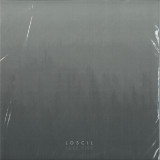
Loscil - Lake Fire LP 2x12"

Loscil

Lake Fire LP 2x12"

2x12inchKRANK247LP
Kranky Records
21.05.2025

“Less than a month after one of the most violent fire events in the history of the continent, new shoots had burst through the scorched hardpan, nourished by the still-vital roots of those flayed and blackened trees.” John Vaillant, Fire Weather.

Loscil (aka Scott Morgan) returns to kranky with Lake Fire, a nine-track offering of ash-laden sonics that mine the tension within the cycle of destruction and rejuvenation.

Lake Fire is the result of a disjointed creative process. Originally conceived as a suite for electronics and ensemble, most of the original compositions were deserted, save for Ash Clouds, featuring James Meager on double bass. The remaining tracks were reshaped and remixed, built anew out of the remnants of the abandoned work. The result is a phoenix, an album burnt to the ground only to be reassembled out of its cinders. Fragments of the original lurk beneath a densely overpainted canvas of sound.

Infused into the resulting rearrangements are impressions from a road trip into the mountains marking a personal half-century milestone, surrounded by the ominous proximity of wildfires and dense smoke; celebrating life while the world burns. The album’s title comes from the striking irony that forest fires are often named after regional lakes - perhaps subconsciously referencing ancient lore. The cover photos were taken from this same trip, while sitting in a rowboat staring into the grey abyss of an opposing mountainside outside of Revelstoke, BC, obfuscated by smoke from a nearby lake fire.

Press quotes for previous solo release “Clara”:

"The sound sculptor Scott Morgan continues to astound.” Pop Matters

"A beautifully nuanced work, Clara is both revealing and mysterious -- and loscil fans wouldn't expect anything less.” Allmusic

press quotes for previous collaboration release with Lawrence English “Colours of Air”:

"As you might expect from the steady hands at the tiller, this is a cortex-hugging drone record of beauty and depth.” The Quietus

"One of the thrills of listening to this record is how its initially predictable veneer fades on subsequent listens to reveal layers of mischief underneath.” Resident Advisor

In Stock

On Stock and ready to ship

34,41
SIMON HANES - AIMER PERDRE - BANDE ORIGINALE DU FILM LP

Aimer Perdre is a movie by the Guit Brothers and tells the story of Armande Pigeon; the queen of shenanigans. In Brussels, she struggles to make ends meet because she can’t stop gambling on everything, always ending up on the wrong side of luck. When she teams up with Ronnie one night, everything changes – they win it all. And when you hit a winning streak, you have to know when to stop.

For Aimer Perdre, Brooklyn NY native Simon Hanes travelled to Brussels in order to work directly with the directors, synchronizing the editing of the film with the composition of the soundtrack so that both processes would influence each other. Hanes and the Guits spent 3 months working alongside each other almost every day, passing ideas back and forth and allowing the soundtrack to grow organically. The music is an honest representation of Hanes’ experiences over those months, which he spent couch surfing across Brussels, sharing meals and ideas with new friends in broken refrains of French and English – falling asleep at the Cinémathèque, and occasionally breaking into abandoned buildings…but thats a story for another time.

Throughout all this, Simon hired musicians he met in bars, members of the Brussels experimental/artistic community, singers from a choir that was rehearsing in the squat where the Guits built their editing room…All the while sculpting the soundtrack out of these seemingly dissolute elements and constantly blurring the line between the compositional process and his day to day life.

Finally the process culminated in hiring the FAMES string orchestra for ONE SINGLE HOUR (all they could afford) to achieve the full orchestral sound the film’s climax so clearly needed.

The end result, like the film itself, is a reflection of life – a hodgepodge of sounds, colors and ideas that come together to create a beautiful, unique tapestry, sometimes harmonious, other times less so.

Comes with a limited edition flexidisc with a bonus track.

In Stock

On Stock and ready to ship

22,90
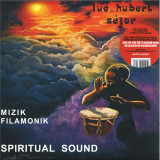
LUC-HUBERT SEJOR - MIZIK FILAMONIK: SPIRITUAL SOUND

180 G. BLACK VINYL WITH LINER NOTES IN CREOLE, FRENCH, ENGLISH

Originally released in 1979, "Spiritual Sound" lives up to its name, a soaring, triumphant album, six tracks of spirit magic from Guadeloupe.

Telluric, intense, terribly alive, the gwoka drums of Guadeloupe carry the identity of a painful and fervent island. Marked forever by the crime of slavery, Guadeloupe's créolité cherishes the ka drums and their natural environment: the low-pitched boula drum with male goatskin, the high-pitched soloist makè drum with female goatskin, the chacha, ti bwa, triangle, calabash and other percussion instruments that surround them, and the voices - the fiery, proud, timbred, urgent voices of the gwoka.


This album is also a legend for its voices: in his then dazzling youth, singer Lukuber Séjor was one of the first gwoka artists to largely feminize the chorus of répondè, who converse with his text delivered in a straight and powerful voice.

And everything here sets new standards. In 1979, Mizik Filamonik - Spiritual Sound proclaimed a spiritual patriotism of ferocious intensity. The album by Lukuber Séjor - whose spelling alone is a battle - sets out to give Guadeloupe the intangible weapons of self-respect and self-knowledge, through a singular practice of traditional music.

The genesis of gwoka music is less straightforward than one might imagine... The drums performed the servile task of accompanying the work of slaves in the fields and during the “corvées” imposed by the administration, before being freely practiced by the common people after the abolition of 1848. At the heart of the conviviality of the Guadeloupeans furthest from the cities - geographically and socially - the gwoka drums come out for carnival, funeral wakes and neighborhood celebrations, but also during strikes, fits of anger and armed vigils of the riots and revolts that have punctuated the island's history. For generations, governors of the colony and then the prefects of the overseas department of Guadeloupe have been viewing the gwoka as a potential for turbulence and a threat to public order.

But as the Beatlesmania, “chanson engagée” and rock revolutions unfolded in Europe, young people turned to the drums of mizik a vié nèg (“bad negro music”, in Creole), which Guadeloupeans had learned to despise by following the “assimilation” process advocated by the school system and most of the political class. At the end of the sixties, in a Guadeloupe mourning the deadly repression of the May 1967 social movement, they played traditional music, refusing to wrap it up in tourist prettiness and madras folk costumes. Instinctively, they played a rough and contemporary gwoka, led by the incendiary Guy Konkèt. This was the era of decisive 45 rpm records such as Robert Loyson's Kann a la richès, which brought to light the fieriest words of union rallies.

At his home in Sainte-Anne, Lukuber Séjor played with flautist Olivier Vamur and his brother Claude Vamur, who cobbled together a drum kit from tin crockery and became, a few years later, the most influential drummer in Kassav'.

These were the years of the Bumidom program, when young Guadeloupeans were encouraged to emigrate to mainland France. At the age of twenty, Lukuber Séjor embarked on the liner Irpinia, disembarking at Le Havre and taking the train to the Gare Saint-Lazare - the route taken by thousands of young West Indians who went on to study or looked for work, all the while trying to maintain a link with their homeland. In this case, it's at the Antony university residence, where Lukuber played the drum and participated in a thousand gwoka updates and aggiornamentos, while exile reinforced the need for a spiritual link with the native land.

In 1978, Guy Konkèt played at the Salle Wagram, a historic event for West Indian music. After serving as répondè - i.e. backing vocalist - on one of his home-recorded albums, Lukuber joined his live band. Little by little, he became one of the key artists on a circuit parallel to French show business. At a student party in Caen, he met a young woman from Martinique who, at the time, was more motivated by her ambitions as a visual artist than by her vocation as a musician. Her name was Jocelyne Béroard and, a few years before she plunged into the Kassav' adventure and became the greatest West Indian singer of her generation, she designed the cover of Lukuber Séjor's LP.

This ambition was obvious and imposed its will. A more or less regular band was formed, with Roger Raspail, Rudy Mompière and Éric Danquin on ka drums, Claude Vamur on ti bwa, Olivier Vamur and Françoise Lancréot on flutes and Annick Noël on keyboards. Lukuber Séjor is set on wanting to extend the gwoka palette to other instruments, as the jazz-rock revolution opens a thousand new doors. Annick Noël will play a wide range of timbres and textures on electric piano and synthesizer. Another novelty: the répondè are two men and two women, Roger Raspail, Olivier Vamur, Françoise Lancréot and Maryann Mathéus ...

Mizik Filamonik - Spiritual Sound is a self-production in which the singer and leader sank all his savings, allowing him no more than a single day in the studio. The first side is more of a musical manifesto, with the first two tracks, Éritage and Penn é plézi, being instrumentals. The third, Son, forcefully celebrates the need for Guadeloupeans to connect with the gwoka. In fact, Jocelyne Béroard's cover shows a tambouyé in the shadow of a cloudy sky, against which a radiant sun is rising and whose light will soon flood the entire landscape. The silhouette and face of this man strongly evoke the immense Vélo, master of the ka, rejected at the time on the fringes of society.

The second side of the LP is surprising. Formally, three tracks are explicitly linked like the three parts of a triptych. Primyé voyaj evokes the appalling tribulation of Africans deported as slaves to Guadeloupe; dézyèm voyaj speaks of the Bumidom program and the economic, political and social forces driving young Guadeloupeans towards the mirage of prosperity in France; twazyèm voyaj closes the cycle with the emigrants' return from Europe after years away from their island...

This gwoka, obsessed with the need to save Guadeloupe spiritually, appeals far beyond the politicized audience. Mizik Filamonik - Spiritual Sound instantly became a classic, although Lukuber Séjor never really made a career for himself as a musician.

After all, the album was released in 1980, with no promotional resources in France or Guadeloupe - and therefore no concerts. The thirty-two-year-old author, composer and performer made his own third trip back to Guadeloupe. He set up a small woodworking business, which he lost in Hurricane Hugo in 1989. His other activity, teaching in a medical-educational institute, became the core of his professional life. He continued to be an active campaigner - a campaigner for the Creole language, a campaigner for the reawakening of identity, a campaigner for special education, a campaigner for a thousand causes that he ignited with his generous and perceptive enthusiasm, such as the defense of breadfruit fries...

The echoes of his 1979 album have not died down. Of course, the use of Penn é plézi as the theme tune for Radio Guadeloupe's funeral notices from 1980 to 1992 kept him in the collective memory, but he continues to sing and compose sporadically, as with his all-female

vocal group Vwapoulouéka... Still convinced that music is a means of liberating the spirit, he continues the journey of a young man eager to deploy the power of Creole music and language.

Bertrand Dicale

In Stock

On Stock and ready to ship

19,75
Gnonnas Pedro - The Man Who Sings All African Languages LP 2x12"

An official retrospective (1967 to 1985) of the legendary Beninese Composer, Gentleman & Salsero Gnonnas Pedro, who recorded dozen of albums & singles from the 1960s the 2000s with mythical bands such as Los Panchos, Les Dadjes & Africando !

21 tracks covering the extremely wide musical spectrum of this mythical artist in 40 years of career : Afrobeat, Salsa, Funk, Soul, Jerk & Folk frenzied grooves that will set any dancefloor on fire !

Available in a beautiful Limited Deluxe 2xLP gatefold edition (with a digital voucher including a Bonus track) & in HQ digital format with very detailed biography & liner notes in French & English, + Exclusive pictures, never seen before.

Bonus track : "À Ma Fille" (Digital only, includes with the download voucher of the album that comes with the release)

In Stock

On Stock and ready to ship

28,53
RED PIG FLOWER - PRACTICE LOVE LP 2x12"

Red Pig Flower brings you her sensational debut album Practice Love, available on Sound Of Vast from 10th April. Her unique sound sits upon the apex of a three-sided pyramid. With Berlin, Tokyo and Seoul as the base, Red is a third culture kid, greater than the sum of her parts. The centre is filled with her incredible appreciation and knowledge of house and electronic music from every pin drop through history.

So taken with Red Pig Flower’s sound, Honey Dijon invited Red to her Southbank Centre show to play alongside her. Moxie loves her that much, that she invited Red to record a mix and to guest on her NTS show. Alan Fitzpatrick, and Just Her are amongst Red’s growing posse of followers.

Practice Love is a culmination of all of Red Pig Flower’s life experiences, brimming with her positive energy and an outlook on life of pure love. Red has collaborated with like-minded artists at every level: the music, the cover art and video all produced with talented friends, who get Red as the wonderful person she is and understand her vision. Her label partner and good friend, Knock in particular helped make Practice Love the incredible album it is. So intuitive is their musical symbiosis, they made 20 tracks and carefully curated and ordered nine of these, making an album of tracks that stand out on their own, yet flow perfectly as an album. Practice Love will make you feel joyous when you play it. By the end, you will feel like you know Red like a friend.

Practice Love kicks off with I don’t care, it makes you feel good: a dreamy, tribal mantra of a track that does exactly what it says on the tin. Next up is I Love To Dance. Red’s beautiful soft vocal is sweet yet poignant, leaving you in no doubt of her sincerity. Thirdly comes Feel Good Music. Are you getting a feel from the track names yet that this is an album of warmth and positivity? You can imagine this one at a Café Del Mar sunset, where those who get the spirituality of Ibiza come together, in the moment to appreciate the beauty of a sunset and understand that no matter how many you see, each is magical and unique.

The three tracks so far have taken you to twilight. The titular Practice Love takes you by the hand onto the dancefloor. There is a double meaning to ‘Practice Love’- The first is to make love your practice. The second is that you need to practice love to be able to become a practitioner of love. The video, shot by her friend Jelly, features Red Pig Flower in Brick Lane, London, wearing a little piggy mask and offering free hugs. The first passersby ignore her sign, but Red isn’t disheartened, spreading the right message, dancing with joy. Her optimism is rewarded, making peoples day better on a cold English afternoon.

Fifth track Sax and Drugs takes things a little sleazier, the beat is filthy and the synths are sexy. Your body starts to move to this one before your brain even realises. The incredible Declan McDermott joins on saxophone, the funkiest synths and Red’s sultry vocal washing your soul with Laurent Garnier inspired sunlight. On Thisiz House Music, again featuring Declan, Red takes you even further back. About Frankie Knuckles O’Clock, with a portal straight to 2025.

By now, you will agree with me that Practice Love flows so, so well. I Wanna Meet Somebody follows incredibly, continuing the feeling that if you close your eyes, you’re dancing with David Mancuso at the Loft. No Money completes this EP-within-an-album. Perfect vocal samples, valve synth riff and 808 drum patterns showing that producers as good as Red Pig Flower make it sound effortless. The best albums finish memorably and No Genre is one of those perfect finishers. Think Andrew Wetherall’s production on Screamadelica. The lights are up in the club, nobody wants to go home, arms in the air wanting more.

Red Pig Flower explains: Practice Love resonates deeply with me because house music has always been a sanctuary—a place for unity, joy, and self-expression. As a nomad and outsider, club culture and house music became my shelter. The cities I’ve lived in—Seoul, Tokyo, Berlin, and London and more—nurtured me and shaped who I am today. That’s why the cover, by the incredible Carlos Sulpizio features their skylines, and the album is multilingual, representing the diverse influences in my life.

Practice Love is like a meal that has been prepared lovingly. They always taste better. And there’s plenty more to come from Red Pig Flower. How was your appetizer?

In Stock

On Stock and ready to ship

25,84
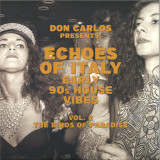
Various - ECHOES OF ITALY – THE BIRDS OF PARADISE – EARLY 90S HOUSE VIBES VOL.2 (2x12")

Googling “paradise house”, the first results to pop up are an endless list of European b&b’s with whitewashed lime façades, all of them promising “…an unmatched travel experience a few steps from the sea”. Next, a little further down, are the institutional websites of a few select semi-luxury retirement homes (no photos shown, but lots of stock images of smiling nurses with reassuring looks). To find the “paradise house” we’re after, we have to scroll even further down. Much further down.

It feels like yesterday, and at the same time it seems like a million years ago. The Eighties had just ended, and it was still unclear what to expect from the Nineties. Mobile phones that were not the size of a briefcase and did not cost as much as a car? A frightening economic crisis? The guitar-rock revival?! Certainly, the best place to observe that moment of transition was the dancefloor. Truly epochal transformations were happening there. From America, within a short distance one from the other, two revolutionary new musical styles had arrived: the first one sounded a bit like an “on a budget” version of the best Seventies disco-music – Philly sound made with a set of piano-bar keyboards! – the other was even more sparse, futuristic and extraterrestrial. It was a music with a quite distinct “physical” component, which at the same time, to be fully grasped, seemed to call for the knotty theories of certain French post-modern philosophers: Gilles Deleuze, Félix Guattari, Paul Virilio... Both those genres – we would learn shortly after – were born in the black communities of Chicago and Detroit, although listening to those vinyl 12” (often wrapped in generic white covers, and with little indication in the label) you could not easily guess whether behind them there was a black boy from somewhere in the Usa, or a girl from Berlin, or a pale kid from a Cornish coastal town.

Quickly, similar sounds began to show up from all corners of Europe. A thousand variations of the same intuition: leaner, less lean, happier, slightly less intoxicated, more broken, slower, faster, much faster... Boom! From the dancefloors – the London ones at least, whose chronicles we eagerly read every month in the pages of The Face and i-D – came tales of a new generation of clubbers who had completely stopped “dressing up” to go dancing; of hot tempered hooligans bursting into tears and hugging everyone under the strobe lights as the notes of Strings of Life rose up through the fumes of dry ice (certain “smiling” pills were also involved, sure). At this point, however, we must move on to Switzerland.

In Switzerland, in the quiet and diligent town of Lugano, between the 1980s and 1990s there was a club called “Morandi”. Its hot night was on Wednesdays, when the audience also came from Milan, Como, Varese and Zurich. Legend goes that, one night, none less than Prince and Sheila E were spotted hiding among the sofas, on a day-off of the Italian dates of the Nude Tour… The Wednesday resident and superstar was an Italian dj with an exotic name: Don Carlos. The soundtrack he devised was a mixture of Chicago, Detroit, the most progressive R&B and certain forgotten classics of old disco music: practically, what the Paradise Garage in New York might have sounded like had it not closed in 1987. In between, Don Carlos also managed to squeeze in some tracks he had worked on in his studio on Lago Maggiore. One in particular: a track that was rather slow compared to the BPM in fashion at the time, but which was a perfect bridge between house and R&B. The title was Alone: Don Carlos would explain years later that it had to be intended both in the English meaning of “by itself” and like the Italian word meaning “halo”. That wasn’t the only double entendre about the song, anyway. Its own very deep nature was, indeed, double. On the one hand, Alone was built around an angelic keyboard pattern and a romantic piano riff that took you straight to heaven; on the other, it showcased enough electronic squelches (plus a sax part that sounded like it had been dissolved by acid rain) to pigeonhole the tune into the “junk modernity” section, aka the hallmark of all the most innovative sounds of the time: music that sounded like it was hand-crafted from the scraps of glittering overground pop.

No one knows who was the first to call it “paradise house”, nor when it happened. Alternative definitions on the same topic one happened to hear included “ambient house”, “dream house”, “Mediterranean progressive”… but of course none were as good (and alluring) as “paradise house”. What is certain is that such inclination for sounds that were in equal measure angelic and neurotic, romantic and unaffective, quickly became the trademark of the second generation of Italian house. Music that seemed shyly equidistant from all the rhythmic and electronic revolutions that had happened up to that moment (“Music perfectly adept at going nowhere slowly” as noted by English journalist Craig McLean in a legendary field report for Blah Blah Blah magazine). Music that to a inattentive ear might have sounded as anonymous as a snapshot of a random group of passers-by at 10AM in the centre of any major city, but perfectly described the (slow) awakening in the real world after the universal love binge of the so-called Second Summer of Love.

For a brief but unforgettable season, in Italy “paradise house” was the official soundtrack of interminable weekends spent inside the car, darting from one club to another, cutting the peninsula from North to centre, from East to West coast in pursuit of the latest after-hours disco, trading kilometres per hour with beats per minute: practically, a new New Year’s Eve every Friday and Saturday night. This too was no small transformation, as well as a shock for an adult Italy that was encountering for the first time – thanks to its sons and daughters – the wild side of industrial modernity. The clubbers of the so-called “fuoriorario” scene were the balls gone mad in the pinball machine most feared by newspapers, magazines and TV pundits. What they did each and every weekend, apart from going crazy to the sound of the current white labels, was linking distant geographical points and non-places (thank you Marc Augé!) – old dance halls, farmhouses and business centres – transformed for one night into house music heaven. As Marco D’Eramo wrote in his 1995 essay on Chicago, Il maiale e il grattacielo: “Four-wheeled capitalism distorts our age-old image of the city, it allows the suburbs to be connected to each other, whereas before they were connected only by the centre (…) It makes possible a metropolitan area without a metropolis, without a city centre, without downtown. The periphery is no longer a periphery of any centre, but is self-centred”.

“Paradise house” perfectly understood all of this and turned it into a sort of cyber-blues that didn’t even need words, and unexpectedly brought back a drop of melancholic (post?)-humanity within a world that by then – as we would wholly realise in the decades to come – was fully inhuman and heartless. A world where we were all alone, and surrounded by a sinister yellowish halo, like a neon at the end of its life cycle. But, for one night at least, happy."

In Stock

On Stock and ready to ship

28,99
David Sylvian - Died In The Wool (Manafon Variations) LP 2x12"

"First time on vinyl for ‘Died In The Wool’, the 12 song remix companion to David’s 2009 album, ‘Manafon’, plus the non-album track “When We Return You Won’t Recognise Us”
Features remixes by David Sylvian, Dai Fujikura, Jan Bang & Erik Honoré.
“When We Return You Won’t Recognise Us” was specially commissioned by the 2nd Canary Islands Biennial of Architecture, Art and Landscape 2008-2009."

In Stock

On Stock and ready to ship

40,55
Bodega Pop - Love Raid: Arabic Leftfield, Novelty, and Protest 45s 1960-1974

Love Raid is first in a series of cassette-only mixtapes with the cult WFMU show and blog Bodega Pop collecting assorted digs from across New York's bodegas and cell-phone stores. This first edition is focused on leftfield, novelty, and protest 45s from across the Arabic world recorded between 1960 & 1974.

"A series of random discoveries in the mid-1990s led me to abandon American and British pop and focus on non-English-language music, predominantly Arabic, for the next two decades.

Feeding my ears required biking down to Bay Ridge, Brooklyn, or hopping on the subway to Steinway Street in Queens, where I would pop into a handful of the local bodegas and immigrant-run cell-phone stores, some of which offered music from North Africa and the Middle East on cassettes and compact discs.

When CDs spiralled into obsolescence in the mid-2010s, I reluctantly made the switch to vinyl, concentrating on 45s and intentionally filling holes not well represented in the digital era – more artists than not hadn't made the transition from analog in the 1980s. This meant focusing on singles by a lot of artists I'd not heard of, and it quickly became evident just how much of the era – from approximately 1960 to 1974, when 7" records were all but abandoned in Egypt and Lebanon – had been forgotten.

What also became evident was the breadth of popular music issued by even hegemonic titan Sono Cairo. The consensus is that state radio and music publishing ignored traditional folk, shaabi, and other lowbrow pop in favor of the exalted art song we associate with Oum Kalthoum, Abdel Halim Hafez, and Farid al-Atrash.

While this active neglect of the broadest Arabic pop spectrum is mostly true, I accumulated a not inconsequential number of what I can only describe as "novelty" records by mostly one- and two-hit wonders. From catchy gimmicks like the "doktor, ya habibi" of Maha's "Doktor" and the "boom boom boom" of twins Thunai Badr's "Love Raid," to the Monty Python-level silliness of Sayed Mandoline's fake Italian crooning and maniacal laughter in "I Present to You the Mandolin," these were sounds I was genuinely surprised to hear.

Even more remarkable were the songs recorded in English: Karim Shukry's celebratory "Ramadan" and Motyaba & Nada's civil-rights plea "No Black No White" are two of my favorites, and thus included in the present collection.

The tracks compiled here are often as beautiful as they are beguiling, but while the intention was to absolutely put together a solid listen, it was also my hope to slightly expand our understanding of Arabic music of this period beyond not just the usual suspects, but also subjects – and treatment of same."

--Gary Sullivan.

In Stock

On Stock and ready to ship

16,60
Items per Page:
N/ABPM
Vinyl