Parlophone Records is thrilled to announce the release of IRON MAIDEN’s 17th studio album Senjutsu, their first in 6 years, on September 3rd. It was recorded in Paris with longstanding producer Kevin Shirley and co-produced by Steve Harris.
It was preceded on Thursday 15th July by an already highly acclaimed animated video for the first single ‘The Writing On The Wall’ made by BlinkInk based on a concept by Bruce Dickinson with two former Pixar Executives. It followed a month-long teaser campaign & global ‘treasure hunt’ for clues about the track title and concept.
For Senjutsu – loosely translated as ‘tactics & strategy’, the band once again enlisted the services of Mark Wilkinson to create the spectacular Samurai themed cover artwork, based on an idea by Steve Harris. With a running time of a little under 82 minutes, Senjutsu, like their previous record The Book Of Souls, will be a double CD/Triple vinyl album.
Cerca:g machine
Composer and saxophonist Brian Brown produced some of the most refined Australian jazz recordings during the 1970s. A versatile musician whose distinct impressionist music melded modern jazz with the outer limits of free experimentation. Considered to be his greatest work was the 1975 concept album Carlton Streets, an ambitious recording that romanticised the sights, sounds and the nostalgia of this once-bohemian Melbourne neighbourhood. Differing from his eco-jazz composition Wildflowers heard on the recent Roundtable compilation Pyramid Pieces, Carlton Streets explores the polar opposite, offering jazz impressions of the urban environment. Comparable to other pioneering jazz-rock groups such as Ian Carr's Nucleus and mid-period Soft Machine, the album is a mosaic of ecstatic jazz-rock groove, spirited free improvisation and expanded experimental textures. A potent fusion that owes as much to Australian 20th-century avant-garde composers as it does to the influence of the electric jazz innovators, specifically early Weather Report and Herbie Hancock's Mwandishi. The Roundtable are pleased to showcase this important artist and offer a new edition of this landmark Australian jazz recording. Restored from the original master tapes and presented in a gatefold sleeve including liner notes and rare photos. Released for Record Store Day 2021.
Over the last few years, NuNorthern Soul has established a number of traditions, most notably annual releases that provide a snapshot of the label’s output while also considering their suitability for certain seasons. Perhaps the most popular is founder Phil Cooper’s Summer Selections series, which each year showcases warm and sunny gems mined from a range of forthcoming releases.
The 2021 edition of the sampler, the third in total, may well be the best yet. Six tracks deep and as subtly varied as you’d expect, the entertaining set features tracks from a mixture of exciting newcomers, experienced producers and long-time members of the NuNorthern Soul family.
To kick things off, Cooper introduces us to Marshall Watson, an American producer who later in the year will release two five-track EPs on the label. ‘A Door To The Sky’, which will feature on the Sunsets On Larkin Part 1 EP, is sumptuously sun-kissed, with delay-laden electric guitar textures and sparkling electronics reclining over a tactile electronic groove.
LOVA’s ‘Echoes of Memories’, the track that follows, recalls the atmospheric, synthesizer-sporting new age Balearica popularised by Quiet Force in the late 1980s. The Italian producer was signed after bringing a USB stick of productions to one of Phil Cooper’s gigs in Ibiza; his Gypsophilia EP will be one to check when it drops later in the year.
Gusk’s ‘Sketch #4 - Anafi Nights’ is seductive and exotic. It’s a crackling and atmospheric musical painting that daubs starry stabs and yearning melodies atop a bubbly, lo-fi drum machine beat. It provides a perfect snapshot of the Greek musician’s Mediterranean Sketches EP, which gathers together home recordings made between 1997 and 2003.
Arguably even more immersive and enveloping is ‘Aqua Blancas Sunrise’ by Tambores En Benirras, the musical project of Cumbrian selector DJ Gripper. A slow-burning delight full of intricate musical flourishes –think drifting female vocalizations, Indian-influenced percussion, twinkling pianos and haunting clarinet motifs the track is one of the many highlights on the Barrow in Furness based producer’s forthcoming debut album for NuNorthern Soul.
To round things off, Cooper has chosen to offer-up cuts from two very experienced artists. George Solar (real name Georg Boskamp) is an Ibiza-based German producer who has been collaborating and releasing music since the late 1980s. ‘Infrared’, his contribution to Summer Selections 3, is a languid and glassy-eyed slab of slow-motion Balearic dub. His Los Ra-yos Del Sol EP will be one to look out for later in the year and is his debut solo release.
The sampler’s final missive fittingly comes from long-time friend of the family B.J Smith, a regular contributor to NuNorthern Soul releases who has reunited with Huw Costin – a vocalist he previously worked with on Smith & Mudd releases for Claremont 56 for a double A side single due later in 2021. ‘Sun When You Come’ is as warming and hazy as you’d expect and features Costin’s emotive, reverb-laden vocals and mazy electric piano solos rising above a suitably horizontal groove. It provides a stunning, sunset-ready conclusion to another superb set of Summer Selections.
A selection of exclusive tracks from a dusty shoebox full of cassettes and DAT tapes, recorded by Facehugger and Deviant between 1995 and 1997.
The Parasite EP showcases their first batch of live analogue jams that mash the boundaries of experimental house, deep electro, acid and the hazy bustling sounds of the city – a soundtrack of travelling to raves, staying up late, coming home and making wild mixtapes until early Monday morning.
Despite the untimely passing of his production partner, Deviant, in 2009, Facehugger has remained a dedicated and unique beatmaker, close personal friend and unsung hero of the scene, not to mention “unofficial” manager of the Plates record shop, known for his outspoken, boisterous and loud opinions about any new releases which came in!
Now, nearly 30 years on, nestled in the quiet suburb of Carlton (Nottingham), Facehugger loads up his drum machines and starts to create, with the promise of a new wave of music on the horizon…
DJ support from: Charlie Bones (NTS), Bradley Zero, Coco Bryce, OK Williams, Glenn Astro
- A1: Power Of Mind (Feat Raw Poetic)
- A2: Reporting
- A3: Enchanted Spirits (Feat Insight)
- A4: Upload Optimism
- A5: God Speed (Feat Blu)
- B1: Four Better Or Worse (Part 1 - Feat Nitty Scott)
- B2: Four Better Or Worse (Part 2 - Feat Blu)
- B3: Four Better Or Worse (Part 3 - Feat Raw Poetic)
- B4: Four Better Or Worse (Part 4)
Black vinyl[25,76 €]
The music that would become Conversation Peace began with a trip to KPM’s London HQ in late January of 2020. I had just finished wrapping up post production on my album Ocean Bridges with Archie Shepp and Raw Poetic. I actually received the invitation during the summer of 2019 during studio sessions for Ocean Bridges and scheduling for the top of 2020 made the most sense. So I packed up a few records and a few drum machines then embarked on my first trip to England. We had a quick meeting about expectations, then it was time to see the archive. As a record collector, I’m very familiar with the legacy of the KPM brand. I had been lucky enough to find a few over the past decade during my digging trips up and down the east coast, but looking at the complete vinyl catalogue was a great privilege. I anxiously began combing through records from morning to night looking for the right sounds. The whole experience was surreal.
Listening to the entire catalogue was a history lesson and the amount of great composers and compositions in the recordings was endless. I’d be lying if I said it wasn’t somewhat overwhelming. As a producer looking for textures, inspiration and grooves, the abundance of those things made it extremely difficult to narrow down what I wanted to use. From drums to sound fx to orchestras to small rhythm sections to ambient noises, I heard a wide variety of things and they were all so well produced and recorded. Every instrument you can think of was there! I spent a little over a week capturing sounds knowing that my work was cut out for me when I returned to my home in DC. Once I got home, I got to work. I captured so much, that it took me about a month just to organize all those ideas. Little did I know the world would drastically change in the next month following my return. My flight to and from London would indefinitely be my last time traveling for a while. I worked diligently with the material and took my time making sure I had strong ideas. The history of KPM and the opportunity to collaborate with the prestigious lineage made the stakes very high for me and I knew I needed to deliver a quality product. It’s an honor to be the first artist to release a KPM Crate Diggers title. - Earl Davis (Damu the Fudgemunk)
Givin' It Back is the ninth album released by The Isley
Brothers on their T-Neck imprint in 1971. After years of having white Rock acts covering their most famed material, particularly, 'Shout' and 'Twist And Shout', the Isleys decided to do the same to music made famous by white artists such as Stephen Stills, Eric Burdon and Neil Young.
Among the songs they covered were 'Spill The Wine',
'Love The One You're With', the social commentary medley of 'Ohio' and 'Machine Gun' (from Jimi Hendrix), 'Fire And Rain' by James Taylor and Bob Dylan's 'Lay
The Isleys' perseverance paid off when their covers of 'Love
The One You're With', 'Lay Lady Lay' and 'Spill The Wine' became charted hits. Bill Withers plays guitar on the Isleys
Club Paradiso re-work the 1982’s SIDI Italo-Disco gem full of Drum Machine, Claps and Synth. Also available the original vocal version of the era.
On the other side two new original tracks as always with their 80’s cosmic flavor.
‘Crociera’ is a funk disco tool that takes you directly to the poolside of a cruise.
‘Black cat’ is a pure Italo-Disco tribute with a vocal that never leaves you anymore.
marbled 12" Vinyl
Seamless to our first release of the Stone Techno series we are presenting the second edition of this unique concept. Each artist has been given a sample library consisting of recorded minerals from the Ruhr Area. The task was pretty clear, to create a track exclusively out of those sounds. The results are remarkably differing from each other and showing the huge creative potential of this project, which is a collaboration between the world famous Ruhr Museum foundation and The Third Room collective.
While Matrixxman delivers us an ambient driven masterpiece, RODHAD shows us his impeccable skills to create an ever-evolving tension in his dub techno influenced approach. Yan Cook on the B-Side is exploring the full potential of those samples to honor the industrial era and its machines, while T3R-Resident VNNN. is hailing with his hypnotic grooves the late hours of an extensive musical journey.
We hope you enjoy this imposing line-up of artists and its different styles within the release. There is more to be coming. Stay tuned!
- A1: Power Of Mind (Feat Raw Poetic)
- A2: Reporting
- A3: Enchanted Spirits (Feat Insight)
- A4: Upload Optimism
- A5: God Speed (Feat Blu)
- B1: Four Better Or Worse (Part 1 - Feat Nitty Scott)
- B2: Four Better Or Worse (Part 2 - Feat Blu)
- B3: Four Better Or Worse (Part 3 - Feat Raw Poetic)
- B4: Four Better Or Worse (Part 4)
Blue vinyl[25,76 €]
The music that would become Conversation Peace began with a trip to KPM’s London HQ in late January of 2020. I had just finished wrapping up post production on my album Ocean Bridges with Archie Shepp and Raw Poetic. I actually received the invitation during the summer of 2019 during studio sessions for Ocean Bridges and scheduling for the top of 2020 made the most sense. So I packed up a few records and a few drum machines then embarked on my first trip to England. We had a quick meeting about expectations, then it was time to see the archive. As a record collector, I’m very familiar with the legacy of the KPM brand. I had been lucky enough to find a few over the past decade during my digging trips up and down the east coast, but looking at the complete vinyl catalogue was a great privilege. I anxiously began combing through records from morning to night looking for the right sounds. The whole experience was surreal.
Listening to the entire catalogue was a history lesson and the amount of great composers and compositions in the recordings was endless. I’d be lying if I said it wasn’t somewhat overwhelming. As a producer looking for textures, inspiration and grooves, the abundance of those things made it extremely difficult to narrow down what I wanted to use. From drums to sound fx to orchestras to small rhythm sections to ambient noises, I heard a wide variety of things and they were all so well produced and recorded. Every instrument you can think of was there! I spent a little over a week capturing sounds knowing that my work was cut out for me when I returned to my home in DC. Once I got home, I got to work. I captured so much, that it took me about a month just to organize all those ideas. Little did I know the world would drastically change in the next month following my return. My flight to and from London would indefinitely be my last time traveling for a while. I worked diligently with the material and took my time making sure I had strong ideas. The history of KPM and the opportunity to collaborate with the prestigious lineage made the stakes very high for me and I knew I needed to deliver a quality product. It’s an honor to be the first artist to release a KPM Crate Diggers title. - Earl Davis (Damu the Fudgemunk)
Mannequin Records is elated to present for the first time on vinyl the reissue of Giovanotti Mondani Meccanici’s first video soundtrack, originally released in 1984 as an audiotape in less than one hundred copies. Giovanotti Mondani Meccanici (literally Mundane Mechanical Youth) or GMM was one of the most unclassifiable audiovisual experiences to emerge from Italy in the 1980s. Maurizio Dami a.k.a. Alexander Robotnick, a pivotal member of GMM, was responsible for the group’s music output.
Founded in 1984 by Antonio Glessi and Andrea Zingoni in Florence, GMM was an art collective whose production represents the quintessential expression of postmodern transmedia hybridity. GMM pioneered the genre of computer comics, created video installations, developed “multiple identity” performances, and was involved in fashion, media, and music productions, and later on produced cyberdelic environments, artificial reality projects, and proto-memes.
Alexander Robotnick’s first contribution to GMM was this soundtrack for the group’s eponymous first video, the animated version of a computer comics they coincidentally published on legendary Frigidaire magazine. Restored by Dami and reissued here for the first time by Mannequin Records, the composition was also split into two “suites” and released as an audiotape distributed by Materiali Sonori, also responsible for other releases by both Robotnick and GMM.
Determining in this work is Dami’s adoption of the alphaSyntauri, also known as the first affordable digital synth (priced less than $2000 when it was released in 1980), which was playable through its own software, “alphaPlus,” on the Apple II computer. The same computer was used by Glessi to “draw” the 3-bit strips scripted by Zingoni recounting the joyrides of the Giovanotti Mondani Meccanici, three merciless cyborgs in black suit and sunglasses dividing their time between nightclubs, rapes and murders.
As Robotnick, Dami developed an innovative formula of Italo disco that was attractive to the dance floor yet at the same time highlighted the expressive properties of the instruments he used, notably Roland drum machines and Korg synthesizers. For the soundtrack of GMM’s videos and installations, he left aside the danceable synth rhythmics in favor of ambient sounds that produced rarefied atmospheres, psychological tensions, and enhanced states of consciousness.
Dami’s scores for GMM’s artworks could be associated with Italian avant-garde music of the 1970s and 1980s, ranging from composers who adopted electronics flirting with pop and songwriting to minimalist musicians exploring seriality and drones, including Franco Battiato, Roberto Cacciapaglia, Francesco Messina, and Riccardo Sinigaglia. Analogies could also be traced with the playful and humanizing approach to personal computers that characterizes the music output of Marcello Giombini and Doris Norton.
The futuristic escapism of minimal synth and ambient music’s psychological nature is infiltrated by drifting harmonics typical of new age, as if in search of a spiritual dimension of technology. Characteristic of the postmodern ethos of GMM Suite, in line with the humanizing approach to technology that is at the base of GMM’s computer comics, is the melancholic take at speculative dystopias in which human beings would find themselves increasingly trapped into identity crises: a true cyborg’s melodrama.
Can Love Be Synth are in love with old analogue machines and define their specific sound in the legendary Synthesizer Studio Hamburg. A synth collectors paradise hidden behind the big grey walls of a Bunker building and the club Uebel & Gefährlich between the Reeperbahn and Schanzenviertel district in Hamburg, Germany.
Their new song ‘Bunker’ is now available as a digital and vinyl release on A CLEAN CUT including fantastic remixes by Richard Fearless, Terr and quadratschulz.
The Bunker building is currently extended with a 54-meter-high superstructure for an ultra-violent instant gentrification. In the original version of the song the heavy blows of hammers are clearly audible. This sound journey from zen to noise is a beautifully shimmering ‘black hole made from music’, where implosion and explosion energetically meet. If it needed another reason for the clubs to reopen, this song would be the one - it is perfect for long nights and for days without light rays.
Audiophile 180glp pressing includes eight 12"x12" art print reproductions of analog film stills by renowned experimental filmmaker Daïchi Saïto. The first purely solo record by Jason Sharp - where every sound is created by his saxophone, breath, heartbeat & modular synthesis rig. Sharp's customized electroacoustic biofeedback system utilizes a heart monitor to turn his pulse into signal & tempo responsively synthesized in real time during peformance & recording. Produced by Radwan Ghazi Moumneh (MATANA ROBERTS, SUUNS, BIG | BRAVE, ERIC CHENAUX, JERUSALEM IN MY HEART). For Fans of Fennesz, Christina Vantzou, Tim Hecker, Klaus Schulze, Ben Frost, Gas, Windy & Carl, Colin Stetson. Montréal saxophonist and electroacoustic composer Jason Sharp presents his third album on Constellation. The Turning Centre Of A Still World is Sharp's first purely solo record and his most lucid, poignant, integral work to date. Following two acclaimed albums composed around particular collaborators and guest players, Sharp conceived his third as an interplay strictly bounded by his own body, his acoustic instrument, and his evolving bespoke electronic system. The Turning Centre... is a singular sonic exploration of human machine calibration, interaction, expression and biofeedback. Using saxophones, foot-controlled bass pedals, and his own pulse - patched through a heart monitor routed to variegated signal paths that trigger modular synthesizers and samplers - Sharp paints with organic waves of glistening synthesis, pink noise and digitalia. Melodic strokes and harmonic shapes ripple and crest across ever-shifting seas, through an inclement cycle from dawn to dusk. The album's six main movements navigate a world where placid surfaces are always roiled and disquieted by a deeper inexorable gyre: the gravitational pull and tidal perpetuity of our bodies made of water, buffeted by terrestrial atmospheric pressures, wrung out by emotions, coursing with blood, sustained by breath, inescapably yearning for and returning to ground again and again. Sharp's heartbeat literally courses through these compositions - while only occasionally surfacing as a clearly audible pulse or rhythm, it physically feeds into a spectrum of generative synthetic processes that help constitute and conduct the music.
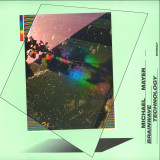
Michael Mayer’s latest EP, Brainwave Technology, comes at you purposeful, stealthy and sly. It’s a glorious left turn for the redoubtable producer, one that sees his typically lean and lithe productions buffed to a metallic, futurist sheen. There’s a gleam in the eyes of tracks like “Brainwave Technology” and “Alpha” that speaks of serious fun, of the intersection of the pleasure zone and the frontal lobe.
“Brainwave Technology” itself is informed by Mayer’s deep dive into the thorny terrain of artificial intelligence, transhumanism and posthumanism. Inspired by reading German philosopher Richard David Precht, Mayer found himself heading down the “proverbial rabbit hole,” as he describes it, “watching hours of YouTube material by self-proclaimed prophets of these ‘inevitable’ changes to come.” Never one to be taken in by the egotist’s dance, Mayer’s cynicism about the whole endeavour is tempered, a little, by the deeper questions that these figures gesture towards: “Is it really an evolutionary step that man and machine become one? Or is it rather a marketing plot by Silicon Valley billionaires?”
On “Brainwave Technology”, Mayer plays the charlatans at their own game, turning their logic against them by exposing the fruitiness of their ‘visions’. “I chose irony as my sword with which I chopped off some quotes from some of those batshit crazy prophets and self-promoters,” he explains of the drooling psychobabble he drops in the track’s lacuna. There’s a sense of humour here – how could you not laugh at these hungover egotists? – but there’s levity too, a sense that Mayer’s using sound to expose the contradictions and double-speak at the heart of these half-formed ideas. It’s a Burroughsian tactic, to slice into the heart of the voice to see what hidden truths surface.
It was Burroughs, too, who once said that “when you cut into the past, the future leaks out”; Brainwave Technology cuts into the logic of the futurologist to leak out the messiness of modern reality. On “Alpha” and “Gamma”, Mayer seems to conjure up the stark, ominous music that’d soundtrack a science fiction reinterpretation – or preinterpretation – of our modern malaise, all funereal wreaths of electronic noise and clatterboxing beats. As the EP resolves with “Device For The Young At Heart”, Mayer’s questions are piling up: “Do we want to become immortal and live on as a download? Do we really give up on Earth and put all our effort into colonising Mars?” There are no answers, of course, but plenty of imaginings-to-be. Brainwave Technology soundtracks both dystopian and utopian possibilities of what could come next.
Thyrfing emerged from the ever-growing underground scene in Sweden
back in 1995.
After seven full-length albums and numerous live performances all over the
world, the band have gained a strong following over the years and an exquisite
standing within the metal scene.
They are considered one of the top bands within the so-called Viking/pagan
metal genre - but on the other hand, Thyrfing are so much more with their truly
outstanding and self-contained musical offering.
The name of the band is taken from the sword “Tyrfing” in Norse mythology - a
cursed blade that appears in several tales and myths. Ever since the start, the
mythology has played a huge part in the scenery and imagery of the band’s
music and lyrics, something which is still intact today.
‘Vanagandr’ (an alternate name for the wolf creature known by the more familiar Fenrir) is a celebration of the tales and stories of Scandinavia - the track
‘Undergangens lankar’ is a conceptual piece focusing on Vanagandr/Fenrir and
a track that carries the spirit and hallmarks that make Thyrfing so unique.
‘Dop dem i eld’ is both the opening song on the album and the first video, one
of two produced for the band by Patric Ullaeus (Dimmu Borgir, Europe, Arch
Enemy). A powerful, heavy, and aggressive track packed with groove and melody. Elsewhere ‘Tr ldomsord’ is regarded as possibly the band’s most intense
song to date, whereas ‘Jordaf rd’ closes the album in epic fashion - a mournful
and moody longing for the end to come. The perfect way to end the album!
Co-recorded and co-produced by Jakob Herrmann (In Flames, Machine Head,
Evergrey) in Top Floor Studios, Gothenburg, with the renowned Jacob Hansen
(Volbeat, U.D.O., Katatonia) looking after the mix and mastering, all of which
ensures at ‘Vanagandr’ sounds massive!
The art concept was executed perfectly by Niklas Sundin of Cabin Fever Media
(ex-Dark Tranquillity) who reconnects with the band once again (he also did
the “Vansinnesvisor” album back in 2002.)
‘Vanagandr’ is the first release via the band’s new record label, Despotz Records. Who recently also signed over the rights to the band’s first four albums
Thyrfing (1998), Valdr Galga (1999), Urkraft (2000), Vansinnesvisor (2002) and
have announced exclusive physical re-issues are in the making.
“... a successful voyage into an oaken woods where death metal, traditional
thrash, and Scandinavian folk commingle harmoniously” // John Serba, Allmusic
“This album gives you an epic feel, and that’s the big strength of Thyrfing,
their music can do something like that to you.” // folk-metal.nl
Thyrfing emerged from the ever-growing underground scene in Sweden
back in 1995.
After seven full-length albums and numerous live performances all over the
world, the band have gained a strong following over the years and an exquisite
standing within the metal scene.
They are considered one of the top bands within the so-called Viking/pagan
metal genre - but on the other hand, Thyrfing are so much more with their truly
outstanding and self-contained musical offering.
The name of the band is taken from the sword “Tyrfing” in Norse mythology - a
cursed blade that appears in several tales and myths. Ever since the start, the
mythology has played a huge part in the scenery and imagery of the band’s
music and lyrics, something which is still intact today.
‘Vanagandr’ (an alternate name for the wolf creature known by the more familiar Fenrir) is a celebration of the tales and stories of Scandinavia - the track
‘Undergangens lankar’ is a conceptual piece focusing on Vanagandr/Fenrir and
a track that carries the spirit and hallmarks that make Thyrfing so unique.
‘Dop dem i eld’ is both the opening song on the album and the first video, one
of two produced for the band by Patric Ullaeus (Dimmu Borgir, Europe, Arch
Enemy). A powerful, heavy, and aggressive track packed with groove and melody. Elsewhere ‘Tr ldomsord’ is regarded as possibly the band’s most intense
song to date, whereas ‘Jordaf rd’ closes the album in epic fashion - a mournful
and moody longing for the end to come. The perfect way to end the album!
Co-recorded and co-produced by Jakob Herrmann (In Flames, Machine Head,
Evergrey) in Top Floor Studios, Gothenburg, with the renowned Jacob Hansen
(Volbeat, U.D.O., Katatonia) looking after the mix and mastering, all of which
ensures at ‘Vanagandr’ sounds massive!
The art concept was executed perfectly by Niklas Sundin of Cabin Fever Media
(ex-Dark Tranquillity) who reconnects with the band once again (he also did
the “Vansinnesvisor” album back in 2002.)
‘Vanagandr’ is the first release via the band’s new record label, Despotz Records. Who recently also signed over the rights to the band’s first four albums
Thyrfing (1998), Valdr Galga (1999), Urkraft (2000), Vansinnesvisor (2002) and
have announced exclusive physical re-issues are in the making.
“... a successful voyage into an oaken woods where death metal, traditional
thrash, and Scandinavian folk commingle harmoniously” // John Serba, Allmusic
“This album gives you an epic feel, and that’s the big strength of Thyrfing,
their music can do something like that to you.” // folk-metal.nl
incl Downloadcode
Nach seinem gefeierten Langspieler - The Predicting Machine
(KOMPAKT 267 CD 102) und einer Reihe von Pop-geprägten 12" -
Singles - - We Can Pretend (KOMPAKT 286) und - Somewhere
(KOMPAKT 264) - kehrt LAs Synth-Mastermind JOHN TEJADA mit dem neuen Album SIGNS UNDER TEST ins Rampenlicht zurück: 11 träumerische Tracks enthüllen die Ergebnisse der neuesten Tiefensoundbohrungen des Studiomagiers - Material, welches ohneweiteres zum Besten gezählt werden kann, was der Mann bisher veröffentlicht hat.Bereits zum Startschuss präsentiert sich SIGNS UNDER TEST als völligneues Programm, noch tiefer in JOHN TEJADAs kurzgeschlossene Synthie-Maschinerie hinabsteigend und das ohnehin bereits beeindruckende Ausmaß seiner Musikalität einmal mehr zum Bersten bringend.
For his first release with Artificial Dance, Black Merlin aka George Thompson takes a departure from the hard-wearing techno and intricate field recording work that he has come to be known for. Scape One is a fifteen-minute psychedelic diversion recorded in one continuous live session. While the track’s sonic characteristics may echo dance music from the turn of the millennium, its pulsating rhythm is more suggestive of the slowly evolving landscapes seen outside of a train window as opposed to raves from the late ‘90s.
Appearing on the B-side is Gordon Pohl’s remix of Scape One. Like its source material, this track is long and subtle in the way it develops over time, but Pohl dissects the most salient elements of the original to construct a new rhythmic urgency. The high frequency accent that guides the remix does so at a speed that recalls the rotations of Brion Gysin’s stroboscopic Dream Machine, which taps into your brain’s alpha waves, aiding drug-free hallucinations.
Pohl and Thompson are frequent collaborators and release music together as Karamika. While Scape One is not a collaboration in the strict sense, there is plenty of crossover in the working methodology of the two musicians, especially when it comes to constructing uncomplicated arrangements.
The repetitive nature of their respective tracks locks the listener into a contradictory sensation of travelling whilst staying seemingly motionless. This sensation is not altogether uncommon, but in this instance it’s not quotidian either. The result is a record that unravels slowly, leaving space for the listener to home in on all the available information and, in the process, discover elements that can be just as unnerving as they are satisfying.