Minimal Wave is honored to present a reissue of Jyl's self-titled full-length album from 1984, originally released on Klaus Schulze's Inteam label. Born and raised in California, Jyl travelled to Europe in her twenties to dance and met several talented and like-minded collaborators along the way. She ended up in Germany, and worked with Ingo Werner, Angela Werner, and Klaus Schulze, on what would become one of the most important and forward thinking electronic albums of the time. Shortly after its release, the song "Computer Love" became a mini-hit along with the album's opening track "Mechanic Ballerina". The lyrics of "Silicon Valley" and "Computer Generation" are reflective of the times and have become even more relevant now, 36 years later. The production and song arrangement on the album is immaculate. The synthesizers, drum programming and vocal contributions complement Jyl's voice perfectly. The album contains an incredible depth beyond a regular dance album likely due to the spirit of the people behind it - the list of contributors add to its significance and near-mythological mystery.
Suche:g machine
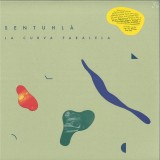
Senthulà is one of the many aliases of musical jack of all trades José Guerrero, a long standing figure in the already rich underground scene of Valencia. In this solo excursion he explores the vast possibilities of mechanical repetition, the machine funk of dirtbag rhythms and proper boogie DIY synth music, sculpting a syncopated sound that is both modern and atavistic. Coming from a deep knowledge and ability to communicate very diverse sounds, slow jams unfold into dance music for clear eyed lounge lizards for whom sleaze comes not dizzy but focused. Whitened african rhythms beat up no wave disco pleasure points, managing the hard task of being very cool and nonchalant, but also hot and dedicated.
This closed door nightclub music will appeal to fans of the new developments in dance music that put Cabaret Voltaire, impLOG or Orchestre Poly-Rythmo de Cotonou into XXI Century basements. The record comes also with a killer remix by Tolouse Low Trax, probably our favourite producer in modern rhythmic music.
When Joakim aka Cray76 moved back from NYC to Paris in 2019, he knew he wouldn't have access to a studio for a little while. And although he welcomed that forced pause in making music, he felt the need to take at least one piece of gear with him in his suitcase. It was the legendary Roland TB303, one of the simplest and quirkest synth ever made and maybe the one that had the most important influence on electronic music since the mid 80s. Having recorded a few beats on his Roland TR808 before he packed his studio in Brooklyn to be shipped back to France, Joakim decided to make a record only using those 2 machines, an « exercice de style » that is a tribute to 30 years+ of acid house and techno and a way to make tools that he could use in his DJ sets. It goes deep, it goes hypnotic, it goes rough, many flavors of acid are packed in this 808+303=1111 12inch.
We welcome to the Moustache Records family the oldskool electro legend Martin Matiske with his Electronic disco-ish 12 inch EP release "Robotic Theatre" This is a future vision of a theatre run by robots and is the era in which machines entertain mankind. Operas are written and played in a mechanical way. The pieces of "Robotic Theatre" deal with different terms of stage work. Track A1 is called "Acting Faces" and Refers to the rehearsing of the role, as well as the interaction of the actors on stage. The well-being of the actor does not often match what is played. He has to play even If it's painful. B2 is the track called "Machinery" Human beings are machines that build machines today. The advantage is perfection and time saving. Robots as actors are reliable and precise. B1 listen to the name "Transistor Dances"its Like The Hungarian Dances by Johannes Brahms you just need a dance to express happiness and remind your culture. Dances bring people together. A robotic dance should not be missing in a play. The last track of the EP is the tune "Practise" a story about a robot the has to practise to achieve perfection and it is fun." Don'tplay this underwater order now gone is gone.
- A1: 4Hero - Hold It Down (Bugz In The Attic's Co-Operative
- A2: Nsm - Dj Power (Use It)
- A3: Domu Feat Face - Save It
- B1: Jazztronik - Samurai
- B2: Kaidi Tatham - Organic Juggernaut
- B3: Vikter Duplaix - Manhood
- C1: Agent K - Feed The Cat
- C2: Fourth Kind - Take Me To Your Sky
- C3: Taylor Mcferrin - Broken Vibes (Feat Vincent Parker)
- D1: Agent K - Hands
- D2: Nova Fronteira - Baila Conmigo (Atjazz Remix)
- D3: Blakai Feat Bembe Segue - Afrospace
At the end of the 90s, a movement began in West London that birthed a fresh direction in dance music. Though this movement never got mainstream press coverage, never had a crossover chart single, and never really transcended its community roots, there was a unique alchemy at work - a fertile moment of creativity, where a group of friends began to experiment with new cadences, rhythms and distilled influences, crafting a new direction in the attics and bedrooms of their neighbouring postcodes. Their music was a head-on collision between the sounds they had been raised on; the reggae sound system culture of Notting Hill Carnival, the sophistication and sheen of Electro-Funk, Jazz Fusion, Soulful House and Disco, the Afro-Beat sounds of Tony Allen and Fela Kuti, and the raw minimalism of early Hip Hop. Though "Broken Beat" was never a tagline that the producers anticipated, and one that they often publicly resisted, those two words would gradually come to represent the scattered rhythms, rolling basslines and soaring changes that were inherent to this exciting new sound. It's not clear who first coined the term "Broken Beat", but try to imagine how it felt to hear it for the first time; the production was grounded in MPCs and SP1200s, the hand-me-down samplers of the Hip-Hop and Jungle golden eras, and the drums that tumbled out of these machines at the hands of these creators had a jagged, stuttering feel, almost as though the groove was close to collapse.
- A1: Can't Pay Won't Pay
- A2: Stealing The Future
- A3: Frontline
- A4: Access Denied
- B1: Realignment
- B2: Comin' Over Here (Feat Stewart Lee)
- B3: Human 47 (Feat 47 Soul)
- B4: Mindlock
- C1: Swarm
- C2: Lost In The Shadows
- C3: Youthquake Part 1 - Greta Speaks
- D1: New Alignment
- D2: Frontline Santiago (Feat Ana Tijoux)
- D3: Smash & Grab The Future (Feat Dub Fx)
It was a busy 2019 for Asian Dub Foundation with the long-awaited reissue of their Mercury Prize-nominated 1998 classic Rafi’s Revenge. The reissue garnered ecstatic reviews, all of which agreed that the sound and the message that ADF threw down in 1998 is as relevant now as it was then-perhaps even more so. So it’s timely that in 2020 the band are set to release their 9th album “Access Denied” which finds them as uncompromising as ever. The album showcases ADF in full spectrum mode from the tough Jungle Punk sound of “Stealing The Future” and “Mind-lock” through to the orchestral meditation of “Realignment” and the reggae lament of the title track.
With guestspots from Greta Thunberg, incendiary Palestinian shamstep warriors 47 Soul, Chilean revolt’s rap main figure Ana Tijoux and radical UK comedian Stewart Lee, Asian Dub Foundation continue their sonic opposition to the powers that be and “Access Denied” kicks harder and higher than ever.
Asian Dub Foundation are a genre unto themselves. Their unique combination of tough jungle rhythms, dub bass lines and wild guitar overlaid by references to their South Asian roots and militant high-speed rap has established them as one of the best live bands in the world. During their long and productive career Asian Dub Foundation have shared the stage with the likes of Rage Against The Machine, the Beastie Boys and Primal Scream also collaborating on record with the likes of Radiohead, Sinead O’ Connor, Iggy Pop and Chuck D.
The story began in the early 90’s when ADF formed from a music workshop in East London at the institution which is their spiritual home, Community Music. Their unique beginnings in a music workshop in east London marked out both their sound and their wider educational aspirations, as showed by their early involvements with Roma Youth in Budapest, hooking up with the leg-endary Afro Reggae in the favelas of Rio, and setting up their own education organisation ADF Education (ADFED), not to mention their campaigns on behalf of those suffering miscarriages of justice. Building a solid live reputation in the mid-90’s, particularly in France, they eventually es-tablished themselves as an important worldwide force and particularly as an explosive alterna-tive to the backward-looking obsession with Britpop in the UK.
In addition to their blistering live reputation ADF were one of the first bands to experiment with the now more commonplace live film re-score, beginning with their rapturously-received interpre-tation of the French classic La Haine back in in 2001. They’ve continued to perform said project or nearly two decades, taking in David Bowie’s Meltdown at London’s South Bank and a contro-versial show at the Broadwater Farm Estate, scene of the events that led to the London Riots of 2011.They’ve also rescored George Lucas’ debut THX 1138 (with encouragement from Mr. Lu-cas himself) and they’ve recently revived their explosive live interpretation to the continually rele-vant Battle of Algiers at the Museum of Immigration in Paris.
DJ Lily returns to LILIES this August with the label's sixth release, featuring a collaboration with label partner Sailor Juul and remixes from Inhalt der Nacht and The Mountain Range.
DJ Lily launched the LILIES imprint in 2018 as a Techno focused sub-label of his BROR imprint and has since gone on to release five 12" releases of material from himself, Svagila, Sandra Mosh and Jor-El. Here the label continues with more material from Lily and introduces the debut collaborative material with Sailor Juul, who has now joined ship to run both Bror and Lilies alongside DJ Lily, the fellow Swedish artist features on the lead track here while more productions from the pair will follow soon on the label later this year.
"Bequem ft. Sailor Juul" leads, a high-octane 140BPM cut driven by menacing bass pulsations, dynamic drums, tension building resonance and murky vocal chants. Lebendig label boss and Monnom Black artist Inhalt der Nacht delivers his twist on "Bequem ft. Sailor Juul" next, bringing crunchy percussion, distorted synth sequences and airy pads into focus for a typically upfront workout from the Berlin-based artist.
DJ Lily's solo track "Safeword Tegnell" opens the flip side, fusing bubbling percussion, bumpy drums and 8-bit synth chimes throughout. Christoffer Berg returns under his The Mountain Range (Aniara Recordings) guise next to complete the package, the artist who is part of Robyn's band and was the synth programmer for Depeche Mode on the album Delta machine amongst other things delivers a truly unique take on "Safeword Tegnell", amusingly described by a friend as "Scooter meets Dopplereffekt at Tresor". Berg twists the original elements with psychedelic sound design, ever unfolding drum patterns and a mind-altering feel across its six-minute duration.
We're glad to be back with our latest reissue, a couple undercover soul gems from the Midwest originally self-released in 1984: LaVerne Washington's "The Promise" and "I Found What I've Been Searching For".
LaVerne has dedicated her life to the arts in every possible way. As an artist herself but also behind the scenes, helping and supporting her contemporaries fulfil their callings. Charlie Parker, Count Basie, Ella Fitzgerald, Mary Lou Williams - LaVerne grew up in Kansas City listening to the all time jazz greats, and soon discovered she was blessed with a keen sense for playing music by ear, playing the piano to what she would hear on the radio. In her teens whilst the 60s transitioned to the 70s' disco and funk era, LaVerne was there to witness it all, and she would go on to study music at the Charlie Parker Academy where she was inspired to become an entertainer.
At Langston University, LaVerne kept studying music where her career blossomed, founding and touring the US with the gospel group "Emery Shaw and the Voices of Praise", singing in several college bands and with her choir "The Voices Of Bethel". LaVerne would go on to perform notably with her bands "LaVerne Washington and Rococo" and the "LaVerne Washington Quartet", and record several songs in KC including "The Promise" and "I Found What I've Been Searching For" in 1984 before moving to Washington DC.
In DC, LaVerne was offered a position as a Program specialist with the National Endowment For The Arts where she started supporting other artists through her work. Over the next couple decades, LaVerne became an associate producer for the Rhythm and Blues Foundation and the Pioneer Awards Ceremonies held in New York, Philadelphia and Los Angeles, which saw the likes of Prince, Aretha Franklin and Jerry Butler attending among others. She has also managed and was mentored by DeeDee Sharp and consulted with artists including Bonnie Raitt (who acted as a mentor to Laverne as well), Kim Weston, Kathy Sledge (SisterSledge), Smokey Robinson and G.C Cameron (Spinners). During that time, LaVerne has kept singing, on her own and as a backing vocalist for DeeDee Sharp and Freda Payne and has never stopped her lifelong dedication to music and the Arts.
The Promise original 7" was LaVerne's last recording in Kansas City before her move to DC and the beginning of her involvement behind the scenes. Channelling her gospel roots - with impeccable arrangement, a contagious drum machine led rhythm section, soaring vocals and relatable lyrics, "The Promise" is guaranteed to bring back smiles to dancefloors and living rooms alike! "I Found What I've Been Searching For" on the flip is a beautiful soul ballad which really showcases the strength and emotion in LaVerne's voice.
Back again in it's original 7" format, we've had the audio transferred and restored from the original 24 track tape provided by LaVerne, and got the recordings re-mixed for the best possible sound! Floating Points behind the mixing desk for this new iteration of a lost classic, comes with a 14"x14" poster of the original picture
Appearing on Echovolt for the very first time, Vancouver-based producer Wolfey offers up a four-track excursion that draws direct inspiration from the often-rainy climate of his sleepy home city.
"Powell St. Blues" E.P. is a dance record of rare emotional depth that sees the Canadian bring out an impressive amount of warmth and soul from the machines he uses to make music. Drawing inspiration from early house and techno producers out of Chicago, NY and Detroit, Wolfey likes to work with a small selection of synthesizers, drum machines and outboard effects processors - only using the computer to record, edit and mix-down long multi-track takes and improvised jams. The resultant tracks bristle with vivid detail and texture while evoking distinctly hypnotic and alluring atmospheres.
Side A opener “Powell St. Blues” is a bittersweet melancholic chunk of deep house with spacey chords and subtle acid style motifs slowly undulating over dusty drum machine rhythms. Wolfey’s deep and emotive electro influences come to the fore on “No Fun City”, where tech-jazz style electric piano motifs, bleeping lead lines and dubby rhythmic delays dance around a tactile 808 groove. On languid B-side opener “Overcast”, aural storm clouds gather menacingly above a moody bassline and the crunchiest of machine rhythms. S.M.P (Slim Media Player) guests on the EP’s lusciously loved-up conclusion, “Southlands Transmission”, where morphing synth arpeggios, rich sunrise-ready chords and swinging skittering hi-hats recall the pitter-patter of rain on the windows of Wolfey’s Vancouver studio. It’s a fitting conclusion to an atmospheric, mood-enhancing EP.
2x12"
Radio Matrix returns! In the strangest of times a somewhat prophetic message reached us. A message delivered by Immediate Proximity, a collaborative project by Diana Napirelly & Niels Luinenburg, known for his output as Delta Funktionen. Their message comes in the shape of an album called '2334'. It covers nine tracks that perfectly act as the soundtrack for our society during COVID-19 times. With tracks and titles like The Apocalyptic Techno Cult, Broken Ether, Clone Morph or Skynet Skanner, we find our self on the brink of a new era where machines and algorithms have taken over humanity. Metallic beats kick hard and eerie melodies are placed against rhythms that remember us of ancient tribes carrying out ritualistic dances in order to try to escape the machine world. Fortunately, behind this somewhat dark and apocalyptic mood a strong statement appears and calls for hope and experience. It gives the listener a path to look beyond the horizon. This release is limited to 150 copies. Printed on 350g incada silk paper with high UV gloss varnishing. Includes a sticker sheet.
A memorable name with an outstanding cover, Fuzzy Duck is a classic slice of underground London art rock and melodic psychedelia. Originally released on MAM in 1971, it’s truly a musical force of infectious riffs and fiery solos, sharp tempo changes, a tight rhythm section and heavy, Hammond-drenched grooves. With echoes of Spencer Davis Group, early Grand Funk and Vanilla Fudge, it comes on like a heavier Soft Machine or Caravan. No wonder Fuzzy Duck’s cult appeal has endured.
The album features Mick Hawksworth (Five Day Week Straw People, Andromeda) on bass, acoustic 12-string, electric cello and some of the vocal duties, and also Roy “Daze” Sharland (Crazy World of Arthur Brown, Spice) on organ and electric piano. Accompanying those two were Paul Francis on drums and percussion, and Grahame White on guitars and the rest of the vocals.
Originally released in an edition of 500, Fuzzy Duck became legendary all over the world through a holy trinity of scarcity, personnel and its sheer brilliance.
The album kicks off with a heavy, bass-fuelled, Hammond rocker titled “Time Will Be Your Doctor”. This is pure hard-edged blues rock, brilliantly played. Its drum break intro was sampled by DJ Premier for Gang Starr’s “Mostly Tha Voice” on 1994’s legendary Hard To Earn. And we can hear its personality all over Harvey and Thomas Bullock’s Map Of Africa.
Rollicking highlight “Mrs. Prout” follows. At nearly 7 minutes long, it incorporates more psych-leaning guitar and drawn-out keyboards à la Ray Manzarek with the band effortlessly switching from jazzy rhythm section to a progressive one. That magnificent instrumental jam that starts half-way and continues through to the end is a true wonder.
“Just Look Around You” is propulsive folk-rock with a soaring, proto power-pop chorus, backed by frenetic organ and heavy bass high in the rich, intoxicating mix. Back comes the heavy, strung-out psych to both close out side one with “Afternoon Out” and kick off side two with “More Than I Am”. Both tracks are improvisational winners that stylistically nod to the late sixties and “More Than I Am”’s guitar hook, catchy organ and memorable chorus would’ve surely made it a great single.
“Country Boy” quenches the thirst for rhythm and melody, only the lyrics and vibe are wonderfully creepy. The sudden cut of the groove and the drop into a more sinister tempo will make you stumble, before the band pick up speed and toss you back again into the opening jam, this time with a badass organ to ride you home. The final, fully fleshed out track is the majestic “In Our Time”, which oscillates between endless organ-driven boogie and heavenly, genuinely moving vocals. Just stunning.
Infamous instrumental cut “A Word from Big D” rounds out the album. Yes, that’s the band jamming with duck quack sound effects accompanying the music. “Ducking vocals” as the sleeve says. You know, just in case the whole “duck” theme had passed you by. It’s an appropriate closer for what sounds like an album that must have been *a lot* of fun to record. It’s definitely fun to listen to.
Mastered by Be With’s chief sound duck Simon Francis and cut with glee by the veteran Pete Norman, this reissue of Fuzzy Duck’s one-and-only LP sounds as mighty as it should. That unforgettable sleeve artwork has been carefully restored and the records pressed by the wonderful Record Industry in the Netherlands. Essential.
Linda “Babe” Majika’s insanely brilliant Don’t Treat Me So Bad is a tight six tracks of blistering electro-flavoured bubblegum and synth-drizzled solar-powered machine-funk. It has become increasingly hard to find, with copies currently moving for over £200. But this is definitely a case of eye-watering price equalling heart-thumping quality.
Once of the Hot Soul Singers, Don’t Treat Me So Bad was Linda’s debut LP as a solo artist. It was produced by Ace Mbuyisa of boogie-funk maestros Freeway and was originally released on Umkhonto Records in South Africa in 1988.
The enormous “Let’s Make A Deal” is probably the best known track here, and it’s definitely the best one if you ask us. Linda’s vocals drip with attitude over warm, breezy synths and an urgent, edgy electro beat to create a timeless club-ready bomb that sounds as fresh as ever. But the rest of the album is far from filler.
Opening track “Kunzima (Tabalaza Mjita)” instantly brings the sunshine vibes, strutting out the gate with that unmistakable South African steppers groove. It’s a deceptively simple song, with multiple instrumental elements arriving and taking leave with admirable restraint.
“It’s Our Home” is a powerful showcase for Linda’s vocals, enhanced by some life-affirming call and response backing vocals throughout. In fact they’re a joyous presence on the whole album. The insistent pipes and swirling, bubbling synths of title track “Don’t Treat Me So Bad” follow. A spacious proto-piano house banger that closes out the first side in phenomenal fashion.
Arriving as track two on the second side, “Unga B’Omthemba Umuntu” has the unenviable task of following the huge “Let’s Make A Deal”. It does the job with class, bringing the tempo down to a mid-paced tropical bounce with lilting harmonies and welcome traces of hi-life guitar. Wonderful stuff. “Playboy” is is another unbeatable head-nod groover rounds out the set wonderfully. That bassline high in the mix is to die for, and the chorus will make any dancefloor smile.
As ever, Simon Francis on mastering duties elevates this release, adding heft and elegance in all the right places with his customary deft touch. The memorable cover art, in which Linda appears straight out of the 1950s with her polka dot skirt and butter-wouldn't-melt pose, has been faithfully restored. But don’t let the innocent styling fool you - Don’t Treat Me So Bad is the work of one badass woman who can hold her own, and then some.
The Grouse approaches, intent on witnessing Helium Robots release the ghouls and demons from their machines. What potent mix can this mean? Channeling the raw energy of their 2018 track Sly on Running Back, the monolithic baselines and surging, dense forces of Defy Me and The Grouse itself unfurl from the speakers. To mop fevered brows after those torrents, the alchemy changes to create the fuzzy warmth and bounce of Pang. Playful vocal samples flicker and weave through the chords, giving way to the final melodic flow of Revel. And we’re done. The Grouse, unruffled, proudly turns and stalks away……
Dona Aka Dj Plant Texture’s debut on Mannequin is the result of an effective true love for the early Chicago Acid and Jackbeat, mixed with textures of EBM and Cold Wave.
“Mindscapes”, featuring the haunted vocals of Aloth, represents a trip into states of consciousness and psychiatric diseases. Ispired by some reports describing America’s Mental health System during the latest 70’s, the EP is a blend of analog machines, forced to create the perfect jam session.
Mastered by Q3000
Graphic design by Silent Servant and AA.
Limited edition of 300 copies on 140gr black vinyl.
Welcome to the curious world of Peter Graf York: a world full of city centre safaris and epic train journeys, Soviet cosmonauts and Oakland rappers, filtered synths and plucked mbiras. It's a wild ride inspired as much by Jamaican dub sorcery as by playful minimalism outta the Pacific Northwest.
Many of these tracks were composed on the hoof - literally en route across sections of the ever-reliable Deutsche Bahn network. As such, there’s a certain travellin-without-moving dynamic across this collection, capturing that cinematic feel of window frames flickering past graffiti'd signal exchanges, morphing into rolling hills and green forests. Expedition Bahn is the sound of ideas being set in motion, each track heralding the arrival of an uncanny destination. Blazed beats give way to acid-fuelled electro, and dub rhythms step aside for 4th world meditations as readily as sleepers on a train track.
We can leave the last word to heroic USSR cosmonaut Vladimir Komarov, who spent the final moments of his fateful re-entry giving the administration an earful of righteous proportions (regarding the technical failures of the spacecraft). Taking his place as the first martyr of space travel, Komarov accepted the Soyuz mission despite safety concerns, in order to protect the other cosmonauts. It's an attitude that echoes throughout PGY’s sonic universe - make the most of the trip you're on... ‘cause you never know just which way it will go.
Gear used: Tascam MIDISTUDIO 644, MPC1000, Roland JX-3P, MODE MACHINES DT200, Electro-Harmonix MEMORY BOY analog delay, Nord Drum 3P, MacBook Pro, Logic Pro 9
Middle Name Dance Tracks Vol 1 is the second release from Sampology’s new imprint. The Middle Name Dance Tracks project reflects standout live & club nights in Brisbane of recent years, where there has seen a steady cross pollination between the club and soul/jazz communities. The blurred line between these two musical worlds has delivered an array of diverse and joyful events for both artists and avid music fans.
This project is a collaborative creative effort between Sampology, Megan Christensen and Sam Stosuur. The recording process was live in nature with Megan on piano and keys, Sam Stosuur on bass/bass synth and Sampology on MPC drums and programming. Having live conga & timbale from Brisbane based Latin percussion staple Gus Cereiji glues the groove together. These sonic choices were inspired by listening to NYC early 80s disco labels, especially Prelude 12" releases, which balanced drum machine & synths as well as live studio musicians. Vocals on 'Only Joy' were recorded by Kerry Raywood. Vocals for 'Bless' come from Brisbane jazz vocalist Merinda Dias-Jayasinha. The combination of the Middle Name Dance Tracks trio and the additional Brisbane artists offers a specific music palette that’s live in essence, dancefloor in orientation, and magical in delivery.
Middle Name Records Dance Tracks Vol 1. artwork was created by artist Sue Poggioli, Sampology’s mother who also created the artwork for the 2016 Natural Selections EP.
Hoshina Anniversary returns to MUSAR Recordings under a new cloak, Shifting Gears.
Toyko's Hoshina Anniversary has risen to particular prominence in recent years with his self-titled brand of 'Watechno'. Stylistically fusing traditional Japanese instrumentation with Chicago and Detroit sensibilities, his works have found homes on ESP Institute, Young Marco's Safe Trip and Amsterdam-based MUSAR Recordings.
Landing on the latter, MUSAR, little over a year ago with 'Zangai' EP, Hoshina returns under a new cloak, Shifting Gears, to present 'Evil' EP.
Named after the 1975 'Gears' LP of jazz and hard bop organist, Johnny Hammond, the Shifting Gears moniker focuses heavily on principles of Jazz and raw musicianship, with a continued exploration of machine-reared club sounds. How the two can take shape as one.
Across 'Evil' EP, Hoshina's native culture remains, as heard on 'Miyatsukomaro', where traditional Japanese strings harmonise with crisp hats and jazz keys. Inspired by the early works of keyboardist and composer, Bob James, all is underpinned by intrinsic Chicago synth work.
A recurrent theme throughout, the Chicago vibe most notably takes hold on title track 'Evil'. An insidious
march, the floor-pummeling kick and shoulder-tickling toms marry seamlessly with dracula-esque chords and dizzying piano arrangements. Nodding to the mischievous bassist Jaco Pastorius of jazz fusion band, Weather Report.
Informed by the pacey creations of a revered duo, The Brecker Brothers and the 70's rock music that soundtracked Hoshina's youth, opener, 'Senor Senorita' wraps swathing reverb around a raucous melody and jiving percussion. Meanwhile, the seedy 'Syndicate' closes out amid eerie synth sneers and quirky, funk-flecked modulations.
Society of Silence is a duo that became involved in the French electronic scene for a few years. They are already known for the wide range of style explored on several French labels and the power and spontaneity of their lives. Too Many Daddies is the ninth release in Activities Record's catalogue, following some previous releases by The Acid Mercenaries, Silicon Vallée, LL321 and two VA's. It is also the eleventh EP of Society of Silence.
Too Many Daddies is a like-minded electronic space saga with strong emotional textures, between hard key sweeps and dark harmony. This record kicks of with A1 Hormone Database, which is a strong funky electro track with a powerful ongoing groove. A2 Iron Penis is a hard hitting acid and hypnotic driven techno track. Undoubtedly another dance floor friendly stomper. B1 Octomom is at the edge between electro and techno. This track sounds paranoid in a very good way. A great nasty dark track with some of freaky vocals in the background. B2 Baby Cluster is a true electro track which demonstrate SOS's penchant for experimentations or No Future, or both...
Too Many Daddies is the evidence that the French duo adeptly understands the language of the machines.