Günter Schickert, four decades of multi-instrumental cosmic explorations, under Berlin's sky, above genres, and compromises.
It was memorable the time when I firstly listened to his debut LP of 1974, the monumental Samtvogel. It overwhelmed me with layers of echoing guitars roaring into space, causing a powerful release of dopamine spreading through my skin, in the way an Interstellar Overdrive', or a Richard D James Album would do. It was a proof of the divine to discover Günter Schickert, it is a profound honour today to present on Marmo his seventh album to date, Labyrinth, the first to be released on vinyl format since 1983`s Kinder In Der Wildnis.
Schickert's Samtvogel, self-published first, then licensed to Brain, equaled the imaginative leap and sonic power of the early Pink Floyd, Manuel Gottsching's Inventions For Electric Guitar or A.R. & Machines's Die Grüne Reise. What followed, from his second LP Überfällig on Sky Records to his collaborations with Klaus Schulze, Jochen Arbeit and Schneider TM, even if little acclaimed, spans a large spectrum of music styles, always through a distinctive and personal aesthetic, that is deeply linked to the one he firstly crafted back in '74, when Schickert pioneered the use of echo effects applied to guitar playing.
And now Labyrinth, a record that stands for versatility, where genres do not matter, soundscapes or life situations take over, song-writing emotions pop out, handing out a spectrum of surprises to the listener. You may find yourself flying low along steep cliffs and with a blink of eye you are thrown into a Middle Eastern scenery.
The album is divided into two parts, two different production bulks and periods of Günther Schickert's life. Side A features a selection of tracks recorded in 1996, appearing on the 2012 album HaHeHiHo, released via Pittsburgh based VCO Recordings, on a limited press of 100 units, tape format only. I felt that the visionary and emotional richness of these pieces deserved the vinyl format and a chance to reach to a wider audience.
The Raga-inspired Morning' opens Labyrinth with exotic charm and bitter-sweet nostalgia. Sieben' kicks off with the same guitar scales of the previous theme, before the motorised progressions of a Korg MS-20 synth surprisingly storm in, carrying along an intersecting multitude of filters and sharp guitar effects, flowing into an epic, paradisiac ending. Ninja Schwert' remains on astral dimensions, it is a struggle of cosmic forces, where the steady ride of a pounding beat gets embraced by different guitar layers and analogue electronic filtering. The side closes up with HaHeHiHo', a slow ballad featuring Mr. Schickert on vocals, guitar, bass guitar and drum machine - an example of simple, stripped down yet gifted songwriting that is capable to reach the heart of the listener.
Side B contains material produced between 2007 and today. The intricate, bewildering Tsunami' shows the multi-instrumental and recording abilities of Günter Schickert: a field-recorded storm with mesmerising powers, a peculiar progressive approach to guitar playing. Mysterious sinister spirits and sounds are emerging and the feeling of being lost in a pleasant trance arises. In contrast, Oase' muffles the intensity and jumps into a completely different soundscape, where in liaison with the sounds of a rolling drum tom and a desert-like trumpet, the microphone carefully captures the found sound tones of everyday-life objects and actions. Like HaHeHiHo on side A, Checking' represents the vocal gem of the B side, in a raw and direct way of songwriting like if Syd Barrett was his invisible helper. Palaver' (which means unnecessarily talk' in German) assembles different vocal recordings of Schickert into a bizarre free-style conversation through a mysterious language, where he attempts to emulate illiterate children conversating. The final track, Morning (Slide)', reprises the opening theme, this time solely performed through the caressing dilated sounds of Günter's slide guitar.
quête:g machine
User Experience welcomes young German and living meme, Nils Viktor Voss, or Corroid as the world will know him from now on. Corroid sent me a track a while back for mastering... an absolute face melter. I asked him via the medium of dance if he had any more tracks. Now I cannot get rid of him, he sends stuff all the time, if it's not music it's memes. The only way I am able to deactivate the meme machine is to try and divert his attention elsewhere. So, find him on facebook, meme him until he is unable to function. Thank you.
Joining Corroid on this record are two fucking amazing artists who I admire a great deal; Myler and Jasmine Azarian who both execute their remixes with precise brutality. As for the track names I considered translating for the ignorant English (myself included) then I heard Corroid's flatmate say: "YOU CANNOT TRANSLATE THEM, THIS IS TRUE ART". Well that's bollocks but tbh I don't have time for translations.
PLEXITY
...the simplistic complexity of subliminal melodic aggression.
Drivetrain (Detroit, USA) - 'Lozen'
A paradoxal tribal eruption crafted by label chief, Derrick Thompson.
Filtered patternization built on barbaric harmonic algorithms.
Teknobrat (Ottawa City, CANADA) - 'Relapse'
A vicious debut headlining a twisted, distorted analog synth abducted by
a rancid 909 beat machine.
DJ Mourad (Tunis, TUNISIA) - 'All Fixed Up'
We welcome another revered DJ/Producer, this one takes
an expedition through incalculable rainbows of acid-tech and the unexplained.
Hughes Giboulay (Beaucaire, FRANCE) - 'Genése'
Another first installment to Soiree...highlighting an emotionally driven
chord progression with encapsulating rhythm incisions, biting at the bass foundation.
New Aussie label, Corella Records, run by producer/DJ Blind Tiger (formerly Captn K) is broadening the repertoire with a second release, a new indie disco
12" single, Forbidden Fruit.
Forbidden Fruit - Field of Fruit Mix, is the one to check out. It's an indie dance/nu-disco excursion with driving bass and piano. Reverb slathered vocals from Steve Hensby
and dreamy strings make this track an uplifting 8 minute journey.
With a touch of early Chicago House in the piano stabs, Georgio Moroder in the rhythm, the drive of Underworld and repetitive elements reminiscent of Field.
Forbidden Fruit - Original Mix, is serving up some classic disco with funky synth bass, driving drums and percussion and the full range of vocalist Steve Hensby makes this a great dance floor mover.
Forbidden Fruit - Fruit Jam Mix, Blind Tiger delivers party jam vibes. Complete with electro drum machine, party goers and warped electric guitar from Luke
Dux. It's a fun, stripped-back remix, that feels like the guys have stumbled on a vintage drum machine and a bunch of instruments at a house party and start cooking up a fruity jam.
A little of something for everyone on this one, check it out.
"Master of ambient spaces and far out places, long-time Finnish producer Sasu Ripatti (aka Vladislav Delay) blesses us once again with another release, this from his 'Visa' period of unreleased tracks.
The first track out of the gate is a recognizable Vladislav Delay piece, but instead of gently flowing rivers of sound, instead we have a series of stiff, machine-like rhythms applied to his classic infinitely deep pads and ambient environmental sounds. It just continues to pile in more elements until becoming almost indistinguishable from his natural, organic flow. From there we move into somewhat more familiar territory but still unusually stripped down and mechanical for a Vladislav Delay joint. It’s fascinating to see such an intricate songwriting process laid bare in such a way, often exposing each individual, nearly bottomless sound in isolation.
Deeper into the album, things veer into decidedly more abrasive and synthetic territory, at times becoming an almost unrecognizable artist for a moment, only to be eventually subsumed under layers of shifting ambience that could only be Sasu.
This austere minimalism makes these tracks some of the most hypnotic since the early 90s excursions, but at the same time seems to have left its organic, analog roots and melded with the harsh gridlocked modern sequencer. ~Clint Anderson
'Futuro perfecto' is the evocative first release by UNIVAC for Femur. In it the passion for machine-like, cold and harsh sounds are being dug into in this new work, which takes him a step further in his rewarded trajectory. The selection is varied and unclassifiable and, despite diverse influences, the sound maintains its personal and non-transferable touch.
A new, heavier direction for Howlround, a project better known for more ambient work. Described as 'Tapeloop Techno', thick knotty tangles of dense, pulsating bass are an echo of Robin's early days making bad dance music, while the abrasive snarls of feedback swirling around these tracks point to his more recent embrace of indeterminacy and chance composition. Previous vinyl releases on Psyché Tropes, The Wormhole, A Year in the Country and Front & Follow as well as his own label The Fog Signals have shown a deep understanding of the possibilities of tape manipulation. On The Debatable Lands Howlround eschews the usual field recordings in favour of exploring the interior world of the machines themselves.
ndio was a short lived but influential trio of John Beltran, Sam McQueen and Seth Taylor. They released an album and three EPs of hi tech ambient techno on Derrick May's Transmat and the Rhythmic Tech label between 1999 and 2010. Here, three tracks from their self titled 2003 EP and one that was released on Styrax get put together, remastered and recut for the next Delsin reissue. Opener 'Winter Long' is classy techno cut that looks into the future. A symphony or gorgeous strings lights up the backdrop as scintillating drums dance and shimmery in the foreground. A Detroit sense of melody adds colour and ensures utter timelessness. 'Blue Fantasy' is another track that show off the power of machines to make music that touches your soul with its gorgeous strong stabs and masterful drum programming, and 'Inca' then slips more into a house groove, with busy, shuffling drums driving along beneath acidic twitches and broad, heavenly pads. It's slick, urgent and compelling and 'Nolita' closes things with more delicate dancing machines, rueful synth work and rubber bass. It's archetypal Detroit techno that sounds as good and forward facing now as it ever did.
New LP on Udacha label comes from Moscow based artist Vasiliy Stepanov. Abstract electronics, nu house, beyond pop, dub, soul, fourth world, tribal, comedy, parody and all other distinctive weirdy magic vibes for all another dimension lovers.
Jan Bertil Svensson: co-founder of the legendary Börft Records, member of arch techno-primitivists Frak, the man responsible for Villa Abo and all-round underground don active in the field of machine music since 1987!
Whilst Jan's output will always conjure comparisons to Techno with a capital T, he has (and continues to) plough a singular and peculiar path in the realm of electronic music. For the Glasgow-based Full Dose, he presents his first ever solo 12' under the name of J.B.S: a four tracker of sluggish, minimal funk that bears the hallmarks of his most classic work as Villa Abo, and adds dashes of the brutal grit that his Studio SS project is infamous for. If there's any sort of recurring theme in Svensson's work, it's playfulness and humour, a particular Scandinavian form of sonic banter that cuts right through the po-faced, black-clad heteronomy of much of today's electronic landscape. The music on this record, with it's odd blend of stripped-back synth pop and brutish dungeon funk evokes exactly that: a body of work that doesn't even seem capable of taking itself too seriously, yet evades anything resembling a recognisable piss take. After all, nobody said that humour and credibility in music had to be mutually exclusive, and J.B.S is a master at weaving the two together at will.
In a world where dance music is often subjected to ludicrous conceptual analysis, sometimes the combined effect of hot circuitry, sincerity, vivaciousness and an anomalous attitude are the only thing for it. But then again, this is not just dance music either...
Todd Osborn. For Many, The Name Conjures Up Myths, Tall Tales Told Within The World Of Electronic Music. Todd: Makes Hovercrafts, Repairs Motorcycles Out Of His Garage, Fixes Vintage Jukeboxes, Creates Handmade Components For Espresso Machines, Flies Fighter Jets, Is A Lego Expert, Owns A Record Label With His Son That Releases Music By Aphex Twin, Madlib And Underground Resistance, Has A Stunning Collection Of Rare Whiskeys. True All Of It, Of Course. Reviewing A Cv Of The Varied Styles And Sounds Of Todd Osborn Is Like A Museum-grade Survey Of Records From Electronic Music's Ultimate Outsider Artist. Yet, Todd Osborn Has Never Been Outside. From Releasing Jungle On Rephlex With Tadd Mullinix As Soundmurderer & Sk-1 To House And Jacking Club Music As Osborne On Ghostly International, To Bright, Chiptuned Boogie As Superstructure, Todd Osborn Has Done It All. From There We Haven't Yet Scratched The Surface. For Over 20 Years, Todd Osborn Has Been A Permanent Fixture In Music, Touring Internationally At Music Festivals, Warehouse Raves, Gabber Parties In Fields To Giving Lectures At Red Bull Music Academy And In Turn Hosting The Most Diverse Programme On Red Bull Radio. To Boot Todd Osborn Opened The Best Record Store In The Usa, In Ypsilanti, Mi. Portage Garage Sounds Is Thrilled, Humbled, To Present This Three Song Ep, Superdisc.
Cryovac Recordings is an independent label brought into existence by artists that believe in their craft. It is a platform to unite factions of the Detroit underground and display their sovereign sounds. Cryovac is a fresh view of the techno soundscape that is forever changing. Our aim is to translate this time into the grooves of vinyl.---a.garcia
Here we are with Cryovac's 21st offering: a thumping, machine funk EP that is sure to snap your set into overdrive. This four tracker throws back to the minimal feels, yet is still futuristic, mildly quirky (in the best ways) and slamming at the same time. The tracks all have that bounce, glitch and experimentation that you come to expect from label founder Andy Garcia and friends. This is also a very versatile record that won't leave your play crate too often. Pick one up at a quality record shop near you!!—Vince Patricola
Lost Futures is a new label that explores experimental and often radical approaches to dance music from the past. In a musical landscape that increasingly claims to seek and reward new forms and ideas, Lost Futures delves into the recent past to revisit forward-thinking, optimistic projects that, owing to the social, musical or outright political climate, perhaps struggled to find an audience. Allowing only time to re-contextualise these leftfield, sometimes misunderstood and ultimately human bodies of work, Lost Futures taps into the inherent idealism of rave.
LF001 trips back until the early nineties to revisit the alternative scene emerging from the Dutch city of Utrecht. Here, three young men - DJ Zero One (Sander Friedeman), TJ Tape TV (Arno Peeters) and DJ White Delight (Richard van der Giessen) - joined forces to form 'The Awax Foundation'. Inspired by the transcendent and revolutionary electronic music arriving on their shores imported from Chicago and Detroit, combining their knowledge, gear and ever-expanding vinyl collection allowed additional freedom in paying sincere tribute to these intoxicating sounds, while also developing their tastes in a more personal, eclectic direction.
The musical flavours of Awax initially leaned toward acid house and the roots of techno. However, with three different mindsets in the mix, their tastes were rarely fixed. One thing each shared in common was a devotion to collecting rare sounds, specifically more adventurous and international samples than those emanating from the increasingly-hard, masculine dance music emerging from the Netherlands during the period. Inspired by the cross-over global sound of bands like Suns of Arqa, or 'World Music', as it was perhaps patronisingly termed at the time, the trio became interested in the idea of making techno with 'ethnic instruments'.
Of course, this being 1992, none of The Awax Foundation had access to such instruments, instead, they had a vast, collective library of samples from all over the world. There were no collaborations and no clear plan. Instead, they set to work using a Yamaha TX16W sampler, the legendary Atari 1040ST computer, a cheap mixing desk and a couple of low-end synths and FX machines. When Richard mentioned the project to his friend, Akin Fernandez, the London DJ and owner of cult label Irdial Discs, Fernandez was intrigued enough to invite the trio to record a one-hour show for his 'Monster Music Radio' series on London's then-burgeoning Kiss FM.
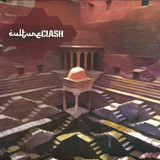
Forced to come up with a name, 'CultureClash' seemed like the obvious choice, even if the members of Awax were only creatively sparring among themselves. Along with the term 'ethno-techno', slightly dubious to a hopefully more conscious Western audience in 2017, these were the only guiding principles to the quietly ambitious project that soon combined cutting-edge machine rhythms with samples sourced from everywhere from Bolivia to Togo, and inspired by everything from Ravi Shankar's epic soundtrack to the Oscar-winning movie Ghandi, to the technical limits of their own setup requiring a dazzling degree of cut-and-paste work. Some tracks even emerged out of academic studies within the ethnomusicology department at The University of Amsterdam.
The show aired on October 2nd, 1992, recorded in one blistering take and without any rehearsals, traversing a huge variety of tempos and styles. If the performance wasn't seamless, it was undeniably thrilling, fresh and ambitious. As such, several labels, including Fernandez's aforementioned Irdial Discs expressed an interesting in commercially releasing CultureClash, while another imprint proposed a series of twelve-inches and an album. But the sheer complexity of the project meant that it never saw the light of day, while the trio embarked on different journeys ahead, both creative and personal.
Twenty five years later, and the original CultureClash lineup and founding members of The Awax Foundation provide the sound of the first release from Lost Futures. An otherworldly, ambitious and optimistic compilation, accompanied by extensive sleeve notes from the trio, CultureClash is a timeless ode to experimentation in dance music's ever-overlapping culture.
New one on Antinote.. Broken glass, dogs barking & cats roaring: Succhiamo is back and gives us news from the scrapyarh with punkish synthpop traxx
Some words from the label:
Remember that straightforward mix of EBM and synth-punk that came out on Antinote last year, wrapped in a suggestive black and gold sleeve The lyrics were strictly not ambiguous and the music produced by Panoptique and Paula was joyfully aggressive.
Broken glass, dogs barking & cats roaring: Succhiamo is back and gives us news from the scrapyard.
The thing is, it seems that Succhiamo's scrapyard has been animated by Bill Plympton : in place of dogs and cats, it's a lew Pink Panther chasing a spaced-out Scooby-Doo on Dolore Dentro or Stai Male. Happily championing bad taste, the two musicians even venture into the illegitimate territories of italo-pop missed hits, shaped for lipsync performances on Rai Uno with the nagging Que Pena.
As we're getting close to the middle of the record, the music gets openly punkier, climaxing with the explicitly
named Desiderio Di Violenza, brushing past 200 BPM. While the inevitable silence following the last notes of Que
Pena temporarily puts an end to the pleasant nightmare that is Mani In Fuoco, the figures - somehow similar to
those inhabiting the world of Fritz the Cat - that Succhiamo insidiously inserts into the listener's head don't fade
away: they patiently wait for the duo's pulsing drum machines and the saturated synths to wake up again and set
them in motion for another ride.
SWINGTING017 is a bouncy JA-to-UK bashment banger that features a hefty combination of producers and vocalists from both the Equiknoxx & Swing Ting camps. The tune finds each artist at their most playful, riding the sparkly, jiggy riddim impeccably.
Jump to the Bar was built and voiced in two days at London Bridge's Red Bull Studios, late Summer 2017.
Day one involved Gavsborg , Time Cow , Platt & Samrai arriving from various residences of friends and family in the vicinity of the English Capital (shout to the Epsom crew). Alway early-birds, Gavs and Cow set to the task on various machines and available gear to construct the rough instrumental, with Platt & Samrai assisting on percussion and programming. Soon lush synths, tough kicks, flanged hats, grimy bass and snappy claps were combining neatly and the backdrop was set.
Day two featured Kingston's queen of the cool kids club Shanique Marie flying straight into the big smoke to lay down a witty hook in minutes before earning a lie down on the sofa. Original Brum-town don RTKal rolled in from the West-Midlands (driven by Farda Neeko) dropping a one-take freestyle (egged on by an excitable studio gathering including Randy Valentine, Mr Williamz & Specialist Moss) that later became his verse and the pre-chorus. With the clock ticking on the session, the flask was neatly passed to Mancunian stalwart Fox for the final flourish, giving shouts to buckfast tonic wine & organic herbal treats.
Supported by Toddla T (Coldest Record), Jubilee (BBC Radio 1 Residency), Chal Ravens (Top Flight), Max Glazer (Federation Sound Radio) as well as being added to Spotify's Dancehall Official Playlist.
The California-born, London-based producer Rrose is well known for taking dancefloor techno into the uncharted depths of experimentalism and psychedelia while also paying homage to artists of the 20th century avant-garde such as Marcel Duchamp, James Tenney, and Eliane Radigue.
"Beware of Shells" (the first solo Rrose release of 2018) is a diverse five track EP that goes to extremes of both aggression and tranquility while remaining strangely cohesive. The EP opens with machine gun bass drums that slowly disintegrate into a swirl of undulating tones and ghostly resonances. Next comes "Incisors" - the most solidly dancefloor track of the EP - which establishes a primal, skeletal rhythmic base upon which snake-like analog synth lines interweave in unpredictable ways. "The Swelling" follows with a short, sparse study in feedback, bent into uneasy melodic patterns. Side B opens with a previously unreleased 2013 remix of the Los Angeles band Deathday, and is perhaps Rrose's most overtly "industrial" track to date, with buzzing, dissonant synth tones that sound somewhere between a foghorn and a distorted guitar. The EP finishes on a contemplative note with "Pecking Order," a microtonal, ritualistic affair conjuring the spirit of Wendy Carlos's little-known masterpiece "Beauty in the Beast."
Loya is a new project by French producer Sébastien Lejeune, which allows him to research his
own cultural heritage, as a native of La Réunion.
For the past five years, Loya has been exploring the musical environment of the sister islands of the
Mascarenes (Indian Ocean), breaking down the boundaries between electronic music and
traditional music in a globalized world. Growing up in the great melting pot of La Reunion, Loya was
exposed to a number of cultures and rhythms that fueled his curiosity.
Settling in metropolitan France in the mid-90s, Loya's first encounter with electronic music
happened upon discovering acts such as Autechre, Plaid and Boards of Canada. Soon, Loya was
drawing from Intelligent Dance Music and bleep techno to build complex rhythm arrangements and
ethereal melodies. Throughout this research, Loya gradually managed to tame the erratic nature of
his machines to summon states of trance that reminded him of the music he grew up listening to as
native of the Mascarene.
From this route through the meanders of contemporary electronic music, Loya developed a
trademark sound based on triple time beats, pointillist sound design and a taste for experimentation.
Such distinctive features can already be heard on his first self-produced album Eruption, released
in 2014 and the EP Indian Ocean, released in 2016 on Mawimbi Records, although Corail is his
most accomplished work and a testament of his clear talent.
Exploring the blue depths of the Indian Ocean with the fluency of a native, the ten compositions of
Corail unfold like an archipelago. Showcasing the talents of traditional musicians such as Mauritius
ravanne icon Menwar and Madagascan accordion master Régis Gizavo, Corail finds a fine balance
between the soft, velvety ripples of modular synthesizers and the rawness of frantic percussion
motifs and local field recordings.
Fina's next release comes from Mathew Ferness, an exciting and already hotly tipped rising star for just his second ever EP. It features three tracks that showcase his musical house style with a remix from Helsinki's Saine.
Ferness hails from a small town near Montreal in Quebec, where he was an outcast obsessed with music. With no access to record shops, parties or scenes Mathew started taking matters into his own hands DJing in his teens taking inspiration from J Dilla, he soon began producing his own beats on a sampler and drum machine.
An exploration of analogue sounds, DAWS and most recently electronic music have all lead him to the rich sound he has now. His last EP on Beat changers was championed by Rhythm Section International and Radio 1 tastemaker Bradley Zero and this latest EP is likely to prove just as popular.
Pad laced opener 'Escapade' is a summery deep house jam with breezy acoustic guitar and warm, punchy drums of the sort to get any floor cutting loose. 'Solitude' is more paired back, with thoughtful piano keys laid over deep rolling drums. There is a musical romance and beauty to the synths that elevate this one above purely functional fodder, and then 'At First Sight' awakens your senses once more with broad synth smears and perfectly rough-edged drums which create pure deep house soul.
Saine is a producer with a range that goes from hazy hip hop to dusty house on labels like Odd Socks, Andy Hart's Voyage and this one before now. After his 2017 EP Mint, he returns with a remix that is bubbly and laden with colourful melodies and open-air house grooves.
This is EP full of rich house music that is for mind, body and soul.
* For our eleventh release we are excited to be working with five artists who are all new to the label.
* Rendered open proceedings on side A with a nod to COIL in their psychedelically propulsive workout Analstairface.
End Train follows, steering his machines with tactile precision between acerbic acid lines and cavernous synths, crashing through a brutal onslaught of splintered beats that finally open into space.
* Side B starts with the claustrophobic tension of WarinD's Still Left In There, featuring Huren's disembodied snarl, tearing at the relentless machine funk. This is followed by the insistent, martial urgency of Distant's Hydrargyra, scaling vast heights of immaculate sonic architecture to an emotional pinnacle that is finally resolved in the EBM drenched romanticism of Lapse of Reason's Go Away.
One Instrument presents ""One Instrument Sessions", a new format on which each artist shows a more personal narrative of the sound experiments they compose.
Neel opens the series with a solo record including "Aria", a 20 minutes long piece made with the E340 Cloud Generator of Synthesis Technology, and "The Morning After", composed with the Roland SH-01A.
The E340 Cloud Generator is an oscillator which Neel says has always been a fan of. It has eight sines and sawtooth VCOs with unique modulation capabilities. "Aria" came to life while he was preparing for a live techno set: when he stopped the recording the oscillator kept running producing the sound and tones audible in the composition.
The Roland SH-101 is Neel's favourite synth. "The Morning After" is one of the 9 experiments he created while using the boutique version of the machine.