Clear Vinyl
Aufgenommen in Berlin und aus der Ferne, zwischen 2020 und 2022, kehrt die Band mit ihrem 20. Studioalbum zurück, nach dem letztjährigen “Fire Doesen’t Grow on Trees“ dem zweiten Teil einer aufregenden neuen Phase für Anton Newcombe und seiner Band. Mit ihm im Studio waren Hakon Adalsteinsson (Gitarre), & Uri Rennert (Schlagzeug). Die Band ging 2022 auf Tour und absolvierte u.a. eine 34 Shows umfassende äußerst erfolgreiche Tournee in Nordamerika mit Mercury Rev und The Magic Castles. Eine neue Tour zur Unterstützung des neuen Albums steht im Januar 2023 in Großbritannien an und wird im Februar in Europa fortgesetzt. Ursprünglich war Newcombe stark von der psychedelischen Phase der Rolling Stones beeinflusst - der Name stammt vom Stones-Gitarristen Brian Jones in Verbindung mit einer Anspielung auf den Sektenführer Jim Jones -, aber seit den 2000er Jahren hat sich seine Arbeit in vielen ästhetische Dimensionen ausgeweitet und sich u.a. dem britischen Shoegaze-Genre der 1990er Jahre annähert und Einflüsse aus Weltmusik, insbesondere der Musik des Nahen Ostens und Brasiliens, miteinbezieht.
quête:g swing
In the past, Mapache recording sessions have been pretty laid-back
affairs, with friends coming and going, the sessions starting and stopping
at the band's discretion--as relaxed a process as the immaculately sunny
vibes that their four albums would suggest - But on their dynamic and
ambitious fifth album of cosmic-folk, Swinging Stars, Sam Blasucci and
Clay Finch decided to take a trip and hunker down somewhere
particularly special
"It's a pretty impactful place," Finch says of the Panoramic House, the artist
retreat where Swinging Stars was recorded. "It's kind of dramatic. It's a castle-y
building on a hill, way up overlooking the Bay."
Located in Stinson Beach in Marin County, California, the Panoramic House has
recently hosted acts like My Morning Jacket, the War on Drugs, and Cate Le Bon,
and was the ideal combination of scenic beauty and self-imposed confinement to
allow Mapache to settle in for their most cohesive album yet.
"That environment yields itself to a higher level of focus because everybody's
together for a week," says Finch, explaining that the band stayed there during the
process, sharing every bit of their time and energy on a shared vision. "We were
all captive. No one could escape," he laughs.
Swinging Stars, an album of calm, second-nature swagger, is the natural result of
a band that's existed in one form or another for its founders' entire adult lives.
Finch and Blasucci first met as students at La Canada High School, just north of
Los Angeles, where they both had a guitar class: "There wasn't much supervision
or anything," remembers Blasucci. "It was really nice. And we got to just play
guitars together."
Arrangement- wise, the impulse to keep things simple was a pendulum swing
away from his Grammy-nominated 2018 album, 'Evening Machines'. "I set out to
make a record that was really bare bones," Isakov says. "I wanted to go backward
a little bit, because 'Evening Machines' was such a deep dive into arrangements. I
wanted to have more of a raw experience with this one."Isakov played many of
the instruments on 'Appaloosa Bones' himself. He recorded in a studio tucked
away in a barn on his property outside of Boulder, Colorado, where he helps grow
produce for CSA members, local restaurants, and an area food bank. The
resulting album is intimate and hushed, but maybe not as spare as what Isakov
initially had in mind. The eleven songs on the album are full of lush vocal
harmonies and layers of instrumental textures that blend guitar, banjo, piano, and
various other keyboards.
Joel Paterson has been a mainstay of the Chicago roots music scene for
over twenty years, playing with many bands and showcasing his unique
blend jazz, blues, rockabilly, country and western swing
'Wheelhouse Rag' is a 14- track collection of original rags and country blues on
solo, finger picking acoustic guitar.
The all- acoustic, 1920's- tinged 'Wheelhouse Rag' may at first seem like a
departure in genre for the guitarist - he is predominantly known for his
instrumental multitracked recordings reminiscent of Les Paul and Chet Atkins -
Joel learned to play guitar by ear from the records of acoustic legends such as
Blind Blake, Robert Johnson, Reverend Gary Davis, and Big Bill Broonzy. He later
expanded his repertoire to include techniques of the thumb-picking giants Merle
Travis and Chet Atkins. These influences can be heard throughout the album,
mixed in with many more twists and turns from the mind of the artist, to bring
you, 'Wheelhouse Rag:' the original fingerstyle guitar instrumentals of Joel
Paterson.
Original fingerstyle guitar rag and country blues instrumentals by in-demand
Chicago roots guitarist Joel Paterson, who has played with Cactus Blossoms, JD
McPherson, Kelley Hogan, and more, bringing his unique blend of jazz, blues,
rockabilly, and country & western style to the mix.
RIYL: Les Paul, Chet Atkins, Reverend Gary Davis, Cactus Blossoms, Pokey
LaFarge, Merle Travis
"Guitarist Paterson's free-ranging music defies easy categorization. He addresses
classic country, blues and Tin Pan Alley tunes as timeless works that reward
repeated listening." - Howard Reich, Chicago Tribune"Of all the "vintage" artists
injecting new life into bygone styles with originality and a sense of humor, Joel
Paterson just might top the list." - Dan Forte, Vintage Guitar Magazine
Collecting recordings made between 1953 and 1956, Miles Davis Plays For Lovers is a look at the more sensitive and sensual side of the great trumpeter, focusing on his sultry and smoky late night ballads. Mostly featuring his legendary mid-50s quintet of Coltrane, Garland, Chambers, and Jones, this collection highlights that groups ability to slow things down to a soulful, brilliant simmer. Classic jazz ballads that swing, perfect for late nights with a lover at your side.
What’s It Gonna Take? ist der Nachfolger von Van Morrisons Veröffentlichung aus dem Jahr 2021 - dem 28-Track-Doppelalbum Latest Record Project, Vol. 1 - und ist ein weiterer Beweis für die reiche kreative Ader, auf der sich einer der größten Künstler der Welt derzeit befindet.
What’s It Gonna Take? enthält fünfzehn neue Kompositionen von Van Morrison, die allesamt den unermüdlichen Drang des Künstlers widerspiegeln, Aufnahmen zu machen und live vor Publikum aufzutreten. Van Morrison ist eines der wahren Originale der Musik - absolut einzigartig und inspirierend mit einem Vermächtnis, das die letzten sieben Jahrzehnte umspannt. Der 1945 in Belfast geborene und von Blues, Country und Gospel inspirierte Musiker gründete 1964 die äußerst erfolgreiche R&B-Band Them, bevor er sich als Solokünstler in andere Gefilde begab. Als einer der produktivsten Plattenkünstler und fleißigsten Live-Performer seiner Zeit hat Van Morrison einen unvergleichlichen Katalog von Veröffentlichungen
geschaffen, der sich mühelos durch seine unzähligen Einflüsse bewegt, darunter visionäre Straßenpoesie, Jazz, Swing, Skiffle und keltische Wurzeln, und einige der beliebtesten Songs des 20. Jahrhunderts. Außerdem ist es ihm gelungen, sowohl auf der Bühne als auch im Studio eine Arbeitsmoral zu bewahren, die jüngere Künstler beschämen würde. What’s It Gonna Take? ist das 43. Studioalbum von Van Morrison.
What’s It Gonna Take? ist der Nachfolger von Van Morrisons Veröffentlichung aus dem Jahr 2021 - dem 28-Track-Doppelalbum Latest Record Project, Vol. 1 - und ist ein weiterer Beweis für die reiche kreative Ader, auf der sich einer der größten Künstler der Welt derzeit befindet.
What’s It Gonna Take? enthält fünfzehn neue Kompositionen von Van Morrison, die allesamt den unermüdlichen Drang des Künstlers widerspiegeln, Aufnahmen zu machen und live vor Publikum aufzutreten. Van Morrison ist eines der wahren Originale der Musik - absolut einzigartig und inspirierend mit einem Vermächtnis, das die letzten sieben Jahrzehnte umspannt. Der 1945 in Belfast geborene und von Blues, Country und Gospel inspirierte Musiker gründete 1964 die äußerst erfolgreiche R&B-Band Them, bevor er sich als Solokünstler in andere Gefilde begab. Als einer der produktivsten Plattenkünstler und fleißigsten Live-Performer seiner Zeit hat Van Morrison einen unvergleichlichen Katalog von Veröffentlichungen
geschaffen, der sich mühelos durch seine unzähligen Einflüsse bewegt, darunter visionäre Straßenpoesie, Jazz, Swing, Skiffle und keltische Wurzeln, und einige der beliebtesten Songs des 20. Jahrhunderts. Außerdem ist es ihm gelungen, sowohl auf der Bühne als auch im Studio eine Arbeitsmoral zu bewahren, die jüngere Künstler beschämen würde. What’s It Gonna Take? ist das 43. Studioalbum von Van Morrison.
Singer/Songwriter, Country, R&B und Bigband-Swing bringt Lyle Lovett auf seinem neuen Album ganz selbstverständlich unter einen Cowboy-Hut. In seiner langen Karriere als Musiker und Schauspieler hat er sich eh noch nie über Genre-Grenzen Gedanken gemacht. Auf seinem ersten Album seit über 10 Jahren, seinem Debüt bei Verve Records, mischt er Balladen aus eigener Feder mit swingenden Big-Band-Nummern, darunter bekannte Standards wie „Straighten Up And Fly Right“ und „Cookin‘ At The Continental“. Kein Wunder, dass Lovett in den USA längst als „national Treasure“ gilt. Seine musikalische Karriere begann er als Songwriter. 1986 veröffentlichte er sein Debütalbum, 1989 gewann er einen Grammy für die „Best Male Country Vocal Performance“. Hierzulande schaffte er es in alle Medien, als er 1993 die Schauspielerin Julia Roberts heiratete. Lovett hat bis heute auch in zwölf TV- und Kinofilmen gespielt, unter anderem in vier Filmen von Regisseur Robert Altman.
- I’ve Got My Love To Keep Me Warm
- The Song Is Ended
- You’re Laughing At Me
- Get Thee Behind Me Satan
- How Deep Is The Ocean
- Let’s Face The Music And Dance
- Always
- Heat Wave
- Suppertime
- Puttin’ On The Ritz
- Cheek To Cheek
- Let Yourself Go
- Russian Lullaby
- Alexander’s Ragtime Band
Weltpremiere eines bislang unbekannten Ella-Konzertes, aufgenommen mit dem Hollywood Bowl Pops Orchestra im August 1958!
Die berühmten Songbook-Alben von Ella Fitzgerald sind Evergreens des Jazzgesangs, die in regelmäßigen Neuauflagen und inzwischen auch digital immer wieder alte und neue Fans finden. Ellas mitreißende
Interpretationen der besten Songs von ikonischen Komponisten wie Irving Berlin, Rodgers & Hart, Cole
Porter und natürlich George & Ira Gershwin sind bis heute unübertroffen. Dass Ella Fitzgerald Ende der
1950er Jahre ihr Irving Berlin Songbook zusammen mit dem großartigen Arrangeur und Orchesterleiter
Paul Weston auch live aufgeführt hat, war längst in Vergessenheit geraten.
Jetzt wurde in der Privatsammlung von Ellas Manager Norman Granz ein Stereo-Mitschnitt dieses ganz
besonderen Abends entdeckt und von Produzent und Toningenieur Gregg Field bestmöglich digital aufbereitet. Auf LP, CD und digital laden Ella Fitzgerald, Paul Weston und das fabelhafte Hollywood Bowl Pops
Orchestra jetzt zum live aufgeführten Irving Berlin Songbook ein, ein Abend voller Swing, sentimentaler
Balladen, unsterblicher Ohrwürmer und Jazzgesang der Weltklasse
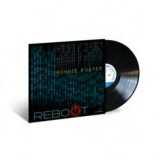
1972, vor fünfzig Jahren, veröffentlichte Hammondorgel- und Acid-Jazz-Legende Ronnie Foster sein BlueNote-Debüt „Two Headed Freap“, von dem nicht nur der Track „Mystic Brew“ ein erstaunliches Eigenleben entwickelte, spätestens nachdem A Tribe Called Quest ihn als Sample-Grundlage für ihren Song „Electric Relaxation“ auf dem 1994er Album „Midnight Marauders“ benutzten.
Die neun Songs auf „Reboot“, Ronnie Fosters Rückkehr zum Blue-Note-Label, klingen gradlinig, kraftvoll und frisch wie eh und je. Seine Art von Soul-Jazz hat in den letzten Jahrzehnen diverse Revivals gefeiert und beweist hier, dass sie eigentlich nie aus der Mode gekommen ist. In den Linernotes widmet Foster die Aufnahmen seinem 2021 verstorbenen „Bruder, Freund und Helden Dr. Lonnie Smith, einem der Weltbesten auf der Hammond B3-Orgel“.
The fourth album from Australian metal masters, Parkway Drive. It was another creative leap forward for the chart-topping Australian band, "Atlas" boasts some of the most up front and confrontational material Parkway Drive has ever released, while at the same time taking several unexpected turns into lush sonic terrain, redefining their trademark sound while reinforcing their position as leaders in their field. the album includes the "Wild Eyes" which is a huge sing-a-long live anthem.
Black Truffle is pleased to welcome free jazz legend Joe McPhee back to the fold with Oblique Strategies, a wild trio recorded in Antwerp in 2018 in the company of Mette Rasmussen’s fire-breathing alto saxophone and Dennis Tyfus’s post-Fluxus antics on tape, voice, and percussion. Rasmussen and Tyfus have previously recorded together as Bazuinschal, and some similar strategies are on display here: mysterious metallic scrapes, extended tones in which voice and sax become indistinguishable, comic explosions of varispeed tape. With McPhee on board, however, proceedings are more sumptuous, with the two horns moving fluidly from expeditions into the extremes of their instruments’ registers to pointillistic note-splatter and Ayler-esque folk melodies; we even get to bask in some of the slow-motion free blues that McPhee has now been playing for half a century. McPhee is heard primarily on tenor, Rasmussen mainly on alto, but with Rasmussen doubling on sundry objects, and the whole trio contributing vocals, certainty about who is doing what becomes nigh impossible.
The recording and production add to this hazy unclarity. Where much contemporary improvised music aims at dryly clinical hi-fi, the lively reverberant space of Oblique Strategies calls to mind the less-than-pristine sonics of classic free jazz artefacts like John Tchicai’s Afrodisiaca or McPhee’s own Underground Railroad. A further dimension of oblique unpredictability is added by subtle changes in the sense of space: at times merely a reverb tail glimpsed between phrases, at other points the whole mix seems to be momentarily swallowed up in slap-back, blurring the lines between acoustic instruments and the decayed fidelity of Tyfus’ tape playback. Spread across four pieces ranging from four to nineteen minutes in length, Oblique Strategies moves with anarchic swagger from explosions of clattering cymbals and bellowing horns to near-silent episodes of mysterious rumble and clunk. ‘Death or Dinner?’ opens the record with a lovely duet of climbing melodic patterns shared between the two saxophones, played with a buzzing oboe-like tone. A long, wavering note sung by Tyfus cues the first of countless changes of direction, eventually leading to a crescendo of watery splutters and duelling saxes. At points Tyfus’ keening resemble the signature moves of his friend and collaborator, Ghédelia Tazartès; at others, his tape-sped huffs and puffs possess a rawness reminiscent of Henri Chopin or Gil Wolman. The dialogue between wailing saxophones and vocal cries, punctuated by percussive thuds and crashes, can at times feel less like a musical performance and more like the calls of some mysterious forest creatures, possessing a primordial energy that might remind some listeners of the outdoor antics of Brötzmann and Bennink’s Schwarzwaldfahrt.
Oblique Strategies can also be delicate at times, as on the beautiful third piece, ‘Destilled Edible’, dominated by a slow, microtonal melody played with a breathy tone resembling a shakuhachi. The closing side-long ‘Light My Fire’ ranges across classic improv call and response, skittering trumpet blurts, inept cymbal clatter, mock-operatic vocals, and crude tape manoeuvres. Momentarily pausing at the ten-minute mark for an interlude of ghostly room sound and crackling texture, its closing moments unfurl a glorious dual saxophone finale, the almost epic tone subtly undermined by Tyfus quietly tapping out swing rhythms. Arriving in a striking sleeve adorned with Tyfus’ drawings, Oblique Strategies is an invigoratingly free-spirited blast of improvisation.
Downloads
Looooooongish Cat and Davecoin have come together for their debut album Realizer on Adeen. It is a record that swings from the dark and mysterious to the more upbeat and playful as it explores a range of techno styles. The material originates from the pair's live set so has a real dynamism to it as well as it moves through ever-evolving psychedelic soundscapes.
Vocals, synth lines, and guitars have all been laid down on tape and then resampled and deconstructed to "create an analog patchwork which floats over the hard-hitting beats and fat analog synths and bass lines." It's an immersive and inventive record that also has a fresh cover design.
Lush"s fi nal studio, Lovelife, landed whilst Britpop was in full swing (Jarvis Cocker even duets with Miki on the track "Ciao!"), managing to fi t in whilst sticking to the rules they set themselves with prior albums. Produced by Pete Bartlett (Therapy?, Kitchens of Distinction), it features three of the band"s biggest singles in "Single Girl", "Ladykillers" and "500 (Shake Baby Shake)".
First new recordings from GODFLESH since 2017's critically acclaimed full length 'POST SELF'.
'PURGE' musically, amongst the many layers of dirt, revisits and updates the concepts explored on the 'PURE' album from 1992; 90's hip hop grooves mangled and put through the GODFLESH filter to create something that is still unique and futuristic in style.
Both minimal and maximal, with layer upon layer of filth and heaviness, Godflesh deliver alien grooves that swing whilst also retaining the psychedelic / bad trip edge that Godflesh has always obsessed over. This is, and always has been, feel bad music; the title alone 'PURGE' references directly how songwriter / creator Justin K Broadrick utilises this music as temporary relief from his diagnosed autism and PTSD, a journey he has been on since he began creating music and feeling alone and as an outsider in any 'scene' or 'group' from childhood and throughout his adulthood.
Godflesh gives him the means to express a lifetime of feeling misunderstood and overwhelmed by hyper sensitivity, the band being the vehicle to give him some sense of catharsis and transcendence; a way of communicating overload and constant disenchantment at the human condition, and man's abuse of power and the systems that chain us.
The album references the cycle of horror that man has always and will always put us through; those in positions of power revel in the infliction of pain and horror upon individuals, in the name of their religion, their power, their money, their flags....
8 songs, delivered in a concise fashion for fellow outsiders.
Julian Cannonball Adderley's only Blue Note album, Somethin' Else, would likely forever be famous in music lore if just for the presence of Miles Davis. The iconic composer/trumpeter steps into the role of sideman on the 1958 set, one of just a handful of times he'd make such a move after the calendar passed the mid-1950s. Yet evaluating Somethin' Else strictly on Davis' involvement misses the big picture. Plain and simple, Adderley's jubilant work remains a jazz landmark due to the chemistry of its Hall of Fame personnel, enthusiasm of its participants, and sophistication of its arrangements – not to mention the reference-grade production and inclusion of the definitive renditions of two all-time jazz standards.
Limited to 6,000 numbered copies, pressed on dead-quiet MoFi SuperVinyl at RTI, and mastered from the original master tapes, Mobile Fidelity's ultra-hi-fi UltraDisc One-Step 180g 45RPM 2LP collector's edition pays tribute to the record's merit and includes the bonus track "Allison's Uncle." Offering reference-calibre sonics, this spectacular collector's version provides a clear, transparent, ultra-dynamic, and up-close view of a cornerstone effort that witnesses Adderley and Davis sharing horn duty alone for the only time in their fabled careers – an arrangement that occurred as a result of Adderley having joined Davis' majestic sextet a year prior.
The premium packaging and beautiful presentation of the UD1S Somethin' Else pressing befit its extremely select status. Housed in a deluxe slipcase, it features special foil-stamped jackets and faithful-to-the-original graphics that illuminate the splendour of the recording. No expense has been spared. Aurally and visually, this UD1S reissue exists as a curatorial artefact meant to be preserved, touched, and examined. It is made for discerning listeners that prize sound quality and production, and who desire to fully immerse themselves in the art – and everything involved with the album, from the iconic photos to the gorgeous finishes.
The vibrant potency reveals itself openly on an analogue set that provides full-range reproduction of an ensemble that also includes pianist Hank Jones, bassist Sam Jones, and drummer Art Blakey. Each and every snare hit, downbeat, and cymbal splash registered by the latter take on realistic proportions, blooming and decaying as they would right in front of you on a stage. Jones' foundational bass lines register with uncommon depth and palpability, the litheness of the strings and fullness of the instrument epitomizing the definition of rhythm. Stellar, too, are the surefooted 88s. Sublime in scale, tonality, and attack, with the delineation such you can practically separate the white and black keys in your mind. As for that liquid interplay between Adderley and Davis? Breathtakingly lifelike in timbre, naturalism, purity, and presence. This collector's version takes you there – there being Rudy Van Gelder's legendary New Jersey studio in March 1958 to witness it all unfold, again and again.
For reasons that extend far beyond the outstanding playing and flawless repertoire, Somethin' Else is without question a record you'll always want to watch and hear come together. As veteran critic Bob Blumenthal observed writing about the album four decades after its release, "The instant rapport achieved by the quintet is thus the product of much shared and common history, though the tensile strength that they create throughout created a totally unique feeling that can be attributed to the sensitive musicianship of all concerned, including the supposedly hard bopping leader and drummer." Such inimitable feeling, or emotion, courses throughout every passage, and no where more obviously than on "Autumn Leaves" and "Love for Sale."
Without question, the discreet interpretations of the Johnny Mercer and Cole Porter songs, respectively, found on Somethin' Else have long been considered part of jazz's alluring mystique. Adderley and Davis bring contrasting approaches to the table yet sound of a singular mind on "Autumn Leaves," with the latter's muted trumpet and the headliner's lush alto saxophone dovetailing into a performance that endures as a blueprint for expression, counterpoint, sophistication, fluidity, and linearity. Blues, melody, and romance pour from their horns. Their bandmates, picking up on the intimate vibe and calm mood here – as well as on the spry, head-over-heels spirit of "Love for Sale" – join in on the conversation with sharp economy and float-on-air roundedness.
Not to undersell the other three numbers, all deserving five-star status. Twelve measures in length, the title track offers a slow burn in swing. Written by Adderley's brother, Nat, the 12-bar "One for Daddy-O" transmits funk flavors. The closing "Dancing in the Dark" pops with lushness and temptation, its stream of bold colours and understated textures calling for a moonlight twirl, or at least fantasies suggestive of a memorable night. Somethin' else, indeed.
Originally released in 1996 — and for the first time here on vinyl — The New Standard features songs by Stevie Wonder, Prince, Sade, Nirvana and more getting creative, inspired and swinging jazz takes from Herbie and a world class band.
The recording features an all-star cast of Michael Brecker, John Scofield, Dave Holland, Jack DeJohnette, and percussionist Don Alias.
With the label MPS, post-war musical history was written in Germany:
noble music productions with many international greats come from the
Black Forest and are timelessly legendary
Some treasures from the archive of the label are released by HGBSBlue on highquality vinyl.
The Hampton All Stars played at the first concert of the festival "VS swingt" back
then. MPS boss Brunner- Schwer was there at the mixing desk. Some of these
recordings were released in 1978 as the MPS LP "Alive and Jumping" (MPS
15469).
"Hamp" and his All Stars were really into it and brought the audience in the Black
Forest, known as rather reserved, to a frenzy, especially after the break. The old
master worked his magic on the vibraphone, of course, but also played drums
and piano and sang with an irrepressible sense of rhythm as one who had
unmistakably internalized swing. The top trumpeter Cat Anderson was another
internationally known musician in the eight-piece all-star band with which "Hamp"
toured Europe at the time. And there was someone else who was one of HGBS's
personal favorites: pianist and organist Milt Buckner. Buckner's block chords had
not only influenced Oscar Peterson and George Shearing, but also inspired the
passionate piano freak Brunner- Schwer. The live recording with Hampton's All
Stars in Villingen was the last record of Buckner, who died a few weeks later in
the USA of acute heart failure.
The musicians can be heard in exuberant joy of playing, with "Hamp" standing out
sovereignly on vibraphone and drums, as well as Buckner with soulful organ
playing. Everything sounds unspent fresh and cheerful and shows Hampton and
his fellow players in top form. This rousing swing, which should appeal not only to
jazz fans, is available exclusively on LP.
- Unreleased live recording from 1977 in Villingen, Germany
- The last recording of organist Milt Buckner
- High-end vinyl quality 180 gr. vinyl in gatefold, matt finish with embossed
printing
The “Nite Dreams” release features remixes (called here Dreamixes) by Emil of one of his own Change Request productions and two by other artists.
The three lustrous Dreamixes on Emil's Nite Dreams are, put simply, irresistible. Chicago-based music collective Artispure (feat. The Remedy) opens the release with the enticingly swinging “Chicago Underground,” its dynamic house groove sprinkled with claps, chunky synth chords, slick hi-hat accents, and soulful vocal interjections.
Made over by Emil, the tune's straight-up fabulous. The snappy Change Request production “Sunday's Best” glides breezily on a tropical wave of claps, a skipping house groove, and gentle melodic figures that give the music a nostalgic, even plaintive quality. The closing cut, Emil's soulful treatment of “Sunlight” by native Chicagoan Elbert Phillips and singer Andre Espeut, shows no drop-off. With a snare-popping groove driving the tune and Espeut laying a beautiful vocal across the percolating backdrop, “Sunlight” rivals the other two tracks for quality and appeal. Vaz keeps bringing them strong.