Kneading dough is tricky – you should know how it’s supposed to feel. If you try too hard you could make it worse. It’s a beautiful practice – creation with a gentle touch, to work at something so it can be left alone. “If it’s too drawn out it’s awful. It’s easy to give too much.” Dance in the mirror. Contemplate your veiny hands. Who do they remind you of?
You begin by mixing flour and water. “What happens when your people die? Why’d they move the rock to the other side of Ulster Park?” Eliza Niemi asks two seemingly unrelated questions in a rising melody with guitar accompaniment, like fingers playing spider up to the nape of your neck. Gentle pressure. Strands of gluten form to bind the mix. A new question lingers in the binding. When she admits “but I don’t know how to tell if I’m feeling it or not,” that question surfaces through the text. It is reiterated throughout the album. When I’m working with dough I think the same thing to myself.
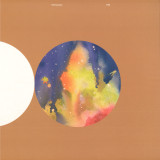
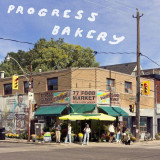
On Progress Bakery, her second album as a solo artist, Eliza knows to leave some questions alone – to let juxtaposition and tension be the proof. It doesn’t have to be hard. The feelings and revelations they provoke rise in the heat. The smell is sweet. Crispy on the outside and soft all the way through. She playfully slip-slides through words and sounds and images, delighting in surprise, skimming ideas like stones cast across clear water, touching down briefly with uncommon grace.
The question provoked between those opening lines resurfaces in the strands between songs – “Do U FM” is fully formed and beautifully layered, while “Novelist Sad Face” is a short, acapella rendering of gentle curiosity. What is holding these ideas together? Some songs demand more, seem to carry a whole load – eventually the skipping stone will halt to sink and resume its idle duty – while others drift in and out of focus, the way thoughts and dreams become interwoven before the mind is sunk into true sleep.
Music and words don’t always have to interact. Where she decides to keep them apart gives a new contour to where and how she puts them together. The kind of thing you’re supposed to take for granted with songs and their singers comes alive in Eliza’s hands – the little miracle of mixing, kneading, stretching, and stopping.
So often on Progress Bakery, Eliza teases out truth and meaning by asking questions. “Do I wanna be crying?” “Do you want me good or do you want me bad?” “Do I need an eye test?” “I’m writing songs in my head while you’re going over stuff with me — is that cruel??” In “Pocky” Eliza ends with a question that feels to me like the actual biography, succinct and revealing:
I don’t wanna be made to see
I just wanna ask “what’s that?”
Grace that ought to be rare, but in its care and precision is offered humbly, with great generosity, and without announcing itself. Eliza’s simple, miraculous music is given further form and shape by a group of collaborators – invaluable guest musicians Jeremy Ray, Evan Cartwright, Steven McPhail, Kenny Boothby, Ed Squires, Carolina Chauffe, Dorothea Paas, Louie Short, and Avalon Tassonyi. Together with Louie Short, who recorded, mixed, and produced the album along with Jeremy Ray and Lukas Cheung, Eliza has cultivated a richness in sound and texture that prods and provokes the ticklish ear. Barely audible guitar tinkering, a brief lo-fi field recording of trumpets, the harmonic clicking of a looped synthesizer, a flourish of reeds, a child’s conversation, each uncanny sound perfectly placed, rippling out under a soft breeze.
Lay in bed alone at night and ask aloud to the stillness,
“What were you doing at the Albuquerque Airport?
What were you doing there??”
And hear your question answered by a dream of swelling, undulating cellos. Try to grasp at the melody and structure. It’s not an answer (if there could be one), but it moves deeper, closer to the weird layer of fleeting moments and disconnected images, barely perceptible at its core. Wait for the dream reel to click into place.
Eliza took me for a ride in Nicole (her beloved Dodge Grand Caravan) and told me she’d been thinking of the album as an embodiment of transition – and I think every transition, known or unknown, carries the weight of new meaning, skittering off the surface tension of life as you know it, creating ripples, sometimes bouncing off and sometimes breaking through. There is a trick you can use to tell if a dough is glutinous enough. You’re supposed to stretch it out as thin as you can without breaking it and hold it up to the light. If you can see through, even if it renders the world murky and uncertain, you should leave it alone. I love this trick. It’s one that Eliza seems to know intuitively: work gently and ask questions and don’t always expect answers, and when you can, take a glimpse at something new, and then leave.
Buscar:g transition
During the pandemic, The Ophelias transformed uncertainty into Spring Grove, their fourth album and most dynamic offering yet. Named after a Cincinnati cemetery, the album blends nostalgia with fresh perspective, reflecting on themes of relationships, identity, and power dynamics. Singer-songwriter Spencer Peppet draws from her OCD diagnosis during the pandemic and the clarity that comes with growing older, resulting in lyrics that explore the cracks and complexities of human connection.
Produced by Julien Baker, who adds lush textures and harmonies, Spring Grove marks a turning point in the band’s evolution. Recorded at Young Avenue Sound in Memphis, the album centers on the core quartet—Peppet, violinist Andrea Gutmann Fuentes, bassist Jo Shaffer, and drummer Mic Adams—with arrangements that balance cinematic intensity and delicacy. Gutmann Fuentes’s violin provides striking countermelodies, while Shaffer’s bass lines, inspired by doom metal, explore melodic depth. Adams’s drumming reflects his first project after transitioning, offering nuanced rhythms that blend power and tenderness.
With one queer and two trans members, the band has moved beyond the reductive label of an “all-girl” group, delving deeply into themes of womanhood and identity. Tracks like “Salome” and “Parade” examine power dynamics and friendship, while nature imagery in songs like “Cumulonimbus” and “Vulture Tree” mirrors lived experience. Across 13 tracks, the album’s cinematic and introspective journey scavenges the past for meaning, ultimately embracing transformation. On the closing track, “Shapes,” Peppet reaches serene acceptance, singing, “I see what’s coming after... a reflection in the water. I am rippling forever.”
Spring Grove captures the band’s evolution, offering a transcendent meditation on self-awareness, identity, and growth, leaving listeners with a sense of profound discovery.
- A1: Montego Bay - Everything (Paradise Mix) 04 59
- A2: Atelier - Got To Live Together (Club Mix) 06 06
- A3: Golem - Music Sensations 04 56
- B1: The True Underground Sound Of Rome Feat. Stefano Di Carlo - Gladiators 05 26
- B2: Eagle Parade - I Believe 04 26
- C1: Dj Le Roi - Bocachica (Detroit Version) 05 28
- C2: Green Baize - Synthetic Rhythm 01 41
- C3: M.c.j. Feat. Sima - Sexitivity (Deep Mix) 05 30
- D1: Kwanzaa Posse Feat. Funk Master Sweat - Wicked Funk (Afro Ambient Mix) 06 31
- D2: Progetto Tribale - The Bird Of Paradise 06 29
- D3: Mbg - The Quite 06 59
Vol 1[28,99 €]
Googling “paradise house”, the first results to pop up are an endless list of European b&b’s with whitewashed lime façades, all of them promising “…an unmatched travel experience a few steps from the sea”. Next, a little further down, are the institutional websites of a few select semi-luxury retirement homes (no photos shown, but lots of stock images of smiling nurses with reassuring looks). To find the “paradise house” we’re after, we have to scroll even further down. Much further down.
It feels like yesterday, and at the same time it seems like a million years ago. The Eighties had just ended, and it was still unclear what to expect from the Nineties. Mobile phones that were not the size of a briefcase and did not cost as much as a car? A frightening economic crisis? The guitar-rock revival?! Certainly, the best place to observe that moment of transition was the dancefloor. Truly epochal transformations were happening there. From America, within a short distance one from the other, two revolutionary new musical styles had arrived: the first one sounded a bit like an “on a budget” version of the best Seventies disco-music – Philly sound made with a set of piano-bar keyboards! – the other was even more sparse, futuristic and extraterrestrial. It was a music with a quite distinct “physical” component, which at the same time, to be fully grasped, seemed to call for the knotty theories of certain French post-modern philosophers: Gilles Deleuze, Félix Guattari, Paul Virilio... Both those genres – we would learn shortly after – were born in the black communities of Chicago and Detroit, although listening to those vinyl 12” (often wrapped in generic white covers, and with little indication in the label) you could not easily guess whether behind them there was a black boy from somewhere in the Usa, or a girl from Berlin, or a pale kid from a Cornish coastal town.
Quickly, similar sounds began to show up from all corners of Europe. A thousand variations of the same intuition: leaner, less lean, happier, slightly less intoxicated, more broken, slower, faster, much faster... Boom! From the dancefloors – the London ones at least, whose chronicles we eagerly read every month in the pages of The Face and i-D – came tales of a new generation of clubbers who had completely stopped “dressing up” to go dancing; of hot tempered hooligans bursting into tears and hugging everyone under the strobe lights as the notes of Strings of Life rose up through the fumes of dry ice (certain “smiling” pills were also involved, sure). At this point, however, we must move on to Switzerland.
In Switzerland, in the quiet and diligent town of Lugano, between the 1980s and 1990s there was a club called “Morandi”. Its hot night was on Wednesdays, when the audience also came from Milan, Como, Varese and Zurich. Legend goes that, one night, none less than Prince and Sheila E were spotted hiding among the sofas, on a day-off of the Italian dates of the Nude Tour… The Wednesday resident and superstar was an Italian dj with an exotic name: Don Carlos. The soundtrack he devised was a mixture of Chicago, Detroit, the most progressive R&B and certain forgotten classics of old disco music: practically, what the Paradise Garage in New York might have sounded like had it not closed in 1987. In between, Don Carlos also managed to squeeze in some tracks he had worked on in his studio on Lago Maggiore. One in particular: a track that was rather slow compared to the BPM in fashion at the time, but which was a perfect bridge between house and R&B. The title was Alone: Don Carlos would explain years later that it had to be intended both in the English meaning of “by itself” and like the Italian word meaning “halo”. That wasn’t the only double entendre about the song, anyway. Its own very deep nature was, indeed, double. On the one hand, Alone was built around an angelic keyboard pattern and a romantic piano riff that took you straight to heaven; on the other, it showcased enough electronic squelches (plus a sax part that sounded like it had been dissolved by acid rain) to pigeonhole the tune into the “junk modernity” section, aka the hallmark of all the most innovative sounds of the time: music that sounded like it was hand-crafted from the scraps of glittering overground pop.
No one knows who was the first to call it “paradise house”, nor when it happened. Alternative definitions on the same topic one happened to hear included “ambient house”, “dream house”, “Mediterranean progressive”… but of course none were as good (and alluring) as “paradise house”. What is certain is that such inclination for sounds that were in equal measure angelic and neurotic, romantic and unaffective, quickly became the trademark of the second generation of Italian house. Music that seemed shyly equidistant from all the rhythmic and electronic revolutions that had happened up to that moment (“Music perfectly adept at going nowhere slowly” as noted by English journalist Craig McLean in a legendary field report for Blah Blah Blah magazine). Music that to a inattentive ear might have sounded as anonymous as a snapshot of a random group of passers-by at 10AM in the centre of any major city, but perfectly described the (slow) awakening in the real world after the universal love binge of the so-called Second Summer of Love.
For a brief but unforgettable season, in Italy “paradise house” was the official soundtrack of interminable weekends spent inside the car, darting from one club to another, cutting the peninsula from North to centre, from East to West coast in pursuit of the latest after-hours disco, trading kilometres per hour with beats per minute: practically, a new New Year’s Eve every Friday and Saturday night. This too was no small transformation, as well as a shock for an adult Italy that was encountering for the first time – thanks to its sons and daughters – the wild side of industrial modernity. The clubbers of the so-called “fuoriorario” scene were the balls gone mad in the pinball machine most feared by newspapers, magazines and TV pundits. What they did each and every weekend, apart from going crazy to the sound of the current white labels, was linking distant geographical points and non-places (thank you Marc Augé!) – old dance halls, farmhouses and business centres – transformed for one night into house music heaven. As Marco D’Eramo wrote in his 1995 essay on Chicago, Il maiale e il grattacielo: “Four-wheeled capitalism distorts our age-old image of the city, it allows the suburbs to be connected to each other, whereas before they were connected only by the centre (…) It makes possible a metropolitan area without a metropolis, without a city centre, without downtown. The periphery is no longer a periphery of any centre, but is self-centred”.
“Paradise house” perfectly understood all of this and turned it into a sort of cyber-blues that didn’t even need words, and unexpectedly brought back a drop of melancholic (post?)-humanity within a world that by then – as we would wholly realise in the decades to come – was fully inhuman and heartless. A world where we were all alone, and surrounded by a sinister yellowish halo, like a neon at the end of its life cycle. But, for one night at least, happy."
- A1: Phunk Baton
- A2: Take Me To A Silent Place Original Mix
- A3: Phantom Dubmix
- B1: Midi Lightning
- B2: Transmission Interlude
- B3: Transmission Damaged
- B4: Morse Phunk
- B5: Take Me To A Silent Place Exterior Mix
- C1: Forever Syncopation
- C2: Mission Damage Trance
- C3: Midi Blitz
- C4: Our City Is Never Utopia
- D1: Transfusion
- D2: Midi Voyage
- D3: Take Me To A Silent Place Sun Mix
The iconic DJ Sotofett comes with a real treat--a 12-track album on Clone West Coast Series that showcases a playful take on electronic music. Immerse yourself in the vibrant world of DJ Sotofett & The Colours of Computer Generated Instruments. With 12 electrifying electro tracks that blend a wide spectrum of rhythms with 80's Nintendo console vibes and holy grail analog vs digital synthesis, this album is a jubilant celebration of that sound. Prepare for an exhilarating journey filled with surprises, seamlessly transitioning from acid infected vibes and catchy electronic pop to groundbreaking avant-garde electro cuts. Each track intricately weaves together influences from over 40 years of electronic dance music, inviting listeners to explore the rich tapestry of genres that have shaped the landscape. As you delve deeper, you'll uncover the intricate layers and innovative production techniques that define Sotofett's distinctive style, transforming this album into more than just a collection of tracks -- it's a true sonic adventure that beckons you to listen, dance and dream.
OHYUNG aka Lia Ouyang Rusli describes their new album as “my trans self and my former self in conversation, from both perspectives.” The record represents their lengthy, complicated, but crucial journey between lives, strewn with both doubt and excitement. It is an ecstatic, pop-oriented shift in direction from an artist primarily known for noise, experimental hip-hop, and ambient music, but carried with sleek confidence, maturity, and a silvery, hallucinogenic shimmer that reveals Rusli’s experimental background. It is, writes Rusli, “sometimes written from a dark place and other times from a place of happiness.” Throughout, darkness and light rise and fall in layers of phased strings, trip-hop drum production, and earworming vocal lines.
Also a film score composer, Rusli’s songwriting craft is meticulous and nuanced. You Are Always On My Mind was, perhaps surprisingly, formed primarily from processed “generic string loops” found in online sample packs - a strange and wilfully jarring reminder that what seems to be is not always what is. Recontextualised, these string loops enshadow the simplicity of their origins and reveal a grace and purposefulness perhaps not even imagined by their authors, subtly drawing out euphoria and tension in equal balance.
Rusli also writes of the influence of rave culture central to their transition, and of the record’s production and theme. “It’s a declaration of love for raves and the dark hazy rooms that helped me to be free and true with myself— seeing other people who are so free and beautiful and thinking that one day that can be me— that’s me in the future.” But there is also a fear and unease present. Key moment “no good” explores “the worst version of myself as a trans person, feeding doubt to my pre-transition self” with its core lyric anyone can see / I’m no good for you, delivered over a relentless beat, swooning strings, and glistening synthesis.
Later, “i swear that i could die rn” renders a Spectreish Motown beat lamenting and lush with breathy synths and knife-edge melodies that eventually yield a hazy, gliding string section, created again from mutated, spliced, and transitioned royalty-free sample packs. The track is about “seeing my beautiful friends at raves and feeling at home appreciating the harsh noises of hardcore techno and acid. Feeling that I could die at this moment and be happy.”
Black Vinyl[33,82 €]
A crisp, spellbinding intro sets the mood for the first song on 'Maintenant Jamais', Population II's third album. With the guidance of producer Dominic Vanchesteing (Marie Davidson, Chocolat, Peter Peter), the turbulence of the band’s previous releases is structured and refined. The result is a sophisticated rock album that surprises with its languorous grooves, as heard on "Le thé est prêt", while staying true to the raw power for which the band is renowned, as demonstrated on vigorous tracks such as "La Trippance" and "Rédemption naturelle".
The album follows with "Prévisions", a song that ripples with finesse before abruptly transitioning into the instrumental number "Macavélique rock". While "Haut-fond" and "Cardinaux" are true feats of elegant prog rock, "Mariano (Jamais je ne t'oublierai)" and "homme étoilé" prove that Population II is also endowed with a profound melodic sensibility capable of creating catchy and explosive hooks.
On this new album, the trio fine-tunes the distinctive style they’ve been developing for several years, thanks in part to a fusion of shared influences – from Soft Machine to MC5 to L'Infonie – but also to a rare complicity that can only blossom between such close friends. This creative chemistry is what makes the band's complex songwriting seem so fluid and supple. Population II breaks through their previous sonic frontiers while remaining true to their roots. Therein lies the achievement of 'Maintenant Jamais'.
Coke Bottle Green Clear Vinyl[36,56 €]
A crisp, spellbinding intro sets the mood for the first song on 'Maintenant Jamais', Population II's third album. With the guidance of producer Dominic Vanchesteing (Marie Davidson, Chocolat, Peter Peter), the turbulence of the band’s previous releases is structured and refined. The result is a sophisticated rock album that surprises with its languorous grooves, as heard on "Le thé est prêt", while staying true to the raw power for which the band is renowned, as demonstrated on vigorous tracks such as "La Trippance" and "Rédemption naturelle".
The album follows with "Prévisions", a song that ripples with finesse before abruptly transitioning into the instrumental number "Macavélique rock". While "Haut-fond" and "Cardinaux" are true feats of elegant prog rock, "Mariano (Jamais je ne t'oublierai)" and "homme étoilé" prove that Population II is also endowed with a profound melodic sensibility capable of creating catchy and explosive hooks.
On this new album, the trio fine-tunes the distinctive style they’ve been developing for several years, thanks in part to a fusion of shared influences – from Soft Machine to MC5 to L'Infonie – but also to a rare complicity that can only blossom between such close friends. This creative chemistry is what makes the band's complex songwriting seem so fluid and supple. Population II breaks through their previous sonic frontiers while remaining true to their roots. Therein lies the achievement of 'Maintenant Jamais'.
- Glistening
- She Emerges
- Bold And Undaunted Youth
- I’d Rather Be Tending My Sheep
- The Fancy Cannot Cheat So Well
- Only The Diceys
As a founding member of Dublin experimental folk group Lankum, Ian Lynch explores submerged leylines of music and song. Forging a musical path that is all at once dark, mysterious and foreboding, but ultimately transcendental. His new solo project One Leg One Eye sees him taking a fresh approach to musical arrangement culminating in a sound that is more rooted in the raw aesthetics of second wave black metal than contemporary folk. The project was born across 2021, a period in which Lynch was able to enjoy the freedom of experimenting and exploring different paths of sound design without expectation or pressure. Seeking out interesting settings to record music and gather field recordings, there are several environments, external and interior, whose respective essence have seeped into the spirit of the music and come to represent Lynch’s artistic approach and development with this singular debut album, …And Take The Black Worm With Me. Rediscovered spaces in Dublin and the familiar enclave of his bedroom are intrinsic to the distinct and sometimes harrowing atmosphere conjured throughout the album’s five enveloping compositions. One particular location, an abandoned factory where his father worked when Ian was a child, provided a space of great inspiration and intrigue during this time. Lynch frequently visited the large abandoned warehouse and sang with his shruti box, contented in his solitude. ‘I’d Rather Be Tending My Sheep’, grew into existence from those initial sessions, eventually finding a home as an emotive centrepiece to the album. Reflecting on the overall recording of …And Take The Black Worm With Me, Lynch says, “Everything I was doing with these songs was all kind of new to me; experimenting with different sounds, textures and palettes and seeing what I could come up with by piecing it all together. I spent about a year making the album. I loved the whole process because it was basically just me in my bedroom recording everything. The experience of recording like this and having my own time to do it was amazing. I could focus on recording a specific element and happily spend all day working on that one part, doing it as many times as I wanted. At the end of the day if it didn’t feel right, I could just try it again the next day. When you’re on your own you can spend as much time as you want on particular parts until you feel that it’s absolutely perfect. I found that to be a really liberating experience. It was probably my favourite experience recording music.” The collection of songs (and their chronology) featured on …And Take The Black Worm With Me tell a story unique to Lynch’s experiences with anxiety and recognising his shadow self. Whilst the album became an outlet of personal expression for Lynch, the overarching themes and subsequent journey to confront one’s internal dichotomy of light and dark before accepting this inherent duality is universally shared. The eerie and often unsettling world contained within the album’s texturally dense opener ‘Glistening, She Emerges’, driven by the captivating drone of distorted uilleann pipes, immediately immerses the listener in this transportive work. It descends with a great heaviness, yet woven throughout the arrangement is a fascinating and indescribable entity that draws you further into this otherworldly dimension. This mood continues as the tracklist progresses and transitions into Lynch’s haunting realisation of ‘Bold and Undaunted Youth’ which further demonstrates a cinematic influence to Lynch’s compositional style. Sonically, Lynch effectively builds an impressively vast terrain with brilliantly murky lo-fi recording techniques and an unshakable curiosity to move beyond conventional structures and play with the timbre of the instruments available to him. From recording hurdy-gurdy or concertina to tape and experimenting with loops and effects pedals to stitching field recordings together, there’s an intimacy established between Lynch and his audience established through the simultaneously eerie and beautiful tones courting through …And Take The Black Worm With Me. This culminates in ‘Only the Diceys’, the extraordinary closing track in which we reach a place of resolution mapped into the album’s narrative structure. Mixed by longtime collaborator John ‘Spud’ Murphy in his Dublin-based Guerrilla Sounds Studio and mastered by Harvey Birrell …And Take The Black Worm With Me features contributions from Ruth Clinton (Landless) on church organ and vocals by Laurie Shanaman (Ails, Ludicra). Of Shanaman’s participation, in particular, which further illustrates the lo-fi and DIY ethos to the recording, Lynch says, “Laurie is my favourite black metal vocalist of all time and so I reached out to her hoping to have her involved in some way. She did, and she features on the opening track by providing some incredible screams. She recorded them into her phone and sent them over to me; what appears on the album is literally a phone recording of her screaming in her kitchen!” …And Take The Black Worm With Me continues Ian Lynch’s groundbreaking work with Lankum; recontextualising traditional forms and generating new spheres of music in his wake, confirming his status as one of the most interesting and innovative artists working in Ireland today.
SATYA is thrilled to announce the next chapter in its vinyl-only catalog: an evocative EP by São Paulo-based producer Dru. Scheduled for release on March 21, 2025, this record captures the serene yet dynamic energies of Dru's distinctive sound, blending aquatic themes with dubby textures and grooves.
Dru is a producer and DJ with a passion for minimal and microhouse. He has steadily risen through the scene, earning the support of luminaries such as Mihai Pol, Arapu, and Barac. With previous releases on his own labels, Totoyov and Microdots, Dru has honed a sound that is both personal and universal, reflecting his unique journey.
Rooted in the calming beauty of Brazil’s pristine beaches, Dru explains that the EP emerged during a reflective chapter of his life. "I was looking to produce tracks on a more dubby vibe," he shares. "The aquatic and fresh feel of the tracks reflects my connection to the sea and the tranquility I find there." This theme flows through the EP, offering listeners a refreshing escape into soothing yet intricate soundscapes.
The EP comprises two standout originals:
"Lax" captures a serene moment in Dru’s life, characterized by personal harmony and simplicity. The title itself is an
abbreviation for "Relax," reflecting the calm state of mind during its creation.
"Afterbreak" marks a transitional period post-breakup, yet the track maintains a composed energy, symbolizing growth,
renewal, and forward momentum.
Dru draws on a broad spectrum of influences for this EP, from the African-reggae-inspired percussive touches to the intricate dubby aesthetics of Andrey Pushkarev’s Luck of Access label. These elements intertwine with Dru’s Brazilian roots, creating a fusion of global sounds with a personal twist.
One of the most exciting milestones during the production process was securing remixes from Nicolas Duvoisin and Superlounge, both of whom enthusiastically joined the project early on. With contributions from these respected artists, the EP transcends boundaries, bridging dubby minimalism and deep house groove.
The vinyl-only release marks an exciting new chapter for Dru and SATYA. With its aquatic themes, dubby energy, and heartfelt storytelling, this EP promises to captivate both seasoned collectors and fresh ears alike.
- A1: Do U Fm
- A2: Novelist Sad Face
- A3: Green Box
- A4: Dusty
- A5: The Linda Song
- A6: Dm Bf
- B1: I Tried
- B2: Melodies Like Mark
- B3: Wildcat
- B4: How U Remind Me
- B5: Pocky
- B6: Bon Tempiii
- B7: Pt Basement
- B8: Alberqurque Ii
- B9: Mary's
Kneading dough is tricky – you should know how it’s supposed to feel. If you try too hard you could make it worse. It’s a beautiful practice – creation with a gentle touch, to work at something so it can be left alone. “If it’s too drawn out it’s awful. It’s easy to give too much.” Dance in the mirror. Contemplate your veiny hands. Who do they remind you of?
You begin by mixing flour and water. “What happens when your people die? Why’d they move the rock to the other side of Ulster Park?” Eliza Niemi asks two seemingly unrelated questions in a rising melody with guitar accompaniment, like fingers playing spider up to the nape of your neck. Gentle pressure. Strands of gluten form to bind the mix. A new question lingers in the binding. When she admits “but I don’t know how to tell if I’m feeling it or not,” that question surfaces through the text. It is reiterated throughout the album. When I’m working with dough I think the same thing to myself.
On Progress Bakery, her second album as a solo artist, Eliza knows to leave some questions alone – to let juxtaposition and tension be the proof. It doesn’t have to be hard. The feelings and revelations they provoke rise in the heat. The smell is sweet. Crispy on the outside and soft all the way through. She playfully slip-slides through words and sounds and images, delighting in surprise, skimming ideas like stones cast across clear water, touching down briefly with uncommon grace.
The question provoked between those opening lines resurfaces in the strands between songs – “Do U FM” is fully formed and beautifully layered, while “Novelist Sad Face” is a short, acapella rendering of gentle curiosity. What is holding these ideas together? Some songs demand more, seem to carry a whole load – eventually the skipping stone will halt to sink and resume its idle duty – while others drift in and out of focus, the way thoughts and dreams become interwoven before the mind is sunk into true sleep.
Music and words don’t always have to interact. Where she decides to keep them apart gives a new contour to where and how she puts them together. The kind of thing you’re supposed to take for granted with songs and their singers comes alive in Eliza’s hands – the little miracle of mixing, kneading, stretching, and stopping.
So often on Progress Bakery, Eliza teases out truth and meaning by asking questions. “Do I wanna be crying?” “Do you want me good or do you want me bad?” “Do I need an eye test?” “I’m writing songs in my head while you’re going over stuff with me — is that cruel??” In “Pocky” Eliza ends with a question that feels to me like the actual biography, succinct and revealing:
I don’t wanna be made to see
I just wanna ask “what’s that?”
Grace that ought to be rare, but in its care and precision is offered humbly, with great generosity, and without announcing itself. Eliza’s simple, miraculous music is given further form and shape by a group of collaborators – invaluable guest musicians Jeremy Ray, Evan Cartwright, Steven McPhail, Kenny Boothby, Ed Squires, Carolina Chauffe, Dorothea Paas, Louie Short, and Avalon Tassonyi. Together with Louie Short, who recorded, mixed, and produced the album along with Jeremy Ray and Lukas Cheung, Eliza has cultivated a richness in sound and texture that prods and provokes the ticklish ear. Barely audible guitar tinkering, a brief lo-fi field recording of trumpets, the harmonic clicking of a looped synthesizer, a flourish of reeds, a child’s conversation, each uncanny sound perfectly placed, rippling out under a soft breeze.
Lay in bed alone at night and ask aloud to the stillness,
“What were you doing at the Albuquerque Airport?
What were you doing there??”
And hear your question answered by a dream of swelling, undulating cellos. Try to grasp at the melody and structure. It’s not an answer (if there could be one), but it moves deeper, closer to the weird layer of fleeting moments and disconnected images, barely perceptible at its core. Wait for the dream reel to click into place.
Eliza took me for a ride in Nicole (her beloved Dodge Grand Caravan) and told me she’d been thinking of the album as an embodiment of transition – and I think every transition, known or unknown, carries the weight of new meaning, skittering off the surface tension of life as you know it, creating ripples, sometimes bouncing off and sometimes breaking through. There is a trick you can use to tell if a dough is glutinous enough. You’re supposed to stretch it out as thin as you can without breaking it and hold it up to the light. If you can see through, even if it renders the world murky and uncertain, you should leave it alone. I love this trick. It’s one that Eliza seems to know intuitively: work gently and ask questions and don’t always expect answers, and when you can, take a glimpse at something new, and then leave.

For his next Token EP, Kr!z delivers squelchy synth sequences over robust kicks, reinforcing his no-nonsense approach to club music. Classic in its conception yet psychotic in effect, Ipso Facto is a record built for powerful sound systems during thenight's most delirious moments.
First impressions are important; the Belgian producer has never been one to waste time, and this record is no exception. What you hear is what you get-an anxiously slithering synth line makes his intentions clear in Defeat the Purpose, driving people to the dancefloor. Dry drum machine work thunders throughout, locking in the Token style with precision. Moving into the next track, 'Chrome Dust' focuses more on the tonal side of things and its irresistible groovemakes it an instant ear catcher. Playful rides and snares shape the progression, with Kr!z swapping percussion elements to keep the movement lively.
The title track is a true hip swinger on the B1 as he reaches in the low end of the synth sequence to establish a very compelling rhythm. Everything in its right place, and not a hair more, the percussion transitions are reminiscent of his 4 channel DJ sets, the energy always being on the move. Equilibrium closes the EP with high energy, opening up filters over a reliably bouncy rhythm. Years of experience behind the decks can be very instructive for a perceptive producer, and Kr!z proves us just that in this track and in the whole EP.
2025 Repress
The ongoing importance of this album is indisputable, essential both to techno and to Tresor. It is a history intertwined. This work elevates its maker as master, and remain a cherished moment in the Tresor story, sharing an irrefutable singular magic, sounding as present and indispensable as when first created. To understand this work fully is to stand back and celebrate its impact.
Originally released in 1994, 'Internal Empire' marks a point of transition for Robert Hood moving on from his previous collaborations within Underground Resistance. Robert Hood advanced uncovering the power of true minimalism. Deep soul through a simplicity that showed how much could be done with so little. The devastating rhythms of this album forge the unmatched spirit of this sound, influencing generations to come.
15 years after it's original release, Freestyle Records serve up reissue for The Apples' Kings LP - fully remastered with a fresh new cut, it's sounding better than ever!
In a musical first for the band, they wrote, arranged and recorded Kings with specific collaborators in mind. They held sessions with two of their heroes; a congregation with two musical and spiritual father figures from opposite ends of The Apples rich spectrum: Fred Wesley (pioneer of funk trombone in particular and funk horn arranging in general with James Brown, The JBs) Shlomo Bar (vocalist, percussionist, godfather of Israeli world music).
The exciting process of these recordings exposed the band's many roots and influences; elements of The JB's funky foundations, cut 'n paste, soul, middle eastern and dub are all clearly displayed - strained through the band's unique decks-horns-sfx-bass-drums lineup. This release signified the next step in The Apples ever thickening groove stew, primed for festival and club stages with a relentless live set filled with runaway grooves, countless twists and turns, dizzying transitions, spontaneous arrangements, the occasional reworking of early 90's alt-rock fist shakers - plus the basic jump-up-and-down crazyness for which The Apples are known across dancefloors, soundsystems, playlists, films, televisions, cars and ears worldwide.
e B1 | Batash (Alwoojdi) feat Shlomo Bar
Joni Void, the artistic persona of Montréal-based French-British producer Jean Néant (he/them) returns to songcraft on their warmest and most welcoming record yet, where the acclaimed sampledelic sound collagist chills out with an emotionally resonant song cycle tinged by downtempo, lo-fi, avant-pop, and trip-hop. Guests include Haco, Ytamo, Sook-Yin Lee, Pink Navel and N NAO. Every Life Is A Light expands on Void's recent stylistic turn towards more languorous and mellow lo-fi production, foreshadowed by the drifting looseness and ambient bricolage of their preceding experimental sound-art record. This transitional sensibility now shapes more defined song structures and styles, with loops are given time and space to unspool, and rhythms shot through the softer-focus lens of trip-hop and dub. Every Life Is A Light swaps the twitchy insistence of Void's acclaimed early albums for a newfound lightness and suppleness, still imbued with all the restlessness, sonic detailing, and emotional resonance that made their name. The neurotic brokenmachine kinetics of earlier Void, summarized by Sasha Geffen as "drawing despair and wonder from within the vast unfeeling of digital communication" in an 8.0 Pitchfork review, may be chilling out, but Void is becoming an ever better conjurer of hauntological feeling. Every Life Is A Light summons this in a comparatively buoyant, benevolent, head-nodding journey more open to tenderness and modest joys. Perhaps it's the sound of Void at greater peace with themselves and the world, despite the bittersweet cost: even as it channels grief, memorializing comrades and companions recently deceased, this album wants light. Void's raw materials continue to draw heavily from samples (their own Walkman cassette fieldrecordings and songs by others) and from a wide community of musical guests. Vocalists Haco on "Time Zone" and Ytamo on "Cloud Level" help levitate what could be lost tracks from a mid-90s Too Pure Records compilation of skewed-lounge electronica. Canadian musician Sook-Yin Lee sings on lead single "Vertigo," a sinewy 80bpm tape-loop and bassline groove propelled by psychedelically-layered lyrics that eventually turn the song in on itself entirely, like Grace Jones' "Nightclubbing" covered by Animal Collective. One of Void's greatest hip-hop loves is the Ruby Yacht collective; charter member Pink Navel drops some brilliant verses on "Story Board." The album's two minimal tracks, an extended piano loop set to a slow beat and shimmering electronics on "Muffin-A Song For My Cat" and the languid sampled bass riff and breakbeat of "Event Flow," are perhaps most overtly `lofi chill.' Indeed the whole album could be said to sit adjacent to those viral (if not already AI-generated) genre trends, which maybe begs the question on a lot of our minds: can specificity and authenticity of musical materials still be heard, still meaningfully signify substance and difference, still matter? Perhaps a question that fades in comparison to the career break Void could catch by landing on generic streaming playlists. More likely, these tracks remain too off-kilter, too genuinely lo-fi and ineffable, and too disqualified by the status of its peasant rights-holders, to catch the algos. Context remains the poor cousin of content. Meanwhile Void marches on, as a tireless organizer of local music events, bouncing around and often living in DIY venue, depending on the latest apartment eviction. With an ubiquitous polaroid camera in tow, they also document each communal happening with a single shot (and often a blinding flash bulb): a memory and metaphor for lives illuminated preciously, singularly, `imperfectly' in the moment. Dozens of these polaroids adorn the album's back cover and inner sleeve art in grid-like montages, as a fitting analog for the careful construction, grainy intimate materiality, and ephemeral feeling of these songs. Every Life Is A Light is Joni Void's most coherent and congenial record while relinquishing none of their experimentalist acumen as a producer or emotional attunement as a composer. Instead these qualities flourish, on an album that lights a humble flame for the fragile promise of homespun creative collaboration as unalienated labour and therapeutic communion, making an enchantingly idiosyncratic contribution to downtempo sample music along the way. Thanks for listening.
Bárbara Salazar aka Barbarelle is an experimental multidisciplinary artist from Buenos Aires, known for her conceptual work as a DJ, creative director, and curator.
‘Celesta’ marks Barbarelle first foray into composing and producing her own music; a debut that reveals the intimate, heartfelt territories of her creative universe. The culmination of years of composing for herself - ‘behind closed doors’ - ‘Celesta’ is a deeply personal, self-guided masterstroke of beguiling, free-flowing ambient soundscapes and DIY electronics. With ‘Celesta’, Barbarelle artfully transitions from ardent music aficionado to fully-fledged artist, unveiling an enchanting sonic world that has quietly matured over time.
‘Celesta’ is an exquisite odyssey of sound, assembled from fifteen tracks recorded between 2022 and 2024 in Buenos Aires and Los Angeles. Conceived as spontaneous and intuitive explorations, many of these tracks were recorded in one take without technically-minded premeditation. The product of organic experimentation rather than concrete intention, ‘Celesta’ is an authentic, candid record of emotions, memories, and profound interiorities.
Over time, the pieces in this tapestry found a common thread: a conversation with the ethereal, defined by emotional intensities and softly spoken utterances. ‘Celesta’ is an invitation to immerse yourself in soundscapes that merge to the point of dissolution, evoking the transparency of water and the lightness of a dreamlike world that transcends matter. Like the song of a siren, the voice becomes just another instrument, beyond language yet full of significance. A collection of songs that feels like opening a secret diary; a direct pathway to the centre of the heart.
In addition to her work as an artist, Barbarelle is the founder of Atlas, a platform dedicated to active listening through radio, live performances, listening sessions and more. She is also known for her radio show of the same name on Dublab, where she shares her unique approach to sound with eclectic selections and interviews with the likes of Air, BADBADNOTGOOD, Lucrecia Dalt, Juana Molina & more.
- Creed Of Love
- Bye Bye Baby
- The Grand Camel Suite
- No World For Glad
- Lady Love
- Words
- Place Of Dreams
- Oranges & Apples
- Anytime
- Bitter Wine
- Misery Loves Company
PURPLE VINYL[26,01 €]
Orange/Black/Sunburst Vinyl "Choice Quality Stuff/Anytime," released in 1971, marked the third studio album by It's a Beautiful Day, a band celebrated for their eclectic blend of rock, jazz, folk, classical, and world-beat influences. Formed in 1967 in San Francisco during the height of the city's vibrant music scene, the band initially featured vocalist Pattie Santos, violinist David LaFlamme, and keyboardist Linda LaFlamme. Their distinct sound, highlighted by David's five-string violin, set them apart from their contemporaries, even though they never reached the same level of fame as Jefferson Airplane or Santana. By the time of this album, the band's lineup had shifted significantly. Founding members Mitchell Holman and Hal Wagenet had departed, replaced by bassist Tom Fowler (later known for his work with Frank Zappa) and guitarist Bill Gregory. The album, recorded amid these transitions, reflects both the band's creative maturity and their ability to evolve while staying true to their signature style. Tracks like "Creed of Love" and "Anytime" exemplify their musical diversity and lyrical depth. "Choice Quality Stuff/Anytime" was a continuation of the band's legacy, cementing their place as a unique voice in the late 60s and early 70s rock scene, even as their lineup and fortunes changed.
Purple Vinyl. "Choice Quality Stuff/Anytime," released in 1971, marked the third studio album by It's a Beautiful Day, a band celebrated for their eclectic blend of rock, jazz, folk, classical, and world-beat influences. Formed in 1967 in San Francisco during the height of the city's vibrant music scene, the band initially featured vocalist Pattie Santos, violinist David LaFlamme, and keyboardist Linda LaFlamme. Their distinct sound, highlighted by David's five-string violin, set them apart from their contemporaries, even though they never reached the same level of fame as Jefferson Airplane or Santana. By the time of this album, the band's lineup had shifted significantly. Founding members Mitchell Holman and Hal Wagenet had departed, replaced by bassist Tom Fowler (later known for his work with Frank Zappa) and guitarist Bill Gregory. The album, recorded amid these transitions, reflects both the band's creative maturity and their ability to evolve while staying true to their signature style. Tracks like "Creed of Love" and "Anytime" exemplify their musical diversity and lyrical depth. "Choice Quality Stuff/Anytime" was a continuation of the band's legacy, cementing their place as a unique voice in the late 60s and early 70s rock scene, even as their lineup and fortunes changed.
The lost companion EP to The Unbearable Tightness of Being, by Ohio's,
Sweetheart
Recorded by the band in a warehouse in Columbus, Ohio, spring 2005.
A single sided 12" record containing one 12 minute song. Limited to 300 copies on
180 gram vinyl and digital.
This record is meant to go together with EW017- Sweetheart- The Unbearable
Tightness of Being LP. We highly suggest getting both records.
Sweetheart's latest offering, "The Process Of Making Us Well," serves as an intricate
sonic landscape woven with a fearless fusion of genres, defying the established
norms of post- hardcore. This one- track EP, released under theExpert Work Records
banner, is not just an auditory journey but a rock-solid proof of their ability to blend
post-hardcore, noise rock, punk, screamo, emo, and indie influences into an immersive
sonic experience that transcends conventional boundaries. Setting themselves apart
from the early noughties post- hardcore scene, Sweetheart skillfully navigate away
from the cliches that often haunted many underground acts of the era. "The Process
Of Making Us Well" unfolds as an epic composition, a 12-minute sonic odyssey that
takes the listener on a transformative journey. The band showcases a mastery of
dynamics, skillfully transitioning from serene, ethereal instrumentations to intense,
powerful crescendos, creating an emotional landscape that captivates the listener
from scratch to finish.
Released as part of Expert Work Records' series, "The Process Of Making Us Well"
holds the distinction of being Sweetheart's longest recorded piece. The record arrives
in a high- quality cardboard sleeve, decorated with an entirely minimalistic lettering,
leaving audio content in the sole focus. It's a wise choice, considering that
Sweetheart's music deserves your utmost attention. "The Process Of Making Us Well"
is an essential exploration into endless possibilities of post- hardcore, noise rock,
screamo, and emo music. Sweetheart, sadly overlooked amidst a sea of similar bands
during their era, emerges as a beacon of innovation with this remarkable release. "The
Process Of Making Us Well" solidifies Sweetheart's status as one of the best bands of
their time, a hidden gem deserving of retrospective recognition and appreciation
Members went on to Sinkane, and Pompeii, This Morning. Originally recorded in the
summer of 2005 out west, while on tour, by Vince Tennant. The recording had been
shelved and unreleased. In 2023, Expert Work Records reached out to Sweetheart and
got the recording re-mastered. It will be released on limited vinyl and digital.
This is also a companion piece/ record with EW018 (Sweetheart- The Process of
Making Us Well). We highly suggest getting both records.
Sweetheart's "The Unbearable Tightness Of Being" is one of those records you should
put on your radar as soon as possible. A rediscovered artifact from 2005, the album is
a sonic panorama that intricately incorporates post- hardcore, noise rock, punk,
screamo, and indie elements into an innovative and complex sonic landscape. The
guitars, wielded with finesse, serve as the driving force behind Sweetheart's sonic
assault. From the opening chords to the closing refrains, they deliver a relentless
barrage of riffs that defy predictability. The interplay between the two guitarists
manifests as a dynamic dialogue - a musical conversation that seamlessly transitions
from chaotic dissonance to moments of clarity. Catchy, intricate, and hypnotic chord
progressions unfold, evoking the spirit of At The Drive-In and Fugazi while carving a
distinct sonic identity.
However, it's not merely about sonic assault; Sweetheart infuses the album with a
nuanced approach to melody. Amidst the aggressive riffage, this material treats
listeners with moments of harmonic beauty and unexpected melodic twists. Themes,
leads, melodies, and harmonies intermingle, creating a rich auditory experience that
transcends the boundaries of conventional post-hardcore.
The production quality of this long- lost gem further accentuates its brilliance.
Recorded in 2005 but kept in the shadows due to financial constraints and a desire for
perfection, the album has now found its moment in the sun. Expert Work's decision to
release the LP in 2024 has allowed audiences to appreciate the intelligent
craftsmanship that went into its creation.
"The Unbearable Tightness Of Being" is more than a musical journey; it's a sonic
exploration transcending all the possible sonic boundaries. Sweetheart's commitment
to experimentation and honesty, as emphasized by band members reflecting on their
creative process, is palpable. The act of listening, treated as a discipline, is evident in
the careful construction of each track - a result of repetitive practice, internalization,
and an unwavering dedication to their craft. In the grander narrative of the album's
release, the band's reflections on the passage of time and the meaning of their work
imbue the music with a poignant depth.
"The Unbearable Tightness Of Being" is a mandatory addition to any record collection.
It's not just a revival of the early 2000s scene; it's a sheer example of Sweetheart's
enduring brilliance and a celebration of a significant part of their musical legacy.
And another! One Eye Witness rounds up 4 more acts to deliver the latest instalment of their V/A series, WITNESS07. The EP brings together names from across Europe: here fresh faces — the likes of Bristol’s JoeLy — rub shoulders with more established dancefloor exponents such as SameSame from Germany and Rome’s Christopher Ledger, all utilising the hypnotic tech house aesthetic championed by O.E.W.
Young Adults’ “It’s Only Temporary” kicks the EP into gear, a perky cut loaded with bounce. The The Hague duo employ a rubbery bassline and sound palette with plenty of boing, whilst working in a playful nod to a certain 1997 Loveparade anthem. Christopher Ledger gets classy on “Change That”, its slinky, steady break keeping hips in motion whilst tricky dubwise FX swirl across the stereo field. JoeLy slows things down and reigns it in with “Transitional”: beneath the filter sweeps, a seductive, sliding acid bassline is accompanied by augmented 303 action. As punchy as it is textural, the fittingly titled “Novel End” by SameSame seems draped in gauze — delicate drones wrap the drums in a soft cocoon, offering something a little more cerebral. WITNESS07: A tech house Tour de Europe, brought to you by Amsterdam’s all-seeing eye!