
4
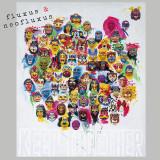
In April 2023, there was released the first part of the Fluxus edition called Stolen Symphony. The year has come and gone and there is the second part of the Fluxus edition called Keep Together. At the centre of both parts of this edition was a broken piano, acquired by the Opening Performance Orchestra for the purpose of making live and studio recordings. During this time other new works for this broken piano were written by diverse Fluxus and non-Fluxus composers. In the spring of 2022, the Opening Performance Orchestra and broken piano participated in an event hosted by Mieko Shiomi. This was a new version of her early work Spatial Poem, documentation of which was presented at the 2022 Aichi Triennale in Tokyo. At present, broken piano lies in the open air in Prague and is subject to gradual decay.
These both parts of this edition contain 73 new and old pieces, live and studio recordings, finished pieces and scores to be performed, solos and pieces for ensemble, using classical and special instruments from 33 Fluxus artists, which have been played by 10 soloists and 4 ensembles. There are new essays and articles from 15 writers on the theme Fluxus, original photos and other documentation in the booklets.


"Civilians" lädt Fans auf eine Reise in Joe Henrys poetische
Lyrik ein. Das Album überzeugt mit einem Mix aus Jazz-, Folkund Blues-Einfl üssen. Begleitet von langjährigen Weƽefährten
kehrt Henry mit "Civilians" zu einem traditionellen SongwritingAnsatz zurück
Joe Henry is one of the artists who have shaped the sound of modern American folk and blues music like hardly anyone else. “Civilians”, his 10th studio album, was originally released in 2007. It takes the listener on an intimate journey into Henry’s poetic lyricism and is heavily influenced and inspired by the more melancholic sounds of folk and jazz music. Recorded in Henry’s home studio at the time, the Garfield House in Pasadena, the album has a raw and stripped-back feel, with several of Henry’s close friends and collaborators, like Loudon Wainwright III, Bill Frisell, Greg Leisz, and Van Dyke Parks, joining him in the studio to bring these songs to life. Now available on 180g black double vinyl for the first time ever, the 2024 reissue edition of “Civilians” features not only the 12 songs of the original release, but also previously unheard bonus material, including intimate demo versions of several songs on the album, as well as the all-new bonus track “Bread & Flowers”.

Re-press expected soon: The Action Is Go Deluxe Edition, celebrates the band’s 4th album and debut of
guitarist Bob Balch and drummer Brant Bjork, which was originally released on 7 October,
1997.Produced by White Zombie’s J. Yuenger and recorded at the legendary Sound City Studios and also
at Grandmaster Studios in Los Angeles, California, The Action Is Go is considered a classic of the '90s and
a pillar for the "stoner rock" movement. Highlights include the lead single "Evil Eye", which was featured
on the soundtrack for Tony Hawk’s Pro Skater 2 and is included on the reissued version released 4
September 2020 alongside live staples "Grendel, Snowman,” “Hogwash” and “Saturn III”. This limited
edition 1,000 unit double LP run is cut at 45 RPM for maximum heaviness and the gatefold package
design includes never before seen photos of the band. Also included is a bonus Sparkle vinyl 7” of
“Swami’s Last Command” and an alternate version of “Module Overload” recorded during The Action Is
Go album sessions, both of which were previously only available on the European pressing of the original
album. Both the LP and 7” feature newly remastered audio for optimum fidelity.

The band was founded on January 20, 1966 by Cologne students, initially as a political cabaret. The group grew out of the Cologne APO Non-parliamentary Opposition in Germany (Außerparlamentarische Opposition APO) around the SDS German Socialist Students‘ Union, its political orientation evolving over the years towards a clearly dialectical and Marxist position. Independently of each other, group members joined the DKP German Communist Party between 1970 and 1973. On September 6, 1970, the band performed at the Fehmarn Festival following Jimi Hendrix; this was their last appearance for a long time. In 1973, Floh from Cologne performed as part of a West German delegation at the 10th World Youth Festival in East Berlin. From 1980, part of the band (with Vridolin Enxing as chairman) was active in “Rock gegen Rechts” Rock against the extreme right; in the same year, the band was awarded the Deutscher Kleinkunstpreis with Gerhard Polt.
After more than 3,000 concerts in Germany and Europe, Cologne Floh disbanded in May 1983 after a farewell tour. The farewell concert in Cologne‘s sports hall attracted 6,000 spectators and lasted 14 hours, with the participation of numerous musicians such as Hannes Wader, Dieter Süverkrüp, Franz-Josef Degenhardt, Hanns-Dieter Hüsch, Die 3 Tornados, BAP and Ina Deter. In 2023, the group was awarded the Holger Czukay Honorary Prize by the City of Cologne for its lifetime artistic achievement.
With the rock band cantata „Mumien“, the group reacted in 1974 to the 1973 putsch in Chile, notably by setting to music the last speech of deposed president Salvador Allende. In the same year, the band worked with Hans Werner Henze on alternative musical settings of Chilelied (“Dieser chilenische Sommer war süß” / This Chilean summer was sweet; 1974), lyrics: Rudi Bergmann (* 1950), first performed on May 31, 1974 in Essen (Grugahalle: memorial concert for Víctor Jara, at the same time a demonstration of solidarity with the resistance in Chile). „Mumien“ has not yet been reissued on vinyl, and the only CD version (with the album „Vietnam“) dates from 1995.

Entering the world of MOOON is like entering a time machine. The young Brabant power trio, consisting of brothers Tom and Gijs de Jong and their cousin Timo van Lierop, takes the listener to the Golden Age of pop music: the heyday of psychedelia in the 60s and 70s.
Following up their recently released LP "III", here comes a brand-new 7" by MOOON. Featuring a mono-version of "Hurtin' My Heart", taken from their latest album "III" and on the B-side an unreleased song from the same session; "How I Learned (To Say Goodbye)".
"Hurtin' My Heart" is a fuzz & Farfisa driven tune, that everybody on the dancefloor will dig. "How I Learned (To Say Goodbye)" is a jangly 3 part harmony pop song but with a high energy twist!
This is a 7" that both sounds and looks 60's-stylish (with flap outer sleeve) and every DJ will need in their box!

Stevie Ray Vaughan's third studio album Soul To Soul was released in 1985, just two years after his massive debut Texas Flood. Moving more into a soulful R&B-tinged blues sound, Stevie included two new band members on keyboard and saxophone for Soul To Soul. The band know their way around a number of cover versions of songs penned by Hank Ballard, Doyle Bramhall, and Willie Dixon, bringing a variety of influences into SRV's brand of modern blues. His own compositions such as “Say What”, “Ain't Gone 'N' Give Up On Love” and “Life Without You” reveal an artist that is ever passionate in delivering real blues, and growing in his songwriting at the same time.
Soul To Soul is available as a limited edition of 1500 individually numbered copies on blue marbled vinyl.

"Days of the New (the Red album) is the third studio album by Days of the New, originally released in 2001. All songs were written and composed by Travis Meeks, who was the only original member left, making this a solo project. The album spawned two singles ""Hang on to This"" and ""Die Born"". The first peaked at #18 at the US Rock Chart. The last track, ""Dancing with the Wind"", contains an untitled hidden track. Days of the New (the Red album) is available on vinyl for the first time. This 2LP includes an insert. "
Days Of The New III by Days Of The New, released 4 April 2024, includes the following tracks: "Days in our Life", "Best of Life", "Where Are You?" and more.
This version of Days Of The New III comes as a 2xLP. This release comes with (a) Insert(s).

Maquis Son Sistem is a project from Stefan Dubs that lands only on its own eponymous label, but is also showcased on a radio show on Lyl Radio. The music is often made live and then recorded to tape where the multitrack is used "as a narrative instrument" while sound effects and dub sirens are also added. This one in particular is "dedicated to these temporary zones, fugitive interstices, where we are committed to forming and re-forming moments of collective trance." It features three sublime sounds from the broken rhythms of 'Cortegi Astral' to the wet and tribal dub of 'Spirituau' via the ethereal sound of 'Drone Chasseur' (version I, II & III).

Die Kitchen Dwellers setzen ihre musikalische Entwicklung fort und präsentieren ihr mit Spannung erwartetes viertes Studioalbum „Seven Devils“, das am 01.03.2024 bei No Coincidence Records erscheinen wird Produziert von Glenn Brown (Billy Strings, Greensky Bluegrass), definiert das aufstrebende Quartett aus Montana weiterhin die Grenzen von Bluegrass, Folk und Rock neu. Inspiriert von Dantes epischer Reise durch die Neun Kreise der Hölle, führt das Album den Hörer auf eine ähnliche Entdeckungsreise. Die Kitchen Dwellers laden den Hörer ein, ihr Album als eine musikalische Reise ins Innere des eigenen Ichs zu betrachten.

Warehouse find!
Since emerging in the early 2000s with releases on the seminal Merck label, Proswell (Joseph Misra) has proven to be one of the most original voices in IDM. People Are Giving And Receiving Things At Incredible Speeds (PAGARTAIS), his debut on Sheffield's Central Processing Unit, is another Proswell record which overflows with creative energy. Containing five widescreen electronic epics, PAGARTAIS showcases some of the most ambitious work in the discographies of both artist and label.
The core sonic palette of PAGARTAIS is one schooled in the IDM and electronica sounds of imprints like Rephlex Records, B12 and Skam. These tracks are helmed by thick washes of keys, an array of playful synth tones and drums so deft it's sometimes hard to tell whether they have been programmed or played live. However, across almost forty minutes of music here Proswell explodes preconceptions about genre and form, his music gleefully jumping from one new sound to the next while assimilating electro, prog, computer game music, post-jazz and pretty much everything in between.
Opener 'PAGARTAIS I' sets the tone for the rest of the record. This is a track which never sits still - beginning with a distorted melee of drums that comes off like a strange new version of breakbeat, 'PAGARTAIS I' moves through some thrillingly idiosyncratic takes on Rephlex-school IDM, stargazing Detroit electro and The Comet Is Coming's futurist electronic jazz across its near-ten-minute runtime. Following number 'PAGARTAIS II' is no less impressive, referencing the hyper-modern computer sounds of Iglooghost and Kai Whiston while containing a driving opening section which could have soundtracked one of the legendary Wipeout games.
Although this fabulously unpredictable record often zips along at high speeds, Proswell is also able to dial things back when he needs to. Indeed, the second half of PAGARTAIS finds him slowing down a tad in order to deliver some of the album's most atmospheric material - 'PAGARTAIS III' blends cutting-edge electronics with sonorous jazz harmonies and fizzing improvised lead lines, the mysterious 'PAGARTAIS IV' is a sort of freeform variation on the maximalist, colourful electronica of Galaxy Garden-era Lone, and the slinking computerised Braindance number 'PAGARTAIS V' recalls Calum Gunn's recent CPU drop Addenda.
Really, though, none of these comparisons quite do justice to the inventive capacity of this music - Proswell's in a lane of his own here. An incredibly innovative fusion record that takes in IDM, prog, computer music, electro and plenty more besides, People Are Giving And Receiving Things At Incredible Speeds (PAGARTAIS) is the sound of a unique musical mind in full flight.
RIYL: Calum Gunn, Kai Whiston, Iglooghost, Rustie, Bogdan Raczynski

Deer Tick’s debut album, ‘War Elephant’, is back (even though it never went anywhere). It is the same stellar album released in 2007 and then reissued by Partisan in 2008. This version of the album finds us returning to the original 2007 illustrated cover. This cover will become the new standard version of the album across all formats. The music and track listing remains the same.
John McCauley III wrote, arranged, played, and recorded the album at the tender age of 21. The album is full of songs wiser and more nuanced than John should have been able to produce according to natural law. The words are deliberate and heartfelt and follow the lead of singer / songwriter heroes of John’s like Townes van Zandt, Neil Young and Richie Valens.
The album concludes with a cover of the 1962 GRAMMY-winning Song Of The Year, ‘What Kind of Fool Am I’, made famous by Sammy Davis, Jr.
It can safely be said that this debut album is a genre defying classic; it’s a hook filled bar room rock album that is as connected to 90’s Seattle catchy gloom as it is to left-of-the-dial late 80’s Minneapolis and 70’s Austin honky tonk.
140g Heavy Metal Grey (gun metal grey) coloured double LP with an etching on side D, housed in a single sleeve jacket with printed insert.
Original release press included reviews from Pitchfork and The Line of Best Fit plus support from Billboard, Brooklyn Vegan, All Music and American Songwriter.

Euroteuro, die Dritte! November 2023, Die Wiener Pop Gruppe EUROTEURO um Mastermind Peter T. präsentieren ihr neues drittes Album "VOLUME III". Mit ihrem Sommerhit "AUTOGRILL" hat das Wiener Kollektiv EUROTEURO einen ewigen Ohrwurm für alle italophilen Espresso-Freunde geschaffen. Mit dem 2022 erschienenem zweiten Album hat das Popkollektiv bewiesen, dass sie weit mehr als ein One-Hit-Wonder sind. Leichtfüssiger Elektropop trifft auf Cover-Versionen von XTC bzw Georg Kreisler-Songs. Dem folgten Auftritte im österreichischen ORF-Fernsehen, ein Headliner-Slot am Wiener Popfest, eine Einladung zum Fusion Festival nahe Berlin und so manche Cameo-Auftritte in österr. Filmen & Serien. Mit markantem Wiener Schmäh tourt EUROTEURO mit ihrem expressiven Synth-Pop nun in Duo-Besetzung durch den deutschsprachigen Raum. Mit im Gepäck ihre neue Vinylscheibe inkl. der Single "Teuer", wo sie das mittlerweile vom Gespenst zum realen Türsteher mutierte Phänomen der Teuerung besingen. "900 Euro warm. Viel zu teuer! Regelbruch - Strafe zahlen. Viel zu teuer!" Ein atemloses Stück Musik, das den Wahnsinn der uns umgibt ein Stück weit zu kanalisieren versucht. Die aktuelle Single "Zeit" kann als Ode an die Entschleunigung gesehen werden. Nicht alles muss immer sofort sein, manchmal muss man einfach nur um "ein bischen mehr Zeit" bitten. "Sie singen für dein Recht auf Eskapismus, selbst wenn du dir nichts mehr leisten kannst. Euroteuro zelebrieren einen Prekariat und Proletariat vereinenden Scheißdrauf-Hedonismus ("Insel" bzw. das unverwüstliche Debüt "Autogrill") und nehmen dabei auch vor die Song-gewordene Anwendung von Bertrand Russells Lob des Müßiggangs ("Kündigung", "Sag Alles Ab") nicht Halt. In diesem Sinn kann man Zeilen wie "Lassen sie einfach das Studium sein" aus "Wenn das alle täten" ebenso als ironisch wie ernsthaft subversiv interpretieren. Die Verweigerung der vom Neoliberalismus verlangten ständigen Selbstoptimierung trifft dabei auf den gelebten Widerspruch der beiden emblematischen europäischen Fetische von Bewegungsfreiheit und Wachstum." (Robert Rotifer)

Black vinyl[26,01 €]
Im Herbst 2023 erscheint bei Erased Tapes das Album Give It to
the Sky: Arthur Russell"s Tower of Meaning Expanded. Bei der
vom Komponisten und Producer Peter Broderick und dem 12-
köpfigen Ensemble 0 aus Frankreich aufgenommenen Version,
handelt es sich um eine erweiterte Neuinterpretation von Arthur
Russells minimalistischer Orchesterkomposition "Tower of
Meaning", die erstmals im Jahr 1983 veröffentlicht wurde. "Give
It to the Sky.." vereint zudem auch unveröffentlichte Stücke von
Russell, die überarbeitet und neu aufgenommen wurden. Mit
ihrer umwerfenden, insgesamt 80 Minuten langen Hommage
hauchen Broderick und Ensemble 0 dem "Tower of Meaning"
neues Leben ein und verknüpfen diesen minimalistischen
Meilenstein mit etlichen verlorenen Songideen aus Russells
Nachlass. Das komplette Album, das so gut wie ohne Overdubs
auskommt, wurde live in einem kleinen Theater im Südwesten
Frankreichs eingespielt. Gewiss war Russell nie ein Freund
endgültiger Versionen. Er dachte kontinuierlich über die
Möglichkeiten eines Stücks nach und fragte sich, was es sonst
noch alles sein oder werden könnte. "Give it to the Sky" knüpft
ganz klar an diese Herangehensweise an, indem es "Tower of
Meaning" als grobes Framework nutzt, um darauf aufzubauen,
diesen atmenden Kern nach oben und nach außen zu erweitern
- und insgesamt etwas entstehen zu lassen, das man ganz klar
in Russells wundersam-paradoxer Welt verorten kann. Auch
"Give it to the Sky" kann somit keineswegs als letztes Wort oder
ultimative Interpretation gedacht sein. Broderick und Ensemble
0 sind längst darüber im Austausch, welche Formen es auf der
Bühne annehmen oder wohin es sonst führen könnte.

Clear vinyl[25,17 €]
Im Herbst 2023 erscheint bei Erased Tapes das Album Give It to
the Sky: Arthur Russell"s Tower of Meaning Expanded. Bei der
vom Komponisten und Producer Peter Broderick und dem 12-
köpfigen Ensemble 0 aus Frankreich aufgenommenen Version,
handelt es sich um eine erweiterte Neuinterpretation von Arthur
Russells minimalistischer Orchesterkomposition "Tower of
Meaning", die erstmals im Jahr 1983 veröffentlicht wurde. "Give
It to the Sky.." vereint zudem auch unveröffentlichte Stücke von
Russell, die überarbeitet und neu aufgenommen wurden. Mit
ihrer umwerfenden, insgesamt 80 Minuten langen Hommage
hauchen Broderick und Ensemble 0 dem "Tower of Meaning"
neues Leben ein und verknüpfen diesen minimalistischen
Meilenstein mit etlichen verlorenen Songideen aus Russells
Nachlass. Das komplette Album, das so gut wie ohne Overdubs
auskommt, wurde live in einem kleinen Theater im Südwesten
Frankreichs eingespielt. Gewiss war Russell nie ein Freund
endgültiger Versionen. Er dachte kontinuierlich über die
Möglichkeiten eines Stücks nach und fragte sich, was es sonst
noch alles sein oder werden könnte. "Give it to the Sky" knüpft
ganz klar an diese Herangehensweise an, indem es "Tower of
Meaning" als grobes Framework nutzt, um darauf aufzubauen,
diesen atmenden Kern nach oben und nach außen zu erweitern
- und insgesamt etwas entstehen zu lassen, das man ganz klar
in Russells wundersam-paradoxer Welt verorten kann. Auch
"Give it to the Sky" kann somit keineswegs als letztes Wort oder
ultimative Interpretation gedacht sein. Broderick und Ensemble
0 sind längst darüber im Austausch, welche Formen es auf der
Bühne annehmen oder wohin es sonst führen könnte.
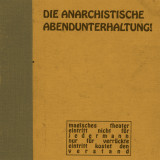
In 1995 the self-titled full-length debut of Die Anarchistische Abendunterhaltung (DAAU) was released. The band consisted of four young, 'classically derailed' musicians who played their own compositions with acoustic instruments such as violin, cello, clarinet and accordion. Their work contained influences from Roma music, Eastern European folk, klezmer and jazz, but was performed with the energy, rebellious spirit and Sturm und Drang of a bona fide punk band. DAAU was part of the fertile Antwerp scene, which also produced dEUS, Zita Swoon and Kiss My Jazz, and soon signed an international record deal with Sony Classical.
The group's influential first record, which has been out of print for a while, is now finally being released again and is available on vinyl for the very first time.
In those early days, DAAU consisted of four young, classically trained musicians who tackled their instrumental compositions with a true punk spirit. 'If we'd had guitars, bass or drums at that time, we would probably have been just another rock band', says accordionist Roel Van Camp, who, together with his schoolmates Buni Lenski on violin, the latter's brother Simon on cello and Han Stubbe on clarinet made up the Antwerp quartet. 'With our acoustic instruments we tried to create our own version of the music we loved listening to, from sixties rock and prog to new wave.'
The quartet, which initially played in streets and cafes, appealed to a diverse audience and sometimes joked that they were a classically trained unit that had 'gone off the rails'. 'As befits teenagers, we wanted to shake things up', Stubbe remembers, 'even though we always kept cherishing our classical backgrounds.' Van Camp: 'Our education was never supposed to feel like a straitjacket. We were free-spirited enough to ignore the laws and regulations of the music academy and to create our own sound. Our compositions were open to influences from Roma music, Eastern European folk, klezmer and jazz'. 'That eclecticism was a direct result of the zeitgeist', Han Stubbe adds. 'We loved different styles and happily mixed them together'.
The monniker Die Anarchistische Abendunterhaltung was derived from Steppenwolf, a novel by German writer Hermann Hesse about a character who was outside society. 'In the book, the narrator talks of a theatre', Van Camp explains. 'And at the entrance there is a warning sign sign that says: if you go in here, you are guaranteed to lose your mind. That was an apt description of the way our music worked'.
Almost all tracks on DAAU's first album were 'Drieslagstelsels' (or 'three-course rotations'). The term referred to an agricultural method of the early Middle Ages, but also to the fact that each song of the group consisted of three major movements. Van Camp: 'The titles of those pieces referred to our method of writing. We piled up a huge bunch of ideas, because we wanted to tell more than just one story. With each composition, we took the listener for a ride'.
In 1995 the self-titled full-length debut of Die Anarchistische Abendunterhaltung (DAAU) was released. The band consisted of four young, 'classically derailed' musicians who played their own compositions with acoustic instruments such as violin, cello, clarinet and accordion. Their work contained influences from Roma music, Eastern European folk, klezmer and jazz, but was performed with the energy, rebellious spirit and Sturm und Drang of a bona fide punk band. DAAU was part of the fertile Antwerp scene, which also produced dEUS, Zita Swoon and Kiss My Jazz, and soon signed an international record deal with Sony Classical.
The group's influential first record, which has been out of print for a while, is now finally being released again and is available on vinyl for the very first time.
In those early days, DAAU consisted of four young, classically trained musicians who tackled their instrumental compositions with a true punk spirit. 'If we'd had guitars, bass or drums at that time, we would probably have been just another rock band', says accordionist Roel Van Camp, who, together with his schoolmates Buni Lenski on violin, the latter's brother Simon on cello and Han Stubbe on clarinet made up the Antwerp quartet. 'With our acoustic instruments we tried to create our own version of the music we loved listening to, from sixties rock and prog to new wave.'
The quartet, which initially played in streets and cafes, appealed to a diverse audience and sometimes joked that they were a classically trained unit that had 'gone off the rails'. 'As befits teenagers, we wanted to shake things up', Stubbe remembers, 'even though we always kept cherishing our classical backgrounds.' Van Camp: 'Our education was never supposed to feel like a straitjacket. We were free-spirited enough to ignore the laws and regulations of the music academy and to create our own sound. Our compositions were open to influences from Roma music, Eastern European folk, klezmer and jazz'. 'That eclecticism was a direct result of the zeitgeist', Han Stubbe adds. 'We loved different styles and happily mixed them together'.
The monniker Die Anarchistische Abendunterhaltung was derived from Steppenwolf, a novel by German writer Hermann Hesse about a character who was outside society. 'In the book, the narrator talks of a theatre', Van Camp explains. 'And at the entrance there is a warning sign sign that says: if you go in here, you are guaranteed to lose your mind. That was an apt description of the way our music worked'.
Almost all tracks on DAAU's first album were 'Drieslagstelsels' (or 'three-course rotations'). The term referred to an agricultural method of the early Middle Ages, but also to the fact that each song of the group consisted of three major movements. Van Camp: 'The titles of those pieces referred to our method of writing. We piled up a huge bunch of ideas, because we wanted to tell more than just one story. With each composition, we took the listener for a ride'.

Stevie Ray Vaughan's third studio album Soul To Soul was released in 1985, just two years after his massive debut Texas Flood. Moving more into a soulful R&B-tinged blues sound, Stevie included two new band members on keyboard and saxophone for Soul To Soul. The band know their way around a number of cover versions of songs penned by Hank Ballard, Doyle Bramhall, and Willie Dixon, bringing a variety of influences into SRV's brand of modern blues. His own compositions such as “Say What”, “Ain't Gone 'N' Give Up On Love” and “Life Without You” reveal an artist that is ever passionate in delivering real blues, and growing in his songwriting at the same time.
Soul To Soul is available as a limited edition of 1500 individually numbered copies on blue marbled vinyl.
