Isabelle Adjani ist das, was man eine Ikone des französischen Kinos nennen kann. Mit ihren fünf César-Auszeichnungen (ein beeindruckender Rekord) in der Kategorie "Beste Schauspielerin" für "Possession", "Ein tödlicher Sommer", "Camille Claudel", "La Reine Margot" und "Skirt Day" hat sie keinen Zweifel an ihrem Starstatus gelassen - sowohl in Frankreich als auch international. Die Wartezeit auf ein Album von Isabelle Adjani schien nicht enden zu wollen.
Nach ihrer legendären Reise mit Serge Gainsbourg, die sie vom Grund des Swimmingpools (Adjanis eigene Worte in ihrer ersten musikalischen Veröffentlichung mit der französischen Musiklegende Gainsbourg, Pull marine) zu den Höhen des Ruhms führte, begann sie mit der unglaublichsten Besetzung zu arbeiten, die diese Ära zu bieten hatte - Benjamin Biolay, Etienne Daho, Gaëtan Roussel, Seal, Simon Le Bon, Christophe, Akhenaton, Daniel Darc, Philippe Pascal, David Sylvian, Youssou N'Dour und Peter Murphy. Diese Veröffentlichung ist das Ergebnis von 15 Jahren Sessions und Treffen, bei denen die Zeit einfach keine Rolle mehr spielte.
Das neue Album, das vollständig von Pascal Obispo produziert wurde und bei dem Pascal Obispo und Cécile de Laurentis gemeinsam Regie geführt haben, ist endlich aus seiner Puppe geschlüpft. Isabelle Adjani meldet sich mit ihrem einzigartigen Album "Bande originale" (dt.: "Soundtrack") zurück, das in Form von 12 Duetten ein musikalisches Großereignis für die Festtage sein wird.
Suche:ga posse
Neo Noir Swing! The modern Les Paul from the Dark Side! PO and his band catapult you right into a ball room filled with misfits and goons and smack you with 12 songs including the terrific cover version of Niagara's 80's disco hit L'amour a la plage Pierre Omer was born in London of an Indian father and a Swiss mother. He is a founder member of the legendary Swiss funeral Rock'n'Roll band The Dead Brothers (guitars and accordion). In 2009 he started several solo projects along with Robert Butler (the Shit, the Miracle Workers), Roland Bucher and Christian Aregger (Blind Butcher) in 2013 the Swing Revue was born, along with: Pierre Omer: vocals, guitar Julien Israelian: drums, Géraldine Schenkel: Fender Rhodes, Christoph Gantert: vocals, trumpet, and the one and only Lalla Morte: Sings Fakir and Dances. They played many shows and festivals such as: Binic Folk Blues Festival, Montreux Jazz Festival, Buskers Bern, Festival Les Athénéennes, Pod'Ring Biel, Vinelz, Le Cirque Electric Paris etc. This new album is recorded by the band itself in true DIY-style - Pierre already produced some Voodoo Rhythm Records (mama rosin) in the past - and was mixed in Berlin's Big Snuff Studio with Nene Baratto (movie star junkies, black lips, Heat, Jimi Tenor, King khan, Black Mass Rising. The whole album Stands out with Pierre's amazing song writing skills, the lazy laid back dark vocal and his irritating guitar playing, along with Christop Gantert's devil possessed trumpet playing. The Music of the swing era of the 30's and 40's, combined with a garage spirit and an eye for everything else make for a special album. Classic black vinyl with dlc and printed inlay, CD as gatefold wallet with 12page booklet.
Ruthie Foster’s ninth studio album represents a new high water mark for the veteran blues artist—a collection of songs possessing pure power, like a tidal wave of musical generosity.
Healing Time finds Foster pushing her boundaries as a singer and songwriter more than ever before, creating a truly live-sounding atmosphere with the help of her band, who sound refreshingly loose and lived-in throughout these 12 songs.
Joining Foster and her band: members of Austin psych-soul outfit Black Pumas. “They gave these songs a breath of fresh air,” she says about their contributions—and veteran producer Mark Howard (Willie Nelson, Lucinda Williams) also came in to bring new ideas to Foster’s table.
Two visionary maestros, Pierre Bastien and Michel Banabila, unite in their first collaborative album, Baba Soirée. The veterans of electronic music bring their unique expertise to the table, resulting in a captivating fusion of experimental styles. Bastien’s mechanical loops and experimental instrumental setups merge seamlessly with Banabila's sound design and impeccable skills of sampling collages. It's not a dance party, nor is it an avant-garde intervention. It's a soirée: a cultivated evening of sonic alchemy hosted by these two charismatic gentlemen.
Pierre Bastien is a composer and multi-instrumentalist with a background in French literature. He has spent decades crafting an idiosyncratic world of experimental sound with his self-built mechanical orchestra Mecanium. It was most notably showcased in audiovisual releases on Aphex Twin's Rephlex label. Bastien's creations are a mesmerizing combination of traditional instruments (he has a vast collection) and mechanical automatons. The violin in the track Rotomotor, for example, is physically played by one of his machines. In Baba Soirée, Bastien also plays a prepared cornet (Slow Dance, Banbas Aura), infusing the recordings with a breathy, dreamy dimension.
Michel Banabila, a sound artist, composer and producer, possesses an eclectic musical repertoire that defies genres. His seamless blend of minimal electronica, tribal ambient, and neo- classical influences has earned him a prominent place in the world of experimental music, and an impressive discography (Knekelhuis, Bureau B, Séance Center, a.o.). Banabila serves as the creative sampling editor for Baba Soirée, expertly weaving together the recordings to craft an evocative sonic tapestry.
The two share a curiosity for traditional instruments from various cultures. The instruments used in the recordings are shown in the cover artwork. A mutual admiration for each other's work paved the way for this fruitful artistic partnership of the Rotterdam-based artists: Collaborating on a single as a fundraiser for Yemen in 2022 set the stage for the creation of Baba Soirée.
For Pierre Bastien, Dada, Fluxus and International Situationism have played a significant role in shaping his artistic vision. The title Baba Soirée is an homage to Kurt Schwitters and Theo van Doesburg's "Kleine Dada Soirée" collaboration which took place exactly a century ago. There's an unmistakable stoicism and an anarchic not-giving-a-f*** attitude in these recordings by Bastien & Banabila, which resonates in the light of this Dada reference.
Bill Seaman is a musician, media artist and media researcher int the field of interactive and generative music (he calls this recombinant music). He has been working on a series of works that combine elements of ambient, noise, experimental, new classical and more. He describes these works as being alt.genre. He has recorded five solo albums (on Eilean Rec. and Fluid Audio) and a numerous of collaborative albums with some music artists such as Craig Tattersall, John Supko, Offthesky, Rutger Zuydervelt, Stephen Vitiello, between others. Seaman has also often created video works to accompany a number of his solo and collaborative pieces. Seaman is self-taught as a musician and composer, and is a Professor in the Music Department at Duke as well as Art, Arth History & Visual Studies.
Since releasing a track on the RND034873349921 compilation on the Pause_2 label in 2001, Tim Diagram has released over thirty-five albums as a solo artist or as part of collaboration projects. he has appeared on many well-respected labels, such as; False Industries, Static Caravan, Nomadic Kids Republic, Fluid Audio, Time Released Sound, Chemical Tapes – to name but a few. Tim runs the Handstitched* label in the UK which specialises in bespoke, handmade packaging for the more electro-acoustic and drone-like elements of his and other artists work, and he is involved in audio-visual commissions, including art gallery installations and music videos for a global clothing brand. As well as Maps and Diagrams, Tim also records music under the Atlantis name and works in collaboration with Genoveva Kachurkova as Bluhm, with Charles Sage as Hessien, alongside Rob Lyon as Somme & with Arbee under the name Emba.
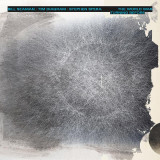
Stephen Spera is a New York based artist working in sound, photography, and plastic arts. His works have been released on some labels such as Handstitched, Tesselate, and Editions Vaché. In 2020 he began a series of collaborations with Bill Seaman, as the two artists admired each other’s work and found much in common. Their work together was graced with an ease which kept them composing an album- “Architectures of Light” -which was released on Britain’s Handstitched label. The project was very well-received. The two stay in touch and kept working, joined now by Tim Martin whose work as Maps and Diagrams was long-admired by Stephen and Bill. They too found instant understanding of each other’s work, and “ The World was turning Before” is the result of their collaboration. The three artists possess an almost uncanny communication that enables them to work whilst still enjoying each other’s individual voice, and this trio has come together so well that, in Spera’s words, “We no longer know who played what…”
Green Vinyl[16,39 €]
We are thrilled to kick off our label endeavors with one of the rarest and simultaneously best-recorded independently released German new wave singles in history: "Jede Nacht derselbe Traum" ("The Same Dream Every Night") by Total.
Back in late 1983, Total found themselves in a pivotal rendezvous with CBS Records in a Frankfurt hotel lobby. The entire band was present, along with the esteemed NDW manager Jim Rakete, who had played a role in launching Nena to national and international stardom. Also in attendance were the A&R representatives from CBS. It was on this day that Total was presented with the opportunity to ink an album deal with CBS. However, since they had only recorded the titular song thus far, negotiations hit a snag. CBS insisted on a full album rather than a standalone single.
Ultimately, the band decided to independently issue a limited 7" run of "Jede Nacht derselbe Traum" under Günther Mannschreck's Schreckschuss label in January 1984. These vinyl copies became the band's currency for pursuing record deals and promotional prospects. However, despite the potential to achieve commercial success and garner radio airplay, the song and the "Total" project gradually waned from the music landscape. Regrettably, only a few vinyl copies have managed to endure over time. This NDW "holy grail" may have prompted a fair share of dreams for serious vinyl collectors, as to this day, not a single physical copy has been put up for sale on platforms like eBay or Discogs. Interestingly, Maisenbacher has even fielded an offer of over 400 Euros for an original copy, although he regretfully couldn't fulfill the request due to possessing just a single copy himself.
The song itself is a fusion of diverse musical styles. Crafted using the Oberheim OB8 system, complete with the DMX drum machine and a bassline woven from a Jupiter 8 keyboard, it carried a groove reminiscent of New York's electro hip-hop sound in "The Message," setting it apart from typical German new wave productions. Additionally, a Korg Polysix was integrated, and guitar effects were layered to finalize the infectious synth-pop instrumental. Newcomer to the band, Andrea Ströbel, laid down a flawless vocal layer that steered the song towards a straightforward NDW direction, giving it a resonance that surely resonated with mainstream and radio audiences. To complete a B-side for the original vinyl single, the legendary state-of-the-art L480 Lexicon reverb was used. In the more experimental "Maxi Mix," now known as the "Dub Mix," Mannschreck expertly manipulated the machine. The outcome stands as a historical example of incredible studio craftsmanship and the cutting-edge techniques of the 80s.
For the new 12" release, Mannschreck unearthed an alternative mix of the song on the original tapes, featuring a distinct introduction, break, and exciting edits. In addition, DJ Friction, who contributed to the transfer and mastering for the release, treated us to a superb edit that cleverly melds all versions of the song while incorporating a few extra bassline groove elements.
The captivating reissue cover spotlights vocalist Andrea Ströbel, who gazes with determination. A hand reaches out to grab her shirt, attempting to pull her down. Symbolizing the song's theme, it embodies the unsettling dream conveyed by the lyrics-yet she steadfastly resists.
In summary, we are elated to present a significant gem for vinyl enthusiasts: a splendid mid-tempo tune that dances on the boundary of synth-pop, new wave and electro. The new 12" single underwent meticulous mastering, and the outcome is nothing short of astounding, surpassing the sonic quality of the original pressing.
Black Vinyl[14,24 €]
We are thrilled to kick off our label endeavors with one of the rarest and simultaneously best-recorded independently released German new wave singles in history: "Jede Nacht derselbe Traum" ("The Same Dream Every Night") by Total.
Back in late 1983, Total found themselves in a pivotal rendezvous with CBS Records in a Frankfurt hotel lobby. The entire band was present, along with the esteemed NDW manager Jim Rakete, who had played a role in launching Nena to national and international stardom. Also in attendance were the A&R representatives from CBS. It was on this day that Total was presented with the opportunity to ink an album deal with CBS. However, since they had only recorded the titular song thus far, negotiations hit a snag. CBS insisted on a full album rather than a standalone single.
Ultimately, the band decided to independently issue a limited 7" run of "Jede Nacht derselbe Traum" under Günther Mannschreck's Schreckschuss label in January 1984. These vinyl copies became the band's currency for pursuing record deals and promotional prospects. However, despite the potential to achieve commercial success and garner radio airplay, the song and the "Total" project gradually waned from the music landscape. Regrettably, only a few vinyl copies have managed to endure over time. This NDW "holy grail" may have prompted a fair share of dreams for serious vinyl collectors, as to this day, not a single physical copy has been put up for sale on platforms like eBay or Discogs. Interestingly, Maisenbacher has even fielded an offer of over 400 Euros for an original copy, although he regretfully couldn't fulfill the request due to possessing just a single copy himself.
The song itself is a fusion of diverse musical styles. Crafted using the Oberheim OB8 system, complete with the DMX drum machine and a bassline woven from a Jupiter 8 keyboard, it carried a groove reminiscent of New York's electro hip-hop sound in "The Message," setting it apart from typical German new wave productions. Additionally, a Korg Polysix was integrated, and guitar effects were layered to finalize the infectious synth-pop instrumental. Newcomer to the band, Andrea Ströbel, laid down a flawless vocal layer that steered the song towards a straightforward NDW direction, giving it a resonance that surely resonated with mainstream and radio audiences. To complete a B-side for the original vinyl single, the legendary state-of-the-art L480 Lexicon reverb was used. In the more experimental "Maxi Mix," now known as the "Dub Mix," Mannschreck expertly manipulated the machine. The outcome stands as a historical example of incredible studio craftsmanship and the cutting-edge techniques of the 80s.
For the new 12" release, Mannschreck unearthed an alternative mix of the song on the original tapes, featuring a distinct introduction, break, and exciting edits. In addition, DJ Friction, who contributed to the transfer and mastering for the release, treated us to a superb edit that cleverly melds all versions of the song while incorporating a few extra bassline groove elements.
The captivating reissue cover spotlights vocalist Andrea Ströbel, who gazes with determination. A hand reaches out to grab her shirt, attempting to pull her down. Symbolizing the song's theme, it embodies the unsettling dream conveyed by the lyrics-yet she steadfastly resists.
In summary, we are elated to present a significant gem for vinyl enthusiasts: a splendid mid-tempo tune that dances on the boundary of synth-pop, new wave and electro. The new 12" single underwent meticulous mastering, and the outcome is nothing short of astounding, surpassing the sonic quality of the original pressing.
- A1: Rinky Dink Records (Skit)
- A2: We 'Bout To Ride - Hypnotize Camp Posse
- A3: Drive By - Project Pat
- A4: Azz & Tittiez - Hypnotize Camp Posse
- B1: Die A Soldier - Hypnotize Camp Posse
- B2: We Ain't Playin' - Gangsta Boo & Koopsta Knicca
- B3: Fie It On Up - T-Rock W/Tear Da Club Up Thugs & La Chat
- B4: Big Mouth, Big Talk - Pastor Troy & T-Rock
- C1: What's Going On (Skit)
- C2: D-Suckin'-H - Gangsta Boo & Juicy J
- C3: Don't Make Me Kill - Lord Infamous (Feat Killa Klan)
- C4: Don't Trust 'Em - Crunchy Black & T-Rock
- D1: Who Run It - Three-6-Mafia
- D2: Project Hoes - La Chat
- D3: Da First Date - Tear Da Club Up Thugs & Koopsta Knicca
- D4: Hoes Can Be Like N****Z - La Chat
- D5: Outro
Three 6 Mafia fans canget their hands on Hypnotize Camp Posse's one and only album on limited edition vinyl. Originally released in 2000 only on CD and cassette, Get On Down gives this southern Hip-Hop classic a proper release on vinyl. Featuring all The Hypnotize Minds affiliates DJ Paul, Juicy J, Project Pat, Lord Infamous, Crunchy Black, Gangsta Boo, La Chat, T-Rock, & Koopsta Knicca.
Hailing from the hallowed city that birthed classic death metal acts such as Entombed, Dismember and Unleashed before them, Stockholm, Sweden’s XORSIST are preparing to release their sophomore album, At the Somber Steps of Serenity, via Prosthetic Records in October. Following their self-released debut album Deadly Possession in 2022, XORSIST caught the attention of the Los Angeles metal label with their old school approach to and affinity for Sweden’s death metal legacy and history. Founded by Gustav Ryderfelt (vocals and guitar) before cementing their line-up with both Birk Castenmalm (vocals and bass) and Alphonse Bouquelon (drums), XORSIST’s core sound is one rooted in deep reverence for the genre’s roots as much as it is a spirited progression of the raw and uncompromising Stockholm sound. Seeking to continue their working relationship with the legendary Sunlight Studios (Dismember, At The Gates, Entombed, Grave and more), XORSIST once again opted to retain Tomas Skogsberg on co-production duties with Iñaki Marconi (Soen, Sepultura, Carcass). XORSIST’s proclivity for musical tradition is not mere homage so much as it is a graceful carrying of the genre’s torch. Having built up a glowing reputation in the Swedish underground by fans new and old, At the Somber Steps of Serenity sees the young band ensure the old school Swedish death metal torch continues to burn brighter than before for the fabled city in which they reside.
As one of the most triumphant and beguiling directorial debut features to emerge from the fruitful Polish New Wave, Andrzej Zulawski’s 1971 film Third Part Of The Night not only earned the thirty-year-old filmmaker a place next to other radical Polish directors such as Polanski, Skolimowski and Has, but also galvanised a creative bond with long running collaborator and composer Andrzej Korzyński, providing fans of foreign abstract/suspense cinema with a potent creative fusion to match those of Polanki/Komeda, Fellini/Rota and Argento/Goblin, amongst others.
Quite simply one of the heaviest psych rock film soundtracks of all time Andrzej Korzyński’s short and unreleased score matched the blueprint that adorned the drawing boards of conceptual French jazz orch rock composers like Jean-Claude Vannier, Francois De Roubaix and Alain Gourageur, creating a soundtrack that unknowingly begs comparison to Masahiko Satô’s Belladonna Of Sadness and Billy Green’s Stone. As one of the first progressive pop writers to come out of the vibrant (but carefully scrutinised) Polish beat scene with his bands Ricecar 64 and later Arp Life (and composing for national heroes such as Czeslaw Niemen, Niebiesko-Czarni and Test) Korzyński’s growing passion for conceptual rock and jazz music soon lead to instrumental composition and soundtrack scores.
His cinematic debuts scoring two consecutive transitional new wave films for Andrzej Wajda (in collaboration with the radical Polski pop groups Trubadurzy and Grupa ABC) also provided Korzyński with another significant cinematic muse in that of the stunning actress Malgorzata Braunek with whom they would both eventually achieve their finest performances under the direction of the ravenous first-timer Żuławski. Third Part Of The Night (1971) perhaps epitomises that triangular on-screen unison in its vibrant youth and feeds it through a hallucinogenic mangle finding astonishing beauty (within a repulsive synopsis) against a bleak and shattered backdrop and accompanied by progressive, psychedelic orchestral rock music – elements which would intensify for all three creatives with the next film, Diabel, which was banned by the Polish government the following year until 1988.
Third Part Of The Night also marks the public unison of Żuławski and Braunek whose later private romantic relationship is said to form the basis for another defining Żuławski/Korzyński defining endeavour with the 1981 film Possession exactly a decade later, encapsulating a period that bequeaths a previously unopened vault of some of the composers finest and most inspired sonic adventures.
In the swirl of underground music emerging from Dunedin, New Zealand in the 1980s, Peter Gutteridge stands as one of the era’s most intense and shadowy figures. Despite being a founding member of The Clean and The Chills, Gutteridge would eschew indie-rock fame for the hypnotic and driving sounds of his later bands such as Snapper.
Fittingly, it is Pure—Gutteridge’s lone solo album of intimate home recordings—that serves as the most revealing and celebrated release of his career. As Peter Jefferies writes in the liner notes, “That’s what’s so good about Pure. Not only the songs, but the name, the name for the recording. It is as pure as you can get. That’s the real deal, when it goes from nothing to something and he catches it on his machine.”
Originally released on cassette in 1989 on Xpressway, Pure documents Gutteridge’s stunning use of 4-track as instrument. Featuring lo-fi pop gems and interstitial sketches, the LP combines densely layered keyboards and guitars, distorted drum machines and possessed-sounding vocals to create a truly singular work of undistilled artistic vision.
While Gutteridge denied that he was the architect of the “Dunedin Sound,” Pure sits comfortably next to the most revered Flying Nun releases of its time. Shifting exquisitely from churning rattle to an airy ease without losing momentum, these twenty-one songs hold a lasting place in the canon of DIY music. Recommended for fans of Syd Barrett, Jim Shepard and early Fad Gadget. Includes drawing chosen by Peter’s family.
Big Apple *Ish is a new imprint dedicated to the stone cold classics from the
birthplace of Hip Hop. The first release features two remakes of rap supertunes: “Big Apple I*sh“ and “All 4 The People“, which were both game changers in their time and remain relevant to
this day. These surprised packed reworks are super DJ friendly and guaranteed to rock the
dancefloors across the globe
- Gumbo’! 4 Tha Folks, Hold On
- Wayans Bros
- Roscoe’!
- Fk U Mean/ Hold Me Dwn
- Bussin’ (Cold)
- Pink & Green, White & Gold
- Back’!
- Doin Tew Much. (In My Mama Name)
- 4: Sho’7
- Living Proof (Family)
- Scurrrrd
- Smile (Wit Yo Gold)
- Call Tha Bro (Tapped In)
- Bravo’!
- Voicemails Uptown
- Big Ole
- Lng Hair Dnt Care
- Play On’! Inshallah
Pink Siifu’s latest release, GUMBO!, is another sprawling Afrocentric vision from one of the boldest voices in contemporary rap. Following up on 2020’s NEGRO, the album’s songs are as rich and varied as its titular stew. Siifu’s boundless style makes for an unpredictable but rewarding ride across the album’s 18 tracks, as he explores the diverse sounds of his influences and breaks new ground with a unique class of co-stars.
Siifu, born Livingston Matthews and raised between Alabama and Cincinnati, has already notched a conspicuous list of collaborations in his burgeoning career, from legendary producer the Alchemist to Australian electronic group the Avalanches. Siifu also embodies various inspirations through a range of alter-egos, often producing under the moniker “iiye,” or as half of the duo B. Cool-Aid with Ahwlee, both of which appear on GUMBO!.
The variety of guest features and production on GUMBO! only elevates Siifu’s ability to push the boundaries of genre and song structure. “Voicemails Uptown” (produced by Soulection’s Monte Booker) is the second of two back-to-back posse cuts, sporting five plus vocalists each. “Lng hair dnt care,” the album’s first single, was produced by Ted Kamal, who first garnered attention for his outside-the-box edits of contemporary rap staples. And while several of the album’s tracks are well within his bag, the jazzy, drumless loop on “Fk U Mean/Hold Me Dwn” could’ve been a cut off of his collab album with Virginia rapper Fly Anakin, FlySiifu’s.
Though rife with standout tracks, GUMBO! is greater than the sum of its parts. Siifu’s ambitious range and impressive pool of features create an otherworldly listening experience. Overall, it reflects an intense desire for self-expression and creative growth, one which he shares with many of his influences. Like Outkast, Sun Ra, Baraka, or Bad Brains, his unique soundscapes re-imagine a genre without restrictions, breaking new ground in search of artistic and personal freedom.
No. is the tenth Soft Riot album by Glasgow-based Canadian synth auteur Jack Duckworth (also known as JJD). With origins from the mid-nineties in the vibrant art-punk/hardcore dominating the West Coast American/ Canadian underground at the time, he has clocked in over twenty five years of musical output in various bands and projects.
No. is the logical follow-up to When Push Comes To Shove, released in November 2019 on the Glasgow UK-based label Possession Records, which saw some critical acclaim in the increasingly diverse synthwave scene — a crystallization of the artist’s signature “SynthLord” sound.
With No. things have been shaken up and pushed into new directions. Many different factors came into play, including the conditions of the pandemic lockdowns and an urge for listening to music favourites from beyond his own scene informed developments on this new record. One key feature of these tracks is that under these conditions they were developed as individual pieces — a contrasting approach from previous albums where tracks were written with an album in mind. An evaluation of all of these individual tracks in the summer of 2022 unveiled a common pattern going through these new compositions.
One can still hear any number of echoes of the spirits of original synth artists in his sound, such as Images in Vogue, The Box, Section 25, Thomas Dolby, Skinny Puppy, Chrome, Cabaret Voltaire, Fad Gadget, Japan and Bill Nelson. However, some of Jack’s halcyon punk influences surface as well, taking inspiration from legendary punk/hardcore labels such as Dischord and Gravity, as listening habits over pandemic steered back towards more guitar-based styles. The introduction of expanded production techniques, experiments with vocal styles and tones, and stylistic shifts mark a progression of Soft Riot’s sound. The result is a snarkier, urgent and more playful, with a focus on pure synthpop, new wave, art-punk, proto-EBM as well as grittier synth-punk and post-punk tones.
The variation, energy and tone of this collection of tracks illustrates Soft Riot’s ability to transcend the hallmarks of today’s music environment, which increasingly is fragmenting into smaller and smaller micro-genres. Dry wit and dark humour take the lyrics and the tone of this album on a fun ride through music scenes, dark alleys and inside jokes.
smokey vinyl
French label and promoter Much More recordings is proud to present the first vinyl our collection.
This vinyl features 6 tracks ranging from breaks to techno and passing by acid and electronica, designed for soundsystem and anchored in their proper original and analogic techno sound.
We believe that redefining the essence of the genre is now critical. After years of promoting parties in Paris and Europe, Much More has gathered artists considered to be the essence of techno. Artists who know how to turn knobs without screens.
They continue to make the mob sweat on the dance-floor, with a simple at first yet efficient recipe that holds a myriad of subtleties.
On our table lies a lemon slowly withering away, a fruit that once was as much suave than sour. Our artists are as ripe as this yellow sphere lying in the open. They possess the experience and knowledge needed to forcefully broadcast this emergency rebirth that techno desperately needs. Our creations are neither nostalgic nor futuristic, they aim to be atemporal. They are naked to artifices, raw to over-tuning, built and cut upon the very ageless tools that defined and will name what is Techno.
Far from us the desire of claiming to be the only definition of the genre, nor forgetting about its primal cravings. Whereas Amarou, Skudge and Sawlin showcast the narrative scope of our passion, Wrong Assessment, Arnaud le Texier and Falling Echoes will remind us what is raving under the strobe's fire.
It's music from urban centers and countrysides, for big room and inner space.
It's music without tag or time, where every loop stops and unfolds on its own.
We are back to the essence, and yet, much more.
In 1983 there came a sound from the depths of the Brazilian rainforest that was primal, ground-breaking, and completely ahead of its time. The roaring of amplifiers and the beating of drums was the sound of Max and Iggor Cavalera creating their debut cult-classics 'MORBID VISIONS' and 'BESTIAL DEVASTATION', and now it seems that after many years, the Cavalera brothers will be returning to their raw upstarts with a full re-recording of these beloved yet obscure albums.
When 'MORBID VISIONS' and 'BESTIAL DEVASTATION" were first spawned it was done in ramshackle conditions in Belo Horizonte, where the duo grew up. Max and Iggor were 14 and 13 years old during the original recording, and they had all the tenacity and energy of a pack of wild dogs. Only, their sound was not quite refined at that time, their adolescence bled through on those early records. It is well known that Max's guitars were completely out of tune on those sessions, and Iggor's drums often swung around tempos crazily. There's an air of youth and passion that could only be achieved by two teenagers that wanted to shock the world. Four decades later and it is plain to see that they certainly did gather the world's attention.
Despite the production being rough around the edges and the band still carving out their direction, there was a noticeable level of craftsmanship to the song structures and a clear indication that given their desire to thrash like maniacs, these kids from Brazil were going to tear the place up night after night. These albums still hold a dark, mystic and at times eerie quality to them that many have come to love over the years. For some, the music does not have to be delivered with perfect technical precision, the spastic live delivery is something to be cherished, and even with their guitars out of tune, they played like the gates of hell were opening. The crossroads of a shamanistic spiritual summoning at a back-alley metal show in downtown Belo Horizonte.
It is a task of heavy magnitude to try and cross the gap between the accomplished artists that they are today to the scrappy boys that they were when they first wrote these songs, but the duo have executed the performances flawlessly. The perfect bridge between the unbridled energy of the original sessions and the high-quality sound of a 21st century production. It is truly astounding to hear Max once again growl like a monster during "Troops Of Doom" and riff at insane speeds through "War" and "Crucifixion". Iggor's barbaric drumming on "Anti-Christ" is like the galloping hooves of a death-rider. Accompanied by bassist Igor Amadeus Cavalera (HEALING MAGIC, GO AHEAD AND DIE) and lead guitarist Daniel Gonzales (POSSESSED, GRUESOME) the quartet is a force to be reckoned with.
How this re-recording attained such a familiar tenacity is almost a mystery, like some spell that brought these albums back from the grave. Within the first few beats you can hear that the Cavalera’s have lost no momentum, attacking the songs at maximum speed and ferocity. In fact, it seems that the brothers have only empowered their connection through music over the decades. You can feel the spark that those two create, a dynamic sound rich with subtleties and ear-grabbing hooks. As Iggor counts in each song with his drumsticks, and Max's guitar feedbacks loudly as he approaches the microphone, there is palpable apprehension. It is apparent that when these two icons get together to play, they are going to electrify the room with their presence.
Few have had the incredible careers that Max and Iggor have achieved through their music. Even fewer had faith in the young boys that wrote 'MORBID VISIONS' and "BESTIAL DEVASTATION' all those years ago. Yet here they still stand ripping through their earliest works with decades of experience under their belts. For them, it is a breath of fresh air to finally give these songs the desired production that they deserve. They both feel that the fans also deserve a fresh look at these albums, a chance to appreciate them in a completely new light.
From start to finish 'MORBID VISIONS" and "BESTIAL DEVASTATION" are a torrential whirlwind of riffs, beats, and screams. A blast from the past that is sure to take every last listener back to the raucous live shows of the eighties.
Mysterious clouds form above an old cathedral, the summoning of dark magic is upon us, and the troops of doom march forth to announce the arrival of 'CAVALERA'!
Als autodidaktische Musikerin und charakteristisch private Künstlerin, die ihr Leben ihrer Arbeit widmet, taucht die amerikanische Songwriterin Julie Byrne nach über sechs Jahren seit ihrem ihrem letzten Album "Not Even Happiness" aus einer zutiefst anstrengenden und generativen Phase mit der kraftvollsten, glänzendsten und lebensbejahendsten Musik ihrer Karriere auf. The Greater Wings wurde über mehrere Jahreszeiten hinweg geschrieben, mit Bildern von Nächten auf Tour, Zeiten der Isolation und den Fahrten quer durchs Land für die verschiedenen Kollaborationen zwischen Chicago, New York und Los Angeles. Die Aufnahmen begannen mit dem verstorbenen Eric Littmann (Phantom Posse, Steve Sobs), ihrem langjährigen kreativen Partner und Not Even Happiness-Produzenten, und endeten in den Catskills von New York mit dem Produzenten Alex Somers (Sigur Rós, Julianna Barwick). Obwohl sie die Plastizität des Verlustes in sich tragen, sind die Lieder universell, ungezügelt in ihrer Hingabe und Freude. Byrne lehnt sich weiter in Atmosphären, die sowohl weitläufig als auch intim sind; das üppige, beschwörende Songhandwerk fließt zwischen ihrer charakteristischen fingergezupften Gitarre, dem Synthesizer und einem neu hinzugefügten Klavier, das durch Ausschmückungen mit Harfe und Streichern erweitert wird. Es ist der transzendente Klang von Ressourcen, von Freundschaft, die nie ohne Romantik war, von Loyalität, die von innen heraus brennt wie ein brennendes Herz, und der Lebenskraft, die in unwiederholbaren Momenten heraufbeschworen wird - roh, wunderschön und wild. "Meine Hoffnung für The Greater Wings ist, dass es als Liebesbrief an meine auserwählte Familie und als Ausdruck der Tiefe meines Engagements für unsere gemeinsame Zukunft lebt", erklärt Byrne. "Durch die Trauer neu geformt zu werden, hat mir auch bewusster gemacht, was der Tod mir nicht nimmt. Das nehme ich mir zu Herzen, in Worte, in Töne. Musik ist nicht an eine lineare Zeit gebunden, so dass sie in der Lage ist, die Zukunft aufzuzeichnen und zu ihr zu sprechen: So hat es sich für mich angefühlt, als wir gleichzeitig lebendig waren und alles auf einmal geschah. Wie es sich angefühlt hat, an meine Grenzen zu gehen und zu stoßen, die Liebe, die diesen ganzen Kampf wert war. Diese Erinnerungen sind meine Werte, sie gehören zu mir."
Our label is thrilled to share yet another mind-blowing electro/proto-techno track by Art Programming (Art P), following the release of "Genscher Pull N Push". This track was originally the final piece on their self-titled album, released on cassette in 1983 under the P.A.P. label from Bremen.
To this day, the track remains almost completely unknown within collector's circles. However, let's take a moment to imagine what might have happened had the recording been released as a vinyl 12" back in 1983. Could it have been a game changer? We will never know for sure. Nevertheless, one thing is certain: with its punchy Roland 808 rhythms, and catchy synth lines and vocoder, it undoubtedly qualifies as a classic German electro track, and one of the earliest techno/proto-techno recordings.
At almost 8 minutes in length, this track includes one of the most exhilarating breaks in electro music of that era, showcasing extensive drum editing and effects. It strongly resembles the sound that Detroit would become famous for in the years to come, but make no mistake - this record was produced straight out of Bremen, a relatively small city in Northern Germany.
For the flip side of the single, we enlisted Alexander Arpeggio, the owner of Mond Musik und Eine Welt label, to edit the track while preserving its original spirit. As a member of the acid techno project Aufgang B and the synth-pop minimal duo OTTO, he not only has a deep understanding for this kind of music but also possesses the ability to give the song a different feel with greater dancefloor appeal. He has slightly reduced the tempo of the track and emphasized the instrumental and break parts, resulting in an exciting remix that is DJ-friendly and has everything you could ask for.
The 12" release comes with the original Art Programming logo in a vintage style, packaged in a generic black sleeve with hype sticker. It is limited to only 200 copies. This is a serious gem that you won't want to miss out on, so act fast!
Brian Jonestown Massacre, Velvet Underground, TOY. “Upon the highways of Freedom, where Evil is like a Ferrari… “ Unbeknownst to its members, Index For Working Musik was born on an evening in late 2019 amidst the discovery of a collection of faded b&w photocopies that had been marinating on the floor of a urine-alley in the Gothic Quarter of Barcelona. An assortment of sacred and profane imagery were crumpled amongst an essay on early Christian hermits, entitled Men Possessed by God, the meaning of which was enticingly vague. Received together, they planted the seeds for a new endeavour. Though Max Oscarnold and Nathalia Bruno were already engaged in a creative ping-pong of sorts, the results to this point had only totaled a 30 min long ½ inch tape containing one track and four interludes. They needed a page and they needed ink, and they needed a place and it needed energy. Suddenly by chance or divine intervention, their experimental venture had been given form and direction. Back home in London’s cursed smog, they moved themselves and their 8-track studio into a basement in E8, where the project’s gravitational pull gained strength, quickly developing into an unexpected collective with the incorporation of drummer Bobby Voltaire, double bass player E. Smith and guitarist J. Loftus. As the world shifted around them and the Plague Years followed, it became increasingly clear that they were not going to leave that small basement room. The scarcity of light or outer world presence was less a limitation, instead the main tool at hand, allowing the recording to stretch for boundaryless days in architectural isolation, and forcing them to make straight forward free guitar music, adopting a ‘first thought, best thought’ approach. 35 minutes of repeat phrased guitars, slow-clipped drums and dulcet vocals where the recurring landscape is the desert. Reel-to reel-loops of Afghan music compete with the found sound overlays of voices recorded at the queue of the pharmacy and drum machines borrowed from Spanish heroes, channelling both far-off climes and snippets from a closer reality. It’s a strange psychic brew, built of imagined mysticism and domestic realities, of fever dreams and days that stretched into weeks of months. What was sparked by that discovery in the Gothic Quarter was actually a realisation that what they were looking for was with them all the while, buried as it was in piles of voice memos and recorded guitar feedback. Men Possessed By God they may be not: it was self-possession that was to guide their way in the end. “Life, despite all its destructive changes, remains indestructibly powerful and joyful