Search:gabor
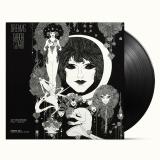

Durch das 1966 auf Impulse! Records veröffentlichte Album “Spellbinder” wurde der ungarische Jazzgitarrist Gábor Szabó einem breiteren amerikanischen Publikum bekannt. Auf dem Album bot er eine originelle
Mischung aus modalem Jazz, osteuropäischen Folkeinflüssen und Popklängen, die er selbst als “Pop-Jazz”
bezeichnete.
Order now and we will order the item for you at our supplier.
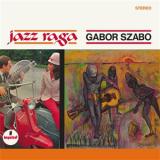
Das 1967 veröffentlichte Album "Jazz Raga" ist mehr als nur ein Album - es ist ein furchtloser Sprung in unbekanntes musikalisches Terrain. Gábor Szabó, der ungarische Jazzgitarrist, der für seinen grenzüberschreitenden Stil bekannt ist, liefert mit diesem Meisterwerk eines der faszinierendsten Alben seiner Karriere in diesem Genre. "Jazz Raga" vereint Jazz, Rock, psychedelischen Folk und östliche Einflüsse - mit Sitar-Melodien und lateinamerikanisch angehauchten Rhythmen, die dem legendären Funk-Schlagzeuger Bernard Purdie zu verdanken sind - und lässt sich keiner Kategorie zuordnen. Es ist eine hypnotische Fusion, in der europäische Tradition auf den Gegenkulturgeist der 60er Jahre trifft, alles verbunden durch Szabós unverkennbaren Gitarrensound. Vom verträumten Groove von ,Walking On Nails" über die wirbelnde Mystik von ,Mizrab" bis hin zu seiner eindringlich originellen Interpretation von ,Paint It Black" der Rolling Stones schafft Szabó eine Klanglandschaft, die sowohl gewagt als auch zutiefst gefühlvoll ist. Sein Spiel ist elektrisierend - voller ungewöhnlicher Akkorde, fließender Improvisationen und einer ganz eigenen Stimme. Auch Jahrzehnte später ist ,Jazz Raga" noch immer ein Meilenstein kreativer Freiheit und globaler Einflussnahme - ein Muss für alle, die Musik suchen, die Grenzen und Erwartungen überschreitet. Wenn Sie diesen Kultklassiker noch nicht kennen, ist es jetzt an der Zeit, dass Gábor Szabó Ihren musikalischen Horizont erweitert. Neuauflage auf 180-g-Vinyl.
expected to be published on 05.12.2025

- 1: Magical Connection 08:6
- 2: My Foolish Heart / Fly Me To The Moon 1:04
- 3: Az Eso Es En 08:48
- 4: Sombrero Sam 07:35
- 5: Django 00:48
- 6: Thirteen 08:48
- 7: My Love 06:04
- 8: Reinhardt 05:40
- 9: Concorde (Nightflight) 11:02
- 10: Magic Mystic Faces 09:11
- 11: Django 03:57
- 12: Stormy 06:09
- 13: Killing Me Softly With His Song 04:55
- 14: The Last Song 05:52
- 15: The Biz 04:43
- 16: From A Dream 05:07
For the first time in full, a unique anthology of Hungarian TV and radio recordings by the legendary guitarist Gábor Szabó, captured during his return visits to Budapest in 1974, 1978, and 1981. This historic collection documents the deeply personal reconnection of an exiled artist with his homeland, bridging musical worlds and emotional landscapes.
The first disc features both studio and concert recordings with some of Hungary’s top jazz players of the era, including the legendary double bassist Aladár Pege and renowned vocalist Kati Kovács. The second disc includes a rare televised concert from the Hilton Hotel (1978) and Szabó’s final known performance — a moving rendition of “From a Dream” recorded in 1981.
The music collected here captures a poignant duality: Szabó as both American and Hungarian, outsider and homecomer. This is one of the most intimate and emotionally charged chapters of his career and a musical homecoming, rich in atmosphere and soul.
As always with Ebalunga!!!, Gábor Szabó’s legacy is treated with great care and passion. This edition features a 2LP gatefold vinyl release, complete with an in-depth essay by Szabó’s official biographer Douglas Payne — a fascinating piece of cultural and musical research in its own right.
The visual design is the work of artist and industrial designer Anton Bogdanov. With no use of AI tools — just handwork, imagination, and deep respect for the material — the artwork invites the listener to spend long evenings in its layered atmosphere.
Mastering is by Grammy-nominated engineer Jessica Thompson, whose work has revived dozens of legendary archival recordings — including the previous four Szabó releases on Ebalunga!!!.
This album is also available as a 2CD set in an elegant 6-panel digipak, crafted with the same care and attention as the vinyl edition.
Two hours of sublime music, stunning sound, and timeless packaging — a true gift for fans of Szabó and those who cherish deep, living jazz traditions.
expected to be published on 24.10.2025

“Reflex” is Gábor Lázár’s debut album on raster. His new record is a collection of seven tracks, featuring an extended sound palette of percussions and synthesizers drawing our attention towards the essential soundscapes of techno while maintaining his distinct, uncompromising and meticulously detailed style. While the tracks do not follow traditional narratives, the album has an evolution: it gently builds up from challenging, unpredictable, and organically composed structures to linear yet playful forms of techno-infused tracks, taking us on a journey from home listening environments to club contexts.
Our senses are stimulated by micro-variations of textures and patterns, leading us to the feeling of here and now, allowing us to observe our own reactions and thoughts evoked by the listening experience. Gábor’s consistent production techniques and intuitive compositional approach work together coherently, addressing the listener’s cognition from different angles simultaneously, offering a variety of ways for the listener to get immersed.
“Reflex” will be released on raster in September 2024 on vinyl and CD.
Order now and we will order the item for you at our supplier.

- A1: The Beat Goes On
- A2: Little Boat = O Barquinho
- A3: Lou-ise
- A4: What Is This Thing Called Love?
- B1: Space
- B2: Stronger Than Us
- B3: Mizrab
- B4: Comin' Back
VERVE ACOUSTIC SOUNDS SERIE: Stereo, komplett analog von Ryan K. Smith bei Sterling Sound von den Originalbändern gemastert, QPR-Pressung (180 g), stabiles Tip-On-Gatefold (Stoughton Printing),
wattierte Innenhülle.
Den Hungaro-Amerikaner Gábor Szabó konnte man mit Fug und Recht als einen wahren “Scorcerer”, also Zauberer oder Hexenmeister bezeichnen. Nicht nur wegen seiner Virtuosität an der Gitarre und seiner fantasievollen Improvisationen, sondern auch, weil er es verstand, Popsongs in echte Jazzschmuckstücke zu verwandeln.
Das zeigte er besonders eindrucksvoll 1967 auf “The Sorcerer”, live im Bostoner Jazz Workshop eingespielt. Das Repertoire reflektierte, was damals hip war: eine Bossa Nova von Roberto Menescal, ein
Top-10-Hit von Sonny & Cher und ein Stück des französischen Filmkomponisten Francis Lai.
Gábor Szabós ”The Sorcerer” erscheint am 14. April zeitgleich mit der verschobenen LP: Ahmad Jamal - The Awakening (Verve By Request).
expected to be published on 14.04.2023

"Hungarian guitarist Gabor Szabo (1936-82) issued only three live recordings during his lifetime. Significantly, the first of these, The Sorcerer (1967), remains the most popular album in the guitarist’s all-too abbreviated discography. But there were also More Sorcery (1968) and Gabor Szabo Live with Charles Lloyd (1974), offering Szabo totally in his element and at his bewitching best.
Several more of Szabo’s concert recordings have surfaced in the intervening years, including this one, superbly captured for radio broadcast live in 1976 at the 600-seat Agora Ballroom in Cleveland, Ohio. It is a revelation. There is a sense here that concert patrons may have been hearing an altogether different Gabor Szabo than record buyers.
For one thing, Szabo is heard fronting what is likely his own group, rather than an army of studio musicians. In 1976, Szabo was leading a tremendous quartet with George Cables (or Joanne Grauer) on piano, Tony Dumas on bass and Sherman Ferguson on drums. Szabo had not had a band with this much jazz clout since his famed quartet with Jimmy Stewart in 1967-68 – and it is a union worth savoring: Szabo’s records during this period were light, at best, on jazz.
It’s unclear if any of these musicians are on the Agora date, but as Dumas’s “It Happens” opens the program, it’s a good bet, at least, that the bassist is on board here. But as Szabo’s ’76 quartet is not known to have recorded a studio record, Live in Cleveland is the closest thing to what a mid-seventies Szabo jazz album would sound like.
Gone, are the strings, vocals and concessions to commercial consideration so prevalent on so many of Szabo’s studio records at the time. What is present, though, is fine craftsmanship, tremendous interplay, and the exciting improvisation that good jazz always yields.
This particular concert was part of Sansui’s “New World of Jazz,” a series of 13 hour-long jazz concerts recorded at Cleveland’s iconic Agora Ballroom and broadcast over 40 FM radio stations. The series was sponsored by Sansui Electronics, a Japanese manufacturer of audio and video equipment, which previously sponsored a similar series of rock concerts recorded at the Agora as well.
Sansui was promoting its matrix QS 4-channel sound system – offering, what was considered at the time, superior diagonal separation and stereo compatibility. The firm, partnering with Agora Ballroom and Agency Recording Studio owner Hank LoConti (1929-2014), was looking to take advantage of what they rightly felt was the then-current jazz renaissance.
Each show’s 16-track master tape was mixed through the Sansui QS 4-channel encoder,” according to an August 1976 Billboard article detailing the arrangement, “for distribution to the 40 FM stations throughout the United States that bought the series” – allowing for three commercial spots for local dealers to advertise."
The recording is available for the first time on CD and VINYL. Mastering by grammy-nominated Jessica Thompson.
expected to be published on 31.03.2023

The long awaited reissue of one of the bests albums of rare Eastern and psychedelic Jazz by the famous Hungarian guitarist. Carefully remastered by prolific Grammy nominated sound engineer Jessica Thompson. For fans of Grant Green, John Abercrombie, Pat Martino, Joe Pass, Wes Montgomery, Tal Farlow. Ultimate collector’s item for those who are deeply in Jazz and guitar music.
expected to be published on 31.03.2023

Repress !
The long-awaited reissue of the best ever album of rare Eastern and psychedelic Jazz music by this famous Hungarian guitarist
Gabor Szabo, originally released in 1968. For the first time as extended edition with 2 bonus tracks: radio versions of Fire Dance
/ Ferris Wheel from the 1969 7” single 7”. Deluxe 8-sided Digipak CD and Gatefold Vinyl come with long, exclusively written
inner notes by the famous researcher and biographer Douglas Payne. Remastered by Martin Bowes at Cage Studios (UK).
Gabor Szabo was one of the most original guitarists to emerge in the 1960s, mixing his Hungarian folk music heritage with a deep
love of jazz and crafting a distinctive, largely self-taught sound. Born in Budapest, on March 8, 1936, Szabo was inspired by a Roy
Rogers cowboy movie to begin playing guitar when he was 14 and often played in dinner clubs and covert jam sessions while still
living in his hometown. He escaped from his country at age 20 on the eve of the Communist uprising and eventually made his way
to America, settling with his family in California.
He attended Berklee College (1958-1960) and in 1961 joined Chico Hamilton's innovative quintet featuring Charles Lloyd. Urged
by Hamilton, Szabo crafted a most distinctive sound; as agile on intricate, nearly-free runs as he was able to sound inspired during
melodic passages. Szabo left the Hamilton group in 1965 to leave his mark on the pop-jazz of the Gary McFarland quintet and the
energy music of Charles Lloyd's fiery and underrated quartet featuring Ron Carter and Tony Williams.
Szabo initiated a solo career in 1966, recording the exceptional album, Spellbinder, which yielded many inspired moments and
"Gypsy Queen," the song Santana turned into a huge hit in 1970. Szabo formed an innovative quintet (1967-1969) featuring the
brilliant, classically trained guitarist Jimmy Stewart and recorded many notable albums during the late '60s. The emergence of
rock music (especially George Harrison, Eric Clapton, and Jimi Hendrix) found Szabo experimenting with feedback and more
commercially oriented forms of jazz.
During the '70s, Szabo regularly performed along the West Coast, hypnotizing audiences with his enchanting, spellbinding style.
From 1970, he locked into a commercial groove, even though records like Mizrab occasionally revealed his seamless jazz, pop,
Gypsy, Indian, and Asian fusions. Szabo had revisited his homeland several times during the '70s, finding opportunities to perform
brilliantly with native talents. He was hospitalized during his final visit and died in 1982, just short of his 46th birthday.
Order now and we will order the item for you at our supplier.

Repress !
The long-awaited reissue of the best ever album of rare Eastern and psychedelic Jazz music by this famous Hungarian guitarist
Gabor Szabo, originally released in 1968. For the first time as extended edition with 2 bonus tracks: radio versions of Fire Dance
/ Ferris Wheel from the 1969 7” single 7”. Deluxe 8-sided Digipak CD and Gatefold Vinyl come with long, exclusively written
inner notes by the famous researcher and biographer Douglas Payne. Remastered by Martin Bowes at Cage Studios (UK).
Gabor Szabo was one of the most original guitarists to emerge in the 1960s, mixing his Hungarian folk music heritage with a deep
love of jazz and crafting a distinctive, largely self-taught sound. Born in Budapest, on March 8, 1936, Szabo was inspired by a Roy
Rogers cowboy movie to begin playing guitar when he was 14 and often played in dinner clubs and covert jam sessions while still
living in his hometown. He escaped from his country at age 20 on the eve of the Communist uprising and eventually made his way
to America, settling with his family in California.
He attended Berklee College (1958-1960) and in 1961 joined Chico Hamilton's innovative quintet featuring Charles Lloyd. Urged
by Hamilton, Szabo crafted a most distinctive sound; as agile on intricate, nearly-free runs as he was able to sound inspired during
melodic passages. Szabo left the Hamilton group in 1965 to leave his mark on the pop-jazz of the Gary McFarland quintet and the
energy music of Charles Lloyd's fiery and underrated quartet featuring Ron Carter and Tony Williams.
Szabo initiated a solo career in 1966, recording the exceptional album, Spellbinder, which yielded many inspired moments and
"Gypsy Queen," the song Santana turned into a huge hit in 1970. Szabo formed an innovative quintet (1967-1969) featuring the
brilliant, classically trained guitarist Jimmy Stewart and recorded many notable albums during the late '60s. The emergence of
rock music (especially George Harrison, Eric Clapton, and Jimi Hendrix) found Szabo experimenting with feedback and more
commercially oriented forms of jazz.
During the '70s, Szabo regularly performed along the West Coast, hypnotizing audiences with his enchanting, spellbinding style.
From 1970, he locked into a commercial groove, even though records like Mizrab occasionally revealed his seamless jazz, pop,
Gypsy, Indian, and Asian fusions. Szabo had revisited his homeland several times during the '70s, finding opportunities to perform
brilliantly with native talents. He was hospitalized during his final visit and died in 1982, just short of his 46th birthday.
Order now and we will order the item for you at our supplier.

Clear Vinyl[31,05 €]
expected to be published on 30.09.2022

**Hardcore, FWD dance music from two leading sound artists. Edition of 500, Mastered and cut by Matt Colton** Mark Fell and Gábor Lázár ratchet the game with their razor-sharp debut collaboration, 'The Neurobiology of Moral Decision Making'. As promised in the wake of Gábor's acclaimed vinyl debut, 'EP16', the duo have colluded on a full set of ten tracks, ranging from short synapse bursts thru to an uncannily emotive 12 minute masterpiece on the closing side. As the 10th release on The Death of Rave, it demonstrates the distance travelled since the early '90s paradigm shift of original rave culture, effecting a radical recalibration of meter and tone conventions in electronic/dance music, and by turns, acutely probing our perception of time and space. Essentially it's incredibly "funky", if "funk" is taken to mean syncopation or a play on tension-and-resolution. By utilising the grid-morphing potential of Max/MSP software, they unlock mutant ballistic patterns cleanly weaving between and recoding the tendons and ligament of techno, garage, footwork and hardcore with muscle memory-reprogramming impact. Kicks, claps and visceral chromatic stabs land at irregular, blind-spot junctures, acutely rewiring our sense of rhythmic anticipation and offering a thrilling new freedom of expression and dancefloor discipline in the process. It's a masterful step forward from Yorkshireman, Mark Fell's Sensate Focus output and SND classics, and, likewise, a logical leap from Budapest-based Max whizz, Gábor Lázár. If you're into Mumdance, Errorsmith, Lorenzo Senni, Autechre, Actress or SND; we'd say it's as essential as they come.
Order now and we will order the item for you at our supplier.

- A1: Three King Fishers
- A2: Love Is Blue
- A3: Theme From Valley Of The Dolls
- A4: Bacchanal
- A5: Sunshine Superman
- B1: Some Velvet Morning
- B2: The Look Of Love
- B3: Divided City
- B4: Theme From Valley Of The Dolls (single version)
- B5: Sunshine Superman (single version)
- B6: The Look Of Love (single version)
- B7: Bacchanal (single version)
The long-awaited reissue of this rare Eastern and psychedelic Jazz LP by the famous Hungarian guitarist, originally
released in 1968. For the first time and as extended Edition with four bonus tracks: radio version from 1968/69 7”
singles 7”. Deluxe 6-sided Digipak CD with 20 page booklet and Gatefold Vinyl comes with long, exclusively written
inner notes by the famous researcher and biographer Douglas Payne.
“The performances on this LP have a restrained, introspective quality. Szabo’s work is lyrical, rather economical, and
somewhat angular, and his tone is warm and glowing.” – Harvey Pekar, DownBeat
“Gabor Szabo is at the musical zenith of his career. This album could rank as his best to date.” - Billboard
“But for sheer lyrical beauty, few players are in Szabo’s class. His startling use of dissonance is a delight, too, and
time and again he will alter a final phrase just slightly, totally reorienting a familiar tune.” – Alan Heineman, DownBeat
“This is definitely one of my ‘go to’ Gabor albums.” Mike Stax, Ugly Things
"Gabor Szabo’s Bacchanal documents one of the earliest and finest examples of what was then known as “jazz rock.”
Years before this new jazz style evolved – or devolved, according to some – into “fusion,” jazz rock was mostly
fashioned by younger jazz players whose ears were open to the emerging sounds coming out of rock and roll,
especially those of the Beatles and, later, Jimi Hendrix. " - Douglas Payne
After recording four albums for Impulse in 1967, the distinctive guitarist Gabor Szabo cut three strongest records for
the Skye label in 1968-1969: "1969", "Dreams" and "Bacchanal" all of them became a legendary classic. This time
EBALUNGA!!! are rediscovers "Bacchanal". Szabo's regular group of the era is heard on record for the last time:
guitarist Jimmy Stewart, bassist Louis Kabok, drummer Jim Keltner and percussionist Hal Gordon. With the exception
of two Szabo originals, the material is comprised of current pop tunes including two songs by Donovan, "Love Is Blue,"
"The Look of Love" and "Theme from the Valley of the Dolls."
Gabor Szabo was one of the most original guitarists to emerge in the 1960s, mixing his Hungarian folk music heritage
with a deep love of jazz and creating a distinctive, largely self-taught sound.
Born in Budapest, on March 8, 1936, Szabo was inspired by a Roy Rogers cowboy movie to begin playing guitar when
he was 14 and often played in dinner clubs and covert jam sessions while still living in his hometown. He escaped
from his country at age 20 on the eve of the Communist uprising and eventually made his way to America, settling
with his family in California.
He attended Berklee College (1958-1960) and in 1961 joined Chico Hamilton's innovative quintet featuring Charles
Lloyd. Urged by Hamilton, Szabo crafted a most distinctive sound; as agile on intricate, nearly-free runs as he was
able to sound inspired during melodic passages. Szabo left the Hamilton group in 1965 to leave his mark on the popjazz of the Gary McFarland quintet and the energy music of Charles Lloyd's fiery and underrated quartet featuring Ron
Carter and Tony Williams.Szabo initiated a solo career in 1966, recording the exceptional album, Spellbinder, which yielded many inspired
moments and "Gypsy Queen," the song Santana turned into a huge hit in 1970. Szabo formed an innovative quintet
(1967-1969) featuring the brilliant, classically trained guitarist Jimmy Stewart and recorded many notable albums
during the late '60s. The emergence of rock music (especially George Harrison, Eric Clapton, and Jimi Hendrix) found
Szabo experimenting with feedback and more commercially oriented forms of jazz.
During the '70s, Szabo regularly performed along the West Coast, hypnotizing audiences with his enchanting,
spellbinding style. From 1970, he locked into a commercial groove, even though records like Mizrab occasionally
revealed his seamless jazz, pop, Gypsy, Indian, and Asian fusions. Szabo had revisited his homeland several times
during the '70s, finding opportunities to perform brilliantly with native talents. He was hospitalized during his final visit
and died in 1982, just short of his 46th birthday.
expected to be published on 30.04.2022
Gábor Lázár’s “Boundary Object” is a collection of eight real-time recorded, unedited tracks made in Budapest and Prague between 2020 and 2022 using a self-designed compositional interface. It's Gábor Lázár’s second album for Planet Mu following “Source” in 2020. The title comes from the idea of a Boundary object as a flexible concept of sociology and computation of how collaborations could happen between groups of people who have different kinds of backgrounds and different levels of knowledge. A Boundary object could be anything which translates between these groups to make a collaboration happen. Boundary objects are plastic, interpreted differently across communities but with enough common identity across social words and contexts to maintain integrity. This is a neat summary of how Gábor’s approach and working process led to his music on this album. Prismatic, flexible, and functioning on different levels of interpretation. On “Boundary Object”, the shiny surfaces and uniformity of “Source” have collapsed inward, leaving intact the recognisable pulse and frames of his music. While each individual track has a non-linear structure, the album as a whole has a strong narrative. Passages that start out Trance-like and familiar warp and weft into different shapes as if Gábor is examining the music like a 3d object, pulling at the edges, breaking and rebuilding what he examines, turning expectations inside-out. “Boundary Object” is intense, full-spectrum and a lot of fun.
Order now and we will order the item for you at our supplier.

Gábor Lázár's colourful discography extends from sound art to his more recent dancefloor detonations. From his first release on Lorenzo Senni's Presto! label to his collaborations with Russell Haswell and his popular 'seizure inducing' team-up with Mark Fell entitled 'The Neurobiology of Moral Decision Making' to his last album 'Unfold' on The Death of Rave, where he balanced relentless, snappy rhythms and wonky melodic tones against more measured chords to create a deliciously fruity futurism.Gábor has now signed to Planet Mu for his new album 'Source' which moves forward with the dance music direction he started to formulate with 'Unfold'. Gábor first fell in love with electronic music simultaneously through dance music and it's IDM offspring, and also with harsher, noisier computer music on labels such as Editions Mego. This collection, which develops slowly over 8 tracks, works its way through his own take on these influences, moving across themes and loops as if each track is a different stage in a process. All these tracks sound incredible on a club sound system. The listener can hear nods to hoover bass and 2-step in 'Phase', or trance techno in ‘Excite', the dive-bombing bass of dubstep in 'Effort ' or the frantic techno influence of 'Route', emulated in the minimal forms Gábor has created with a sound artist's precision and a strict adherence to his vacuum-like grids. Gábor bends his sounds, abstracts them and re-contextualises them; basslines fire out of the grid at strange angles and squirm as if they've come alive, shards of melody shoot off at wild angles, attacking with drama and a thrilling sense of energy
Order now and we will order the item for you at our supplier.
- A1: Freddie Hubbard - First Light
- A2: Stanley Turrentine - Gibraltar
- B1: George Benson - Body Talk
- B2: Deodato - Skyscrapers
- B3: Bob James - Nautilus
- C1: Joe Farrell Quartet - Follow Your Heart
- C2: Randy Weston - Ganawa (Blue Moses)
- D1: Gabor Szabo - Summer Breeze
- D2: Milt Jackson - People Make The World Go Round
- D3: Hubert Laws - Cymbaline (From the motion picture 'More')
expected to be published on 30.10.2026

- A1: WAKE UP B*TCH
- A2: END OF THE WORLD (FEAT NIGEL HALL & BUTCHER BROWN)
- A3: REAL YEARNERS UNITE
- A4: CINDY RELLA
- B1: RAISINS
- B2: SPIN CYCLE
- B3: DREAM GIRL
- B4: MERLOT AND GRIGIO (FEAT FATHER PHILIS)
- C1: BREAKTHROUGH
- C2: A SURRENDER
- C3: IN A CIRCLE
- C4: AYE NOCHE (FEAT RAHRAH GABOR AND EXAKTLY)
- C5: NO FOR REAL, WTF?
- D1: BLICKY
- D2: ASK THE QUESTIONS
- D3: BELLA NOCHES PT 1
- D4: A TINY THING THAT'S MINE
- D5: CHOICE
Das Leid ist uns allen verheißen, aber auch die Freude. Man muss muss man in dieser Dualität Frieden finden", sagt Yaya Bey, die Humor, Liebe, die Kraft der menschlichen Bewegung und menschlichen Bewegung und Verbindung - auch wenn sie Angst hat. Mit ihrem neuen Album, das auf eine Veröffentlichungen folgt und ihr Debüt bei einem Indie-Label drink sum wtr erscheint, ist die Singer-Songwriterin aus Queens, New York, durch ihr aufmunterndes, sprudelndes Material. Eine Absage an vergangene Vergangenheit, die auf sie projiziert wurde, findet Bey in ,do it afraid ihre Geschichte mit entschlossenem Spaß, vollem Herzen und nuancierten Songs, die sich aus R&B, Hip-Hop, Jazz, Soul Soul und Tanzmusik, einschließlich des Soca-Stils ihrer Bajan-Wurzeln ihrer Familie. do it afraid zelebriert alle Seiten von Yaya als Teil einer kollektiven Lebenskraft, die nicht die sich nicht der Angst verschreibt, sondern den Momenten, die uns bewegen.
On Stock and ready to ship

ABC Collective signs the 3rd release on abc.ltd label, featuring tracks by Bread&Butter, Herck, Gabor, TmrsTn, and Sandru. This compilation offers a fusion of mesmerizing melodies and rhythmic beats across various electronic genres. A must-have addition for vinyl enthusiasts and music lovers seeking fresh and diverse sounds.
On Stock and ready to ship
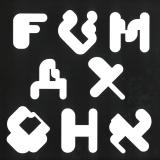
Robag Wruhme is the solo alias of Gabor Schablitzki, a quietly singular voice in minimal and house music since the early 2000s. His sound is built on precision without ever feeling rigid. Instead of chasing big moments, he lets tracks unfold through subtle movement and carefully balanced tension, always evolving but never rushing.
That same approach runs through this EP. It's about letting momentum emerge naturally, allowing each element to settle into place while the energy continues to build.
Across four tracks, Robag creates a world where rhythm and atmosphere constantly shape one another. The arrangements are rich with detail, yet nothing competes for attention. Even in the densest passages, every sound feels deliberate.
OLAHNI opens patiently, with ghostly textures and hypnotic vocal fragments setting the tone before the bassline slowly comes into focus. The arrangement keeps evolving, with subtle details drifting in and out as the groove steadily deepens.
IFTHAH takes things into darker territory, driven by a heavy rolling bassline and a looping motif that never quite loosens its grip, adding weight without disrupting the flow.
On FUMAXOHN, the groove remains tight while the mood shifts. A warm harmonic layer gradually emerges as the vocals dissolve into texture, drawing the track towards something more melancholic.
PENTHO closes the EP in its most direct form. Stripped back and driving, it lands with quiet confidence, bringing the journey to a close while holding onto the hypnotic tension that defines the record.
It's been a pleasure bringing this EP together, and we're excited to finally share it with you. We hope these four tracks draw you into Robag's world as much as they have us.
Order now and we will order the item for you at our supplier.

- A1: Eskeleto (feat Afrikan Boy)
- A2: Komba (feat Kaysha)
- A3: Voodoo Love (feat Sara Tavares & Terry Lynn)
- A4: Tirao Pe
- A5: (We Stay) Up All Night (feat Blaya & Roses Gabor)
- A6: Hypnotized
- B1: LOL & POP (feat Blaya)
- B2: Vem Curtir (feat Stereotyp)
- B3: Candonga
- B4: Hangover (Bababa)
- B5: Macumba (feat Mixhell)
- B6: Burakaton (feat Bomba Estéreo)
Released in 2011, Komba is Buraka Som Sistema"s second studio album - their fusion of Angolan kuduro and bass music reaching further across the globe, absorbing new rhythms along the way. Among the standout tracks: "(We Stay) Up All Night" and "Hangover (Bababa)". This limited vinyl reissue - pressed on coloured wax for the first time - remains faithful to the original release, including the bonus track "Burakaton" featuring Colombian outfit Bomba Estéreo.
Order now and we will order the item for you at our supplier.
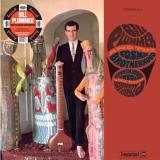
- 1: Journey To The East
- 2: Pars Fortuna = Part Of Fortune
- 3: The Look Of Love
- 4: Song Plum
- 5: Arc 294°
- 6: Lady Friend
- 7: Antares
Welcome to the mind-expanding 1968 jazz recording of Bill Plummer and The Cosmic Brotherhood—where Eastern and psychedelic influences meld together to produce one of the trippiest jazz albums on Impulse Records. This LP is a much-sought-after sonic travelogue, with the pop-psych spoken-word sitar freakout of “Journey To The East” to Bill Plummer’s swinging, rapid fire/cool jazz compositions, to his covers that go straight to the heart of any 60’s genre-crossing jazz fans. Featuring an incredible who's who of the high-caliber talent bubbling over in the Los Angeles music scene at the time: Carol Kaye (legendary bass player of The Wrecking Crew), Maurice Miller (drummer in The Jazz Corps), Dennis Budimir (guitarist with Chico Hamilton Quintet, Ravi Shankar & Frank Zappa), Mike Lang (Piano with Flamin’ Groovies & Hal Blaine), Tom Scott (Saxophone with Gabor Szabo & Thelonious Monk), Ray Neopolitan (Bass for The Doors & Leonard Cohen), Milt Holland (Percussionist with The Wrecking Crew &
Captain Beefheart), Bill Goodwin (Drums for Mose Allison & Tom Waits).
Housed in a beautiful gatefold sleeve with iconic liner notes by Frank Kofsky, who comes out swinging hard in favor of the album, while shaking the dust off any jazz snobs left in the '60s who still were not ready to embrace the future of jazz. Produced by Bob Thiele who produced everyone from John
Coltrane, Art Blakey to Charles Mingus, this sonic rarity is yet another impressive vinyl reissue from the folks at Jackpot Records.
expected to be published on 17.04.2026

- A1: October (1 18)
- A2: My & Me (feat Sampha, Laura Groves, Ricky Washington & Alabaster DePlume) (3 21)
- A3: Porcupine Tattoo (feat Noah Cyrus & Bill Callahan) (3 25)
- A4: Never Felt Better (feat Sampha & Florence Welch) (4 25)
- A5: Ether (feat Maddy Prior) (3 19)
- A6: Losing You (feat Sampha, Laura Groves, Jah Wobble & Yazz Ahmed) (3 05)
- A7: Firelight (feat Florence Welch, Berwyn & Alabaster DePlume) (3 23)
- B1: The Summons (1 28)
- B2: No More Rehearsals (feat Roses Gabor, Jah Wobble, Jack Jack Penate & Yazz Ahmed) (3 13)
- B3: You Were Smiling (feat Samantha Morton) (3 41)
- B4: Norm (feat Bill Callahan) (3 01)
- B5: Swamp Dream #3 (feat Clari Freeman-Taylor) (4 18)
- B6: The Meadows (feat Roses Gabor, Kamasi Washington & Ricky Washington) (4 50)
- B7: Goodbye (Hell Of A Ride) (feat Nourished By Time) (3 33)
RED VINYL[21,81 €]
Everything Is Recorded, ist das musikalische Kollaborationsprojekt von XL-Recordings Chef Richard Russell. Auf dem Album "Temporary" sind zu hören u.a. Sampha, Bill Callahan, Noah Cyrus, Florence Welch, Maddy Prior, Berwyn, Alabaster Deplume, Jah Wobble, Yazz Ahmed, Laura Groves, Kamasi Washington, Ricky Washington, Roses Gabor, Jack Penate, Samantha Morton, Clari Freeman-Taylor und Nourished By Time. "Temporary" entstand im Verlauf von vier Jahren in Russells Londoner Copper House Studio und während einiger zusätzlicher Sessions in Tottenham, Cumbria, Dorset, Los Angeles und Las Vegas Es schließt an die vorangegangenen Releases wie das 2018 für den Mercury Prize nominierte Debüt an. Auf dem neuen Album erfährt Russells musikalische DNA allerdings ein Reboot: Sein Cut & Paste Approach reicht in die Zeit vor Sampling-Helden wie The Bomb Squad und Prince Paul zurück bis hin zu Innovatoren wie Steve Reich, Robert Rauschenberg und William S. Burroughs. Während Russells Musik bislang geprägt war von Rhythmus, Worten und Melodie - in ebendieser Reihenfolge - tauschen zwei Aspekte diesmal ihre Rollen. Der Rhythmus tritt zugunsten der Melodie in den Hintergrund. Musikalisch ist "Temporary" vom Gedankenexperiment "what if folk music had "gone digital" in the 80s, just as reggae had?" geleitet, während sich in spiritueller und lyrischer Hinsicht vieles um Trauer und den Verlust von Freunden, Familienmitgliedern und Kollegen dreht. Im Ergebnis stehen leuchtende und gelassene Kompositionen, auch dank der faszinierenden und vielfältigen Gästeliste, die "Temporary" mitbringt. Die fragilen, zärtlichen und stillen Tracks liefern vielleicht eines der sanftesten Alben, die je über den Tod geschrieben wurden. "Das Album zu machen, war erfüllend, eine Art, das Leben zu heiligen", so Russell. "Temporary" ist die erste reguläre Veröffentlichung von Everything Is Recorded nach über vier Jahren. In der Zwischenzeit war Russell allerdings nicht untätig. Via Soundcloud und Bandcamp erschienen zuletzt "Summer Solstice", "Autumn Equinox", "Winter Solstice" und "Spring Equinox", die alle mit einer Reihe von Gastmusikerinnen und -.musikern im Rahmen ausgiebiger Jams an jeweils nur einem Tag entstanden. Mit der Schauspielerin und Regisseurin Samantha Morton tat er sich zum Duo Sam Morton zusammen, welches sein Debüt "Daffodils und Dirt" veröffentlichte. Für Peter Gabriels Comeback-Album "i/o" produzierte Russell den Song "Four Kinds of Horses".
Order now and we will order the item for you at our supplier.

Or Kantor returns with his sophomore album Snake Island, a vivid and cinematic journey through imagined landscapes and lost love, for fans of Eden Ahbez and other seekers of sound and spirit.
Following the critical success of his 2024 debut Sarda Sarda, praised by BBC Radio 6 Music, FIP Radio, RRR Australia, WYEP, KCRW, and Songlines Magazine, Kantor continues to refine his distinctive sonic identity, grounded in instrumental storytelling.
With Snake Island, Kantor ventures deeper into what he calls Subterranean Music, an atmospheric fusion of Mediterranean ballads, desert blues, spiritual jazz, and psychedelic textures. Drawing inspiration from artists such as Gábor Szabó, Omar Khorshid, The Budos Band, Dorothy Ashby, and Tommy Guerrero, he crafts instrumentals that feel both timeless and cinematic.
"Snake Island was written as a soundtrack to a fictional film that disappeared from the world, one that most likely no one has ever seen," says Kantor. "It began as a tragic love story, imagined during my time on a remote island in the Cyclades. Every landscape felt like a scene waiting for music. Eventually, the story gave way to sound."
A respected tattoo artist and founder of the Love Light Studio, Kantor's musical path began after a chance encounter with Johnny Sharoni (Garden City Movement, A&R at Anova Records). During a tattoo session, Sharoni heard Kantor's demos and was immediately struck by their raw beauty.
Kantor now steps confidently into the next chapter of his creative journey. Snake Island is more than an album. It is a mythic, imagined soundtrack to a film that only exists in memory, rendered in tones that shimmer like heat on stone.
This item has not yet been released. You can pre-order the product now.

Mark Fell inaugurates his new label – The National Centre for Mark Fell Studies – with his first solo electronic material in years; a slinky, ravishing volley of unique dance drills that have been in the works for over a decade, feeling somehow like Derek Bailey dissecting Singeli, or Autechre and Hermeto Pascoal dancing in hyperspace. There’s nothing else quite like it.
Back on the floor for the first time since dealing a pair of deep house 12”s with DJ Sprinkles, sending a contemporary classic in »Protogravity« with Errorsmith, plus a lauded collab with Gábor Lázár – all in 2015 – Fell taps back into core club concerns last explored to this uncompromising extent on his string of »Sensate Focus« EPs released between 2012–2013. He’s hardly been slacking since then, with a slew of far-reaching avant collabs with everyone from Rian Treanor to Limpe Fuchs, Okkyung Lee to Pat Thomas, Explore Ensemble to Will Guthrie – each one blurring distinctions between producer, composer, and conductor.
The »Nite Closures« EP is worth the wait – and then some. As ever, Fell manages to retain a highly distinctive, instantly identifiable sound while also tracing and mapping new bends in the continuum. His exploration of contemporary styles and patterns is here distilled and articulated with a rare, daring playfulness and sinuous intricacy – for over half an hour he flows from frantic to almost emotional at the drop of a snare. Trust it’s not your everyday / everynight club music, with an asymmetric angularity bound to wrong-foot fresher feet, but also the type of absolutely future-facing, skewed machine funk that clubs are crying out for, even if they don’t quite realise it.
As someone who’s witnessed the dominance of colouring-book Jive Bunny DJs recycle tested ideas ad infinitum, the message is a firm do-one to myopic ravers in »Nite Closures«. From the displaced anticipations tested in its extended dub and ravishing, tweaked polymetrics on its version, through a »Large Modulos #3« teeming with organismic details, to the hair-kissing swang of »auchterhouse (inversion)« and its clipped, cascading 2.1-step reprise, Fell offers thrilling new options for the loosey-gooseyest dancers at each turn. For us, it’s perhaps his greatest record this century.
expected to be published on 17.10.2025

- A1: October (1 19)
- A2: My & Me (feat Sampha, Laura Groves, Ricky Washington & Alabaster DePlume) (3 21)
- A3: Porcupine Tattoo (feat Noah Cyrus & Bill Callahan) (3 38)
- A4: Never Felt Better (feat Sampha & Florence Welch) (4 06)
- A5: Ether (feat Maddy Prior) (3 17)
- A6: Losing You (feat Sampha, Laura Groves, Jah Wobble & Yazz Ahmed) (3 09)
- A7: Firelight (feat Florence Welch, Berwyn & Alabaster DePlume) (3 19)
- B1: The Summons (1 29)
- B2: No More Rehearsals (feat Roses Gabor, Jah Wobble, Jack Jack Penate & Yazz Ahmed) (3 14)
- B3: You Were Smiling (feat Samantha Morton) (3 51)
- B4: Norm (feat Bill Callahan) (1 26)
- B5: Swamp Dream #3 (feat Clari Freeman-Taylor) (5 57)
- B6: The Meadows (feat Roses Gabor, Kamasi Washington & Ricky Washington) (4 50)
- B7: Goodbye (Hell Of A Ride) (feat Nourished By Time) (3 32)
Black Vinyl[21,81 €]
Everything Is Recorded, ist das musikalische Kollaborationsprojekt von XL-Recordings Chef Richard Russell. Auf dem Album "Temporary" sind zu hören u.a. Sampha, Bill Callahan, Noah Cyrus, Florence Welch, Maddy Prior, Berwyn, Alabaster Deplume, Jah Wobble, Yazz Ahmed, Laura Groves, Kamasi Washington, Ricky Washington, Roses Gabor, Jack Penate, Samantha Morton, Clari Freeman-Taylor und Nourished By Time. "Temporary" entstand im Verlauf von vier Jahren in Russells Londoner Copper House Studio und während einiger zusätzlicher Sessions in Tottenham, Cumbria, Dorset, Los Angeles und Las Vegas Es schließt an die vorangegangenen Releases wie das 2018 für den Mercury Prize nominierte Debüt an. Auf dem neuen Album erfährt Russells musikalische DNA allerdings ein Reboot: Sein Cut & Paste Approach reicht in die Zeit vor Sampling-Helden wie The Bomb Squad und Prince Paul zurück bis hin zu Innovatoren wie Steve Reich, Robert Rauschenberg und William S. Burroughs. Während Russells Musik bislang geprägt war von Rhythmus, Worten und Melodie - in ebendieser Reihenfolge - tauschen zwei Aspekte diesmal ihre Rollen. Der Rhythmus tritt zugunsten der Melodie in den Hintergrund. Musikalisch ist "Temporary" vom Gedankenexperiment "what if folk music had "gone digital" in the 80s, just as reggae had?" geleitet, während sich in spiritueller und lyrischer Hinsicht vieles um Trauer und den Verlust von Freunden, Familienmitgliedern und Kollegen dreht. Im Ergebnis stehen leuchtende und gelassene Kompositionen, auch dank der faszinierenden und vielfältigen Gästeliste, die "Temporary" mitbringt. Die fragilen, zärtlichen und stillen Tracks liefern vielleicht eines der sanftesten Alben, die je über den Tod geschrieben wurden. "Das Album zu machen, war erfüllend, eine Art, das Leben zu heiligen", so Russell. "Temporary" ist die erste reguläre Veröffentlichung von Everything Is Recorded nach über vier Jahren. In der Zwischenzeit war Russell allerdings nicht untätig. Via Soundcloud und Bandcamp erschienen zuletzt "Summer Solstice", "Autumn Equinox", "Winter Solstice" und "Spring Equinox", die alle mit einer Reihe von Gastmusikerinnen und -.musikern im Rahmen ausgiebiger Jams an jeweils nur einem Tag entstanden. Mit der Schauspielerin und Regisseurin Samantha Morton tat er sich zum Duo Sam Morton zusammen, welches sein Debüt "Daffodils und Dirt" veröffentlichte. Für Peter Gabriels Comeback-Album "i/o" produzierte Russell den Song "Four Kinds of Horses".
Order now and we will order the item for you at our supplier.

How would you like to hear it? This project is the brainchild of Andy Baxter, a multi-talented musician and multi-instrumentalist from London. His recording career began in 2018 when he released his first album, Green, on Village Live.
Buoyed by this initial recognition by his peers, he quickly released a second self-produced opus the following year, entitled Dusk. But it was his third LP, Shapes, released by KingUnderground, that took him to the next level.
Conceived during the first period of confinement, Andy played almost every instrument on the album (a few musicians joined in here and there): drums first and foremost, his instrument of choice, but also bass, guitar, keyboards and even the flute, which he had just learnt at the time of the album's creation. Largely inspired by the library music of the 70s, including some of his mentors such as Piero Umilani, David Axelrod and Brian Bennett, the album is nonetheless resolutely modern. But there's no denying the cinematic atmosphere that emanates from his compositions.
From the opening track "We're From Nowhere", with its heavy, funky bass, you get the impression of being plunged into the Harlem blaxploitation of the heyday, and you can't help but see a musical nod to Roy Ayers' "We live in Brooklyn, baby". But you soon realise that far from being a nostalgic musician, Baxter also listens to his contemporaries like Khruangbin and BadBadNotGood, as can be heard on tracks like 'Leaves', 'Odysea' and 'Ikigai', with their atmospheric guitars and Fransesca Uberti's haunting backing vocals, which instantly invite you to travel and escape! But there are times when the mood gets a little tense, like on the more angst-ridden 'Villains', with its almost free jazz flights of fancy. Finally, his drumming also comes to the fore on the last track, 'Stay Free', with its Afrobeat rhythm reminiscent of a certain Tony Allen and evoking creative freedom as a common thread running through his values.
In nine tracks, Shapes takes us on a neo jazz journey that once again demonstrates the vitality of the English scene in this field for several years now! At the start of 2022, Robohands released their latest album, Violet, on the same label, confirming all the good things we thought about them! By allowing a number of musicians to join him on this new opus, Andy Baxter has shown a willingness to work with more accomplished collaborators.
Order now and we will order the item for you at our supplier.

- A1: BOB CREWE Pygar's Persecution / The Black Queen's Beads 4 39
- A2: KLAUS DOLDINGER Sitar Beat 1 31
- A3: SERGE GAINSBOURG En Melody 3 08
- A4: MICHEL LEGRAND Marins, Amis, Amant ou Maris 2 35
- A5: NELSON RIDDLE Lamento 2 59
- A6: MARIAN MCPARTLAND Love for Sale 6 15
- B1: GABOR SZABO Sophisticated Wheels 4 58
- B2: PHIL MOORE III Batucada 2 13
- B3: LUIS ENRIQUEZ Mas Que Nada 2 58
- B4: GEORGE GARVARENZ Hascisch Party 3 02
- B5: SHOCKING BLUE Acka Raga 3 10
- B6: CLAUDE DENJEAN Kiss This 3 04
- B7: GEORGE SHEARING Aquarius 3 25
Back in an unmissable picture disc reissue: THE MOOD MOSAIC
Vol.1 – The Hashish Party, ready to win over collectors and vintage sound lovers. Originally released in 1997 by Yellowstone
Records, this iconic compilation blends jazz-funk, lounge, Latin
jazz, soul-jazz, and psychedelia into a truly unique musical
journey.
The tracklist features legendary artists like Serge Gainsbourg,
Michel Legrand, Gábor Szabó, George Shearing, and Shocking
Blue, delivering an irresistible mix of exotic grooves and retro
atmospheres. The picture disc format enhances the series’ visual
appeal, making every copy a true collector’s item
Order now and we will order the item for you at our supplier.

- ECHOES OF LIGHT
- GABOR'S PATH
- SOLE ELETTRICO
- UNDER THE SPELL
- VIBRATONE
- LAETITIA
- SZABODELICO
- HONEYDEW
- LUCIEN'S BEAT
- PREMONITIONS
- ROSSO DI SERA BEL TEMPO SI SPERA
- LA JOLLA
- MERGING WATERS
Something different from Causa Sui. While Causa Sui have always had one foot in heavy psychedelic rock, they've had the other one deep in a wide variety of esoteric styles. On this new double LP set, that other dimension of the band is being explored full-scale. "Szabodelico" paints with a colourful palette, both compositionally and sonically - digging deep into an assortment of cultures, eras and sounds with a true crate-digger mindset. Throughout their 15 year life-span Causa Sui has always been about seeking out new directions, exploring the past and the present in a way that's unique at each step of their subtle progression - forging new paths into an existing map. "Szabodelico" feels like discovering a small room under the stairs of your own house: familiar, yet new and exciting. Their latest vision is an elegantly zoned-out version of itself: a turn inward. Anti-bombastic, yet rich with ecstatic harmonics and dynamics. The band stringed together a long series of sessions in 2019 and early 2020 in their studio in Odense, often prioritizing playful first takes and good vibes rather than clinical perfection.Sparsely dubbed and mixed with a natural, full bodied flavour by Jonas Munk during the summer of 2020, each track has its own aesthetic. There's no simple equation to sum up the 13 individual parts of the album, but as a whole it creates an entity that's as complete as each of its parts. From the windblown opener "Echoes of Light", to the closing slow-motion epic "Merging Waters" you'll find yourself asking where did the time go? The answer of course is: Szabodelico.
expected to be published on 23.05.2025

- ZEN AND THE ART OF NONSENSE
- FUN ON THE FLOOR
- THE BLESSED WEST
- TAKEN FOR GRANTED
- LOOKS CAN KILL
- SACRED MEASURE
- FLARE
- BLACK FIVE
- VIGILANTE
- ZOR GABOR
- TIGHTROPE
The Scream, Siouxsie & the Banshees' first album, was released late enough in the punk era to bear some claim as the first post-punk album, with only a minor traces of 'punk' (one lingering early song, "Carcass" comes to mind) and enough hints of what had come even earlier, Andy MacKay-like saxophone flourishes - to feel utterly new. Not to mention the effort producer Steve Lillywhite must have put into the album, his first fully-credited major label production. Siouxsie was clearly the focus of the band, with her unique vocal style and lyrics, but the real star, we've always known, was John McKay, who wrote most of the album's music (as well as singles like "Hong Kong Garden"), creating a wholly new guitar sound - harsh and brittle, yet melodically intoxicating . . . best articulated by a somewhat confounded Steve Albini years later ". . . only now people are trying to copy it, and even now nobody understands how that guitar player got all that pointless noise to stick together as songs". McKay's influence lives on; many of the most influential guitarists of the past four decades credit him as a major influence - Geordie from Killing Joke, Jim Reid of The Jesus And Mary Chain, U2's The Edge, Thurston Moore, Johnny Marr and even the two guitarists - The Cure's Robert Smith and Magazine's John McGeoch - who followed him in The Banshees. McKay's burgeoning status as the anti-guitar hero was halted when he and Banshees drummer Kenny Morris - at odds with Siouxsie and bassist Steve Severin - fled the band just after the start of a tour supporting the group's second album, Join Hands. It was a weekly music paper scandal, later the subject of a BBC documentary, and Siouxsie's vitriol working its way into the lyrics of a later Banshees b-side, "Drop Dead / Celebration". Aside from a solitary single on Marc Riley's In Tape label nearly a decade later, no music was heard from McKay again. So it comes as a major surprise to learn of a pile of excellent recordings made in the years just after he left The Banshees, unheard by all but a very few, some of which feature drummer Kenny Morris, plus Mick Allen from Rema Rema, Matthew Seligman of the Soft Boys and longer-term collaborator Graham Dowdall and John's wife Linda . . . the latter three of whom now all sadly deceased. Sixes And Sevens is an historic lost album. Brazenly genius and bearing fair claim as the lost treasure of the post-punk era, the album collects eleven studio tracks, carefully mastered from original tapes. It's a masterpiece which best speaks for itself.
expected to be published on 09.05.2025

- A1: Susie Thorne - Can't Buy Me Love
- A2: Nils Landgren, Michael Wollny, Lars Danielsson & Wolfgang Haffner - Lady Madonna
- A3: Regina Machado - Junk
- A4: Cyrus Chestnut - Yesterday
- A5: Connie Evingson - I'm Looking Through You
- A6: Larry Coryell - She´s Leaving Home
- B1: Tok Tok Tok - Eleanor Rigby
- B2: Biréli Lagrène & Sylvain Luc - Blackbird
- B3: Serena Fisseau & Vincent Peirani - And I Love Her
- B4: Stan Kenton & His Orchestra - Live And Let Die
- B5: Sinne Eeg & Thomas Fonnesbæk - The Long And Winding Road
- B6: Gábor Szabó - I've Just Seen a Face
Order now and we will order the item for you at our supplier.

- A1: Bergendy - Randevúm lesz délután
- A2: Neoton - Majd ha nem leszek…
- A3: Kék Csillag - Ki volt ez az ember?
- A4: Meteor - Kívánj te is nekem szép jóéjszakát
- A5: Apostol - Az esti utcán
- B1: Kex - Elszállt egy hajó a szélben
- B2: Non-Stop - Szelíd tüzek
- B3: Echo - Boldogságból építettem
- B4: Juventus - Egy pont a térben
- B5: Scampolo - Levegőben
(Physical release only, Limited edition of 300 hand numbered copies + insert) Psyched Out Grooves from Hungary compiles ten of the most outstanding singles recorded by the underdogs of this period.
The psychedelic scene that never was – the perfect subtitle to this compilation. There were barely any drugs in Hungary to begin with. In this era, alcohol, music, and imagination have served as the primary means of mind alteration among the youth. The Communist party had a firm grip on culture through monopole control over venues, the media, and the recording industry, western records were not available, clubs enforced a strict dress code of suits, shirts, and longer skirts, and the police harassed young men for not more than having long hair or wearing blue jeans.
There was, however, an undercurrent of smaller semi-professional bands striving to succeed in the shadow of the very few stars privileged by the sole state owned record company. Given their chances to release music were at best limited to a few 7“ singles at the mercy of said record company powers. Psyched Out Grooves from Hungary compiles ten of the most outstanding singles recorded by the underdogs of this period. Some of the bands featured on here have eventually reached wider success by switching to more commercial styles, like Bergendy, Neoton, and Apostol. Most, like Echo, Meteor, Kék Csillag, Non-Stop, were temporal formations that dissolved after a few years due to personal conflicts, lack of success, or both. Others, like Scampolo or Juventus, lasted a longer time without an actual break through. Most of these bands never had a consistent, lasting ’psychedelic’ repertoire or identity at any point. These tracks were the exception, not the norm. That coherence - the illusion of a scene - comes from the curation and sequencing of Budabeats head honchos Von Yodi and Gandharva. It is the arrangement of these puzzle pieces that makes them fit together.
Limited edition of 300 hand numbered copies. Edited excerpt from the liner notes written by Gábor Vályi (Dj Shuriken)
Order now and we will order the item for you at our supplier.

- New signing to Basin Rock label who released breakthrough albums by Julie Byrne, Nadia Reid, Aoife Nessa Frances, Jim Ghedi, Andrew Tuttle, Trevor Beales….
- Limited edition black vinyl with download code.
French lullabies and traditional folk songs dating as far back as the 14th century, adapted with contemporary arrangements and faint tape manipulations in Dublin, Ireland.
Imagine Serge Gainsbourg, John Martyn and Gábor Szabó squeezed on a small stage in the early hours of a smokey backstreet Parisian jazz club, slowly hypnotising the audience into hypnagogic hallucinations.
Growing up, Kevin Fowley split his time between living in France and Ireland. He listened to French lullabies sung by his mother in one room, while his father would be playing Donegal tunes on the fiddle in another. “I’m lucky to have been brought up bilingual and bicultural,” he says. “What I find interesting is that I usually think in English, but if I intentionally start thinking in French, a markedly different side of my personality comes through, encouraging different thought patterns.”
And this is apparent on his beautiful record of French lullabies À Feu Doux, which encompasses musical elements from both worlds, as it seamlessly glides across folk, jazz, and a rich yet shimmering in between sound. Varnished and exposed is the feeling that floats through À Feu Doux like a gentle gust of wind creeping in through the open window at night. Real night time music.
expected to be published on 26.07.2024

When I arrived in Geneva, Claude picked me up in his Aston Martin. He had a tape deck playing Lowell Fulsom – a guy who used to come to Memphis a lot and I knew some of his musicians. I grew up around the Blues, so this was a natural sound for me. Claude didn’t tell me until much, much later that he played Blues harmonica. He took us to the hotel where we had a warm and cordial welcome. Montreux was a quaint and sleepy town in 1967. However, there was a palpable excitement in the air and we could feel it. Everyone seemed to know that they were about to launch something great – the Montreux Jazz Festival - and there was no turning back. I was their first international artist to perform there with my quartet with Keith Jarrett, Jack DeJohnette and Ron McClure.
We played two concerts at the Casino one in the afternoon and one at night. That was the start of three great and lasting friendships; Claude Nobs, Montreux Jazz Festival co-founder, Rene Langel, and the engineer of the recording, Pierre Grandjean, from Radio Suisse. And - a fourth person, who was 6 at the time, Yvan Ischer. We did not meet until many years later and have become good friends. It is thanks to Yvan’s persistent belief in this music and Pierre Grandjean’s safe keeping of the tapes, that we hear them now, more than fifty years later. live at Montreux Jazz Festival, June 18, 1967. Featuring Charles Lloyd, Keith Jarrett, Ron McClure, and Jack DeJohnette.
expected to be published on 07.06.2024

- A1: And The Folklore Continues
- A2: La Califas Perdido
- A3: I Would Go With You
- A4: No Time For Time
- A5: Calling For Ya!
- A6: Bloodinthemud
- A7: Zapata's Boots
- A8: Mosaic Man
- B1: What Have I Been Doing Since I Was Gone?
- B2: Paper Switchblade
- B3: Never Forget To Remember
- B4: Run With The Hunted
- B5: New Terrain
- B6 40: Summers
- B7: The Simple Man
Yes! Tommy Guerrero’s revered Return Of The Bastard gets its first ever vinyl reissue. Endearingly simple but beautifully beguiling, it's lo-fi dusty break business with the most elegant guitars this side of Vini Reilly and Gabor Szabo. Tommy's breezy drum-machine guitar-soul should be prescribed to soothe an aching world. By rights, he should also be a Balearic god. Here's 14 tracks of drop-dead laconic beauty, all of them combining to create this unheralded masterpiece. Working with Tommy directly, the LP has been fully remastered and sounds as dazzlingly, heartbreakingly beautiful as it did back in 2007.
Coolly opening the album, "And The Folklore Continues" can be said to be both a titular and actual nod to his past work. As ever, there's heavenly Latin guitar stylings that make you swoon and the melancholic vibe is accentuated by the addition of some melodic wordless vocals from Tommy. Just divine. The sparkling "La Califas Perdido" follows, all dreamy melodic guitars and twinkling vibes over dusty drums and a fine bassline. The shuffling, conga-assisted "I Would Go With You" is a gentle, romantic gem whilst the brief but beautiful "No Time For Time" feels in a hurry to let us know that Tommy can work with more propulsive rhythms. In this case, they underpin Tommy's gorgeous, shimmering guitars wonderfully well.
The head-nod funk of "Calling For Ya!" (get it?) features Curumin delivering the clever title as a hypnotic vocal refrain peppered throughout, all hung around some buried spoken word vocals and gorgeous cello work from Lenny Gonzalez. "Bloodinthemud" is a low-down gritty funk workout whilst "Zapata's Boots" is a total low-key groover, all Latin percussion and Morricone muscle aided by a whistled Spaghetti Western melody. The startling instrumental "Mosaic Man" closes out the side with a lean slice of mellifluous, virtuoso guitar bliss.
The reflective "What Have I Been Doing Since I Was Gone?" opens the B-side in glorious fashion, the type of melancholic melodic head music that should soundtrack a bright walk on a cold winter's day. The hypnotic groover "Paper Switchblade" is a razor-sharp fuzz-funk whilst the beautifully downbeat "Never Forget To Remember" is a kaleidoscopic kalimba-koolout. Galloping cop-funk breaks workout "Run With The Hunted" is a rollicking ride and it's followed by the fresh chiming guitar funk of "New Terrain".
The upbeat and bright "40 Summers", featuring congas from Alfredo Ortiz, is as clean and poppy as Tommy gets and it really is a look he wears incredibly well. Just straight up guitar pop. "The Simple Man" a gorgeous, melancholic ballad, closes out the record with deeply yearning vocals from Tommy, a rarity and a treasured one at that.
Meticulously remastered and cut by both Simon Francis and Cicely Balston respectively, it has been pressed to the highest possibly quality at Record Industry in Holland. The original and iconic sleeve, designed by Natas Kaupas, has been restored here at Be With HQ as the finishing touch to this long overdue re-issue.
expected to be published on 15.04.2024

Ayyuka was founded in the year 2001.They've started to make their own music which was mostly improvisation and influenced by a lot of different styles. Some time later the band had it's name naturally which Is AYYUKA that has two meanings: ''to the highest part of the sky' and 'an idiom to tell that a secret has been revealed'" . After university years they moved to Istanbul and started to perform their music at some live venues. Since their self-titled debut album release, the band have performed in various music festivals and venues in a number of cities including Istanbul, Berlin, Lyon, Sao Paulo. They also have opened up for some major artists like Jonathan Richman, R.E.M., Sonic Youth. With very direct live performance energy in their compositions, Ayyuka fuse characteristic elements from a variety of genres such as Anatolian Rock, arabesque, surf rock, punk, spaghetti western, psychedelic rock, and funk. They released their second studio album 'Kiraci Odalari' on October 2013. 'Sömestr' is Ayyuka's third studio album, the sound moves between psychedelic rock, afro rhythms and much else besides. The album was made by the improvising recording sessions that they recorded at their studio. TRACKLIST: 1. Sömestr, 2. Tek Teker, 3. Geceleri Zor Uyurum, 4. Gün 1B, 5. Gabor, 6. Guaruja, 7. Aryton Senna, 8. Bu Bi Rüya Olmali.
expected to be published on 19.12.2023

- A1: Disconnection - More & More
- A2: Mystic - Disco Love Affair
- A3: Universal Love - Moon Ride
- B1: Bruce Johnston - Pipeline
- B2: Gabor Szabo - Keep Smiling
- B3: Silvetti - Voyage Of No Return
- C1: Decimo - Theme From Shaft
- C2: LEB Harmony - Feeling Love
- C3: The Bear Brothers - Love Is
- D1: The Hearts Of Stone - Losing You
- D2: The Hamilton Affair - How Can I Keep In Touch With You
- D3: Maryann Farra & Satin Soul - Never Gonna Leave You
After the white cover of the first volume and the silver one of the second volume, the third new chapter was to be dressed in the golden one.
This brand new "golden edition" double LP includes only rarities and '77/'78 Baia’s heritage hymns.
In the inner case we can find the iconic comics of the "antibaia", made entirely by Andrew Joseph Corsaletti, Andrea for friends. These comics were a regular appointment for all fans of "The Baia's Time", the Baia degli Angeli’s newspaper.
Order now and we will order the item for you at our supplier.

Repress!
‘Shapes,’ the third album from London-based multi-instrumentalist, Robohands, fuses elements of jazz, krautrock, hip hop and ambient music. For fans of Khruangbin, Yusef Dayes, CAN, Coltrane and 70s library music moods.
Shapes is the solo project of London based composer, instrumentalist and producer Andy Baxter. His debut LP Green was released on Village Live Records in 2018 and was received with much love and acclaim in the UK Jazz, hip hop and surrounding scenes.
His follow up full-length, 'Dusk’, dropped in 2019, combining soul, funk, Latin & experimental moods. It featured vocalists & musicians from around the world including legendary New York French horn player, John Clark, who has worked with Isaac Hayes, Gil Evans Orchestra, McCoy Tyner, Jaco Pastorius, Ornette Coleman and many more greats.
'Shapes' is inspired by 1970s library music and their legendary composers including Piero Umiliani, David Axelrod, Brian Bennett and co. The album builds on these influences and incorporates modern motifs, contemporary jazz/hip hop drumming styles with a nod to 1990s Mo Wax artists such as DJ Shadow. The theme for the record is future/nostalgia, mixing vintage & modern instruments and production techniques.
Much of ‘Shapes’ was recorded with JB Pilon at Buffalo Studios in Limehouse, London. Due to the COVID restrictions that changed everything in 2020, the remaining parts were recorded in Andy’s flat using a collection of old mixing desk preamps and instruments.
For the heads – ‘Shapes’ features an array of vintage snares, including a 1960's Ludwig Pioneer and a mono, overhead ribbon mic on the drum kit provided extra old school points! The kick drum was re-amped through a huge vintage bass amplifier on a couple of tracks to give it some real character: “My favourite guitar sound achieved on this LP project is a Sontronics Sigma ribbon microphone in front of a WEM Dominator amp, which you can hear on the track 'Odysea'. The bass sound for all the tracks is a 1973 Fender Precision into an old Altec valve preamp, the one used on most Motown recordings."
Order now and we will order the item for you at our supplier.

Balearic believers rejoice! Japanese tropical-fusioneers Coastlines are back with the worldwide vinyl release of Coastlines 2. The follow-up to their classic debut, this is the sound of Coastlines's global influences. If the dedication to intricate sonic details is particularly Japanese, the overarching feel captures the sprawling grandeur of the international balearic community. As they put it, Coastlines 2 presents "a more precise and beautifully polished magic hour." If that isn't Balearic, we don't know what is.
Takumi Kaneko and Masanori Ikeda don’t radically alter their sumptuous template with this second LP; and we wouldn't want them to. Yet with a more focused flow from first track to last, both Coastlines and Be With feel this is an even stronger album than their first. One thing that hasn't changed is the use of instrumentals instead of words to express their themes; namely, "the emotional expression of being soaked."
Opener "Tenderly" is appropriately titled, a gentle Latin shuffle easing you back into the Coastlines sound. An organ-heavy synthy exotica that's in step with Lovelock's contemporaneous "Washington Park". Their über-horizontal take on Hawkshaw & Bennett's "Mile High Swinger" (from Synthesiser And Percussion, reissued by Be With!) evokes cocktails-by-the-pool as the sun slowly sets. The blunted deep jazz-funk swing of "Alicia" is a rearranged reimagining of the Gabor Szabo song from his classic Jazz Raga LP. This here sounds like an outtake from The Chronic.
As the sun goes down, "Combustione Lenta" soundtracks the relaxing slow burn of an idyllic bonfire on an isolated beach. Displaying a beautiful new side of Coastlines, we're treated to Moments In Love vibes and melancholic guitar arcs. The piano-laden early morning wonder of "Night Cruise" started life as a completely different song, but the duo found a particularly good loop from the initial sketch and reconstructed it into this sophisticated 80s instrumental soul groove. "Waves And Rays" is all undulating acid waves and lighthouse light. A chopped and screwed steel drum G-Funk with soaring synths and nods toward the squelchy machine soul of Mtume and Jam & Lewis. Yes, *that* good.
The bouncy futureboogie cosmic chug of "Sky Island" represents the beginning of the sunrise, casting images of 80s Japanese fusion and definitely one to play out early doors to get the crowd stepping. "Area Code 868" is the strutting staccato sound of Joe Sample waking up in the Caribbean to craft his piano funk drenched in sunshine. Accordingly, the tentative, naive melodies of "Sand Steps" represent that vivid feeling first thing in the morning, as you step on to the sandy beach in the sunshine and take a deep breath. The world is yours.
The emotional, organ-piano-steel drum-driven "Song For My Mother" is a slo-mo show of sincere gratitude to all the great mothers. "Yasmin's Theme" is Coastlines's Brazilian homage, recalling for them that early summer feeling. It's propelled laconically by the carnival beat of batucada`s big bass surdo drum and complimented by sweeps of warm keys and radiant vocal harmonies. Blissful beatless closer "Asafuji" conjures a scene from a wonderful morning spent with the people of Shizuoka, the symbolic mountain of Japan, Mt Fuji and its inhabitants. It sounds like Dâm-FunK jamming with Sabres Of Paradise.
Coastlines 2 was painstakingly crafted, across the pandemic, at Masanori's rented place in Tokyo and then brought back to his home studio and worked on slowly and repeatedly. With limited time to see each other, the duo became more united in their "consciousness with natural progress."
Mastered by Simon Francis and cut by Cicely Balston at Air Studios, this magnificent double LP has been pressed by the good people at Record Industry.
Order now and we will order the item for you at our supplier.

- A1: D-Natural Blues - Wes Montgomery
- A2: Pap's Blues - Herb Ellis
- A3: Minor - Jimmy Raney
- A4: Wall Street - Barney Kessel
- B1: Chitlins Con Carne - Kenny Burrell
- B2: Blues for Felix - Charlie Byrd
- B3: Lullaby of the leaves - Grant Green
- B4: The last one to be loved - Gabor Szabo
- B5: Night and day - Django Reinhardt
Jazz Guitar Session is one of the first connected discs of Jazz Collection.
Grouped by instrument theme, this jazz compilation features the greatest names in jazz: Django Reinhardt, Charlie Byrd, Herb Ellis...
The podcasts on the history of jazz offered in the Viny application (on IOS or Android) are fascinating.
And if jazz is in you, you'll love to continue the experience with the Jazz Collection by Vinyl & Media suite
expected to be published on 20.01.2023

The Outer Edge is very proud to release another quite sensational release. Here are the official reworks of Hans Hass' proto-AOR / cloud rock hymn "Welche Farbe hat der Wind" (which translates to "What color is the wind").
The main producer for this release was Marian Tone (of Key Elements), who reworked the track almost from scratch. He re-recorded the drums, the bassline, and some chords while keeping Hass's original vocal layer. The distinctive guitar playing by co-composer Gabor Kristof sparkles throughout. The result is exactly what we had hoped and asked for: a DJ-friendly version of this überclassic track.
The idea for this rework project came to mind when label owner DJ Scientist got word from Tobias Kirmayer of Tramp Records that "Welche Farbe hat der Wind" would be officially re-released for the first time on his compilation series "Praise Poems" as well as on a single reissue. Scientist immediately asked if he could make an edit with louder drums to make the track more playable in a DJ set. However, as the masters of the Tramp reissues had already been submitted to the pressing plant, he was granted permission to re-license the track and rework it for his own label instead.
Hence, the reworks feature Scientist's "vintage drums" mix, which has the drums mixed louder, plus drums added at the quite psychedelic and experimental last third, with a few other sound adjustments made.
But it was up to Berlin-based DJ and music producer Marian Tone to put the icing on the cake and rework and enhance the song further with his own version. With fellow Key Elements bandmember Steffen Kieslich, he completely re-recorded the drums. Then it was up to Doron Segal to replay the bass and the keys. What we get is the classic sound of "Welche Farbe hat der Wind" - just updated and fresher.
For the first time ever, the track is also available as an instrumental version. Here, the great original guitar playing keeps the song going and going, and makes it perfectly clear that this tune, which originally came out on the schlager album "Reise in eine glückliche Zukunft" in 1974, is pretty damn funky!
It has been difficult to put "Welche Farbe hat der Wind" into a genre box, But it has been described as "rare groove","psychedelic schlager", and even "proto-AOR". For facility, Scientist has coined the new term "cloud rock" to describe this particular style of soft but groovy music. The name cloud rock bears a conspicuous reference to the krautrock genre as well. More tracks in a similar vein will be heard soon in a DJ mix under the same name.
Marian Tone's rework, as well as the corresponding instrumental version, will be released on a limited 7" single with a full-color picture sleeve. The digital release will feature the DJ Scientist re-mix plus an alternative version that puts more focus on the re-recorded bassline. In any case, this is an essential item for any music lover as well as the ideal contribution to your ultimate "cloud rock" DJ set!
Order now and we will order the item for you at our supplier.