
Suche:galvan
- 1: Quemar Las Naves
- 2: Avisenawino
- 3: Ursus
- 4: More Irán
- 5: Yorum 91
- 1: Yai Yai
- 2: Baris
- 3: Stereorrata
- 4: Arbolito
- 5: Oro Cíngaro
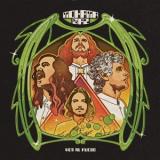
Double live album out by one of the most exciting live bands in earth, Mohama Saz! "Ven al fuego" captures their unstoppable stage energy in its purest form. "Ven al fuego" is the perfect compilation and representative of the powerful unstoppable force from the band on stage. Play this album, play it loud and you will be enjoying one of the most memorable live shows that explores musical horizons emancipated from British rock tradition. Mohama Saz from Madrid, Spain are one of the most exciting live bands in the world today, a mind -blowing manifestation of pure psychedelic exotica. Within minutes of taking the stage they have the audience completely under their spell, dancing in wide-eyed bliss to their uniquely intoxicating music. With an electrified Baglama Saz as their lead instrument they fuse elements of Turkish and Armenian folk music, Mediterranean psychedelia and mesmerizing Middle Eastern-flavored ragas with galvanizing go- go discotheque grooves. Mike Stax (Ugly Things Magazine / The Loons) Experiencing Mohama Saz live is a meditative ritual of excitement and pure emotion. One of the best live shows I can think of today, they are truly something special! Jake García (The Black Angels) Album Credits: Recorded live in February 2025 in Madrid (Sala Copérnico, February 22, 2025) and Reus (Lo Submarino, February 15, 2025) by Tommaso Galati. Mixed by Tommaso Galati and Mohama Saz. Mastered by Carlos Díaz. Artwork: Mario Feal

8

Repressed at GZ media with the original galvano.
Remastered version, and recut version.
Double pack picture disc with Zeotrope animations.
Packed in a gatefold printed sleeve.
A live set from 2002, of pure Tribe, speedy and banging. Was pressed on CD a few years ago and finally cuted on vinyl.
SUPERB !!

7
Ruby Red - Transparent - Galaxy effect vinyl in dub style jacket (jacket sleeve with center hole cut out so label of LP shows through) a black paper inner sleeve and poly bag.
PART ONE’ METAL HAMMER - 8/10 review. FOR FANS OF : Lustmord, Om, Sunn O))) . “An exercise in freeform ambience, ritualistic repetition and the rapturous, womb-like power of bass…strange and affecting. We remain lucky to share in the great man’s vision.”
At its heart, music has always been a questioning of inheritance – a dialogue with predecessors and forebears, the forging of one’s own perspective in relation to what has come before, and for some, a plunge into the boundless realms between. For Steve Von Till, that process has always taken on an added dimension to become the most sacred of tasks. Whether through the apocalyptic uprising of Neurosis, the sonic deconstructions of their sister project, Tribes of Neurot, the invocatory intimacy of his eponymous solo albums or his instrumental psychedelic reveries in the guise of Harvestman, that dialogue has never just been with musical influences, but with what underpins them: the primordial, elemental forces now banished to the peripheries of our contemporary consciousness, yet still broadcasting a signal for all who will listen.
Drawn to the megaliths, ruins and ancient sites mapped out along the British and European mainland’s geographical and psychic landscapes, the folklore and apocrypha forever resurfacing as portals from a rational world, “Triptych” is a meditation forged from traces and residues, and an hallucinatory recollection of artists who have tapped into that enduring otherworldliness embedded within us all. It’s a dream diary narrating a passage through Summer Isle where Flying Saucer Attack are wafting out of a window, a distant Fairport Convention are being remixed by dub master Adrian Sherwood, celestial scanners Tangerine Dream are trying to drown out Bert Jansch and Hawkwind are playing Steeleye Span covers, all prised out of time yet bound to its singularity.
Woven together from home studio recordings that span two decades, this latest outing as Harvestman finds parallels with nature’s cycles not just in its release dates but in the repeated structure that binds each album, like an imprint refracted through three separate strata. As with April’s “Part One” and the forthcoming “Part Three”, “Part Two”, starts on a collaboration with Om bassist and long-term friend of Steve’s, Al Cisneros, with a dub take opening the B-Side. Here, the opening track, “The Hag Of Beara Vs The Poet”’s languid, tribal groove expands into a chromatic wash, like an endless drip of oil spreading out under a midsummer haze.
A filtering of the alpha-state travelogues of its predecessor, “Part Two” reaches even deeper into primal yet pristine states. It journeys from the undulating drone and slow-thawing wonder of “The Falconer”, as if the Myst soundtrack were being broadcast from outer space, through “Damascus”’s perpetual-motion, dreamtime bazaar and “Vapour Phase”s seismograph frequencies measuring supernatural tremors to “The Unjust Incarceration”s distorted bagpipes, sounding a noise-frayed lament
If “Triptych” is a multi- and extra-sensory experience, it extends to the remarkable glyph-style artwork of Henry Hablak, a map of correspondences from a long-forgotten ancient and advanced civilization. As with “Triptych” itself, it’s an echo from another time, an act of binding, a guide to be endlessly reinterpreted, and a signpost to the sacred that might not indicate where to look, but how.

8
When Cicadas appear in the area they cause a huge uproar. It’s hard to escape the distinctive noise these critters make, reaching up to 120 decibels. The hypnotic, trance-inducing sound disappears with the insects. A few months after Cykada's explosive debut, the world was hit by turbulence and from Cykada there was silence - fortunately only seemingly, because the next cycle began underground, in the privacy of the studio. It was there that the cicadas matured, waiting for a metamorphosis.
The year 2019 was very successful for Cykada, with a brilliantly received debut album, concerts at numerous festivals in the UK and Europe such as Glastonbury, Wilderness, London Jazz Festival, BAM Festival, La Defense Jazz Festival or Love Supreme Festival, along with constantly composing and preparing material for the second album. As the musicians entered the studio, the coronavirus pandemic was already in full swing across the globe. It was clear then that the world would never be the same. With increasing restrictions Cykada went underground, waiting for changes to surface again. Unfortunately the expected change that was happening seemed only for the worse - Brexit and its socio-economic consequences, worldwide disinformation, accelerating climate catastrophe and Russian invasion of Ukraine. The collapse of the old world order is the perfect moment for metamorphosis and with this message Cykada steps out again into broad daylight, matured and carrying a message with their long-awaited second album “Metamorphosis”.
The meaning behind the title is multifaceted. It refers both to changes taking place in our society and changes to our world as nature defends itself from human stupidity and greed. It is also a reference to the personal and musical development of the band members in that difficult period. It all became a foundation to bravely attempt to make new beginnings.
The metamorphosis is also clear in the musical aspect of Cykada. Their debut album was already difficult to shoehorn into specific genres with their sound that balanced jazz, electronics and elements of global music styles. With the second album their eclectic style has evolved into something distinct and innovative, combining folk/jazz song form and improvisation with heavier sounds inspired by sound system culture and rock. The band grew into a septet thanks to multi-instrumentalist Rob Milne, expanding the horn section to 3 instruments and galvanising its sound. But the biggest change that happened compared to the first album is the singing of Cykada leader Jamie Benzies in singles “So Divided” and “The Crack in the Bricks”. Both songs carry an important message, showing us that the changes in the world are already happening and that only we can make it head in the right direction. This unique sonic mix along with the message unleashes a powerful energy that the musicians want to send to and infect every listener.

Manchester-born, Berlin-based producer Setaoc Mass returns to his own SK_Eleven imprint with his third outing on the Cycles EP. Here we see the artist's propulsive brand of techno take on an extra dynamic, starting with the muscular, mind-warping drive of 'Cyber' taking control, 'Kunfus' reverts back to a highly purified, galvanising techno groove, coalescing crisp percussion and a perpetual stomp to devastating effect, whilst turning over the sci-fi indebted 'Structured Deceit' adds to the strong release with its mesmerising melodies and ceaseless energy. Finished of by the more downbeat, reverb-drenched, insulated mindset of 'Escape From You'.

4
30 years since their creation, the unreleased Frankie Knuckles remixes of Electribe 101’s deep cut ‘Heading for The Night’ are finally unvaulted, available on 12“ vinyl
UK based electronic group Electribe 101 and their one album, Electribal Memories hold a legendary place in the annals of house and dance music. The band met after vocalist and writer Billie Ray Martin had placed an ad in Melody Maker in 1988: “Soul rebel seeks musicians – genius only”. Billie headed to meet the four responding musicians (Brian Nordhoff, Joe Stevens, Les Fleming, and Roberto Cimarosti) at their studio in Birmingham.
“I took three songs with me, one of which was the lyrics and melodies to (Electribe 101’s first single) ‘Talking with Myself’, as well as a copy of Julian Jonah’s ‘Jealousy and Lies’,” says Billie. “I told the guys: “I’ve heard the future, and this is what I want to do.” I had heard Julian’s track at the WAG Club and I still remember the moment I stopped my shimmying and just stood there, staring, then turning on my heels and going straight to the DJ to ask what this record was. The guys had already experimented with some more dance orientated tracks and were instantly sold on the idea.”
Originally self-released on white label and championed by pirate radio, ‘Talking with Myself’ caught the imagination of the UK club scene and saw the band sign to Phonogram Records. With the re-issue and its follow up, ‘Tell Me When the Fever Ended’, becoming bona fide pop chart hits, with daytime radio play, Top Of The Pops appearances, and magazine covers from Melody Maker to MixMag, i-D, the label were keen to galvanise the band’s success and for them to deliver an album quickly.
“Because we weren’t yet used to writing together, we tried different approaches,” explains Billie.” I brought along a few songs I’d already written with others. Other songs we wrote from scratch. ‘Heading for The Night’ is one of those songs. The guys had developed the music and I wrote and sang the melody and lyrics straight onto the track, without making any arrangement changes.”
The band had also found ardent fans in the US, with chart-topping success on the US club charts and mixes from some of the most in-demand remixers of the day, including Chicago House doyennes Frankie Knuckles and Larry Heard.
“Frankie had already done such an incredible job with ‘Talking with Myself’ and he was smitten with ‘Heading for The Night’”, recals Billie. “He enjoyed mixing it so much that he did six mixes, each one brilliant and soulful in its own way. His effortless and perfect vocal production while creating a more danceable version makes this another Knuckles masterpiece.”
While 'Heading for The Night' had been considered for single release, these legendary remixes never saw the light of day. Finally, Frankie’s work on this song finds its rightful place in both his and Electribe 101’s legacy.
This EP of remixes precedes the release of Electribe 101’s fabled second, never before released album Electronic Soul, later this year.

Never Sleep charity tape series ends up in Thornton Heath, London for the grimiest of bedroom work outs.
Early Fruity Loops philosopher Plasticman aka Plastician teams up with fellow trailblazers DJ Suicide & N Double A crew for a prompt internet radio set of prototype Grime. Rugged, raw and filled with the occasional KAOS Pad trigger / gunfinger FX; the devilish miscreants bring the lyrical vehemence.
Broadcasting from his parents place and utilising early productions Plasticman keeps the fibre optical momentum burning with early production, laser precision polyphonic instrumentals and quantified eski.
N Double A crew have so many quotables but its a "pass the mic" affair as limited equipment fort his bedroom bedlam. L Man spits certified gold on demand whilst Narstie echoes his signature cadence, Typah goes in hard with the colder than waiting in a queue outside Plastic People flow and Uzi destroys the stream with typical flair.
A landmark moment in innovation, internet radio was a key player in the growth of Grime and Dubstep. Helping build profile, connections and galvanize the online community.

- A1: Kosmarnaut
- A2: Nico Lie
- A3: Squadrant
- A4: Manic Repression
- A5: Trance Misja
- B1: Radaktor
- B2: Cyckubus
- B3: Idiotaclysim
- B4: Ecce Zomo
- B5: Rouble Con
Ubek returns. The mysterious Polish duo digs out a new collection of degraded echoes, salvaged from authority. Galvanised as if lost to the shock of formal experiments.
Ubek III revises the present and takes us back to other versions of actuality.
UBEK (SUC29) UB + -ek, with UB being an initialism of Urząd Bezpieczeństwa (literally "Security Office”).

Old-time and traditional music stay exciting for their contrasts. Exacting instrumentation honed through mentorships and late-night jams at fiddler's conventions tangles with a community-sourced inventiveness that influences variants and new sounds. Joseph Decosimo is a master of this genre for this very reason, blending deep technique with an openness and curiosity that keep his music crackling with life. A "marvelous fiddler" (No Depression) and banjo player who braids "exultation and veneration" (INDY Week) into his music, on his third solo album Fiery Gizzard Decosimo gathers a close-knit ensemble of friends from his musical career to infuse his interpretations of fiddle and banjo pieces with a contagious communal joy. As an artist working with traditional music from the South and Appalachia, Decosimo chooses songs based not only on historical significance and lineage but also his own sensory approach. For Fiery Gizzard, his ear was tuned to otherworldly tones and mystery, sourcing from field recordings such as Virginia fiddler Luther Davis' hypnotic version of "Shady Grove" while amping up the music's psychedelic potential. On the middle Tennessee banjo composition "Flowery Girls," a VHS of bluesman Abner Jay inspired Decosimo to rig up a pickup inside a fretless banjo and play it thr ough a tube amp to capture some of Jay's edge and funkiness. But to round out the sound and keep it kinetic meant galvanizing a genre-eschewing crew to jam out - and not in a "spaced-out drooly" kind of way, he laughs, but as a sort of "responsive conversation." Decosimo has always been a community-minded artist. He began playing as a seventh graderin Tennessee, fostering relationships with older players at jams and in homes, a learning mode natural to his inquisitive nature and desire for musical connection. A folklorist by intuition, he later became one by profession, studying with old-time legend Clyde Davenport, teaching in East Tennessee State University's renowned bluegrass program, and receiving his PhD at the University of North Carolina with a dissertation titled "Catching the `Wild Note': Listening, Learning, and Connoisseurship in Old-Time Music." In North Carolina, Decosimo kicked about in the verdant environment of Durham and Chapel Hill's folk and indie scenes, collaborating with artists including Alice Gerrard, Hiss Golden Messenger, and Jake Xerxes Fussell. This community has influenced his own music, including his "sublime and strangely heartening" (Bandcamp Daily) 2022 release While You Were Slumbering and Beehive Cathedral, Decosimo's 2024 "Appalachian mountain music treasury" (New Commute) trio album with Luke Richardson and Cleek Schrey for Dear Life Records. Continuing on this path, Fiery Gizzard is home base for a loose outfit of mostly Tarheel-based musicians from within and beyond traditional music. Inspired by a tour with fiddler Stephanie Coleman (Nora Brown), guitarist Jay Hammond, and synth builder and multi-instrumentalist Matthew O'Connell, Decosimo assembled studiomates based on close friendships and comfort. Coleman, O'Connell, and Hammond contribute to Fiery Gizzard, along with bassist and producer Andy Stack (Helado Negro, Wye Oak), horn player Kelly Pratt (Beirut, David Byrne), Mipso and Fust's Libby Rodenbough, Joseph O'Connell (Elephant Micah), and trad/experimental artist Cleek Schrey. Decosimo's fiddle and banjo work is virtuosic, intricate and simple simultaneously, a testament to his many years of study. On some tracks, his playing or lovely, plain-hearted singing is the centerpiece, such as on his interpretations of Texan street preacher Washington Phillips' 1929 recording "I Had a Good Father and Mother" or the Eastern Kentucky fiddle barn-burner "Glory in the Meetinghouse," famously played by Luther Strong for Alan Lomax. But there's also a trusting open-door policy, like where Southern Appalachian tune "Ida Red" relaxes into Coleman's sweet, confident fiddling and Hammond's loping guitar. As a bandleader, Decosimo's confidence and enthusiasm for the music reveal the heart of traditional music and how it can come to life through community. Fiery Gizzard is Joseph Decosimo as a powerful champion of traditional music - a sponge who soaks up as much as he squeezes out, a responsive artist who makes his genre accessible, and a magnet who can bring musicians of all sorts into his orbit with his same passion.

Drei Jahre nach dem zweiten Album "TRANSIT" und der EP "SAMMLUNG 2" in 2024 erscheint im September 2025 das dritte Album von Das Paradies. "ÜBERALL, WO MENSCHEN SIND". Der Titel wirft seinen Schatten und sein Licht voraus. Zwei Songs sind seit dem Frühling bereits auf einer Doppelsingle veröffentllicht. Ein Schlüssellochblick, hinein in das kommende Album. Willkommen zurück in diesen sehr paradiesischen Szenarien, in Florian Sievers eigenwilligem Stil. Auch auf dem dritten Album von DAS PARADIES ist da die Psychedelik des langen Hinschauens. Die gebrochene Realromantik. Gesungen mit feierlicher Unaufgeregtheit. Ein Rezept das Paradies-Songs zu trojanischen Magneten galvanisiert.

- Ida Red
- Glory In The Meetinghouse
- Flowery Girls
- I Had A Good Father And Mother
- Shady Grove
- Pretty Fair Maid
- Billy Button
- Puncheon Camps
- The Queen Of Rocky Ripple
- Boatsman
auch erhältlich
SEAWEED GREEN VINYL[22,27 €]
Old-time and traditional music stay exciting for their contrasts. Exacting instrumentation honed through mentorships and late-night jams at fiddler's conventions tangles with a community-sourced inventiveness that influences variants and new sounds. Joseph Decosimo is a master of this genre for this very reason, blending deep technique with an openness and curiosity that keep his music crackling with life. A "marvelous fiddler" (No Depression) and banjo player who braids "exultation and veneration" (INDY Week) into his music, on his third solo album Fiery Gizzard Decosimo gathers a close-knit ensemble of friends from his musical career to infuse his interpretations of fiddle and banjo pieces with a contagious communal joy. As an artist working with traditional music from the South and Appalachia, Decosimo chooses songs based not only on historical significance and lineage but also his own sensory approach. For Fiery Gizzard, his ear was tuned to otherworldly tones and mystery, sourcing from field recordings such as Virginia fiddler Luther Davis' hypnotic version of "Shady Grove" while amping up the music's psychedelic potential. On the middle Tennessee banjo composition "Flowery Girls," a VHS of bluesman Abner Jay inspired Decosimo to rig up a pickup inside a fretless banjo and play it thr ough a tube amp to capture some of Jay's edge and funkiness. But to round out the sound and keep it kinetic meant galvanizing a genre-eschewing crew to jam out - and not in a "spaced-out drooly" kind of way, he laughs, but as a sort of "responsive conversation." Decosimo has always been a community-minded artist. He began playing as a seventh graderin Tennessee, fostering relationships with older players at jams and in homes, a learning mode natural to his inquisitive nature and desire for musical connection. A folklorist by intuition, he later became one by profession, studying with old-time legend Clyde Davenport, teaching in East Tennessee State University's renowned bluegrass program, and receiving his PhD at the University of North Carolina with a dissertation titled "Catching the `Wild Note': Listening, Learning, and Connoisseurship in Old-Time Music." In North Carolina, Decosimo kicked about in the verdant environment of Durham and Chapel Hill's folk and indie scenes, collaborating with artists including Alice Gerrard, Hiss Golden Messenger, and Jake Xerxes Fussell. This community has influenced his own music, including his "sublime and strangely heartening" (Bandcamp Daily) 2022 release While You Were Slumbering and Beehive Cathedral, Decosimo's 2024 "Appalachian mountain music treasury" (New Commute) trio album with Luke Richardson and Cleek Schrey for Dear Life Records. Continuing on this path, Fiery Gizzard is home base for a loose outfit of mostly Tarheel-based musicians from within and beyond traditional music. Inspired by a tour with fiddler Stephanie Coleman (Nora Brown), guitarist Jay Hammond, and synth builder and multi-instrumentalist Matthew O'Connell, Decosimo assembled studiomates based on close friendships and comfort. Coleman, O'Connell, and Hammond contribute to Fiery Gizzard, along with bassist and producer Andy Stack (Helado Negro, Wye Oak), horn player Kelly Pratt (Beirut, David Byrne), Mipso and Fust's Libby Rodenbough, Joseph O'Connell (Elephant Micah), andtrad/experimental artist Cleek Schrey. Decosimo's fiddle and banjo work is virtuosic, intricate and simple simultaneously, a testament to his many years of study. On some tracks, his playing or lovely, plain-hearted singing is the centerpiece, such as on his interpretations of Texan street preacher Washington Phillips' 1929 recording "I Had a Good Father and Mother" or the Eastern Kentucky fiddle barn-burner "Glory in the Meetinghouse," famously played by Luther Strong for Alan Lomax. But there's also a trusting open-door policy, like where Southern Appalachian tune "Ida Red" relaxes into Coleman's sweet, confident fiddling and Hammond's loping guitar. As a bandleader, Decosimo's confidence and enthusiasm for the music reveal the heart of traditional music and how it can come to life through community. Fiery Gizzard is Joseph Decosimo as a powerful champion of traditional music - a sponge who soaks up as much as he squeezes out, a responsive artist who makes his genre accessible, and a magnet who can bring musicians of all sorts into his orbit with his same passion.

- 1: Godhead
- 2: Syd Sweeney
- 3: Dead Air
- 4: Waste Me
- 5: Ghosts (Cataclysm, Cover Me)
- 6: Burn Like Violet
- 7: Touch & Go
- 8: Crashing In The Coil
- 9: Spit
- 10: Sunset Hymnal
Smut is the project of lyricist Tay Roebuck, guitarists Andie Min and Sam Ruschman, drummer Aidan O’Connor, and bassist John Steiner. Roebuck, Ruschman and Min started the band a decade ago in Cincinnati, Ohio. Since then, they’ve played alongside Bully, Wavves, and Nothing. After years in the Cincinnati DIY scene, they made their Bayonet Records full-length debut, How the Light Felt. The record was a revelation. Pitchfork called it “a rigorous, decade-spanning study,” and a “well-oiled spin on late-’80s guitar pop.” Under the Radar called it “pop perfection,” that “blends subtle hooks with wistful lyrics.” It was a record that explored grief through the lens of melancholic dreampop, using drum machines and layered, intricate melodies.
Tomorrow Comes Crashing, Smut's first record with O'Connor and Steiner, sees the band re-energized and trained on the limitless potential that comes with making music with people you love. Galvanized with a new lineup, Smut focused on creating a record that possessed the same towering intensity as the records that first got them into music: Three Cheers for Sweet Revenge, Relationship of Command. The outcome is ten of their most intense, bombastic, and focused songs to date.
Catharsis bursts through the seams throughout Tomorrow Comes Crashing. “Syd Sweeney, ”inspired by the actress, is the record's centerpiece. It's about how profoundly strange it can be to be a woman, to be misunderstood by people who don’t even know you. The song is driven by chugging guitars and big, rolling drums. In other words: stadium rock about perception. Paramore meets Dookie. “She connects to the youth and the girls in the water/All she amounts to is someone’s daughter,” sings Roebuck in one particularly poetic moment. The song comes to a thrashing metal-inspired breakdown. It’s ecstatic.
To make the record, Smut recorded “as live as they could,” alongside Aron Kobayashi-Ritch(Momma) in a studio in Red Hook, Brooklyn, over the course of ten days. “We have so much energy right now,” says Roebuck. Right before they went off to New York, Roebuck and Min got married, with the rest of the band by their side. The recording was a true labor of love — driving from Chicago with all their equipment, returning from 12 hour studio days to sleep on friends' couches and floors, Roebuck completely blowing her voice by the end. Smut has always been DIY. Because they love it. Because they have to do it–there’s no other option. Tomorrow Comes Crashing is the culmination of that DIY spirit: making a record that completely encompasses the intensity, moodiness, and emotion of their journey so far.

- Ramping
- Cross-Temporal Sync
- Mosh
- Particles
- The Cyclical Culture
- The Violet Lux
- The Alignment Movement
- Zero-Ones
- Countdown
- Reclaimers
- Quantum Modern
PHASE SHIFTING INDEX is a time capsule record of Jeremy Shaw's vast original artwork that includes audio excerpts, voiceover passages and music composed by There in Spirit and Konrad Black. Shaw's seven-channel video, sound and light installation-that premiered at Centre Pompidou in 2020-uses science fiction, documentary, visual effects and synchronisation to induce an ecstatic experience in narrative temporality. Each video details the belief systems of one of seven fictional subcultural groups spread across time that aspire to induce parallel realities that could redirect the evolution of the human species through embodied forms of ritual, ideology and movement. The vinyl release serves as a gathering of the piece's key audio elements, focussing on their importance to the engineering of the artwork and their stand-alone listening qualities. Side A of the record follows the dramaturgy of the artwork in full-swing, including audio segments from four of its five distinct chapters. Written by long time collaborators Konrad Black and Jeremy Shaw together as There in Spirit, "Cross- Temporal Sync" soundtracks the strobing peak of the installation at the moment when all seven disparate videos fall into a unified choreography in which every person on every screen performs the same ecstatic series of slow-motion movements. The pulsing, hypnotic dirge aligns with the locked choreography in mood and action, caught somewhere between ecstatic trance and somatic takeover. A steady sub line, clipped stabs and a swooping choral gasp harmonise with the dancers movements onscreen while restrained filters open slowly to reveal a submerged melody that builds in intensity towards the chaotic rupture of Black's "Mosh". Here the score breaks into digital shards as heard through analog bodies colliding and pixelating into each other. The dancers eventual dissolution into "Particles" sounds like the field recording of a disembodied neural cosmos. The B-side of the record contains a narrative outline edit of the artwork comprised of music, excerpts and pieces of narration from each video. Listeners can follow along in an accompanying thirty-six page booklet of full-bleed film stills documenting each of the seven groups as they move through the five chapter dramaturgy. Composer Konrad Black's authentically backwards-glancing production and sound design is as disparate as the groups represented on screen. From the bespoke-16mm-tribal-techno of "The Cyclical Culture" and retro-cyber-funk of the "Zero-Ones," to the VHSdark- wave of "The Violet Lux" and skewed vocal/piano minimalism of the "Quantum Modern," each group exists in its own custom-made world out-of-time. The record ends where it began, with the full sequence of "Ramping" playing out as each subcultural world begins to lose control, galvanise, sync, rupture, atomise and scatter throughout the universe, only to loop back into another inevitable beginning. Phase Shifting Index premiered at Centre Pompidou, Paris, in 2020 and has since been exhibited in nine international venues including ARoS, Denmark, MONA, Tasmania, MAC, Montreal and Hamburger Bahnhof, Berlin

Only the first plate of the LP. (AB side)
New Zealand drum & bass titans The Upbeats have galvanized the global turbulence and turmoil during COVID to create their most explorative and emotionally heavy album to date "Not Forever". Featuring the likes of Fat Freddys Drop frontman Joe Dukie, Jordan Dennis, Levine Lale, Sylvee, Syrene Favero and US MC don Armanni Reign, "Not Forever" is unlike anything the duo has released before. Written in a different way, approached from another perspective, created with a newfound love for the creative process and the scene at large; It's a whole new side to the duo who have continually pushed themselves and their sound into the unknown...

8
Berlin-based French-Irish multimedia artist Zoe Mc Pherson levels up on their third full-length "Pitch Blender", mangling years of experience DJing and performing live into a tight set of cybernetic soundsystem experiments that flicker between the rave and the art space.
Cast your mind back to February 2020 for a moment, when Mc Pherson released their last album "States of Fugue". The world seemed less tangled somehow, and yet Mc Pherson's precision-engineered fusion of exploratory sound design and visceral club pressure seemed to hint at a cataclysmic event none of us were really expecting. Only a few weeks after its release the world changed forever, and the majority of us were grounded - forced to consider our lives and the movement (or lack thereof) surrounding us. The philosophy of this extended time period is welded into the bones of "Pitch Blender", Mc Pherson's supple third album. They have learned plenty in the last two years, and infuse all of that anxiety and spiky emotionality into a spread of tracks that sound as powerful in headphones as they do over a well-tweaked soundsystem, soldering vocals, environmental recordings and instrumental flourishes to unpredictably pneumatic, cybernetic beats.
Anyone that's caught one of Mc Pherson's energetic live performances over the last few months will have an idea of what "Pitch Blender" is made of. They're an artist who's somehow able to match the raw energy of post-punk and no-wave music with the brain-altering potential of the best experimental club tracks, vocalizing an incongruous post-lockdown reality over beats that sound as if they're in a permanent state of flux. 'On Fire' splutters to life in a frenetic patter of drums that blur into oddly soothing hoover sounds, snaking lysergically towards a drop that's teased constantly, and never comes. We're forced to wait until 'The Spark' for that, fighting through choppy, pitch-mangled guitar and rolling beats until a gruesome kick drum forces its way through the psilocybin mists and heaving Bristol-inspired bass clonks. Backed up with just the inverted traces of recognizable breaks, this vigorous pulse lies at the heart of "Pitch Blender", the driving force that powers Mc Pherson's sound even when it's only hinted at.
'Blender' is the moment where Mc Pherson show their full hand, using crackling sound effects, ghost vocals and uneven rhythms to build a textural landscape that's so evocative you can almost taste it. Squealing modular synth effects sound like gameshow buzzers being triggered in another dimension and propel the track forward - it's club music, just about, but Mc Pherson's motivation is world-building, and their world is colorful, abstract, and dizzyingly surreal. "Obsolete user," their voice echoes over driving airlock kicks. But they take a swift left turn with 'Lamella', reducing the kinetic club rhythms to a longing simmer and letting loose with powerful vocals, intoning with robotic, gender-fluxed intensity. On 'Wait', New York City's clacking crosswalk signal - already an effective club track on its own - is transformed into a reminder to slow down, juxtaposed with booming sub-heavy kicks, acidic synths and effervescent percussion that rattles in time with the vibrations. It's foley rave, built for pure psychedelic intensity to blur the line between real life and sonic fiction.
One of the album's most galvanic tracks, 'Power Dynamics' curves a double-time rhythm around breathless HQ sound design squiggles until it hits a polyrhythmic crescendo, striking a queasy balance between rave hedonism and ritualistic hand drum energy. It all builds towards eerie closing track 'Outside' that acts as an important wind down, spotlighting Mc Pherson's ability to operate outside of the rhythmic spectrum, using cinematic scrapes and flickering neon synths to create music that's tense but never terrifying. The track feels like the end credits of a particularly bewildering movie - something between the cyberpunk dystopia of "Ghost in the Shell" and the vivid, sky-scraping beauty of "Koyaanisqatsi". Mc Pherson has managed something special with "Pitch Blender": mashing together genres with rare focus, and sharpening their engineering skills to a fine point, they've concocted an antidote to contemporary malaise - a wakeup call that's begging us to loosen our limbs and move.

- Be The Snake
- Actress
- Outliers
- See The Shine
- The Starkers
- Wired Corpse
- Godskin
- Hanging Sun
Scorpion Child wields a sound that hearkens back to when guitar rock ruled the airwaves and going to concerts was the ultimate main event. The Austin, TX quintet released its self-titled debut in 2013 via Nuclear Blast Records. The album landed at #26 on the Billboard Heatseekers Chart and #99 on the Billboard Hard Music Albums chart. Following its premiere by Eddie Trunk, iTunes named "Polygon Of Eyes" its "Single of the Week," and Scorpion Child earned a nomination for "Best New Band" at the Classic Rock Magazine presented "Classic Rock Awards." The group's second album, 2016's 'Acid Roulette' was recorded with GRAMMYr Award-nominated producer Chris "Frenchie" Smith Meat Puppets, _And You Will Know Us By The Trail of Dead and featured the fan-favourite tracks "Reaper's Danse", and "My Woman in Black". The band's new album, 'I Saw The End as it Passed Right Through Me', is set for release on February 14 '25. Austin, Texas band, Scorpion Child, plays dark rock and roll that blends haunting themes and atmospheric melodies; the group's unique fusion of post-punk, hard rock, and brooding aesthetic has garnered it a dedicated fanbase. On the heels of a multi-year reinvigoration, the unit returns in 2024, galvanized with a fortified lineup and renewed dedication. The first taste of what the strengthened Scorpion Child delivers lies in wait with the new single, "Outliers", a powerful punch of a song, filled with introspective lyrics, that perfectly encapsulates the band's distinct style. "Outliers" was recorded at Austin's Point West Recording with Charles Godfrey (Black Angels, The Mountain Goats) and represents the first official new music from Scorpion Child since the 2016 release of its full-length LP, 'Acid Roulette' (Nuclear Blast Records). "Outliers" will appear on Scorpion Child's impending new album, 'I Saw The End as it Passed Right Through Me', slated for an early 2025 release date via Noize In The Attic. With the drop of "Outliers" comes the track's accompanying music video; stream Scorpion Child's "Outliers" now at this location. "Outliers" deep dives into the organizational use of fear tactics and the related, unknown forces that we are supposed to run from, or conform to," offers Scorpion Child vocalist Aryn Jonathan Black. "The song is a look into the thought that "they" are always watching us and that we should play the same game from our POV in the shadows." The vinyl LP is milky clear.

- I Got Heaven
- Loud Bark
- Nothing Like
- I Don't Know You
- Sometimes
- Ok? Ok! Ok? Ok!
- Softly
- Of Her
- Aching
- Split Me Open
Mannequin Pussy"s music feels like a resilient and galvanizing shout that demands to be heard. Across four albums, the Philadelphia rock band that consists of Colins "Bear" Regisford (bass, vocals), Kaleen Reading (drums, percussion), Maxine Steen (guitar, synths), and Marisa Dabice (guitar, vocals) has made cathartic tunes about despairing times. "There"s just so much constantly going on that feels intentionally evil that trying to make something beautiful feels like a radical act ," says Dabice. "The ethos of this band has always been to bring people together." Their new album, I Got Heaven, which is out March 1 via Epitaph Records, is the band"s most fully realized recording yet. Over ten ambitious tracks which abruptly turn from searing punk to inviting alternative pop, the album is deeply concerned with desire, the power in being alone, and how to live in an unfeeling and unkind world. It"s a document of a band doubling down on their unshakable bond to make something furious, thrilling, and wholly alive. Following the 2019 release of their critically acclaimed third album Patience, Mannequin Pussy returned in 2021 for their EP Perfect. They toured that release relentlessly and added guitarist Maxine Steen to the band"s official lineup. The band changed their entire creative formula, choosing to write together in the studio in Los Angeles with producer John Congleton , over slowly crafting tracks at home.

10
auch erhältlich
Grey In Blue Coloured Vinyl[28,53 €]
Joker Marble Vinyl. Romantic is Mannequin Pussy's standout 2016 album. Mannequin Pussy are a beloved rock band from Philadelphia. Their music feels like a resilient and galvanizing shout that demands to be heard; across four albums, the band has made cathartic tunes about despairing times. Romantic is the band's second full-length album, and it was widely critically acclaimed in NPR, Pitchfork, Stereogum, and many many. Stereogum named the title track, "Romantic" the #14 song of the year in 2016.
