Thanks to the success of his productions and his remixes, all the works printed on vinyl made by Luca LTJ Xperience Trevisi have been snapped up among his fans and DJs from all over the world.
From his past catalog there was still a complete album released only in Compact Disc and in digital format in 2013: Ain't Nothing But A Groove, left behind not because it had anything less than the others but simply to alternate new releases with catalog ones.
Now it is finally being printed.
The album, strictly in the DJ Friendly version, double vinyl with only two tracks on each side, contains some of his Nu Disco Funk pearls such as: What I Feel, Linear Funk and Get Down. Luca LTJ Trevisi (LTJ Xperience) began his career as a DJ and producer in the 80s.
As resident DJ of two of the most famous Italian clubs, the Kinky in Bologna and the Cap Creus in Imola, he was one of the first Italian DJs to play House Music and to revive that particular selection of Black Music called Rare Groove mixed with Jazz and Latin-Bossa who gave birth to the Acid Jazz movement at the end of the 80s.
His first official release was in 1988 and was titled First Job, paired with Kekkotronics, and was also the first album from Irma Records. The song was included in many compilations and many DJ playlists around the world. In the following years, among his singles we find some song forms that anticipated the Breakbeat genre such as Do n't Stop The Sax and Funky Superfly. He produced Tameka Starr's single Going In Circles, also for Irma Records, which has become a classic of the Downtempo/R&B genre.
In the mid-90s he produced some Italian Acid Jazz groups such as Bossa Nostra and Live Tropical Fish and began to select Rare Grooves compilations that have become classics such as Groovy and Suono Libero. At the same time he also started playing outside Italy, in particular at the Blue Note and the Jazz Café in London, at the
Giant Step in New York and at the Montreaux Jazz Festival in Switzerland. In 1999 he released his first album under the pseudonym LTJ Xperience entitled Moon Beat which featured Ohm Guru in
the production and Taka Boom and Jackson Sloan as vocal guests. Two tracks from the album have become club classics:
the Brazilian House version of Sombre Guitar and the chill out Moon Beat. His second album in 2003 entitled When The Rain Begin To Fall features Joe Bataan in the reinterpretation of his most famous song Ordinary Guy which has become a Gilles Peterson classic.
After some singles including Organ Mind / I Love you (Larry Heard's favorite track) he dedicated himself to the world of the Nu Disco genre, releasing 5 albums in the genre to date. The latest Deepening of A Groove contains Bad Side with the American singer Anduze on vocals, which is one of his most popular hits, adored by Moodyman so much that he included it in the music of Playstation's Gran Theft Auto which sees him as the protagonist with his avatar.
Поиск:gave
Все
Released in 1999 on Taylor Deupree’s 12k label, »optimal.lp« was the debut album by Dan Abrams under his Shuttle358 moniker. For its 25th anniversary, Keplar presents it on vinyl for the first time with three previously unreleased tracks—the digital version also includes a alternative version of »Tank«—as well as a new artwork recreated by Daniel Castrejón and a remaster by Andreas LUPO Lubich based on the original pre-masters that were been restored and cleaned up for the reissue project by Abrams. »optimal.lp« was inspired by the rich tradition of ambient music and the rhythmic complexity of 1990s electronica while also sharing many traits with the then-emerging clicks’n’cuts movement, making it a true sui generis piece of work—both informed by tradition and visionary, idiosyncratic and seminal for many artists after him.
Abrams developed an interest in ambient music when he was still a child, scouring through cassette tapes of environmental sounds, new age music, and world percussion. Discovering Brian Eno’s »Thursday Afternoon« as a young teenager marked a turning point for him. »It gave me the idea that ambient music could be an intentional creative act, that tone itself is a legitimate form of expression,« he says today. During the 1990s, he increasingly immersed himself in the electronica scene and the output of labels such as Instinct, where Deupree worked as an Art Director and released his first records as Human Mesh Dance. Abrams found a home on 12k after sending Deupree a demo tape that would later evolve into »optimal.lp,« released as the label’s fifth catalogue number.
Abrams was still in college when he started experimenting with a sound module, his laptop and a mixer as well as a MIDI card and a small controller. »Each note was composed in MIDI and played back when I was ready to record,« he explains his working process at the time. »The tracks could be replayed, but the sound interactions with glitches and noise would be a little different each time. I decided to base the concept of the album on these interactions.« Each piece started with a single sound or tone that, as Abrams puts it, already contained the entire composition: »I let these interactions guide me, and tried to complement them as I added sounds. It’s a conversation of sorts with the medium.«
While refining this technique that he would go on to use on every album until 2004’s »Chessa,« reissued by Keplar in 2021, he also used the first-ever Native Instrument product, the Generator soft synth, to write the record’s title track—possibly making it the first album on which it was being used. »optimal.lp« is marked by this curious interplay of cutting-edge technology, the limitations with which every college student with a small budget is faced, and boundless creativity. »I’ve talked with other artists about how we feel about our early work,« Abrams says today. »We all agreed that there were elements that remain a part of us in a timeless way, despite our techniques—or lack thereof—at the time. ›optimal.lp‹ has a lot of things that will always be with me, that are me. I think I left some clues in there for my future self.«
This sense of timelessness remains tangible after a quarter of a century after the album’s original CD release and is even being expanded upon by the vinyl reissue, which is complemented by three pieces that were made while Abrams was working on the album. The digital release even features an entirely new take on the original album’s final piece, »Tank.« While Abrams let one of the masters go through his customised reverb unit when preparing the reissue, he started recording the results of this accidental dialogue between past and present. It’s a fitting tribute to an album whose delicate circular rhythms, rich textures, and ethereal melodies are precisely so exhilarating because their interplay seems to suspend the passing of time altogether.
*REMASTERED ROUGH TRADE 4 TRACK E.P LIMITED TO JUST 500 COPIES*
Everything on “Up Home!” is bigger, richer; the guitars are huge, as though they’re being played through the clouds, massive gusts of blue-green noise that move across the stereo spectrum like weather systems. “Baby Milk Snatcher” is built around face-flattening dub bass, with glinting piano and shards of guitar ricocheting through the song. “W.O.G.S.” is delirious to the point of expiration; “One Way Mirror” is their attempt at weird, lopsided ‘anti-funk’, the song’s melody crushed by avalanches of six-string interference. And the closing “Up” is AR Kane’s masterpiece, a disembodied thud pulsing at its heart as a six-note guitar melody spirals ever onward, Ayuli’s voice lost in its own reverie, hymning escapism via references to Jamaican political activist Marcus Garvey’s ‘black star line’.
• Jon Dale, lead review in Uncut Magazine
who grew up together in Stratford, East London. From the off the pair were outsiders in the culturally mixed (cockney/Irish/West Indian/Asian) milieu of the East End, with Alex and Rudy’s folks first generation immigrants from Nigeria and Malawi, respectively. The two of them quickly developed and fostered an innate and near-telepathic mutual understanding forged in musical, literary and
artistic exploration. Like a lot of second-generation immigrants, they were ferocious autodidacts in all kinds of areas, especially around music and literature. Diving deep into the music of afro-futurist luminaries such as Sun Ra, Miles Davis, Lee Perry and Hendrix, as well as devouring the explorations of lysergic noise and feedback from contemporaries like Sonic Youth and Butthole Surfers, they also thoroughly immersed themselves in the alternate literary realities of sci-fi and ancient history (the fascination with the arcane that gave the band their name), all to feed their voracious cultural thirsts and intellectual curiosity.
It was seeing the Cocteau Twins performing on Channel 4 show the Tube that spurred A.R. Kane into being - “They had no drummer. They used tapes and technology and Liz Fraser looked completely otherworldly with those big eyes. And the noise coming out of Robin’s guitar! That was the ‘Fuck! We could do that!
The duo debuted with the astonishing ‘When You’re Sad’ single for One Little Indian in
1986. Immediately dubbed a ‘black Jesus & Mary Chain’ by a press unsure of WHERE to put a black band clearly immersed in feedback and noise, what was immediately apparent for listeners was just how much more was going on here – a tapping of dub’s stealth and guile, a resonant umbilicus back to fusion and jazz, the music less a conjuration of past highs than a re-summoning of lost spirits.
The run of singles and EPs that followed picked up increasingly rapt reviews in the press, but it was the ‘Up Home EP’ released in 1988 on their new home, Rough Trade that really suggested something immense was about to break. SimonReynolds noted the EP was: Their most concentrated slab of iridescent awesomeness and a true pinnacle of an era that abounded with astounding
landmarks of guitar-reinvention, A.R. Kane at their most elixir-like.
If anything, the remastered ‘Up Home’ is even more dazzling, even more startling than it was when it first emerged, and listening now you again wonder not just about how many bands christened ‘shoegaze’ tried to emulate it, but how all of them fell so far short of its lambent, pellucid wonder. This
remains intrinsically experimental music but with none of the frowning orthodoxy those words imply. A.R. Kane, thanks to that second generation auto-didacticism were always supremely aware about the interstices of music and magic, but at the same time gloriously free in the way they explored that connection within their own sound, fascinated always with the creation of ‘perfect mistakes’ and the possibilities inherent in informed play.
- A1: Savour
- A2: Day Is Gone
- A3: Founding
- A4: Big Ship
- A5: Will Bleed Amen
- A6: Fear
- A7: Shaping The River
- A8: Let Alone My Plastic Doll
- A9: The Stench Of Honey
- B1: Wind And Rains Is Cold
- B2: A Little Man And A House
- B3: Up In Annie's Room
- B4: Is This The Life
- B5: Stoneage Dinosaurs
- B6: March
- B7: Lilly White's Party
- B8: Home Of Fadeless Splendour
This is not just a tribute album. It is an endeavour borne of love. Tim Smith composer, principal songwriter, lead singer and guitarist of Cardiacs passed away on the 21st July 2020. The artists on this record came together to celebrate Tim's unique music and further it's dominion Everyone involved in the making of this album generously gave their time and creativity freely, a testament to the love they all shared for Tim. After articles about Tim Smith and Leader Of The Starry Skies have been written in The Guardian and the Sun this is what some reviewers have had to say; A treat for fans and a primer for everyone else, this is extraordinary and timeless music that glows and trobs with love for the very brilliant man who created it. Dom Lawson ~ Prog Classic ...the music of Mr Smith, has the uncanny ability to transform minds, delve deep into whatever it is that makes us think and feel and push and pull at it in a way that is utterly unique and endlessly rewarding... Prog Archives ...the most diverse eclectic and excellent mix of music styles, artistic execution and musical diveristy that this reviewer has had the privelege - nay, the JOY to hear in ages. Andi James Chamberlain ~ Subba-Cultcha These aren’t just pop songs, there’s something far deeper going on. Many have the familiarity and spirituality of hymns... he’s our generation’s Elgar . Sam Shepherd ~ Line Of The Best Fit ...smart, talented people performing great, unique songs in support of a very worthy cause. Matt Evans ~ Rockarolla
D&V were a duo formed in Sheffield by Andy Leach on drums and Jef Antcliffe on vocals. The group released their first EP ‘The Nearest Door’ on Crass Records. With Penny Rimbaud as producer, their musical simplicity was combined with uncompromising avant-gardism to achieve new heights. The group would go on to release a second album in 1984 entitled ‘Inspiration Gave Them Motivation To Move On Out Of Their Isolation’ with a more refined sound and additional vocals by Crass' Eve Libertine and Joy de Vivre.
Penny Rimbaud tells us; “D&V are so named because they turned up to play at the now legendary squat gig of 1982 at the Zig Zag Club in North London. At that time, they didn’t have a moniker, so they were chalked up on the day’s order of play as D&V (drums and vocals) because that’s what they were and that’s how they remained. Simple and to the point, they were precursors to rap which later both rhythmically and vocally came to mirror their fierce rhetoric. A northern band with streetwise sentiments, they spoke loud and clear of disenfranchisement (call it slavery) and the vicious class system which created it. From street to stormy skies, D&V were on the up, and hard rains began to fall.”
• Transparent red LP with HQ download limited to 250 units worldwide.
• Previous collaborations with Pete Namlook for the FAX label and Alio Die for Projekt .
• Soundtrack work featured in trailers for The Hunger Games 1 & 2 and Blade Runner 2049.
Vion is the 29th full-length album to bear the name of Italian soundtrack composer, engineer, and producer Lorenzo Montanà. It is his first solo effort for Oakland-based emotive electronics outpost n5MD.
Vion began as a means for Montanà to experiment with jazz brush drum patterns. The album slowly took shape, and further experimentation gave way to stylistic shifts that, in turn, broadened the album's palette to include ought-era experimental electronica motifs and percolating ambiance. Motion is a constant with nearly all of Montanà's output; details are ever-evolving, rarely static. The brushed drums and leftfield production comple- ment each other and give Vion a sense of lightness juxtaposed with its somewhat melancholic tonality.
With Vion, Montanà has stretched beyond his recent more ambient offerings to include a cross-section of his electronic music output thus far.
LP, 2024 Repress - half speed mastering
"The 50 best IDM albums of all time"
Pitchfork
"A liquidy headbox of aural shapes, whose forms hardly change yet seem to encompass infinite viscosity within them, like rainbow pools of oil on water"
Wire
"Before IDM became a nation of Aphex and Autechre cosplayers, the genre was less defined by aesthetics than by a shared ideology. Here was a loosely connected axis of post-rave kids, united by little more than a shared willingness to subvert the tools of their techno idols and create sounds that hadn't previously been imagined. No record of the era better embodies this find-a-machine-and-freak-it ethos than Islets in Pink Polypropylene, the otherworldly debut by British producer Anthony Manning."
Pitchfork
"It’s refreshing to hear an all-electronic album that sounds so organic yet so totally alien."
Fact
"One of the UK’s first post-rave ambient records proper; sharing much more in common with Autechre’s Amber or AFX’s Selected Ambient Works Vol. II - which were both released in that same year - than anything else before or around it."
Boomkat
For fans of avant everything innovative and experimental music.
About The Album>>>>
The whole album was composed and realized on the Roland R8 drum machine. It followed the same process as the Elastic Variations pieces, with the major addition of many, many hours of editing.
Each piece was composed as a series of patterns, of varying lengths ( 5,6,7 bars long ). The stock R8 sounds were embellished with one of several ROM sound library cards ( mostly the Dance card, number 10 ).
These patterns were created by tapping out a rhythm, then, in real time, using the Pitch slider as the pattern looped, to create improvised melodies for each of the pattern's voices.
The rough version of each piece was built by stitching the patterns together as a song, listening to each addition over and over, to make sure the melodies flowed into each other in a vaguely coherent manner.
Once this initial rough structure was in place I set about fine tuning every single note.
The R8 doesn't allow you to assign a pitch to a note in the conventional sense. It's not possible to assign a pitch of Middle C to the first note of the first bar. Instead, it assigns a numerical value to a note's pitch, between -4800 and +4800 ( I think those numbers are correct - that little screen is seared into my memory ).
If you restrict all notes within a piece to a multiple of, say, 400, you therefore create the possibility of a sort of scale. For multiples of 400, you have a total number of 24 permissable notes. However, most of the percussive sounds, when pitch shifted, only sounded 'good' over a reduced range.
The first editing step was to go through the entire piece, and change every note's pitch to its nearest multiple of 400.
The second step was to draw out the entire piece on graph paper, the Y axis being pitch, X being time. This drawing gave me a visual sense of a melody's flow. It was easy to see too many notes clustering around too tight a pitch range for instance, or a single note straying way down into the lower register while all others at that point in the melody were in the upper.
Once these first 'clearing-up' edits were complete I could set about re-writing elements that didn't sound right melodically. Often this meant stripping out whole chunks of superfluous notes, to reveal a cleaner melody line, then shifting its shape slightly. If the flow of the line of dots on the graph 'looked' balanced and sweetly sinuous, then often it sounded so.
This entire process took many weeks per piece. Weeks of doing almost nothing else. Listening. Re-drawing. Re-writing. Listening. Round and round and round. When I could hear the whole thing in my head, from beginning to end, and nothing seemed to jar ( too excessively ), I knew it was done, time to move on.
I imagine it's very similar to the process of stop animation. Your days are filled with painfully tiny incremental changes that seem to be getting nowhere. Then, slowly, a shape, narrative, starts to appear. Then, all of a sudden, somehow, it's done.
When all the pieces were complete the R8 was taken into Irdial's studio where some simple effects were added, each voice recorded individually for clarity onto 8-track tape and mastered onto an ex-BBC half-inch tape deck.
Then I slept. And vowed never to do it again.
*****
And the title ?
Soon after finishing the pieces I happened to read a magazine article about Christo's "Surrounded Islands" installation with the music playing in the background.
There was something about a particular cluster of words within a random sentence that seemed pleasing and somehow appropriate.
"Islets in Pink Polypropylene" seemed to make as much sense as anything else.
The next release in the Mr Bongo Cuban Classics series, is one of Juan Pablo Torres' most-known and loved albums, the iconic Super Son from 1977. A wonderful record of tripped-out rumbas, psych-Afro-Latin funk and quirky orchestrated tracks with a big band horn section courtesy of Torres’ band, Algo Nuevo.
As well as being the director of Algo Nuevo and Cuban all-star ensemble Estrellas De Areito, the trombonist, bandleader, arranger and producer also released a wealth of albums under his own name predominately on the state-owned imprint Areito/EGREM.
Post-revolution, there was a contrast in Cuba’s musical world. State censorship was at play, but professional musicians were on the government payroll which gave them an artistic freedom. Experimentation emanated in the ‘70s and ‘80s and Super Son is a prime example of that. ‘Y Que Bien' kicks off the album taking you down a tripped-out, cosmic rabbithole, psych guitars and skat vocals opening up into a joyful funk groove laced with jazzy Afro-Cuban horns stabs. Tracks such as 'Pastel En Descarga' seem to come out of nowhere and are completely unique. Fuzzed-up guitar lines and percussion lay the groundwork, with those jubilant horns adding to the energy of this forever building track.
Elsewhere, there’s the ‘70s TV theme-tune feeling of 'Con Aji Guaguao', a playful funk number that boils and bubbles with blistering trombone playing by Torres. Or ‘Son A Propulsión' and ‘Son Riendo’, two more brilliant examples of psychedelic funk, wrapped up in a blanket of Afro-Cuban rhythms. The former sweeping you up in rushes of wind as trumpets, trombones and distorted guitars trade off, the latter, an intergalactic fiesta of tradition and exploration.
Super Son is up there as one of the funkiest Cuban records around, a playful fusion of ideas from a producer, player and group on fine form and, for us, one of our favourite gems to come out of Cuba in this period. A sheer masterpiece.
Originally released in 1987, Life Time is the full-length debut by Rollins Band. This reissue—released on ROLLINS’ 2.13.61 label—has been remastered for vinyl by TJ LIPPLE and includes updated artwork by JASON FARRELL. Henry Rollins on Life Time: “Life Time is the first studio record by the Rollins Band. We did our first practice on 04-07-87 and went out on a long tour of America and Europe. On the road we wrote songs and put them into the set. By late October we finished the shows in London, UK. We went up to Leeds where Chris had a place to live and booked studio time at the same place that he and I did the Hot Animal Machine recordings a year before. I had no producer for this record and feared that since everyone in the band had strong opinions on how it all should be done that if we tried to do it ourselves we would do more harm than good. I called Ian MacKaye and asked for help. He got on a plane and came right out. That's Ian. We got straight to work as we had little time or money. All twelve songs were cut and mixed in a few days. We would do a take and Ian would tell us that it was good and we were moving on. When someone would say that they wanted to do it over again, he listened patiently and then asked again which song we wanted to do next. We got it all done and dragged it back to America for about 3,200 dollars. My, how things have changed. The album cover was drawn on the back of a diner place mat by Stephen Myers as a gift for my then roommate, Laura. Only the offset reproduction of the piece remains as the original went with her when she gave up her room. She shot herself a few years ago. Special thanks to Ian for coming to the rescue on such short notice. Thanks to you for checking this out.” Download code for full album plus live tracks. Also comes with lyric insert.
Over the course of a couple of years in the mid-1970s, several musicians from the St. Louis, Missouri area gave notice to club and festival crowds that they were there to rock the house down. Their cover and original songs were accentuated by a bedrock rhythm section, heavy guitar riffs and tasty solos, topped off with powerful vocals. Rockers that witnessed them agree—Back Jack created solid songs and high-energy performances. Beginning in 1971 as Trellis, the band members changed their name to Back Jack when they saw the bumper sticker that Kim McKinney’s dad, Jack McKinney, distributed during his election bid for the Mayor of Pacific, Missouri, home of the core three-piece band: Kim McKinney, Mike Collier, and Hans Myers (RIP). The 1974 version of Back Jack was active from very early 1974 to late-fall of 1974. The core three-piece band, Collier, McKinney, and Myers, recorded several tracks during their tenure and four of those tracks are included on this release. Temporary band members not on the recordings were Gary Reed (piano, RIP), Greg Witt (guitar, keyboards), Paul Cockrum (guitar), and Bill Niehoff (drums). The four-piece, 1975 version of Back Jack was a merging of members of Back Jack 1974 (Mike Collier and Kim McKinney) and another local band, Osage Lute (Jeff Ballew and Mike Lusher). They were active from late-fall of 1974 to late-summer of 1975. Four of the tracks on the Back Jack LP were recorded by these four musicians.
"Remembering is not the opposite of forgetting," Casey MQ sings at the start of Later that day, the day before, or the day before that, his new LP and Ghostly International debut. It's a phrase fittingly misremembered from something the LA-based, Canadian-born composer came upon as he spiraled into unconscious and subconscious-led writing sessions at the piano. Casey's known for his 2020 breakthrough release babycasey, which gave voice to songs seen through the lens of childhood, various film score work and collaborations with artists such as Oklou (who returns here), Eartheater, and Vagabon. His gifts as a producer and songwriter are rooted in textural world-building and the excavation of personal truth. With Later that day... he questions what is true entirely, understanding our mind's tendency to bend and project onto pictures of the past. Across vivid, baroque pop balladry, Casey MQ reorients his recording project and point of view under the notion that memories are malleable. All the joy, pain, love, and loss housed within remembrance is open to interpretation and deconstruction, which he does deftly, with curiosity and complete artistic freedom. "It's a memory album," Casey puts it simply, winding up for the deeper unpacking, "and it might be a breakup album, too_there are more questions than answers." Engaging his dreams and sitting with sheet music at his newly acquired piano, he looked to new and old inspirations including the works of Claude Debussy, Joni Mitchell, and Joe Hisaishi's beloved Studio Ghibli film scores. "Since I was young, I always wanted to write a piano album." babycasey's studied electronic sound isn't wholly abandoned on Later that day... instead, it comes through like an atmosphere, giving Casey's more spacious, minimal arrangements a distinct luster and sheen. The textures and tones shift from song to song as if mirroring the way our minds constantly recontextualize, remember, and forget. Cathartic opener "Grey Gardens" _ its title derived from a dream abstractly related to the Toronto restaurant, but not the 1975 film, which he cites as another coincidental false memory _ presents the record's plaintive, haunted feeling. "Even if not reading into lyrics, sonically I wanted it to feel like you're being pulled into a universe. Not fantasy or otherworldly per se, something more tangible, of the body and mind," Casey says. "Hearing it back, I realized this track was the key to unlocking it." His tender falsetto hovers above ambient washes and echoed keys, each word falling carefully in the crevices. "Asleep At The Wheel" unfolds on arpeggiated synth before a burst of symphonic color; the synth returns inverted to harmonize with the outro, "I love a car crash, I love a story, I love a memory, I swear it's real..." Casey leans into digital imagination on the warm, introspective "Me I Think I Found It." Subdued, stuttered percussion underscores the singer as he cycles through pixelated imagery _ screenshots, smiles, streetlights _ searching for higher meaning through love. Built on ascendent chord distortions, "Dying Til I'm Born" gives the record one of its boldest pulses of emotion. The back half stretches out; "Is This Only Water" is sparse and foggy, "Baby Voice" is intimate and desperate for something to remain. "Words For Love" grooves on guitar, and "Tennisman9" aches in heartbreak. French musician Marylou Mayniel, aka Oklou, appears as the collection's only guest for the closing duet, "The Make Believe," a bright and buoyant send-off that gives Later that day... both a sense of resolve and cyclical-motion. "We are young, under the sun," they sing together, a parting image brimming with lightness.
First time released on Vinyl. Unheard since 2007. Artwork by Maliq Griffin aka DJ Porno (Tame’s long-time collaborator and friend.)
An unreleased Stretch Armstrong HOT 97 freestyle ft. Redman and Rah Digga. Remastered production by Shape, Mishap, and others.
We’re honoured to reissue an album by a truly unique voice in hip hop and dearly missed friend, Tame One. The year is 2007, Fresh off collaborations with the likes of El-P, Cage, and The Weathermen, Tame One - one half of the Newark duo The Artifacts, was approached by a Montclair skateboard shop Division East, as he personified their East Coast new school culture of skating, graffiti, and MCing. This relationship gave way to Division East Records and their first full length release entitled "The Grudge." Despite its merits and the efforts of those involved, the album went largely unheard outside of NJ hip-hop circles. Call it a casualty of the post-CD/pre-streaming musical landscape of the early 00’s. Now, 17 years later and almost 2 years after his heartbreaking transition, issued for the time on purple vinyl, Tame One’s The Grudge
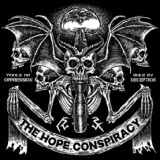
"Tools of Oppression / Rule by Deception" ist das neue Album von The Hope Conspiracy. Das Album wurde von Kurt Ballou und Zach Weeks in den God City Studios produziert. Das Artwork für die Veröffentlichung stammt von dem gefeierten Künstler Alexander Heir (Death/Traitors).
Dies ist wahre akustische Gewalt, die sich gegen politische Spaltung, wirtschaftliche Manipulation, Kriegsgewinnlerei, Medienpropaganda und andere abscheuliche Formen globaler Unterdrückung richtet. Luftschutzsirenen heulen auf, während die ahnungsvollen "Those Who Gave Us Yesterday" und "The Prophets and Doom" wie brennende Schrapnells explodieren. Der Höllenritt geht weiter mit "A Struggle For Power" und "Live In Fear", zwei bösartigen Blasts, die vor Bosheit und Verachtung nur so strotzen. "Shock By Shock" und "Of A Dying Nation" leiten die doomig-düstere Schwere ein
und drosseln das Tempo auf ein mittelschnelles Sperrfeuer. "Confusion/Chaos/Misery" zieht das Tempo an und geht mit verbrannter Erde auf die soziopolitischen Alpträume los, die uns alle umgarnen, während "Broken Vessels" die Opioid-Krise und die Sucht als Ganzes thematisiert. Dies führt zu "The West Is Dead", einer dystopischen Hardcore-Hymne mit vielen Hooks, und dem epischen Schlussstück "The Specter Looms"; ein unheilvoller Soundtrack zum stetigen Niedergang unserer modernen Zeit.Keine Frage, The Hope Conspiracy ist zurück, um eine kalte, harte Aussage über die Existenz in der Endzeit zu treffen.
"Tools of Oppression / Rule by Deception" ist das neue Album von The Hope Conspiracy. Das Album wurde von Kurt Ballou und Zach Weeks in den God City Studios produziert. Das Artwork für die Veröffentlichung stammt von dem gefeierten Künstler Alexander Heir (Death/Traitors).
Dies ist wahre akustische Gewalt, die sich gegen politische Spaltung, wirtschaftliche Manipulation, Kriegsgewinnlerei, Medienpropaganda und andere abscheuliche Formen globaler Unterdrückung richtet. Luftschutzsirenen heulen auf, während die ahnungsvollen "Those Who Gave Us Yesterday" und "The Prophets and Doom" wie brennende Schrapnells explodieren. Der Höllenritt geht weiter mit "A Struggle For Power" und "Live In Fear", zwei bösartigen Blasts, die vor Bosheit und Verachtung nur so strotzen. "Shock By Shock" und "Of A Dying Nation" leiten die doomig-düstere Schwere ein
und drosseln das Tempo auf ein mittelschnelles Sperrfeuer. "Confusion/Chaos/Misery" zieht das Tempo an und geht mit verbrannter Erde auf die soziopolitischen Alpträume los, die uns alle umgarnen, während "Broken Vessels" die Opioid-Krise und die Sucht als Ganzes thematisiert. Dies führt zu "The West Is Dead", einer dystopischen Hardcore-Hymne mit vielen Hooks, und dem epischen Schlussstück "The Specter Looms"; ein unheilvoller Soundtrack zum stetigen Niedergang unserer modernen Zeit.Keine Frage, The Hope Conspiracy ist zurück, um eine kalte, harte Aussage über die Existenz in der Endzeit zu treffen.
"Tools of Oppression / Rule by Deception" is the new full length album by The Hope Conspiracy. The album was engineered by Kurt Ballou and Zach Weeks at God City Studios. Artwork for the release was created by acclaimed artist Alexander Heir (Death/Traitors). This is true sonic violence aimed at political division, economic manipulation, war profiteering, media propaganda and other vile forms of global oppression. Air raid sirens wail as the foreboding "Those Who Gave Us Yesterday" and "The Prophets and Doom" explode forth like burning shrapnel. The hell ride continues with "A Struggle For Power" and "Live In Fear", two vicious blasts supercharged with malice and contempt. "Shock By Shock" and "Of A Dying Nation" introduce doom and gloom heaviness, grinding down the tempo to a mid-paced barrage. "Confusion/Chaos/Misery" picks up the pace, going scorched-earth policy on the sociopolitical nightmares that ensnare us all while "Broken Vessels" plows into overdrive about the opioid crisis and addiction as a whole. This leads to "The West Is Dead" a dystopian hook laden hardcore anthem, and epic closer "The Specter Looms"; An ominous soundtrack to the steady decline of our modern age. There is no question, The Hope Conspiracy is back to make a cold hard statement about existence in the end times.
blue•lips (bloo/lips) n. v. adj. pl. -lipped, syn.. -coonin, -cyanosis
-adj. 1. speecHless, especially as the temporary result of sHock or
some strong emotion. 2. (of a person or mood) sHocked, speecHless, orembarrassed; the crowd gave me blue lips
-n. 1. a particular attitude toward or way of regarding something 2. coon; tHey were coonin
-v. 1. become fully aware of (something) as a fact; understand clearly.
The landmark 2006 album that showcased Brooklyn's legendary Hip Hop collective with their original lineup for the first time since their 1997 debut LP "For the People." Buckshot, Smif-N-Wessun, Heltah Skeltah, and O.G.C. sound as raw as ever over a hall-of-fame production lineup including beats by Pete Rock, Large Professor, Da Beatminerz, 9th Wonder, Marco Polo, and more.
- 1: La 2020 (Feat. Exile)
- 2: Ca All Day (Feat. Vcl Tha Moslem)
- 3: In Living Color (Feat. Skye Louise)
- 4: I’m G (Omg) (Feat. Chuuwee And Born Allah)
- 5: La Summer (Feat. G Kidd, Jack Davey, And Like)
- 6: We Originals (Feat. Longevity, Sahtyre, And Onwun)
- 7: We Bang (Feat. Med, Thurz, And Yah Ra)
- 8: The Joy (Feat. Speed Walton And Mykestro)
- 9: West Coast (Feat. Iman Omari And Imani)
- 10: Weekdays (Feat. Polyester The Saint)
- 11: Roll Up (Feat. Jimetta Rose, Donel Smokes, And Tiron)
- 12: Red, White, & Me (Feat. Colin Devane)
- 13: Out Of The Blue (Feat. Shaq Husayn, Ta’raach, Ayun Bassa, Propaganda, And Jo Roq)
- 14: Colorful (Feat. Cashus King, Self Jupiter, And Myka 9)
From weaving thought-provoking poetics to channeling the spirit of vintage West Coast gangsta rap, acclaimed Los Angeles emcee Blu is a dynamic musical presence, forever evolving and defying expectations. Supremely talented producer and musician Shafiq Husayn has a similarly diverse skill set, with a storied history as a member of Sa-Ra Creative Partners and solo production credits for top artists across the musical spectrum, from Erykah Badu to Ice-T to Anderson .Paak to Jurassic 5 and many more. After linking up for the mixtape The Blueprint back in 2018, Blu and Shafiq Husayn are reuniting for the new album Out Of The Blue, elevating their collaboration to a new level. “The Blueprint was just me rhyming over some of Shafiq's beats that I found online,” Blu explains. “This time we were actually in the studio together. We’ve been working together since 2008, but this is our first official album.” Awash in Shafiq’s dense sonic architecture, Out Of The Blue showcases the intricacy of Blu’s spiritual street talk while simultaneously delivering a series of bass-heavy L.A. anthems. Entirely produced by Shafiq Husayn, the collection features guest appearances by MED, Exile, Chuuwee, Thurz, Speed Walton, Jimetta Rose, and Freestyle Fellowship members Myka 9 and Self Jupiter. “Out Of The Blue is my G-Funk album,” Blu explains. “Big brother Shafiq gave us a master class in production. We just in here being funky and having fun.”