"Alles ist nur Übergang": So heißt das neue Album Max Riegers. Man kann dies als künstlerisches Credo betrachten, als Selbstbeschreibung, als ästhetisches Programm. Bei Max Rieger war es schon immer so; es ist immer schon alles im Übergang gewesen: im Werden, im Fluss. Seit über einem Jahrzehnt gehört er zu den prägendsten Künstlern im deutschen Pop, wandlungs- und erfindungsreich wie kaum einer sonst. Mit seiner Gruppe Die Nerven hat er dem elektrisch verstärkten Gitarrenrock hierzulande eine neue Gestalt und neue Schärfe geschenkt. Fünf Alben haben Die Nerven seit 2012 herausgebracht, zuletzt 2022 ihr schwarzes Album, finstere, harte, zugleich nihilistische und ironische Musik, getragen von großer Weisheit und dem Wissen um die Weisheit des Primitiven. Max Rieger ist auch ein großer Klangschöpfer, er ist jemand, der Musik und Ideen zu veredeln versteht, der sich ebenso inspirieren lässt wie er inspiriert. Für eine ganze Generation junger Künstlerinnen und Künstler ist er zu einem wichtigen, prägenden Partner und Mentor geworden, als Produzent und als unterstützender Songwriter. Er hat für Casper 2022 das Album "Alles war schön und nichts tat weh" produziert, Mia Morgan, Stella Sommer, Ilgen-Nur, Jungstötter und Drangsal gearbeitet und zuletzt mit den legendären Noise-Pionieren Swans. Wer die wahre Größe Max Riegers ermessen will, der - freilich - muss seine Soloalben anhören, die er unter dem Namen All diese Gewalt veröffentlicht. "Kein Punkt wird mehr fixiert" hieß das Solo-Debüt 2014, seither sind zwei weitere Alben erschienen, das majestätisch-weiche "Welt in Klammern" 2016 und das kühle "Andere" von 2020. "Alles ist nur Übergang" ist nun sein viertes Werk als All diese Gewalt, es führt die großen Linien des Rieger"schen Schaffens fort und hebt seine Kunst doch auf eine neue Ebene: So organisch, so schwebend hat seine Musik noch nie geklungen, so scheinbar anstrengungslos dahingespielt und zugleich intensiv, mit einem unwahrscheinlichen Gespür für Dramaturgien, für das rechte Maß zwischen dem Treibenlassen der Klänge und dem plötzlich alles ändernden Break.
Suche:gear
"Alles ist nur Übergang": So heißt das neue Album Max Riegers. Man kann dies als künstlerisches Credo betrachten, als Selbstbeschreibung, als ästhetisches Programm. Bei Max Rieger war es schon immer so; es ist immer schon alles im Übergang gewesen: im Werden, im Fluss. Seit über einem Jahrzehnt gehört er zu den prägendsten Künstlern im deutschen Pop, wandlungs- und erfindungsreich wie kaum einer sonst. Mit seiner Gruppe Die Nerven hat er dem elektrisch verstärkten Gitarrenrock hierzulande eine neue Gestalt und neue Schärfe geschenkt. Fünf Alben haben Die Nerven seit 2012 herausgebracht, zuletzt 2022 ihr schwarzes Album, finstere, harte, zugleich nihilistische und ironische Musik, getragen von großer Weisheit und dem Wissen um die Weisheit des Primitiven. Max Rieger ist auch ein großer Klangschöpfer, er ist jemand, der Musik und Ideen zu veredeln versteht, der sich ebenso inspirieren lässt wie er inspiriert. Für eine ganze Generation junger Künstlerinnen und Künstler ist er zu einem wichtigen, prägenden Partner und Mentor geworden, als Produzent und als unterstützender Songwriter. Er hat für Casper 2022 das Album "Alles war schön und nichts tat weh" produziert, Mia Morgan, Stella Sommer, Ilgen-Nur, Jungstötter und Drangsal gearbeitet und zuletzt mit den legendären Noise-Pionieren Swans. Wer die wahre Größe Max Riegers ermessen will, der - freilich - muss seine Soloalben anhören, die er unter dem Namen All diese Gewalt veröffentlicht. "Kein Punkt wird mehr fixiert" hieß das Solo-Debüt 2014, seither sind zwei weitere Alben erschienen, das majestätisch-weiche "Welt in Klammern" 2016 und das kühle "Andere" von 2020. "Alles ist nur Übergang" ist nun sein viertes Werk als All diese Gewalt, es führt die großen Linien des Rieger"schen Schaffens fort und hebt seine Kunst doch auf eine neue Ebene: So organisch, so schwebend hat seine Musik noch nie geklungen, so scheinbar anstrengungslos dahingespielt und zugleich intensiv, mit einem unwahrscheinlichen Gespür für Dramaturgien, für das rechte Maß zwischen dem Treibenlassen der Klänge und dem plötzlich alles ändernden Break.
Color Vinyl[20,97 €]
In the decade or so that hard-working New York quartet Sunwatchers have operated, the group has steadily & subtly refined their sound - a brain-blasting mixture of jazz, psychedelia, krautrock, punk, noise, & Saharan blues - into something that is avant-leaning enough to appeal to the discerning jazz & experimental music fan & weird & wooly enough to get the true heads' toes tapping. "Music Is Victory Over Time" is the band's 5th album, and fourth for Chicago-based Trouble In Mind Records, seeing the long-running lineup of Peter Kerlin (bass guitar), Jim McHugh (guitars), Jason Robira (drums), and Jeff Tobias (alto saxophone and keyboards) in prime form. Album opener "World People" is a classic Sunwatchers number whose title expresses their Anarcho-Internationalist ideology (and the atypically multi-culti make up of their crowds), with an underlying melodic resonance to New Orleans funeral marches à la Albert Ayler _ a triumphant call to arms to all peoples. Live fave "Too Gary"'s gang vocal shout punctuates a motorik rager named for a phrase often uttered by a badass eight year old skateboarder McHugh knew with a speech impediment (it means "that's too scary"). "T.A.S.C." (or "Theme For Anarchist Sports Center") is inspired by Sonny Sharrock's maligned 80's output & sounds exactly like a wrathful, mutant version of a prime-time athletic show theme, replete with the requisite "sitcom ending." The sun- scorched "Foams" - a longform piece intended to depict natural stuff like tides, nightfall, and time slowly passing, ancient, peaceful and slightly gross all at once - practically jumps out of the speakers, its palpable intensity crackling in your eardrums. The title of "Tumulus" might reference an ancient burial mound, but the music itself might be the group's most high-tech song to date, complimented by an arpeggiating sequencer, three different forms of tape delay and an electric saxophone; ecstatic, fiery & deeply spiritual. "There Goes Ol' Ooze" is a smoky creeper that lets Tobias & Kerlin take a walk for a while, with respectful nods to the Stones and Steve Reich. "Song For The Gone" closes out the album, showcasing a sincerely tender moment for the gang, as an expression of love and resolve for dear friends who had recently, tragically died. Its cascading, bluesy melody attuning itself to our own collective unconscious grief. Having the distinct pleasure of being the first band to record in John Dwyer 's new LA-based recording studio Discount Mirrors, "Music Is Victory Over Time" boasts a beefed up sound. The band worked closely with in-house engineer Eric Bauer - facilitator, troubleshooter, sonic obsessive, a legendary freak and a DIY lifer. The band also had full access to the studio's epic armory of gear: amps, axes (it's Dwyer's Eddie Harris model electric sax), synths, a bass guitar once belonging to Klaus Flouride of the Dead Kennedys. Crucial for the sounds and the vibe. The album art was created by Josh MacPhee, the activist artist, author, archivist and founding member of both the radical artist collective Just Seeds and Interference Archive, a public collection of materials from social movements based in Brooklyn. MacPhee's participation in the project works as a statement of Sunwatchers' progressive utopian intentionality, and organically underscores their involvement in revolutionary projects within and without of their hometown. Listening to "Music Is Victory Over Time", Sunwatcher's rebellious spirit & unbridled enthusiasm remain fully intact, but the secret sauce is their infectious irreverence in the face of the horrors of this world. Much of our best cultural commentary is Trojan-horsed to the general public via humor & satire & the band has a knack for lacing the ridiculous with the radical. It's good to have them back. "Music Is Victory Over Time" is released worldwide digitally via most DSPs, on CD, black vinyl & a limited "Sunflare" blue/red splatter vinyl while supplies last.
Black Vinyl[20,97 €]
In the decade or so that hard-working New York quartet Sunwatchers have operated, the group has steadily & subtly refined their sound - a brain-blasting mixture of jazz, psychedelia, krautrock, punk, noise, & Saharan blues - into something that is avant-leaning enough to appeal to the discerning jazz & experimental music fan & weird & wooly enough to get the true heads' toes tapping. "Music Is Victory Over Time" is the band's 5th album, and fourth for Chicago-based Trouble In Mind Records, seeing the long-running lineup of Peter Kerlin (bass guitar), Jim McHugh (guitars), Jason Robira (drums), and Jeff Tobias (alto saxophone and keyboards) in prime form. Album opener "World People" is a classic Sunwatchers number whose title expresses their Anarcho-Internationalist ideology (and the atypically multi-culti make up of their crowds), with an underlying melodic resonance to New Orleans funeral marches à la Albert Ayler _ a triumphant call to arms to all peoples. Live fave "Too Gary"'s gang vocal shout punctuates a motorik rager named for a phrase often uttered by a badass eight year old skateboarder McHugh knew with a speech impediment (it means "that's too scary"). "T.A.S.C." (or "Theme For Anarchist Sports Center") is inspired by Sonny Sharrock's maligned 80's output & sounds exactly like a wrathful, mutant version of a prime-time athletic show theme, replete with the requisite "sitcom ending." The sun- scorched "Foams" - a longform piece intended to depict natural stuff like tides, nightfall, and time slowly passing, ancient, peaceful and slightly gross all at once - practically jumps out of the speakers, its palpable intensity crackling in your eardrums. The title of "Tumulus" might reference an ancient burial mound, but the music itself might be the group's most high-tech song to date, complimented by an arpeggiating sequencer, three different forms of tape delay and an electric saxophone; ecstatic, fiery & deeply spiritual. "There Goes Ol' Ooze" is a smoky creeper that lets Tobias & Kerlin take a walk for a while, with respectful nods to the Stones and Steve Reich. "Song For The Gone" closes out the album, showcasing a sincerely tender moment for the gang, as an expression of love and resolve for dear friends who had recently, tragically died. Its cascading, bluesy melody attuning itself to our own collective unconscious grief. Having the distinct pleasure of being the first band to record in John Dwyer 's new LA-based recording studio Discount Mirrors, "Music Is Victory Over Time" boasts a beefed up sound. The band worked closely with in-house engineer Eric Bauer - facilitator, troubleshooter, sonic obsessive, a legendary freak and a DIY lifer. The band also had full access to the studio's epic armory of gear: amps, axes (it's Dwyer's Eddie Harris model electric sax), synths, a bass guitar once belonging to Klaus Flouride of the Dead Kennedys. Crucial for the sounds and the vibe. The album art was created by Josh MacPhee, the activist artist, author, archivist and founding member of both the radical artist collective Just Seeds and Interference Archive, a public collection of materials from social movements based in Brooklyn. MacPhee's participation in the project works as a statement of Sunwatchers' progressive utopian intentionality, and organically underscores their involvement in revolutionary projects within and without of their hometown. Listening to "Music Is Victory Over Time", Sunwatcher's rebellious spirit & unbridled enthusiasm remain fully intact, but the secret sauce is their infectious irreverence in the face of the horrors of this world. Much of our best cultural commentary is Trojan-horsed to the general public via humor & satire & the band has a knack for lacing the ridiculous with the radical. It's good to have them back. "Music Is Victory Over Time" is released worldwide digitally via most DSPs, on CD, black vinyl & a limited "Sunflare" blue/red splatter vinyl while supplies last.
- A1: Kiseki
- A2: Persinette
- A3: Narva
- A4: Eudaimonia
- A5: Porpita
- A6: Nazo No Tenkai (Ernok)
- A7: Mångata
- B1: Ano Yo
- B2: Zarra
- B3: Kairos (Amor Fati)
- C1: Magnolia (Aisling)
- C2: Cho Oyu
- C3: Matumaini
- C4: Zoticus
- C5: Légäsi
- D1: Votivus
- D2: Querencia
- D3: Kundinyota
- D4: Dragons Of Eden
- D5: Eunoia
- D6: Znaniya (Falkor)
- D7: Tzedakah
- D8: Apocrypha
- E1: Asherah
- E4: Qumran
- E5: Makaria
- E6: Kupaianaha
- E7: Taijasa
- F1: Vesta
- F2: Ziggurat
- F3: Ziya
- F4: Scar
- F5: Let The Light Shine In
- F6: Komorebi
- F7: Daydream
- G1: Dream Dance
- G2: Apotheosis
- G3: Magnolia (Astronomia Nova)
- G4: Moksha
- H1: Datsuzoku
- H2: Hypatia
- H3: Kuleana
- H4: Aldous
- H5: Jijivisha
- H6: Paititi
- H7: Airavata
- H8: Znaniya (Ahura Mazda)
- H9: Nag Hammadi
- H10: Halcyon
- H11: Sweet Invitation
- E2: Plotinus
- E3: Kairos (Kefi)
Miguel Atwood-Ferguson lebt in seiner Heimatstadt Los Angeles und ist einer der herausragenden Musiker, Orchestratoren, Arrangeure und Komponisten unserer Zeit. „Les Jardins Mystiques Vol.1“ ist sein lang erwartetes Debütalbum. Es präsentiert uns eine leidenschaftliche Liebeserklärung und ein Reich der schönen Möglichkeiten.
Es gibt eine Fülle von Möglichkeiten, sich Miguel Atwood-Fergusons Musik zu nähern - und es gibt keine Grenzen, wohin sie jemanden führen könnte. Als Komponist, Arrangeur, Multiinstrumentalist und Produzent hat er an mehr als 600 Alben und Soundtracks für genreübergreifende Künstler:innen gearbeitet, darunter Flying Lotus, Thundercat, Anderson .Paak, Mary J. Blige oder Seu Jorge. Seine Klangpalette umfasst Jazz, Klassik, Hiphop, Electronica, Avantgarde, Pop und vieles mehr. Zu seinen gefeierten Live- und Aufnahmeprojekten gehören die innovative orchestrale Neuinterpretation des Repertoires von J Dilla, „Suite For Ma Dukes“ (2009), seine produktiven Werke mit seinem langjährigen Freund und Kollaborateur Carlos Niño, darunter das improvisierte Album, „Chicago Waves“ (2020), auf International Anthem, und seine Gruppen wie das Quartetto Fantastico und das Miguel Atwood-Ferguson Ensemble. „Les Jardins Mystiques“ ist ein Projekt, das Miguel Atwood-Fergusons musikalisches Universum offenlegt und mit anderen teilt. Es hat sich über ein Dutzend Jahre hinweg entwickelt, wurde größtenteils von ihm selbst finanziert und zeigt seine ausgesprochen elegante Musikalität (u. a. auf Geige, Bratsche, Cello und Keyboards) sowie seine freigeistigen Dialoge mit mehr als 50 Instrumentalist:innen. ‚Volume 1‘ ist hierbei bloß der erste Teil eines geplanten Triptychons, das insgesamt ganze zehneinhalb Stunden origineller und erfrischend ausladender Musik umfassen wird. Atwood-Ferguson verband sich mit seinen Gastmusiker:innen auf vielfältige Weise: durch gesellige Studiodialoge, durch Fernkommunikation während der Pandemie und durch die Energie von Live-Auftritten in seiner Heimatstadt, darunter im Del Monte Speakeasy (das herrlich belebende, von einem Klavier begleitete „Dream Dance“) und im Bluewhale (u. a. „Ano Yo“ mit dem temperamentvollen Alt-Saxophon von Devin Daniels und den kosmischen Harmonien von „Cho Oyu“). Bennie Maupin, der legendäre US-Multi-Blasinstrumentalist, zu dessen Repertoire auch Miles Davis' Fusion-Opus „Bitches Brew“ gehört, spielt Bassklarinette auf der hinreißenden Eröffnungsnummer „Kiseki“. Im Laufe seiner illustren Karriere hat Miguel Atwood-Ferguson mit Künstler:innen wie Rihanna, Ray Charles, Lana Del Rey, Lady Gaga, Anderson .Paak, Dr. Dre, Kamasi Washington, Mary J. Blige, will.i. am, Big Boi, Arthur Verocai, Bonobo, Lianne La Havas, Kaytranada, Moses Sumney, Seu Jorge, Common, The Roots, The Cinematic Orchestra, Jamael Dean, Shafiq Husayn, Adrian Younge & Ali Shaheed Muhammad, Carlos Niño, Bilal und viele mehr zusammengearbeitet.
"Alles ist nur Übergang": So heißt das neue Album Max Riegers. Man kann dies als künstlerisches Credo betrachten, als Selbstbeschreibung, als ästhetisches Programm. Bei Max Rieger war es schon immer so; es ist immer schon alles im Übergang gewesen: im Werden, im Fluss. Seit über einem Jahrzehnt gehört er zu den prägendsten Künstlern im deutschen Pop, wandlungs- und erfindungsreich wie kaum einer sonst. Mit seiner Gruppe Die Nerven hat er dem elektrisch verstärkten Gitarrenrock hierzulande eine neue Gestalt und neue Schärfe geschenkt. Fünf Alben haben Die Nerven seit 2012 herausgebracht, zuletzt 2022 ihr schwarzes Album, finstere, harte, zugleich nihilistische und ironische Musik, getragen von großer Weisheit und dem Wissen um die Weisheit des Primitiven. Max Rieger ist auch ein großer Klangschöpfer, er ist jemand, der Musik und Ideen zu veredeln versteht, der sich ebenso inspirieren lässt wie er inspiriert. Für eine ganze Generation junger Künstlerinnen und Künstler ist er zu einem wichtigen, prägenden Partner und Mentor geworden, als Produzent und als unterstützender Songwriter. Er hat für Casper 2022 das Album "Alles war schön und nichts tat weh" produziert, Mia Morgan, Stella Sommer, Ilgen-Nur, Jungstötter und Drangsal gearbeitet und zuletzt mit den legendären Noise-Pionieren Swans. Wer die wahre Größe Max Riegers ermessen will, der - freilich - muss seine Soloalben anhören, die er unter dem Namen All diese Gewalt veröffentlicht. "Kein Punkt wird mehr fixiert" hieß das Solo-Debüt 2014, seither sind zwei weitere Alben erschienen, das majestätisch-weiche "Welt in Klammern" 2016 und das kühle "Andere" von 2020. "Alles ist nur Übergang" ist nun sein viertes Werk als All diese Gewalt, es führt die großen Linien des Rieger"schen Schaffens fort und hebt seine Kunst doch auf eine neue Ebene: So organisch, so schwebend hat seine Musik noch nie geklungen, so scheinbar anstrengungslos dahingespielt und zugleich intensiv, mit einem unwahrscheinlichen Gespür für Dramaturgien, für das rechte Maß zwischen dem Treibenlassen der Klänge und dem plötzlich alles ändernden Break.
Five groups, one mythical studio - documenting the emergence of a generation!
The initial postulate was simple: five groups, one emblematic studio and 24 hours for each to imagine and record two unreleased tracks with one objective - the will to document a French jazz scene in the midst of renewal.
In these last few years, several innovative currents have shaken up the world of jazz and attracted new fans. They have bubbled up from Los Angeles, impregnated with hip-hop culture (Kamasi Washington, Terrace Martin, Thundercat), or from London, tinged with African rhythms (Nubya Garcia, Kokoroko, Ezra Collective). Meanwhile, in France, a new scene is emerging, carrying with it more of a dancefloor-oriented sound influenced by electronic music - an obvious kinship with the French Touch explosion of the late 90s.
Historically, every movement has been assimilated to a certain neighbourhood, to specific clubs where late at night, young guns stayed up to imagine the jazz of tomorrow - the Cotton Club for the jazz of the 20s, Minton’s Playhouse in Harlem for Be-Bop, the Black Hawk in San Francisco for West Coast jazz, Birdland in New York for Hard-Bop or a lot more recently, the Total Refreshment Centre which has been the playing field for the new London scene.
In Paris too, this new sound is associated with actual venues, places which have allowed these groups to form, create a repertoire and forge an aesthetic - Le Baiser Salé for Monsieur Mâlâ, La Gare/Le Gore for Photon, La Pêche in Montreuil for Ishkero, La Petite Halle for Underground Canopy and also le Duc des Lombards and le 38 Riv’ for Alex Monfort; it’s in a live context that this music will always continue to evolve.
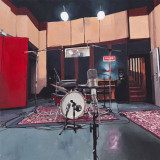
Keeping this “live” spirit, with all its spontaneity, was actually the guiding line for the elaboration of this Studio Pigalle compilation. Each take was recorded in the most organic way possible, bringing all the musicians together in the same room to limit post-production alterations before the final cut was assembled, in just one day, by studio in-house sound engineer, Felix Rémy.
A feeling of urgency permeates a record guided by an artistic production taking care to crystalise the essence of this artistically free-range generation whose childhoods were rocked just as much by Bill Evans and Roy Hargrove as by J Dilla and Jeff Mills. One of the two tracks recorded is geared towards the dancefloor, and the other, more cosmic/ambient gives freer rein to individual interpretation.
There were therefore many possible ways of interpreting these guidelines for the five formations which number among the most distinctive on the current French musical landscape, and the occasion, for some, to rummage through their archives! With Transe (Mbappé) and Da Verdere (Vella), Monsieur
Mâlâ present us with two unreleased tracks issued from the very first rehearsals of the quintet reworked especially for this compilation. “Seen the aesthetic range of this group, it all worked out very naturally in the studio”, recounts keyboardist Nicholas Vella “Recording like they did in the sixties with all the channels live and working with small imperfections was a very interesting task, even when it came to the mix, we had to make do with the takes we had... “
“Our group is very recent, and with this session, in just two tracks, we had the opportunity to present the entirety of our musical universe,” says Photons pianist Gauthier Toux. “All too often, we assimilate this fusion between jazz and dance music to computers and post-production modifications. For “Dessine”, we kept the first take, and we must have recorded just three or four for the other track with more of a techno bent. In one day, we understood that we could play our entire repertoire live, from A to Z”.
“When the Komos label offered me this project, it immediately spoke to me”, remembers Alex Monfort “Straight away, I thought of “Since I Met You”, a track with a nine/four time signature which really is reminiscent of a new- soul groove, but with this extra cosmic vibe! I wrote the words to the chorus and Nina Tonji placed her voice on the track, adding her own verses. For “Tonight”, the up-tempo track, I wanted to head off in more of a hybrid direction inspired by Kaytranada or the Black Radio series by Robert Glasper. A cross-over between jazz and hip-hop which really does represent my world, and I also tried to place vocals centre stage (Emcee Agora)”.
“We truly resonated with the way Antoine Rajon imagined this compilation and the recording session”, confide Warren Dongué and Jérémy Tallon from Underground Canopy. “When arriving in this studio we felt as if we had gone backtothe70s! Inkeepingwiththespiritofthisera,heknewhowtoletus keep our spontaneity, without recording in too many takes, and that’s how we like to work”.
“We managed to adhere to the themes of the compilation without changing our instrumentation, we wanted to remain faithful to the sound of Ishkero on these new compositions and take them somewhere else” – says drummer TaoEhrlich -“Withoutaddinganyelectronics.Thesessionwassupervisedin a truly subtle and benevolent manner. From a human perspective, it was also a wonderful experience”.
Whether turned towards hip-hop, ethnic or electronic music, the artists featured on this Studio Pigalle compilation represent the eclecticism of a new generation in the process of writing the first chapters of its history. Open to experimentation, these artists continue to hold high an immutable love for improvisation and creation in the moment... another definition of the word Jazz!
Die Psychedelic Porn Crumpets sind mit ihrem sechsten Studioalbum zurück. Das australische Psych-Rock-Fünfergespann hat seit der Veröffentlichung von "Night Gnomes" im Jahr 2022 an "Fronzoli" gearbeitet - ein Titel, der so viel bedeutet wie "etwas Unnötiges, das als Dekoration hinzugefügt wurde". Dilemma Us From Evil" ist die neueste Singleauskopplung aus dem Album und ein Paradebeispiel für Psychedelic Porn Crumpets' verblüffende Mischung aus schweren, melodischen Gitarren, harmonischen Texten und exzentrischem Songwriting. Es folgt auf die Singles "Nootmare (K-I-L-L-I-N-G) Meow!" und "(I'm a Kadaver) Alakazam", die Anfang des Jahres veröffentlicht wurden. Das Album strotzt nur so vor dem überdrehten, glitzernden Sound der Band aus Perth, der Einflüsse von klassischen Rockgrößen wie Black Sabbath, Led Zeppelin und den Beatles sowie experimentellen elektronischen Jazz enthält. Diese Rockeinflüsse sind auf "Fronzoli" deutlich zu hören, mit thrashigen Grunge-Tracks wie "Sierra Nevada" und dem frenetischen "Hot! Heat! Wow! Hot!", in denen die hyperaktiven Gitarren und die schrägen Texte der Band zur Geltung kommen. Die Band, die als Freunde begann, bevor sie sich zusammenfand, ist stolz auf ihre fröhliche und ungeschliffene Unordnung, wenn es um Songwriting und Produktion geht. "Diese Platte ist mein bisheriges Lieblingswerk", sagt Songwriter und Frontmann Jack McEwan, "jede Nuance wurde diskutiert, verleumdet und sorgfältig in die richtige Position gebracht, es wird sporadisch außerhalb der Linien gemalt, so dass diese extravertierten Schnörkel übrig bleiben." Jede LP-Farbe ist auf nur 250 Exemplare limitiert. Die CD ist ein aufklappbares Digipack, 500 Stück gepresst.
Confident and deliberate. Lightning in a bottle. The Rapture’s Echoes was and is a clear-eyed kick in the teeth, a band at the peak of their powers and producers with an ambitious vision making. a. point. The whole “indie crowd finally learns to dance” narrative is overwrought and irrelevant in 2023 - perhaps context is no longer king - but what remains clear is that this album, made by a San Diego punk band who had moved to New York via Seattle, and produced by the DFA in their own studio, where time and gear and ideas both good and bad were aplenty, maintains an energy and search for catharsis that could bulldoze even the most uptight. For whatever reason, it’s remained out of print on vinyl since its initial run.
Next in line in the Snaretrade series is an EP by one of our favourite people: Gols.
He operates the Hoot label, has released with Ghent label/party Ojoo and has been crafting tracks low key for a long time.
We start out with dessert: In Au bain marie we’re given some elegant yet hard to follow instructions on how to make the perfect chocolate mousse. DJ and Knetterbar operator Yentl kindly lent her voice, not knowing the recording would be used as a final take. In Hundreds and Thousands, Gols weaves thick layers of percussion and synths, forming a dense and deep structure that pulls us in. In the midst of moving his music studio, this track was the last one to be recorded before pulling the plugs and boxing the gear up. On the flipside, Regrooved is a shuffling, sneaky and amusing bit of house that never really admits if it’s just arriving at the party, or just about to leave. After-hour fare for those who like something sweet after dinner.
The last twelve months have been a whirlwind for Henry Counsell and Louis Curran, the men who make up Joy (Anonymous). Having established themselves during the Covid-19 era by playing impromptu meet-ups on London’s South Bank, they have graduated to bigger venues, travelled to far-flung locales and recorded their second album, Cult Classics, while maintaining the spontaneous energy and irrepressible joy that made their name. Their music revels in the euphoria of being alive and all the feelings, good or bad, that come with it. It invites us into a community, draws us close and promises the night of our lives.
Recorded over the course of a year, the blueprint for Cult Classics was laid down over a two-week span at Imogen Heap’s Round House in east London. Joy (Anonymous) invited friends old and new to visit - they’d record live instruments in jam sessions upstairs and then retreat to a second room to flip and loop and generally mess with the sounds, moulding them into sizzling dance tracks. “Loads of people were coming up to me like ‘I thought this was going to be a dance record?’” Louis says, remembering the quietly beautiful music they’d be recording. “I’d be like, don’t worry about that, just keep playing.” He’d send it back to people later and they’d be floored - “That was my bit and you’ve made it... jungle!”
It was an organic and creatively fulfilling approach, one that didn’t allow any of the music to get stale or stagnate. As they built the tracks from the sounds they’d collected, Joy (Anonymous) would weave the new songs into their famously improvised live sets, testing them, refining them, taking note of the audiences’ reactions. In a year punctuated by a lot of travel, they’d also incorporate the voices of people they met along the way - “Beazley’s Poem”, which opens the record, features the words of a man who was working security at a Fred Again show at New York’s Terminal Five. “He was basically doing the opposite of his job and being a hype man, climbing on the fence and ramping up the crowd - we ended up hanging out with him - like, who’s this legend?” Louis explains. “He just speaks really amazingly about his life, all these amazing thoughts and opinions - he started jumping on the mic when we were playing, preaching these amazing messages to the crowd, like that we all need to be nicer to each other. The first time we played the record in its entirety, he introduced us and that’s the recording we’ve used.”
Joy (Anonymous) remain dedicated to the spirit of spontaneity. They shut a street down with a surprise waterside party in New York. On a trip to Copenhagen they played an impromptu set in a cafe, which turned into a house party and a night-long good time. In Lithuania, they ended up playing in a decommissioned prison. It’s harder, perhaps, to keep that spirit alive now that they are operating more within the confines of the music industry but they will keep lugging their kit to wherever the party calls for as long as they can. “I think if we lose that, we’ve kind of lost what makes us us,” Henry says.
Bursting with multi-genre reference points and disparate influences, Cult Classics is very much a dance album. The samples we made ourselves or we took from music that is quite different to dance music, but we definitely wanted to shout out a lot of the dance influences that we love,” Henry says. They listened to a lot of Daft Punk and Basement Jaxx as well as The Prodigy (“more rage stuff”), taking songwriting tips from their dance forebears, but also recording bits that felt more like jazz and motown (see: A Place I Belong and the lovely album closer, You’re In Or You’re Out). Emir Taha’s gentle classical guitar runs like a thread throughout Cult Classics, washing into the undertones of the record, tying it all together.
The album follows the beat of a night out, from frenetic, sweaty movement to the gentler winding down as the dawn breaks. At times it is euphoric, celebratory and pure, whirling fun, at others it seeks the joy in the darker emotions that life throws our way. 404 is designed to encapsulate everything about the Joy (Anonymous) journey so far. Skittering beats and ghostly vocals give way to vibrating house chords: sirens blare as we approach a dubstep drop. It’s dramatic and wild, ratcheting up, seeming to settle then hitting you with an intense and frantic breakdown before the ghostly vocal returns to lull us back into the world. It has the feel of a hungry cat playing with a mouse, toying with it before letting it get away.
What sounds like someone playing the spoons on playful, housey How We End Up Here is actually Louis’ restless habit of clicking his rings on everything, one of a myriad of calling cards and easter eggs that day one fans will recognise. They rework Miley Cyrus and Swae Lee’s Party Up The Street into a French-electro-inspired future classic, adding a note of melancholy to a tune that you can imagine hearing blaring from every car on a summer drive. The lyrics on Cult Classic are generally reassuring, inspirational, originally drawn from Henry in stream-of-consciousness freestyles. You’re fine the way you are, they seem to say - the repeated “No need to try” of A Place I Belong, the assurance that “It’s in me all the time” on In Me All The Time. Even the summery but regretful Did You Wrong hints at the growth that is possible from less than ideal behaviour. For Joy (Anonymous), joy isn’t about just being “happy” all the time - it’s about relishing every element of your being.
The name ‘Joy (Anonymous)’ is taken from the work Henry did with Alcoholics Anonymous groups: it is a way to build a community around sharing joy. Their impromptu live sets are known as ‘meetings’; they encourage fans to share moments of joy to their website. They care deeply about the scene they’ve come up in and are determined not to leave it behind. Every show is another chance to reach out and connect with people who love to come together and revel in music as loud as it can go.
Support slots for Fred Again and The Streets, wild B2Bs with Fred and Skrillex, and a set at Four Tet’s Finsbury Park all-dayer this summer have given the duo the opportunity to live out childhood dreams and introduced their infectious live shows to new audiences at huge venues.
With an album as assured and joyful as Cult Classics on the horizon (and a killer collab with The Blessed Madonna coming up), they’re only going to reach higher heights. But the essence of Joy (Anonymous) remains on the South Bank. Between shows at Ally Pally in September, they dragged their camping chairs and gear back down to the banks of the Thames: and it just felt right.
The visionary French musician stays true, in this third compendium too, to his path of planetary asceticism. A new treasure chest of secrets reveals to us the same spirituality of total experimentation, by balancing the universe and the inner soul. In Taste The Fullness Of Life Ariel builds his symphonic pillars toward the cosmos, eternal architectures that always smell of Indian fragrances. The music always communicates a state of full grace, spreading balms of bliss. An unprecedented whispered narrating voice, evident especially in Spiritual Chanson D'Esprit, is embellished with textures of harmonic bells, tropical flutes, spacey harmoniums and drones of mystical light. In the recordings of Going Inward, also made on the occasion of a Tantric workshop, Kalma oscillates between tribal electronic dances, metalic almost industrial rhythms, but then always falls back in a comfort zone made of desert carpets of synths and baths of sound (gong/bells). Harmonica Galactica crowns interestellar dreams with unscrupulous drum-machine gears and pulsing saxes, superb use of VCS3 with arabesque and Schulzian overtones, and suave touches of fingerpicking guitar with freak vibes typical of psych-folk.
Seit ihrem Auftauchen Mitte der 1990er Jahre haben beide eine starke Präsenz im Kontext der amerikanischen experimentellen Musik und beide jeweils seitdem einige der fesselndsten Originalwerke produziert. Kenney ist eine experimentelle Vokalistin, Komponistin und Lehrerin, die sich auf die transformativen Kräfte der Stimme und die Beziehung des Klangs zu mystischen Erfahrungen konzentriert. Neben ihrer Zusammenarbeit mit Oren Ambarchi, Tashi Wada, Avey Tare, Alvin Lucier, Sarah Davachi, dem Ensemble Nist-Nah, Sunn O))) und zahlreichen anderen ist sie bekannt für ihre Aufführung indonesischer Vokalmusik (Sindhenan) und persischer Vokalmusik (Radifs) sowie für ihre eigenen Kompositionen, die Elemente beider Musikrichtungen aufgreifen. Kang, ein Komponist und Multi-Instrumentalist, der für seine einzigartige Herangehensweise an die Bratsche hoch angesehen ist, hat auf zahlreichen Gebieten gearbeitet und auf Alben von Bill Frisell, Joe McPhee, Sun City Girls, Wayne Horvitz, Ikue Mori, Laurie Anderson, Aki Onda, John Zorn, Blonde Redhead, William Hooker, Animal Collective, Lou Reed, Oren Ambarchi und zahlreichen anderen mitgewirkt sowie eine Reihe von Solowerken geschaffen, die Elemente seiner isländischen, dänischen und koreanischen Herkunft enthalten. Azure ist eine hypnotische Rückkehr zu Kenneys und Kangs einzigartigem Ausdruck von "Unisono-Musik" und gehört zu den am stärksten reduzierten und minimalistischen Arbeiten des Duos seit mehr als einem Jahrzehnt. Die fünf Kompositionen werden durch Anspielungen auf die natürliche Welt unterstrichen.
Seltene Tracks von Alex Chilton, produziert von Chris Bell. Linernotes von Rich Tupica und Elizabeth Hoehn (alias Lesa Aldridge). Jetzt zum ersten Mal auf 12"-Vinyl.
Es ist Mitte bis Ende 1975, was von Big Star übrig geblieben ist, gibt es nicht mehr, Third/Sister Lovers steht im Regal und Alex Chilton ist in Memphis an einem Tiefpunkt angelangt. Chris Bell verbrachte einen großen Teil des Jahres in London und versuchte, einen Solo-Plattenvertrag zu bekommen, ging aber leer aus und flog im Spätsommer nach Hause, um seine Familie zu besuchen. Während er zu Hause war, nahm Bell bei Ardent weitere Solotitel auf, von denen einer, "You And Your Sister", einen Harmoniegesang brauchte, so dass er Alex hinzuzog.
Fans haben lange geglaubt, dass dies die letzte Aufnahme war, bei der Bell und Chilton im Studio zusammenarbeiteten, aber nur wenige Tage nach dieser Session waren sie wieder zusammen im Studio, wobei Bell eine Reihe von Demos für Alex aufnahm. Chilton nahm frühe Takes von "My Rival" (später für das Like Flies On Sherbert-Album umgeschnitten) und "All Of The Time" (später für die Singer Not The Song-EP und das Bach's Bottom-Album umgeschnitten) sowie die damals unveröffentlichten Tracks "She Might Look My Way" (das zuerst auf dem 1978er-Album Losing You To Sleep von Co-Autor Tommy Hoehn erschien) und "Windows Hotel" (das schließlich 2015 auf dem Live-Album Ocean Club '77 veröffentlicht wurde) auf. Leider war weder eine Zusammenarbeit noch eine wie auch immer geartete Big Star-Reunion geplant.
Semi Delicious return for their 16th edition with the impressive ‘Asylum Of Love’ VA inviting faces old and new to the imprint. A label noted for bringing together impressive collections of talent, SEMID016 is no exception with contributions from Krywald & Farrer, Gallegos, Tattie Dee, Omar Smadar & DJ Gear, Scarlett O’Malley & label boss, Demi Riquisimo.
The A-side welcomes Krywald & Farrer, Gallegos and Tatie Dee. The release kicks off with ’Seize The Source’ from the aforementioned Krywald & Farrer. A classic house beat with modern, psychedelic flourishes, the track sets the tone nicely for an EP loaded with club ready heaters. Up next is label regular Gallegos with ‘Asylum of Love’, in keeping with the
house-centric motif, Gallegos delivers an acid laden, Chicago inspired weapon. ‘For My Niece’ by Tatie Dee wraps up side one on dreamy, Balearic tip.
Omar Smadar & DJ Gear’s ‘Check One’ opens up the B-side. A cruising progressive jam that's certain to be heard throughout the autumn and for the duration of 2023’s club season. Next Rinse FM resident and Club Cowgirl label boss Scarlett O’Malley makes her Semi Delicious bow with the grooving percussive ‘Hey Party People’. Demi himself puts the finishing touches on SEMID016 with a 2023 interpretation of his own ‘Rocking You Internally’ from his own ‘Mirage Over’ EP, released on the same imprint.
- A1: Intro
- A2: 2Rbostate Of Mind
- A3: Chords
- A4: Jazzbreaks
- A5: Lostgamez
- A6: Grinding
- A7: Plus
- A8: Ellipsis
- A9: Rightnow
- A10: Early Years
- A11: No Love
- A12: Ferror
- A13: She's A
- A14: Money
- B1: Exper
- B2: 2Rbo (Dub)
- B3: Never
- B4: Keep
- B5: Still Alive Feat King Solomon
- B6: Shifting Gears
- B7: Nightcap
- B8: Horse Opera
- B9: Leave For Good
- B10: Memento
- B12: Spacecowboy
- B13: Trial & Error
- B11: Brettmix
Catalogue number 6 from Dedicate highlights a reissue from a timeless beat mixtape dropped in a pre-streaming era in 2012. The original 2rbostatic was released as a handmade USB flash drive/Cassette tape hybrid in combination with a free download. For the first time now the remastered version will be on vinyl.
On 50 minutes playtime Kollege Schnürschuh expresses his affection for Hip-Hop with 27 (almost) exclusively instrumental tracks representing the full spectrum of musical influences in all shapes and forms. A short entertaining journey through MPC sampling and synth sounds with an extraordinary love for details.
Transluzentes algengrünes Color-Vinyl (140g) inklusive doppelseitigen 12"-Kunstdruck und Download-Code.
Forest Swords (alias der elektronische Produzent/ Komponist Matthew Barnes) kündigt sein neues Album, „Bolted“, an. Nachdem er in den letzten Jahren als gefragter Komponist und Sounddesigner gearbeitet und Musik für Ballett, Film und Videospiele geschrieben hat, wurde „Bolted“ im letzten Jahr in einer Lagerhalle in Barnes' Heimatstadt Liverpool aufgenommen. Auf den elf Tracks taucht er tiefer in sein einzigartiges Klangvokabular ein, um eine Reihe von Tracks zu weben, die gleichermaßen kraftstrotzend und düster, eindringlich und euphorisch klingen.
Wie immer in seiner Musik, fühlen sich Melancholie und Euphorie, Monochrom und Farbe, Vergangenheit und Zukunft mehrdeutig an. Die Emotionen verschieben sich von Moment zu Moment, die Unterschiede zwischen digitalen und akustischen Instrumenten sind verwischter denn je: eine Verquickung von Zeit, Raum und Klang, die sich gleichermaßen spielerisch und absolut vital anfühlt.
Zusammen mit der Ankündigung über das neue Album kommt „The Low“, eine stimmungsvolle, metallische Triphop-Single aus „Bolted“. Barnes kommentiert den Track wie folgt: „‚The Low‘ basiert auf einem Beat, den ich ursprünglich für Yoko Ono vorgesehen hatte, und enthält Elemente, die ich sowohl am Anfang als auch am Ende des Albums gemacht habe, und verbindet so viele der Sounds und Emotionen, die ich während des Schreibprozesses erforscht habe. Das begleitende Video, das ich zusammen mit Sam Wiehl gedreht habe, vertieft einige meiner Artworks und die visuelle Welt, die das Album begleitet.“.
Ivan Pavlov aka CoH characterizes his latest solo work,Radiant Faults,as “the recording of a dialogue,” rather than a set of compositions. Crafted using a rare new synthesizer,the Silhouette Eins, Pavlov’s first encounter with the instrument across a long, late night session resultedin a continuous set of textures, patterns, and subliminal melodies. Atsome point during the process, he realized he was not alone: “It was as ifsomething was speaking to me through the gear–the feeling was very intense.No matter how determined and specific I attempted to be, theresults were something else. They felt like 'responses.’ This instantly reminded me of ELpH.
Kingdom Eighties is the latest videogame instalment in the award-winning Kingdom series by gaming studio Raw Fury. It's a single-player adventure game of micro-strategy and base building, heavily inspired by the memories and references of Eighties Americana. You play as The Leader, a young camp counsellor who will have to defend their town and family from the relentless attack of the mysterious Greed. Kingdom Eighties provides a minimalist feel with a beautiful, handcrafted modern pixel art aesthetic, combined with the neon lights of the Eighties and an Eighties inspired synthwave soundtrack.
The score is composed by Andreas Hald, a Copenhagen-based film and media composer who has written scores for movies and television. For Kingdom Eighties, Andreas used the exact same instruments that music producers were utilizing in the Eighties, using nothing but analogue gear and tools to create a signature, authentic Eighties sound. To top it off, the soundtrack was mastered for vinyl by Grammy Award-winner Adam Ayan at the Gateway Mastering Studios. The master audio went through multiple iterations to make sure the highest quality sound was obtained for this specific vinyl release.
Kingdom Eighties is available as a limited edition of 500 individually numbered copies on translucent magenta coloured vinyl. This 2LP set includes a poster of the game and a 4-page booklet with liner notes by the composer and game director. Additionally, it includes two full colour printed innersleeves and is housed in a deluxe gatefold sleeve with gloss laminate finish.