Daniel Szlajnda (aka Daniel Drumz) and Piotr Kalinski (aka Hatti Vatti) are one of the most famouse and experienced Polish producers and this album is another step forward for them.
It started with the EP "Krzyżacy", which was released exactly two years ago. Two well-known producers - Daniel Drumz & Hatti Vatti - joined their forces to release an EP, which later on was appreciated by the worldwide listeners, journalists and festival audience. JANKA, which I am talking about, hit the stages of the best Polish festivals such as Opener, Spring Break, Tauron, Slovenian MENT and Moscow Music Week. But that happened in 2019.
On March 8th 2021 the duo's debut album, "MIDI Life Crisis" will be released. Daniel Szlajnda and Piotr Kaliński once again prove that there is much more than just musical chemistry between them. What we can hear there are fascinations from dubby minimalism and IDM to jungle and rave - it's hard to label this unique mature album which should be a pleasant surprise for people open to electronic music. "Modern vintage" might be a good description of what we experience there, music is pressed on modular and analog synths and unusual sampling is drowned in delays and reverbs. However it's not from the late '90s, nothing is typical or obvious, the sound and the style of JANKA are unique.
On the album, you hear two guest voices - Sujka (i.e. Iwona Król - known from the projects Kobieta z Wydm, Lauda, and Król) and Kacha Kowalczyk (i.e. the voice of Coals), the album was mastered by Kwazar. The unique graphic was designed and created by Zosia Paśnik on the analogue gear (as a diploma at the Academy of Fine Arts in Katowice). The album is released in analog form in two color versions, the 180-gram vinyl edition also includes three inserts with Zosia's graphics.
Suche:gear
Daniel Szlajnda (aka Daniel Drumz) and Piotr Kalinski (aka Hatti Vatti) are one of the most famouse and experienced Polish producers and this album is another step forward for them.
It started with the EP "Krzyżacy", which was released exactly two years ago. Two well-known producers - Daniel Drumz & Hatti Vatti - joined their forces to release an EP, which later on was appreciated by the worldwide listeners, journalists and festival audience. JANKA, which I am talking about, hit the stages of the best Polish festivals such as Opener, Spring Break, Tauron, Slovenian MENT and Moscow Music Week. But that happened in 2019.
On March 8th 2021 the duo's debut album, "MIDI Life Crisis" will be released. Daniel Szlajnda and Piotr Kaliński once again prove that there is much more than just musical chemistry between them. What we can hear there are fascinations from dubby minimalism and IDM to jungle and rave - it's hard to label this unique mature album which should be a pleasant surprise for people open to electronic music. "Modern vintage" might be a good description of what we experience there, music is pressed on modular and analog synths and unusual sampling is drowned in delays and reverbs. However it's not from the late '90s, nothing is typical or obvious, the sound and the style of JANKA are unique.
On the album, you hear two guest voices - Sujka (i.e. Iwona Król - known from the projects Kobieta z Wydm, Lauda, and Król) and Kacha Kowalczyk (i.e. the voice of Coals), the album was mastered by Kwazar. The unique graphic was designed and created by Zosia Paśnik on the analogue gear (as a diploma at the Academy of Fine Arts in Katowice). The album is released in analog form in two color versions, the 180-gram vinyl edition also includes three inserts with Zosia's graphics.
- 1: Over The Neptune / Mesh Gear Fox
- 2: Weedking
- 3: Particular Damaged
- 4: Quality Of Armor
- 5: Metal Mothers
- 6: Lethargy
- 7: Unleashed! The Large-Hearted Boy
- 8: Red Gas Circle
- 9: Exit Flagger
- 10: 14 Cheerleader Coldfront
- 11: Back To Saturn X Radio Report
- 12: Ergo Space Pig
- 13: Some Drilling Implied
- 14: On The Tundra
Propeller was the fifth album by Guided By Voices, and was
intended to be the group’s last. Released as a limited edition of
500 LPs in 1992, the album featured handmade covers and blank
labels to keep expenses as low as possible. Their other albums
hadn’t sold much, why would this one? Robert Pollard had a
family to support and his musical aspirations had not exactly
been a boon to their bank account.
As fate would have it, the band wound up releasing an album
chock full of gems Pollard had stockpiled, and for the first time
sounded distinctly like the band that fans have since come to
love. Propeller also marks the return of Tobin Sprout to the
GBV fold, along with an increased songwriting presence. From
anthem-to-be “Over the Neptune” to the effortless melodies of
closer “On the Tundra,” Propeller is a hell of a ride, and remains
one of the most important albums in the band’s discography.
The vinyl edition has been out of print for a decade, and
features different cover art than previous pressings. The CD
edition has been out of print for a minute as well, and is now
housed in digipak format, also with a new, unique cover from
one of the original pressings. And for the first time Propeller is
available on cassette.
- 1: Over The Neptune / Mesh Gear Fox
- 2: Weedking
- 3: Particular Damaged
- 4: Quality Of Armor
- 5: Metal Mothers
- 6: Lethargy
- 7: Unleashed! The Large-Hearted Boy
- 8: Red Gas Circle
- 9: Exit Flagger
- 10: 14 Cheerleader Coldfront
- 11: Back To Saturn X Radio Report
- 12: Ergo Space Pig
- 13: Some Drilling Implied
- 14: On The Tundra
Propeller was the fifth album by Guided By Voices, and was
intended to be the group’s last. Released as a limited edition of
500 LPs in 1992, the album featured handmade covers and blank
labels to keep expenses as low as possible. Their other albums
hadn’t sold much, why would this one? Robert Pollard had a
family to support and his musical aspirations had not exactly
been a boon to their bank account.
As fate would have it, the band wound up releasing an album
chock full of gems Pollard had stockpiled, and for the first time
sounded distinctly like the band that fans have since come to
love. Propeller also marks the return of Tobin Sprout to the
GBV fold, along with an increased songwriting presence. From
anthem-to-be “Over the Neptune” to the effortless melodies of
closer “On the Tundra,” Propeller is a hell of a ride, and remains
one of the most important albums in the band’s discography.
The vinyl edition has been out of print for a decade, and
features different cover art than previous pressings. The CD
edition has been out of print for a minute as well, and is now
housed in digipak format, also with a new, unique cover from
one of the original pressings. And for the first time Propeller is
available on cassette.
Rebuke returns to Drumcode with a trio of timeless dancefloor weapons.
The Irishman’s ‘Rattle’ was a standout of 2019, judged by DJ Mag as their no.22 top track of the year and is etched in the Drumcode discography as one of the most original releases to date. A valued part of Adam Beyer’s extended collective; he would have made his Drumcode event debut at WMC in Miami this March. Without a doubt, a sophomore EP was always on the cards.
‘Instatik’ kicks the work into gear, a rugged, reverb-heavy cut with industrial drums that pump like pistons and an undulating synth effect that makes you feel like you’re on a turbo-charged rollercoaster. ‘Livewire’ has the trademark Rebuke brain-scrambling stamp on it, a flurry of steelyard percussion bring the track to life, before a low-end melody swells to attention, rubbing shoulders deliciously with driving drumlines, for an uplifting second half. The title track ‘Obscurity’ is a dark slice of techno funk, filled with synapse-tickling arpeggios, before a rollicking groove takes hold and launches the track home at full-flight. Another thrilling and innovative release to add to the Rebuke canon.
“I think 2020 will go down in history as the craziest year of our lifetime. The future is still pretty unknown right now and things are drastically changing week to week. With that in mind, I felt ‘Obscurity’ would be a fitting title for my second Drumcode EP. It represents the state of being unknown, unclear or difficult to understand – feelings I’m sure most of us are going through right now. Most the tracks aside from ‘Livewire’ were written in quarantine; ‘Livewire’ was written right before the virus shut the world down, in a hotel room in Lima, Peru in January. This EP is my favourite to date as I think it shows a different side to my musical palette, whilst still developing the signature sound heard in all my music.” – Rebuke
For a band that resists repeating itself, picking up lessons from a decade prior is the strange route Cloud Nothings took to create their most fully-realized album. Their new record, The Shadow I Remember, marks eleven years of touring, a return to early songwriting practices, and revisiting the studio where they first recorded together.
In a way not previously captured, this album expertly combines the group’s pummeling, aggressive approach with singer-songwriter Dylan Baldi’s extraordinary talent for perfect pop. To document this newly realized maturity, the group returned to producer Steve Albini and his Electrical Audio studios in Chicago, where the band famously destroyed its initial reputation as a bedroom solo project with the release of 2012 album Attack on Memory.
Another throwback was Baldi’s return to constant songwriting à la the early solo days, which led to the nearly 30 demos that became the 11 songs on The Shadow I Remember. Instead of sticking to a tried-but-true formula, his songwriting stretched out while digging deeper into his melodic talents. “I felt like I was locked in a character,” Baldi says of becoming a reliable supplier of heavy, hook-filled rock songs. “I felt like I was playing a role and not myself. I really didn’t like that role.” More frequent writing led to the freedom in form heard on The Shadow I Remember. What he can’t do alone is get loud and play noisily, which is exactly what happened when the entire band— bassist TJ Duke, guitarist Chris Brown, and drummer Jayson Gerycz—convened.
The band had more fun in the studio than they’ve had in years, playing in their signature, pulverizing way, while also trying new things. The absurdly catchy “Nothing Without You” includes a first for the band: Macie Stewart of Ohmme contributes guest vocals. Elsewhere, celebrated electronic composer Brett Naucke adds subtle synthesizer parts.
The songs are kept trim, mostly around the three-minute mark, while being gleefully overstuffed. Almost every musical part turns into at least two parts, with guitar and drums opening up and the bass switching gears. “That’s the goal—I want the three-minute song to be an epic,” Baldi says. “That’s the short version of the long-ass jam.”
Lyrically, Baldi delivers an aching exploration of tortured existence, punishing self-doubt, and the familiar pangs of oppressive mystery. “Am I something?” Baldi screams on the song of the same name. “Does anybody living out there really need me?” It’s a heartbreaking admission of existential confusion, delivered hoarsely, with an instantly relatable melody.
“Is this the end/ of the life I've known?” he asks on lead single and album opener “Oslo.” “Am I older now/ or am I just another age?” Despite the questioning lyrics, the band plays with more assurance and joy than ever before. The Shadow I Remember announces Cloud Nothings’ second decade and it sounds like a new beginning.
For a band that resists repeating itself, picking up lessons from a decade prior is the strange route Cloud Nothings took to create their most fully-realized album. Their new record, The Shadow I Remember, marks eleven years of touring, a return to early songwriting practices, and revisiting the studio where they first recorded together.
In a way not previously captured, this album expertly combines the group’s pummeling, aggressive approach with singer-songwriter Dylan Baldi’s extraordinary talent for perfect pop. To document this newly realized maturity, the group returned to producer Steve Albini and his Electrical Audio studios in Chicago, where the band famously destroyed its initial reputation as a bedroom solo project with the release of 2012 album Attack on Memory.
Another throwback was Baldi’s return to constant songwriting à la the early solo days, which led to the nearly 30 demos that became the 11 songs on The Shadow I Remember. Instead of sticking to a tried-but-true formula, his songwriting stretched out while digging deeper into his melodic talents. “I felt like I was locked in a character,” Baldi says of becoming a reliable supplier of heavy, hook-filled rock songs. “I felt like I was playing a role and not myself. I really didn’t like that role.” More frequent writing led to the freedom in form heard on The Shadow I Remember. What he can’t do alone is get loud and play noisily, which is exactly what happened when the entire band— bassist TJ Duke, guitarist Chris Brown, and drummer Jayson Gerycz—convened.
The band had more fun in the studio than they’ve had in years, playing in their signature, pulverizing way, while also trying new things. The absurdly catchy “Nothing Without You” includes a first for the band: Macie Stewart of Ohmme contributes guest vocals. Elsewhere, celebrated electronic composer Brett Naucke adds subtle synthesizer parts.
The songs are kept trim, mostly around the three-minute mark, while being gleefully overstuffed. Almost every musical part turns into at least two parts, with guitar and drums opening up and the bass switching gears. “That’s the goal—I want the three-minute song to be an epic,” Baldi says. “That’s the short version of the long-ass jam.”
Lyrically, Baldi delivers an aching exploration of tortured existence, punishing self-doubt, and the familiar pangs of oppressive mystery. “Am I something?” Baldi screams on the song of the same name. “Does anybody living out there really need me?” It’s a heartbreaking admission of existential confusion, delivered hoarsely, with an instantly relatable melody.
“Is this the end/ of the life I've known?” he asks on lead single and album opener “Oslo.” “Am I older now/ or am I just another age?” Despite the questioning lyrics, the band plays with more assurance and joy than ever before. The Shadow I Remember announces Cloud Nothings’ second decade and it sounds like a new beginning.
‘The Darkest Skies Are The Brightest’ is Anneke van Giersbergen’s 23rd career album. It was created in a time of personal crisis, with just an acoustic guitar and basic recording gear, in a small house near the woods just outside of Anneke’s hometown, and it grew into something much bigger. Lyrically, and musically, the award-winning Dutch artist lays her soul bare with the most evocative record of her career – captivating song-stories told with acoustic guitars, strings, horns, percussion, and Anneke's hypnotic vocal harmonies, combined with surprising departures into swampier, foot-stomping grooves.
Die Songs auf Lesbian Show, dem 4. Album der Griechen, sind durchdachter arrangiert als die auf Athenian Echoes, mit Effekten wurde etwas sparsamer gearbeitet, dafür wird mit Tempiwechseln und genialen Riffs nur so um sich geworfen und vereinzelt tauchen wieder die Double-Bass-Orgien auf, die diesem Werk den letzten Schliff geben!
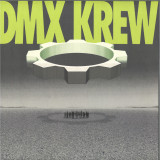
Self-styled ‘house husband, record producer’, DMX Krew, continues his effortless stretch of releases that date back to the early 90s, with a new album for Hypercolour.
His deft melodies and mechanical, electro-tinged beats have made for some classic albums in his repertoire, from his incredible run of albums for Rephlex Records, up to 2020’s ’Ghost Bubbles’ long player for Terrestrial Funk. And so ‘Loose Gears’ marks DMX Krew’s fourth album for British stalwarts, Hypercolour, and fans will not be disappointed.
Armed with an arsenal of hardware, and a head full of futuristic visions, ‘Loose Gears’ collects eleven tracks of the customary quality we have come to expect from DMX Krew.
From the funk laden ‘Solar Transit’ to bleepy chugger ‘Dejected Ambient Twerp’, the vibrant synths and spongy rhythms of ‘Torpedo Tube’ to the beatless wiggle of ‘Xpansion 2’, there’s much in store to be savoured on ‘Loose Gears’, as DMX Krew serves up another fine selection of electronic goodies.
You could think of the collection of tracks here as a library record of sorts, and each track inhabits its own universe. Tropical fits various moods and situations, and it could soundtrack any number of activities at home or on a dancefloor - whether real, imaginary, or hallucinated. Strangely enough, it sounds like it could have been constructed from obscure Italian library breaks, when instead every instrument has been played and panned, several times over, across magnetic tape.
The genesis of many of these tracks began when CV Vision moved to Berlin in 2014. His flat had a small chamber where he could fit a drum set, so he treated the walls with foam, and in true DIY style, dived headfirst into recording these tracks. It was the natural next step on an audio adventure that first began when CV Vision picked up the guitar in his teens, and a couple years later started recording with friends in his home town of Bayreuth. Fast forward ten years and here is his debut - a culmination of practising chops and learning instruments, mastering recording techniques and fine-tuning the CV Vision sound.
It’s a sound that condenses elements of acid rock, psych soul, library funk and new wave oddities into a movie soundtrack for your mind. It’s a journey from ‘60s west coast LSD-drenched excursions to ‘80s synth and post-punk mutations. Tropical is a plunge into another time, another music you can simply swim around in and explore.
Side A opens up with Tropical Tune In, which rides in on a clave and a warm wind, blowing a distinctly herbal aroma and recalling exotica dons like Les Baxter and Martin Denny. Following on with the aural equivalent of a sea breeze through your mind, Spaziergang am Meer blows away the cobwebs and conjures some nice library moments like Stringtronics or F eelings . Next, Ba_c_k(Lava) bounces out of a cold wave post-punk melting pot and crashes through the speakers like a blazed Zebedee, with some sweet eastern synths for added flavour, before the rolling bass licks of Der Böse Schamane take us into another dimension, landing somewhere between a psych rock freak out and a Black Ark dub session. Mr Maze channels the arpeggiators of synth outsiders like Mort Garson and Bruce Haack, creating a glorious interlock of robotic electronics and freakbeat vocals. The side comes to a close with the guitars of Der Strand (außer Rand und Band) letting loose like syrupy springs, and setting a languid mood like the bedroom scene in Bedazzled (1967 version). Side B kicks off with Parallel Universum, which comes through like a woozy krautrock workout, all ducking synths with big chord shifts to create an epic deranged beehive of a soundtrack. Im Land der Ameisen evokes the spirit if not the sound of White Rabbit, when logic and proportion have fallen sloppy dead, before waking up and wandering through the side alleys of Marrakech with the West Coast Pop Art Ensemble and the Electric Prunes, as Ritual (No. 4) blares out the speakers of passing tuk tuks. Ein Wasserfall plumbs the deep synth depths, like Raymond Scott in scuba gear, modular rack strapped to his back delivering oxygen as he swims between connector cables and seaweed forests through a watery underworld. Banana King sounds like a lost soundtrack to Donkey Kong or Mario Cart, if the cart radio was tuned into a synth
documentary hosted by James Pants, while Das Kloster am Berg takes the baton from Brenda Ray and her Naffi cohorts, all dubbed-out niceness and post punk swagger. The LP closes out with Tropical Drop Out, a dreamscape rather than a wake up call, coaxing you deeper into the trek across the desert of your mind.
And that’s Tropical in its essence: capsules from another time, snapshots of another sound, messages from another mind - all in the service of inducing the visions in your head.
written by Max Cole
- A1: Noriko Miyamoto - Arrows & Eyes
- A2: Mishio Ogawa - Hikari No Ito Kin No Ito
- A3: Yoshio Ojima - Days Man
- B1: Mkwaju Ensemble - Tira-Rin
- B2: Rna-Organism - Weimar 22
- B3: Naoki Asai - Yakan Hikou
- B4: Takami Hasegawa - Koneko To Watashi
- C1: Mammy - Mizu No Naka No Himitsu
- C2: Dip In The Pool - Hasu No Enishi
- C3: Wha Ha Ha - Akatere
- D1: D-Day - Sweet Sultan
- D2: Perfect Mother - Dark Disco-Da Da Da Da Run
- D3: Neo Museum - Area
- D4: Sonoko - Wedding With God (A Nijinski) (A Nijinski)
Somewhere Between: Mutant Pop, Electronic Minimalism & Shadow Sounds of Japan 1980–1988 hovers vibe–wise between two distinct poles within Light In The Attic’s acclaimed Japan Archival Series—Kankyō Ongaku: Japanese Ambient, Environmental & New Age Music 1980–1990 and Pacific Breeze: Japanese City Pop, AOR & Boogie 1976–1986. All three albums showcase recordings produced during Japan’s soaring bubble economy of the 1980s, an era in which aesthetic visions and consumerism merged. Music echoed the nation’s prosperity and with financial abundance came the luxury to dream.
Sonically, Somewhere Between mines the midpoint between Kankyō Ongaku’s sparkling atmospherics and Pacific Breeze’s metropolitan boogie. The compilation encompasses ambient pop, underground electronics, liminal minimalism and shadow sounds—all descriptors emphasizing the hazy nature of the nebula. Out–of–focus rhythms wear ethereal accoutrements, ballads are shrouded in static, and angular drums snake skyward on transcendent tones. From the Avant–minimalism of Mkwaju Ensemble and Yoshio Ojima, to the leftfield techno-pop of Mishio Ogawa and Noriko Miyamoto (featuring members of YMO), and highlights from the groundbreaking Osaka underground label Vanity Records, these are blurry constellations defying collective categorization.
These tracks also exist in a space of transition when the major label grip on the Japanese recording market began to give way to the escalation of independents. Thanks to the idyllic economic climate and innovations in domestically–manufactured music gear, creators on the edges were empowered to focus on satisfying their artistic visions in the open headspace of home studios. While labels like Warner Music and Nippon Columbia explored new sounds through traditional channels, it was possible for Vanity, Balcony and other indie labels, not to mention self–released artists like Ojima and Naoki Asai, to publish their work via affordable media such as cassettes, 7" vinyl, and flexi–discs.
Expertly curated by Yosuke Kitazawa and Mark “Frosty” McNeill (dublab), Somewhere Between is a collection of music, much of it released for the first time outside Japan, that is bound more by energetic vibration than shared history, genre or scene. They are the sounds of transition and searching—a celebration of the freedom found in floating.
Note: The track “Days Man” by Yoshio Ojima is only available on the LP and Cassette versions.
‘Giants of All Sizes’ was recorded at Hamburg’s Clouds Hill Studio, The Dairy in Brixton, 604 Studios in Vancouver and Blueprint Studios in Salford with additional recording taking place at various band member’s home studios spread across Manchester. As with their previous four studio albums, ‘Giants’ was produced and mixed by Craig Potter. Guests across the album include Jesca Hoop, The Plumedores and South London newcomer Chilli Chilton.
Given such bleak, if ultimately redeemed, subject matter, it is also, perversely, the most relaxed record which elbow have made in some time. On ‘Giants of All Sizes’, each band member extended their usual process of working on demos alone and followed their vision to its conclusion rather than, as Craig Potter puts it, ‘taking the edges off things to find compromise’. In tandem with this, they returned to playing live in the studio, encouraged to experiment with the banks of analogue equipment at Clouds Hill in Northern Germany, giving songs a looser, more live feel. The result is the most starkly dynamic record from the band in recent times, “Sonically unabashed”, as Guy would have it. Whilst album closer ‘Weightless’ has the gossamer melodies and communal harmonies for which the band have latterly been known, this album echoes earlier elbow work at times whilst also breaking new ground.
‘White Noise White Heat’ is motorik, metal machine soul driven by a vocal that is rage incarnate, ‘Doldrums’ mixes John Carpenter with The Plastic Ono Band to brilliantly disturbing effect and ‘On Deronda Road’ hitches stark bass beats and glitches to an ad-hoc choir. ‘Empires’ delivers dark resignation via an insidious melody and ‘Seven Veils’ continues the subversion by inverting the perception of elbow as a band for lovers into a band for haters, a double-barrelled fuck-you song par excellence. ‘The Delayed 3:15’ marries mariarchi guitars to jazz dynamics, Morricone via Buddy Rich, and ‘My Trouble’ is a clockwork, analogue shuffle housing a delicate melody that builds over the course of the song into a fragile monolith to the power of love.
Lead track, ‘Dexter & Sinister’, released on 10” ahead of the album, encapsulates the whole. A seven-minute musical journey that blends deep bass grooves, sudden keyboard stabs, dislocated piano and guitar runs and soul stylings then abruptly shifts gear, parts the storm clouds and takes wing, flying towards the heat of the sun. It is the soundtrack for these ‘hope free, faith free, charity free days’, a denial of the divine and a reconciliation, two songs in one song, two emotions for one emotion, human, fragile and brilliant like the album which it opens.
Terry Gross is an engrossing trio composed of guitarist Phil Manley (Trans Am), bassist Donny Newenhouse, and drummer Phil Becker. The trio are also connected as owners and engineers at Bay Area recording spot El Studio, where they began improvising together as a way to test the boundaries and gear of the studio. Their loose, organic chemistry burgeoned into a deep camaraderie and a sound both expansive and exacting. The three experienced musicians crafted their first fulllength album through the pure joy of playing together with no expectations. With the tapes rolling on their rehearsals, the band captures the exuberance of live performance and elevates those recordings through a deft use of the studio as their collective instrument. On their debut LP Soft Opening, Terry Gross channels their cosmic powers and considerable chops into a gleefully mesmerizing odyssey fit for an arena. Soft Opening took shape over the course of 2016-2019, with Terry Gross writing and refining their songs. "Space Voyage Mission" and "Worm Gear" parallel one another as sinuous jams that pulse with adamantine fervor. Each mountainous epic churns spellbinding repetition and simplicity into dizzying gallops that take hairpin turns into sinewy riffing and elysian vocal melodies. Phil Manley's guitar takes on a constellation of tones across "Space Voyage Mission" with drifting delays soaring over the Newenhouse and Becker's driving rhythm section which all succumb to frothing overdrives that spin the song into entirely new pastures. The hypnotic throb of "Worm Gear" grows all the more enchanting as Newenhouse and Becker add subtle shifts to the single-chord barrage. "Specificity (Or What Have You)" contrasts these two in its more traditionally pop-oriented structure while retaining its predecessors wide-eyed energy and delves further into the album's lightheartedyet-earnest take on sci-fi tropes from space and time travel to the singularity. As Terry Gross, Phil Manley, Donny Newenhouse, and Phil Becker are sonic scientists traversing the borderlands of rock. Soft Opening captures the simple joy of a no-holds-barred trio in stunning detail, transporting the listener into the splendor and freedom of rock.
The Master Scratch Band was first break-dance / hip-hop / electro funk band in Yugoslavia in 1984. The band members were Zoran Vracevic, Zoran Jevtic and Milutin Stoisiljevic, previously known as Data and Sizike. Jugoton, the biggest label in Yugoslavia, published Data 7'' and MSB's 'Degout' 12'' with limited edition cassette containing two bonus tracks. Impossible to find on the collectors market, Fox & His Friends team in collaboration with Jugoton / Croatia Records is releasing a full, complete version of the rare "The Breakwar" tape, with tracks "Tonight" and "Pocket" never pressed on vinyl. All tracks are sourced from original studio tapes. With the kind help of Zoran Vracevic on credit list and liner notes, this is now the ultimate Master Scratch Band album, released originally in a year 1984 when break-dance was in the peak of its popularity in Yugoslavia. While Data was synthpop, Sizike mellow synth-disco recorded in private studio, this release is pure breaks and hip-hop electro, done old-school way in one of the best studios in Yugoslavia, Enco Lesic's 'Druga maca' in Belgrade. MSB used impressive electronic gear and were helped by huge list of famous musicians and guests: Duca Markovic from hit-show 'Hit meseca' (Yugoslavian Top Of The Pops); Japanac on bass, Max Vincent of Max & Intro on synths, Dudu Vudu from Du-Du-A, Goranka Matic as photographer and many more. MSB sampling technique and choices are unique: from obscure industrial records to freestyle; from found-sounds to cut-up breaks and even real prank-calls. This is document of time that still sounds fresh and needs to find it's new, young audience of hip-hop history researchers, break-dancers, b-boys, b-girls and DJ's. When you know that it's produced in 1984 Yugoslavia, far away, but actually, so close to its USA & EU brothers and sisters, it's even more mind-boggling. Thanks to Fox & His Friends and Jugoton CR collaboration, this gem is waiting for your freezes, footwork and electric boogie moves. ----- Equipment used: Commodore 64 Computer, Roland MC-4B Microcomposer, Prophet Pro-One, RSF Cobol II Expander, Korg Mono-Poly Synthesizer, PPG Wave 2.3 Synthesizer, PPG Waveterm Computer, Boss DE-200 Digital Delay, Drumtraks Digital Drum Machine, Roland TR-808 Rhythm Composer, Electro Harmonix Vocoder, Linn Drum MKII, Juno 60, SH-101, SVC-350, VP-330 Vocoders, Polysix & MS10, Simmons drum module.
Quideau and Yellow Yawn are the pseudonyms used by Tingis for experimental and minimal proto-industrial projects, operating in Carrara (Tuscany) during the 80’s. Analog gear and tapes were largely used. Veleno Viola is proud to release for the first time on vinyl this obscure and forgotten material. Limitied to 100 copies – Yellow Vinyl
Klinika003 - The Silver Lining EP - is coming soon, and will be delivered by Frankfurt-based techno head Cloak.
Cloak is very well known for his party series Void and Rebis and managing a small cafe bar in Frankfurt's redlight district.
After his first release in 2015 on Anselm's Unequal Records, where his style was a lot more broken beat-oriented, he's now coming over with definitely faster, metallic driven and more four-on-the-floor rooted beats and dithers in between industrial and classic techno. All tracks are an ode to analog production gear and non-compromising dance floor-oriented!.
Enjoy
Conjunto Papa Upa returns with “Todo Parao” (“Total Shutdown”), another boundary pushing tropical smasher. Bringing you the ultimate (humourous) hymn to the pandemic over an exquisite blend of highly danceable Caribbean rhythms (zouk, cadence, kompás, guaracha) and classic synths. Backed by a deep sea dub on the flip, complete with resplendent cowbell(!), timbales and Wurlitzer solos. Another stepping stone that showcases yet another angle of the unique and radical production style of Alex Figueira. Drop this 45 at your next virtual party and watch everybody leave their computers in a desperate search of a dancing partner.
Conjunto Papa Upa is the Afro Caribbean centered solo project of Figueira, backed live bysome of the best musicians from Amsterdam’s Latin and free jazz scenes. Their debut LP was recently released on legendary American indie label Names You Can Trust. Figueira is also known for his percussive work on tropical psych power trio Fumaça Preta or his regular live incursions with Amsterdam’s turkish psych folk powerhouse, Altin Gun.
Having spent the whole night working on the melodic structure of the song, Figueira took a break to take advantage of the different time zones and check on his dad in Venezuela, and ask how the pandemic was unfolding there. His answer: “Todo Parao” (“Total Shutdown”). The same two words he had used multiple times before, this time pronounced in a hilarious Rum-infused way, giving Alex an unexpected flush of inspiration in the form of an instant infectious chorus. He excused himself and immediately got locked back in the studio. The result is this incredibly catchy tune, displaying the optimistic approach of a boyfriend to the chaos, uncertainty and worrying of his girlfriend about the pandemic, presenting her with his own lascivious lockdown plan for the two, declaring at a certain moment: “while everyone is lamenting, you and I are going to enjoy”.
In the musical side, rhythms from Haiti, Guadaloupe, Martinique, Puerto Rico and Cuba are unscrupulously mixed with the most diverse and strikking elements: strident cowbells that evoke the toughest salsa of 70's New York, harmonized guitars evidencing the inconfesable influence of 80’s heavy metal, a delicate Wurlitzer piano reminiscent of Black America’s greatest Soul ballads, Casio keyboards rescued from a child’s toy cabinet and a whole plethora of half-broken classic Synths, to create an equally irresistible and unclassifiable hybrid.
On the flip side, Part 2 opens with a prominent dose of the lead guitar that appeared briefly on the A side, working as a preamble to an instrumentalist frenzy that is not concerned about displaying technique. Its mere intention is to tell you the rest of the story without using words. A few bars into the song, the first gear shifts with a monumental solo given by the least probable of all “soloist” instruments: the cowbell (!). After it, a crispy Timbal crashes the party, making a statement out of its only appearance in the entire recording. Finally, the longed-for turn of the melodious Wurlitzer, who left everybody craving for more on the other side of the record, giving the modest keyboard skills of Figueira an imposing pentatonic virtue.
January 12th, 2020, a Sunday night in Toronto - Matthew Tavares and Leland Whitty (of BADBADNOTGOOD fame) are reunited at Burdock for a live improvised Jazz session. The pair are joined on stage by bassist Julian Anderson-Bowes and drummer Matt Chalmers as part of Burdock’s Piano Fest, an annual event at the city's brewery and music hall.
Two days later an email from Matthew hits Mr Bongo's inbox... "I think it turned out amazing, brought some really nice recording gear and it sounds almost like a studio record, thought I'd share. Moments definitely get to the jazzier side but there is some spiritual moments that are so far out". The Bongo office were all blown away by this free-flowing session, one which sounded like a well-rehearsed set at the end of a long tour, rather than a one-take improvised assembly. The chemistry between the musicians is magical. The tight friendship and musical connection between Tavares and Whitty are self-evident, however, Chalmers and Anderson-Bowes have a great contribution to make too. They act as the solid foundation that leaves Tavares and Whitty free to roam and explore moments of darkness and light, intensity and beauty. From the first time of hearing this intimate session, we knew this had to be shared.
The same quartet feature on Matthew Tavares & Leland Whitty's 2020 album 'Visions'. The plan to promote 'Visions' was to tour, with each night comprising a uniquely improvised set. Sadly due to world events, this couldn't happen, but for now 'January 12th' is a snapshot of the wizardry that would have been from four amazing musicians at the top of their game.