It’s quite amazing that in a world that has become increasingly digital and where ‘stuff’ has become invisible, vinyl has made such a spectacular comeback.
Yet it is very likely also one of the main reasons for its resurgence. People like to collect. The physical aspect of playing a record adds to the listening experience and creates memories.
An album can take you back to an important time or place. And buying a new record is a great way of supporting a favorite artist and their label. That’s also the reason why new generations of music lovers have embraced vinyl.
This new edition of Passion for Vinyl tells these stories. It’s about the records that inspire people. The way they shaped their lives. How they sparked them to pick up an instrument,
become a DJ, or start a label, pressing plant or YouTube channel.
Passion for Vinyl features exclusive interviews with Blue Note recording artist Gregory Porter, CEO of Linn Gilad Tiefenbrun, Bettina Richards of Thrill Jockey Records,
YouTube personality Melinda Murphy, Beggars Group US president Nabil Ayers, Ben Blackwell of Third Man Records, Classic Album Sundays’ Colleen ‘Cosmo’ Murphy,
Liz Dunster of Erika Records, Robert Trujillo of Metallica, DJ, collector and label owner Gilles Peterson, Jenn D’Eugenio of Gold Rush Vinyl and Women in Vinyl,
Bad Seed member Warren Ellis, Paulo Jr. of Sepultura, Chad Kassem of Acoustic Sounds, and many others.
This book offers close to 30 interviews with a very diverse cast of characters. They have in common a deep love of music.
Passion for Vinyl shares the unique experience of making, buying, collecting, and enjoying vinyl. Its purpose is to inspire.
Passion for Vinyl is written by the Dutch author, music journalist, audiophile, and vinyl collector Robert Haagsma.
Search:gene rush
- A1: Wipe′Out″ Intro
- A2: Hakapik Murder
- A3: Messij
- A4: Canada
- A5: Tenation
- B1: Doh-T
- B2: Trancevaal
- B3: Surgeon
- B4: Cairodrome
- C1: Body In Motion
- C2: Cardinal Dancer
- C3: Cold Comfort
- C4: Kinkong
- D1: Operatique
- D2: Plasticity
- D3: Messij Extended
- D4: Argon
- D5: Phloem
- D6: Xenon
- D7: Xylem
- E1: Wipeout Intro (Μ-Ziq Remix)
- E2: Doh-T (Wordcolour Remix)
- E3: Xylem (Brainwaltzera Remix)
- E4: Canada (James Shinra Remix)
- E7: Cairodrome (Surgeons Girl Remix)
- E8: Messij (Datassette Remix)
- E5: Messij (Kode9 Remix)
- E6: Trancevaal (Simo Cell Remix)
Back in the 1990s video games were still largely seen as nerdy: fun, sure, but basically a guilty pleasure that you’d soon grow out of. The release in 1995 of wipE'out'', a lightning-fast, razor-sharp, futuristic racing game that helped to launch the PlayStation in Europe and North America, changed all that. This was a game that looked and sounded both adult and cool, the kind of game you would put on display in your living room, rather than hide away under your bed. Key to this was the fact that wipE'out'' borrowed unashamedly from the clubbing experience and electronic music, in a way that put it at the heart of progressive mid 90s culture. It soon became a phenomenon.
wipE'out'' looked sensational, with Sheffield agency The Designers Republic - known for their work with Warp - creating the visuals, packaging and manual for the game, drawing heavily on the bright colours and excitable geometric shapes of the rave and club flyers of the early 90s.
wipE'out'' also sounded like a new rave dream. The European version of the game included music from The Chemical Brothers, Leftfield and Orbital, the kind of fashionable game syncs that were almost unheard of at the time. Equally striking was the game’s original music, which came from Welsh musician Tim Wright, aka CoLD SToRAGE, by this point already a veteran in the video games world, having worked on the music for Amiga titles such as Lemmings and Shadow of the Beast 2. His music for wipE'out'' was, if anything, even more extreme than the big-name syncs, mixing the accelerated beats of drum & bass with the pure synth rush of trance to make music that sounded as breathlessly exciting as playing the game felt.
These tracks were burned into the brains of millions of gamers; the soundtrack to a generation of late-night anti-gravity racing, as the sun gingerly rose beyond the curtains. But they haven’t, perhaps, quite got the respect they deserve, something that this release will address. In 2023, video game music is finally getting its dues; here, remastered and repackaged –and also remixed by cutting edge producers such as Kode9, μ-Ziq, Brainwaltzera, Simo Cell, Wordcolour, James Shinra, Surgeons Girl and Dattassette– are some of the most important, thrilling, innovative and most fun songs ever committed to game release.
Off World presents the final album in its trilogy of surreal and spacious leftfield electronics. "A stellar project headed by Sandro Perri, one of the most singular producers in contemporary music" (Boomkat), this third volume is another distinctive collection of tracks constructed from semi-improvised ensemble recordings made over the past decade with a varied cast of coconspirators. Drew Brown, Matthew Cooper, Susumu Mukai and Andrew Zukerman join Perri again on a variety of synths and machines, along with violinist Jesse Zubot (Tanya Tagaq, Fond Of Tigers). Perri also continues to add organ and piano to the mix, while Volume 3 notably features first-time Off World contributors Nicole Rampersaud on trumpet and Martin Arnold on guitar, both mainstays of Toronto's vibrant improv and out-music scenes. The Quietus calls Off World "genuinely explorative_the musical equivalent of a Dali-esque landscape" which through all sorts of genre-defying twists and turns, at times evokes "offkilter, late Miles Davis ambience". Off World 3 doubles down on that jazz-adjacent trope in certain respects, while holding fast to Pitchfork's dictum that Perri "cultivates his own genreless brand of futurism." Marked by longer tracks than previous collections, three of the album's five songs clock in around the 10-minute mark, where overtly improvised instrumental playing wends its way across alternately bubbling and woozy electronic beds. "Impulse Controller" is a languidly skewed rhumba where ambling melodic undercurrents and dubby electronic pointillism provide a dulcet promenade for Rampersaud's Miles-esque trumpet excursions. "Ludic Loop" see-saws along in a slow synthy two-step, punctuated by Perri's restrained piano chords and Arnold's fried electric guitar. "Empasse" is perhaps most reminiscent of earlier Off World collections, though again slowed and stretched, with oozing synth bass ostinatos counterposed by ambient layers of viola and violin filigree from Zubot. These three centerpiece longform tracks each highlight one of the album's instrumental improvisers, and taken together, make for the most scintillating sedate and ruminant album in the trilogy. Off World 3 sounds as sui generis as ever, but in wrapping up the series, Perri sprinkles the project's emblematic alien surrealism with decidedly anthropic elements and temporalities. This final volume in the trilogy could also be seen as a re-statement of Perri's politico-aesthetic mission, as aptly celebrated by Pitchfork and its glowing 8.0+ reviews of Perri's 2018/2019 solo albums In Another Life and Soft Landing (released between Off World 2 and the present volume): a uniquely purposeful, subtly detailed cannon of songs "busy, vibrant, and bursting with life, but that aren't ever in a rush to get anywhere."
The best I can tell, we thought we'd get this album done in 2016. Roughly (not exaggerating) 60-70 songs later, we've whittled and worked and reworked the songs into 'After the Gold Rush Party.' Danny and I started this album while we lived in different cities (I was in DC and Danny was in OKC), then wrote some of them in the same city (OKC), and then the rest of them in different cities (I was in OKC and Danny was in Costa Rica and then Seattle). And weirdly, some of our most generative times happened when we weren't living in the same city. We've both grown up quite a bit and have real life jobs and families. In these songs we were grappling with trying to be punk rock (which we've never really been) while putting on a suit for work (hence, the Mr. Downtown character). But at the same time, punk rock has all but disappeared as a thing that exists - where are the punks, anyway? (See: Speed Racer). The songs read a bit like a travel guide. Part of the growing up process is coming to terms with one's own escapist tendencies - or embracing them, as you'd hear in a track like "Mexico" or "Culebra". Other times, the escapist themes come out musically, not lyrically, like in "She's a Betty" or "Tijuanarevor" maybe. Other times, we play around with just the idea that people are entitled to anything at all (Ms. Universe). And while Danny mixed most of the album, we have much to thank Chad Copelin for - he mixed four of these tracks, and we learned a ton from getting to spend time working with the man who recorded and mixed BRONCHO, Sufjan, Sports, and others. The time last summer we spent honing those four tracks were kind of the catapult for finishing up the rest of the tracks. So, to conclude, After the Gold Rush Party kind of represents us at this phase of the creative process. Big dreams, absurdly ambitious timelines, put into contradiction with the realities of family life, the challenges of the everyday, the mundanity of the workweek. "After the Gold Rush Party" is a nonsensical phrase, but it's exactly what we wanted to name the album. A frenzy of ambition, and then, the lull that lingers afterward.
2023 Repress
2001, the first year of the 21st century, but especially for many born in the 60's, 70's and 80's, the year that was surrounded with an aura of "the Future" and which became symbol of the new and unknown things that life has in store, the starting year of a new transgression period in both scientific, cultural and spiritual evolution. In that year Transllusion recorded music in the Dimensional Waves Productions studio of which till date two known productions saw a release: "The opening of the Cerebral Gate" and shortly after that the mysterious "L.I.F.E." album on Rephlex. More than 15 years later, an unknown wave resurfaced, washing up an incomparable emotional state of electronic depth. Music from the Future rooted in an underwater Afro-futurist realm and the grandiose cosmological truths. This time rushing over us in a much more personal, reflective and more introspective way, yet leaving behind sonic confusion. We now know who was responsible for all these futuristic recordings perfectly reflecting what the year 2001 stood for, James Stinson can be seen as one of the last few techno musicians from his generation that lived up to the high expectations of moving forward, finding the unknown and embracing the future without reliving the past. This recently discovered DAT-tape, using his Transllusion alias, is the 3rd outing of the project and, surrounded with an even brighter aureole than the previous recordings, confirms the status of its producers mastermind. No further details are known, except for the project name written on the tape, but these intimate moments in the studio tell us what the future sounds like according to James Stinson!
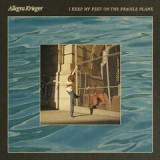
It contains all the signatures of her best lyricism: delicate and precise phrasings, moments that flicker between beauty and banality, meaning that forms through the accretion of observations, memories, and unexpected adages. This is an album that is at once post-theistic and devoted to a relationship with the divine, each song blinking in and out of "the fragile plane," a place Krieger describes as "a middle ground in the universe," both abstract and peaceful, where time, bodies, and names don't exist.
Krieger initially collaborated with Luke Temple and Jeremy Harris to record her vocals and guitar to tape at Panoramic Studios in West Marin, CA. As the album continued to form, Krieger envisioned instruments - like the French and English horn (Nancy Ranger and Priscilla Reinhart), electric guitar (Jacob Drab), and pedal steel (Kevin Copeland) - as characters which would walk in and out of the soundscape. What emerged from conversations with composer Sammy Weissberg, are brass parts that have a dark, almost surreal logic: horns arise to emphasize a word or phrase, fall out completely, only to rush back with dissonant orchestrations that gesture simultaneously toward deterioration and generation.
While Krieger takes inspiration from Elliot Smith's honesty, Judee Sill's cosmic reaching, and Joni Mitchell's sharp noticing, the dream-like association, harmonic dissonance, and angular melodic ascensions in each song are singularly and delightfully Krieger's.
"I Keep My Feet on the Fragile Plane" is a daring collection of songs by an artist who scries with both the cold glass eye of truth and the beating heart of empathy; who portrays life in all its twisted complexities.
Das (kurze) Warten hat ein Ende. Nach nur etwas mehr als einem Jahr kehrt Umse mit einem neuen Release im Gepäck zurück. Am Ende muss eine Platte "bloß gut sein, keinen Schwanz hier interessiert konkret wie lange man an ihr saß, es zählt wie lange sie rotiert", äußert er sich dahingehend. Es ist das dritte Album auf seinem Label, Jakarta Records, "Hawaiianischer Schnee" heißt es. Geschrieben und konzeptioniert wurde die Platte in einem kleinen Landhaus in der niederländischen Provinz Gelderland. Für die gesamte Produktion zeichnet sich wie immer Deckah höchst selbst verantwortlich, der im RZwoDrehZwo Studio der Platte den letzten Schliff verlieh. Die Beiden sind "Chef in Sachen Sound, ein Traumduo, ein Ein-Raum-Studio, kein großes Equipment und das ist auch gut so". Seit 1997 ist Umse aka. Christoph Umbeck schon dabei und ist sich stets treu geblieben, ohne den bitteren Unterton, der viele MCs seiner Generation in 2015 auszeichnet. Nach wie vor "keine Zeit für vier Gänge, nur ne Bockwurst auf die Hand", nach wie vor dutzende Shows jedes Jahr zwischen Konstanz und Kiel, nach wie vor "Sternstunden zur Rush Hour". Anerkennung findet der Ratinger mittlerweile auch bei den Helden des Ruhrpott-Sounds - Aphroe (RAG) und Dike beehren ihn mit einem Feature auf "Hawaiianischer Schnee". Trotzdem ist das neue Album kein "hawaiianischer Schnee von gestern". Umse gelingt es wie auf seinen Vorgängeralben den schmalen Grad zwischen Trademarksound und ausprobieren zu meistern. Von vielschichtigen Betrachtungen über "Menschen", zu klassischen Rap-Tracks wie "Hawaiianischer Schnee" bis hin zu Sozialisationsbetrachtungen auf "Wer bist du". In den letzten Jahren findet sein Treiben nun vor immer größerem Publikum statt, harte Arbeit zahlt sich eben aus.
Tom Trago returns to Rush Hour after 10 years with a wonderfully accomplished mini-album, tip!
During the years he spent living in Amsterdam, when his DJ career seemed to become an unstoppable juggernaut, Tom Trago was a regular visitor to Deco Sauna, a local institution that helped him “decompress” and de-toxify his body. Eventually, a more extended period of “decompression” was needed, with Trago moving to the coast to reassess his priorities and spend more time with his young family.
‘Deco’, his sixth album and first for Rush Hour in a decade, was recorded following an extended absence from club dancefloors, as Trago cut back on DJ commitments to prioritise family life. When he returned to the studio, often with his daughter by his side, Trago initially struggled to get back into the groove. The desire to make dancefloor-focused music had – temporarily, at least – deserted him; instead, he found himself drawn towards a desire to create “electronic lullabies” and music that reflected his more pastoral environment (his home backs on to a patch of woodland in which he would walk every day).
Returning to his most familiar synthesisers – and specifically the first synthesiser he bought, on credit, as a young DJ and wannabe producer – Trago set about navigating different musical routes without the straight-jacket of club-focused dancefloors. Occasionally, old friends from Amsterdam would join him in the studio – Tracey and Maxi Mill, both of whom are part of his Voyage Direct label roster, contributed to tracks on the album – but for the most part the production process was a solo endeavour: musical therapy for an artist determined to do things differently after years spent making club hits and sweat-soaked peak-time workouts.
The results are rarely less than spellbinding. Trago sets his stall out with opener ‘Dark Oak’, a gorgeous, colourful, sun-bright scene-setter co-produced by Tracey that layers tumbling lead lines, chiming melodic motifs and kaleidoscopic chords atop the gentlest of bubbly beat patterns. Maxi Mill lends a hand on ‘Central Park’, a deep and hypnotic excursion marked out by rhythmic bleeps, minimalistic beats and layered melodies, and the summer sun-down rush of ‘Never Peace a Puzzle’, where kaleidoscopic synth sounds, meandering solos and looped electronic stabs rush towards a dancefloor of the mind.
Trago’s desire to create “electronic lullabies” for his young daughter comes to the fore on ‘To Be Left Unlocked’, a hypnotising fusion of spacey electronic motifs, Steve Reich style (synth) marimba melodies and slowly building musical intensity, while the echoing Fender Rhodes riffs, squelchy synth-bass, glistening guitar notes and sparse, snappy post hip-hop beats of ‘When The Sky Is Watching Us’ doff a cap to the producer’s roots as a bedroom beat-maker.
Given the project’s genesis, it’s perhaps fitting that Trago chose to conclude proceedings with ‘It Might Be Forever’ and the digital only ‘Blue Dope’, the album’s most rejuvenating, immersive, and vibrant moments. Both feature sustained chords painted with vivid aural brush strokes and come blessed with the merest hint of a rhythmic pulse – a thread that subtly runs throughout Trago’s most mature and musically rich album to date.
Matt Anniss
- A1: Erstes Kapitel (Verschliffen)
- A2: Zweites Kapitel (Ruckartig)
- A3: Drittes Kapitel (Ungesagt, Dann Vergessen)
- A4: Viertes Kapitel (Bewusstseinsfrei)
- B1: Fünftes Kapitel (Kreuzweis)
- B2: Sechstes Kapitel (Herausgewunden)
- B3: Siebentes Kapitel (Verflochten)
- B4: Letztes Kapitel (Halb Vermutet, Halb Gesehen)
11th album by the one-of-a-kind collective: psychedelia and free form jazz (not jazz) trigger a sophisticated excursion into weird textures with drastic turns. Dislocated dense music full of secret connections!
Kammerflimmer Kollektief – "Schemen"
Before reason prevails, invoked by those who want everything to remain as it is, Kammerflimmer Kollektief disrupts the established supply chains of sound. It seeks more interesting ways to assemble them. Trusting in this, because of the fact that every sound that still comes out of a guitar, a bass, a harmonium, drums and electronic devices has already been taken into the common mangle of meaning anyway. Enough of all that. Here, nothing is explained. Here we speak in schemes. Polished and jerky.
The images that Kammerflimmer Kollektief conjures up therefore happen not in the focus of consciousness, but rather in its outer realms. In those to which one does not give one's full attention at the moment, but which are nevertheless perceived. For example, when a leaf falls from the ground back up to the tree in the corner of your eye, and for an instant you think this is possible, before you realize it was a small bird flying into the tree; it is in just such irritating moments between perception and realization that the art of the Kollektief also unfolds. On "Schemen", familiar fragments float gently around their core – a Fender Rhodes tone, a bass figure, a guitar motif, a masterful drum shuffle, a moment of icy stasis borrowed from the harmonium playing of Christa 'Nico' Päffgen. Triggering brief associations, they slowly rush off in other directions through free jazz-informed editing work, whereupon such zones can also arise in which perception has a few tricks ready and earlier experience suddenly breaks into the now in a completely different way. Half suspected, half seen.
Half-music like Can from Cologne – also masters of improvised editing – sometimes produced a few decades ago in their in-between moments. The first minutes of "Future Days" for example, which fade in gently, sketch a barely graspable figure emerging from all directions of the room. Kammerflimmer Kollektief also engages in similarly open moments of development. Loosely, it eludes the first formative impressions, keeping itself ready for moments that do not follow any logic of appointment. This looseness in handling makes Kammerflimmer Kollektief so fluidly audible, even when dissonant peaks and free playing arise. What Karlheinz Stockhausen is to Can's understanding of composition, the recordings of The Cocoon are to Kammerflimmer Kollektief. The Cocoon, a meeting of garage psychedelics from the Hannover area with free jazzers from the Galaxie Dream Band, whose album "While The Recording Engineer Sleeps", recorded in 1985 in unguarded moments, operates in a very similar way with decentralized perceptual ambivalences and only appeared more or less secretly four years later on Wilhelm Reich Schallspeicher. Other traces of "Schemen" lead to the debut album of Quicksilver Messenger Service. The guitars of Gary Duncan and John Cipollina, which refer to themselves in an unforced manner, are instructions to let go. They don't want to be traced in every note as a solo, but they give their music a sense that the essential takes place off center, in the mutual and intuitive gift of loving attentions. Consciousness-free.
Loving turns like the little guitar phrase that, like a kind of leitmotif, is repeatedly ghosting more or less unchanged through all of the Kammerflimmer Kollektief albums. A Coricidin induced, very catchy slide idea filtered out of ancient Æther, which – who knows – maybe even centuries ago found its way from somewhere to America – the old, the eerie – and from there wafted on through the ages to southern Germany, to a smoky studio in the Upper Rhine lowlands. A memory of which even the memory no longer knows what it once reminded. Unsaid, then forgotten.
In Kammerflimmer Kollektief you will also find a friend of slowly building, unhurried music, which probably would have been appreciated by the old Franz Mesmer, who 200 years ago, after tranquilizing treatments, sometimes used to play for his patients ambient melodies on the enormous glass harmonica. However, in order not to surrender completely to the flow of one's own life energy, as Mesmer had in mind with his therapies, Kammerflimmer Kollektief occasionally adds hectic tensions, gently embraced by the droning of a sine wave generator, as if a trance could briefly refesh. This old analog sine wave generator is new in the Kammerflimmer assortment of sounds. So, the art of the Kollektief likes to dock occasionally in modern times, yet with the past in mind. Mental states begin to flicker between imagination and certainty, between culture-bound art expression and coincidences: A cawing and scraping can always just be a cawing and scraping with Kammerflimmer Kollektief, the way Andy Warhol's mushroom eater just eats a mushroom.
Heike Aumüller's cover works, which illustrate all the Kammerflimmer Kollektief albums, additionally act as amplifiers of unexplained refractions. Her style consists of eye-corner art that remains so, even when looked at directly. Her shots remain disquieting because they do not jolt themselves into a reassuring order, even in retrospect. Rather than evading the fear that arises when looking at them by trying to impose some irrational rhyme or reason, that fear must simply be endured. This strategy of endurance is equally applicable to the music. The trick is to let parts be parts without compulsively seeking delusional patterns that lull us into a false sense of security and in doing so, possibly delude ourselves. In this context, freedom means not having to anxiously attach a fantasized superior meaning to everything. "Schemen" has an conspiracy disintegrating effect.
b A2 Zweites Kapitel (ruckartig) [feat. Heike Aumüller]
The sound of the classic period of Psychic TV - featuring Peter Christopherson and Geff Rushton (John Balance) of COIL, this full show is interspersed with recordings of the Pagan marriage between Genesis and Paula P-Orridge conducted by Sveinbjörn Beinteinsson Allsherjargodi. Psychic TV at their most esoteric, their most ritual, and often most extreme, a perfect accompaniment to the legendary 'Dreams Less Sweet' album of the same year. "Thee First Will To And Testament Ov Psychic TV. All our works remain interconnected, interfaced, and intentional. Thee Process is thee Product". These recordings of a live disconcert by Psychic TV in Reykjavik, Iceland that took place November 1983 organised by HÖH and GRAMM Records, to whom, eternal and infernal thanks all ways.
The sound of the classic period of Psychic TV - featuring Peter Christopherson and Geff Rushton (John Balance) of COIL, this full show is interspersed with recordings of the Pagan marriage between Genesis and Paula P-Orridge conducted by Sveinbjörn Beinteinsson Allsherjargodi. Psychic TV at their most esoteric, their most ritual, and often most extreme, a perfect accompaniment to the legendary 'Dreams Less Sweet' album of the same year "Thee First Will To And Testament Ov Psychick TV. All our works remain interconnected, interfaced, and intentional. Thee Process is thee Product". These recordings ov a live disconcert by Psychic TV in Reykjavik, Iceland that took place November 1983 organised by HÖH and GRAMM Records, to whom, eternal and infernal thanks all ways. Out of print for 23 years, this is the ultimate edition for Psychick Youth - meticulously remastered, with the track order finally arranged into what was the original show. Available as ltd white vinyl 2LP w/ inserts, classic black 2LP w/ inserts and CD in glossy digipak with 12-page booklet.
Brigid O'Neill's new album The Truth & Other Stories, recorded at Skinny Elephant Studios in Nashville with Neilson Hubbard in the producer's chair, cannot help but be influenced by the times which informed it, 'very few people escaped being affected by the pandemic, writers included.
Somehow the experiences of it seeped through onto our work and I feel The Truth and Other Stories is no exception in that regard.'
That said, this is not specifically an album about Covid or the pandemic, 'I was fascinated by the concept of 'truth' and intrigued by the concept of everyone having a different version of their truth....a personal viewpoint, their own narrative, their own story. The title plays a bit with shades of meaning - a 'counter positioning' if you like. The 'other stories' may challenge the truth, but 'the truth'
retains that sense of the absolute. In the songs I hope to present the realities of different characters through short stories. As I moved through the pandemic however, different stories came to light and sometimes the focus would shift.
Ultimately though, I have been living with these stories and these characters for some time now.'
Neilson Hubbard as producer was an obvious choice for O'Neill. A growing relationship with Nashville had seen her writing, playing and developing relationships with the many truly great musicians available across Music City.
"Being in Nashville with a producer like Neilson who has such an intuitive feel for that music, and with access to musicians who simply live and breathe it, seemed like a good idea. I'd met Neilson a few times through our mutual friend and musician Ben Glover, and it was quickly clear we would get along and had a similar attitude to the music production process. When choosing a music
producer, listening to their catalogue of works is crucial, but so too I think is that 'gut feeling' and knowledge that you can connect. When I sent Neilson my music, I knew he 'got it' and I knew I was in safe hands." Recent years have seen Brigid O'Neill gaining a deserved reputation as one of Ireland's finest songwriters. Reviews of her critically acclaimed latest releases
have reaffirmed that the gifted artist is one of the most versatile, unique and fearless storytellers on the island. Her genre-spanning music appeals to multiple generations, effortlessly weaving elements of folk, country and jazz into relatable tales of happiness, heartbreak and the human condition.
Repress
Palms Trax signals the arrival of his new label CWPT with ‘Petu’, a new single featuring South African vocalist, Nonku Phiri. Originally debuting in dub form during the Berlin-based DJ and producer’s set at The Music Locker as part of Grand Theft Auto Online, ‘Petu’ re-emerges here as a soulful collaboration, neatly complimented by a wide-eyed take from Masalo.
Initially written as a slow-heating instrumental to connect the various musical dots across a DJ set, Palms Trax nonetheless had a vocalist in mind throughout, a fresh voice to lend ‘Petu’ universality and energy. Introduced through mutual friend Esa, Johannesburg’s Nonku Phiri draws on her signature style influenced by vintage Afropop styles and folk traditions, delivering a smooth and vulnerable tale of desire. Triumphant brass recorded by instrumental collective Jungle By Night adds to the depth of instrumentation and feeling throughout, each element driven by Palms Trax’s ebullient percussion and an altogether celebratory energy felt across both the original and dub cuts.
Closely associated with Dutch dance music staple Rush Hour Records, Masalo subtly raises the tempo on his high-energy rework of Petu, spinning off the interconnected elements of the original into a memorable and gloriously Italo-tinged house trip.
Established in 2021, CWPT will play home to Palms Trax original productions alongside collaborations, mixtapes, new-generation artists and vital reissues. An online blog will feature interviews, reportage and charts exploring the stories past and present at the fringe of Palms Trax’s wide-reaching record collection.
- A1: Etapp Kyle - None
- A2: Dasha Rush - Raw 21
- A3: Shdw & Obscure Shape - Deep Rising
- B1: Onyvaa & Mattia Trani - Body Smile
- B2: Marcel Fengler & The Advent - One Shot
- B3: Vril - Hybris
- C1: Steya - Prototype X
- C2: Scalameriya - Rzarzarza
- C3: Gerald Vdh - The Movement
- D1: Cratan - Lazka
- D2: Chontane - Dira
- D3: Rodiaz - Those Ancient Sages
As 2022 concludes, Marcel Fengler opens a new career chapter with the announcement of '10 Years IMF', an inspiring compilation that marks a decade of his influential label Index Marcel Fengler. A "heart project" two years in the making, the work showcases 12 cuts from artists across the generations exclusive to the compilation, and in-line with the imprint's ethos, unites established and emerging artists.
At the same time, true to Fengler's own vision, it presents productions that span the full breadth of the techno genre - whether it be funky, elegant, industrial, atmospheric or broken beat, right through to the harder techno variety, '10 Years IMF' stands as Fengler's personal manifesto of techno and the artistic possibilities of the genre.
Each record includes a 10 Years special collectors item.
Having toured the world and delivered one of the pandemic’s most legendary live streams – including bodybuilders and furniture smashing at the old American embassy in Oslo, Aiming for Enrike started working on new music in 2020. Now ready with their fifth album Empty Airports, the tunes flourish further through atmospheric expressions, into floating, minimalistic, electronic, and ambient soundscapes. Empty Airports was composed and recorded in reflection of the quiet Covid19 life during the patience testing lockdown months of 2020 and 2021. Not only is this the duo's longest album ever, but it's also their first double album. The songs are inspired by and belong somewhere between Thom Yorke, Ashra, Nils Frahm, King Crimson in the 80s, Jon Hopkins and Steve Reich. The cover art for Empty Airports is the finishing touch that elevates the album to a complete piece of art. Thor Merlin's unique artwork is a generatively designed collage consisting of clippings from 19 digital paintings and 10 images created with shader programming in Sakuhin: an open-source program that Merlin also uses for live coding of visuals for Aiming for Enrike. The album cover's individual images will be available NFTs. Guitarist Simen Følstad Nilsen says: "Minimalism, which has always been an important part of our expression, is now cultivated to a much greater extent. When the rush to fulfill musical expectations is abounded, it gives the music more space to become more hypnotic and mesmerizing than before." Empty Airports is another fantastic release from the forward-leaning duo, which justifies that Aiming for Enrike lives entirely in their own universe.
On his debut 12" EP, Chicago producer and bike messenger DJ HANK captures the feeling of racing against traffic and, as he puts it, "trying to make it out alive with the chaos of the city going around you."
DJ Hank grew up in North Carolina, Eastern USA. As a teenager, he began making rap beats on pirated music software while also DJing and playing keyboards in experimental punk band Whatever Brains. In 2011, at age 18, Hank moved to Chicago to pursue a career as a bike messenger. In a city dominated by 21+ clubs and venues, Hank gravitated to the famous footwork hub Battlegroundz due to it's all-ages inclusivity and raw energy. DJ Rashad, DJ Spinn and other luminary figures of the footwork community spun weekly, while dancers spanning multiple generations and crews battled it out on the dance floor every Sunday.
Through the underground network of Chicago footwork events, Hank became a close and frequent collaborator with international footwork collective Teklife. He has released music on Teklife's record label but isn't a member of the group itself. In similar fashion, he's loosely affiliated with dance group Take Ova Gang (TOG) founded by DJ Manny. Hank maintains a fluid relationship with the footwork culture from which his sound draws. Beyond collaborating with his friends, Hank has collaborated with Chilean rapper Catana, Berlin-based DJ Paypal, and Floridian DJ Orange Julius.
On "Traffic Control," however, Hank explores a wide range of sounds, from melodic to experimental, influenced by everything from UK Garage and Grime to Ghetto House and Snap music (or Southern Hip hop production in general). Artists like Kode9, MachineDrum, and Sherelle have been supporters of Hank's music, playing his tracks throughout multiple recorded sets. In a live setting, Hank has shared the stage with such influential acts as Loefah, DJ Deeon, Sporting Life, DJ Spinn, Traxman, and pioneering footwork artist Jana Rush, who has been both a friend and mentor to Hank during his formative years in Chicago.
- A1: Supplier
- A2: Scarface
- A3: Deeper
- A4: High (Feat Danny Brown)
- A5: Harold's
- A6: Bomb (Feat Raekwon)
- A7: Shitsville
- A8: Thuggin
- A9: Real
- A10: Uno
- B1: Robes (Feat Domo Genesis & Earl Sweatshirt)
- B2: Broken (Feat Scarface)
- B3: Lakers (Feat Ab-Soul & Polyester The Saint)
- B4: Knicks
- B5: Shame (Feat Bj The Chicago Kid)
- B6: Watts (Feat Big Time Watts)
- B7: Pinata (Feat Domo Genesis, G-Wiz, Casey Veggies, Sulaiman, Meechy Darko & Mac Miller)
Single-LP edit of Piñata lacquered at half speed master by Metropolis Mastering in London for the highest fidelity.
After the original release Freddie Gibbs & Madlib's Piñata in 2014, cover artist Jeff Jank made a new sleeve for the album in the style of a 1964 Blue Note album.
Featuring Danny Brown, Mac Miller, Earl Sweatshirt, Raekwon, Scarface, Domo Genesis, Ab-Soul, Polyester the Saint, BJ The Chicago Kid, Big Time Watts, G-Wiz, Casey Veggies, Sulaiman, Meechy Darko & Freddie Kane.
Freddie Gibbs is the product of violent, drug-laden streets but unlike most rappers with similar resumes, he brings the block to the booth without inhibition or an exaggerated rap persona. Piñata, a 17 track collaboration with producer Madlib, is the best distillation yet of his transparent approach to making music, combining an at times stark honesty with electrifying talent as a lyricist and performer.
Piñata is a gangster Blaxploitation film on wax, says Gibbs, who came up on the streets of Gary, Indiana, the disregarded city previously best known for producing Michael Jackson. Here he is joined by Mac Miller, Earl Sweatshirt, Raekwon, Scarface, Domo Genesis, Ab-Soul and a host of others in setting his soliloquies of the streets alongside film snippets and dusted funk, soul and prog musical tapestries. While this is the latest in a series of single-artist collaborations for Madlib, after Jaylib (J Dilla), Madvillainy (MF Doom) and the street-centric O.J. Simpson with Detroits Guilty Simpson, the pairing is unique as it is the first time for Gibbs working with just one producer.
On Piñata, where Gibbs can shift from textbook lessons in robbing and drugging on trackslike Scarface and Knicks, to perhaps the albums most personal song, Broken, a collaboration with Scarface, who, along with Tupac, DMX and 50 Cent, make up the rappers own Mount Rushmore of MCs (Youre getting a hurricane of all those motherfuckers hitting you at once when you listen to Freddie Gibbs, he says). Deeper, a Gibbs favorite and the third single from the album after Thuggin (2012) and Shame, (2013) is an ode to hip-hop in the mold of Commons I Used to Love H.E.R.; High, featuring Danny Brown, is self-explanatory and just what you would expect from Gibbs, Madlib and one of Detroits finest; while on Real, Gibbs addresses an old score just as Michael Corleone settled all family business on baptism day.
As a producer, Madlib, quite simply, is music, and ten years into his career-a time when other artists become comfortable-Gibbs remains restless, focused, with an eye on the competition and their position relative to his ascent. This is because mentally, hes still on the corner hustling, which would be the downfall of the average rapper. With Piñata, Gibbs confirms that he is anything but average.
Ltd Edition!
Schwarze Nachpressung des Nada Surfs Album, original veröffentlicht 2016.
NADA SURF melden sich zurück! Die Band mit der großen generationsübergreifenden Fanbase bringt uns mit ihrem siebten Album - You Know Who You Are das Care-Paket, das ganz unerwartet vor der Tür steht und den Frühling rettet. Das Geheimnis von NADA SURF war immer, dass sie einfach Songs schreiben konnten und das hat sich nicht geändert. Das Album ist voll mit Ohrwürmern, die man, wir wissen es jetzt schon, wieder mal monatelang nicht aus dem Kopf bekommt (- Cold to See Clear , - Believe You're Mine , - Rushing ). Verdammte Ohrwürmer, die auch wieder Bret Easton Ellis erweichen werden (er ist bekennender Nada Surf Fan), epische Balladen, College Rock Kracher, alles dabei. Never change a winning Thema! Never change a winning Team: Unser aller BFF* Matthew Caws ist dabei und Ira und Daniel und jetzt neu Doug Gillard (Guided By Voices und Tour Gitarrist) ist jetzt festes Mitglied!
Second Editions presents a new collaborative work by Marja Ahti and Judith Hamann.
After their distinguished duet ‘Portals’ for Cafe Oto's Takuroku label, ‘A coincidence is perfect, intimate attunement’ is a wonderful sophomore collaborative work pieced together over two years of changing seasons, ideas, moods, and feelings. The release is formed from a shifting field of sound correspondence that pivots on moments of coincidence, of a tuning in.
What are we opening ourselves to when we tune in to sound? How can one be truly open to a sound? How can the activity of recording move beyond notions of capture and release into more generative frames? Rather than a tool purposed for preservation or ‘conservation’ of memory, of time and place, can recording sound instead form new vibrant or vibratory spaces of attunement?
‘A coincidence..’ is an LP length composition of multiple interlocking parts, created through exchange, alignment, unpredictability: the title borrowed from poet Fanny Howe falling right into place, a flock of birds in flight, pitches matched and moved across different geographies and temporal frames. Marja & Judith have created an intuitive, lyrical longform piece that considers the idea of attunement itself as, in some sense, the smallest form of measure or denominator connecting their respective practices: across field recording, just intonation, electronic sonorities and instrumental bodies. ‘A coincidence..’ reflects a sense of a willingness to tune in to impulses given, or gifted to the other, a position that embraces an intimate synchronicity.
Recordings & correspondances between 2020-2022. Mixed by Marja Ahti & Judith Hamann. Mastered and cut by Anne Taegert at Dubplates & Mastering in Berlin, 2022. Title quotation from Night Philosophy by Fanny Howe, Divided Publishing, 2020. Photogrpahy by Joshua Bonnetta. Thanks to Nino Bulling, Niko-Matti Ahti and leo. The work was supported by Kone Foundation, Akademie Schloss Solitude and NEUSTART KULTUR.
Marja Ahti (b. 1981) is a Swedish-Finnish composer and sound artist based in Turku, Finland. Ahti works with field recordings and other acoustic sound material combined with synthesizers and electronic feedback in order to find the space where these sounds start to communicate. She makes music that rides on waves of slowly warping harmonies and mutating textures – rough edged, yet precise compositions, rich in detail. Ahti has presented her music in many different contexts around Europe, in Japan and the United States. She is currently active in the duo Ahti & Ahti with her partner Niko-Matti Ahti and in the artist/organizer collective Himera.
Judith Hamann is a cellist and performer/composer from Narrm/Melbourne in so-called Australia, currently based in Berlin. Their work encompasses performance, improvisation, electro-acoustic composition, field recording, electronics, site specific generative work, and micro-tonal systems in a deeply considered process based approach to creative practice. Currently Judith’s work is focused on an examination of expressions and manifestations of 'shaking’ in solo performance practice, a collection of works for cello and humming, as well as ongoing research surrounding ‘collapse’ as a generative imaginary surface, and the ‘de-mastering’ of bodies (human and non-human) in European settler-colonial heritage instrumental practice and pedagogy. Judith likes working with and thinking-with other artists which sometimes includes people like Joshua Bonnetta, Dennis Cooper, Charles Curtis, Golden Fur (with James Rushford and Sam Dunscombe), Lori Goldston, the Harmonic Space Orchestra, Sarah Hennies, Yvette Janine Jackson, and Anike Joyce Sadiq.
Whilst most of the North swung to the right in the 2019 General UK Election, the North West held onto their hope and long standing heritage of voting for what imagines itself to still be the ‘Left’. It’s 2022 and there are no political choices left, but to rise up and revolt to Stop the Rot. T.S. Warspite channel their message through a unique musical recipe that answers the question no one asked: What if Bad Religion grew up in Manchester in the 2000s? Made up of some long standing and productive members of the local scene, this sounds like friendship and experience, and some refreshing as fuck hardcore. Singer Marco Abbatiello weaves expertly through scenes of pulp reality where everything is fleeting and only some things stick. What’s left is a farcical montage of things that have rushed past you with no real sense of direction. Personally and politically, it’s all the same wretched soup of societal collapse and the rise of the technocracies. Do yourself a favour, and play this through your Tesla microchip whilst throwing a molotov at No.10. Members of Violent Reaction, Payday, Firearm, Arms Race, Rated X. T.S. Warspite is Paul Morgan, Tom Howard, Marco Abbatiello, Tom Pimlott and Miles Livingstone-Todd. Recorded and Mixed by James ‘Atko’ Atkinson at The Stationhouse. Mastered by Will Killingsworth at Dead Air Studios. Art by Chio. Photos by Meline Gharibyan