
4
non in magazzino
Ordina ora e ordineremo l'articolo per te presso il nostro fornitore.
10,88 €
Ordina ora e ordineremo l'articolo per te presso il nostro fornitore.

Ordina ora e ordineremo l'articolo per te presso il nostro fornitore.

‘veneration for the sacred action’ is the first compilation release by london-based independent record label ‘lifeis beautiful records’ released in celebration of the three-year anniversary of the label (& the gesamtkunstwerk that it exists within), the compilation brings together members of the life is beautiful septet collective, as well as various collaborators and special guests from previous life is beautiful events of the past three years. it highlights a range of the various solo, group projects, and alias’ of the septet, as well as various artists from the wider orbit of the life is beautiful constellations. the project was executively produced and curated as an album by label founder aloisius, as a selected works of the life is beautiful constellations. it stands as a comprehensive yet intentionally incomplete representation of the past three years of life is beautiful
Disponibile in Stock e pronto per la spedizione
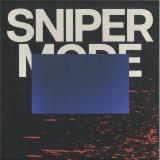
Turbo Recordings is proud to present the revival of German techno giant Gregor Tresher’s Sniper Mode alias with the Riot Gear LP. We have been promised that this release will usher in a Golden Age of Electro in which we will serve at the right hand of the Lord for a starting annual salary of €43,000. Not bad.
Riot Gear showcases Tresher’s established production genius over 11 cuts of S-tier electro marked by menace, depth, and sharp melodic hooks. Lead single “Blinded by the Dark” is a collaboration with Dave Clarke, the most respected man in electro and perhaps just in general, and features the most punishing drop in recent memory. The album also includes standout vocal contributions from Detroit techno pioneer Jay Denham (“Sanctuary of Vices”), Miami Bass kingpin Exzakt (“Echoes From a Wasted Land”), dance-world enigma Kira (“Phantom Pain”), and Turbo favorite Perel (“Modesty Is a Virtue”). We would argue that this album represents a landmark achievement in the genre, which you have to admit would reflect pretty well on us as a label.
It is not every day that Turbo Recordings embraces the responsibility of husbanding a full-album release, and you should know that it comes as a cost. The additional listening time, track title typing, and intensive download/upload workload have pushed our dedicated staff of 90 to its breaking point. We have a lot going on over here.
Ordina ora e ordineremo l'articolo per te presso il nostro fornitore.

“My introduction to “noise” came from a record shop in Lake Worth, Florida ran by a musician named Kenny 5. Kenny had left Detroit sometime in the mid nineties and had begun selling used records and CD’s from the downtown strip of this tiny southern Florida city in a humble shop sandwiched between a deli and a dog grooming business. Kenny previously was on labels like Amphetamine Reptile and timeSTEREO, and the records and videotapes that would be on repeat at his shop were a vast sonic expanse that spoke to the eclecticism of his experience as a touring musician participating and adjacent to American noise culture through the early to late 90’s. In 1998, I was eleven years old and I would order a pizza with him and watch VHS tapes of Japanese noise and deathmatch bootlegs, as well as any other sonic and subcultural rarities that far outstripped my age to comprehend (notably the RRR “Journey Into Pain” compilation and various Vanilla Tapes videos). This widecast net of information formed an introduction to a reality that did not fall deaf on me, but it took many years later for me to reorient the specific freedoms of what this dense and cathartic sound culture had imparted on my life and would continue onward to.
What does this have to do with this selection of choice recordings from the Secret Boyfriend catalog for the enmossed label? For the uninitiated, Secret Boyfriend is the long running moniker of Ryan Martin, North Carolina musician and label proprietor of the Hot Releases imprint. For over a decade from this writing I have watched Secret Boyfriend, and Hot Releases by extension as a curatorial and archival effort, embodying the multiplanal capacity that noise loosely functions from as an umbrella ideology and formalist avenue for sound creation. For anecdotal purposes, from (before) 2006 until roughly 2023 the East Coast of the United States showcased a vibrant network of eclectic regional festivals that saw wide swaths of artists addressing and negotiating the notion of what qualified “noise” from a conceptual and ideological perspective. Some festivals honed in on particularities in aesthetics and tropes, and others had a kind of “catch-all” implementation that allowed for a salvation of the sort of alienated and singular artistry that was amassing throughout these territories. While clear guidelines had been set from regional predecessors as to how noise with a capital “N” should maneuver, Secret Boyfriend is emblematic in the spirit of fluidity that was either implicitly coupled to the notion of the genre, or grew to evolve towards or devolve from.
Within Secret Boyfriend performances, I have seen and admired a mirroring from a ravenous appreciator of this culture at large back towards itself. Typical of a Secret Boyfriend set is an interchangeable narrative arc wherein blistering feedback laden scrap metal improvisations are forayed into naive ambient or “pop” songs, or skipping CDs, or mixer feedback play, or delayed Roland 707 drum workouts all at once and in a unique hegemony. Secret Boyfriend's stylistic mastery of each endeavor is at once an homage to a history of loving listening and enacting, while a brave step into the realm of actualizing the unique fluidity of his own practice. In performance and the action of network engagement, Secret Boyfriend operates a survey of that which he sought to hear and that which he cultivates around his work. His operations are mirrors, and the project (alongside his other peers) is a reflection on the ethos of his time.
Conversely his recording practice narrows in on these moments and allows for a different kind of intimacy or alienation for the non live listener. This record of selected “pop songs” (let's call them that) is particularly poignant at a time when the culture Martin mirrors is at a strange crossroads with itself. The aforementioned festival networks necessarily change and shift. The onlookers become the artists, the artists find new horizons, and the spaces for these cycles fade into locales of a distant memory. It seems, from my perspective, that audiences currently yearn for a more bottlenecked experience, searching for some ontologically vetted manifestation of an idea, of a sound and less for an experience that functions in opposition to our collective banalities. This makes sense in the face of general global catastrophism that plagues us. We need certainty of what something is somewhere, don’t we? Noise as an idea has expanded and contracted to so many iterations of itself it is hard to tell what it even is, and it is particularly difficult to identify in the absence of solid network activations a moment to reflect on its own complexities and nuances. In the face of so much change, I argue that the language of noise culture at large has on one hand become increasingly didactic and predictable, and laughably inclusive and non linear on the other. Probably has always been this way, but now we are in the midst of a moment of extreme access and indexicality, which somehow cauterizes expansion and naivety and chance.
This record highlights the Secret Boyfriend that obscures didacticism by highlighting output that opens up for more challenging catharsis and emotive signal processing. It provides an entry to the materialism of a cultural field full of ecstatic complexity and beautiful inconsistency. In these muted moments Secret Boyfriend has given us over his career we have an argument for evolving languages that further challenge our notions of what is supposed to happen and how it is supposed to be presented. In his more song oriented expansiveness, we can punctuate the ability to think in new modalities. Listening to these recordings reminds me of the polarity of sitting in the record store as a kid and understanding that His Name Is Alive is on 4AD and (gasp!) timeSTEREO. This trite early impression that nothing is really as different as our imaginations might want them to be, and that we can do whatever we want mostly within the creative realms we work through is an important filter to look through Secret Boyfriend as a project and a vessel. If we can achieve abandon and vulnerability through our artistic endeavors, then we have a sound model for, maybe, new potentialities. If that’s too much projection, or just complete liberal bullshit, I am fine with that. Secret Boyfriend's oeuvre at best offers us moments of reprieve to ponder these complexities, or at least a moment to zone out on a drive through North Carolina Highway 54.
You have one pocket of life that you must do whatever you want to inside of. Secret Boyfriend does it affectionately, in a variety of forms, and always with deep sentimentality. These recordings are a wonderful set of songs to begin further investigation from. Thank you Ryan for allowing as many avenues as possible to continue a broad cultural exchange and conversation that intersect and refract while being the kind of artist that is brave enough to not phone in the effort.”
- Nick Klein , May 2024
Questo articolo non è stato ancora rilasciato. È possibile pre-ordinare il prodotto ora.

Once upon a time, DJ’s were like soaring eagles, they would spread their musical wings and fly high to wherever they wanted to go musically. It wasn’t uncommon to hear hip house and go go played alongside disco and funk, or techno being dropped on either side of something a lil’ mo’ soulful. Then the DJ’s wings were clipped and clubs became musical cages for the more adventurous DJ’s, clubs evolved into one-dimensional musical prisons and beats bubbles. Unconventionally, Marcus McGowan hails from South Carolina, and it would be fair to argue that South Carolina is a bit of a house music wasteland? Perhaps it’s this simple geographical blip that has nurtured McGowan into creating a sound that can’t be affiliated to any particular city, cities such as Detroit that is generally associated with techno, Washington is the undisputed town of go go, or Chicago, which is renowned for acid house, hip house, and jackin’ house, and of course, New Jersey is the spiritual home of soulful house. What McGowan has created is a fresh, new vibe that appears to be crossing many musical boundaries and the test pressing mailout appears to have united music lovers from numerous genres of house music AND techno alike, with its deep, techy, jazzy, soulful, sweet and melliferous flavoured vibe. Luke Una boasted that “it’s the record of the year so far”, MFSB’s Yogi Haughton called it a “classic in the making”, but all said and done, the test pressing feedback from the handful that were passed out to music lovers around the U.K. is unanimous, it’s jus’ a frikin’ solid double hitter that can’t be pigeon-holed. This is a record for majestic, soaring DJ’s and music lovers, not scabby, common or garden Columbidae garbage foragers. It’s a slice of intellectual music that will perch McGowan very high up in the producer pecking order!
Ordina ora e ordineremo l'articolo per te presso il nostro fornitore.

During 1978 to 1980, Fashion released one album and a handful of indie club hit singles mixing Punk & Reggae vibes. They toured the US extensively supporting The Police in 1979. Limited Edition of 800 copies 2LP set with printed inner bags. All tracks completely remastered. Contains every studio recording of the first lineup of Fashion including US singles. Includes unreleased tracks. Liner notes from lead singer & Guitarist Luke Sky. Fashion went through several line-up overhauls during its initial existence between 1978 and 1984. John Mulligan (synthesiser, bass) and Dik Davis' (drums) were constants, but the band's frontman changed with each of the band's three albums. Post-punk years: Fàshiön Music Fashion was formed originally as Fàshiön Music, in Birmingham, England, in 1978, and consisted of John Mulligan (bass, synthesizer), Dik Davis (drums), and Al James (vocals, guitar). James became known as Luke Sky, or simply Luke or Lûke (short for "Luke Skyscraper" - a reference to the Star Wars character Luke Skywalker and the fact that James was tall and thin), while John Mulligan was known simply as Mulligan and Dik Davis simply as Dïk (or "Dik Mamba" on their debut single). In 1978, they also founded their own Fàshiön Music label; from this point forward, the band was generally (though not completely consistently) identified as Fashion, as distinct from the name of their self-owned label. Fashion released their first two singles ("Steady Eddie Steady" and "Citinite") as independent issues on the UK in November 1978 and June 1979 respectively. The group was quickly picked up by I.R.S., who put out a third single in the US in September 1979, "The Innocent". Their sound was varied, playing punk, post-punk and indie repertoire, although Mulligan at that time also had a synthesizer which later characterized the future synthpop years of the band. Still signed to I.R.S., in 1979 they recorded and released their first album, Product Perfect. All three members were credited as having written the songs collectively. Between 1978 and 1980, Fashion played shows with performers such as Toyah Willcox, UB40, Hazel O'Connor, & Billy Idol, who later became well known. A then-recently formed Duran Duran opened their shows; they toured the UK with U2, both the UK and US with The Police, and opened for The B-52's on their first British tour. In March 1980, no longer associated with I.R.S., Fashion released their "Silver Blades" single, again on their own Fàshiön Music label. Later in 1980 they also released one more song, "Let Go", on a Birmingham bands compilation called Bouncing in the Red (EMI). In June 1980, after a last gig in London with U2, Luke James left the band, and later moved to the United States.
dovrebbe essere pubblicato su 01.04.2022

“A weird trip of a band…the second this was playing I was
immediately hooked. I initially dove in because their name
was attached to Mikey Young for mastering (I have a rule
with Mikey…if he had his hands on it, it’s probably worth
a listen). This band exceeds in all my trials.
“Esoteric nature, but oddly poppy and ready to prick up
any ears out there. Deconstructed, but full of hooks. If I
were a lazy man, and I am, I would say its for fans of PiL,
but they transcend that pigeon-hole.
“Wonderful production lends its self to this unique LP.
It seems as if the room expands and contracts throughout
songs. Pulling away, then blocking your field of vision entirely.
Wasteland funk. Dub from the depths. Punk from
the pit.
“Even the instrumentation is worth mentioning:
saxophone, drums (and cut-up drums), guitar, synthesizer,
vocals (poetry) and general fuckery all combine to make
this a very interesting and worthwhile escape from the
average. And thank the Gods for that right now. Inspired
and desired by the active mind. A job well done by EXEK,
and there’s new stuff brewing too...
“For fans of BEAK>, Phantom Band, PIL and general
Jah Wobbleness, Magazine, short-wave radio, ESG and
underground Kraut”. —John Dwyer
dovrebbe essere pubblicato su 09.04.2021

“A weird trip of a band…the second this was playing I was
immediately hooked. I initially dove in because their name
was attached to Mikey Young for mastering (I have a rule
with Mikey…if he had his hands on it, it’s probably worth
a listen). This band exceeds in all my trials.
“Esoteric nature, but oddly poppy and ready to prick up
any ears out there. Deconstructed, but full of hooks. If I
were a lazy man, and I am, I would say its for fans of PiL,
but they transcend that pigeon-hole.
“Wonderful production lends its self to this unique LP.
It seems as if the room expands and contracts throughout
songs. Pulling away, then blocking your field of vision entirely.
Wasteland funk. Dub from the depths. Punk from
the pit.
“Even the instrumentation is worth mentioning:
saxophone, drums (and cut-up drums), guitar, synthesizer,
vocals (poetry) and general fuckery all combine to make
this a very interesting and worthwhile escape from the
average. And thank the Gods for that right now. Inspired
and desired by the active mind. A job well done by EXEK,
and there’s new stuff brewing too...
“For fans of BEAK>, Phantom Band, PIL and general
Jah Wobbleness, Magazine, short-wave radio, ESG and
underground Kraut”. —John Dwyer
dovrebbe essere pubblicato su 05.03.2021

20 years of Pop Ambient. Already? One didn’t notice. It’s an anniversary which comes quietly. An anniversary with quiet tones.
In the spirit of the special restraint of pop-elegance, it has no reason to drawn attention to itself with a big „Tam-Tam“. Or better: „Bum-Bum“. The bass drum stays outside. Nevertheless, in fast-paced, overstimulated times of moving forward, it’s a joyful occasion to look back.
What strikes most by putting or listening to 20 years of pop ambient in a row is the central theme that holds together the dense aesthetic concept like the pearls of a necklace.
Floral beauty for digital naturalists. Music like flowers, that don’t wilt. Timeless. Ageless. But with all of the conceptual unity and resolution, Pop Ambient would not be Kompakt without the break, the friction, the expansion of musical boundaries in between tradition and innovation, in between conspiracy and the openness of the discourse.
Aestheticism, escapism, acting in the spirit of „nevertheless“. Swans drifting by, clouds pass over, everything is floating and: „Boredom is a stylistic device“ (Andy Warhol).
Pop Ambient Music is medicine against illnesses, that you don’t even suffer from. It’s giving everything, demanding nothing.
Musical lotus leafs, off which the virtual wastewater of our time is rolling like the reality is dripping off the matrix.
In this sense, we’re happy about the pop-ambient anniversary greetings from new and old companions like Thore Pfeiffer, Max Würden, Yui Onodera, Jörg Burger, Thomas Fehlmann, Morgen Wurde, Leandro Fresco aswell as contributions from T.Raumschmiere, Andrew Thomas and, after a long break, from friends from early days like Joachim Spieth, Markus Guentner und Klimek.
Pop Ambient 2020 is released digital, as CD and of course as a chic double vinyl. Also included in the package: The whole distinctive cover-series as an art book of 44 pages. And for all of the old and young fans and collectors there is the Pop Ambient 2001 in a overhauled original version out on vinyl for the very first time.
Breath in. Breath out. Thank you.
Wolfgang Voigt, September 2019.
20 Jahre Pop Ambient. Schon? Hat man gar nicht gemerkt. Ein Jubiläum auf leisen Sohlen. Ein Jubiläum der leisen Töne. Und ganz im Sinne pop-eleganter Zurückhaltung, kein Grund, großes Tam-Tam zu machen. Oder besser gesagt: Bum-Bum. Denn die Bassdrum bleibt ja draußen. Dennoch freudiger Anlass genug, in reizüberfluteten, schnelllebigen Zeiten auf dem Weg nach vorne einen Blick zurück zu werfen. Wenn man 20 Jahre Pop Ambient Platten hintereinander legt / hört, sticht einem zunächst der sprichwörtliche rote Faden ins Auge und ins Ohr. Der Faden, der das dichte, ästhetische Konzept zusammenhält wie die Glieder einer Perlenkette. Florale Schönheit für digitale Naturalisten. Musik wie Blumen, die nicht welken. Zeitlos. Alterslos. Aber Pop Ambient wäre nicht Kompakt, wenn nicht bei aller konzeptionellen Ge- und Entschlossenheit, auch der Bruch, die Reibung, das Ausweiten musikalischer Genregrenzen zwischen Tradition und Innovation, zwischen Konspiration und Diskursoffenheit, inkludiert wäre. Ästhetizismus, Trotzdemismus, Eskapismus. Schwäne treiben, Wolken ziehen, alles fließt – und: »Langeweile ist ein Stilmittel« (Andy Warhol).
Pop Ambient Musik ist Medizin gegen Krankheiten, die man gar nicht hat. Gibt alles und verlangt nichts. Musikalische Lotusblätter, an denen das virtuelle Schmutzwasser der Zeit abperlt, wie die Realität an der Matrix.
In diesem Sinne freuen wir uns über pop-ambiente Jubiläumsgrüße von neuen und alten Weggefährten wie Thore Pfeiffer, Max Würden, Yui Onodera, Jörg Burger, Thomas Fehlmann, Morgen Wurde, Leandro Fresco sowie Beiträge von T.Raumschmiere, Andrew Thomas und nach langer Pause, von Freunden aus frühen Tagen wie Joachim Spieth, Markus Guentner und Klimek.
Pop Ambient 2020 erscheint Digital, als CD und natürlich als schickes Doppelvinyl. Mit im Paket: Die gesamte unverwechselbaren Cover-Serie als 20-seitiges Kunstbuch. Und für alle neuen und alten Fans und Sammler, erscheint zeitgleich Pop Ambient 2001 erstmalig auch auf Vinyl, in generalüberholter Originalversion. Das Ganze gibt es zudem im schicken Jubiläumsschuber in limitierter Auflage und farbigem Vinyl, exklusiv erhältlich nur auf kompakt.fm …
Einatmen. Ausatmen. Danke.
Wolfgang Voigt, September 2019
Ordina ora e ordineremo l'articolo per te presso il nostro fornitore.
