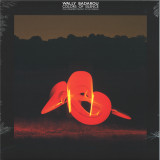
Bay area textural pop group Torrey delve deep into a translucent dreamworld on their self-titled sophomore album. Bending classic shoegaze, rainy day indie rock sounds, and 90s alt rock flair into more intricate forms, the band uses these guitar-forward songs to shapeshift between gentle drifting and noisy breakthroughs. The overall effect is blissful, but never losing sight of the sturdy tunes underneath the fuzz. Some touchstones might include Lush, Drop Nineteens, Cocteau Twins and The Breeders, but Torrey have a deft grasp of their craft and a forward-thinking studio approach that places them very much in the NOW. Singles like No Matter How, Bounce and Moving are pure 2024 and place Torrey firmly alongside like-minded groups like Seablite, Winter and Alvvays who are enlivening a similar set of inspirations.
"Torrey by Torrey" includes the following tracks: "Moving", "Hawaii", "Slow Blues", "July (And I'm)" and more.
Search:gentle ben
When Paul Murphy released his critically acclaimed debut solo album, Claremont 56, in 2006, many thought it would be the first of many. In a way, it was, as in the years since he’s released a string of collaborative sets alongside Benjamin J Smith (as Smith & Mudd), and as part of underground ‘supergroups’ Paqua, Bison and Hillside. But that second solo album? Well, it just had to wait. In early 2023, Murphy finally decided to scratch that itch, roping in some of his most trusted collaborators (keyboardist and bassist Michele Chiavarini, percussionist Patrick Dawes, guitarist Dave Noble and HF International’s Kashif included) to lay down a sumptuous set of tracks that not only showcases his now familiar (bit hard to pigeonhole) neo-Balearic sound, but also proves how much he has matured as a writer and producer since 2006.
In The Garden of Mindfulness is richly musically detailed, expertly arranged and full to bursting with fluid instrumental solos, with Murphy and his collaborators serving up tracks that brilliantly blur the boundaries between languid jazz-funk, downtempo, vintage synth-laden krautrock, dubby grooves and sun-splashed soundscapes. It simply sparkles from the moment that opener ‘Eighty Three’ slowly rises like the morning sun, with gentle, undulating synth sounds ushering in a slow-motion jazz-funk excursion rich in twinkling electronics, spacey pads and warming bass. Recent single ‘Katanaboy’, a lusciously layered dub disco-infused dancefloor excursion in Murphy’s familiar style, raises the temperature a touch, before ‘Bonne Anse’ and the sublime ‘Unka Paw’ (whose combination of evocative fretless bass, extended electric piano solos, Clavinet licks and acoustic guitars is genuinely spellbinding) invite a combination of wavy shuffling and flat-on-the-back, eyes-closed appreciation.
And so it continues, with gorgeous title track ‘In The Garden of Mindfulness’ making way for the boogie-influenced, Japanese-British brilliance of ‘Hangsang’ (check the jaunty pianos, yearning breakdown and exotic melodies). Murphy’s long held love of warm, weighty bass, hypnotic disco grooves, colourful analogue synth sounds and jazzy guitars once again comes to the fore on ‘Way Of The Hollow’ before the album reaches a fittingly triumphant conclusion with ‘Late In March’.
A neat sonic summary of all that makes the set such a rewarding and entertaining experience, repeat listens reveals a wealth of musical details, from off-kilter triple-time drums and surprise bass guitar solos, to impeccable piano solos (provided by the immensely talented Chiavarini), fizzing jazz-funk synth doodles and stirring synth-strings. It’s a breathlessly brilliant way to end an album that was genuinely worth waiting for.
- A1: Brian Bennett – Image 4 29
- A2: Neil Richardson – The Little Orphan 2 27
- A3: David Gold / Gordon Rees – Paradise Island 2 19
- A4: David Gold / Gordon Rees – Forbidden Fruit 2 19
- A5: David Gold / Gordon Rees – The Enchantress 2 56
- A6: David Gold – Phenomena 2 41
- B1: John Scott – Infinite Expanse 1 46
- B2: John Scott – Static Objects 2 31
- B3: John Fiddy – Metamorphosis 2 37
- B4: Neil Richardson – Cubist Pictures 2 12
- B5: Neil Richardson – Analysis 2 04
- B6: Neil Richardson – Crystal Ball 2 38
- B7: Steve Gray – Gliding Through Clouds 2 55
Impossible to find in the wild, KPM's Image is exactly that; this record paints extraordinary, hyper-vivid scenes with music, in the way only the library greats can. Originally released in 1974, Image is an absolutely stunning listen from start to finish, and arguably the most wanted KPM grail that's still not been reissued - until now! Just too good…
Worth the price of admission alone, and likely the reason you're all already drooling about this release, the mellow, dramatic beat of "Image", Brian Bennett's opener and title track, is a Jaylib-sampled firecracker. A reflective, scenic underscore which grows to full orchestra and ends as it begins - it's just beautiful. Next up, swoon to "The Little Orphan" by Neil Richardson featuring strings and harp. It's a deeply emotive, sweeping orchestral piece. Just straight gorgeous. It's followed by "Paradise Island", a lush, horizontal Balearic gem courtesy of Gordon Rees and David Gold; it'll send you into a blissful reverie with its elegant strings and gentle drums. From the same pair, "Forbidden Fruit" is, again, string-drenched but the strings are more insistent, stabbing even, and, with drums and Blaxploitation guitars high up in the mix, it's definitely a funkier proposition. "The Enchantress", again a Rees-Gold special, is a slower, groovy, synthy wonder. Closing out the A-Side, "Phenomena" is a mysterious gem, a Gold solo effort set at a breezier tempo with propulsive percussion and head nod, fast-paced breaks with ace keys.
Flip over for "Infinite Expanse", John Scott's dramatic panorama adorned with proud, triumphant horns. Scott's "Static Objects" paints patient, pastoral scenes; there's a serenity and stillness to the proceedings. Next up, Be With favourite John Fiddy delivers shifting shapes and patterns with his wonderful "Metamorphosis", all wah wah, harps, dramatic percussion and strings. It's by turns billowy and blasting. "Cubist Pictures" follows, Neil Richardson's brilliant nebulous, fragmentary piece. Better yet, Richardson's gorgeous, beatless "Analysis" follows, and it's an orchestral beauty featuring cello, harps and woodwind. It's no exaggeration to describe this as transcendental. His "Crystal Ball" presents more static scenes with cello, twinkling percussion and strings, before Steve Gray's fantastically-titled softly-ace "Gliding Through Clouds" closes out this remarkable set.
As with all of our KPM re-issues, the audio for Image comes from the original analogue tapes and has been remastered for vinyl by Be With regular Simon Francis. And as usual, the sleeve reproduction duties were handed over to Richard Robinson, the current custodian of KPM’s brand identity.
Keiji Haino/Jim O'rourke/Oren Ambarchi
With pats on the head, just one too few is evil one too many...
- My “Watashi Dake?” Is Definitely Not Included In This Unequal Treaty, Is It?
- Right Brain, Left Brain; Right, Left; Right Wing, Left Wing. Just How Many Combinations Can Be Made From These?
- “Critical Consciousness?” That’s Been Abandoned In Corner Of A Shower Room In A 53-Storey Apartment Building Inhabited By Extra-Terrestrial Lifeforms…
- I Thought I Had Pulverized It Summarily But There Are Just Too Many Who Lack Reality Or Who Are Cowards So I Cannot Change A Thing
- E1: Still Divided Into Pieces? Let’s Reconnect Them Recognise That You Are A Point And The Longest Line Let It Become Light
- I Can No Longer Sense That Sacred Feeling Of Expression Just The Loitering Of Vulgar Vibrations That Can Only Be Described As A Half-Hearted Class Reunion Will You Consent To This?
- There Are Always Things I Wish To Say But I Can Only Convey Them In This Language August 6 August 9
The heavyweight trio of Keiji Haino, Jim O’Rourke and Oren Ambarchi return with their 12th and most epic release to date, the triple LP With pats on the head, just one too few is evil one too many is good that's all it is. Documenting the entirety of their final performance at the dearly departed Roppongi home of Tokyo underground institution SuperDeluxe in November 2018, the music spread across these six sides splits the difference between the guitar-bass-drums power trio moves and experiments with novel instrumentation that have defined the trio’s decade of working together. Containing some of the most delicate music the three have committed to wax since the gorgeous 12-string acoustic guitar and dulcimer tones of Only wanting to melt beautifully away is it a lack of contentment that stirs affection for those things said to be as of yet unseen (BT011), this wide-ranging release also offers up some of their most blistering free rock performances yet.
The side-long opening piece finds Haino on a single snare drum in duet with O’Rourke on unamplified electric guitar, playing in the lovely post-Bailey vein heard on his classic 90s recordings with Henry Kaiser and Mats Gustafsson. Spiky dissonance and ringing harmonics interweave with flowing melodic fragments as Haino single-mindedly explores the resonance of the snare like an untutored Han Bennink. On ‘Right brain, left brain; right, left; right wing, left wing. Just how many combinations can be made from these?’, O’Rourke moves to synth and electronics, joined by Ambarchi on drums, who at first focuses on sizzle cymbals before hypnotic cycles of gentle tom rhythms combine with electronic burbles and flutters to suggest a dream collaboration between Masahiko Togashi and Jean Schwarz. Ambarchi’s percussion is then joined by Haino on wandering, overblown flute, before the man in black switches back to the snare for a bizarre, stuttering drum duet.
For the first trio performance, Haino makes another new addition to his seemingly infinite catalogue of instruments, this time a homemade contraption he refers to as ‘Strings of Dubious Reputation’. Joined by O’Rourke on increasingly spaced-out electric guitar and Ambarchi on skittering percussion, Haino’s wonky, slack strings adds a definite ‘musique brut’ edge to this side-long performance, certainly one of the most enchantingly odd in the trio’s discography. When the group reconvene for the second set, spread out across the final three sides, they seem ready to breathe fire from the first instant. O’Rourke slashes distorted chords on the six-string bass, Ambarchi breaks into his signature irregular caveman thump, and Haino squeals and squawks on heavily delayed oboe before unleashing an overpowering electrical storm when he first picks up the guitar. For over half an hour, the trio pound out one of their most relentless performances, a constantly rearranging kaleidoscope of tortured fuzz guitar, insanely busy bass riffing and propulsive, tumbling drums. A hushed atmosphere initially reigns on the final long piece, given the mournful title ‘There are always things I wish to say but I can only convey them in this language August 6 August 9’. Haino’s clean guitar strumming calls up the shimmering tones of his PSF classic Affection, gradually building to a surging wall of sound, bass and drums lumbering through a roar of jet-engine guitar. Arriving in a deluxe trifold package with photos by Lasse Marhaug alongside inner sleeves with extensive live images, this epic release is perhaps the most remarkable document yet of this unique trio’s stamina and continuing inventiveness.
Eclectic graffiti artist, DJ and producer Dj Marrrtin unveils his new album opus "Cyclothymix".
Following the success of his album "La Pie Bavarde", a duet with Tino, mc from Dayton, U.S.A., Marrrtin delivers a moody, intense, indeed psycho-musicographic psychomusicographic. He promises us a finely mixed set, at the heart of his inspirations: Hip Hop, Funk, Sound Illustration, Jazz...
Opening with "Awakening", straight out of a Dilla beat tape, followed by the Brazilian with the very Brazilian "Estrellas", an up-tempo theme sublimated by the gentle voice of Carla Vallet, who also infuses her suave voice on the track "Darjeeling", a bewitching call to let go. In his global wanderings, he takes us to New York with the track "L.O.V.E."an ode to love, featuring the Temple's guardian, A.G. of the mythical collective DITC and his protégée Hii Siddity, from the duo The Girll Codee. "Taraxacum" plunges us into a languorous atmosphere, sublimated by sublimated by the flute of Antoine Laloux from The Selenites Band. Then comes "Ben", a boom bap - melancholy jazz production, where the grain of vinyl mingles with the roughness of the Akai S950 sampler. Marrrtin's musical drifting and whirling is a tribute to breakdance culture to breakdance and hiphop culture with "Inspiration Medley", a nod to anthems such as SWAT, backed by the keyboards of his Funky Bijou teammate, Deheb. A duo whose famous classics are played for the biggest world Breakdance Battles. Sample culture, drum breaks, Abstract Hip Hop, for the tracks "True" and "Time for Love", in which a guru preaches pan-love in the time of the Apocalypse. "Indian Groove", an Indian echo of Marrrtin's many travels, which leaves us and saturates us with dopamine. "Cosmic Consciousness Without Transition", in the spirit of a mood-changing we plunge into the strange, scandalized prescription, guardian of the garden of love.
To close this essential album, "Headhunter", a dark Jazz Funk track with dusty soundtrack tinges, brings us to a close.
of dusty seventies soundtrack, with saturated clavinet responding to obsessive
melodies of Medline's flute.
Ultimately, "Cyclothymix" is conceived by Marrrtin as a mirror to our changing moodsand seasons.
"North London’s midnight man tumbles out his treehouse to deliver twelve potions of minor healing in “Iron Day”, his questing, soul-salvaging songbook. Brimming with majesty and maraud in equal parts, Genghis Cohn synthesises trad. English folk and woe with surrealist dream sequences on this debut long-player. A romance of two hedgehogs, devotional bone temples, broken shadows and sausage kings, GC conjures Brent Hayward strolling through the silver birch and presents to us, in a warmly recognisable form, a grand slab of folk music that challenges its ancient rewards.
Previous acquaintance with GC's lean, amorphous strain of experimental home recordings may encounter a menacing apprehension whilst trying to settle in the splendour of "Iron Day", unnerved by it's posture and the anticipation of songs dissolving or amalgamating in rust and gob at any moment. Still minimalist and direct, but delivered by an altogether different jester, songwriting that has featured in many previous works is smithed into fine, well-wrought suites that build and blend through paced, tempered sequencing and playful, intricate storytelling.
Amidst cavernous inner-dialogue and brilliant, contorted pastoral sequences, GC’s guitar (reported to be over 100 years old!?) laps and thrashes alongside accompaniments of Lauren Collier’s aching violin, a lethargic harmonica and emphatic hand-percussion that drifts in and then out. A dynamic, earthy collection that places future barn-stormers like “Underneath The Oak” and the gentle blaze of “Onion” in cadence with the doom-stricken, ghostly slides as on “Misunderstood” and “Secrets”, all recorded in dazzling clarity that captures the cascading instrumentation as clearly as the settled, tormented humour of GC’s blues. Indispensable candlemeat and essential, joyous listening for fans of; Davy Graham, The Godz, Leonara Carrington, Smelly Feet, Martin Carthy..."
For Fans Of... Jerry Butler, Wee, Adrian Younge, Roy Ayers, Unlimited Touch. New York's Ben Pirani & The Means Of Production team up with Ohio's Wesley Bright to deliver a midtempo rider suitable for a breezy summer's night. Upon the Means pulsing mellow groove "The Honeyman" begins to make it sweet indeed. The tune opens with a bright Rhodes melody that sets the stage for Wesley's gentle tenor. The song archs upward - with professing of love and devotion - toward an irresistible hook punctuated with sweet soft harmonies. Six Minute Mile is backed with a spaced out part two. Swirling delayed synth melodies and acoustic guitar fill out the groove. Ben Pirani has begun to establish himself as a writer and producer in recent years. With the Means Of Production as house band you can expect much more from the Palmetto Street gang
Synth pioneer and musical polymath, Wally Badarou is a genius. But you know that already. A vinyl version of his majestic Colors Of Silence has been craved by the Balearic cognoscenti ever since its low-key 2001 release. Indeed, when we first started work on Be With, we asked some pals with exquisite taste what their dream release would be. We asked Balearic legend Moonboots and, without hesitation, he said Colors Of Silence by Wally Badarou. We didn't know Wally had made this album. And most still don't. But that's about to change.
Colors Of Silence is ostensibly a new age album. As ever though, Wally's sophisticated synth textures and expressive keyboard runs are so full of character, so full of life, that this work of art transcends any easy genre categorisation. It's simply stunning, throughout. It sounds like A.r.t. Wilson or Suzanne Kraft, with traces of CFCF and Jonny Nash. But it was made a good decade earlier than the work of these modern giants. Sometimes, it doesn't seem far from some Larry Heard albums.
Island Records founder Chris Blackwell's friend Nathalie Delon asked Wally to provide music for the yoga DVD she was to release. Lack of time on both sides made them agree on using "quality demos" Wally had in his ideas bank. It's understandable why Colors Of Silence remains somewhat of a lost gem. As Wally explains: "Total lack of promotion made it an 'intimate' release, which was exactly what I was looking for: just a buzz-maker and time-buyer that would allow me to concentrate on the real thing as soon as I'd have time, which could also turn into a rare collecting item later, once the final versions made their way to success. You never know."
Over the years, Colors Of Silence has become a true cult record for the ambient/Balearic heads.
The beguiling but brief "Dance In The Dust" is the shuffling, hyper-percussive, hypnotic opener. It gives way to the deep serenity of "Amber Whispers". It's a gliding, divine, mini melodic masterpiece. It'll make you swoon in its extreme beauty. The bright and breezy "Where Were We" follows, a tropical, reggae-tinged bounce through the islands.
The uptempo groove is maintained on the keys-drizzled soca-funk of "The Lights Of Kinshasa" before Side A is rounded out with "Pictures Of You". It starts with stately, melancholic, unadorned piano and this alone would make for a beautiful song. But Wally always gives us that bit extra and he effortlessly introduces warm, dreamy pads and minimal, slo-mo percussion to augment a frankly stunning piece of work.
Ushering in Side B, Wally's mesmeric piano playing is to the fore again, in the intro to uber-chilled "Serendipity For Two". The playing becomes more mellifluous as the track progresses and adds warmth through exotic percussion, woodwind, sweeping synths and digi-drums. It has echoes of, er, Echoes. It segues seamlessly into the more propulsive, wavy "Smiles By The Millions". If you're not nodding and grinning along widely to the gently throbbing bassline underpinning this, we can't help you. The meditative "Higher Still" follows, cinematic in feel and ever so slightly sinister with the strings. It sounds particularly Badalamenti-esque, if you ask us.
That unmistakable, almost peculiar Badarou funk - so lyrical, so texturally rich and so rhythmically spacious - is all over "Oriental". Next up, "Days To Wonder" brings the serenity back, insistent yet melodic keys, as if played in a place of worship, coupled with birdsong, conjure a kind of instant nostalgia for halcyon days of youth. The contemplative "Dawn Of Europa" is a sombre, beatless, ambient journey whilst the glorious, too-brief "Crystal Falls" features soft percussion and sparkle before fully glistening with some gentle head-nod beats. Wally brings this incredible collection to a mellow, tender close with the graceful "Purple Lines".
There can be few artists more under-appreciated given their vast influence than Wally Badarou. His solo work practically defined the sound of the Balearic DJs of the 1980s, and thus the more sophisticated sound of dance culture thereafter. A synth specialist, Badarou was the long-time associate of Level 42. He was one of the Compass Point All Stars (with Sly and Robbie, Barry Reynolds, Mikey Chung and Uziah "Sticky" Thompson), the in-house recording team of Compass Point Studios responsible for a series of albums in the 1980s recorded by Grace Jones, Tom Tom Club, Mick Jagger, Black Uhuru, Gwen Guthrie, Jimmy Cliff and Gregory Isaacs. Badarou's keyboard playing could also be heard on albums by Robert Palmer, Marianne Faithfull, Herbie Hancock, M (Pop Muzik), Talking Heads, Manu Dibango and Miriam Makeba. He also produced Fela Kuti. Phew!
Meticulously remastered and cut by both Simon Francis and Cicely Balston respectively, it has been pressed to the highest possibly quality at Record Industry in Holland. Special thanks must go to Apiento from Test Pressing who first introduced us to Wally and facilitated all those early zoom meetings. It couldn't have happened without his help. Not least on pulling the art together, too, which features striking original photography by Mads Perch. Benji Roebuck of Roebuck Press did his thing brilliantly in art working the whole package to completion. All in all: essential.
Straight Outta Caledonia is the first commercially available “Greatest Hits” of the outsider songwriter Jackie Leven, an artist
who has largely remained in obscurity in his native Scotland despite being one of the greatest wordsmiths – and singers – it ever
produced. A well-travelled musician who began making psychedelic, progressive music in the late 60s before emerging as an
epic storyteller full of pathos, humour and humanity in the 90s, Leven lived and wrote like many of the fragile, gregarious
characters of his songs; large, full of life and empathy. Leven passed away in 2011 after recording 30+ albums under different
guises or with his briefly successful New Wave band Doll by Doll. Straight Outta Caledonia is a compilation collated by Night
School Records on its Archival label School Daze that seeks to introduce Leven’s music to new generations.
In an age of isolation, alienation and loss of visceral experience, Jackie Leven’s music can be massive and welcoming. It feels
connected to some universal humanity and vibrates with vitality. His songs are often full of tragedy and comedy simultaneously,
cutting straight to the heart, often plugging directly into the nervous system of the listener. His lyrics are rich, dense with imagery
that can veer from apocalyptic to the comically banal in a sentence, with a songwriting panache that can be heavy handed to
almost bursting point before skewering the song with a clownish, warm punchline. His productions ranged from Bob Dylan’s
Rolling Thunder Revue style rock band orchestrations with strings and organ as on the epic Ancient Misty Morning or they could
be pared down to the purest form of folk song as on Poortoun: Leven on stage alone with an acoustic guitar, albeit played with a
mastery of the instrument that he often only hinted at. Musically his sound can bend traditional structures or stay completely
confined within them yet still forever push towards an ecstatic release, as on the cinematic Snow In Central Park.
The most exciting, jaw-droppingly effective tool at Leven’s disposal was his voice. A multi-octave instrument that, though
damaged during a savage assault in Fife, he used with flair; he had both a brazen disregard for the rules and a deep humility, all
of which is evidenced with every phrasing. A baritone that could flit up through the register – always touched by his gentle
Kirkcaldy accent – it’s the prime delivery method for his songs. Leven’s voice enabled him to inhabit the characters in his songs to
an uncanny degree, a skill that in turn enables the listener to empathise with them and, subsequently, the singer. It’s most evident
in stand out song The Sexual Loneliness Of Jesus Christ, a breathtaking re-telling of the life of its protagonist, not as a pure,
sinless messiah but as a sexually frustrated, solitary man condemned to an existential loneliness no one else will ever feel. In
many ways the track is the archetypal Jackie Leven song. Produced by Pere Ubu’s David Thomas, what strikes the ear first –
after the samples of unemployed workers in Glasgow following the closing of the Clyde shipyards – is the audacious, rhythmic
tremolo effect Leven employs through the verses before the production opens up to allow Leven’s vocal to lift into a soar, a
freeing glide powered both by the force of the singer’s chutzpah and the inherent, doomed destiny of the protagonist. With any
other singer such subject matter could come across as gauche or worse, pretentiously sonorous, but Jackie Leven’s genius was
such that he could be this cinematic and brazen while touching something elemental and true in the beholder. It’s a skill evident in
every song on Straight Outta Caledonia, the trademark of a songwriter who revelled and excelled in intensity with a lightness of
touch.
In his lifetime, Jackie Leven toured, wrote and recorded at a ferocious rate. He recorded under aliases to avoid record contract
restrictions, played house shows in Europe after or instead of official concerts, events which were often spoken word story telling
masterclasses as well as performances of his often bewilderingly dense songbook. His music has traditionally been catalogued
as “folk” music and has been largely banished to a small, dedicated group of international fans and apostles both private and well
known, like author Ian Rankin or Glenn Matlock. Since his passing in 2011 however, there has been a growing recognition
amongst a newer generation, with artists like James Yorkston or Molly Nilsson publicly stating the influence of the unsung
troubadour on their own craft. Jackie Leven’s fairytales for hard men are often forensic deconstructions of masculinity, sad and
ecstatic, light and shadow, always endlessly rich, a resource as bountiful as Leven himself’s human spirit undoubtedly was.
Not far off two years from the day, Bristol's Tara Clerkin Trio return to World of Echo and the EP format for a five song collection of quixotic, emotional redolence. But do not mistake their absence for inertia. If their musical output has been a little sparse during those in-between years, limited to a few solo ventures and an astonishing ten minute long piece as a trio, their time has otherwise been richly spent: continuous writing and recording, extensive live performances across Europe and Japan, a cultivation of local and more far-flung artistic connections (musical and otherwise), and a monthly NTS show that, through the voice of others, speaks most obviously to their own unorthodox interests. It's the conflux of that winding activity that leads indirectly to On The Turning Ground, 26 minutes of probing, thoughtful composition that draws from no one specific source.
Their inspirations might be centreless, but the trio still possess a very obvious anchor in the form of their hometown. Bristol stands as a city of multitudes, heterogenous and vibrant in such a way as to allow it to renew and remake time and again. Tara Clerkin Trio drink from that same well, duly reflecting a rich musical heritage built on fwd-facing electronic subcultures and experimental urges. As such, On The Turning Ground finds them subject to their own subtle internal evolution, the pervasive sense that you've caught them mid-bloom, on their way to becoming but never anything but themselves.
The two instrumental pieces that bookend the EP stand as a perfect case in point, displaying an increasing mastery of compositional space. Pensive and restrained, 'Brigstow' and 'Once Around' both emanate an interstitial quality that's not so much after- as in-between-hours, miniature dub-folk symphonies held together by the kind of tacit understanding that remains the preserve of only the closest of family units. If those two tracks are shaped by a sense of shifting temporality, then the three vocal-led pieces that comprise the record's core feel like a gentle ossifying of aesthetic into something approaching their own unique form of avant-pop. 'Pop' is, of course, a broadly subjective concept, but there's no avoiding the overt sparkling melodicism of songs like 'Marble Walls' and 'The Turning Ground', undeniable re-directions of that late 90s impulse to bend pop sensibilities into off-centre terrain, to render the familiar new again. This is what Tara Clerkin Trio do, gently pulling the ground from under your feet, turning you to face something you'd not quite seen before. To view the world as they do: sideways, sometimes, all of the time.
End of Ways is a bridge to healing as it was written during the period of helping a loved one escape an abusive household while working though its lingering horrors to find peace. On this second album
release by indie label Kill Rock Stars, 18-year-old Elliott Fullam touches on even darker subject matter than his predecessor What’s Wrong which was a dissociative trip that reached out to thousands of
like-minded music enthusiasts who hailed the record as their album of the year.
And End of Ways is the next record that will continue in that same gentle melody which alleviates the emotional storm that
torments so many of us. Elliott’s sophomore full-length is a blend of home recordings as well as studio recordings which bring some extra depth within the songs to suit their somber settings in the tracks
Throw It Away, Forget, and Better Way. But the record still retains its stripped down, lo-fi vibe in songs like Let’s Go Somewhere and Remember When with their clear Elliott Smith and Nick Drake
influences in both the acoustic guitar lines and quiet vocals. The addition of young pianist Jeremy Bennett also beautifully adds candle-light melody through-out the album with his haunting notes in the opening song Mistake and his Tim Burton-meets-Vince Guaraldi style in the album’s escapist-themed title track End of Ways along with the dramatic climax to Timeless Tears and the album closer, Over
the Moon which is Elliott’s profession of love to his present companion who he saved from her former home. Nick Drake, Big Thief, Crumb, and Alex G that explores childhood, dissociation, heartbreak and ultimately, survival
Alien Transistor is proud to announce a reissue of Such December, the fourth album by Japanese indie folk-pop artist, Gratin Carnival. Listeners might already know Gratin Carnival from their appearance on the Alien Parade Japan compilation of indie pop groups working with brass and woodwind; compiled by Markus Acher of The Notwist and Saya of Tenniscoats, it introduced this beautiful genre to the wider world. Gratin Carnival’s “Just Watching” was one of the many highlights of that compilation, and its gentle bossa-folk glide reappears on Such December.
Originally released in 2020, Such December captures beautifully the happy-sad charm of Gratin Carnival. The project of Koreyuki Mitsunaga, Gratin Carnival started in 2011; Mitsunaga had been home recording for some time and decided on the name as an umbrella for his music-making. Mitsunaga’s main instruments are guitar, which he uses to great effect throughout, his gorgeous acoustic playing reminiscent of players like Ueno Takashi of Tenniscoats or João Gilberto, and alto saxophone and clarinet. Those three instruments make up the core of Gratin Carnival’s sound, along with Mitsunaga’s charmingly doleful singing.
Recording at his parents’ home, with a four-track cassette recorder and a MacBook, Mitsunaga created Such December during 2020, though the songs on it stretch back to 2016. The closing “On The Train” was the first song written for the album – “a song about a small trip,” Mitsunaga recalls – and from there, he built a beautiful collection of songs that sit together perfectly. There’s great clarity in Mitsunaga’s writing, with nothing extraneous getting in the way of the lucid arrangements and gorgeous melodies; there’s something of chamber jazz about it at times, so it’s no surprise that Mitsunaga shares his love of Benny Goodman’s small group playing.
He's also a fan of Japanese folk artists like Kenji Endo and Kyouzou Nishioka, and grew up listening to Japanese popular music, The Beatles, and The Carpenters. You can hear trace elements of all this in Such December, in the clear-headedness of the melodic decisions made by Mitsunaga, and the quiet charm of the song’s gentle arrangements. They take on different shapes live, too, where Mitsunaga often invites other musicians to join in – his live band currently includes Masafumi Ezaki (trumpet), Nahoko Kamei (bass clarinet, piano, keyboards) and Tadashi Yonago (trombone, self-made instruments).
As with plenty of musicians from the Japanese underground, Mitsunaga is involved in other music, too – he’s been working with The Otoasobi Project, which performs music in collaboration with individuals with learning disabilities, and their families; and he’s also involved in improvised music. With Such December, though, you get to hear Mitsunaga’s music at its most personal and individual, ten songs of still, gorgeously poised indie folk-pop, where the swooning clang of six strings meets the breathy bliss of woodwind and brass.
- A1: Dual To The Death (Outro)
- A2: Tinkerhatfield
- A3: Me Love Me A Lot
- B1: Tanoy
- B2: Slowchain
- C1: Hense The Name
- C2: Remains
- D1: Tubular Heaven
- D2: Acidjamprophet12
- E1: Made Up Reality
- E2: Drag A Friend
- E3: Ibogastomp145
- F1: Life Is A Glitch And Than You Die
- F2: Kaal Ii9
- F3: Gums
- G1: Intentionally Beat
- G2: Daydreamdenhaag (070)
- H1: Bubbles (Korrel - P155)
- H2: Dlpfc
- I1: The Memory Palace
- I2: Sensed
- J1: Onehundredand64 (Ft Spekki Webu)
In a realm where the threads of fate intertwined with the tapestry of existence, there existed a timeless construct we call “MENG”. This transcendental domain pushed a sanctuary where an unholy wisdom was safeguarded. Within its twenty-two walls, the experiences of countless sages and seekers resided, forming a reservoir of enlightenment, of vision and of identity.
Among the enigmatic texts that adorned the shelves of The Memory Palace, one stood out—the "Tubular Heaven," a chapter that held the essence of the universe's patterns and transformations. The book we speak of is the Book of Change - I Ching. Legend has it that the Memory Palace embodied the vibrations of those who sought its wisdom, guiding them to the Slow-Chain’s pages where hexagrams unveiled the secrets of existence.
Amidst this cosmic dance of knowledge, there lived a young wanderer whose name we do not say out loud. Driven by a deep yearning for understanding, this Warrior ventured into the city of Tanoy. With every step, he felt the resonance of centuries long gone, as if the walls whispered to him the essence of reality itself - “you may fall as long as you stand up again. Repeat this 1000 times and you will understand me. Only then can we control the sound.” As he reached for the illuminated Book of Change, a light was cast onto a newly fabricated realm of questions.
One hexagram, in particular, was essential. The cryptic symbolism was perplexing. Upon meditation, we slowly begin to realize that life is indeed a tapestry of imperfections, yet from these glitches we arise with profound growth and transformation.
As our curiosity spikes, we delve into the pages that follow, discovering an unexpected connection between I Ching and the world of Jeans, no denim. In ancient times, the craft of weaving denim mirrored the wisdom of these hexagrams. Just as threads interwove to create a durable fabric, I Ching reveals how life's experiences intertwine to form a meaningful existence. Denim, like life, is sturdy yet adaptable - a true testament to the harmonious balance between falling and standing.
As this journey comes to a gentle end, we must stress that hexagrams prove that other divination systems exist. It has become clear that the patterns hitherto observed are not confined to one culture, tradition, mind or body. Instead, they echo throughout history, manifesting in various divination systems across our globe. Hexagrams are a universal language, transcending boundaries and demonstrating the interconnectedness of humanity's pursuit of higher understanding.
We can now truly emerge from the Memory Palace, carrying the wisdom of everything above us. It’s time to Drag A Friend into this Made Up Reality. Or is it? We now understand that life's glitches are the catalysts for growth and that just as threads wove together to create denim, experiences wove together to create a meaningful existence.
As we walk beneath the open sky, we whisper into the wind, "Hexagrams are the echoes of universal truths, proving that the search for wisdom knows no bounds."
The chimes tingle in the deep subset of your imagination. As the pages of the Book of Change unfurl one last time, the shimmering tapestry of our shallow minds unravels.
We have revealed the kaleidoscopic corridors where perceptions dance in hallucinogenic symphony to the hymns of our rich minds.
Der Plan sah vor, im Frühjahr 2023 direkt wieder ins Studio zu gehen, bei dem alten Freund Paul Grau in Motril, Spanien. Noch euphorisiert von der gelungenen Herbst-Tour machten Gisbert zu Knyphausen, Moses Schneider und Tobias "der dünne Mann" Friedrich Nägel mit Köpfen und buchten, was zu buchen war. Einziges Problem: sie hatten keinen einzigen neuen Song. Aber man wächst an seinen Aufgaben, nicht wahr? Irgendwo in der untersten Schublade, hinter der Rolle Zwirn, dem Anspitzer und der Ballpumpe lag dann doch noch das ein oder andere Instrumental, ein halbes Lied, ausgeschwitzte Reime und drei angebissene Texte. Um Weihnachten herum kamen in einem klammen, kleinen Übungsraum noch diverse ganz neue Stücke hinzu. Im Januar 23 traf sich die Husten-Delegation mit der Live-Ergänzungsmaschine Marcus Schneider (Gitarre), Ben Lauber (Schlagzeug) und Arne Augustin (Keyboard), um 15 oder 16 neue Lieder zu arrangieren. Obwohl Motril nicht mit Wärme und Sonne geizte, sahen sich am Ende der zwölftägigen Aufnahmen alle etwas verwundert an ob der Düsternis der Stücke. Wie sollte man das Konvolut sinnvoll auf einem Album anordnen? Also alles auf Schwarz. Von dunkel nach hell.Auf dem Weg kommt man aus dem dystopischen "Bis morgen, dann" an der Trauer von "Ja und ja" vorbei, schaut "Elli" dabei zu, wie sie unter die Armutsgrenze rutscht, bettelt "Lass mich bitte nicht in Ruh", blickt auf "Die andere Seite der Angst", sieht dem verblichenen Träumer Achim hinterher, tanzt "Nüchtern im Club", stellt sich hinter dem "Flamingo Hotel" ein paar philosophische Fragen, erinnert sich an ferne Tage und "Weiße Tiger" und bittet die Welt um Vergebung, da der perfekte Song auch mit "Für immer und ewig" nicht gelungen ist. Am Ende erschien es nur logisch, das Album "Aus einem nachtlangen Jahr" zu nennen.Ladies and Gentlemen: Aus einem nachtlangen Jahr - wohin auch immer. PS: Es passt sprichwörtlich ins Bild, dass die Berliner Künstlerin Tina Berning an wunderschöner Melancholie kaum zu überbietende Zeichnungen beisteuerte, für die Dunja Berndorff das perfekte Artwork fand.
- (Hey Baby) Que Paso (Fat Tony)
- Possum Kingdom (Ryan Bingham)
- Say My Name (Adrian Quesada)
- True Love Will Find You In
- The End (Shaky Graves)
- Texas Sun (Sir Woman)
- That’s Right (You’re Not
- From Texas) (The Texas Gentlemen)
- My Maria (The Suffers)
- Si Una Vez (Luna Luna)
- Since U Been Gone (Toadies)
- Angel Flying Too Close To
- The Ground (Sarah Jaffe)
- Pancho & Lefty (Shane Smith & The Saints)
Texas Parks & Wildlife Foundation, in partnership with Rambler Sparkling Water, introduce ‘Texas Wild’, a standout album featuring Texas musicians as they pay tribute to classic Texas tunes showcasing that untamed spirit found only in Texas music.
Produced by Texas singer songwriter Walker Lukens (The Song Confessional, Golden Dawn Arkestra, Darkbird, Coco Zandi), ‘Texas Wild’ is a standout album that blends the sounds of traditional Texas genres like blues, cumbia, and country with modern sounds like hip-hop, R&B and electronica, sure to please old school country fans
and new listeners alike.
Block print album art created by Texas artist, Mishka Westell.
Featuring covers of classic Texas songs by Texas musicians including Toadies, Fat Tony, Shaky Graves and Sir Woman.
Sales from the album will benefit Texas Parks & Wildlife Foundation.
- A1: Hawking And Fire
- A2: Super Erotica
- A3: The Bends
- A4: J P. Walk
- A5: The Build Up (Gentle In The Night)
- B1: Back Up To The Bumper Boogie
- B2: Can't Get Enough (Of That Buttered Stuff)
- B3: Night Driving Scene (From The Thrill Is On)
- B4: Greg's Groove Thing
- B5: Rollerblade Escapade (From Jailbait)
- B6: Gabi's Theme (From Dagmar Zeigt's Euch)
- C1: Four Weelin' Meat Movers
- C2: Nightclub Theme (From The Devil Made Me Do It)
- C3: Pimp Fight
- C4: Bang 'Em Hard
- C5: Hot Buttered Buns (From The Manimal)
- C6: Portobello Surprise (From Brighton Beach Bunnies)
- D1: Bedtime For Busty
- D2: Love Theme (From Sir Lancealot)
- D3: I Dig Your Vibe
- D4: Theme (From A Thousand And One Knights)
- D5: Motion Lotion
- D6: Exchanging Glances
Music follows strange paths, goes where it wants, always. This is how music created for use only as a background for adult films in the 70s today sounds so current, sophisticated, groovy and cool.
In this new chapter of Sexopolis "Beyond The Valley Of The Beats" ( Pornobeats ), we will in fact find songs "for adult listeners" who have made non-trivial musical research their final destination. 23 soul, funk, jazz, lounge and more songs that are not so easy to label with a musical genre, believe me.
18 of the songs in this selection have never been made on phonographic support before, a real "first time" that you can discover with all the taste, curiosity and kindness due, please.
The fourth chapter of the Sexopolis series is certainly the most alternative and ambitious, the result of an accurate and difficult musical research that will satisfy listeners at all times. The turquoise double vinyl is as always a limited edition. Then, all that remains is to add it to your collection and ... make your own mental private film.
Enjoy!
Limited to 1000 copies on Sea Blue vinyl! There's freedom to be found in consistency. Until recently, Juan Wauters may not have agreed with this statement. As a touring musician and multinational citizen, transience had always come naturally to him. Circumstance, however, recently prompted him to reconsider the benefits of staying in one place. His most introspective work to date, Wauters' sixth solo album Wandering Rebel finds the artist taking stock of how he's changed, how the world sees him, and what he wants out of life. Written mostly during an extended break from touring, the songs on Wandering Rebel are candid reflections on subjects like career ("Wandering Rebel"), romantic commitment ("Amor Amor"), mental health ("Nube Negra") and the personal toll of touring ("Let Loose"). On "Modus Operandi," he voices his frustration with New York's fairweather residents, who fled the city at the onset of the COVID-19 lockdown. Vocal contributions from fellow New Yorker Greta Kline (Frankie Cosmos) add to the chorus of playful disapproval. On the singalong-worthy "Millionaire," he turns his eye to the west coast: "It's hard to get around Los Angeles / If you don't have a car / I'm staying in a privileged part of town / It's suspicious for me to be walking." The clarity with which Wauters approaches these subjects lyrically is reflected in the music as well. His trademark eclecticism is still present (fans of Real Life Situations' spirited hip-hop should look to track 6, "Bolero"), but it's more refined this time, anchored in his signature Latin-influenced indie folk. Wandering Rebel is peppered with delicate additions that add depth throughout: rain sounds and hand drums on "Nube Negra," a strings section on "Modus Operandi," a gentle vibraphone on "Amor, Amor." Some of these are classic Wauters touches, but others are owed to outside influences, like production from Brooklyn-based Carlos Hernandez (Ava Luna, Carlos Truly) and Brazilian indie artist Sessa, as well as vocal contributions from Kline, Luz Elena Mendoza (Y La Bamba), Zoe Gotusso, and Super Willy K. Throughout Wandering Rebel, Wauters attempts to reconcile the stability he's come to enjoy with the nomadic restlessness that's characterized his life thus far. In the end, though, it's the interplay of both of these elements that makes the album so strong.
* 300 COPIES FOR UK/EU* With a friendship stretching back nearly 20 years, it strangely ended up being a couple of childhood photographs that finally brought Ben Chasny and Rick Tomlinson together as collaborators. Both have rich musical backgrounds: Chasny being a member of the psych-rock outfit Comets on Fire but probably best known for his solo project, Six Organs of Admittance, while Tomlinson has released numerous records as Voice of the Seven Woods/Thunders and under his own name. “A mutual acquaintance, Jamie Tugwell, took me to go see Rick play live around 2005,” remembers Chasny. “Jamie kept saying how Rick was sort of an ornery fellow and that I would like him a lot. He was right. I loved his guitar playing right away, which seemed so far from what a lot of players were doing. We had drinks and hit it off. We remained friends over the years.” Chasny became a regular visitor to Tomlinson when on tour in the UK and one particular stay unearthed something serendipitous that would kickstart the making of a joint album. “I was staying at Rick’s house after a show and I looked over and saw a photo of him in a Halloween costume as a box of matches,” Chasny recalls. “It cracked me up because I have a similar photo of me as a robot and I tried to explain to him how it matched his photo.” About 6 months later Chasny found it and sent it to Tomlinson to show him the uncanny likeness of their childhood outfits. “Pretty soon after that we realized we needed to do a duo record and have those photos be on the cover,” says Chasny. “The entire record comes from the photos on the cover.” Tomlinson adds: “It was a pretty odd coincidence. Even down to us both standing on flags with a conifer behind us. We obviously had no option but to use these for the sleeve.” Recorded at Tomlinson’s house in Todmorden over three days one June, initially the pair didn’t quite know where they wanted to go with their musical direction. Tomlinson kept pulling out super rare records from his vast collection for inspiration and they sat and listened to the solo piano recordings of Popol Vuh’s Florian Fricke but they knew they needed to land on something that was intrinsically them. “We knew we wanted to do a record together but we weren’t sure what direction to take,” says Chasny. “When we first sat down to work out some ideas it was pretty much just us getting down to finally having a guitar showdown where each of us tried to outdo each other with flashy moves and ridiculous riffs and playing. After we got that out of our system, we were able to settle down and concentrate on a mood for the record to focus on.” The result is 6 instrumental tracks that capture beautifully fluid and interlocking guitars played with deft grace and skill but also a subtle looseness. On the 9 minute-plus ‘Wait For Low Tide’, the sparse and spacious back and forth playing becomes utterly hypnotic, neatly capturing the kind of natural and intuitive playing that can only come from music made between friends who understand the crucialness of leaving space for one another. While acoustic guitars are the primary means of expression on the record - from the soothing and gentle ‘i’ to the intricate playing of ‘Waking of Insects’ - the pair delve into ambient drone tape loop territory on the humming 16 minute ‘Paths of Ocean Currents and Wind Belts’, which further adds to the deeply textural, spacious and immersive feel of the album. All the tracks were recorded in one take, with the titles all stemming from translations from the Chinese book, The Dream Pool Essays, and then mixed in London at Jimmy Robertson's SNAFU studio, with additional mixing and mastering from Andrew Liles. The laid back, breezy and spontaneous approach to making this record is one that was reflective of the pair’s friendship and camaraderie, with their relationship ultimately driving the tone and feel of the finished album. “We hiked around the countryside, climbed into church bell towers, drank delicious beer in the middle of sunny afternoons, and had fantastic dinners,” says Chasny of the three-day recording period. “I think all of that wound up in the music. I really had the best time in the world.
Born from the party of the same name held at Manchester’s storied White Hotel, the increasingly essential Bakk Heia label has consistently put out thrilling 12”s from co-founders schuttle and low-key cult favourit Jorg Kuning since 2019.
Stepping up for the imprint’s sixth release, schuttle brings four tripped-out cuts of contemporary dance music, showcasing his production chops across four stellar tracks, already getting an airing from Ben UFO on the Hessle Audio Rinse FM show, as well as support from Joe Delon, Kiernan Laveaux, Om Unit, K Means, Barker, Pariah & Terry Francis.
“schuttle’s latest offering begins with ‘Shadout’. Fractured celestial voices materialize from a mist of frosted percussion while a merciful kickdrum splutters above the surface, bringing with it the viscous, swampy murk. ‘Souvlaki’ follows with playful impish chatter that stumbles over the moss-covered bassline, whilst cascading snare hits tumble down abandoned wells, a gentle guiding presence through the forest.
‘Swords Dance’ is a 10-minute display of cosmic glory, where conventional momentum is abandoned in favour of complete ecstatic, unbridled chaos. After the dust settles on this fiendish bacchanalia, ‘Junkman’ creeps into the fore. Caustic mire oozes into focus, mist rising sluggishly from the reeds while an elemental pad sweeps across the terrain.”
For Anyone That Knows You, an album of mostly piano solos by Josiah Steinbrick, was recorded riot for smoothness or posterity but to emphasize the piano as object, the person playing it, and the moment it sounds. On three of the pieces, the saxophone of Sam Gendel hovers ok or the piano like a faint change in the light, adding resonance and gentle reinforcement rather than counterpoint. Three others are delicate renditions: "Green Glass" interprets an untitled recording by Quechuan folk musicians Leandro Apaza Roams and Benjamin Clara Quispe; *Tyne Road" abbreviates one of Malian kora master Toumani Diabatels most tender compositions: and "Lullaby" is an arrangement of a traditional Creole song, originally recorded in 1954 by the Haitian-American guitarist Frantz Casseus.
We are very pleased here at RE:WARM Records to announce our first release of 2023 and our first full artist album from none other than David Kitt as he brings us his first album since July 2021. The Genre-bending Irish musician and producer has announced his ninth studio album ‘Idiot Check’ to be released on 31 March 2023 via RE:WARM. A unique and sincere songwriter with an expert ability to meld inspirations, eras and sounds, Kitt’s music glimmers with a sense of timelessness well-earned after over twenty years immersed in music.
Produced and recorded by Kitt himself using his “Breaking Bad mobile studio set-up”, the album was written between 2016 and 2022 in Dublin, Paris and eventually the remote town of Ballinskelligs in south-west Kerry, where the artist moved during the pandemic and has stayed ever since. Blending acoustic and electronic elements with expert precision, the record showcases both the diverse circumstances of its inception and Kitt’s personal breadth as a songwriter and producer. From the fuzzy, lo-fi “Wishing Well” fluttering with a gentle sense of magnetism, to the infectious and upbeat “Not So Soon”, and jovial, traditional folk cut “Balances”, “Idiot Check” is an evergreen album as experimental as it is ageless.
Balearic believers rejoice! Japanese tropical-fusioneers Coastlines are back with the worldwide vinyl release of Coastlines 2. The follow-up to their classic debut, this is the sound of Coastlines's global influences. If the dedication to intricate sonic details is particularly Japanese, the overarching feel captures the sprawling grandeur of the international balearic community. As they put it, Coastlines 2 presents "a more precise and beautifully polished magic hour." If that isn't Balearic, we don't know what is.
Takumi Kaneko and Masanori Ikeda don’t radically alter their sumptuous template with this second LP; and we wouldn't want them to. Yet with a more focused flow from first track to last, both Coastlines and Be With feel this is an even stronger album than their first. One thing that hasn't changed is the use of instrumentals instead of words to express their themes; namely, "the emotional expression of being soaked."
Opener "Tenderly" is appropriately titled, a gentle Latin shuffle easing you back into the Coastlines sound. An organ-heavy synthy exotica that's in step with Lovelock's contemporaneous "Washington Park". Their über-horizontal take on Hawkshaw & Bennett's "Mile High Swinger" (from Synthesiser And Percussion, reissued by Be With!) evokes cocktails-by-the-pool as the sun slowly sets. The blunted deep jazz-funk swing of "Alicia" is a rearranged reimagining of the Gabor Szabo song from his classic Jazz Raga LP. This here sounds like an outtake from The Chronic.
As the sun goes down, "Combustione Lenta" soundtracks the relaxing slow burn of an idyllic bonfire on an isolated beach. Displaying a beautiful new side of Coastlines, we're treated to Moments In Love vibes and melancholic guitar arcs. The piano-laden early morning wonder of "Night Cruise" started life as a completely different song, but the duo found a particularly good loop from the initial sketch and reconstructed it into this sophisticated 80s instrumental soul groove. "Waves And Rays" is all undulating acid waves and lighthouse light. A chopped and screwed steel drum G-Funk with soaring synths and nods toward the squelchy machine soul of Mtume and Jam & Lewis. Yes, *that* good.
The bouncy futureboogie cosmic chug of "Sky Island" represents the beginning of the sunrise, casting images of 80s Japanese fusion and definitely one to play out early doors to get the crowd stepping. "Area Code 868" is the strutting staccato sound of Joe Sample waking up in the Caribbean to craft his piano funk drenched in sunshine. Accordingly, the tentative, naive melodies of "Sand Steps" represent that vivid feeling first thing in the morning, as you step on to the sandy beach in the sunshine and take a deep breath. The world is yours.
The emotional, organ-piano-steel drum-driven "Song For My Mother" is a slo-mo show of sincere gratitude to all the great mothers. "Yasmin's Theme" is Coastlines's Brazilian homage, recalling for them that early summer feeling. It's propelled laconically by the carnival beat of batucada`s big bass surdo drum and complimented by sweeps of warm keys and radiant vocal harmonies. Blissful beatless closer "Asafuji" conjures a scene from a wonderful morning spent with the people of Shizuoka, the symbolic mountain of Japan, Mt Fuji and its inhabitants. It sounds like Dâm-FunK jamming with Sabres Of Paradise.
Coastlines 2 was painstakingly crafted, across the pandemic, at Masanori's rented place in Tokyo and then brought back to his home studio and worked on slowly and repeatedly. With limited time to see each other, the duo became more united in their "consciousness with natural progress."
Mastered by Simon Francis and cut by Cicely Balston at Air Studios, this magnificent double LP has been pressed by the good people at Record Industry.
- 1: Margaret Murie 02 46
- 2: Crux 04 07
- 3: Nameless 0 6
- 4: Eidetic 01 36
- 5: Thursday Night 03 09
- 6: Halve 03 12
- 7: Osco Drug 01 19
- 8: Lillian Isola 02 3
- 9: Safn 01 10
- 10: Maple Seed 02 21
- 11: Viridiana 03 29
- 12: Tet 01 51
- 13: God Innocent Controller 01 36
- 14: The Void 03 17
- 15: Alces 01 06
- 16: Pastel Dust 03 30
- 17: Where To 04 02
Dark Green Vinyl[24,33 €]
American singer-songwriter, poet, and photographer Thomas Meluch, known musically as Benoît Pioulard, returns with his most structured and vocal release to date. Titled »Eidetic,« a word denoting the ability to recall mental images with extraordinarily rich precision, the album presents unprecedented clarity and vitality for Benoît Pioulard. To access its thematic ground, Meluch looked inward with an affinity towards the people he loves during a period marked by his move from Seattle to Brooklyn in 2019. The resulting work engages with the universe's unflinching mortality and, as he says, »the ways it has modified and improved my relationships, especially with family.« Embodied by the creek, leaves, and ferns of the cover photography — taken in Michigan’s Burchfield Park, where he and his dad used to hike and »muse on existence« — the music glistens and unfurls with the flow of life he’s come to know. »Eidetic« is the culmination of Meluch's craft both as a producer and writer. An evocative sonic vocabulary meets deft lyrical introspection, articulated with the nuance, vulnerability, and confidence of a longtime artist hitting a stride.
Meluch has continually refined, redefined, and adjusted the focus of his gentle pop project over the last 20 years. Recorded primarily with guitar, tapes, and voice — and spanning labels with albums for Kranky, Morr Music, Beacon Sound, and Past Inside the Present — his catalog flows seamlessly between ambient improvisation and pop composition. Much like the analog photos that often accompany his releases, songs can feel dreamily softened and distant, and others beautifully vivid and detailed. 2021 full-length »Bloodless« found Meluch deep in droning decay, expressive yet wordless. With »Eidetic,« he swings back to sharpened forms. Lush banks of treated guitar and synth brush against hushed percussion; there is mist in the distance, but everything up close is intricately constructed and radiant. Meluch's voice is notably forward in the mix — a warm and calming tenor, a harmonic coo more than a whisper — ever-observant and actively processing.
To record much of the album, Meluch filled a cabin in rural Maine with his usual setup of simple percussion, a couple of Fender electrics, and a parlor guitar made by his friend who does bespoke luthier work. The modest utility is what he knows best, and here he pushes the output to its most pristine potential.
»Eidetic« opens in a swirl of familiar haze; »Margaret Murie« eases listeners in, as lush and verdant as the landscapes conserved by its famed namesake. With the setting established, Meluch, the narrator, enters the foreground with »Crux,« a tender piece written about finding new motivations in a new city. »We covet this rare green hue / Here at the farthest point from home,« he sings above a reassuring pattern of strums and percussion. Meluch's prose shines on the swiftly-moving »Nameless,« inspired by the neurological effects that came with the antiquated practice of manufacturing mercury mirrors; »folks would slowly go insane while looking into their own reflections every day,« he adds. The idea informs a series of surreal abstractions before everything drops out in the final minute, and we are left free-floating in eerie nothingness.
Across the album, labyrinthine lyrical ponderings scatter with dazzling imagery, artfully blurring scenes from world history with Meluch's more personal, present-day. The propulsive and earnest »Thursday Night« catches his mind overly active and too stoned, riffing on black holes and songwriting itself. »Halve« references the splitting of the atom, what he considers »the beginning of man's downfall,« and the unrealized initiative proposed by the US government that would have created 'nuclear refuges' in its national parks. Meluch's loved ones weave throughout; »Tet« holds his father's experience in Vietnam and its lasting effects. »Lillian Isola« touches on his maternal grandmother's spinal curvature, and »Pastel Dust« navigates the wake of his cat, who died on New Year's Eve 2020.
At first blush, Meluch's atmospheric and melodic sensibilities resonate purely in their own right. Upon closer meditation, his ability to render stories — many of which surround human tragedy, misfortune, and understanding — through the prism of his poetry makes »Eidetic« even more rewarding.
- 1: Margaret Murie 02 46
- 2: Crux 04 07
- 3: Nameless 0 6
- 4: Eidetic 01 36
- 5: Thursday Night 03 09
- 6: Halve 03 12
- 7: Osco Drug 01 19
- 8: Lillian Isola 02 3
- 9: Safn 01 10
- 10: Maple Seed 02 21
- 11: Viridiana 03 29
- 12: Tet 01 51
- 13: God Innocent Controller 01 36
- 14: The Void 03 17
- 15: Alces 01 06
- 16: Pastel Dust 03 30
- 17: Where To 04 02
Black Vinyl[24,33 €]
Dark Green Vinyl
American singer-songwriter, poet, and photographer Thomas Meluch, known musically as Benoît Pioulard, returns with his most structured and vocal release to date. Titled »Eidetic,« a word denoting the ability to recall mental images with extraordinarily rich precision, the album presents unprecedented clarity and vitality for Benoît Pioulard. To access its thematic ground, Meluch looked inward with an affinity towards the people he loves during a period marked by his move from Seattle to Brooklyn in 2019. The resulting work engages with the universe's unflinching mortality and, as he says, »the ways it has modified and improved my relationships, especially with family.« Embodied by the creek, leaves, and ferns of the cover photography — taken in Michigan’s Burchfield Park, where he and his dad used to hike and »muse on existence« — the music glistens and unfurls with the flow of life he’s come to know. »Eidetic« is the culmination of Meluch's craft both as a producer and writer. An evocative sonic vocabulary meets deft lyrical introspection, articulated with the nuance, vulnerability, and confidence of a longtime artist hitting a stride.
Meluch has continually refined, redefined, and adjusted the focus of his gentle pop project over the last 20 years. Recorded primarily with guitar, tapes, and voice — and spanning labels with albums for Kranky, Morr Music, Beacon Sound, and Past Inside the Present — his catalog flows seamlessly between ambient improvisation and pop composition. Much like the analog photos that often accompany his releases, songs can feel dreamily softened and distant, and others beautifully vivid and detailed. 2021 full-length »Bloodless« found Meluch deep in droning decay, expressive yet wordless. With »Eidetic,« he swings back to sharpened forms. Lush banks of treated guitar and synth brush against hushed percussion; there is mist in the distance, but everything up close is intricately constructed and radiant. Meluch's voice is notably forward in the mix — a warm and calming tenor, a harmonic coo more than a whisper — ever-observant and actively processing.
To record much of the album, Meluch filled a cabin in rural Maine with his usual setup of simple percussion, a couple of Fender electrics, and a parlor guitar made by his friend who does bespoke luthier work. The modest utility is what he knows best, and here he pushes the output to its most pristine potential.
»Eidetic« opens in a swirl of familiar haze; »Margaret Murie« eases listeners in, as lush and verdant as the landscapes conserved by its famed namesake. With the setting established, Meluch, the narrator, enters the foreground with »Crux,« a tender piece written about finding new motivations in a new city. »We covet this rare green hue / Here at the farthest point from home,« he sings above a reassuring pattern of strums and percussion. Meluch's prose shines on the swiftly-moving »Nameless,« inspired by the neurological effects that came with the antiquated practice of manufacturing mercury mirrors; »folks would slowly go insane while looking into their own reflections every day,« he adds. The idea informs a series of surreal abstractions before everything drops out in the final minute, and we are left free-floating in eerie nothingness.
Across the album, labyrinthine lyrical ponderings scatter with dazzling imagery, artfully blurring scenes from world history with Meluch's more personal, present-day. The propulsive and earnest »Thursday Night« catches his mind overly active and too stoned, riffing on black holes and songwriting itself. »Halve« references the splitting of the atom, what he considers »the beginning of man's downfall,« and the unrealized initiative proposed by the US government that would have created 'nuclear refuges' in its national parks. Meluch's loved ones weave throughout; »Tet« holds his father's experience in Vietnam and its lasting effects. »Lillian Isola« touches on his maternal grandmother's spinal curvature, and »Pastel Dust« navigates the wake of his cat, who died on New Year's Eve 2020.
At first blush, Meluch's atmospheric and melodic sensibilities resonate purely in their own right. Upon closer meditation, his ability to render stories — many of which surround human tragedy, misfortune, and understanding — through the prism of his poetry makes »Eidetic« even more rewarding.
LEMON YELLOW VINYL
As mui zyu, Hong Kong British artist Eva Liu navigates the tricky territory of ever-changing identity, merging fantasy and folklore to create a stage for self-acceptance and deliverance. On her debut full-length Rotten Bun for an Eggless Century, Liu utilizes chopped-up sound- scapes, delicate industrial ambience and sweet pop melodies to introduce a character--a guide--who can be stretched across worlds to offer the catharsis of patience, perseverance and understanding. This isn't a character formed from a desire to escape or flee the real world, but rather a way to submerge even deeper into ourselves. Rotten Bun for an Eggless Century is a reflection of everyone, and everything, that made us who we are. On her 2021 a wonderful thing vomits, Liu was praised for her seamless integration of darkened, often ominous instrumentation and pillowy-soft vocals. As the front person of UK indie-rock trio Dama Scout, Liu effortlessly navigates a disorientating genre-bending sonic landscape with a playful, gentle dexterity. Now, with the help of Dama Scout bandmate Luciano Rossi as co-producer, Liu's first solo full-length builds upon these previous worlds to form a blossoming, more upbeat patchwork of lo-fi percussion, poignant lyricism and oddly alluring arrangements. The writing process of Rotten Bun for an Eggless Century prompted Liu to explore more of her Hong Kong heritage, allowing a space for acceptance and celebration. "I am Chinese and I am owning it," she explains. "Before, I would resent it. I tried doing things that would make me like less Chinese somehow." As the album began to take shape, Liu read the traditional Chinese folklore writings of Pu Songling and joined local East and Southeast Asian groups. It opened a portal into a new self, where Liu could blend her love of video games and film scores with traditional Chinese instruments.
Steve Moore's Lovelock is back with Washington Park, a gorgeous suite of instrumental lounge music that can only be described as synth exotica. A real departure for Steve, this is a more mellow, soothing sound and can be regarded as Lovelock's response to these dystopian times.
New York-based multi-instrumentalist/producer/film composer Steve Moore is probably best known for his synthesizer and bass guitar work as Zombi, together with Anthony Paterra. Yet his Lovelock alias has been quietly blowing minds and warming hearts for a decade plus now. His latest effort, Washington Park, was not initially meant to be a Lovelock album. But Steve was posting little snippets of his work on Instagram and people started asking him: "is this new Lovelock?" It was at this point that Steve had an epiphany, of sorts. "It occurred to me that Lovelock can be whatever I want it to be. So yeah, maybe this new lounge/exotica record is, in fact, Lovelock."
Washington Park creeped out in a very low-key, early lockdown fashion and there wasn't much of a reaction. Says Steve, "I just self-released it and all my usual suspects were down with it, but it didn't really make it outside of my own circle." Yet many of the Balearic heads in Europe were indeed on it and Be With were most certainly listening. So, when we struck a deal to do the vinyl version of Burning Feeling, we couldn't resist asking about Washington Park.
Gentle opener "It Means Love" grooves along in the laconic style, conjuring carousel innocence and complimented by dreamy, spiritual sax and syrupy synth strings over a digi-soul beats. Title-track "Washington Park" glides smoothly in much the same vein, almost like a slightly more acidic, squelchier version of the preceding track with more insistent organ. Swoon. Closing out Side A, steady ambient gem "We'll See" is all gorgeous, soft pads with plaintive guitar and organ giving way to soaring digital strings over that metronomic drum machine soul.
Flip for the eerily brilliant "Seduction", a track which starts like a minimalist slice of Tommy Guerrero-esque guitar and drum machine soul but soon takes on a more menacing bent as Steve leans into his long-held predilection for horror by creating a slow-mo haunted house jam. The tempo (and temperature) rises with "Center Square", a Latin rhythm section and a sensual sax rubbing up against hot and heavy organ and string action. Steamy! To round things off, the ominous creeping groove of "Rhythm 77" feels like exotica-in-excelsis.
Washington Park was recorded over the first few months of the pandemic, during the spring of 2020, against the backdrop of his kids being out of school which meant daily walks and bike rides through Washington Park in Albany. It was during these moments of family activity and gentle movements, trying to make sense of the chaos engulfing his world, that Steve formed the ideas that led to this album. To make it manifest, he used all his old Roland beat boxes (CR-78, Rhythm 77 and Rhythm 330, Rhythm Arranger) plus a Chamberlin Rhythmate for all the percussion. Basslines were usually performed with his Moog Source or Minitaur and for pads and brass he used his Sequential Prophet 600 and Roland Juno 60. Strings came via a variety of old stringers - Korg Polysix, Elka Rhapsody, Crumar Orchestrator and Solina String Ensemble - and he also used his Fender Strat and Yamaha Custom saxophone.
Steve is a huge fan of exotica and that's clearly where this album is coming from. The likes of Martin Denny, Les Baxter and Henry Mancini can all be discerned here. As Steve explained, "I spent a lot of time listening to that stuff in the 90s and I figured it was time to let those influences show." You're going to be glad he did.
Mastering for the Washington Park vinyl edition was overseen by Be With regular Simon Francis before being cut by Cicely Blaston of Alchemy Mastering at AIR Studios and pressed in the Netherlands by Record Industry.
If naming is a form of claiming, of being claimed, how is one tethered to both the physical landscape that surrounds us, as well as our own internal emotional landscape_at times calm, at times turbulent, and ever changing? H.C. McEntire's new album Every Acre grapples with those themes_themes that encompass grief, loss, and links to land and loved ones. And naming_claiming land, claiming self, being claimed by ancestry and heritage_permeates the hauntingly beautiful landscape that is this poignant collection of songs. The songs straddle the line between music and poetry. In "New View," McEntire cites poets "Day, Ada, and Laux, Berry, and Olds"_fixtures in the world of writing, whose works are beacons of light over bleak horizons. The beginning of the song is backed by soft guitar plucks that fall on the downbeat and spangle like stars, and, throughout, guitar, bass, and drums swell together gently, mimicking ebbing and flowing tides under the moon. McEntire's voice (at once tender and fierce) intones the truth of both giving and taking, releasing and claiming: "Bend me, break me, split me right in two. Mend me, make me_I'll take more of you." Permeated by heartbeat-like drums, "Shadows" develops quiet ruminations on surrender and loss_reminiscing, moving on. This ponderous, dreamlike song asks the question of how "to make room." How does one make room, for self and for renewal and surrender, when it is so difficult to leave what you know behind? Playing with slivers of descending chromatics, along with the occasional downward-stepping bass, here McEntire yearns for home, and for nesting. Perhaps one of the more grief-stricken songs, "Rows of Clover" is a lamentation, one that touches on the loss of a "steadfast hound." The lone piano in the beginning of the song is rhythmically hymn-like. The stark verse arrangement gradually leads to a chorus that reads like a moody exhale, swollen with lush guitar strums and a Bill Withers-esque understated soul groove. But what stands out the most is an image of being "down on your knees, clawing at the garden"_the only explicit mention of a person in the song. "It ain't the easy kind of healing," sings McEntire, seemingly from further and further away as her voice echoes; and healing ta;kes time, time takes time_truths that linger painfully. "Dovetail" is a song that tells of various women. The song moves back and forth between solo piano and the addition of bass and drums under vocals. McEntire's gentle, trembling vibrato_harmonized in thirds in a celebratory manner_calls to mind a rejoicing psalm and shines through these images, leaving the listener cuttingly fraught with emotions_such as wonder, sadness, nostalgia_that can only arise with these juxtapositions. Gracious (and graceful) with its lilting melodies and lush harmonies, Every Acre ex - plores the acres of our physical and emotional homes. These songs are reaching for the kind of home that we all seek: one where we can rest and lay down (or tuck away) our burdens of loss. And maybe, moving through every acre of a world that often tries to tear our sense of identity and heritage down, McEntire sheds light on what it is to be human in this life_both stingy and gracious, both hurtful and kind.
Orange Viny
If naming is a form of claiming, of being claimed, how is one tethered to both the physical landscape that surrounds us, as well as our own internal emotional landscape_at times calm, at times turbulent, and ever changing? H.C. McEntire's new album Every Acre grapples with those themes_themes that encompass grief, loss, and links to land and loved ones. And naming_claiming land, claiming self, being claimed by ancestry and heritage_permeates the hauntingly beautiful landscape that is this poignant collection of songs. The songs straddle the line between music and poetry. In "New View," McEntire cites poets "Day, Ada, and Laux, Berry, and Olds"_fixtures in the world of writing, whose works are beacons of light over bleak horizons. The beginning of the song is backed by soft guitar plucks that fall on the downbeat and spangle like stars, and, throughout, guitar, bass, and drums swell together gently, mimicking ebbing and flowing tides under the moon. McEntire's voice (at once tender and fierce) intones the truth of both giving and taking, releasing and claiming: "Bend me, break me, split me right in two. Mend me, make me_I'll take more of you." Permeated by heartbeat-like drums, "Shadows" develops quiet ruminations on surrender and loss_reminiscing, moving on. This ponderous, dreamlike song asks the question of how "to make room." How does one make room, for self and for renewal and surrender, when it is so difficult to leave what you know behind? Playing with slivers of descending chromatics, along with the occasional downward-stepping bass, here McEntire yearns for home, and for nesting. Perhaps one of the more grief-stricken songs, "Rows of Clover" is a lamentation, one that touches on the loss of a "steadfast hound." The lone piano in the beginning of the song is rhythmically hymn-like. The stark verse arrangement gradually leads to a chorus that reads like a moody exhale, swollen with lush guitar strums and a Bill Withers-esque understated soul groove. But what stands out the most is an image of being "down on your knees, clawing at the garden"_the only explicit mention of a person in the song. "It ain't the easy kind of healing," sings McEntire, seemingly from further and further away as her voice echoes; and healing ta;kes time, time takes time_truths that linger painfully. "Dovetail" is a song that tells of various women. The song moves back and forth between solo piano and the addition of bass and drums under vocals. McEntire's gentle, trembling vibrato_harmonized in thirds in a celebratory manner_calls to mind a rejoicing psalm and shines through these images, leaving the listener cuttingly fraught with emotions_such as wonder, sadness, nostalgia_that can only arise with these juxtapositions. Gracious (and graceful) with its lilting melodies and lush harmonies, Every Acre ex - plores the acres of our physical and emotional homes. These songs are reaching for the kind of home that we all seek: one where we can rest and lay down (or tuck away) our burdens of loss. And maybe, moving through every acre of a world that often tries to tear our sense of identity and heritage down, McEntire sheds light on what it is to be human in this life_both stingy and gracious, both hurtful and kind.
If naming is a form of claiming, of being claimed, how is one tethered to both the physical landscape that surrounds us, as well as our own internal emotional landscape at times calm, at times turbulent, and ever changing? H.C. McEntire’s new album Every Acre grapples with those themes that encompass grief, loss, and links to land and loved ones. And naming claiming land, claiming self, being claimed by ancestry and heritage permeates the hauntingly beautiful landscape that is this poignant collection of songs. The songs straddle the line between music and poetry. In “New View,” McEntire cites poets “Day, Ada, and Laux, Berry, and Olds” fixtures in the world of writing, whose works are beacons of light over bleak horizons. The beginning of the song is backed by soft guitar plucks that fall on the downbeat and spangle like stars, and, throughout, guitar, bass, and drums swell together gently, mimicking ebbing and flowing tides under the moon. McEntire’s voice (at once tender and fierce) intones the truth of both giving and taking, releasing and claiming: “Bend me, break me, split me right in two. Mend me, make me I’ll take more of you.” Permeated by heartbeat-like drums, “Shadows” develops quiet ruminations on surrender and loss reminiscing, moving on. This ponderous, dreamlike song asks the question of how “to make room.” How does one make room, for self and for renewal and surrender, when it is so difficult to leave what you know behind? Playing with slivers of descending chromatics, along with the occasional downward-stepping bass, here McEntire yearns for home, and for nesting. Perhaps one of the more grief-stricken songs, “Rows of Clover” is a lamentation, one that touches on the loss of a “steadfast hound.” The lone piano in the beginning of the song is rhythmically hymn-like. The stark verse arrangement gradually leads to a chorus that reads like a moody exhale, swollen with lush guitar strums and a Bill Withers–esque understated soul groove. But what stands out the most is an image of being “down on your knees, clawing at the garden” the only explicit mention of a person in the song. “It ain’t the easy kind of healing,” sings McEntire, seemingly from further and further away as her voice echoes; and healing takes time, time takes time truths that linger painfully. “Dovetail” is a song that tells of various women. The song moves back and forth between solo piano and the addition of bass and drums under vocals. McEntire’s gentle, trembling vibrato harmonized in thirds in a celebratory manner calls to mind a rejoicing psalm and shines through these images, leaving the listener cuttingly fraught with emotions such as wonder, sadness, nostalgia that can only arise with these juxtapositions. Gracious (and graceful) with its lilting melodies and lush harmonies, Every Acre explores the acres of our physical and emotional homes. These songs are reaching for the kind of home that we all seek: one where we can rest and lay down (or tuck away) our burdens of loss. And maybe, moving through every acre of a world that often tries to tear our sense of identity and heritage down, McEntire sheds light on what it is to be human in this life both stingy and gracious, both hurtful and kind.
- 1: Nightgaunts
- 2: The Horrors In The Museum
- 3: The Only Child
- 4: Architectonic & Dominant
- 5: The Evil Clergyman
- 6: Brown Jenkin
- 7: Crazed Couplet
- 8: Sarcophagus
- 9: Lovecraft Baby
- 10: Dream City
- 11: C12 H22 O
- 12: Zenophobia
- 13: Sunset For The Lords Of Venus
- 14: Beyond The Tanarian Hills
- 15: Imps Of The Perverse
- 16: The Dead Loved
- 17: Periwig Power
- 18: Kappa Alpha Tau
- 19: American Anglophile In The World Turned Upside-Down
- 20: Memento Mori
- 21: Better Not Born
- 22: Arkham Hearse
- 23: The Old Man Is Not So Terribly Misanthropic
- 24: Gentlemen Prefer Blood
- 27: The Crime Of The Century
- 28: Musick In Diabola
- 29: Shard
- 30: Black On Gold
- 25: Sonia
- 26: The Day The Universe Ceased (March 15Th 1937)
Cassette[26,68 €]
Cacophony is the second Rudimentary Peni album. Released after the band returned from their first hiatus following a series of personal events that changed the band forever. The thirty track LP keeps turning heads 34 years after its release. Far from writing another “Death Church” the band embarked on a truly bizarre quest - to record an album based on the life and writings of horrors absolute king H.P. Lovecraft. A dense cacophony of total free songwriting. Dark, gothic, intricate, unexpected head-scratching punk. The short bursts of music twist and turn at every corner - the vocals are part classic Blinko and part spoken word, the guitar is full of distorted awkward tones and the very inventive bass and drums are locked together creating a truly unique album. Cacophony is the benchmark of outsider Punk and the influence and cult nature of this album grows with every passing year. This reissue stays close to the original version, with Nick Blinko’s incredible cover art, including a 11” x 11” 8-page lyric booklet.
Bingo Harry sprang out of nowhere a few years back, when Martin Bramah of Blue Orchids was shocked by their opening set for his band, Blue Orchids. Bramah's enthusiasm went so far as to lead Blue Orchids to recording a then-unreleased Bingo Harry composition, "If They Ever Lay A Finger On Us", a subtle yet unusually powerful and enigmatic revolutionary song of caution to oppressors. The original recording was later released on Bingo Harry's self-titled debut, which sold well, and merited more studio sessions. These days, Bingo Harry is more a often solo vehicle for songwriter Benny Jones than a band. Currently living on a houseboat in northern England (which somehow manages to contain his home studio as well), Benny spent the past few years recording dozens of songs before winnowing them down to fit on Bingo Harry's second album, "Where Do We Go?", not to mention constructing the collage of the album cover. The cosmic inheritor of a certain Marc Bolan-esque knack for simple yet spiritual and thrilling tunes, Benny's songs span seemingly glam-induced groovers to a handful of gentle-but-trippy epics which would be overwrought in lesser hands, but here manage to capture a beautiful bit of the cosmos alongside their relevance to the wearying state of the world today. "Shine If You Can", the album's final track, works as well for an anthem of the times as anything you'll hear in the next few years. Tracks: Gullible / Fearsome Tannoy / Melted / Evolution / Rope Over The Wall / Where Do We Go? / Safe In Human Form / Weapon Against The Dark / Rabbit Hole / Did You Hear That? / Shine If You Can
‘Complex and dangerously catchy, lyrically sophisticated and provocative, noisy and somehow serene… Yankee Hotel Foxtrot… is simply a masterpiece.’ – Pitchfork, 10/10, April 2002
‘The looped chaos and plangent melodies... effectively heralded the birth of a new band, as Jeff Tweedy overhauled his compositional modus operandi. So tender was the emotional core of songs like ‘Jesus, Etc.’ that the record became wrapped up in America’s post-9/11 cultural discourse... Yankee Hotel Foxtrot embedded Wilco’s great American songwriter status.’
– Mojo
‘It's as if the Flying Burrito Brothers suddenly decided to cover Pavement songs. There is a gentle, rootsy beauty here that Wilco has buried in a box of vulnerability and covered with a handful of dirt.’ – New York Times
‘Born out of turmoil, Wilco’s fourth album was a stone-cold classic.’ – Uncut
Nonesuch releases seven special editions of Wilco’s landmark 2002 album Yankee Hotel Foxtrot. The now-classic record has been remastered and will be available as part of each set. The Super Deluxe version comprises eleven vinyl LPs and one CD – including demos, drafts, and instrumentals, charting the making of Yankee Hotel Foxtrot – plus a live 2002 concert recording and a September 2001 radio performance and interview. That box set includes eighty-two previously unreleased music tracks as well as a new book featuring an interview with singer/songwriter/guitarist Jeff Tweedy, drummer Glenn Kotche, and Jim O’Rourke, who mixed the acclaimed 2002 album; an in-depth essay by journalist/author Bob Mehr; and previously unseen photos of the band making the album in their Chicago studio, The Loft. For the Yankee Hotel Foxtrot recording, Wilco was Jeff Tweedy, John Stirratt, Leroy Bach, Glenn Kotche, and Jay Bennett with Craig Christiansen, Ken Coomer, Jessy Greene, Fred Lonberg-Holm, and Jim O’Rourke.
A live version of ‘Reservations’ from a legendary concert contained on Snoozin’ at The Pageant – Live 7/23/02 at The Pageant, St. Louis, MO – a recording that is part of the Super Deluxe LP and CD sets as well as the Deluxe LP and digital sets – is now available. A limited-edition vinyl 7” with versions of ‘I’m the Man Who Loves You’ and ‘War on War’, from the Super Deluxe box set, is available now from wilcostore.
Wilco marked the anniversary of Yankee Hotel Foxtrot – which was released commercially on April 23, 2002, after a circuitous and storied gestation, including a period of streaming for free on the band’s website – with a performance of the album’s ‘Poor Places’ on April 18’s Late Show with Stephen Colbert, which may be seen here. The band is currently performing Yankee Hotel Foxtrot in its entirety (plus a mix of concert favourites and rarities) in two limited runs at New York City’s United Palace and Chicago’s Auditorium Theatre. The Chicago show on April 23 will be available as a live stream here.
Yankee Hotel Foxtrot was widely acclaimed as one of 2002’s best albums, appearing in year-end lists of Mojo, NME, Q, Rolling Stone, and Uncut, among many others. Yankee Hotel Foxtrot also was featured in multiple decade-end lists, with Rolling Stone naming it #3 Album of the 2000s, as well as many Greatest Albums of All Time lists, including in the NME.
Among Yankee’s inspirations was a recording Tweedy bought at Tower Records in the late 1990s, The Conet Project: Recordings of Shortwave Numbers Stations. As Bob Mehr points out in his new album note, the record got “deep under Tweedy’s skin.” Tweedy said in his 2017 memoir, Let’s Go (So We Can Get Back), “It was as fascinating to me as anything being made by actual musicians using actual instruments… I wanted to know why it was so hypnotic to me. Why could I listen to hours of this stuff, even though I had no clue what any of them were saying. That question became the foundation for Yankee Hotel Foxtrot… the way people communicated or ultimately failed to communicate.” The album takes its title from a haunting recording of a woman repeating those words that is included in The Conet Project; that recording is sampled in the penultimate song on Yankee Hotel Foxtrot, ‘Poor Places’.
“Conceptually, Tweedy had decided to focus on a big idea for the next album: the state of America. His lyrics – often distilled from scribbled pages of free verse or poetry – became a form of inquiry,” Mehr continues. Tweedy said, in 2004, “I wanted to write about the stuff right in front of my eyes, microscopically looking at America and asking questions about each little thing… How can there be all these good things and things that I love about America, alongside all of these things that I’m ashamed of? And that was an internal question, too; I think I felt that way about myself.”
Mehr says, “Exploring those questions, while weaving in strands of Eastern philosophy and bits of autobiography – Yankee lyrics would be loaded with the pained imagery of someone suffering from migraines and mental health issues – Tweedy would conjure a deep examination of both country and self.”
Describing the uncanny, strangely prescient feeling of the album, which Wilco began offering as a free stream on its website in 2001, Mehr notes: “In the wake of 9/11, Yankee Hotel Foxtrot would be burdened with unintended meaning. The disc had originally been scheduled for a September 11 release. Its cover – a Sam Jones-shot image of Chicago’s twin Marina Towers angled in looming fashion – bore an eerie resemblance to the felled World Trade Center towers. And the songs – with titles like ‘Ashes of American Flags’ and ‘War on War,’ and lyrics about how ‘tall buildings shake, sad voices escape’ – took on a terrible new resonance.”
Yankee Hotel Foxtrot was the first Wilco release on Nonesuch Records following the band’s infamous split with Reprise (both labels are part of Warner Music Group). It was also the first release featuring the line-up of drummer Glenn Kotche and multi-instrumentalist Leroy Bach joining founding members Jeff Tweedy and John Stirratt. The 2002 Sam Jones film I Am Trying to Break Your Heart documented the fraught recording and mixing process, personnel changes, and label issues.
The relationship with Nonesuch would last nearly a decade and include three more studio albums – the Grammy Award-winning A ghost is born, Sky Blue Sky, and Wilco (the album) – along with a live album and a live DVD, plus reissues of earlier records, before Wilco began its own label, dBpm. The band’s current lineup of Jeff Tweedy, John Stirratt, Glenn Kotche, Mikael Jorgensen, Patrick Sansone, and Nels Cline has been together for nearly twenty years.
- E1: Anniversary (Nothing Up My Sleeve)
- G2: Not For The Season (Laminated Cat)
- H2: Not For The Season (Laminated Cat)
- K3: Remember To Remember (Hummingbird)
- N2: Love Will (Let You Down)
- A1: I Am Trying To Break Your Heart (2022 Remaster)
- A2: Kamera (2022 Remaster)
- A3: Radio Cure (2022 Remaster)
- B1: War On War (2022 Remaster)
- B2: Jesus, Etc. (2022 Remaster)
- B3: Ashes Of American Flags (2022 Remaster)
- C1: Heavy Metal Drummer (2022 Remaster) #
- C2: I'm The Man Who Loves You (2022 Remaster) #
- C3: Pot Kettle Black (2022 Remaster) #
- D1: Poor Places (2022 Remaster) #
- D2: Reservations (2022 Remaster) #
- E2: Venus Stopped The Train (American Aquarium Version) *
- E3: Poor Places (American Aquarium Version 1)
- E4: I Am Trying To Break Your Heart (American Aquarium Version) *
- F1: American Aquarium *
- F2: Cars Can't Escape (American Aquarium Version) *
- F3: Kamera (American Aquarium Version) *
- F4: War On War (American Aquarium Version) *
- F5: I'm The Man Who Loves You (American Aquarium Version) *
- G1: Ashes Of American Flags (American Aquarium Version) *
- G3: Shakin' Sugar (American Aquarium Version) * #
- G4: Let Me Come Home (American Aquarium Version) *
- H4: I Am Trying To Break Your Heart (Here Comes Everybody Version) *
- H5: Kamera (Here Comes Everybody Version) *
- K1: Cars Can't Escape (Here Comes Everybody Version) * #
- K2: A Magazine Called Sunset (The Unified Theory Of Everything Version) ** #
- K4: I Am Trying To Break Your Heart (The Unified Theory Of Everything Version)
- L1: Kamera (The Unified Theory Of Everything Version) ** #
- L2: Radio Cure (The Unified Theory Of Everything Version) ** #
- L3: War On War (The Unified Theory Of Everything Version) ** #
- L4: Jesus, Etc. (The Unified Theory Of Everything Version) ** #
- M1: Ashes Of American Flags (Stravinsky Mix) ** #
- M2: Heavy Metal Drummer (The Unified Theory Of Everything Version) ** #
- M3: I'm The Man Who Loves You (The Unified Theory Of Everything Version) **
- M4: Pot Kettle Black (The Unified Theory Of Everything Version) ** #
- M5: Poor Places (The Unified Theory Of Everything Version) ** #
- N1: Reservations (The Unified Theory Of Everything Version) ** #
- N3: Lost Poem Demo (Lonely In The Deep End Version) *
- N4: I’m The Only One Who Lets Her Down (Lonely In The Deep End Version) *
- N5: Has Anybody Seen My Pencil? (Lonely In The Deep End Version) *
- G5: Poor Places (American Aquarium Version 2) *
- H3: Remember To Remember (Hummingbird) (Here Comes Everybody Version)
‘Complex and dangerously catchy, lyrically sophisticated and provocative, noisy and somehow serene… Yankee Hotel Foxtrot… is simply a masterpiece.’ – Pitchfork, 10/10, April 2002
‘The looped chaos and plangent melodies... effectively heralded the birth of a new band, as Jeff Tweedy overhauled his compositional modus operandi. So tender was the emotional core of songs like ‘Jesus, Etc.’ that the record became wrapped up in America’s post-9/11 cultural discourse... Yankee Hotel Foxtrot embedded Wilco’s great American songwriter status.’
– Mojo
‘It's as if the Flying Burrito Brothers suddenly decided to cover Pavement songs. There is a gentle, rootsy beauty here that Wilco has buried in a box of vulnerability and covered with a handful of dirt.’ – New York Times
‘Born out of turmoil, Wilco’s fourth album was a stone-cold classic.’ – Uncut
Nonesuch releases seven special editions of Wilco’s landmark 2002 album Yankee Hotel Foxtrot. The now-classic record has been remastered and will be available as part of each set. The Super Deluxe version comprises eleven vinyl LPs and one CD – including demos, drafts, and instrumentals, charting the making of Yankee Hotel Foxtrot – plus a live 2002 concert recording and a September 2001 radio performance and interview. That box set includes eighty-two previously unreleased music tracks as well as a new book featuring an interview with singer/songwriter/guitarist Jeff Tweedy, drummer Glenn Kotche, and Jim O’Rourke, who mixed the acclaimed 2002 album; an in-depth essay by journalist/author Bob Mehr; and previously unseen photos of the band making the album in their Chicago studio, The Loft. For the Yankee Hotel Foxtrot recording, Wilco was Jeff Tweedy, John Stirratt, Leroy Bach, Glenn Kotche, and Jay Bennett with Craig Christiansen, Ken Coomer, Jessy Greene, Fred Lonberg-Holm, and Jim O’Rourke.
A live version of ‘Reservations’ from a legendary concert contained on Snoozin’ at The Pageant – Live 7/23/02 at The Pageant, St. Louis, MO – a recording that is part of the Super Deluxe LP and CD sets as well as the Deluxe LP and digital sets – is now available. A limited-edition vinyl 7” with versions of ‘I’m the Man Who Loves You’ and ‘War on War’, from the Super Deluxe box set, is available now from wilcostore.
Wilco marked the anniversary of Yankee Hotel Foxtrot – which was released commercially on April 23, 2002, after a circuitous and storied gestation, including a period of streaming for free on the band’s website – with a performance of the album’s ‘Poor Places’ on April 18’s Late Show with Stephen Colbert, which may be seen here. The band is currently performing Yankee Hotel Foxtrot in its entirety (plus a mix of concert favourites and rarities) in two limited runs at New York City’s United Palace and Chicago’s Auditorium Theatre. The Chicago show on April 23 will be available as a live stream here.
Yankee Hotel Foxtrot was widely acclaimed as one of 2002’s best albums, appearing in year-end lists of Mojo, NME, Q, Rolling Stone, and Uncut, among many others. Yankee Hotel Foxtrot also was featured in multiple decade-end lists, with Rolling Stone naming it #3 Album of the 2000s, as well as many Greatest Albums of All Time lists, including in the NME.
Among Yankee’s inspirations was a recording Tweedy bought at Tower Records in the late 1990s, The Conet Project: Recordings of Shortwave Numbers Stations. As Bob Mehr points out in his new album note, the record got “deep under Tweedy’s skin.” Tweedy said in his 2017 memoir, Let’s Go (So We Can Get Back), “It was as fascinating to me as anything being made by actual musicians using actual instruments… I wanted to know why it was so hypnotic to me. Why could I listen to hours of this stuff, even though I had no clue what any of them were saying. That question became the foundation for Yankee Hotel Foxtrot… the way people communicated or ultimately failed to communicate.” The album takes its title from a haunting recording of a woman repeating those words that is included in The Conet Project; that recording is sampled in the penultimate song on Yankee Hotel Foxtrot, ‘Poor Places’.
“Conceptually, Tweedy had decided to focus on a big idea for the next album: the state of America. His lyrics – often distilled from scribbled pages of free verse or poetry – became a form of inquiry,” Mehr continues. Tweedy said, in 2004, “I wanted to write about the stuff right in front of my eyes, microscopically looking at America and asking questions about each little thing… How can there be all these good things and things that I love about America, alongside all of these things that I’m ashamed of? And that was an internal question, too; I think I felt that way about myself.”
Mehr says, “Exploring those questions, while weaving in strands of Eastern philosophy and bits of autobiography – Yankee lyrics would be loaded with the pained imagery of someone suffering from migraines and mental health issues – Tweedy would conjure a deep examination of both country and self.”
Describing the uncanny, strangely prescient feeling of the album, which Wilco began offering as a free stream on its website in 2001, Mehr notes: “In the wake of 9/11, Yankee Hotel Foxtrot would be burdened with unintended meaning. The disc had originally been scheduled for a September 11 release. Its cover – a Sam Jones-shot image of Chicago’s twin Marina Towers angled in looming fashion – bore an eerie resemblance to the felled World Trade Center towers. And the songs – with titles like ‘Ashes of American Flags’ and ‘War on War,’ and lyrics about how ‘tall buildings shake, sad voices escape’ – took on a terrible new resonance.”
Yankee Hotel Foxtrot was the first Wilco release on Nonesuch Records following the band’s infamous split with Reprise (both labels are part of Warner Music Group). It was also the first release featuring the line-up of drummer Glenn Kotche and multi-instrumentalist Leroy Bach joining founding members Jeff Tweedy and John Stirratt. The 2002 Sam Jones film I Am Trying to Break Your Heart documented the fraught recording and mixing process, personnel changes, and label issues.
The relationship with Nonesuch would last nearly a decade and include three more studio albums – the Grammy Award-winning A ghost is born, Sky Blue Sky, and Wilco (the album) – along with a live album and a live DVD, plus reissues of earlier records, before Wilco began its own label, dBpm. The band’s current lineup of Jeff Tweedy, John Stirratt, Glenn Kotche, Mikael Jorgensen, Patrick Sansone, and Nels Cline has been together for nearly twenty years.
DISC 5: HERE COMES EVERYBODY – BUILDING YANKEE HOTEL FOXTROT (PART 2)
Side I: (TRAIN)
1. Radio Cure (Here Comes Everybody Version) *
2. War on War (Here Comes Everybody Version) *
3. Venus Stopped the Train (Here Comes Everybody Version) * #
4. I'm the Man Who Loves You (Here Comes Everybody Version) *
5. The Good Part (Here Comes Everybody Version) * #
Side J: (KETTLE)
1. Pot Kettle Black (Here Comes Everybody Version) *
2. Ashes of American Flags (Here Comes Everybody Version) *
3. Poor Places (Here Comes Everybody Version) *
4. Shakin' Sugar (Here Comes Everybody Version) *
5. Reservations (Here Comes Everybody Version) *
DISC 6: HERE COMES EVERYBODY – BUILDING YANKEE HOTEL FOXTROT (PART 2) / THE UNIFIED THEORY OF EVERYTHING – BUILDING YANKEE HOTEL FOXTROT (PART 3)
Side K: (ESCAPE)
1. Cars Can't Escape (Here Comes Everybody Version) * #
2. A Magazine Called Sunset (The Unified Theory of Everything Version) ** #
3. Remember to Remember (Hummingbird) The Unified Theory of Everything Version ** #
4. I Am Trying to Break Your Heart (The Unified Theory of Everything Version) ** #
Side L: (WAR)
1. Kamera (The Unified Theory of Everything Version) ** #
2. Radio Cure (The Unified Theory of Everything Version) ** #
3. War on War (The Unified Theory of Everything Version) ** #
4. Jesus, Etc. (The Unified Theory of Everything Version) ** #
DISC 7: THE UNIFIED THEORY OF EVERYTHING – BUILDING YANKEE HOTEL FOXTROT (PART 3) / LONELY IN THE DEEP END – DEMOS, DRAFTS, ETC.
Side M: (DRUMMER)
1. Ashes of American Flags (Stravinsky Mix) ** #
2. Heavy Metal Drummer (The Unified Theory of Everything Version) ** #
3. I'm The Man Who Loves You (The Unified Theory of Everything Version) **
4. Pot Kettle Black (The Unified Theory of Everything Version) ** #
5. Poor Places (The Unified Theory of Everything Version) ** #
Side N: (RESERVATIONS)
1. Reservations (The Unified Theory of Everything Version) ** #
2. Love Will (Let You Down) Lonely in the Deep End Version *
3. Lost Poem Demo (Lonely in the Deep End Version) *
4. I’m The Only One Who Lets Her Down (Lonely in the Deep End Version) *
5. Has Anybody Seen My Pencil? (Lonely in the Deep End Version) *
[l] E1. Anniversary (Nothing Up My Sleeve) [American Aquarium Version] *
[v] G2. Not for the Season (Laminated Cat) [American Aquarium Version] *
[y] H2. Not for the Season (Laminated Cat) [Here Comes Everybody Version] * #
[xe] K3. Remember to Remember (Hummingbird) [The Unified Theory of Everything Version] ** #
[xq] N2. Love Will (Let You Down) [Lonely in the Deep End Version] *
‘Complex and dangerously catchy, lyrically sophisticated and provocative, noisy and somehow serene… Yankee Hotel Foxtrot… is simply a masterpiece.’ – Pitchfork, 10/10, April 2002
‘The looped chaos and plangent melodies... effectively heralded the birth of a new band, as Jeff Tweedy overhauled his compositional modus operandi. So tender was the emotional core of songs like ‘Jesus, Etc.’ that the record became wrapped up in America’s post-9/11 cultural discourse... Yankee Hotel Foxtrot embedded Wilco’s great American songwriter status.’
– Mojo
‘It's as if the Flying Burrito Brothers suddenly decided to cover Pavement songs. There is a gentle, rootsy beauty here that Wilco has buried in a box of vulnerability and covered with a handful of dirt.’ – New York Times
‘Born out of turmoil, Wilco’s fourth album was a stone-cold classic.’ – Uncut
Nonesuch releases seven special editions of Wilco’s landmark 2002 album Yankee Hotel Foxtrot. The now-classic record has been remastered and will be available as part of each set. The Super Deluxe version comprises eleven vinyl LPs and one CD – including demos, drafts, and instrumentals, charting the making of Yankee Hotel Foxtrot – plus a live 2002 concert recording and a September 2001 radio performance and interview. That box set includes eighty-two previously unreleased music tracks as well as a new book featuring an interview with singer/songwriter/guitarist Jeff Tweedy, drummer Glenn Kotche, and Jim O’Rourke, who mixed the acclaimed 2002 album; an in-depth essay by journalist/author Bob Mehr; and previously unseen photos of the band making the album in their Chicago studio, The Loft. For the Yankee Hotel Foxtrot recording, Wilco was Jeff Tweedy, John Stirratt, Leroy Bach, Glenn Kotche, and Jay Bennett with Craig Christiansen, Ken Coomer, Jessy Greene, Fred Lonberg-Holm, and Jim O’Rourke.
A live version of ‘Reservations’ from a legendary concert contained on Snoozin’ at The Pageant – Live 7/23/02 at The Pageant, St. Louis, MO – a recording that is part of the Super Deluxe LP and CD sets as well as the Deluxe LP and digital sets – is now available. A limited-edition vinyl 7” with versions of ‘I’m the Man Who Loves You’ and ‘War on War’, from the Super Deluxe box set, is available now from wilcostore.
Wilco marked the anniversary of Yankee Hotel Foxtrot – which was released commercially on April 23, 2002, after a circuitous and storied gestation, including a period of streaming for free on the band’s website – with a performance of the album’s ‘Poor Places’ on April 18’s Late Show with Stephen Colbert, which may be seen here. The band is currently performing Yankee Hotel Foxtrot in its entirety (plus a mix of concert favourites and rarities) in two limited runs at New York City’s United Palace and Chicago’s Auditorium Theatre. The Chicago show on April 23 will be available as a live stream here.
Yankee Hotel Foxtrot was widely acclaimed as one of 2002’s best albums, appearing in year-end lists of Mojo, NME, Q, Rolling Stone, and Uncut, among many others. Yankee Hotel Foxtrot also was featured in multiple decade-end lists, with Rolling Stone naming it #3 Album of the 2000s, as well as many Greatest Albums of All Time lists, including in the NME.
Among Yankee’s inspirations was a recording Tweedy bought at Tower Records in the late 1990s, The Conet Project: Recordings of Shortwave Numbers Stations. As Bob Mehr points out in his new album note, the record got “deep under Tweedy’s skin.” Tweedy said in his 2017 memoir, Let’s Go (So We Can Get Back), “It was as fascinating to me as anything being made by actual musicians using actual instruments… I wanted to know why it was so hypnotic to me. Why could I listen to hours of this stuff, even though I had no clue what any of them were saying. That question became the foundation for Yankee Hotel Foxtrot… the way people communicated or ultimately failed to communicate.” The album takes its title from a haunting recording of a woman repeating those words that is included in The Conet Project; that recording is sampled in the penultimate song on Yankee Hotel Foxtrot, ‘Poor Places’.
“Conceptually, Tweedy had decided to focus on a big idea for the next album: the state of America. His lyrics – often distilled from scribbled pages of free verse or poetry – became a form of inquiry,” Mehr continues. Tweedy said, in 2004, “I wanted to write about the stuff right in front of my eyes, microscopically looking at America and asking questions about each little thing… How can there be all these good things and things that I love about America, alongside all of these things that I’m ashamed of? And that was an internal question, too; I think I felt that way about myself.”
Mehr says, “Exploring those questions, while weaving in strands of Eastern philosophy and bits of autobiography – Yankee lyrics would be loaded with the pained imagery of someone suffering from migraines and mental health issues – Tweedy would conjure a deep examination of both country and self.”
Describing the uncanny, strangely prescient feeling of the album, which Wilco began offering as a free stream on its website in 2001, Mehr notes: “In the wake of 9/11, Yankee Hotel Foxtrot would be burdened with unintended meaning. The disc had originally been scheduled for a September 11 release. Its cover – a Sam Jones-shot image of Chicago’s twin Marina Towers angled in looming fashion – bore an eerie resemblance to the felled World Trade Center towers. And the songs – with titles like ‘Ashes of American Flags’ and ‘War on War,’ and lyrics about how ‘tall buildings shake, sad voices escape’ – took on a terrible new resonance.”
Yankee Hotel Foxtrot was the first Wilco release on Nonesuch Records following the band’s infamous split with Reprise (both labels are part of Warner Music Group). It was also the first release featuring the line-up of drummer Glenn Kotche and multi-instrumentalist Leroy Bach joining founding members Jeff Tweedy and John Stirratt. The 2002 Sam Jones film I Am Trying to Break Your Heart documented the fraught recording and mixing process, personnel changes, and label issues.
The relationship with Nonesuch would last nearly a decade and include three more studio albums – the Grammy Award-winning A ghost is born, Sky Blue Sky, and Wilco (the album) – along with a live album and a live DVD, plus reissues of earlier records, before Wilco began its own label, dBpm. The band’s current lineup of Jeff Tweedy, John Stirratt, Glenn Kotche, Mikael Jorgensen, Patrick Sansone, and Nels Cline has been together for nearly twenty years.
DISC 5: HERE COMES EVERYBODY – BUILDING YANKEE HOTEL FOXTROT (PART 2)
Side I: (TRAIN)
1. Radio Cure (Here Comes Everybody Version) *
2. War on War (Here Comes Everybody Version) *
3. Venus Stopped the Train (Here Comes Everybody Version) * #
4. I'm the Man Who Loves You (Here Comes Everybody Version) *
5. The Good Part (Here Comes Everybody Version) * #
Side J: (KETTLE)
1. Pot Kettle Black (Here Comes Everybody Version) *
2. Ashes of American Flags (Here Comes Everybody Version) *
3. Poor Places (Here Comes Everybody Version) *
4. Shakin' Sugar (Here Comes Everybody Version) *
5. Reservations (Here Comes Everybody Version) *
DISC 6: HERE COMES EVERYBODY – BUILDING YANKEE HOTEL FOXTROT (PART 2) / THE UNIFIED THEORY OF EVERYTHING – BUILDING YANKEE HOTEL FOXTROT (PART 3)
Side K: (ESCAPE)
1. Cars Can't Escape (Here Comes Everybody Version) * #
2. A Magazine Called Sunset (The Unified Theory of Everything Version) ** #
3. Remember to Remember (Hummingbird) The Unified Theory of Everything Version ** #
4. I Am Trying to Break Your Heart (The Unified Theory of Everything Version) ** #
Side L: (WAR)
1. Kamera (The Unified Theory of Everything Version) ** #
2. Radio Cure (The Unified Theory of Everything Version) ** #
3. War on War (The Unified Theory of Everything Version) ** #
4. Jesus, Etc. (The Unified Theory of Everything Version) ** #
DISC 7: THE UNIFIED THEORY OF EVERYTHING – BUILDING YANKEE HOTEL FOXTROT (PART 3) / LONELY IN THE DEEP END – DEMOS, DRAFTS, ETC.
Side M: (DRUMMER)
1. Ashes of American Flags (Stravinsky Mix) ** #
2. Heavy Metal Drummer (The Unified Theory of Everything Version) ** #
3. I'm The Man Who Loves You (The Unified Theory of Everything Version) **
4. Pot Kettle Black (The Unified Theory of Everything Version) ** #
5. Poor Places (The Unified Theory of Everything Version) ** #
Side N: (RESERVATIONS)
1. Reservations (The Unified Theory of Everything Version) ** #
2. Love Will (Let You Down) [Lonely in the Deep End Version] *
3. Lost Poem Demo (Lonely in the Deep End Version) *
4. I’m The Only One Who Lets Her Down (Lonely in the Deep End Version) *
5. Has Anybody Seen My Pencil? (Lonely in the Deep End Version) *
DISC 8: LONELY IN THE DEEP END – DEMOS, DRAFTS, ETC.
Side O: (MAGAZINE)
1. The Good Part (Lonely in the Deep End Version) *
2. A Magazine Called Sunset (Lonely in the Deep End Version) *
3. A Magazine Called Sunset (Backing Track) [Lonely in the Deep End Version] *
4. Anniversary (Nothing Up My Sleeve) (Lonely in the Deep End Version) *
5. Kamera (Lonely in the Deep End Version) *
Side P: (DOOBY)
1. I'm The Man Who Loves You (Lonely in the Deep End Version) *
2. I Am Trying To Break Your Heart (Lonely in the Deep End Version) *
3. Jesus, Etc. (Lonely in the Deep End Version) *
4. Reservations (Backing Track) [Lonely in the Deep End Version] *
5. Let Me Come Home (Synth) [Lonely in the Deep End Version] *
6. Ooby Dooby (Lonely in the Deep End Version) *
DISC 9: SNOOZIN’ AT THE PAGEANT – 7/23/02 THE PAGEANT, ST. LOUIS, MO
Side Q: (SNOOZIN)
1. I Am Trying to Break Your Heart (Live at The Pageant, St. Louis, MO 7/23/02) **
2. I’m the Man Who Loves You (Live at The Pageant, St. Louis, MO 7/23/02) **
3. War on War (Live at The Pageant, St. Louis, MO 7/23/02) **
4. Kamera (Live at The Pageant, St. Louis, MO 7/23/02) **
Side R: (PAGEANT)
1. Radio Cure (Live at The Pageant, St. Louis, MO 7/23/02) **
2. A Shot in the Arm (Live at The Pageant, St. Louis, MO 7/23/02) **
3. She’s a Jar (Live at The Pageant, St. Louis, MO 7/23/02) **
DISC 10: SNOOZIN’ AT THE PAGEANT – 7/23/02 THE PAGEANT, ST. LOUIS, MO
Side S: (RUSTY)
1. I’m Always in Love (Live at The Pageant, St. Louis, MO 7/23/02) **
2. Sunken Treasure (Live at The Pageant, St. Louis, MO 7/23/02) **
3. Jesus, Etc. (Live at The Pageant, St. Louis, MO 7/23/02) **
4. Heavy Metal Drummer (Live at The Pageant, St. Louis, MO 7/23/02) **
Side T: (SWING)
1. Pot Kettle Black (Live at The Pageant, St. Louis, MO 7/23/02) **
2. Ashes of American Flags (Live at The Pageant, St. Louis, MO 7/23/02) **
3. Not for the Season (Laminated Cat) [Live at The Pageant, St. Louis, MO 7/23/02] **
DISC 11: SNOOZIN’ AT THE PAGEANT – 7/23/02 THE PAGEANT, ST. LOUIS, MO
Side U: (OUTTASITE)
1. Reservations (Live at The Pageant, St. Louis, MO 7/23/02) **
2. California Stars (Live at The Pageant, St. Louis, MO 7/23/02) **
3. Red-Eyed and Blue (Live at The Pageant, St. Louis, MO 7/23/02) **
4. I Got You (At the End of The Century) [Live at The Pageant, St. Louis, MO 7/23/02] **
Side V: (WHEEL)
1. Misunderstood (Live at The Pageant, St. Louis, MO 7/23/02) **
2. Far, Far Away (Live at The Pageant, St. Louis, MO 7/23/02) **
3. Outtasite (Outta Mind) [Live at The Pageant, St. Louis, MO 7/23/02] **
4. I’m a Wheel (Live at The Pageant, St. Louis, MO 7/23/02) **
BONUS CD: 9/18/01 SOUND OPINIONS WXRT-CHICAGO, IL WITH GREG KOT & JIM DEROGATIS
1. Interview, Pt. 1 **
2. War on War (Live in Studio) **
3. Interview, Pt. 2 **
4. Interview, Pt. 3 **
5. I'm the Man Who Loves You (Live in Studio) **
6. Interview, Pt. 4 **
7. Should've Been in Love (Live in Studio) **
8. Interview, Pt. 5 **
9. She's a Jar (Live in Studio) **
10. Interview, Pt. 6 **
11. Ashes of American Flags (Live in Studio) **
[l] E1. Anniversary (Nothing Up My Sleeve) [American Aquarium Version] *
[v] G2. Not for the Season (Laminated Cat) [American Aquarium Version] *
[y] H2. Not for the Season (Laminated Cat) [Here Comes Everybody Version] * #
[xe] K3. Remember to Remember (Hummingbird) [The Unified Theory of Everything Version] ** #
[xq] N2. Love Will (Let You Down) [Lonely in the Deep End Version] *
Sunny Sweeney, a genre-bending songwriting spitfire who has spent equal time in the rich musical traditions of Texas and Tennessee, returns with 'Married Alone', the celebrated singer-songwriter’s fifth studio album and the follow-up to 2017’s critically acclaimed 'Trophy'. Co-produced by beloved Texas musician and larger-than-life personality Paul Cauthen and the Texas Gentlemen’s multi-hyphenate Beau Bedford, Married Alone is Sweeney’s finest work yet, bringing together confessional songwriting, image-rich narratives and no shortage of sonic surprises for a loosely conceptual album about loss and healing. "Before I made this album, I did two things I’d never done before. I saw Stevie Nicks in concert with Fleetwood Mac, and I toured with Bob Seger. While Waylon and Loretta are tattooed on my heart and I’m deep-rooted in fiddle, steel, and twangy telecaster, this time, I channelled my deep love for rock icons Stevie, Tom Petty, Neil Young and Bob Seger in a way I never have before. I married ethereal rock vibes with the grit of a country lyric. Paul Cauthen took the helm as producer and brought in the stellar Beau Bedford and Jeff Saenz to complete the trifecta to get the sound we were going for. The majority of the album was recorded at Modern Electric Sound Recorders in Dallas, TX and features some of the band members I play with every night on tour. I want my fans to be able to take home that live experience, the guitar tones, fiddle solos - I leave everything on the stage each night and I want people to feel that in this recording."
Come for the leopard, stay for the stone cold jams. Yet another thrilling, funky-prog jazzy-rock fusion beauty from Ian Carr’s Nucleus. Originally released on Vertigo in 1975, Alleycat was never re-pressed so those original copies are now very tricky to score. Like all the Nucleus records, it’s aged ridiculously well and this Be With re-issue, re-mastered from the original analogue tapes, shows off just why this deserves to be back in press.
Genius trumpeter and visionary composer Ian Carr was one of the most respected British musicians of his era. He was a true pioneer and saw the potential in fusing the worlds of jazz with rock, just as Miles Davis and The Tony Williams Lifetime did in the US. In late 1969, following the demise of the Rendell-Carr quintet, and tiring of British jazz, Carr assembled the legendary Nucleus. Regarding music as a continuous process, Nucleus refused to “recognise rigid boundaries” and worked on delivering what they saw as a “total musical experience”. We can get behind that.
Under bandleader Carr, Nucleus existed as a fluid line-up of inventive, skilled musicians. This constant evolution and revolution was all part of the continuous musical exploration and discovery that took jazz to new levels. And the music has stayed relevant. To steal a line from a recent review of our re-issue of Roots, when it comes to anything Nucleus “it’s basically already hip-hop”.
Alleycat was the last Nucleus album recorded for the Vertigo label. Released in 1975, it was again meticulously produced by Jon Hiseman and is every bit as sinuous as anything else the group had recorded. As far as riff-laden accidental cop-funk goes, there’s so much energy coursing through the music that at times it sounds like a live recording. It’s pretty unbeatable.
Uptempo opener “Phaideaux Corner” is a funk-flavoured opus with a groove that simply swaggers. This trademark Roger Sutton piece benefits from Trevor Tomkins’s percussive expertise and some excellent sax and keyboard soloing. Check out Geoff Castle on squelchy, stabbing Moog duties. Ian Carr’s elegantly laidback title track is a lengthy suite of magisterial themes. Typically complex, it still gets you hooked and is just riddled with the funk. Carr builds up his initially “straight” trumpet solo with later use of echo to mesmeric effect. And there’s some excellent wah-wah guitar shredding by Ken Shaw too. Nice.
The second side opens with the killer “Splat” and finds Nucleus really ripping it up. A fat, funky bass guitar riff introduces us to the track and stays with us until the end. The often mangled bass groove is pushed along by rattling drums and percussion, dropping out for some restful moments of spacey calm, and along the way picking up some lengthy keyboard noodling by Castle. So so good.
The cool “You Can’t Be Sure” is a gentle jam with Shaw on 12-string acoustic guitar, together with Carr’s muted trumpet and some marvellous fretless work from Sutton for extra colour. The album closes with Bob Bertles’ galloping “Nosegay”, written perhaps as a response to some of the faster Mahavishnu Orchestra pieces. It’s an example of well crafted jazz-rock that doesn’t compromise any of its jazziness, yet it still very definitely rocks.
This Be With re-issue of Alleycat has been re-mastered from the original Vertigo master tapes, Simon Francis’ mastering working together with Pete Norman’s cut to weave their usual magic with these wonderful recordings. The cool AF cover - that leopard was just a cat before he heard Nucleus, you know - has been restored as the finishing touch to this long overdue re-issue.
In 2020, a year shaped by stringent COVID-19 restrictions, many of us paused for thought about our collective futures. For First Light Records, this reflection, plus the support of Sound and Music's Composer-Curator programme, led to the development of Unbuilt Sound, a new series of commissions centred around acoustic ecology; the relationship between listener and environment. The first iteration of the Unbuilt Sound series sees Flora Yin-Wong retreat to an isolated cabin outside Machynlleth, North Wales, to collect the field recordings that provide the basis for her folklore-inspired album, The Sacrifice.
A collage of twisted field recordings, rich waves of synth, and whispered vocals, The Sacrifice oscillates between gentle familiarity and dreamlike distortions, inspiring a folkloric sense of place that extends across time. Softly dissonant drones envelop the sounds of rocks underfoot and rippling pools, a continuous call and response between artist and landscape. These themes are perhaps best captured on 'Willow Bends', which features spoken word written and performed by Berlin's Rachel Lyn. "Ride," she says, "these ancient and contemporary currents, carrying their secrets from up-stream. Wanderwaves, when pebbles skip across the ripples, I reflect upon it, this water mirror..."
Roy Mills readies a whirlwind trio of bass-bin-rattling tracks for his Local Knowledge label.
This is the third full solo release for Roy, who turns in a set of genre-spanning, sound design heavy cuts - channelling his twisted, thrilling take on dance music.
Leading the A1 is ‘Chinchilla’, a weighty tripped out stepper with mind-bending basslines, bubbling synths, and sharp stuttering drums taking charge.
Following is the low slung mutant ‘My Safeword is Dolphin’, a tongue in cheek break up song that serves up wonky percussion, vocal chops, and uneasy bleeps, fragmenting between dance floor tension and prog-matic might.
The 10 inch release settles it’s vibrations below the surface, ending with ‘Aquatiqué’. Gentle, reverberated drums work in tandem with spacious, considered sound design for a comparatively calm but no less club relevant closer to the EP.
The record comes complete with an AR interactive 70 x 48cm Offset printed poster, printed inserts, stickers + special treats.
Keep The Peace™ 2022
Includes AR Interactive 70 x 48cm Offset printed poster
Includes Printed Inserts
Includes Roy Mills ‘Mascot Sticker’ + special treats
Includes Poly-lined Paper Sleeve for Safe Storage