With a voice of pure gold and a startling sensitivity for heartfelt pop songwriting, on No Reino Dos Afetos (In the Realm of Affections), Berle firmly embraces earnestness, through starry-eyed Brazilian love songs, ambient vignettes, warm, home-cooked beats and gentle strokes of MPB genius.
Maceió, the capital of Brazil’s Alagoas state on its sprawling east-coast, is home to pastel coloured colonial houses, white sand beaches and a brilliant young composer, poet and multi-instrumentalist named Bruno Berle.
With a voice of pure gold and a startling sensitivity for heartfelt pop songwriting, on No Reino Dos Afetos (In the Realm of Affections), Berle firmly embraces earnestness, through starry-eyed Brazilian love songs, ambient vignettes, warm, home-cooked beats and gentle strokes of MPB genius.
“It’s an album that was built from my desire to find beauty”, Berle explains - his simple, graceful words mirroring the graceful simplicity in his music. But amongst the simplicity, the compositions, arrangements and productions on No Reino Dos Afetos tingle with nuance and detail.
On the contemporary R&B inspired lead single “Quero Dizer” - produced by Berle and longtime friend and collaborator Batata Boy - the swirling, lo-fi, kalimba and guitar-fronted beat is turned into a feel-good hit by the ingenuity of Berle’s honey-soaked vocal melody.
Powerfully intimate, “O Nome Do Meu Amor” (My Love’s Name) is a guaranteed tearjerker, with Berle’s stunning voice soaring over gently plucked acoustic guitar and the textural flutter of soft movement, as if we hear him writing the song in the moment.
Drawing upon a close-knit, collaborative scene of Maceió artists and musicians, (of which Berle and Batata Boy are vital members), Berle also recorded some of his friends songs on the album, including João Menezes’ “Até Meu Violao”, the album’s beautifully laid back sunshine soul opener, which has all the charm of early-70s João Donato.
Having cut his teeth in soft-rock group Troco em Bala, and more recently finding himself embedded in both Rio and Sao Paulo’s contemporary music scenes - collaborating with the likes of Ana Frango Eletrico, who took the photo for the album cover - No Reino Dos Afetos is as musically diverse as Bruno himself. It’s hazy indie rock (“É Preciso Ter Amor”), calming ambient and field recording (“Virginia Talk”) as well as Berle’s own take on West African High Life (“Som Nyame”).
Instantly recognisable as a truly special artist, Berle’s character fills every corner of the sound, which is unsurprising considering he played most of the instruments.
Buscar:gentle
- Away In A Manger
- Blue Christmas
- Oh Little Town Of Bethlehem
- God Rest Ye Merry Gentlemen
- The First Noel
- Little Drummer Boy
- White Christmas
- Silent Night
- Silver Bells
- Have Yourself A Merry Little Christmas
- The Night Before Christmas
Das Weihnachtsalbum von Bright Eyes beginnt mit einer von Klavier, Flöte, Ambient-Geräuschen und Sägeinstrumenten getriebenen Version von "Away in a Manger" und hilft dabei, Gelegenheits-Weihnachtsmusikliebhaber auszusortieren. Die gläubigsten Jünger von Conor Oberst hatten bereits 2002 mit der ursprünglichen Saddle Creek-Veröffentlichung von "A Christmas Album" gelernt, dass die Wärme der Weihnachtszeit nur noch von ihrem Potential an Melancholie übertrumpft wird. Oberst und eine kleine Armee von Freunden in seinem Haus jamborieren durch Weihnachtsklassiker wie "Have Yourself a Merry Little Christmas", "God Rest Ye Merry Gentlemen" und "Oh Little Town of Bethlehem". Festtagsstimmung, wenn sie mit Obersts Markenzeichen, dem Zittern in der Stimme, vorgetragen wird, klingt eher wie ein Klagelied als wie eine Hymne der kirchlichen Freude. Die zerbrechliche, hausbackene, und etwas scheuklappenartige Stimmung, die das Album durchdringt entspricht, sowohl seltsam als auch befriedigend, wahrscheinlich mehr dem wahren Geist der Jahreszeit.
For over a decade, Dean Johnson’s rustic tenor and simply strummed acoustic guitar have been perking up ears around the Pacific Northwest and beyond. Johnson has gradually built a devoted fan base — strictly through live performances and word of mouth — singing existential cowboy waltzes, ballads about wishing one could find a way out of heaven, honest confessionals, and other heartbreakers from a unique perspective. The phrase “hidden gem” would seem appropriate here, but it’s a misnomer when talking about Dean Johnson. He shines bright, in plain sight, and it was only a matter of time before people stopped to take a look. Dean’s gentle and passionate approach to songwriting has inspired many, and his work provides the listener the opportunity to believe once more that a song can be more than the sum of its parts. If you catch even a phrase of his melodies or the sobering tone of his voice, it waltzes its way into your heart like a letter written, signed, sealed, and delivered just for you. His debut album 'Nothing for Me, Please' (Mama Bird Recording Co.) was recorded at Mashed Potato Records in New Orleans with the help of Sam Gelband and Charlie Meyer, Dean’s bandmates in The Sons of Rainier; as well as Mashed Potato regulars Sam Doores (The Deslondes), Duff Thompson and Steph Green. The record is a hazy, relaxed daydream – anthems for those who know the sweetness and coldness of quiet moments, the power and the pain of love. Whether you’ve been waiting patiently these many for Dean to release these songs, or you’re just now coming across his work for the first time, the name Dean Johnson, much like his songs, won’t soon leave your mind.
- A1: Fizzy Blood (Live In London)
- A2: The Fuck Of It All (Live In London)
- A3: Blood, Bunny, Larkhall (Live In London)
- A4: “It’s Nice To Be Back In Islington”
- A5: One Of My Eyes Is A Clock
- A6: Shower Of Scorn (Live In London)
- A7: “It’s Going Good/Top Shelf”
- A8: Song For Saturday (Live In London)
- B1: “We Got So Much To Pack In”
- B2: It’s Hard To Be A Gentleman (Live In London)
- B3: I Ain’t Your Boy (Live In London)
- B4: “I Like These Bits Where We Can Get Personal”
- B5: Nobody Loves You (Live In London)
Jamie Lenman made his name as the singer, guitarist and songwriter in alt rock outfit Reuben, who toured and released relentlessly during the 2000s as part of the so-called “British post-hardcore renaissance” along with bands like Hundred Reasons, Biffy Clyro and Frank Turner’s Million Dead.
After the band’s dissolution in 2008, Lenman took a long break from music only to return in 2013 with the colossal double album ‘Muscle Memory’, combining elements of jazz, folk and thrash. Over the next ten years he continued to tour with various backing bands and released a string of records via indie label Big Scary Monsters, including the acclaimed ‘Devolver’ in 2017 and career highlight ‘The Atheist’ in 2022.
He continues to balance his musical efforts with his work as a journalist and illustrator for publications such as The Guardian, Rocksound and Doctor Who Magazine. He lives in Surrey, UK.
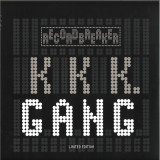
Giorgio Gordano and Giorgio Dolce originally produced ''KKK'' back in 1983, and the track was taken into the hearts of the blossoming Balearic scene hovering around DJ Alfredo at Amnesia. It's as gentle and sweet natured as Italo disco can be, and of course it makes perfect sense that Best Records would dig it out of the archives and give it the shiny new reissue it deserves. The ''Club Mix'' of ''KKK'' is a feast of simple, charming programmed melodies and crisp drum machine rhythms with the innocence of the early 80s in its heart. The ''Dub Mix'' and ''Bonus Beats'' on the flip are handy for the technical DJs out there, but the ''Club Mix'' is where it's at for the lovers.
Novo Line – aka Berlin's algorave maestro Nat Fowler – delivers a noisy, ultramarine voyage into the depths of his archaic hardware. Clawing at the periphery between leftfield electronics and avant-garde pop, Zeit is an entirely new sonic universe, eerily familiar yet utterly uncharted. A visionary synthesist, Fowler is renowned for his productions that make use of mainly '80s equipment including vintage digital synths, discarded MIDI Hi-Tech, tape delay and even an ancient Atari ST computer. But, despite the aged technology, the result is far from nostalgic.
'Ain't That a Mess' slams in with Monica Kremidi's crooning à la Little Annie Anxiety with reeving car engines and guitar-rock static fed through a pan effect. Multilayered melodies soar on 'Stein', the pounding drums matched by gliding strings, crafting that holy grail of cavernous, booming textures and uplifting euphoria that mark out the most transcendent of rave tracks. The deceptively gentle opening bars of 'Morning Star' are interrupted by a viscously squelching bassline, Cass McCombs' vocals dancing deliciously with the raw beat.
Rejecting contemporary tech-fetishism, Novo Line has a near-supernatural ability to exorcise novel sequences, weaving together a record that speaks to the ghost in the machine.
- A1: White Christmas
- A2: Adeste Fideles (Oh, Come, All Ye Faithful)
- A3: Rudolph The Red Nose Reindeer
- A4: Faith Of Our Fathers
- A5: I'll Be Home For Christmas (If Only In My Dreams)
- A6: Silver Bells
- A7: Mele Kalikimaka
- B1: Jingle Bells
- B2: Santa Claus Is Comin' To Town
- B4: The First Noel
- B3: Silent Night
- B5: It's Beginning To Look Like Christmas
- B6: Christmas In Killarney
- B7: God Rest Ye Merry Gentlemen
- B8: Sleigh Ride
Straight Outta Caledonia is the first commercially available “Greatest Hits” of the outsider songwriter Jackie Leven, an artist
who has largely remained in obscurity in his native Scotland despite being one of the greatest wordsmiths – and singers – it ever
produced. A well-travelled musician who began making psychedelic, progressive music in the late 60s before emerging as an
epic storyteller full of pathos, humour and humanity in the 90s, Leven lived and wrote like many of the fragile, gregarious
characters of his songs; large, full of life and empathy. Leven passed away in 2011 after recording 30+ albums under different
guises or with his briefly successful New Wave band Doll by Doll. Straight Outta Caledonia is a compilation collated by Night
School Records on its Archival label School Daze that seeks to introduce Leven’s music to new generations.
In an age of isolation, alienation and loss of visceral experience, Jackie Leven’s music can be massive and welcoming. It feels
connected to some universal humanity and vibrates with vitality. His songs are often full of tragedy and comedy simultaneously,
cutting straight to the heart, often plugging directly into the nervous system of the listener. His lyrics are rich, dense with imagery
that can veer from apocalyptic to the comically banal in a sentence, with a songwriting panache that can be heavy handed to
almost bursting point before skewering the song with a clownish, warm punchline. His productions ranged from Bob Dylan’s
Rolling Thunder Revue style rock band orchestrations with strings and organ as on the epic Ancient Misty Morning or they could
be pared down to the purest form of folk song as on Poortoun: Leven on stage alone with an acoustic guitar, albeit played with a
mastery of the instrument that he often only hinted at. Musically his sound can bend traditional structures or stay completely
confined within them yet still forever push towards an ecstatic release, as on the cinematic Snow In Central Park.
The most exciting, jaw-droppingly effective tool at Leven’s disposal was his voice. A multi-octave instrument that, though
damaged during a savage assault in Fife, he used with flair; he had both a brazen disregard for the rules and a deep humility, all
of which is evidenced with every phrasing. A baritone that could flit up through the register – always touched by his gentle
Kirkcaldy accent – it’s the prime delivery method for his songs. Leven’s voice enabled him to inhabit the characters in his songs to
an uncanny degree, a skill that in turn enables the listener to empathise with them and, subsequently, the singer. It’s most evident
in stand out song The Sexual Loneliness Of Jesus Christ, a breathtaking re-telling of the life of its protagonist, not as a pure,
sinless messiah but as a sexually frustrated, solitary man condemned to an existential loneliness no one else will ever feel. In
many ways the track is the archetypal Jackie Leven song. Produced by Pere Ubu’s David Thomas, what strikes the ear first –
after the samples of unemployed workers in Glasgow following the closing of the Clyde shipyards – is the audacious, rhythmic
tremolo effect Leven employs through the verses before the production opens up to allow Leven’s vocal to lift into a soar, a
freeing glide powered both by the force of the singer’s chutzpah and the inherent, doomed destiny of the protagonist. With any
other singer such subject matter could come across as gauche or worse, pretentiously sonorous, but Jackie Leven’s genius was
such that he could be this cinematic and brazen while touching something elemental and true in the beholder. It’s a skill evident in
every song on Straight Outta Caledonia, the trademark of a songwriter who revelled and excelled in intensity with a lightness of
touch.
In his lifetime, Jackie Leven toured, wrote and recorded at a ferocious rate. He recorded under aliases to avoid record contract
restrictions, played house shows in Europe after or instead of official concerts, events which were often spoken word story telling
masterclasses as well as performances of his often bewilderingly dense songbook. His music has traditionally been catalogued
as “folk” music and has been largely banished to a small, dedicated group of international fans and apostles both private and well
known, like author Ian Rankin or Glenn Matlock. Since his passing in 2011 however, there has been a growing recognition
amongst a newer generation, with artists like James Yorkston or Molly Nilsson publicly stating the influence of the unsung
troubadour on their own craft. Jackie Leven’s fairytales for hard men are often forensic deconstructions of masculinity, sad and
ecstatic, light and shadow, always endlessly rich, a resource as bountiful as Leven himself’s human spirit undoubtedly was.
‘Don’t Forget About Love’ finds Dee in outstanding voice on a gentle, uplifting song, written with Mike McEvoy and Ernest McKone as an antidote to the hate and negativity of lockdown. ‘Be There In The Morning’ was originally co-written and recorded by Australian soul singer Renée Geyer. Reminded of the song by Acid Jazz’s Eddie Piller, Dee was enthusiastic to record her own version, and delivers a euphoric vocal on another impressive return to form.
The five members of Sun June spent their early years spread out across the United States, from the boonies of the Hudson Valley to the sprawling outskirts of LA. Having spent their college years within the gloomy, cold winters of the North East, Laura Colwell and Stephen Salisbury found themselves in the vibrant melting-pot of inspiration that is Austin, Texas. Meeting each other while working on Terrence Malick's `Song to Song', the pair were immediately taken by the city's bustling small clubs and honky-tonk scene, and the fact that there was always an instrument within reach, always someone to play alongside. Coming alive in this newly discovered landscape, Colwell and Salisbury formed Sun June alongside Michael Bain on lead guitar, Sarah Schultz on drums, and Justin Harris on bass and recorded their debut album live to tape, releasing it via the city's esteemed Keeled Scales label in 2018. The band coined the term `regret pop' to describe the music they made on the `Years' LP. Though somewhat tongue in cheek, it made perfect sense ~ the gentle sway of their country leaning pop songs seeped in melancholy, as if each subtle turn of phrase was always grasping for something just out of reach.Sun June returns with Somewhere, a brand new album, out February 2021. It's a record that feels distinctly more present than its predecessor. In the time since, Colwell and Salisbury have become a couple, and it's had a profound effect on their work; if Years was about how loss evolves, Somewhere is about how love evolves. "We explore a lot of the same themes across it," Colwell says, "but I think there's a lot more love here."Somewhere showcases a gentle but eminently pronounced maturation of Sun June's sound, a second record full of quiet revelation, eleven songs that bristle with love and longing. It finds a band at the height of their collective potency, a marked stride forward from the band that created that debut record, but also one that once again is able to transport the listener into a fascinating new landscape, one that lies somewhere between the town and the city, between the head and the heart; neither here nor there, but certainly somewhere.
- A1: Euphoria 1 49
- A2: Soft Hallucinations 2 00
- A3: Sky Move 2 40
- A4: Destroyed Dreams 2 06
- A5: Horror Trip 1 39
- A6: Floating Illusions 2 23
- A7: Lost Chance 1 46
- A8: The Morning After 3 15
- A9: Random Thoughts 1 12
- B1: Heroin 2 44
- B2: Night Trip 2 54
- B3: Day Trip 1 21
- B4: Dealer's Corner 3 23
- B5: Sad And Hopeless 1 53
- B6: Riding Pegasus 3 32
- B7: Hopeless Chaos 2 15
- B8: Goin' Mad 2 06
Sven Torstenson's notorious Drugs is a loopdigga's fever dream, bursting with breaks for days and featuring possibly the most iconic cover of all library music's cult classics. First released in 1980, it's now a hyper-rare and seriously sought-after electronic album full of experimental soundscapes and samples just waiting to be flipped. It's both terrifying and terrifyingly good. So much so, it's been brilliantly sampled by Kendrick Lamar and Chance The Rapper.
The sleeve describes Drugs as containing "the newest dimensions of electronic sounds. Dramatic underscores for all problems of today's life and society, at the border between reality and delusion." That's pretty spot-on. The fast moving "Euphoria" is an incredible, unignorable opener. It's loaded with disorientating effects and really needs to be heard to be believed. It's followed by the gorgeous "Soft Hallucinations", containing quiet, meditative and beautiful sounds - as the title suggests. One listen and you'll want to live in the warm embrace of this beatless, harmonic gem. Sinister squelchy synth stabs don't distract from the sheer beauty of the track's main (gentle) thrust. They only serve to elevate its trippy magic.
Next up, "Sky Move"'s agitated and repetitive rhythm makes it an intense listen but with a broad melody that will appeal to many. "Destroyed Dreams" utilises a muffled church organ and it sounds heavenly to begin with but it gradually invites increasingly distorted elements. Yes, you've had trips like this, we're pretty certain. Mental! Talking of bad trips, never have they sounded so good as "Horror Trip"; this fractured drama-synth just needs some some dusty beats to hold it up - get involved.
"Floating Illusions" almost sounds like a beatless Spiritualized bomb from the early-mid 90s; melodic, synthy, church organ-drenched. The mournful, dramatic "Lost Chance" pulses along on a bed of acidy synths whilst "The Morning After" is the sonic equivalent of the extreme fear and doom experienced in the aftermath of the previous night's carnage. Whilst somewhat uncomfortable listening, again, it's pretty compelling thanks to the myriad effects being expertly utilised. Fascinating. The sprawling, fragmented "Random Thoughts" is described as containing "confused melody phrases" - yeah, pretty much sums this one up.
The B-Side is ushered in by "Heroin" and it's as sketchy as you might think, all mysterious minor chords with a dominating - but not overbearing - bass refrain. Next up, the dream-like synthy fanfare of "Night Trip" climaxes after a few minutes of dramatic, ecclesiastical sounds whilst "Day Trip" layers its melody over a repetitive rhythmic base.
Next up, one of the *REAL* highlights makes itself known. Absolutely not to be missed, "Dealer's Corner" is all shifting tenors from quiet to hectic and back around again. The hectic parts are like a totally synthed-out-the-eyeballs jazz-funk collective wigging out with the latest electronic toys from 1980. This one totally SMOKES.
The dramatic "Sad And Hopeless" is appositely replete with dissonant, minor church-organ chords whilst "Riding Pegasus" uses a creepy ostinato bass melody to create irrational bleepy menace that's ripe for sampling. The penultimate track, "Hopeless Chaos" is another disorientating trip, a bleepy confection of sounds and phrases whilst closer "Goin' Mad" is all electronic percussion with an unpleasant rhthymic feel and irritating melody. Music to annoy your partner with!
Established in Munich in 1965 by Gerard and Rotheide Narholz, Sonoton introduced library music to Germany. Initially intended to cater to the country's new TV market, the library also provided an avenue for Gerhard Narholz's astonishing musical prolificacy, and soon became a haven for a wide range of European composers and musicians. In 1969, Sonoton struck a deal with the British label Berry Music for international publishing rights, exposing its catalog to a worldwide audience; when Berry was bought out by EMI in 1973, Sonoton transitioned into a full-fledged international label, with successes in the library and commercial fields and many innovations to its credit. Now a worldwide operation with hundreds of producers and composers under its employ, Sonoton nonetheless remains an independently run business still helmed by its founders - a remarkable achievement in an era when nearly every other major library has been absorbed by a multinational conglomerate.
The audio for Drugs has been remastered by Be With regular Simon Francis, ensuring this release sounds better than ever. Cicely Balston's expert skills have made sure nothing is lost in the cut whilst the original, iconic sleeve has been restored here at Be With HQ as the finishing touch to this long overdue re-issue.
Sean La’Brooy is an Australian producer and composer currently based in New York, who’s work traverses ambient, jazz and house music. He is the co-founder of Australian ambient label Analogue Attic Recordings. With this release, La’Brooy has hooked up with the Scissor and Thread label to put out Merchant - five dreamy and versatile tracks featuring his distinct style of harmonically complex pads mixed with jazz-influenced instrumental melodies and solos. Snow Storm starts the journey, coupling field recordings with snippets of gentle jazz lines and wandering percussion. Cargo is the most dancefloor-oriented of the release, and locks into a driving groove early on, featuring various synth and piano fragments to add and flow through the track. Pilot is a track that also finds an off-kilter groove, embellished with dubbed-out percussion by fellow Australian Joseph Batrouney and samples. Storage too features a guest—New York based drummer Leo Yucht—who delivers a rolling breakbeat which is intertwined with live percussion, airy pads and snippets of piano to build a rich atmosphere. The closing piece is Helipad, a dubby bassline providing the anchor for an intricate rhythm of bongos and synth to support a light-as-a-feather melody.
The last twelve months have been a whirlwind for Henry Counsell and Louis Curran, the men who make up Joy (Anonymous). Having established themselves during the Covid-19 era by playing impromptu meet-ups on London’s South Bank, they have graduated to bigger venues, travelled to far-flung locales and recorded their second album, Cult Classics, while maintaining the spontaneous energy and irrepressible joy that made their name. Their music revels in the euphoria of being alive and all the feelings, good or bad, that come with it. It invites us into a community, draws us close and promises the night of our lives.
Recorded over the course of a year, the blueprint for Cult Classics was laid down over a two-week span at Imogen Heap’s Round House in east London. Joy (Anonymous) invited friends old and new to visit - they’d record live instruments in jam sessions upstairs and then retreat to a second room to flip and loop and generally mess with the sounds, moulding them into sizzling dance tracks. “Loads of people were coming up to me like ‘I thought this was going to be a dance record?’” Louis says, remembering the quietly beautiful music they’d be recording. “I’d be like, don’t worry about that, just keep playing.” He’d send it back to people later and they’d be floored - “That was my bit and you’ve made it... jungle!”
It was an organic and creatively fulfilling approach, one that didn’t allow any of the music to get stale or stagnate. As they built the tracks from the sounds they’d collected, Joy (Anonymous) would weave the new songs into their famously improvised live sets, testing them, refining them, taking note of the audiences’ reactions. In a year punctuated by a lot of travel, they’d also incorporate the voices of people they met along the way - “Beazley’s Poem”, which opens the record, features the words of a man who was working security at a Fred Again show at New York’s Terminal Five. “He was basically doing the opposite of his job and being a hype man, climbing on the fence and ramping up the crowd - we ended up hanging out with him - like, who’s this legend?” Louis explains. “He just speaks really amazingly about his life, all these amazing thoughts and opinions - he started jumping on the mic when we were playing, preaching these amazing messages to the crowd, like that we all need to be nicer to each other. The first time we played the record in its entirety, he introduced us and that’s the recording we’ve used.”
Joy (Anonymous) remain dedicated to the spirit of spontaneity. They shut a street down with a surprise waterside party in New York. On a trip to Copenhagen they played an impromptu set in a cafe, which turned into a house party and a night-long good time. In Lithuania, they ended up playing in a decommissioned prison. It’s harder, perhaps, to keep that spirit alive now that they are operating more within the confines of the music industry but they will keep lugging their kit to wherever the party calls for as long as they can. “I think if we lose that, we’ve kind of lost what makes us us,” Henry says.
Bursting with multi-genre reference points and disparate influences, Cult Classics is very much a dance album. The samples we made ourselves or we took from music that is quite different to dance music, but we definitely wanted to shout out a lot of the dance influences that we love,” Henry says. They listened to a lot of Daft Punk and Basement Jaxx as well as The Prodigy (“more rage stuff”), taking songwriting tips from their dance forebears, but also recording bits that felt more like jazz and motown (see: A Place I Belong and the lovely album closer, You’re In Or You’re Out). Emir Taha’s gentle classical guitar runs like a thread throughout Cult Classics, washing into the undertones of the record, tying it all together.
The album follows the beat of a night out, from frenetic, sweaty movement to the gentler winding down as the dawn breaks. At times it is euphoric, celebratory and pure, whirling fun, at others it seeks the joy in the darker emotions that life throws our way. 404 is designed to encapsulate everything about the Joy (Anonymous) journey so far. Skittering beats and ghostly vocals give way to vibrating house chords: sirens blare as we approach a dubstep drop. It’s dramatic and wild, ratcheting up, seeming to settle then hitting you with an intense and frantic breakdown before the ghostly vocal returns to lull us back into the world. It has the feel of a hungry cat playing with a mouse, toying with it before letting it get away.
What sounds like someone playing the spoons on playful, housey How We End Up Here is actually Louis’ restless habit of clicking his rings on everything, one of a myriad of calling cards and easter eggs that day one fans will recognise. They rework Miley Cyrus and Swae Lee’s Party Up The Street into a French-electro-inspired future classic, adding a note of melancholy to a tune that you can imagine hearing blaring from every car on a summer drive. The lyrics on Cult Classic are generally reassuring, inspirational, originally drawn from Henry in stream-of-consciousness freestyles. You’re fine the way you are, they seem to say - the repeated “No need to try” of A Place I Belong, the assurance that “It’s in me all the time” on In Me All The Time. Even the summery but regretful Did You Wrong hints at the growth that is possible from less than ideal behaviour. For Joy (Anonymous), joy isn’t about just being “happy” all the time - it’s about relishing every element of your being.
The name ‘Joy (Anonymous)’ is taken from the work Henry did with Alcoholics Anonymous groups: it is a way to build a community around sharing joy. Their impromptu live sets are known as ‘meetings’; they encourage fans to share moments of joy to their website. They care deeply about the scene they’ve come up in and are determined not to leave it behind. Every show is another chance to reach out and connect with people who love to come together and revel in music as loud as it can go.
Support slots for Fred Again and The Streets, wild B2Bs with Fred and Skrillex, and a set at Four Tet’s Finsbury Park all-dayer this summer have given the duo the opportunity to live out childhood dreams and introduced their infectious live shows to new audiences at huge venues.
With an album as assured and joyful as Cult Classics on the horizon (and a killer collab with The Blessed Madonna coming up), they’re only going to reach higher heights. But the essence of Joy (Anonymous) remains on the South Bank. Between shows at Ally Pally in September, they dragged their camping chairs and gear back down to the banks of the Thames: and it just felt right.
»What is Dance?« contains two pieces originally conceived in 2017 for a performance/sound installation of the same name at Meinblau Projektraum (Berlin), as part of the series singuhr_projekte. Drawing inspiration from the works of American sound artist Joe Jones and his »Music Machines«, Robert Lippok (Ornament und Verbrechen, To Rococo Rot) arranged various sound objects (pieces of wood, cymbals, rotating plastic film), that were played mechanically. The sound piece—designed for a 4-channel system and condensed into a loop, that clocked in at around 20 minute—is his interpretation of three dances from the opera »The Fairy Queen« by Baroque composer Henry Purcell.
From this source material, Robert Lippok has now extracted and rearranged two pieces for »What is Dance?.« The result is music of its own right: Dense, but permeable drones are central, but complemented by harmoniously matching and gently pulsating sounds.
- 1: The Yodel Song
- 1: 2 Queen Of The Silver Dollar
- 1: 3 Everybody's Makin' It Big But Me
- 1: 4 Acapulco Goldie
- 1: 5 Only Sixteen
- 1: 6 I Ain't Got No Home
- 1: 7 50'S Medley
- 1: 8 Earth Angel
- 1: 9 For Your Love
- 1: 0 A Million Miles Away
- 1: Oh Donna
- 1: 2 What's Your Name
- 2: 1 Rollin' In My Sweet Baby's Arms
- 2: Carry Me, Carrie
- 2: 3 Cover Of The Rolling
- 2: 4 Happy Trails
- 2: 5 Sylvia's Mother (Bonus Track)
Silver Marbled Vinyl[46,18 €]
Dr. Hook & the Medicine Show, shortened in 1975 to Dr. Hook, was an American rock band, formed around Union City, New Jersey. They enjoyed considerable commercial success in the 1970s with hit singles including "Sylvia's Mother", "The Cover of the Rolling Stone", "A Little Bit More" and "When You're in Love with a Beautiful Woman". In addition to their own material, Dr. Hook and the Medicine Show performed songs written by the poet Shel Silverstein. The band had eight years of regular chart hits, in both the U.S. and the UK, and great success with their later gentler material, as Dr. Hook.
- 1: The Yodel Song
- 1: 2 Queen Of The Silver Dollar
- 1: 3 Everybody's Makin' It Big But Me
- 1: 4 Acapulco Goldie
- 1: 5 Only Sixteen
- 1: 6 I Ain't Got No Home
- 1: 7 50'S Medley
- 1: 8 Earth Angel
- 1: 9 For Your Love
- 1: 0 A Million Miles Away
- 1: Oh Donna
- 1: 2 What's Your Name
- 2: 1 Rollin' In My Sweet Baby's Arms
- 2: Carry Me, Carrie
- 2: 3 Cover Of The Rolling
- 2: 4 Happy Trails
- 2: 5 Sylvia's Mother (Bonus Track)
Silver Vinyl[39,29 €]
Dr. Hook & the Medicine Show, shortened in 1975 to Dr. Hook, was an American rock band, formed around Union City, New Jersey. They enjoyed considerable commercial success in the 1970s with hit singles including "Sylvia's Mother", "The Cover of the Rolling Stone", "A Little Bit More" and "When You're in Love with a Beautiful Woman". In addition to their own material, Dr. Hook and the Medicine Show performed songs written by the poet Shel Silverstein. The band had eight years of regular chart hits, in both the U.S. and the UK, and great success with their later gentler material, as Dr. Hook.
Dreamers have dreamt for as long as domes have fallen, bobbing musical swells from Stephen Foster to the Everlys. Now here comes that beautiful dreamer JOSEPHINE FOSTER and, sugarpie, she's not the same. She has donned her magenta vestiments, dreaming back, with mossy verses that haunt like a name never called. It's not just Jo and her shadow, though, this time around-she's got a gaggle of Nashville cats on hand to coax spidery cathedrals from these campfire jams. Folks will want to call this her "Harvest" - with its harp and pedal steel, its double bass and cascading piano. And it's true, "I'm a Dreamer" beckons with a gentle hand, each note clear and crisp so that one feels each grain. Amid such delicate charms, however, lurk muses with rotting flesh, ugly ducklings and Djuna Barnes, wooden floors upon which no babies will be rocked. Wily is the heart that wanders filled with duende and desire, that rides the thigh like a parlor guitar when a strap just isn't handy. These are songs comfortably at home in salon or saloon, dreams deep enough to bury your dread - as sorrowful, as sexy, as stirring a set of songs as anybody's dreamt up in ages.
Nondi_ is the alias of Tatiana Triplin, a US producer based in Johnstown, Pennsylvania, who also runs the net label HRR, releasing the music of friends and herself under various aliases. Her brother is the up and coming MC, Eem Triplin. The music Nondi_ makes is informed by footwork, breakcore and Detroit techno. However, as she's only experienced them via the internet, she has has filled the gaps with her imagination and consequently the music is rendered from a dreamlike solitude that feels adjacent to other internet genres such as vaporwave. Her tracks are gauzy and abstract, smeared with gentle melody, rusty tones and occasional shafts of sunlight, sometimes set to a distant pulse, sometimes collapsing as if the music itself is falling apart. Of the album she says: "Flood City Trax is music that captures the mood of living in a town like Johnstown, and more broadly the isolation of poverty. That's the environment these tracks came out of, after all. Johnstown is a very poor isolated small factory town in Western Pennsylvania which has a dark history of deadly floods, the most well known being the 1889 flood which was like something out of a horror story and the 1977 flood which the Triplin family survived. Johnstown has never moved past its floods, hence the nickname "Flood City". There's very little to do and every year the town shrinks more, and more buildings are knocked down or condemned. Everything is old but simultaneously the past seems like it has just disappeared." LP A: 1/FCD (Floaty Cloud Dream) 2/Orchid Juke 3/Sun Juke 4/Nondi Shadow 5/Euphonic Daydream 6/01-25-2022 B:1/Healing Rain 2/Dusty 3/Nostalgic Vision 4/Long Ago 5/Sentimental Juke 6/Harmoyear