Wewantsounds Is Pursuing Its Ambitious Akiko Yano Reissue Program With The Release Of "japanese Girl", Her Landmark Debut Album From 1976. Backed By Little Feat With Lowell George And By The Cream Of Japanese Musicians (including Haruomi Hosono), Japanese Girl Is One Of The Most Important Japanese Albums Of The 70s, Mixing Pop, Rock, Japanese Folk Together With Little Feat's Superb Classic Sound. This Is The Very First Time The Album Is Released Internationally. The Deluxe Lp Edition Includes Remastered Sound, Tip-on Lp Sleeve, Download Card Plus The Original 4-page Insert With Lyrics And Full Line-up!
When Akiko Suzuki Left Her Home Town Of Aomori For Tokyo In The Early 70s Aged Just 15 To Become A Professional Musician, She Quickly Started Making Waves On The Local Music Scene Performing At The Jazz Club Rob Roy. In 1973 She Released A 7" With The Group Zariba And Caught The Attention Of A&r Man Koki Miura. She Then Recorded One Song, "oinaru Shiino-ki" With Haruomi Hosono On Bass And Drummer Tatsuo Hayashi (who Features On Many Hosono Albums And Also Hiroshi Sato's 1979 Album Orient) With A Full Album In Mind.
After A Marriage With Musician/producer Makoto Yano And The Birth Of Her Son (named Fuuta), Yano And Her Team Resumed The Recording Of The Album And Decided To Pitch Little Feat For A Collaboration As She Loved The Group. Against All Odds They Said Yes And Yano Left Tokyo For Los Angeles In March 1976 To Record A Full Side With Them. The Legend Has It They Found It So Difficult To Keep Up With Yano's Compositions They Returned Some Of Their Fee. The Session Was Nevertheless Stunning And Lowell George Even Compared Yano To Stevie Wonder. The Little Feat Blend Of New Orleans Groove Matched Yano's Melodies Perfectly, As Witnessed On "funamachi-uta Part 2." Originally A Traditional Song From The Nebuta Festival In Her Hometown Of Aomori (part I On Side 2 Gives A Good Idea Of What The Original Form Sounds Like), The Little Feat Version Is A Formidable Slow-funk Workout Not Dissimilar To Their Classic, "spanish Moon", Serving Yano's Beautiful Vocals And Sense Of Groove To Perfection. The Whole Side Is A Match Made In Heaven, Showcasing The Classic Little Feat Line Up At Their Funkiest With Yano's Unique Japanese Twist.
The Japanese Side On The Album Gives A Great Snapshot Of The Tokyo Music Scene Of The 70s With Many Musicians Gravitating Around Haruomi Hosono (and Present On His 1973 Classic Album 'hosono House' Including Sound Engineer Kinji Yoshino) And Also Several Musicians From Japanese Band, The Moonriders.
Recorded At The Legendary Onkyo Haus Studio In Tokyo, The Sessions Mix Singer-songwriter Sensitivity And Pop With Traditional Japanese Sounds And Instruments Like The Shinobue Transverse Flute, The Koto String Instrument Or The Tsuzumi Hand Drum As Played On "hekoriputaa" By The Legendary Percussionist Kisaku Katada Who Was Appointed Living National Treasure By The Japanese State In 1999; Together They Create A Beautiful East-meets-west Mix Masterfully Driven By Yano's Creativity And Unique Talent.
A Breathtaking Debut Album That Made Akiko Yano One Of The Most Important Artists To Emerge From The 70s, Japanese Girl Has Since Become A Milestone In Japanese Music With A Recent Documentary On Nhk Tv Telling The Whole Story Behind This Classic. Wewantsounds Is Now Proud To Present This Essential Album To The Rest Of The World.
Cerca:george p
The Whatnauts emerged from Baltimore in the late 60's and were produced by George Kerr & Michael Watson.
This 8-song original LP has become a classic 70s soul album, mixing ballads and groovy tracks. While "You forget too easy" could be played on any lowriders mixtape, "Im So Glad I Found You" featuring Linda Jones is the perfect Northern soul floor filler. The beatmakers & producers are given their share too, with the drum breaks of the groovy "Why Can't People Be Colors Too?" And to make this reissue even more collectable, Playoff Records added the 80s funky "Help is on the way" sampled by De La soul as the perfect bonus track. A must have for any diggers or soul music fans.
A pioneer of bebop, Max Roach went on to work on many other styles of music and is generally considered alongside the most important drummers in history having worked with such musicians as Coleman Hawkins, Dizzy Gillespie, Miles Davis, Duke Ellington, Charlie Parker, Stan Getz and more! A seminal set, stretching out towards the directions Max would explore fully on the Candid, Impulse, and Fantasy labels in the 60s. Group members include Booker Little on trumpet, George Coleman on tenor, Ray Draper on tuba, and Art Davis on bass – and the lack of a piano makes for a very exciting sound!
Phil Upchurch is the kind of guitarist who makes a strong point by what he chooses not to play. There are speedier chopsmeisters, players who undertake more daring intervallic leaps, those who navigate trickier lines, but it would be hard to imagine a more soulful guitarist than Upchurch. From his laidback phrasing on Nat Adderley's bluesy boogaloo "Jive Samba" to his buttery-smooth vocal inflections on Steely Dan's "Jack of Speed" and on the bluesy title track, Upchurch's understated approach on Tell the Truth! is more about pure feeling than technique. And yet he's holding in that department too, as he so capably demonstrates on Roland Vasquez's "Long Gone Bird" and on his own stunning arrangement of Paul Desmonds' "Take Five," done up in a similar fashion to his arrangement for that tune on George Benson's crossover smash hit from 1976, Breezin'. His unaccompanied rendition of "St. Louis Blues" is another guitaristic highlight, showcasing what Upchurch calls his stride guitar technique: incorporating bass, chords and melody lines simultaneously, a la Joe Pass. The prolific studio guitarist covers a lot of basses and blows his own horn in fine style on his Evidence debut.
Love Is a Four Letter Word is Jason Mraz's fourth studio album, acclaimed for its introspective lyrics and acoustic-pop sound. Released in 2012, it reached number 2 on the Billboard 200 chart and sold over 1 million copies worldwide, showcasing Mraz's musical versatility and emotional depth.
Legendary drummer Kenny Clarke compared Jean-Luc Ponty to Dizzy Gillespie Fellow violinist Stuff Smith marveled, "He plays violin like Coltrane plays saxophone." Born in 1942, the French violinist Jean- Luc Ponty transported jazz violin playing into the world of modern jazz. On Frank Zappa's urging, Ponty moved to the States in 1970. Over the next years he toured with Zappa, the Mahavishnu Orchestra, and Chick Corea's "Return to Forever".In the early 1970s Ponty bought himself a sequencer and synthesizer and carried them around while traveling so he could record new ideas. By 1982 Ponty had a well- deserved reputation as a forerunner in jazz-rock and jazz fusion.
In a retrospective interview for this re- release of the 1983 album Individual Choice, JLP said:
"What I was recording in that new sequencer gave me the idea to go for a totally different concept, to use these recordings as rhythmic backgrounds, sometimes without drums or percussion. I planned to record a new album in which I would play all the background parts with my synthesizers and add my violin later on in the studio."
Ponty also invited a couple guests to contribute to the recording.
They were no less than George Duke (keys), Allan Holdsworth (guitar), Rayford Griffin (drums) and Randy Jackson (bass).
Individual Choice has been re- mastered by 2023 Grammy Nominee Christoph Stickeland includes new liner notes.
- A1: Dedicated To The One I Love
- A2: Ooh Baby Baby
- A3: Woman Of The World
- A4: Louise's Church
- A5: Lite A Flame (The Animal Rights Song) (The Animal Rights Song)
- B1: Walk The Dog & Light The Light (Song Of The Road) (Song Of The Road)
- B2: The Japanese Restaurant Song
- B3: And When I Die
- B4: To A Child
- B5: The Descent Of Luna Rose
- B6: Wild World
- C1: Save The Country
- C2: Wedding Bell Blues
- C3: Trees Of The Ages/Emmie
- C4: Walk On By
- C5: Let It Be Me
- C6: Oh Yeah Maybe Baby (The Heebie Jeebies) (The Heebie Jeebies)
- D1: Wind
- D2: Broken Rainbow
- D3: My Innocence/Sophia
- D4: Art Of Love
Black Vinyl[32,14 €]
Laura Nyro Live In Concert in 1994! Previously available only in Japan Includes live versions of the classics “And When I Die,” “Wedding Bell Blues,” “Stoned Soul Picnic,” and more Member of both the Songwriters and Rock & Roll Halls of Fame A member of both the Songwriters and Rock & Roll Halls of Fame, Laura Nyro not only wrote songs that became hits for acts including The 5th Dimension, Blood, Sweat & Tears, Three Dog Night, Barbra Streisand, and many more, but has been cited as a major influence by Kate Bush, Elton John, Elvis Costello, Cyndi Lauper, Todd Rundgren, Broadway composer Stephen Schwartz Godspell, Wicked, and countless others. She recorded 10 studio albums (one released posthumously), but a live performance from Nyro was always an event. Originally issued only in Japan as Live In Japan in 2003, these 16 tracks recorded at Kintetsu Hall, plus 5 recorded at On Air West return as Trees Of The Ages: Laura Nyro Live In Japan. From Nyro-penned hits including “And When I Die,” “Wedding Bell Blues,” and “Save The Country,” to covers of Bacharach/David, Smokey Robinson, and Phil Spector classics, Trees Of The Ages is an essential document of Laura’s February 1994 historic visit to Japan. With Laura on piano and vocals, with harmonies by Diane Wilson, Dian Sorrell, Diane Garisto, the performances are sublime. Newly remastered by Grammy®-winner Michael Graves, and produced for release by Grammy®-winner Cheryl Pawelski and George Gilbert with the approval of The Laura Nyro Trust, the packaging contains updated artwork and new liner notes from author and musician John Kruth. Looking and sounding incredible, this essential addition to Nyro’s discography is available worldwide for the first time. Trees Of The Ages: Laura Nyro Live In Japan cements the legend of the incomparable Laura Nyro.
- A1: The Royal Mile
- A2: I Was A Boy Scout
- A3: Welcome To Hollywood
- A4: Wastin’ Away
- A5: Look At The Moon
- A6: Bring It All Home
- B1: The Garden Of England
- B2: Johnny’s Song
- B3: Didn’t I
- B4: Syncopatin’ Sandy
- B5: Café Le Cabotin
- B6: Don’t Close The Doo
Snakes and Ladders, newly remastered at half-speed by Miles Showell at Abbey Road Studios, out on 25th August 2023. Originally released in 1980, the fourth album from Gerry Rafferty includes "The Garden Of England" which was recorded at Beatles producer George Martin's AIR studio in Montserrat and "Johnny's Song", a remake of a song previously released by his former band Stealer's Wheels.
With hits such as ‘Baker Street’, ‘Right Down The Line’ and ‘Night Owl’, Gerry Rafferty is one of Scotland’s and the UK’s finest songwriters and musicians in history. He first found success as part of the band The Humblebums, which included beloved comedian, actor and musician Billy Connolly. Rafferty went on to form Stealers Wheel with old school friend Joe Egan, who produced a number of successful albums alongside the rock classic Stuck In The Middle With You, a track which has transcended generations with notable syncs in films such as Tarantino’s Resevoir Dogs, and is still widely popular to this day. Following his departure from Stealers Wheel, Rafferty relaunched his solo career in 1978 with the album City To City, including hits such as ‘Right Down The Line’ and ‘Baker Street’, which features the iconic saxophone solo by Raphael Ravenscroft. Rafferty went on to release ten studio albums, solidifying his status one of the finest musicians and songwriters to come out of the UK.
- A1: Vortex Count - Growthh
- A2: Translate - Nyquist
- A3: Pulso - Unexpected
- A4: Aural Research - <>
- B1: Droneghost - Cartographer
- B2: David Bowman - Ligo
- B3: Animatek - Black Cat
- C1: Hd Substance - Kormoran
- C2: Groof - Al Caer Sube
- D1: Dorian Gray - Arcadia
- D2: Andrey Detochkin - Brain Impulses
- E1: Pedro Pina - Peakoil
- E2: Victor Santana - The Feeling Of Never Giving Up
- F1: Hironori Takahashi - Velk
- F2: Subtraum - Binare Code Ii
- G1: Plural - Stowaway
- G2: Hanton - Astral Travel
- H1: Eleck & Alex Schultz - Engine Control
- H2: Lakej - Someone Lead The Way
Neurotwin is a Trilogy:
Part I
In the fight against Alzheimer's, epilepsy, schizophrenia and other diseases characterized by an imbalance in neuronal activity, there are chemical weapons, such as those that try to prevent the protein fragments known as beta-amyloid plaques from developing in the cerebral cortex , and physical, such as electrical stimulation that allow to restore the functionality of brain cells. This last resort, which has already been shown to be effective in modifying the activity of the cerebral cortex, is today a weapon of general intervention. Converting it to precision requires the development of individualized and predictive brain models that allow identifying where and how much to stimulate each patient. To achieve this, an international European team is working on the creation of virtual replicas of the most unknown organ in the body: the Neurotwin project.
According to recent research, the decrease in power in the neuronal oscillations of the gamma band of the cerebral cortex (a pattern whose frequency ranges between 20 and 50 Hertz) favors the development of protein fragments related to Alzheimer's.
Transcranial application of weak electrical currents has proven to be an effective and painless way to modulate brain activity without side effects.
The objective is to create complete computational models of the brain with real data of living beings (human patients) and that allow to anticipate and specify the effects of non-invasive stimulation techniques on neurological mechanisms.
"Never turn your back on a friend."
- Alfred Hitchcock
Part II
The Neurotwin project is the successor to an initiative that encompasses many projects called Virtual Physiological Human, which was based on the idea of creating a complete model of a human being on a computer, to perform non-invasive tests at the computational level. Now the concept has been derived to "Digital Twin", which seeks not only to have an equal computational model for everyone, but to create "twin" digital models of each patient in order to be able to make personalized medicine from the genome of each individual. Specifically, in our project, we have focused on digital twin brains, which would be representations of patient brains created from data extracted with current neuroimaging and brain activity monitoring techniques.
"Mirrors are used to see the face, Art to see the soul."
- George Bernard Shaw
Part III
A digital twin is a computer system programmed in such a way that, receiving the same inputs as the physical object or process it is a twin of, it provides the same outputs.
Characteristics of digital twin technology
1 Connectivity
2 Homogenization
3 Reprogrammable and intelligent
4 Digital traces
"There is no light without shadows and no fullness of mind without imperfections. Life requires for its realization, not perfection, but fullness. Without imperfection, there is no progress or growth."
- Carl Gustav Young
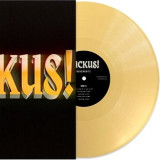
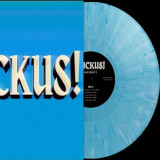
Seit der Gründung 2015 ist bei Movements einiges passiert – der Name ist Programm und somit führt das Post-Hardcore-Quartett seinen Sound auf ihrem dritten Album RUCKUS! einen an expansive und manchmal unerwartete Orte. Das von Will Yip (Circa Survive, Code Orange) produzierte Album vereint Post-Hardcoreund Punk-Einflüsse mit einer gesunden Portion Pop-Songwriting, um ein Album zu erschaffen, das sich über die Konventionen der Szene hinwegsetzt und etwas völlig Einzigartiges schafft. Um dies zu erreichen, begab sich die Band - bestehend aus Sänger Patrick Miranda, Gitarrist Ira George, Schlagzeuger Spencer York und Bassist Austin Cressey - dreimal in das Studio 4 von Yip in Conshohocken, Pennsylvania, um die Songs zu schreiben und aufzunehmen, die schließlich zu RUCKUS! wurden. ”Ich glaube wirklich nicht, dass es einen strafferen Prozess hätte geben können, und ich glaube nicht, dass wir jemals Musik geschrieben haben, die so gut ist wie das, was wir für diese Platte zusammengestellt haben”, erklärt Miranda. Vom verzerrten Grind von ”Lead Pipe” über den synkopischen Groove von ”Killing Time” bis hin zum Pop-Glanz von ”Tightrope” - auf RUCKUS! integriert die Band ganz unterschiedliche Einflüsse wie die Gorillaz und die Strokes in ihren Sound, um die Vorurteile der Leute über ihren Sound herauszufordern.
„Eine blühende Solokarriere aufgebaut auf einfallsreicher Programmgestaltung und einem sondierenden Interpretationsstil“,
sagt die New York Times über Daniel Hope. Auf seinem neuen Album erkundet der Stargeiger die Diversität amerikanischer Musik in atemberaubenden neuen Bearbeitungen von Werken aus
Klassik und Jazz, die von George Gershwin, Aaron Copland, Leonard Bernstein, Kurt Weill, Florence Price, Duke Ellington, Sam Cooke und Samuel A. Ward stammen.
Begleitet wird Hope vom Zürcher Kammerorchester und von großartigen Gastmusiker*innen, u.a. Soul-Sängerin Joy Denalane und renommierten Jazzpianisten Marcus Roberts. Als künstlerischer Leiter des New Century Chamber Orchestra in San Francisco hat Hope einen engen Bezug zur amerikanischen Kulturlandschaft und dies wird nun auf seinem Album „America“ durch vielfältige und faszinierende Werke musikalisch erlebbar.
„In jüngster Zeit gibt es eine starke Bewegung mit dem Ziel, afro-amerikanische Komponisten wiederzubeleben und neu zu
entdecken, etwa Florence Price oder William Grant Still. Es gibt noch viele andere Komponisten, deren Geschichten erst heute erzählt werden‘“, sagt Hope.
Markus Roberts fügt hinzu: „Amerikanische Musik verkörpert das amerikanische Leben: Flexibilität und die Fähigkeit, kontinuierlich etwas zu erschaffen und neu zu gestalten“. Hope und Roberts sind über die Jahre oft zusammen aufgetreten; mit dieser Aufnahme
faszinieren sie einmal mehr durch einen exzellent musizierten Dialog zwischen Jazz und Klassik.
- I’ve Got My Love To Keep Me Warm
- The Song Is Ended
- You’re Laughing At Me
- Get Thee Behind Me Satan
- How Deep Is The Ocean
- Let’s Face The Music And Dance
- Always
- Heat Wave
- Suppertime
- Puttin’ On The Ritz
- Cheek To Cheek
- Let Yourself Go
- Russian Lullaby
- Alexander’s Ragtime Band
Weltpremiere eines bislang unbekannten Ella-Konzertes, aufgenommen mit dem Hollywood Bowl Pops Orchestra im August 1958!
Die berühmten Songbook-Alben von Ella Fitzgerald sind Evergreens des Jazzgesangs, die in regelmäßigen Neuauflagen und inzwischen auch digital immer wieder alte und neue Fans finden. Ellas mitreißende
Interpretationen der besten Songs von ikonischen Komponisten wie Irving Berlin, Rodgers & Hart, Cole
Porter und natürlich George & Ira Gershwin sind bis heute unübertroffen. Dass Ella Fitzgerald Ende der
1950er Jahre ihr Irving Berlin Songbook zusammen mit dem großartigen Arrangeur und Orchesterleiter
Paul Weston auch live aufgeführt hat, war längst in Vergessenheit geraten.
Jetzt wurde in der Privatsammlung von Ellas Manager Norman Granz ein Stereo-Mitschnitt dieses ganz
besonderen Abends entdeckt und von Produzent und Toningenieur Gregg Field bestmöglich digital aufbereitet. Auf LP, CD und digital laden Ella Fitzgerald, Paul Weston und das fabelhafte Hollywood Bowl Pops
Orchestra jetzt zum live aufgeführten Irving Berlin Songbook ein, ein Abend voller Swing, sentimentaler
Balladen, unsterblicher Ohrwürmer und Jazzgesang der Weltklasse
With the label MPS, post-war musical history was written in Germany:
noble music productions with many international greats come from the
Black Forest and are timelessly legendary
Some treasures from the archive of the label are released by HGBSBlue on highquality vinyl.
The Hampton All Stars played at the first concert of the festival "VS swingt" back
then. MPS boss Brunner- Schwer was there at the mixing desk. Some of these
recordings were released in 1978 as the MPS LP "Alive and Jumping" (MPS
15469).
"Hamp" and his All Stars were really into it and brought the audience in the Black
Forest, known as rather reserved, to a frenzy, especially after the break. The old
master worked his magic on the vibraphone, of course, but also played drums
and piano and sang with an irrepressible sense of rhythm as one who had
unmistakably internalized swing. The top trumpeter Cat Anderson was another
internationally known musician in the eight-piece all-star band with which "Hamp"
toured Europe at the time. And there was someone else who was one of HGBS's
personal favorites: pianist and organist Milt Buckner. Buckner's block chords had
not only influenced Oscar Peterson and George Shearing, but also inspired the
passionate piano freak Brunner- Schwer. The live recording with Hampton's All
Stars in Villingen was the last record of Buckner, who died a few weeks later in
the USA of acute heart failure.
The musicians can be heard in exuberant joy of playing, with "Hamp" standing out
sovereignly on vibraphone and drums, as well as Buckner with soulful organ
playing. Everything sounds unspent fresh and cheerful and shows Hampton and
his fellow players in top form. This rousing swing, which should appeal not only to
jazz fans, is available exclusively on LP.
- Unreleased live recording from 1977 in Villingen, Germany
- The last recording of organist Milt Buckner
- High-end vinyl quality 180 gr. vinyl in gatefold, matt finish with embossed
printing
- A1: Maroon Commandos - Bi Sophia N°1 (El Sofia)
- A2: Issa Juma & Waanyka - Ateka (El Corín Tellado)
- B1: Orchestre Shika-Shika - Diabanza (La Gallina Java)
- B2: Viva Makale - Safari (La Mecedora)
- B3: Les Mangelepa - El Trouble Pt 1 (El Trouble)
- C1: Nairobi Matata Jazz - Dada Mwajuma (La Pistola)
- C2: Les Volcano - Hakuna Dawa Ya Mapenzi (La Guitarra Sónica)
- D1: Lawi Somona - Safi (El Mapache)
- D2: Les Kilimambogo - Wakumbuke Wazazi (El Coyote)
- D3: Les Mangelepa - El Trouble Pt 2
This compilation takes us on a journey to the Colombian coast where the passion for African music burns bright.It's impossible to understand this love affair without first looking to San Basilio de Palenque - the first free town in colonial Latin America, established in 1691 as a place of refuge and autonomy for black slaves. It's a place where pride in African heritage and culture could be kept alive, just 50 km away from Cartagena de Indias.
The Afro Caribbeans' connection to their roots gave rise to the "picós" - artisanal, high-powered sound systems akin to those found in Jamaica. These music aficionados have a keen ear for African melodies, leading to a vibrant collector's scene that brought Afro sounds to the streets of Barranquilla, Cartagena, and Santa Marta. This compilation showcases the best of Kenyan Benga music - a unique style with a distinct guitar-picking method that draws from traditional instruments like the nyatiti and orutu. Learn everything about the history and stories behind these African tracks, from the carefully guarded "exclusives" to the piconema - the practice of renaming songs in Spanish based on their lyrics or the reaction of the dancefloor.
The project has been led by Spanish vinyl collector Joan Pujol aka Golfo De Guinea surrounded by a team of passionate music lovers including Don Alirio, a musicologist from Barranquilla who offered a coastal perspective, and George Ouma, a Kenyan DJ, collector, and Benga advocate who helped with track selection and securing rights. The result is a compilation that captures the joy and energy of sub-Saharan polyrhythm, bringing together a vibrant mix of genres that are sure to move your feet. So sit back, turn up the volume, and let yourself be transported to the vibrant streets of the Colombian coast and the shores of Lake Victoria.
A fascinating blend of jazz and contemporary classical influences, How Time Passes is the debut album from the envelope pushing trumpeter and composer Don Ellis Known for his extensive musical experimentation, particularly in the area of time
signatures, Ellis began his long career in the New York City's post bop and avantgarde jazz scenes of late 1950s. Most notably he appeared on Charles Mingus'
Mingus Dynasty, and albums by George Russell and Maynard Feguson. But he
also worked with, among others, the Glenn Miller Orchestra, Lionel Hampton, and
Woody Herman. On subsequent albums, Ellis would take an even wilder direction.
Here, on his first recoding date as a band leader, the experimentation begins. Ellis
stretches the boundaries of bop-based jazz playing with time, tempo and meter. It
is the start of his exploration of Third Stream - a fusion of jazz and contemporary
classical music. The album title itself - How Time Passes - was taken from an
article written by the controversial German composer Karlheinz Stockhausen on
the "function of time." The exceptional section features Ron Carter on bass, the
underrated Jaki Byard on piano and saxophone, and Charlie Persip on drums. The
LP includes extraordinary liner notes by Candid A&R man and producer Nat
Hentoff, and noted musician, historian and writer Gunther Schuller - the originator
of the term "Third Stream" - giving a context and insight that adds to the
experience of hearing these extraordinary performances.
REPRESS
Codek is the brainchild of Jean-Marie Salaun who grew up in Paris influenced by the folklore of the inner city. In 1978 he joined art rock group SpionS alongside Gregory Davidow and recorded two singles. Diving into the Paris post punk scene he met Claude Arto and designed the artwork for Claude's single on Celluloid Kwai Systeme / Betty Boop.' Robin Scott (M Pop Music') had produced the SpionS first single and wanted to collaborate further. With Claude, Jean-Marie wrote Me Me Me', intended for a choir, for M. Then SpionS split and Robin was off to Switzerland to record an album to follow-up his hit single. That left Jean-Marie alone in London, where he began working as Codek, a play on the brand name Kodak The Me Me Me' single was released by MCA Records in 1980. Back in Paris, now with some studio experience, Celluloid Records hired Jean-Marie to produce records for Artefact and Les Orphelins. Over the next 2 years he began working on ideas for the next Codek single Closer / Tam Tam'
Closer' started its life as an electric baseline played by Jean-Marie. Claude Arto sequenced the floating synthesizers. Laurent Grangier and Frédéric Lapierre of reggae band Immigration Act played the horns. The lyrics Hard to say. Easy to do. We don't need to say what we do' were a statement on creation as narration expressed Jean-Marie's ennui, I'm tired with it.' Tam Tam' was inspired by Burundi drummers playing on the plaza in front of Beaubourg where the song was recorded. Jean-Marie enlisted one of the drummers from the circle, Georges Atta Dikalo, to lay down percussion for the song. The female singers were from the French Caribbean and added falsetto tribal chants. JM was part of the the African night scene in Paris, remixing Xalam's Kanu' and Touré Kunda's Salaly Muhamed.' Claude achieved complex rhythmic patterns using a modular synthesizer and heavy processing. Jean-Marie recorded himself beating his chest for the thump noises. The recording of Tam Tam' and Closer' spanned over two years. They started on 16-track in Studio d'Auteuil, where JM blew the woofers, before resuming in Studio Centre Georges Pompidou with an added 8-track recorder. Jean-Marie was producing other bands, and a lot of this was recorded on "borrowed" studio time. The single was released in 1981 on West African Music, a tiny label from the Ivory Coast, and was re-released a year later by Island Records in the UK (where the B-side was re-named Tim Toum'). Both tracks were staples in the DJ sets of Beppe Loda and Daniele Baldelli, finding a spiritual home in the Cosmic scene of Italy.
Both songs have been remastered for vinyl by George Horn at Fantasy Studios in Berkeley. The jacket is an exact replica of the 1981 edition with artwork by Angela Boy, inspired by primitive electronics and African paintings. Each copy includes an doubles-sided insert with photos and liner notes by Jean-Marie Salaun.
Codek is the brainchild of Jean-Marie Salaun who grew up in Paris influenced by the folklore of the inner city. In 1978 he joined art rock group SpionS and collaborated with Robin Scott (M 'Pop Music'). He began working as Codek, a play on the brand name Kodak with the 'Me Me Me' single released in 1980. In 1981 the 'Tam Tam'/'Closer' single was released on West African Music, a tiny label from the Ivory Coast, and re-released a year later by Island Records in the UK (where the B-side was re-named 'Tim Toum'). 'Tam Tam' was inspired by Burundi drummers playing in the plaza in front of Beaubourg where the song was recorded. Jean-Marie enlisted one of the drummers from the circle, Georges Atta Dikalo, to lay down percussion for the song. The female singers were from the French Caribbean and added falsetto tribal chants. Claude Arto achieved complex rhythmic patterns using a modular synthesizer and heavy processing. Jean-Marie recorded himself beating his chest for the thump noises. The recording of spanned over two years. They started on 16-track in Studio d'Auteuil, where Jean-Marie blew the woofers, before resuming in Studio Centre Georges Pompidou with an added 8-track recorder.
In 2017 we reissued the 'Tam Tam'/ 'Closer' single and shortly after the 24-track master tapes were discovered in Paris by original engineer Gérard Chiron. We arranged for graphic designer Maycec to pick up the tapes and immediately began to think of remixers for this project. First up is producer and DJ Daniele Baldelli who gave the original single a spiritual home in the Cosmic 80s scene of Italy. Here he's teamed up with Marco Dionigi for two remixes. Remix A goes full on funky disco baseline while Remix B a more balearic affair. We remember Justin sharing a memory of DJing the original Island Records promo at the Mudd Club in 1981 so we had to ask him for remix. He teamed up with his Whatever/Whatever production partner Bryan Mette and delivered an hypnotic pulsing house remix and an extended edit. All songs have been mastered for vinyl by George Horn at Fantasy Studios in Berkeley. The jacket is new twist designed by Eloise Leigh on the 1981 edition artwork by Angela Boy, inspired by primitive electronics and African paintings.
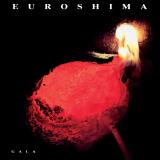
Cult Argentinian darkwave act Euroshima’s Gala sees a vinyl reissue courtesy of Dark Entries. Euroshima was formed in 1986 by Fabián Iribarne, José Wyszogrod, Ricardo Parrabere, and vocalist Wanda. Originally released in 1987 on Polygram, Gala was a success throughout South America. But to the band’s dismay, they received minimal support from the record label, which meant the album would linger in obscurity outside of the region. A CD issue via Twilight Records surfaced in 2020, but this is the album’s first reissue on vinyl.
Gala’s legendary status among cognoscenti is warranted. The album’s nine tracks display all the hallmarks of the best darkwave: spiky guitars, analog synth basslines, and wailing vocals. But Euroshima make their mark on the genre with impeccable songcraft and a honed sense of the uncanny. While the band themselves rejected the label of “gothic”, it’s hard to resist busting out the black eyeliner when listening to gems like the uptempo “Como Los Otro” or the churning album-closer “Mejor Callarlo”. Highly recommended for fans of Xmal Deutschland, Lebanon Hanover, pummeling TR-707’s, and doom-laden synths.
This reissue is co-presented with Twilight Records, responsible for the 2020 CD reissue of Gala. It has been remastered by George Horn at Fantasy Studios. Also included is a double sided insert with lyrics and photos, as well as a postcard featuring a photo of the band.
- A1: New Day
- A2: Palosanto
- A3: Don't Be Afraid
- A4: Mission (Feat Kid Abstrakt)
- A5: Train 2 Moabit (Feat Figub Brazlevic)
- A6: Insomnia
- A7: Pills (Feat Phoniks)
- A8: If I Had A Diary (Feat Keepvibesnear)
- B1: Blunotte (Feat Flofilz)
- B2: Luna Piena
- B3: Mandala (Feat Pachakuti)
- B4: Getting By (Feat Ryshon Jones)
- B5: Meditation
- B6: Healing
- B7: U Do
- B8: Things Are Going To Be Alright
“Insomnia” is the third solo album from Italian jazz beat maestro Koralle for Melting Pot Music. Without exaggeration, it can be described as the most mature and advanced piece of work by the beatmaker and producer from Bologna. On “Insomnia” Koralle invites some of his favourite artists and musical peers to collaborate and exchange sounds, ideas, beats, melodies and lyrics. The guest list includes fellow producers & musicians FloFilz, Pachakuti, Figub Brazlevic, Kuranes, Phoniks and Brous One as well as rappers and singers Kid Abstrakt, KeepVibeNear, Ryshon Jones.
All tracks produced and mixed by Koralle. Recorded at Godblesscomputers Studio, Bologna (Italy). Mastered by Roe Beardie. Artwork by Giulia Dall'Ara. Layout by Chicken George.