
out of Stock
Order now and we will order the item for you at our supplier.
Last In: 4 years ago
17,02 €
Order now and we will order the item for you at our supplier.

Punk rock creative moment music born out of DC & Baltimore scenes. Jarrett Gilgore (Alto/ Soprano Saxophone) is a gifted sonic melodic soothsayer. Luke Stewart (Bass, Irreversible Entanglements) lays down heavy danceable free bass lines, and Ian McColm (drums/percussion) is a drummer with an endless vocabulary moving from thrash to swing - always pushing the energy forward. This trio is unearthing new sonic territories with unwavering musicality and a steely grin. Special notice must be paid to the second track ("Aaron's Ride") - a piece dedicated to the life, spirit, and music of Aaron Martin Jr. - a mentor and fixture of the DC creative music scene who recently departed this realm for another. These musicians know the tradition and fearlessly venture into a vast ocean of sound. Dive in! - Jaimie Branch
Order now and we will order the item for you at our supplier.
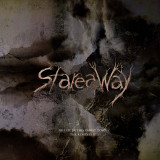
Back in 2011 Markus Guentner and Heiko Badje formed Stareaway to follow their vision of creating both enchanting and haunting music from melodies and drones. Combining Guentners complex Wall of Electronic Sound and Badjes ethereal androgyn voice and multifaceted guitar play, they indeed produced some epic works between Ambient, Pop and Shoegaze, strangely shimmering and profoundly mysterious.
Now Stareaways fantastic (and back then maybe a little overlooked) album No Life In This Ghost Town sees its rerelease and is, for celebrational purposes, accompanied by this EP of four stunning remixes by stunning artists Rafael Anton Irisarri (who also did the mastering), Simon Scott (Slowdive), Thomas Fehlmann and David Westlake (ex Sneaker Pimps). Rafael Anton Irisarris magical take on O Suomi sparkles bright, still with melancholia always present. David Westlake emphasizes the Pop-aspect of Appointments, adding lush synth melodies and light-filled grooves while Thomas Fehlmann lets All Over You spiral into Popambients most majestic heights. Finally Simon Scott builds a Kathedrale aus Klang on Dreams May Never. Amazing remixes of amazing originals.
Order now and we will order the item for you at our supplier.

Order now and we will order the item for you at our supplier.

Order now and we will order the item for you at our supplier.

Back in 2016, producer Seth Applebaum released two EPs that marked the inauguration of the band Ghost Funk Orchestra. `Night Walker' and `Death Waltz' were conceived as one-man-band, reel-to-reel tape recorded experiments that would bring together elements of all the sounds that Seth most adored at the time: tape-saturated drums, gratuitous spring reverb, surfy guitar, Latin-style percussion, odd time signatures, and Spanish-language female vocals. Initially released only in the digital domain and on a short run of cassette tapes, these two EPs that defined the early era of GFO are now finally available together on a single LP via Colemine Records. The tracks have been lovingly remastered by Doug Krebs. We invite you to take a dive into the humble beginnings of a project that has continued to grow, shape shift, and accrue new and exciting sounds for its sonic palette.
Order now and we will order the item for you at our supplier.

Jacob Long’s third Earthen Sea outing for Kranky, Ghost Poems, further refines his fragile, fractured palette into fluttering arrhythmias of dust, percussion, and yearning.
Composed during the first wave of lockdowns in New York, the pieces took shape patiently from samples of piano, texture, and domestic sounds (sink splashing, room tone, clinking objects), filtered through live FX to imbue them with an intuitive, immaterial feel. Wisps of melody splinter, shimmer, and refract, like light on water; pulses accrue and dissipate, as if mapping shifting sands. Throughout, there’s a sense of matter made animate, of absences felt.
Long cites notions of “the studio as a dub instrument” and the melancholy of “7th chords on a fake Rhodes patch” as central elements in his process, transforming raw materials into rare thresholds of symbiosis and hypnosis. This is music for night skies in hollowed out cities, for views across rivers towards unknown shores: restless, placeless, and profound.
track listing:1. Shiny Nowhere 2. Stolen Time 3. Felt Absence 4. Oblique Ruins 5. Snowy Water 6. Rough Air 7. Slate Horizon 8. Ochre Sky 9. Fossil Painting 10. Deep Sky
press quotes for previous album Grass and Trees:
“Jacob Long’s vaporous, lo-fi ambient tracks feel like snapshots of stillness made of moving parts.” Pitchfork
“As light as a warm breeze on skin, Earthen Sea’s latest album for Kranky showcases Jacob Long’s natural sensitivity for low-key, enchanting electronic sound craft.” Boomkat
“It’s exciting to hear such a significant change in his sound without sacrificing a personal touch and sonic character.” Igloo
Order now and we will order the item for you at our supplier.

• Ghost of Tsushima: Music from Iki Island and Legends builds on the groundbreaking soundtrack to Ghost of Tsushima, the third-person adventure game by Sucker Punch Productions and published by Sony Interactive Entertainment. Featuring music by Chad Cannon and Bill Hemstapat, it includes selections from Ghost of Tsushima’s popular Iki Island and Legends expansions.
• The 2020 award-winning open-world video game, Ghost of Tsushima, follows the samurai Jin Sakai, who must protect Tsushima Island from invasion, defeat the ruthless Mongol invaders and protect what’s left of his home and people. As he embarks on an epic adventure for the freedom of Tsushima, he is forced to set aside samurai traditions and become a new kind of warrior.
• This vinyl release from composers Chad Cannon and Bill Hemstapat features 45 minutes of all new music written for the Ghost of Tsushima Director’s Cut. It contains 15 tracks, of which 10 are from Iki Island and 5 are from Legends.
• This release includes a black LP housed in a beautiful gatefold jacket with a folded insert.
• Chad Cannon has worked with several of the world’s best-loved film composers as arranger and orchestrator. As chief arranger for Studio Ghibli composer Joe Hisaishi since 2017, Chad has created large symphonic suites for Kiki’s Delivery Service, Castle in the Sky, and Spirited Away. His score to the Academy Award- winning Netflix documentary American Factory has been called “stirring” (NY Times) and “graceful” (Washington Post) and was nominated for a Cinema Eye Honors Award for Outstanding Original Score. The film is the first release by Barack and Michelle Obama’s Higher Ground Productions.
• Originally from Thailand, Bill Piyatut Hemstapat is a composer and record producer based in LA whose works have been featured in Video Games, TV and cinemas all over the world. Bill’s passion for video games music has led him to working at Sony PlayStation’s music department. Along with his most recent work re-imagining Shunsuke Kida’s iconic music of Demon’s Souls for the PS5 remake, he also contributed additional music and arrangements for Ghost of Tsushima as well as music editing for God of War, Days Gone and Hideo Kojima’s critically acclaimed Death Stranding.
expected to be published on 15.07.2022

In the late 90’s and early aughts, internet video capabilities like Real Video and Quicktime were expanding, proving the early prophecy that ‘anyone would be able to have their own television channel on the internet’ was indeed coming true. After the critical success of Mulholland Drive, director David Lynch doubled down on the medium, funneling virtually all of his time into personally animating, filming, and scoring content for his own internet destination: davidlynch.cm. It was fertile and limitless ground for a creative like Lynch, allowing him to return to the days of his experimental film roots, where it was actually possible for him to have his hands on every element of the process.
It was out of this newfound digital freedom that the early seeds of Inland Empire were born, evolving and fissuring from an internet-bound experiment itself, into something much more expansive. The film collated a variety of ideas and working methods that the recent web paradigm had nurtured in Lynch, one of which was an increased frequency of his own solo music productions. Having finished constructing his own personal recording studio in 1998, he was no longer tethered to the scheduling and high premiums of rented studio time and was free to accelerate his musical experimentation without constraint. As a direct result of this was a unique shift in Lynch’s musical trajectory; a shift that would eventually bear multiple albums and a short film featuring a lounge-crooning monkey. In the first weeks of 2005, Lynch would record a blues instrumental and instead of getting someone else to sing on the song, he would sing, via a formant and pitch-altering piece of equipment known as the Boss VT-1. It was because of the davidlynch animated series “Dumbland” that the director had discovered the device that would enable him to be ‘any character he needed.’ With “Ghost of Love,” Lynch was experimenting with bringing those ‘characters’ into his own musical compositions. Intrue Lynch fashion, it’s difficult to know which inspired which: did “Ghost of Love” birth a scene in Inland Empire, or did the film’s ideas birth the song? Just as “In Heaven” had served to encapsulate Eraserhead, “Ghost of Love” managed to encapsulate Inland Empire allowing its listener to close their eyes and immediately channel the film’s images and mood onto the screen of the mind.
“Ghost of Love” is backed with “Imaginary Girl,” originally released via CD single in 2006 are now finally seeing their vinyl and digital release for the first time in celebration of Inland Empire’s 2022 theatrical re-release. Both are signature cinematic Lynchian classics that feature Lynch on guitar and vocals, accompanied by his long-time collaborator and Sacred Bones staple Dean Hurley on bass.
Order now and we will order the item for you at our supplier.

Attia Taylor is a NYC based musician, writer, and content producer. She is the founder of Womanly Magazine, The Dorothy and a member of The Art Dept Collective. Her work is rooted in social justice, art, and design, to bring inclusive and culturally relevant content to sound, print and digital realms. She is passionate about building and cultivating communities through journalism, music, storytelling, and research. “Space Ghost” is her debut solo album, recorded with Jeff Ziegler (Kurt Vile, The War on Drugs) in Philadelphia.
expected to be published on 08.07.2022

In Love With a Ghost is back with a new Vinyl, Gay Story. Maybe it's time to get cute, to feel childish. In that moment, when you can drink iced tea for breakfast. The iconic sounds of In Love with a Ghost lay smoothly over layers of synthesizers throughout the album, making for an easy and endless listen.
Order now and we will order the item for you at our supplier.

"Don’t be afraid, old son, it’s only me,
though not as I’ve appeared before,
on the battlements of your signature,
or margin of a book you can’t throw out"
~ Michael Donaghy
Whytwo is a young, enigmatic artist from Scotland, UK. A talented multi-instrumentalist and performer with an extraordinarily broad range.
First coming to Blu Mar Ten's attention after entering their 2017 remix competition, Whytwo created a wildly different take on their track 'Titans', bending it into a skittering, menacing groove while somehow maintaining a playful edge.
Fast-forward a little and we've now arrived at Whytwo's debut LP, 'Ghost', an exhilarating and elasticated take on Drum & Bass that exists in the hinterland between elation, melancholy and longing.
Mirroring Whytwo's music, the album's title, 'Ghost', is richly layered word, meaning, in different places and at different times; a memory of something or someone; to disappear without communication; to move quietly and quickly; to secretly do work for another; and, of course, a being caught between worlds.
From the old English, 'Gast', meaning 'breath' or 'spirit', the word eventually transformed into 'Ghost' coming to describe "a slight suggestion, mere shadow or semblance". All of these definitions relate, in some way, to the album now before us.
In conversations with Whytwo, he describes how his Jazz musician Grandfather was the person responsible for first giving him music-making software, and whose clarinet features on some of the album tracks. At the same time that 'Ghost' was being created, Whytwo was looking after a young child and some of the drums on 'Ghost' are recordings of the child hitting things. Whytwo describes the feeling of existing between these two extreme states, young & old, naive & experienced, primitive & advanced, and taking the role of a medium 'caught between worlds' whose task was to stitch together this generational fabric.
The result is nothing less than spectacular. Despite having its roots in Drum & Bass, the rules and conventions of the style are ruthlessly disobeyed resulting in glittering cascades of melody, harmony and rhythm that somehow burst with both sadness and joy, hope & loss, memory and anticipation. The music swoops and dips, briefly casting shadows before blasting them away with sunlight, evoking memories both personal and collective. This is 'Lost Soul Music' that manages to speak to all of us.
Despite being deceptively listenable, Whytwo insists this is not relaxing background music. Listeners should fully engage with the music beyond its attractive surface and absorb it at the same deep human level where it was created. 'Ghost's production levels are astoundingly high but focussing on those would be a mistake. They only serve to carry the spiritual content of the music across to the audience and unlock the valves of feeling. The beauty here is not the machine, but the ghost in the machine.
Order now and we will order the item for you at our supplier.
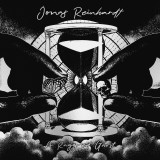
"A Ragged Ghost" is the eighth full-length album from electronic producer Jonas Reinhardt. Following albums on Kranky, Not Not Fun, Constellation Tatsu, and more, his debut release for Trouble In Mind brings together 11 new pieces that explore themes of life & death, netherworlds, and the liminal spaces in between. Taken together as a single narrative, the album offers a stirring exploration of mortality and immortality in what Reinhardt describes as 'a dance of religious syncretism, navigating spaces between the living and the dead'. "A Ragged Ghost" finds him synthesizing influences organically from familiar teutonic strains to the intense austerity of early 21st century electronic pioneers such as Biosphere and Susumu Yokota. A whisper of the Italo-disco-esque romps of Jonas' 2012's "Foam Fangs" EP & 2013's "Mask of The Maker" LP merge with his more kosmische leanings into a sinister, slightly funky, but also studious suite that at times feels like a lost sound library record from the KPM archives. Openers "Ape & The Universal Axis" and "In Lotto Commodore" decidedly sound like a selection from a lost film score while others like the bubbling "Sly Tomb" recall the works of Roedelius or Vangelis' serene soundscapes. Meanwhile, fans of the electro-ambience of Manuel Göttsching's strobe-light, proto-house (on his seminal "E2-E4") or the pulsing insistence of John Carpenter's visceral non-horror scores (i.e. "Escape From New York" or "Assault on Precinct 13") will find a lot to love about songs like "Tumb Tumb" and "Wretched Orchestra of Armistice".
expected to be published on 10.06.2022
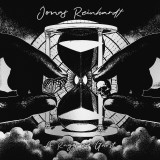
"A Ragged Ghost" is the eighth full-length album from electronic producer Jonas Reinhardt. Following albums on Kranky, Not Not Fun, Constellation Tatsu, and more, his debut release for Trouble In Mind brings together 11 new pieces that explore themes of life & death, netherworlds, and the liminal spaces in between. Taken together as a single narrative, the album offers a stirring exploration of mortality and immortality in what Reinhardt describes as 'a dance of religious syncretism, navigating spaces between the living and the dead'. "A Ragged Ghost" finds him synthesizing influences organically from familiar teutonic strains to the intense austerity of early 21st century electronic pioneers such as Biosphere and Susumu Yokota. A whisper of the Italo-disco-esque romps of Jonas' 2012's "Foam Fangs" EP & 2013's "Mask of The Maker" LP merge with his more kosmische leanings into a sinister, slightly funky, but also studious suite that at times feels like a lost sound library record from the KPM archives. Openers "Ape & The Universal Axis" and "In Lotto Commodore" decidedly sound like a selection from a lost film score while others like the bubbling "Sly Tomb" recall the works of Roedelius or Vangelis' serene soundscapes. Meanwhile, fans of the electro-ambience of Manuel Göttsching's strobe-light, proto-house (on his seminal "E2-E4") or the pulsing insistence of John Carpenter's visceral non-horror scores (i.e. "Escape From New York" or "Assault on Precinct 13") will find a lot to love about songs like "Tumb Tumb" and "Wretched Orchestra of Armistice".
expected to be published on 10.06.2022

Our next mixtape features a superb, tight blend of some of the very best tracks to fly out of the speakers at the Cherry Moon Club. At the helm we have DJ Ghost, spinning the grooves to take us on a journey through the ages, through the genres, from twisted acid concepts to hypnotic trance and gut busting hardcore. Ghost aka Bjorn Wendelen has been a stalwart for us at Bonzai since the very early days. He’s delivered several cuts for us over the years and has branched out with his own Ghoststyle brand with great success. The famous Cherry Moon was and remains one of the biggest names in Belgian club-life, with 30 years of embracing club culture. Since the start in 1991, they have brought the best techno, hard-trance and house to the scene. During the 90's and early 00's, Cherry Moon was the place to be for clubbers from all over Belgium, France, the Netherlands and even other European countries. Housed on classic K7 tape, this comp features a host of tracks from the likes of DJ Ghost, Insider, Body-Shock, DJ Looney Tune, Jones & Stephenson, Push, Blue Alphabet, Final Analysis, Joyrider, Dreamland and more. So, dust off your vintage cassette machine and prepare to be blown away by the sound of Cherry Moon.
Order now and we will order the item for you at our supplier.

Tim Gane from Stereolab plus Jeremy Novak from Dymaxion. 10 instrumental tracks - two previously released as a limited edition mail order only 7"via Duophonic Super 45s. Ghost Power are Jeremy Novak Dymaxion and Timothy Gane Stereolab, Cavern of Anti-Matter and Turn On. Duophonic Super 45s have previously released music by both artists - Novak via a Dymaxion compilation album and 7", Gane via various Stereolab, Cavern of Anti-Matter and Turn On releases. Having previously released a limited edition 7" in 2020, Ghost Power by Ghost Power brings the two musicians together for a full length album. The tracks were recorded in Berlin and New York, both remotely and with Novak and Gane working together in each city. There are no plans to tour...
expected to be published on 15.05.2022

The Wastelands' is an album of material made around the same period as 'The Entire City' though never released commercially. The album expands on 'The Entire City's shadowy, futurescape, featuring foreboding, percussive songwriting, with euphoric choral swells. 'The Wastelands' also features the captivating photo collage artwork of British artist, Suzanne Moxhay.
expected to be published on 29.04.2022

In 2011 Gazelle Twin self-released 'The Entire City', a debut album that gathered rapid acclaim and sparked a decade of creativity during which its creator, Elizabeth Bernholz has built big upon her foundation of dark, cinematic energy. The album is now set to be reissued on deluxe coloured vinyl featuring the captivating photo collage artwork of British artist, Suzanne Moxhay, with newly designed artwork by Paul Agar & Gazelle Twin.
expected to be published on 29.04.2022

This album doesn't blurt it out: There is no loud "Ta-Dah!", no exclamation mark. "The ghost that carried us away" flatters in a rather unobtrusive way. However, it has encircled you after the third song at the latest. Fragile hymns of nonchalant casualness, created by the 24-year-old Sindri Már Sigfússon. Guitars, piano, his almost bashful and yet so present voice. "Nature, mortality, love", these are the topics of his debut album. Even the one who listens only briefly, is able to make them out within the sounds. "Do you remember how the things look when you were young."
Reykjavik again. Iceland, the musical heartland. On top of that, there is a violinist with her voice in the clouds: Gudbjörg Hlin Gudmundsdóttir (violine, vocals, harmonica). There further are musicians Sindri shared his hometown and his passion: Orn (guitar, lapsteel) who forms together with Sindri and Gudbjörg the inner triangle of Seabear. Or Eiki, Orvar, Gudni and Dóri. One plays the flugelhorn, the slide-guitar or upright-bass. One belong to the live line-up of Sigur Rós (Eiki). Another is part of the sensational múm (Orvar). Some are stage members of Benni Hemm Hemm's Band - the other Icelandic artist on morr music. Sindri Már Sigfusson has invited them into his small studio, placed them in front of the only microphone, let them think about his musical thoughts. He likes the notion and the feeling of LoFi, Sindri says. Only for the recording of the drums three microphones were used. The result is reminiscent of the reduced stereo recordings of the 1960ies.
Libraries is the most direct promise that pop music is able to make. Tiny and gigantic, unobtrusive and exciting at the same time. A song like a blink into the most beautiful sunrise. A tumbling piano, swinging drums. Melodies, melancholy: "My little bird flew away from me". Or "hands remember", the singing being close to one's ear. "The voice of an old friend", a murmur, two violins. There is later "summer bird diamond", birds twitter to the accords of an old banjo, a glockenspiel. It is almost a radio play, chamber folk. And "seashell" at last, a pocket symphony, arranged around jumping drums. Sufjan Stevens would have done it in a very similar way.
expected to be published on 15.04.2022

Available on vinyl for the very first time. ZERO 7 4th album Yeah Ghost from 2007, spans everything from dance pop to acoustic folk and everything in between it's an idea-splattered work of genius that even includes a quartet of instrumental tracks derived from their experimental side projects and sampled, overdubbed and rebuilt from scratch.
Order now and we will order the item for you at our supplier.

Order now and we will order the item for you at our supplier.

Wir erbauen unser neues Imperium aus der Asche eines alten“ – mit diesen Worten kündigt die GRAMMYprämierte, schwedische Instanz der theatralischen Rockmusik, GHOST, die bevorstehende Veröffentlichung ihres fünften Studioalbums, IMPERA, an, das am 11. März über Loma Vista Recordings erscheint. Nachdem der Vorgänger, das 2018 für das beste Rock-Album mit einem Grammy nominierte PREQUELLE, im 14. Jahrhundert und zur Zeit der europäischen Pest-Pandemie angesiedelt war, sehen sich Ghost mit IMPERA wortwörtlich hunderte von Jahren in der Zeit nach vorn katapultiert. Das Ergebnis ist das ambitionierteste und textlich prägnanteste Werk in Ghosts Album-Kanon: Im Verlauf des 12-Song-Zyklus‘ von IMPERA, entstehen und vergehen Imperien, betreiben Möchtegern-Messiasse ihre (gleichermaßen monetär wie spirituell motivierten) Hype-Marktschreiereien und werden Prophezeiungen gemacht, während das Firmament mit Himmelskörpern von göttlicher und menschgemachter Natur erfüllt wird. Das thematisch aktuellste Ghost-Album bislang spielt sich vor einem hypnotischen, düster-bunten melodischem Hintergrund ab, was IMPERA zu einem unvergleichlichen Hörerlebnis macht.
expected to be published on 11.03.2022

Wir erbauen unser neues Imperium aus der Asche eines alten“ – mit diesen Worten kündigt die GRAMMY prämierte, schwedische Instanz der theatralischen Rockmusik, GHOST, die bevorstehende Veröffentlichung ihres fünften Studioalbums, IMPERA, an, das am 11. März über Loma Vista Recordings erscheint. Nachdem der Vorgänger, das 2018 für das beste Rock-Album mit einem Grammy nominierte PREQUELLE, im 14. Jahrhundert und zur Zeit der europäischen Pest-Pandemie angesiedelt war, sehen sich Ghost mit IMPERA wortwörtlich hunderte von Jahren in der Zeit nach vorn katapultiert. Das Ergebnis ist das ambitionierteste und textlich prägnanteste Werk in Ghosts Album-Kanon: Im Verlauf des 12-Song-Zyklus‘ von IMPERA, entstehen und vergehen Imperien, betreiben Möchtegern-Messiasse ihre (gleichermaßen monetär wie spirituell motivierten) Hype-Marktschreiereien und werden Prophezeiungen gemacht, während das Firmament mit Himmelskörpern von göttlicher und menschgemachter Natur erfüllt wird. Das thematisch aktuellste Ghost-Album bislang spielt sich vor einem hypnotischen, düster-bunten melodischem Hintergrund ab, was IMPERA zu einem unvergleichlichen Hörerlebnis macht.
expected to be published on 11.03.2022

Nonesuch Records releases Ghost Song, the label debut of singer/songwriter Cécile McLorin Salvant. Ghost Song features a diverse mix of seven originals and five interpretations on the themes of ghosts, nostalgia, and yearning. Salvant says, “It’s unlike anything I’ve done before – it’s getting closer to reflecting my personality as an eclectic curator. I’m embracing my weirdness!” Cécile McLorin Salvant plays at Cadogan Hall on November 16 as part of the EFG London Jazz Festival, four shows at SFJAZZ in February, and two nights featuring the music of Ghost Song at Jazz at Lincoln Center in May. Salvant says of the title track, out now, “What if the love has gone, the love has left you and you have the emotions around that, and you’re still going through them, still engaging with the ghost of that love?” She continues, “Some songs are so painful to come out but this one came out pretty quickly. I’ve had some loss the last couple of years: my grandmother, the drummer in my band Lawrence Leathers.”
Ghost Song opens and ends with a sean-nós (traditional Irish unaccompanied vocal style) performance by Salvant, recorded in a church. On track one, she transitions into Kate Bush’s 1978 classic ‘Wuthering Heights’. Salvant says of the song, “Wuthering Heights is a book that really struck me to my core as I was making this album, during the pandemic. And the best interpretation of the novel is Kate Bush’s song.” She continues, “It’s the most classic ghost story. I decided I wanted to do an album called Ghost Song, and I knew that one had to be on it. Then I had the idea to mix it in with the sean-nós ‘Cúirt Bhaile Nua’, which binds it to the traditional ‘Unquiet Grave’, the last track on the album. The ghost is not haunting me; now I am haunting the ghost. They parallel each other so well and they’re such different time periods. I wanted the album to be a circle, with the sean-nós reference at the beginning and at the end. So it is the first track but it’s also the last track and it’s also the middle track, which is how I listen to music, walking around my neighborhood, on a plane, travelling somewhere, putting stuff on repeat.” “All the songs on the album kind of mirror each other. I tried to create this strange symmetry. So as you go in from both ends, the songs are sort of matched together,” Salvant says. “‘I Lost my Mind’ is the center of the Russian doll. I wrote that in the middle of the pandemic. There were nights when I wanted to just scream. It was this deeper part of me saying, ‘It’s OK if this sounds completely crazy, OK to just go with the completely crazy thing and not worry if people think you have lost your mind for doing it.’
“The bands also mirror each other from top to bottom. In terms of the instrumentation, everything,” Salvant explains. “That’s why the songs are there in that relationship: they match each other, they’re like fraternal twins, or one is the evil twin of the other. I, as the living, am visited by the ghost, and then I go visit the ghost in turn. I am haunting the ghost and annoying the ghost, which is saying, ‘Get out of here and go live.’” Of the sonic variety on Ghost Song, Salvant says, “Texture is a big part of how I sing, having multiple textures in one song. It’s almost a compulsion. I can’t allow myself to stay in one texture. The instrumentation creates that but the recording process as well. It’s something I like, even when I’m eating. You want the creamy and chewy and crunchy at the same time. Warm and cold.”
Cécile McLorin Salvant, a 2020 MacArthur Fellow and three-time Grammy Award winner, is a singer and composer bringing historical perspective, a renewed sense of drama, and an enlightened musical understanding to both jazz standards and her own original compositions. Classically trained, steeped in jazz, blues, and folk, and drawing from musical theater and vaudeville, Salvant embraces a wide-ranging repertoire that broadens the possibilities for live performance. Salvant’s performances range from spare duets for voice and piano to instrumental trios to orchestral ensembles. Her unreleased work Ogresse is an ambitious long-form song cycle based on oral fairy tales from the nineteenth century that explores the nature of freedom and desire in a racialized, patriarchal world. Salvant studied at the Université Pierre Mendès-France. She has performed at national and international venues and festivals such as the Newport Jazz Festival, the Monterey Jazz Festival, the Village Vanguard, and the Kennedy Center. Salvant is also a visual artist.
expected to be published on 04.03.2022

purple marbled vinyl
Order now and we will order the item for you at our supplier.

We've not been able to get to the bottom of who Kenny Burns is (or at least this one - there was a famous Nottingham Forest footballer of the same name in the dim and distant past), and 89: Ghost main man Neil Tolliday is keeping tight-lipped. Either way, this label debut from the man of mystery includes some genuinely impressive moments. Picturesque closer 'Crease', where dreamy chords and kaleidoscopic synth sounds rise and fall atop an unfussy dancefloor beat, reminded us of Nail's own 1993 cut 'Cassiopeia', while 'Crank' is a thrusting slab of early morning techno peppered with squelchy acid motifs, chiming electronics and loopy, mind-mangling riffs. Elsewhere, 'Croak' is an angular slab of warped techno intensity, and opener 'Creak' is a hypnotic neo-trance number.
Order now and we will order the item for you at our supplier.

On an early morning in November 2015, THE GHOST INSIDE was involved
in an accident that claimed the lives of their driver, the lives of everyone
in the other vehicle, and resulted in multiple injuries for all of the band
members
Jonathan Vigil (vocals) suffered from a fractured back, ligament damage, and
two broken ankles. Zach Johnson (guitar) has since had 13 surgeries for a femur
injury. Andrew Tkaczyk (drums) ultimately lost his leg. The future of the band was
very much up in the air throughout 2016, as everyone struggled to recover.The
road to recovery was both mentally and physically extensive but THE GHOST
INSIDE were determined to get back to doing what they love. Nearly four years
later, the band did just that, returning to the stage July 2019. Originally meant to
take place at the historic Shrine Auditorium, tickets sold out so quick that the gig
had to be moved to the parking lot, selling double the venues capacity. Over 8000
people witness this return to the stage. The accident will always be a defning
moment for THE GHOST INSIDE, but never what defnes them.
expected to be published on 28.01.2022

The creative juices between Ghost & Blumhouse began the evening of Ghost's headline show at the LA Forum (November 2018). In October 2019, Blumhouse invited Tobias Forge to visit the Halloween Kills set and meet director David Gordon Green, to get a hands on sense of the atmosphere. Years in the making, a collaboration between Ghost & Halloween took shape as “Hunter’s Moon", for Halloween Kills, the newest installment of the famed horror franchise. And it's Ghost's 1st new single in 3 years!
expected to be published on 21.01.2022

Eine Reihe von inspirierten Begegnungen zwischen kreativen Kräften aus verschiedenen Klang- und Vorstellungswelten hat zu „Hunter’s Moon“ geführt, dem mitreißenden ersten neuen Track von GHOST seit dem
2019 erschienenen Album „Seven Inches Of Satanic Panic“.
Die Entstehungsgeschichte von „Hunter’s Moon“ lässt sich bis zu GHOSTs Show am 16. November 2018 im
Forum in Los Angeles zurückverfolgen als sich Ryan Turek (Get Out, Insidious, The Purge, Us, Whiplash)
und Tobias Forge von GHOST anfreundeten - eine Beziehung, die sich über Treffen, Podcast-Auftritte
und schließlich am Set des kommenden Halloween Kills in North Carolina schnell und intensiv entwickelte.
Die 7-inch Vinyl wird deshalb die spezielle B-Seite „Halloween Kills (Main Title)“ enthalten, die von John
Carpenter, Cody Carpenter und Daniel Davies eingespielt und produziert wurde.
expected to be published on 21.01.2022

Sudi Wachspress returns to Tartelet Records with Dance Planet, a third LP of emotionally-charged house music to welcome us back to the dancefloor. The spirit of true house runs deep in the sound of Space Ghost. Oakland native Sudi Wachspress is intuitively plugged into the romantic, mystical energy of 4/4 club music as a unifying force of empowerment and liberation, carrying the torch from vital forebears like Larry Heard, Alton Miller, and Blaze.
His new album, Dance Planet, carries a greater responsibility to spread spiritual affirmations. As the global dancefloor community emerges from a mentally-taxing recess and confronts their social self like it’s the first day of school, Space Ghost’s message couldn’t be more supportive.
“Don’t be afraid to be yourself, don’t be afraid to let go,” he intones on “Be Yourself.” More than just a beat and a hook, his music is pointedly created to heal and energize. “I’m a big fan of old-school house vocals that have a positive message,” says Space Ghost, “tracks that can perhaps enhance your mood or strengthen your confidence in yourself.”
Wachspress has always represented a beacon of musical uplift, both on his previous Endless Light and Aquarium Nightclub LPs for Tartelet and on his swathes of self-released music and last year’s Free 2 B on Apron. Compared to most house-oriented artists, he places emphasis on the long-player format to create an encircling experience for the listener, smoothing out psychic wrinkles and massaging areas of tension for a fully holistic hit.
Order now and we will order the item for you at our supplier.

- 2021 repress / white vinyl / comes in stickered sleeve / incl. dl code -
Ghost in the Machine returns to continue their adventures in the world of acidfueled industrial techno. This shiny white 12" sees them further exploring, stretching, establishing and reestablishing the boundaries of their own sound. Dirtier kicks, cleaner kicks, deeper kicks, techier techno and even more acidic acid. They actually managed to sneak a track on here that doesn't use a 303. A very bold move which will undoubtedly have farreaching consequences for the future of future dance music. Recommended if you like buying records.
Order now and we will order the item for you at our supplier.

- 2021 repress / blue vinyl / comes in stickered sleeve / incl. dl code -
Hide your kids! Ghost in the Machine is back and fully intent on setting fire to your pants with yet another quartet of their unique brand of techno. It's all really dark, heavy and pounding, yet you somehow really seem to like it. It's basically more of the same, which is great. The only real difference with their previous EPs is that this one is pressed on blue vinyl.
Disclaimer: digital copies may not all be the same shade of blue.
Order now and we will order the item for you at our supplier.

strumentalist Teddy Lasry's story is noteworthy not just in regards to the music he released, but in the ways approached the craft of composing and experimenting with sounds and sonics.
Always intrigued with the capabilities of instruments, their groove and their feel, it was very much his family’s influence that helped to fuel these life long affections. As a performer in a parisien cabaret, Teddy’s father Jacques would mingle with giants like Serge
Gainsbourg and Charlie Chaplin (impressed by his ability to improvise, Chaplin wanted him to become his accompanist, but the pianist politely refused). Jacques and his wife (Teddy’s mother Yvonne), would later become members of the innovative experimental group Les Structures Sonores, and surround their children’s lives with sounds. Electronic music was still in its infancy and Les Structures Sonores, with their resonators that produced long, mysterious tones, were deemed ‘cosmic’. It was the era of the launching of the first Russian Sputnik and every time a radio or television station wanted music for their science fiction programs, they turned to one of their compositions. Showing a natural ability with multi instrumentalism, Teddy was rewarded with a spot in the band, allowing him to really explore unconventional methods of composition.
Following a brief stint with Ariane Mnouchkine's avant-garde Théâtre du Soleil after graduating school, Teddy joined the pioneering prog band Magma, with whom he would record three groundbreaking records during the early 1970s (According to former member
Laurent Thibault, their album Mëkanïk Dëstruktïẁ Kömmandöh and its sound were strong influences on David Bowie during the recording
of Low and Iggy Pop’s The Idiot at Hérouville). Despite the successes with these projects, Teddy was constantly searching for new ways
of expressing himself through music, leading him into the beginnings of a solo career that would last the better part of three decades.
Teddy’s transition into his solo career came with contrasting fortunes, in that he was now becoming a music to image composer but with the unfortunate realisation that his eyesight was gradually worsening (due to being diagnosed with retinitis pigmentosa at an early age). Nonetheless, his solo career would begin in 1975, and for the rest of the decade his sound would become increasingly mired in electrified Funk-Fusion and its endless sonic possibilities. The resulting music would serve to highlight Teddy’s love affair with the possibilities found within tireless instrumentation, with the flute and particularly synthesisers becoming a mini-obession of his (he once spent a 7,000 Francs loan, which was meant to be spent on fixing his roof, on synths).
To this day Teddy continues to record and experiment with music, a passion which in many ways has never left his sid, even at the age of 75. His career was one that was fuelled by innate curiosity and an intrinsic desire to discover new methods of expressionism, be it through the realms of Jazz-Funk, ambient electronics, Swing music or indeed through the medium of instrumentation itself. On this compilation, we look to encapsulate the essence of his innovative sound, and from start to finish a sense of his ingenious approach to composing structure and mood is made abundantly clear. The funk-jazz fusion style that embodied the majority of his 70s work is on full display here, with the vibrant flute driven "Los Angeles", the Miles Davis inspired "Blue Theme", the progressive and driving
"Chamonix", and the deeply intricate "Krazy Kat", along with one of his finest 80s slow jams, "Funky Ghost". Two cuts off the ‘Back To
Amazonia’ album are also featured (Teddy’s last album including his Prophet T8, Yamaha DX7 and Oberheim drum machines). "Raising
Sun in Bali" and the title piece both emphasise an ever present passion for synthesisers. "Birds of Space", a standout track off the e=mc2 album, closes the comp, and is a fitting way to end this journey.
Pulled together in close collaboration with Teddy and his family, this collection of songs looks to introduce new listeners to his work and we are proud to present this limited and carefully remastered compilation on vinyl, including extensive liner notes.
Order now and we will order the item for you at our supplier.

Haiku Salut, the acclaimed electronica trio from the Derbyshire Dales release their fifth album, ‘The Hill, The Light, The Ghost’ on Secret Name records on August 27th. Note the LP follows in November.
A beautiful study of ghosts and memory, the gestation of the record began when Haiku Salut’s Sophie Barkerwood was given a Tascam field recorder. “I carried it around with me in case anything interesting happened. I guess I wanted to capture little pieces of the world in the same way we all take photographs,” explains Sophie. “It wasn’t immediately apparent that we would begin to use these sounds as the architecture for an album but as our writing process evolved the textures of these memories became a bank of inspiration.”
“We then began actively searching for ghosts in the world and framing the songs around their qualities,” Sophie continues. “Gathering recordings, removing them from their context and building worlds around them. Capturing and preserving personal experiences, and evoking vivid spaces. You could say the record is a miniature exploration of sound in relation to memory. Each piece is intimately connected to a place in time.”
Musically, the album marries the expansive vision of their third album, ‘There Is No Elsewhere’, which celebrated identity and community, with the darker, more contemplative feel of their fourth album, the trio’s original soundtrack for Buster Keaton’s ‘The General’. Building on the lessons learned working on ‘The General’, ‘The Hill, The Light, The Ghost’ is a cohesive suite, nine songs that combine to tell a larger story – that of experience and memory, of precious moments and echoes of past lives.
expected to be published on 26.11.2021

Cinema Paradiso is proud to present the Ghost World soundtrack, released on vinyl for the very first time, as a double gatefold LP.
A film adaptation of the popular Daniel Clowes comic of the same name, Ghost World starred Scarlett Johannson, Thora Birch and Steve Buscemi, becoming a critically acclaimed cult favourite immediately upon its release in 2001. As he did with Crumb, director Terry Zwigoff has created a soundtrack as eclectic and riveting as his movie subjects. The sounds of early jazz and blues play a crucial role in the events of Ghost World - the music heard here is some of the best ever recorded.
Skip James's classic "Devil Got My Woman" from 1931 may be the best-known work on this soundtrack, but it hardly steals the show. Three tracks from weird but riveting jazz-meets-calypso bandleader Lionel Belasco are included; the 70-year-old recordings are so original, they sound timeless. The same praise can be stated of film opener "Jaan Pehechaan Ho" a Bollywood rarity that has elements of surf music, funk, and garage rock. Of course, we also have to hear "Graduation Rap" and Blueshammer's "Pickin' Cotton Blues" two intentionally bad contemporary tracks that make the characters in the movie (and anyone listening to this soundtrack) feel out of place in today's pop culture.
Zwigoff wisely fills out the LP with tracks from his personal 78 record collection, a mix of '20s and '30s string band and blues tunes that are seldom found in compilations (including great cuts by the Dallas String Band, Joe Calicott, and McGee Bros).
The haunting "Theme from Ghost World" composed by David Kitay, finishes off the second LP, perfectly capturing all the bittersweet moods found in the film.
expected to be published on 29.10.2021

Order now and we will order the item for you at our supplier.

Order now and we will order the item for you at our supplier.
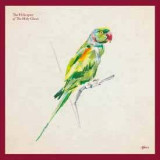
The Debut Album From The Helicopter Of The Holy Ghost - Mark Morriss
( The Bluetones ) Billy Reeves ( theaudience ) Crayola Lectern ( Lost
Horizons / Departure Lounge ) Mark Peters ( Engineers ) Co-produced by
Richard Archer of Hard-Fi Feat. Simon Raymonde ( The Cocteau Twins ) &
Thomas Anderson ( Gazpacho )
In 2001 Billy Reeves, fresh from introducing the world to Sophie Ellis-Bextor
(via their band theaudience) was smashed to bits by joyriders whilst in his Morris Minor - resulting in a two-week coma and a year in and out of hospital. In
2017 his brother gave him two mini-discs that had been saved from the wreckage, including demos of songs he had forgotten - due to crash-related amnesia.
Mark Morriss of chart-topping Hounslow janglers The Bluetones agreed to sing
them, so with the assistance of Richard Archer (Hard-Fi), along with Crayola
Lectern (Zofff / Departure Lounge), and Mark Peters (Engineers), these songs
would form the debut long player from The Helicopter of The Holy Ghost.
The original concept for the material was probably while Billy was signed to
Sony, which pointed toward a more commercial sound, however Crayola Lectern’s involvement on piano help send the recordings into a more ‘Canterbury’
direction, taking influence from Caravan, Robert Wyatt & the like.
Featuring a groovy guest line-up including Simon Raymonde of Cocteau Twins,
Dale Davis from Amy Winehouse’s band, Andy Lewis from Paul Weller’s group,
Smiley from Joe Strummer’s Mescalaros and Thomas Anderson of fellow Kscope
signees Gazpacho, the wide-ranging influence herein is evident throughout a
very sweet, gentle, calming album of originality and versatility.
The Vinyl LP edition of this album will be especially printed in an eco-friendly
manner, with no shrinkwrap being used, the record itself pressed on 100% recycled records and the board made up of FSC certified climate-friendly recycled
material. The whole package itself will be Climate neutral, having all its carbon
offset with ClimatePartner.
expected to be published on 13.08.2021

Tomas Nordmark's music operates on multiple, equally thrilling planes. Having cultivated a deep appreciation for conceptual art and the phase-shifting minimalism pioneered by the downtown avant-garde community of NYC in the `60s, Nordmark set out to blend that with his pop-oriented upbringing and unique perspective on electronic music. The Swedish-born, London-based composer's new album pulses with unrelenting energy, waving and cresting around ambient tension and gorgeously realized melodies. Exit Ghosts is partly influenced by the history of film scores and the aesthetics carried by that tradition. As an instrumental album, Nordmark is tasked with conjuring emotions without words, and the way he utilizes specific cues mirrors the process of film scores, in addition to the work of seminal composers such as Tim Hecker, Arthur Russell, and Jóhann Jóhannsson.
Order now and we will order the item for you at our supplier.

The venerable composer and keyboardist Stale Storlokken follows up his previous Hubro release (and solo debut recording), The Haze of
Sleeplessness, with a second solo album performed entirely on pipe organ and recorded at Steinkjer Church by Stian Westerhus.
He describes the album as “a cavernous cathedral of sound”. While the Norwegian Grammy-nominated ‘The Haze of Sleeplessness’ used a whole keyboardmuseum’s worth of antique synths and contemporary digital software to create
its vast array of sounds, everything on ‘Ghost Caravan’ is the product of one organ’s pedals, pipes and sonic plumbing.
“There’s not so much of a relationship to ‘Haze’, says Stale Storlokken of the new album. “That album was more based on improvised ideas that were tweaked and arranged , while this one is all improvised with almost no editing at all. Everything you hear is from the church organ, with no additional instruments.
The basic concept of the record, and the arrangement of the titles and pieces, is done in such a way that they alternate between a fluent, “on the move”, abstract mood and a more recognisable, concrete and grounded mood. At the same time it should be so open that listeners will hopefully have their own unique experience. The organ at Steinkjer is not a big organ but it has some really nice sounds, with a number of quirks and mechanical eccentricities that suit my music.”
The organ is partly a reconstruction based on a Wagner organ in Nidarosdomen built originally in 1741, the organ is housed in the strikingly modernistic Steinkjer kirke, designed by Olav S. Platou in 1965, and featuring glass panels by the artist Annar Millidahl. What Ghost Caravan does share with its predecessor is a seemingly limitless acoustic space for the listener’s imagination to roam in, with Storlokken creating a cavernous cathedral of sound.
The audio dynamics span an enormous range, capable of stretching from the quietest breathy whisper to a basso profundo squawk or scream, sometimes within seconds of each other. Similarly, the incredible variety of sounds that Storlokken coaxes from the organ can defy rational analysis, with the resolutely analogue instrument appearing to echo the industrial, found-sounds of clanking machinery or buzzing electronics that one might expect to encounter through digital sampling or the tape-based experiments of musique concrete.
Over ten separate improvised pieces which connect into an informal suite through the repetition of key elements and sequential titles (with four ‘Spheres’ and four ‘Cloudlands’, plus ‘Ghost Caravan’ and ‘Drifting on Wasteland Ocean’), Storlokken has made a strikingly unified, self-referential aesthetic world that can stand as a true work of art.
expected to be published on 28.05.2021
