Phonogramme, the house subdivision of parent label and integral Parisian record shop Syncrophone dedicates itself directly to the French music scene, with previous releases from the likes of Professor Inc, John Jastszebski, Aleqs Notal and a handful of other local heads. Phonogramme continues to keep things close-to-home through the labels next edition presented by Gibs, who's most notably known for works on his own imprint, 'An.Art Records' - a family run label with music shared by himself and his two brothers.
'Find an Oasis' kicks off the release with rolling organic percussion before progressing elegantly into layered emotive lead synths and mellow bass stabs. 'Jarkarta' is a subdued deeper house cut, filled with an uplifting, undulating melody and raw lo-fi elements collectively creating a luscious calming effect. Last up, 'Der Germain' offers up a fluid, groove filled number balanced with charming, jazzy flutters and tender keys providing a warm, breezy atmosphere to the end the release.
Search:gibs
- A1: You Came Thru
- B1: Hurry Up Tomorrow
The Nu’rons were a family group consisting of two sets of brothers and cousins, the four young men in question being brothers Daryl Howard and Raymond Gibson (Daryl’s mother registered him under his father’s surname of Howard and Raymond under her maiden name of Gibson) together with Otho Bateman and Charles Bateman. They were all born and raised in Salem, New Jersey and from the age of ten and eleven began singing with a fifth member and Gibson brother Rudolph as a group called The Gospel 5. They eventually decided to crossover to secular music and as a group known for their energetic dance routines they came up with the new performing name of ‘The Nu’rons’ (taken from the word ‘Neuron’ which is a cell that transmits nerve impulses). However Rudolph was soon to leave the group due to physical illness. Also Daryl Howard and Charles Bateman had also been part of a working group known as The Devotions prior to becoming The Nu-Ron’s.Following hours of practice The Nu’rons eventually felt confident enough to put their own shows together and began to perform at local dances and parties around New Jersey and Philadelphia, often being used as a non-paid warm up act for bigger named artists. They moved between several different managers including Jimmy Bishop (Duo Dynamic Productions) until they came under the tutelage of WDAS radio DJ Georgie Woods (his wife Gilda, being the owner of the Philadelphia Gil, Dion and Top & Bottom record Labels). It was Georgie who introduced them to Manny Campbell who in turn invited them to an audition at his and partner Charles Bowen’s Emandolynn Music studio in Chester P.A. The song The Nu’rons chose to audition with was the self penned “I’m A Loner”, the audition went well, as during late January/early February of 1970 Manny and Charles took The Nu’rons into the Sigma Sound Studio’s with Tom Bell and the TSOP musicians to record “I’m A Loner” and “All My Life” which was released on the Nu-Ron label in April of the same year. The two studio takes presente don this release came short after the band moved on from the collaboration with producer Emanuel Campbell to take music matters in their own hands. Beside recording "Disco Hustle" to be part of the disco boom in Philly of the times, they recorded also “You Came Thru”, a rough yet beautiful heavy bassline driven soul funk recording, and the just amazing “Hurry Up Tomorrow”, here presented in one of the original Studio takes.
- 1: Twisted On A Train
- 2: Stairway To Nowhere
- 3: Invisible Ink
- 4: Landline
- 5: Crosseyed Critters
- 6: Oil Change
- 7: East Of Ordinary
- 8: Unglued
- 9: Delusions
- 10: Backroads
Black Vinyl[24,16 €]
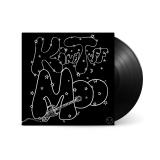
Moo is the first wide release on my new label MUP! When I decided to make a new record, it only seemed right to go back to what brings me the most joy, which is, Rock & Roll music. I got my Tascam 388 fixed, the same tape machine I had used to record my first album, King Tuff Was Dead. It had been sitting in my parent’s house in Vermont for the past 14 years, but I had finally dragged it out to LA. I stopped caring if there were mistakes. There’s not enough mistakes. I played my old, blue, Gibson SG, Jazijoo, and she spewed mangled electrified gold. For once, I sang and I didn’t hate my voice. I played the drums badly and bounced them in mono to one track and it sounded like glorious shit. I wish it sounded even worse. Rock & Roll is the music of rodents and bugs. It should sound like it crept from a decrepit trashcan or a crypt or a toilet. It is not chill or vibey, autotuned or on the grid. It is not perfect, which is why it’s perfect. And I don’t care if it’s dead or alive, cool or uncool: when I hear it, and when I play it, as a chubby and balding 43 year old punk weirdo, I FEEL ENERGIZED. All in all, MOO is a full circle moment. A return to form. A return to rock. A return to Vermont. A return to myself. Reconnecting the dots. Restarting the engine. Plugging in the stack. Finally letting King Tuff be King. Fucking. Tuff.
- 1: Twisted On A Train
- 2: Stairway To Nowhere
- 3: Invisible Ink
- 4: Landline
- 5: Crosseyed Critters
- 6: Oil Change
- 7: East Of Ordinary
- 8: Unglued
- 9: Delusions
- 10: Backroads
Indie Exclusive Vinyl[24,16 €]
Moo is the first wide release on my new label MUP! When I decided to make a new record, it only seemed right to go back to what brings me the most joy, which is, Rock & Roll music. I got my Tascam 388 fixed, the same tape machine I had used to record my first album, King Tuff Was Dead. It had been sitting in my parent’s house in Vermont for the past 14 years, but I had finally dragged it out to LA. I stopped caring if there were mistakes. There’s not enough mistakes. I played my old, blue, Gibson SG, Jazijoo, and she spewed mangled electrified gold. For once, I sang and I didn’t hate my voice. I played the drums badly and bounced them in mono to one track and it sounded like glorious shit. I wish it sounded even worse. Rock & Roll is the music of rodents and bugs. It should sound like it crept from a decrepit trashcan or a crypt or a toilet. It is not chill or vibey, autotuned or on the grid. It is not perfect, which is why it’s perfect. And I don’t care if it’s dead or alive, cool or uncool: when I hear it, and when I play it, as a chubby and balding 43 year old punk weirdo, I FEEL ENERGIZED. All in all, MOO is a full circle moment. A return to form. A return to rock. A return to Vermont. A return to myself. Reconnecting the dots. Restarting the engine. Plugging in the stack. Finally letting King Tuff be King. Fucking. Tuff.
For the first time in more than a decade, Paul St. Hilaire (AKA Tikiman) presents a solo album – 100% Tiki.
Over his 30-plus year career, St. Hilaire has become one of dance music’s quietly legendary figures. Born and raised in Dominica, he moved to Berlin in 1994 and has lent both his voice and his musicianship to some of the most iconic electronic music from the German capital – and beyond. Renowned for his collaborations with Moritz von Oswald and Mark Ernestus (AKA Rhythm & Sound), he has also appeared on records with Deadbeat, Rhauder, Larry Heard aka Mr. Fingers and Stereotyp (G-Stone Recordings), amongst others.
However, few know the extent of St. Hilaire’s compositional and technical mastery. From his home studio in Kreuzberg, which includes an extensive collection of vintage hardware, self-built instruments and notebooks scribbled with endless lyrics, he has created a vast archive of material spanning ambient dub, avant-jazz, lush techno and lovers rock.
Tikiman Vol. 1 is a heady, downtempo tour de force of patois metaphors on education, displacement and personal vs. global histories, as is evident on slippy album opener “Bedroom in My Bag”: Mister, mister / Where are you going? / I’m heading for a faraway land / What are you having in the bag in your hand? / Help us to understand / He said, I’ve got my bedroom in my bag.
Overall, the album’s lyrics reflect on life between Berlin and Dominica, specifically St. Hilaire’s hometown of Grand Bay, where he has worked with various musicians famous for the island’s different genres of carnival music. St. Hilaire himself always favoured the island’s more “discrete” music, developing a sonic synergy between two different geographical strains of groove and minimalism, and combining them with foundational Caribbean mixing techniques, which provide the basis for his songwriting and distinct
baritone.
Tikiman Vol.1 offers a rare insight into St. Hilaire’s complex artistry, from the eyes-down grooves of “Little Way” and the guitar-heavy digi dancehall experiment “Keep Safe,” to the subtle hypnosis of “Ten to One” and the softly crashing synth waves of closer “Three And A Half”, evoking not only beaches but also coasts and borders. It’s a fitting expression of both the breadth of St. Hilaire’s work, as well as his history as one of the few black, Berlin-based artists who, despite remaining largely overlooked, has influenced the city’s electronic music culture since its beginnings.
Credits
Written & Produced by Paul St. Hilaire
Mastered by Stefan Betke
Artwork by Grant Gibson
Kynant Records was founded in 2015 by Richard Akingbehin, a British-Nigerian radio programmer (Refuge Worldwide), music writer and DJ. Originally specialising in deep techno and featuring artists such as Cio D’Or, Terrence Dixon and Donato Dozzy, Kynant has since launched a sub-label Kynant EX which focuses on ambient, dub and experimental electronics.
- A1: Johnny And Dee Dee
- B1: Julie Is A Junkie
To commemorate the 40th Anniversary of the passing of James Darroch, singer/songwriter/guitarist for Sydney's incredible The Eastern Dark, Grown Up Wrong! is thrilled to announce a long-awaited reissue of the band's classic single "Julie Is A Junkie/Johnny and Dee Dee".
Heavily influenced by the Ramones - the band opened their first live show with 'Blitzkrieg Bop' and from then on opened with a new Ramones song every time they played, working through the band's complete catalogue in chronological order - as all manner of hyper-melodic and high energy rock. The Eastern Dark were a classic trio powered by former Celibate Rifles bassplayer James Darroch's blazing guitar and anchored by former Lime Spiders backing vocalist Bill Gibson's hard driving and melodic bass playing (and supreme backing vocals) and Geoff Milne's untouchable beat keeping. They set Sydney's Radio Birdman influenced scene alight in 1984 and quickly built an international following on the back of their classic single. Sadly, just hours after completing what would become their next release - the mini-LP "Long Live the New Flesh" - the band's life, and that of 26-year old James Darroch, was brutally ended in a road accident whilst the band was on its way to Melbourne.
On the back of the tragedy, the band's music lived on and it's global impact was reflected in the influence it bore on numerous bands, from Boston's the Lemoneads to Tokyo's Teengenenete, and obviously a succession of Australian bands from the Hard-Ons through to God and the Meanies and beyond.
After years of searching, surviving members Bill Gibson and Geoff Milne recently found the single's original multi-track tapes, and for the new release, the original recordings have been both remixed and remastered for maximum impact under their supervision.
Daniel Vangarde is the father of Daft Punk's Thomas Bangalter, and back in the 70s and 80s he was a musician who had great success writing and producing for the likes of Gibson Brothers and Ottawan on his Zagora label. He also worked solo as Who's Who and in 1979 produced a now cult favourite record of cosmic-euro disco. Two tracks from it get reworked from the original tapes here by The Reflex. He brings dubby, mid-tempo drums to 'Hypnodance' while retracing its Eastern melodic charms and sense of sophistication. His take on 'Palace Palace' is more funky and upbeat with leggy drums and elastic basslines smothered in cosmic arps.
2026 Repress
Priori returns to Kynant Records for an EP of dubbed-out, eyes-down house and techno.
The Montreal-based artist explores dense, patient grooves, assisted by singular Jamaican voice Gavsborg on the opening track.
Written & Produced by Francis Latreille
Vocals on A1 by Gavin Blair
Artwork by Grant Gibson
Mastered by Anne Taegert (Dubplates & Mastering)
- A1: Viaje Al Sol
- A2: The Maestro
- A3: Esferas De Cristal
- A4: Mama
- A5: Cascabel
- A6: Juguentes Rotos
- B1: Sigilo
- B2: Orquesta Sinfonica Angustia
- B3: Toro De Falaris
- B4: Perdon De Judas
- B5: Viento Androide
- B6: Corpus De Sangre
- A1: Dellarge - Viaje Al Sol (Silent Servant Remix) 7
- B1: Dellarge - Cascabel (Pedro Vian Remix) 7
lim. 150 blue transparent 180 Gr LP + 7" + Poster / incl. Silent Servant Remix
A cross-cutting label exploring the boundaries between different disciplines based on deep listening and music research, Modern Obscure Music is set to release 'INRI' (INDUSTRIA NACIONAL DEL RUIDO INFINITO) on the 1st December, the new album from Dellarge.
Inspired by the scenic beauty of his studio's surroundings at Lake Pátzcuaro in Michoacan, Mexico, Alejandro Barba, aka Dellarge, delves deep into the depths of his artistic consciousness to craft a spiritual album that encapsulates the essence of the place. 'INRI' stands for Industria Nacional del Ruido Infinito (National Industry of Infinite Noise) and serves as a vessel for Dellarge's innermost self-expression and reflections on the potential of humanity.
A multifaceted artist and veteran of the music industry for over two decades, his latest musical creation is an intimate and personal album and a departure from previous Techno/EBM-orientated Dellarge releases. 'INRI' (INDUSTRIA NACIONAL DEL RUIDO INFINITO) offers a mesmerizing blend of ambient, futuristic, and industrial sounds that transport listeners into a realm of mysticism, futurism, and duality and stands as a testament to Dellarge's artistic growth and his ability to transcend boundaries, offering listeners an immersive experience that connects them to his world.
Drawing inspiration from numerous sources, Dellarge found creative fuel in books such as 'El Arte de los Ruidos' by Luigi Russolo, 'Manifiestos y Textos Futuristas' by F.T. Marinetti, and science fiction classics including 'Congreso de Futurología' by Stanislaw Lem, 'Neuromancer' by William Gibson, and 'Dune' by Frank Herbert. Musically, he delved into the works of Coil, Michael Bundt, The Threshold Houseboys Choir, krautrock legends CAN and Popol Vuh, early Kraftwerk, Arthur Brown, Yello, Esquivel, The Residents, and Hector Lavoe for inspiration.
When asked about the creative process behind the album, Dellarge revealed a disciplined routine that involved immersing himself in the sounds, focusing on minute details that connected with the vivid world he envisioned. Ethereal tracks such as 'Viento Androide' and 'Viaje al Sol' offer a glimpse of a hopeful future, while darker compositions such as 'Corpus de Sangre' and 'Toro de Falaris', explore the wickedness and compassion within humanity. Each piece in the album represents a unique sonic journey.
'Viaje al Sol', the first single to be taken from the album, is set for release on the 27th October, and is also available as an EP which includes a remix from Juan Mendez aka Silent Servant. The remix is also included on the digital version of the album and available on 7" vinyl alongside an exclusive reworking of 'Cascabel' by the founder of Modern Obscure Music, Pedro Vian.
2026 Repress
Life is like a mirror ball! The first one in a hopefully long-lived series of disco and pop influenced Super Sound Singles on Running Back, comes courtesy of the unmistakeable Gibson Brothers. Leaving their biggest wedding hits "Cuba" and "Que Sera Mi Vida" to the side, the philanthropic and smile-forcing "Ooh, What A Life" gets an extended edit service by Shan & Gerd Janson, who cut away some of the fat and make it fit for fun on contemporary dance-floors. The flip side sees them remixing and sandpapering "Heaven" into a disco-house interbred (filters and looping mandatory). To quote John Lyndon: "Disco sucks You never heard that from me."
The Reflex has been busy of late and, though already a proven master of multi-track mixes and mash-ups, he keeps on reaching new heights with each new drop. This is one of several coming in quick succession and finds him dropping the final part of his label Discolidays' collaboration with the Zagora catalogue, which features tunes by Thomas Bangalter's pops, Daniel Vangarde. Here it is the Gibson Brothers' disco belter 'Heaven' that gets beefed up with bright strings and unrelenting drums, driving you to a place of sheer joy. A more obscure sound come son the flip with uptempo drums and sumptuous musicianship laid down by some of the best of the disco era in Paris.
DJ Support: Axel Boman, Coyote, Rune Lindbaek, Dr Rob (Ban Ban Ton Ton), Lefto, Johan Blende, Feel Fly, Marco Gallerani and many more
Secret Soul Society, aka South Wales's Cal Gibson, continues his red-hot streak of form with four original jams for Hell Yeah that effortlessly weave decades of influences into intimate, unusual sounds that go from Balearic daydreams to after-hours soul burners.
Gibson was one-half of Nottingham's deep house and downtempo outfit Neon Heights back in the 2000s, a collective that label head Marco has long admired. He has landed here before with the superb Keep The Mystique in 2023, a 15-track collection of brand new curveball cuts built from lovingly sourced samples. Since then, he has continued to collide jazz, funk, Afro, beats, dub, soul and reggae on Paper Wave and Magic Wand.
'To Be Happy' opens with gentle, sun-soaked grooves, swirling keys and dreamy pads that evoke a hazy Mediterranean sunset. Nostalgic soul samples tug at the heart while the track’s laid-back vibe is perfect for golden-hour moments. 'Orange Surprise' is a magical slice of downtempo bliss with hints of romantic vocals. It's built on soft broken rhythms and drifts between ambient soul and laid-back electronica, perfect for introspective moments or late-night winding down.
'Keep On Trying' flips the script with more texture. The synths are crystalline, the pads are sugary, and the meandering bassline unfolds in wonky fashion while soft male vocals bring a steamy edge. Last but not least, 'What You Do To Me' is funky and slow motion disco with 80s synths and reverb that drowns you in good vibes.
This EP is Secret Soul Society at his most expressive and emotive.
Welcome to the first instalment of a new collaboration between The Reflex’ DISCOLIDAYS label and Because Music in Paris, remixing gems from the Zagora catalogue.
Created in 1975 by producer Daniel Vangarde (father of Daft Punk’s Thomas Bangalter), the Zagora label created some of the most exciting disco music in France, ranging from cult underground artists Who’s Who and Starbow, to massive international hits by the Gibson Brothers, la Compagnie Créole and Black Blood. Unearthing the multitrack for obscure cuts, The Reflex shifts the focus on the great studio musicians involved in these recordings (Wally Badarou amongst others) and delivers stunning revisions of ‘Harlem Bound’, a
131bpm jazz-funk disco powerhouse cut (1977) and ‘Dancin’ The Mambo’, a 122bpm Chic-esque meets early piano House monster laced with that unmistakable French sound, originally released in 1980.
Both first time-ever remixes from the stems, released on 180g vinyl with custom artwork on card sleeve designed by Al Kent / Million Dollar Disco.
Three more releases will follow, to complete the 4 x 12” vinyl and digital package spread over several months in 2024.
Past Inside The Present is back with another of its quietly powerful ambient records, this time from Almost An Island, which is a collaboration between Kenneth James Gibson and husband and wife duo James and Cynthia Bernard. This black version of the self-titled oeuvre drifts through ambient, Americana and experimental soundscapes with musical elegance and tasteful restraint. Muted textures, swirling guitar, pedal steel and subtle vocals create a mood that draws you in close but is also grand in scale. Tracks like 'Quadrivium' and 'What Got Us To Our Feet' blur the line between memory and melody, while 'Palo Verde' and 'Promise to Fade' linger like a half-remembered dream. This isn't ambient as background-it's a fully formed emotional landscape that is both meditative and melancholic.
- A1: Jake Muir - Mirage
- A2: Pent & Dylan Kerr - Incoherences
- A3: Flora Yin Wong - Oath
- A4: Qwqwqwqwa - Shadow (Ft. Sop.io)
- A5: Ex Wiish & Dorothy Carlos - Assimilation
- A6: Nexcyia & Mu Tate - Sans Titre
- A7: Tati Au Miel - House Of Gold
- B1: Kamran Sadeghi - Formula Fiction
- B2: A... ...Cha.... A... I Feel Like A Ghost Uh
- B3: Eric Frye - Plague Chain
- B4: Maxwell Sterling - Xiahe Tears
- B5: Muein - Creep
- B6: James K - Sketch 4
29 Speedway is a record label and performance series based in Brooklyn, NY featuring forward-thinking improvisational music and live multimedia. Founded in 2020 by Ben Shirken a.k.a. Ex Wiish (‘Shards Of Axel’, Incienso 2023), 29S serves as a platform for artists exploring the fringes of interdisciplinary art and music. Hosting D.I.Y-guerrilla style sound and performance art concerts at Pioneer Works (NYC), Public Records, and in Europe in partnership with Index Records, they have worked with artists such as James Hoff, J. Albert, Yolabmi, Robert Aiki Aubrey Lowe, AceMo, Flora Yin Wong, Nexcyia, Young Boy Dancing Group, UMFANG, Color Plus, Poncili Creación, Special Guest DJ, Arushi Jain, Drumloop, Isabella Koen, Ben Bondy, Kamran Sadeghi, Yawning Portal, James K., Syndey Spann, Debit, Pent and many others.
Resident Advisor called their most recent compilation record ‘Channel Plus’ “one of the most stunning documents of the ‘modern ambient-techno movement pioneered by labels such as Motion Ward and West Mineral’, with a focus on New York as well as a global outreach that encompasses chilled-out trap, electro, downtempo and even early '00s electroacoustic music”. Their debut solo artist release from J. Albert and Will August Park, entitled “Flat Earth” (2023), was based on free improvisation and ambient jazz, receiving praise from Philip Sherburne, Shawn Reynaldo, and was included in RYMs top EPs of the year. 29S has been written about on ID, Bandcamp Daily: Best Ambient, Boomkat, Paper Mag, Artnet, Dazed, Clot Mag, Nina Protocol, and Document Journal.
The newest release from 29 Speedway, UltraBody, is a compilation record featuring the music of Jake Muir, Pent & Dylan Kerr, Nexcyia & Mu Tate, James K, Flora Yin-Wong, Ex Wiish & Dorothy Carlos, Kamran Sadeghi, Tati au Miel, James Hoff, Eric Frye, Muein and Maxwell Sterling. The record is emblematic of the artists who have performed at 29 Speedway shows in New York and Europe during the past two years, and is the third in a series released by the label.
The record was born out of a desire to investiage how the self, spirituality, and language are intertwined with the intervention of subjectivity by new technologies. With increasingly sophisticated tech, and the supposed ability to remake the world and ourselves, what differentiates our individual discretion from the will imposed upon us by software? Quoting Walter Chaw from his piece on David Cronenberg’s Videodrome, “Decades of rampant, unregulated and ill-considered technological leaps have begun to evolve, to mutate, humans at a biological level”. This haphazard acceleration towards a techno-utopic transformation of humanity has faulted, and as William Gibson put it, is leading us to live in a “half assed singularity”. In this reality, artistic processes are influenced by excessive access to computational tools and assistance, but not utterly controlled.
This in-between state of dominion is explored in 29 Speedway: UltraBody. “Incoherences” samples the utterances of Dylan Kerr’s voice processed between Pent’s percolated glazes, muddying the gulf between vaporous ambient and reflexive sound design. The voice on James Hoff’s “A... ...Cha.... A... I feel l” was created by trying to get voice cloning technology to sing a gps data stream, the music an extrapolation from an earworm he got stuck in his head while shopping in Kyoto. On “Plogue Chain”, Eric Frye’s most speculative sci-fi observations spiral into a glazed pool of digital cacophony, while Kamran Sadeghi’s “Formula Fiction” is an experiment in (un)controlled generativity. Incorporating minimal pings from a 3D simulation scene based on gravitational interaction, cello bits evolve on “Assimilation”, a collaboration between Ex Wiish & Dorothy Carlos.
On UltraBody, sound has no separate existence from space.
Mal-One was always fascinated by the story of the legendary Gibson Les Paul Custom guitar, that Steve Jones, the guitarist of the Sex Pistols came to use. It was like a talisman object that got handed down from Sylvain Sylvain, the guitarist of the New York Dolls to Mr Jones. The story goes that Malcolm McLaren, during his brief stint working with the New York Dolls, acquired the guitar and carried it back to England. For monies owned to him for his work and on a promise that Sylvain Sylvain, was to come over to England to work with his new prodigies, the Sex Pistols. The guitar would be waiting for him.
Well history tells us that Sylvain Sylvain, did not make that trip and Steve Jones’s temporary use, became permanent. The guitar looked great with it’s two girly stickers ( decals ) and became a signature look for Steve Jones. Adding to this the story that Steve Jones stole Mal-One’s bike when he was seven years old. That story had to be told. Punk Art Poetry, that turned into a song. Hope you enjoy the indulgence.
Great rhythms matched with magic from King Tubby’s studio at the hands of Prince Jammy.
- A1: ) Colour Chant
- A2: ) Still & Moving
- A3: ) The Reader’s Lamp
- A4: ) Sun In My Room
- A5: ) Carry A River In Your Mouth
- B1: ) Catch Up, Isobel
- B2: ) A Ship In The Sky
- B3: ) Some Circling
- B4: ) There Was Always A Golden Age
London quartet The Leaf Library return with their bold new album After The Rain, Strange Seeds. A luminous collection of pastoral indiepop, drawing inspiration from suburban isolation, unreliable memories and the surreality of the weather. Their most immediate and melodic work to date, the richly evocative songs brim with chiming guitars, buzzing organs and warm, dulcet strings, evoking Yo La Tengo’s more contemplative moments, The Clientele’s autumnal jangle pop and early Stereolab’s motorik melodicism. The sound of the album is defined by mixer John McEntire, whose work with Stereolab and Yo La Tengo (as well as a member of Tortoise/The Sea And Cake) have been major inspirations to the band.
The album explores themes of memory and place, albeit through an abstract haze – returning again and again to specific moments frozen in time: midsummer bright hot days in the Chilterns (“Sun In My Room”), meteorology and the strange movement of the weather (“Colour Chant”), red kites circling over suburban motorways (“Some Circling”), and the uncanny feeling of dusk and nighttime creatures on “The Reader’s Lamp” (titled by celebrated film director Peter Strickland). The lyrics are vivid yet elliptical, strung with abstract ideas and imagery, conjuring a gently unsettling, though never unwelcoming atmosphere. Not quite trusting your own recollection of things, while marvelling at the oddness of the natural world, the album’s title a good summation of the mix of strangeness and hope contained within.
As on past albums the band - founded by singer Kate Gibson and ex-Saloon guitarist Matt Ashton in the mid 2000s, and now completed by drummer Lewis Young and bassist Gareth Jones - have involved their extended musical family, including guitarist Mike Cranny (of fellow drone pop travellers Firestations) and keyboardist Irina Shtreis, both members of the Leaf Library live band. The album also sees the return of James Underwood’s Iskra Strings, a quartet that features on 4 tracks, with sumptuous arrangements by Daniel Fordham, as well as regular contributor Melinda Bronstein on vocals and Will Twynham (Dimorphodons) on harpsichord. They also welcomed Paddy Milner (on Hammond organ) and Scott McKeon (guitar) – both current members of Tom Jones’ band – for a startlingly delicate rolling crescendo to closing track “There Was Always A Golden Age”.
After The Rain, Strange Seeds is their 4th studio album. The result is The Leaf Library’s most accomplished and affecting work, John McEntire’s mix bringing a bold clarity to the band’s meticulous arrangements – closer to how they sound live than anything they’ve done before.
Welcome to the second instalment of the collaboration between THE REFLEX’ DISCOLIDAYS label and BECAUSE MUSIC in Paris, remixing gems from the ZAGORA catalogue.
Created in 1975 by producer Daniel Vangarde (father of Daft Punk’s Thomas Bangalter), the Zagora label created some of the most exciting disco music in France, ranging from cult underground artists Who’s Who and Starbow, to massive international hits by the Gibson Brothers, la Compagnie Créole and Black Blood.
On this 12’’, we’ve got two first time ever remixes from LA COMPAGNIE CREOLE, one of the most successful acts in France during the 80’s who expertly mixed tropical sounds from the West Indies with pop and disco to staggering record sales.
With tapes thought to be long lost, a chance find of stems from two of their songs not only makes this release possible, but also perfectly showcases two sides of the band with ‘Le Bal Masqué’ which was a huge hit commercially in 1984 and ‘La Nuit Des Requins’ which is probably their least known and most underground track, both masterminded by songwriters DANIEL VANGARDE and JEAN KLUGER.
‘LE BAL MASQUE’, now devoid of its cheesiest sections, puts the focus on that infectious groove adorned with percussions and electronics but with its singalong chorus intact and stronger than ever. A guaranteed tropical disco floor filler at 122bpm, regardless of your knowledge of the French language!
‘LA NUIT DES REQUINS’, an ode to session musicians found regularly in Paris studios back in the day, gets a complete overhaul by putting the exhilarating drums and killer bass line of the original to the fore into a brand new 124bpm version that is destined to rock the most discerning dance floors the world over.
Released on 180g vinyl with custom artwork on card sleeve designed by AL KENT / MILLION DOLLAR DISCO.
- Into The Grave
- The Eternal Embrace
- A Somber Night
- Rebellion Against The Vile
- Revenge From Beyond
- The Sense Of Fear
If you know your death metal history, you are then well aware that 'Hating Life' stands for one of GRAVE earliest and gnarliest demo days classics, later on rerecorded on their immortal debut 'Into The Grave', later on once again used as the title of their fourth full-length, back in 1996. So when a brand new entity proudly waving an old-school death metal flag and bearing the same name seemingly creeps out of nowhere, you're entitled to except the same kind of HM-2 drenched, tribute-in-disguise and downtuned death metal innit? Well, for the time being, the answer would be yes. And no at the same time. Not so hidden behind the whole thing is Santi, guitar player and founding member of ATARAXY, one of Spain most respected and relentless old-school death metal outfit since 2008. "The whole process was very spontaneous, the result of me jamming with a Gibson Les Paul and a HM-2 pedal and ending up soon with great riffs, melodies and plenty of ideas. With ATARAXY having now a very specific personality, it felt great to rediscover primitive death metal roots." Describing HATING LIFE overall sound as "putrid and raw", he doesn't deny the obvious GRAVE nod, especially since the opening track/intro of their debut recording is simply called 'Into The Grave'. "You can call it a tribute or a declaration of intent. The first GRAVE material was and remains a clear exponent, among many others, of the kind of death metal that truly motivated me to compose the tracks for this."
Repress!
180 gram coloured vinyl now at new price. Spacemen 3's debut album "Sound Of Confusion", released in 1986, was a blistering affair - establishing their love of the two-chord song and also expressing their admiration for the likes of MC5, The 13th Floor Elevators and The Stooges. Sound of Confusion was 7 tracks of overdriven assault, with a strange bleakness and despair creeping through the hypnotic sprawl. R Hunter Gibson would later say: "It boosts the value of unlit rooms, unpaid debts and unfeigned terror and it would rather tackle the gradients than settle for level best. New digipack. Tracks : 1 Loosing Touch With Your Mind 2 2.35, 3 Little Doll, 4 MaryAnne, 5 Roller coaster, 6 Hey Man, 7 OD Catastophe.
- 1: Blue Chip Fever
- 2: Living Data
- 3: Chipset
- 4: Econet
- 5: Delta Waves
- 6: Zarch
- 7: Cog On Cog
- 8: Prismatics
- 9: Energens
- 10: Technology Suite
- 11: Future Free
The new solo album from Cate Brooks is a bright and bold collection of corporate electronica, partly inspired by commercial and TV music of the early to mid 1980s. It captures a moment in time where analogue technologies are just about giving way to computers and digital media.
Brooks is a prolific and accomplished composer and on Prismatics she brings to bear a deep experience and understanding of electronic musical equipment. As well as a seasoned production engineer she is an expert on early analogue synthesizers, so called West Coast systems like Buchla, early digital computer
systems like the Synclavier and contemporary modular systems.
Biog:
Cate Brooks is a solo electronic music artist working under her own name and several pseudonyms. She has released albums on Clay Pipe Music, on her own Café Kaput label and on Ghost Box Records as The Advisory Circle. She is part of The Pattern Forms along with Ed Macfarlane and Edd Gibson of Friendly Fires. She has also worked with vocalist Tim Felton as Hintermass, and with Belbury Poly and John Foxx she is part of The Belbury Circle supergroup.
- A1: The Wind Doesn't Blow This Far Right
- A2: Mother Jones
- A3: All The Tired Horses
- A4: Homeless In The Thousands (Dublin In The Digital Age)
- A5: Autumn 1915
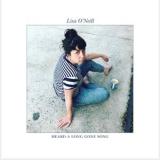
Die neue EP der irischen Songwriterin Lisa O"Neill besteht aus sechs Songs, darunter die eindringliche Version von Bob Dylans "All The Tired Horses", die Lisa für die Schlussszene der letzten Folge von Peaky Blinders aufgenommen hat, sowie "Homeless In The Thousands (Dublin in the Digital Age)" mit Peter Doherty, das bereits im Januar dieses Jahres als eigenständige Single veröffentlicht wurde. Es ist nicht das erste Mal, dass O"Neill über soziale Ungerechtigkeiten in Zeiten des Wandels schreibt. Lieder wie "Rock the Machine" über Arbeitslosigkeit in den Dubliner Docklands, "When Cash Was King" über den Übergang zu einer bargeldlosen Gesellschaft und "Violet Gibson" über die Irin, die 1926 versuchte, Mussolini zu ermorden - dieses neue Lied entstand als Reaktion auf das wachsende Problem der Obdachlosigkeit in Dublin und Irland. Ergänzt wird die EP durch einen neuen Song und den aktuellen Live-Favoriten "Mother Jones" über die irische Aktivistin Mary G. Harris Jones, die nach Amerika auswanderte und dort als Gewerkschaftsorganisatorin tätig war. Im Jahr 1902 wurde sie als "die gefährlichste Frau Amerikas" bezeichnet, nachdem sie Bergarbeiter gegen die Minenbesitzer mobilisiert hatte - ein Engagement, das direkt zur Einführung der ersten US-Gesetze gegen Kinderarbeit führte. Abgerundet wird die EP durch eine eindrucksvolle Version des zur Jahreszeit passenden "The Bleak Midwinter" sowie eine bewegende Rezitation des Gedichts "Autumn 1915" von James Stevens.
Beautifully remastered and presented 3LP set of exceptional Kanzai psych. Truly classic and very essential business. This stuff melts your heart, brain and face simultaneously..
Temporal Drift presents the first-ever officially sanctioned reissue of celebrated Japanese cult band Les Rallizes Dénudés’ three albums, originally compiled and released in limited quantities on CD in 1991. Led by the enigmatic Takashi Mizutani, Les Rallizes Dénudés has gained an almost mythical status the world over with their delicate balancing act between transcendent psychedelia and pure sonic assault, maintaining its status as an underground phenomenon throughout their three decade existence and beyond.
‘67-’69 STUDIO et LIVE, MIZUTANI / Les Rallizes Dénudés, and ‘77 LIVE are the only albums released during Les Rallizes Dénudés’ lifetime, between its formation in 1967 at Doshisha University in Kyoto to its last-ever show in 1996 at Club Citta in Kawasaki. Produced by Mizutani, the three discs collectively provide a window into the (in)famously impenetrable band’s first decade of existence.
‘77 LIVE is an explosive live set from Tokyo that captures the glorious noise of the Rallizes at their full potential. Recorded on March 12, 1977 at Tachikawa Social Education Hall in Tachikawa, Tokyo, ‘77 LIVE showcases Mizutani’s unmistakable, overdriven, feedback-drenched guitar, played on a newly purchased Gibson SG, soon to become his signature ax. Includes wholly transformed versions of “Memory is Far Away” and “The Last One” reaching the kind of highs that no unsuspecting listener could have imagined coming from Mizutani or the Rallizes just a few years prior, as heard on ‘67-’69 STUDIO et LIVE and MIZUTANI / Les Rallizes Dénudés.
Produced in collaboration with The Last One Musique, the new label set up by former members and associates of Les Rallizes Dénudés, ‘77 LIVE features newly remastered audio by former Rallizes member Makoto Kubota and new liner notes by Yuasa Manabu.
- Mean Street
- Dirty Movies
- Sinners Swing!
- Hear About It Later
- Unchained
- Push Comes To Shove
- So This Is Love?
- Sunday Afternoon In The Park
- One Foot Out The Door
The song titles on Van Halen's aptly titled Fair Warning don't lie. The likes of "Unchained," "Mean Street," "Push Comes to Shove," "One Foot Out the Door," and more indicate the mood the band channels on its double-platinum 1981 record — the nastiest, darkest, and fiercest album of the group's storied career. For the fourth time in four years, Van Halen throws down the gauntlet to all challengers and emerges victorious.
Sourced from the original analog tapes, pressed on MoFi SuperVinyl at Fidelity Record Pressing, and strictly limited to 5,000 numbered copies, Mobile Fidelity's UltraDisc One-Step 180g 45RPM 2LP set plays with unfettered clarity, dynamics, and immediacy. Benefitting from superb groove definition, an ultra-low noise floor, and dead-quiet surfaces, this vinyl edition captures what went down in the studio with tremendous realism and involving presence.
Taking a more controlled approach in the studio and still completing everything in less than two weeks, Van Halen and producer Ted Templeman relied on studio amplifiers to direct the sound. Further diverging from the live-on-the-floor approach of its earlier albums, the ensemble also employed overdubs to great effect. The result: Dense, stacked architecture that underlines the hard-hitting tenor of the songs — and which comes alive like never before on this reference edition that looks as good as it sounds.
The premium packaging and gorgeous presentation befit the reissue's select status. Housed in a deluxe slipcase, it features special foil-stamped jackets and faithful-to-the-original graphics that illuminate the splendor of the recording. Aurally and visually, it is made for listeners who want to immerse themselves in everything involved with the album, including the iconic cover art adopted from William Kurelek's haunting painting, "The Maze."
Isolated frames from Kurelek's childhood-inspired work — including a man bashing his head into a brick wall, a guy pinning down an adversary as he delivers bare-fist blows to his face and others watch with apparent glee, a boy tied down on a conveyer belt and being sent through the equivalent of a meat saw — adorn the front and back covers. The sunnier visual disposition of Van Halen's prior efforts gives way to something sinister and tortured, traits reflective of the music within. The band members, too, are visually depicted not in glamorous shots but in a serious black-and-white portrait in which the quartet is clad in black leather jackets.
Tough, aggressive, stark: Fair Warning comes on like a series of bare-knuckled punches to the solar plexus and boasts lyrical narratives to match. Though not a concept record, the concise album revolves around themes of roughing it on the streets and struggling to survive amid dim prospects. Singer David Lee Roth reportedly penned many of the initial lyrics after traveling to Haiti and observing extreme poverty. The characters and situations populating Fair Warning reflect hardscrabble existence, last-chance desperation, and underlying danger.
Witness the crazies, poor folks, and hunters of “Mean Street”; the former prom queen turned pornographic actress on “Dirty Movies”; the menace and vice of “Sinners Swing!”; the streetwise hustle of “Unchained”; the isolation and alienation of “Push Comes to Shove”; the desire for escape on “One Foot Out the Door”: A carefree California beach party Fair Warning is not.
Having said he felt angry and frustrated during the sessions, guitarist Eddie Van Halen uses the forceful arrangements as a playground for his seemingly unlimited arsenal. Supported by a crack rhythm section and a hyped-up Roth, he performs with an almost impossible combination of punk-like intensity, technical finesse, lyrical fluidity, and unbridled emotion. The virtuoso was increasingly butting heads with Templeton and seeking a freedom in the studio he believed denied him.
No wonder he plays like a bat out of hell. Listen to the rapid-fire manner in which he slaps the high and low E strings on the 12th fret of his instrument on “Mean Street,” instilling the tune with funk flair and metal-spiked sharpness. For the pouty strut of “Dirty Movies,” Eddie Van Halen contributes slide guitar magic made possible after he sawed off the lower portion of a Gibson SG so he could reach further down the fretboard.
Related intensity, urgency, and daredevil momentum punctuate the surging “Sinner’s Swing!” A heavily flanged, delicately melodic introduction frames the attitudinal “Hear About It Later,” among the most creative arrangements of Van Halen’s career. And do riffs come any bigger or magnetic than those on the high-wire kick of “Unchained”? As for the out-of-left-field “Sunday in the Park,” an instrumental composed on an Electro-Harmonix micro-synthesizer: Who but Eddie Van Halen to supply creep factor in such an ingenious way?
Despite selling fewer quantities than Van Halen’s prior efforts, Fair Warning remains for many diehards the record that epitomizes all of the band’s immense strengths —Roth’s manic energy and tongue-wagging humor, Alex Van Halen’s rhythmic heartbeat-in-your-chest bombast, and Michael Anthony’s lucid bass lines included. Arriving when the New Wave of British Heavy Metal and new-wave movements were taking flight, it signaled a shot across the bow from a band determined to stay a step ahead and provide proof nobody could touch what it delivered.
More than four decades later, Fair Warning still sounds that alarm.
Ston Elaióna is John Also Bennett’s first album for Shelter Press since his 2019 solo debut Erg Herbe. The American born, Athens, Greece, based flautist, synthesist, and composer weaves a strikingly singular electroacoustic excursion for bass flute and Yamaha DX7ii, largely recorded in the golden haze of the early morning hours - bending time at the otherworldly juncture of consciousness and place. Translating from Greek as “in the olive grove”, Ston Elaióna is permeated with the ambiences of the ancient and present world, guided into form by a playfully rigorous approach to sound.
Initially emerging during the mid 2000s as part of Columbus, Ohio’s noise scene, before relocating to NYC around 2010, Bennett’s diverse activities picked up an increasing sense of pace over the following decade - performing and recording as a solo artist (JAB), with the trio Forma and with CV &JAB, his prolific duo with his partner Christina Vantzou, as well as playing in Jon Gibson’s ensemble among many other multifaceted collaborations. However, since 2020 the flautist and electroacoustic composer has existed in a semi nomadic state: drifting between Brooklyn, Brussels, extensive tours, and Greece, where he finally came to rest in Athens last year.
Drawing upon a carefully honed attentiveness to the environments and experiences of everyday life, Ston Elaióna is a suite of nine pieces (with an additional track exclusive to physical formats), many of them composed and played live as the early morning sun touched the Parthenon, in full view from Bennett’s studio window in Athens. Bennett’s refinement and restraint, honed over his years adrift, led him to adopt a limited palette focused on his primary instrument, the bass flute, and a Yamaha DX7ii synthesizer tuned to just intonation scales. Alongside a handful of other keyboards, digital oscillators triggered by his flute, and occasional field recordings, this simple palette is reflected by the deeply emotive sense of minimalism that permeates the album’s two sides. Following two solo albums defined by outward facing temperaments - 2022’s Out there in the middle of nowhere (Poole Music), which used a lap steel guitar and generative oscillators to evoke the surreal landscapes of the South Dakota badlands, and the largely synthetic atmospheres of the 2024 anthology Music For Save Rooms 1 & 2 (Editions Basilic) - the shift in Bennett’s worldly circumstances offered an intuitive return to the calm, inward states of creative exploration that have historically defined JAB’s sound. In parallel, context provided clear sources of inspiration for many of the album’s themes, as well as sources for some of its sounds. The aura of Greece, from the ancient to the present, from its stones and olive groves to its traffic, figures heavily across Ston Elaióna’s two sides. John Also Bennett’s Ston Elaióna forms an elegantly rigorous world of electroacoustic sonority, bridging the expanse of time with the immediacies of environment and happening in the here and now: a profound sonic mediation on the countless dimensions unlocked by life in Greece.
- A1: Dead Or Alive - You Spin Me Round (3 19)
- A2: Buggles - Video Killed The Radio Star (3 17)
- A3: John Paul Young - Love Is In The Air (3 23)
- A4: Katrina - Walking On Sunshine (3 54)
- A5: Coolio - Gangster's Paradise (4 02)
- B1: Nik Kershaw - Wouldn't It Be Good (4 45)
- B2: William Pitt - City Lights (3 46)
- B3: Debbie Gibson - Lost In Your Eyes (3 35)
- B4: Robbie Dupree - Steal Away (3 16)
- B5: The Motels - Only The Lonely (3 13)
- C1: Wild Cherry - Play That Funky Music (3 45)
- C2: Limahl - Neverending Story (3 31)
- C3: Color Me Badd - I Wanna Sex You Up (3 53)
- C4: Sisqo - Thong Song (4 14)
- C5: Crazy Town - Butterfly (3 37)
- D1: Spagna - Call Me (4 06)
- D2: Wax - Right Between The Eyes (4 07)
- D3: Stories - Brother Lou (3 56)
- D4: Stevie B - Because I Love You (4 19)
- D5: Maria Muldaur - Midnight At The Oasis (3 33)
"One Hit Wonders" ist eine dynamische Doppel-LP-Zusammenstellung, die die unvergesslichen Songs feiert, die den Äther beherrschten und zu zeitlosen Klassikern wurden. Diese Sammlung vereint legendäre Hits aus verschiedenen Jahrzehnten und Genres, von den energiegeladenen Beats von "You Spin Me Round (Like a Record)" von Dead or Alive bis zum sanften Yacht-Rock von "Steal Away" von Robbie Dupree. Mit Tanzhymnen, gefühlvollen Balladen und genredefinierenden Titeln ist dieses Album eine nostalgische Reise durch Songs, die trotz der Tatsache, dass sie die einzigen großen Chartstürmer ihrer Künstler waren, in der Musikgeschichte unverzichtbar geblieben sind.
Diese sorgfältig zusammengestellte Auswahl umspannt die Welten von Pop, Rock, Funk, R&B und Hip-Hop. LP1 enthält Wohlfühl-Hits wie "Walking on Sunshine" von Katrina and the Waves, den Synthie-Pop-Charme von "Wouldn't It Be Good" von Nik Kershaw und die eindringliche Schönheit von "Only the Lonely" von The Motels. LP2 hält die Energie hoch mit funkgetriebenen Grooves wie "Play That Funky Music" von Wild Cherry, der filmischen Magie von "Neverending Story" von Limahl und sanften Balladen wie "Because I Love You" von Stevie B. Jeder Track auf dieser Compilation ist einkultureller Meilenstein, der von der ersten Note an erkennbar ist.
"One Hit Wonders", herausgegeben von MPO, ist ein Muss für Musikliebhaber, Sammler und Fans von klassischen Hits, die Generationen überdauern. Ob Sie diese Hymnen wiederentdecken oder zum ersten Mal erleben, dieses Album fängt die Magie von Songs ein, die Geschichte geschrieben haben, auch wenn ihre Schöpfer nie wieder denselben Erfolg in den Charts hatten. Sichern Sie sich noch heute Ihr Exemplar und lassen Sie sich von der Musik in die Momente zurückversetzen, in denen diese Titel die Charts beherrschten und und die Welt in ihren Bann zogen.
Tracklisting
- Jana Irmert Portals
- 7038: 634357 Rope
JANA IRMERT - ,PORTALS": Portals wurde vollständig aus Klängen produziert, die im Amazonas-Regenwald in Brasilien und Kolumbien aufgenommen wurden, und beschwört die verborgene Welt der Klänge herauf, die jenseits unserer Wahrnehmung liegt. Ob in ultraschallhohen Frequenzbereichen oder in den Tiefen des aquatischen Mediums verborgen, zeugen diese Klänge von einer ungeahnten und pulsierenden tierischen Aktivität. Insekten, Frösche, Fledermäuse und Süßwasserdelfine bewegen sich, verstecken sich vor unseren Augen und Ohren. Indem sie diese Klangpalette insbesondere durch Transposition offenlegt und wieder in den Bereich des Hörbaren zurückführt, lädt Jana Irmert uns zu einer faszinierenden Erkundung einer ungeahnten, spekulativen und nicht-menschlichen Klangwelt ein, die sie auf respektvolle und persönliche Weise offenlegt und neu komponiert, wobei sie dieses wimmelnde und faszinierende Klangmaterial mit einer musikalischen Geste von großer Klarheit begleitet. Portals ist ein Versuch, durch eine von Jana Irmert fein komponierte Dezentrierung des Hörerlebnisses Zugang zur evokativen Kraft eines Amazonaswaldes am Rande der Katastrophe zu finden. 7038634357 -`ROPE': Mit ungewöhnlicher Meisterschaft und Präzision entfaltet sich Rope in einer schwebenden Zeit, die dennoch bedrohlich wirkt. Wie der Titel schon andeutet, untersucht Rope die formale Figur des Seils als Verflechtung von synthetischen und natürlichen Fasern, die halten und verschmelzen, zusammengehalten von den Kräften der Spannung und Reibung. Das Seil selbst ist, wie Neo Gibson erklärt, in regelmäßigen Abständen über seine gesamte Länge geknotet, sodass man sich daran festhalten kann. Rope entfaltet sich langsam und entwickelt sich von der Schwelle des Wahrnehmbaren hin zu dichteren, ballastierten elektronischen Texturen, immer jedoch am Rande einer bevorstehenden Umwälzung. Dann taucht ein melodisches Motiv auf, das einen unmöglichen Trost in sich zu tragen scheint. In dieser Hinsicht balanciert Rope auf eindrucksvolle Weise zwischen formaler Eleganz, klanglicher Schwere und einer fast unfassbaren emotionalen Ladung.
Blue House Rockin’ is the result of a unique collaboration between Soul Sugar and Dub Shepherds — two projects united by a shared love for roots reggae, vintage studio gear, and warm analog sound.
The album was recorded live over two intense days at Blue House Studio by Christophe “French kiss” Adam, using ribbon and tube microphones from the ’50s and ’60s from the ’50s and ’60s, a Hammond organ, upright piano, Fender bass and Gibson guitars, classic amps and preamps, along with drums, syndrums and percussion. The sessions were transferred to a 24-track tape machine, and final mixes were crafted the old-school way by the Dub Shepherds at their own Bat Records Studio, using analog consoles and hardware vintage effects.
The tracklist brings together deep cuts, timeless classics, and original compositions. Curtis Mayfield’s Give Me Your Love and Aaron Frazer’s My God Has a Telephone (Colemine Records) — two soul gems, one vintage, one modern — are reimagined in reggae style, both featuring the great Jolly Joseph on lead vocals, working wonders with his falsetto. He also shines on Hold My Hand, a sweet and mellow original composition with lovers rock flair, written on the spot during the session.
Other standout moments include the soulful fire of UK singer Shniece McMenamin, who lights up Family Affair (Mary J. Blige / Dr. Dre) — flipped into a fiery hip-hop-meets-reggae version packed with energy and attitude.
Instrumentals like Disco Jack, Choice of Music, and Drum Song — all originally composed by Jamaican organ legend Jackie Mittoo — bring Guillaume “Booker G” Metenier’s Hammond work to the front. The playful exchange between organ, guitar, and a rock-solid rhythm section is elevated by swirling spring reverb, dub echoes, and filter sweeps.
The album’s explosive title track — Blue House Rock — was composed and recorded on the spot at the end of the session. A raw, greasy groove that sounds like The Meters jamming at Studio One or a lost instrumental from a Beastie Boys B-side.
Blue House Rockin’ is a vibrant blend of soulful roots reggae and funk, wrapped in the deep, dusty tones of analog tape. A joyful and authentic studio experience, captured live — and played loud.
- Victim Or Vixen
- Glutton For Love
- Cyber Crimes
- Live (In A Dream)
- The Walk Of Shame
- Crisis Stage
- Taste Of Hate
- Snake Water
- End Vision
The latest by Andrew Clinco's acid punk alias VR SEX takes its title from an architectural phrase but more importantly refers to the warped, wicked underworld the songs both chronicle and condemn. Donning the moniker Noel Skum - an acerbic anagram of Elon Musk - Clinco vents his scorn for and fascination with the seedy, surreal margins of low-life Los Angeles, doomed to dead ends of vanity, lust, and technology. Although initially launched as an outlet for "heavier sounds" beyond Clinco's duties in new wave fantasists Drab Majesty, the project has ripened into a compelling exercise in world building, weaving themes of gritty city neofuturist sleaze within a framework of driving, distorted guitars and cathode-blasted synths. Echoes of Chrome, Wire, Minimal Man, and Sisters Of Mercy ripple through the collection but ultimately Rough Dimension charts its own twisted vision of "our unforgiving reality." Written and demoed across two weeks alone in a Marseille flat using his prized 1980's Gibson "Invader" and a laptop, Clinco then took the tracks to Strange Weather studios in Brooklyn to record with Ben Greenberg (Uniform, The Men) who helmed 2019's debut, Human Traffic Jam. The results are notably ripping, refined, and riveting. Riffs in alternate tunings chug and churn over mid-tempo drums punctuated by spikes of sci-fi electronics while the vocals swagger and spit venom ("where we walk is also where we shit / but if we bark at our reflections are we hypocrites? / impulses bleed right into our seed / where hate culminates the apple rotted on the tree"). It's a bristling mix of the melodic and the macabre, absurdist observations of fast living and desperate measures, the clock of youth ticking towards midnight as dreams unravel in Babylon. VR SEX's specialty is making these cautionary tales of psychic decay and tainted love a thrill rather than a drag. There's a sunglasses at night glamor to Clinco's choruses and solos, a wit to his black leather judgements ("what is the answer / to cancerous people / walking in my line of sight?"). The music's milieu tends towards parasites and predators but its mood skews refreshingly accelerated and amused, cruising the strip with a cigarette, watching goths and limousines crawl in gridlock beneath digital billboards. The Rough Dimension may be a cesspool, but it's home.
Past Inside The Present is back with another of its quietly powerful ambient records, this time from Almost An Island, which is a collaboration between Kenneth James Gibson and husband and wife duo James and Cynthia Bernard. This black version of the self-titled oeuvre drifts through ambient, Americana and experimental soundscapes with musical elegance and tasteful restraint. Muted textures, swirling guitar, pedal steel and subtle vocals create a mood that draws you in close but is also grand in scale. Tracks like 'Quadrivium' and 'What Got Us To Our Feet' blur the line between memory and melody, while 'Palo Verde' and 'Promise to Fade' linger like a half-remembered dream. This isn't ambient as background-it's a fully formed emotional landscape that is both meditative and melancholic.
- Opening (Score)
- Overture (Score)
- Shpadoinkle
- I'm Alferd Packer (Score)
- Shpadoinkle (Group Reprise)
- Doomed (Dialogue)
- The Trappers (Score)
- Noon Is Horny
- That's All I'm Asking For
- The River (Score)
- When I Was On Top Of You C
- Olorado Territory (Score)
- Trapper Song
- Guilty (Score)
- This Side Of Me
- Indians
- The Cyclops (Dialogue)
- Let's Build A Snowman
- Let's Build A Snowman (Reprise)
- Nightmare (Score)
- That's All I'm Asking For (Bummer Reprise)
- For Whom The Bell Trolls (Score)
- Saloon Fight (Score)
- Hang The Bastard
- Packer Saved (Score)
- Shpadoinkle (Finale Reprise)
- Shpadoinkle (Instrumental)
- That's All I'm Asking For (Instrumental)
- When I Was On Top Of You (Instrumental)
- Trapper Song (Instrumental)
- The Side Of Me (Instrumental)
- Hang The Bastard (Instrumental)
Enjoy The Ride Records, in partnership with New Cannibal Society, proudly presents the 2xLP Expanded Deluxe Vinyl release to the Cult-Classic Horror/Comedy Cannibal! The Musical, directed by Trey Parker, co-creator of South Park and The Book of Mormon. Cannibal! The Musical is the true story of the only person convicted of cannibalism in America - Alferd Packer. The sole survivor of an ill-fated trip to the Colorado Territory, he tells his side of the harrowing tale to news reporter Polly Prye as he awaits his execution.
While searching for gold and love in the Colorado Territory, he and his companions lost their way and resorted to unthinkable horrors, including toe-tapping songs! Packer and his five wacky mining buddies sing and dance their way into your heart... and then take a bite out of it! Cannibal! The Musical is Oklahoma meets Friday The 13th Part 2. The film stars Trey Parker (South Park), Matt Stone (South Park), Dian Bachar (Baseketball, Orgazmo), Jason McHugh (Orgazmo) and Toddy Walters (Orgazmo).
For this newly expanded release, the stereo, music, and effects tracks were pulled from the digibeta tapes (thought to be lost) and have been remixed from scratch. This soundtrack also features complete dialogue scenes that lead into songs. What you'll hear is the best quality this soundtrack has ever heard! Cannibal! The Musical is housed in a gatefold jacket with brand-new art by Garreth Gibson. It is pressed on 2xLP vinyl for the first time and features 22 additional tracks available on the format for the first time, including instrumentals, dialogue, and score music. Pressed across four colorful variants, Side B also features a pop-up center label. What a Shpadoinkle day!
Secret Soul Society aka Cal Gibson backs up his already assured reputation for being something of an edit maestro here. 'Julians Cabbages' kicks off with dubby downtempo drums and some lovely twinkling arps. 'Make It All True' then refracts a shimmering vocal and some nice musical percussion around a lazy groove and 'Finally Got My Life Together' has a dreamy feeling and widescreen synth architecture. 'Next To You' shuts down with more textured bass and another weird yet wonderful vocal sample.
- Circle
- Eye Contact
- Seventeen Nights
- My Waterfall
- Wasting Time
- Final Lap
- Eraser Ii
- Shipwrecked
- Open Shadow
- Like A Stone
Neo Gibson, born in Virginia and based in New York City, records, performs, and produces as 7038634357. This numerical alias, under which Gibson has been releasing work since 2016, offers a window into the careful ambivalences of the musical project. It conjures the impersonal_the opacity and randomness of data, a number that is hard to remember or even say out loud_while also suggesting a direct line of communication with the artist, down to an area code indexing their biography. 7038634357 uses a restricted palette to achieve music that is formally precise and emotionally direct. Their digital-native approach to production, in which frank melodies cross paths with heavy distortion, contains traces of both trance's maximalist arcs and a songwriterly intimacy. Expressive details may appear submerged or abraded, subjected to a canny sense of dynamics and textural specificity. Waterfall Horizon, Gibson's second vinyl record with Blank Forms Editions under the moniker 7038634357, was written for live performance and workshopped over successive shows during their 2022 European tour. Here, hallmarks of their earlier, studio-crafted recordings_digital distortion that obfuscates their lyrics and a slow-burning ambience_are noticeably pared back. Instead, Waterfall Horizon takes on a pop inflection, adopting more traditional lyric scaffolds so that the interstices from verse to chorus or track to track can flourish within their limited tonal range.Across recordings and performances, Gibson activates wide-ranging mechanisms of audience connection: from the relative anonymity of internet platforms to live experiments with the spatial effects of amplification. They have a particular interest in site-specific performances in non-musical spaces, and have performed in a variety of contexts, including the mezzanine of the West 4th Street subway station in New York City and INA GRM/Radio France's Présences électronique festival. Under their own name, Gibson has maintained a longstanding collaboration with the artist Charles Stobbs, working primarily with FM transmission and techniques derived from the early-seventeenth-century English tradition of change-ringing bells. The first 7038634357 vinyl record, Neo Seven, was released on Blank Forms Editions in 2023; previous releases include self-released cassettes and CD-Rs, as well as a pair of EPs on Genome 6.66 Mbp (2018, 2019).
- A1: Don't Take Your Guns To Town - Johnny Cash
- A2: Big Iron - Marty Robbins
- A3: (Ghost) Riders In The Sky - Eddy Arnold
- A4: The 3:10 To Yuma - Frankie Laine
- A5: Gunslinger - Katie Lee
- A6: The Streets Of Laredo - Don Gibson
- A7: The Old Chisholm Trail - Tex Johnson
- A8: Tennessee Stud - Eddy Arnold
- A9: The Pony Express (I've Got To Carry The Mail) - Jimmie Driftwood
- B1: El Paso - Marty Robbins
- B2: Jesse James - The Kingston Trio
- B3: Wanted Man - Frankie Laine
- B4: Death Valley - Glen Campbell
- B5: Lost On The Desert - Johnny Cash
- B6: When It's Springtime In Alaska (It's Forty Below) - Johnny Horton
- B7: Sam Bass - Tex Ritter
- B8: Nineteen Men - Johnny Western
- B9: The Long Black Veil - Lefty Frizzell
The Wild West cowboy occupies a symbolic and central place in
popular culture. The lone rider, out on the range… The whitehatted hero facing up to a gang of outlaws in a gunfight… The
wagon train heading out over the horizon… Celebrated in cinema
since the beginning of movies, the cowboy has also found a
regular home on record, as this vinyl LP compilation testifies.
Listen to these songs and, with just a little imagination, you can
picture the solitary cowboy on his trusty steed, watching a cattle
round-up, or making his way into a town like Tombstone… A
timeless myth, captured forever in these Songs Of The Wild
West…
- A1: Element Abuses - Andy Gibson
- A2: Ebola - 3 946
- A3: Matt Fraktion - The Devil
- A4: Iszoloscope - The Sum Of Us All Remix
- B1: Somatic Responses - Ognok
- B2: Sobchak - Ctrl 1
- B3: Ingler - Just My Life
- B4: Subskan - Fürt
- C1: Zotz - Metalflex
- C2: Ripit - Creuze
- C3: Subskan– Fürt
- C4: Zotz– Metaflex
- D1: Elektroplasma– Inferno
- D2: Ripit– Creuze
- D3: Kirdec– Stem Der Vrijheid
- D4: Imminent– Llok
Sealed ! MINT from Label Stock.
This is as well YB70 number 16, the vinyl edition of the YB70 12 CD. Fat cutting and loud sound, for a superb record... Meet these Techno Indus, downtempo dark hardbreak, Breakcore Dub and others jewelry coming straigth from the Parazit/YB70 selector. Enjoy the 12th anniversary from SEPPUKU/PARAZIT parties in west France, where all these artists played melting the Industrial scene to the techno crowd... Notice the super sleeve. A sealed record... Important release !
The Ibex Band, with Giovanni Rico and Selam Woldemariam at the creative helm, provided the musical backbone for legends like Aster Aweke, Girma Beyene, Tilahun Gessesse, Mulatu Astatke, and Mahmoud Ahmed, including the iconic album Ere Mela Mela, shaping modern Ethiopian music as we know it today. This 1976 album (Ge’ez Year 1968) played a pivotal role in that legacy and has now resurfaced to set the record straight.
There’s a tendency to talk about the seventies as a golden age of Ethiopian music. There are good reasons for that, and just as good reasons against it. However, the notion of a golden past privileges the role of Western explorers and suggests that the pinnacle of Ethiopia’s musical culture is something only a foreigner can appreciate and unearth. It downplays the complexities of Ethiopia’s culture and history, creating an artificial divide between then and now. And it underestimates the constantly evolving sound that has followed.
The legendary musical outfit The Ibex Band, later metamorphosed into The Roha Band, has played a central role in defining the sound of many of the greatest stars on the music scene of Ethiopia from the mid-seventies onwards–but their golden output has never really waned. The story of the origins of the band that provided the musical backbone for greats such as Aster Aweke, Girma Beyene, Tilahun Gessesse, backing the solo career of group member Mahmoud Ahmed as well as backing Mulatu Astatke and many others has yet to be properly told.
Two misconceptions plague the image of Ethiopian music, one is that the music is pure because it is, by some notion, unexploited, the other is that it is all traditional. To begin with, a combination of political changes between the late sixties and the mid-nineties created an environment where only the most dedicated and skilled musicians struggled on and pursued a musical career against fierce odds. The whole Ibex Band, with Giovanni Rico and Selam “Selamino” Seyoum Woldermarian at the creative helm, are arguably the origo of the vibrant scene in the mid-seventies, and the said pair are foremost responsible for not only navigating the band through troubled times, but also modernizing the 6/8 chickchicka rhythm to a contemporary form. Giovanni laid the rhythmic foundation with heavy looped basslines that reinvented traditional melodies as dance music, and with Selamino’s innovative guitar work they influenced scores of musicians from Abegaz Kibrework Shiota to Henock Temesgen. Even Giovanni’s Fender bass and Selamino’s Gibson guitar inspired younger musicians in their choice of instruments. Not only in choice of instruments but also in sound–even as the digital revolution hit Ethiopian music, a lot of popular music still took its cue from the masters from Ibex and Roha.
Ibex emerged out of the ashes of the sixties group the Soul Echos band, adding Giovanni and Selamino to their ranks and taking their cues from a slew of influences, such as Motown and The Beatles, fused with traditional music. A tighter-knit unit than most bands at the time – Ibex has remained six to seven members throughout their whole career, compared to many bands that were as large as fifteen or sixteen men strong when Ibex set out. Their playing has been viciously focused, economical yet heavy. Just a year before the recording sessions of the album in your hands, Giovanni and Selamino made a contribution to the popular musical lexicon of Ethiopia that was simply defining the popular sound: their arrangement and recording of bandmate Mahmoud Ahmed’s solo effort and real commercial breakthrough tune and eponymous album, Ere Mela Mela, from 1975.
Selamino has never limited himself to being an adroit lead guitarist, but has always been a scholar of history, and as such he has probably contributed as much to modern Ethiopian music with his guitar playing and compositions as with a deepened understanding of modern or contemporary – Zemenawi – Ethiopian music. Selamino’s contributions serve as a metaphor for those of the whole band, at one and the same time creating and defining a new, danceable and updated sound anchored in Giovanni’s bass, whilst also elevating the broader scene through their support for others on the scene and on top of that, increasing the understanding of the music.
There is an understandable desire to romanticize the musical heyday Ibex and Roha were at the forefront of, because so much of the output is sorrowfully hard to come by. Ibex creativity was nothing short of ridiculously fierce compared to many of their Western contemporaries. Based on their sheer recorded output alone they could have usurped the title “hardest working in show business” from James Brown, recording more than 250 albums or 2500 songs in the seventies and eighties. Some only surface as cassettes today, others were never given full LP release, and some are simply impossible to find today. In the light of that, it’s nothing short of a miracle that the recording Stereo Instrumental Music from 1976 (Ge’ez Year 1968) has resurfaced. Unearthed in perfect condition on a chrome cassette, this is musical history comes alive–to set the future straight. Stereo Instrumental Music was recorded in collaboration with Karl-Gustav Lundgren, a Swedish national working for the Radio Voice of the Gospel. It took two sessions at the Ras Hotel ballroom in Addis Ababa. The Ibex Band was the first band in Ethiopia to employ a four-track recorder for their recording (the first available in the country, lent by Karl-Gustav). Later the same week, Giovanni and Selamino realized that, lengthwise, the recorded material fell short of what they wished for, so they recorded four more tracks in one more session on a single-track recorder. The Ras Hotel and Ghion Hotel, where the Ibex Band held musical residencies were to Ethiopia in general and Addis Ababa in particular what Motown was to the USA and Detroit a few years earlier – a hotbed of musical creativity and showmanship.
The most astonishing thing about Ethiopian music of the last half century is how tradition and modernity are intertwined. Because of this feature, it’s kind of hard to tell when there ever was or when we are in a “golden age”. So much of music from the past has been criminally neglected, but because of the hardships in the past, it would be an oversimplification to say that said past was a golden age. Probably, the golden age is what we are approaching, because for the first time both the past and future are accessible, and the monumental contributions from before can lay a firm foundation for a thriving music scene today. The Ibex Band stands firmly in the past, present and the future. That, if anything, is golden.
The detailed history of Stereo Instrumental Music is in many ways unique. To begin with, it couldn’t have been recorded earlier (there were no four-track recorders available) and it really couldn’t have been recorded afterwards either, at least not in the years directly following, because of the toll the musical scene took from the unfavorable political climate that followed when the nascent Derg regime and rival groups tried to assert themselves, the musical equipment lent from The Voice of Gospel Radio simply disappeared from Ethiopia when the radio station folded in 1977. Karl-Gustav Lundgren,
the Swedish foreign national who assisted during the recording, worked with the Ethiopian Evangelical Church Mekane Yesus at the time, recalls how they only had about fifteen minutes to get the microphones in place for the recording as to not alert neither the management at Ras Hotel nor the authorities and most importantly, to complete the recording before the curfew came into effect at midnight. In leaping to the opportunity to use previously unavailable equipment to push their sound forward and improvising to meet the logistical challenges, the Ibex Band displayed the very avant-gardism and adaptability that explains their longevity as a band through the years. The recording of Stereo Instrumental Music is from a given time in history, but it sounds as beyond time.
Much of the energy that burst out of the scene that Stereo Instrumental Music came out of dissipated or got sidetracked during the societal changes Ethiopia went through in the 1970s and 80s. Whilst leaders might have professed to be revolutionary, the work ethic of the Ibex Band can truly be described as that. They never called it quits, but adapted, toured extensively abroad in Africa, Europe, and the Middle East, and found ways to work even in the face of the curfew that curtailed a lot of musical life. They even played major arenas in the nineteen eighties, despite said curfew and restrictions. The whole extent of their legacy has never been told, but their music speaks louder than words, so therefore… tune in to the Ibex Band’s Stereo Instrumental Music.
- A1: The Olive Garden / Night Sky
- A2: Bearing The Cross
- A3: Jesus Arrested
- A4: Peter Denies Jesus
- A5: The Stoning
- A6: Song Of Complaint
- A7: Simon Is Dismissed
- A8: Flagellation / Dark Choir / Disciples
- A9: Mary Goes To Jesus
- B1: Peaceful But Primitive / Procession
- B2: Crucifixion
- B3: Raising Rhe Cross
- B4: It Is Done
- B5: Jesus Is Carried Down
- B6: Resurrection
- 180 GRAM AUDIOPHILE VINYL
- PVC PROTECTIVE SLEEVE
- SCORE BY JOHN DEBNEY
- CONTAINS A 8-PAGE BOOKLET
- LIMITED 15TH ANNIVERSARY EDITION OF 500 INDIVIDUALLY NUMBERED COPIES ON TRANSPARENT RED VINYL
Passion Of The Christ (2004), composed by John Debney, is the original score for Mel Gibson's controversial film The Passion Of The Christ. The soundtrack received an Academy Award nomination for Best Original Score and it was on the first place in both Top Christian Albums and Top Soundtracks in 2004. In 2005, the album won a Dove Award for Instrumental album of the year at the 36th GMA Dove Awards.
The soundtrack succeeds as a coherent, moving, well-executed musical statement whether or not has seen the film. The album is a combination of folk instruments, Eastern-tinged harmonics, solo, and choral voices. Debney has used the Indian master violinist and vocalist L. Shankar, and singer/double-violinist Gingger Shankar.
Debney's soundtrack is an interesting and highly recommended work. It will offer those who choose to encounter it a far-reaching and deeply affective listening experience that is as aesthetically beautiful and unsetting as it is evocatively familiar.
Available as a limited 15th anniversary edition of 500 individually numbered copies on transparent red vinyl.
The second instalment in George Miller’s disturbing post-apocalyptic film series, The Road Warrior (1981), saw Mel Gibson return as
Mad Max Rockatansky to defend a community from a violent band of raiders. The film won a clutch of awards, was a box office hit and
has achieved cult status, helped by its stylised costumes and sets. The last Mad Max film (Mad Max: Fury Road) was released in 2015,
receiving ten Academy Award nominations.
Australian composer Brian May wrote the music to the first two films (Mad Max and Mad Max 2 : The Road Warrior) as well a host of feature
films including Patrick, Gallipoli, Freddy’s Dead : The Final Nightmare and Dr. Giggles. He won multiple awards during his lifetime and is feted as one of Australia’s most highly rated soundtrack composers.
This release was originally issued for Record Store Day 2019 on “Sand with Oil Splatter” coloured vinyl.
- The Olive Garden / Night Sky
- Bearing The Cross
- Jesus Arrested
- Peter Denies Jesus
- The Stoning
- Song Of Complaint
- Simon Is Dismissed
- Flagellation / Dark Choir / Disciples
- Mary Goes To Jesus
- Peaceful But Primitive / Procession
- Crucifixion
- Raising The Cross
- It Is Done
- Jesus Is Carried Down
- Resurrection
The Passion of the Christ is a 2004 biblical drama film by Mel Gibson with music composed by John Debney. The soundtrack received an Academy Award nomination for Best Original Score and it was on the first place in both Top Christian Albums and Top Soundtracks in 2004. In 2005, the album won a Dove Award for Instrumental album of the year at the 36th GMA Dove Awards. The soundtrack succeeds as a coherent, moving, well-executed musical statement whether or not one has seen the film. The album is a combination of folk instruments, Eastern-tinged harmonics, solo, and choral voices. Debney worked together with Indian master violinist and vocalist L. Shankar, and singer/double-violinist Gingger Shankar. The Passion of the Christ is available as a limited edition of 750 numbered copies on gold coloured vinyl and includes a 4-page booklet.