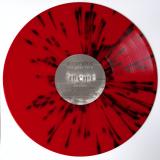
Magical, evocative and intelligent. It's the” Peemax Trax EP” by Too Smooth Christ on EYA Records number 18. A truly superb and intergalactic journey that will caress your soul and make you lose yourself in the music.
Once again Christophe Le Gall proved us to be one of the most gifted and forward-thinking producers of electronic music out there. Unmissable.
Buscar:gifted
- A1: Fink - Covering Your Tracks
- A2: Alfa Mist - Mulago
- A3: Charlotte Day Wilson - Mountains
- A4: Moreton - Count A Heart (Feat Jordan Rakei)
- B1: Puma Blue - Untitled 2
- B2: Connan Mockasin - Momo's
- B3: C Duncan - He Came From The Sun
- B4: Oso Leone - Virtual U
- B5: Joe Armon-Jones - Idiom (Feat Oscar Jerome)
- C1: Snowpoet - Eviternity
- C2: Maro - Forever & Always
- C3: Homay Schmitz - Speak Up
- C4: Bill Laurance - Singularity
- D1: Jordan Rakei - Lover, You Should've Come Over (Exclusive Jeff Buckley Cover Version)
- D2: Cubicolor - Counterpart
- D3: Jordan Rakei - Imagination (Exclusive Original Piece)
- D4: Alejandro Gonzalez Inarritu - Imagination (Exclusive Spoken Word Piece)
Clear Repress[26,68 €]
“I wanted to try and showcase as many people as I knew on this mix. My idea of Late Night Tales was to distil a series of relaxing moments; the whole conceptual sonic of relax- ation. So, I was trying to think of all the collaborators and friends that I knew, who’d recorded stuff with this horizontal vibe. Plus, I was also trying to help my friends' stuff get into the world. I know the story of Khruangbin blowing up after appearing on the series (in fact, I think that's how I discovered them). So, the main idea was to create a certain atmosphere, but also to help some of my favourite collaborators and bud- dies to give their songs a little push out into the world. Hope you like it” Jordan Rakei
Due for release on 9th April, Late Night Tales celebrate their 20th anniversary with the release of multi-instru- mentalist, vocalist and producer Jordan Rakei’s majestic compilation. The 28-year-old modern soul icon effortlessly stamps his own jazz and hip-hop driven sound all over this gorgeous array of handpicked tracks. A beautifully layered blend that is mirrored in the music he’s made, itcomes as no surprise that such a supremely gifted songwriter should deliver a mix that is all about the song.
Rakei, born in New Zealand, but raised in Australia, moved to the UK in 2015; he released his debut album, Cloak, with Oz label Soul Has No Tempo, but his two subsequentLPs, Wallflower and Origin, came out on Ninja Tune, the former#2 in Album Of The Year for Gilles Peterson’s Worldwide poll, while Origin was nominated for Best Album at the AIM Awards. Jordan had this to say on his upcoming mix:
As Jordan says,there’s so much more to the song selection on Late Night Tales’latest outing than a random collection of artists. Many have some sort of personal connection, so just as Bonobo provided a platform for the breakout of Khruangbin on a previous LNT, this may have the same ef- fect for Rakei’s friends. After a soothing opener from Fink, good friend and big influence Alfa Mist (part of the Are We Live collective) delivers ‘Mulago.’ “I want to champion their sound and show the world how good he is, and I thought it’d be fitting to start the mix with family,” says Jordan.
Next up is Charlotte Day Wilson with ‘Mountains,’ followed by ‘Count A Heart’ from Moreton, an exclusive collab- oration with Jordan, who grew up on the same street in Brisbane, Australia. “She was the first artist I ever collabo- rated with, and one of the first artists to be involved in mycareer,” he explains. Elsewhere we hear Scottish producer and multi-instrumentalist C Duncan’s haunting ‘He Came from the Sun,’ Barcelona collective Oso Leone deliver a dreamy ‘Virtual U’ and Bill Lauren’s ‘Singularity,’ which evokes a striking sense of time and place.
Snowpoet’s ethereal ‘Evitenity’ is a “long mediative nar- rative over a beautiful soundscape,” which at times seems chaotic, nicely juxtaposed with undeniable beauty, and Maro’s kooky songwriting shines on ‘Always And Forever.’ Long-time buddy Armon-Jones contributes ‘Idiom,’ and Jordan’s exclusive cover version is a two-for-one, Radio- head’s ‘Codex’ merging with ‘Lover, You Should’ve Come Home’ by Jeff Buckley and another exclusive,original com- position by Jordan, ‘Imagination.’ The latter works as a piece with the spoken (Spanish) word voiced by movie director Alejandro González Iñárritu (Babel, Birdman, and The Reve- nant,) who is a big fan of Jordan’s. “He messaged me when I went to L.A and asked to come to my show. I was in such shock and we hung out after. I thought it would be nice to get him to do this in his native tongue, because I don’t think that’s been done yet on the series.” It certainly is a familyaffair. Not theblood is thicker than water kind, but certainly musical kindred spirits.
After their stunning 2012 debut single "Wish" (FM X / Wish 001) and last year's "Diggin' On You" (D.O.C. 001), the incredibly gifted ELEKFANTZ return to the fore with what can only called a brilliant full-length premiere. The duo of Daniel and Leo first met 20 years ago, when they played together in a blues band. Leo continued his carreer as a professional musician while Daniel started to discover a new musical path.
The latter was born and bred at the electronic music temple in South America, later becoming a resident DJ and local hero, known as the right guy to prepare the dance floor and set up the right mood. He's one of the finest DJs of the Brazilian new wave of electronic aficionados. Leo is a professional drummer, singer and composer since the age of 15. He played and recorded with some of the greatest artists in Brazil.
Their debut album DARK TALES AND LOVE SONGS sports all the intimate melodies, lush harmonies and organic undertones that the duo has become know for and then some: from pop-infused songwriter house to highly emotive prime time anthems, you'll find lots to love about this expertly crafted collection of melodic gems. Engineered to perfection by label head GUI BORATTO, it's an exciting step for the imprint and the project alike - we can't wait hearing where they'll go next.
- A1: Farinha Do Desprezo
- A2: A. Vapor Barato
- A2: B. Revendo Amigos (Volto Prá Curtir)
- A3: Mal Secreto
- A4: 78 Rotações
- B1: Movimento Dos Barcos
- B2: Meu Amor Me Agarra E Geme E Treme E Chora E Mata
- B3: Let's Play That
- B4: A. Farrapo Humano
- B4: B. A Morte
- B5: Hotel Das Estrelas
Jards Macalé’s biography is a testament to the electrifying energy of music and the unwavering spirit of artistic rebellion. Macalé has remained true to his vision, unapologetically embracing the unconventional and challenging the status quo. His music, a conduit of emotion and a mirror to society, continues to weave a sonic tapestry that resonates with the souls of listeners.
In 2022, Macalé celebrated the momentous 50th anniversary of his debut solo album, a groundbreaking masterpiece released by Philips in 1972. This iconic record gifted us timeless tracks such as “Vapor Barato”, “Mal Secreto”, “Farinha do Desprezo”, “Revendo Amigos”, and “Hotel das Estrelas”. Its sheer brilliance united the realms of Brazilian music, infusing samba and bossa nova with the fiery essence of rock, classical harmonies, and the improvisational spirit of jazz. As the years passed, a new generation of musicians and fans discovered this gem, fueling its resurgent popularity and inspiring fresh collaborations.
Last year, Jards Macalé assembled a formidable new band, igniting stages across Brazil with a tour that now sets its sights on Europe. Together with Gui Held on guitar, the Paulo Emmery on bass, and Thomas Harres on drums, Macalé conjures an exhilarating homage to his illustrious body of work. This live performance embodies the untamed spirit and boundless musical freedom that define this visionary artist, transporting audiences to a realm where the past intertwines with the present in a breathtaking display of artistic prowess.
- The Organ Grinder
- In Your Own Sweet Way
- Just A Ballad For Woody
- Sippin' At Bells
- Estate
- The Dragon
- Joshua C
Remastered from the original recordings and now presented on a 45rpm 2 LP deluxe audiophile edition, this is first time the complete 7-track album has been available on vinyl. 'In My Own Sweet Way', recorded during a month- long European tour in 1987, captures Woody Shaw in peak form playing with a spirit and a sense of adventure that identify him as a jazz giant. Woody calls the trumpet "the prince of all the horns". Woody is the king of all the trumpet players.
Nobody around plays with such a big, round, ravishing sound - a sound which could easily fool you into thinking that you are listening to a flugelhorn. Woody's musical asociates on this album are Alex Deutsch, a young drummer from Austria who has worked in Europe with many American jazz stars; Neil Swainson, a highly gifted bassist from Toronto who has worked with Pat La Barbera and Peter Leitch but is perhaps best known for his superb collaboration with George Shearing; and Fred Henke , a pianist from Montreal whose credits include backing Clifford Jordan, Steve Grossman and Junior Cook
- Ntr1
- Ntr2
- Drg5
- Drn9
- Drg10
- SL12:
- Drg14
- Drg15
- Prn2#16
- Otr
- Prn2_9Ofm15Tb
- Prn2_9Ofm15Ta
- Prn2_M15T
- Prn2_M15T_Selforg_Tapecut
NYZ (David Burraston) presents this collection of generative music pieces carefully extracted from a PreenFM2 gifted to him by Aphex Twin. PRN2_M15t is being released at the same time as an LP titled Stria from Dr. John Chowning who invented the original FM synthesis algorithms which were sold to Yamaha and used in the creation of the DX series of keyboards. An interview with Chowning, conducted by David Burraston, will be published at the same time.
David Burraston is an award winning artist/scientist working in the areas of technology and electronic music, operating Noyzelab as an independent art/science music studio since 1981. Numerous research publications include a 2006 PhD thesis Generative Music & Cellular Automata, which developed and applied fundamental new concepts from generative music practice to a key problem in complex systems theory.
His experimental arts practice encompasses field recording, landscape-scale sound art, chaos/complexity, practice-based research, sound synthesis and electronic music. He performs, lectures, conducts workshops and creates art installations in Regional NSW and around the world. David also designs and builds sound synthesizers based on his theories of chaos/complexity science. He was recently interviewed by Bandcamp Daily and The Wire Magazine.
David has worked with many diverse collaborators such as Aphex Twin, Chris Watson, Doug Quin, Russell Haswell, Robin Fox, Oren Ambarchi, Sarah Last, Cat Hope, Garry Bradbury, William Barton, Alan Lamb, MIT Media Lab and the Australian Broadcasting Corporation. In 2014 he independently published the legendary "SYROBONKERS!", the most technical and in-depth interview ever given by Aphex Twin.
- 1: Eternal Silence
- 2: Look Away
- 3: The Apparition
- 4: Gifted Shame
- 5: No Hand To Lead
- 6: Prediction
- 7: Burials Of Birth
- 8: Fractures
- 9: New Day Symptoms
- 10: Pale Sun
Steeped in nocturnal, death rock adventurism, riven with a post-punk anxiety that feels increasingly like the twitching heart of our modern age, and driven by hardcore punk intensity, the second studio album from Boston’s FINAL GASP, titled New Day Symptoms, does what all great rock records do - not only does it place itself within a lineage, summoning up and amplifying a spectrum of powers from Rock n' Roll lore, it makes them resonate in the here and now. It gives voice to those fears and frustrations lurking just under the surface of waking consciousness and turns them into a rallying cry. Throughout New Day Symptoms, FINAL GASP create a potent reaction from the furious and the forlorn, frontman Jake Murphy’s vocalizes both a supercharged howl into the void and a remorseful echo back. But where the band’s 2023 debut, Mourning Moon, was a concentrated shot of acrid, underground death rock, its propulsion tanks largely filled with references to Samhain and Killing Joke, New Day Symptoms keeps all the core urgent energy while vastly broadening its scope. Through the anthemic, acid-corroded vistas of "Look Away" and gothic tub-thumping beat of "Gifted Shame" to "No Hand To Lead" channelling "Don’t Fear The Reaper" and its loping groove, New Day Symptoms takes the familiar into uncharted territory and makes the unfamiliar instantly, internally recognisable. With new space to explore, this is an album that feels a mapping of personal trials and dark recesses. Short: Boston's FINAL GASP return with New Day Symptoms - the new album steeped in nocturnal, death rock adventurism, riven with a post-punk anxiety that feels increasingly like the twitching heart of our modern age, and driven by hardcore punk intensity! FFO: Danzig, Killing Joke, TSOL, Lathe of Heaven, Poison Ruin, Gouge Away, Tribulation
French artist Trypheme debuts on Impatience with “Odd Balade”, a darkly-hued collection of songs drawn from human delicacy and dreamworld mythology.
“Odd Balade” is Trypheme’s most ambitious and boldest record to date - both lyrically and musically. The album’s thirteen tracks resist rigid genre boundaries and flutter from medieval folk realms, sprawling synths, gothic 80s wave, leftfield pop, haunted vocals, mutant electronica to reverbed guitars - all reflected through her own shadowy prism. Especially album closer “A Walk In The Vercors” evokes a soothing serenity that echoes the sonic balm of Julee Cruise.
Trypheme’s musical repertoire trends heavily electronic and somewhat abstracted, but on “Odd Balade”, the artist slips into the role of the modern troubadour with a shift to a more poetically and personal songwriting that is infused with symbolism and dreamlike fantasies. The connective tissue of the album is the audacity to love and the vulnerability that ensues. As intimate and introspective as the lyrics are, the themes remain universal and human to the core: the fear of losing a loved one, the melancholia of leaving places and t“the fear of losing a loved one, the melancholia of leaving places and the cycles of life. The record was largely composed in Chars, stirred by the French village’s eerie atmosphere and frequent trips to the seaside in Brittany, where Trypheme resides. Drawing inspiration from the rugged terrain of the seaside landscapes, the writings of Allen Ginsberg and Mark Fisher and the hyperrealist art of Scott Prior, Trypheme uses her songs to depict life with broad strokes of rhythm.
On “Odd Balade” Trypheme consolidates herself as a gifted, nimble songwriter, masterly producer and subtly powerful vocalist. The record combines her skill for crafting lush, alien sound worlds and efficient, alluring arrangements with stealthily devastating songs. Belin’s voice becomes a key ingredient, appearing on eleven of Odd Balade’s thirteen tracks, by turns heavily manipulated, sampled and replayed as a form of percussion, or basically bare.
“Odd Balade” is the manifestation of Trypheme’s roving artistic practice, a ceremonial-grade sacrament cast in a rich nocturnal glow. Pairing the mundane with the mythic, the album stays true to its core: odd and strangely familiar.
RIYL - Riding off into the sunset to an unknown destination, hauntology, present, tales told by the fireside, hot summer rain, adventures, to feel a warm presence when you are walking in the forest or in the mountain, coastal landscapes, sailor’s stories, slow motion, vitesse, heavy blossoms, colors, the warmth of the sun, the tenderness of the moon, getting lost in unfamiliar streets, city’s lights, motorway rest area by night, magic numbers, rendez-vous, picnic, serendipity, poetry, the smell of old records and old books.
Tiphaine Belin has been releasing music as Trypheme since 2016. Odd Balade was written and produced by Belin, and mixed by Belin and Abel Roux. It was mastered by Amir Shoat. Cover art photography is by Ariane Kiks, with art direction by Ariane Kiks in collaboration with Mathilde Chaize.
Spider Taylor crawls over to Dark Entries with Surge Studio Music, an album of archival gay pornographic soundtracks. James Allan Taylor was born into a working-class family in Los Angeles in 1951. Nicknamed “Spider” by his father due to his frantic energy, Taylor was a natural-born guitarist, gifted with perfect pitch and a voracious musical appetite.
Throughout the 70s, he expanded his musical repertoire, playing in bands ranging from country to post-punk, like his outfit Red Wedding, while always looking for new sounds and styles to explore. During this period, Taylor also partnered with his soulmate and musical collaborator, Michael Ely. They were part of a wave of bold, young, gay couples living openly together in the years immediately following the Stonewall Riots. In the early 80s, while working at the West Hollywood gay sex club Basic Plumbing, Taylor met Al Parker, the legendary pornographic actor and director, who recruited Taylor to produce the soundtrack for a film he was working on. Parker’s partnership with Steve Scott running Surge Studios produced some of the most popular all-male films of the era. Spider’s music was a natural fit for Surge, and throughout 1985 and 1986, he composed the soundtracks for five films produced by the iconic studio. Assisted by engineer Steve Conrad and armed with a drum machine and some synths, Spider’s compositions for film veer from the expansive, reverb-drenched “Rainforest” to the Miami Vice-esque chugger “Tech.”
While Spider thought of this work as little more than a gig, tangential to his real craft, enthusiasts of VHS-era nostalgia and vintage erotica will be brought to bliss. Surge Studio Music will be available on both LP and CD, the latter of which includes a 20-minute version of “Strange Places…Strange Things!” as a bonus track. The album’s cover art was designed by Gwenael Rattke, and features stylish images from Surge Studios releases. Also included is an insert featuring liner notes by Will Lewis, a longtime friend of Spider. The music is released from Spider’s estate by Michael Ely, Spider’s partner of 43 years. The shadow of AIDS lingered over Surge; Steve Scott passed from AIDS-related illness in 1987, and Al Parker succumbed in 1992. In 2014, when it became legal for same-sex couples to marry in Arizona, Spider and Michael finally became wedded. Spider would pass away from liver cancer six months later.
- A1: Rhythm-Al-Ism (Intro) (1:40)
- A2: We Still Party (5:13)
- A3: So Many Wayz (5:41)
- A4: Hand In Hand (4:18)
- B1: Down, Down, Down (4:43)
- B2: You’z A Ganxta (4:22)
- B3: I Useta Know Her (3:50)
- B4: No Doubt (4:12)
- C1: Speed (3:21)
- C2: Whateva U Do (7:47)
- C3: Thinkin’ Bout U (4:05)
- C4: El’s Interlude (4:05)
- D1: Medley For A “V” (The P***Y Medley) (6:27)
- D2: Bombudd Ii (2:59)
- D3: Get 2Getha Again (4:41)
- D4: Reprise (Medley For A “V”) (2:39)
2026 Repress
DJ Quik is a giant of West Coast hip-hop. With his fourth album Rhythm-Al-Ism he created his masterpiece, a perfect hip-hop album. As Quik explains, “the name Rhythm-Al-Ism alone tells you what I was doing. I was mixing up rhythms. I was meshing R&B with hip-hop and jazz. And a little bit of comedy”. It’s absolutely sensational and as with a lot of mid-90s albums those original vinyl copies are now rare so here’s the Be With re-issue.
A preternaturally gifted producer/rapper, DJ Quik has produced scores of LA gangsta rap classics. He’s released platinum and gold records of his own, as well as helped craft them for the likes of Tupac, Snoop Dogg, and Dr Dre. Quik has always been quirkier and more interesting than his gangsta rap peers, both musically and lyrically. An old-school funk producer at heart, he’s also incredibly nice on the mic. His raps often deal in boasts, jokes and good times but also cover his beefs, his trials and his trauma. Partying and pain, all mixed up. DJing and producing hype beat tapes from age 14, Quik’s tracks blended the languid funk and rubbery synths of Zapp and George Clinton with a gangsta aesthetic, creating a more danceable foil to Compton’s more typical nihilistic hedonism. Ultimately, his records sound custom engineered to drift out over sun-soaked barbecues.
Released in 1998 on Profile, Rhythm-Al-Ism was the closest Quik ever got to making a commercial splash. “You’z A Ganxta” and “Hand in Hand” made radio waves across the country and the less radio-friendly tracks like “Medley For A ‘V’” were bumping out of car stereos. Combining his soulful, jazzy P-Funk/G-Funk beats with his effortlessly smooth flow, Rhythm-Al-Ism was the quintessential West Coast Party. Squelchy synths, bouncy bass, monstrously knocking drums and freaky keys - this is peaking acidic party-rap, straight out the gate. Music for gliding, for skating, for time with your people and your poison. Sunshine. No cares. BBQs. Heavy smoke in the air. Dripping with wit and good humour. A real swing to the vibe.
The album opens with Quik setting out his mission statement with “Rhythm-Al-Ism (Intro)”, telling us what this is all about before the self-explanatory “We Still Party” rocks the spot. It’s definitely all about the party here, complete with Quik’s signature head-nod/body-moving beat. Next up, the undeniable laidback funk and dripping swing of groove-laden “So Many Wayz”. This positively slaps.
Then we get to the three huge singles. The R&B-tinged radio-friendly minor-hit “Hand In Hand” closes the first side only for the flip to get straight into the rolling and scratching of bleepy computer-funk banger “Down, Down, Down” (featuring a particularly nice use of Howard Johnson’s epochal “So Fine”). The effortlessly smooth, flute and guitar-laced “You’z A Ganxta” completes the trio. Next up the fast-paced, vocoder-enhanced, woulda-beena-global-hit “I Useta Know Her”. This coulda (shoulda) been a single too. Head-nod funk workout “No Doubt”, with its ace sample of Prince's “Sexy Dancer”, closes out the second side.
“Speed” races out the gate on the second disc, sampling Edwin Birdsong’s “Rapper Dapper Snapper” in a harder, better, faster, stronger way than those daft Parisian punks. Amphetamine-swift raps over soaring, string-drenched b-boy beats. A total anthem. Up next, the staggering, near 8-minute laconic, lounge-y sax-rap of “Whateva U Do” cools things down and smooths things out with its flute wrapping around a sample of Smokey Robinson’s “So In Love” and some oh-so-classy lounge-piano tinkling. And speaking of smooth, things don’t get much smoother than the blissfully melodic glider-anthem “Thinkin’ ’Bout U” riding that ace flip of SWV’s “Use Your Heart”. Exceptional.
The exquisite funky-flute-slapper “Medley for a ‘V’ (The P***Y Medley)” opens the fourth and final side, with star turns from Snoop Dogg and a typically suave Nate Dogg. It’s followed by the supremely skanked-out “Bombudd II”, a beautifully sweet reggae-fuelled ode to the herb. “Get 2Getha Again” is slick funk. Stunning.
This 2022 Be With double LP re-issue has been mastered for vinyl by Simon Francis, cut by Pete Norman and pressed at Record Industry. Unusual for the time, Rhythm-Al-Ism was originally pressed as a double and we’ve reproduced the original LA vibe picture sleeve and insert to match.
As that original front cover says, this is “over 70 minutes of commercial free music” and it’s absolutely perfect from start to finish. There are no stand-out tracks here. It’s all gold.
: Rhythm-al-ism (2LP)
Dr. Emma Dayhuff explores the depths of her musical experience that developed from her time in Chicago studying with the many gifted musicians of the city. This Live recording features her musical comrades switching effortlessly from Avant-Garde, Blues, and Modal styles.
A powerful line up featuring Kahil El'Zabar on Drums, Percussion, and Vocal chants, The incomparable Dee Alexander swaying on Vocals and The gift virtuoso Isaiah Collier on Tenor Sax and Piano. Led by Dr. Emma Dayhuff on Bass and several original compositions. The recording reflects the deep connection shared amongst the musicians, that was developed over years of experiment, trust, and growth.
- 1: High John
- 2: Spoiled Brat
- 3: Baking Soda
- 4: Doves
- 5: Quiet On Set
- 6: 3 Left Feet
- 7: My Good Ghosts
- 8: Reason!
- 9: Hemlock
- 10: Having My Way
- 11: Known Universe
- 12: Trip (Feat. Amindi)
- 13: Opportunity Kids
- 14: The Inconvenient Truth
- 15: Chinese Finger Trap
- 16: Last Laugh
While it remains a remarkable achievement, Mavi’s breakthrough debut album Let The Sun Talk was the work of an artist still coming into his own, recorded when the gifted emcee was a teenager attending Howard University. After touring with Jack Harlow and working with artists like Earl Sweatshirt and Pink Siifu, the Charlotte, North Carolina wordsmith returned three years later with the acclaimed follow-up Laughing So Hard, It Hurts, an emotional meditation on life’s complex duality. Embedding his dense flows within lush instrumentation and stuttering percussion, Mavi unearthed new lyrical depth on the album, navigating through joy and sorrow, grief and hope, pain and healing. While many artists have struggled to match the heights of a beloved debut, Laughing So Hard, It Hurts proved that Mavi would only continue to elevate his virtuosic self expression with each new release. Eloquently cascading rhymes reveal an artist searching for truth through a vast scope of thought, floating atop serene production from Monte Booker, Dlyvinci, Ovrkast, and more. After very limited initial pressings, this classic 2022 collection is now receiving its most extensive vinyl release to date.
- 1: Fire The Choir 0:5
- 2: Twin Scissors 0:0
- 3: Plainclothes Man 02:29
- 4: Career Blonde 02:12
- 5: Pontaria 01:39
- 6: The Gold Standard In Dumpster Diving 01:28
- 7: Caught Again 04:02
- 8: That's Not My Skin You're Eating 01:13
- 9: Husband And Bribe 02:24
- 10: Wire Lashes 02:07
- 11: Buckteeth 01:48
- 12: Community Gun 02:13
- 13: Triple Tracy 04:33
Conjuring a faithful following, quite rare in these days of ADHD, by sheer force of their celebratory and fiery live shows, Montijo's most celebrated outfit reflects these past couple years of camaraderie and life on the road on their debut album, after a self-released EP and a 4 way split on Zegema Beach Records. Sublimating all the inherent potential of post-hardcore at its most sweeping into a forceful and focused delivery, 'Acetate' captures all their urgency through 13 memorable and sharpened tracks. Recorded patiently and mastered by the gifted know how of Jack Shirley - Deafheaven, Joyce Manor or Gouge Away -, the songs on 'Acetate' open sprawling vistas upon the band's recognizable sound between chaos and order, cutting back on everything that might be redundant or overly technical. Alex Domingos' vocals reach new means of expressiveness through harrowing screams and hints of melody, João Pires' sinewy guitar pulling out riffs and skewed lines that echo for posterity and the rhythmic section of Simão Simões - bass - and João Portalegre - drums - driving all this turmoil with kinetic precision and flexibility. Never before did Hetta sound as relentless, chill and melodic, tracking down life at its own pulse.
- 1: Sunshine Kisses
- 2: Louisiana Hound Dog
- 3: Two Of Hearts
- 4: Anything Without You
- 5: Baby, Please Don't Go
- 6: I Went To The Levee
- 7: Deep River
- 8: Tall Lonesome Cowboy
- 9: Lovely Lonely
Sabine McCalla creates her own version of multi-cultural American roots music. It's a sound that crosses borderlines, pulling everything from Brazilian samba to southern soul to British rock & roll into its orbit. On Don't Call Me Baby, Sabine filters those influences through the lens of her Haitian heritage and her music community of New Orleans, creating a debut album that's every bit as multi-faceted as the woman who wrote its songs.
The daughter of first-generation Haitian immigrants, Sabine was raised in the suburbs of New York City, where she grew up alongside her sister Leyla McCalla (Sons of Our Native Daughters, Carolina Chocolate Drops). Introduced to chamber music at an early age, Sabine began playing classical violin in orchestras, music camps, and conservatory classes as an 8 year old. Back at home, she filled her head with Motown classics, girl group hits, Bob Marley albums, Beatles standards, and Haitian folk music. It was a wide constellation of sound that spanned more than a half century, and Sabine made it all her own, drawn to the connections binding everything together.
Don't Call Me Baby shines a light on those connections. The follow-up to her critically-acclaimed Folk EP, whose pre-war sound earned her a slot at the Newport Folk Festival in 2019, the album transcends genre and generation, creating a raw, rich mix of country, R&B, folk, and soul that exists on its own timeline. Co-produced by Sam Doores of the Deslondes and featuring a cast of New Orleans’ most spirited and gifted (including guest vocals from Riley Downing, Leyla McCalla, and The Lostines), Sabine McCalla reaches beyond her beloved New Orleans Americana scene with Don't Call Me Baby, building a bridge between the world-spanning sounds that have captured her attention.
- A1: Born-A-Mc
- A2: Ghetto Pop Life Intro
- A3: Ghetto Pop Life
- A4: Omega Supreme
- B1: What U Sittin On? Feat Tha Liks
- B2: The Only One
- B3: Take Care Of Business Feat J-Zone
- B4: That Brooklyn Shit
- C1: Yoo-Hoo!
- C2: Copy Cats Feat Prince Po From Organized Konfusion
- C3: Don't Do Drugs
- C4: Medieval Feat The Pharcyde
- D1: Bush Boys
- D2: Here We Go Again
- D3: I'ma Doomee (Love Letter)
- D4: Knuckle Sandwich
Black Vinyl[27,69 €]
Ghetto Pop Life was Danger Mouse’s first full length album on Lex and a hip hop classic, harking back to the sound of the early 90s East Coast and resurrecting Brooklyn’s most soulful thug MC, Jemini The Gifted One. Incorporating a full church choir on the title track, Danger Mouse also brings in heavy hitting guest rappers J-Zone, Tha Alkaholiks, The Pharcyde and Prince Po. In the words of the NME "Ghetto Pop Life is a funk-fuelled hip hop record that virtually orders you to get down’. LEX010LPRT was originally an exclusive variant but now available to all.
- A1: Born-A-Mc
- A2: Ghetto Pop Life Intro
- A3: Ghetto Pop Life
- A4: Omega Supreme
- B1: What U Sittin On? Feat Tha Liks
- B2: The Only One
- B3: Take Care Of Business Feat J-Zone
- B4: That Brooklyn Shit
- C1: Yoo-Hoo!
- C2: Copy Cats Feat Prince Po From Organized Konfusion
- C3: Don't Do Drugs
- C4: Medieval Feat The Pharcyde
- D1: Bush Boys
- D2: Here We Go Again
- D3: I'ma Doomee (Love Letter)
- D4: Knuckle Sandwich
Gold Vinyl[27,69 €]
Ghetto Pop Life was Danger Mouse’s first full length album on Lex and a hip hop classic, harking back to the sound of the early 90s East Coast and resurrecting Brooklyn’s most soulful thug MC, Jemini The Gifted One. Incorporating a full church choir on the title track, Danger Mouse also brings in heavy hitting guest rappers J-Zone, Tha Alkaholiks, The Pharcyde and Prince Po. In the words of the NME "Ghetto Pop Life is a funk-fuelled hip hop record that virtually orders you to get down’. LEX010LPRT was originally an exclusive variant but now available to all.
- A1: Original
- B1: Dub Version
Another previously unreleased gem from Jah Life's mid 80s sessions at Channel 1 with the Gifted Roots Band, which we return to after a long while. Absolutely killer rhythm with brilliant added melodica, and youthman Patrick Cool at the mic. This rhythm is truly one of our favorite unreleased finds to date. The other cut with Nathan Skyers and this one by Patrick Cool are each backed with different dub mixes.
- A1: Original
- B1: Dub Version
Apt title for this previously unreleased diamond from Jah Life's mid 80s sessions at Channel 1 with the Gifted Roots Band, which we return to after a long while. Absolutely killer rhythm with brilliant added melodica, the late Nathan Skyers in top form, a really underrated singer. Truly one of our favorite unreleased finds to date. The Nathan Skyers and the next cut by Patrick Cool are each backed with different dub mixes.
- 1: Answers Questions - Questions Answers (Live)
- 2: Focus (Live)
- 3: Focus 1 (Live)
- 4: Anonymous (Live)
- 5: Sylvia (Live)
- 6: Big Sur (Live)
- 7: Tommy's Anniversary (Live)
- 8: Pietons (Live)
- 9: Hocus Pocus (Live)
Live music needs to offer you something that you cannot get on a studio recording. It's the sense of freedom and intimacy, wondering how the songs will be played and what the reaction will be. Live concerts give you the tingle where the hair stands up on the back of your neck. "Live audiences give you the tension and responsibility to be creative, for me that's the challenge I like," says the iconic Dutch guitarist. After all of these years, you ponder what keeps Jan going out there, night after night. "It's my love to play for people all around the world," he smiles. The supremely gifted guitarist is equaled by very few, and his legendary ability makes him impossible to pigeonhole. His position as Dutch royalty has been cemented; he received the Golden Harp Award in early 2005, Holland's most prestigious music prize, and in 2012, he was appointed Knight in the Order of Orange-Nassau. This royal honour recognized his contributions to Dutch music and his influence on musicians worldwide.
- A1: Love's Coming Back
- B1: Houston (7" Exclusive)
Slinging back on the electric guitar, ditching the job, upping the BPMs, and falling in love again has resulted in Pete embracing his fuzzed up dream- pop past but also throwing in elements of pop and electronica.
The first fruits of this new-found labour is a brand new single "LOVE'S COMING BACK" which sums up the ethos for his new project all squeezed into 136 amp-frying seconds. Pete first burst onto the scene in the early 90s as the frontman and guitarist of postshoegaze / pre- Britpop band Adorable, whose 1993 album Against Perfection, released on Creation Records, is regularly referred to as a lost indie classic, with the band picking up multiple 'Single of the Week' awards in the NME, and topping the Indie charts. Noel Gallagher once told Creation Records' Alan McGhee that dropping Adorable from the label was one of his biggest mistakes, whilst other artists such as Ash, Slowdive and Brian Jonestown Massacre amongst others have all expressed their admiration for the band. Following this he joined up with his brother Krzys to form One Little Indian band Polak (Swansongs 2000 / Rubbernecking 2002) which took in influences from the likes of Sparklehorse, Radiohead and dEUS, and led The Independent to call him "the most gifted lyricist since Jarvis Cocker last put pen to paper".
There then followed a musical exile, after having what Pete now describes as 'a musical breakdown' before re-emerging alongside celebrated House of Love guitarist Terry Bickers to release two critically acclaimed albums as Pete Fij / Terry Bickers on 2014's Broken Heart Surgery, and 2017's We Are Millionaires, winning the Roundtable 'Single of The Week' on Steve Lamacq's BBC 6Music show - "Beautiful" (MOJO) "Unfailingly lovely" (UNCUT) "Stunning" (OHM) "Beautifully constructed" (Q). Adorable then reformed for a few weeks in 2019 for a series of one off dates that sold out in record time, playing bigger venues than they did in their heyday - and then broke up again.
- 1: Before It's Too Late
- 2: Here We Go Again
- 3: Watercolor
- 4: Tara
- 5: The Sunrise
- 6: Wants To Break Through
- 7: Stopped At A Green Light
- 8: Alternate Route
With ten original compositions (and one well-chosen cover) to record and a schedule window of just one day in New York City to record them, there was no margin for error. For the frontline Kerry picked a pair of legends - Kurt Rosenwinkel on guitar and Jaleel Shaw on alto and soprano sax. In the rhythm section she selected NYC's busiest bassist Alex Claffy and, keeping it close to home, her partner George Colligan on drums. And in the face of delayed flights and traffic hold- ups, the album Alternate Route was created, hitting the highest standards of performance with the depth and warmth of Kerry's challenging but engaging compositions. It's a set of tough and tender tunes that combine sophisticated harmony with intricate but accessible melodies to inspire some fierce blowing from everyone, all delivered with a concise, timely precision.
The empathy and good feeling flowing between the players are audible from the first notes: "Kurt, Jaleel and Alex all have Philly roots so there's a really strong relationship there. Alex is incredibly gifted, and Jaleel is such a beautiful player with such a huge, recognizable sound. And it was such a thrill to have Kurt on the album - he's one of my favorite composers and I've been a fan for such a long time." Each player has a powerful personality and Kerry allows them free rein, yet such is the strength of her compositions, and her calmly stated but immensely powerful presence on piano, that no one player dominates the music: everyone finds their own alternate route to excellence.
For his last solo record ‘Through a Room’, Bill Nace shifted his usual saturated guitar sound and added tapes, hurdy gurdy, doughnut pipe, bird calls and the mysterious Japanese taishōgoto. Setting up for the final night of his three day residency at OTO with only the taishōgoto soundchecked, Nace hoped that Parker would arrive with his small soprano as its opposite. “I’ve been interested in state change, you know, playing until there’s a shift in time.” Known for his development of multiphonics to produce a constantly shifting pattern, Evan Parker has evolved an instantly recognizable sound - his work the soprano most distinct. Happily, it was the soprano Evan brought with him and as soon as the two start to play they entwine - taking off in a double helix of keys and reed primed for endless reconfiguration. Space warps under the velocity of playing, the pitch rising unrelentingly. It felt like unending lift off in the room, sheer energy until the last note makes remember your feet have been on the floor the whole time. Total time bending shredding.
–
"They had never played together before. They had never even met each other before this springtime 2024 concert at London’s Café Oto.
Evan Parker, circular breathing maestro of the saxophone, a legend in the universe that is Free Improvisation since the late 1960s and Bill Nace, one of the most intriguing experimental “noise” guitarists of the 1990s/2000s underground scene.
For those of us who have been enamored by the live and documented work of both these gents, this Café Oto duo was a must-hear event. It could have gone anywhere musically and that would have been totally fine. Particularly with Evan having a history of being thrown into a variety of challenging collaborations throughout his career, employing the learned elegance of trust in his own sensitivity to listening, responding, leading, following, sparring, intertwining, dialoguing, creating in the instant and, essentially, dignifying the non-hierarchical grace of chance.
The aesthetics of socialist consideration in Evan Parker’s playing, in his community of expanded and personal technique, for a younger player such as Bill Nace, strikes an exemplary model. This notion of respect would be entirely the reason Nace, when offered a residency at the most critical “new music” room in England, would request to play in duo with Parker.
Bill Nace came to prominence mostly during the apex of experimental music activity in and around Western Massachusetts in the early days of the aughts, with a focus on visual art and free improvisation guitar action. He could be found in the daytime hours, his head hanging down over a notepad, penning fine-tuned illustrations and abstract line drawings, while in the evenings he’d be attending any number of basement noise gigs, many of which he’d be participating in. His guitar style came across as being informed as much as by the physicality of his writing utensils in friction to the page as it was to his hearing and redefining of radical recordings ranging anywhere from the Black Unity Group to Black Flag.
Utilizing various metal files and other small cylindrical objects Bill would allow his guitar and amplifier to be in tandem with the improvisatory movements of his body as the instrument balanced, intentionally and, at times, precariously, upon his lap. The performances came across thrilling and daring and they would be mostly in the context of venues nothing more than a low-ceilinged damp and dank New England basement, a clutch of people hanging onto rusty pipes or sitting up on dilapidated washer/dryer machines, the shards of Bill’s “file guitar” sounds ringing out like the most alive music on Earth.
By the time Bill reached Café Oto in early 2024 he had relocated to Philadelphia all the while releasing a succession of collaborative LPs on his Open Mouth label to present his developing progression of solo and collaborative work. He also would find himself considerably engaged with playing the electric taishōgoto, a keyboard-activated string instrument from Japan which can exist as a one, two, four, five, or six string oblong sound object. Bill’s approach to the taishōgoto would not be too unlike his approach to the traditional electric guitar, though no outboard implements such as files, sticks, and rocks are utilized. The similarity would lie wholly with Bill’s full immersion of high velocity action-playing where, with the taishōgoto, an electric drone beauty occurs. The flurry of sonics and resultant harmonics emanating from the amplifier (which Bill opts to dial into with borderline loud-as fuck volume settings) furthers the meta-mantra properties of the instrument in an astounding display of drone dynamism.
This sound world of Bill’s two-stringed taishōgoto on this Café Oto night worked beautifully with Evan Parker’s improvisatory saxophone conceptions. The duology achieved instant lift off at ground zero only to find it’s eventual finale as if it were organically ordained. Time seemingly morphed from its ancient human construct of control, rendered inconsequential to the torrential transcendence of the room wildly activated by the magic resonance of the multi-directional pan-spatial sonance of the music as if it were some beatific blessing. It was one of those nights where art as a liberating force of spirit gifted the listeners with an offering of exaltation and joy. It was entirely mystical and mind blowing. A night of Total Music."
Thurston Moore, London, 2025
- 01: Grotesque (Chapter 2)
- 02: Duo + 1
- 03: Night Out (Theme From Early Snow In Munich)
- 04: Paraphrase Sw (Theme For Stevie Wonder)
- 05: Feat. Zdenka Kovacicek - Peep Show (Theme From Early Snow In Munich)
- 06: Love Experiment (End Credits From Whatever You Can Spare)
- 07: Video Games (Theme From Early Snow In Munich)
- 08: Whatever You Can Spare (Orchestral Version)
- 09: Early Snow In Munich (Opening Credits)
- 10: The Forrest Date (Theme From Whatever You Can Spare)
- 11: The Graduates (Theme From The Graduates)
- 12: Oberhausen (Theme From Way To Your Neighbour)
- 13: Winter's Wish (Theme From Winter's Wish)
A new release from Fox & His Friends Records, Chapters (Screen & Stage Dancefloor Jazz from Yugoslavia 1971-1984) by Ozren Depolo brings to light a trove of previously unreleased music spanning more than a decade of his work in film, theater and television. This gatefold audiophile 180g LP, including a 12-page booklet with archival photos and detailed liner notes, offers for the first time a full album composed exclusively of Depolo's own authorship, drawn from master tapes held in private and institutional archives. Mastering and cutting was done by Frank Merritt from The Carvery Ozren Depolo rarely pursued opportunities to record original material, in part due to a general lack of interest among local publishers in jazz discography. Yet he was more than a gifted composer: he was also an accomplished saxophonist, clarinettist, flutist, pianist, arranger and occasionally, a jazz journalist who contributed articles to specialized programs on Radio Zagreb. Depolo also played in international big bands alongside jazz greats such as Clark Terry, Oliver Nelson and Gerry Mulligan, as well as in formations led by Bosko Petrovic, including the Nonconvertible All Stars and the B.P. Convention Big Band. He was a member of ensembles including The Alfi Kabiljo Orchestra, The Dragutin Diklic Ensemble, Jugoslovenska Pop Selekcija, The Stipica Kalogjera Octet, Vaclav Zahradnik & His East All Stars Band and the Zagreb Jazz Quintet. As both composer and arranger, he produced a significant body of work for large jazz orchestras and small ensembles. He was deeply engaged in jazz improvisation and avant-garde classical music, recording numerous chamber pieces for saxophone. A long-standing member of Acezantez, Zagreb's renowned contemporary music ensemble, he also collaborated with international figures such as Ted Curson, John Lewis, Johnny Griffin, Art Farmer, Leo Wright, Art Taylor, Slide Hampton and Lucky Thompson. This selection also includes his collaboration with Igor Savin and jazz vocalist Zdenka Kovacicek who were played on Karl Lagerfeld's fashion shows. The release demonstrates how Depolo was able to shift fluidly between idioms: from driving big-band passages to intimate chamber-like arrangements, from funk-tinged motifs to lyrical, impressionistic soundscapes. This stylistic breadth, always anchored in his deep jazz and funk sensibility, gave his music an adaptability perfectly suited to the hybrid world of stage and screen. The LP highlights that versatility while also presenting the coherence of his artistic voice, one that had gone unrecognized precisely because it was dispersed across so many contexts.
- A1: Identified Patient – The Female Medical College Of Pennsylvania (Marcel Dettmann Pitched High Version)
- A2: Tocotronic – Bis Uns Das Licht Vertreibt (Marcel Dettman Version 2 Remix)
- A3: Cristian Vogel – Untitled (Marcel Dettmann Cut)
- B1: John Bender – Victims Of Victimless Crimes (Marcel Dettmann Cut)
- B2: Clark – Dirty Pixie (Marcel Dettmann Edit)
- B3: Junior Boys – Work (Marcel Dettmann Remix)
- C1: Mutant Beat Dance - The Human Factor Ft. Naughty Wood (Marcel Dettmann Edit)
- C2: Experimental Products – Who Is Kip Jones (Marcel Dettmann Cut)
- C3: Marcel Dettmann – Water Feat. Ryan Elliott (My Own Shadow Remix)
- D1: Severed Heads – We Come To Bless The House (Marcel Dettmann Edit)
- D2: Albert Kuningas - Astraaliprojektio (Marcel Dettmann Edit)
- D3: K.alexi Shelby – Season Of The Real (Marcel Dettmann Edit)
- E1: Ian North – Sex Lust You (Marcel Dettmann Edit)
- E2: Ford Proco – Expansión Naranja (Feat. Coil) (Marcel Dettmann Edit)
- E3: Nitzer Ebb – Shame (Marcel Dettmann Edit)
- F1: Frank Duval – Ogon (Marcel Dettmann Edit)
- F2: Yello – Limbo (Marcel Dettman Version 2 Remix)
- F3: Conrad Schnitzler – Das Tier (Marcel Dettmann Edit)
Cassette / Tape[16,18 €]
2025 REPRESS
A DJ, producer and significant figure in contemporary electronic music, Marcel Dettmann steps forward to contribute to Running Back’s ongoing Mastermix series. Whereas previous editions of Mastermix have taken an ear to the sound of lapsed, legendary clubs such as Wild Pitch and Front, Dettmann’s curation deftly captures the man himself in ongoing perpetual motion, raiding the vault for his own precision-tooled edits, long-employed on dancefloors to devastating effect. Alongside a continuous mix, this release arrives as a 3LP gatefold, and as a limited edition cassette.
Closely associated with Berlin’s techno landscape, Dettmann was born and raised in the former GDR, then later immersed in the bleary-eyed counter cultural landscape of post-unification Berlin. Initially oriented by post-punk, industrial and new-wave music, Dettmann has been DJing since 1993, always expanding and perfecting his repertoire. He later began working behind the counter at the city’s tastemaking rave boutique Hard Wax, and a decade after he first dropped a needle, became (and remains) resident at notable local nightspot Berghain/Panorama Bar, where his instincts have helped sculpt the signature sound of both main dancefloors.
Of course, you’re probably not asking, “Who is Marcel Dettmann?” More importantly, you might want to know; just what treats has he gifted us here? The trip begins with a simple pitch-shift skywards, transforming Identified Patient’s creeping ‘The Female Medical College of Pennsylvania’ into a peak-time freakout, before an alternate take on Toctronic’s ‘Bis uns das Licht vertreibt’ emerges from the vaults for the first time. Dating from 1995, and one of Dettmann’s all-time favourites, Cristian Vogel’s ‘Untitled’ clambers back into the box with respectable cuts, while John Bender’s ‘Victims of A Victimless Crime’ kicks off the flip sporting a new arrangement, transporting us back to the foundations of a confident, stripped-back sound.
A few subtle edits to Clark’s perilously funky ‘Dirty Pixie’ takes us to Dettmann’s remix of Junior Boys. Produced in 2010, it transposes the Canadian duo’s sophisticated pop with our curator in his minimal prime, and has since become an irresistible prize for high-minded diggers. The same can be said for Experimental Products’ explosive proto-electro anthem ‘Who Is Kip Jones?’, empowered from pricey Discogs purgatory with just the slightest of tweaks. It’s deservedly sandwiched between the guiding influences of Chicago and Detroit in the form of Mutant Beat Dance’s raw ‘The Human Factor’ and a shimmering new version of previous solo production ‘Water’, featuring close friend and Ostgut Ton ally, Ryan Elliot.
The second half of the Mastermix seamlessly connects the mechanical past and digital present of EBM and industrial in the dance, with Dettmann’s instincts as a guiding hand. Severed Heads’ iconic ‘We Have Come To Bless This House’ emerges with mere nips and tucks, while Nitzer Ebb’s ‘Shame’ is significantly reimagined as a highwire act of rhythm and tension, setting up a sensual second take on a 2017 remix of ‘Limbo’ from Swiss synth heroes, Yello.
Core musical memories are shaken and stirred with a context-shifting take on Frank Duval’s emotional classic ‘Ogon’, while Ian North’s ‘Sex Lust You’ and Ford Proco’s notable Coil collaboration ‘Expansion Naranja’ effectively throb with only minor adjustments, respectfully imagined as “shadow versions”. Meanwhile, a simple breakbeat lifts Albert Kuningas’s ‘Astraalprojektio’ in the direction of wide-eyed dancefloors, while a fresh take on K-Alexi Shelby’s ‘Season of The Real’ inexplicably emerges somehow even funkier than before.
The conclusion of the compilation leads back to Das Tier from the prolific experimentalist Conrad Schnitzler, whose swirling synths and hypnotic vocals are duly tightened by Dettmann, but only as he puts it, “in conversation with the original.” Concluding three discs and thirty years of commitment to the dancefloor, this Mastermix not only offers us the opportunity to eavesdrop on this endless exchange, but to gain some sought-after material for our own record collections.
These gifted artists gathered, for what they knew was probably the last time, at their beloved clubhouse. That’s what these legendary southern musicians called Capricorn Studios in Macon, GA. These sought after performers had been here many times before as a part of their journey. This time they were here to record some of the best and last tunes of Tommy Talton’s life. There was sincere respect and love in that studio, for the individuals, for their talents and for their accomplishments. You can feel, hear and experience the emotions in each and every song. They gave it their finest effort for a life-long brother and it brought heartfelt joy to all that witnessed it.
- A1: Work Song
- A2: Gin House Blues
- A3: Come On Back, Jack
- A4: My Baby Just Cares For Me
- A5: I Put A Spell On You
- A6: Don't Let Me Be Misunderstood
- B1: Either Way I Lose
- B2: Break Down And Let It All Out
- B3: Don't You Pay Them No Mind
- B4: Do I Move You
- B5: It Be's That Way Sometime
- B6: To Love Somebody
- C1: Why? (The King Of Love Is Dead)
- C2: Do What You Gotta Do
- C3: Ain't Got No; I Got Life
- C4: Real Real
- C5: Suzanne
- C6: Revolution (Pt 1)
- D1: To Be Young, Gifted And Black
- D2: Save Me
- D3: Whatever I Am (You Made Me)
- D4: Ooh Child
- D5: Baltimore
- D6: Ain't Go No; I Got Life (Uk Single Version)
‘Icon’ is an overused word when it comes to describing singers and musicians, but when it comes to Nina Simone there are few artists that the word describes more accurately. The ‘High Priestess Of Soul’ is surely one of the most iconic singers of the 20th century, and one whose fame and acclaim stretches far beyond conventional black American music circles.
Nina Simone has featured on Ace and Kent CDs before but this is the first time she’s had one all to herself. “Let It All Out” is the first and only Nina Simone collection to draw repertoire from every label she recorded for between the late 1950s to the late 1970s.
Not a traditional ‘Best Of’ or ‘Greatest Hits’ package (although the performances included here ARE among her very best, and do include most of her Greatest Hits!) it is a singles collection that presents Nina Simone’s soul and R&B-slanted 45s in chronological order. Invariably they are the definitive versions of the songs, whether she recorded the original versions or not.
As well as almost all of her American pop and R&B chart hits from 1960 onwards, “Let It All Out” also contains all of Simone’s UK chart hits from the same period – several of which were more successful here than they were back home, including both versions of her biggest British hit ‘Ain’t Got No; I Got Life’, a UK #2 that did not chart at all in the US as was the case with the belated UK Top 5 hit ‘My Baby Just Cares For Me’ which also made no chart impression on its home turf…
Carefully curated and concisely annotated, “Let It All Out” lets the listener in to two dozen of Nina Simone’s most celebrated singles. There have been many compilations of her works since she passed away 20+ years ago, but none that gets to the heart – and soul – of her catalogue in quite so direct a manner as this one does.
"Imagine More is the follow-up to Lophae's acclaimed debut Perfect Strangers (January 2025).
Recorded live to 2-inch,16-track analogue tape with the band all in one room, engineered and mixed by Benedic Lamdin (Nostalgia 77), and mastered by Caspar Sutton-Jones (Gearbox Studios), this second offering from guitarist and composer Greg Sanders' quartet ventures deeper into their distinctive blend of modern jazz, psychedelic exploration, and world music flourishes.
Four gifted improvisers navigate Sanders' compositions with mercurial dialogue and musical communion, weaving melodic elegance with rhythmic complexity, creating sound-worlds that echo Jeff Parker, Joao Gilberto, and Blake Mills while channeling the sophistication of Stan Getz, Bill Frisell, and Edu Lobo.
Fizzing electric guitar, flowing saxophone lines, and skittering rhythmic interplay transport listeners from north-west London's Fish Factory recording studio to the musical capitals of New York, New Orleans, Rio De Janeiro, Bamako, and Johannesburg - anchored by Sanders' unmistakable compositional voice and the quartet's intuitive sensitivity."
God = doG is the collective around Belpop icon Rudolf Hecke and consists of Nikkie van Lierop (Erotic Dissidents, Praga Khan), Toon Derison (Steven De Bruyn, El Fish), Klaas Tomme (Iskander Moon, Illuminae), and Yassin Joris (Jokke, Naima Joris).
Rudolf Hecke's LP “God is doG spelled backwards” was voted the best Belgian album of 1989 by De Morgen. Humo crowned him “The Nick Cave of Flanders”.
36 years and many musical adventures later, he is back with a strong, dark, and atmospheric album comparable to the works of, for example, This Mortal Coil: different styles of songs sung by different band members. The album is produced by Hecke, David Poltrock, and Ian Caple. Additional lead vocals are by Elsje Helewaut.
Rudolf has also proven to be a gifted author and speaker. On 26 October 2024, he published his ninth book, How Rough is the Stone?, in which he immerses himself in Freemasonry. The journey to that book was accompanied by the recording of new God=doG songs. Mutual influence, symbolism, questioning, insights, and reflection emerged.
Thus, in the fascinating live shows, storytelling is never far away…
- A1: Frightened
- A2: Ambition
- A3: Grandmother's Footsteps
- A4: Better Than Them
- A5: My Country
- A6: No Greater Love
- B1: No Rest
- B2: Young, Gifted And Skint
- B3: Drag It Down
- B4: Shot 185. The Attack
New Model Army, a band synonymous with rebellious energy and social commentary, made an indelible mark on the punk rock scene with
their 2nd album “No Rest for the Wicked.” It's bursting with raw passion and a commitment to social justice
“No Rest for the Wicked.” is available on black vinyl and includes an insert.
A Milan-born multi-instrumentalist of Venetian heritage, Alberto Baldan Bembo was a gifted vibraphonist, organist, pianist, arranger, and composer whose work bridged jazz, pop, and film music. By the early 1960s, he was performing with Italy’s leading ensembles, including I Menestrelli del Jazz and Bruno De Filippi’s group, and soon became an in-demand session musician. For several years, he toured with the legendary Mina, providing the piano and organ backbone to her live shows—a role that sharpened the cinematic sensibility and refined musicianship that would later define his soundtrack work. In the years to come, he would be celebrated for his scores to films such as L’Amica Di Mia Madre (1975) and Lingua Argento (1976), earning a place alongside Piero Umiliani, Alessandro Alessandroni, Berto Pisano, and other luminaries of Italy’s golden age of soundtrack and library music.
Io E Mara is the soundtrack to a film that was never made. Originally released on the CGD label in 1969, this debut album from the brilliant Maestro Baldan Bembo is a sophisticated concept-album tracing 24 hours in the life of two young lovers. Told entirely through music, the record unfolds as a continuous suite of ten tracks, where cinematic lounge, bossa, and jazz flavors mingle to create a dreamlike atmosphere. Baldan Bembo’s signature piano and organ are masterfully complemented by Mara’s ethereal vocals, while immersive soundscapes of crashing waves, seagulls, and rain showers enhance the feeling of a deeply personal and intimate journey. A cast of exceptional musicians brings this vision to life, including Bruno De Filippi on electric guitar and sitar, Carlo Milano on electric bass, Rolando Ceragioli on drums, and Pasquale Liguori on sound effects. This singular work not only showcases the burgeoning talent of a future soundtrack master but also features the original pop art front cover by Italian cult illustrator Guido Crepax.
It began with a cassette tape entitled 'Pleased To Meet You' gifted to us at Sessa's Fasching, Stockholm show by Yann Dardenne, the multi-tasking tour manager/sound engineer/producer/merch stall worker and co-owner of Seloki Records. On first listen, the selection of underground Brazilian artists from the Seloki's roster was superb, however, one song stopped us in our tracks. The hauntingly captivating ' GOSTO MEIO DOCE' by Nina Maia and Francisca Barreto, gave us a taste of Nina's ethereal, addictive voice and we knew we needed to hear more. Born in Minas Gerais but now based in Sao Paulo, the 22-year-old has already packed a lot into a relatively short space of time. The singer, songwriter, instrumentalist, and producer, has already collaborated on the soundtracks for six Brazilian feature films, including a track with the vocalists Maria Gadu, Iza, and Liniker. But things enter a new exciting era with this, her remarkable debut album entitled 'INTEIRA', which translates to English as 'whole'.
As much inspired by Billie Eilish and Rosalia, as Milton Nascimento and Toninho Horta and not sounding like other records coming out of Brazil, 'INTEIRA' is unique. Though rich in its Brazilian heritage, inspired by samba cancao, MPB, and the Clube da Esquina movement, it also channels influence from bands such as Portishead and Massive Attack, mixed with jazz, contemporary leftfield and electronic pop artists. Musically, it is not easily pigeonholed, with beautiful, well-crafted songs, sophisticated arrangements, eloquent vocals and intimate lyrics. Each track reflects different moments and stories from Nina's youth but with dialogues, feelings, and questions that span generations and resonate with all. This ambitious debut album is Nina's vision and sound, expressing herself without constraints and making music with her friends. Featuring a lineup of Thalin (drums), Valentim Frateschi (bass), Francisca Barreto (cello and vocals), Thales Hashiguti (viola and violin), Yann Dardenne (acoustic guitar and co-producer) and Nina on piano, Rhodes, guitar and production. The album led to a nomination in Paulista Association of Art Critics (APCA) award's 'Breakthrough Artist' category, who also listed 'INTEIRA' as one of the 50 best albums of 2024.
It also received support from Bandcamp Weekly and Jamz Supernova on BBC 6 Music. Released digitally by Seloki Records in Brazil in 2024, Mr Bongo in partnership with Seloki Records now present this new, deluxe worldwide edition that includes four additional songs. These comprise the brand-new exquisite 'MANHA', as well as an original twist on Vinicius de Moraes' classic 'Serenata Do Adeus'. Elsewhere you'll find a live recording showcasing Nina's remarkable energy on stage courtesy of 'DE DENTRO' and 'GOSTO MEIO DOCE' with the amazing musician/vocalist Francisca Barreto, where our whole story began. Here at Mr Bongo, we are honoured to release music by such a remarkable new talent - one whose musical trajectory is most certainly about to soar.
- A1: Malavoi - Te Traigo Guajira
- A2: Los Caraibes - Donde
- A3: Tropicana - Amor En Chachacha
- A4: Ryco Jazz - Wachi Wara
- A5: Eugene Balthazar - Dap Pignan
- A6: Roger Jaffort - Oye Mi Consejo
- A7: Les Kings - Oriza
- B1: Les Supers Jaguars - Tatalibaba
- B2: Super Combo De Pointe A Pitre - Serrana
- B3: L'ensemble Abricot - Se Quedo Boogaloo
- B4: Henri Guedon - Bilonga
- B5: Les Aiglons - Pensando En Ti
- B6: Los Martiniquenos - Caterate
In Guadeloupe, many people think that jazz and ka music are like a ring and a finger. To some extent, the same could be said about so called Latin music and the music played in the French West Indies.
Both aesthetics were born in the Caribbean and bear so many connections that they can easily be considered cousins. In constant dialogue, there are lots of examples of their fruitful alliance and have been for a while. The English country dance that used to be practiced in European lounges came to be called kadrille in Martinique and contradanza in Cuba. They both featured additional percussion instruments inherited from the transatlantic deportation. Drawing from shared feelings about the same traumatized identity – later to be creolized – it would be hard not to assume that they were meant to inspire each other. The golden age of the orchestras that graced the Pigalle nights during the interwar period further proves the point. As soon as the 1930s, Havana-born Don Barreto naturally mixed danzón and biguine music in a combo based at Melody's Bar. In the following decade, Félix Valvert, a conductor who was born and raised in Basse-Terre in Guadelupe, also worked wonders in Montparnasse with La Coupole, which was an orchestra made up of eclectic musicians. Afro- Caribbean performers of various origins were often hired on rhythm and brass sections in jazz bands, which used to enliven the typical French balls of the capital. In the 1930s and onwards, Rico’s Creole Band was one of them.
Martinican violinist-clarinettist Ernest Léardée, who would become the king of biguine music as well as the main figure of French Uncle Ben's TV commercials (a dark stigma of post-colonial stereotypes), had musicians from the whole Caribbean sphere play at his Bal Blomet – and they all enchanted "ces Zazous-là" (according the words of Léardée's biguine-calypso piece). In les Antilles (French for French West Indies), music history started to speed up in the 1950s, when trade expanded and radio stations grew bigger. The Guadelupean and Martiniquais youth tuned in their old galena radio sets to South American and Caribbean music. As for the women traders, les pacotilleuses, they bought and sold goods across different islands (the "passing of items through various hands" was thought to be most pleasurable) and brought back countless sounds in their luggage. Such was the case of Madame Balthazar, who once returned from Puerto Rico with the first 45rpm and 33rpm to ever enter Martinique.
Out of this adventure was created the famous Martinican label La Maison des Merengues, a music business she opened and undertook with her husband and which proved to be a major landmark. At the end of the 1950s, in Puerto Rico, Marius Cultier competed in the Piano International Contest playing a version of Monk's Round 'Midnight. He won the first prize and this distinction foreshadowed everything that was to come. Cultier, the heretic Monk of jazz, was quickly praised for writing superb melodies, always tinged with a twist that conferred a unique sound to his music. It didn't take long for the gifted self-taught musician to get to play with Los Cubanos, making a name for himself thanks to his impressive maestria on merengues.
The rest is history. Besides, in the late 1950s, Frantz Charles-Denis, born into the upper middle class in Saint-Pierre and better known by his first name Francisco, went back home after working at La Cabane Cubaine – a club located rue Fontaine where he had caught the Latin fever. Francisco's music was therefore heavily marked by his Cuban cousins' influence, which gave the combos he led a specific style and also led to renewal. Things were swinging hard in La Savane, located in the main square in Fort-de-France. He set up the Shango club close by and tested out the biguine lélé there, a new music formula spiced up with Latin rhythms. Soon afterwards, fate had him fly to Puerto Rico and Venezuela.
As for percussionist Henri Guédon (percussions were only a part of his many talents), he was born in Fort-de-France in May 22nd 1944, the day marking the celebration of the abolition of slavery. As an old man, he could remember that in " his father's Teppaz, a lot of hectic 6/8 music was constantly playing...". In the opening lines of his Lettre à Dizzy, a small illustrated collection of writings published by Del Arco, he highlighted the huge impact that cubop had on him as a teenage boy, around 1960. He eventually turned out to be the lider maximo in La Contesta, a big band steeped in Latin jazz. He was also the one who originated the word zouk to describe music which brought the sound of the New York barrio to Paris. It was the culmination of a journey that started in Sainte-Marie: "a mythical place for bélé, the equivalent of Cuban guaguancó". In the early 1960s, the tertiary economy developed to the detriment of agriculture. Yet rural life was where roots music emerged in Martinique and in Guadeloupe.
Record companies played a major part in the process of Latin versions sweeping across the islands – before reaching everywhere else. Producer Célini, boss of the great Aux Ondes label, and Marcel Mavounzy, both the head of Émeraude records - a firm which was founded in 1953 - as well as the brother of famous saxophonist Robert Mavounzy, were big names to bear in mind. Although there were many of them - all of whom are featured on this record - Henri Debs was definitely the major figure in the recording adventure. He proved to be so influential that he even got compared to Berry Gordy. In the mid 1950s, when he acquired his first Teppaz, he worked on his first compositions: a bolero and a chachacha. Then, he became the one man who made people discover Caribbean music, from calypso to merengue. He was among the first ones to rush out to San Juan, Puerto Rico, to buy records and distribute them through a store run by one of his brothers in Fort-de-France. He had members of the Fania All Star come and perform there, which he was madly proud about. He was also the first one to pay attention to Haitian music, such as compas direct and various other rhythms which would soon flood the market. As a result, many of the combos hitting his legendary studio would end up boosted by widespread "Afro-Latin" rhythms. However, he never denied his identity: gwo ka drums were given a major role, although they were instruments which had long been banned from the "official" music spheres. The present selection bears witness to such a creative swarming. Here are fourteen tracks of untimely yet unprecedented cross-fertilization: all types of music rooted in the Creole archipelago have found their way, whatsoever, to the tracklisting. Whether originating from the city or being more rural, they all go back to what Edouard Glissant, in an interview about the place of West Indian music in the Afro-American scope, called "the trace of singing, the one which got erased by slavery." "It is so in jazz, but also in reggae, calypso, biguine, salsa... This trace also manifests through the drums, whether Guadelupean, Dominican, Jamaican or Cuban... None of them being quite the same. They all point to the idea of a trace, seeking it out and connecting to each other through it. This is the hallmark of the African diaspora: its ability to create something new, in relation to itself, out of a trace. It may be the memory of a rhythm, the crafting of a drum, a means of expression which doesn't resort to an old language but to the modalities of it." The opening track features one of the emblematic orchestras of this aesthetic identity, criscrossing many music types from the archipelago. The 1974 Ray Barretto guajira – Ray Barretto was a major New York drummer influenced by Charlie Parker and Chano Pozzo – is magnificently performed by Malavoi, a legendary Fayolais group (i.e from Fort-de-France). Additionally, the compilation ends on a piece by Los Martiniqueños de Francisco. It symbolically closes the circle as it is a genuine potomitan of Martinique culture which also functions as a tireless campaigner for Afro-Caribbean music. Practicing the danmyé rounds (a kind of capoeiria) to the rhythm of the bèlè drum, it delivers a terrific Caterete, a kind of champeta of Afro- Colombian obedience which was originally composed by Colombian Fabián Ramón Veloz Fernández for the group Wgenda Kenya. The icing on the cake is Brazilian Marku Ribas, who found refuge in Martinique in the early 1970s, bringing his singing to the last trance-inducing track. These two "versions" convey the whole tone of a selection composed of rarities and classics of the tropicalized genre, swarming with tonic accents and convoluted rhythms. It is the sort of cocktail that the West Indians never failed to spice up with their own ingredients. For instance, the Los Caraïbes cover of Dónde, a famous Cuban theme composed by producer Ernesto Duarte Brito, has a typical violin and features renowned Martinique singer Joby Valente and his piquant voice.
The track used to be – or so we think – their only existing 45rpm. The meaningful Amor en chachachá by L'Ensemble Tropicana, a band which included Haitian musicians among whom was composer and leader Michel Desgrotte, also recalls how Latin music was pervasive in the tropics in the mid-1960s. They were the ones keeping people dancing at Le Cocoteraie in Guadelupe and La Bananeraie in Martinique. Around the same time, another "foreign" band, Congolese Freddy Mars N'Kounkou's Ryco Jazz, achieved some success on both islands by covering Latin jazz classics – such as their adaptation of Wachi Wara, a "soul sauce" by Dizzy Gillespie and Chano Pozo whose interweaving of strings and percussions can have anyone hit the dancefloor. How can you resist Dap Pinian indeed, a powerful guaguancó by Eugene Balthazar, performed by the Tropicana Orchestra and published by the Martinique-founded La Maison des Merengues? It also acts as a symbol of the maelstrom at work. Going by the name Paco et L'orchestre Cachunga, Roger Jaffory used to play guaguancó too: his Fania-inspired Oye mi consejo is one example of his style. Baila!!!!! Dancing was also one of the Kings' focus points. Oriza is a Puerto Rican bomba and a "classic" originally composed by Nuevayorquino trumpeter Ernie Agosto, which reserves major space for brasses, giving it a special sheen.
Emerging from the New York barrios crucible was also La Perfecta, a Martinique group originating from Trinidad, whose name directly references the totemic Eddie Palmieri figure as well as his own band, also called La Perfecta. Here they borrow Toumbadora from Colombian producer and composer Efraín Lancheros and interpret it by emphasizing percussions, which set fire to the track even more than the wind instruments. The same goes for Martinique's Super Jaguars, who use Tatalibaba – a composition by Cuban guitarist Florencio "Picolo" Santana which was made famous by Celia Cruz & La Sonora Matencera – as a pretext for sending their cadences into a frenzy. In a more typically salsa vein, the Super Combo, a famous Guadelupean orchestra from Pointe-Noire that was formed around the Desplan family and had Roger Plonquitte and Elie Bianay on board, adapt Serana, a theme by Roberto Angleró Pepín, a Puerto Rican composer, singer and musician also known for his song Soy Boricua. Here again, their vision comes close to surpassing the original. In the 1970s, L'Ensemble Abricot provided a handful of tracks of different syles, hence reaching the pinnacle of the art of achieving variety and giving pleasure. They played boleros, biguines, compas direct, guaguancó and even a good old boogaloo - the type they wanted to keep close to their hearts for ever, "pour toujours", as they sang along together in one of their songs. Léon Bertide's Martinican ensemble excelled at the boogaloo which had been composed by Puerto Rican saxophonist Hector Santos for the legendary El Gran Combo.
Three years later, in 1972, Henri Guédon, with the help of Paul Rosine on the vibraphone, tackled the Bilongo made famous by Eddie Palmieri. Such a classic!!!!! And so were the Aiglons, the band from Guadelupe: choosing to execute Pensando en tí, a composition by Dominican Aniceto Batista, on a cooler tempo than the original, they noticeably used a wonderfully (un)tuned keyboard in place of the accordion. On the high-value collectible single – the first one released by Les Aiglons under the Duli Disc label – there is a sticker classifying the track under the generic name "Afro". Now that is what we call a symbol. Jacques Denis
The beloved 2007 hit song by Shione Yukawa, which was also featured on NHK's "Minna no Uta," is finally being released on vinyl!
The long-awaited first 7" release of "Gingham Check no Kotori" comes with a rare, never-before-seen jacket shot taken by photographer Suilen Higashino at the time of its release!
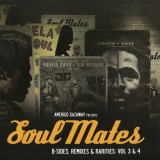
The B-side features the 2008 hit "Kaze yo Fukanaide" recorded in London, making this a luxurious 7-inch vinyl. This must-have record for music fans showcases two exquisite tracks by the naturally gifted singer-songwriter Shione Yukawa, whose captivating voice continues to enchant audiences to this day.
- A1: Turn Out The Light
- A2: Ice Cream
- A3: One Sugar
- A4: Desire
- A5: Up & Down
- A6: Jeep
- B1: Chop N Bowl
- B2: Spend My Nights
- B3: Fill My Cup
- B4: Boots
- B5: I Can't Hide
Australia’s Winston Surfshirt shares his fourth studio album, WINSTON, gifted to the world on July 25 via Sweat It Out. The semi self-titled record is complete with 11-tracks of doting adoration and tidbits of love told through the playful, unique sonic fusions that Winston does so well. Seamlessly sliding between smooth R&B tones and hip hop inflections to juiced up disco-house, WINSTON delivers an homage to his foundational sound while refining a new chapter in territory untouched. As the name suggests - this record is Winston to its core, more than ever before.
- Away Out On The Sea
- Rocks And Trees
- Spite And Love
- Ever Lovin Need To Know
- All The Saints
- Hearts And Bones
- Gentleman's Bulldog
- Cool Of The Day
- Thanks And Sorry
- I'd Like To Be A Train
With two solo CDs and another three with Cahalen Morrison behind him, today he's become the master folk troubadour he was destined to be, and we're all the richer for it. The Pacific Northwest singer- songwriter met his wife, his beloved father has passed away, and his two children now shape his world around him. With age comes wisdom and, for master musicians, clairvoyance. His third album, The Shape of a Sway, reflects just that: A master telling tales of life lived honestly, amid paradox and reason, injected with change and growth, bruises and enlightenment: Life not just worth living, but worth lifting up in song. Gifted as a writer, singer, and instrumentalist (guitar, mandolin, banjo, pedal steel), West gets support from his equally stellar regulars, fiddler Patrick M'Gonigle and bassist Forest Marowitz. All three share intertwining harmony vocals. The Shape of a Sway, he says, "is an honest inventory of my life, possibly all of our lives, presented possibly with enough abstraction that listeners will see something of themselves, of their lives."
Composer Corneliu Cezar (1937-1997) was a distinctive personality within the Romanian post 1960 avantgarde: a visionary of music, a thinker and a prophet, a richly gifted artist also active with writing, poetry, painting and astrology. Cezar was an activist rediscovering the natural resonance of sound within a different historical context and he embraced the recovery of authenticity as a reaction against the artificialized culture of serial doctrines. When, after 1975 the spectral music trend became official in Paris, with much fuss and remarkable support from musicologists, nobody knew that this trend has already been practiced by a small group of Romanian composers lead by Corneliu Cezar for ten years. The four electro-acoustic pieces on this album (privately released on CD in Romania in 2000), recorded with little means between 1967 and 1975, display the incredibly strong ideas of a truly visionary artist. Everything Corneliu Cezar has done during his short earthly life bared the shade of authenticity.
- Kyrie Ii
- Semblance Of Dualism
- Low Of Solipsism Ii
- Death Note Theme ~Intrumental~
- Tactics Of The Absolute
- Kyrie For Ochestra
- Air
- Light Lights Up Light For Piano
- Dark Light
- L’s Barrier
- Throbbing
- Uneasiness
- Air Of Tension
- Higuchi
- Shiver B
- Conference Room Of Yotsuba Murders
- Anger
- The World Of Death Gods B
- L’s Friend
- Misa’s Theme A
- Misa’s Theme B
- Intro
- Sakura Tv
- The Reasoning
- The Secret
- The Sound Of Hands On The Clock
- Suspicious
- Yotsuba Group
volume III[34,66 €]
Light Yagami, a gifted young student, one day picks up the "Death Note", a notebook previously kept by a shinigami (God of death), Ryuk, who apparently was bored in his world. Just write the name of a person in this notebook, and this one dies (according to certain conditions that the shinigami will explain to Light during their meeting). Thus, with the "Death Note" in hand, Light decides to rid the planet of all criminals to make it a just world, a perfect world. However, who is he to judge people? He therefore becomes the worst wanted criminal on the whole planet.. Two composers and arrangers composed for this work: Hideki TANIUCHI (HAJIME NO IPPO, NANA) and Yoshihisa HIRANO (FINAL FANTASY, HUNTER X HUNTER).
- A1: Death Image
- A2: L
- A3: L’s Past
- A4: Near’s Theme
- A5: Mello
- A6: Mello 2
- A7: Action
- B1: L’s Ideology
- B2: Mello’s Theme
- B3: Confronting
- B4: Near
- B5: Misa
- B6: Misa’s Video
- B7: Misa’s Loneliness
- C1: Light Has Returned
- C2: Doubt
- C3: Tactics
- C4: Near 2
- C5: Light’s Performance
- C6: Misa’s Feelings
- C7: Father’s Death
- D1: Misa’s Song (Orchestra Version)
- D2: Mikami Concertino
- D3: Trifling Stuff
- D6: Misa’s Song
- D7: Coda – Death Note
- D4: Toward The Climax
- D5: Misa’s Song (Piano Solo)
volume II[35,50 €]
Light Yagami, a gifted young student, one day picks up the "Death Note", a notebook previously kept by a shinigami (God of death), Ryuk, who apparently was bored in his world. Just write the name of a person in this notebook, and this one dies (according to certain conditions that the shinigami will explain to Light during their meeting). Thus, with the "Death Note" in hand, Light decides to rid the planet of all criminals to make it a just world, a perfect world. However, who is he to judge people? He therefore becomes the worst wanted criminal on the whole planet.. Two composers and arrangers composed for this work: Hideki TANIUCHI (HAJIME NO IPPO, NANA) and Yoshihisa HIRANO (FINAL FANTASY, HUNTER X HUNTER).
- Just Friends - Montreal, Qc (1976)
- There Will Never Be Another You - Anaheim, Ca (1976)
- Groovin' High - Anaheim, Ca (1976)
- Like Someone In Love - Anaheim, Ca (1976)
- There Is No Greater Love - Boras, Sweden (1977)
- Secret Love - Anaheim, Ca (1976)
- Stella By Starlight - Oslo, Norway (1977)
- My Romance -Boston, Ma (1976)
- I Hear A Rhapsody - Montreal, Qc (1976)
- Here's That Rainy Day (Piano Solo) - Ss Rotterdam Jazz Cruise (1977)
Available 13 June 2025 on double translucent orange vinyl, Trios captures the magic of Buddy Rich's legendary three- man jam sessions-- performances that have never been officially released until now. Recorded live during international concerts in 1976 and 1977, Trios showcases Rich alongside extraordinary talents: bassists Jon Burr and Tom Warrington, and young piano prodigy Barry Kiener. These trio interludes--recorded by Rich's alto saxophonist Alan Gauvin--feature Rich playing with brushes in an intimate setting, spotlighting his dynamic range and nuance. "These trio sets were often played to give the brass section a break," says Gauvin. "But what Buddy did with those moments was extraordinary. It was a masterclass in restraint, creativity, and musical interplay." Among the album's ten tracks are beautifully reimagined standards such as "Just Friends," "Stella by Starlight," and "My Romance." Each performance highlights Rich's desire to step back and allow the piano and bass to shine--something unheard of for a drummer of his stature. The release also serves as a tribute to Barry Kiener, the immensely gifted pianist who tragically passed away at 30. "Barry had been like a son to him," remembers Buddy's daughter Cathy Rich, who serves as an Executive Producer. "This album is a rare glimpse into Barry's brilliance and the deep musical bond he shared with my father." Trios was recorded and produced by Alan Gauvin, mastered by Tom Swift, with cover art by Michael Patterson, the award-winning visual artist and USC professor known for his work on a-ha's iconic "Take on Me" video.
I must admit to being a sucker for two-guitar bands. Ok, Hendrix pulled off a trio. But I don’t care what anybody says: The Yardbirds were a better band than anything that came out of them (Ok, maybe not Zep. But Cream?).
Maybe the reason I go back so far in my references is that, within the two-guitar band format, original new roles are difficult and rare. There’s the classic (socially problematic and often boring) “rhythm/lead” solution. There’s the JB’s or Nile Rodgers’ chicken pickin’ vs comping solution (which avoids chordal clashes by relegating one of the guitars to the role of single-note percussion instrument). There’s Ornette’s Prime Time division between Bern Nix’s rolled-off “jazz” tone and Charles Ellerbee’s trebly wah. Almost everything else is a variation on one of these.
In Ches Smith’s record Clone Row, each piece is built around a different concept for guitar interaction. The delightful and gifted weirdness of Mary Halvorson’s playing is counterpointed, contrasted, unisoned with, played off, juxtaposed (that is to say, enters every relationship possible) with Liberty Ellman’s equally amazing sound palette, chops, and imagination. This definitely ain’t your father’s guitar band.
The overall vibe of the record—despite Halvorson’s occasional noise outbursts or Ellman’s distorted guitar lines (see Mixed Fridge) is neither punk/funk, nor Zorn-ish metal—and certainly not the looser parameters of Ornette’s improvised harmolodics. Smith’s vibraphone playing, Halvorson’s guitar tone (whammy pedal squiggles aside), the brilliant electronics, and (most of all) the compositions themselves are somehow strangely West Coast cool. It’s as if I’m hearing a Jim Hall concert in which one of us did a lot of mushrooms, or (dare I write this?) some post-punk post-Dave Brubeck post-trip-hop experiment with classical form.
This recording is, most of all, about Ches as composer. He’s picked up a lot on his long, strange trip of the last few decades. The Haitian funkiness of his work with We All Break is audible—but deeply buried, encoded in the polyrhythms (check out Heart Breakthrough). His long-running side musician collaborations with John Zorn and Tim Berne are also evident but sublimated here into something new.
Not that improvising is absent. Check out the compelling collective statements in Sustained Nightmare and Ready Beat. Check out the brilliant interplay and bass soloing on Abrade With Me (a Weather Report for the age of extreme weather?) Nick Dunston is my favorite bassist of the new generation, and he plays brilliantly throughout. And Ches’ drumming here has all the groove, energy, and incredible range that have kept him in demand from Saturday night Vodou services to jazz and new music recording sessions (…the thinking man’s rock barbarian?).
The sus chords in Abrade With Me do build, for a moment, towards a fusion type of climax...but just at the moment I was gritting my teeth in anticipated defense against some horrible synth solo, the drums drop out, and we’re transported to the ambient lounge at the rave, and we suddenly understand we’re in the hands of a composer with the power to transport us just about anywhere.
So, this is a composer’s record most of all; a composer’s record performed by musicians who happen to be great improvisers. Ches Smith builds here on his reputation as a gifted new voice with an important vision, while showcasing some of the most creative musicians of our time.