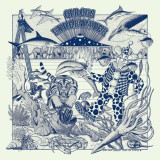
Andres Klein alias Ackermann hails from beautiful Stuttgart and has been in the music producing biz for about 20 years. He's been running is own imprint Traktor records for a long time, churning out House, Techhouse, Techno and anything in between. His tune „I Got My Man“ got remixed by italian Mattia Borriello aka M.I.T.A. for Marco Faraone's Uncage label. This tune got heavy play by quite a few A-list Techno DJs around the globe, one of them Answer Code Request who couldn't stop dropping that diva drama belter in his sets in „The Big House“ in East Berlin. That's where it caught All That Jelly label head Mr. Fonk's ear and so it had to get pressed on hot waxxx! The 12“ is accompanied by two equally cheerful Techno slammers with a groovy House edge. You're gonna love 'em!
Buscar:glo
- A1: Boku No Kakera (Lp1 Hidari Ude No Yume Japanese Edition)
- A2: Saru To Yuki To Gomi No Kodomo
- A3: Kacha Kucha Nee
- A4: The Garden Of Poppies
- A5: Relache
- B1: Tell 'Em To Me
- B2: Living In The Dark
- B3: Slat Dance
- B4: Venezia
- B5: Saru No Ie
- C1: Boku No Kakera (Lp2 Hidari Ude No Yume Instrumental Mix)
- C2: Saru To Yuki To Gomi No Kodomo
- C3: Kacha Kucha Nee
- C4: The Garden Of Poppies
- C5: Relache
- D1: Tell 'Em To Me
- D2: Living In The Dark
- D3: Slat Dance
- D4: Venezia
- D5: Saru No Ie
RYUICHI SAKAMOTO'S LANDMARK 1981 ALBUM REISSUED FOR THE FIRST TIME IN DECADES OUTSIDE OF JAPAN. THE ALBUM WILL BE REISSUED IN ITS RARE JAPANESE EDITION TOGETHER WITH A 2-LP LIMITED EDITION FEATURING THE ALBUM PLUS A 2ND LP FEATURING ITS NEVER-RELEASED FULL INSTRUMENTAL MIX, ALL REMASTERED BY BERNIE GRUNDMAN.
Wewantsounds is proud to announce the reissue of Ryuichi Sakamoto's third solo album "Hidari Ude No Yume" (Left Handed Dream), originally released in 1981 on the Alfa label. Save for a small-scale Dutch vinyl release in 1981, it is the first time the album's original Japanese edition is released outside of Japan (the European release on Epic Records included significantly different tracks and mixes). Newly remastered from the original tapes by renowned engineer Bernie Grundman, this LP edition comes with original artwork featuring a striking cover shot by famous photographer Masayoshi Sukita (sourced from the original negative), OBI strip and 4-page insert with new introduction by journalist Anton Spice. The album will also be released as a 2-LP limited edition gatefold including the album's full instrumental mix.
Ryuichi Sakamoto's third album, "Hidari Ude No Yume" was recorded at the legendary Alfa Studio 'A' in Tokyo during the Summer of 1981. it came after "B-2 Unit" in 1980 and his debut album "Thousand Knives Of" in 1978, the very year Sakamoto was invited by Haruomi Hosono to join Yellow Magic Orchestra alongside Yukihiro Takahashi. In the process, they became global stars as the group rewrote the rules of electronic pop and toured around the world, yet Sakamoto was keen to remain active as a solo artist.
?In 1981, the musician decided to record an album rooted in Pop, following "B-2 Unit" which had a more of an experimental edge and his landmark electro debut from 1978. For this new album entitled "Hidari Ude No Yume," Sakamoto invited British producer Robin Scott, who had had huge hit with 'Pop Muzik,' to co-produce. They entered the Alfa studio in July 1981, accompanied by a handful of musicians. These included his fellow YMO musicians Haruomi Hosono and Yukihiro Takahashi, keyboard programmer extraordinaire Hideki Matsutake who'd been on Sakamoto's first two albums and became YMO's unofficial fourth member, violinist Kaoru Sato, saxophonist Satoshi Nakamura and American guitarist Adrian Belew who'd played with David Bowie, The Talking Heads' "Remain In Light" and more recently, Tom Tom Club’s debut (co-writing 'Genius Of Love').
?Together, they created a fascinating mix of pop, ambient and electronic music with elements of avant garde and traditional Japanese music, the whole firmly rooted in a solid groove. Sakamoto wanted to give the album a spontaneous feel and decided to let ideas flow and evolve organically during the sessions as musicians would develop them together. From the funk of 'Relâché' to the new wave feel of 'Venezia' and the ambient minimalism of 'Slat Dance,' the album is remarkably consistent while displaying a wealth of global influences as shown by the diversity of instruments featured on the credits: Marimba, didgeridu, traditional Japanese instruments such as the Sho and Hichiriki flutes.
?The album was released in Japan in 1981 and Epic Records picked it up for Europe a year later but decided to release it in a significantly altered version. The sequencing was completely reshuffled and two tracks, 'Saru No Ie' and 'Living In The Dark' were completely dropped while three others, ‘Relâché’, ‘Tell 'em To Me’, ‘Venezia’ were heavily remodelled with english lyrics and became 'Just About Enough', 'Once In A Lifetime' and 'The Left Bank'. Last but not least, a new English-sung track, 'The Arrangement,' was added, making the album nine tracks instead of ten for the Japanese edition.
Altogether this International version called "Left-Handed Dream" was a very different album from the Japanese one and although both were successful at the time and further established Ryuichi Sakamoto as a global solo artist, the Japanese edition of "Hidari Ude No Yume" remains largely unknown to international ears.
Wewantsounds is now delighted to release this original Japanese edition for the first time in decades as a single LP together with a 2-LP limited-edition set adding, as a bonus, its fascinating instrumental mix, discovered in the label's vaults a few years ago (Note that 'The Garden Of Poppies', 'Slat Dance' and 'Saru No Ie' are instrumentals but for the consistency of the album we kept them on the Instrumental Mix). "Hidari Ude No Yume" is an essential album in Ryuichi Sakamoto's rich discography. It is now available in its purest original Japanese form.
- A1: The Is No Motorways In Space
- A2: Rock'n'roll Baby
- A3: Last Sunset Ever
- A4: Nighthunter
- A5: Post Nine Days
- A6: Cyclop Ohne Puppe
- B1: The Dices
- B2: What's A Dj Anyways
- B3: Post Trauma
- B4: When Covid Gave Me Time
- B5: Earthpeople
- B6: The Blue Hole In The Sky
- B7: The Garden Of Uglyness
- B8: Unfollow Me Prayer
- B9: Calmin' More
- C1: The Cute Woman You Don't Want Reggae
- C2: Super Rainy Morning
- C3: Lost Love
- C4: Smoky Disco Test
- C5: Ambient Wet End
- C6: Funkypunk
- C7: Strawberries & Cheese
- C8: Lil Boi
- C9: Djing Killed Itself
- D5: Cosmic Egg
- D6: Morning Modytation
- D1: The Urge To No
- D2: Magic From The Gabin
- D3: Glitter Morning
- D4: Why So Serious
Fake Yourself is an act of revolt as much as it is a celebration of life and an expression of human alienation. As usual in most of his work, soFa here reflects contrasts and contradictions as our existence so often does. It’s about sadness and joy, ups and downs and the fine line which connects them to tell a story. Fake Yourself comes as a spontaneous output of an artist escaping a scene of which the constant superficiality is unavoidable. Mistakes and wrong production with a strong DIY flavor are a conscious choice to not lose the spontaneous feeling which defines these recordings. A pure and direct self, exploring a realm of sound with sharp curiosity, emotion and humour. Where simplicity and complexity marry. This album is a good example on how some of the most authentic musical explorations are the most personal ones. soFa leaves all boundaries behind and let many of his influences confluence. Unconsciously or not, traces of IDM, Disco, New Beat, Dub and mostly Krautrock cross heavenly paths, followed by ironic and confronted vocals and his hypnotic signature basslines. Everything seems to make sense, to fill the chapters of an adventurous short novel. What makes Fake Yourself remarkable is not the deep blend of genres, but the definition of one man shaping and finding his authentic sound. Killing boundaries to create this journey in his very own "style-no-style". All tunes were improvised, recorded and arranged within 10 days in a wooden cabin, isolated in the middle of the nature in Alentejo/Portugal in 2022. This album was not meant to happen and one can strongly feel its spontaneous soul. No overdubs.
The xx existieren in einem selbstkreierten Kosmos. Ihr Debütalbum "xx" bewegte sich mit wundersamer Vollkommenheit zwischen Vieldeutigkeit und Reduktion. Im Zeitalter der totalen digitalen Öffentlichkeit war "xx" Popmusik mit maximalen Privacy Settings und definierte einen neuen Stil. Nun sind Romy Madley Croft, Oliver Sim und Jamie Smith zurück mit einem neuen Album: "Coexist".Vieles ist zwischenzeitlich passiert, vor allem ist die Band erwachsen geworden. Nach der Veröffentlichung des Debüts im Sommer 2009 verbrachten die drei den größten Teil der folgenden eineinhalb Jahre weit weg von zuhause, um ihren Sound in Ohren und Herzen rund um den Globus zu tragen. Von Amerika über Australien und Japan wurde die Band von Publikum und Kritik gleichermaßen gefeiert, und der Erfolg zeichnete sich auch in steigenden Albumverkäufen und dem Gewinn von Awards wie dem renommierten Mercury Music Prize ab. Während der anschließenden Bandpause wurde dann der stillste der 3 Bandmitglieder, Jamie, zum Gesicht von The xx. Zwischen seinen vielen DJ-Gigs arbeitete er stetig an seinen Fertigkeiten als Produzent und entwickelte dabei einen ganz eigenen Stil. Remixe wie etwa für Adeles Über-Song "Rolling In The Deep" oder die Bearbeitung von Gil Scott-Herons letztem Album machten aus Jamie einen hoch angesehenen Produzenten auch jenseits des Band-Fames. Für Drake produzierte Jamie den Titeltrack seines Millionensellers "Take Care". Für das neue Album arbeiteten dann erstmals alle drei von Anfang an zusammen in ihrem eigenen Studio. Während weiterhin Spuren von R&B im Sound von The xx zu finden sind, ist ein vermehrter Einfluss von elektronischer Musik spürbar. In Romys Loop-artigem Gitarrenspiel und den entsprechenden Basslines spiegelt sich dieser Aspekt. Alles in allem ist "Coexist" ein selbstbewusstes, erwachsenes Album geworden, auf dem sich wenig und doch zugleich vieles geändert ändert. Älter und weiser klingt es, sicherer und immer noch von außerordentlicher, zarter Tiefe. Es ist das Album geworden, auf dem das Licht nach dem Leid zurückkehrt.
Nach über zwei Jahren Arbeit freut sich Luc Bradford, besser bekannt als ford., endlich die Veröffentlichung seines dritten Albums, „Guiding Hand“, am 21. Juli 2023 über Foreign Family Collective bekannt zu geben.
Als Sohn amerikanischer Eltern in Paris geboren, in Frankfurt, der Schweiz und in Singapur aufgewachsen und nun in Utah ansässig, hat das globale Aufwachsen von ford. seine musikalische Perspektive entscheidend geprägt. Obwohl er noch jung ist, sind diese eklektischen Lebenserfahrungen in der Musik von ford. deutlich zu spüren - ein Sound, der zweifellos einzigartig und gleichzeitig universell ist.
Die Aufnahmen für „Guiding Hand“ begannen Ende 2020 in den Bergen und Tälern von Utah. Das Album kam in den folgenden Monaten langsam zusammen, mit verschiedenen Ideen, die aus dem Leben ‚on the road‘, späten Nächten mit Freund:innen und einem engen Zusammenleben entstanden. Wie ford. gerne anmerkt, „entstand das Album in Räumen, zwischen Phasen“, ein Satz, der die vergängliche Natur seines Lebens repräsentiert, ein Thema, das sich durch die gesamte Platte zieht.
Trumpeter, bandleader and composer Matthew Halsall announces landmark new album An Ever Changing View, an expansive, immaculately conceived project which presents Halsall’s signature blend of jazz, electronica, global and spiritual jazz influences.
An Ever Changing View will be released on September 8th on Gondwana Records (the label Halsall founded 15 years ago) ahead of a landmark show at The Royal Albert Hall in London on September 21st and UK and EU tour dates.
Halsall who has been hailed as one of the leading figures of the UK jazz renaissance has never seen himself as part of any one sound or scene: he builds his own sonic universe instead. An Ever Changing View finds him at his most experimental yet, once again expanding his sound and production techniques to create his unique brand of deeply meditative music.
During the album's creation, he was staying in both a beautiful architect’s house with breath-taking sea views and a striking modernist house, where he composed what he saw “like a landscape painting”. In these new environments, Halsall wanted to capture “the feeling of openness and escapism” and to approach making music again from scratch. “I hit the reset button and wanted to have complete musical freedom,” he says. “It was a real exploration of sound.”
It was hearing jazz on the dancefloor as a teenager that first opened up new possibilities in Halsall’s mind and his music has long drawn on his love for the spiritual jazz of Alice Coltrane and Pharoah Sanders and contemporary electronica from the likes of Warp Records and Ninja Tune. An Ever Changing View melds those forms in a way that feels heady and, at times, even otherworldly. One of the album’s starting points was Halsall’s ever-expanding box of percussion, from congas and kalimba to various clusters of seeds, bells and chimes, which he sampled and looped to use as a foundation for the songs – a first for him and his band. Elevating, charming, totally modern jazz tracks jostle with deft warm magic realism; and laid back grooves with hand percussion, deep bass and the gorgeous glisten of the Fender Rhodes meet hip-hop beats. Halsall himself sparkles, illuminating his beautiful tapestries of sound with lithe, glistening elegiac trumpet.
Trumpeter, bandleader and composer Matthew Halsall announces landmark new album An Ever Changing View, an expansive, immaculately conceived project which presents Halsall’s signature blend of jazz, electronica, global and spiritual jazz influences.
An Ever Changing View will be released on September 8th on Gondwana Records (the label Halsall founded 15 years ago) ahead of a landmark show at The Royal Albert Hall in London on September 21st and UK and EU tour dates.
Halsall who has been hailed as one of the leading figures of the UK jazz renaissance has never seen himself as part of any one sound or scene: he builds his own sonic universe instead. An Ever Changing View finds him at his most experimental yet, once again expanding his sound and production techniques to create his unique brand of deeply meditative music.
During the album's creation, he was staying in both a beautiful architect’s house with breath-taking sea views and a striking modernist house, where he composed what he saw “like a landscape painting”. In these new environments, Halsall wanted to capture “the feeling of openness and escapism” and to approach making music again from scratch. “I hit the reset button and wanted to have complete musical freedom,” he says. “It was a real exploration of sound.”
It was hearing jazz on the dancefloor as a teenager that first opened up new possibilities in Halsall’s mind and his music has long drawn on his love for the spiritual jazz of Alice Coltrane and Pharoah Sanders and contemporary electronica from the likes of Warp Records and Ninja Tune. An Ever Changing View melds those forms in a way that feels heady and, at times, even otherworldly. One of the album’s starting points was Halsall’s ever-expanding box of percussion, from congas and kalimba to various clusters of seeds, bells and chimes, which he sampled and looped to use as a foundation for the songs – a first for him and his band. Elevating, charming, totally modern jazz tracks jostle with deft warm magic realism; and laid back grooves with hand percussion, deep bass and the gorgeous glisten of the Fender Rhodes meet hip-hop beats. Halsall himself sparkles, illuminating his beautiful tapestries of sound with lithe, glistening elegiac trumpet.
Ils Veulent Nous Tuer is Bérurier Noir's 3rd maxi 45tours, the title of which is borrowed from the slogan of a banner unfurled by the mutineers from the roof of Fresnes prison. It was an apt title for the group, too, since at the time of its release, the political and police authorities decided to destabilise them by associating them with the Black War activists and arresting many of the Bérus' entourage.
It's a dark album, with hard-hitting lyrics rooted in the social reality of the time (1988) and tackling subjects as diverse as the problems of access to food for the precarious (On A Faim !), prison repression (Sur Les Toits), the excesses of marginal youth (Mineurs En Danger) and the omnipresence of the military and police in our daily lives (Et Hop !). The album compo
--
The band's name alone evokes the epic of alternative rock: rebellious and committed.
Born by mistake on a February evening in 1983, Bérurier Noir soon found themselves the driving force behind a vast "Mouv'ment d'la Jeunesse", determined to take control of their lives in the face of a society that was ultra-conservative at the time. Times have hardly changed.
From their first self-produced records distributed by hand to the creation of self-managed labels, from concerts in squats and wild appearances at demonstrations, on the street or in the metro to endless tours, from interviews given to fanzines and free radio stations to unclassifiable appearances in the mainstream media, Bérurier Noir waged the most exciting war of independence in the history of French rock, with just a microphone, a guitar, a drum machine, a few red noses and patched-up theatre masks.
François, Loran and their 'Troupeau d'Rock' gave the last finger to this turbulent, irredeemable raia, committing hara-kiri at the height of their glory, during three final concerts in the heart of Paris in November 1989.
Forty years after its birth, Bérurier Noir's work continues to resonate, whether at demonstrations or free parties, fuelling the hopes of all those who wish to turn this world upside down and build a truly libertarian society based on solidarity and brotherhood.
For those who missed this unprecedented adventure, the Archives de la Zone Mondiale label is bringing you 8 recordings by Bérurier Noir in the form of limited-edition reissues on highly original colour vinyl ("crown" finish), distributed throughout the year.
Black Truffle is pleased to announce its first release from celebrated London-based Canadian composer Cassandra Miller. Though her body of mature work stretches back almost twenty years, many listeners were introduced to Miller through the success of her astonishing 2015 Duet for Cello and Orchestra, which sets an imperturbable two-note cello part against a series of increasingly dense orchestrations of an Italian folk melody; in 2019, it was selected by The Guardian as one of the ‘best classical music works of the 21st century’. Traveller Song / Thanksong, the first release of her music on vinyl, presents a pair of compositions for voice and ensemble that exemplify Miller’s gently absurd, strikingly beautiful, and utterly unique work.
Like many of Miller’s compositions, these pieces originate in existing music. Traveller Song (2016/2018) begins from a 1950s song of an anonymous Sicilian cart driver recorded by Alan Lomax and Diego Carpitella, which Miller recorded herself singing along to, going on to then record herself singing to her own layered voices. Miller’s untutored voice is an unsteady, wavering wail that has, in her words, ‘more in common with a quasi-shamanistic keening than anything Sicilian’. Heard sometimes alone, sometimes layered, her pre-recorded voice is accompanied by a chamber sextet drawn from London’s Plus-Minus Ensemble. In the first section, Miller’s exposed warble is set to a spare piano accompaniment, somehow both faintly preposterous and magisterial. Following the voice note for note, the piano part often makes use of almost mechanical sequences of parallel chords, reminiscent both of Satie’s Rosicrucian period and the abrupt harmonic movements of a chord organ. The orchestration then opens up to guitar, clarinet, and sliding strings, a delicate environment for Miller’s voice, which, especially when it begins to be layered, generates a powerful sense of intimacy. In its concluding minutes, the folk roots of the original melody return in the form of a glorious full ensemble setting dominated by accordion, clarinet, and strummed guitar. Thanksong begins from recordings of Miller singing along to the third movement of Beethoven’s late quartet in A minor (Op. 132), the ‘holy song of thanks’ the composer wrote to express his gratitude for (temporarily) recovering from illness. Recording herself singing along repeatedly to each of the individual parts of the quartet, Miller created an aural score where each member of the string quartet listens to their own part on headphones, playing by ear. Performed on this recording by Montreal's Quatuor Bozzini, with whom Miller has a decades-long relationship, they are joined by the British soprano Juliet Fraser, who sings material from the Beethoven quartet ‘as slowly and quietly as possible’. The atmosphere of the opening of Beethoven’s Dankgesang, of hushed reawakening and thoughtful reflection, is sustained throughout the fourteen minutes of Miller’s piece, building at points almost to sentimentality before the five individual parts again fall back into a gentle burble of unsynchronised melodic gestures. Like Traveller Song, here the use of the voice is a long way from the mannered performance of much contemporary music, reaching for a human and bodily presence more connected to the reality of the everyday, albeit suffused with wonder. Presented in a stylish sleeve adorned with photography by Lasse Marhaug and liner notes by Cassandra Miller, this is a key release from a major contemporary composer whose work challenges and dazzles in equal measure. .
Woods are in bloom again, inviting you to disappear into a new spectrum of colors and sounds and dreams on Perennial. Formed in Brooklyn in 2004, Woods have matured into a true independent institution, above and below the root, reliably emerging every few years with new music that grows towards the latest sky. Operating the Woodsist label since 2006 and curating the beloved homespun Woodsist Festival for the musical universe they’ve built, Perennial is the sound of a band on the edge of their 20th anniversary and still finding bold new ways to sound like (and challenge) themselves. Perennial grew from a bed of guitar/keyboard/drum loops by Woods head-in-chief Jeremy Earl, a form of winter night meditation that evolved into an unexplored mode of collaborative songwriting. With Earl’s starting points, he and bandmates Jarvis Taveniere and John Andrews convened, first at Earl’s house in New York, then at Panoramic House studio in Stinson Beach, California, site of sessions for 2020’s Strange To Explain. With a view of the sparkling Pacific and tape rolling, they began to build, jamming over the loops, switching instruments, and developing a few dozen building blocks. The album’s resulting 11 songs, 4 of them instrumental, are in the classic Woods mode--shimmering, familiar, fractionally unsettling--but with the half-invisible infinity boxes of Earl’s loops burbling beneath each like a mysterious underground source. From source to seed to bloom, each loop unfolds into something unpredictable, from the jeweled pop of the aching “Little Black Flowers” to the ecstatic starlit freak-beat of “Another Side.” They are blossomings both far-out and comforting, like the Mellotronic cloud-hopping of “Between the Past,” or sometimes just plain comforting, like the widescreen snowglobe fantasia of the instrumental “White Winter Melody,” touched by Connor Gallaher’s pedal steel. Woods have long used the studio as a place of songwriting, naming 2007’s At Rear House after their shared dwelling and recording space. But Perennial also carries with it an even longer view of Woods. Emerging from the process alongside the music was Earl’s reflection that “perennial plants and flowers are nature’s loops,” an idea rolling under the album’s lyrics like the loops themselves. It certainly applies to the band, too, who have quietly tended to a long, committed project of being a band in the weird-ass 21st century, both individually and communally. Though separated by coasts, the communal sprit carries through Earl, Taveniere, and Andrews’ collaboration, a living embodiment of the freedoms rediscovered every time a new collectively created piece of music emerges. For nearly two decades, Woods have survived subgenres, anchored in the fertile soil below hashtags like lo-fi and freak-folk and psychedelic and indie, and built a shared history that’s something to marvel at. As the flagship band for Woodsist, they’ve accumulated a striking extended family of collaborators (and Woods alum) that have made the label one of the most dependable imprints in the kaleidoscopic low-key underground. It’s a glow that’s transferred whole to the blissed-out Woodsist Fests held in Accord, New York in recent years, which have folded in a wide range of diverse sounds, from the the jazz cosmoverse of the Sun Ra Arkestra and adventurous legends Yo La Tengo, to a hard-to-even-count family tree of contemporaries, like Kevin Morby (who served a few tours of duty as Woods bassist) and Kurt Vile (who released his 2009 debut on Woodsist), a living community in sound. Perennial carries all of this, shaped by decades, but made in the moment, and here right now. The smell of the flowers doesn’t remain, but sometimes the flowers do. Jesse Jarnow Recorded and mixed by Jarvis Taveniere at Panoramic House in Stinson Beach, CA with additional recording at The Ship in Los Angeles, CA and Cottekill Bird Sanctuary in Stone Ridge, NY. Produced by Jarvis Taveniere and Jeremy Earl. Mastered by Timothy Stollenwerk at Stereophonic Mastering in Portland, OR. Jeremy Earl - vocals, guitars, drums, percussion, sk-5, mellotron, vibraphone, autoharp, loops Jarvis Taveniere - guitar, bass, upright bass, hammond, vocals John Andrews - piano, organs, mellotron, drums, vocals Connor Gallaher - Pedal Steel Kyle Forester - sax, wurlitzer
Memory is malleable. The day you met the person you love, what color shirt was she wearing? At precisely what angle did the sunlight strike his face? How exactly did they glow? These little details are precious, but the strange thing is, the more you cherish them, the more they change. Each recollection is another potential touch point where stories can shift—each replay degrades the truth. Reality's rough edges smooth, with time. Objectivity is a myth: cameras and recording devices all contort image and sound. There's no way to know exactly how things were. And yet we still tell the stories, to try to capture how things felt, even though the truth is always slipping through our fingers.
Lemon Quartet's second albumArts Festseems to unconsciously circle this thematic territory. Full of loose, yet lush repetition, it seems to function like memory—each dizzy melody recalling and rewriting what came before, subtly shaping each piece as time passes. Not that they seem especially concerned with the passage of time anyway. They space out, they work in the realm of feelings, scribbling melodious abstractions that feel familiar. Rich with compassion, harmony, and gestures toward ecstatic—if not objective—truth, it's full of the sort of pieces that demand you return to them, but sound a bit different each time, new details overtaking familiar comforts. Are you hearing them for the first time? Or just for the first time in a long time? Either way, drift away, and try to remember…
"PETROL", das zweite Album der Schweizer Doom-Visionäre TAR POND, wurde einerseits von US-Doom-Klassikern wie SAINT VITUS inspiriert, greift aber andererseits auch auf die britischen Wurzeln zu, die von BLACK SABBATH verkörpert werden. In anderen Momenten blitzt bei TAR POND eine Verbindung zu zeitgenössischen Doom-Acts wie ELECTRIC WIZARD und ACID BATH auf. Parallel dazu verkörpern TAR POND aber auch die bekannte Eigensinnigkeit des Schweizer Metal, der sich durch Individualität und kreative Eigenständigkeit auszeichnet, so wie es herausragende Acts wie CELTIC FROST, CORONER und ZEAL & ARDOR musikalisch vorgelebt haben. Als Martin Ain, Bassist der Kultband CELTIC FROST und eines der Gründungsmitglieder von TAR POND, im Oktober 2017 plötzlich verstarb, stand auf einmal alles in Frage. Der legendäre Schweizer Musiker hatte vor diesem tragischen Tag das Debütalbum bereits aufgenommen - zusammen mit den anderen Gründungsmitgliedern, dem ehemaligen CORONER-Drummer und Lyriker Marky Edelmann sowie dem renommierten Scratchboard-Künstler und Sänger Thomas Ott. Nach einer langer Pause und intensiven Überlegungen entschieden sich TAR POND schließlich dafür, als Band weiterzumachen und das Debüt im Gedenken an Martin Ain unter dem Titel "Protocol of Constant Sadness" zu veröffentlichen. Aufgenommen wurde das Debüt unter der Leitung von Produzent und Gitarren-Legende Tommy Vetterli (CORONER) in den Jahren 2016/17. Beflügelt von der enthusiastischen Reaktionen auf "Protocol of Constant Sadness", haben sich TAR POND erneut mit Tommy Vetterli im New Sound Studio zusammengetan, um den Nachfolger "PETROL" einzuspielen. Aufgrund von Besetzungswechseln vor und während der Studioaufnahmen ist "PETROL" aus einer Zusammenarbeit von alten und neuen Bandmitgliedern zu verschiedenen Zeiten entstanden. Trotz dieser Umstände erscheint das zweite Album sowohl kohärent als auch auf das erklärte Ziel von TAR POND fokussiert - nämlich: Einen Soundtrack aus brachialer Kraft und ein elektrisches Protokoll einer fortwährenden Traurigkeit abzuliefern. Während die Schweizer ihr Debüt unter der Bezeichnung 'Doom'n'Gloom' einordneten, wurde ihr Sound auch schon als eine Kombination aus Doom und Post-Metal beschrieben. Mit "PETROL" lösen TAR POND ihr ursprüngliches Versprechen ein: Dieses Album ist ein wunderbarer Soundtrack voller bedrückender Dunkelheit und tiefer Trauer.
Das nunmehr 20. Studioalbum der erfolgreichsten deutschen Art- & Progressive Rockband ELOY. Es ist zugleich das 3. Album einer einzigartigen, vom Band- Mastermind Frank Bornemann als Rock Opera gestalteten Trilogie über das Leben und Schicksal der französischen Nationalheldin und Heiligen Jeanne d´Arc.
Bereits die beiden ersten Alben mit dem Titel „The Vision, the Sword and the Pyre, Part 1 & 2“, auf denen sich diverse illustre Künstler (u.a. Alice Merton) auf der Gästeliste befinden, wurden nicht nur durchweg positiv rezensiert, und erreichten hohe Chartsplatzierungen, sondern fanden auch aufgrund ihrer auf profunden Kenntnissen basierenden Umsetzung in allen historischen Details auf kultureller Ebene viel Beachtung.
Mit „Echoes from the Past” legt nun der Autor nochmal nach, und lässt den durch die Handlung der ersten beiden Alben führenden Protagonisten und Waffengefährten von Jeanne d´Arc, Jean de Metz, die aufwühlenden Ereignisse der Vergangenheit auf sehr emotionale Weise reflektieren.
Musikalisch entstand dadurch ein Werk, bei dem sich sensible und atmosphärische Passagen mit gewaltigen, dramaturgisch geprägten Klangwogen abwechseln, die den ELOY-Fan sicherlich an frühere Konzept-Werke der Band erinnern werden.
Diese Melange ist aber gemäß Frank Bornemann, der sich bei dieser Produktion erneut mit Veränderungen im Line up konfrontiert sah, voll beabsichtigt. Obwohl es sich bzgl. seiner musikalischen Elemente bestens in die Trilogie integriert, ließ es bei seiner Entstehung offensichtlich doch viel Spielraum für künstlerische Momente, die man nicht erwartet, aber die sich außerordentlich prägend für das Album auswirken, welches wieder einmal einzigartig ist.
Adrian Borland and Graham Bailey might be better known as members of legendary post-punk group The Sound, but the two were childhood friends and had been playing together even earlier in The Outsiders, and continued their deep musical rapport as a duo, creating these intense and engaging songs as Second Layer at the same time as their higher profile band output. Following our release of Courts Or Wars, combining their early material, we are proud to reissue their only full length album, World Of Rubber.
Fueled by experimentation in both song construction and recording techniques, the duo leave you enveloped in what The Quietus described as, “a monochrome worldview morbidly obsessed with the dehumanizing effect of war, nuclear weapon annihilation, and the fracturing and negation of the self within an increasingly distorted and technologically mediated society.” Indeed, the goal had been to make each album a concept album, with this to be titled: Second Layer’s World Of Rubber. Alas, this was to be the first and last of those efforts. New detailed liner notes from Graham Bailey shed considerable light on the creation of this cold classic and its immediate aftermath.
Bailey’s inventive construction and deconstruction of various electronics, effects boxes and tape loops form the propulsive base for these songs. Borland’s guitar playing is jagged and unleashed. Above it all is an undeniable sense of melody and Adrian’s distinctive vocals. Soon, they would wonder where Second Layer ended and The Sound began, but World Of Rubber would stand as a document of this fertile period. It would also be a lasting testament to their desire to push the boundaries of their creativity. Dark and brooding the result is what Bandcamp described as “brutally bleak, blank-eyed post-punk that remains chillingly compelling.”
Simone De Kunovich
Mythical Figure
Use variably, whenever you need: D.J. at MainStage, High Profile Fashion Event, Underground
Basement Club, Balearic Terrace Situation.
Gifted selector. Room filling presence. Oversized packaging.
He (here) deals three cards.
“Flow My Tears“ High Roller Euro House
„Super Mana Drain“ OMG Modern High Energy
„Warp Lord“ Early Morning, Playful Dark Eternal Bliss
„He who masters the sound glows“
ORKA is a duo comprising Francine Perry from London and Jens L. Thomsen from the Faroe Islands. They crossed paths in the vibrant club scene of London, an immersive world that had a profound impact on their creative journey. ORKA's music draws inspiration from the Hardcore Continuum and UK sound system culture, blending it with elements of minimal techno, progressive electro, and ambient music, resulting in a diverse range of stylistic influences. Now ORKA emerges with their long-awaited new album. Once again, they greet us with their distinct blend of earthy tones and a bold, adventurous spirit, taking us to a realm bursting with neon-lit hues, pulsating club beats, and an abundance of sensory stimulation. Aptly named "All At Once," the album title provides a clue to the auditory and sensory experience that awaits the listener in this immersive record. ORKA has continuously evolved as a project over many years and iterations, embracing fluidity and a relentless quest for fresh sonic amalgamations. Their journey has been marked by a gradual refinement, stripping away layers to reach the core essentials. This transformative process has unfolded over the years, reaching from their site-specific, cowshed sampling and band-based expedition in "Livandi oyða" (2007) to the bold, innovative exploration of minimalist techno in "Vað" (2016). However, their latest release, "All At Once," signifies yet another remarkable leap forward in their artistic evolution. The seeds of this artistic progression were already planted in previous releases like the <13 EP (2017) and the hard-hitting techno single "Juno" (2018). However, it is with the arrival of the album "All At Once" that ORKA's vision fully blossoms, unveiling a vivid and expansive sonic landscape. This latest offering presents a glorious and vibrant tapestry, showcasing a maximalist approach to techno that pulsates with energy coupled with their signature meticulous attention to sound design, reflecting a deep awareness and intentionality in their creative process. If this album was to be thought of as a place, it would be a shimmering, futuristic, buzzing kind of city with vibrating night-time drizzle from above and endless glowing lights in the distance. Several of the tracks are built around cut-up vocal samples that are divided from their semiotic meanings and reconfigured as loops, and thus mined for their timbral and percussive qualities. Recurring collaborators South London duo LV (Hyperdub, Keysound, Brownswood) are featured on a handful of these tracks, mixing in their complex cocktail of grime and bliss. The result is a sort of queer erotic dance-floor mysticism, and the closest to a full-blown dance record that ORKA have ever made. There must be a club in that shimmering futurist city of the night.. and it is a collective, inclusive and alluring place. There is no need to fear any dancefloor exhaustion by listening to this album though, as there are also moments of floating cyber beauty and pure enveloping warmth to be found among its tracks. As always, following the artistic journey of ORKA is a joyous experience, filled with unexpected twists and turns that keep us captivated.
- A1: Big Buck Meets The Perpendicular Fish
- A2: Trees Walk
- A3: The Surface Of The Water
- A4: Rugaru By Itself
- B 1: I Wash My Hair With Limes
- B2: She Dreams Of Golden Gloves Dancing
- B3: Entrance Of The Deacon
- C1: Weeping Of Electric Sheep
- C2: First Hump Of Stately Plump
- C3: Thunder Daughters Underwater
- D1: Requiem For The Glass Trapeze
- D2: Muddy Ghosts Running From Rain
- D3: Behind The Altar There Is A Carousel
Soundway presents Circus Underwater’s 1984 self-titled masterpiece. Remastered and extended to a double LP, this deluxe version includes six unreleased tracks unearthed from the original ¼” tapes, and presented with an insert, including never-before-seen photos and the fascinating story behind the music.
Featuring artwork from Grateful Dead collaborator, David Lundquist, the album encapsulates a unique moment in time. Echoing the story of a generation that grew up in the 50s and 60s where music was everything, two friends embark on a journey of experimentation which begins in the beatnik suburbs of Washington DC and travels to the heart of hippie San Francisco.
The result is an opus that fearlessly blurs the boundaries of genres and embraces diverse influences. Elements of prog, rock, ambient and wave music culminate in an odyssey that seamlessly bridges the gap between the spaced-out creativity of the 70s and electronic music of today
Woods are in bloom again, inviting you to disappear into a new spectrum of colors and sounds and dreams on Perennial. Formed in Brooklyn in 2004, Woods have matured into a true independent institution, above and below the root, reliably emerging every few years with new music that grows towards the latest sky. Operating the Woodsist label since 2006 and curating the beloved homespun Woodsist Festival for the musical universe they’ve built, Perennial is the sound of a band on the edge of their 20th anniversary and still finding bold new ways to sound like (and challenge) themselves. Perennial grew from a bed of guitar/keyboard/drum loops by Woods head-in-chief Jeremy Earl, a form of winter night meditation that evolved into an unexplored mode of collaborative songwriting. With Earl’s starting points, he and bandmates Jarvis Taveniere and John Andrews convened, first at Earl’s house in New York, then at Panoramic House studio in Stinson Beach, California, site of sessions for 2020’s Strange To Explain. With a view of the sparkling Pacific and tape rolling, they began to build, jamming over the loops, switching instruments, and developing a few dozen building blocks. The album’s resulting 11 songs, 4 of them instrumental, are in the classic Woods mode--shimmering, familiar, fractionally unsettling--but with the half-invisible infinity boxes of Earl’s loops burbling beneath each like a mysterious underground source. From source to seed to bloom, each loop unfolds into something unpredictable, from the jeweled pop of the aching “Little Black Flowers” to the ecstatic starlit freak-beat of “Another Side.” They are blossomings both far-out and comforting, like the Mellotronic cloud-hopping of “Between the Past,” or sometimes just plain comforting, like the widescreen snowglobe fantasia of the instrumental “White Winter Melody,” touched by Connor Gallaher’s pedal steel. Woods have long used the studio as a place of songwriting, naming 2007’s At Rear House after their shared dwelling and recording space. But Perennial also carries with it an even longer view of Woods. Emerging from the process alongside the music was Earl’s reflection that “perennial plants and flowers are nature’s loops,” an idea rolling under the album’s lyrics like the loops themselves. It certainly applies to the band, too, who have quietly tended to a long, committed project of being a band in the weird-ass 21st century, both individually and communally. Though separated by coasts, the communal sprit carries through Earl, Taveniere, and Andrews’ collaboration, a living embodiment of the freedoms rediscovered every time a new collectively created piece of music emerges. For nearly two decades, Woods have survived subgenres, anchored in the fertile soil below hashtags like lo-fi and freak-folk and psychedelic and indie, and built a shared history that’s something to marvel at. As the flagship band for Woodsist, they’ve accumulated a striking extended family of collaborators (and Woods alum) that have made the label one of the most dependable imprints in the kaleidoscopic low-key underground. It’s a glow that’s transferred whole to the blissed-out Woodsist Fests held in Accord, New York in recent years, which have folded in a wide range of diverse sounds, from the the jazz cosmoverse of the Sun Ra Arkestra and adventurous legends Yo La Tengo, to a hard-to-even-count family tree of contemporaries, like Kevin Morby (who served a few tours of duty as Woods bassist) and Kurt Vile (who released his 2009 debut on Woodsist), a living community in sound. Perennial carries all of this, shaped by decades, but made in the moment, and here right now. The smell of the flowers doesn’t remain, but sometimes the flowers do. Jesse Jarnow Recorded and mixed by Jarvis Taveniere at Panoramic House in Stinson Beach, CA with additional recording at The Ship in Los Angeles, CA and Cottekill Bird Sanctuary in Stone Ridge, NY. Produced by Jarvis Taveniere and Jeremy Earl. Mastered by Timothy Stollenwerk at Stereophonic Mastering in Portland, OR. Jeremy Earl - vocals, guitars, drums, percussion, sk-5, mellotron, vibraphone, autoharp, loops Jarvis Taveniere - guitar, bass, upright bass, hammond, vocals John Andrews - piano, organs, mellotron, drums, vocals Connor Gallaher - Pedal Steel Kyle Forester - sax, wurlitzer
'The double Oscar-nominated and multi-award-winning Icelandic composer Jóhann Jóhannsson (1969-2018), known for his film scores for "Arrival", "Sicario", or "The Theory of Everything", was renowned for his innovative and unique blend of classical and electronic elements. With his original, profound, and moving works for film and stage, he achieved worldwide fame and is considered one of the most celebrated film composers of the last decade.“Jóhannsson’s music gives the impression of having arrived in a time capsule from a distant planet that is a mirror image of our own. His own absence now adds further mystery and magic to his music’s unique sound world.” - Gramophone.The monumental orchestral work "A Prayer to the Dynamo," reminiscent of a lost symphony, was inspired by Jóhannsson's great fascination with technology. In particular, he drew inspiration from recordings of electrical installations and generators that he had made at the Elliðaár Power Station in Iceland, which are deeply intertwined with the orchestral sound. Furthermore, he was also captivated by the works of Edison, Tesla, and especially a chapter in the memoirs of American historian Henry Adams (1838-1918). In that chapter, Adams described his impressions of the 1900 Paris World Exhibition and the hidden power of the enormous machines he had seen there. Deutsche Grammophon now releases the world premiere recording of this outstanding orchestral work performed by the Icelandic Symphony Orchestra, conducted by Daníel Bjarnason. The album also includes two suites from Jóhannsson's soundtracks for "The Theory of Everything" and "Sicario", both of which were nominated for Oscars and various other awards, with the former winning the Golden Globe for Best Original Score.
'This will be his first greatest hits record. Includes his five #1 hits “Your Man” – certified 4x platinum by the RIAA, “Would You Go With Me” certified 3x platinum by the RIAA, “Why Don’t We Just Dance,” certified double-Platinum by the RIAA; “All Over Me,” certified Gold by the RIAA; and “Hometown Girl,” certified double-Platinum by the RIAA. Turner has sold more than six and a half million records, and reached five and a half billion global streams. Socials: FB: 3.25M, TW: 541,561, IG: 213,480, YT: 1.09M, TT: 611,100. Formats: CD, LP (Ivory).