Clint Mansell and Clint Walsh’s reimagining of Lou
Reed’s 1973 album ‘Berlin’ as a tribute to
Mansell’s late partner Heather who passed away
in 2014. Now available on vinyl.
Pressed on neon pink vinyl and housed in a deluxe
spined sleeve with spot varnish polaroid image.
The record itself comes housed in a double sided
printed inner sleeve with digital download card
included.
Mansell is best known as the former lead singer of
Pop Will Eat Itself and as a composer for films
such as ‘Requiem for a Dream’ and ‘Black Swan’.
Walsh is a multi-instrumentalist and founding
member of Tweaker and is known for his work with
Courtney Love, Gnarls Barkley and many others.
Mansell and Walsh worked previously together on
the score for ‘Black Mirror’ episode ‘San Junipero’.
“The ‘Berlin’ they've made together isn't a copy in
style, however: instead, it conjures up the sounds
of jangly goth-pop, early ‘90s synth, and classic
singer-songwriter balladry.” - The Quietus
Cerca:go go bar
London-based musician Harriet Zoe Pittard aka Zoee has been described as an artist who writes 'personal pop for people who don't fit in' (Huck Magazine). Previously, Zoee has released singles through Ryan Hemworth's 'Secret Songs' imprint and Vegyn's label Plz Make It Ruins, as well as guesting as a vocalist on tracks with Hot Chip's Joe Goddard and with hyper-pop collective PC Music.Over the past two years Zoee has taken some time to nurture her voice and her sound. Her debut album 'Flaw Flower' is due on June 25th. 'Flaw Flower' is an honest and vulnerable glimpse into Zoee's interior world, a world she creates through marrying her real-life phone notes with imagery taken from modern works of literature such as "The Flowering Corpse" by Djuna Barnes, Sylvia Plath's "A Winter Ship" and Maggie Nelson's "Bluets". Through these 11 new songs, Zoee delves deep into her own emotional life, combining aspects of the everyday with the surreal in order to uncover the beauty found in being flawed. The record nods to the avant pop of the 80s, an era that Zoee has always been drawn to thanks to the expressive and trailblazing music of women including Anne Clark, Joan Armatrading, Cyndi Lauper, Rose McDowall and Anna Domino. The album is characterised by a mix of hi-fi and lo-fi instrumentation. 'The Loft' features a free jazz solo from acclaimed experimental saxophonist Ben Vince alongside stock GarageBand synths. 'Host' combines home demo backing vocals with an elaborate baby grand piano solo. Zoee sources foley sounds from YouTube and pulls from her own domestic field recordings, such as a microwave buzzing in 'Microwave' and a shower running in 'Evening Primrose', often using these sounds as the starting point for the songs. Maintaining intimate bedroom elements whilst developing a more expansive band sound, felt integral to the project, since that's where Zoee's writing process often starts, sat on her bed with her laptop and midi keyboard. Writing for the album began in October 2018 when Zoee started working closely again with friend and long-term musical collaborator Rowan Martin. As the material for the record began to take shape the writing and recording process also evolved with the addition of bassist Kyrone Oak and keys player Laura Norman, as well as contributions from Ben Vince and London pop artist Saint Torrente. "I feel like the songs on this album took me deeper into myself, the sad song that I thought was about a boy is still about that but it's also about loss, about self-determination, about not losing hope, about memory, about domesticity, about detachment, about my dad, about my mum, about change, about feeling incredibly alone, about growing up."
French House legend - Boston Bun (Ed Banger / Circa ‘99) is set to release his debut album - ‘There’s A Nightclub Inside My Head’ this coming April. Containing 8 unreleased tracks, ‘Whenever You’re Ready’ and the Annie Mac favourite ‘Nobody But You’, the album conceptualised during last year's lockdown & provides an introspective space for the producer and his listeners to enjoy.
‘Sometimes it’s great to take a break, sometimes it’s not. If you were on planet Earth during the year of 2020, you know what I’m talking about. I took that time to visit the nightclub inside my head. The last one open, actually. The booth, the sound system, the stairs, the bar, the smell, the noise of my left shoe on the sticky floor, everything was exactly how I left it. It got me a bit emotional to be honest, so I started thinking about the right soundtrack that could fit in that space. And here it is. I hope you’ll enjoy the night.’ - Boston Bun
‘There’s A Nightclub Inside My Head’ is for everyone, anyone who needs a moment to reflect, dance or simply be present with themselves. A chance to be transported to your own secure space, to interpret and visualise the music however you wish.
Re-mastering by: Kevin Gray
The best of pianist Horace Tapscott's recordings for the tiny Nimbus label is this 1981 LP which features him in a sextet with trumpeter Reggie Bullen, altoist Gary Bias, tenor saxophonist Sabir Matteen, bassist Roberto Miranda and drummer Everett Brown, Jr. The group stretches out on a couple of Tapscott's originals plus a 19½-minute version of Linda Hill's "Dem Folks." Although the music could be called avant-garde, its use of rhythms and repetition keep the results from being forbidding and the performances have a momentum of their own.
Scott Yanow/AMG
A great group recording from pianist Horace Tapscott – recorded in LA in the early 80s, but done with all the righteousness and spirituality of his earlier albums! Tracks are long and exploratory, but also relatively lyrical too – stretching out with a style that's never too "outside", and which has Horace and the group really soaring to the heavens on the best moments! The group here is a sextet – with the great Gary Bias on alto and soprano saxophone, plus Sabir Matteen on tenor, Reggie Bullen on trumpet, Roberto Miguel Miranda on bass, and Everett Brown on drums and percussion – all working with a cohesiveness that reminds us of some of Tapscott's larger group recordings, but with a cleaner, leaner kind of feel. Titles include "Lately's Solo", "Dial B For Barbara", and "Dem Folks".
The final album in Pastor T.L. Barrett’s 1970s four-part suite of gospel funk LPs, Do Not Pass Me By finds the fiery preacher getting spaced out on God’s love. Accompanied by his Youth For Christ Choir, the eight-song record is buoyed by the seven- minute opus “Father Stretch My Hands,” later sampled by Kanye West on 2016’s The Life of Pablo.
Neon Finger once again pays tribute to the figure of the great Roger Troutman with the second part of the compilation entitled “We Love You Roger”. Some of the most respected names in the modern funk scene show his love for a key figure, who still remains a huge influence today.
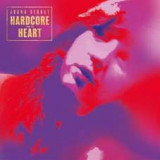
Catalan singer-songwriter Joana Serrat returns with new album ‘Hardcore From The Heart’, out June 11 on Loose Music. Serrat’s fifth album, ‘Hardcore From The Heart’ is the follow-up to 2017’s acclaimed ‘Dripping Springs’ (“…like Mazzy Star guesting on an early Neil Young demo,” Mojo). For the recording, Serrat travelled from her home in Vic, a small city near Barcelona, to Redwood Studio in Denton, Texas, where she teamed up with engineer and producer Ted Young (Kurt Vile, Sonic Youth, Lee Ranaldo).
- A1: When We Pray
- A2: Let You Down
- A3: Messenger
- A4: August
- A5: Your Chosen Misery
- A6: Obey
- A7: The Day The Rats Went To War
- A8: Lucretia My Reflection
- B1: Obey (Unplugged & Live Version)
- 2: Brother
- B3: Patterns
- B4: Brother (Unplugged & Live Version)
- B5: This Old Man
- B6: Let You Down (Unplugged & Live Version)
- B7: Equilibrium
- B8: A Very Good Year (Unplugged & Live Version)
- B9: Everything Is Fading
In 2018 one of metal’s most defining and revolutionary vocalists, WARREL DANE, celebrated his highly anticipated inaugural solo effort, “Praises To The War Machine”, which saw him further honing his craft to perfection. Dane, who first shattered the boundaries of conventionality with the legendary Sanctuary and Nevermore, proved that he is one of metal’s most diverse frontmen with this solo effort as he unleashes a barrage of introspective and personal lyrics that are heartfelt and extremely powerful. All of this emotion backed with his soaring angelic and dynamic vocals provides all of the necessary elements for a savagely captivating, melodic assault that quickly hooks you in. Before beginning this new venture Dane went out and surrounded himself with some of the best musicians that he could find. This search ultimately resulted in landing the renowned Peter Wichers (ex-Soilwork) on guitars and bass, Dirk Verbeuren (Soilwork) on drums and Matt Wicklund (ex-Himsa) on guitars. The effort was also recorded and mixed by Wichers (coproducer Soilwork) and features guest musicians Jeff Loomis (Nevermore) and James Murphy (Obituary, Testament, etc.). Additionally this 2021 extended version reissues contains four live tracks from the album on side C featuring singer/songwriter Jonny Smokes which also will be available on all digital platforms. “Praises To The War Machine” is an absolute must for all Nevermore fans. Prepare yourself for the sheer beauty and elegance that awaits.
May 28 will see prolific Japanese vibraphonist, multi-percussionist and composer Masayoshi Fujita mark a new sonic direction with his forthcoming album Bird Ambience on Erased Tapes.
Bird Ambience brings several fresh changes for the artist. Until now, Fujita would separate his acoustic solo recordings from the electronic dub under his El Fog alias and experimental improvisations with contemporaries such as Jan Jelinek, Bird Ambience sees him unite all of these different sides to his work for the first time, into one singular vision. He also makes a lateral leap from his signature instrument the vibraphone, on which he created his acclaimed triptych Stories (2012), Apologues (2015) and Book of Life (2018), to the marimba, which takes centre stage on his new album alongside drums, percussion, synths, effectors and tape recorder.
“The way of playing the marimba is similar to the vibraphone, so it was kind of a natural development for me and easier to start with, yet it sounds very different”, explains Masayoshi. “The marimba bars are made with wood and it has a wider range than the vibraphone, which gives me a bigger sound palette with more possibilities. I play the instrument with bows and mallets, and sometimes manipulate it with effects.”
Bird Ambience also marks his liberation from fastidious preparation for past solo releases to new endeavours in improvisation. “I prioritised trying to capture the wonder which happens during those occasional magic improv moments. Sometimes the mic-ing and placement of instruments was pretty rough; things weren’t perfect and everything was done quickly, but it turned out as the final recording. Overall when I
couldn’t decide between two takes, I told myself to go with the first”, Masayoshi recalls.
Arranged with a perfect Kanso-like balance, the unhurried pace of Bird Ambience allows each sound and phrase enough time to be mindfully absorbed and savoured. This subtle but affective work carries ethereal remnants of Midori Takada’s minimalism, the static atmospheres of Mika Vainio, To Rococo Rot’s organics and the bucolic electronics of Minotaur Shock. Fujita vaporises contemporary and classical, ambient and dismantled dub, controlled noise and fragments of jazz into an atmospheric, static mist, which he skilfully coerces into new forms.
After 13 years in Berlin, Masayoshi recently relocated to a new home and studio in the rural Japanese mountain village of Kami-cho, Hyogo, following his life-long dream of creating music in nature. Even though the album was entirely recorded in Germany before he left, it has this palpable sense of reverie found in the natural world. From there we can only imagine the kind of impact his new life in rural West Japan will have on future works.
Incredible Bongo Band was formed by MGM A&R Michael Viner in 1972 to record the soundtrack to a now virtually anonymous B-Movie entitled 'The Thing With Two Heads'. "The IBB" transformed from a loose studio collective to an instrumental pop covers consortium, interpreting classics of the day in their inimitable percussive fashion. Viner recorded them at MGM studios during downtime, assembling line-ups from whichever musicians were available at the time, leading to a unique blend of multi-talented musicians that included Jim Gordon, King Errisson, Jerry Scheff, and Perry Botkin Jr. The full bands' line-up is shrouded in mystery, but their legacy is undeniable. They spawned cult-classic records that would become a goldmine for hip hop breaks and attain sampling immortality.
'Apache', which was written and made famous by the British band The Shadows, is legendary in the worlds of dance music and hip hop. It was a staple for DJs such as Kool Herc and Grandmaster Flash as they invented their world-shaking take on the art of DJing at the Bronx block parties of the ‘70s. Over the years it has become a hip hop and breakers anthem and is revered as 'the break' of all time (at least in the top three) with the rhythms of this LP even helping to coin the term 'breakbeat'.
“Bongo Rock” is significant, for being one of the musical cornerstones of rap ... it is certainly one of the most sampled LP’s in history, if not the most sampled. Almost every history-minded hip-hop DJ has a copy, and the first few bars of “Apache,” can send crowds into overdrive.” According to Kool Herc, the stylistic pioneer many people consider to be the father of hip-hop music, the Bongo’s “Apache” is “the national anthem of hip-hop.” NY Times.
Sampled over 600 times, including... Nas, Beastie Boys, Moby, Mick Jagger, Kanye West, Sugarhill Gang, Jay-Z, Aphex Twin, DJ Shadow, Massive Attack, Ultramagnetic MC’s, Unkle, LL Cool J, 2 Live Crew, 4 Hero, Fatboy Slim, to name a few…
The real story of “The IBB” is far greater than the recordings themselves and ultimately shows how a distinctly powerful musical performance can get the recognition it deserves, no matter how anonymous its origins.
The second album from Brighton based Balearic duo Andres y Xavi. This time with a little help from Rolo McGinty of Peel faves and Balearic Beat legends The Woodentops. This is a love letter to the forgotten side of Ibiza: dusty lanes, olive groves and clearings with sea views that go on for miles.
10 original compositions plus a cover of Talk Talk’s Renee.
The self released and distributed first album found favour with Balearic DJs across the world. Lead track ‘My alibi’ was picked out by the likes of Kenneth Bager, Danny Psychmagik and ‘Never seen Ibiza’ was a firm favourite of Phat Phil Cooper and Balearic Ultras.
Rolo adds guitar and vocals and a Woodentops vibe to two tracks on the album ‘What do you see in me?’ and ‘Walking in the sun’, his personal tribute to Jose Padilla.
First album received support from Kenneth Bager (Music for Dreams), Phat Phil Cooper (NuNorthernSoul), Chris Coco, Mike Salta, Leo Mas, Balearic Ultras, David Pickering (OneMillionSunsets) and many more!
And was described by Dr Rob (Ban Ban Ton Ton) as "Smokey Muscle Shoals organ plays, strings swoon, and Kosmische synths blink like distant stars... an overall “vibe” somewhere between Mo`Wax and the Sunday Best of Bent and Dan Mass... adorned by cascading Indie “neo-acoustic” guitar jangle. Like The Stone Roses by way of Horsebeach."
Growing Bin switches back into reissue mode with an off-kilter obscurity from Austrian eccentrics Molto Brutto. Equal parts amateur funk, indie jangle, art rock and idiot pop, "2" is a real weird bastard with a whole lot of charm. As the Bin continues to grow in all directions, there's plenty of space for new sounds to take root. Alongside patches of Ambient, Balearic, Kosmische and Jazz, Hamburg's audio allotment now stretches to accommodate the strange waves of Molto Brutto.
Basso dug their first LP a decade back in Stuttgart's Second Hand Records, embracing their abrasive style of sandpaper sonics and experimental urges. Interest piqued, he made the journey through their DIY catalogue, capturing excellent collaborations under the Ganslinger alias before bumping into the second of their two LPs. Originally released on their Golfdish imprint in 1988, "2" walks into the pub with an air of accessibility, but quickly unravels into glorious chaos - pissing in the corner and passing out on the bar. Pop structures are suggested then subverted.
Pints of Paisley slosh out of a broken Glass, tape loops spool onto shabby Material, and indie janglers are just a couple of stamps short of a Postcard.
Turning you tipsy, this loveable rogue starts to tell you his life story, but you're going to have to fill in some blanks. They miss 'Blackie', but who is he - a dog? What happened on the 'Deadly Vacation'? Is that song really about a 'Goldfish', or did they find out the name of America's horse? Words repeat until they lose all meaning, awkward poetry masks a lost laureate and a drunken Wurlitzer sends the room into a spin.
The pubs are shut, so get happy drunk with Molto Brutto.
Patrick Ryder
"Rise Against, the multi-gold and platinum-selling punk rock band comprised of mcilrath, bassist joe principe, drummer brandon barnes and guitarist zach blair, is known for its out spoken, socially-conscious lyrics that speak to the mood of our times: the environment, economic injustice, forced displacement, political corruption, animal rights, and interpersonal relationships, all delivered with big, chunky riffs and melodic post-grunge hooks. the band has amassed five top 10 albums on billboard’s top 200 chart, six top 10 singles on its hot 100 chart, and accumulated more than 6-billion global streams; “savior,”rise against’s gold-certified single, has accumulated nearly one billion streams alone. nowhere generation was produced and engineered by bill stephenson (black flag, the descendents), jason livermore, andrew berlin, and chris beeble, and recorded at the blasting room in ft.collins, Colorado. The 11 songs on nowhere generation explore the tight bonds and the distances we share, the struggles of everyday life, our personal failings and triumphs, and the sometimes challenging interactions we have with each other. but nowhere generation also hints at the reclamation of ourselves, a call to resurrect who we are at our core, who we want to be and what we want to do with our lives, despite the rampant weaponizing of our culture. as lyricist tim mcilrath wrote on “the numbers”: ...these cold nights are almost unbearable, but purpose keeps us warm.
With Bending the Golden Hour, the third album from Memphis, Tennessee’s Aquarian Blood, husband and wife team J.B. Horrell (Ex-Cult) and Laurel Horrell (formerly of the Nots) continue the gorgeously stripped-down and atmospheric direction set on their critically acclaimed previous effort A Love That Leads to War.
While Aquarian Blood has roots as a chaotic punk rock six-piece, the band shifted gears after two raucous cassette-only releases on ZAP Cassettes, a pair of seven-inches, and 2017’s Last Nite in Paradise, released on Goner Records. After drummer Bill Curry broke his arm, the Horrells redefined
Aquarian Blood, reemerging in early 2018 as the more intimate, mostly acoustic balladeers behind the staccato, fever dream sound of A Love That Leads to War. Like its immediate predecessor, Bending the Golden Hour was recorded at the Horrell's Midtown Memphis home. The band turned over 43 tracks to Goner co-owner Zac Ives, who handpicked 17 songs for the album.
The final result is shimmering and hopeful; as beautiful and sparse as a Rockwell Kent snowscape. Bending the Golden Hour begins ominously with “Channeling,” which sounds like an outtake from Paul Giovanni’s soundtrack to 1973’s pagan nightmare The Wicker Man. Then the band upshifts for “Time in the Rain,” a sweet duet set to a rigid snare beat. From there, Aquarian Blood zigs to country and zags to psychedelic folk, brooding on one song and soothing listeners with the next. And while the music, feel, and experience is different, Aquarian Blood naturally brings to mind some legendary musical partnerships: Richard and Linda Thompson, Lee Hazlewood and Nancy Sinatra, Johnny and June Carter Cash, Gram Parsons and Emmylou Harris; not to mention similarly-bent-but-beautiful luminaries like Roy Harper, Pentangle circa 1967 -1973, and Jackson C. Frank.
There’s a big middle ground, like folk-psych, or weirder country music,” he says, reeling off names like Skip Spence and Syd Barrett as stepping stones between the genres of punk and folk.
Inspirations for Bending the Golden Hour come from myriad sources that document the milestones and minutiae in a family’s full life. Some lyrics name a time or a place; others reflect the fleeting moments that elapse unnoticed. “Come Home,” which is sung by J.B. and his daughter Ava, was written the day Ava got her driver’s license. “Ava took the car out by herself afterwards, and I wrote the song immediately—she sang her part when she got home that evening,” J.B. recalls. Whether or not the listener knows the backstory, the song rings sentimental, with subtle, supportive instrumentation that underscores guitar and vocals. The bewitching “Rope and Hair,” on the other hand, is less sketched out, with lyrics that are simply a recitation of the talismen found on a silver sabertooth charm that J.B. purchased for Laurel at a Latin strip mall in southeast Memphis. That’s all to be said. “Sometimes when you know too much about what the song is about, it takes away the magic,” says J.B. “Alabama Daughter,” says Laurel, is about a place where a childhood friend lived called Castleberry Holler. “It was really rural, just a lot of shacks without electricity—the kind of place you didn’t go to unless you were invited,” she says. “Probable Gods” is a hazy reflection on the struggle of such a strange year. “It’s been very cathartic to put all of this into words and not have it live
Ulna’s OEA is a “bar-rock getting sober record.“ The first full length solo record of Ulna, aka Adam Schubert of Cafe Racer, OEA is an ode to reinvention. Along with the release comes a rebranding--formerly Ruins, Schubert’s new pseudonym ULNA is a reference to a pivotal moment in his childhood. At the age of 14, Schubert shattered the bone on the inside of his forearm in a skating accident, and took up the guitar. “That’s what made me serious about playing music,” says Schubert.
This name change also accompanied Schubert’s shift towards sobriety--OEA was created right as Schubert reconfigured his life without drugs or alcohol. With the exception of the final track, “Dead Friends,” the whole album was written while in a recovery program. “You have to reinvent your whole personality, you have to be a different person,” says Schubert.”Who am I if I’m not the crazy drunk dude who’s doing drugs in the bathroom?”
OEA is an intensely personal record, in subject matter but also quite literally--Schubert plays every instrument, though the record feels far from a home-demo, recorded and mastered by Robby Hanes at Strange Magic Recording in Chicago’s Logan Square. Schubert’s songs are ambling and full of picked guitar and retro harmonies, a stylistic sensibility he attributes to a love for the Beatles and “acoustic rock with a weird punk edge,” a-la Big Thief and Kurt Vile. Though instrumentally sunny, his vocals hint at something else - there’s an underlying ache. OEA is an easy listen, but with a depth of emotion that demands listeners’ attention.
OEA explores the range of emotions experienced in the transition to sobriety, from fear to backslide to self doubt. At first listen, “Turn The Record On” feels almost like a love song, with a chorus of “turn the record on/ you’re my favorite song,” but in actuality the song is the story of an empty encounter rather than romance. “It’s kind of about this sad hookup with someone else who is equal in your addiction, you’re just using each other because you don’t want to be alone in your using,” says Schubert. “We both have this problem and we can have fun in it together because we both understand. They know the score.”
While “Turn The Record On” speaks to a moment of shared addiction, other tracks examine what comes after sobriety. “And I took the pill like I should / and I stayed clean just like I said I would,” begins “Last Song,” which Schubert cites as one of the hardest tracks to write. “I got sober and I take medication and - I’m doing all this stuff now but nothing’s changed,” says Schubert. “ I think that’s pretty common in people who get sober. I did all this stuff and now what?”
The penultimate track on the album, “Last Song” fades into a noisy interlude that gives listeners the feeling of motion, like entering a tunnel and emerging into a quieter, lo-fi recording, the closing track “Dead Friends.” The only non-studio track, “Dead Friends” was recorded in Schubert’s home, and carries with it a warm intimacy. “I wanted it to sound like you’re outside somewhere, you're walking, and you step inside somewhere that feels safe,” says Schubert.
This closing track embodies the mood of OEA- warm but with a melancholy edge, like coming in from the cold but still feeling a lingering chill. It’s an album that feels comfortable and cohesive--though individual tracks stand alone, OEA works best when listened through start to finish. It’s a record to put on while cooking dinner and let sink in.
The award-winning storytellers at DONTNOD invite you on another twisting adventure with Twin Mirror.
In this psychological thriller, Sam Higgs is coming back to Basswood, his childhood town, to attend his best friend’s funeral. It quickly becomes obvious that this little West Virginian city holds numerous dark secrets. The former investigative journalist will employ his deductive skills to uncover the mysteries surrounding the city and its inhabitants. Confronted with his past, Sam will be torn between his quest for truth and his desire to reconnect with loved ones. Who can he really trust?
Twin Mirror™ is available on PlayStation®4 (PlayStation®Store), Xbox One™ (Microsoft®Store), PC (on Epic Games Store) and compatible with PlayStation®5, Xbox Series X, and Xbox Series S.
David Wingo got his start composing music for films on David Gordon Green's debut 2000 feature GEORGE WASHINGTON and since that time he has worked with Green on a majority of his films, including collaborations with the band Explosions In The Sky on PRINCE AVALANCHE and MANGLEHORN. In 2010 he scored Jeff Nichols' TAKE SHELTER and has since scored all of Nichols' films, including MUD, MIDNIGHT SPECIAL, and the Academy Award-nominated LOVING. 2018 saw Wingo moving into television, providing the score for both Showtime's KIDDING and HBO's Emmy Award-winning BARRY, for which he received an Emmy Nomination in 2019 for Outstanding Music Composition for a Series.
"Cande Y Paulo’s debut album, recorded and produced in LA alongside multi-Grammy award winning Larry Klein (Joni Mitchell, Herbie Hancock), is a beautiful collection of re-worked songs including, ‘I Fall In Love Too Easily’, ‘Summertime’, ‘Treaty’ ‘The Thrill Is Gone’, ‘Sugar Mountain’, ‘Tuyo’ and of course, the song that started it all for the duo, ‘Barro Tal Vez’. Media: Clash video premiere, El Dia feature, VENTS magazine feature, Mahogany Sessions (live session), BBCR6 play (Guy Garvey), Tiny Desk, Spindle Magazine. ""The Argentinian duo have a spellbinding approach”
- CLASH. “expect big things from this duo“ – Gregory Porter."
LP edition of the sold out CD/Pamphlet from 2016. The score by Schmid, reading by Landry, and edited/produced by McCann. Includes a big poster of The St. Francis List.
Emily Martin and Derek Baron on St. Francis (Feb. 2021):
What does it mean to pray? To address someone, to plead for something, to welcome humiliation and failure: Please, let me forget about the China Chalet parties, please let there be no countries and no war, please let me love you. Is prayer iteration, or just repetition: My god, my god, my god, my god… To know spleen you just have to be down to be humiliated. But do we know for sure that we are miserable? How do we know?
This is how it has to go. We listened to this for the first time together in May 2017, while driving from Chicago to New York along the I-80 in Pennsylvania, stopping at the rest area that I later mistook for the famous picture of American “culture.” We stayed at a hotel and may have ordered a pizza. Content first, then, content again. Went inside and drank wine in relative silence, burping. Recognizing the sacredness in the plot of Friends. A choral melisma representative of holy Joy.
The dreams of moving through a convoluted space of passages, staircases, open courtyards, rooms just glimpsed past a door. It doesn’t seem possible that you can get from one place to the next but according to the logic of the dream you do. I think this has to do with how each little unit of ‘content’ happens at a different distance from your ear. The holiness of the periphery. That you can catch a shard of history if you only find the right distance to stand from the painting.
But prayer is also like the magic language we were talking about — faith that words do something more than just mean — they have the capacity to effect change in the world, and not just in the like, “words change ppl’s minds” kind of way, but in that the words themselves actually have agency. Form: sing-along.
Captain Rip Hayman (b.1951, New Mexico) has come ashore again, bearing fresh cargo. A student of John Cage, Ravi Shankar, and Philip Corner, Rip was a founding editor of the notable Ear Magazine (1975-1991), and since 1977 he has run New York's oldest bar, the Ear Inn. The focused minimalism of his new LP Waves: Real and Imagined varies from the collaged spectacle of his first Recital LP, Dreams of India & China (2019).
This oceanic dish holds two side-long works: “Waves for Flutes,” a multi-tracked flute composition recorded by the artist in 1977. ‘Angelic’, ‘Grave’, and ‘Sad’ modes overlap an effect of medieval choral organum, as shifting patterns evoke water and wind variations of the shore and vast sea beyond. An enchanting and arresting piece.
The second side holds “Seascapes,” which was recorded on the Pacific ocean in February and March of 2020 – through calm seas and tempestuous storms. The ship as the instrument played by the sea. We feel both lost and saved when at sea, the landfall feared or longed for.
The album is dedicated to all those whose souls have been lost and found at sea amidst the waves, for each sea wave is a child of Oceanus & Tethys, Greek gods of the sea, every one sent on their way to play...
May 28 will see prolific Japanese vibraphonist, multi-percussionist and composer Masayoshi Fujita mark a new sonic direction with his forthcoming album Bird Ambience on Erased Tapes.
Bird Ambience brings several fresh changes for the artist. Until now, Fujita would separate his acoustic solo recordings from the electronic dub under his El Fog alias and experimental improvisations with contemporaries such as Jan Jelinek, Bird Ambience sees him unite all of these different sides to his work for the first time, into one singular vision. He also makes a lateral leap from his signature instrument the vibraphone, on which he created his acclaimed triptych Stories (2012), Apologues (2015) and Book of Life (2018), to the marimba, which takes centre stage on his new album alongside drums, percussion, synths, effectors and tape recorder.
“The way of playing the marimba is similar to the vibraphone, so it was kind of a natural development for me and easier to start with, yet it sounds very different”, explains Masayoshi. “The marimba bars are made with wood and it has a wider range than the vibraphone, which gives me a bigger sound palette with more possibilities. I play the instrument with bows and mallets, and sometimes manipulate it with effects.”
Bird Ambience also marks his liberation from fastidious preparation for past solo releases to new endeavours in improvisation. “I prioritised trying to capture the wonder which happens during those occasional magic improv moments. Sometimes the mic-ing and placement of instruments was pretty rough; things weren’t perfect and everything was done quickly, but it turned out as the final recording. Overall when I
couldn’t decide between two takes, I told myself to go with the first”, Masayoshi recalls.
Arranged with a perfect Kanso-like balance, the unhurried pace of Bird Ambience allows each sound and phrase enough time to be mindfully absorbed and savoured. This subtle but affective work carries ethereal remnants of Midori Takada’s minimalism, the static atmospheres of Mika Vainio, To Rococo Rot’s organics and the bucolic electronics of Minotaur Shock. Fujita vaporises contemporary and classical, ambient and dismantled dub, controlled noise and fragments of jazz into an atmospheric, static mist, which he skilfully coerces into new forms.
After 13 years in Berlin, Masayoshi recently relocated to a new home and studio in the rural Japanese mountain village of Kami-cho, Hyogo, following his life-long dream of creating music in nature. Even though the album was entirely recorded in Germany before he left, it has this palpable sense of reverie found in the natural world. From there we can only imagine the kind of impact his new life in rural West Japan will have on future works.