The long awaited answer from the notorious southern-hemispherian sound system, Subtle Sound System. This debut release from their record label aptly named Subtle Recordings is bringing some heavy weight straight out of Christchurch, New Zealand, first up with local legend Headland. Exquisitely imprinted 'no holds bar' by the masterful Optimal Media in a full art sleeve, this 180 gram, vinyl only, no-repress recording superbly ushers in a new beginning for the sound system and is another pillar of foundation to the future sound of bass music.
Headland, with his atmospheric soundscapes, sparatic drums, jarring percussion and punishing basslines, has been taking his unique sound to the world for the past few years and has sequentially been picked up by some of the most forward thinking labels in the bass music scene. From notoriety like Innamind Recordings and Zam Zam Sounds, Headland is one of the most noteworthy artists on the scene today and is a staple in sets from artists including, Samba, Mala, VIVEK, Commodo, Sleeper, just to name a few. Headland's infamy continues on Subtle Recordings debut release with the two outstanding tracks, Quiver and Deathbed.
From a spacious beginning, Quiver quickly builds pressure, manifesting into a track that by the end of, you'll have to regroup your crew as all would have been taken on their own solo journey. Navigate through high level percussion, sonic stabs, sub-temperate basslines and menacing vocals, all encompassed within a 130 bpm landscape where the richters leave you feeling vulnerable and insignificant. Quiver is a force of nature not to be taken lightly. After setting the stage, this behemoth pushes to another level, with erratic note changes and misplaced beats, before opening up to a plateau of relative safety within rolling basslines and familiar haunts. Recollecting yourself, you are once again thrust into unknown territory. A barrage of death blows commences until eventually you find yourself on the other side, disorientated, demoralised, but thankfully unharmed. With support from dons like Gantz, Boofy, J Kenzo, Mr K, Quiver has begun to leave its mark through the next frontier of bass music.
A usually silent, still and chilly affair, Deathbed is anything but, with its uplifting groove, conscious beat scape and warm bassline. But don't get too cosy, cause this assortment of frequencies is cold. Foreboding basslines. Wholesome mids. Trademark Headland accents. Deathbed builds in monumental 140 bpm splendure, in a simplistic formation, that will have you calling home to tell Mum of your triumphant return. Bask in all the glory as the track sheds back into its essential ingredients before collapsing into a well rewarded breakdown. Another confident drop will re-immerse you within the ride, reminiscent of what has been conquered and celebrated in the dystopian sound Headland has crafted in this atmospheric masterpiece. Banging dancefloors worldwide by artists like, Commodo, VIVEK. Deathbed produces the goods for an old fashioned shelling.
Suche:go go bar
The Disco music fever was also present in the Rumba and Flamenco scene of Spain in the late '70s / early '80s. Producers, sound engineers and studio musicians, collaborated closely with flamenco / rumba singers and bands, highlighting the productions that genius Josep Llobell did for the Belter label in Barcelona. Here you got 12 disco-rumba-flamenco bombs, a time machine to the boites and discotheques of the late 70s and the perfect soundtrack to an imaginary Kinki' cinema soundtrack.
Featuring Sangre Gitana, Rumba 3, Tobago, Los Gachós, La Marelu, El Turronero...
Insert with liner notes by Txarly Brown and photos.
"For Christian H" is a compilation album from the Arctic Norwegian city of Tromsø, dedicated to the memory of Christian Hollingsæter - the director of the Insomnia festival - who died unexpectedly in May this year, only 35 years old.
All 11 tracks have been gifted exclusively for the album, which is available as a digital download, a CD, and as a LIMITED EDITION LP. Only 100 copies made. All proceeds will go to Christian´s son Julian.
Peter Kadergard has been active in the Helsingborg (Sweden) electronic music scene since the early 1990's. He was involved in various collaborations during the 90's and appeared on a few cassette releases under the names Grodans Fodelsedag, Marchentraum and Mannix System. Peter released his first Rittowski record on the Borft sub label Djuring Phonogram in 2004. Apart from this electro project Peter is a member of the bands Goz Mongo Alliance and Inyurmania, who has made a few releases on the Ufo Mongo, Pripuzzi and Skiboy record labels. This is new Electro!
- A1: Desmond Dekker & Aces - Israelites
- A2: Dave & Ansel Collins - Double Barrel
- A3: The Maytals - Monkey Man
- A4: Harry J All Stars - Liquidator
- A5: The Pioneers- Longshot Kick The Bucket
- A6: The Upsetters - Return Of Django
- B1: The Paragons - The Tide Is High
- B2: Desmond Dekker & Aces - It Mek
- B3: Tony Tribe - Red Red Wine
- B4: Desmond Dekker & Aces - 0.0.7 Shanty Town
- B5: Dave & Ansel Collins - Monkey Spanner
- B6: The Maytals - 54 46 Was My Number
- C1: Ken Boothe - Everything I Own
- C2: Dennis Brown - Money In My Pocket
- C3: John Holt - Help Me Make It Through The Night
- C4: Susan Cadogan - Hurt So Good
- C5: The Pioneers - Let Your Year Be Yeah
- C6: Sophia George - Girlie Girlie
- D1: Althea & Donna - Uptown Top Ranking
- D2: Desmond Dekker - You Can Get It If You Really Want
- D3: Bob & Marcia - Young, Gifted & Black
- D4: Greyhound - Black And White
- D5: Nicky Thomas - Love Of The Common People
- D6: Errol Dunkley - Ok Fred
To mark the 50th anniversary of Trojan Records comes 'Trojan Ska & Reggae Classics', a double vinyl album comprising 24 of the most celebratory Jamaican music hits from the iconic label's legendary catalogue.
Released in tandem with the TV advertised 3CD version of the same name, this joyous collection showcases the very best in classic Caribbean sounds, from rude boy ska to dancehall anthems, with the set featuring an incredible 22 Top 50 UK chartbusters, including 4 UK Number 1s and 13 Top 10s.
The perfect musical accompaniment for the summer of 2018 and beyond, this blistering 2LP vinyl collection compilation ably demonstrates just what makes Trojan so special and why it remains the world's greatest reggae label, half a century since its launch.
As an integral part of the Trojan 50 marketing campaign, the LP will be heavily promoted via the label's website, Facebook & Twitter pages, Instagram and YouTube channel.
[T] D2 | Desmond Dekker - You Can Get It If You Really Want
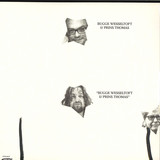
A long time ago, in a Norway far far away in time, keyboardist Bugge Wesseltoft introduced his New Conception of Jazz to the world. We're talking about the late 90s, when Bugge's cosmopolitan blend of jazz, hiphop and techno beats was pretty much the coolest music coming out of Norway at that moment. That was a golden time for Norwegian music, in fact, when the rest of the world began to sit up and take notice that something was stirring up north, and realised the music was more than just glacial tones hurtled from icy mountaintops and frozen lakes. This was the sound of urban Scandinavia.
A few years later came the electronic dance genre 'space disco'. Along with Todd Terje, Bjørn Torske and Lindstrøm, Prins Thomas was at the epicentre of this next big wave to surge out of Norway. Now, the two generations have come together in this exclusive collaboration between Bugge and Prins Thomas on the Smalltown Supersound label. Jazz and electronics combine for that energising vitamin D shot of Nordic sunshine.
The Rainbow Studio in Oslo is a familiar name to anyone who follows the ECM label - many of its classic 1970s jazz albums were recorded there under the eye of resident producer Jan Erik Kongshaug. Bugge and Thomas booked a couple of sessions at the legendary space with Kongshaug at the controls, and improvised some tunes in the style and spirit of some of their favourite ECM moments, like the fresh, open sounds of Codona, Egberto Gismonti, Oregon and Kenny Wheeler. Bugge had previously done a remix of Thomas's 'Bobletekno' in 2015 but this is the first time they have worked together as active musicians. The results - also partly taped at Thomas's home studio - fuse programmed rhythms, live synths and percussion, all captured in a sumptuously spacious acoustic.
For an even more authentic touch they called up one of their all time local heroes and one of Norway's most famous jazz drummers, Jon Christensen, who's been the go-to guy for Jan Garbarek, Terje Rypdal, Keith Jarrett and many more. At 75 years he's still pretty spry behind the kit, as you'll hear on several tracks here.
Make no mistake, though, this is not retro pastiche but contemporary music, coasting on gently insistent programmed grooves and bubbling basslines. The whole thing feels not so much like a consciously hip fusion of DJ and jazz musician, more like two great musicians totally enjoying themselves. Which is exactly what it is.
Key facts:
Bugge Wesseltoft is one of Norway's leading jazz figures. He set up Jazzland Recordings in 1996. His solo Christmas LP It's Snowing On My Piano remains Norway's best selling jazz album!
Prins Thomas's real name is Thomas Hermansen. His label, Full Pupp, means 'full breast'. He's released several albums under his own name, as well as collaborations with Bjørn Torske and Lindström. Check out his amazing Paradise Goulash mixtapes.
- A1: Bird Gets The Worm - (Orig. Take 3)
- A2: Bluebird - (Orig. Take 3)
- A3: Klaunstance - (Orig. Take 1)
- A4: Barbados - (Orig. Take 4)
- A5: Merry Go Round - (Orig. Take 2)
- A6: Donna Lee - (Orig. Take 4)
- A7: Chasing The Bird - (Orig. Take 3)
- B1: Koko - (Orig. Master)
- B2: Perhaps - (New Take 1)
- B3: Warming Up A Riff - (Orig. Master)
- B4: Slim's Jam - (Orig. Master)
- B5: Popity Pop - (Orig. Master)
- B6: Dizzy Boogie - (Orig. Master)
- B7: Flat Foot Floogie - (Orig. Master)
Producer Okzharp and vocalist-artist-dancer Manthe Ribane both hail from South Africa, where Manthe still resides, while Okzharp lives in the London where he is a DJ and producer, initially cutting his teeth in LV, who in 2007 were one of the very first acts signed to Hyperdub. Manthe has been at the forefront of South Africa's cutting edge fashion, art and dance worlds for over a decade. After leaving LV, Okzharp and Manthe started collaborating, going on to release two well-received EPs on Hyperdub, 'Dumella 113' and 'Tell Your Vision', recorded in Joburg and London respectively. The recording of 'Closer Apart' reflects the title. Okzharp says 'Most of the music came out of headphone moments in hotel rooms, planes and airports in the brief periods of time that we spent together.' Describing Manthe as a co -producer, he continues 'She selected instrumental sketches and we developed them together, sometimes just keeping the bare bones or a melody or rhythm, or trying different elements or sounds.' Even though the album was built long distance, the short periods they spent together were the ground zero for creativity. Okzharp recalls 'One particular moment in Milan last year, we had a whole free day before our flight so we visited the Salone di Mobile design show. We were so inspired by an installation there just walking around, listening to the amazing soundtrack. That evening our flight was delayed, so we sat on the floor of the airport terminal putting musical ideas down for 'Time Machine' on the laptop speakers and writing the lyrics. "Tic Toc time, we'll be fine / Airport queues, cerulean blues / Viper trails cross the skies / Lights reflect in your eyes...' ' 'Closer Apart' has a softness and openness that contrasts the tougher sound of the EPs. Manthe explains, 'The new music is a 360 turn, an expression of my 'Lady' side. I grew up listening to Jazz, Classic and Gospel, I am a very soft spoken person, and it resonates with being confident with that. It's been crazy finding balance and finding a smart way to strengthen my weaknesses, I had to trust the process.'
- A1: Israelites - Desmond Dekker & The Aces
- A2: Let Your Yeah Be Yeah - The Pioneers
- A3: Liquidator - Harry J Allstars
- A4: Everything I Own - Ken Boothe
- A5: Dollar In The Teeth - The Upsetters
- A6: Help Me Make It Through The Night - John Holt
- B1: Uptown Top Ranking - Althea & Donna
- B2: Girlie Girlie - Sophia George
- B3: Hurt So Good - Susan Cadogan
- B4: Double Barrel - Dave & Ansel Collins
- B5: To Be Young Gifted And Black - Bob & Marcia
- B6: Love Of The Common People - Nicky Thomas
- A1: La Tuna Club (S. Mantequilla' Font)
- A2: Azul Trompeta (S. Mantequilla' Font)
- A3: Whisky Jazz (S. Mantequilla' Font)
- A4: Jamboree (S. Mantequilla' Font)
- A5: Blue Note (S. Mantequilla' Font)
- A6: Full De Ases (S. Mantequilla' Font)
- B1: Moanin' (Timmons)
- B2: Not Problem (Marray)
- B3: Blues 3/4 (S. Mantequilla' Font)
- B4: Atmosfera (S. Mantequilla' Font)
- B5: Vat 69 (S. Mantequilla' Font)
- B6: Balada (S. Mantequilla' Font)
Salvador Font studied violin, clarinet, composition and harmony at the Conservatori Municipal de Barcelona, but very soon started to gain notoriety as a saxophonist in the rich jazz scene of 1940s Barcelona. Font would soon be playing tenor sax and clarinet in the Orquesta Gran Casino. He was in his early twenties and his hot swing technique was already praised through the citiy's scene, he would grow to be considered the best saxophonist in Spain by playing in many orchestras and combos, among them: José Puertas', Antonio Vilá's Virgina, Bonet de San Pedro's band, Pierre Michel, El Lirio Campestre, Los Marios, Luis Rovira y su orquesta, Orquesta brasileña Fon-Fon, Jaime Camino, Los Embajadores, Italo Leone's... With these and others, Font toured constantly, visiting many countries and even staying on some for long seasons: Mexico, Morocco, Switzerland, Egypt... Hungarian violinst of Turkish ancestry Kurt Dogan gave him the "Mantequilla" surname - he felt "Mantequilla" (which means "butter") fit Font's mellow yet swinging improvisation style.
Mantequilla y su conjunto
In the early sixties, "Mantequilla" had the chance to lead his own combo, Mantequilla y su conjunto, with which he was to record the three splendid EPs that are compiled on the present album. All these 7" have become elusive collector pieces in the record market, with sellers demanding from 200 to as much as 950 euros per copy.
In 1961 "Mantequilla" was at his best moment, his gigs at the Jamboree Jazz Cava had brought him back to the first line of Barcelona's jazzmen after he had been working abroad for a long time, and was approached by the Belter label to record an EP. On the sessions he was accompanied by Manolo Mercedes on trumpet, Pedro Ferré on piano, Rafael Lizandra on double bass and Rafael Verdura on Drums. The material chosen for the disc were four original compositions by Salvador Font which had a high West Coast flavour all over: "La Tuna Club", "Whisky Jazz" and "Jamboree" named after famous jazz clubs and "Azul Trompeta", dedicated to Manolo Mercedes.
In late 1962, after spending some time in Madrid working as members of the Italo Leone combo, "Mantequilla" and pianist Manuel Gas came back to Barcelona for the recording of the second "Mantequilla" EP, also on Belter. We find again Manolo Mercedes on trumpet, Pedro Ferré on piano and Rafael Lizandra on double bass, the drummer this time was José Farreras. Another news is that Manuel Gas also sat on piano and vibraphone. The songs chosen for the occasion were two tunes from the Art Blakey Jazz Messengers repertoire: Bobby Timmons' classic "Moanin'" and the Jacques Marray track "No Problem" from the soundtrack of the Les liaisons dangereuses film (mispelled "Not Problem" on the sleeve and label), plus the Salvador Font penned "Blue Note" and "Full de ases" - on "Full de ases" "Mantequilla" trades his sax for the violin, which he also mastered under high influence from Stephane Grapelli. The record was released on Belter in early 1963 and showed "Mantequilla" adding a certain aggressivity to his sound, in a soloist style which has been compared to that of tenor saxophonists Barney Wilen or Benny Golson.
1965 was the year of release of Mantequilla y su conjunto's third EP, now on the Discophon label. Mercedes and Farreras are again present in the recording sessions, joined by Ricardo Miralles on piano and Enrique Ponsa on double bass. Four original Font compositions make up the fantastic EP: "Blues 3/4", "Atmósfera", "Vat 69" and "Balada".
There would be a further EP on Belter, released in 1971 as Mantequilla Group it was a cash-in operation to take some redits of the ye-yé discothèque phenomenon, it gets quite afar in style from the jazz works of Mantequilla y su conjunto, so we just left it aside for the present edition.
"Mantequilla"'s career would continue, in 1968 he would settle in Majorca and form a swing band with Bonet de San Pedro and Manuel Bolao. He played in local orquestras and also with first class world acts like Gerry Mulligan, Tete Montoliu, Errol Gardner, a.o. He was even approached by Henry Mancini to play sax on The Pink Panther Theme in a gig Mancini did with his orchestra in Palma de Mallorca in 1975, He also joined his son Salvador Font (a demanded drummer himself who has played with Máquina!, Orquestra Mirasol, Música Urbana, Gary Burton Quartet, Georgie Fame, and many others) and his peers Carles Benavent, Emili Baleriola, Josep Mas 'Kitflus' and Jordi Bonell with whom he recorded his acclaimed "Mantequilla" album in 1987.
Now, for the first time ever, the legendary three ultra rare and imposible to find EPs by Mantequilla y su conjunto are compiled in a lavish vinyl LP with remastered sound, featuring liner notes and photos and a fantastic period inspired, three backflaped, front laminated sleeve. It is a stricly limited edition of only 500 copies and they are expected to sell out very soon, do not miss your chance of getting yours - it may be the last chance of chasing the Mantequilla sound on vinyl at a reasonable price!
l
- A1: Der Lachende Junge (To Gelasto Pedi)
- A2: Ich Bin Ein Fremder (Le Métèque)
- A3: Göttingen
- A4: Zündholzschachtel (Tha Sou Steilo Mana)
- B1: Mein Kummervoller Mann (To Palikari Echi Kaimo)
- B2: Hoheslied (Asma Asmaton)
- B3: Niemand Ist Jetzt Noch Da (Den Pairnei Edo Kaneis)
- B4: Menschheit, Menschheit (Lume, Lume)
- B5: Der Traum Vom Fliegen
When Michaela Meise performed at WestGermany at Kottbusser Tor in Berlin-Kreuzberg on March 20, 2015, accompanying herself on the accordion, I was perplexed. I knew her first album from 2010, which was about hymns (»Preis dem Todesüberwinder«, originally released on Clouds Hill, available as a download and stream through my label from July 2018 on), but what she was playing weren't spiritual songs! I wanted to put this music out on my label: the songs sounded sad, aloof and wistful but also proud, determined and unerring.
The album title »I am Greek« is a tribute to Melina Mercouri's album »Je Suis Grecque!«, which was released in 1971 when Mercouri was deprived of citizenship by the Greek military junta. Mercouri lived - like Mikis Theodorakis and many other cultural workers - in exile. Meise's album is dedicated to the chanson scene of post-war Europe, whose songs were popularly folksy, but also political. Some talk about the experience of war, the Shoah and labor migration. Michaela Meise has translated the Greek, French and Romanian songs into German (with the help of Aliki Marini and Carmen Gheorghe) so that the lyrics are understandable to a German audience, a gesture that was also common in the European chanson scene. More than half of the songs are by Mikis Theodorakis. He knows the translations and new recordings, gave his blessing and just noted a wrong tone ... The other pieces on the album are by the French artists Barbara and George Moustaki and the German musician Alexandra. There is also a Romanian folk song.
The album was recorded by Michaela Meise together with members of the group Isolation Berlin as well as the guest singers Carmen Gheorge and Dirk von Lowtzow (Tocotronic). The producer was David Specht (Isolation Berlin).
Michaela Meise and me both have intimate relations with Greece - Michaela has innumerable holiday memories with parents and brother, I have a friend who lives in Athens and whom I have been visiting regularly for about ten years now. This friend, the graphic designer Vasilis Marmatakis, styled Meise's album using an impressive, scary photograph taken in May 1985 during the occupation of Polytechnio Athens. Together, we opted for an elaborate packaging made by a bookbinder, a so-called Japanese tip-on-gatefold cover. The packaging reminds us of the records that were made in Greece for export and taken by German tourists as a souvenir back home.
Five Years After "privileged Life" Was Released P.h.o.r.k. Is Back At It For Opal With Four Hypercolour Tracks Referencing French House, Jit, Uk Funky And All Manner Of Hypnotic, Percussive Goodness.
Opener "my Love" Inverts A Super Tight Duelling Loop Of Voices Against An Increasingly Staggered And Glitched Line Throwing Dancefloors Off Balance Like Cassius With A Head Injury. Title Track "no Afterlife" Sits On A Jerking Snare Pattern While Air Vents Open To Release Plumes Of Steam, Urban Fields And Angelic Drone In A 7-minute Ride.
"get That One Note Jam" Has A Clue In Said Title. The Tracks Bounces Forward On A Super Simple Riff While Modular Percussion Pick Out Spaces In Between. The Track Slow Blends Into Resonating Alloys Of Cyber-kora Offset With Reload Clicks And Abrupt Restarts. The Ep Closes On "love Recirculation' A Cartoon-ish Barrage Of Wooden Perc Just Keeps On Pushing While Synths Wow And Moan All Over The Shop. Killer Minimal Funk Throughout That Is Sure To Build A Smile.
We are happy to introduce a new release and a new project from Ben Vedren and Chez Damier; a new collaboration that has been in the making for some time now. Side AA1 presents a unique sound in its vibe, kind of a minimal track. The French discussion/vocal in the background adds another dimension. You don't need to speak the language to understand what's going on, but you must wonder at some point: Do I understand French or is it the music that made me understand them An "organ" sound intervenes towards the end bringing power and light to the hall. It's eleven minutes of pure music! While "AA" is composed of two different remixes of a different track, 'Berlin Nights in Paris' It can probably be called the House anthem. It starts strong with some acid sound and is filled with a lot of wonderful elements. Like a gourmet meal, you wonder if the track shouldn't have been at least three times longer to satisfy the gluttony of the listen. The Techno remixes of the track. It's a perfect example of Detroit meets House. Techno track can, with no doubt, feed and drive the dance floor. No need for more than five words to describe it - it's a serious Techno track.
Ground is an Osaka native, but his soul is truly that of a nomad, traversing the planet, befriending kindred spirits found in humans, animals and plants. He is exceptionally receptive to the beauty in everything that surrounds him—the incidental music of a city street, the orchestral chaos of a scrambling radio, the syncopated grace of migrating birds, the simplicity of an isolated hand clap—and as his roadmap continuously unfolds, he accumulates a vast catalogue of visceral tools to musically recount his experiences. Sunizm is a cross section of the artist's process—an array of complex microcosms overlapping to comprise a thematic whole—gathering field recordings, found instruments, jagged electronics, synthesized chanting, and weaving all into a dense narrative that appears obsessively constructed yet divinely improvised. Logos is the first of two singles surrounding the album and is complimented with a monster remix by Bartellow (a fellow ESP artist, collaborator and good friend of Ground) as well as a secret weapon b-side entitled Discopazzle, which is exclusive to this single release. Attention all humans, animals and plants, Ground and the ESP Institute present, Sunizm.
Belgium's favourite underground house DJ Red D celebrates the 10 year anniversary of his We Play House Recordings label with 6 vinyl samplers containing new tracks and some very wanted gems from the catalogue. Artists featured are San Soda, Fabrice Lig, FCL (featuring Lady Linn), Kiani & His Legion, krewcial, Reggie Dokes, Raoul Lambert & Nacho Marco, Art Of Tones and many more. Voices Near The Hypocentre
.
About We Play House Recordings
We Play House Recordings - WPH - is the work of Belgian DJ & producer Red D. Started 10 years ago to release the music of his friend san Soda, the label had (and has) the aim to release house music in all its shapes and forms. WPH's house ethics date back to the days where house was just a name for music that was played in clubs. There is no such thing as tech house, no such thing as deep house or minimal, there is simply (house) music, good or bad.
We Play House Recordings is lovingly led by Red D (real name Bart Van Neste), one of Belgium's leading underground music figures. Be it in his role as DJ, A&R, promoter, music panel host or general nitelife instigator, Red D does things with passion, humor and a healthy dose of keeping-both-feet-firmly-on-the-ground...with a twist...
WPH was started in 2007, so it takes no math genius to know that in 2017 the label is celebrating its 10 years anniversary. Running from the spring till winter 2017 this anniversary will be celebrated with special vinyl releases, a triple CD, a digital compilation, a Spotify playlist and a series of label nights all over Belgium and beyond. True to form the compilation will have WPH classics but also a BIG bunch of new material from core artists of the label like Locked Groove, San Soda, Kiani & His Legion, Fabrice Lig and many more.
On A side, electronic music wizards Kompozyt team up with a Dub Legend Lee 'Scratch' Perry to bring you a heavy-hitting and instant bounce-inducing Dub Techno track 'Hidden Force'. Lee Scratch Perry's amazing and charismatic Dub poetry blends superbly with the neat fusion of spacey and subterranean sounds of Kompozyt productions. The single is not to be missed this summer.
On B side, Kompozyt brings you a 7' version of 'Homesick' - Dub and Trip-hop inspired Experimental Electronica with Olgierd Dokalski on the trumpet. Olgierd's incredible performances of real haunting beauty further reinforce the analog, live and improvisational aspect of Kompozyt's music.
Both tracks come from Kompozyt's debut album: 'Synchronicity' - out everywhere now on CD and DL.
Selected Reviews of Kompozyt's Debut Album and the Single
5/5 Decoded Magazine: 'Incredible album 10/10'
4/5 Lars Berhenrot (Deepershades): 'LOVE THIS .. never-ending deepness ..'
5/5 Pierre Ravan: 'Amazing work from the heart'
5/5 Queensradio.org: 'I'll definitely be playing these guys on air'
4/5 Garth Trinidad (KSRW Radio) 'Exquisite score without a film'
5/5 Hoxton FM (London): 'Incredible release!'
4/5 Stereo MCs: 'Nice vibes refreshing'
4/5 Robert Babicz: 'I love dub. in all forms'
5/5 Adam Hannibal (Balanced) : 'Neat fusion of spacey and subterranean sounds. Reminiscent of the Beyond Recs Ambient Dub compilations with some freshness... Well done'
5/5 Al Bradley (3amrecordings): 'This needs full love because it's excellent :) I can really picture myself just letting this play from the first sound to the last & becoming utterly immersed as it flows through! Gorgeous.'
5/5 Bartlomiej Blesznowski- 'One of the best electronic music albums this year'
4/5 Neil Brown (RMFM; Pro Mobile Magazine): 'Some nice tunes to get your head in gear to.'
5/5 Jorn Kirk (DJ Jay Kay) (Faith Sundays): 'very nice album !!! a joy to listen to'
- A1: Kalson - Ocean 808
- A2: Dj Xed - Inner Contact
- A3: N-Ter - Corals Of Pannonia
- A4: Wichiwaka - Chasing Ufos With Danny
- B1: Le Chocolat Noir - Futureworld
- B2: Eb King - Mucek
- B3: Quasar - Luminosity
- C1: Alavux - Planet
- C2: Christian Kroupa - Transhumanism
- C3: Barion - Matter
- C4: Bramor - Rov
- D1: 1983 - Zero Compromise
- D2: Microslav - Mt3
Elektroliza is a series of club events formed by a group of dedicated electronic music enthusiasts in 2006. It is hosted by Ljubljana's Channel Zero, a legendary club that is part of the autonomous social centre Metelkova which used to be the Slovenian headquarters of the Yugoslav National Army.Filling a void in Slovenia's electronic dance scene, the night was a hit from the start and quickly grew into a diverse and successful series focusing on new and exciting electro, acid and dark techno.Elektroliza hosted many memorable DJ and live acts by performers/producers/pioneers coming out of international music incubators in Gothenburg, The Hague, Berlin and as far as Detroit. Even more importantly, it brought together producers and crews from the former Yugoslav republics of Slovenia, Croatia, Serbia and Macedonia. Inside the former Yugoslavian military barracks DJs and producers from Skopje to Ljubljana began bonding again through music, forming new friendships, starting new collaborations and dancing the night away... in 'Electro City Ljubljana'.This first double vinyl compilation of the Balkan Elektroliza family is a collection of our shared memories and visions of the future to come.
- A1: The Hell Raisers - Syd Dale
- A2: The Eyelash - Johnny Hawksworth
- A3: Walk In A Nightmare - Syd Dale
- A4: Beat Street - Johnny Hawksworth
- A5: Walk And Talk - Syd Dale
- A6: Big Bass Guitar - Bill Martin / Phil Coulter
- A7: Mr. Chestertons Dog - Bill Martin / Phil Coulter
- A8: Mods & Rockers - Bill Martin / Phil Coulter
- A9: L.s.d. - Bill Martin / Phil Coulter
- B1: Stand By - David Lindup
- B2: Take A Goosie Gander - Syd Dale
- B3: Juggernaut - David Lindup
- B4: Grand Prix - Johnny Pearson
- B5: Veiled Threat - David Lindup
- B6: Sixth Sense - David Lindup
- B7: Funky Flight - Keith Mansfield
- B8: Raver - Alan Hawkshaw
- B9: The Washington Affair - Syd Dale
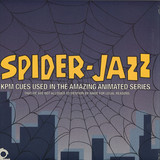
Way back in 1967, an animated superhero cartoon was released into the world. It was created by Grantray-Lawrence Animation and was based on a web-spinning, crime fighting blue and red dressed character that had originated in1962, in Marvel Comics by Stan Lee and Steve Ditko. This amazing series (that we're not allowed to mention the name of for legal reasons) ran on ABC TV in the USA, then Canada, then a few years later started to spread its web further, running here in the UK throughout summer holidays, after school and possibly early mornings at weekends in the late 1970s. The series then got released on VHS video (and probably Betamax too) in the mid 1980s and still continues to spin its animated magic around the world through further broadcasts, YouTube and DVDs.
The series was notoriously low budget, with animated errors everywhere and numerous scenes, sequences and backgrounds being re-used all the time, often across the same episode. Even a certain spider logo on a costume would appear with six legs, then eight legs later on, then back to six again in the same show.
Series One opened with a newly written spider theme, a classic, hooky song all about doing whatever spiders can, and had, as Big George (RIP) once pointed out to me, a set of session singers falling slightly out of time with the backing track after the first verse. Series One also featured background music by jobbing composers Bob Harris and Ray Ellis but these cues and master tapes are now believed to be lost.
After Series One the company Grantray-Lawrence went bankrupt, so the amazing spider series (that we're not allowed to mention for legal reasons) was taken on by producer Steve Krantz. He brought in new talent, including animation director Ralph Bakshi who later went on to turn a Robert Crumb strip cartoon into the feature Fritz The Cat. Krantz also slashed the already cripplingly small spider budget, and brought in the idea of using economic library music. Here, thanks possibly to an independent sync agent (it has been suggested that a company called Music Sound Track Services may have been the one) production turned to the KPM catalogue. This was one of the few really established library catalogues around at the time with a modern edge, it was full of fabulous, modern dramatic music tracks - often all on the same LP. But more importantly all the tracks were far longer than the one minute musical cuts that many of the fledgling USA library companies were issuing at the time. Not only would this KPM music be efficient, affordable and very easy to use, it would also mean syndication worldwide would not be held up by any future musical issues. Krantz produced two amazing spider series (that we're not allowed to mention for legal reasons), and both were smothered with KPM music. In fact barely a spider second goes by without music playing in either the background or foreground.
For many years I - and many nostalgic others - have been thinking about putting this vinyl album together. For many enthusiasts this really is formative music - a junior foray into hip swinging crime jazz and esoteric musical grooviness. I've also read on line accounts by DJs from WFMU on the trail of original spider master tapes, and there's even a whole forum dedicated to Spidey-Jazz'. Then recently I was looking at an old spider tracklist and realized that several of my favourite KPM cues were there including Syd Dale's Hell Raisers' and Walk And Talk', both from one of the most elusive and desirable KPM albums of all time (yes, you just try and find yourself a copy of KPM 1002 right now), so I decided to push on and get the album made.
So, what features on this Spider-Jazz Lp Well it's music from the amazing TV series we are not allowed to mention for legal reasons, BUT, not music from Series One. No, but it is all from Series Two and Series Three. From looking at archival cue sheets, over 50 tracks from various early KPM 1000 series albums were used across episodes. I've distilled this down into one exciting and enthralling LP, and if this works a further Spider Jazz album may well swing in to production. If you're interested (and I'm sure you may well be) cues here came from KPM1001, KPM1002, KPM1015, KPM1017, KPM1018 and KPM1043 and were composed by master library composers of the era - Dale, Hawkshaw, Hawksworth, Mansfield etc.
And if you are listening over there in the USA, you may well recognize many of the cues here not just from the amazing TV series (that we're not allowed to mention for legal reasons) but also from classic 1960s and 1970s NFL highlight shows that we are allowed to mention.
It's been over 10 years since the release of Gui Boratto's breakthrough full length debut 'Chromophobia'. As to what its title suggests, he shook up the techno game with a contrast of lushly coloured minimal grooves and melody, whilst many will recall that the album included the highlight single Beautiful Life' which became a dance floor anthem for that era. Four albums in and countless EPs and remixes under his belt, the Brazilian producer's unique savoir-faire in carving out a functional album out of diversely routed singles and features is back at it on his fifth studio LP, 'Pentagram'. Here Gui Boratto lays down a nuanced 12-track narrative that reinvigorates his signature sound into a refreshingly different perspective that feels all too familiar - including the return of Beautiful Life' vocalist (and Gui Boratto's wife) Luciana Villanova on the single "Overload".
Through his signature kaleidoscopic approach, Boratto delivers an album built as a far-reaching hub-and-spoke system, broadly inclusive as can be. From the opening cut, 'The Walker' - hot on the trail of Tears For Fears 'Elemental' (one of Boratto's "favourite 80's bands") - to the hi-NRG euphoria of 'Forgotten' and its pounding tech alter ego 'Forgive Me'. "I was going into 2 different directions", Boratto says, "the typical indie- electronic-rock' Boratto kind of production like It's Majik' or Like You' and a much more techno approach." He goes on, "I decided to split them into two twin sister songs. When I play live I always put these two songs together."
The Brazilian Producer further embraces the pop-friendly essence of his past work on tracks like 'The Phoenix', featuring vocalist Nathan Berger, and 'Overload', both melding acidulous synthlines with laser-precise breaks, vox hooks and drops calibrated for extended radio and club use, although sieved through his distinctive rainbow-hued musical prism. For the symbolists out there, the album's pared-down closer '618' duration accidentally happens to equate the proportions of the said pentagram. "Coincidence" Boratto questions, and capsulises, "not so ufanista and supporter of Brazilian neo-concretism, but I guess the brazilian sculptor Lygia Clark also inspired me a lot. Not the meaning of her sculptures, but the shape of the hinge of most of her work. I've wanted to transmit the scientific pentagram's point of view. It's not a religious kind of thing."
Whereas 'Spur' (a field-tested 808 and 909-heavy "purist track", "very, very old school" Boratto insists) and 'Alcazar' are sheer smooth-edged four-to- the-floor epics, the album also shares its lot of startling moments, such as with the John Barry'esque 'Scene 2' (with a hint of Amon Tobin, 'Easy Muffin' style, throw in) and its refined string-laden buildup, 100% fitted for a 007 opening credit sequence, or with 'Hallucination' (feat B.T.) and the further James Holden-ish title-track 'Pentagram' (think 'The Idiots Are Winning'), "one of those exercises I did when I got my Buchla modular synth" Boratto analyses, "I think I've used more then 30 different snares, with different delays and reverbs. The whole song is alive". And so is 'Pentagram' in its entirety: alive and definitely just as manifold and hopeful as its architectonics are the stuff of science and dreams all at once.
Es ist zehn Jahre her seit der Veröffentlichung von Gui Borattos bahnbrechendem Debütalbum - Chromophobia . So wie der Titel vermuten ließ, war das Album mit seinen kontrastreichen Minimalgrooves und den üppig gefärbten Melodien ein Schocker im besten Sinne. Ihr erinnert euch sicher noch an die Hit-Single - Beautiful Life , eine Dancefloor-Hymne aus dieser Zeit. Nach vier Alben und unzähligen EPs und Remixen ist das einmalige Savoir-faire des brasilianischen Produzenten, aus vielfältigen Singles und Features stimmige Alben zu schaffen, auch auf seinem fünften Studioalbum - Pentagram zu hören. Hier legt Gui Boratto ein Zwölf-Track-Narrativ vor, das seine Handschrift auf erquickende Weise wiederbelebt. Wiederbelebt wird auch die Stimme von - Beautiful Life (die der Frau Gui Borattos gehört) auf dem Stück - Overload .
Durch seinen charakteristisch kaleidoskopischen Ansatz liefert Boratto ein Album, das gebaut ist wie die Speichen deines Fahrrads, von dem Opener - The Walker - direkt auf der Spur von Tears For Fears - Elemental (einer von Borattos - favourite 80's bands ) - zur Hi-NRG-Euphorie von - Forgotten und seinem stampfenden Counterpart - Forgive Me . - Ich bin in zwei unterschiedlichen Richtungen gegangen , sagt Boratto: - den typischen ,Indie-Electronic-Rock'-Weg wie in - It's Majik oder - Like You und den Techno-Weg. Er fügt hinzu: - Ich hab mich entschieden jedem Track seinen Zwillings-Track an die Seite zu stellen. Immer wenn ich live spiele lege ich die zwei Stücke zusammen.
Der brasilianische Produzent erschließt weiter die Pop-Essenz seiner vergangenen Arbeit auf Tracks wie - The Phoenix (feat. Nathan Berger) und - Overload . Beide kombinieren zwitschernde Synthi-Melodien mit lasergenauen Breaks, Hooklines, Drops und sind wie gemacht für die Rotation und den Club. Und für die Symbolisten da draußen: die Länge des reduzierten Closers - 618 beträgt zufälliger Weise genau die Proportionen des besagten Pentagramms. - Fügung , fragt Boratto und fasst zusammen: - Ich bin kein Anhänger des brasilianische Neo-Konkretismus , aber ich glaube die brasilianische Künstlerin Lygia Clark hat mich sehr inspiriert. Nicht die Bedeutung ihre Skulpturen aber die Form der meisten ihrer Arbeiten. Ich wollte den wissenschaftlichen Blickwinkel auf das Pentagramm übersetzen. Nicht im religiösen Sinne oder so."
Während - Spur (ein erprobter - purist track auf der Basis von 808 und 909, - sehr, sehr old school , wie Boratto betont) und - Alcazar glatte Vierviertel-Epen sind, hält das Album auch Überraschungsmomente bereit. Z.B. das John Barryschen - Scene 2 (auch eine Spur von Amon Tobins - Easy Muffin ist darin zu hören) und seinem Streicher-Aufbau, der hundertprozentig geeignet wär für eine Eröffnungssequenz in einem Bond-Film. Auch - Hallucination (feat. B.T.) oder der James-Holden-hafte Titeltrack - Pentagram (wir denken da an - The Idiots Are Winning ) wäre da zu nennen. - Einer dieser Übungen, die ich gemacht habe, als ich meinen Buchla-Modular-Synthesizer bekommen habe, war , erinnert sich Boratto, - mehr als 30 verschiedene Snares, Delays und Reverbs zu verwenden. Der ganze Song sollte am Leben sein. Und so ist - Pentagram im Ganzen: lebendig und sicher genau so vielfältig wie sein Bauplan, der auch der Wissenschaft und den Träumen zugrundeliegt.
- A1: Heron Dance
- A2: Twilight Song
- A3: Yes—Singing
- A4: Dragonfly Song
- A5: A Homesick Song
- A6: The Willows
- A7: Lullaby—Lahel
- B1: Long Singing
- B2: The Quail Song
- B3: A Teaching Poem
- B4: A River Song
- B5: Sun Dance Poem
- B6: A Music Of The Eighth House
Music and Poetry of the Kesh is the documentation of an invented Pacific Coast peoples from a far distant time, and the soundtrack of famed science fiction author, Ursula K. Le Guin's Always Coming Home In the novel, the story of Stone Telling, a young woman of the Kesh, is woven within a larger anthropological folklore and fantasy. The ways of the Kesh were originally presented in 1985 as a five hundred plus page book accompanied with illustrations of instruments and tools, maps, a glossary of terms, recipes, poems, an alphabet (Le Guin's conlang, so she could write non-English lyrics), and with early editions, a cassette of field recordings' and indigenous song. Le Guin wanted to hear the people she'd imagined, she embarked on an elaborate process with her friend Todd Barton to invoke their spirit and tradition.
For Music and Poetry of the Kesh, the words and lyrics are attributed to Le Guin as composed by Barton, an Oregon-based musician, composer and Buchla synthesist (the two worked together previously on public radio projects). But the cassette notes credit the sounds and voices to the world of the Kesh, making origins ambiguous. For instance, The River Song' description reads, The prominent rhythm instrument is the doubure binga, a set of nine brass bowls struck with cloth-covered wooden mallets, here played by Ready.' According to writer and long-time friend of LeGuin, Moe Bowstern (who pens the liners for the Freedom To Spend edition of Kesh), Barton built and then taught himself to play several instruments of Le Guin's design, among them the seven-foot horn known to the Kesh as the Houmbúta and the Wéosai Medoud Teyahi bone flute.' Barton's crafting of original instruments lends an other-worldly texture to the recordings of the Kesh, not unlike fellow builders Bobby Brown and Lonnie Holley. Bowstern notes, Other musician / makers have crafted their own Kesh instruments after encountering the earlier cassette recordings that accompanied some editions of the book.' Both Barton and Le Guin are sensitive to the sovereignty of indigenous Californians and were careful not to trample the traditions of the Tolowa people who lived in the valley long before the Kesh. You research deeply, and then you bring your own voice to the table,' said Barton. Within the Kesh culture, the numbers four and five shape the lives, society and rituals. Barton composed loosely around these numbers, patiently listening to the land of Napa Valley for signs and audio signals from the natural elements. Todd incorporated ambient sounds of the creek by Le Guin's house and a campfire they built together. The songs of Kesh are joyful, soothing and meditative, while the instrumental works drift far past the imaginary lands. Heron Dance' is an uplifting first track, featuring a Wéosai Medoud Teyahi (made from a deer or lamb thigh bone with a cattail reed) and the great Houmbúta (used for theatre and ceremony). A Music of the Eighth House' sends gossamer waves of the faintest sounds to float on the wind.' Like the languages invented in the vocal work of Anna Homler, Meredith Monk, and Elizabeth Fraser, the Kesh songs and poems play with the shape of voice.
The Music and Poetry of the Kesh cassette was meant to accompany and enhance the experience of reading Always Coming Home. Presented in this edition as a long-playing album, where only traces of the book linger (the jacket offers some of Le Guin's illustration, and a letterpressed bookmark featuring the the narrative modes of western civilization and the Kesh valley is included), the music alone breaking the silence of what might be. It can transport—offering a landscape for imagining a future homecoming. One in which we are balanced, peaceful, and tend to the earth and its creatures. A line from the Sun Dance poem reminds us, We are nothing much without one another.' Freedom To Spend gives new life to the recordings of the Kesh people in the first ever vinyl edition of Music and Poetry of the Kesh, out on LP, and digital formats on March 23, 2018. The LP will include a deluxe spot printed jacket with illustrations from Always Coming Home, a facsimile of the original lyric sheet, liner notes by Moe Bowstern, multi-format digital download code and a limited edition bookmark letter pressed by Stumptown Printers in Portland, OR.
This past Monday, January 22, Ursula passed from this realm to another leaving a life spent building and exploring other worlds while challenging social concepts of the real word she inhabited.
Freedom To Spend had been working under Ursula's enthusiastic endorsement and with Todd Barton, her musical collaborator on Kesh, to give the music that accompanied her 1985 epoch a new life. With the Le Guin family's encouragement to move forward with our planned release, we are humbled to play this small role in sharing Ursula's work.
As Pete Swanson, one third of Freedom To Spend, stated, Ursula's legacy is her work which transformed the world, and this is another piece of the universe that her imagination birthed becoming real.' Listen to A Teaching Poem / Heron Dance' below.