quête:go west

Genres
Tout
SON OF CHI - WE CARRY EDEN

An immersive long-form composition in two parts that seamlessly blends a collage of spoken word, field recordings and drones with elements of dub, jazz, fourth world and ambient music.

Son Of Chi is the latest project of Rotterdam-based multi-instrumentalist, composer and producer Hanyo van Oosterom. Van Oosterom’s prolific career spans multiple decades and genres; among countless projects he has been involved in, he is known for founding the Dutch ambient collective CHI in the early eighties, and in recent years for his prolific collaboration with CHI co-founder Jacobus Derwort as Chi Factory. Following Derwort’s passing in 2019, van Oosterom decided to close the CHI circle with the birth of Son Of Chi.

Sonically, the world of ‘We Carry Eden’ is fully immersive; it ripples with depth and shimmers in detail. Motifs, ideas and fragments, arise and disappear like passing thoughts, drawing the listener deeper and deeper inwards. For those familiar with Oosterom’s work as Chi Factory, the depth and meditative nature of the work will come as no surprise; however it is Oosterom’s skill with grooves that shines equally bright here; his infectiously dubby basslines and percussion rise up from the ether, grounding the listener to the earth. ‘We Carry Eden’ at times invokes the fourth world landscapes of Jon Hassell, (with whom Oosterom has collaborated) but as a whole, it remains the unique work of an artist fully in tune with their vision.

Thematically, storytelling traditions lie at the heart of ‘We Carry Eden’, with van Oosterom’s long-time collaborator Omar Ka playing a central role. Ka, who hails from the West African nomadic Fulani tradition of storytelling, responds to the collage of field recordings and sounds collected by Oosterom. His voice is woven throughout ‘We Carry Eden’, creating a narrative that binds the multiple sound sources of the album together.

As with much of van Oosterom’s musical output, inspiration is drawn from the Greek Island of Patmos and the wisdom and prophecies of the Native American Hopi Tribe. Since his work with CHI in the early eighties, van Oosterom has often incorporated quotes from Hopi Elders into his music. Gods, spirits, animals and humans, all existing in one unchangeable relationship tied to nature; ‘We Carry Eden’ is rooted in this philosophy, serving as a peaceful message of beauty, harmony and respect for the wisdom of the Elders and ancient traditions.

Sleeve art and design by Michael Willis.

En stock

Disponible en stock et prêt pour l'expédition

22,65
Crate Classics - Green Lanes

Producer powerhouse duo Crate Classics release their electric debut album, Green Lanes. With a plethora of features from fresh talent to dance music veterans, Crate Classics are working with the likes of Pesolife, Liam Bailey, Bay-C, Jodian Natty, LA Salami, Omar+, Nia Chennai, Not3s, Cres, Joe Cain, Tills & Aphrah. Green Lanes brings an eclectic mix, from dancefloor bangers to sweet melodic bops, spanning the rich practices of Jungle, RnB, Afrobeats and Reggae.

This vinyl includes a sample of tracks from Green Lanes, remixes from the likes of Missing, Potential Badboy & Tyke, and 2 exclusive bonus tracks. Featuring an exclusive Congo Natty Remix of Crate Classics & Jodian Natty's 'Anything'.

En stock

Disponible en stock et prêt pour l'expédition

12,90
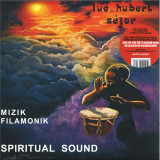
LUC-HUBERT SEJOR - MIZIK FILAMONIK: SPIRITUAL SOUND

180 G. BLACK VINYL WITH LINER NOTES IN CREOLE, FRENCH, ENGLISH

Originally released in 1979, "Spiritual Sound" lives up to its name, a soaring, triumphant album, six tracks of spirit magic from Guadeloupe.

Telluric, intense, terribly alive, the gwoka drums of Guadeloupe carry the identity of a painful and fervent island. Marked forever by the crime of slavery, Guadeloupe's créolité cherishes the ka drums and their natural environment: the low-pitched boula drum with male goatskin, the high-pitched soloist makè drum with female goatskin, the chacha, ti bwa, triangle, calabash and other percussion instruments that surround them, and the voices - the fiery, proud, timbred, urgent voices of the gwoka.


This album is also a legend for its voices: in his then dazzling youth, singer Lukuber Séjor was one of the first gwoka artists to largely feminize the chorus of répondè, who converse with his text delivered in a straight and powerful voice.

And everything here sets new standards. In 1979, Mizik Filamonik - Spiritual Sound proclaimed a spiritual patriotism of ferocious intensity. The album by Lukuber Séjor - whose spelling alone is a battle - sets out to give Guadeloupe the intangible weapons of self-respect and self-knowledge, through a singular practice of traditional music.

The genesis of gwoka music is less straightforward than one might imagine... The drums performed the servile task of accompanying the work of slaves in the fields and during the “corvées” imposed by the administration, before being freely practiced by the common people after the abolition of 1848. At the heart of the conviviality of the Guadeloupeans furthest from the cities - geographically and socially - the gwoka drums come out for carnival, funeral wakes and neighborhood celebrations, but also during strikes, fits of anger and armed vigils of the riots and revolts that have punctuated the island's history. For generations, governors of the colony and then the prefects of the overseas department of Guadeloupe have been viewing the gwoka as a potential for turbulence and a threat to public order.

But as the Beatlesmania, “chanson engagée” and rock revolutions unfolded in Europe, young people turned to the drums of mizik a vié nèg (“bad negro music”, in Creole), which Guadeloupeans had learned to despise by following the “assimilation” process advocated by the school system and most of the political class. At the end of the sixties, in a Guadeloupe mourning the deadly repression of the May 1967 social movement, they played traditional music, refusing to wrap it up in tourist prettiness and madras folk costumes. Instinctively, they played a rough and contemporary gwoka, led by the incendiary Guy Konkèt. This was the era of decisive 45 rpm records such as Robert Loyson's Kann a la richès, which brought to light the fieriest words of union rallies.

At his home in Sainte-Anne, Lukuber Séjor played with flautist Olivier Vamur and his brother Claude Vamur, who cobbled together a drum kit from tin crockery and became, a few years later, the most influential drummer in Kassav'.

These were the years of the Bumidom program, when young Guadeloupeans were encouraged to emigrate to mainland France. At the age of twenty, Lukuber Séjor embarked on the liner Irpinia, disembarking at Le Havre and taking the train to the Gare Saint-Lazare - the route taken by thousands of young West Indians who went on to study or looked for work, all the while trying to maintain a link with their homeland. In this case, it's at the Antony university residence, where Lukuber played the drum and participated in a thousand gwoka updates and aggiornamentos, while exile reinforced the need for a spiritual link with the native land.

In 1978, Guy Konkèt played at the Salle Wagram, a historic event for West Indian music. After serving as répondè - i.e. backing vocalist - on one of his home-recorded albums, Lukuber joined his live band. Little by little, he became one of the key artists on a circuit parallel to French show business. At a student party in Caen, he met a young woman from Martinique who, at the time, was more motivated by her ambitions as a visual artist than by her vocation as a musician. Her name was Jocelyne Béroard and, a few years before she plunged into the Kassav' adventure and became the greatest West Indian singer of her generation, she designed the cover of Lukuber Séjor's LP.

This ambition was obvious and imposed its will. A more or less regular band was formed, with Roger Raspail, Rudy Mompière and Éric Danquin on ka drums, Claude Vamur on ti bwa, Olivier Vamur and Françoise Lancréot on flutes and Annick Noël on keyboards. Lukuber Séjor is set on wanting to extend the gwoka palette to other instruments, as the jazz-rock revolution opens a thousand new doors. Annick Noël will play a wide range of timbres and textures on electric piano and synthesizer. Another novelty: the répondè are two men and two women, Roger Raspail, Olivier Vamur, Françoise Lancréot and Maryann Mathéus ...

Mizik Filamonik - Spiritual Sound is a self-production in which the singer and leader sank all his savings, allowing him no more than a single day in the studio. The first side is more of a musical manifesto, with the first two tracks, Éritage and Penn é plézi, being instrumentals. The third, Son, forcefully celebrates the need for Guadeloupeans to connect with the gwoka. In fact, Jocelyne Béroard's cover shows a tambouyé in the shadow of a cloudy sky, against which a radiant sun is rising and whose light will soon flood the entire landscape. The silhouette and face of this man strongly evoke the immense Vélo, master of the ka, rejected at the time on the fringes of society.

The second side of the LP is surprising. Formally, three tracks are explicitly linked like the three parts of a triptych. Primyé voyaj evokes the appalling tribulation of Africans deported as slaves to Guadeloupe; dézyèm voyaj speaks of the Bumidom program and the economic, political and social forces driving young Guadeloupeans towards the mirage of prosperity in France; twazyèm voyaj closes the cycle with the emigrants' return from Europe after years away from their island...

This gwoka, obsessed with the need to save Guadeloupe spiritually, appeals far beyond the politicized audience. Mizik Filamonik - Spiritual Sound instantly became a classic, although Lukuber Séjor never really made a career for himself as a musician.

After all, the album was released in 1980, with no promotional resources in France or Guadeloupe - and therefore no concerts. The thirty-two-year-old author, composer and performer made his own third trip back to Guadeloupe. He set up a small woodworking business, which he lost in Hurricane Hugo in 1989. His other activity, teaching in a medical-educational institute, became the core of his professional life. He continued to be an active campaigner - a campaigner for the Creole language, a campaigner for the reawakening of identity, a campaigner for special education, a campaigner for a thousand causes that he ignited with his generous and perceptive enthusiasm, such as the defense of breadfruit fries...

The echoes of his 1979 album have not died down. Of course, the use of Penn é plézi as the theme tune for Radio Guadeloupe's funeral notices from 1980 to 1992 kept him in the collective memory, but he continues to sing and compose sporadically, as with his all-female

vocal group Vwapoulouéka... Still convinced that music is a means of liberating the spirit, he continues the journey of a young man eager to deploy the power of Creole music and language.

Bertrand Dicale

En stock

Disponible en stock et prêt pour l'expédition

19,75
Naturalisten - Forms

Naturalisten

Forms

12inchE2-E807
E2-E8
02.05.2025

Forms is the debut release from Naturalisten. Behind this name is Rado, one of the founders of the Unknown Species collective. They’ve put together some great underground parties in London through the years, giving space to new talents and sounds, and blissfully ignoring trends and fads.
Rado’s colourful and imaginative take on deep techno shines through all the six tracks here. Fans of the sounds we often hear on the likes of Delsin, Nous’Klaer Audio, Spazio Disponibile, Bitta, Animalia, are likely to find plenty to love here. Starting with the subtlety of “Release The Tension”; passing through the swampy “Against The Tide”, the bleepy minimal drum’n’bass of “Woodpecker”, the acid deepness of “Aves Acid”; and landing on the early-morning atmospheres of “Canopy Dreams”, which we find very much reminiscent of some exquisite James Holden moments from a time long gone.

The final touch to an already beautiful body of work is added by Forest Drive West with his remix of the opening track “Release The Tension”. His reinterpretation slowly creeps in and wraps you up in a wave of low frequencies, before blossoming into an epic outro.

Early support for this release came from Sunju Hargun, Sybil, Aaron J, Benedikt Frey, among others.

En stock

Disponible en stock et prêt pour l'expédition

14,50
Jstar / The Dynamates - ULURU 003

Jstar/The Dynamates

ULURU 003

7"-VinylULURU003
Uluru
30.04.2025

Prick up your ears everybody: Uluru number 3 is ready to take off!

This time Little Beat More's sub-label Uluru, featuring highly acclaimed remix/mash up series, sees the participation of living legend Jstar.
The west London reggae hero delivered a smoothly bouncing rework of the classic “Eye of the tiger” by the Survivor, that originally gained fame through being the anthem of Rocky III.
The flip sees the debut of an Italian duo called “The Dynamates” (The Rebel and Dibba). They put their hands on another precious song that made history, namely “You got to love” from Candi Staton.
Pull up guaranteed!

Pressed on high quality black and yellow lime vinyl (48 gr.)
Edition of 350, coming with “hand stamped” vintage yellow paper sleeve.

ULURU 2020
“Mind Control, Modern Slavery”

En stock

Disponible en stock et prêt pour l'expédition

11,72
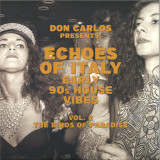
Various - ECHOES OF ITALY – THE BIRDS OF PARADISE – EARLY 90S HOUSE VIBES VOL.2 (2x12")

Googling “paradise house”, the first results to pop up are an endless list of European b&b’s with whitewashed lime façades, all of them promising “…an unmatched travel experience a few steps from the sea”. Next, a little further down, are the institutional websites of a few select semi-luxury retirement homes (no photos shown, but lots of stock images of smiling nurses with reassuring looks). To find the “paradise house” we’re after, we have to scroll even further down. Much further down.

It feels like yesterday, and at the same time it seems like a million years ago. The Eighties had just ended, and it was still unclear what to expect from the Nineties. Mobile phones that were not the size of a briefcase and did not cost as much as a car? A frightening economic crisis? The guitar-rock revival?! Certainly, the best place to observe that moment of transition was the dancefloor. Truly epochal transformations were happening there. From America, within a short distance one from the other, two revolutionary new musical styles had arrived: the first one sounded a bit like an “on a budget” version of the best Seventies disco-music – Philly sound made with a set of piano-bar keyboards! – the other was even more sparse, futuristic and extraterrestrial. It was a music with a quite distinct “physical” component, which at the same time, to be fully grasped, seemed to call for the knotty theories of certain French post-modern philosophers: Gilles Deleuze, Félix Guattari, Paul Virilio... Both those genres – we would learn shortly after – were born in the black communities of Chicago and Detroit, although listening to those vinyl 12” (often wrapped in generic white covers, and with little indication in the label) you could not easily guess whether behind them there was a black boy from somewhere in the Usa, or a girl from Berlin, or a pale kid from a Cornish coastal town.

Quickly, similar sounds began to show up from all corners of Europe. A thousand variations of the same intuition: leaner, less lean, happier, slightly less intoxicated, more broken, slower, faster, much faster... Boom! From the dancefloors – the London ones at least, whose chronicles we eagerly read every month in the pages of The Face and i-D – came tales of a new generation of clubbers who had completely stopped “dressing up” to go dancing; of hot tempered hooligans bursting into tears and hugging everyone under the strobe lights as the notes of Strings of Life rose up through the fumes of dry ice (certain “smiling” pills were also involved, sure). At this point, however, we must move on to Switzerland.

In Switzerland, in the quiet and diligent town of Lugano, between the 1980s and 1990s there was a club called “Morandi”. Its hot night was on Wednesdays, when the audience also came from Milan, Como, Varese and Zurich. Legend goes that, one night, none less than Prince and Sheila E were spotted hiding among the sofas, on a day-off of the Italian dates of the Nude Tour… The Wednesday resident and superstar was an Italian dj with an exotic name: Don Carlos. The soundtrack he devised was a mixture of Chicago, Detroit, the most progressive R&B and certain forgotten classics of old disco music: practically, what the Paradise Garage in New York might have sounded like had it not closed in 1987. In between, Don Carlos also managed to squeeze in some tracks he had worked on in his studio on Lago Maggiore. One in particular: a track that was rather slow compared to the BPM in fashion at the time, but which was a perfect bridge between house and R&B. The title was Alone: Don Carlos would explain years later that it had to be intended both in the English meaning of “by itself” and like the Italian word meaning “halo”. That wasn’t the only double entendre about the song, anyway. Its own very deep nature was, indeed, double. On the one hand, Alone was built around an angelic keyboard pattern and a romantic piano riff that took you straight to heaven; on the other, it showcased enough electronic squelches (plus a sax part that sounded like it had been dissolved by acid rain) to pigeonhole the tune into the “junk modernity” section, aka the hallmark of all the most innovative sounds of the time: music that sounded like it was hand-crafted from the scraps of glittering overground pop.

No one knows who was the first to call it “paradise house”, nor when it happened. Alternative definitions on the same topic one happened to hear included “ambient house”, “dream house”, “Mediterranean progressive”… but of course none were as good (and alluring) as “paradise house”. What is certain is that such inclination for sounds that were in equal measure angelic and neurotic, romantic and unaffective, quickly became the trademark of the second generation of Italian house. Music that seemed shyly equidistant from all the rhythmic and electronic revolutions that had happened up to that moment (“Music perfectly adept at going nowhere slowly” as noted by English journalist Craig McLean in a legendary field report for Blah Blah Blah magazine). Music that to a inattentive ear might have sounded as anonymous as a snapshot of a random group of passers-by at 10AM in the centre of any major city, but perfectly described the (slow) awakening in the real world after the universal love binge of the so-called Second Summer of Love.

For a brief but unforgettable season, in Italy “paradise house” was the official soundtrack of interminable weekends spent inside the car, darting from one club to another, cutting the peninsula from North to centre, from East to West coast in pursuit of the latest after-hours disco, trading kilometres per hour with beats per minute: practically, a new New Year’s Eve every Friday and Saturday night. This too was no small transformation, as well as a shock for an adult Italy that was encountering for the first time – thanks to its sons and daughters – the wild side of industrial modernity. The clubbers of the so-called “fuoriorario” scene were the balls gone mad in the pinball machine most feared by newspapers, magazines and TV pundits. What they did each and every weekend, apart from going crazy to the sound of the current white labels, was linking distant geographical points and non-places (thank you Marc Augé!) – old dance halls, farmhouses and business centres – transformed for one night into house music heaven. As Marco D’Eramo wrote in his 1995 essay on Chicago, Il maiale e il grattacielo: “Four-wheeled capitalism distorts our age-old image of the city, it allows the suburbs to be connected to each other, whereas before they were connected only by the centre (…) It makes possible a metropolitan area without a metropolis, without a city centre, without downtown. The periphery is no longer a periphery of any centre, but is self-centred”.

“Paradise house” perfectly understood all of this and turned it into a sort of cyber-blues that didn’t even need words, and unexpectedly brought back a drop of melancholic (post?)-humanity within a world that by then – as we would wholly realise in the decades to come – was fully inhuman and heartless. A world where we were all alone, and surrounded by a sinister yellowish halo, like a neon at the end of its life cycle. But, for one night at least, happy."

En stock

Disponible en stock et prêt pour l'expédition

28,99
Sonic Youth - Hold That Tiger LP 2x12"

In October 1987, four months after the release of their critically acclaimed Sister LP, Sonic Youth showcased their latest work in a blistering set at Cabaret Metro, Chicago. The concert was introduced by Big Black's Steve Albini (who at the time was banned from the venue) and subsequently released as a semi-official bootleg under the title Hold That Tiger on writer/provocateur Byron Coley's impishly Geffen-baiting label Goofin' (years later the band would use this nom de guerre for their own imprint).

Hold That Tiger's sterling reputation among the Sonic Youth faithful is well deserved. In fact, it isn't a stretch to suggest that the album is to the first handful of SY releases what It's Alive is to the first three Ramones LPs – a feral and liberatory public snapshot of a band's blossoming imperial phase. Indeed, HTT is the sound of a group at the peak of their powers, presenting new songs alongside a handful of older ones with the kind of wild, cathartic enthusiasm common to rock 'n' roll's most revered live albums.

Taking nothing away from Sister – inarguably one of indie rock's first true masterpieces – it is reasonable that many fans prefer the live versions heard on Hold That Tiger to their studio counterparts. On HTT, Sonic Youth is a spiky, pummeling and confident force, alternately mammoth and meditative. Sister and its predecessor EVOL notably added an airy, dreamlike reverie to the band's turbulent doom-lurch, a stylistic evolution that seems to crystallize on HTT. Throughout, Kim Gordon's sinewy, sumptuous bass and Steve Shelley's propulsive, tom-heavy percussion provide the bedrock groove for Thurston Moore and Lee Ranaldo's ferocious barrages of noise-guitar crunch.

By 1987, the band was confidently articulating their dual lexicon of punk-noir dissonance and supernal, psychedelic sonic calligraphy – bending their jagged, streetwise gnarl into balloon animals of dazzling and beautiful songs. This collision of splendor and chaos would become a hallmark of the group's singular alchemy as well as provide a blueprint for the post-SST American underground they would help invent and ultimately nurture.

Hold That Tiger's encore – four songs by the band's beloved Ramones, which Thurston would later astutely compare to "the perfect pudding after a hearty meal" – serves as a reminder that, like any true punks, Sonic Youth never could resist a good, rousing anthem to send the kids home with their ears ringing, their hearts hot-wired.

This first-time reissue with speed-corrected master comes in a gatefold tip-on jacket. Mastered by Bob Weston from the original tapes. Recorded by Aadam Jacobs. Audio repair/editing by Aaron Mullan.

En stock

Disponible en stock et prêt pour l'expédition

26,01
Cool Out Sun - A Lion Is A Lion LP

WE ARE EXCITED TO PRESENT THE NEXT RELEASE ON THE NORTHSIDE LABEL, COURTESY OF MELBOURNE HIP HOP / AFROBEAT GROUP : COOL OUT SUN.

Melbourne's Afro Hip Hop veterans, Cool Out Sun are releasing their sophomore LP 'A LION IS A LION' October 4th.

Spearheaded by the duo of Nfa Jones and Sensible J (known for their work across 1200 Techniques, REMi, Sampa The Great & solo projects) are joined by a star studded line up of guests. These include Sampa The Great, Lamine Sonko, Immy Owusu, Vida Sunshyne, Bilalli and more as COS aim to shine light on on their local circle of creatives and inspirations.

Cool Out Sun creates music bridging the traditions of classic Hip Hop with the traditions of Afrobeat, Afro soul & roots music blending West African language and culture with modern sonics that jump out the speakers. Beats are built on the MPC & refined with all live instrumentation & vocals recorded in their lofi indie label, House of Beige studio in the middle of nowhere.

The group's explosive live show has them performing consistently, and their music has been getting a lot of Australian airplay as well as spins across the US, EU and the UK radio.

Cool Out Sun songs go deep into social subjects and storytelling with historical and cultural messaging hidden in catchy hooks and heavy grooves. This collection of songs continues this theme while leaning into the more vibrant side of what Cool Out Sun cooked up in the studio in the creation of this album, 'A LION IS A LION.

To order copies at the WHOLESALE RATE of $25 comes with a minimum of 3 units with each order. Shipping can be arranged and also records can be picked up from here in Fitzroy at Northide.

En stock

Disponible en stock et prêt pour l'expédition

28,15
Zackey Force Funk & XL Middleton - Hey MF / Phone Home

Zackey Force Funk & XL Middleton return with cover versions of two tracks by Jonny Chingas, a legendary artist w/ a cult following in Chicano music scene on the west coast of the US. 'Hey MF' is a vocoder & synth drenched electro funk cruiser that's perfect for the dance floor or a boulevard cruise. 'Phone Home' was one of Chingas' breakout tracks that actually got heavy club play in the UK, and is given the modern boogie funk treatment by ZFF on vocals & producer XL Middleton.

En stock

Disponible en stock et prêt pour l'expédition

12,56
The Swan Silvertones - If You Believe Your God Is Dead (Try Mine)

Celestial Echo returns with a divine new release to kick off what will be a strong 2025, highlighting two iconic tracks from West Virginia’s 'The Swan Silvertones'. This 7-inch vinyl features the dancefloor hitter, 'If You Believe Your God Is Dead, (Try Mine),' backed with the soul-soothing 'He's Sweet I Know.'

Originally recorded during their golden era in the early 70s, this has to be some of the funkiest gospel to ever be pressed, once it’s in your record bag, it wont be leaving in a hurry.

Now reissued on 7-inch vinyl for the first time in years, this release features carefully remastered audio and presented in a freshly designed sleeve with updated original labels, it’s a must-have for fans of gospel and soul.

Pressed and distributed by Prime Direct Distribution—buy or cry!

En stock

Disponible en stock et prêt pour l'expédition

14,50
CESARIA EVORA - CAFÉ ATLANTICO

Cesaria Evora

CAFÉ ATLANTICO

2x12inchMOVLPG1003
Music On Vinyl
19.02.2025

A native of the island nation of Cape Verde, Cesaria Evora was known as the country’s foremost practitioner of the morna, a combination of West African percussion with Portuguese fados, Brazilian modinhas, and British sea shanties. After a short singing career in the 1970’s, she returned in the late ‘80s with a string of fine albums.

Her 1999 album Café Atlantico (a reference to her home where she frequently entertained guests) is a much-acclaimed masterpiece, finding Cesaria Evora venturing into more Latin American musical landscapes, as opposed to Portuguese, which dominated her previous albums. Evora draws from traditional Cuban and Brazilian music to mesmerizing effect. The music is heart-breaking and nostalgic, warm and tragic all at once.

Café Atlantico is available as a limited edition of 1000 numbered copies on gold coloured vinyl, housed in a gatefold sleeve.

En stock

Disponible en stock et prêt pour l'expédition

39,08
Nupharmic - Chunky EP

Nupharmic

Chunky EP

12inchDORE002
Domain Records
17.02.2025

Nupharmic, duo from early 2000s with just one release on the record, are back in the game! Tony Goldstone & Phil West reunited one more time to bring back their dubby, exclusive and timeless sound to our music era. 

Special thanks to Tony for recreating lost files and making this possible!

En stock

Disponible en stock et prêt pour l'expédition

13,03
DULL BOY JOHNNY - THE MOVE EP

After Dull Boy Johnny's previous release, a double EP with a tropical A-side and an erotic B-side, this time the three gentlemen are out on the dance floor. After all, the neighbours decided as much.

Unlike the recordings of their previous work that took place abroad, this time they stayed in a steamy attic room in Belgium, where guitarist and producer Jan built a studio. Unable to record at night because of neighbours who did not (yet) appreciate Dull Boy Johnny's music, they dove into Antwerp's nightlife.

The group's previous work took you on a cinematic journey where every musical nuance takes you to a specific setting. Be it an erotic seventies scene, a beach party in the Bahamas, or a blood-curdling chase in the Wild West, Dull Boy Johnny covers it all. Nard Houdmeyers, Rik De Bal and Jan found each other in a shared interest in film genres such as blaxploitation, neo-noir and spaghetti westerns. And therefore also the artists inherent to these genres such as Isaac Hayes, Curtis Mayfield and Ennio Morricone. Dull Boy Johnny's conceptual approach to music can be traced back to this passion for cinema.

For the new EP, however, they traded that cosy movie-watching for turbulent nightlife (the angry neighbours, you know). Besides, it was about time to get their inspiration in the flesh. Dull Boy Johnny immersed himself in the pulses, flashes and swell of downtown Antwerp. Thunder chasing crept under their skin and then into their guitars. In grandfatherly fashion, they then turned to composing, first with just bass, guitar and vocals. In that small lineup and with the sounds of the night still reverberating in their minds, the first pieces of the puzzle were laid out. After that, the sound was opened up and a solid rhythm boost was added. This defined the catchy, up-tempo nature of the upcoming EP that centres on themes of dancing, flirting and partying. Expect rousing riffs, catchy hooks and swinging rhythms. Details were meticulously laid out and bricked into the songs with delicate grouting. The fine polishing of the songs was done with patient finesse and a constant attitude to serve the song. With songs like Suspicion, She Can Groove and Dynamite, it is immediately clear that the gentlemen got their mustard from the club: action, party and spunk! All without losing their typical sensuality.

Despite the different working methods for the third EP, there are a lot of recurring elements that define Johnny's fresh sound. The essence? Catchy high vocals contrasted with a sensual baritone voice, carried by a groovy bass and rhythm section. Around it, the details that give the songs the right atmosphere swirl.

Dull Boy Johnny's music prefers to function as a soundtrack to your own imagination. As you listen, you are invited to wander through the various landscapes of their musical world, regularly giving a nod to the more lustful side of your brain. The songs have already been praised for their compelling melodies and irresistible energy.

With this release, Dull Boy Johnny proves their ability to create timeless music that both touches the soul and moves the body. So surrender to Dull Boy Johnny's punchy grooves and dance the night away. Long live the neighbours!

En stock

Disponible en stock et prêt pour l'expédition

18,70
DJ Romain - The Lost D.A.T.S. Part 2 - Unreleased House Music 1997

Last May, Hard Times captivated us with The Lost D.A.T.S (Part One)—a remarkable collection of unreleased and freshly unearthed gems from the vaults of NYC legend DJ Romain. But the story didn’t end there. To our surprise and delight, Romain had delivered an even larger treasure trove of beats—too many to reveal all at once.

Now, Hard Times is proud to present the next chapter: DJ Romain – The Lost D.A.T.S (Part Two).

"1996-97? Yeah, that’s when New York was still NEW YORK!

That was around the time we really started to get hold of exotic herbs. Copper Haze, hydroponic! The vibes in the studio were always lovely. I had hair at the time! Dread-Locs down to my shoulders... I was still rockin’ the Wallabees, or British Walkers as we called them - representing for Brooklyn and my West Indian roots!

There was no social media, no supervision, nobody all up in our business… It was classic "mind your own business" NYC Vibes! I was DJing at a lot of the hot clubs and THE hottest afterhours in the city. There were nights when I saw Micheal Douglas roll into the afters with Grace Jones - they were there to party and unwind and I was there dropping the dope tracks for the people.

When it was studio time, with my homie Matt Echols...I was probably setting things off with some quality herbage, a big ass bag of Funyuns and my trusty SP-1200, lol. I had picked up some tips and tricks from Todd Terry and by '96-'97 I was a Shaolin with it myself! This was around the time tracks like "Flowers" and "Only Love Can Break Your Heart (Dub)" were tearing up the clubs. I wanted to be able to get my ideas out with no problem, and by then I had a lot of confidence...

Being able to Dj in some of the hottest NY hot spots at the time, I was able to really see what worked and what didn't on the dancefloor. The best House Dancers from around the world and around the Tri-State area would be at my jams. I'm talking Ejoe, Voodoo Ray, maybe kids from the Mop-Top Crew... I was definitely taking note of the kind of rhythms and sounds that would make them go crazy on the dancefloor!

And that's how we went about it - I laid down the rhythms that made it happen in my sets and translated the vibes I was picking up from NYC itself. Matt threw down musically and we were just being as creative and inventive as possible! But we always kept in mind that our job was to make the people on the dancefloor jump!

A lot of the jams from those days got signed to various record labels, we dropped a lot of them on our own label...and some of them ended up in the archives - until now!"

En stock

Disponible en stock et prêt pour l'expédition

16,39
STAVROZ - GOLD TOWN EP

Stavroz

GOLD TOWN EP

12inchMFV001
MOODFAMILY
05.02.2025

(repress on black vinyl, originally released in 2019) Supported by many deejays worldwide, most notably Solomun. Moodfamily's favourite four-piece returns home after many journeys. Impatient as we are, we had to hear their stories. Skilfully combining influences, sounds and experiences from east and west, they translated their stories into a new EP oozing with drama, melancholy and determination. The EP describes itself as the soundtrack for an adventure to mysterious outskirts around the globe, starting with 'Whale Parade'.


This prelude takes you to a hidden land after wandering through forests for many months. Guitar, piano and percussion gently move in and carry you away. By the second track, 'All Day I Zama', a slow beat dictated by a banket of percussion evolves to a vigorous and groovy track with moaning vocals as the main theme. In title track 'Gold Town' you will settle yourself in a covered wagon, heading for dodgy settlements on a misty mountain range, accompanied by a grieving trumpet. As the wagon slows to a crawl, 'Ghajar' emerges; a downtempo emotion-filled song, where the piano and a scorching synth interchange melodies and tales.

En stock

Disponible en stock et prêt pour l'expédition

10,88
ALEX KOO - BLAME IT ON MY CHROMOSOMES

‘Belgium is too small for pianist Alex Koo’ – De Tijd

‘Stunningly original’ – Downbeat Jazz Magazine

‘Fabulous technique, sounding downright genius at times.’ – London Jazz News

‘When listening, Keith Jarrett’s name came to mind several times. Not because Koo’s playing is similar to that of the American master, but because it is of the same exceptionally high level.’ – Trouw

‘Koo’s compositions and playing are absolutely world class.’ – Written in Music

The son of a Belgian missionary sent to Japan in the seventies and a Japanese peace activist, pianist and composer Alex Koo refuses to be boxed into any traditional category. As the renowned German Jazzthetik magazine put it, "Alex Koo defies categorization."

With ten uniquely personal tracks, Blame It on My Chromosomes is more than a musical statement; it is a form of self-therapy. "The only way not to spiral into depression as a jazz musician nowadays is to vent and lose yourself in the music," Koo shares. "Music needs a purpose beyond self-promotion. For me, it's about accepting who I am and letting go of anything else."

Featuring celebrated trumpeter Ambrose Akinmusire on two tracks, Blame It on My Chromosomes highlights Koo's fearless versatility. One of these tracks, "Jonass," is dedicated to Koo's childhood friend who tragically passed away, adding a deeply personal layer to the album. "When we were kids, we would skate and do stupid things with shopping carts, inspired by Jackass," Koo recalls. "That's why we called Jonas 'Jonass'-he had the biggest smile you could imagine, his laugh was contagious, yet he also was the most reckless one among us."

Koo, praised as "stunningly original" (Downbeat Jazz Magazine), is known for creating music that transcends genre boundaries, blending jazz, indie, contemporary classical and film music with innovative freedom. A native of rural West-Flanders, Belgium, he began his musical journey as a classical piano prodigy at the age of five. In his teens, he developed a passion for jazz and improvisation, earning praise from jazz legends such as Kurt Elling, Kenny Werner, and Brad Mehldau. Koo has even been described as "of the same rare high level as Keith Jarrett" (Trouw). His 2019 album, Appleblueseagreen, featuring Mark Turner and Ralph Alessi, was included in Downbeat's Best Albums of the Year.

Alongside Koo, Blame It on My Chromosomes features his longstanding trio, whose fearless interplay brings the album's narrative to life. The trio, with Koo on piano, Dré Pallemaerts on drums, and Lennart Heyndels on bass, represents the very best of the Belgian jazz scene. Their intuitive chemistry and artistry are the driving force behind the album's emotive power, with special guest Ambrose Akinmusire adding a transcendent layer on two standout tracks.

En stock

Disponible en stock et prêt pour l'expédition

21,22
CHANNEL TRES - HEAD RUSH LP 2x12"

Channel Tres

HEAD RUSH LP 2x12"

2x12inch19802836581
Sony UK
04.02.2025

- Channel Tres releases his debut album Head Rush via RCA Records.

The album, which features the previously-released singles "Berghain" featuring Barney Bones and "Cactus Water" is the culmination of Channel's steady ascent since he first broke through to public consciousness with his cult-classic debut single "Controller." Head Rush features all of the sounds that have come to be hallmarks of Channel Tres songs, but finds him incorporating musical influences not heard in his prior catalog, as evidenced by "Berghain" and other songs from the album including the Ty Dolla $ign-featuring “Holy Moly,” a visualizer for which is out now. The album arrives on the heels of two recent head-turning Channel Tres collaborations as well -- his contribution to KAYTRANADA's "Drip Sweat" and Jay Worthy, DāM FunK & ATrak's "105 West" alongside fellow LA legends Ty Dolla $ignand DJ Quik exemplify his versatility. Head Rush is a richly layered record, but one that feels totally intuitive, without a trace of doubt or self-consciousness.

The way “I’m Him” shimmers is balanced by the Estelle-featuring “We Hungry,” which nearly growls; the spare, percussion-forward Ravyn Lenaeduet “Need U 2 Know” (the stylization of its title a nod to Prince, one of Tres’s major influences) at delightful odds with the easy ride of “Gold Daytonas.” Head Rush shows the staggering array of styles Channel Tres can evoke. But that versatility is not the point in and of itself—the point is that all these component parts can be reassembled into something that feels uniquely personal, and honest. Through his career, Tres has blended recognizable genres, textures, and points of view into a truly singular form all his own. Longtime listeners will recognize in Head Rush the hallmarks of a Channel Tres record: a mastery of rhythm, the rare ability to make songs sinister and fluorescent at once.

But this LP also opens a new sonic world, one rife with unexpected terrain and hairpin turns—see the way “Type” takes what sounds at first to be a simple romantic boundary and stretches it out into an alien landscape. Or take “Berghain,” a song that nods to the kinetic live shows that became must-see events—a crescendo of interest that included his momentous Coachella 2022 performance and culminated, at least symbolically, with his early 2023 set at Berghain, the legendary Berlin club that has long been a musical hub of the Western world. “Berghain” is delirious but thumps almost impossibly hard, in line with the album as a whole—always molting, always ready to turn from the claustrophobic to the communal, as the pivot on “Joyful Noise” accomplishes so seamlessly. Head Rush also features some of Tres’s most deeply felt vocals to date, like the veritable bloodletting on “Two Ways.” And so the record, which also features Ty Dolla $ign, Thundercat, Teezo Touchdown, Watr, Barney Bones and Toro y Moi, marks a new era for Channel Tres, personally as well as artistically. “I’m older now, and the things that I’ve accomplished tell me I’m ready to do this,” he says. “You’ve worked your whole life for this, you’ve been able to do these shows and walk into these rooms and make these songs. There’s no reason you have to live by the same insecurity that you had to use in years past.” Shedding that baggage accomplished exactly what it was meant to—lightening the load so we’re free to get heavier than ever

En stock

Disponible en stock et prêt pour l'expédition

34,24
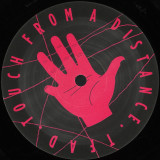
Brother Nebula - The Grandeur Of Delusions EP

Last time Touch From A Distance released a Brother Nebula record the moniker was still shrouded in mystery. A few years later the veil has been lifted and anyone inclined would know our favourite Texan Lance DeSardi has been behind those meticulously crafted tracks all this time.

In line with his past outings on his own imprint Legwork, Brother Nebula keeps exploring the nooks and crannies of varied tropes of club music. There's the razor sharp, Dub Techno inspired stomper „Mach Loop“. There's „Ice Giant“, a heavy drum workout equally indebted to UK Garage and Jeff Mills. There are „The Grandeur Of Delusion“ and „God's Green Earth“ invoking the forgotten transantlanticism between West London and Detroit.

Having relocated to London and immersed himself in the local scenes and culture, Brother Nebula connects the dots of his past, present and future. Smooth melancholia meets icy beat science creating vivid contrast which makes this ep such an intriguing offering.

En stock

Disponible en stock et prêt pour l'expédition

12,56
Studio - West Coast LP

Studio, the influential project of Swedish musicians Dan Lissvik and Rasmus Hägg, presents their legendary 2006 debut in remastered form, in partnership with Ghostly International. Available in limited edition "Fog Machine Vinyl", CD, and cassette. "One of the finest pieces of electronic music you'll hear this year.” - The Guardian (2006). Included in year-end best-of write-ups by Pitchfork, FACT Magazine, and Rough Trade. Physical copies have long been out of print for West Coast, and the album has also been notably absent from most streaming services until now.

“Somehow, I knew I wanted to make a conceptual record that, although only imaginary at that point, could represent or define how our city sounded,” says Lissvik of Gothenburg's influence on West Coast. Some called Studio, the project of Swedish musicians Dan Lissvik and Rasmus Hägg, “the missing link between The Cure and Lindstrøm,” Pitchfork heard Durutti Column and Can, as the duo’s story became swept up in a loosely developing scene — adjacent first to the label Service (Jens Lekman, The Whitest Boy Alive) and later Sincerely Yours (The Tough Alliance, jj) — and a precursor to the 2010s boom at the axis of electronic and psychedelic music guided by indie greats like Caribou, Four Tet, and Darkside.

West Coast, their seminal 2006 debut, captured a faraway romanticism of Balearic brushed up against Krautrock, disco, dub, and afrobeat, with pop lyricism lifted from new wave, all made modern by two art school grads in Gothenburg. First pressed in a small vinyl-only run via their own Information label, the album has been notably absent from most streaming services, and the internet’s record of its initial impact is all but fossilized from a bygone blog era, while its sound is simply untraceable to any one moment in music.

Outside of three 7” releases, they’d keep the music to themselves for several more years. In 2005, Hägg remembers, “We got our degrees and were kicked out of our studio spaces so all these recordings were just piled up. A year later we dusted them off and started to deconstruct and assemble them in a more drawn-out fashion.” In the same breadth, they cite DJ Screw, J Dilla, and Joy Division, along with early ‘80s European live DJ sets from the likes of Beppe Loda, Dj Mozart, and Baldelli as reference points.

“The anything-goes mentality was very encouraging and was a big cornerstone to the Studio sound,” says Hägg. “But there’s so much more to the picture, we were not that young then and had lots of musical baggage in our suitcases, the new thing was that we finally let it all come through, not bound by any borders that was often the case with music identity in Sweden during the 90s.” In the afterglow of the record’s 2007 reception, Studio receded from view, clouded behind a mountain of remix requests (including one for Kylie Minogue that saw release) and label bureaucracy. “It’s easy to wish we would have done some proper recordings of our own instead,” Hägg reflects. But both artists, now well into respective careers beyond Studio, have come to peace with West Coast as their most enduring effort together. Lissvik adds, “It serves as a good reminder for me to keep to that decision and promise and to continue exploring and growing

En stock

Disponible en stock et prêt pour l'expédition

27,52
Articles par page:
N/ABPM
Vinyl