Zeal....Enthusiastic devotion to a cause, ideal, or goal. In our case devotion to deep, dubby, warm mirco grooves.
The label's first release comes from 'Monsieur Georget' which is an alternative alias for well-known French producer Chris Carrier, who many will recognise from his own label Adult Only Records, along with releases on other labels including Robsoul, One Records, OFF Recordings and Silver Network.
The release also features a remix from stellar German artist DeWalta, who along with a number of seminal releases on Meander, is a regular collaborator with Mike Shannon and boasts releases on other labels including Vakant, Haunt and Visionquest.
Track one titled Le Village Flottant' is the first of the three originals on the release. Setting the tone of what's to come, it has stripped back drums with delicate sprinkles of delay that are brought to life with a wonky lead synth and poignant piano stabs. The track fuses intricacy with dancefloor focused energy.
Second track called Mecrant Des Oceans' has gliding synths that line the back of the mix whilst the morphing tones and subtle squelch of an acid line provides the momentum. Murky and mysterious, there's a metallic ring to the percussion and it's a fine example of how less can often be so much more.
Third on the release is the DeWalta remix of Le Village Flottant' and keeping the originals ride, he adds his own dub Techno influence. With new synth parts he cuts the already stripped drums to a bare minimum, which gives his added synths plenty of room to breathe and creates a captivating ambience.
Finishing the EP is the third original track titled Picnic Dans Le Metro' and like the rest of this release, it twists and turns with rippling textures and deep atmospherics. Each drum hit is crafted with expert precision and every textured synth sound merges to create the perfect groove and mood.
Search:goa
In 1997, a quiet, unassuming man of 59 years old named Victor Tavares - better know as Bitori - walks into a studio for the very first time to record a masterpiece which many Cabo Verdean consider to be the best Funaná album ever made. Bitori´s musical adventure had begun long before this point. It was 1954 when he embarked on a journey across the seas to the island of Sao Tomé & Principe. The young man´s hope was to return to Cabo Verde with an accordion.
Following two years of hard labour Bitori had succeeded in saving enough money to acquire what was to become his most valued possession, his cherished instrument. The two month journey back to Santiago, his island of birth, proved time enough to master it. Self taught, Bitori developed his own style, an infectious blaze, that quickly caught the attention of the older generation. Before long Bitori was being asked to share his musical talents, igniting the local festivities around Praia with his music.
But not everybody welcomed the rural accordion-based sound. Perceived as a symbol of the struggle for Cape Verdean independence and frowned upon as music of uneducated peasants, Funaná was prohibited by the Portuguese colonial rulers. Performing it in public or in urban centres had serious consequences - often jail time and torture awaited musicians that were caught in the act'. In light of such persecution the genre of Funaná began to slowly disappear.
In 1975 Cabo Verde achieved independence from Portuguese colonial rule. Along with Cabo Verde's independence came a lifting of the ban placed on Funaná. The musical repercussions in Cabo Verde were plenty - many upcoming artists embraced Funaná, translating and adapting its musical form in new ways. It was not to be until the mid-1990's, however, that Funaná in its traditional form was actually recorded. It was a young singer from Tarafal, Chando Graciosa, who was to play a key role in this event. Upon hearing Bitori, Graciosa immediately felt drawn to Bitori's unique playing style - a raw and passionate sound accompanied by honest lyrics that reflected the harsh reality of the Cabo Verdean working class. He eagerly approached Bitori suggesting they join forces and travel overseas with the objective of taking Funaná beyond its rural roots. The two of them, with others in tow, achieved their goal and travelled to Europe, introducing a receptive European audience to the vibrant energy of Funaná.
Eventually Bitori returned to his beloved Cabo Verde. Graciosa opted to settle in Rotterdam in order to pursue his career - he vowed, however, to bring Bitori across to Holland at a later date to record an album.
In 1997 the time was ripe to immortalise the sound Bitori had shaped over a time span of four decades. Built around a formidable rhythm section, formed of drummer Grace Evora and bass player Danilo Tavares, "Bitori Nha Bibinha" was recorded. The recording catapulted Chando Graciosa to stardom, making him Cabo Verde´s No.1 interpreter of Funaná.
The success in Cabo Verde was phenomenal and Funaná rapidly gained the recognition it deserved, especially in urban dance clubs. Bitori´s songs quickly became standards - classics known and loved throughout the country. The musical success, however, was solely limited to the Cabo Verdean islands - until now!
Analog Africa is proud to contribute to the worldwide promotion of Funaná - the once forbidden sound of the Cabo Verde archipelago - by releasing a worldwide re-issue of Bitori and Chando Graciosa´s legendary recording.
The release will herald Bitori´s first European tour taking place during the summer of 2016. Watch this space! And listen!
De Sluwe Vos (Dutch for 'The Sly Fox', a name derived from Aesop's fable of the Fox and the Crow) is the newest addition to the Dutch house and techno scene. His productions are supported by artists such as DJ Sneak, Joy Orbison, Boddika andBicep. Moreover, De Sluwe Vos has a packed tour schedule and travels many miles for all his national and international gigs.
With strong hooks and dirty kicks as his specialities, De Sluwe Vos has released multiple tracks on labels like 4Lux and Slapfunk. Lately, this cheerful producer from Dutch city of Deventer has even been gaining a foothold in the pop scene. His gig at Noorderslag did not go unnoticed: national music platform 3voor12 named him the best act of the festival.
De Sluwe Vos mixes various styles to create his own 'signature sound' with which he manages to constantly keep himself at the center of attention. His 'OG Anthem' is possibly one of the most notable tracks of the moment, this underground hit found its way to the surface and received airplay on both Dutch radio station 3FM and BBC Radio1.
With his discography, De Sluwe Vos is constructing a steady career. But he's not one to stay hidden away in the studio: he's at his best when dominating dance floors in clubs and at festivals. His ultimate goal is to bring the crowd to a higher state of mind, where worries simply disappear and the music takes over. Time and time again, De Sluwe Vosprovides proof for the big bang theory with his performances. Whether it's at Awakenings Festival in the Netherlands or at Together Festival in Cardiff: during his shows he is pure energy. His duet between his Roland TR- 909 drum computer and turntables is always a bold endeavor, just like his stage diving.
The fact that he is a fixture of the club scene is proven by his monthly international gigs, his own night The Core and his notorious live act. With the audiovisual show 'Kontra live', De Sluwe Vos is well underway to becoming 'one of the greats'. And that's no fable!
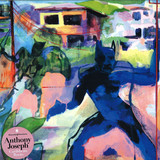
Strut team up for the first time with respected French label Heavenly Sweetness for the brand new album by the inspired poet, novelist and musician, Anthony Joseph.The Caribbean is an influence that runs through Joseph's discography, obliquely or headon, suggested or on full display. It resonates on each of his albums, from the furious trance of 'Bird Head Son' to the more polished 'Time'. On 'Caribbean Roots', he has now decided to turn a guiding thread and a reference point into a communications cable - a powerful bond that makes light of distance and braves the seas to link his island to that of his friends in the Caribbean arc, dancing to the strains of tumbélé and mendé only a few miles
from Port of Spain where people live it up to rapso and soca beats. Caribbean Roots' represents a return to his roots for Anthony Joseph, who has always remained true to a powerful, deep-seated sense of his Caribbean identity. Having started
out as a joint project with the outstanding percussionist Roger Raspail (Cesaria Evora, Papa Wemba, Kassav), 'Caribbean Roots' swiftly grew into a creative force incorporating
the rhythms, sounds and vibes that rock the Caribbean from San Fernando, Scarborough, Kingston and Les Abymes to Port-au-Prince and Havana. Backed by a band made up
of a blend of local musicians, the album attempts to unite the different islands into a single entity whilst ensuring that the identity of each is in no way diluted by the mix instead creating a richer and stronger alloy. The saxophones of Shabaka Hutchings (The
Heliocentrics) and Jason Yarde, the trumpet of Yvon Guillard (Magma), the bass of Mike Clinton (Salif Keita) and the trombone of Pierre Chabrèle (Creole Jazz Orchestra) all combine to form a group of Caribbean All Stars to which Andy Narrell, the master of the steel pans, brings ringing drum beats. The album features bursts of catchy rhythms and slow percussive riff progressions, as on a film soundtrack, incandescent voodoo funk and rhythmic high-speed frenzies shot through with free-jazz sax. This reunion of the Caribbean diaspora was never meant to come up with a formula divisible into eleven separate tracks - its goal was to explore and discover new sounds. And all of this under Anthony Joseph's guidance, as he spins his lyrical blend of afro-futurism and surrealism, commemorating the Caribbean people's sometimes violent resistance to colonialism. Anthony Joseph, one moment a chronicler reciting his text against a background of simple percussion, the next a storyteller possessed by the power of a hypnotic bassline, then an adventurer chanting among mangroves where the rhythm section and the brass have created an impenetrable thicket. At turns, an MC too, strutting to a fat, throbbing groove in vocal tandem with Sly Johnson or David Rudder to pay tribute to Mighty Sparrow, the undisputed and indisputable king of calypso
Our sixth release marks the closing of a circle: Lucky Charmz—the man of our first release, Follow Me To Flottbeck Falls'-EP—returns to deliver his second full length effort. LHLT006 is the U Still Coming Over'-EP, a long overdue follow up to his first EP: More than anything else, it's a fresh slice of summer groovers. Opener Faceless Goat' instantly delights with it's majestic opening chords, only to unleash a smashing grandeur of sample fun and lustful grooves. It's a no-vocals-required anthem, rich in texture and yet subtly enchanting. While Faceless Goat is probably best enjoyed blasted out to vast, scenic landscapes on mediterranean costs from the terrace of a ancient estate, it is also tried and tested for Vorzech', houseparties and—of course—any club scenario (it won't fail you). We cannot help but to notice that Latency Jam''s stoic groove recalls the jungle books's march of the elephants, it's spacey synth madness points to outer space and, well, did we mention that It's super funky Yes, it's a funky spacewalk towards jupiter with your awesome, intergalactic elephant friends. Sonically charming with it's rapid fire hi-hat's, bubblegumspongecake melodies and zapping space laser's, that've all trickled out of a Nord Lead Young Lucky once laid hands on, Latency Jam' will also never let you down. On the flip we find Waffle Cut', yet another sun-oozing Lucky Charmz tune. Captivating trickle-down arpeggios radiate warmth, while soft pads sooth you into hypnosis. It's a bit like staring at the big yellow in the sky for too long—you get all frizzy, drizzy and a little silly.
'To pick up where 'I Am The Walrus' left off'; that was the goal when Electric Light Orchestra formed in the early seventies. They wanted to steep different music styles in a rock tradition and mix in some Beatlesque pop, but it took Jeff Lynne & co until their third album Eldorado to get on the right track. Their most ambitious album to date, they decided to hire a 30 piece orchestra and choir to fill out their sound, and the investment paid off. With the unforgettable 'Can't Get It Out Of My Head' as the lead single, 'Eldorado' was a commercial as well as a critical success, and it would achieve gold status in the US. 'The English guys with the big fiddles' had arrived!
Who says that there is no techno in bavaria Not only the bavarian based label itself as a kind of lighthouse for the more energetic sounds deep in the bavarian heart is a proof, also the young and crazy Dirty Basscore is emerging from there with his very own, unique, freaked out, crazy, uncomprimising style. Compared to his outlets so far this one might not be the craziest and freaked out stuff he did, but for sure this is a massive debut and introduction of his trademark and unlimited talent here on Credo. Perfectly timed and playable tunes with only one goal: working on the dancefloor! And as this wouldn`t be enough we even top it with an excellent repaint by another bavarian techno-stallion. Klaudia Gawlas, who probably doesn`t need any introduction, delivered a superb interpretation of the titletrack.
Introverted Dancefloor is Bevan Smith, a New Zealander who has released music under names like Signer and Aspen, and who has played in the Ruby Suns and Skallander throughout the last decade. His prior output has been spread over many international labels and has touched on sundry genres (like techno, IDM, folk, ambient) while featuring restraint and sophistication as compositional hallmarks.
As Introverted Dancefloor, Smith has kept those features as guiding principles while allowing a more propulsive low end to dominate the construction of this music, winding up with understated but energetic dance tracks. Gestation, too, is a prominent attribute of this music, though not necessarily an obvious one. Smith started these songs with hundreds of layers, which he then pared down to a few core elements before rebuilding again.
For Introverted Dancefloor, Smith limited himself to the use of two synthesizers, one mic, one filter, and one effects processer. This constraint is not obvious upon listening as the album works across the idioms of electro, Detroit techno, pop house, and leftfield disco, playing with the line between fluid melody and drum machine programming. Each track has a playlist as its scaffolding, Smith's goal being to filter a certain set of varied influences through just a couple of instruments. Metro Area's Miura' (Original Mix) turned into Introverted Dancefloor's Happiness is such a mess/Pipedream.' If there can be such a thing as a subtle banger, then Smith may have earned that distinction here. Take it high' seems to be a constant ascent with its climbing bass and layers of chords, relying on no hackneyed drops or releases for its crescendo. Smith's layering practices show their precision on tracks like Even if you try' and Tiger bones,' in which disparate elements contribute to pointed melodies, an unidentifiable percussive part entering the same expressive plane as a sung line.
One of the record's most striking features is Smith's inclusion of certain elements of a song in a neighboring one (vocals from Pipedream' in Happiness is such a mess,' a synth line from Even if you try' in Always turn your head') to lend a phantasmagorical effect to the procession, blurring the distinction between a track and its reprise. The result is a song cycle wrought from painstaking labor, while nonetheless retaining core values of amorphousness and motion.
- A1: Abayomy - Obatala (Pd)
- A2: Zebrabeat_Zebrabeat Afro - Amazônia Orquestra (Zebrabeat)
- A3: Burro Morto - Lúcifer Colômbia (Daniel Jesi/Burro Morto)
- A4: Ive Seixas - Cervejas Populares (Ive Seixas)
- B1: Iconili - O Rei De Tupanga (Iconili)
- B2: Zulumbi - Zulumbi (Rodrigo Brandão / Lúcio Maia / Pg / Dengue)
- B3: Passo Torto - Faria Lima Pra Cá (Kiko Dinucci / Rodrigo Campos)
- B4: André Sampaio E Os Afromandinga - Ecos De Niafunke (André Sampaio)
- B5: Fabrício - Feito Tamborim, Pará Céu (Fabrício.)
Over the past few decades, there has been a seismic shift in Brazil's musical landscape. A plethora of varying musical undergrounds has developed across the nation. While Rio and São Paulo have been overwhelmed with networks of talented musicians for a long time, creative life is now bursting all over the country. Amplificador exists to document and propagate the wonderfully diverse music currently blossoming from Brazil's vivacious and geographically varied musical undergrounds. Presenting an up-to date insight into Brazilian music, this compilation draws together some of the components of 'Novíssima Música Brasileira' (brand new Brazilian music), ranging from afro-grooves to rock, to modern samba and MPB. The music reaches back across Brazil's incredibly rich musical and cultural traditions, while also taking in influence from other movements around the globe.
Having begun life in 2012 as a Brazilian music blog run by Marcelo Monteiro, Eduardo Rodrigues, Mateus Campos, and Ricardo Calazans, the aim of Amplificador is to document and propel to wider audiences, Brazilian music of the '00s and '10s generation. This is a task made more significant by obvious changes in the way music is consumed. 'People are no longer obliged to listen to what the radio and TV are presenting. There is a whole new generation that wants to listen to new bands and new sounds and we try to connect those bands with other bands, producers, fans and even the mainstream.' These changes in technology and the way music is discovered and shared have developed parallel to the proliferation of these emerging scenes. The ostensible decentralization of the music industry means the promoting and filtering work of journalists and blogs, like Amplificador, have become increasingly important, as people try to keep up with the tsunami of new music and media flooding the country on a daily basis.
Marcelo uses the example of the Mangue Beat movement to explain a trend in contemporary Brazilian music that looks both inwards, to Brazil's own musical traditions and outwards, to movements around the world to create a novel, localised identity: 'The 90's Pernambuco art-social movement was inspired by Coco, Maracatu and Forró all mixed with modern riffs and grooves. The mythical
revolutionary Chico Science, his Nação Zumbi, Mundo Livre, Siba, and many others do this blend perfectly. There are also the references to the older generations and masters - Gil, Caetano, Luiz Gonzaga, João Gilberto, Tim Maia, Jorge Benjor - as a constant inspiration for all bands.' This is very much the case for the Brazilian artists of today.
Music is unquestionably informed by place. Brazil has always been famed for its regional differences in this sense. Indeed there are still pronounced variations between the scenes of Rio, Sao Paulo, Natal, Goiânia, Belo Horizonte and Belém for example, there are also great divergences within cities and while technology has brought changes to the way musical influences are shared, there are cultural differences, rooted in folkloric traditions, that aren't going away. Expressing his appreciation for this fact, while highlighting the potential of Brazil's spread of musical flavours, Marcelo explains that 'what we have now is new ingredients to make an even better mixture.'
This compilation heavily features music from a scene in Brazil's current musical make-up, which draws inspiration from African music, particularly Afro-beat music. Abayomy Afrobeat Orchestra from Rio formed because of their shared love of the music of Fela Kuti, uniting initially in 2009 for a jam session in his honour. But what sets Abayomy apart from other groups of a similar nature, is the fact that their sound also brings with it the songs and rhythms of candomblé. In this sense, Abayomy was the first band of its kind. The thirteen members of the orchestra have a palpable current of Rio's musical heritage - its rhythms and culture - running through them. So while their sound is distinctly African, it is also inherently Brazilian. Similarly, Zebrabeat Afro-Amazônia Orquestra draw upon traditional guitarradas and carimbos from the state of Pará and fuse these with the poly-rhythms of Afrobeat to create another regional hybrid, which stays true to both its Amazonian and African roots, yet which results in a very fresh, Brazilian sound. From Belo Horizonte (capital of Minas Gerais), Iconilli are another key band on Brazil's Afro-groove scene. With influences as varied as funk, jazz and psychedelic rock, congado, mining harmonies, maracatu, coco, ijexá, carimbó, Iconilli somehow manage to balance all of these sounds in such a way that makes it impossible to pin them down. From the Northeastern city of Joao Pessao, Parayba, Burro Morto's pshychadelic afro sound leans more towards rock and funk influences, with hint of regional Brazilian rhythms such as frevo and forro. They add another flavour to the Brazilian afro-groove scene: just one of the many exciting facets of Novíssima Música Brasileira.
While African-inspired music features heavily on the compilation, it is just one of the many styles within. Ive Seixas has a fresh approach to MPB, based on traditional rhythms and instrumentation, punctuated by a pop sensibility, coupled with a powerful female vocal. As an artist she is a product of a 'Do It Yourself' outlook to creativity, taken from her love of rock growing up. In 2013 she embarked on a project of street performance: wandering, like a lonely troubadour with just her guitar. Ive and her project began to gain notoriety and shortly after, her first EP was recorded, featuring some important names of South Rio's underground scene. 'Cervejas Populares' taken from the EP, is a beautiful, sombre piece of modern Brazilian pop, with a traditional samba rhythm. Another artist of the new MPB scene is Fabricio, from the city of Vitoria, who's 'Feito Tamborim' melds rock and funk and is also clearly reminiscent of the old Brazilian masters. It's an appreciation for the national musical heritage, alongside a keen ear for melody and an acceptance of foreign influences that results in these promising new sounds of Brazilian MPB.
Sao Paulo's super group of the underground 'Passo Torto' have been at the helm of an emerging scene in the city: an innovative approach to samba which draws in and experiments with afro grooves, jazz melodies and rock structures. Their sound is naturally very Brazilian, but the nylon twang of Faira Lima Pra Ca, interspersed with ominous strings and light rolling percussion, seems reminiscent of Captain Beefheart or Tom Waits, as the band lament their frustrations with their native city through their music.
The Future of Novíssima Música Brasileira looks very bright. The main challenge (and purpose of this album) is to get the music beyond Brazil's underground and into view of international audiences. In the last 10 years this goal has become somewhat more attainable, as the Brazilian government has begun to see the internationalisation of the nation's culture as a strategic objective, with public projects gaining increased investment and backing. The continuing project of Amplificador is to reinforce this international bridge by writing, filtering and promoting the scene as a whole. There is a wealth of great music currently blooming in Brazil and using new media tools, Marcelo and the team, alongside many others, will passionately continue to get the voices of Brazil's underground heard.

The enigmatic Amara Touré from Guinée Conakry finally getting a well deserved compilation showcasing all of the 10 songs ever released between 1973 and 1980. Cuban influenced music of a different kind featuring amazing spaced-out guitar works!! Analog Africa compiles a complete collection of Amara Touré's Afro-Cuban compositions, originally released between 1973 and 1980."Lamento Cubana and Temedy are the two finest Afro-Cuban compositions ever recorded. As if they were played in a smokey, poorly lit ballroom where dark rum was sipped ever so slowly" - Vikram Sohonie - Ostinato Records
Analog Africa to release a compilation by Amara Toure, the enigmatic Afro-Cuban musician from Guinea-Conakry, showcasing all of the 10 songs he ever released between 1973 and 1980.
"Latin music, is it really foreign to us Africans I don't think so. Listen to the drums, to the rhythm. It all seems very close to us - it feels like it's our own culture," declared enigmatic singer Amara Toure. It is the late 50s, and Senegal is going crazy to the groove of Son Montuno and Patchanga. Brought to West Africa by Cuban sailors in the early 40s, these styles were immediately adopted by a flourishing music scene that did not hesitate to embrace the Caribbean sound, mixed it with their own Folklore, and, in the process, created something new. Through the unique cultural fusion of West African and Caribbean influences, Latin music took on a new and unique sound - the format was reinvented. Producer Ibra Kasseì and his Miami nightclub acted as the spearheads of this movement. They brought a breath of fresh air into Dakar's nightlife, further energising one of West Africa's most exciting cities. The demand for ballroom parties and live acts exploded, attracting numerous musicians from surrounding countries. One of the musicians who answered this call was percussionist and singer Amara Toureì, from Guinea-Conakry. Spotted by Kasseì while performing with Dexter Johnson, Toureì was asked if he would like to be part of a new project. Little did he know that this project would become a phenomenon.Immensely important for the development of Senegalese modern music, Le Star Band de Dakar, led by Mady Konate, became a sort of musical incubator and workshop, where many musicians learned and practiced their trade before moving on to become stars in their own right. Toureì's talent on percussion was undeniable, but it was his powerful and raw voice that captivated the producer. The fascinating way Toure interpreted Cuban music was unparalleled, and it was this feature that encouraged Kasse to recruit the unknown artist.
Although already brimming with incredible talent, Amara Toure's joining of Le Star Band de Dakar in 1958 began the band's meteoric rise to the top. The band quickly became Dakar's number one orchestra, and it cemented the reputation of the Miami nightclub as the hottest spot in the country. The place was packed nightly, and Dakar was boiling.
Amara Toure's Senegalese adventure lasted for ten years when he received an irrefutable offer and in 1968, joined by a few talented Senegalese musicians, headed to Cameroon and immediately formed the Black and White ensemble. Many live gigs later and it was time for the first songs to be recorded. A total of three singles were produced between 1973 and 1976. These singles, representing the first six songs on this compilation, fully epitomise and distill the essence of what Toureì had learned during his career. His Mandingue roots fused with the Senegalese sound that he had mastered - the perfect foundation for the Toureì's Cuban interpretations.
If Toure's intention was to create the most sensual music ever recorded in Africa, he might very well have reached this goal. The musicians on the recording sound like they are playing in a smokey, poorly lit juke joint, where dark rum was sipped ever so slowly, and the pulse of the music took up a life of its own. How many couples have danced, swayed, and melted together to the distinct sound of Amara Toure Nobody can say for sure ...
Amara Toureì's success poured across the borders of Cameroon, and in 1980 he went to Libreville, Gabon, to team up with the powerful Orchestre Massako. Toureì recorded an LP at that time which is hailed by many music aficionados as one of the very best African albums. The songs from that LP are the last four on this compilation. It took only ten songs for Amara Toureì to become a legend. These ten treasures, representing Toure ìs complete discography, have been carefully re-mastered from original session tapes and vinyl records, and will be released by Analog Africa on 22 June 2015. After the release of his LP in 1980, Toureì seems to have disappeared. Apparently he was last seen in Cameroon but it is unknown if he is still alive today. His music though is definitely alive.
That Dope Loop Pinning down Sascha Dive as Cocoons deephouse wunderkind wouldn't really hit the nail on the head however it isn't far from truth. Compared to most other artists of this genre he can for sure be classified as a young gun but there is no soundproof for his age in his music at all. Sascha Dive's music is loaded with a respectful amount of taste and house history you would normally find in the productions and DJ-sets of artists who started in the early 90s. And this is not unwanted: Dive admires and follows the big names of house and deep house and his musical efforts to pay respect to them brought him on par with his legends! So it's no wonder that Sascha Dive productions found their way to top notch labels like Tsuba, Freebase, Deep Labs (Balance US) or Raum...Musik. Not to forget his release for Ornaments and the Moodyman remix for 'Deepest America". Having in mind where Dive started with his first album 'Restless Nights' and what he achieved until he received remix-honours from Mister Kenny Dixon Jr. one could think Sascha Dive scored all goals he wanted to score. However the journey didn't stop here: Being a Cocoon artist and having played for some of the major Cocoon nights in Ibiza and around the globe Dive incorporated a decent amount of electronic soul and after-hour-madness to his music over the last years. He even admits that his current productions and DJ-sets are definitely influenced by current techno- and techno-house artists and this special feeling this music adds to a party. And this progression is clearly audible in his new and upcoming album 'Dark Shadow' which is a great example of the sound of Sascha Dive in the year 2013.
Vocal driven electronica, pop sensibilities and a touch of melancholia is a tried and tested recipe of SILENCE MUSIC cuisine. A new release titled My Holy Senses is no exception. This creative venture joins together a renown Lithuanian multi-instrumentalist and composer Vygintas Kisevicius, an up-and-coming singer and songwriter Markas Palubenka and a versatile SILENCE producer Few Nolder. Original acoustic versions come under the name of Kurak, a project which Vygintas started a couple of years ago with a goal of bringing together some of the most talented young Lithuanian singers and songwriters for something new and exciting. And indeed they managed to produce some well worthy musical material generating quite a few waves of interest and success back home. Few Nolder picked out a couple of tracks from an ever-expanding Kurak's repertoire and threw them onto the sweaty dance floor. Included in the package are two DJ friendly adaptations from David Krasemann aka Dave DK and Vidis. My Holy Senses is a short modern day Love story about Acoustics giving an adoring kiss to Electronica in a dim light of a nightclub.
- Early support from Âme, Tim Paris, Alex Barck, Michael Rainboth, Hannes Fischer and many others
With a self-proclaimed goal to showcase newcomers as well as established artists, Melodymathics hands out their 'second punch' with a killer track by Detroit veteran Gari Romalis. Gari is at the forefront of the Detroit techno scene, working close with Terrence
Parker, Mike Banks, Cliff Thomas and labels such as Tresor, Transmat, Soma and many more. His productions clearly show that his 30 years experience Dj'ing made him realize what works on the dancefloor. 'The Web' on Melodymathics Ltd.002 is a sublime example of soulful keys combined with funky rhythm, resulting in the ultimate Dj tool.
Our new talent 'Barce' was discovered in Spain and sets the tone with his 'SP' track for a possible lifetime relationship with Melodymathics. Barce's music speaks parts of his life and relfects a musical image of his soul. 'SP' brings deepness to another level in this release, with a manipulated organ chord - hypnotizing you throughout the whole chord -
and a story being told on top with various snares, dope basslines and sample work.
The traditional endless grooves, provided byThe Melodymann, are a nice addition for any Dj who wants that little extra..
Dj Feedback
SEAN DEASON (Matrix records)
Very nice! Smooth deep and funky as hell! Great work!
ROBERT OWENS
Great EP, would be nice to play.
SAMUEL JAMES (Elektrosouls Recordings)
One of the deepest releases of the year. Melodymathics is definitely a label to keep an eye on !
JULES WELLS ( KMS, Submerge records)
Great, I love it !!
RENNIE FOSTER (Transmat / Rebirth )
Sick
BEN SOLAR
Great Stuff
FABRICE LIG
Great EP, so deep !
TITONTON DUVANTE
All tracks are solid! Really like the way the Gari Romalis track builds. The Barce track is
cool in the second half. Expect some deck time for this one..
DONNA BLACK
This is DOPE!
SEBASTIAN SAN
Good stuff, Deep as i like it !
DIMITRI ANDREAS
Nice smooth and deep, Like it !
LA WILLIAMS (Peacefrog, DJAX)
PUREEEEEEE DETROITTTTTT ! Richard Pryor sample classic
PAT LEZIZMO
Vraiment Bien !
SATORE (Hizou Deeply Rooted House)
Really nice Ep!
AUBREY
really good .. like it.. deep moody stuff !!
PETE HOWL
Deep & smooth, great package! love it
ANAXANDER
'wow, strong EP, proper dancefloor killers'
BERNY GARDIN
Interesting, can feel lot of infuences, style!
ANDREW DUKE
Veteran artist Gari Romalis brings the heat as expected; both Barce's original and the
remix from The Melodymann hit the spot. With these 3 tracks all in my bag, Melodymathics
Ltd keeps bringing the goods.
DEEP MOVEMENTS LABEL
Instant support, will play for sure !
OLIVER KAPP (Indulge, Raygun Records)
Very nice old school vibe..... love it
Two pioneering heavyweights unite for this stellar 4 track EP forthcoming on Eglo Records.It's fair to say that the legacy of Dego's musical output can be heard in just about every genre in the contemporary dance music spectrum, from hardcore and drum n bass, to house and of course Broken Beat.Kaidi is of the highly skilled keys player that lent his hand to many of those legendary productions.. recording with Bugz In The Attic, Domu, IG Culture etc not to mention his own releases.
Eglo fulfil a life long goal of bringing the pair together to release a brand new EP of broken beat bullets!
We call them the rat pack of our beat scene. With all diversity in sound, the three producers are unified in their love for dope beats and high-proof drinks, both catered and consumed with style and expertise.
Suff Daddy, the globetrotting gin connoisseur and minimoog player with domiciles in Berlin, Düsseldorf and Sydney. He has released three solo albums and has worked with artists like Miles Bonny, Fleur Earth, Ta-ku and Elzhi. After a one year stint in Sydney, he returned to Berlin this spring.
Brenk Sinatra, the Wien-Kaisermühlen homeboy, Westcoast rap fanatic and producer of the forthcoming MC Eiht album. Last year Brenk released the critically acclaimed S3 album together with US singer Miles Bonny and has laced beats for an armada of MCs from both sides of the Atlantic.
And last but not least Dexter, the Stuttgart based trip maker and platinum producer with a day job as a pediatrician. This June Dexter released his second solo-album 'The Trip' a homage to the psychedelic rock era and one of the most innovative and genre bending hip-hop albums of 2013.
All three first met at the Hi-Hat Club, the producer series that we started a couple of years ago with the goal to push and celebrate the art of beat making. With their respective volumes 'Suff Draft' (Suff Daddy), 'The Jazz Files' (Dexter) and 'Chop Shop' (Brenk Sinatra) each of the guys put the instrumental hip-hop thing on a new and different level. None of their beats need a MC to be complete, they are full songs in their own right.
The official birth date of the Betty Ford Boys was the 2012 Beat BBQ in Cologne where Dexter, Suff and Brenk performed together for the first time. Right after the now legendary gig, that was ended by police forces Suff Daddy left for Sydney so that most the recordings for the Betty Ford Boys debut album took place in the cloud. Right after his return to Berlin, the Boys jumped on the bus and played their first club tour which finished with a gig at the Splash Festival.
On August 30th, the Betty Ford Boys release their first album 'Leaders Of The Brew School' on Melting Pot Music. The record combines the best of three worlds and has a surprisingly chilled Westcoast vibe. It's perfect summer music, it's edgy and relaxed at the same time and keeps you thirsty for more ....
Over the last few years we have all seen an emergence of new methods of spreading and accessing music. Some might say this is normal market evolution, we say we keep enjoying music as we always have, on vinyl that is!We love vinyl; we love its sound, we love its shape & we love the feel of it in our hands.. Our goal is to offer a medium, paying particular attention to the recording process, which will not only conserve the cherished ritual of music listening, but will also deliver a properly put-together abundance of well made, richly defined ear snacks, from genres of all sorts both old and new.
Electropunk meddley for the apero. Full of fun !