Detroit-born artist, Jalen Elk Star unveils his debut LP, ESIN on L.I.E.S. Known in certain circles as filmmaker, music producer, playwright, and collagist, Jalen often draws from controversial themes to craft modern avant-garde works redefining the way art is seen in today’s chaotic universe. After years working on diverse projects under various aliases, his shift to a more liberated creative process under this new moniker has allowed his vision to reach a broader audience, continuing the path with the music on this new lp.
ESIN, a 13-track sonic collage, builds on his past, blending raps, noise, ambience, samplers, drum machines and synths into a raw, vibrant narrative. This work traces Jalen’s journey between his cities, Detroit and Chicago, offering a profound glimpse into his dynamic, limitless world of sound and vision. Something along the lines of the dusty crunched out vapors of the 2010s getting in a car crash with the abstractions of Rammellzee. A headtrip for the headphones.
quête:gold n chic
- A1: From Uncle Herm Pt. 6
- A2: 50'S In The City
- A3: Black Man
- A4: Meet Me On Harbor (Feat. Black C)
- A5: 7 Mile Bike Ride Pt. 2
- A6: Organic Free Range Chicken
- A7: Cardo's Groove
- A8: Ya Feel Me (Feat. E-40)
- B1: Gotta Be Love
- B2: On The Unda
- B3: 100 Bags (Feat. Don Toliver)
- B4: Canadian Snow
- B5: Still Game Related (Feat. Payroll Giovanni & Hbk)
- B6: Until Night Comes (Feat. Wiz Khalifa & Richie Rich)
With Until Night Comes, Larry June and Cardo reconnect to deliver a nocturnal cruise through laid-back luxury and introspection. The album feels like a slow ride through the city just after sunset—windows down, sky fading from gold to indigo, and a calm confidence guiding every turn. It’s Larry at his most self-assured and reflective, balancing the cool ease he’s known for with sharper focus and deeper pockets of honesty. Cardo’s production is smooth and expansive—built on warm basslines, polished synths, and sample chops that stretch like the dusk. Together, they create a cohesive soundtrack for night owls, hustlers, and anyone chasing peace in motion. The album continues to refine their seasoned partnership, evolving into something even more purposeful. No wasted energy, just clean living, big vision, and a reminder that progress doesn’t stop when the sun goes down. Features include E-40, Black C, Don Toliver, Payroll Giovanni, HBK, Wiz Khalifa & Richie Rich. Good Job, Larry.
Enjoy The Ride Records, in partnership with Paramount Music, proudly presents Beverly Hills Cop III Original Motion Picture Score, Music by Nile Rodgers.
Eddie Murphy and Judge Reinhold return for the third installment of the series, and the franchise was graced with some new faces behind the scenes: Director John Landis (Animal House, Thriller, Coming To America), and Musician, Producer, and Songwriter Nile Rodgers (Chic, David Bowie, Coming To America).
Homage is paid to Faltermeyer's beloved Axel F, with a funky and fun rendition performed by Rogers and Richard Hilton, but with the addition of an orchestra to the band and synths, the action-packed score takes a fun, dynamic direction that suits the film perfectly.
Beverly Hills Cop III Original Motion Picture Score is available for the first time on 2xLP vinyl. It contains the full score, plus alternate score tracks, unused demos, and bonus tracks. Housed in a gatefold jacket (which features a WonderWorld theme park map, recreated by Dan Goldwasser) and red poly-lined inner sleeves, the pressing is limited to 1,000 copies across four colorful themed variants.
- 7: We Don't Play Guitars (Feat. La Terremoto De Alcorcón)
- 1: Cookies
- 2: Wir Sind Daten
- 3: U P L O A D I N G T H E H U M A N Rmx
- 4: Shooting From The Hip
- 5: Tactically No One Is Illegal
- 6: Utopia Megamix
- 7: Yes I Do (Feat. Die Goldenen Zitronen)
- 8: Vibrator
- 9: Art Rules (A Scholar And A Physician Rock Mix)
- 1: Arctic Rabbit
- 2: Discountcounter
- 3: Girl Monster Remix
- 4: Love Bites Abidjan
- 5: Crypto Queen
- 6: Avatars
- 7: Madalyn Albright's Answer
- 8: Flame On
- 1: Meat&Drag
- 2: Fashion Rules!
- 3: I Look Stylish
- 4: Eurotrash Girl
- 5: Sell Out
- 6: Tension
- 10: We Don't Play Guitars
- 1: Cutting The Edge
- 2: Crispr
- 3: Antibodies
- 4: Time Ripples
- 5: Kaltes Klares Wasser
- 6: Deep Dark Oceans
- 7: Tesion (Feat. Anat)
- 8: Warm Leatherette
- 1: Ideaobics
- 2: Glamour Girl
- 3: Synthesize
- 4: Good Weather Girl
- 5: Love Life
- 6: Druxx
- 8: Utopia
- 9: How To Build A High-Heeled Shoe Guitar
STANDFIRST Titanic, the project spearheaded by Mabe Fratti and Hector Tosta (aka I. la Católica), return with a sumptuous and life-affirming new album.
In her sensational 1929 biography Tiger Woman, dancer and socialite Betty May claimed her ‘coster’s eye’ meant she liked to wear as many colours as possible. “Colours to me are like children to a loving mother. Each is my favourite, yet I can never bring myself to deny the others by preferring one.” May’s bold and inclusive strategy is one that manages to transfer itself, almost a century later, to Hagen, the new record by Titanic.
Many will know Titanic as the Mexico City-based brainchild of cellist and singer Mabe Fratti and multiinstrumentalist Hector Tosta who is now operating under the pseudonym, I. la Católica, (taken, rather unusually, from the name of the street the pair live on). With Hagen, and their previous release, Vidrio, (2023), the pair are creating a distinctive signature sound in modern alternative pop music. Nobody else sounds quite like them. Both records have an open hearted nature and simple, winning melodies that play off against a taste for drama, spectacular orchestration and a feeling of otherworldly mystery. Hagen is the more ambitious, sometimes more mystical effort. From the opening handclaps of ‘Lágrima del Sol’, (a wonderfully uptempo playground chant translating as a tear from the sun but, surely, not referencing the brand of pineapple wine?), the record dances its way through various mid-to-late-eighties inspirations, lush and widescreen passages of melancholy and vertiginous contrasts.
Mystery is often found in the simple but slightly odd song titles. English translations of various track titles give, ‘you swallowed the gum’, ‘leak’, ‘a tear from the sun’, ‘raising the trophy’ ‘digging dimensions’, ‘the owner’, ‘the decapitated hen’ and ‘the trap is exposed’. All denote striking images, metaphysical hints and emotional cues or simple, even childlike actions. Though Fratti and Tosta don’t reveal its provenance, the album’s title could even be a crafty play on words: the listener would be forgiven in thinking the moments of brash contrast and eyebrow raising theatricalism in the music constitute a musical nod to German punk chanteuse, Nina Hagen.
On Hagen, singer and cellist Mabe Fratti once again displays her brilliant knack of speaking to us directly. There is never the suspicion of her playing to the gallery, and the directness of many of the lyrics don’t allow it. Parallel to this, Fratti has an almost magical ability to give Hector Tosta’s melodies, and her and Tosta’s lyrics ones imbued with an insight and meaning that feels otherworldly. Tosta admitted it was “pretty wild to hear Mabe take the interpretations to a different place” and the listener can pick up on the delight Fratti takes in (literally) adding a voice to the many narratives.
Two examples can be shown here: ‘Gotera’ (Leak) uses harsh slashes of cello and tough, gunfire-like guitars and drums and multiple vocal lines that could be acting as a Greek chorus. They play off brilliantly against Fratti’s soft, slightly baleful vocal take that delivers lyrics such as: ‘nobody knows where the leak is / but I know where it is / they fight in front of the door and / nobody can go in’. With ‘La Gallina Degollada’ the somewhat blithe melody melody line, sung with what could be sarcastic brio by Fratti, plays against an itchting rhythm and rasping guitar part. The punch comes when you see that the song is about a chicken that has been decapitated and read lyrics such as: ‘I already saw it, it moved, the decapitated chicken’ / ‘could it be that I'm broken’ and ‘Two people hurt each other by thinking that they no longer agree’/ ‘Hours pass and the chicken represents what scares me’.
There may be death and fights to deal with, but there is also a quality of chirpy self-reliance about Hagen that is a key part of its nature. Like Betty May and her colourful outfits, Hagen’s sound often revels in its own sense of richness. Throughout, the record delivers vaulting string sections or glutinous guitar squeals that could, like the powerful, driving ‘Escarbo Dimensiones’ (Digging Dimensions) have come directly from a glossy 1980s TV series. Fratti sees this “glam sound” developed by Tosta on the aforementioned track and ‘Te Tragaste el Chicle’ (You Swallowed The Gum), as moments that were truly “revealing” for the album as a whole during its making.
What else? The thud and thump of ‘La Trampa Sale’ (The Trap is Exposed), and its sudden change of tempo and mood betrays a monstrously ambitious piece of music, the players almost greedily creating the sounds. Other moments are heart wrenching: ‘Libra’ ends on a poppy chord switch that cleverly ramps up the emotion inherent in the music’s notation. You could almost imagine a teenager in a bedroom forty years ago, rewinding the track over and over on a small, cheap cassette player, unable to get enough of that sugarsweet switch. Elsewhere, Oneohtrix Point Never adds stardust and an unearthly sense of space on the changeable, slightly moody meditation, ‘Pájaro de Fuego’ (Firebird). The record ends with ‘Alzando el Trofeo’ (Lifting the Trophy), a track that could soundtrack a state wedding, what with its beautiful cascading piano parts, a sugary vocal and short triumphal guitar riffs that add a rich patina to the overall sound. Fratti: “When I doubled those vocals on ‘Alzando el Trofeo’ I felt there was an epiphany happening, right at that moment.”
Making a good record is a team game. Tosta and Fratti recall seeing Randall from Circular Ruin Studios in NYC “tweak the drums in ‘Libra’ to make that amazing effect of the gated reverb”, or the shaping of ‘Gotera’, “when (recording engineer) Nate Salon added some synths to the track.” Drummer Eli Keszler, “an amazing and versatile player” had the songs down pat in a couple of days” and, according to Tosta, Oneohtrix Point Never “just came to one of the sessions and we hung out, and after all the recordings he and Nate were together in some studio and out of nowhere they sent us some beautiful tracks for ‘Pájaro de Fuego’! Fratti concurs. “He decided that he wanted to record because he was listening to the record (Nate works closely with him) and he really liked it! It was a total honour, indeed!”
Bedazzled by the playing, the skyscraping ambition in the arrangements and the giddy moments of contrast thrown up by Hagen, we could allow ourselves a brief moment of flippancy and state that Titanic’s new record is Yacht Rock meets Aeschylus, full-on. It’s also worth speculating that, in this hyper-sensitive, intemperate age, Titanic’s music has the power, however fleetingly, to heal hurts. Hagen is a brilliant showcase for a fresh and enriching form of pop music: displaying a magpie eye for what glints and plundering what has gone before.
Like Vidrio, Hagen was partially and additionally recorded at Fratti and Tosta’s house, aka Tinho Studios in Mexico City, as well as Golden Girl Studios & Circular Ruin Studios in New York City. Mixing was done by Santiago Parra in Pedro y el Lobo Studios, Mexico City and mastered by Rafael Anton Irisarri at Black Knoll Studios, New York City. The recording engineer was Nate Salon.
Hagen featured Mabe Fratti on cello, vocals & backing vocals, I. la Católica on guitar, keyboards, prepared piano, bass & backing vocals, drums by Eli Keszler and synths in ‘Pájaro de Fuego’ from Daniel Lopatin and Nate Salon.
All compositions on Hagen are written by I. la Católica, except ‘Escarbo Dimensiones’ & ‘Pájaro de Fuego’, which were composed by I. la Católica and Mabe Fratti. The record was produced by I. la Católica and co-produced by Nate Salon & Mabe Fratti. And all lyrics are by I. la Católica except ‘Escarbo Dimensiones’, ‘Gotera’, ‘Gallina degollada’ & ‘Pájaro de Fuego’, which were written by I. la Católica & Mabe Fratti.
STANDFIRST Titanic, the project spearheaded by Mabe Fratti and Hector Tosta (aka I. la Católica), return with a sumptuous and life-affirming new album.
In her sensational 1929 biography Tiger Woman, dancer and socialite Betty May claimed her ‘coster’s eye’ meant she liked to wear as many colours as possible. “Colours to me are like children to a loving mother. Each is my favourite, yet I can never bring myself to deny the others by preferring one.” May’s bold and inclusive strategy is one that manages to transfer itself, almost a century later, to Hagen, the new record by Titanic.
Many will know Titanic as the Mexico City-based brainchild of cellist and singer Mabe Fratti and multiinstrumentalist Hector Tosta who is now operating under the pseudonym, I. la Católica, (taken, rather unusually, from the name of the street the pair live on). With Hagen, and their previous release, Vidrio, (2023), the pair are creating a distinctive signature sound in modern alternative pop music. Nobody else sounds quite like them. Both records have an open hearted nature and simple, winning melodies that play off against a taste for drama, spectacular orchestration and a feeling of otherworldly mystery. Hagen is the more ambitious, sometimes more mystical effort. From the opening handclaps of ‘Lágrima del Sol’, (a wonderfully uptempo playground chant translating as a tear from the sun but, surely, not referencing the brand of pineapple wine?), the record dances its way through various mid-to-late-eighties inspirations, lush and widescreen passages of melancholy and vertiginous contrasts.
Mystery is often found in the simple but slightly odd song titles. English translations of various track titles give, ‘you swallowed the gum’, ‘leak’, ‘a tear from the sun’, ‘raising the trophy’ ‘digging dimensions’, ‘the owner’, ‘the decapitated hen’ and ‘the trap is exposed’. All denote striking images, metaphysical hints and emotional cues or simple, even childlike actions. Though Fratti and Tosta don’t reveal its provenance, the album’s title could even be a crafty play on words: the listener would be forgiven in thinking the moments of brash contrast and eyebrow raising theatricalism in the music constitute a musical nod to German punk chanteuse, Nina Hagen.
On Hagen, singer and cellist Mabe Fratti once again displays her brilliant knack of speaking to us directly. There is never the suspicion of her playing to the gallery, and the directness of many of the lyrics don’t allow it. Parallel to this, Fratti has an almost magical ability to give Hector Tosta’s melodies, and her and Tosta’s lyrics ones imbued with an insight and meaning that feels otherworldly. Tosta admitted it was “pretty wild to hear Mabe take the interpretations to a different place” and the listener can pick up on the delight Fratti takes in (literally) adding a voice to the many narratives.
Two examples can be shown here: ‘Gotera’ (Leak) uses harsh slashes of cello and tough, gunfire-like guitars and drums and multiple vocal lines that could be acting as a Greek chorus. They play off brilliantly against Fratti’s soft, slightly baleful vocal take that delivers lyrics such as: ‘nobody knows where the leak is / but I know where it is / they fight in front of the door and / nobody can go in’. With ‘La Gallina Degollada’ the somewhat blithe melody melody line, sung with what could be sarcastic brio by Fratti, plays against an itchting rhythm and rasping guitar part. The punch comes when you see that the song is about a chicken that has been decapitated and read lyrics such as: ‘I already saw it, it moved, the decapitated chicken’ / ‘could it be that I'm broken’ and ‘Two people hurt each other by thinking that they no longer agree’/ ‘Hours pass and the chicken represents what scares me’.
There may be death and fights to deal with, but there is also a quality of chirpy self-reliance about Hagen that is a key part of its nature. Like Betty May and her colourful outfits, Hagen’s sound often revels in its own sense of richness. Throughout, the record delivers vaulting string sections or glutinous guitar squeals that could, like the powerful, driving ‘Escarbo Dimensiones’ (Digging Dimensions) have come directly from a glossy 1980s TV series. Fratti sees this “glam sound” developed by Tosta on the aforementioned track and ‘Te Tragaste el Chicle’ (You Swallowed The Gum), as moments that were truly “revealing” for the album as a whole during its making.
What else? The thud and thump of ‘La Trampa Sale’ (The Trap is Exposed), and its sudden change of tempo and mood betrays a monstrously ambitious piece of music, the players almost greedily creating the sounds. Other moments are heart wrenching: ‘Libra’ ends on a poppy chord switch that cleverly ramps up the emotion inherent in the music’s notation. You could almost imagine a teenager in a bedroom forty years ago, rewinding the track over and over on a small, cheap cassette player, unable to get enough of that sugarsweet switch. Elsewhere, Oneohtrix Point Never adds stardust and an unearthly sense of space on the changeable, slightly moody meditation, ‘Pájaro de Fuego’ (Firebird). The record ends with ‘Alzando el Trofeo’ (Lifting the Trophy), a track that could soundtrack a state wedding, what with its beautiful cascading piano parts, a sugary vocal and short triumphal guitar riffs that add a rich patina to the overall sound. Fratti: “When I doubled those vocals on ‘Alzando el Trofeo’ I felt there was an epiphany happening, right at that moment.”
Making a good record is a team game. Tosta and Fratti recall seeing Randall from Circular Ruin Studios in NYC “tweak the drums in ‘Libra’ to make that amazing effect of the gated reverb”, or the shaping of ‘Gotera’, “when (recording engineer) Nate Salon added some synths to the track.” Drummer Eli Keszler, “an amazing and versatile player” had the songs down pat in a couple of days” and, according to Tosta, Oneohtrix Point Never “just came to one of the sessions and we hung out, and after all the recordings he and Nate were together in some studio and out of nowhere they sent us some beautiful tracks for ‘Pájaro de Fuego’! Fratti concurs. “He decided that he wanted to record because he was listening to the record (Nate works closely with him) and he really liked it! It was a total honour, indeed!”
Bedazzled by the playing, the skyscraping ambition in the arrangements and the giddy moments of contrast thrown up by Hagen, we could allow ourselves a brief moment of flippancy and state that Titanic’s new record is Yacht Rock meets Aeschylus, full-on. It’s also worth speculating that, in this hyper-sensitive, intemperate age, Titanic’s music has the power, however fleetingly, to heal hurts. Hagen is a brilliant showcase for a fresh and enriching form of pop music: displaying a magpie eye for what glints and plundering what has gone before.
Like Vidrio, Hagen was partially and additionally recorded at Fratti and Tosta’s house, aka Tinho Studios in Mexico City, as well as Golden Girl Studios & Circular Ruin Studios in New York City. Mixing was done by Santiago Parra in Pedro y el Lobo Studios, Mexico City and mastered by Rafael Anton Irisarri at Black Knoll Studios, New York City. The recording engineer was Nate Salon.
Hagen featured Mabe Fratti on cello, vocals & backing vocals, I. la Católica on guitar, keyboards, prepared piano, bass & backing vocals, drums by Eli Keszler and synths in ‘Pájaro de Fuego’ from Daniel Lopatin and Nate Salon.
All compositions on Hagen are written by I. la Católica, except ‘Escarbo Dimensiones’ & ‘Pájaro de Fuego’, which were composed by I. la Católica and Mabe Fratti. The record was produced by I. la Católica and co-produced by Nate Salon & Mabe Fratti. And all lyrics are by I. la Católica except ‘Escarbo Dimensiones’, ‘Gotera’, ‘Gallina degollada’ & ‘Pájaro de Fuego’, which were written by I. la Católica & Mabe Fratti.
- I Want To Die Easy
- Lord Randall
- Everlasting
- Edward
- Doxology (I)
- (A Still, Small Voice)
- Lord Bateman
- Doxology (Ii)
Wenn Sie von Hillsborough, North Carolina, auf der 1-85 nach Norden fahren und die Ausfahrt zur 58 East nehmen, erreichen Sie in fünfzehn Minuten Diamond Grove, ein kleines, nicht eingemeindetes Gebiet im Brunswick County, Virginia, am Meherrin River. Für die meisten Besucher gibt es dort nicht viel zu sehen - für Lebensmittel müssen Sie nach Lawrenceville und für Baumaterial nach South Hill fahren. Doch versteckt in diesem Fleckchen Virginia-Piedmont liegen die Überreste einer Milchfarm aus den 1740er Jahren, deren Haupthaus ein wunderschönes altes Gebäude mit zwei Etagen ist, das noch immer mit Seilbetten und allem Drum und Dran ausgestattet ist. Wenn man heute dorthin fährt, hört man in der Ferne Geräusche von jemandem, der in den vermieteten Nebengebäuden Sojabohnen und Baumwolle verarbeitet, von landwirtschaftlichen Reifen, die über Schotterstraßen knirschen, von quakenden Fröschen und von singenden Meisen: chick-a-dee, chick-a-dee. Aber wenn Sie zufällig im September 2023 vorbeigekommen sind, konnten Sie vielleicht Fiddle-Melodien hören, die von den Kiefern widerhallen, BBS-Geräusche in leeren Räumen und die Klänge von Weirs, die ihr zweites Album und ihr Debüt bei Dear Life Records aufnahmen: Diamond Grove. Weirs ist ein experimentelles Kollektiv, das aus der Musikszene im Zentrum von North Carolina hervorgegangen ist und zu gleichen Teilen aus Oldtime-Folk und DIY-Noise besteht. Die Auftritte von Weirs sind hierarchielos und umfassen zwischen zwei und zwölf Personen. Im September 2023 reisten neun von ihnen die US-58 hinauf, um sich im Wohn- und Esszimmer des Hauptgebäudes einer Milchfarm einzufinden, die noch immer im Besitz der Familie des Bandmitglieds und Organisators Oliver Child-Lanning ist, deren Verwandte seit Jahrhunderten dort leben. Die Besetzung von Weirs - weder endgültig noch besonders wertvoll - umfasst Child-Lanning, Justin Morris und Libby Rodenbough (seine Mitstreiter bei Sluice); Evan Morgan, Courtney Werner und Mike DeVito von Magic Tuber Stringband; sowie die treuen Andy McLeod, Alli Rogers und Oriana Messer, die bis tief in die Spätsommernächte spielten. Das Ergebnis sind die neun Tracks von Diamond Grove, aufgenommen mit einer provisorischen Signalkette, die aus geliehenem Equipment der gesamten Community zusammengestellt wurde. Das Weirs-Projekt begann als Tape-Experimente mit traditionellen Melodien, die Child-Lanning im Winter 2019 unter dem Namen Pluviöse aufgenommen hatte. Daraus entstand das erste Weirs-Album Prepare to Meet God, das im Juli 2020 in Eigenregie veröffentlicht wurde und eine Zusammenarbeit zwischen Child-Lanning und Morris während der COVID-Pandemie war. Die seltsamen Umstände dieses Debüts - eine gemeinschaftliche Tradition von Live-Songs, die isoliert voneinander aufgenommen wurden - werden durch Diamond Grove aufgehoben, ein Album, das in der unwiederholbaren Konvergenz von Menschen, Ort und Zeit verwurzelt ist. Auf dem neuen Album setzen Weirs ihre Suche nach dem besten Weg fort, sogenannte ,traditionelle" Musik weiterzuentwickeln, zu bewahren und zu befreien. Sie sind Songfänger, die Melodien sammeln, die kurz vor dem Vergessen stehen. Ihr wildes, Jahrhunderte umspannendes Repertoire klingt wie eine avantgardistische Jam-Session - eine Art Real Book für eine Szene, die sich mit Porch Jams, Big Blood, Amps for Christ und Jean Ritchie auskennt. Weirs fangen Songs ein, deren Interpretationskanon noch offen genug ist, um neben denen zu stehen, die sie zuvor gesungen haben, aber niemals über ihnen. Dies sind keine Versuche, definitive Versionen zu schaffen. Die Aufnahmen auf Diamond Grove fühlen sich eher wie Besuche als wie Überarbeitungen an. Und die Frage, die Weirs auf diesem Album stellen, ist nicht, wie sie einfach die Tradition ihrer Vorfahren fortsetzen können, sondern wie traditionelle Musik heute klingen könnte. Für Weirs könnte die Geschichte dieser Tradition weniger aus dem Folk-Revival stammen als aus der Musique concrète, weniger aus makellosen alten Meisteraufnahmen als aus etwas wie The Shadow Ring, wenn diese aus dem evangelikalen Süden kämen. Wenn man ,(A Still, Small Voice)" hört, spürt man, wie die Kraft der Hymne etwas Gleichwertigem weicht: den Dielen, dem Knistern des Feuers, dem Zubereiten und Essen von Mahlzeiten. Diese Spannung zwischen Bewahrung und Verfall ist das innere Leuchten von Diamond Grove. Nehmen wir ,Doxology l": Die Melodie von ,Old Hundred", einer Hymne aus der Sacred-Harp-Tradition, wird in MIDI umgewandelt, über iPhone-Lautsprecher abgespielt und in der Septemberluft neu aufgenommen. Für manche Revivalisten mag diese Hymne, gesungen mit der ganzen Pracht gefälschter Auto-Tune-Stimmen, blasphemisch klingen. Aber Ohren, die beispielsweise auf die Hyperpop-Produktionen der letzten Jahrzehnte eingestellt sind, werden sofort die spannungsgeladene Schönheit des digital verfremdeten Shape-Note-Gesangs verstehen. Dieselbe Spannung belebt ,l Want to Die Easy". Weirs' Version basiert auf der Aufnahme von A Golden Ring of Gospel, die in der Folkways-Sammlung Sharon Mountain Harmony verewigt ist. Die Melodien, Texte und Strukturen sind weitgehend unverändert geblieben. Aber die ,reine" Klarheit der Stimmen der frühen Aufnahme ist verschwunden. An ihre Stelle tritt der distanzierte Klang des Silos der Milchfarm, in dem Weirs ihre Version aufgenommen hat, dessen natürlicher Nachhall von zwei Sekunden die ursprüngliche Nähe ersetzt. Auf diese Weise wird der Klang des Aufnahmeortes selbst zu einem Teil der traditionellen Darbietung. Das Herzstück von Diamond Grove ist Weirs' Interpretation von ,Lord Bateman", einer Melodie, die Jean Ritchie als ,große Ballade" bezeichnete: Sie wurde gespielt, wenn die Arbeit getan war und der Tanzabend zu Ende war. Es ist ein Lied aus dem 18. Jahrhundert - so alt wie die Diamond Grove Farm - über einen gefangenen Abenteurer, der laut Nic Jones den Geist eines Errol-Flynn-Films verkörpert. Wie viele großartige und oft a cappella gesungene Interpretationen steht auch bei diesem ,Lord Bateman" die Stimme im Vordergrund und unterstreicht die Bedeutung des Geschichtenerzählens für das Zusammenkommen der Kinder. Neu ist hier der immense Bordun, der die Erzählung in ein unaufhörliches Gewebe elementarer Kräfte verwandelt. Es ist ein verschwommenes Murmeln kollektiver Saiten, das den Kanon von Ritchie und June Tabor ebenso bereichert wie Pelt's Ayahuasca oder Henry Flynt's Hillbilly Tape Music. Obwohl Diamond Grove nicht explizit von der alten Milchfarm handelt, auf der es aufgenommen wurde, kann es nicht umhin, ihr zu ähneln. Alte englische Balladen wie ,Lord Bateman" und ,Lord Randall" ergießen sich über Felder, die einst von der britischen Krone ,vergeben" wurden. Tragische Lieder wie ,Edward" taumeln über Tuscarora-Pfade und Baumwollfelder nach dem Bürgerkrieg. Hymnen wie ,Everlasting l" und ,Everlasting Il" fangen das Mondlicht ein, das seit Lord Bacons Rebellion durch doppelt gehängte Fenster fällt. Und die Nachtvögel trillern noch immer, und die Pflüge pflügen noch immer eine unkomponierte Musik, die darauf wartet, von zufälligen Ohren entdeckt zu werden. Diamond Grove ist in dieser Hinsicht Geschichte. Es ist ein Ort. Es ist Zeit. Es ist das Einfangen von Liedern, Lebendigkeit, Tonbandmanipulation. Wie der niedrige Damm, den das Wort ,Weir" andeutet, ist es eine Verteidigung gegen die Strömung. Es ist eine Verteidigung regionaler Lexika gegen massenproduzierte Umgangssprachen; eine Verteidigung gegen den Glauben, dass wir einfach zu einer einfacheren Zeit zurückkehren können; eine Verteidigung gegen die Vorstellung, dass Volksmusik ,rein" bleiben muss; eine Verteidigung gegen die Behauptung, dass ein Traum von der Zukunft, der in verlorenen Geschichten schlummert, unwiederbringlich verloren ist. Gegen all das verteidigt Diamond Grove traditionelle Musik, indem es sie so klingen lässt, wie die Komplexität der heutigen Zeit - weil es weiß, dass solche Musik und all die Geschichten, die in ihr stecken, auch in Zukunft eine Rolle spielen werden.
Spanish label MATE always deals in house that is deep but seriously musical and classy. Glenn Davis is next up to keep that tradition going and does so with spine-tingling vocal soul on opener 'To Believe,' which taps into classic early Chicago sounds. 'Reality Check' is a balmy follow up with painterly synths and persuasive stabs, while 'True To Yourself' rides on a gentle broken beat with Italo piano chords adding a retro 90s feel. Completing the trip is the deep space odyssey 'Don't Be Misled', which is infused with glowing, golden chords and super soft and fluffy acid modulations.
The 1st clash of the necks from polymath guitarists MacKay & Walker, taped live at Chicago"s own Whistler bar for release on the Whistler label. Reissued by us "cause of these dudes" uncanny alchemy and their constant, ever-melding flow. It"s an imperative: there"s not enough records around with such intense properties! Coincidentally, it came out 10 years ago. Big deal! We"d have done it when it was only 9 years old too - we just got busy, okay?
- Buenos Das Juventud El Zigui Y Una Luz
- Dama Gentil Grupo Espiga
- Viendo La Lluvia Grupo Syma
- Lgrimas En Tus Ojos La Fe Perdida
- People Ladies W.c
- Quiero Claridad Los Fabricantes De Muñecas
- El Cielo Est En Tu Mente Los Memphis
- Sed De Amor La Cuarta Calle
- Joropo Nº 2 Grupo C.i.m
- Amor Y Felicidad Grupo Pan
- Stormy Los Rangers
- Regresa Junto A Mi Los Chicos Malos
- Siembra Tus Sueños Ciruela
- Conoce El Amor The Four Blues
- Di Quién Es Feliz La Cuarta Calle
Welcome to a kaleidoscopic picnic where you can feast on a music scene that was rich, sparkling, multi-colored, ground-breaking and it'll blow your mind. A prodigious soundscape that blends the Caribbean and the Amazon sophistication and flavors; raw yet delicate textures. "Joropop. Psych Pop & Folk in Venezuela, 1968-1976" features infectious Latin rock rhythms and timeless folk melodies across 15 ultra-rare tracks-most of which have never been reissued until now. Let's set off together to discover the magic of Caracas in the late '60s! DESCRIPTION Welcome to a kaleidoscopic picnic where you can feast on a music scene that was rich, sparkling, multi-colored, ground-breaking and it'll blow your mind. A prodigious soundscape that blends the Caribbean and the Amazon sophistication and flavors; raw yet delicate textures. "Joropop. Psych Pop & Folk in Venezuela, 1968-1976" features infectious Latin rock rhythms and timeless folk melodies across 15 ultra-rare tracks-most of which have never been reissued until now. The golden age of Caracas pop started in 1965. It replaced the wave of cloyingly romantic song writing as fresh talents leant into richer and more complex styles: folk-rock, psychedelia, soul, hard blues, symphonic pop, Latin rock etc. Singer-songwriters, experimental electric guitars and jam sessions all appeared on the scene, creating music that became increasingly refined and free. The industry took a while to catch on to this new trend and leave behind the teen idols and dream lifestyles. By the late 60s, there was a long list of new bands in the capital city. Young people finally found their voice. Let's set off together to discover the magic of Caracas in the late '60s!
- Buick Door
- Nora
- Bitter Root Lake
- Kentucky Cave
- Seventeen
- Wishing Stone
- In A Bungalow
- Tennessee
- Hallelujah
- Bluff
Im Jahr 2018 war Case Oats so etwas wie eine nebulöse Idee. Die Bandleaderin Casey Gomez Walker hatte bereits in Bands gespielt, und ihr Projekt Case Oats hatte eine selbst veröffentlichte Single, aber war keine Band, bis ein auswärtiger Freund sie fragte, ob Case Oats eine Show in Chicago headlinen könnten. Casey bluffte - ja, sie hatte eine Band, ja, sie waren bereit, eine Show zu spielen - und machte sich an die Arbeit. "Es war ein bisschen wahnhaft von mir", sagt sie, "aber ein bisschen wahnhaft zu sein hat ja auch etwas für sich." "Last Missouri Exit", das Debütalbum von Case Oats, ist ein bemerkenswert sicheres Album, bei dem sich die Band - Spencer Tweedy (Schlagzeug), Max Subar (Gitarre, Pedal Steel), Jason Ashworth (Bass), Scott Daniel (Fiddle) und Nolan Chin (Klavier, Orgel) - um Gomez Walkers Stimme und Gitarre gruppiert. "Last Missouri Exit" ist eine Sammlung scharf gezeichneter Charakterstudien. Gomez Walkers Hintergrund im kreativen Schreiben drückt sich in ironischen Beobachtungen und einem entwaffnend leichten Sinn für Lyrik aus, das Tiefgründige und Profane purzelt aus Songs wie "Bitter Root Lake" mit dem Gewicht eines Bekenntnisgedichts und der Leichtigkeit eines Gesprächs unter Freunden. Der rote Faden von Case Oats' erstem Auftritt bis zu ihrem Debütalbum ist Vertrauen, in die Songs und in ihre Spieler. "Last Missouri Exit" klingt aus den chaotischsten Kammern des Herzens und die Band schwillt um Gomez Walker herum an, die das Erwachsenwerden in Bezug auf die Loyalität zu verzweifelt fehlerhaften Menschen und schließlich, mit etwas Abstand von zu Hause, die Treue zu sich selbst beschreibt. Die Songs entstanden live, und die ersten Aufnahmen fanden, wie sich Gomez Walker erinnert, im Keller eines Hauses statt, das Ashworth, Subar und Tourmitglied Chet Zenor gemeinsam bewohnten. "Wir nahmen die Songs an drei heißen Augusttagen mit unseren Freunden auf und versuchten einfach, die Energie zwischen uns einzufangen". Tweedy, der die Session mit Ashworth und Subar aufnahm und das Album produzierte, sagt dazu: "Wir brachten gerade so viel Material mit in den Keller, dass wir es aufnehmen konnten. Wir hatten das Glück, in den Monaten vor der Session viele Konzerte gespielt zu haben, so dass wir einfach so spielten, wie wir gespielt hatten, ohne jede Wertigkeit." Diese anfängliche Kellersession ist das Zuhause, in dem "Last Missouri Exit" aufwuchs, und diente sowohl als Ursprungs- als auch als Zielort, da Gomez Walker und Tweedy den Gesang in getrennten Sessions zu Hause aufnahmen. Texte, die sich so wahrhaftig lesen wie "Your brother was the golden boy and you were your mother's pup / The safety of her guiding arms kept you from fucking up", heißt es in einem Couplet aus "Buick Door", das durch die Distanz zwischen Gomez Walker und den auslösenden Ereignissen ihrer Songs gestärkt wird. Ihre Stimme ist selbstbewusst und zart, sie fängt den Nervenkitzel eines Schlagzeugs oder die schmerzende Weite der Pedal Steel ein und kanalisiert den Schwung in die Hoffnungen und den Herzschmerz des Kleinstadtlebens im Mittleren Westen. Auf der Fahrt von Gomez Walkers Heimatstadt auf dem Freeway nach Chicago in Richtung Norden steht auf dem Schild kurz vor der Grenze zu Illinois unter anderem "Last Missouri Exit". Es ist ein Punkt auf der Landkarte und für sie ein Punkt, an dem es kein Zurück mehr gibt. Als sie ihn eines Tages überquerte, bedeutete das das Ende ihrer Kindheit und den Beginn ihres restlichen Lebens. Das Album ist ein Scharnier zwischen diesen beiden Zuständen, in dem sich die Schmerzen des Heimwehs mit dem Nervenkitzel des Aufbruchs zum Horizont überlagern. "In a Bungalow" betrachtet diese Überschneidung im Licht der goldenen Stunde, ein Lied, dessen leidenschaftliche Sehnsucht nach der Heimat - ihren süßen Quellen und langsamen Tagen und alten Freunden - nur möglich ist, weil sie einen Ort verlassen hat, der sich einst wie das Zentrum des Universums anfühlte. Wenn "Last Missouri Exit" ein Coming-of-Age-Album ist, dann deshalb, weil es um Wachstum und Perspektive geht, und weil es von einer Band gemacht wurde, die bereits jenseits des Horizonts lebt, nach dem das Album benannt ist. Es ist ein Album, das sich danach sehnt, gehört zu werden, während man den Sonnenuntergang von seiner Veranda-Schaukel aus beobachtet, aber seine wehmütige, idyllische Sicht auf den Mittleren Westen ist keine Nostalgie für die Vergangenheit - es ist das, was Case Oats einen Sommer lang im Keller auf einer Ad-hoc-Bühne gezaubert haben, ein Dokument einer Band, die um diese Songs herum zusammengewachsen ist, auf einem neu entdeckten Höhepunkt ihrer gemeinsamen Kräfte. Was sie geschaffen haben, ist warm und einladend, ein Album, das sich beim ersten Durchlauf offenbart und mit jedem Hören tiefer wird. Dies ist ihre Einführung; man fragt sich, was ihr Horizont noch bereithält.
- Buick Door
- Nora
- Bitter Root Lake
- Kentucky Cave
- Seventeen
- Wishing Stone
- In A Bungalow
- Tennessee
- Hallelujah
- Bluff
Im Jahr 2018 war Case Oats so etwas wie eine nebulöse Idee. Die Bandleaderin Casey Gomez Walker hatte bereits in Bands gespielt, und ihr Projekt Case Oats hatte eine selbst veröffentlichte Single, aber war keine Band, bis ein auswärtiger Freund sie fragte, ob Case Oats eine Show in Chicago headlinen könnten. Casey bluffte - ja, sie hatte eine Band, ja, sie waren bereit, eine Show zu spielen - und machte sich an die Arbeit. "Es war ein bisschen wahnhaft von mir", sagt sie, "aber ein bisschen wahnhaft zu sein hat ja auch etwas für sich." "Last Missouri Exit", das Debütalbum von Case Oats, ist ein bemerkenswert sicheres Album, bei dem sich die Band - Spencer Tweedy (Schlagzeug), Max Subar (Gitarre, Pedal Steel), Jason Ashworth (Bass), Scott Daniel (Fiddle) und Nolan Chin (Klavier, Orgel) - um Gomez Walkers Stimme und Gitarre gruppiert. "Last Missouri Exit" ist eine Sammlung scharf gezeichneter Charakterstudien. Gomez Walkers Hintergrund im kreativen Schreiben drückt sich in ironischen Beobachtungen und einem entwaffnend leichten Sinn für Lyrik aus, das Tiefgründige und Profane purzelt aus Songs wie "Bitter Root Lake" mit dem Gewicht eines Bekenntnisgedichts und der Leichtigkeit eines Gesprächs unter Freunden. Der rote Faden von Case Oats' erstem Auftritt bis zu ihrem Debütalbum ist Vertrauen, in die Songs und in ihre Spieler. "Last Missouri Exit" klingt aus den chaotischsten Kammern des Herzens und die Band schwillt um Gomez Walker herum an, die das Erwachsenwerden in Bezug auf die Loyalität zu verzweifelt fehlerhaften Menschen und schließlich, mit etwas Abstand von zu Hause, die Treue zu sich selbst beschreibt. Die Songs entstanden live, und die ersten Aufnahmen fanden, wie sich Gomez Walker erinnert, im Keller eines Hauses statt, das Ashworth, Subar und Tourmitglied Chet Zenor gemeinsam bewohnten. "Wir nahmen die Songs an drei heißen Augusttagen mit unseren Freunden auf und versuchten einfach, die Energie zwischen uns einzufangen". Tweedy, der die Session mit Ashworth und Subar aufnahm und das Album produzierte, sagt dazu: "Wir brachten gerade so viel Material mit in den Keller, dass wir es aufnehmen konnten. Wir hatten das Glück, in den Monaten vor der Session viele Konzerte gespielt zu haben, so dass wir einfach so spielten, wie wir gespielt hatten, ohne jede Wertigkeit." Diese anfängliche Kellersession ist das Zuhause, in dem "Last Missouri Exit" aufwuchs, und diente sowohl als Ursprungs- als auch als Zielort, da Gomez Walker und Tweedy den Gesang in getrennten Sessions zu Hause aufnahmen. Texte, die sich so wahrhaftig lesen wie "Your brother was the golden boy and you were your mother's pup / The safety of her guiding arms kept you from fucking up", heißt es in einem Couplet aus "Buick Door", das durch die Distanz zwischen Gomez Walker und den auslösenden Ereignissen ihrer Songs gestärkt wird. Ihre Stimme ist selbstbewusst und zart, sie fängt den Nervenkitzel eines Schlagzeugs oder die schmerzende Weite der Pedal Steel ein und kanalisiert den Schwung in die Hoffnungen und den Herzschmerz des Kleinstadtlebens im Mittleren Westen. Auf der Fahrt von Gomez Walkers Heimatstadt auf dem Freeway nach Chicago in Richtung Norden steht auf dem Schild kurz vor der Grenze zu Illinois unter anderem "Last Missouri Exit". Es ist ein Punkt auf der Landkarte und für sie ein Punkt, an dem es kein Zurück mehr gibt. Als sie ihn eines Tages überquerte, bedeutete das das Ende ihrer Kindheit und den Beginn ihres restlichen Lebens. Das Album ist ein Scharnier zwischen diesen beiden Zuständen, in dem sich die Schmerzen des Heimwehs mit dem Nervenkitzel des Aufbruchs zum Horizont überlagern. "In a Bungalow" betrachtet diese Überschneidung im Licht der goldenen Stunde, ein Lied, dessen leidenschaftliche Sehnsucht nach der Heimat - ihren süßen Quellen und langsamen Tagen und alten Freunden - nur möglich ist, weil sie einen Ort verlassen hat, der sich einst wie das Zentrum des Universums anfühlte. Wenn "Last Missouri Exit" ein Coming-of-Age-Album ist, dann deshalb, weil es um Wachstum und Perspektive geht, und weil es von einer Band gemacht wurde, die bereits jenseits des Horizonts lebt, nach dem das Album benannt ist. Es ist ein Album, das sich danach sehnt, gehört zu werden, während man den Sonnenuntergang von seiner Veranda-Schaukel aus beobachtet, aber seine wehmütige, idyllische Sicht auf den Mittleren Westen ist keine Nostalgie für die Vergangenheit - es ist das, was Case Oats einen Sommer lang im Keller auf einer Ad-hoc-Bühne gezaubert haben, ein Dokument einer Band, die um diese Songs herum zusammengewachsen ist, auf einem neu entdeckten Höhepunkt ihrer gemeinsamen Kräfte. Was sie geschaffen haben, ist warm und einladend, ein Album, das sich beim ersten Durchlauf offenbart und mit jedem Hören tiefer wird. Dies ist ihre Einführung; man fragt sich, was ihr Horizont noch bereithält.
- A1: Strut Hear
- A2: Nerdball
- A3: Fender Bender
- A4: Drunk Trumpet
- A5: Roboshuffle
- A6: Barhopper 1
- A7: Music For Morning People
- A8: Naptime
- B1: A Night At The Nufonia
- B2: Temple Of Gloom
- B3: Scurvy
- B4: Like Irregular Chickens
- B5: Barhopper 2
- B6: Roll Credits
- Flexidisc A1. Chaos At The Chicken Factory
- Flexidisc B1. Bonus Chicken + Saxophone
Gold-braunes Farbvinyl (140g) mit zusätzlicher schwarzer Flexidisc mit zwei neuen Tracks in braunem Sleeve.
Carpal Tunnel Syndrome - die verrückte Soundcollage / 2000er Skratch-Odyssee des Musikgenies Kid Koala - wird zum 25-jährigen Jubiläum von Ninja Tune neu aufgelegt. Als wahrer musikalischer Visionär kombinierte Eric San alias Kid Koala eine sinnliche Herangehensweise an sein Handwerk mit wildem Humor und verlieh seiner Kunst damit eine völlig unnachahmliche Qualität. Als leidenschaftlicher Turntablist (Turntablism": die Kunst, Plattenspieler als Musikinstrument zu benutzen, um originelle Sounds, Mischungen und Rhythmen zu kreieren) nahm San Carpal Tunnel Syndrome ausschließlich mit Plattenspielern auf, indem er Vinylplatten von Hand auf einen Achtspurrekorder aufspielte. Das Ergebnis ist ein exzentrischer, fröhlicher Streifzug durch seinen einzigartig verdrehten und brillanten Verstand. Die neue Auflage ist erstmal auf Single LP mit umgedrehtem Artwork erhältlich inklusive einer Flexidisc mit zwei neuen Songs.
MEMOTONE, aka Will Yates, has announced details of a new 12-track album, smallest things, set for release on World of Echo on 1 August 2025 on vinyl and digitally.
The album launches today with first track, ‘Time Is Away Theme’, a live favourite that is finally available on album. Watch the video HERE Talking about the release, Will has said, “Staring at a square inch of neglected concrete, I recognise the beauty of existence. Quietly hysterical. While humanitarian catastrophes bubble across the planet, the tides remain in constant and disinterested motion. Your money is worth less than the dusty moss that powders this pavement.
It's certainly not worth a life. We are the smallest things, along with everything else." Will Yates has made music as Memotone since 2007. He operates in the tradition of what Robert Fripp has called 'a small, independent, mobile, and intelligent unit.' If you book him, he will come. When he arrives, he will have everything he needs to make his complex, engaging music: a clarinet, a guitar, synths, samplers and pedals, quickly unpacked in the corner of a club, gallery or village hall. Starting small, he will build layer upon layer of melody, accompanying himself and cutting across himself, creating a music that avoids cliche and moves beyond easy description. His recordings have followed the same trajectory. Moving quickly, he has released fifteen or so albums across various labels (including Trilogy Tapes, Discrepant, Soda Gong). Taken together, these recordings are the sound of a skilled, inventive composer pushing at the edges of what he wants to listen to himself. It is possible to hear a variety ofinfluences in his music: folk and jazz forms, the textural inventiveness of British DI electronica and Chicago post-rock and the blurred sci-fi brass of Jon Hassell are all discernible. But mostly, Will's work seems to stem from a constant drift between long hours in his home studio, and time spent outside in the woods and hills around his home in Wales.
Listening to the album, lushness creeps in at the edges, tiny green shoots appear on what might at first appear to be bare soil. smallest things sheds the skin of Will's previous recordings, removing the electronics and the looping and layering of previous work, to create something almost entirely acoustic. But don't be fooled into imagining music that's folksy, pastoral or twee. Opening track 'I Could See the Smallest Things' is a statement of intent. Widely spaced guitar is underpinned by earthy cello and sleepwalking clarinet, making a gorgeous threadbare pattern, which recalls a Morton Feldman miniature or a Morandi still life.
Beyond the skill involved and the years of self-taught music making that have gone into putting this record together, it is Will's close, careful attention and his talent for existing, observing and creating in the moment that make his work special. Memotone will perform at World of Echo’s annual birthday celebration on 8 Nov Expected Music, when they take over Walthamstow Trades Hall for an inter-genre, day-long investigation into some of the more outré manifestations of the contemporary worldwide underground.
- 1: Waited Too Long
- 2: Flames Up
- 3: Firing Squad
- 4: Traffic Mule
- 5: 23 Kings Crossing
- 6: Heavy Head
- 7: Give Me Back My Golden Arm
- 8: Sidewinder
- 9: The Invitation
The Funeral Pudding originally came out as a CD-only release on the Dutch label Brinkman to promote Thinking Fellers Union Local 282’s 1994 European tour. For the domestic release, the band chose Chicago’s Ajax Records—which had already released two TFUL282 singles in 1990—to press a 12-inch mini-LP. Comprising a selection of songs masterfully recorded and produced by Greg Freeman right after the sessions that yielded 1993’s Admonishing The Bishops EP, The Funeral Pudding could be thought of as a sister release to that EP; indeed, the band originally considered combining tracks from both sessions into a single album. Had it been released, that record would’ve followed the pattern of the previous album in which the band’s pop and avant-garde leanings are yoked together cheek by jowl. Instead, Admonishing showcases the band at its most accessible while The Funeral Pudding flaunts their more expansive, abrasive and absurdist side without forfeiting the earlier EP’s miraculously high standards for songwriting and sonic clarity. What makes The Funeral Pudding a unique feather in the Fellers’ cap is that most of the tracks are sung by bassist Anne Eickelberg and guitarist Hugh Swarts—a notable departure from the Davies / Hageman vocal dominance on most of the other albums. With Eickelberg’s soaring vocals leading the proceedings, tracks like “Waited Too Long” and “Heavy Head” are some of the most beloved in the band’s discography. And “23 Kings Crossing” is a whiplashinducing psych / prog stunner that adds another metric ton to the burden of proof demonstrating that TFUL282 was creating some of the most thrilling, enduring and sonically autonomous music of its era.
LDF (Lello Di Franco) makes a powerful return to Skylax, this time teaming up with Detroit's own Javonntte. Following his stellar release with Gari Romalis, LDF delivers a release that is pure gold for fans of the original Detroit sound. If you appreciate the styles of Moodymann, Theo Parrish, or Omar S, this record is bound to resonate deeply. The EP opens with "Disco One (All Night Long)," a groove-heavy track that embodies the essence of classic Detroit house. It pulses with soulful basslines and infectious rhythms, setting a hypnotic tone that's perfect for late-night sessions. "Saved" ventures into Chicago acid territory, a tribute to the raw, driving energy of classic acid house. With its punchy 303 basslines and tight, snappy percussion, it channels the best of Chicago's underground with a fresh, modern edge. "After Midnight" offers a smooth, after-hours vibe, balancing deep, jazzy chords with a pulsating rhythm that keeps the energy simmering. It's a track that brings warmth and intimacy, ideal for closing sets or introspective moments. "Martha" is a lush, emotionally rich track that embodies LDF's Italian roots while staying grounded in Detroit's heritage. With warm melodies and a rolling bassline, it delivers a balance between soulful warmth and a classic dancefloor feel. "Love Anthem" is a heartfelt groove, merging lush pads and laid-back percussion with a sense of nostalgic euphoria. It's a track that brings people together, a true love letter to house music. "People From Mars" pays homage to Omar S, with its stripped-down, gritty approach. The track has a rough, analog feel, capturing the raw energy and spirit of Detroit's underground. Finally, "The Dirty Digital Show" closes the EP on an intense note, with a driving rhythm and futuristic soundscapes. As an Italian DJ and producer from Naples, LDF brings his decades of experience—starting from his early inspirations in house and techno in 1993—into this record. Also, as co-owner of Frole Records and co-founder of Basic Frame Distribution, his knowledge of the scene is profound, and it's reflected in each meticulously crafted track. This release is a testament to the timelessness and diversity of house music.
Artwork done by legendary french cult designer H5 (Daft Punk, Air, Etienne de Crecy …)
- La Reina Nocturna
- La Danza Del Camaleón
Random Coloured Vinyl
Nu-Tone presents Combo Tezeta's debut 7" vinyl record! The A-side, "La Danza Del Camaleón" is an instrumental cumbia-salsera that takes you on a tropical trip with a touch of psychedelia. On the flip side, a dark mid-tempo bolero called, "La Reina Nocturna". Remastered from the original verion, released by Discos Más in 2020. Based out of the Bay Area, Combo Tezeta plays a highly danceable blend of instrumental Cumbias, Chichas, and Musica Tropical inspired by the late 60's and early 70's era of psychedelic Peru. Layering the reverb-fueled sounds of surf rock onto the foundations of Cumbia, the band's focus is to highlight the rich melodies and hypnotic rhythms birthed from the Afro-Latin diaspora. Along with its appreciation of world music and its diverse cultures, Combo Tezeta's mission is to deliver the sounds and musical echoes of the past to the present through a combination of traditional and original music. Combo Tezeta was featured in Noise Pop 2023 and has played Pacific Northwest tours with Satan’s Pilgrim and Thomas Lauderdale of Pink Martini 2023. The band has played famed Bay Area Venues the Chapel, Eli’s Mile High Club and the Ivy Room. In Summer of 2024 they toured the Pacific Northwest and Southern California, including an appearance at The Hardly Strictly Bluegrass Festival in San Francisco's Golden Gate Park. The band was chosen by NPR’s Tiny Desk Concerts to be one of 20 finalists (out of 7000), and featured them in the Northern California showcase of finalists at Lagunitas Brewery in 2024. “Oakland seven-piece Combo Tezeta kicked off the baile with a garage-band take on ’60s and ’70s classics and originals, with distorted guitars and jangly synths layering psychedelic ooze onto timbales and güiras. The musician’s solos revealed hard-won skills, but the band members looked remarkably chill as they played together fluidly.” – KQED
- A1: Pharoah Jones
- A2: Ghost Gospel
- A3: Ill Feeling
- A4: Capital Punishment
- A5: Do Not Adjust
- A6: Cool Green Trees
- A7: Chill Scratch
- A8: Poisonous Fumes
- A9: Welcome Aboard The Starship
- B1: Keep On Runnin
- B2: Sounds Impossible
- B3: Painted Faces
- B4: The Knew Style
- B5: Chicken Wing Blues Sauce
- B6: Kool Breeze
- B7: Sexx Bullets
- B8: Soul Child
- B9: Take Off Runnin
- B10: Centurian
- B11: Bozack
- B12: Church
- B13: Splash One
- B14: Hank
- B15: 73 Goatee
"Chasing the funky symphonies that filled my head and my dreams..."
December 25th, 2023 - an Instagram post. Stimulator Jones shared half a dozen FIRE tracks from his beat tape archive. We were immediately drawn to the rough hewn boom bap.
"I'd release that", Rob commented.
Hours of material was shared and the result is this: Cool Green Trees (1999-2005). A collection of beats and loops Stimulator Jones created between the ages of 14-20 at home in his basement, bedroom and computer room in Roanoke, Virginia.
You will not believe the profound soulful genius contained within these naive schoolboy melodies.
December 25th, 1998 - 25 years ago to the day and his much-coveted Yamaha SU10 sampler was finally bestowed upon young Stimmy AKA Sam Lunsford: "I immediately hooked up a CD Walkman to the input jack and looped the beginning two bars of Grover Washington Jr.'s "Mercy Mercy Me". I don't know what exactly was so thrilling about hearing two measures of music repeating over and over but it was so infectious and hypnotizing and enthralling to me. I'll never forget that ecstatic rush of making my first loop - an uncontrollable, gleeful smile plastered all over my face." When you hear the pocket breakbeat symphonies featured here on Cool Green Trees, you'll feel the same sense of frisson.
In the wake of his Stones Throw breakthrough - Exotic Worlds & Master Treasures - Stimulator Jones was pegged by many as a 90s throwback artist. However, he literally IS a 90s artist. He's been recording music most of his life and he's now 40. He created the bulk of Cool Green Trees as a teenager. Everything before 2004 was recorded when Sam was still in school. He was in 8th grade when he made the 1999 tracks - he didn't even have his learner's permit. This album is a snapshot of a young man in a simpler time. Things were still mysterious back then and he was flying blind, relying on his ears and having to figure things out for himself: "I had no road map for becoming a beatmaker. I have been collecting music since I was a kid, I am a lifelong digger and seeker of cool and interesting sounds. I was there in the golden age of Hip Hop, and while I may have been a suburban white kid in Roanoke, Virginia, I was tuned in and I bought so many classic albums when they came out. I was attracted to Hip Hop because of the musical and poetic quality. I was hypnotized by the rhythms, partially because I was a drummer. I didn't brag about collecting my breakbeat records or making beats - it was something I did in isolation. It wasn't something I generally wanted to bring attention to and it didn't really score me any cool points. I certainly wasn't flexing on social media about it."
Hell, he can do that now!
Opener "Pharoah Jones" was inspired by Yesterday's New Quintet and Madlib's ability to capture that classic 70s sound whilst playing all the instruments. Sam created this one stoned afternoon by laying down a 2 bar loop and a shaker loop on his Yamaha SU700 sampler. He hung a microphone from the ceiling and played his Yamaha Stage Custom drum kit over the top before adding ender Rhodes and playing his dad's Selmer tenor sax through an Electro Harmonix Memory Man echo pedal. Yes! Up next, "Ghost Gospel" utilises a dope loop from a gospel record and adds some soul-funk drums overtop, whilst working that filter knob. Says Sam: "The loop reminded me of something Ghostface would rap over. The sample was in 3/4 waltz time but I flipped it for a 4/4 groove, a technique I picked up from RZA. "Ill Feeling" uses sped-up pieces from a dusty old funk record and putting them over a classic NOLA drum loop; gain chopping up a slow, bluesy 3/4 time signature and bending it to a 4/4 groove. Classy shit. "Capital Punishment" features drums tapped in live, inspired by MF Doom's Special Herbs series. "Do Not Adjust" consists loops found on a compilation of 70s French music at Happy's Flea Market, a classic Roanoke digging spot.
The sublime, evocative title track, "Cool Green Trees" was created when Sam was still living at home. He dumped samples off his SU10 into the family desktop and arranged them in a demo version of Pro Tools: "This track was sort of my ode to the DJ Shadow style of sample based production. Super spacey, slow, and moody. The heavily filtered drums were inspired by Alec Empire's 'Low on Ice' album. I later added some scratches and sounds from a Spider Man storybook record." "Chill Scratch" snags the final bit of a bossanova record and pairs it with a drum loop before adding experimental scratching run through an Electro Harmonix Memory Man echo pedal. "Poisonous Fumes" was made using a sampler, mixer and a turntable; a kind of mixtape beat collage with added scratches and sounds from various records. Using dialogue from superhero records was a nod to Madlib. "Welcome Aboard The Starship" is dark, downtempo trip-hop with a spooky bent. Sam paired a slow, hard drum loop with a guitar sample grabbed off a psychedelic rock record. To finish, he added various backwards sounds and weird atmospheric effects and a little scratching. Swoon.
Side B opens with "Keep On Runnin", made on a borrowed Roland SP202 sampler. Having always loved the sound of the Lo-Fi filter on those machines, reminiscent of the Emu SP1200, Sam always imagined Del or another of the Hieroglyphics crew rapping over this beat. You can certainly hear why. "Sounds Impossible" sees Sam experimenting with layering multiple kick samples at different volumes to create patterns similar to those heard by Showbiz and Lord Finesse during their God-level 1995 period. "Painted Faces" was made by chopping up a REDACTED record which he had gotten from Happy's Flea Market and paired it with a REDACTED drum loop. By the time Sam recorded "The Knew Style", he had acquired a shitty old 1960s portable turntable off eBay. It didn't function properly when he bought it but his brother opened it up, cleaned it out and got it working: "I remember he told me that there was a bunch of sand inside of it when he opened it up, as if its previous owner had taken it to the beach. I would take that turntable on my Happy's Flea Market digs so I could preview records...that's how I found this loop."
"Chicken Wing Blues Sauce" loops up a classic blues joint and pairs it with some REDACTED drums. A bit of filtering and arranging et voilà! "Kool Breeze", from 1999, is one of Sam's oldest surviving beats, as is "Sexx Bullets". The Roots sampled the same record, leaving Sam frustrated yet vindicated. "Soul Child" was an early SU10 creation, looping a dusty old Soul Children 45 and pairing it with 70s rock drum loops to great effect. "Take Off Runnin" was another loop found digging with a portable turntable. Paired with some boom bap drums it makes for a hypnotic head-nod groove. "Centurian" was intended to be a little beat interlude a la Pete Rock. The sample is from a sun-dappled soft-psych record and it's paired with a Robin Trower drum loop that just happens to fit perfectly. Sometimes you slap things together kind of haphazardly and magic happens. "Bozack" was the first beat Sam made using Pro Tools, his first foray into using chopped sounds instead of loops, an exciting new world. "Church" is beat interlude using a Phil Upchurch loop with the "Long Red" drums - a favourite break of Dilla et al. Sam was really on a tear in late 2004, probably because he was unemployed and phoneless and able to just make beats all day. He made "Splash One" on a borrowed Yamaha SU700 and again was experimenting with tapping the drums in live with his fingers, instead of using a loop or sequenced pattern. Channeling 9th Wonder, Sam used a water splash sound effect from a Batman record as a percussive element, hence the title (also a 13th Floor Elevators reference). The main loop is a backwards portion of one of his favourite Roy Ayers songs.
"Hank" is another fun little beat interlude thing, created on a borrowed Roland SP202 sampler with the fantastic Lo-Fi effect that resembled the Emu SP1200 at a fraction of the price. "73 goatee", from 99, is another of his oldest surviving beats, created in his bedroom with his Yamaha SU10 and his brother's Vestax MR-300 4-track recorder: "This one will always feel special. I can remember having a feeling all the way back then on the night that I created it that this was a solid beat with a catchy loop. There was something in the Fender Rhodes melody that resonated with me emotionally, and I had never heard a producer sample that portion before. I felt like I had found my own unique sound, my own unique loop. It came from an Ahmad Jamal '73. I actually even recorded myself rapping and scratching over this beat way back then, I still have that version in all its imperfect sloppy glory."
Sam explains just how much these tracks mean to him: "They all have immense historical and sentimental value and I'm proud of them. These beats come from an innocent, simple time when I was just figuring out how to craft these sounds. They're something very personal to me. They are the initial part of a journey that I really was taking *alone*. There was no YouTube. I couldn't Google shit. I didn't even know any other beatmakers, producers or DJs in my town that could teach me anything. It was always just me, alone, in a room with some equipment - chasing the funky symphonies that filled my head and my dreams. What I was doing wasn't cool. Most of my peers thought I was a weirdo and couldn't care less. Creating these sounds was an anti-social endeavour. In a sense, I felt like it was me against the world, and all I had to instruct and assist me were the recordings produced by my heroes - RZA, DJ Premier, Erick Sermon, Beatminerz, Showbiz, Diamond D, Beatnuts, Prince Paul, The Bomb Squad, Pete Rock, Q-Tip, E-Swift, Mista Lawnge, DJ Shadow, Cut Chemist, Peanut Butter Wolf, El-P and so many more...I dedicate this collection to them, and to my older brother Joe who has always been a musical and technical guiding light for me.
This was a time before every kid was a self-described producer and beatmaker, before everyone had a DAW, before Kanye and "chipmunk soul", before Red Bull beat battles, before there was any social media beyond chat rooms and AOL Instant Messenger, before Soundcloud, before SP-404 mania, before lo-fi beats to study to, before Splice, before targeted ads for MIDI chord packs, etc. In 99 when I told people that I had a sampler and made beats I was mostly met with bewildered confusion and indifference. Kids and adults alike would wonder why I got this weird machine for Christmas instead of something worthwhile like a Playstation or a mountain bike or even a guitar for that matter because at least that could be used to make "real music". Back then, sampling was still not widely respected as an art form - it was seen as lazy, talentless and unoriginal at best and outright criminal theft at worst. I had gotten respect for playing drums and guitar and things of that nature but this was a step in the wrong direction in the eyes of many."
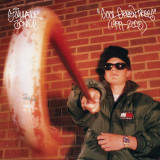
The cover photo is a picture of Sam standing on his back porch in the latter part of 1998, just before he got his first sampler. He was 13 years old, in 8th grade. His dad took the picture with his 35mm film camera: "I actually wanted to be pointing my dad's .22 pistol at the camera lens but he wouldn't let me. He gave me an old walking cane to use instead. The Tommy Hilfiger puffer jacket came from the lost and found at William Fleming High School where my mom worked as a secretary. I was thrilled when she brought it home because we never spent money on expensive name brand clothing like that - we were for the most part strictly a sale rack, bargain bin, thrift store, yard sale, flea market kind of family when it came to clothes. My watch is some cheap off-brand fake gold department store watch." Mastering for this vinyl edition was overseen by Be With regular Simon Francis and it was cut by the esteemed Cicely Balston at Abbey Road Studios to be pressed in the Netherlands by Record Industry.
The debut recording by The Ancients, the intergenerational coalition of Isaiah Collier, William Hooker, & William Parker formed by parker to play concerts in conjunction with the milford graves mind body deal exhibition at the institute of contemporary art los angeles & now a working group. across x2LPs of side-length long-form improvised sets recorded at 2220 arts & archives in LA & the chapel in San Francisco, The Ancients bring the free jazz trio languages first explored by the Cecil Taylor Unit & Ornette Coleman’s -Golden Circle- band (expanded upon in later eras by Sam Rivers' Trio & Parker’s collective trios with Charles Gayle/Graves & Peter Brötzmann/Hamid Drake) into their own unique & scintillating realms of expression.
As we tumble further into the throes of history’s tides, people of hope & creativity rely on the works of our great artists to lift our spirits & focus our resolve. -ascension- was recorded less than a year after the passage of the civil rights act & four months after the assassination of Malcolm X. -journey in satchidananda- was recorded the month reagan was re-elected governor of California. M’boom made its debut recording weeks after the watergate scandal broke & a couple months after the wounded knee occupation ended. The music of the ancients builds on these great musical legacies. it resounds with the pride of survival & the joys of making & sharing music. It delivers to us hope & balm. something real in you, real in history, & real in the music is shared, right on time.
When Eremite records commenced operations during the 1990s free jazz resurgence, heavyweight freedom-seeking tenor saxophonists such as Fred Anderson, Peter Brötzmann, Charles Gayle, Kidd Jordan, & David S. Ware were at the height of their powers. Isaiah Collier’s tenor playing in the ancients is bracing testimony that the wellspring lives on. to hear the young chicago firebrand blowing freely with veteran improvisers in an entirely open-form group music is a revelatory study of his vast talent, personal voice, & the intensity of his expression —as well as a bold complement to his composition-based albums as a bandleader (including -the almighty-, a new york times' best albums of 2024 selection).
I've admired drummer William hooker since first encountering his music in a hartford ct city park, early ‘90s (on a double bill with Jerry González & Fort Apache Band). From the man himself right off the bandstand i bought his even-then rare 1st recording, the 1976 self-released x2LP opus -is eternal life- (reissued 2019 by superior viaduct). An imposing force on his instrument & an intrepid DIY cat, Hooker’s been exuberantly swinging in&out of free time for 50+ years. informed by the innovations of Sunny Murray & Tony Williams yet entirely himself, there is no other term for it than “pure hooker.” at age 78, with the ancients & everywhere else, THE HOOK is in peak form.
With a discography approaching 600 entries & 50+ years working across the musical maps, including in the history-defining bands of Don Cherry, Cecil Taylor, Bill Dixon, Peter Brötzmann, in his own wondrous ensembles from small group to orchestra to opera, a bastion of compassionate leadership & a poetic champion of his musical community, in tireless service to what he rather egolessly refers to as “the tone world”, multi-instrumentalist, improviser & composer william parker is a living hero of the grassroots & the black mystery musics, not to mention one of the great bassists in the history of jazz. To quote George Clinton, conquering the stumbling blocks comes easier when the conqueror is in tune with the infinite.
Live to 2-track concert recordings by Bryce Gonzales, Highland Dynamics. Mastered by Joe Lizzi, Queens, NY.