Horizon is a new collaborative album by Resavoir and Matt Gold. Across the 10 tracks the two Chicago-based producers combine their distinct sensibilities to create a hypnotic and inviting love letter to their shared admiration for "60s and "70s Brazilian music. Resavoir leading man Will Miller - the acclaimed trumpeter, composer, and producer who"s worked with SZA, Whitney, and more-makes room at the table for Gold - a seasoned multi-instrumentalist and accomplished guitarist who has collaborated with the likes of Makaya McCraven and Greg Ward - and the results are distinctly new for both of them. The sunny and expansive tunes on Horizon are as immersive as they are endlessly replayable, a dynamic and joyous body of work.
quête:gold n chic
- Hang Em High
- Two Seven
- Bitter
- 4: Priest Hunter
- Little Paths
- Rumble Shake
- Black Asphalt
- Black Man's Gold
- Jessie Mae* (Written By Ray Wylie Hubbard)
- Sit With Satan
Das zweite Album des irischen Bluesrock-Trio jetzt auf Vinyl! 2014 stieg es auf Position 12 in die irischen Albumcharts ein und ist eine brillante Reise voller Blues-Rock Power! Als Nachfolger zu dem 2012 veröffentlichten und von Kritikern vielbeachteten Debüt "Electric Soup"baut das zweite Album der Band, "Rumble Shake" auf diesem Erfolg auf und liefert 10 Bluesrock-Songs aus dem tiefen Süden Irlands. Wahre Geschichten und sündhaft gute Musik mit Gästen wie zum Beispiel der texanischen Legende RAY WYLIE HUBBARD. Aufgenommen wurde das Album in den Westland Studios in Dublin, während das Trio die Historie des Ortes in sich einsog - denn in diesem Studio haben schon Größen wie BOB DYLAN, HORSLIPS und THIN LIZZY ihre Platten machen lassen - und abgemischt in Texas von George Reiff (TEDESCHI TRUCKS BAND, THE BAND OF HEATHENS, RAY WYLIE HUBBARD). Christy O'Hanlon (Gitarre, Vocals), Stephen McGrath (Bass) und Gev Barrett (Drums, Background-Gesang, Perkussion) schrieben bis auf "Jessie Mae" (RAY WYLIE HUBBARD) alle Songs selbst und lassen den Bluesrock weiter Unvergänglichkeit atmen, ohne ihn dabei verstaubt klingen zu lassen.
Horizon is a new collaborative album by Resavoir and Matt Gold. Across the 10 tracks the two Chicago-based producers combine their distinct sensibilities to create a hypnotic and inviting love letter to their shared admiration for "60s and "70s Brazilian music. Resavoir leading man Will Miller - the acclaimed trumpeter, composer, and producer who"s worked with SZA, Whitney, and more-makes room at the table for Gold - a seasoned multi-instrumentalist and accomplished guitarist who has collaborated with the likes of Makaya McCraven and Greg Ward - and the results are distinctly new for both of them. The sunny and expansive tunes on Horizon are as immersive as they are endlessly replayable, a dynamic and joyous body of work.
- 1: Playful Slowed
- 2: Ether Circus Harmonics
- 3: Celestial Piano
- 4: Stuck Run Baby
- 5: Seagulls
- 6: Downwards Spiral
- 7: Stuck
OONA Recordings is proud to announce the upcoming release of the soundtrack for The Girl With The Needle by Frederikke Hoffmeier. Hoffmeier, whom performs under the stage name Puce Mary, brings a raw, intense and atmospheric score to this Oscar-nominated film, which is contending for Best International Feature. Known for her bold, experimental approach to sound, Hoffmeier’s composition immerses listeners in the film’s dark, emotionally-charged world. Directed by Magnus von Horn, The Girl With The Needle premiered at the Cannes Film Festival, where it earned praise for its uncompromising vision. The film went on to receive a Golden Globe nomination for Best Non-English Language Film and won two prestigious awards at the European Film Awards, including Best Score for Hoffmeier’s hauntingly powerful work. The score to The Girl With The Needle is as dark as it is compelling, a masterclass in creating tension, unease, and raw emotional weight. Hoffmeier’s sound design is equal parts abrasive and intimate, drawing the listener into a world of fractured beauty. Her use of organic textures, electro-acoustic undertones, and dissonant, atonal melodies challenges traditional notions of film music, offering something deeply visceral and unpredictable. The Guardian described Hoffmeier’s score as "nerve-abrading," highlighting the relentless, uncomfortable energy that underpins the film. The Chicago Reader similarly calls the score haunting, noting how it amplifies the film’s stark atmosphere. Drawing comparisons to the intense works of composers like Mica Levi, Awards Radar Magazine praises Hoffmeier for pushing the film’s emotional core to its breaking point, deepening the agony of the protagonist. Throughout the film, Hoffmeier’s score becomes as much a character as the people on screen. Her collaboration with von Horn is marked by a shared vision of pushing the limits of cinema and sound. Screen Daily describes the score as "daring," with its aggressive, contemporary tones standing in stark contrast to conventional film scores. The result is a uniquely modern, avant-garde work that reflects the film's visceral and unsettling nature. Hoffmeier crafts a world of sound that lingers long after the credits roll. The soundtrack’s fusion of organic instrumentation with electro-acoustic elements and bold industrial sounds sets it apart from the ordinary. The British Film Institute notes how Hoffmeier’s "atonal score" creates an "enervating effect," pulling listeners deeper into the film’s raw emotional depths. The combination of brutal sound design and haunting melodies builds a layered, evocative listening experience, one that grows increasingly intense with every listen.
The Ibex Band, with Giovanni Rico and Selam Woldemariam at the creative helm, provided the musical backbone for legends like Aster Aweke, Girma Beyene, Tilahun Gessesse, Mulatu Astatke, and Mahmoud Ahmed, including the iconic album Ere Mela Mela, shaping modern Ethiopian music as we know it today. This 1976 album (Ge’ez Year 1968) played a pivotal role in that legacy and has now resurfaced to set the record straight.
There’s a tendency to talk about the seventies as a golden age of Ethiopian music. There are good reasons for that, and just as good reasons against it. However, the notion of a golden past privileges the role of Western explorers and suggests that the pinnacle of Ethiopia’s musical culture is something only a foreigner can appreciate and unearth. It downplays the complexities of Ethiopia’s culture and history, creating an artificial divide between then and now. And it underestimates the constantly evolving sound that has followed.
The legendary musical outfit The Ibex Band, later metamorphosed into The Roha Band, has played a central role in defining the sound of many of the greatest stars on the music scene of Ethiopia from the mid-seventies onwards–but their golden output has never really waned. The story of the origins of the band that provided the musical backbone for greats such as Aster Aweke, Girma Beyene, Tilahun Gessesse, backing the solo career of group member Mahmoud Ahmed as well as backing Mulatu Astatke and many others has yet to be properly told.
Two misconceptions plague the image of Ethiopian music, one is that the music is pure because it is, by some notion, unexploited, the other is that it is all traditional. To begin with, a combination of political changes between the late sixties and the mid-nineties created an environment where only the most dedicated and skilled musicians struggled on and pursued a musical career against fierce odds. The whole Ibex Band, with Giovanni Rico and Selam “Selamino” Seyoum Woldermarian at the creative helm, are arguably the origo of the vibrant scene in the mid-seventies, and the said pair are foremost responsible for not only navigating the band through troubled times, but also modernizing the 6/8 chickchicka rhythm to a contemporary form. Giovanni laid the rhythmic foundation with heavy looped basslines that reinvented traditional melodies as dance music, and with Selamino’s innovative guitar work they influenced scores of musicians from Abegaz Kibrework Shiota to Henock Temesgen. Even Giovanni’s Fender bass and Selamino’s Gibson guitar inspired younger musicians in their choice of instruments. Not only in choice of instruments but also in sound–even as the digital revolution hit Ethiopian music, a lot of popular music still took its cue from the masters from Ibex and Roha.
Ibex emerged out of the ashes of the sixties group the Soul Echos band, adding Giovanni and Selamino to their ranks and taking their cues from a slew of influences, such as Motown and The Beatles, fused with traditional music. A tighter-knit unit than most bands at the time – Ibex has remained six to seven members throughout their whole career, compared to many bands that were as large as fifteen or sixteen men strong when Ibex set out. Their playing has been viciously focused, economical yet heavy. Just a year before the recording sessions of the album in your hands, Giovanni and Selamino made a contribution to the popular musical lexicon of Ethiopia that was simply defining the popular sound: their arrangement and recording of bandmate Mahmoud Ahmed’s solo effort and real commercial breakthrough tune and eponymous album, Ere Mela Mela, from 1975.
Selamino has never limited himself to being an adroit lead guitarist, but has always been a scholar of history, and as such he has probably contributed as much to modern Ethiopian music with his guitar playing and compositions as with a deepened understanding of modern or contemporary – Zemenawi – Ethiopian music. Selamino’s contributions serve as a metaphor for those of the whole band, at one and the same time creating and defining a new, danceable and updated sound anchored in Giovanni’s bass, whilst also elevating the broader scene through their support for others on the scene and on top of that, increasing the understanding of the music.
There is an understandable desire to romanticize the musical heyday Ibex and Roha were at the forefront of, because so much of the output is sorrowfully hard to come by. Ibex creativity was nothing short of ridiculously fierce compared to many of their Western contemporaries. Based on their sheer recorded output alone they could have usurped the title “hardest working in show business” from James Brown, recording more than 250 albums or 2500 songs in the seventies and eighties. Some only surface as cassettes today, others were never given full LP release, and some are simply impossible to find today. In the light of that, it’s nothing short of a miracle that the recording Stereo Instrumental Music from 1976 (Ge’ez Year 1968) has resurfaced. Unearthed in perfect condition on a chrome cassette, this is musical history comes alive–to set the future straight. Stereo Instrumental Music was recorded in collaboration with Karl-Gustav Lundgren, a Swedish national working for the Radio Voice of the Gospel. It took two sessions at the Ras Hotel ballroom in Addis Ababa. The Ibex Band was the first band in Ethiopia to employ a four-track recorder for their recording (the first available in the country, lent by Karl-Gustav). Later the same week, Giovanni and Selamino realized that, lengthwise, the recorded material fell short of what they wished for, so they recorded four more tracks in one more session on a single-track recorder. The Ras Hotel and Ghion Hotel, where the Ibex Band held musical residencies were to Ethiopia in general and Addis Ababa in particular what Motown was to the USA and Detroit a few years earlier – a hotbed of musical creativity and showmanship.
The most astonishing thing about Ethiopian music of the last half century is how tradition and modernity are intertwined. Because of this feature, it’s kind of hard to tell when there ever was or when we are in a “golden age”. So much of music from the past has been criminally neglected, but because of the hardships in the past, it would be an oversimplification to say that said past was a golden age. Probably, the golden age is what we are approaching, because for the first time both the past and future are accessible, and the monumental contributions from before can lay a firm foundation for a thriving music scene today. The Ibex Band stands firmly in the past, present and the future. That, if anything, is golden.
The detailed history of Stereo Instrumental Music is in many ways unique. To begin with, it couldn’t have been recorded earlier (there were no four-track recorders available) and it really couldn’t have been recorded afterwards either, at least not in the years directly following, because of the toll the musical scene took from the unfavorable political climate that followed when the nascent Derg regime and rival groups tried to assert themselves, the musical equipment lent from The Voice of Gospel Radio simply disappeared from Ethiopia when the radio station folded in 1977. Karl-Gustav Lundgren,
the Swedish foreign national who assisted during the recording, worked with the Ethiopian Evangelical Church Mekane Yesus at the time, recalls how they only had about fifteen minutes to get the microphones in place for the recording as to not alert neither the management at Ras Hotel nor the authorities and most importantly, to complete the recording before the curfew came into effect at midnight. In leaping to the opportunity to use previously unavailable equipment to push their sound forward and improvising to meet the logistical challenges, the Ibex Band displayed the very avant-gardism and adaptability that explains their longevity as a band through the years. The recording of Stereo Instrumental Music is from a given time in history, but it sounds as beyond time.
Much of the energy that burst out of the scene that Stereo Instrumental Music came out of dissipated or got sidetracked during the societal changes Ethiopia went through in the 1970s and 80s. Whilst leaders might have professed to be revolutionary, the work ethic of the Ibex Band can truly be described as that. They never called it quits, but adapted, toured extensively abroad in Africa, Europe, and the Middle East, and found ways to work even in the face of the curfew that curtailed a lot of musical life. They even played major arenas in the nineteen eighties, despite said curfew and restrictions. The whole extent of their legacy has never been told, but their music speaks louder than words, so therefore… tune in to the Ibex Band’s Stereo Instrumental Music.
- Morny In The Earling
- I, Altered
- An Anechoic Orchestra
- Sun Rats
- Pont Du Poivre
- Draw A Head
- Ortemega
- The Equal Spacing
- Nonpareils In A Bottle
- Nana Femur
- The Submersible Community
- Don't Tell Anyone
- Golden K
- Ever In The Latening
- Window Weapon Speaks
- The Lyre Concordia
- Fast Eyes (And Neck)
- The Unexpected City
- A Moon Crows
- Build Your Background
- No Time Is Passing
- Very Berk Squad
- Verybody's Colleyland
- The Caves At Aurangabad
- Night Felt
- All Cats Are Bored
- Daft Zenith Nought
Im Jahr 2023 veröffentlichte James Elkington "Me Neither", ein Doppelalbum mit Solo-Gitarrenimprovisationen und -Experimenten. Am Ende betrachtete er es als eine wortlose Sammlung von Library Music, eine Fundgrube anonym produzierter Klänge, die für jede Art von Verwendung geplündert werden können, und Elkington, der in Chicago lebende britische Gitarrist, findet in dieser Musik eine Freiheit, die aus dem Nichts zu kommen scheint. Er lässt "Me Neither" mit "Pastel De Nada" ein neues 2xLP-Set folgen, dessen 27 Tracks eher einem Werkzeugkasten als einer Bibliothek gleichen. Helle, optimistische Strums wie 'The Lyre Concordia', vielschichtige Meditationen wie 'Morny in the Earling' und 'The Caves at Aurangabad' und Stücke wie 'The Equal Spacing', die wie kleine Maschinen ticken und surren, um Freude zu erzeugen. Elkington stellt seinen Gitarren Texturen, Atmosphären und flüsternde Perkussionsinstrumente gegenüber.
Am 22.11.2019 erschien das erste richtige OG Keemo Album Geist. "Neue Ära, alte Schule," rappt Keemo an einer Stelle des Albums, und damit ist im Grunde alles gesagt. Inzwischen ist aus „Geist" ein moderner Klassiker geworden. Die verschiedenen Vinyl Editionen sind längst ausverkauft. Zum 5-jährigen Jubiläum veröffentlichen wir deswegen eine Re-Edition im aufklappbaren Gatefold. Schönes, schwarzes Gold als Doppelvinyl mit neuem Cover und inklusive der Instrumentals.
Do Your Own Dance! VARIOUS ARTISTS
Chic’s Nile Rogers is lauded as an international star and the recently departed Patrick Adams is acknowledged as one of the most important pioneers of disco music, but behind them were an army of lesser-known musicians, producers, and arrangers including one of the founding-fathers of New York Dance, the enigma Lonnie Johnson.
Scorpgemi Records and Lonnie Johnson, the man behind the label, will be unknown to most, but he was an important figure at the birth of dance music. His label featured work by several leading voices of the New York scene and provided one of New York’s most instantly recognisable dance music records— “Keep In Touch (Body To Body)”—one of the greatest club cuts ever.. But Johnson himself leaves hardly a trace, a behind-the-scenes person, and a friend of Patrick Adams who is only known to those who study the small print on record labels.
So, Lonnie Joel Johnson proves to be both highly influential, and almost completely elusive. A backroom person, who created an anthem across the Atlantic from his home base in New York. A man who was instrumental in the development of Patrick Adams’ career from producer of vocal groups to the go-to producer for dancefloor gold. Yet, for all this there are no biographical details, no interviews and almost nothing left behind except for a small but fantastic catalogue of music.
The first ever curated works of the Broadway based Scorpgemi label Produced by Lonnie Johnson, one of the founding-fathers of New York Dance Dancefloor Gold from the enigma that is Lonnie Joel Johnson, the man behind the career of the legendary Patrick Adams.
Especial welcomes new artist DJ 1985 to the label. As so often, the idea of pushing new music has been the raison d'etre of the past decade. An EP of a love for Acid, from the breaks anthem of the title We Trippin’ to exploring the ethereal and even mind-melting Ambient House and Balearic of how the Roland TB-303 has become a fundamental element in the history of electronic music.
Soviet born; Belgrade exile Stanislav Grishchuk is DJ 1985. A man of many monikers, came to House later, originally progressing from Breaks, Hardcore and onto Drum and Bass as DJ Saint Man, a Mixmaster in the truest sense, switching it up to include Ghetto House and Booty, DJing led to producing, finally seeing DJ 1985 emerged to encompass Acid, Bleep, Breakbeat, Chicago and beyond.
A DJ supreme from the old school – check his Boiler Room mix for live vinyl dexterity – his productions nod to Aphex Twin and the Rephlex / UK lineage, the Techno. Electro of masters Underground Resistance and Drexciya and on to Italo, Italian House and early 90s New Jersey and New York’s golden period and of course the masters Kraftwerk, all influence the sounds of this debut EP.
Starting as 808 and 909 Electro and Techno jams, all the tracks are recorded live, MPC, synth and drum machines, no computers involved. We Trippin’ is built around the “Think” break, with trippy 303 line, some 808, synths and off we go “we trippin”.
Dolphin and Sirens was inspired by the Boka Bay dolphins of Montenegro, near where the recording was made. A flotation bath of warm dreamy acid beats and aquatic found sound, fast, shifting breaks, the Adriatic Sea of Croatia and beyond beckoning.
Catland’s title is a nod to Stanislav’s love of all the feline, but the breaks’n’303 cut is an endlessly uplifting spark, celestial, a cosmic evolutionary odyssey.
DJ 1985 completes his debut EP with the aptly titled The Last One. Spherular, mysterious, this rise of spatial breaks is a reawakening of symbolic music that is touched by both East and West. Stanislav’s music intersects, trans-national, almost spiritual and psychedelic. Live jamming, more hearted, the snap electro percussion, dream-laden pads are twinned with an ethereal otherness via the endless possibilities of the TB-303.
- A1: Grupo Atlantic - Danza Atlantic
- A2: Los Tigres De Tarapoto - Bailando Con Los Tigres
- A3: Los Invasores Del Progreso - Selva Mia
- A4: Los Condores De Cusco - La Piedrita
- A5: Grupo Punto 5 De La Oroja - Raquel
- B1: Los Rangers De Tingo Maria - Baila Babalu
- B2: Los Condores De Cusco - Cusco Imperial
- B3: Grupo Punto 5 De La Oroja - Triste Esperanza
- B4: Grupo Atlantic - Amor En La Selva
- B5: Los Invasores Del Progreso - Recordando A Mi Lita
Bringing new life to the electrifying sounds of Peru’s golden era of cumbia, *CHICHA POR FAVOR Vol. 1 is a highly anticipated limited edition vinyl release, featuring 12 rare tracks from the historic El Volcan label, known for its groundbreaking cumbia in the highlands of Cusco, Peru. This curated collection, spanning the 1970s and 80s, delivers listeners an immersive sonic journey into the heart of Peru's tropical music heritage.
For vinyl collectors, cumbia enthusiasts, and aficionados of Latin American musical history, this album is a rare treasure, packaged with an exclusive insert detailing the cultural origins of each track and offering in-depth insights into the socio-musical evolution of Peruvian cumbia. This release is the inaugural volume of CHICHA POR FAVOR, a project aimed at preserving and celebrating the defining sounds of Peruvian tropical music.
The tracks featured in CHICHA POR FAVOR Vol. 1 offer a uniquely authentic perspective on Peruvian cumbia’s intricate layers, capturing the influence of coastal rhythms, Andean folklore, and Amazonian beats, fused with elements of rock and psychedelia. From the driving electric guitars of *Grupo Atlantic*’s “Danza Atlantic” to the lively, Amazonian-infused grooves of *Los Invasores* and *Los Tigres*, the album reflects a diversity of styles that arose during a transformative era in Peru’s music scene. Notably, the release revives the distinctive sound of *El Volcan* a Cusco-based label that became a beacon for cumbia in the Andes and beyond.
Peruvian tropical music emerged in the 1960s as a fusion of traditional Andean sounds with electric guitar-driven interpretations of Afro-Caribbean and American rock influences. The insert, included with each vinyl, presents a well-researched narrative of the genre’s genesis and evolution, from early instrumental adaptations of huayno rhythms to the psychedelic Amazonian sounds that became its signature.
This compilation is not only a celebration of Peru’s cultural legacy but also an educational experience, designed to give listeners a comprehensive understanding of the geographical, cultural, and musical landscapes that shaped this genre.
Repress!
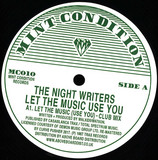
Mint Condition - A brand new record label focussed on excavating the outer fringes of classic House and Techno. Unreleased mixes, classics and overlooked gems mined from the last 20+ of contemporary dance music are the order of the day. From Chicago, Detroit and New York to London and beyond, Mint Condition have got their expert digging hats on to bring you exclusive heat and those rarer than rare jams that have been on your wants list for years! Dig in.... Another dyed-in-the-wool house classic here, from all the way back in the golden mists of 1987 on the tiny, cult Danica label. Don't forget, Mint Condition's mission is to bring you the classics too, a nice, new copy to play out in the club so you can keep your original nice and fresh! We care about these things. That's why we're happy to present this monumental slab of Chicago house history from one of the absolute gods of this culture - Mr. Frankie Knuckles - this time operating under his Night Writers alias. We're not sure too much needs to be said about this one, it's all here really, that classic Knuckles deep touch, the musicality, the vibe... Ricky Dillard's vocals encapsulating that feeling when the music takes over, pure abandon. The pairing of these two talents results in what would eventually become a bona-fide house CLASSIC. No arguments. If you're not familiar you're in for a treat, if you already know then you're nodding your head and agreeing with everything you've just read. Simple really - YOU NEED THIS ONE ! 'Let The Music Use You' has been legitimately re-released with the full involvement of all license holders for 2017 and remastered by London's Curve Pusher from the original sources especially for Mint Condition. 100% legit, licensed and released. Dug, remastered, repackaged and brought to you by the caring folks at your new favourite reissue label - Mint Condition!
- Limehouse Blues
- Stars Fell On Alabama
- Wabash
- Grand Central
- You're A Weaver Of Dreams
- The Sleeper
Cannonball Adderley Quintet in Chicago is revered among jazz aficionados as an essential document of late 1950s hard bop
It captures two of the greatest saxophonists in jazz, Adderley and Coltrane, at a time when they were both at a creative peak. The album is a vital recording from a golden era in jazz, featuring a rare and electric partnership between two saxophone giants. Its hard bop foundation, infused with hints of modal jazz, places it among the most important recordings of its time. The album was recorded the February 3, 1959 during a time when Adderley was playing as part of Miles Davis' group, and it captures the quintet during a pivotal moment in jazz history. On Cannonball Adderley Quintet in Chicago, you can hear Coltrane at a transitional stage, balancing between his earlier bebop style and the modal, more avant-garde approaches he would later pursue. His interaction with Adderley is fascinating because it blends his dense harmonic language with Adderley's more traditional, bluesy approach.Cannonball Adderley had been recruited by Miles Davis in 1957, joining what would become one of the most influential jazz groups of all time. Adderley's style was deeply rooted in the blues, and he brought a strong sense of soulfulness and swing to the Davis group. While Davis' style was often cool and restrained, Adderley's alto saxophone was the opposite: robust, fiery, and emotional. Adderley's command of the instrument was remarkable, and his ability to balance technical prowess with a highly accessible, bluesy feel is on full display throughout Cannonball Adderley Quintet in Chicago . His solos are expressive and lyrical, often imbued with a sense of joy and exuberance. This makes for a perfect contrast to Coltrane's playing, which at this point was becoming more dense and harmonically complex
- A1: Armin Van Buuren Feat. Justine Suissa - Burned With Desire (Rising Star Vocal Mix)
- A2: System F - Cry
- A3: Cygnus X - Superstring (Rank 1 Remix)
- A4: Liquid Child - Diving Faces
- A5: The Space Brothers - Forgiven
- A6: Southside Spinners - Luvstruck (Marco V & Benjamin Remix)
- B1: Energy 52 - Café Del Mar (Three 'N One Remix)
- B2: Chicane Feat. Bryan Adams - Don't Give Up
- B3: Nalin & Kane - Beachball (Vocal Mix)
- B4: Atb - Don't Stop
- B5: York - Reachers Of Civilisation
- B6: Airwave - Venus Of My Dreams
- C1: Push - Strange World
- C2: Plastic Boy - Silver Bath
- C3: Travel - Bulgarian (Signum Remix)
- C4: K90 - Red Snapper
- C5: Ralph Fridge - Angel (Club Mix)
- C6: Sunburst - Eyeball (Eyeball Paul's Theme)
- D1: Paul Oakenfold Feat. Carla Werner - Southern Sun (Tiësto Remix)
- D2: Rank 1 - Awakening
- D3: Three Drives - Signs From The Universe
- D4: Gouryella - Ligaya (Vocal Mix)
- D5: Origin - Wide Eyed Angel (Original Inversion Mix)
- D6: Dj Jean - The Launch
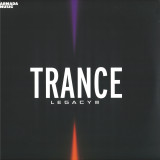
Der dritte Teil der Albumreihe "Trance Legacy" von Armada Music erinnert an die goldene Ära der Trance-Musik und vermittelt gekonnt die anhaltende Anziehungskraft des Genres durch die Produktionen, die den Sound geprägt haben. Diese exzellente 24-Track-Auswahl enthält Klassiker wie "Burned With Desire" von Armin van Buuren feat. Justine Suissa, den legendären Three 'N One Remix von Energy 52s "Café Del Mar", "Strange World" von Push, Tiëstos Remix von Paul Oakenfolds "Southern Sun" und viele, viele andere. Die Melodien von früher werden in Erinnerungen wachgerufen und füllen die Dancefloors von heute.
In the fall of 2022, celebrated UK chill-out institution Seahawks landed in Los Angeles for the first time in their 15-year history, with plans to record a sweeping new age downtempo "exploration of visionary California."
Instead, they immediately fell ill with flu (Fowler collapsed next to a taco truck; 911 was called), and were bedridden for the better part of a week. Upon recovering, they resituated at the synthesizer sanctuary of Brian Foote (Peak Oil, Kranky, Leech), channeling their post-sickness psychedelia into one of the band's lushest and most elevated creations to date: Time Enough For Love. Inspired by the "groove and mood" of Harry Nilsson demos, as well as its wider 70's wavelength - Rhodes, Wurlitzer, wood paneling - Seahawks transposed their classic post-rave ambient exotica onto a warm and woozy Golden State palette. Buoyed by the liquid touch of English maestro Kenny Dickenson on keys, the results rank high among the duo's smoothest and most multi-sensory voyages. "Sail Across The Moon" delivers on its title, a simmering, phaser-smeared cruise through the beauty of the night. "Messengers" echoes the cosmic lounge of Air's Moon Safari, shuffling, weightless, and ethereal, while "Falling Deep" reaches for the stars, pure cascading bliss, the ecstatic moment writ large.
The album skews steadily more astral as it progresses, drifting towards jazzy, galactic outer reaches. "Like A Grain Of Sand" opens with a spoken sample by the celebrated late American poet Rachel Sherwood ("The children watch, breathless / with the birds / They feel an emanation / from this shuddering place"), before taking flight on a Balearic trip through island house, PM Dawn gold dust, upright bass meditation, and kaleidoscopic light. A remix of the title track by Chicago trio Purelink closes the record in a suitably subdued and skittery state of mind. Time Enough For Love radiates color, complexity, and positivity, infused by the "life enhancing" nature of the band's time in Los Angeles - sunsets, sound systems, and sativa, framed by coastlines and cloudbanks, the city's mystic sprawl glittering beneath purple dusk.
- A1: Where We’ve Been
- A2: Crimson To Chrome
- A3: Crashing Through
- A4: For Ella
- B1: Chemical
- B2: Statues
- B3: Until I’m With You Again
- B4: Get Numb To It!
- B5: Cardinal
- C1: I Could
- C2: If I Am
- C3: Love You Lightly
- C4: Pride Trials
- C5: Sliip Away
- D1: Where We’ve Been (Live In Chicago At Metro 3/1/24)
- D2: Statues (Live In Chicago At Metro 3/1/24)
- D3: Cardinal (Live In Chicago At Metro 3/1/24)
- D4: Get Numb To It! (Demo Version)
- D5: Repeat Yourself (Demo Version)
- D6: When You Sleep
Das Debütalbum der jungen Band aus Chicago auf Golden Nugget Doppelvinyl. LP 2 enthält 11 Bonustracks, darunter B-Seiten, Live-Tracks und ein My Bloody Valentine-Cover.
"Reaffirms that indie rock, as a style and ethos, can still feel like the most exciting thing a young person could be into.” - Pitchfork
Zukunftsweisender Indie-Rock hat in Chicago eine lange Tradition. Neuzugang und Hoffnungsträger Friko bilden da keine Ausnahme und verwandeln jeden Song in einen Moment der kollektiven Katharsis. Auf ihrem Debütalbum knüpfen Sänger/Gitarrist Niko Kapetan und Schlagzeuger Bailey Minzenberger an die brennende Energie ihrer Debüt-Single Crimson To Chrome an, indem sie Elemente von Post-Punk, Kammer-Pop und experimentellem Rock miteinander verschmelzen und die berauschende Kraft ihrer Musik mit einer Flut von temperamentvollem Ensemble-Gesang verstärken. Poetisch, explosiv und von erhabener Gefühlsrohheit.
DJ Marky, Makoto & Nookie reboot Adam F’s revisited rework of 1997 hit, ‘Music In My Mind’
Adam F enlists jungle royalty to modernise his 1997 track, ‘Music In My Mind’, from his anticipated forthcoming rework album, ‘Colours Revisited’
Legendary drum ‘n’ bass producer Adam F announces the ‘Music In My Mind Revisited Reboots’ EP, out digitally on 20th September via 181 Recordings, featuring reworks of his acclaimed 1997 track by DJ Marky & Makoto and Nookie.
Further launching this underground dance classic into new dimensions is Brazil’s DJ Marky and expertly selected Japanese producer Makoto. Together, they effortlessly bring the jazz-infused track to the attention of today’s ravers with re-jigged, amplified drums. Certified 90s jungle veteran Nookie goes more liquid with his version, heightening the vibes and setting the scene with immense violin strings.
‘Music In My Mind’ was originally featured on Adam F’s 1997 album, ‘Colours’. Now, as part of the Liverpool-born producer’s much-anticipated ‘Colours Revisited’ album, out in 2025, the jazzy, vocoder-loaded track inspired by Bob James, Lalo Schifrin and Chick Corea, has been given a modern reshape.
“‘Music In My Mind’ speaks to the power of music to transport, heal, and uplift our spirits,” says Adam F. “This song resonates with those who find solace and freedom in the melodies and rhythms that exist in their own minds and bring back memories of a time when I felt an overwhelming connection to music.”
“This song holds a special place in my heart, and I believe it carries a deeper meaning that resonates with anyone who can relate to finding consolation and liberation in the power of music.”
There’s no better time to keep an eye on Adam F, as he uncovers yet more gold from his elegant and timeless back catalogue. Adam F is as fertile and contemporary as ever with more new production ready to launch unto the legions of listeners hungry for great music as his creativity flows brighter than ever.
Plastic Crimewave Syndicate returns with one collective foot in overdriven space-biker scuzz rock, but the other bigfoot kicking upward into new galaxies of synth punk, no-prog, and freek funk. Yes, dare we say it, the new PCWS LP, Tales From the Golden Skull, GROOVES--but from the perspective of the Japan n' Kraut/Eurorock undergrounds, coated in some nasty Windy City grime. Aided by the Chicago Cosmonaut Couriers Crew, ala famed renaissance man Mac Blackout (synths/horns/electronics), Przemyslaw Krys Drazek (trumpet) of longtime zone-jammers Drazek Fuscaldo/Mako Sica, Will MacLean on Moog keytar (!-- of local Silver vocoder-ed Apples lovin' treasures Protovulcan), plus the oldest-school synthlord Bil Vermette, who's been modulating since the 70s. We'll call Tales From the Golden Skull a near-concept lp (aren't they always?) that looks back at fallen friends and collaborators, and then into the unwritten golden future (as PCW himself hit the golden 50). The sonic journey dips into dark textural valleys, and chugging riffs rising to thee fiery heavens, as the thundering-but-subtle rhythm section of Jose "Beast but Best" Bernal and Rob "Dead Feathers" Rodak know when to crash and when to burn (one). Sir PCW lays down his trademark big muff-blastage and echo-cries, to channel the despair and feral bark of the mighty Vega/Hammill/Iggy/Dickie P/Haino/Mojo-Risin/Mizutani, but also knows when to shut up for some layered instrumental Embryo/Harvester/Fausty trance rock and dabbed/dubbed out "not-quite-shoegazin" calmness in the eye of the Ur-storm. This might be the most expansive, detailed yet furious PCWS LP yet, recorded at Rec Room studios with Eric Block, who has done all from a band with Sonic Youth's Steve Shelley to recorded Rhys Chatham 100+-peeps guitar orchestras. So strap the headphones on and absorb the tales of this spaced ritual-rock opus. Artwork - Steve Krakow
Opaque yellow vinyl in reverse board jacket.
A full four years after Chicago organ maestro Jimmy Lacy’s legendary maiden voyage as SiP, Leos Naturals, he returns with its lush, layered, long-awaited sequel: Leos Ultras.
Conceived and recorded in a corner of a large floorplan warehouse-turned-sound lab called Homan Gardens, the album radiates a rare joy and colour, projected through a technicolor slideshow of cosmic keys, clarinet, kalimba, sax, melodica, flute, tambourine, and drumbox. The songs feel warm and weathered, like familiar garments treasured through passing seasons.
Many seasons did pass while these songs took shape, spiked with seismic changes – Lacy’s first daughter was born, followed 17 months by a second. Daily routines grew denser, but he never lost faith in the melodies simmering in the periphery of his thoughts: “I knew the music would be there whenever I had the time. It felt good to stay calm about it.” Patience paid off; Leos Ultras is indeed the ultimate SiP statement to date, rich with detail, discovery, beauty, lofted improvisation, and shades of spiritual jazz. It’s music both casual and cosmic, playful and poignant, channelled from long shadows and wordless hours in celebration of life, love, and Leo.
- Trouble - Mike Viola
- Cold, Cold, Cold - Joachim Cooder
- Long Distance Love - Elvis Costello
- Heartache - Bedouine
- I've Been The One - Bhi Bhiman
- Rock 'N' Roll Doctor - Miles Tackett
- Be One Now - Lady Blackbird
- Love Needs A Heart - Madison Cunningham
- Easy To Slip - Jonah Tolchin
- Dixie Chicken - Eleni Mandell And Milo Jones
- Roll 'Um Easy - Ben Harper
- Lafayette Railroad - Larry Goldings
- 6: Feet Of Snow - Jack Shit
- Cheek To Cheek - Gaby Moreno
- Two Trains Running - Chris Seefried
- China White - Chris Stills
- A Apolitical Blues - Dave Alvin
- Feats Don't Fail Me Now - Sugaray Rayford
- Sailin' Shoes - Taylor Goldsmith
- Spanish Moon - Inara George
- Rocket In My Pocket - Sam Morrow
- Willin' - Jonathan Wilson
- Teenage Nervous Breakdown - The Bird And The Bee
- Crazy Captain Gunboat Willie - Andras Jones
- 20: Million Things To Do - Gus Seyffert
Mit der neuen Doppel-LP 'Long Distance Love - A Sweet Relief Tribute to Lowell George' hat Sweet Relief, die Organisation, die alle Arten von Berufsmusikern und Beschäftigten der Musikindustrie finanziell unterstützt, die mit körperlichen oder geistigen Problemen, Behinderungen oder altersbedingten Problemen zu kämpfen haben, ein Juwel vorgelegt.
Lowell George war der Gitarrenvirtuose, Sänger und Songschreiber von Little Feat. In dieser Sammlung von 25 Liedern interpretieren und spielen Künstler wie Elvis Costello, Ben Harper und Dave Alvin seinen vielfältigen Katalog. Der in Hollywood, Kalifornien, geborene George war Mitglied von Frank Zappas Mothers of Inventions, bevor er diese Band verließ und mit Bill Payne Little Feat gründete. Lowell gehörte der Band 7 Jahre lang bis zu seinem Tod an und veröffentlichte in dieser Zeit acht Alben. Obwohl George 1979 starb, lebt sein Vermächtnis durch dieses Album weiter.
A RADICAL HORIZON is comprised of a series of duets between cellist Lori Goldston and pianist Stefan Christoff, recorded on a late Fall afternoon in Brooklyn, NY. A conversation between friends, these improvised excursions reflect a willingness to be open to the spirits in the space and between the notes; a spirit of communion that, as Stefan writes, "guides and dances with our dialogue together".
Stefan Christoff is a Canadian musician, community organizer, and journalist based in Montreal, Quebec. He has collaborated with artists such as Sam Shalabi and Adriana Camacho, performs with his brother Jordan as a duo in Anarchist Mountains, and has released music on labels such as Moon Villain, Shimmering Moods, and Aural Canyon.
A lifelong community activist, he helped establish the Musicians For Palestine project and has engaged in street-level solidarity work in Lebanon and The Philippines as well as closer to home in Montreal. This is his second appearance on Beacon Sound after 'In Sofia', an album of piano improvisations recorded in Bulgaria, was released on the label in 2023.
Classically trained and rigorously de-trained, possessor of a restless, semi-feral spirit, Lori Goldston is a cellist, composer, improvisor, producer, writer and teacher from Seattle. Her voice as a cellist, amplified or acoustic, is full, textured, committed and original. A relentless inquirer, her work drifts freely across borders that separate genre, discipline, time and geography.
Current and former collaborators and/or bosses include Earth, Nirvana, Mirah, Jessika Kenney, Ilan Volkov, Eyvind Kang, Stuart Dempster, David Byrne, Terry Riley, Jherek Bischoff, Malcom Goldstein, Steve Von Till, Lonnie Holley, Cat Power, Ellen Fullman, Maya Dunietz, Mik Quantius, Embryo, O Paon, Tara Jane O’Neil, Natacha Atlas, Broken Water, Ed Pias, Christian Rizzo and Sophie Laly, Threnody Ensemble, Cynthia Hopkins, 33 Fainting Spells, Vanessa Renwick, Mark Mitchell, Lynn Shelton, and many more.
Her work has been commissioned by and/or performed at the Kennedy Center, Sydney Festival, Cineteca Nacional de México, Tectonics Festival, Frye Art Museum, Time Based Art Festival (TBA), WNYC, The New Foundation, Paris Fashion Week, Northwest Film Forum, On the Boards, Seattle International Film Festival, Seattle Jewish Film Festival, Bumbershoot, Crossing Border Festival, Boston’s Museum of Fine Arts, Joe’s Pub, the Stone, University of Chicago, and venues large and small throughout North America, Mexico, Australia, and Europe.