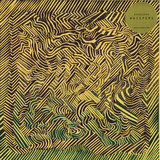
Ivy Falls, the alias of singer-songwriter Fien Deman, will release her first full album in the spring of 2024. 'Sense & Nonsense' sounds mature, with a clear vision and direction. Fien wrote the album after a breakup and leaving her home; she witnessed cracks appearing in her life and found herself in a whirlpool of insecurities. Writing turned out to be the way to reorient herself and discover what she could fill her empty 'house' with. Everything changed: a new life, a new place, new people, and a new view of herself as a musician and writer. Bram Vanparys, aka The Bony King of Nowhere, makes his debutas a producer on Ivy Falls' first release. This unreleased duo impresses with 'the best coda for the confusing time that your twenties can be.'
Sometimes hitting a wall is inevitable. This occurred, partly even literally, in 2020: a broken nose, a painful breakup, and a series of chaotic events shook Fien's foundations. Losing her job, ending her relationship, leaving her home, and returning to her parental home, she hit rock bottom and started her quest to rebuild everything from scratch. After the tumult, Fien decided to shed the oppressive norms and ideas learned as a child and wholeheartedly pursue her own choices and projects.
In the years that followed, each aspect of her life gradually fell into its right place. This extended to her musical identity, themes, and sound. Acquiring some guitars and an upright piano, she endeavored to master them as a self-taught artist. Devoting ample time to her self-made home studio, she returned to the essence, distancing herself from the polished pop sound of her initial work and reconnecting with her first musical love - the singer-songwriters who had colored her teenage years. This rediscovered inspiration marked the first time in her musical career that everything felt perfectly aligned.
The album's artistic approach aligns with a fresh, expansive outlook on life and the future. Fien aims to challenge rigid societal concepts, including the notion of 'golden years.' She questions what and when exactly should be considered the most significant, joyful, and vibrant moments of life. The album delves into topics like the perceived superiority of extroverts, narcotic materialism, and toxic positivity. It's not a lament but rather an ode to what truly matters-the essence, love, and beauty. Fien's perspective encourages finding your inner child and immersing yourself in timeless and profound feelings.
Musically, Fien discovered her perfect match in Bram Vanparys (The Bony King of Nowhere), her newfound love. She wrote the songs, and he took on the role of album producer and co-arranger. Together, they crafted a metaphorical space where every small musical idea has room to flourish, and each insight and effort carries significance. Influenced by indie folk luminaries such as Julia Jacklin, Amen Dunes, Feist, Sharon Van Etten, Sufjan Stevens, and Nick Drake, Ivy Falls has set a high standard for her sound.
The main constant? Fien's distinctive voice commands every song, now revealing greater depth and nuance than ever. In live performances, Ivy Falls is joined by a talented ensemble: Trui Amerlinck (Tsar B, Mayorga), Jasper Morel (Black Box Revelation), Simon Raman (Steiger), and Anton De Boes (Philemon).
In the past, Ivy Falls has launched two EPs, received airplay on Studio Brussels and Radio 1, and shared the stage as supportfor artists like Balthazar, Jessie Ware, Sigrid, and Mabel.
Поиск:golden voice
Все
On September 9th, 2022 at the Harrison House in Joshua Tree, Georg and Heike debuted a collection of songs that would later comprise Son of Velvet Rat’s Ghost Ranch studio album. A sacred space to present these new pieces, stripped-down to their most essential elements: two voices; one gruff and anchoring baritone, the other lifting in weathered hope, over six strings danced upon by Georg’s possessed spider-fingers, every note plucked with intention. A bare-boned outpouring, reverberating through the House like Midnight Mass in a rare church brave enough to explore the complexities of love.
That night, which ended with a refreshing baptismal monsoon as we walked out to our cars, would have to be preserved in the amber of memory until Georg and Heike would properly document the pieces at Gar Robertson’s Red Barn Studio in Morongo Valley the following spring ’23, before finishing the album in Austria.
MidnightRoba is Roba El-Essawy, the voice of UK trio Attica Blues. Golden Seams marks Roba's return to music, this time both as vocalist and producer. Recorded during lockdown of 2020, Golden Seams features artists Jason Moran, Ben Williams, Edward Wakili-Hick, Junius Paul, David Mrakpor, Robert Mitchell, Tony Nwachukwu, Artyom Manukyan, Bubby Lewis, Mike King, Alec Harper, Dezron Douglas and Tommaso Cappellato. The album's foundation is firmly inspired by jazz, but in a style of her own. From electronic tracks such as Safe With Me, Self Doubt and Shelter Within, to the ballads Don't Let This Change, Reminded and jazz ballad Be Still, to the spiritual Bitter Boy (ft Jason Moran) and the classical title track Golden Seams.
The album was supported by Gilles Petterson on both BBC Radio 6 (as a feature artist) and Worldwide FM and by Kevin Le Gendre on BBC Radio 3's J to Z; by Tony Minvielle, Anne Frankenstein and China Moses on Jazz FM, where Don't Let This Change featured as Track of the Week, as well as by Kev Beadle, Alexander Nut, Leanne Wright, Charlie Dark, etc on NTS, Totally Wired Radio and Worldwide FM.
Los Angeles duo crushed announce their signing to Ghostly International and the first vinyl pressing of their 2023 debut EP, extra life. A love letter to `90s radio, the first collaboration from musicians Bre Morell and Shaun Durkan finds them tuning a shared taste for maximalist dream pop. Open-hearted hooks and melodic riffs move through a haze of breakbeats, spliced sound design, and distortion. Faithful yet fluid in its channeling of golden age alt-rock, Britpop, trip-hop, and electronica, there's a refreshing freedom to the sound, which quickly resonated with fans and critics upon initial release. Pitchfork called it "effortless, widescreen dream pop that's serene without being sentimental," and NPR cited its "deep sense of place and time." The music also struck Ghostly, and the first measure for crushed and their new label home is to give extra life a wider physical release paired with remixes from band favorites Real Lies and DJ Python. The story of crushed is written across midnight transmissions. In the early 2010s, Morell, who fronts the band Temple of Angels (Run For Cover Records), hosted a graveyard shift college radio show and used to play music from Durkan's former band Weekend (Slumberland Records). In 2020, Durkan, having focused on production work (Tamaryn, Young Prisms) following Weekend's run as a formidable shoegaze act, hosted a late-night program on a community radio station in San Francisco. Driving one day, he heard Temple of Angels by chance and was immediately drawn to Morell's voice. He added a song that night to his on-air tracklist. Morell saw it and reached out to thank him and point to that connection made a decade earlier. The exchange sparked a long-distance project. First, they filled an audible moodboard with `90s classics from the likes of Natalie Imbruglia, Sneaker Pimps, and The Sundays. Songs that transported them back to places of comfort and discovery; Morell's memories of a metallic, lavender boombox that dispatched past sounds from a world beyond her Houston suburbia, and Durkan, in his mom's car on the way to band practice. These touchpoints provided a palette for crushed to experiment without expectations, purely for the fun of it. A creative intimacy emerged; stepping outside the reverb walls of her full band, Morell embraced more clarity and a range of emotions in her vocals, while Durkan looked inward as a producer, collaging fragments from their everyday lives: voice memos, piano recordings, even the panting of Morell's late dog on "milksugar." The wistful ballad embodies extra life's feeling as a whole. "I am home again," sings Morell; her refrain cycles above a drum machine beat as Durkan colors their universe with star-lit strums, synth swells, and the crackle of fireworks in the distance. Elsewhere, the duo's uptempo mode is equally effective, like the super-charged duet "coil" or the propulsive opener "waterlily," which sets a cinematic tone for the set. Bold, bright, and replayable, extra life presents crushed as a project of immense promise, two artists unlocking something special within themselves, a space to hold both melancholy and bliss. Durkan adds, "To me, extra life is true and pure - in a way I haven't felt about music in a really really long time."
Senegalese singer Faada Freddy releases a new album entitled "Golden Cages" after a seven-year hiatus. With an organic approach, he uses mainly his voice, hand-clapping and body percussion. The album features original tracks that reflect his critical yet benevolent thinking, tackling themes such as the standardization of thought, lack of reflection and dehumanization in today's society. Faada Freddy defends the idea of freedom, combining conscience and emotion, reflection and wonder. The album also celebrates the singer's African roots and expresses his attachment to his country and continent. "Golden Cages" is an ode to freedom and harmony, a vibrant love song for overcoming divisions.
The Glass Hours are American songwriters Brad Armstrong and Megan Barbera. Their music blurs between Sunday afternoon country-folk and the Golden Age of the 1970s. With the exception of Sue Westcott on fiddle (Chet Atkins, Tom Jones), the album was written, performed, recorded and produced by Brad and Megan in Brad's home studio in Red Hook, New York.
Like much of the work they've done in their respective solo careers, the new album dances between this and that, drinking from the same wells as Gram Parsons and Emmylou Harris, Tom Waits and Lucinda Williams. The songs go where they want to go; Brad and Megan simply try to stay out of the way. Although it is nearly impossible, in this new world of niche artistry, not to pick a genre camp and pitch a tent, The Glass Hours seem intent on trying. Yet, there is a thread that ties the whole thing together: the constant tension and tapestry of their voices harmonizing. Every song on 'The Glass Hours' was written with the idea of this harmony and interaction, point and counterpoint. Two voices trying to come together as one.
For a long time, the music of Congo-born Bony Bikaye had to be sought in the purgatory of "world music", where diamonds in the rough cohabited with bland nightmares of white dudes who froze rumba like fish sticks. Worse, they did put it on the menu, when so many longed to move on. Take Bikaye, who grew up listening to modern european music, digs Krautrock, struggles with tradition, obviously looking for trouble in the genre. In Brussels, he recorded a few albums with CY1 (Loizillon/Micheli), and brilliant defectors from Aksak Maboul, produced by Hector Zazou. Now it's up to french trio TONN3RR3 to take up the torch and build this project that proudly brags: "It's a bomb". Thought up at home by Guillaume Gilles (compo/keyboards), the album was finished at One Two Pass It studio, with Olivier Viadero and Gae"lle Salomon on percussion, Yoann Dubaud (machines & bass) and Guillaume Loizillon (synth of CY1 fame, and matchmaker of this affair). It's a deeply musical record, crafted by no-attitude reference players with nothing left to prove, and you can hear it. Floats well above the fray. "Keba na butu", beware. Indeed : beyond the simple pleasures of soukouss, or the rumba guitar riff that spins like a merry-go-round that skipped technical inspection, lie lush orchestrations. Freestyle, synthetic : something old, something new, something what-the- fuck-is-that-now. There's straight, there's syncopated, there's 808 and knee-jerk inducing bass patterns_with a vision. BIKAY3 plays his voice more than ever. His crazy vibrato has improved like hard liquor over the years. In "Zela" and "Balobi" in particular, he puts it to good use with flamboyant, Screamin' Jay Hawkins-style antics. He can also resort to pure storytelling : "La fore^t et les dieux", is a French-spoken excursion into the wild, moving along in grasslands of synths and percussion with TONN3RR3. A tale of gods and spirits, plain and simple. Nicole Mitchell brings the occasional flute in "Akei" for this trip in the bush of ghosts where lingala and kikongo rub with English and French. They saved "It's a bomb" for the end, a bastardized rumba, with rimshots that slap like a cool hand on willing skin. We're living in a golden age of reissues coming out in droves and satisfying our desire to catch up on our neighbors' musical heritage, but let's not miss the boat : it's now or never to listen to the music of the living. - Halory Goerger
Black vinyl LP. Debut album by striking experimental duo featuring Aboriginal songman Fred Leone. Mixed by Jake Miller (Björk, Arca), mastered by Alex Wharton (The Beatles, MBV). RIYL: Autechre, Arca, Björk. Yirinda means 'Now' in Butchulla language. Australian duo Yirinda combine ancient Aboriginal language with sublime modern production. Fred Leone and Samuel Pankhurst's music invokes thousands of generations of story and culture, while emerging as something entirely new. Fred is one of three Butchulla songmen - a song and language custodian for the Butchulla people from the Fraser Coast region of Queensland, including K’gari (formerly known as Fraser Island). He sings the songs on this album in the endangered Butchulla language, now spoken by only a handful of people. Samuel is an internationally acclaimed contrabassist / producer known for his kaleidoscopic harmonies and polyrhythmic mastery. Their self-titled debut album was recorded in Brisbane by Samuel, then mixed in London by Jake Miller (Björk, Arca, Yves Tumor) and mastered at Abbey Road by Alex Wharton (The Beatles, My Bloody Valentine). The album sets Fred’s powerful vocals against striking experimental soundscapes, rich with strings, horns, double bass, synthesizer, piano and percussion. Every arrangement began with Fred's voice alone and from there sounds and systems were constructed. The result is otherworldly, a timeless art music outside Western convention. Yirinda have performed at the Australian Art Music Awards, Vivid Festival, Golden Plains, Dark Mofo, Supersense and elsewhere, and been covered by ABC Radio and NME Australia. Fred has toured Europe as a member of The Black Arm Band, and as a solo artist supporting Ash Grunwald. He founded Australia’s first Aboriginal hip hop label Impossible Odds in the late 2000s. Samuel has performed with the Brodsky Quartet and is a member of the Australian Art Orchestra. He has scored extensively for contemporary dance, and his studio work covers everything from the Bluey TV show to Hiatus Kaiyote
Repress!
For those who know, Bambooman is one of the most sought-after, probing, and distinctive voices in UK electronic music right now.
The Yorkshire-born producer's catalogue builds into an aural mosaic, comprising everything from scrunched up hip-hop to techno deviance, all delivered with an impish sense of individuality.
'Whispers' certainly resonates. It's a lengthy, bucolic work, an album of great breadth but also one of sustained mood – think those hazy summer evenings when shadows stretch out across the road, and autumn lingers around the corner.
This new album has a dusty, organic, and decidedly personal feel, much more at home with Jon Hassel's 'fourth world' aesthetic than the club.
The results are also imbued with an incredible sense of mystery, with Bambooman's productions frequently being shot through with a hallucinatory sense of the uncanny. Entirely self-composed, 'Whispers' utilises "lots of field recordings that I've collected over the last few years, while within the tracks you can find lots of the instruments, percussion, bells and whistles that have been gathered throughout my life."
In certain ways 'Whispers' is entirely autobiographical: Bambooman reaches back to his varied alter egos, to the ambient releases, art commissions, and soundtrack projects that litter his discography. The cover art was even pieced together by Oliver Pitt – of Glasgow group Golden Teacher – who was an early ally in the producer's sonic quest.
Stylistically 'Whispers' veers from avant hip-hop of Flying Lotus to the theoried composition of Terry Riley, from the future-forward percussive energy of Battles to the ever-evolving electronics of Mark Pritchard. It's a record marks by a fiercely independent spirit, but also by a close-knit cast of collaborators.
King Kashmere takes a starring turn, following the pair's collision on the recent 'SUPERGOD' EP.
Each vocal is recorded, chopped up and then spliced across the album, with Elsa Hewitt also making a number of appearances and re-appearances.
credits
Analogue Productions (Atlantic 75 Series)
Celebrating the 75th Anniversary of Atlantic Records!
Hello, I Must Be Going! — Phil Collins' second solo studio album
Featuring "You Can't Hurry Love" and "I Cannot Believe It's True"
180-gram 45 RPM double LP release
Mastered by Chris Bellman at Bernie Grundman Mastering and cut to lacquer from a 1/4" EQ'd Dolby tape copy of the original master tape
Pressed at Quality Record Pressings and RTI
Tip-on old style gatefold double pocket jackets with film lamination by Stoughton Printing
On his first solo album, 1981's Face Value, Genesis drummer-singer Phil Collins showed that he wasn't about to be left behind in the mire of classical-rock sludge. That LP boasted shorter songs and demonstrated that Collins had a true pop sensibility. Hello, I Must Be Going! continues that trend, with some familiar patterns emerging, wrote Rolling Stone's John Milward.
"First, there are the dramatic rock dirges that use drums as a lead instrument; 'I Don't Care Anymore,' with Collins' one-man band playing alongside Daryl Stuermer's atmospheric guitars, wins in this category. Then there are the buttery ballads, of which "Don't Let Him Steal Your Heart Away" is the best by virtue of a Beatles-like melody that buoys Collins' anonymously sweet voice. Both of these styles were already Genesis staples; it was Collins' uptempo soul tunes on Face Value and Genesis' Abacab that surprised old fans and found new ones. 'I Cannot Believe It's True,' with Earth, Wind and Fire's Phoenix Horns casting out clean lines, clobbers the other soul contenders on Hello, I Must Be Going!, especially his remake of the Supremes' 'You Can't Hurry Love.' Collins took the golden-oldie route on that song and the result isn't soulful, it's superfluous. Despite its trend-bucking boast of an 8-track recording, the album's rich luster is of the old classical-rock school. In fact, the LP sounds like stripped-down Genesis, ornamental but not too ostentatious. — John Milward, Rolling Stone (3 Stars)."
This Analogue Productions (Atlantic Series) reissue of Hello, I Must Be Going! has the essential elements that make it a standout for your collection. First, we turned to Chris Bellman at Bernie Grundman Mastering to cut lacquers from a 1/4" EQ'd Dolby tape copy of the original master. Pressing on 180-gram vinyl is by Quality Record Pressings and RTI, and the album is housed in tip-on old style gatefold double pocket jackets with film lamination by Stoughton Printing.
Hello, I Must Be Going! was a triple-platinum-selling hit in the U.S. for Collins in the 1980s and it stayed on the U.K. album charts for more than a year, peaking at No. 2. For the fans it is a drummer's album, a record that expresses rage and desperation as well as loneliness and longing. Not an album for every day, but one that really speaks to you when you need it, wrote Martin Klinkhardt, in a review for genesis
- A1: Scooter - Rhapsody In E
- A2: Marco V - Simulated
- B1: Fiocco - Afflitto
- B2: Da Hool - Meet Her At The Love Parade
- C1: Zolex - Beautiful Inside
- C2: Carlos - The Silmarillia
- D1: Tom Wilson - Techno Cat (Dance Like Your Dad Mix)
- D2: Der Dritte Raum - Hale Bopp (Raumgleiter Version)
- E1: Dave Swayze - Sunstroke
- E2: Lunatic House Sounds Feat. D.j.l.b. - The Day (Dj Lb Efficient Mix)
- F1: The Mackenzie Feat. Jessy - Innocence (Club Mix)
- F2: Dj Furax Vs Redshark - Big Orgus
- F3: Puncher - The Wall (Dub Wall Dub Mix)
- G1: Silvio Ecomo - In No Dip
- G2: Joe T Vannelli Feat. Csilla - Play With The Voice In Germany (Paul Van Dyk Remix)
- H1: 4 Strings - Take Me Away (Into The Night)
- H2: Team Deep - Morninglight
- I1: Mox Epoque Vs Bk - Be Sure!
- I2: X-Press 2 - Muzik X-Press
- J1: Rmb - Redemption
- J2: Dream Your Dream - Belgium Jump
- J3: Nikolai - Ready To Flow
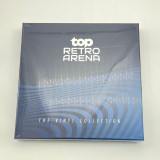
TOPradio, the trailblazing force in dance music, proudly announces the release of its highly anticipated 5 x 12" Vinyl Box Set, showcasing the very essence of timeless classics through the revered Retro Arena brand.
Renowned for curating unforgettable musical experiences, Retro Arena has meticulously handpicked 22 iconic tracks that continue to set dancefloors ablaze. This limited edition vinyl collection is a testament to the enduring allure of the classics, encapsulating the spirit of an era that defined the electronic dance music landscape.
From anthems that resonate with the golden age of dance to tunes that have stood the test of time, the Retro Arena 5 x 12" Vinyl Box Set promises an immersive journey through the evolution of electronic dance music.
Obliques and Atmospheric are very happy to present their new album “Golden Apples of the Sun”. It is the result of a close cooperation between Suzanne Ciani and Jonathan Fitoussi. The American electronic music pioneer (5 time Grammy award-nominated) has joined the French composer to sign a four-hand album around mythical synthesizers like Buchla, Moog and Ems...
Mainly recorded in California, facing the Pacific Ocean, the white sound of synthesizers mixes constantly with the sound of the waves and wind.The music generated is directly blended with the surrounding elements of nature.It is both organic and live, hypnotic and rhythmical, powerful and dreamlike.
Suzanne is a five-time Grammy award-nominated composer, electronic music pioneer, and neo-classical recording artist who has released over 20 solo albums. Her work has been featured in films, games, and countless commercials as well. She was inducted into the first class of Keyboard Magazine's Hall of Fame alongside other synthluminaries. Most recently, she is the recipient of the Independent Icon Award from A2IM. Suzanne has provided the voice and sounds for Bally's groundbreaking "Xenon" pinball machine, created Coca-Cola’s pop-and-pour sound, designed logos for Fortune 500 companies, and carved out a niche as one of the most creatively successful female composers in the world.
Run-D.M.C.'s Raising Hell remains the turning point at which hip-hop crashed through mainstream barriers and never left. Anchored by the crossover smash "Walk This Way," the 1986 blockbuster still sounds like a revolution unfolding in real time. It has everything – hard-rock riffs, turntable scratching, itchy rhythms, hit singles – not the least of which are the trio's invigorating raps and inseparable chemistry. And now it's the first rap record afforded audiophile treatment, courtesy of Mobile Fidelity.
Sourced from the original master tapes and pressed on MoFi SuperVinyl, the reissue label's numbered-edition 180g 33RPM SuperVinyl LP elevates Raising Hell to sonic heights on par with its musical and cultural significance. Ranked the 123rd Greatest Album of All Time by Rolling Stone, 43rd on Pitchfork's Greatest Albums of the 1980s, one of the Top 100 Albums of All Time by TIME – and included on "Best of" lists by Spin, Paste, XXL, Entertainment Weekly, and basically every other significant media outlet – the triple-platinum effort rocks the house.
Benefitting from the ultra-low noise floor and groove definition of SuperVinyl, Raising Hell unleashes a torrent of massive dynamics and tsunami of frequency-plumbing details underlined by Rick Rubin's taut, crisp, albeit raw and streetwise production. Just as the Queens-based group both defined what hip-hop could represent – and displayed just how big it could get – Rubin's work melded ear-worm hooks, savvy drum loops, metal-leaning guitars, and, of course, Run and D.M.C.'s cross-fire lyrical interplay into watertight frameworks bursting with ideas, tones, samples, and beats. Heard anew on Mobile Fidelity vinyl, Raising Hell is in every regard the aural equivalent of a direct-to-console 1970s classic. And it sounds as fresh as hell.
As for the music, it ranks among the most influential, inventive, and invigorating ever released – rap or otherwise. Vanguard artists such as Ice-T, Eminem, Jay-Z, and Public Enemy's Chuck D – who declared it his all-time favorite and "the first record that made me realize this was an album-oriented genre" – have testified on behalf of its brilliance. And never mind the presence of the Top 5 single "Walk This Way," whose power helped make Aerosmith's Steven Tyler and Joe Perry relevant for the first time in nearly a decade – and literally put Run-D.M.C. in bedrooms ranging from the Bronx to Bartlett to Bad Axe.
Look instead to the rest of the entirely filler-free set, be it the corkscrew turns, slippery wordplay, and "My Sharona"-meets-"Mickey" mixology of the boisterous "It's Tricky," the fat-but-minimized bass grooves and warped turntable wobble of the hysterical "You Be Illin'," chimes-accented inertia and boombox-on- shoulder thunder of the now-iconic "Peter Piper," or voice-as-percussion attack of the funky "Is It Live." With Raising Hell, the answer to the question is always affirmative – a sensation bolstered by the fact the group always had something to say.
The definition of Golden Age Hip-Hop in every way, Run-D.M.C. avoids the negativity and misogyny that later plagued the style, spinning assertive tales about identity (the biographical and culture-changing "My Adidas"), work ethics ("Perfection"), and, most notably, pride (the Harriet Tubman- and Malcom X.-referencing "Proud to Be Black"). Pavement-packed inner cities, tree-lined suburbs, and cornfield-rimmed rural areas would never again be the same. And rocking a rhyme that's right on time would become trickier than ever.
Video Age make breezy and timeless songs that are so ineable, they can only be the result of a decades-long friendship and songwriting partnership. Across four albums, Ross Farbe and Ray Micarelli have gleefully worn their influences on their sleeve, writing inviting tunes that reference sounds ranging from disco to pop and indie rock. On their latest LP, Away From The Castle, the New Orleans duo have strayed from nostalgia and instead have honed their own unique musicality, making songs that sound like themselves with a taste of inspiration from classic singer-songwriters of the 60s and 70s. The album is a testament to the possibilities that come from getting out of your comfort zone, the freedom of writing vulnerably and unselfconsciously, and the joys of getting to work with your closest companions. After releasing and eventually touring their critically-acclaimed third album Pleasure Line in 2020, Farbe and Micarelli sought inspiration for their next project through collaboration. They worked with Drugdealer on his album Hiding In Plain Sight, Micarelli gigged throughout New Orleans' jazz and blues scenes, and Farbe recorded local artists at his home studio, most recently producing Esther Rose's new album Safe to Run. Feeling refreshed, they rented a cabin in Eunice, Louisiana with touring members Nick Corson and Duncan Troast, where they spent eight days in August 2022 jamming, cooking and writing together. Through this process, Video Age have made their best collection of tracks to date by perfectly alchemizing their influences and experiences into a record still tinged with nostalgia, but moving towards a more succinct and authentic voice. Away From The Castle is a document of a band having fun and rediscovering their love for making music together, but it's also their most honest and personal work yet-Video Age distilled to its purest form.
“Bumpers” is the latest EP on T4T LUV NRG by DJ Autopay, the alias of musician and DJ Russell E.L. Butler. All of these tunes were written with DJs and blending in mind—like bumper cars, they are fun yet emotionally charged and built for unexpected collisions of sound. “More Femme, More Masc” is a queer non-binary anthem with heavy Baltimore-influenced vibes, written by Russell during the pandemic in a time of peak vulnerability, their voice cracking throughout. The track is an interpretation of “Fast Car” by Tracy Chapman and “Sometimes I Rhyme Slow” by Nice & Smooth but sounds like nothing we have heard before. Tropes 1, 2 & 3 are all house instrumentals in the spirit of the golden age of American house music yet interpreted through Russell’s unique lens. These cuts would have been as at home on Guidance records years ago as they are today on T4T LUV NRG, evoking the swinging dance beats and heady vibes of producers like Callisto and the early Large records by Kerri Chandler and DJ Rasoul. Russell has created something truly special for the contemporary dance floor with this timeless EP.
La Bibliothèque De La Bergerie is the new all-star project from producer Emmanuel Mario (Astrobal). 11 evocative and exhilarating instrumental tracks, ranging from synthetic to acoustic, from detailed pop writing to sonic experimentation. He is accompanied here by his companions Julien Gasc, Nina Savary and Vincent Guyot (as Ulysses' companions were known). Each contributes to the composition, arrangement and instrumentation of this colourful and enchanting odyssey. Mario and Savary have been living for years in an isolated former sheepfold in the South of France and have gradually gathered around them a band of artists and musicians who have come to escape their daily lives. The compositions in La Bibliotheque De La Bergerie were born of this timeless space of freedom. Each musician's musical obsessions can be found on the album, as they travel from one track to the next: soundtracks like the ones of De Roubaix or Alessandroni (Le Fleuve De La Nuit), experimental and classy pop like Stereolab/High Llamas (Loterie Solaire) or primary and repetitive electronic music (Tous A Zanzibar tome 3). The choirs and mixed voices of Nina Savary and Julien Gasc add a sunny, melancholy touch to the whole (En Attendant L'Année Dernière). The name Bibliothèque De La Bergerie is a double nod to Library Music, a trend in musical illustration for TV and radio that had its heyday in the 60s, 70s and 80s. And to the aforementioned bergerie, a living space and creative studio. The more observant may also have noticed the titles of the tracks, taken from the novels of the golden age of science fiction. Emmanuel Mario and his friends invite you to escape to another time. The album will be released on vinyl on the Freaksville label on October 6, 2023.Tracklisting: 1. L'homme qui n'existait pas 2. En attendant l'année dernière 3. Tous à Zanzibar (Tome 1) 4. Loterie Solaire 5. Une porte sur l'été 6. Le fleuve de la nuit 7. Le manuscrit Hopkins 8. Tous à Zanzibar (Tome 2) 9. Le Voyageur de l'inconnu 10. Terminus Tel-Aviv 11. Tous à Zanzibar (Tome 3) freedom. Each musician's musical obsessions can be found on the album, as they travel from one track to the next: soundtracks like the ones of De Roubaix or Alessandroni (Le Fleuve De La Nuit), experimental and classy pop like Stereolab/High Llamas (Loterie Solaire) or primary and repetitive electronic music (Tous A Zanzibar tome 3). The choirs and mixed voices of Nina Savary and Julien Gasc add a sunny, melancholy touch to the whole (En Attendant L'Année Dernière). The name Bibliothèque De La Bergerie is a double nod to Library Music, a trend in musical illustration for TV and radio that had its heyday in the 60s, 70s and 80s. And to the aforementioned bergerie, a living space and creative studio. The more observant may also have noticed the titles of the tracks, taken from the novels of the golden age of science fiction. Emmanuel Mario and his friends invite you to escape to another time. The album will be released on vinyl on the Freaksville label on October 6, 2023
Prolific songwriter and guitar virtuoso David
Tattersall presents 11 new songs on themes of
memory, dreams, loneliness and love, featuring
nylon string guitar improvisations in the vein of
gypsy jazz legend Django Reinhardt.
The David Tattersall Group are old friends who
rehearsed together for months in a small, smoky,
sweaty room, before recording the album on a
huge red boat moored on the River Thames, all
vintage microphones and wooden walls inside.
Friendship is a vital part of the record’s magic.
Stylistic influences include Ronnie Lane, after
whom one song is named, and the nylon-string
guitar work of Jonathan Richman and Willie
Nelson. A pastoral mood prevails, with swells of
melancholic violin and Spaghetti Western
harmonica, backed by honky-tonk piano and the
dry drum sounds of Neil Young’s ‘Harvest’ period,
while the golden voice of Holly Holden adds a
touch of glamour to proceedings.
David’s process includes much musical
improvisation and stream of consciousness writing,
but his end goal is to couple classic songwriting
with the collective chemistry of musicians playing
live in the studio. His lyrical influences include Tom
Verlaine, John Cooper Clarke and the New York
School of Poets, particularly James Schuyler.
Pressed on 140g white vinyl with OBI strip.
Includes digital download code