Recorded in Havana’s famed Egrem Studios, the group displays a cohesion forged by an intense performing and touring cycle. The musical conversation that began in the Areito studios three years earlier blossomed into an easy, intimate dialogue between good friends - allowing full, fearless musical expression and risk-taking outside of their comfort zones.
Building upon Perez Prado’s dissonant, near avant-garde vision of the mambo, and highlighting the Lucumí subtext of Cuban rhythms and styles, the band continues to explore, develop and expand the island’s rich rhythmic palette and repertoire - pushing the conventions of what is considered “mambo” - and drawing deeply from folkloric and religious traditions seldom heard in popular music. 16 Rayos is here to shine its musical rays on us, warm our hearts, and irresistibly move our bodies.
When Orquesta Akokán burst onto the global music scene a mere three years ago, their no-holds-barred 21st century take on the venerable Cuban mambo lit up stages around the world with a fierce and unremitting joy. Singer José "Pepito" Gómez, Chulo Records producer and multi instrumentalist Jacob Plasse, and arranger Michael Eckroth joined forces with a carefully curated selection of Havana’s most extraordinary musicians as Orquesta Akokán, polishing Cuban mambo’s golden sound to a luminous, contemporary sheen. Along the way Orquesta Akokán imbued these legendary Cuban grooves with a renewed vitality and powerful sense of akokán ---the Yoruba word used by Cubans to mean “from the heart” or “soul.”
On the Cuban side of the equation the Orquesta boasts some of the island’s greatest instrumentalists culled from members of near-mythical groups such as Los Van Van, NG La Banda, and Irakere (notably César Lopez, Orquesta Akokan’s point man in Havana). The ensemble for 16 Rayos shines a light on Cuba’s musical families and multigenerational legacy with the participation of two fabled Vizcainos on percussion - Roberto "Tato" Vizcaino Jr. and his father Roberto Vizcaino Guillot, a member of Chucho Valdes’ seminal 90’s quartet. Another family duo added their masterful legacy to the recording, with trumpeter Reinaldo “Molote” Melián bringing in his son, Reinaldo Melián Zamora, to play trumpet on several tunes alongside lead trumpet Harold Madrigal Frías. The winds and brass are rounded out with a rich saxophone section made up of young lion Jamil Shery and Germán Velazco (musical director for Pablo Milanés)on tenor, with Evaristo Denis on baritone and César López on alto, along with Yoandy Argudin and Heikel Fabián Trimiño on trombone. Coros were sung by Eddie Venegas and Luis Soto. Significantly, Orquesta Akokán added strings to the ensemble for the first time, with the participation of violinists Amelia Febles Díaz, Jenny Peña and Anabel Estévez Acosta, whose virtuosity stems from the classical training for which Cuban musicians are so renowned. The power and grace of Pedro "Tata" Francisco Almeida Barriel’s vocals lead the way on “4 de Octubre” and “Llegue con mi Rumba,” evincing why he is considered one of the Cuban rumba’s premier exponents. Another highly recognized singer, legendary guarachera Xiomara Valdés - who’s shared the stage with legends such as Beny Moré and Omara Portuondo and received the Ministry of Culture’s Distinción por la Cultura Nacional de Cuba as a significant contributor to Cuba’s musical legacy - is the featured guest on the title track.
Cerca:good grooves
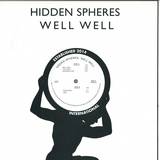
Rhythm Section International’s 12th release comes from another Mancunian called Tom, this time going by the name of Hidden Spheres. We are issuing a * FEEL-GOOD HIT OF THE SUMMER* alert for the title track, ‘Well, Well’, - a certified, yet sophisticated banger, ready to send that festival crowd one step closer to transcendence.
A versatile EP spanning over 5 tracks, Well Well is a house-tinged, jazzy affair - rich in soulful vocals, summery chords and live percussion. Hidden Spheres is a seasoned dj and producer, having released on the likes of Moods & Grooves alongside Theo Parrish, Andrés, MR. G and Moodymann as well as producing the inaugural release for Lobster Theremin imprint Distant Hawaii.
With a wealth of records ready to go, constrained only by pressing plant schedules, RS012 marks the first in a flurry of summer releases on Rhythm Section International.
Kayroy is back! The charismatic gentleman from Melbourne gives us three brand new songs. First, we have “Cutoff Freak” with R.P. Downie on vocal duties. Yes, we shed crocodile tears for a thousand years. The David Byrne-esque vocals perfectly add to Kayroy’s mid-tempo aussie p-funk. Last year’s “Identification Unknown” feat. Miela also sees a vinyl feature finally.
Now imagine a late summer night. You ride your local sunset boulevard in your red convertible and turn on the stereo. They play „Some Kind Of Electric“ on the radio. Kayroy & Miela on the microphone make you feel good, they make you laugh, they make you cry. All at the same time. Irresistible grooves, heartwarming melodies and that voice. Now let this summer night last forever.
Label boss Johannes couldn’t resist and bangs the tracks into a more club-styled direction on the B-side. There is an “Acid Dub” and “Kind Of Dub”. Your choice.
Complet label owner and Berlin based DJ and producer Ray Kandinski has been making serious moves over the last few years, both through his ear for curation and his rich, intricate sound design. Inspired by a pool of influences, including; jungle, footwork and house - Kandinski believes the beauty of dance music can be found in its subtlety and range; which can be heard deeply running throughout his debut EP for Lobster Theremin.
A ray of sunshine shines through sparse breakbeats in opening track ‘95’, before ‘No Love’ follows with a slightly more clubier affair, while still maintaining it's blissful edge through the use of lush and dynamic synth work. ‘Healing’ then closes the A side with it’s minimal grooves, both hypnotic and understated; light refracting from one medium to another in a colourful display of blue and green.
The B side makes its entrance with ‘Zonin’ a choppy house cut with a point to prove, before demonstrating his artistic versatility in ‘The Mack’ blending his way into an electro mutation laced with ravey stabs and punchy drums, combining various influences from around the globe.
Title track ‘Garant’ takes place in a quasi-rainforest beckoned by nature's call. The type of good-natured music that sounds inspired by the evolving world around us; locking us in a groove that could happily last forever.
On their vibrant and eclectic ninth studio album, Clinic -
the band who wore surgical masks before it was a
matter of urgency - are taking you to ‘Fantasy Island’,
where you will find yourself transported to tropical
climes.
In guitarist / keyboard player Jonathan Hartley’s words:
“Clinic look to a brighter future, Fantasy Island it’s a
very positive album, it’s more about what you can make
happen rather than being defeatist.”
Their last album, 2019’s ‘Wheeltappers and Shunters’,
found the band satirising British culture and wallowing in
sleazy Seventies nostalgia. ‘Fantasy Island’ was
recorded in an old studio on Merseyside during the
summer of 2019, with good vibrations seeping into the
grooves. This time they are embracing “the idea of
looking at the future and the different ways it can unfold,”
with their most electronic and pop record to date. “It’s a
more global, international and outward looking record,”
says Hartley. “Clear blue horizons. The brave new
world!”
The album was mixed last year by Claudius Mittendorfer,
who has worked with Parquet Courts, Neon Indian and
many pop greats.
CD in paper inner wallet into spined capacity outer
wallet.
Standard weight black vinyl into shared printed inner
sleeve and digital download card.
With a storyteller's eye and sly sense of humor that echoes not only his "honorary uncle" Del Reeves, but Tom T. Hall and Roger Miller, The Kernal delves deep into everything from family dysfunction to road trips to matters of the heart. The music, which he describes with a laugh as "diet country," embodies the spirit of that genre without any of the slavishness or self-seriousness of much modern Americana. Rolling Stone has called his style "sweetly subversive, intellectual and addictive," while Lo-Down said "the songs have an air of nostalgia but they sound far from old - modern, yet timeless. " From the joyous, southern-fried grooves of "U Do U" and "Pistol in the Pillow" through the revved-up rockabilly stomp of "Green Green Sky" and the cinematic travelogue of "Wrong Turn to Tupelo" to "The Fight Song," a sparkling '80s style duet with Caitlin Rose, it's a nine-song sequence that showcases The Kernal's warm, confidential voice while managing to make profound connections with the head, heart and feet. "When people ask me what kind of music I play, I say, 'It's like sixteen-foot trailer country music,'" he says. "You pull up a hay trailer in a field and you barbecue a bunch of stuff and there are people setting off fireworks and there are kids running around in diapers with ice cream running down their bellies. You get up there, turn it up and have a good time. I just love seeing people have a good time, and I think that's why I like country music. The groove of it. It speaks to people's legs. They loosen up and enjoy themselves and it's no big deal. I love that. And I love to be able to contribute to that."
Andy Compton is undisputedly one of the hardest working producers in dance music. With over 40 albums and 150 EPs released either solo or as part of deep house legends The Rurals, the Bristol-based producer just can't stop creating profoundly funky and vibey music that works on loose-limbed dancefloors, beach bars and shag carpets alike.
He has appeared regularly on quality labels as diverse as Lumberjacks In Hell, Hed Kandi, LARGE and naturally, his own vital imprint Peng.
Andy's latest long player for Tangential Music is a collaboration with LA artists Irantzu Pujadas and Brad Kent under the name Blue Dream.
Aptly titled: 'A Trip To LA' the album is a deliciously louche and laidback twelve tracker of pure LA heat. The project began as many great ones do, without a plan. Visiting Brad's studio to check out his huge vintage analogue synth collection in search of new sounds for The Rurals, they got to thinking...and jamming. With Brad on the dusty old drum machines, Irantzu on the microphone and Andy in synthesiser heaven, Blue Dream was born.
Their first and equally good album 'California Dreaming' was released on Peng in early 2019 and now we are here with a second round of perfectly realised dream-like grooves. Think of the sun-facing vibes of Shuggie Otis, Eddie Chacon, Bobby Caldwell or Roy Ayers at his most relaxed and add a passionate knowledge and experienced grasp of electronic forms. They make this seem easy goddammit.
'I Wanted To See You' sounds like Khruangbin with a 303, 'You Want Me Back' with its mid-tempo shuffling groove, saucy squidge bass line and seductive soul house vocal is pure daytime at Houghton Festival happiness, like Crazy P in the hot tub.
At no point are we required to sweat. Lie down if you must, stand up and sway if you're ready. This could be lovers music or just for you alone. Irantzu's vocals throughout are whispers and purrs, evocations of humid love drenched in reverb and easy living. Sunset music.
The singles 'I Wanna Go Home' and 'Sandwich Dub' don't deviate far from the endless feeling of hazy cinematic sunshine, one a sultry plea for intimacy, the other a heavily dubbed-out slice of musique française amour.
'Trip To LA' with a vocal more than suggestive of the Balearic classic 'Sueno Latino', spare guitar chords and a prodding repetitive bass line creates a feeling of slinky bliss.
Every track is full of sensual melodies and the space required to be truly funky. Press play and invite a bit of California magic in...
Spirits Having Fun records are ones made from and for shows and spaces—arrangements rooted in a deeply collaborative process, that come to life through intuitive and locked-in live improvisation. Following their 2019 debut Auto-Portrait, Two finds the New York and Chicago based four-piece continuing to challenge ideas of what a rock band can be, pulling apart their musical experiences and reimagining them as kinetic compositions, equally studied but palpably organic.
Two is constructed around gut feelings and strong grooves, elastic rhythms and playful pacing. Its twelve songs expand, contract, and make sharp turns between melodies under singer-guitarist Katie McShane’s meditative lyrics. “Broken Cloud,” which was also released last year on a compilation in support of Chicago Community Jail Support, offers a glimpse into her reflections on the natural world: "A city grew out of the ground / to a mountain it's only a blur."
True to its name, the internal logic of the band is also just a lot of fun, built on trust and deep-rooted musical relationships. Before there was Spirits Having Fun, McShane, bassist Jesse Heasly, guitarist-vocalist Andrew Clinkman, and drummer Phil Sudderberg had performed together in various arrangements over the years. McShane, Heasly and Clinkman met in a specific corner of the Boston underground in 2013, a time when a scene had coalesced around students from local music conservatories frequently collaborating with punk bands and noise artists, exchanging ideas and warping musical worldviews. Heasly and Clinkman played together in Cowboy Band, making mutant, free jazz-inspired takes on old country tunes. When Clinkman moved to Chicago, Heasly and McShane played in experimental groups like EKP and Listening Woman; in Chicago, Clinkman met Sudderberg playing in projects like jazz scene fixture Ken Vandermark’s high-powered band Marker.
Spirits first came together as an attempt at a long-distance collaboration among friends in 2016, driven by the simple feeling of missing each other; they’d meet up for marathon weekends here and there to practice, playing small loops through dive bars and art spaces around the Midwest—just enough for McShane and Heasly to afford plane tickets back home. Being split between Chicago and New York forced the project into a deliberate pace. “We tried to take it slow and let it be what it was,” said McShane. That sense of patience unexpectedly prepared them for March of 2020, when their planned tours and the release of Two were indefinitely delayed.
Two was mostly recorded in the summer of 2019 with the help of omnipresent Chicago engineer Dave Vettraino and DPCD’s Alec Watson, whose contributions on organ, synths, and piano are laced throughout the record. The album reflects a synthesis of solitary and communal songwriting processes—each song drawing on fragments written by individuals, which McShane threaded together and shaped through her distinct compositional lens, making the songs whole before returning to them to the band to mature collectively. When composing, McShane writes first on the keyboard before adapting parts for guitars played by herself and Clinkman. Their dueling approaches to guitar are complementary: McShane, being a newer guitarist, brings a freshness to the project (“I'm just discovering the whole time,” she says) while Clinkman has been playing since childhood.
“There's a lot more collaboration on this record,” says Clinkman, “in terms of all of us letting stuff bloom a little bit more.” The record’s first single, “Hold The Phone” is a good example of this process—it started with a playful intro riff from Clinkman, a melody and bridge added by McShane, a wobbly outro groove added by Heasly, which Sudderberg brought to life. Another single, the dynamic “See a Sky,” written primarily by Heasly, underscores the rhythm section chemistry at play across the record, the song ebbing and flowing around Heasly and Sudderberg’s eclectic percussive palettes.
“Entropy Transfer Partners” is the only song on the record with lyrics by Clinkman, and the album’s most politically direct—a call for solidarity in the face of systemic failures, an acknowledgment of the shared material devastation caused by our country’s ongoing healthcare and housing crises: “These are not things we're experiencing individually. We struggle through them collectively. And we could actually declare, all of us, that it doesn't have to be this way, and fight and organize to ameliorate some of those conditions.” (“We won't work to create the shit you monetize, to run our lives,” they sing.)
From front to back, Two is an absorbing listen simply for its impressive range. But as the members explain themselves, the complexity of the record is about more than its intricate riffs, or how often they count out an odd time signature, but how they reject the notion of boxing the songs in, letting the melodies take on lives of their own. “Making music that feels alive is important to us,” says Clinkman. “Music feels most powerful to me when it deepens our sensation of feeling alive and connected to other humans. It’s so easy to feel worn down and isolated; that your life’s value is fixed to your productivity at your job, or the things that you have or don’t have. Making music that feels joyful and fun seems like one effective antidote to that feeling.”
Nu-Disco hero HP Vince delivers the goods once again with his new disco house workout ‘Came Here To Party’.
The beat grooves along with its rump shaking funky bass line, soaring strings, hooky brass section and female vocal.
Trademark HP Vince quality assured. Made to play, play to dance.
Taken from the album “High Fashion Dance Music Vol. 5.
’Angelo lost his shit over it. Aaliyah’s 3rd favourite track of all time is on it. David Bowie rocked up with it to a TV interview, declaring it “the most exciting sound of contemporary soul music”.
In 1996, Lewis Taylor released his self-titled masterpiece. A true modern classic, it’s an album that was years ahead of its time. Forget 25 years ago, it could easily have been made in 2021. An effortless blend of neo-soul, sophisticated pop, smart grooves and laid-back white funk, it enjoyed rapturous reviews from critics and music legends alike. But the album never managed to make an impact and given what was likely a token vinyl release at the time, the original records have long since been near-impossible to find. Lewis Taylor’s Lewis Taylor remains a holy relic for some and criminally unknown to most.
Lewis Taylor’s impeccable influences created a dazzling sonic palette: the LP as a whole suggests the visionary brilliance of Prince; the vocal stylings evoke the yearning power of Marvin Gaye; the effortless guitar playing shares the virtuosity of Jimi Hendrix; the haunting tones conjure Tricky; the innovative production and engineering invite comparisons to studio mavericks like Todd Rundgren and Brian Eno; the multi-layered, complex harmonies flash on Pet Sounds-era Brian Wilson; the dark, drama is reminiscent of both Scott Walker and Stevie Wonder; the complex arrangements create textures and moods with the feel of Shuggie Otis on Inspiration Information; the bold experimentation is akin to progressive artists like Faust and Tangerine Dream; the atmosphere is in conversation with Jeff Buckley’s Grace… and we could go on. That might all sound like marketing hyperbole, but not as far as Be With is concerned. It is a genuine wonder how an album this good could’ve passed so many people by.
But despite all the reference points, the similarities are really only skin-deep because the album sounds truly original. It occupies its own distinct, strange universe that feels dark and brooding one moment, bright and joyous the next. Ultimately, Taylor sounds like Taylor.
Although you wouldn’t know it from the credits, the album wasn’t the work of Lewis alone. Sabina Smyth gets an executive producer credit on the original sleeve, but in fact she worked with Lewis on the production and arrangements, did a lot of the backing vocals and she co-wrote Track, Song, Lucky and Damn with Lewis.
Lewis clarified all this in a Soul Jones interview with Dan Dodds in 2016. He explains how not giving Sabina the credit she was due at the time was an unfortunate consequence of where his head was at and he’s now trying to set the record straight.
Together they created an exquisite and sensually-charged record, with a freshness to the writing that makes the songs catchy, melodic-yet-deep and sometimes even funky. The music is predominantly guitar-led and a mixture of organs and synths, live drum loops and electronic percussion make for a sort of modern soul backing orchestra.
On the surface the album is gorgeously laidback, but beneath the lush, sometimes slick, production there’s a murkiness in the seriously gritty funk/hip-hop instrumentation. Lewis Taylor can be a claustrophobic listen. Even its one-word, often seemingly throw-away track titles add to the sense of unease. In its most positive moments, there’s still a sense that things aren’t quite right. The magic comes from this compelling tension.
The languid, strutting “Lucky” is a sensational opening statement. Sinuous electric guitar winds around the shaking percussion with a killer bass line rattling your bones, and Lewis’s voice is sublime. Its six-and-a-half unhurried minutes manage to distill the work of Marvin, Al Green and Bobby Womack because yes, it’s *that* good. Up next is the tough, dusty drum and jazzy, unsettling psych-guitar workout of “Bittersweet”. Aaliyah described it the “perfect song”, which says it all. By turns loping and soaring, tightly coiled and blasting free, 25 years on its discordant, swaggering majesty still sounds like future R&B.
The swinging, blue-eyed funk of “Whoever” oozes sophisticated sunshine soul for hazy days before “Track” sweeps in. The music tries to lift us up, beyond the reach of the vocals trying to drag us back down as Taylor sings “my mood is black as the darkest cloud”. The spare, dubby electro-soul of “Song” closes out the first half of the album with barely contained dread as it creeps towards the lush, synth-heavy coda.
The smouldering “Betterlove” eases us into the second half, coming on like a languorous response to the call of “Brown Sugar”, before sliding into the shuffling, softly-rocking “How”. Somehow the remarkable “Right” manages to both warm things up and smooth things out even more. Taut yet luxurious, it’s definitely not wrong.
“Damn” was to have been the album’s title track and you might also be able to hear its influence on D’Angelo’s Voodoo, maybe most obviously in the chaotic closing moments of “Untitled (How Does It Feel)”. Building to a screeching wall of noise that suddenly cuts dead, “Damn” sounds like the natural end to the album, with the celestial a cappella “Spirit” serving as a heavenly reprise.
When it came to the sleeve, art director Cally Callomon heard Taylor’s music as “sideways off-camera glances at a plethora of influences he had” and wanted to interpret that visually: “I went off into night-time London to see if I could find his song titles in off-beam low-fidelity photographs. I even found a shop called Lewis Taylor”. With a slide for each of the album’s ten tracks, nine of them are on the inner sleeve and the slide for “Damn” makes the front cover. It should’ve been the album’s title, but concerns over distribution in the US scuppered this.
One of UK soul’s most fascinating artists, Andrew Lewis Taylor is an enigmatic figure and a hugely under-appreciated talent. A prodigious multi-instrumentalist who got his start touring with heavy blues/psych outfit the Edgar Broughton Band, he released two albums of psychedelic-rock as Sheriff Jack before Island signed him on the strength of a demo alone. But Taylor was destined to be one of those artists unable (or unwilling) to be pigeonholed and despite the best efforts of Island’s publicity department the music never sold in the quantities it needed to or deserved to. Island eventually let him go in the early 2000s and in June 2006, Lewis Taylor retired from music.
Typical for the mid-90s, this CD-length album was squeezed onto a single LP for its original vinyl release. Simon Francis’s fresh vinyl mastering now spreads out the ten tracks over a double LP so nothing is compromised. And as usual, the records have been cut by Pete Norman and pressed at Record Industry. The original artwork has been restored at Be With HQ and subtly re-worked to work as a double.
This sprawling psychedelic soul opus really is a forgotten should-be-classic. We know that there are those of you who know, and as for the rest of you, we’re a bit jealous that you’re getting to hear Lewis Taylor for the first time.
Fake Laugh & Tarquin first became acquainted a very long time ago, before they were either Fake Laugh or Tarquin. Two humans in their late teens with a keen interest in sound, they would indulge each other in whatever conversation they could muster while loitering in the corridors of their sixth-form college. Their place of learning existed in a sleepy Sussex town where once a year, the skies are filled with explosions, while burning effigies are carried through the cobbled streets by inebriated locals. The two did not suspect that much would become of their light friendship - but in good time that would all change…
In the years that followed, the two young artists moved to London and embarked upon their own totally distinct musical journeys - Fake Laugh was playing in venues with ‘rock bands’, while Tarquin was carving out a niche for himself in the bubbling, lava-like instrumental grime scene, which brought a new kind of heat to the clubs of the city. His vibrant, unapologetically obtuse (and at times absurd) brand of club-music delighted the ears of listeners, the feet of dance-floor dwellers and the brains of music theorists - all in one fell swoop. Having released with Mr. Mitch’s crucial Gobstopper imprint as well as big-guns Rinse, Tarquin has become a household name in the homes of those that know. All the while, Fake Laugh was in his bedroom writing scores of songs and occasionally releasing collections of the strongest cuts on a variety of indie labels who believed in his talent for timeless melody, focussed through his own rose-misted, yet modern lens.
It wasn’t until the fabled summer of 2019 that Fake Laugh & Tarquin would make music together in the same room. The first session resulted in album opener Slow, a song which for the previous two years, lay dormant in an acoustic form on a dusty Fake Laugh hard-drive. Fake Laugh had the idea that perhaps the song could be transformed into something far bigger and better in the hands of Tarquin - a theory which was proven correct.
Throughout Fake Laugh & Tarquin the pair continuously confound the listener, fusing sharp and glacial synthetic elements with warm organic tones and heartfelt vocal performances. Money was written at the start of the global pandemic, a time in which people had more financial concerns than usual. Rejecting total doom and gloom, Fake Laugh & Tarquin turn this dystopian angst on its head and create a one-of-a-kind club mover that pulls inspiration from the super-slick grooves of early noughties stalwarts Moloko and Groove Armada. The album twists, turns, morphs and mutates until it’s peaceful conclusion in the form of existential piano-ballad Meaningless Thin
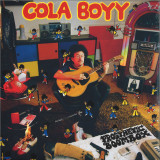
There’s liberation on the dance floor in the songs of Matthew Urango – glimpses of revolution that glimmer beneath the disco ball. “I want my music to bring people together,” says the Californian pop innovator, best known as Cola Boyy. “Because standing together is our best chance at fighting this shit show.” The shit show in question is a broken, brutal system the acclaimed multi-instrumentalist has witnessed up-close. Urango was born with spina bifida and scoliosis in Oxnard, California: a town in which almost 30,000 are estimated to live in poverty. Prosthetic Boombox, his eagerly awaited debut album, might at first glance seem a joyous confetti-burst of pop eclecticism, engineered to sound like “scanning between stations on a car radio, landing on all these different sounds and styles” as Urango puts it. Dig deeper, though, and you’ll discover a simmering sense of rebellion. “The working class are injured, struggling to pay rent and struggling to put food on the table,” he says. “I want to represent that.” Prosthetic Boombox
achieves that goal in a thrilling flurry of inventive indie, funk and soul: take Urango’s car radio analogy, place it in a time-travelling Delorean with Prince in the passenger seat, and you’re half-way there.
Look no closer than Prosthetic Boombox’s euphoric opener, the Avalanches-assisted ‘Don’t Forget Your Neighbourhood.’ The track – which Urango says mixes “the Beach Boys, French disco, house keys and ragtime piano, kinda like the Cheers soundtrack!” – ends with lyrics urging listeners to “fight for your town with your fist closed, strike it and make it more than just a memory.” It’s a reminder that the working classes need to “turn our fists against our oppressors instead of each other,” he explains. After that emphatic introduction comes a horn-laced funk wig-out titled ‘Mailbox’ – a song that gives Dua Lipa’s Future Nostalgia a run for its Studio 54-themed money, featuring rising Londoner JGrrey. Elsewhere, ‘Song for the Mister’ ventures into smooth R&B territory, before ‘Roses’ – a collaboration with Myd of Ed Banger fame – offers a bouquet of bustling disco guitars and infinite bisous of Connan Mockasin’s band drops in on the immaculate ‘Go the Mile’. Urango saves his most introspective moment for the album’s starry closer. ‘Kid Born in Space’, a cosmic collaboration with MGMT frontman Andrew VanWyngarden, sees the artist reflect on what he once had to overcome as a disabled person of colour. “I see them looking down on my dreams of being,” he sings tenderly. “I hear them making fun of my voice, but I keep on moving forward, I refuse to live in anyone else’s shadow.” Prosthetic Boombox, on this subject, is more than an album title – it’s a statement of intent.
“The message of my music is that our class is exploited, oppressed and murdered on the daily. That’s not right, and the system that enables that deserves to be wiped off the face of the earth,” he says. “The only way that happens is if we’re united. That’s the point of my music – to relate to people and unite them.” And what unites more than raucous, irresistibly danceable pop? Prosthetic Boombox is a riot of joyous grooves and catchy hooks for good reason. “I want to reach and spread my message to as many people as possible. You can’t do that if you’re some obscure motherfucker, you know?” he laughs. Don’t bet on him being an “obscure motherfucker” for long.
Where the Streets Lead is the new album from Slowly Rolling Camera, and builds on their acclaimed 2018 release Juniper. Inspired by colliding worlds of jazz, trip-hop, and cinematic soundscapes, SRC’s music blends strong melodies, big grooves, and surprising turns of phrase, and is infused with expansive emotional gravitas. The music on this album, recorded throughout 2020, encompasses greater scale, with an 8-piece string section and a list of world-class guests including Mark Lockheart, Jasper Høiby, Verneri Pohjola, Chris Potter and Sachal Vasandani as well as the band's regular guitarist Stuart McCallum. Where the Streets Lead is emphatic in its purpose: communicating the joy of collaboration and, through an audio-sensory landscape, a vision of the world. There is a boldness and simplicity in the album’s conception, balanced with attention to detail in its production and sound design. Slowly Rolling Camera’s last album Juniper set the band on a new path. Where the Streets Lead is a natural progression and development in the band’s’ continued exploration.
COS might not be the first genre defying progressive music group you’ve heard who share both wordless onomatopoeic vocals and a snappy three letter title (complete with philosophical leanings and alchemic penchants) but on listening to this first ever custom Cos compendium you might have just discovered a new favourite!
Perhaps it’s no coincidence that COS share close spiritual, stylistic or social connections to the aforementioned bands, as one of the few long-withstanding single-syllable ensembles to remain utterly idiosyncratic and incomparable within their hyper-focussed and impenetrable creative bubble. But as a 1970s group that effortlessly MIX head-nod prog, synth-driven jazz, cinematic sound-designs, dislocated disco, arkestral operatics and high-brow conceptual anti-pop grooves, it’s easier to remember the name COS than thumb the vast amount of genre-dividers in your local record shop which COS COULD occupy. With the crème de la crème of Belgian jazz/prog/psych/funk within their ranks, their combined idea-to-ability ratio litters the Cos-ography with concepts that aficionados, future fans, collaborators and critics still haven’t began to unravel.
With their earliest roots in the compact jazz group Brussels Art Quintet the group spent their sapling years creating art-school prog under the name Classroom, this flourishing collective, cultivated by multi-instrumentalist mainstay Daniel Schell, would soon shed its leaves, dropping band-members and typographics reducing its moniker to simply COS (a multi-purpose, globally recognised word, with links to Alchemy and philosophy, with a hard phonetic delivery to suit the groups heavier rhythmic approach). In it’s new skin COS also shed all forms of orthodox language to find its true exclusive voice. Fronted, in the conventional sense, by the daughter of author and part-time jazz player Jean De Trazegnies, the bands wordless singer changed her name to Pascale SON, to accentuate the French word for “sound”. Drawing comparisons with sound poets like Polish jazz legend Urszula Dudziak or Hungarian Katalin Ladik, but retaining the crystalline femininity (and funk) of Flora Purim, while effectively sharing an imaginary lyric book of non-words with Damo Suzuki, Magma or a future Liz Fraser... To use the word “unique” would, by COS academic standards, be lazy journalism.
- A1: Good Times
- A2: Fabulous Ping Pong
- A3: Jean Sefunk
- A4: Nvr
- A5: My Left Foot
- A6: The Bump
- A7: Jam On It
- A8: Lookout Rhythm
- A9: Play That Sing
- A10: Torrid Drums
- A11: Got That Boing
- B1: The New Beat
- B2: The People Groove
- B3: Say You
- B4: Lost It
- B5: Bread & Jam
- B6: Larry Lenore
- B7: Party Party
- B8: High
- B9: Wellness & Bad
- B10: You Can't Hide Your Love
- B11: Plays Higher
- B12: We Are The Freaks
For his third full-length album, Jacques Renault explores his craft through the format of the classic late-night radio megamix. It's a tour de force that finds him blending his quick-cutting DJ sensibilities with his crate-digging, drum-chopping disco-chemist bonafides into one wham-bam party of pastiche. This is Renault as we know him—but at hyperspeed, tearing through twenty- three tracks in under half an hour. And while it's a head rush of his trademark funky drums, sassy horns, playful synths, it's arranged as an album, with songwriting and structure at the fore. Imagine it as a flip on the script for Renault's most loved club 12-inches of the past, which luxuriate in long-form, stretched-out grooves that burn for hours, fills that ride for days. Instead of on pulling a thread for six, seven minutes, he romps around in a bouncy ball pit, plucking out whatever captures his imagination for a moment, then diving back in to discover another buried
nugget. It's Jacques Renault as we've always known him, but this time through a suite of bite-size vignettes instead of slow-burn grooves.
Parisian label Chuwanaga proudly presents Latitude, Saint-James label co-founder new studio project. Keeping it close to the deep jazz-funk ethos of the label, Latitude brings to the light two luminous songs of joy and hope for a better day, highly danceable yet rich and complex grooves with a human feel to feed your soul and make you move. Their new EP Leo / Attitude presents these first effort with a Dub Remix by Mato: plenty of diverse tastes for every music enthusiasts. Available as Vinyl 12" and Digital.
Latitude is french. Not a random collection of chansons sung in french. Latitude is so french in its sheer elegance, in its simple yet so sophisticated seemingly effortless attempt to groove in a pop context, trying to create moments of grace in the process. Latitude is here with the right vibe as the chorus of "Attitude" says it in french: "It’s the bad attitude, always the good latitude". Latitude is sprung out of the wicked musicianship of Parisian jazz-funk and fusion mavericks and Saint-James tight and adventurous compositions and production. All that jazz combined with David Cukier (Greita) retro-futurist engineering skills in these intense sessions captured in his cutting edge vintage Delta studio.
On A Side, "Leo (Extended Mix)" is an uptempo disco track for the dancers but also a beautiful song for the summer. A seductive number with a pregnant classic French jazz-funk feeling with the help of Parisian singer Club Celest’s energy and beautiful voice. It comes on digital as a short edit for radio but as a serious extended 12inch mix on the vinyl with 8 minutes and 10 seconds of pure pleasure, ending in a real climax after an irresistible percussion break.
On B1, "Attitude" enchanting quality shines with a banging rhythm section and goes for the win as an anthem chorus while sweeping synths keep on growing till the very last drop. On B2, Reggae/Dub don Mato (Stix Records) delivers a sweet dub wise riddim for the Lovers Rock massive.
Los Angeles-based singer, songwriter, and producer Tilian releases his brand-new full-length album, Factory Reset, via Rise Records:
Earlier this week, he shared his latest single “Caught in the Carousel” along with a new visualizer. They psychedelic visual emulates the introspective and thought-provoking lyrics of the song, “Am I good enough?”
Factory Reset is both highly personal and wholly universal. Tilian began writing the album just a few weeks after the pandemic forced California into lockdown. “I was searching for meaning in isolation and found it in creating this album,” Tilian shares about the process. He decided to write, record, and produce the album himself, eventually remotely bringing in drummer/frequent collaborator Kris Crummett to help button it up.
Having full creative control allowed Tilian to experiment more than ever, and truly be himself in the process. “I wanted to make the album that I want to hear. ‘What would be my favorite band?’ as opposed to, ‘What is everyone’s favorite band?’” This resulted in his most thrillingly eclectic work to date: a falsetto-laced brand of alt-pop that spans everything from trippy psychedelia and heavy prog riffs to warped hip-hop beats and dembow grooves.
Recently, Tilian released two other singles from the album – “Anthem” and “Dose.” These were first offerings since the release of his 2018 album The Skeptic, which debuted on the Billboard charts at #1 Alternative New Artist, #2 Top New Artists, and #5 Alternative. To date, the project has garnered over 40M global streams and two music videos with over 1M views each, proving the excitement and potential for the burgeoning alt-pop artist. More recently, he collaborated with Marigolds+Monsters and Travis Barker on the exciting single “Falling out of Rhythm.”
In the midst of a global pandemic John Hiatt
walked into Historic RCA Studio B and opened up
a lifetime full of leftover feelings. A half-century
ago, Hiatt lived in a ratty, $15-a-week room on
Nashville’s 16th Avenue, less than a mile away
from the RCA and Columbia studios that were the
heartbeat of what had come to be known as ‘Music
Row’. In the ensuing 50 years, he went from a
scuffling young buck to a celebrated grand master
of song.
With ‘Leftover Feelings, Hiatt teamed up with multiGrammy winning artist and producer Jerry Douglas
and his band, The Jerry Douglas Band. There’s no
drummer, yet these grooves are deep and true.
And while the up-tempo songs are, as ever, filled
with delightful internal rhyme and sly aggression,
the Jerry Douglas Band’s empathetic musicianship
nudges Hiatt to performances that are startlingly
vulnerable.
In life, leftover feelings can remain unresolved, no
matter how often explored. Explicated in a place of
history, a place of comfort. A sacred place, if you
believe the documentation of human expression to
be a holy thing. Here then, with this album, there is
a meeting of bruised and triumphant American
giants. Here are Hiatt and Douglas, creating the
meant-to-be: Love songs and road songs, sly
songs and hurt songs. Their songs and now our
songs. Leftover feelings that edify and sustain.
Sandy Grooves Vol.1 is the debut compilation release from Boogie Bodega, a newly formed label based in Bali set up by Mexican Disco wizard Sould Out. Comprising of some of the most sought-after producers within the Disco & Edits scene of the last years, Sandy Grooves vol.1 tickles all the Disco senses with something for everyone. From laid back Balearic inspired incarnation to a more uptempo dance floor heaters, this comp focuses on the full spectrum of the Disco & Funk arena.
Opening things up, “Easy Way To Groove'' could not have a better title for the music to match, it's a definite “does what it says on the tin” kind of vibe. Hotmood works his magic once again with this bass led stomper, tidy guitar licks and cinematic string section that’s sure to get butts off seats and wiggling
Stepping up next, New York’s Razor N Tape boss JKriv fires off with his atmospheric builder “Sunshine”; a slice of filtered, loopy Disco House goodness with progressive percussive elements.
On the B side, Disco Deviance Pete Herbert & Dicky Trisco compliment the more downtempo offering of this selection with a dubbed-out guitar laden trance inducing gem that is sure to spin a few heads. Following that, Igor Gonya’s “Habibidisco” holds its place as a romantic vocal Disco funk journey through Arabia with plenty of energy - another one for the dancefloor crew.
Finally, “Keep You Burning” by Clean Is Good is a mid-tempo swinger that’s sure to heat up the listeners ears. Sleek, smooth vocals, classic disco beat and undeniable funky guitar - I dare you not to groove to this one!
Pure Donzin is the debut solo offering by Amsterdam - based Donald “Donny” Madjid - also known for his involvement in The Mauskovic Dance Band. On a pandemic - induced break from his usually busy tour ing schedule, Donny, armed with a 60’s drum machine and a few synths, made the most of his time off by experimenting with, and home - recording new sounds - resulting in a fully - fledged 9 - track album under the artist monicker Don Melody Club.
Whilst many of his local peers tend to turn to sounds further from home for inspiration, Madjid felt drawn to honour the literary and musical tradition of The Netherlands, following in the footsteps of classic and lesser known Dutch troubadours such as Ramses Shaffy (a cover of ‘Laat Me’ features on the album) and Ronald Langestraat. Don drew inspiration from bard - like storytelling and for the first time started writing in his native tongue, craftily forging lyrics that his rich tenor voice delivers with a sincerity that translates regardless of whether or not you understand Dutch. This intimacy is balanced evenly with synth and drum machine grooves, recalling Dutch New Wave legends Doe Maar - merging ear worm pop hooks and infectious danceable beats to these otherwise pe nsive ballads.
An ode to being immersed in the magic of the night in good company, an experience so lacking during the year in which the album was recorded, is the danceable Psychonauten. The track is a fine example of the glittering synthesis of infectio us musical atmosphere and lyrically rich straightforwardness Donny has mastered on the album.
The influence of The Mauskovic Dance Band, especially the bass driven, hypnotic groove - a signature sound Don guides in new directions - can be detected on Ver anderd. Somewhat of an anthem, it is laced with tones of 70’s West - African sounds, like fast percussive key arrangements and energetic backing vocals. An example of a more laid back tune on the record is Isabel, a cool nostalgic love song, a soother for a sentimental occasion.
Opening number Geen Nood (No Panic), lyrically nothing short of a ‘sign of the times’ track, paints a mindful setting of cycling past the Amsterdam canals, seeing the leaves in the water, and feeling your blood flow peacefully throu gh your veins - letting go of the need to be anywhere other than where you are. Be it through meditative observances, or hypnotic dance grooves, Pure Donzin is a record that tempts the listener to become just that: immersed in the moment.