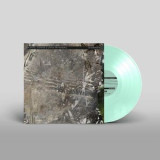
In collaboration with Croatian label Sareni Ducan, Discom proudly presents an official reissue of a very rare self-titled album of Yugoslavian 80’s funk band Boom Selekcija.
Boom Selekcija was a short-living group of musicians from Belgrade, active from 1979 to 1983. They recorded their debut and only album for the label Diskos in 1983 and after that disbanded. The line-up included musicians from Boban Petrovic’s backing band and Silva Delovska from Kim Band on vocals. The quality of recorded material and the complete lack of information about the band set them as a cult act among DJs and crate diggers. This is one of the albums which makes you ask ”What is this?” when you hear it, but nobody around could tell you an honest answer.
A side of the record begins with a track called Moje Cake (eng. My Tricks). It is a groovy theme with mellow vocals-a story of the poser who thinks he is very interesting. The same groove continues in the song Rokenrol Štipaljke (Rock And Roll Easy Girls) where friends are preparing for a crazy go out in a discotheque. It ends in a Balearic atmosphere in the songs Studentski San ( eng. A Student’s Dream)- a song about dreaming luxurious life on the Adriatic coastline) and Vladina Gitara (eng. Vlad’s guitar)-a nice dreamy guitar instrumental in the 70’s Yugoslavian style.
Equally groovy and interesting B side portrays naive and charming 80’s Belgrade: discotheques, parties, girls, tough guys, urban stories about real-common people and their destinies … all packed with such style and grace like you are in New York City suburbs in the late ’70s and enjoy perfect funk/soul musicianship. In this sense, you can hear: amazing slap bass by Vladan Mracic in the song Zuljas Me ( eng. You Are Going To My Nerves); cool funky guitar licks by Aleksandar Stefanovic in the song Bora Klej; authentic soul singing style of Mile Perisic and beautiful electric piano solo of Oliver Polak in song Frizerka Nada (eng. Nada, The Hairdresser) and convincing funk rhythm drumming by Zoran SImovski all way through.
This record will remain a significant point for investigating Yugoslavian funk history and it will be welcomed on every dance floor in the world that favors lesser-known grooves. We hope that we will manage to bring it closer to the younger audience and show how people used to live and have a good time in Belgrade and Yugoslavia.
Buscar:good livin
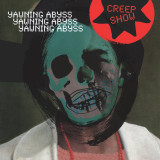
In the five years since Creep Show’s acclaimed Mr Dynamite album was released it’s fair to say that we’ve all been through a fair bit. Sitting here, in 2023, things don’t seem to be getting any better. There’s the cost of living crisis and political meltdowns; we're in deep water with global warming and to top it all there’s a war on our doorstep.
Back in 2018 everything seemed less complicated. Sure, there was stuff to get riled about, but we knew nothing about what was to come. Mr Dynamite was a fairground ride into the dark corners of a world that was on the brink of being blitzed in a blender. It was a record teetering on the edge. Five years down the line you’d expect the follow-up, Yawning Abyss, would double-down and bring the white-knuckled, teeth-gritted fury of the last five years to the boil. And yet….
A quick recap? No problem. Wrangler + John Grant = Creep Show. And Creep Show? “A band of musical misfits who have found a voice or two”, says Wrangler’s Ben “Benge” Edwards, whose Bond villain studio on the edge of a moorland is Creep Show Grand Central as well as home to an analogue synth arsenal that could sink ships.
Wrangler have known each other for a while. Tunng’s electronics wizard Phil Winter and Cabaret Voltaire’s trailblazing, pioneering frontman Stephen Mallinder go way back, while Phil and Benge crossed paths in the 21st century when they seemed to be increasingly in the same venues at the same times. Meanwhile, Mal had been living in Australia since the mid-90s and when, in 2007, he returned to the UK his old pal Phil suggested he meet Benge and the three of them immediately began working together.
Wrangler collectively bumped into Grant at their soundcheck for Sheffield’s Sensoria Festival in 2014 where they were playing with Carter Tutti. A friendship blossomed and when they were invited to perform together for Rough Trade’s 40th anniversary show at London’s Barbican in 2016, well, they jumped at the chance... and Creep Show was born.
Let’s talk about the new album... What is the ‘Yawning Abyss’? You might well ask. According to Mal, it’s “a cosmic event horizon that I can see from my attic window when stand on a chair”. Yeah. Thanks.
“On this album”, offers Benge, feet firmly on the floor, “Wrangler wrangled some vintage synths, mostly Roland, Moog, and the ‘Crystal Machine’ - then John Grant joined in the fun at Memetune Studios where lots of musical experiments were carried out. Then Mal and John ran off to Iceland with the master tapes and recorded a load of madcap vocals. Back at Memetune, me and Phil were left to try and make sense of it all. Which wasn’t hard because what they did in Iceland was totally magnificent.”
Which kind of brings us back to where we began. You’d imagine ‘Yawning Abyss’ would be blowing steam out of its furious ears. Mr Dynamite but kicking a wasps nest. Repeatedly. And yet…
Opener ‘The Bellows’ comes on like a modular ‘Radio Ga Ga’, the singalong ‘Moneyback’ (“You want your money back? / I didn’t think so”) sounds like Godley & Creme’s ‘Snack Attack’ meets Prince Charles And The City Beat Band (“Pennies, pounds, dollar bills, signed agreements, death wills”). ‘Yahtzee!’ is an unhinged electro breakdance party in four minutes and nine seconds.
Where Mr Dynamite was menace, a mélange of mangled voices, with Grant and Mallinder being heavily treated, pitched up or down, rendering their contributions largely indistinguishable, Yawning Abyss takes a more direct approach. You hesitate to say feelgood, but there’s a skip in the step here for sure.
The title track plays John Grant’s vocal straight. Completely. It’s good, so very good. Like ‘Axel F’ covered by Vangelis. The delicious shimmering synths of ‘Bungalow’ also plays those Grant pipes with a straight bat. ‘Matinee’ delves into darker, very funky territory. With Mal upfront it comes on like ‘The Crackdown’. Choice lyric: “You are starting to breakdown / And it’s so fun for me to see / You should have thought of that / You should have come prepared / You can see what’s happening and you look a little scared”.
So, you know, not all feelgood. But it does feel good. It’s probably best to draw your own conclusions... This is Creep Show after all.
“Come, Sweet Death” alternates between brutality and winding single string melodies that brings you back to the golden age of Swedish Death Metal! They say that the more things change the more they stay the same. If there’s one thing that has remained stable despite living in 2023 is that we love Swedish Death Metal. The style has become a favorite of ours over the past 35 years. Something about the guitar tone just makes you want to devour any release that can be described as “Inspired by early Entombed and Dismember”. The good thing is that there’s an incredible wealth of bands that draw from that well. The bad thing is that said wealth leads to a lot of bands becoming indistinguishable due to how same they are. Thankfully, Imperishable’s “Come, Sweet Death” manages to stand out from the pack, in no small part due to breaking away from the genre’s usual trappings. And in a way this is no surprise since the band members were or are involved in Vampire, Portrait, Nominon and Dr. Living Dead! As you might have already gathered, the band draws a lot from the Stockholm scene, more specifically Dismember, that is undeniable. What’s really interesting though is that they draw from their later, and more melodic influenced era as much as from the early days. Imperishable, like their peers effortlessly blends the aggressive buzzsaw riffing with leads brimming with melody, which most modern bands in the style avoid in favor of pure aggression. Said blend can be seen throughout their debut album, though it can be felt more on the longer tracks, like “Teeth of the Hydra” and “Fangs”, where the band has more room to develop their ideas and mix grinding Death Metal with NWOBHM-inspired leads and riffs. In short: Imperishable has great songs, great melodies, well-arranged structures and still is brutal, just like the great old bands were. And the production is spot on for this release. It is good to hear a band experiment beyond the confines of the original old school Swedish Death Metal sound. “Come, Sweet Death” is an extremely promising release, and a small breath of fresh air in an otherwise stale scene. Imperishable’s love for the more melodic aspects of the style make them worth keeping an eye on now and in future.
Taj Mahal can rightfully be called a living legend for his contributions to
popular music
With a voice as instantly recognisable as Louis Armstrong, Ray Charles, or Dr.
John, Taj Mahal has throughout his career pushed the envelope of American
music forward by incorporating sounds from the Caribbean, Africa, traditional
blues and jazz. He has won 3 Grammys from 15 nominations, was inducted into
the Blues Foundation Hall of Fame, and presented with a Lifetime Achievement
Award from the Americana Music Association.
With 'Savoy', Taj takes a new direction in his musical journey, exploring classics
from the American songbook with his good friend and acclaimed record producer
John Simon, whose resume includes producing classic albums by The Band,
Leonard Cohen, Gordon Lightfoot and Blood Sweat & Tears. 'Savoy' is the
realisation of a musical collaboration they had been planning for decades, finally
locking in the studio time to make it happen in August 2022.
Recorded with the hottest musicians in San Francisco, 'Savoy' is a loving
throwback to the sounds of the swing jazz big band era, titled as a tribute to
Harlem's Savoy Ballroom where the music composed by the likes of Duke
Ellington, Louis Jordan, George Gershwin and Louis Armstrong was performed by
a who's who of iconic artists, and now brought back to life by the one and only Taj
Mahal.
After more than a decade of non-stop touring, acclaimed Austin songwriting duo, Kelsey Wilson and Alexander Beggins, quietly stopped touring as Wild Child. Headed in different sonic directions, the pair didn't know if they would ever make another Wild Child record. Then, what felt like the "end of the world" brought them back together. Pandemic lockdowns closed stages and drained bank accounts. As artists from all backgrounds took their shows to the internet, Wild Child was no different. Wilson and Beggins got together to practice for a series of online performances for devout fans, and within 30 minutes they wrote the first single for what would accidentally become Wild Child's fifth album, End of the World. Mixed by Matt Pence (Jason Isbell, Elle King) and including contributions from guitarist Charlie Wiles (Paul Cauthen, John Moreland, Orville Peck), End of The World sees the pair find catharsis in art amid compound disasters. As Wilson describes it, "I just started signing about things that were freaking me out. Wearing a mask for a year. Global warming. There's no heat, no water. It was like a dirge to begin with. But by the end we were all screaming and laughing that, yes, this might be the end of the world, but we're all together right now, making music in my living room by candlelight. It's all OK."
DRAIN – the Santa Cruz, CA based hardcore band, whose energetic live shows have propelled them to peak underground popularity (during a global pandemic) and they are ready to break wide open in 2023.
Living Proof is the band’s Epitaph Records debut and follow up to their 2020 breakout release, California Cursed.
The new album is a testament to the hard work and heartfelt ethos that’s at the center of DRAIN’s good-time psyche. There are a couple surprises on the album. Rapper Shakewell appears on the track, “Intermission”.
There’s also a cover of “Good, Good Things,” a nearly four-decade old melodic punk carol by the Descendents: slam-pit forebearers to DRAIN if there ever were any. “It’s crazy because the song’s been out like forty years, but lyrically it’s a DRAIN song!” exclaims vocalist
Sam Ciaramitaro.
“It just hits on everything that I love, that I’m about.”
What Sammy’s about is plenty wholesome. “I hope with this record that when someone hears it, it gives them hope,” beams. “If we were able to get through the tough times, anyone can. I can’t wait to play these songs and hear a room full of people singing back to us. We’re what the title says, the Living Proof.”
Produced by longtime friend and multi-instrumentalist Taylor Young (God’s Hate, Suicide Silence), then mixed by John Markson (Drug Church, Koyo), this is hardcore for everybody.
“As the band gets bigger, I try and keep that feeling alive,” says the smiling singer. “Every night I set up the merch and run it until it’s time to play. I want to be the guy that everyone says hello to. I want to thank every single kid that comes out for being there.”
Russell and Craig have collaborated on several site specific projects over the years (Cotton Goods & Wist), notably sharing a graphic score concept for the production of their Atlantic Cable release. The album Diagenesis represents a change in their working process through which the materiality of field recordings is somewhat privileged over musicality. This work was created through a process of exchange - passing tracks back and forth, each layer of sound buried a little deeper beneath the next.
Diagenesis: The watery interactions, microbial activities, alterations, compactions, and chemical transformations of sediments slowly converting to rock.
Russell Burden (Being) is a sound and visual artist living on the south coast of the UK. His practice develops work that explores qualities of ambient perception, most often through the lens of hydrological, geological or biological processes. He has delivered gallery exhibits in various mediums including live cymatic feed, and dark space installation. Russell was also a member of The Humble Bee & Players and last year as artist in residence for a site specific project produced a set of drone works on his own imprint, riverwork press.
Craig Tattersall (The Humble Bee) works across music and visual art with an interest in their intersection, and often works collaboratively producing art objects and sound works which have been released on numerous labels. His main focus is with environment(s) and his own interactions within. He has curated a number of micro-labels including cotton goods, mobeer:: | moteer::, our small ideas and now co-curates umbrella publishing.
The duo WILDES from the south of Germany, consisting of Jana Pantha and Jenny Tulipa, presents a musical mix of electro-synth-pop, post-punk and dark disco influences. After the release of their first EP “RAWWR” in 2021, their debut album entitled “KLISCHEE” will be released on 3 February 2023. Released via the Kommando 84 label, the album features 11 songs and a musical re-interpretation of German-language Neue Deutsche Welle sounds. The songs combine spoken word passages in which the singers combine a certain irony with word-playful rhymes. In addition to world-political, social issues, the songs revolve around the complexity of the new romance in love - between cosmos and stereo. The strong and experimentally avant-garde lyrics accompany the danceable pulse of the drum computer, melodic synth waves and the shimmering solos of the lead guitar.
The album “Klischee” begins with an electro-pop track that combines consistent grooves with atmo- spheric sound arrangements and a lead guitar that accompanies our journey to the moon. With the chorus’ high-pitched words, „Konsum - leg mich auf den Moon“ (“Consumption - put me on the Moon”), WILDES dryly yet humorously allude to a society that couldn’t fly “higher”.
The following cheeky song Leger in Schwarz combines impeccable post punk with influences from the NNDW scene. A short love story led by the electronic beat of the synthesizer makes the hearts of the night beat faster. With casual reduction, a guitar riff leads through the song. The guitar solo finally rounds off the plea about the longing for a good flirt.
Italo disco shimmers and pulsates on the driving song Capri. With lyrics like “Pack the boats - Vai a bordo”, Capri is a homage to the tried and tested Italo feeling with a cappucino on the terrazza, or indeed on the yacht with a view of the rocky walls of the island. An electric charge of sequencers and synth tracks acts here as a lightness of being in contrast to the porosity of the rock.
An electrifying electric guitar solo kicks off the fourth track with a mysterious invitation to Steig ein translated, get in. Hypnotised by the lights of the road, dazzled in the side mirror, a clearly repeating rhythm leads into the chorus and through the coming verses. English spoken-word lyrics add to the stoicism of the German language. The song’s great power ends with the line Lost in the dark, holding open the finale of the “Night Drive” encounter.
Digital and stereo on all channels, the distinctly tight and robust rhythm sounds in the song Apparat. A clear and simple synth melody is heard as a contrast and the electric bass gives the balance of the machine at points. Hiddenly, WILDES points here to the superior power that can control human action beyond all limits. A piece as a laudation to all the science fiction novels that play with the switching of the individual parts.
Side One of the vinyl is finalised by a song called La Grande Bellezza that motivates to dance and sing along. The punky pop craft lives through the recurring beat of the rhythm guitar. Here the focus is on the woman in all her facets. The great beauty, una donna, who can do everything as well as wanting everything and nothing...a strong woman who, however, also staggers and wants to jump off the cliff. Clearly and distinctly, the musical accompaniment of the drum machine and the accompanying synth melody reflect hidden parallel worlds and the ambiguity of character - of life? We get a desire for more and turn the round record.
The B side starts with a powerful guitar riff, complemented by a catchy and strong bassline that runs through the song. In this work, WILDES provocatively describes the West’s lust for the much-cov- eted Schwarzes Gold black gold. The song is reminiscent of the works of the band D.A.F. and thus ties in with the electronic punk sound spate.
The driving guitar riff joins in with the reduced synth bass sequence - the electro-pop song with the title Hitze (Heat) came onto the digital music market as the first single from the LP in the summer of 2022. Pulsatingly, the drum computer lets the beats vibrate to the rhythm of heated air. The duo po- etically describes heat with supercooled voices, a clarity in the sky that makes everything flow, that makes the breath dry. The work ends with a melodic synth solo.
Ich lad dich ein, I invite you - we have all said or heard this sentence before. A chance meeting of two people later leads to the altar in love. A far-reaching question that more or less arises in many love relationships at some point “Do you dare?” positions itself in lyrical contrast to the simple ques- tion in the refrain “Do you need sugar?”. WILDES plays with laconic poetry and, full of irony, makes the listeners think about living together. Krautrock contours are skilfully used in this piece. Reduced to the essentials, the chorus immediately sticks in the ear. A cheerful mix of steel drums and infec- tious solo.
Toccami - touch me! We sit on padded leather chairs - “you’re a rocket! Peng Puff Peng” - this song by the band WILDES joins experimental art-punk-pop, electronically with flowing synth waves we take off immediately. Melodically sung, lyrical layers of lyrics dance loosely light and gracefully in the ears of the viewer. The rhythmic beat visualises the feeling of floating in a spaceship. It’s love in the universe - “I love you, my darling” sounds tipsy in the beat-heavy disco refrain.
Hypnotically, WILDES launches into the final song of the entire LP. The title Zone takes us on a journey through time. Inspired by the film Stalker, we find ourselves in a science fiction setting that couldn’t be more present in today’s European events. The musicality of the electric guitar riffs ac- companied by simple new wave drums drives the listener into unknown realms.
Repetition and electronic synth sounds play a compositional role alongside rocking guitar riffs like their forerunners in the NDW scene. Lyrically, each song varies between pop-romantic and politically critical passages. Listeners start pondering about hedonistic life and its consequences. Sometimes it feels like listening to a Tarantino soundtrack in German, other times it feels like listening to an 80s track by a James Bond. Science fiction fantasies and reality add up in dadaistic theatricality to spir- ited synthpunk of the New German Wave from the South. Discoid beats and driving drums in digital are included.
In a career laden with highlights and hallmarks in the annals of soul history, 'Just As I Am' is rather overlooked as one of the best soul debuts ever issued. Beautifully remastered, 'Just as I Am' is presented to a new generation of listeners who may have missed out the first time. With this remastering comes an intimacy, warmth, and immediacy to the recordings that was only hinted at with previous versions; it's almost as if Withers is in a living room singing to a small group of people, rather than making a record. Of course, the instantly recognizable anthem "Ain't No Sunshine" gets all of the acclaim it so richly deserves, but also in tracks like "Harlem", 'Grandma's Hands' and "Better Off Dead" you can hear the intensity and maturity of Bill's performances. Even when he's doing covers, Withers makes them sound as if they are his own compositions.
Give this classic record a spin, and get ready to be submersed in the Soul of one of the true masters of the genre!
Beautiful, soulful jazz record by Jimetta Rose and The Voices of Creation, a Los Angeles-based community choir, a mainstay of the local scene. Highly recommended!!
The Voices of Creation are a community-based choir led by vocalist, songwriter, arranger, producer and mainstay of the Los Angeles scene Jimetta Rose. Made up of a multigenerational group of mainly non-professional singers backed by some of the city’s finest musicians,their music marries hip strains of gospel with layers of jazz, soul and funk. While aspects of their music might recall Kamasi Washington, The Staple Singers or Sly Stone, Jimetta’s unique vision has resulted in new spiritually-charged forms of music whose whole-hearted embrace of love, joy and peace act as sonic healing balms for the soul.
For Jimetta - whose resume includes collaborations with Miguel Atwood Ferguson, Georgia Anne Muldrow, Sa-Ra Creative Partners, Angel Bat Dawid, Shafiq Husayn, MED and Blu - the very act of creation was part of a healing process: “I was very low at the time and I wrote most of the songs going through hardship. But I found comfort in the songs and a way to adjust my mindset to where things got better. So I thought ‘if this music works for me, maybe it will work for other people’ I believe that every person has their own voice and their own note and that we can use our voices to heal ourselves. That’s the intention behind creating the project.”
After putting out a call on social media for people interested in joining her choir she was met with a sea of replies. Members were chosen in less-than conventional fashion: “I recruited people based on their interest in healing themselves and others, not necessarily on their musical experience or being seasoned performers” she says. Among those accepted into the ever-evolving collective, which was begun initially as a community choir, were the likes of Sly Stone’s daughter Novena Carmel, better known as a radio DJ for KCRW’s flagship breakfast show. Jimetta’s upbringing in the Pentecostal church, where she was a youth choir director, fed into her otherwise intuitive teachings of her songs and arrangements to the inexperienced members with help from the group’s seasoned organ player/co-musical director Jack Maeby.
Produced by Mario Caldato Jr. (Beastie Boys, Seu Jorge) and his wife Samantha Caldato the results show the incredible sense of togetherness and communal spirit that the group had built up over time in the rehearsal sessions. The six tracks of their debut album, a mixture of originals and rearranged covers, are performed in a wide-eyed mix of styles that reflect Jimetta’s vision for borderless music: “It’s new black classical music,” she explains. “It’s all the hodgepodge of being an African American but also with creativity and vision for the future. It has a taste of what is to come and what we can do. What we have gone through and who we are now.”
The group’s propensity for warm and buoyant sonics finds representation on album opener Let The Sunshine In, a sparkling rework of the Sons and Daughters of Lite’s deep jazz classic. Their version finds the group’s dynamic group harmonies offset with Allakoi Peete’s nimble afro-percussive touches and plenty of soul- drenched keys courtesy of pianist Quran Shaheed and organ player Jack Maeby. A similarly uplifting take on Rahsaan Roland Kirk’s choral jazz classic Spirits Up Above follows, with Maeby’s groove-laden organ lines inspiring some gorgeous group harmonies as well as prime solo turns from the likes of Kellye Hawkins, Zavier Wise, Tamara Blue, and Khalila Gardner.
Another Sons and Daughters of Lite cover follows as Jimetta leads the choir in the groove-drenched ode to self-affirmation Operation Feed Yourself. Written as a series of mantras for everyday living, the Jimetta-penned composition How Good It Is harnesses the full transformative power of music to generate a stirring and joyful ode to positivity - it’s chanted declarations bringing out some of the group’s most deeply-felt and affecting vocal performances over some superlative piano and organ accompaniment with a surprise feature vocal from Novena Carmel.
Jimetta’s talent for re-imagining songs in her own light is highlighted in Answer The Call, her vivid re-telling of Funkadelic’s Cosmic Slop: “When I listened to the original song, the Mom in the story was really going through it. I thought of how I could turn this into a song that can encompass the glorification of all mothers and I thought of the Egyptian cosmic goddess Nut. To that mother we’re all the seeds planted in the garden. Answering the call in your life is literally that. Finding out exactly what you’re here for through your heart.”
The album finishes with the standout original gospel number Ain’t Life Grand. Over swaying organs and clapped percussion Jimetta’s lyrical mantras serve to emphasise the good feelings that come to those with a grateful heart. Good feeling is an apt descriptor for the mood of the album as a whole. Its shining positivity provides a welcome ray of light in an increasingly dark world. “It’s a shortcut if you will to the better feelings” Jimetta says. “The hope that we need to keep pressing forward. We are saturated and inundated with images of chaos and destruction, death and hatred. There’s so much we can witness. So, I want to make sure that there is a representation sonically of the other parts that are still there to witness so that we can continue to build those things. So that the systems we support actually reflect what we want to experience. So it’s like: “Don’t give up and Let The Sunshine Into You” and then find out what your purpose is and answer the call.”
She’s out of this world…
Maltese musician & producer Joon’s galactic debut arrives on our shores fully formed a decade after she first set sail. 12 cuts of uniquely addictive Synthesized Pop twist & turn on the rocky waters of life.
Her story begins after a life-changing car crash on the streets of Malta many moons ago. She was lucky to walk away in one piece. “That car crash was a wake-up call,” she says. “It made me realize how precious life is & I started living the life I felt was worth living.” Inspired to finally pursue her love of music full time, she began collecting instruments. Starting with a Stylophone& a vintage rhythm box, she started documenting ideas. Returning home to Malta after a few years in London, she only met one other woman making electronic music on the island. Driven by the desire to make music possible & accessible for the next generation, Joon co-founded the Malta Sound Women’s Network.
Ten years later, she sends us messages in a bottle from across the Mediterranean Sea. Armed with a Moog & her ethereal voice, she transmits hope & joy from a bedroom somewhere between Sicily & North Africa. Her music is right at home alongside outsider pioneers like Fever Ray, Grimes, Laurie Anderson & Molly Nilsson. Dream Again glides across heavy rhythms & eclectic electro. Telling stories of alienation with a throbbing heartbeat & space-age melodies, she lets us into her ultra-vivid world where anything is possible. Produced by Johnny Jewel, the album shines bright like comet orbiting the label’s dark sky, a much-needed vision of light on the horizon.
“Even if I’m sad or heartbroken, I remain optimistic. I want to grow old with no regrets.”
It’s time to Dream Again…
On Giver Taker, the gorgeous debut album by Anjimile, death and life are always entwined, wrapping around each other in a dance of reverence, reciprocity, and, ultimately, rebirth. Giver Taker is confident, intentional and introspective. Anjimile Chithambo (they/them, he/him) wrote much of the album while in treatment for drug and alcohol abuse, as well as while in the process of living more fully as a nonbinary trans person. Loss hovers over the album, whose songs grieve for lost friends ("Giver Taker") and family members ("1978") along with lost selves ("Maker," "Baby No More," "In Your Eyes.") But here, grief yields an opening: a chance for new growth. Each song on the album is its own micro-journey, adding up to a transformative epic cycle created in collaboration with bandmate Justine Bowe of Photocomfort and New-York based artist/producer Gabe Goodman. "1978" and "Maker" both begin as Sufjan Stevens-esque pastoral ballads with Chithambo's mesmerizing voice foregrounded against minimal instrumentation and swell into the realm of the majestic through the addition of warm, steady instrumentation (informed by the mix of 80's pop and African music Chithambo's Malawi-born parents played around the house) and harmonies by Bowe. "In Your Eyes" starts out hushed and builds to a crescendo via a mighty chorus inspired by none other than the Lion King. The allusion is fitting: each song encapsulates a heroic voyage, walked alone until accompanied by kindred souls. The choirs present throughout are equally deliberate. Chithambo grew up as a choir boy himself, and several songs (notably "Maker") grasp not only towards reconciliation between his trans identity and his parents' strong religious beliefs, but towards reclaiming his trans identity as an essential part of his own spirituality.
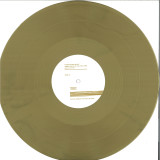
Gold Vinyl
Since 2008, "438Hz As It Is, As You Are" is "only" the third solo release from Tomoyoshi Date. The last one dates from 2011. Less is more.
In parallel, from 2013 to 2021, he has recorded some releases in collaborations with Toshimaru Nakamura, Ken Ikeda, Stijn Hüwels, Asuna and Federico Durand.
"This record was recorded on Diapason's upright piano made in the 1950s at the house of his maternal grandmother's sister (*). The piano has moved and tuned many times, and now it has arrived at my living room. It was a pre-mass production piano with a thick board and good sound, but I couldn't tune it without replacing the screws and the weakened base. After consulting with the tuner, I decided to tune the whole tune to the sound of the strings wound around the loosest and most inseparable screws. "As it is"
*Mikiko Yamada: A performer who formed a Japanese music group of contemporary Japanese music in 1964 and made Biwa the first five-line score. She also had a samisen, so I called her "Aunt Pen Pen". Her husband was a shakuhachi player, so she was "Uncle Boo Boo".
When I tuned in the summer, I tried to tune at 442kHz, but I changed the tune in the winter to 438kHz. From now on, the pitch of this piano will decrease year by year as the material ages. I will play the decaying piano and continue to record music that can only be done at that time.
When you drop a needle on a record, a sound is produced on the spot, and the sound constantly changes depending on the air, temperature, and humidity around the needle. The sound also affects all of the listener's life, affecting the frequency of the person's body and mind. The effect of the sound once generated will last forever.
This work was created with the intention of having the listener adjust the pitch at the desired speed according to the mood and frequency of the listener at that time. With a little faster 45 turns, you can listen to this dilapidated piano at 440kHz or 442kHz. You can slow it down, or adjust the number of rotations as you like, whether it is 33 rotations early or late. I really like the stretched sound of the recorded piano. When you want to relax, use slow music to adjust the pitch of the space around you, the creatures, and your own body and mind. "As You Are"
Tomoyoshi Date
- 1: Life Ain't Worth Livin'(If I Can't Have You)
- 2: That Man Of Mine
- 3: Woman Do Something Nice
- 4: Mississippi Moonshine
- 5: Don't Make Me Cry
- 6: Tied Down
- 7: Music Soft And The Lights Down Low
- 8: California You're Slippin
- 9: The Good Book Says It's Wrong
- 10: Back Streets Of Your City
- 11: Love In My Heart
- 12: When You Belong To Me
- 13: California You're Slippin
- 14: Lost Highway
Mississippi Moonshine Vinyl[24,75 €]
A '70s homemaker stuck between the studio and a getting dinner on the table, Joyce Street eked out an arresting countrypolitan discography in the margins of an otherwise traditional American life. With lyrics drawn from the pages of her diary, Street's stirring Mississippi warble led her into the fly-by- night world of custom studios, cutting tracks for upstart country concerns like Reena, Sonobeat, Revelation, and Arc. Channeling the honky tonk angel energy of Bobbie Gentry, Lorretta Lynn, and Jeannie C. Riley, Tied Down compiles a decade's worth of melodies disguised as lottery tickets.
- 1: Life Ain't Worth Livin'(If I Can't Have You)
- 2: That Man Of Mine
- 3: Woman Do Something Nice
- 4: Mississippi Moonshine
- 5: Don't Make Me Cry
- 6: Tied Down
- 7: Music Soft And The Lights Down Low
- 8: California You're Slippin
- 9: The Good Book Says It's Wrong
- 10: Back Streets Of Your City
- 11: Love In My Heart
- 12: When You Belong To Me
- 13: California You're Slippin
- 14: Lost Highway
Black Vinyl[23,49 €]
A '70s homemaker stuck between the studio and a getting dinner on the table, Joyce Street eked out an arresting countrypolitan discography in the margins of an otherwise traditional American life. With lyrics drawn from the pages of her diary, Street's stirring Mississippi warble led her into the fly-by- night world of custom studios, cutting tracks for upstart country concerns like Reena, Sonobeat, Revelation, and Arc. Channeling the honky tonk angel energy of Bobbie Gentry, Lorretta Lynn, and Jeannie C. Riley, Tied Down compiles a decade's worth of melodies disguised as lottery tickets.
[m] 13 CALIFORNIA YOU'RE SLIPPIN' [DEMO]
The incongruous, yet glorious, creative partnership between Nancy Sinatra and Lee Hazlewood was well underway when the two singular artists reunited to record 1972’s Nancy & Lee Again, a follow-up to their bestselling duet debut, Nancy & Lee. Nancy, the eldest daughter of Frank Sinatra, had been working with the Oklahoma-born songwriter since 1965, when she topped the pop charts with “These Boots Are Made For Walkin’.” Over the next five years, the two artists forged a prolific relationship in the studio, with Hazlewood writing and producing many of Nancy’s solo hits. Soon, the duo found success with a series of duets, including “Sand,” “Summer Wine,” and “Some Velvet Morning” – all of which appeared on their highly-influential 1968 debut.
Not long after the critical acclaim and chart success of Nancy & Lee died down, however, Hazlewood unexpectedly relocated to Sweden, leaving his musical partner in the proverbial dust. America, meanwhile, was in the midst of a cultural shift, as the Vietnam War waged on. By the turn of the decade, the musical landscape had changed significantly. “Trivial music and not profound music became unimportant,” recalls Nancy, speaking to Hunter Lea. “It was a tough time.” And yet, despite the circumstances, the stars somehow aligned for the duo to record some of their most magnificent music together.
Returning to Los Angeles for the project, Hazlewood – who reprised his role as producer – chose to take a new direction with the duo’s sophomore album. Nancy recalls, “It was more dramatic; it was more fun to do, more challenging to do…. It was more grandiose.” For the lush, orchestral arrangements, they collaborated with Larry Muhoberac (an original member of Elvis Presley’s TCB band, whose early ‘70s credits also included Barbra Streisand, Neil Diamond, and Lalo Schifrin) and Clark Gassman, who had worked on Hazlewood’s 1970 LP, Cowboy in Sweden. Backing vocals from brothers John and Tom Bahler, who remain two of the most recorded singers in history, added additional texture to several songs.
The big sound that Nancy describes above is exemplified in the album’s cinematic opener, “Arkansas Coal (Suite).” Clocking in at nearly six minutes long, the dynamic overture tells the tale of an ill-fated coal miner (sung by Hazlewood), while Nancy adjusts her vocals to sing as both the miner’s daughter and his wife. Hazlewood’s knack for vivid, nuanced storytelling shines throughout Nancy & Lee Again, particularly in “Paris Summer,” which details the conflict that a married woman faces, as she engages in a passionate affair. Another highlight is the country-inspired hit, “Did You Ever,” which was released as the album’s lead single. After it landed at No.2 on the U.K. pop charts, the song served as an alternate title track in several countries, including LP pressings in the U.K., Germany, and Canada.
One of the most emotionally-charged moments on Nancy & Lee Again is a cover of Dolly Parton’s “Down From Dover.” The heartbreaking tune tells the tale of a pregnant teenager, who has been abandoned by her lover and her family and ultimately gives birth to a stillborn baby. While Parton’s 1970 version was sung from the teenager’s point of view, Hazlewood and Sinatra transformed the country song into a duet. Hazlewood, who offers the man’s side of the story, sings in a notably deeper octave than his signature baritone.
Another poignant selection is “Congratulations,” which describes a soldier coming home from Vietnam. “His face has grown old and his eyes have grown cold/And they tell you of where he has been/Congratulations, you sure made a man out of him,” Hazlewood sings, pointedly. Nancy, who performs as the vet’s wife, argues that the song had a deeper meaning for her duet partner. “Lee started out a hawk, he was an army guy, so he was all for the war in the beginning. We didn’t talk about it, but at some point, he changed radically. ‘Congratulations’ was almost like an apology from him. I don’t want to put words in his mouth, but it was as though he was saying ‘I’m really sorry.’”
The song “Friendship Train” could also be interpreted as an apology of sorts – this time to Nancy. “You’ve been hurt and I’ve been hurt/Now we’re living pain,” the tune opens. When Hazlewood moved to Sweden without telling his longtime musical partner, Sinatra was understandably upset. “I felt pretty betrayed. I mean, who does that? Who just up and disappears like that? I’ll never understand it,” she reveals. But the uplifting duet – a slice of ‘70s pop perfection – offers reaffirming words of love between friends. “Lee felt things very deeply and tended to express his feelings in song instead of in real life,” explains Nancy.
The 10-track album closes with the stripped-down “Got It Together.” Backed by an acoustic guitar, the song is equal parts playful and candid, as the duo has an impromptu, spoken-word conversation about their lives. “I wish that we’d quit getting so old,” laments Nancy, who later shares her wish to have children (she would do so in the next few years). Hazlewood, meanwhile, attempts to remedy his past wrongdoings – this time asking his partner, “Can I go back to Sweden?” With that, Nancy gives her blessing.
This definitive reissue of Nancy & Lee Again also includes two bonus tracks. Both are stylistic departures for the duo – but fit right in with the psychedelic pop of the era. The first one, “Think I’m Coming Down,” is a harmony-filled reflection on a toxic relationship. “I think that was one of [Lee’s] drug things. I don’t mean that he used drugs; I mean that he was trying to be part of that culture. Trying to be hip,” explains Nancy, who delivers an emotive vocal performance on the solo track. Also included is “Machine Gun Kelly,” penned by a staple of the 70s singer-songwriter movement, Danny Kortchmar (James Taylor, Carole King, Linda Ronstadt). Recorded several months after the release of the album, the song found Nancy reuniting with Billy Strange, who arranged many of her solo albums, as well as Nancy & Lee. Sinatra and Hazlewood first performed “Machine Gun Kelly” during their residency at Las Vegas’ Riviera Hotel in February 1972 (later released as a concert documentary on Swedish television). While the recording has long remained a career favorite of Nancy’s, it would be decades before it was officially released.
Nancy & Lee Again remains a creative high point in the careers of Sinatra and Hazlewood and, upon its release, garnered rave reviews from Billboard, Record World, and Cash Box, among others. Yet, Nancy & Lee Again never received the spotlight it so utterly deserved. “We didn’t have label support at all in those days,” recalls Nancy. “Without the strength of a label, records die. We were old. We were old-fashioned. We were just not what was happening. It’s a very ageist kind of business.” Nevertheless, she adds, “I think it’s a very good album. I think it’s timeless.” Now, after years of being a sought-after rarity, this gem in the Sinatra-Hazlewood canon can finally get its due.
Five decades later, Nancy’s legacy only continues to grow, as new generations discover her impressive catalog (which boasts nearly 20 studio albums – her duets with Hazlewood among them – and dozens of charting singles, including the theme song to the 1967 James Bond film, You Only Live Twice). In 2020, Sinatra was recognized by her peers when “These Boots Are Made For Walkin’” was inducted into the GRAMMY® Hall of Fame. That same year, Sinatra partnered with Light in the Attic for Nancy Sinatra: Start Walkin’ 1965-1976, a definitive survey of her most prolific period. LITA has also reissued Sinatra’s classic debut, Boots, and her iconic, 1968 album with Lee Hazlewood, Nancy & Lee. The label looks forward to celebrating Nancy over the coming years with a variety of special releases, exclusive merchandise, and more.
The incongruous, yet glorious, creative partnership between Nancy Sinatra and Lee Hazlewood was well underway when the two singular artists reunited to record 1972’s Nancy & Lee Again, a follow-up to their bestselling duet debut, Nancy & Lee. Nancy, the eldest daughter of Frank Sinatra, had been working with the Oklahoma-born songwriter since 1965, when she topped the pop charts with “These Boots Are Made For Walkin’.” Over the next five years, the two artists forged a prolific relationship in the studio, with Hazlewood writing and producing many of Nancy’s solo hits. Soon, the duo found success with a series of duets, including “Sand,” “Summer Wine,” and “Some Velvet Morning” – all of which appeared on their highly-influential 1968 debut.
Not long after the critical acclaim and chart success of Nancy & Lee died down, however, Hazlewood unexpectedly relocated to Sweden, leaving his musical partner in the proverbial dust. America, meanwhile, was in the midst of a cultural shift, as the Vietnam War waged on. By the turn of the decade, the musical landscape had changed significantly. “Trivial music and not profound music became unimportant,” recalls Nancy, speaking to Hunter Lea. “It was a tough time.” And yet, despite the circumstances, the stars somehow aligned for the duo to record some of their most magnificent music together.
Returning to Los Angeles for the project, Hazlewood – who reprised his role as producer – chose to take a new direction with the duo’s sophomore album. Nancy recalls, “It was more dramatic; it was more fun to do, more challenging to do…. It was more grandiose.” For the lush, orchestral arrangements, they collaborated with Larry Muhoberac (an original member of Elvis Presley’s TCB band, whose early ‘70s credits also included Barbra Streisand, Neil Diamond, and Lalo Schifrin) and Clark Gassman, who had worked on Hazlewood’s 1970 LP, Cowboy in Sweden. Backing vocals from brothers John and Tom Bahler, who remain two of the most recorded singers in history, added additional texture to several songs.
The big sound that Nancy describes above is exemplified in the album’s cinematic opener, “Arkansas Coal (Suite).” Clocking in at nearly six minutes long, the dynamic overture tells the tale of an ill-fated coal miner (sung by Hazlewood), while Nancy adjusts her vocals to sing as both the miner’s daughter and his wife. Hazlewood’s knack for vivid, nuanced storytelling shines throughout Nancy & Lee Again, particularly in “Paris Summer,” which details the conflict that a married woman faces, as she engages in a passionate affair. Another highlight is the country-inspired hit, “Did You Ever,” which was released as the album’s lead single. After it landed at No.2 on the U.K. pop charts, the song served as an alternate title track in several countries, including LP pressings in the U.K., Germany, and Canada.
One of the most emotionally-charged moments on Nancy & Lee Again is a cover of Dolly Parton’s “Down From Dover.” The heartbreaking tune tells the tale of a pregnant teenager, who has been abandoned by her lover and her family and ultimately gives birth to a stillborn baby. While Parton’s 1970 version was sung from the teenager’s point of view, Hazlewood and Sinatra transformed the country song into a duet. Hazlewood, who offers the man’s side of the story, sings in a notably deeper octave than his signature baritone.
Another poignant selection is “Congratulations,” which describes a soldier coming home from Vietnam. “His face has grown old and his eyes have grown cold/And they tell you of where he has been/Congratulations, you sure made a man out of him,” Hazlewood sings, pointedly. Nancy, who performs as the vet’s wife, argues that the song had a deeper meaning for her duet partner. “Lee started out a hawk, he was an army guy, so he was all for the war in the beginning. We didn’t talk about it, but at some point, he changed radically. ‘Congratulations’ was almost like an apology from him. I don’t want to put words in his mouth, but it was as though he was saying ‘I’m really sorry.’”
The song “Friendship Train” could also be interpreted as an apology of sorts – this time to Nancy. “You’ve been hurt and I’ve been hurt/Now we’re living pain,” the tune opens. When Hazlewood moved to Sweden without telling his longtime musical partner, Sinatra was understandably upset. “I felt pretty betrayed. I mean, who does that? Who just up and disappears like that? I’ll never understand it,” she reveals. But the uplifting duet – a slice of ‘70s pop perfection – offers reaffirming words of love between friends. “Lee felt things very deeply and tended to express his feelings in song instead of in real life,” explains Nancy.
The 10-track album closes with the stripped-down “Got It Together.” Backed by an acoustic guitar, the song is equal parts playful and candid, as the duo has an impromptu, spoken-word conversation about their lives. “I wish that we’d quit getting so old,” laments Nancy, who later shares her wish to have children (she would do so in the next few years). Hazlewood, meanwhile, attempts to remedy his past wrongdoings – this time asking his partner, “Can I go back to Sweden?” With that, Nancy gives her blessing.
This definitive reissue of Nancy & Lee Again also includes two bonus tracks. Both are stylistic departures for the duo – but fit right in with the psychedelic pop of the era. The first one, “Think I’m Coming Down,” is a harmony-filled reflection on a toxic relationship. “I think that was one of Lee’s drug things. I don’t mean that he used drugs; I mean that he was trying to be part of that culture. Trying to be hip,” explains Nancy, who delivers an emotive vocal performance on the solo track. Also included is “Machine Gun Kelly,” penned by a staple of the 70s singer-songwriter movement, Danny Kortchmar (James Taylor, Carole King, Linda Ronstadt). Recorded several months after the release of the album, the song found Nancy reuniting with Billy Strange, who arranged many of her solo albums, as well as Nancy & Lee. Sinatra and Hazlewood first performed “Machine Gun Kelly” during their residency at Las Vegas’ Riviera Hotel in February 1972 (later released as a concert documentary on Swedish television). While the recording has long remained a career favorite of Nancy’s, it would be decades before it was officially released.
Nancy & Lee Again remains a creative high point in the careers of Sinatra and Hazlewood and, upon its release, garnered rave reviews from Billboard, Record World, and Cash Box, among others. Yet, Nancy & Lee Again never received the spotlight it so utterly deserved. “We didn’t have label support at all in those days,” recalls Nancy. “Without the strength of a label, records die. We were old. We were old-fashioned. We were just not what was happening. It’s a very ageist kind of business.” Nevertheless, she adds, “I think it’s a very good album. I think it’s timeless.” Now, after years of being a sought-after rarity, this gem in the Sinatra-Hazlewood canon can finally get its due.
Five decades later, Nancy’s legacy only continues to grow, as new generations discover her impressive catalog (which boasts nearly 20 studio albums – her duets with Hazlewood among them – and dozens of charting singles, including the theme song to the 1967 James Bond film, You Only Live Twice). In 2020, Sinatra was recognized by her peers when “These Boots Are Made For Walkin’” was inducted into the GRAMMY® Hall of Fame. That same year, Sinatra partnered with Light in the Attic for Nancy Sinatra: Start Walkin’ 1965-1976, a definitive survey of her most prolific period. LITA has also reissued Sinatra’s classic debut, Boots, and her iconic, 1968 album with Lee Hazlewood, Nancy & Lee. The label looks forward to celebrating Nancy over the coming years with a variety of special releases, exclusive merchandise, and more.
- A1: Life Ain't Worth Livin' (If I Can't Have You)
- A2: That Man Of Mine
- A3: Woman Do Something Nice
- A4: Mississippi Moonshine
- A5: Don't Make Me Cry
- A6: Tied Down
- A7: Music Soft And The Lights Down Low
- B1: California You're Slippin
- B2: The Good Book Says It's Wrong
- B3: Back Streets Of Your City
- B4: Love In My Heart
- B5: When You Belong To Me
- B6: California You're Slippin
- B7: Lost Highway
A ’70s homemaker stuck between the studio and a getting dinner on the table, Joyce Street eked out an arresting countrypolitan discography in the margins of an otherwise traditional American life. With lyrics drawn from the pages of her diary, Street’s stirring Mississippi warble led her into the fly-by-night world of custom studios, cutting tracks for upstart country concerns like Reena, Sonobeat, Revelation, and Arc. Channeling the honky tonk angel energy of Bobbie Gentry, Lorretta Lynn, and Jeannie C. Riley, Tied Down compiles a decade’s worth of melodies disguised as lottery tickets.
[m] B6. California You're Slippin' [Demo]
It's often a good sign when one of your favorite musicians steps out from beyond the studio walls and past the stage lights to fulfill their own inspired and creative intent. And Caíto Sánchez is not just a favorite musician, but as his lengthy resume as a sideman shows, he's also one of your favorite musicians' favorite musicians, constantly working without fanfare as an essential ingredient in a larger music feast. Sánchez earned his stripes in the 2000s and beyond as a key session player and an integral touring band member, a quiet standout even among many oversized personalities. A dedicated drummer born in Panama and living in New York, Sánchez is quite capable of keeping time for legends like Charles Bradley, Lee Fields, and Brian Jackson, as well as supporting eclectic outfits like the live groups of Quantic, Chico Mann and Midnight Magic. For all the players who have shared a stage or studio with him it comes as no real surprise, and frankly as a long overdue development, that such a unique artistic force is finally stepping into the spotlight.
With this debut single we get a glimpse into Sánchez's creative and artistic personal space, more precisely a multi-instrumental discipline of not only drums, but also bass, guitar and lead voice. It's an intensely intimate recording debut, a fantastic studio concoction born from the heart of its creator, and later fostered and mixed down by the talented hands of NYCT and Daptone veteran Victor Axelrod. The defining result on this initial 7-inch offering are two heavy psychedelic and moody nuggets of rock enespañol, a decidedly new wave of sounds and style that are quite capable of shining on their own.
CVC (or Church Village Collective in full) hail from a sleepy village 10 miles north of Cardiff, nestling atop a hill in the Welsh valleys.
CVC is comprised of singer Francesco Orsi, bassist Ben Thorne, drummer Tom Fry, keyboardist Daniel ‘Naniel’ Jones and singing guitarists David Bassey and Elliott Bradfield. (It’s worth noting that the latter two, despite never having met them, are related to Welsh royalty Dame Shirley Bassey and Manic Street Preachers’ James Dean Bradfield.)
Maybe owing to genetics, Bassey states “I don’t think I’d be able to not do this, I don’t actively choose to, I’m just drawn to it.”
Their lush three-part harmonies echo the music they grew up on - contemporary pop’s building blocks: the Beatles, Neil Young and the Beach Boys - rich, melodic and pristine music that’s steeped in rock’s history.
‘Get Real’, CVC’s 11-track debut album, brings a touch of Laurel Canyon to the valleys. Made over four sun-baked weeks (once their time was up, Ross Orton Arctic Monkeys mixed the finished product), they kept it local by recording it in Bradfields’ living room.