Rare Montreux festival sessions from 1982.
Live Album by Detroit/Tribe Jazz Icon Reggie Fields.
Featuring an All-Star Line-up.
First ever vinyl reissue.
180g BLACK vinyl limited to 500 copies (w/obi strip) . Non-Returnable.
The Real ShooBeeDoo (AKA Reggie Fields) has always been a consistent name on the Detroit jazz scene … Fields who played with Pharoah Sanders while he was living in Motor City, worked with Sun Ra in the late 1970s and early 80s and who was also a close associate of the Afro-centric TRIBE label and artist collective, leaving his marks on a few essential TRIBE sessions such as Phil Ranelin’s “The Time Is Now!” as well as Ranelin & Wendell Harrison’s masterpiece “A Message From The Tribe”. It was Wendell Harrison who gave Fields the chance to record his landmark solo album (Reminiscing from 1981) to be released on his Wenha imprint. Reggie chose to record under his moniker “The Real ShooBeeDoo” because he built a rock-solid reputation as an internationally acclaimed performer under that name.
In 1982 he embarked on a European tour and performed at various clubs in countries such as Germany, Holland, Belgium, Italy, Switzerland, Luxemburg, France and Norway. This ecstatic touring vibe can later be heard on his fantastic ‘‘Live at Montreux Jazz Festival, 1982” album (simply called ‘Good To Go’).
“Good To Go” which we are proudly presenting you today features 10 tracks consisting of smooth Jazz-rumbas, French avant-garde jazz vocalizations, bass lines that can blow through walls as if they were made from paper, foot stomping rhythmic beats, lyrics that are pure poetry and ecstatic beats that took the crowd on a musical trip that ended in them raving for more. Playing before a large and enthusiastic crowd, Reggie’s spiritual cosmic free-flowing rhythms took the audience by storm…and the stakes were high because the bill was pretty impressive, he shared the stage with some of the biggest names in the genre (the festival bill also included Miles Davis, Dizzy Gillespie and Sonny Rollins).
Also…a quick closer look at the cast of all-star players featured on the album is most likely to be enough to get an impression that this is a very special record. Detroit preferred pianist Earl Van Riper brings his rich musical experience to the table that he perfected during his collaborations with Marcus Belgrave, Eddy ‘Cleanhead’ Vinson, Dinah Washington, Wes Montgomery and countless others. On the tenor saxophone we have Robert Barnes known for his work with Donald Bird…and last but not least we have Tani Tabbal on drums who is famous for his performances and recordings with Roscoe Mitchell and Sun Ra!
All of the above makes this rare album a total must-have that just begs for a prominent place in your record collection.
Tracklist:
Jumping With The Bellboy , Dark Eyes , Qu'est Ceque C’est , Do You Call that Friendship , Oo Shoobee Doo , Crazy She Calls Me , Have You Met Miss Jones , Ye Brac Hareesee , Hit That Jive Jack , Too Late Now
quête:good livin
- 1: Move It On Over
- 2: I'm A Long Gone Daddy
- 3: A Mansion On The Hill
- 4: Lovesick Blues
- 5: Wedding Bells
- 6: Mind Your Own Business
- 7: You're Gonna Change (Or I'm Gonna Leave)
- 8: Lost Highway
- 9: There'll Be No Teardrops Tonight
- 10: I Just Don't Like This Kind Of Livin
- 11: Long Gone Lonesome Blues
- 12: Why Don't You Love Me?
- 13: They'll Never Take Her Love From Me
- 14: Why Should We Try Anymore?
- 15: Moanin' The Blues
- 16: Nobody's Lonesome For Me
- 17: Cold, Cold Heart
- 18: Dear John
- 19: I Can't Help It (If I'm Still In Love With You)
- 20: Hey Good Lookin
- 21: (I Heard That) Lonesome Whistle
- 22: I'm So Lonesome I Could Cry
- 23: Jambalaya (On The Bayou)
- 24: I'll Fly Away
- 25: I Saw The Light
After 25 years of living his dream as one of hip hop’s most respected producers, Hi-Tek is digging back into his roots with a brand new trio of instrumental vinyl LPs in 2023. “Beatbox Studios (1995 MPC 60II)” is the first of the series, each featuring a selection of restored and remastered beats, carefully chosen from an archive of DAT tapes. These LPs manage to both provide a window into Tek’s development and to shine light on the work of an already enormously-talented musician whose beats would’ve sounded right at home on classic releases from the mid-1990s.
Having learned to make beats off of borrowed equipment as a teenager, the aspiring DJ/producer born as Tony Cottrell achieved a break of sorts when he was hired in 1995 to manage one of the rooms at Beatbox Studios, a sprawling complex in the Clifton neighborhood in Cincinnati. It became the go-to-spot in town for emerging talent, giving him a chance to learn about the intricacies of recording and to sharpen his communication skills with artists to maximize their performance The gig also gave Tek plenty of down time to practice on and to master the studio’s Akai MPC 60II while making his own music. It was around this time he began to collaborate with the top rap talent in Cincinnati, and he started regularly visiting New York City to plant seeds for new relationships in the industry.
Though his work eventually evolved far beyond the styles present on “Beatbox Studios,” here you’ll find many signature elements of that era’s contemporary New York sound: some snappy drums reminiscent of A Tribe Called Quest or Easy Mo Bee, plenty of horn stabs a la Pete Rock or Lord Finesse, and the kind of dark pianos and filtered bass lines that producers like the Beatminerz were steadily employing. These were his biggest influences at the time, and that was the sound of 1995. As it turns out, that classic sound remains in demand today, and while Hi-Tek was not a well-known name in hip hop circles at that time, the calibre of beats on “Beatbox Studios” prove that he was a talent to be reckoned with, even then.
Wewantsounds Is Pursuing Its Ambitious Akiko Yano Reissue Program With The Release Of "japanese Girl", Her Landmark Debut Album From 1976. Backed By Little Feat With Lowell George And By The Cream Of Japanese Musicians (including Haruomi Hosono), Japanese Girl Is One Of The Most Important Japanese Albums Of The 70s, Mixing Pop, Rock, Japanese Folk Together With Little Feat's Superb Classic Sound. This Is The Very First Time The Album Is Released Internationally. The Deluxe Lp Edition Includes Remastered Sound, Tip-on Lp Sleeve, Download Card Plus The Original 4-page Insert With Lyrics And Full Line-up!
When Akiko Suzuki Left Her Home Town Of Aomori For Tokyo In The Early 70s Aged Just 15 To Become A Professional Musician, She Quickly Started Making Waves On The Local Music Scene Performing At The Jazz Club Rob Roy. In 1973 She Released A 7" With The Group Zariba And Caught The Attention Of A&r Man Koki Miura. She Then Recorded One Song, "oinaru Shiino-ki" With Haruomi Hosono On Bass And Drummer Tatsuo Hayashi (who Features On Many Hosono Albums And Also Hiroshi Sato's 1979 Album Orient) With A Full Album In Mind.
After A Marriage With Musician/producer Makoto Yano And The Birth Of Her Son (named Fuuta), Yano And Her Team Resumed The Recording Of The Album And Decided To Pitch Little Feat For A Collaboration As She Loved The Group. Against All Odds They Said Yes And Yano Left Tokyo For Los Angeles In March 1976 To Record A Full Side With Them. The Legend Has It They Found It So Difficult To Keep Up With Yano's Compositions They Returned Some Of Their Fee. The Session Was Nevertheless Stunning And Lowell George Even Compared Yano To Stevie Wonder. The Little Feat Blend Of New Orleans Groove Matched Yano's Melodies Perfectly, As Witnessed On "funamachi-uta Part 2." Originally A Traditional Song From The Nebuta Festival In Her Hometown Of Aomori (part I On Side 2 Gives A Good Idea Of What The Original Form Sounds Like), The Little Feat Version Is A Formidable Slow-funk Workout Not Dissimilar To Their Classic, "spanish Moon", Serving Yano's Beautiful Vocals And Sense Of Groove To Perfection. The Whole Side Is A Match Made In Heaven, Showcasing The Classic Little Feat Line Up At Their Funkiest With Yano's Unique Japanese Twist.
The Japanese Side On The Album Gives A Great Snapshot Of The Tokyo Music Scene Of The 70s With Many Musicians Gravitating Around Haruomi Hosono (and Present On His 1973 Classic Album 'hosono House' Including Sound Engineer Kinji Yoshino) And Also Several Musicians From Japanese Band, The Moonriders.
Recorded At The Legendary Onkyo Haus Studio In Tokyo, The Sessions Mix Singer-songwriter Sensitivity And Pop With Traditional Japanese Sounds And Instruments Like The Shinobue Transverse Flute, The Koto String Instrument Or The Tsuzumi Hand Drum As Played On "hekoriputaa" By The Legendary Percussionist Kisaku Katada Who Was Appointed Living National Treasure By The Japanese State In 1999; Together They Create A Beautiful East-meets-west Mix Masterfully Driven By Yano's Creativity And Unique Talent.
A Breathtaking Debut Album That Made Akiko Yano One Of The Most Important Artists To Emerge From The 70s, Japanese Girl Has Since Become A Milestone In Japanese Music With A Recent Documentary On Nhk Tv Telling The Whole Story Behind This Classic. Wewantsounds Is Now Proud To Present This Essential Album To The Rest Of The World.
- A1: Ballad Of A Dead Soulja
- A2: F*** Friendz
- A3: Lil' Homies
- A4: Let Em Have It (Feat Skg)
- B1: Good Life (Feat Big Syke & Edi Of The Outlawz)
- B2: Letter 2 My Unborn
- B3: Breathin (Feat Outlawz)
- B4: Happy Home
- C1: All Out (Feat Outlawz)
- C2: F***** Wit The Wrong N****
- C3: Thug N U Thug N Me (Feat K-Ci & Jojo - Remix)
- C4: Everything They Owe
- D1: Until The End Of Time (Feat Rl)
- D2: Mob (Feat Thug Life & Outlawz)
- D3: World Wide Mob Figgaz (Feat Outlawz)
- E1: Big Syke Interlude
- E2: My Closest Roaddogz
- E3: N***** Nature (Feat Lil Mo - Remix)
- E4: When Thugz Cry
- F1: U Don't Have 2 Worry (Feat Outlawz)
- F2: This Ain't Livin
- F3: Why U Turn On Me
- G1: Lastonesleft (Feat Outlawz)
- G2: Thug N U Thug N Me (Feat K-Ci & Jojo)
- H1: Runnin On E (Feat Outlawz)
- H2: When I Get Free (Feat J Valentine)
- H3: Until The End Of Time (Feat Richard Page - Rp Remix)
- G3: Words 2 My First Born (Feat Above The Law)
- G4: Let Em Have It (Feat Left Eye - Remix)
Until the End of Time is the seventh studio album, and third posthumous album by 2Pac. It follows his previous posthumous albums R U Still Down? (Remember Me) and Still I Rise. The album consists of material recorded while the rapper was on Death Row Records from 1995–1996. The album debuted at number one on the US Billboard 200 chart.
A majority of the music compositions were remixed from their original state. Highly anticipated, Until the End of Time was ultimately one of the best selling hip hop albums of 2001. There were only three times references to Death Row Records were not censored (“Until the End of Time” (both versions), “U Don’t Have 2 Worry”, and “All Out”). The core vocal tracks and some instrumentation was recorded during and after the All Eyez On Me and Makaveli: The Don Killuminati: The 7 Day Theory sessions.
This will be a 180 gram 4LP 20th anniversary reissue of the long out-of-print, 4x platinum, posthumous album.
- A1: Just Like Honey
- A2: Sometimes Always (Feat. Isobel Campbell)
- A3: Black And Blues (Feat. Isobel Campbell)
- A4: Amputation
- B1: All Things Pass
- B2: Some Candy Talking
- B3: Head On
- B4: The Living End
- B5: Cracking
- C1: Teenage Lust
- C2: I Hate Rock 'N' Roll
- C3: Reverence
- C4: Blues From A Gun
- D1: Far Gone And Out
- D2: Between Planets
- D3: Half Way To Crazy
- D4: In A Hole
Recorded at the Hollywood Palladium, Los Angeles in 2018, ‘Sunset 666’ is a new live album from The Jesus and Mary Chain, due out August 4th 2023 on Fuzz Club. In 1990, a young American band, full of a precise kind of noise and darkness, were special guests on the US tour being undertaken by a group who had noise and darkness, poise and catharsis of their own. The young band: Nine Inch Nails. Those headliners: The Jesus and Mary Chain. Almost thirty years later, an invitation was extended. Would the Reid brothers care to reverse the roles and open for Nine Inch Nails on their own North American tour? Trent Reznor had been a fan of the Mary Chain, and influenced by them since hearing 'Psychocandy', so it felt a good fit and the Reid brothers accepted. The resulting tour ended with a run of six shows at LA’s Hollywood Palladium and the seventeen tracks captured on the ‘Sunset 666’ double album were recorded from the desk on two of those nights. Sides A, B and C are from the final show, December 15. Those twelve songs were the full set that night, in sequence, meaning the show began with the here-we-f*cking-go drums of ‘Just Like Honey’ and ended with the ferocious euphoria of an eight-and-a-half minute ‘Reverence’. Side D of the vinyl record is taken from the December 11 show and serves almost as a mini-showcase of the ‘Automatic’ album, featuring versions of ‘Blues From A Gun’, ‘Between Planets’ and ‘Halfway To Crazy’.
The debut album of Istanbul born, Berlin & Copenhagen based artist Nene H (real name Beste Aydin) titled ‘Ali’. In this record Aydin has used her background as a classically trained pianist and her deep, foundational knowledge of musical theory to synergise contrasting electronic compositions and the mental process of mourning the death of a loved one.
Born as a tribute after the passing of her late father, Aydin has found catharsis through a personal odyssey, the reflection of which can be seen through these 8 tracks. Raised in a traditional Turkish family and now living in Germany with its westernized lifestyle, informs the intersections of identity and duality that Aydin exists and creates from within. This consolidation of identity has pushed her to seek solitude and confidence in the power of being able to represent the process of her existence in the scene as a Middle Eastern woman with Muslim upbringing.
- A1: Universe Of Dreams
- A2: I Wrote A Letter
- A3: Hold On - Slow Down
- A4: Singing Songs
- A5: Back To The Roots
- B1: Never Too Late
- B2: About You
- B3: All In Good Time
- B4: One Man Band
- B5: Slow Motion
- B6: My Diary
- C1: Can’t Stop Myself
- C2: Dance It Up
- C3: I Am I
- C4: Two Is One
- C5: Falling In Love
- D1: The Best Thing I Know
- D2: Please, Stand By Me
- D3: A Woman In Love
- D4: Friends
- D5: No Cross - No Crown
- D6: What A Wonderful World
Black Vinyl[37,77 €]
"Inga Rumpf, the myth, the voice - City Preachers, Frumpy, Atlantis, NDR Big Band and so on... it takes a lot of space and time to name all of Inga Rumpf's musical stations. The list of her international companions, colleagues (and admirers) is long and includes such outstanding names as B. B. King, Udo Lindenberg, Lionel Richie, Tina Turner or Keith Richards, to name just a few! If there is a living legend in the music business in Germany, it is Inga Rumpf!
The new studio album “UNIVERSE OF DREAMS” will be released on earMUSIC this late summer. The album is a gift to all fans, but also to Inga Rumpf herself: the Grande Dame celebrates her 75th anniversary birthday on August 2nd."
- 1: Past And Present Ft. Pupajim
- 2: Good Lovin Ft. Lady Ann
- 3: Sugarwater Ft. Hollie Cook
- 4: Riddim General Ft. Kiko Bun
- 5: We Pulsating Ft. Solo Banton
- 6: Only Love Ft. Prince Alla
- 7: Rain Keeps Falling Ft. Johnny Clarke
- 8: Total Disaster Ft. Shanti D & Ranking Levy
- 9: Control The Border Ft. Charlie P & Daddy Freddy
- 10: Birds Of Vice
Mungo’s Hi Fi return with their exciting new vocal project Past And Present. Released on their Dumbarton Rock label, it’s the eagerly awaited vocal companion piece to 2021 dub album Antidote. Past And Present is unique for Mungo’s in being devoted to the Rub A Dub reggae style that arose in late 70s and early 80s Jamaica. The record has its roots in both past and present. Back in 2021, Mungo’s responded to the pandemic with the dub project Antidote, an album of reflection among wide spaces and nature. As the world has reopened, Past And Present celebrates the return of verbal communication and dancing to hypnotic basslines, with the original vocal cuts by veteran and rising microphone talent. The haunting voice of French pure singjay Pupajim encourages us to face living in the now, on title track Past and Present. Pioneering Jamaican female deejay Lady Ann toasts the importance of Good Lovin’ over a sensual, waist-winding rhythm. Ethereal UK neo lovers rock singer Hollie Cook revisits her classic Sugar Water, floating above a sparse and eerie future Rub A Dub soundscape. Honey-toned Londoner Kiko Bun exudes confidence and humility as a Riddim General while veteran talker Solo Banton shakes up the dance on his seismic, much requested, We Pulsating. The biblical voice of Jamaican legend Prince Alla sounds fresh on a revisit to his immortal Only Love Can Conquer. Fellow elder statesman of reggae Johnny Clarke contributes the sole non Rub A Dub offering with the “Flying Cymbals” driven, deep roots track Rain Keeps On Falling. French singjay Shanti D and Israeli chanter Ranking Levy pair up on the mighty Jaqueline rhythm for a warning against Total Disaster. The prodigious Charlie P joins Godfather of UK emcee-ing, Daddy Freddy, to request freer movement on Control The Border. The final statement is without words or vocals: as Mungo’s production team take centre stage for the soaring Birds Of Vice – the A side to Antidote’s closing dub, Birds Of Pleasure. In reggae, the vocal traditionally precedes the dub. By completing their pairing of Antidote with Past and Present, Mungo’s have flipped the script and reversed the process – crafting a loving tribute to Rub A Dub’s rolling basslines and upward vibes in a modern style
Anna Of The North veröffentlicht ihr 2022er Album 'Crazy Life' nun endlich auch auf Vinyl. Die limitierte coloured LP enthält darüber hinaus drei bisher unveröffentlichte Bonus-Tracks! Mit ihrem träumerischen und leichtfüßigen Indie-Pop besingt sie auf ihrem Album die Höhen und Tiefen des Lebens – inkl. 'Meteorite' feat. Gus Dapperton!
- Ltd. Col. LP: (White Vinyl)
Niemand hätte im Jahr 2023 damit gerechnet, dass beim Keep It True Festival die ganze Halle den Refrain von „Somewhere Up In The Mountains“, die heute sehr rare Single aus dem Jahr 1981, mitsingt und dann auch noch ein neues, quasi erstes Album erscheint! Gute Zeiten für NWOBHM Fans!
MARQUIS DE SADE aus London wurden 1979 gegründet neben der heute unbezahlbaren 7“ Single „Somewhere Up In The Mountains/Black Angel“ gab es 1981 auch noch ein Tape mit vier Songs. Bassist Pete Gordelier ging in Folge zu Angel Witch und ist auf diversen Alben zu hören. Keyboarder San Remo startete 1982 mit Sanctus, deren gesammelte Werke (zwei Tapes) 2015 bei High Roller veröffentlicht wurden.
2005 wurden die Aufnahmen von MARQUIS DE SADE (Single und Tape) als Bootleg veröffentlicht. High Roller Records folgten schließlich 2012 mit einer offiziellen Version auf CD und LP. 2015 coverten Roxxcalibur den Song „Somewhere Up In The Mountains“ auf ihrem dritten, erfolgreichen Album „Gems Of The NWOBHM“ und verhalfen dem Titel zu zusätzlicher Popularität. Diese Umstände führten schließlich 2019 zur Reunion von MARQUIS DE SADE, nach einem Todesfall nun zu fünft mit drei Originalmitgliedern. Alte und
neue Ideen wurden ausgearbeitet und man nahm nach all den Jahren endlich das erste Album „Chapter II“ auf. Zeitgleich konnte man nach Corona die ersten erfolgreichen Clubshows spielen und schließlich, im April 2023, der Ritterschlag auf dem renommierten Szenefestival Keep It True bei Tauberbischofsheim.
„Chapter II“ ist nicht nur ein Fest für NWOBHM Fans und Liebhabern von britischem Heavyrock im Allgemeinen, sondern weist auch epische und pompöse Elemente der Marke Magnum auf. Die natürlich gehaltene Produktion, getrennt für CD und Vinyl gemastert, sorgt für ein authentisches und dennoch druckvolles Hörerlebnis.
Nobody would have expected in 2023 that at the „Keep It True Festival“ the whole hall sings along the chorus of „Somewhere Up In The Mountains“, the now very rare single from 1981, and then also a new, practically first album is released! Good times for NWOBHM fans!
MARQUIS DE SADE from London were founded in 1979 and besides the today priceless 7“ single „Somewhere Up In The Mountains/Black Angel“ there was also a tape with four songs in 1981. Bassist Pete Gordelier subsequently joined Angel Witch and can be heard on several albums. Keyboardist San Remo started Sanctus in 1982, whose collected works (two tapes) were released by High Roller in 2015.
In 2005, the recordings of MARQUIS DE SADE (single and tape) were released as a bootleg. High Roller Records finally followed up in 2012 with an official version on CD and LP. In 2015, Roxxcalibur covered the song „Somewhere Up In The Mountains“ on their third successful album „Gems Of The NWOBHM“ and helped the track gain additional popularity.
These circumstances finally led to the reunion of MARQUIS DE SADE in 2019, now with five original members after a death. Old and new ideas were worked out and they finally recorded the first album „Chapter II“ after all these years. At the same time they were able to play the first successful club shows after Corona and finally, in April 2023, the accolade at the renowned scene festival Keep It True near Tauberbischofsheim.
„Chapter II“ is not only a feast for NWOBHM fans and lovers of British heavy rock in general, but also features epic and pompous elements of the Magnum brand. The naturally kept production, mastered separately for CD and vinyl, makes for an authentic yet powerful listening experience.
From Alehouse to Playhouse Bjarte Eike and his barnstorming Barokksolistene capture the vital spark of Restoration London’s entertainment scene with a captivating new recording for Rubicon Classics! The Playhouse Sessions will be released on 23 September 2022 to coincide with Barokksolistene’s concert double-bill at London’s Southbank Centre.
‘A smattering of Purcell, dances from Playford’s Dancing Master, shanties, reels and ballads succumb to a nine-piece ensemble drawing on Baroque, jazz and folk styles for a no holds barred hooley of riotous improvisatory give and take,’ (BBC Music Magazine review of The Alehouse Sessions, August 2019)
London’s musicians, pushed in the 1650s, to the margins of society by order of Oliver Cromwell, found room for new forms of entertainment in city-centre taverns and alehouses. They remained there long after the restoration of the monarchy, performing sets of dances, theatre songs and bawdy ballads to audiences glad to be free from Puritan constraints on pleasure.
Norwegian violinist Bjarte Eike and his Barokksolistene have restored the spirit and substance of those long-forgotten performances with their Alehouse Sessions, hailed by The Times as ‘irresistible’ and ‘fabulously unrestrained’ by The Guardian. Five years ago the Norwegian violinist and his band scored a best-selling album with The Alehouse Sessions on Rubicon Classics. They return to the label with another compelling collection of music and words of the kind on offer more than three centuries ago at Henry Purcell’s favourite Westminster watering holes. The Playhouse Sessions, set for release on Rubicon Classics on 23 September 2022, reflects the uplifting energy and engaging emotional contrasts of Barokksolistene’s Alehouse performances.
“The album contains a sort of inner narrative that runs through the recording,” says Bjarte Eike. “It has become like a play in its own right, with each track being a small tale within a larger story.” The recording’s tracklist includes Eike’s beguiling arrangements of music from Purcell’s semi-opera The Fairy Queen and his own original compositions on words from the play on which it is based, Shakespeare’s A Midsummer Night’s Dream; popular songs and ballads such as ‘The Irish Washerwoman’, ‘I often for my Jenny strove’ and ‘The Three Ravens’; tunes from Purcell’s welcome odes and stage shows, Come ye sons of art and Dido and Aeneas among them; the ‘Willow Song’ from Shakespeare’s Othello; Eike’s own voice in Puck’s monologue from Act 5 of A Midsummer Night’s Dream; and John Dowland’s sublime air ‘Can she excuse my wrongs’.
London’s theatres were closed at the start of the English Civil War in 1642 and remained shut until the Restoration. Alehouses offered redundant musicians, actors and dancers a place to scrape a precarious living and soon became their creative refuge. “Although a few surviving theatres reopened in 1660 with the return of Charles II, there was little money around to rebuild those that had been demolished,” observes Bjarte Eike. “And a generation of musicians had already found an audience in places like the Black Horse in Aldersgate Street. So popular were their alehouse sessions that Cromwell tried to abolish them! But they outlived him and became part of Restoration musical life.” The form of a Barokksolistene Alehouse, he adds, is like a creative room. “Within its framework I can frequently refurbish the show with new contents. The Playhouse project is likewise an extension of the ever-evolving Alehouse Sessions. Together they tell the story of music and theatre in London during Cromwell’s time and after the Restoration. Of course there’s an historical context to what we do. But there’s also the practical context – which is even more important to me – of connecting with a contemporary twenty-first century audience. An Alehouse / Playhouse performance is not something for the museum; it's about music made in the present moment, just as it was in the London alehouses of Purcell’s day -- with their playhouses annexed to the rear of the beer-drinking saloons. The encounter of musicians onstage and the audience in the hall is the real magic of it. We have to fuse the audience into the action of our performance!”
The Playhouse Sessions will be launched on Friday 23 September with a late-night concert at the Purcell Room and a post-concert Alehouse Session in the foyer of the Queen Elizabeth Hall. Soprano Mary Bevan is set to join Eike and his Alehouse Boys for the first half of their Southbank Centre double-bill, offering unique interpretations of songs from Purcell shows and other hits from the late seventeenth-century London stage. “The Southbank Centre is a direct descendant of concerts given in the 1650s in the alehouses of London,” notes Eike. “These alehouses after all staged some of the world’s first public concerts. Later, after the Restoration, it became common for promoters to advertise alehouse concerts in the press and offer subscription tickets. Purcell and his fellow musicians were thus just as at home performing there as they were in the chambers of the royal court or in London’s new theatres.”
Bjarte Eike launched his Alehouse Sessions in company with like-minded musicians 15 years ago. The ensemble comprises a core of regular performers, all of whom have committed to memory a huge setlist of up to four hours of music. Typically they meet a day or so before a concert tour to share a meal and make music together; then next day, re-grouping thirty minutes before the show, they discover Eike’s select-menu for the evening. “That ensures that every show is fresh,” he notes. “I make sure we never repeat the same programme twice. It’s therefore essential to work with people who share my outlook and dare to adventure. We’re into a high-risk sport, with lots of traps and places where the unexpected appears - for good or for ill. And so the audience knows we’re vulnerable. But our skill is seen in how we re-act on the hoof to the unpredictable. That’s authenticity and honesty - and above all it’s a performance that’s genuine.”
Armed with a classical training and a background in folk music and improvisation, Bjarte Eike was drawn naturally to Early Music in all its stylistic variety. “I never really felt at home with only one genre,” he recalls. “Early Music allowed me to study profound, complicated compositions, but performing it has also opened up the chance of rebellion and uproar! Early music offers wide, multi-faceted areas of musical exploration for me. You find, for instance, links to different types of music wherever you look in seventeenth-century English repertoire. And I am fascinated by all these connections. They offer a foundation for the Alehouse Sessions and for all Barokksolistene performance more generally. Every member of the group plays, sings, dances and improvises without limitation. We’re all interested in the many different fields of being a stage performer and pushing hard at the ‘normal’ boundaries of what it means to be a classical musician.”
Debut album recorded for launch of new record label by award-winning mastering engineer Kevin Gray!
Recorded all-analogue/all-tube at Gray's new studio, Cohearent Recording, for Cohearent Records!
Shapes and Sound from jazz saxophonist Kirsten Edkins is the debut LP release from Cohearent Records — the new record label companion to famed mastering engineer Kevin Gray's latest enterprise, an all-valve (vacuum tube) recording studio (Cohearent Recording) adjoining his home-based mastering facility in California.
"It's the 'essence of an era' we are trying to recapture with today's musicians, not the sound of specific spaces, engineers or recordings," Gray told music reviewer Michael Fremer.
This album was produced all-analogue/all-tube at Gray's Cohearent Recording on December 10 and 11, 2021. Dave Connor produced, while Gray and Ryan Wirthlin co-engineered. Edkins on sax was joined by Gerald Clayton (courtesy of Blue Note) on piano, Ahmet Turkmenoglu on bass, Lemar Guillary on trombone and Chris Wabich on drums.
Edkins, a composer and saxophonist from Los Angeles, graduated from Eastman School of Music on scholarship. She studied composition and arranging with Bill Dobbins, as well as Walt Weiskopf and the legendary Ray Ricker. Before her time at Eastman she studied with Bob Sheppard, a jazz recording artist and woodwind specialist. Edkins is a sought-after improviser who has performed with Arturo Sandoval (Al "Tootie" Heath), Tim Hagans, Clay Jenkins, John Beasley, and Geoffrey Keezer.
She has performed with the Clare Fischer Big Band, Bill Holman Big Band, Bernie Dresel Big Band (The BBB), Sara Gazarek and others. She's appeard on television shows such as American Idol, Duets, Knight Rider, Glee, and Bones, plus The Tonight Show. She's also a music educator whose associations include Cal State Fullerton, Stanford Jazz Workshop, Saddleback College and Golden West College. She also direct the American Jazz Institute's community outreach program and teaches saxophone at Occidental College in Eagle Rock.
The album is an excellent showcase for Gray's new recording studio. Cohearent Recording was born from Gray's relentless passion to create the best sound recordings. It was that passion that has inspired Gray's long career cutting lacquers for such noted labels as Blue Note, Music Matters and Analogue Productions.
He spent 15 years building gear for the project. "I had a novel idea: In order to get the vintage sound we all love, (I'd) design and build an all-valve (vacuum tube) recording system from microphones through to the disc cutting head, NO transistors or IC's anywhere in the signal path. That took much longer than anticipated but it is finally complete."
Gray was inspired to use his own living room as the studio space when he realized it was similar in size and shape to legendary jazz recording engineer Rudy Van Gelder's Hackensack N.J. parents' home. Many classic jazz albums were recorded there by Gelder.
Some of the same microphones used on those earlier Gelder recordings are in use in Gray's setup. The custom vaccum tube electronics are different and for Shapes and Sound Gray used a tube-based Studer C37 rather than an Ampex.
Gelder's Hackensack recordings for both Blue Note and Prestige, Gray says, are "some of my favourite jazz records, and they are also exceptionally good sonically."
In the quiet surrounding the pandemic, Madeline Kenney made sonic sketches in the basement studio she shared with her then-partner. She arranged phrases that called her—the sharp knife of a synth cutting a path along a blooming arpeggio, drums stuttering firm and tight. Working this way, she amassed a collection of songs she had no particular aims for. Some formed her 2021 EP Summer Quarter, others languished.
But in 2022, Kenney’s partner left suddenly and without warning, plunging her into the solitary act of untangling what happened. In the wake of her ensuing depression, she revisited these songs and found in them something prescient. She’d already laid the foundation for A New Reality Mind.
That her relationship’s end came without warning is only half true, though. The warnings were in the feelings and fears that inspired Kenney’s critically-acclaimed third album, Sucker’s Lunch (2020), which was co-produced by Jenn Wasner (Flock of Dimes) and centered around the idea of flinging oneself freely into the seemingly-assured destruction of new love, come what may.
If sonically Sucker’s Lunch was letting yourself be pulled into the warm bath of a good story, A New Reality Mind reflects the harsh light of truth coming to break the spell. But as sobering as morning light can be, there’s brilliance to it, too. To see in the clarity of day is a gift. A revolution. Rather than reckoning with love lost, the songs on A New Reality Mind grapple with the self that chose to fall. “I guess I only needed to look twice / Reflected in my attitude, my constant compromise,” Kenney sings on “Red Emotion,” the musical landscape screeching and gasping around her observations of how she made herself small to keep the dream of love alive.
These notions of sight and vision pervade the record as Kenney stands before the infinity mirror of selves she’s been to preserve bonds in her life. On “I Drew a Line,” Kenney contends with the stories she’s told herself to keep plodding along, and the way those stories shape her perceived reality. She invokes John Berger’s Ways of Seeing—“Everything around the image is part of its meaning,” we hear him say. “Everything around it confirms and consolidates its meaning.” Here, Kenney isn’t interested in shaming herself for being carried away by the fantasies of the heart, but rather in investigating the unavoidably human propensity to do so. “I, like everyone else, am muddling through my most ordinary disaster of a life,” she acknowledges, a sentiment which reverberates through album opener “Plain Boring Disaster.” “I don’t need to start again,” she sings at the song’s close. “But I can change when it ends.” We may all be doomed to repetitive, ordinary heartbreaks, Kenney realizes, but at least we can cultivate a capacity to witness our missteps and build new realities for ourselves.
This is Kenney’s most expansive work, while also her most solitary. Produced and recorded alone in her basement, these songs are manifestations of what it feels like to be transformed by pain. Textures collide and collude; sonic ornaments emerge and dissipate capriciously; saxophones soar untamed, as on the 80s pop elegy to self-sacrifice, “Reality Mind”. These songs beg you to dance, then pull the rug out from under you once you’ve caught the beat, leaving you dizzy like the whiplash of love’s end.
But in the propulsive power of A New Reality Mind, there’s also acceptance, self-forgiveness, and a willingness to move forward into life, with all its ways of making a sucker of you. “That way of living, I’m over it,” Kenney declares of the habits that hold her back on “Superficial Conversation”. “I do not need to be reminded of what I did,” she assures, the song opening wide and beaming, like a smile expanding to taste a new breath of air.
Jason Mraz is living full spiral. It’s not full circle, exactly, because he’s changed and his experiences have changed, but on his eighth album, Mystical Magical Rhythmical Radical Ride, the musician has found himself returning to a familiar junction in space. The new songs, which are unabashedly pop, see Mraz reuniting with numerous collaborators, including Los Angeles band Raining Jane and producer Martin Terefe, who helmed 2008’s We Sing. We Dance. We Steal Things. In fact, as Mraz looked at the number eight, he instead saw an infinity sign.
Robin Saville - one half of the influential duo ISAN - returns to Morr Music with »Lore«, his fourth solo album to date. After 2020’s »Build A Diorama«, the British musician takes his love for field recordings, whirring pads, hovering bells and subtle electronics further, adding extra depth to both his sonic palette and his storytelling, focussing on biological diversity and its implications for human life.
For many years now, ›look and listen‹ has been Robin Saville's motto on his regular environmental explorations. The avid ambler does not just enjoy being out and about in nature; it is an important inspiration for his creative work as well. Sounds, smells, colours and even soil properties add to the experience. Equipped with a microphone and a recording device, Saville documents his strolls, using these recordings as a base for his compositions. »The field recordings on the album were made very locally this time, for obvious reasons,« he says. Welcome to the sonic landscape of the UK's East Anglia.
»Judith Avenue«, the opening track, is a great example of how Saville evolved his perspective on the sounds of nature: »It is a residential street, fading into a scrubby, wild landscape. There, I made a recording of nightingales at dusk. Such romantic birds! The males fly here from Africa a couple of weeks ahead of the females. They find a good territory, and at dusk, when all the other birds are going quiet, they start to sing to tempt the females down from their migratory flight paths. This has happened for thousands of years. However, the patch of ground where I made the recordings is earmarked for development and I don't suppose it'll happen there again. The recordings therefore become part of the history of that place, the lore.«
Recording the sounds of nature and enriching them with electronic sorcery, Saville is not only a documenting preservationist; he also translates these recordings into meaningful musical miniatures. Building on the soundscapes that marked his previous LP »Build A Diorama«, »Lore« is dominated by both open-hearted melancholy and more upbeat rhythms. But even when the music sounds quirky and loose, there is always deeper meaning. The album is characterised by an ever present melancholy about the threatening loss of living spaces, and a celebration of their beauty. This simultaneity turns the tracks into existential meditations about our human habitat. Saville enriches our lives musically by addressing the very issues we often ignore. At the same time, he becomes an agent of hope and change. Moving between light and dark, »Lore« is a musical allegory of where we stand today.
»The album is a document of places and times and while it is certainly a celebration of those things, it is also a record of things we are losing. That's how interaction with nature feels to me nowadays: something precious and amazing, but with an underlying sadness about the destructive relationship that humanity seems inevitably to have with the world around it.«
Let's not lose any more things.
In collaboration with Croatian label Sareni Ducan, Discom proudly presents an official reissue of a very rare self-titled album of Yugoslavian 80’s funk band Boom Selekcija.
Boom Selekcija was a short-living group of musicians from Belgrade, active from 1979 to 1983. They recorded their debut and only album for the label Diskos in 1983 and after that disbanded. The line-up included musicians from Boban Petrovic’s backing band and Silva Delovska from Kim Band on vocals. The quality of recorded material and the complete lack of information about the band set them as a cult act among DJs and crate diggers. This is one of the albums which makes you ask ”What is this?” when you hear it, but nobody around could tell you an honest answer.
A side of the record begins with a track called Moje Cake (eng. My Tricks). It is a groovy theme with mellow vocals-a story of the poser who thinks he is very interesting. The same groove continues in the song Rokenrol Štipaljke (Rock And Roll Easy Girls) where friends are preparing for a crazy go out in a discotheque. It ends in a Balearic atmosphere in the songs Studentski San ( eng. A Student’s Dream)- a song about dreaming luxurious life on the Adriatic coastline) and Vladina Gitara (eng. Vlad’s guitar)-a nice dreamy guitar instrumental in the 70’s Yugoslavian style.
Equally groovy and interesting B side portrays naive and charming 80’s Belgrade: discotheques, parties, girls, tough guys, urban stories about real-common people and their destinies … all packed with such style and grace like you are in New York City suburbs in the late ’70s and enjoy perfect funk/soul musicianship. In this sense, you can hear: amazing slap bass by Vladan Mracic in the song Zuljas Me ( eng. You Are Going To My Nerves); cool funky guitar licks by Aleksandar Stefanovic in the song Bora Klej; authentic soul singing style of Mile Perisic and beautiful electric piano solo of Oliver Polak in song Frizerka Nada (eng. Nada, The Hairdresser) and convincing funk rhythm drumming by Zoran SImovski all way through.
This record will remain a significant point for investigating Yugoslavian funk history and it will be welcomed on every dance floor in the world that favors lesser-known grooves. We hope that we will manage to bring it closer to the younger audience and show how people used to live and have a good time in Belgrade and Yugoslavia.
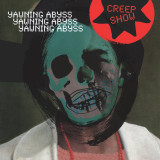
In the five years since Creep Show’s acclaimed Mr Dynamite album was released it’s fair to say that we’ve all been through a fair bit. Sitting here, in 2023, things don’t seem to be getting any better. There’s the cost of living crisis and political meltdowns; we're in deep water with global warming and to top it all there’s a war on our doorstep.
Back in 2018 everything seemed less complicated. Sure, there was stuff to get riled about, but we knew nothing about what was to come. Mr Dynamite was a fairground ride into the dark corners of a world that was on the brink of being blitzed in a blender. It was a record teetering on the edge. Five years down the line you’d expect the follow-up, Yawning Abyss, would double-down and bring the white-knuckled, teeth-gritted fury of the last five years to the boil. And yet….
A quick recap? No problem. Wrangler + John Grant = Creep Show. And Creep Show? “A band of musical misfits who have found a voice or two”, says Wrangler’s Ben “Benge” Edwards, whose Bond villain studio on the edge of a moorland is Creep Show Grand Central as well as home to an analogue synth arsenal that could sink ships.
Wrangler have known each other for a while. Tunng’s electronics wizard Phil Winter and Cabaret Voltaire’s trailblazing, pioneering frontman Stephen Mallinder go way back, while Phil and Benge crossed paths in the 21st century when they seemed to be increasingly in the same venues at the same times. Meanwhile, Mal had been living in Australia since the mid-90s and when, in 2007, he returned to the UK his old pal Phil suggested he meet Benge and the three of them immediately began working together.
Wrangler collectively bumped into Grant at their soundcheck for Sheffield’s Sensoria Festival in 2014 where they were playing with Carter Tutti. A friendship blossomed and when they were invited to perform together for Rough Trade’s 40th anniversary show at London’s Barbican in 2016, well, they jumped at the chance... and Creep Show was born.
Let’s talk about the new album... What is the ‘Yawning Abyss’? You might well ask. According to Mal, it’s “a cosmic event horizon that I can see from my attic window when stand on a chair”. Yeah. Thanks.
“On this album”, offers Benge, feet firmly on the floor, “Wrangler wrangled some vintage synths, mostly Roland, Moog, and the ‘Crystal Machine’ - then John Grant joined in the fun at Memetune Studios where lots of musical experiments were carried out. Then Mal and John ran off to Iceland with the master tapes and recorded a load of madcap vocals. Back at Memetune, me and Phil were left to try and make sense of it all. Which wasn’t hard because what they did in Iceland was totally magnificent.”
Which kind of brings us back to where we began. You’d imagine ‘Yawning Abyss’ would be blowing steam out of its furious ears. Mr Dynamite but kicking a wasps nest. Repeatedly. And yet…
Opener ‘The Bellows’ comes on like a modular ‘Radio Ga Ga’, the singalong ‘Moneyback’ (“You want your money back? / I didn’t think so”) sounds like Godley & Creme’s ‘Snack Attack’ meets Prince Charles And The City Beat Band (“Pennies, pounds, dollar bills, signed agreements, death wills”). ‘Yahtzee!’ is an unhinged electro breakdance party in four minutes and nine seconds.
Where Mr Dynamite was menace, a mélange of mangled voices, with Grant and Mallinder being heavily treated, pitched up or down, rendering their contributions largely indistinguishable, Yawning Abyss takes a more direct approach. You hesitate to say feelgood, but there’s a skip in the step here for sure.
The title track plays John Grant’s vocal straight. Completely. It’s good, so very good. Like ‘Axel F’ covered by Vangelis. The delicious shimmering synths of ‘Bungalow’ also plays those Grant pipes with a straight bat. ‘Matinee’ delves into darker, very funky territory. With Mal upfront it comes on like ‘The Crackdown’. Choice lyric: “You are starting to breakdown / And it’s so fun for me to see / You should have thought of that / You should have come prepared / You can see what’s happening and you look a little scared”.
So, you know, not all feelgood. But it does feel good. It’s probably best to draw your own conclusions... This is Creep Show after all.