Three sanguine slices of dub techno from Glasgow-based wunder Conna Haraway. And featuring XENIA REAPER providing vibes and synths on the lush long elevation "Redirect" that sits on the record’s A side.
Shifted follows on from Spatial Fix; Conna’s first solo 12” in March ’25 that released on Theory Therapy. Where that EP was a dense and rich web of texture and atmosphere across the two long sides, this one focuses in on forms of propulsion and a patient, silvery endlessness.
A side track "Redirect" was cut from a longer Sunday night session with XENIA REAPER. Two laptops Ableton linked, chilling in the flat in Glasgow. The amazing synth line is all XENIA, everything else is Conna; looping the synth & bass for about an hour and bringing other elements in and out. The final tune is gorgeous, floating in the blissful ether before the sub and pulse kicks through. Eleven and a half minutes of enveloping pressure, refreshment and delight.
"Detach" and "Duration" both turn to a rediscovered love for 4x4 techno and an experiment in a more classic and subtle sound from the perspective of a producer who might be expected to take bigger emotive and experimental swings that follow the patterns of contemporary ambient and bass. The result is beautiful and delicate vectors of music, satisfyingly easy to slide into a set. Swung techno filled with detail and poise. Tunes that can scale and transform and sit in a sort of home listening club track zone. After hours nrg.
Suche:gor
- A1: Malavoi - Te Traigo Guajira
- A2: Los Caraibes - Donde
- A3: Tropicana - Amor En Chachacha
- A4: Ryco Jazz - Wachi Wara
- A5: Eugene Balthazar - Dap Pignan
- A6: Roger Jaffort - Oye Mi Consejo
- A7: Les Kings - Oriza
- B1: Les Supers Jaguars - Tatalibaba
- B2: Super Combo De Pointe A Pitre - Serrana
- B3: L'ensemble Abricot - Se Quedo Boogaloo
- B4: Henri Guedon - Bilonga
- B5: Les Aiglons - Pensando En Ti
- B6: Los Martiniquenos - Caterate
In Guadeloupe, many people think that jazz and ka music are like a ring and a finger. To some extent, the same could be said about so called Latin music and the music played in the French West Indies.
Both aesthetics were born in the Caribbean and bear so many connections that they can easily be considered cousins. In constant dialogue, there are lots of examples of their fruitful alliance and have been for a while. The English country dance that used to be practiced in European lounges came to be called kadrille in Martinique and contradanza in Cuba. They both featured additional percussion instruments inherited from the transatlantic deportation. Drawing from shared feelings about the same traumatized identity – later to be creolized – it would be hard not to assume that they were meant to inspire each other. The golden age of the orchestras that graced the Pigalle nights during the interwar period further proves the point. As soon as the 1930s, Havana-born Don Barreto naturally mixed danzón and biguine music in a combo based at Melody's Bar. In the following decade, Félix Valvert, a conductor who was born and raised in Basse-Terre in Guadelupe, also worked wonders in Montparnasse with La Coupole, which was an orchestra made up of eclectic musicians. Afro- Caribbean performers of various origins were often hired on rhythm and brass sections in jazz bands, which used to enliven the typical French balls of the capital. In the 1930s and onwards, Rico’s Creole Band was one of them.
Martinican violinist-clarinettist Ernest Léardée, who would become the king of biguine music as well as the main figure of French Uncle Ben's TV commercials (a dark stigma of post-colonial stereotypes), had musicians from the whole Caribbean sphere play at his Bal Blomet – and they all enchanted "ces Zazous-là" (according the words of Léardée's biguine-calypso piece). In les Antilles (French for French West Indies), music history started to speed up in the 1950s, when trade expanded and radio stations grew bigger. The Guadelupean and Martiniquais youth tuned in their old galena radio sets to South American and Caribbean music. As for the women traders, les pacotilleuses, they bought and sold goods across different islands (the "passing of items through various hands" was thought to be most pleasurable) and brought back countless sounds in their luggage. Such was the case of Madame Balthazar, who once returned from Puerto Rico with the first 45rpm and 33rpm to ever enter Martinique.
Out of this adventure was created the famous Martinican label La Maison des Merengues, a music business she opened and undertook with her husband and which proved to be a major landmark. At the end of the 1950s, in Puerto Rico, Marius Cultier competed in the Piano International Contest playing a version of Monk's Round 'Midnight. He won the first prize and this distinction foreshadowed everything that was to come. Cultier, the heretic Monk of jazz, was quickly praised for writing superb melodies, always tinged with a twist that conferred a unique sound to his music. It didn't take long for the gifted self-taught musician to get to play with Los Cubanos, making a name for himself thanks to his impressive maestria on merengues.
The rest is history. Besides, in the late 1950s, Frantz Charles-Denis, born into the upper middle class in Saint-Pierre and better known by his first name Francisco, went back home after working at La Cabane Cubaine – a club located rue Fontaine where he had caught the Latin fever. Francisco's music was therefore heavily marked by his Cuban cousins' influence, which gave the combos he led a specific style and also led to renewal. Things were swinging hard in La Savane, located in the main square in Fort-de-France. He set up the Shango club close by and tested out the biguine lélé there, a new music formula spiced up with Latin rhythms. Soon afterwards, fate had him fly to Puerto Rico and Venezuela.
As for percussionist Henri Guédon (percussions were only a part of his many talents), he was born in Fort-de-France in May 22nd 1944, the day marking the celebration of the abolition of slavery. As an old man, he could remember that in " his father's Teppaz, a lot of hectic 6/8 music was constantly playing...". In the opening lines of his Lettre à Dizzy, a small illustrated collection of writings published by Del Arco, he highlighted the huge impact that cubop had on him as a teenage boy, around 1960. He eventually turned out to be the lider maximo in La Contesta, a big band steeped in Latin jazz. He was also the one who originated the word zouk to describe music which brought the sound of the New York barrio to Paris. It was the culmination of a journey that started in Sainte-Marie: "a mythical place for bélé, the equivalent of Cuban guaguancó". In the early 1960s, the tertiary economy developed to the detriment of agriculture. Yet rural life was where roots music emerged in Martinique and in Guadeloupe.
Record companies played a major part in the process of Latin versions sweeping across the islands – before reaching everywhere else. Producer Célini, boss of the great Aux Ondes label, and Marcel Mavounzy, both the head of Émeraude records - a firm which was founded in 1953 - as well as the brother of famous saxophonist Robert Mavounzy, were big names to bear in mind. Although there were many of them - all of whom are featured on this record - Henri Debs was definitely the major figure in the recording adventure. He proved to be so influential that he even got compared to Berry Gordy. In the mid 1950s, when he acquired his first Teppaz, he worked on his first compositions: a bolero and a chachacha. Then, he became the one man who made people discover Caribbean music, from calypso to merengue. He was among the first ones to rush out to San Juan, Puerto Rico, to buy records and distribute them through a store run by one of his brothers in Fort-de-France. He had members of the Fania All Star come and perform there, which he was madly proud about. He was also the first one to pay attention to Haitian music, such as compas direct and various other rhythms which would soon flood the market. As a result, many of the combos hitting his legendary studio would end up boosted by widespread "Afro-Latin" rhythms. However, he never denied his identity: gwo ka drums were given a major role, although they were instruments which had long been banned from the "official" music spheres. The present selection bears witness to such a creative swarming. Here are fourteen tracks of untimely yet unprecedented cross-fertilization: all types of music rooted in the Creole archipelago have found their way, whatsoever, to the tracklisting. Whether originating from the city or being more rural, they all go back to what Edouard Glissant, in an interview about the place of West Indian music in the Afro-American scope, called "the trace of singing, the one which got erased by slavery." "It is so in jazz, but also in reggae, calypso, biguine, salsa... This trace also manifests through the drums, whether Guadelupean, Dominican, Jamaican or Cuban... None of them being quite the same. They all point to the idea of a trace, seeking it out and connecting to each other through it. This is the hallmark of the African diaspora: its ability to create something new, in relation to itself, out of a trace. It may be the memory of a rhythm, the crafting of a drum, a means of expression which doesn't resort to an old language but to the modalities of it." The opening track features one of the emblematic orchestras of this aesthetic identity, criscrossing many music types from the archipelago. The 1974 Ray Barretto guajira – Ray Barretto was a major New York drummer influenced by Charlie Parker and Chano Pozzo – is magnificently performed by Malavoi, a legendary Fayolais group (i.e from Fort-de-France). Additionally, the compilation ends on a piece by Los Martiniqueños de Francisco. It symbolically closes the circle as it is a genuine potomitan of Martinique culture which also functions as a tireless campaigner for Afro-Caribbean music. Practicing the danmyé rounds (a kind of capoeiria) to the rhythm of the bèlè drum, it delivers a terrific Caterete, a kind of champeta of Afro- Colombian obedience which was originally composed by Colombian Fabián Ramón Veloz Fernández for the group Wgenda Kenya. The icing on the cake is Brazilian Marku Ribas, who found refuge in Martinique in the early 1970s, bringing his singing to the last trance-inducing track. These two "versions" convey the whole tone of a selection composed of rarities and classics of the tropicalized genre, swarming with tonic accents and convoluted rhythms. It is the sort of cocktail that the West Indians never failed to spice up with their own ingredients. For instance, the Los Caraïbes cover of Dónde, a famous Cuban theme composed by producer Ernesto Duarte Brito, has a typical violin and features renowned Martinique singer Joby Valente and his piquant voice.
The track used to be – or so we think – their only existing 45rpm. The meaningful Amor en chachachá by L'Ensemble Tropicana, a band which included Haitian musicians among whom was composer and leader Michel Desgrotte, also recalls how Latin music was pervasive in the tropics in the mid-1960s. They were the ones keeping people dancing at Le Cocoteraie in Guadelupe and La Bananeraie in Martinique. Around the same time, another "foreign" band, Congolese Freddy Mars N'Kounkou's Ryco Jazz, achieved some success on both islands by covering Latin jazz classics – such as their adaptation of Wachi Wara, a "soul sauce" by Dizzy Gillespie and Chano Pozo whose interweaving of strings and percussions can have anyone hit the dancefloor. How can you resist Dap Pinian indeed, a powerful guaguancó by Eugene Balthazar, performed by the Tropicana Orchestra and published by the Martinique-founded La Maison des Merengues? It also acts as a symbol of the maelstrom at work. Going by the name Paco et L'orchestre Cachunga, Roger Jaffory used to play guaguancó too: his Fania-inspired Oye mi consejo is one example of his style. Baila!!!!! Dancing was also one of the Kings' focus points. Oriza is a Puerto Rican bomba and a "classic" originally composed by Nuevayorquino trumpeter Ernie Agosto, which reserves major space for brasses, giving it a special sheen.
Emerging from the New York barrios crucible was also La Perfecta, a Martinique group originating from Trinidad, whose name directly references the totemic Eddie Palmieri figure as well as his own band, also called La Perfecta. Here they borrow Toumbadora from Colombian producer and composer Efraín Lancheros and interpret it by emphasizing percussions, which set fire to the track even more than the wind instruments. The same goes for Martinique's Super Jaguars, who use Tatalibaba – a composition by Cuban guitarist Florencio "Picolo" Santana which was made famous by Celia Cruz & La Sonora Matencera – as a pretext for sending their cadences into a frenzy. In a more typically salsa vein, the Super Combo, a famous Guadelupean orchestra from Pointe-Noire that was formed around the Desplan family and had Roger Plonquitte and Elie Bianay on board, adapt Serana, a theme by Roberto Angleró Pepín, a Puerto Rican composer, singer and musician also known for his song Soy Boricua. Here again, their vision comes close to surpassing the original. In the 1970s, L'Ensemble Abricot provided a handful of tracks of different syles, hence reaching the pinnacle of the art of achieving variety and giving pleasure. They played boleros, biguines, compas direct, guaguancó and even a good old boogaloo - the type they wanted to keep close to their hearts for ever, "pour toujours", as they sang along together in one of their songs. Léon Bertide's Martinican ensemble excelled at the boogaloo which had been composed by Puerto Rican saxophonist Hector Santos for the legendary El Gran Combo.
Three years later, in 1972, Henri Guédon, with the help of Paul Rosine on the vibraphone, tackled the Bilongo made famous by Eddie Palmieri. Such a classic!!!!! And so were the Aiglons, the band from Guadelupe: choosing to execute Pensando en tí, a composition by Dominican Aniceto Batista, on a cooler tempo than the original, they noticeably used a wonderfully (un)tuned keyboard in place of the accordion. On the high-value collectible single – the first one released by Les Aiglons under the Duli Disc label – there is a sticker classifying the track under the generic name "Afro". Now that is what we call a symbol. Jacques Denis
NECHTO returns with its second 12” vinyl compilation, continuing the mission of presenting forward-thinking techno from both rising talents and trusted names. Each of the six tracks adds a unique voice to the raw and honest collection.
Mecha opens the record with “All My Love”, a hypnotic debut techno track shaped by years in drum and bass. Contakt follows with “Peak Jam”, a one-take hardware jam built around the warmth of a signature synth. “16th Symphony” by Human Safari is a jazz-influenced cut intended for special moments in a DJ set. Unspent delivers “Moog Gorning”, a track that shifts from percussive 4x4 to broken rhythm, carrying deep personal emotion. ARGIE’s “Strangers” captures the tension of connection and distance with layered percussion and melody. Franz Jäger closes with “Get Simon to sync”, a rave-influenced hybrid track designed for peak-time impact.
With contributions from the UK, Poland, Malta, France, the Netherlands, and Sweden, this compilation once again highlights NECHTO’s dedication to showcasing both emerging and established artists while pushing the boundaries of modern techno.
- A1: Charlie Parker - Roomance Without Finance (Mg9022)
- A2: Dexter Gordon - Dexter's Minor Mad (Mg9022)
- A3: J J. Johnson - Jay Bird (Mg9022)
- B1: Milt Jackson - Hearing Bells (Mg9022)
- B2: Leo Parker - Chase 'N' Lion (Chase'n The Lion) (Mg9022)
- B3: Stan Getz - Stan's Mood (Mg9022)
- A1: Fats Navarro - Hollerin' And Screamin' (Fatso) (Mg9023)
- A2: Allen Eager - Church Mouse (Mg9023)
- A3: Kai Winding - Always (Mg9023)
- B1: Don Byas - Byas A Drink (Mg9023)
- B2: J J. Johnson - Jay Joy (Mg9023)
- B3: Dexter Gordon - Long Tall Dexter (Mg9023)
- A1: Budd Johnson - Little Benny (King Kong) (Mg9024)
- A2: J J. Johnson - Mad Be Bop (Mg9024)
- A3: Milt Jackson - Bubu (Mg9024)
- B1: Leo Parker - Solitude (Mg9024)
- B2: Stan Getz - Don't Worry 'Bout Me (Mg9024)
- B3: Fats Navarro - Maternity (Lard Pot) (Mg9024)
- A1: Allen Eager - Donald Jay (Mg9025)
- A2: Kai Winding - Saxon (Mg9025)
- A3: Budd Johnson - Dee Dee's Dance (Mg9025)
- B1: J J. Johnson - Coppin' The Bop (Mg9025)
- B2: Milt Jackson - Junior (Mg9025)
- B3: Dexter Gordon - Dexter Digs In (Mg9025)
- A3: Eddie "Lockjaw" Davis - Stealin' Trash (Mg9026)
- B1: Roy Porter - Pete's Beat (Mg9026)
- B2: Serge Chaloff - Pumpernickel (Mg9026)
- B3: Morris Lane - Blowin' For Kicks (Mg9026)
- A1: Allen Eager - Unmeditated (Mg9026)
- A2: Leo Parker - The Lion's Roar (Lion Roars) (Mg9026)
”The Birth of Bop” kann ab heute hier vorbestellt werden und erscheint am 31. März in verschiedenen Formaten, darunter ein Vinyl-Boxset mit fünf 10-Zoll-LPs, ein 2-CD-Format und digitale Editionen. Jeder Titel der Sammlung wurde von Joe Tarantino bei Joe Tarantino Mastering frisch restauriert und neu gemastert, während die physischen Formate neue, ausführliche Liner Notes des GRAMMY-gekrönten Autors und Moderators Neil Tesser sowie alte Fotos aus dieser Zeit enthalten. Es ist eine unverzichtbare Einführung in
diese wichtige Periode der Jazzmusik: The Savoy 10-Inch LP Collection enthält 30 ausgewählte Aufnahmen von vielen der Pioniere des Genres, darunter Charlie Parker, Dexter Gordon, Stan Getz, Milt Jackson, Allen Eager, Fats Navarro und viele mehr.
Diese bahnbrechenden Aufnahmen aus den Jahren 1944 bis 1949
trugen maßgeblich zur Entwicklung des modernen Jazz bei und brachten junge Künstler dazu, die Grenzen des Genres in einer Zeit zu erforschen, in der Swingmusik der vorherrschende Sound war und Big Bands den Äther beherrschten.
Tony Lavrutz & Scruscru join forces for this latest fiery 45 rpm on Scruniversal. First up, they also call on Mr. And-7 to get involved on 'La Malanga 25', a sunny funk jam with raw horns that bring a Mexican twist to the percussive drums and lively pianos. Marelua steps up for the flip side, 'Paragunde 45', which slows things down and burns warm and bright with Portuguese vocals and plenty of gorgeous acoustic guitar trills. Both of these are primed and ready to inject Latin flavour into any set the moment the sun comes out, so are likely to fly off the shelves.
- Perfume
- Dumb Baby
- Squeeki Tiki
- Excuse Me?
- Make It Right
- Nosebleed Weekend
- Watch Your Back
- Burn Me
- I Don't Think So
- Down Down
- Hiya
- Had Enough
- Copycat
Das fünfte Album von THE COATHANGERS, ,Nosebleed Weekend", greift genau die anziehende Scheißegal-Haltung und die zackige Instrumentierung ihres Debüts auf, schmückt sich jedoch mit einer neuen Songwriting Disziplin und einer Chemie, die sich so nur über ein Jahrzehnt entwickeln konnte. ,Nosebleed Weekend" startet mit ,Perfume", einem Song, auf dem heißblütiger Popgesang so auf harte Gitarrenriffs treffen, dass Ann und Nancy Wilson stolz sein dürften. Es wäre unmöglich, dass die COATHANGERS in ihren frühen Jahren einen derart eingängigen Song geschrieben hätten, doch im Jahr 2016 passt der Song wie das fehlende Puzzlestück zum Rest ihres Kanons. Von dort aus geht es weiter mit ,Dumb Baby", der an den kantigen Neo Garage Rock von den MURDER CITY DEVILS erinnert. Alte Fans, die auf den rotzigen Post Punk warten, werden mit ,Squeeki Tiki" beglückt. Und nach dem Laut-Leise-Lärm von ,Excuse Me?" ist es kein Wunder, dass KIM GORDON ein großer Fan der Band ist. ,Nosebleed Weekend" ist ein eklektisches Album, das sich vom Leben auf Tour, dem Verlust geliebter Menschen und dem Umzug von Gitarristin/Sängerin Julia Kugel nach Südkalifornien beeinflussen lässt. ,Wir sagen immer, dass jedes Album eine Momentaufnahme ist", sagt Kugel. ,Was den Stil angeht.das ist das, was in diesem Moment aus uns herauskommt. Ob das nun der Garage Rock des Titeltracks, der Post-Punk Groove von ,Burn Me", der minimalistische Pop von ,I Don't Think So" oder der dynamische Grunge von ,Down Down" ist - THE COATHANGERS performen alle ihre Songs mit Ernsthaftigkeit und Leidenschaft.
- A1: Strip-Tease
- A2: Wake Me Up At Five
- A3: Solitude
- A4: At Maxim's
- A5: Rafa Temporel
- A6: Ariane Audition
- A7: Some Small Chance
- A8: Safari
- A9: Bath Dance
- A10: Serge At Sam's
- B1: Strip-Tease Instrumental
- B2: At Elephant Blanc
- B3: Pourpée La Rose
- B4: Effeuillage
- B5: Serge And Sam
- B6: Crazy-Horse Swing
- B7: Hurry
- B8: Strip-Tease Piano
- B9: Rendez-Vous A La Calavados
Colombia's finest purveyor of all things jazzy and musical, Felipe Gordon is back on Local Talk with a double album, but this time around he's going all live.
Together with his 8 piece band, Felipe has recorded a "Live Session" that perfectly explains how live played jazz, funk and fusion work so well with electronic dance music.
Over eight compositions, Felipe and his band explore everything from downtempo jazz-funk (example, check 'Wes'), jazz-fusion (example, check 'Socorro Y Jupiter'), jazz-house (example, check 'Strings Of The Afterlife').
There's even a great disco-funk cover of Gypsy Woman for added dance floor effect.
All together, this is a beautiful session where Felipe and his friends showcase what you can expect when you experience this band live on stage...Bogota style!
Lucas Chantre, aka WORLD BRAIN, last graced us with a solo release half a decade ago, with 2019’s Peer 2 Peer. As its name suggests, that album explored the promise and perils of universal connectivity via quirked-up songwriting and instrumental psychedelia. His new release, Open Source, deepens this internal and external journey. Bursting beyond the four walls of ‘bedroom pop’ and reflecting a move from Berlin to Paris—where much of the album was recorded—and on to Brussels, the album has a jazzy, cinematic scope (as on the Brubeck-inspired march “Fromage collatéral,”) enveloping the listener in a cosmic-pastoral audiosphere.
There are still many tones that evoke the software sounds of decades past (the exemplar here is “cAPTCHA,” whose virtual marimba and vocalese suggest a breathless, Exotica-inspired introduction .mov for the information superhighway) but the palette has become richer and more organic, lead by the woodwinds which play a major role throughout, with flute provided by labelmate Martha Rose. (On the aforementioned “cAPTCHA” one also hears the world-class whistling talents of the incomparable Molly Lewis.)
Yet the single most noticeable new element may be the use of Chantre’s native French, sung by his sister on “Ville fleurie” and the gorgeous, fluttering “Minute papillion” (the title an idiomatic injunction to slow down!) Chantre initially wrote these lyrics in English, but felt something wasn’t quite right, only realizing what was off when he heard them sung in another language. That spirit of discovery – of finding a new spark in returning home – suffuses Open Source. It invites us to play, beckons us to relax, reminds us to find serenity amidst the churn of the present: minute papillon, dans le tourbillon.
Rivet’s new album for Editions Mego is an uplifting and joyous affair coming in the wake of tragedy and disenchantment. It is yet another rebirth from an artist willing to take a step back and reprise the current situation he is in. Mika Hallbäck has a long credible history in the Swedish underground. First recognised for his industrial techno works under the Grovskopa moniker he worked privately on more experimental works that eventually came out as On Feather and Wire, an album released on Editions Mego in 2020. After much acclaim for this bold new direction that blended electronic abstraction, pop and industrial forms into a heavy synthetic trip two tragedies struck. One was the passing of label boss Peter Rehberg and then the passing of his dog Lilo, who was as close as a companion one could have. These events led to the release of the more unsettling follow up L+P-2 (Lilo and Pita minus two) on Midnight Shift Records in 2023. Peck Glamour sees Rivet return to the reawakened Editions Mego with an album of optimism inspired by reconciliation with loss and further explorations of new mental/sonic realms.
Hallbäck defines his approach as not being married to any particular machine, instrument, process or genre. However he holds a particular affinity to sampling, of which, he says, provides the dirt and grit amongst what would otherwise be pristine, generic machine music. The contemporary crate digging method of scouring obscure download music bogs for unique sounds was his preferred research practice.
Peck Glamour is an album full of tracks brimming with the excitement of exploration. It's the results of a mind informed by punk, industrial, techno, dancefloor, disappointment, trauma and rebirth. Here the synthetic and authentic is viewed simply as the same means of human rationale and expression.
The opening, ‘Catch Up to Light’, sets the scene with ecstatic and odd fluorescent vocals sliding amongst crystalline likembe whilst synths swirl amongst the external festivities. ‘Orbiting Empty Cocoon’ is somewhat a homage to the alien sound worlds of The Orb, one which takes the listener deeper into a mind melting array of teased potential as visual elements are executed in a mask of audio wizardry and euphoric staccato rhythms, the later being a nod to Singeli music. ‘Patitur Butcher’ is more dance frontal utilising the Ghatam drum and a YouTube rip of a Chinese language lesson. ‘Plastic Bag Putain’ was made during the beginning of Russia's invasion of Ukraine and should be clear of its intent. ‘All that Heaven Allows’ is a marimba cover of an imaginary Love Parade anthem. 'Kyrie Geire’ potentially briefly fills the void left by the demise of Coil. The entire trip of Peck Glamour is sewn up with ‘We left before we came’ whereby extraneous recordings of double bass player Gregory Vartian-Foss (tuning/strumming/moving the bass) are superimposed with local field recordings to create a gorgeous bed of sounds acting as an exciting exit music to this sharp collection of cinematic ear excursions.
Marja Ahti is a Swedish artist living in Turku, Finland. She works with found sounds, objects and electronics, creating auditory assemblages that reveal a profound sensitivity to sound’s tactile potential. This new record sees her palette expand to include more recognisable acoustic instrumentation, albeit working in collaboration with musicians who are already reconfiguring how those instruments can sound.
Touch This Fragrant Surface of Earth has its roots in a tape piece presented at Lampo in Chicago. Ahti then started working with Isak Hedtjärn (clarinet), Ryan Packard (percussion) and My Hellgren (cello) at the electronic music studios (EMS) in Stockholm. Incorporating recordings from those sessions, Ahti presented a new iteration of the work at the Seventh Edition Festival for Other Music in February 2024 with the trio performing live on stage whilst Ahti helmed the mixing desk, spatialising a specially made tape part through the INA GRM’s Acousmonium speaker orchestra. The piece has since gone through several further iterations before arriving at the version we have here on the LP's B-side where immense bass pressure and high frequency tones buffer restless amplified breath and scrape that folds over itself with extraordinary dynamics and subterranean activity before giving way to gorgeous resonant forms and passages of ritual purpose and sheer, unmistakeable beauty.
The A-side is Touch This Fragrant Surface of Earth’s gentle double. Still Life with Poppies, Mirror and Two Clouds offers a companion reconfiguration of Ahti’s resynthesised percussion sustain and the same recordings of Hedtjärn and Hellgren from EMS, but here they’re nestled in a sonic landscape of calm and restraint that gives them a wholly other character. Ahti also draws on older recordings she’d made of Sholto Dobie’s diy pipe organs and uses these to create repeating patterns and flourishes of sliding pitches that emerge unexpected out of cycling passages of Ahti’s clear struck metal, destabilising electronic interventions and minimal piano figures.
Marja Ahti: “I’ve been fascinated with the kind of elemental quality the sounds I'm using have such as airy sounds or earthy, wooden sounds. These qualities can also be found in wind instruments and percussion and the musicians I worked with on Touch This Fragrant Surface of Earth are really good at enhancing these qualities in their playing. I wanted to have this connection between found sounds, field recordings, or pre-recorded sounds, objects, and material, and see where these sounds might meet each other, and hopefully blend is a natural way without a divide between instrumental music, or acoustic music, or electronic music. But also, when you bring in people they come with their personalities and their ideas which is also energizing and brings surprising things into the collaboration that I couldn't come up with myself. I was really interested in making this a proper collaboration and not just coming up with the piece and giving it to them. We had the sessions at EMS where we could share ideas and Isak, Ryan and My could bring in their own ideas. Making recordings there gave me time to process these ideas and to also approach them in the same way that I would work with any other sound.”
Das neue Album "The Passionate Ones" von dem Singer-Songwriter und Produzent Nourished By Time aus Baltimore erscheint auf XL Recordings. "The Passionate Ones", das zwischen Baltimore, London und New York City entstand, beschreibt auf 12 Tracks auch die kaputten Seiten des American Dreams beschreibt. Nourished By Time entstand Ende 2019 in Los Angeles als eine Art Flucht aus dem Alltag. Marcus Brown drohte an der Monotonie seines Tagesjobs zu zerbrechen und suchte nach einem Ausweg. Browns einzigartige Klangwelt ist geprägt von dem musikalischen Erbe seiner Heimatstadt Baltimore, in der Jazz, Punk, Indie, Hip-Hop, Elektronik und R&B in rauer Harmonie aufeinandertreffen. Auf "The Passionate Ones" beschäftigt sich Brown mit Liebe, Arbeit, Existenzialismus, Träumen, Desillusion und Hoffnung durch die Brille der Metamoderne und dokumentiert die amerikanische Geschichte eines Künstlers, der seinen Leidenschaften und Träumen folgt. "The Passionate Ones" folgt seinem gefeierten Debüt. "Erotic Probiotic 2 (Scenic Route)" erschien 2023 und wurde von US-amerikanischen Plattformen wie Pitchfork zu einem der besten Alben des Jahres erklärt, ebenso stand es auf der Jahresendliste von Gorilla vs. Bear ganz oben und wurde von The Guardian, The FADER, Paste und anderen gelobt. Die EP "Catching Chickens" (XL) von 2024 führte Nourished By Time auch in Europ als Künstler ein: Das CRACK Magazine setzte ihn auf sein Cover und kürte "Hell of a Ride" zum Track des Jahres. Der Song tauchte auf den Listen von NPR, Resident Advisor, CLASH, The FACE, Mixmag, UPROXX und Spotify für die besten Songs des Jahres 2024 auf. "The Passionate Ones" erscheint als LP (Schwarz & Crystal), CD und sowie digital.
GER Das gefeierte ruandische Folk-Duo The Good Ones kehrt mit einem besonderen Album zurück: Rwanda Sings with Strings verbindet ihre charakteristischen akustischen Songs mit feinfühligen, improvisierten Arrangements für Cello und Violine. Produziert von Grammy-Gewinner Ian Brennan (Tinariwen, Ramblin" Jack Elliott), wurde das Album komplett live und ohne Overdubs in einem Hotelzimmer aufgenommen - nur einen Tag vor ihrem NPR Tiny Desk-Auftritt. Die Streicher - Gordon Withers (Cello) und Matvei Sigalov (Violine) - kannten sich vorher nicht, spielten ohne Noten oder Proben, und schufen dennoch in einem Take eine magische Klangwelt. Sänger und Gitarrist Adrien Kazigira schrieb über 23 neue Songs, von denen 19 aufgenommen wurden. Wie immer singt er in Kinyarwanda, der Landessprache Ruandas. Die Lieder handeln von Liebe, Verlust, ländlichem Leben und gesellschaftlichem Wandel - mit einer emotionalen Tiefe, die an Nick Drake, Boubacar Traoré oder Astral Weeks erinnert. Begleitet wird Kazigira von Janvier Havugimana, der wie gewohnt auf Alltagsgegenständen Perkussion spielt. Ein zutiefst menschliches, intimes Album - roh, poetisch und voller Hoffnung. Celebrated Rwandan folk duo The Good Ones return with a deeply intimate and emotionally rich album. Rwanda Sings with Strings pairs their signature acoustic sound with delicate, improvised arrangements for cello and violin. Produced by Grammy-winner Ian Brennan (Tinariwen, Ramblin" Jack Elliott), the album was recorded entirely live-no overdubs-in a Washington, D.C. hotel room, just one day before their NPR Tiny Desk performance. The string players-Gordon Withers (cello) and Matvei Sigalov (violin)-had never met before the session and played without sheet music or rehearsals. Yet, in a single take, they created a soundscape that feels both spontaneous and transcendent. Lead singer and guitarist Adrien Kazigira wrote over 23 new songs for the project, 19 of which were recorded. As always, he sings in Kinyarwanda, Rwanda"s national language. The songs explore themes of love, loss, rural life, and cultural change, with a poetic depth reminiscent of Nick Drake, Boubacar Traoré, or Astral Weeks. Kazigira is joined by Janvier Havugimana, who provides harmonies and percussion using everyday objects like cups, plastic wrap, and old boots. A raw, heartfelt, and hopeful album-quietly powerful and profoundly human.
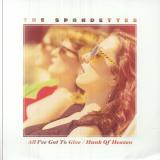
Canadian disco-soul outfit The Spandettes were in sparkling form when they laid down their stunning covers of Lemuria's Hawaiian groove classics 'All I've Got to Give' and 'Hunk of Heaven.' Both now appear on this limited-edition double 7", which will bring some summer heat to any set you play. Fronted by three powerhouse female vocalists, the cultured band blends lush harmonies with irresistible rhythms as they revive a couple of free-soul gems for a new generation of ears. 'All I've Got to Give' first appeared on a sold-out P-Vine 7" back in 2015 and is a sentimental swooner that is super loved up, while 'Hunk of Heaven', taken from the debut album Spandex Effect, here makes its debut on 45rpm. It's a more upbeat and swooning funk gem with gorgeous vocals.
DJ Support: Groove Armada, Gorgon City, Claptone, Nicole Moudaber, Dennis Cruz, Carl Cox, Steve Aoki, Tiesto, Steve Angello, Oliver Heldens, Bob Sinclar, Diplo, Sofi Tukker, Dombresky, Carlita, A-trak, ALOK, Danny Howard, Kaskade, Hot Since 82.
Toolroom’s next Sampler sees 4 big releases from Tony Romera, Crusy, Low Steppa, James Hurr, CASSIMM, Darius Syrossian and Kathy Brown.
"Astral Americana hymns hovering somewhere between the dirt and the stars" Pitchfork
"Mood music for moments of solitude, best experienced without distraction" The Times
"Overwhelmingly effective and ravishingly beautiful" The Wire
American Dust is an ode to the beauty of the American Southwest, where vast desert landscapes hold stories both stark and tender. Eve Adams’ characteristic folk noir weaves a vivid tapestry of love, sacrifice and quiet revelation, conjuring images of dust storms, stray dogs and far off trains.
The high desert of California is a vast and confounding place. Equally inspiring as it is punishing, it’s a landscape that carries magic in its deep dark nights, holding stories both tender and stark in the coarse layer of dust that settles upon everything. It’s long been a source of inspiration for musicians, writers, and painters, each of them adding to the same current, carried forward over time, through hope and hardship and the passing years.
Somewhere out there in that broad and boundless landscape, Eve Adams has been living her own desert life, quietly writing the follow-up to 2021’s Metal Bird LP. Where that album sang of liminal space, the dream-like turbulence of Hollywood’s golden age, American Dust is far more rooted in traditional storytelling; a eulogy for the American Dream channeled through that sweeping part of the country that holds such power and mystery. Slipping into different and varied costumes throughout its ten songs, it finds Eve not just observing the people around her but stepping into their shoes and peeling back the layers of their quiet lives.
Adams writes from within. A few years ago she moved out there, to “the middle of nowhere”, finding a slowness that didn’t exist in the city, and she knows only too well about the mystical nature of the land and those who live within it. Weaving together themes of grit and romance, American Dust holds its focus on the bittersweet poetry of lives lived in solitude, most notably the women who sustain life at the center of it all. “There’s something very radical about domestic life,” Adams says of this thread. “So many women live their entire lives behind closed doors, completely in the shadows. Within those lives is such sacrifice, devotion, and love. I wanted to honor that: the poetry in the mundane, the longing in the repetition. The way love survives boredom and dust and time.”
Eve is joined on American Dust by Canadian musician Bryce Cloghesy, aka Military Genius of Crack Cloud, who plays throughout and also helped produce the album. Musically bold and vivid, it’s an ambitious and detailed stride forward from what’s come before, the scope of the LP’s narrative reflected in the radiant sweep of the playing. On top of gentle piano and guitar, gorgeous strings drift through the album, lending the songs a woozy sense of romanticism; a collaboration with Gamaliel Traynor (Cello) and Caroline’s Oliver Hamilton (Violin).
For all the drama that’s coiled around these songs, it’s the recurring notion of love and hope fighting against everything that holds true throughout American Dust. Musically it’s lush and vibrant, intimate and cinematic side by side, and always bursting with warmth. But it’s what it holds in its weary bones that elevates it to something truly special, something more than just a collection of songs penned in the heart of the desert. The characters it speaks of, and from, feel shadowed but wholly real, like they’re bursting to share their stories that have remained hidden for years and years and they allow Eve Adams to grow as a songwriter right in front of our eyes.
“The same swirling dust that clung to the covered wagons of my ancestors as they crossed the Great American Desert is the same dust my great-great-grandmother swept off her porch during the Dust Bowl of 1936 in Oklahoma, is the same dust that blows in through the cracks in my windows here in the desert, carrying stories from a time long gone,” Eve says, reflecting on the personal narrative that runs through her new album.
“It’s not just dust—it’s American Dust, the kind that settles into the bones of a family and never leaves. I think about that dust as a symbol of the passage of time. I hope this album will be part of that same current, carrying forward for the next generations of my family to find. I’ve been lucky enough to have journals and poetry from my ancestors that documents their lives during times of pure hope and pure hardship. I’d like to think of this album as a contribution to that family history.”
Clear Vinyl[21,81 €]
Das neue Album "The Passionate Ones" von dem Singer-Songwriter und Produzent Nourished By Time aus Baltimore erscheint auf XL Recordings. "The Passionate Ones", das zwischen Baltimore, London und New York City entstand, beschreibt auf 12 Tracks auch die kaputten Seiten des American Dreams beschreibt. Nourished By Time entstand Ende 2019 in Los Angeles als eine Art Flucht aus dem Alltag. Marcus Brown drohte an der Monotonie seines Tagesjobs zu zerbrechen und suchte nach einem Ausweg. Browns einzigartige Klangwelt ist geprägt von dem musikalischen Erbe seiner Heimatstadt Baltimore, in der Jazz, Punk, Indie, Hip-Hop, Elektronik und R&B in rauer Harmonie aufeinandertreffen. Auf "The Passionate Ones" beschäftigt sich Brown mit Liebe, Arbeit, Existenzialismus, Träumen, Desillusion und Hoffnung durch die Brille der Metamoderne und dokumentiert die amerikanische Geschichte eines Künstlers, der seinen Leidenschaften und Träumen folgt. "The Passionate Ones" folgt seinem gefeierten Debüt. "Erotic Probiotic 2 (Scenic Route)" erschien 2023 und wurde von US-amerikanischen Plattformen wie Pitchfork zu einem der besten Alben des Jahres erklärt, ebenso stand es auf der Jahresendliste von Gorilla vs. Bear ganz oben und wurde von The Guardian, The FADER, Paste und anderen gelobt. Die EP "Catching Chickens" (XL) von 2024 führte Nourished By Time auch in Europ als Künstler ein: Das CRACK Magazine setzte ihn auf sein Cover und kürte "Hell of a Ride" zum Track des Jahres. Der Song tauchte auf den Listen von NPR, Resident Advisor, CLASH, The FACE, Mixmag, UPROXX und Spotify für die besten Songs des Jahres 2024 auf. "The Passionate Ones" erscheint als LP (Schwarz & Crystal), CD und sowie digital.
- Gånglåten
- Ysta Finskan
- Gunnars Dilemma
- Bengans Vals
- Bosses Låt
- Räva
- Upsala Gård
- Musik Från Liljevalchs
- Mr. Beautiful
- Collage Från Konserthuset
- Gulan (Från Pistolteatern)
Reissue, 2LPs, black and purple colored. Limited to 500 copies. Fläsket Brinner means Burning Flesh and is a suitabel name for this group that started in 1970 playing music with influences from the time, like kind of jazzrock, psychedelia, folkmusic and long improvisations that often ended in extacy. Bo Hansson did not often play his music live, but he often joined Fläsket Brinner in concerts, sometimes he played the Hammond but also guitar or cow bell. This, their debut album, has been long awaited for different reasons but is now finally released including a lot of bonus material on a second LP. Side A and C plus "Bosses låt" on side B are recorded at The Concert Hall in Stockholm December 1st 1970 (on 2-channels) when Fläsket Brinner was warm up for Frank Zappa and Mothers of Inventiom. Bo Hansson was participating in that concert on Hammand Organ alternativ Cow Bell when Sten Bergman played the organ. B 6 is recorded at Liljevalchs Hall of Art during the 3rd Gärdetfest that was held indoors November 20th 1970 (on 8-channels) B 1, 2, 4, 5 are recorded in the newly started Studio Decibel January 17th and 18th 1971. Sides A, B and C are recorded and mixed by Anders Lind. D-side "Gulan" is recorded at Pistolteatern in Stockholm (on 2 channels) February 14th by Claes-Göran Flodén.
Emerging from the Sydney punk scene alongside bands such as Gee Tee, R.M.F.C., and Tee Vee Repairmann, and with large side of Egg punk accompanying their NWOBHM bacon (also maybe the beans in this messy breakfast are AOR?… I think we might be overreaching with this metaphor). Steröid are ready to rock the main stage with more thunderous aplomb than an atom bomb, hard-boiled and clad in chainmail ripping blisteringly hot rockin’ riffs all night long. Brought to you by rock and roll savant Lord Gordith also known as (at least some of the brains) behind Gloomy Reflections and Quest Master proving once again that he might very well be the most exciting act to follow in heavy underground music these days.
This is a record about rocking, and never stopping, and then rocking some more. You can rock with friends at a gig or a show. Sometimes you have to rock alone, but thats okay. Just give it your best, and never miss your chance to rock.