With its name indicative of the music's boundary-testing diversity and Southwestern inspiration, On the Border finds the Eagles leaving everything on the table and embracing a harder edge that takes the band out of more relaxed territory and establishes it as a group that knows how – and wants – to rock. Glenn Frey, Don Henley, new member Don Felder, and company immediately announce their intent on the defiant album-opening hit "Already Gone" and never look back, crafting a gem of a record that from start to finish is arguably their most consistent and balanced effort.
Limited to 10,000 numbered copies, pressed on dead-quiet MoFi SuperVinyl at RTI, and mastered from the original analogue master tapes, Mobile Fidelity's ultra-hi-fi UltraDisc One-Step 180g 45RPM 2LP collector's edition pays tribute to the record's significance and enhances the experience for generations to come. Playing with reference sonics that elevate an effort revered by audiophiles, it provides a lively, dynamic, transparent, and intimate view of a release whose contemporary importance continues to grow. The opportunity to zero in on the particulars of the Eagles' golden harmonies, distinct vocal timbres, and cohesive interplay has never been better.
Visually, the premium packaging and gorgeous presentation of the UD1S On the Border pressing befit its select status. Housed in a deluxe box, it features special foil-stamped jackets and faithful-to-the-original graphics that illuminate the splendor of the recording. No expense has been spared. From every angle, this UD1S reissue exists as a curatorial artefact meant to be preserved, touched, and examined. It is made for discerning listeners that prize sound quality and production, and who desire to fully immerse themselves in the art – and everything involved with the album, from the iconic Navajo cover painting to the meticulous finishes.
And with On the Border, there's plenty to take in and soak up. Declared by famed critic Robert Christgau as "the Eagles' best album," the 1974 set claims a rich backstory. Initially recorded amid tumultuous sessions with producer Glyn Johns in London shortly after the release of the group's sophomore Desperado set, On the Border took a new turn after the band elected to scrap most of the prior work, return to its native California, and team with producer Bill Szymczyk to give the material less of a smooth, polished sheen and more toughness. Szymczyk also afforded the Eagles more input and freedom in the arrangements, and suggested adding another guitarist to play on "Good Day in Hell." Felder got the call, and so won over the Eagles with his skills, he quickly became the fifth member of the band.
While the late-arriving Felder only plays on one other album cut, "Already Gone," his mates more than prove their muster on the remainder of a double-platinum affair that established the Eagles as a force whose range transcended the calmer country-leaning style it perfected on their first two LPs. Primarily written by Jackson Browne and shelved during the Desperado sessions due to its higher-energy nature, the throttle-twisting "James Dean" ricochets with barbed riffs and rebellious swagger. Listen without limits to how Szymczyk's raw production stamps the song with a leather-and-jeans cool befitting its protagonist. Similarly rugged, the slide-guitar-fueled "Good Day in Hell" boasts its own mean streak. And the funk-laced, boot-stomping title track cautions "don't you tell me 'bout your law and order." Throughout On the Border, the Eagles are in no mood to mess around.
Not that the band skirts sentimental territory. On one of the era's finest covers, the Eagles nail the bittersweet feelings and bring high-definition detail to the vivid scenery of Tom Waits' "Ol' '55," a song the group makes its own. The rustic ballad "My Man" serves as a tribute to the recently deceased Gram Parsons, with singer-guitarist Bernie Leadon taking the lead on the microphone as he pours his heart out to his former Flying Burrito Brothers mate. And when it comes to romance, is it possible to top "Best of My Love"? Graced with Henley's honey-dipped vocals, refined wordless group harmonies, brushed drums, and the gentle strum of acoustic guitars, the Johns-produced cut soared to Number One and set the stage for what would soon be the Eagles' reality: global dominance.
More About Mobile Fidelity UltraDisc One-Step and Why It Is Superior
Instead of utilizing the industry-standard three-step lacquer process, Mobile Fidelity Sound Lab's new UltraDisc One-Step (UD1S) uses only one step, bypassing two processes of generational loss. While three-step processing is designed for optimum yield and efficiency, UD1S is created for the ultimate in sound quality. Just as Mobile Fidelity pioneered the UHQR (Ultra High-Quality Record) with JVC in the 1980s, UD1S again represents another state-of-the-art advance in the record-manufacturing process. MFSL engineers begin with the original master recordings, painstakingly transfer them to DSD 256, and meticulously cut a set of lacquers. These lacquers are used to create a very fragile, pristine UD1S stamper called a "convert." Delicate "converts" are then formed into the actual record stampers, producing a final product that literally and figuratively brings you closer to the music. By skipping the additional steps of pulling another positive and an additional negative, as done in the three-step process used in standard pressings, UD1S produces a final LP with the lowest noise floor possible today. The removal of the additional two steps of generational loss in the plating process reveals tremendous amounts of extra musical detail and dynamics, which are otherwise lost due to the standard copying process. The exclusive nature of these very limited pressings guarantees that every UD1S pressing serves as an immaculate replica of the lacquer sourced directly from the original master recording. Every conceivable aspect of vinyl production is optimized to produce the most perfect record album available today.
Search:gor
2009 sees the verdict on Gorgoroth's trademark case after two years of dispute between Gaahl/King Ov Hell and Infernus for the rights of the band's name and logo. When ruled that Infernus was the owner, Gaahl and King Ov Hell formed God Seed, releasing one studio album in 2012. This Live At Wacken was recorded live in 2008, when the band used to play under the name Gorgoroth, with Ice Dale and Teloch on guitars and Nick Barker on drums as guest live musicians for this show. The album could not be released that year due to legal disputes. For the first time on vinyl, this edition comes in LP 140g with Gatefold Jacket, limited to 300 copies on Black vinyl and 200 copies on Transparent Yellow vinyl.
Following up on the worldwide success of their new album Education & Recreation, Surprise Chef drops a must have two-sider for those of us who can't get enough 45s. The A side, "Money Music" is a bassline driven mid tempo tune that catches you from the first note and carries you through all the gorgeous changes. Piano, vibraphone, and guitar trade places over a watertight drum track that builds up, drops down, builds up again, and changes to half time to take it all home. The B side "Suburban Breeze" kicks in the door with an intro that is bound to be sampled and will get your blood racing and your head nodding. They lure you in with the neck snapping intro that is bound to be sampled and bring you from mood to mood as they change the energy from tough as nails to floaty and groovy, and back to tough as nails.
Scratch The Super Ape is the 1976 studio album by Lee Perry’s studio band The Upsetters. The lineup consisted of Boris Gardener on bass, Mikey Benbow on drums, Earl Smith on guitar, Keith Sterling on keys and the horn quartet Bobby Ellis, Dirty Harry, Herman Marquis, and Vin Gordon. The album is recorded at Lee Perry’s studio and is both composed and produced by him.
This edition of Scratch The Super Ape features the original Jamaican album cover and is available as a limited edition of 2000 individually numbered copies on orange coloured vinyl.
Ahem is a new project from Housecraft Recordings head Jeffry Astin (aka Xiphiidae, Digital Natives) along with co-conspirators J.P. Wright and Brian Kinkade. Recommended for fans of smoked out dub-bient and deep Appalachian drones.
-Cover art by Joe Roberts (LSD Worldpeace)
-Housecraft Recordings has been active as a cult favorite ambient/tape label for ~20 years now.
Quotes and reactions:
-“Jeffry Astin was the Dominique Wilkins of the early 2000s tape scene” -Tabs Out Podcast (episode #92)
-“Honestly too fire” -Ian Kim Judd (Fifth World/NTS)
-“Great record!” -Hank Jackson (Anno Records)
-“Super nice” -Jacob Gorchov (Palto Flats)
-“Massive” -Eli Libman (Quiet Time Tapes)
James Taylor's best-selling record since 1970's hallmark Sweet Baby James, the triple-platinum JT takes its permanent place as one of the singer's most enduring albums — an affair that gorges on country, blues, and rock styles as well as incisive songwriting. As the pre-eminent singer-songwriter's Columbia debut, it catapulted Taylor back into the limelight and re-established his place as the era's leading-edge folk-rock troubadour.
Sourced from the original analog master tapes and pressed at RTI, Mobile Fidelity's numbered-edition 180g LP possesses a warmth, immediacy, and intimacy absent from other pressings. The singer's comforting voice, breath control, and enchanting guitar lines sound as if they pour right out of the studio control room. Similarly, the splendid array of backing instrumentation is balanced, vivid, and dynamic. Taylor should always sound this realistic, warm, and lively.
More than any other of his records, JT features all sides of Taylor's lyrical persona. Optimistic, content material fills half of the 1977 set while Taylor reveals a darker, moodier identity on a number of songs that keep the 12-track set alternating between shade and light, shadow and sun. He turns romantic and blissful on the touching ballad "There We Are," praises the power of love on "Your Smiling Face," and enchants with the graceful "Secret O'Life."
In addition to channeling domestic bliss, Taylor expresses surprise and cynicism on "Honey Don't Leave L.A.," delves into despair on "Another Grey Morning," and invites sardonic tones on "Bartender's Blues." The result is a complete picture of an extraordinary songwriter and an accurate sketch of the mixed emotions many of us feel when it comes to romance. Taylor's ability to capture deep-seated feelings and set them to lyrical and musical poetry explains why we relate to him on such a meta-level. It's also why his music, including JT, remains timeless.
Taylor doesn't do it all alone. JT benefits from an all-star support cast. Carly Simon and Linda Ronstadt supply background vocals, saxophone great David Sanborn plays the horn, Russ Kunkel mans the percussion, and arranger David Campbell oversees the strings and woodwinds. It's no wonder why many fans consider this gorgeous collection of Laurel Canyon pop-rock Taylor's finest.
Whether you've never heard this record or know it inside and out, this reissue will open your ears to previously hidden details ranging from pedal-steel guitar accents to honky-tonk tonalities. Taylor's funky rhythms, too, gain in stature, as does his command of pace and tempo.
'Debes Llorar' is the second of two super limited 7"s being dropped by Dez Andres on the fledgling Future Rootz label this month. Like the other one, this 45 pulls out plenty of the Cuban influences Dez is known for. A-side 'Debes Llorar' is all life-affirming chords that fans of his classic 'New 4 U' will recognise, but stitched over ticking and raw drum beats with a Latin shuffle and Spanish vocals. 'Aqui Estamos' takes things down a notch with a more sunset sound, hip-hop flecked deep house beats and seductive vocal sounds next to gorgeous little acoustic guitar riffs.
"Meat. The story needs meat. (And blood ... coagulated blood (Gore)). The substance we are seeking here lies beyond the bare bones of fact, thewhen and the where (founded in 1988, Mülheim an der Ruhr) or personneland instruments (a trio since 2016, built around keyboards, saxophone, bass & drums). The story is more than the sum of its facts. Mysteries may very well lurk here or there along the way. What keeps the final two foundermembers going after all this time Do Morten Gass and Robin Rodenberg have skeletons locked in their closets How dearly we would we love to know the answer to that one, alas the most beautiful puzzles tend to remain unsolved.Including their debut Gore Motel' (1994), BOHREN & DER CLUB OF GORE have amassed an impressive eight longplayers. Four album titles allude to the night - their debut was followed by Midnight Radio' (1995), Sunset Mission' (2000), and Black Earth' (2002), whilst the most recent instalment carried the name Piano Nights' (2014). The nocturnal quartet was punctuated by Geisterfaust' (2005), Dolores' (2008) and a mini-album entitled Beileid' (2011), adding rather eerie overtones to the after hours ambience. The BOHREN & DER CLUB OF GORE legend has grown stronger both at home and abroad with every record they have released and every show they have played. Strange as it may seem, there is a uniform consistency to their reception. Whatever the band does, critiques are unfailingly positive, yet repetitious. References, links and associations recur almost word for word. Consider the arrival of Christoph Clöser in 1997, by way of illustration. When he joined the group, his saxophone replaced the departing Reiner Henseleit's guitar as one of the defining instruments in the band. This was arguably the sharpest break in their sound to this day and a significant marker in terms of the band's reverence for Dutch instrumentalists GORE (the clue is in the name), whose repetitive riffs paved the way for how the guitar would be deployed in a post-everything future. Nevertheless, this fissure in the BOHREN continuum has barely merits a mention in the greater scheme of things. Similarly conspicious by their absence in the BOHREN chronicles are the numerous instruments which they added to the mix - vibraphone, organ, tuba, bass trombone to name just a few. The introduction of choirs at least had a clear visual impact. Since Thorsten Benning left at the end of 2015, the band has continued as a trio, sharing shifts on the drums (although they have equipped themselves with mechanical brushes). A decrease in personnel was conversely accompanied by quantum leaps forward in the group's musical development - or more precisely, minor adjustments triggered major effects. Such changes may not get any easier to spot in the future, such is the intensity of internal imagery sparked by the music, a maelstrom of distractions so powerful that its promises are too sweet and too dangerous in equal measure. The music of BOHREN & DER CLUB OF GORE opens up remarkable rooms of association, from a warm burrow to a pristine secret lodge, from a
dusky woodland tavern to a smoky quayside dive. Individual and collective floods of images rush forth irresistibly. Loneliness is not at all problematic: empty multi-storey car parks, nighttime drives, remote bridges to nowhere. All in your mind. This is the temptation, a sweet, guilt-free addiction. It's all in your mind - and only there. These sinister crackling songs are invitations to secrete oneself in darkness. With track titles such as 'Maximum Black', 'Zombies Never Die' or 'Dandys Lungern Durch Die Nacht', the mind wanders inexorably into filmic spaces.
Echoing the masters of midnight cinema, stories evolve all by themselves. As the American Film Noir Foundation observed so smartly: 'the vivid co-mingling of lost innocence, doomed romanticism, hard-edged cynicism, desperate desire, and shadowy sexuality.' Their definition of Film Noir serves just as well as an appraisal of the group, 'Bohren For Beginners'.
Which says it all really, doesn't it A final word of warning! Sources close to the band describe the double CD
released in October 2016 as a gateway drug to the Bohren universe. Enter at your own risk, some have never found their way out again."(by Lars Brinkmann)
Belgian artist Melawati steps up to Ellum Audio with an arresting debut album, Artimia. Produced with an array of modified machines and modular synths, it is a testament to finding beauty in chaos.
Martijn Ravesloot aka Melawati makes music out of mistakes. He comes from an indie background but has always admired Aphex Twin while playing in bands such as The Subs and working in theatre. He has a love of experimenting with soundwaves that gives rise to his complex, experimental and improvised sounds. He first met Maceo Plex while jamming and that session turned into the track 'Daliah' which dropped on Ellum Audio and was remixed by Tale of Us.
After that, Melawati wrote this most absorbing and beautiful album during the pandemic in a dark studio attic in the heart of Brussels. He set about recording live experiments on analog synths and then deconstructed and reconstructed them into the tracks presented here. The angelic tones of guest vocalist Lisa Jane feature on two tracks though the pair have never met, and Melawati is now set to take his impressive live show to Tomorrowland. His life has changed since writing the album, he now has two children and lives on a farm, but the power of this music where organic and alien worlds intersect remains utterly compelling.
Opener 'I Just Want To Go Walking' pairs a heavenly vocal with celestial chords and a bustling broken beat that strikes a powerful emotional note right from the off. The excellent 'Riddles' showcases more majestic synth work and molten melodies that suspend you in mid-air while 'Slow Pulse' is an intense layering of drones and heavy drum tumbles that again offsets light and dark, tension and release. 'Red Herring' rests with beautifully pensive synth patterns that twinkle, warp and melt before your very ears and 'You And I' takes off on a rubbery groove overlaid with heart-aching keys and shimmering, wordless vocals. 'Somebody' is brain-soothing synth bliss with lush patterns and icy drums that gently unfold to get you in a trance and the gorgeous 'Radiate' then offers a widescreen and cosmic ambient interlude. The heartbroken synths of 'Let Your Love Wash Over Me' speak of the end of a cosmic love affair and 'Violent Thoughts' rebuilds on smooth arps and smeared pads over downtempo drums. The final trio of tracks offers rousing breakbeats on 'New White Noise', uplifting synth catharsis on 'Pain And Pressure' and a melancholic lullaby on 'Stellar'.
Artimia is a beautiful mix of harmony and dissonance, of real emotional power and improvised musical elegance.
Each of the three hundred covers is different! All are numbered.
After two well-received albums of Normal Bias, the time has come for a solo debut in U Know Me of the half of this valued dub dub, i.e. Piotr Krupiński, better known as YAC.
The starting point for "We Have Much More In Common Than What Divides Us" was the rhythm, and on the one hand synthetic sounds of classic analog synthesizers with the legendary EMS VCS3 at the forefront, and on the other hand the organic hypnotic sound of Tibetan bowls and tubular bells. All together strongly processed and traditionally ground with dub techniques and marked by the tape's noise.
The amazing graphic design was created by Bartosz Szymkiewicz.
The cover design is the result of an attempt to graphically represent the album's minimalist but full of lively nuances music. Each of the forms on the cover corresponds with its surface area to the length of the work it depicts. The composition was procedurally generated by a computer program, resulting in 300 unique covers. Interestingly, the program definitely preferred to arrange the forms close together, which is an unforeseen reference to the title of the album.
Produced by Laurel Halo and released via Norway’s respected Smalltown Supersound label, Anja Lauvdal’s first solo release, From a Story Now Lost, is a gorgeous musical essay reflecting on time, its perception, and lost histories rediscovered. Finally exploring her own voice after more than a decade of collaborative improvisational playing – starting at her time in jazz conservatory in Trondheim – the album is a jewel of subtle beauty and innovative detail.
A freeform musician on piano, synthesizers, and electronics, Lauvdal’s discography stretches back to 2013 and includes her participation in a myriad of ensembles and collaborations exploring the limits of sound and music in many forms, including noise, jazz, and more. Following her move to Oslo after graduation, she became deeply embedded in the music community there, touring with Jenny Hval as well as playing on her records. When pandemic hit and isolation was the norm, Lauvdal began working on her own, recording her improvisations in an attempt to capture something new for herself
On their third album, »Rideau«, Swedish trio Tape made their great leap forward. Released in 2005 on Häpna, following two albums of pastoral folk meets electronica, »Rideau« saw the trio of Andreas and Johan Berthling, and Tomas Hallonsten, working with an outside producer, Marcus Schmickler (best known for his post-rock outfit Pluramon). On »Rideau«, Tape’s music opened out considerably, embracing traditional minimalism, and luscious melodicism. Now, seventeen years later, »Rideau« has a new home with Morr Music, who are reissuing the album on vinyl, marking its first appearance on the format, including an extra track.
It’s only logical that »Rideau« should reappear via Morr Music. Like Tape themselves, Morr Music was a significant part of the worldwide gang busy reconciling electronica, pop, and acoustic, group- oriented sound across the 2000s, and »Rideau« sits neatly alongside other releases of similar heritage. And yet, »Rideau« feels contemporary, suggesting the creative discoveries made by the trio have ongoing resonance; their elliptical poetry echoes through recent music from the likes of Tara Clerkin Trio, and Tape’s sometime collaborators, Tenniscoats.
Asked about the album, Johan Berthling recalls, “»Rideau« was a special album for us to make”. While they had previously recorded their albums in rural Sweden, for »Rideau«, the trio decamped to Schmickler’s Piethopraxis Studio in Cologne. The creative space that Schmickler carved out for the group allowed them to explore this new material to its fullest. For his part, Schmickler found himself drawn to Tape’s music –“Their focus was a combination of seemingly timeless folk influences with noisy electronics and field recordings,” he explains. You can hear Schmickler’s influence at an almost molecular level – Tape had never sounded quite so graceful and assured with their compositions. “Marcus really shaped the music, working architecturally to build the form of the pieces,” Berthling recalls.
»Rideau« represents a collective exhalation for Tape, with the trio exploring more involved, longer pieces, which situates them in yet broader musical contexts. There are clear connections with the history of minimalism, for example, via the repeating organ phrase of »Sunrefrain«, and the insistent piano arpeggio of »A Spire«, which builds into a Reich-ian dream song, with sensuous electronics and glinting vibraphone dappling abstract shapes across the song’s stretched canvas.
Reflecting on Tape’s essence, Schmickler isolates their “uncompromised ethos, caring about small details.” This echoes most radically through the twilight environment of »Long Lost Engine«, which sets the listener adrift on impossibly radiant drones, while a gentle, almost Feldman-esque melody plays out over the song’s surface. It’s followed by the reissue’s extra track, Japanese electronica quartet Minamo’s remix of »Roulette«, a connection that would lead to a Minamo/Tape collaborative album, »Birds Of A Feather« (2007).
For now, though, here is the gorgeous, penumbral abstraction of »Rideau«, an album of whispers and clues, quiet moments and grand gestures, reintroduced to a welcoming world.
Pleasure Pool are Finn O’Hare, Andrew Robertson and a rolling cast of Glasgow-based musicians, performers and artists. They sound like nothing else to have come out of Glasgow recently, exploring the territory between live performance and club culture through their collaborative ethos and party-starting attitude. Their debut EP, Night Scars, arrived in early March 2020 and now comes Love Without Illusion, Pleasure Pool’s debut album, released on Optimo Music.
Love Without Illusion adds layers of complexity and introspection to Night Scars’ squarely dance floor-focused brew, though the record still oozes danceable energy. Open Hours is like opening a door and finding a party already in full swing, an assortment of recurring Pleasure Pool motifs – echoing, dubbed-out vocals, gorgeous, impossibly airy synth melodies, louche percussion, cowbells, rising and falling flecks of trumpet – all introduced in short order. Lick The Bag, which prominently features vocalists Chloe Charlton and Raissa Pardini, has a controlled chaos befitting its morning-after-the-night-before name.
The rest of the album rides this glimmering, night-magic mood at varying frequencies, with the title track a gentle storm of grandiose walls of synth and pulsing vocal fragments. The slow and low flickering funk of album closer Zero Hours pulls all that has come before it together to end things in the woozy bliss of a walk back home in warm, gentle sunlight.
Love Without Illusion is a dazzlingly complete expression of Pleasure Pool’s intoxicating sound and vision. Dive on in and explore.
Terapia Records is thrilled to introduce you the very first release of its catalogue, a stunning LP by the two founders Luca and Michele (aka Complementary Minds) called Butch Haynes introduces Complementary Minds Vol. 1. The newborn label launches its ambitious, yet very much considered project, after the debut of one of the two head-honchos Luca Ferrara aka Butch Haynes on Apparel Music and Sistrum Recordings. He metaphorically introduces the first LP by the Milan born and bred duo, who share a deep love for music and a great productive connection. They deliver a brilliant eleven-track album, full of diversified sonic influences and quite representative of their bright talent. The record, which will be presented to you both on vinyl and digital, starts with a couple of masterly produced beats (Fantastic/Teacher Carey), both with an analogous mellow, warm energy, some brilliantly crafted bass-lines and a substantial harmonic presence. The album keeps rolling with the Deep feeling of Flower Diva: its soulful, skilfully arranged vocals and the dreamy synthetic chords help the pair to perpetuate this passionate, balmy vibe. Insomnia ends the first quartet of sexy tunes with some seductive improvised spacey key stabs and its delicate pensive chords while Q Orchestra (the lost tape mix) speeds up the heartbeat and leads to the closing track of the A side, Bebi: a gorgeous groovy interlude. B side kicks off in style with the slightly darker feel of Myers Boogie Man where the pitched sampled vocals, the solid rhythm section, a profound array of sonic details and a marvellous warm synth melody towards the end of the track make it a true ghetto hit! Right On, with its broken-beat and a radiant harmonic progression, Contact 911 with its tight kick-snare connection and some far-out, whimsical chord evolution and G Buster with its irresistible slightly acid driving force, pave the way for the grand finale where Maam, a proper club banger, ends this amazing LP in epic fashion. Butch Haynes introduces Complementary Minds Vol. 1. is such a cohesive, yet incredibly diversified album and their authors, Luca Ferrara and Michele Fallabrino, achieve the challenging task of telling their sonic story with a flawless work. What a way to start Terapia Records’ experience.
Punk pioneers Crass continue their vinyl reissue series, re-pressing their limited releases by adjacent artists through Crass Records, in association with One Little Independent. The series, including over twenty bands and solo artists recorded at the legendary Southern Studios and produced by Penny Rimbaud, continues with two more historic pieces from the Crass Records catalogue; The "Grey" EP by North London post-punks Lack of Knowledge, and "Beware" by US anarchists Sleeping Dogs. Sleeping Dogs were one of only two American bands to release on Crass Records and in 1982 their sardonic and sludgy, but politically sharp, hardcore made up the "Beware" EP. They were first formed under the moniker Arsenal by the late artist, and designer of the iconic Crass logo, David King. "Beware" showed the originality and potential of Sleeping Dogs, even as Rimbaud and Crass guitarist Phil Free augmented the band"s sound for the studio session. The front cover of the single featured its own striking image, courtesy of King. Sleeping Dogs disbanded shortly after, re-emerging briefly under the new guise of Brain Rust a few years later. Distorted, biting, and beat-driven, the collection is a well-researched and poignant expose of Western imperialism. First released on 7" vinyl, limiting the sound, the new series has been remastered for 12" by Alex Gordon at Abbey Road Studios, allowing them to be heard as never before. This, plus enlarged replicas of the original covers, brings new gusto to their already radical sound. Penny Rimbaud notes that "Our (Crass") interest was never in personalities, profits or power, and neither did we have time for reformist liberals. Our position was solidly revolutionary; we took no prisoners. Talking the talk was never enough for us, no, we demanded that we also walk the walk. Ours wasn"t a show, it was a battle, not a living, but a lifestyle, a lifestyle with a difference - rather than looking only to ourselves, we sought to share our gains. I feel that this willingness added great strength to the form of anarchism that we practiced both on stage and out on the street."
Tape
»No Date Tapes 2« is the second official cassette release from Harry Bertoia's tape archive and, like the first cassette, these recordings were chosen from a small collection of tapes in Bertoia's archive missing recording dates.
This cassette is packaged in a metallic shell and produced on super-ferro tape for incredible analog sound.
Bio:
Harry Bertoia first gained some artistic visibility in the early 1940s, then came into prominence with his sculptural, ergonomic chairs, produced by Knoll Furniture beginning in 1952, which quickly became classics of modernist furniture. Inspired by the resonant sounds emanating from metals as he worked them and encouraged by his brother Oreste, whose passion was music, Harry restored a fieldstone "Pennsylvania Dutch" barn as the home for this experiment in sounding sculptures which he had begun in the late 1950s. Bertoia was an obsessive composer and relentless experimenter, often working late into the night and accumulating hundreds of tapes of his best performances; Oreste, too, would explore and record the sculptures' sounds during his annual visits to his brother's home in rural Pennsylvania.
Harry Bertoia's recently dismantled Sonambient barn collection was an attentive listener's paradise full of warm, expressive instruments that were gorgeous visually and audibly. Nothing could prepare you, even on return visits, for the overwhelming experience of entering the spacious wood and plaster interior where gongs, some of them giant, hung among the ranks of standing sculptures of various metals. Over nearly twenty years of adding, culling and rearranging, Bertoia carefully selected nearly 100 harmonious pieces ranging in height from under a foot to more than fifteen feet. He considered this barn a full experience, sights and sounds comprising not a collection of works, but one piece unto itself. It was here, deep in the woods, that his Sonambient recording work took place.
Learning by experimentation was common for Bertoia and he mastered the art of tape recording, turning the Sonambient barn into a sound studio with four overhead microphones hanging from the rafters in a square formation. He would experiment with overdubbing by performing along to previous recordings, sometimes backwards, constantly improving his methods while also honing his performance skills. Bertoia was a careful editor of his own work and only chosen recordings remained, each with a date and carefully considered observations written on a note included with each tape. Through these pieces of paper a the artist's logic can be uncovered, a careful approach to composition, ideas, feelings and forms. The story of Sonambient barn collection will slowly be told through the release of recordings from the archive as well as installations and performances built from Bertoia's own recordings, lectures and a book.
From the success of "Thrive" which was released on a 7" vinyl by LRK Records and sold out in a day. Comes a brand new single "Long Gone "
Toronto based retro-soul artist Claire Davis serves up her latest soulful banger "Long Gone" from forthcoming 7" vinyl release on LRK Records. A jewel of Canada's Soul scene, Claire Davis takes it up a notch and showcases her mighty vocals on the fiery breakup single "Long Gone". Drawing from her influences of the likes of Etta James and Sharon Jones & the Dap-Kings, the unrelenting rhythm and sassy background vocalsof this track complement the "take-no-mess" message of Davis' lyrics and vocal delivery. A song about knowing your worth and walking away from those who don't! Claire Davis is an analog enthusiast, opting to record to tape whenever possible to best capture the feel and energy of a live performance and this single does not disappoint. The track was co-written by Toronto based artist Kyla Charter and producer Scott McCannell whom Davis has excitedly collaborated with for years on various other projects in Toronto's R&B/Soul scene. The saucy background vocal arrangement from composer/arranger La-Nai Gabriel provided the icing on the cake for this record which features dynamic background vocals from Joanna Mohammed, Tegan Michelle Gordon, and Chynna Lewis.
Jazzfm have listed the single "Long Gone" on their B list playlist
In the official retro soul spotify playlist
CBC gave it a spin on "Big city small world" by Errol Nazareth
"Times Have Changed" was added as brekkie track of the week and added to the C list on Jazz Fm
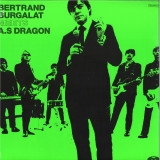
This album, recorded live after the release of Bertrand Burgalat's first album (The Sssound of Mmmusic, 2000), is a unique testimony of a passionate encounter, of explosive concerts and an exceptional musical adventure, a mixture of soulful rhythms, oniric keyboards and songs with chiseled lyrics and harmonies.
Out of stock on vinyl for decades, it will be reissued and published in December 2022, with a text by Philippe Manœuvre. 21 years after its first publication, it has not aged a bit. It includes tribute covers ("Follow Me" by Amanda Lear, "Tears Of A Clown" by Smokey Robinson), and a version of "Easy Tiger", recorded at the same time for Depeche Mode.
"This album brings back the great psychedelic concerts that Bertrand gave at the time. For me, Aux Cyclades électronique is in the running for the title of most beautiful song in the world, I haven't changed my mind."
Philippe Manoeuvre, excerpt from the innersleeve note, April 2022
"A.S Dragon is arguably the best French rock band of today. Nearly an hour of psyche-magnetic madness, the spectacular collision of a Gainsbourg theorist playing his melodies to a Jefferson Airplane from Clignancourt charged with pushing all galactic limits."
Philippe Manoeuvre, Rock & Folk, October 2001
"Bertrand Burgalat meets A.S Dragon could satisfy both French Touch fans and Rock'n'Roll purists. It sounds like the resurrection of a sixties garage rock band, somewhere between Detroit and Combs-la-ville. Burgalat for charity."
Philippe Barbot, Télérama, November 2001
"This is a fantastic remix! It sounds a bit like 70's funk. Bertrand has taken the song and reworked it from top to bottom, re-recording people on every part. It sounds like a James Bond song. It's really one of the best remixes we've ever done. "
Martin Gore (Depeche Mode) on "Easy Tiger", Magic, May 2001
"I wish this song could last my whole life..."
Virginie Despentes, on "Aux Cyclades électronique", "Vernon Subutex