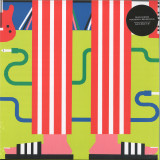
Gordon Haskell gained recognition as bass player for the Fleur de Lys in 1966, and subsequently spent a short period in King Crimson at the time of the recordings of In The Wake Of Poseidon. He released his second solo album It IsAnd It Isn’t in 1971, which features King Crimson-bassist John Wetton.
The album has guest appearances from various top session musicians (Dave Spinoza, Alan Barry & Bill Atkinson a.o.) and it was produced by Arif Mardin, who, at the time, was moving into some much more profitable and visible projects with the Bee Gees that went in a completely different direction.
On this album, Mardin melts Haskell’s pop-progressive sound with the clean, sharp mixes that King Crimson of that era were known for.
It Is And It Isn’t is available as a limited edition of 750 individually numbered copies on green coloured vinyl.
Buscar:gordo
Classic 1987 album is one of the band’s most beloved releases. Includes a cover of Crime’s “Hot Wire My Heart”. “Let’s get something straight. There is no album in the entire corpus of indie rock not Loveless, not Surfer Rosa, not Psychocandy that reaches the heights of invention, joy, and magic of Sonic Youth’s sublime fifth album.... The haunted reveries of Sister remain with you for years, even if you only hear them once” Stereogum // 1987’s Sister was another notch in the band's move away from No Wave, yet still maintained their experimental approach. Gordon, Moore, Ranaldo and Shelley were coming into their own at this point, combining elements of noise, punk and pop. They had also become better songwriters since their previous album, providing better context for their noisier elements and incorporating the dissonance of their earlier releases into more traditional song structures. To quote Stereogum once again, “Sister is the sonic manifestation of refracted light. It’s a record that changes you.”
"Released in May 1986 on SST Records and Blast First! in the UK, EVOL was the third studio album by Sonic Youth and showed the first signs of the band transforming their No Wave past into a greater alt-rock sensibility. “EVOL … marks the true departure point of Sonic Youth’s musical evolution,” noted Pitchfork, “In measured increments, Thurston Moore and Lee Ranaldo … bring form to the formless, tune to the tuneless, and with the help of Steve Shelley’s drums…, impose melody and composition on their trademark dissonance.” ""If Daydream Nation is Sonic Youth’s opus, EVOL was crucial research. There’s a directness that makes everything feel close. It is pure tension with little release. The entire record is a shadow." Stereogum likewise praised the album as one, “full of suspense…, the cornerstone Nico-evoking monotone [by Kim Gordon]. ‘In The Kingdom #19,’ featuring Mike Watt on bass and … vocals [by Ranaldo]…, is a harrowing story of a highway wreck over a suitably edgy instrumental backing punctuated by … live firecrackers in the vocal booth.” For Popstache, “EVOL slithers into the unconscious. Once the....detuned melodies and haunting riffs and final whispers of feedback depart from the speakers… the music [leaves] a faded footprint, forever reeling the listener back for another strange trip.” // “The seeds of greatness…” Pitchfork (who placed the album #31 of the Top 100 Albums of The 1980s) // “A near-masterpiece.” Trouser Press // “A stunningly fluent mixture of avant-garde instrumentation and subversions of rock’n’roll.” All Music Guide"
Ace Records freut sich, mit Singer-Songwriter, Ex-Pulp-Tour-Gitarrist und Sheffield-Legende Richard Hawley an diesem ersten Teil einer Compilation-Reihe mit von Hawley ausgewählten Lieblingssingles zusammenzuarbeiten. Dies ist eine Auswahl von 28 7inch-Singles, die Hawley auf seinen Tourneen gesammelt hat: Secondhand-Shop-Funde, Kneipen-Jukebox-Juwelen und alles dazwischen. Hawley bezeichnet den Klebstoff, der diese Auswahl zusammenhält, als "Little Bangers", da es sich bei allen um Mini-Handgranaten handelt; helle Lichter, die explodieren und verpuffen, einige große Namen, einige Raritäten, einige verlorene Seelen, einige Obskuritäten, einige von Künstlern, von denen er fast nichts weiß, außer dass sie ihn zum Tanzen bringen wollen. Viele sind Garagen-Instrumentals mit Gitarrenlinie als Lead-Melodie und der Kunst, eine Geschichte ohne Text zu erzählen. Eine 7inch-Single kann nur eine limitierte Menge an musikalischer Info enthalten - es muss knallen. The Shadows, Link Wray, The Troggs, The Champs, Jimmy Gordon und viele mehr zeigen wie das funktioniert. Kuratiert von Richard Hawley für CD und Doppel-LP mit umfangreichen, informativen Liner Notes.
- A1: A World Without Love – Peter & Gordon
- A2: Wishin’ And Hopin’ – Dusty Springfield
- A3: Don’t Throw Your Love Away – The Searchers
- A4: Beat Girl (1993 Remaster) – The John Barry Orchestra
- A5: Starstruck – The Kinks
- A6: You’re My World – Cilla Black
- B1: Wade In The Water (Live At Klooks Kleek) – The Graham Bond Organisation
- B2: I’ve Got My Mind Set On You – James Ray
- B3: (Love Is Like A) Heat Wave – The Who
- B4: Puppet On A String – Sandie Shaw
- B5: Land Of 1000 Dances – The Walker Brothers
- B6: There’s A Ghost In My House – R. Dean Taylor
- C1: Happy House – Siouxsie & The Banshees
- C2: (There’s) Always Something There To Remind Me – Sandie Shaw
- C3: Eloise – Barry Ryan
- C4: Anyone Who Had A Heart – Cilla Black
- D1: Last Night In Soho – Dave Dee, Dozy, Beaky, Mick & Tich
- D2: Neon (Soundtrack Edit) – Steven Price
- D3: Downtown (A Capella) – Anya Taylor-Joy
- D4: Downtown (Uptempo) – Anya Taylor-Joy
Percy Sledge’s 1966 worldwide smash “When A Man Loves A Woman” did more to internationally establish southern soul than any record up to that time. The man from Leighton, Alabama subsequently became one of Atlantic’s biggest artists, charting 11 R&B/Pop hits in three years.
Nevertheless, as the 60s drew to a close, Atlantic’s interest in Percy inexplicably dwindled. Very few masters that his producer Quin Ivy sent from Sheffield, Alabama to New York saw contemporaneous release, although some eventually appeared in countries like South Africa, where Percy was revered.
The tracks on this exceptional ‘maxi single’ waited till 2010 to debut digitally. Percy’s terrific take on Aretha’s “Baby, Baby, Baby” dates from August 1969, the others from his penultimate session for Atlantic. Great songs too from Swamp Dogg and the late Gordon Lightfoot; either of which could have given Percy a hit in 1972.
We’ll never know why they weren’t issued then – but let’s be grateful to Soul4Real for making them available on vinyl now…
Taj Mahal can rightfully be called a living legend for his contributions to
popular music
With a voice as instantly recognisable as Louis Armstrong, Ray Charles, or Dr.
John, Taj Mahal has throughout his career pushed the envelope of American
music forward by incorporating sounds from the Caribbean, Africa, traditional
blues and jazz. He has won 3 Grammys from 15 nominations, was inducted into
the Blues Foundation Hall of Fame, and presented with a Lifetime Achievement
Award from the Americana Music Association.
With 'Savoy', Taj takes a new direction in his musical journey, exploring classics
from the American songbook with his good friend and acclaimed record producer
John Simon, whose resume includes producing classic albums by The Band,
Leonard Cohen, Gordon Lightfoot and Blood Sweat & Tears. 'Savoy' is the
realisation of a musical collaboration they had been planning for decades, finally
locking in the studio time to make it happen in August 2022.
Recorded with the hottest musicians in San Francisco, 'Savoy' is a loving
throwback to the sounds of the swing jazz big band era, titled as a tribute to
Harlem's Savoy Ballroom where the music composed by the likes of Duke
Ellington, Louis Jordan, George Gershwin and Louis Armstrong was performed by
a who's who of iconic artists, and now brought back to life by the one and only Taj
Mahal.
- A1: Hornet's Nest - Curtis Knight & The Squires Feat. Jimi Hendrix
- A2: Nasty - The Timekeepers
- A3: Path Through The Forest (Version) - The Factory
- A4: Get On This Plane - The Premiers
- A5: Scotch On The Socks - The Shadows
- A6: Quasimoto - The Road Runners
- A7: Lazy Rebel - Twangy Rebels
- B1: Swinging Drums - Ronny Kae
- B2: Cuttin' Out - Rockin' Ronald & The Rebels
- B3: Honky - The Ho-Dads
- B4: Black Night - Cheryl Thompson
- B5: Long Line Rider - Bobby Darin
- B6: Poppin' Popeye - Link Wray & The Ray Men
- B7: Hot-Rod - King Curtis
- C1: Feels Like A Woman - The Troggs
- C2: Cuttin' Out - The Pirates
- C3: Where You Gonna Go - Art Guy
- C4: Neb's Tune - Ahab & The Wailers
- C5: Buzzzzzz - Jimmy Gordon
- C6: Jungle Walk - The Dyna-Sores
- C7: Surfin' & Swingin' (Shorter Version) (Shorter Version) - Les Brown Jr
- D1: Tahiti - Jimmy & Stan
- D2: Bawana Jinde - Al Duncan
- D3: Dead End Part 1 - The Executioners
- D6: El Gato - The Chandelles
- D7: It's Nothing To Me - Sanford Clark
- D4: Requiem For Love - Bobbie Gentry & Jody Reynolds
- D5 3: 4 Mash - The Champs
- Max Cilla - La Flûte Des Mornes
- Kallaloo - Star Child
- Ophélia - Red Light Lady
- The Revolution Of St. Vincent - The Little You Say
- Wganda Kenya - El Testamento
- Richard Duroseau Et Son Orchestre - Compas Jupiter
- Max Et Henri - Mizik A Ka Kafé
- The Beginning Of The End - Come Down
- Afrosound - Caliventura
- Super Combo - Rosita Femme Chaud
- Camille Soprane - Si Ou Dit Ça Çé Ça
- Henry Guedon - Bomba Des Musiciens
- Simon Jurad Feat Les Frères Déjean - Mawa
- Wganda Kenya - Pim Pom
- Max Cilla - Crépuscule Tropical
- Gordon Henderson - More Power
- Shleu Shleu - Alouette
- Les Aiglons - Musiciens De Grande Classe
- Skahshah - Racine Core
- Afrosound - Salome
Rare Groove Collection Explore the fusion of world music with soul, funk and disco through the Rare Groove Collection. With this new volume, discover unique groove tracks straight from Jamaica! Fully remastered original versions Caribbean RARE GROOVE Discover the multi-cultural musics from around the Caribbean Islands. From Haïti to the Bahamas, passing by the French West Indies, this journey explores traditional rythms from Soca, Calypso or Biguine. Musicians as Gordon Henderson, Max Cilla or the band Skah Shah knew how to use Soul, Funk and Disco influences to create a unique groove with multiple faces.
First-ever reissue of the 1988 album. Gatefold LP includes new and restored artwork and a chapbook, featuring forty-eight pages of lyrics, essays, photographs, and Gordon's extraordinary drawings for each song. The Choctaw, Assiniboine, and Texan poet, journalist, visual artist, American Indian Movement activist, and musician Roxy Gordon (First Coyote Boy) (1945-2000) was above all a storyteller, known primarily as a writer of inimitable style and unvarnished candor, whose wide-ranging work encompassed poetry, short fiction, essays, memoirs, journalism, and criticism. Over the course of his career he recorded six albums, wrote six books, and published hundreds of shorter texts in outlets ranging from Rolling Stone and The Village Voice to the Coleman Chronicle and Democrat-Voice, in addition to founding and operating, with his wife Judy Gordon, Wowapi Press and the underground country music journal Picking Up the Tempo. Along the way he cultivated close friendships with fellow Texan songwriters such as Lubbockites Terry Allen, Butch Hancock, and Tommy X. Hancock, as well as Ray Wylie Hubbard, Billy Joe Shaver, and, most famously, Townes Van Zandt, whom he called his brother. Although his work covered a vast array of topics exploring strata personal, local, global, and cosmic alike, Gordon's primary subject as a writer, musician, and visual artist was always American Indian culture, specifically the ways it collided and coexisted with European American culture in the South and West-and within the context of his own life and braided identity. The ten songs on Crazy Horse Never Died, his first officially released and distributed album, were recorded in Dallas in 1988. "Songs" is perhaps an imprecise taxonomy for what Roxy captured on this and his other albums, all of which remain out of print or were released in instantly obscure limited editions of homebrew cassettes and CD-R's. (Paradise of Bachelors plans to reissue remastered, expanded editions of his catalog; Crazy Horse is the first.) He only occasionally attempted to sing, and his musical recordings are primarily corollaries of, and vehicles for, his poems. His sharp West Texan drawl, tinged by formative years of reservation living in Montana and unmistakable once you hear it-high, lonesome, flat, and cold-blooded as a bare rusty blade-instead patiently unfurls in skewed sheets of anecdotal verse and discursive narrative rants. Although Gordon's music at times incorporated powwow style drumming, fiddling, or unaccompanied ballad singing, the majority of it hews to an idiosyncratic spoken word style, accompanied by atmospheric, sometimes synth-damaged country-rock that skirts ambient textures and postpunk deconstructions. His songs are essentially recitations over backing tracks of finger picked guitars, rubbery washtub bass, and buzzing, oscillating keyboards. On the stark yellow and red jacket of Crazy Horse, which he designed himself, Gordon describes these recordings as innately ambivalent in terms of form, content, and identity: These are poems and/or songs about the American West, white and Indian. My life has been Indian and/or white. Maybe there's not a lot of difference-maybe. I guess that's mostly according to which white person or which Indian you're talking about. That's probably what this album's about. Crazy Horse Never Died comprises songs that span the personal and political arcs of his writing practice and the poles of his native and white ancestries.
LTD. MARBLE VINYL EDITION[23,95 €]
This is a new pressing on 180g Transparent clear vinyl. 500 copies only. We ThRee announce the reissue of the "Odyshape" the second album by The Raincoats originally released on Rough Trade Records in 1981.Re-mastered from original masters. Heavyweight 180-gram vinyl.
"It was The Raincoats I related to most. They seemed like ordinary people playing extraordinary music. Music that was natural that made room for cohesion of personalities. They had enough confidence to be vulnerable and to be themselves without having to take on the mantle of male rock/punk rock aggression…or the typical female as sex symbol avec irony or sensationalism". (Kim Gordon, Sonic Youth,1993). //
"We just really loved what The Raincoats were doing - they were a really exciting band. I think the thing that was good about The Raincoats simply was that the tradition that they were playing in was their own and so they had an original voice. You couldn’t ignore them - they were undeniably fascinating - the interplay between the two voices and the sound of the group was something original and that was what was exciting about them." (Geoff Travis, Rough Trade Records, February 2009)
Repress of the 2019 reissued special marbled 180g vinyl version! "Odyshape" the second album by The Raincoats was originally released on Rough Trade Records in 1981. Remastered from original masters. "It was The Raincoats I related to most. They seemed like ordinary people playing extraordinary music. Music that was natural that made room for cohesion of personalities. They had enough confidence to be vulnerable and to be themselves without having to take on the mantle of male rock/punk rock aggression_or the typical female as sex symbol avec irony or sensationalism". (Kim Gordon, Sonic Youth,1993). "We just really loved what The Raincoats were doing - they were a really exciting band. I think the thing that was good about The Raincoats simply was that the tradition that they were playing in was their own and so they had an original voice. You couldn't ignore them - they were undeniably fascinating - the interplay between the two voices and the sound of the group was something original and that was what was exciting about them". (Geoff Travis, Rough Trade Records, February 2009)
The one arm keyboard luminary is well known in the entertainment circle of Western Jamaica. Born on the 2nd of March 1954, the accomplished singer and musician hails from Hayes, Clarendon. In 1969 he went to live in Kingston until 1973. Ancel's first effort in a recording studio was inside the popular Randy's in downtown Kingston. He did a single called 'Riding On' on the Musical Barber label out of Mandeville.
In 1977 he joined a group called Solid Foundation and stayed with them for two years. After that he moved to Montego Bay to sing with Stamma and the Sounds of Mobay, with who he appeared on Reggae Sunsplash festival in 1980.
Johnny made the move for the United States in 1982, and formed his first own band 'Uprisers' in Pittsburgh city.
One of the things he likes to talk about is how he once reunited the famed Clarendonians with Peter Austin and Ernest Wilson. Both pioneer icons were at irreconcilable odds with each other for quite some time. When he came back to Jamaica in 1985, he invited Ernest Wilson to do back-up vocals for him. For the same studio session, he also invited Peter Austin for the same back-up duties, and that was how the reunion came about. Inside famous Aquarius studio, there was Burning Spear's personal Band called Burning. The songs recorded there were 'Moving Out' and 'True Love' with top musicians : Tony Green on the saxophone, Bobby Ellis on the trumpet, Dwight Pinkney on the guitar, Calvin on percussion, Nelson Miller on the drums and Maurice Gordon on bass. This was not the first time Ancel was working with Peter Austin. When the split came in the ranks of the Clarendonians, Ancel was asked to fill the breach. He thus teamed up with Peter Austin and their first single together was entitled 'Out Of Sight'. They later entered the annual Jamaica Festival Song competition in 1975. Their entry was entitled 'Paradise On Earth' which Ancel said was quite popular. However, it was not popular enough to prevent the late Roman Stewart from copping the award with 'Hooray Festival'.
After the release of 'Moving Out', Johnny moved to Miami and continued his career as a solo artist, singing with different local bands. He did a number of singles, notably were 'Faith, Patience and Love' and 'Stand Back' for a producer called Jolly in Miami. In 1988 Powell formed his second band Benja, a band which gained increasing popularity in the time in South Florida. They have performed on several festivals, played in most major clubs and were a big success in Andros Island in the Bahamas for an audience who not necessarily consider Reggae their prime choice of music.
The saddest part of his life was when he lost his left hand to what doctors termed as a cancerous situation in 1977. This did not, however, stop him from learning how to play keyboards. Initially he was taught by the late Bobby Vaugh in Montego Bay and also got further teaching from jamaican saxophinist Reuben Alexander.
Now approaching 70 years old, Ancel is still very active in his music. In previous years he performed at the Marcus Garvey Celebration and is currently working with the “Synergy Band” at Royalton Hotel in Negril under the stage name “Ancel P.” Let the one arm keyboard luminary life and music live eternally !
Produced by Ancel "Johnny" Powell & Patricia Wallace
Engineer: Melvin Williams
Recorded at Aquarius Studio (Kingston, JA) in 1985
Bass: Maurice Gordon
Drums: Nelson Miller
Guitar: Dwight Pinkney
Saxophone: Tony Green
Trumpet: Bobby Ellis
Percussion: Calvin
Keyboards: Winston Wright
Backing vocals: Ernest Wilson & Peter Austin from the Clarendonians
Toronto-based retro-soul artist Claire Davis shares her journey of self-worth and love on her debut album "Get it Right", out April 21st 2023, via LRK Records. This lively 10-track analog soul LP was recorded to an 8-track tape machine by engineer Braden Sauder in a converted garage- studio in Toronto, owned by the renowned instrumental jazz/hip-hop group, BADBADNOTGOOD. Featuring some of the city's top-flight musicians in the R&B/Soul scene, the album was laid down live-off-the-floor in one week during the winter of 2022. Davis shares, "My heart really lies in live performance so I wanted to recreate that experience as much as possible for this record by having the musicians all record together to tape. I feel like I personally thrive under the limitations that tape gives you; it offers the opportunity to
capture a vibe of a performance more so than chasing perfection. Knowing that my favourite soul records were recorded this way gives me an even deeper appreciation for the skill and talent involved in this process." "Get it Right" is a record born out of the faith that there's better things on the other side of fear.
Whether that's breaking toxic cycles or being truly honest about what is and isn't working in life. The first song written for the record was the title-track of the album which began as a jam between Davis on guitar, producer Scott McCannell on bass, and drummer Chino deVilla. "The lyrics were inspired by my relationship with my partner and the intention that we both have to work on healing ourselves in order to make our partnership work. I'd like to think that it's a love
song with a strong sense of maturity and understanding to it. And the whole record was really shaped around that idea of my relationships and experiences stemming from my own sense ofself-love add my desire to live and create from an authentic place."
The songs on the album feature co-writes from Scott McCannell, Kyla Charter, and Toronto production house Safe Spaceship Music, in addition to horn and background vocal arrangements by composer La-Nai Gabriel. Musicians include Heather Crawford on guitar,
Scott McCannell on bass, Adrian Hogan on keys, Chino de Villa on drums, Juan Carlos Medrano on percussion, Aphrose, Tegan Michelle Gordon and Chynna Lewis on background vocals, and horn section The Northern Soul Horns.
"Get it Right" follows up Davis' most recent 7" vinyl release of "Long Gone"/ "Times Have Changed" and most recent single release "Intuition" on LRK Records Huey Morgan played "Times Have Changed" on " The Huey Show " on BBC Radio Six
Tune of the week on David Bishops Street Sounds radio.
Karen Gabay played "Intuition" taken from the album on "The People" BBC Manchester
NeighbourSoul Rhythms ain't playing around with this one. The third installment of its acclaimed NeighbourSoul Edits ranges from space disco to funk, and it's guaranteed to get your booty shaking on the dancefloor! This fourth release to date is all about the disco vibes, and Mark Gursane delivers the goods. If you're a fan of Felipe Gordon, Rahaan, or Jacques Renault, you already know what's up. “NeighbourSoul Edits Vol.3” is a fourth track banger focused on one thing and one thing only - making you dance. These four disco-funk cuts are tailor-made for the club, and they're sure to get the party started.
Fan favorite dark dance outfit Boy Harsher have contributed a sumptuously eerie track for the David Gordon Green directed finale to the iconic Halloween franchise. Sacred Bones and Nude Club (Boy Harsher's imprint) are joining forces and releasing a proper 12" maxi single containing four versions of the track "Burn it Down," to be released in tandem with the original score provided by John Carpenter, Cody Carpenter, and Daniel Davies. Boy Harsher said of the experience: "During an extremely brief period of rest between tours, we got this call from the music supervisor of Halloween. The director, David Gordon Green, had listened to our music and wanted to use something for the final installment in the trilogy - Halloween Ends. We flew to New York the next day to meet the team and discuss the possibilities. It was totally surreal. Obviously we're huge fans of Carpenter and the franchise is a fav, but to work with Gordon Green was also so special, his early films (George Washington, Undertow, Snow Angels) were heavy influences on our work. The real kicker is that Halloween Ends was shot in Savannah, GA - the birthplace of Boy Harsher and where we met. Unbelievable. It all felt too synchronous, and we knew we had to make something work although we were about to leave for a multi-month tour that week. We flew home to Massachusetts, dug through old demos, and found "Burn It Down". In the end it was the perfect energy for the bittersweet love affair between Allyson and Corey, so during a couple days off - we cleaned it up and made it come alive."
A Late Lunch’ is the soundtrack to Akiko Iimura’s eponymous movie realized in 1978. It is based on acoustic instruments and field recordings, brilliantly reconfigured and mixed by Bekaert to create a surreal, immersive soundscape. The technique used includes superposition and speed change of recordings, radical sound effects and juxtapositions of sounds. The players were prominent musicians of the 1970’s, including Maggi Payne, George Lewis, David Rosenboom and Blue Gene Tyranny.
‘A Summer Day at Stony Point’ was composed in 1969, with participation of David Behrman, Shigeko Kubota and Charlotte Warren. The piece was commissioned by English composer Hugh Davies who presented it at the Harrogate festival the same year. Stony Point is a small village in New York State where John Cage co-owned a small pseudo-commune art resort where like-minded artists gathered. ‘A Summer Day at Stony Point’ is nothing more than a page of a journal, a fragment of a notebook that utilizes a series of sound sources recorded at Stony Point on one beautiful day in the summer of 1968. Other electronic sound sources were recorded at the Brandeis University where Alvin Lucier was professor. The final realization of the piece was done at Henri Pousseur’s APELAC Studio in Brussels, 1969.
The soundtrack for Akiko Iimura’s ‘Mon Petit Album’ was composed on the basis of a simple description of the technique of the film and its time span. It includes David Behrman on alto, from an outdoor recording at Stony Point, plus excerpts from a Transition concert in London, the band Bekaert formed in 1971 with Michel Herr, Takehisa Kosugi and Ryo Koike, both members of the Taj Mahal Travelers. The atmosphere is quiet and pastoral throughout with a very dreamlike flavour.
Jacques Bekaert (1940-2020) was a man of many gifts: author, journalist, composer, photographer, visual artist, wine connoisseur, radio talk show host, diplomat and expert in Southeast Asian affairs. His whole life Bekaert has been actively involved in music but not much of his work got recorded or published. In the early 60’s Bekaert studied with Pousseur and through his frequent visits to the US he became friends with artists like John Cage, David Tudor, Charlotte Moorman and most of all David Behrman with whom he had a close friendship ever since. Bekaert helped organize the first European tour of The Sonic Arts Union (David Behrman, Robert Ashley, Gordon Mumma, Alvin Lucier) and in the early 70’s he formed the group Transition (with Belgian jazz pianist Michel Herr, Takehisa Kosugi and Ryo Koike, both members of the Taj Mahal Travelers). His meeting with Japanese experimental film-maker Akiko Iimura resulted in two film soundtracks featured on this one of a kind discreet avant garde album.
When asked in a 1979 interview about his double life as a musician and a journalist, Bekaert replied, “I suppose they’re both unsafe, unstable, questioning jobs—composing and reporting. Journalism takes me to places, shows me the world as it is. My music is my wish for the kind of world I’d want to live in. The little peaceful state I dream for everyone, where you can be yourself, and happy, and as collective as possible without giving up total privacy.”
Originally released in 1981 on the Belgian Igloo label this reissue comes with the same sleeve as originally designed by Alain Géronnez.
- A1: The Band - Up On Cripple Creek
- A2: Big Star - The Ballad Of El Goodo
- A3: Steve Earle - Copperhead Road
- A4: Lucinda Williams - Can't Let Go
- A5: Gene Clark - For A Spanish Guitar
- A6: Delta Spirit - People, Turn Around
- B1: America - Ventura Highway
- B2: Whitley - Big Chris Sky Country
- B3: Alison Krauss - Gentle On My Mind
- B4: John Mellencamp - Small Town
- B5: The Flying Burrito Brothers - Sin City
- B6: Poco - Rose Of Cimarron
- C1: Band Of Horses - Factory
- C2: Gram Parsons - A Song For You
- C3: John Hiatt - Georgia Rae
- C4: Gordon Lightfoot - Sundown
- C5: Lynyrd Skynyrd - Free Bird
- D1: The Allman Brothers Band - Midnight Rider
- D2: New Riders Of The Purple Sage - Lonesome La Cowboy
- D3: John Prine - Sam Stone
- D4: Bonnie Raitt - Thing Called Love
- D5: Townes Van Zandt - Pancho & Lefty
- D6: Jonathan Wilson - Desert Raven
Gordon is a great advertisement for live jazz. When he really starts “stretchin’ out” on a number, and his long, firmly anchored legs begin vibrating rapidly from side to side, the intense swing of his music has a natural visual counterpart. It’s true that you cannot see him in this album but you can feel the impact of his personality as it is poured into his music. This session was not recorded in a nightclub performance but in its informal symmetry, it matches the relaxed atmosphere that the best of those made in that manner engender. Everyone was really together, in all the most positive meanings of that word. It was so good that Blue Note put these four men in the studio again, two days later. We’ll be hearing that one in the near future. Meanwhile, proceed directly to Go! You won’t collect $200.00, but you will get a monopoly of Melody Avenue, Swing Street and Inspiration Place.
Mioclono started at the end of 2016 when Oriol Riverola and Arnau Obiols did their first recording session at Angel Sound Studios in Barcelona, assisted by engineer Miquel Mestres. This became a tradition and they kept doing these recording sessions every end of the year. The present album is the result of the first recording session in 2016 and during the following months, the duo met up several times and overdubbed those early recordings. Later it was mixed and mastered later on by Gordon Pohl in DuIêsseldorf. The project is named because both Arnau and Oriol had been diagnosed with epilsepsy, a neurological disorder that affects the electrical activity in the brain. Given this coincidence, their moniker takes the name in Spanish of myoclonus.
- 1: Winston Jarrett - Poor Mi Isrealites
- 2: The Flames - Scare Him
- 3: The Meditators- Give Me True Love
- 4: The Helpers - Help
- 5: Jackie Mittoo - Night Doctor
- 6: Lloyd Robinson - Run For Rescue
- 7: The Meditators - Tomorrow When Youre Gone
- 8: W Wellington - Too Many Miles
- 9: Lloyd Robinson - Double Crosser
- 10: The Helpers - Sweet Talking
- 11: Winston Jarrett - Just Cant Satisfy
- 12: The Gladiators - Jane
Studio One was founded by Clement "Coxsone" Dodd1 in 1954, and the first recordings were cut in 1963 on Brentford Road in Kingston.12 Amongst its earliest records were "Easy Snappin" by Theophilus Beckford, backed by Clue J & His Blues Blasters, and "This Man is Back" by trombonist Don Drummond. Dodd had previously issued music on a series of other labels, including World Disc, and had run Sir Coxsone the Downbeat, one of the largest and most reputable sound systems in the Kingston ghettos.
In the early 1960s, the house band providing backing for the vocalists were the Skatalites[3] (1964–65), whose members (including Roland Alphonso, Don Drummond, Tommy McCook, Jackie Mittoo, Lester Sterling and Lloyd Brevett) were recruited from the Kingston jazz scene by Dodd. The Skatalites split up in 1965 after Drummond was jailed for murder, and Dodd formed new house band the Soul Brothers (1965–66), later named the Soul Vendors (1967) and Sound Dimension (1967-). From 1965 to 1968 they played 9 a.m. to 5 p.m., 5 days a week, 12 rhythms a day (about 60 rhythms a week) with Jackie Mittoo as music director, Brian Atkinson (1965–1968) on bass, Hux Brown on guitar, Harry Haughton (guitar), Joe Isaacs on drums (1966–1968), Denzel Laing on percussion, and on horns (some initially and some throughout): Roland Alphonso, Dennis 'Ska' Campbell, Bobby Ellis, Lester Sterling, among others on horns during the era of Rock Steady. Headley Bennett, Ernest Ranglin, Vin Gordon and Leroy Sibbles were included among a fluid line-up, to record tracks directed by Jackie Mittoo at Studio One from 1966-1968.
During the night hours at Studio One from 1965-1968, singers like Bob Marley, Burning Spear, The Heptones, The Ethiopians, Ken Boothe, Rita Marley, Marcia Griffiths, Judy Mowatt, Alton Ellis, Delroy Wilson, Bunny Wailer[4] and Johnny Nash, among others, would put on headphones to sing lyrics to original tracks recorded by the Soul Brothers earlier each day. These seminal recordings included "Real Rock" (by Sound Dimension), "Heavy Rock", "Jamaica Underground", "Wakie Wakie", "Lemon Tree", "Hot Shot", "I'm Still In Love With You", "Dancing Mood", and "Creation Rebel".
Jackie Mittoo, Joe Isaacs, and Brian Atkinson left Studio One in 1968, recorded drums and bass for Desmond Dekker's and Toots' biggest hits at other Kingston studios, then moved to Canada. Hux Brown stayed in Jamaica to record on the soundtrack The Harder They Come, The Harder They Fall, and toured in Nigeria with Toots and the Maytals and Fela Kuti. The Soul Brothers (a.k.a. Sound Dimension) formed the basis of reggae music in the late 1960s, being versioned and re-versioned time after time over decades by musicians like Shaggy, Sean Paul, Snoop Lion, The Clash, String Cheese Incident, UB40, Sublime, and countless other Billboard originals and remakes trying to emulate their original Rock Steady sound at Coxsone's Studio One.
The label and studio were closed when Dodd relocated to New York City in the 1980s.
The definitive collection of Laraaji's earliest works, Segue To Infinity compiles his 1978 debut Celestial Vibration and six additional side-long studio sessions from previously unknown acetates from the same period. A lengthy essay by Living Colour's Vernon Reid chronicles the origins of Edward "Flash" Gordon, illustrated with dozens of previously unpublished photographs that capture this beautiful and elusive young artist. Full of discovery and wonderment, Segue To Infinity is a miraculous chronicle of new age's most fabled artist.
LTD. GALAXY VINYL
The definitive collection of Laraaji's earliest works, Segue To Infinity compiles his 1978 debut Celestial Vibration and six additional side-long studio sessions from previously unknown acetates from the same period. A lengthy essay by Living Colour's Vernon Reid chronicles the origins of Edward "Flash" Gordon, illustrated with dozens of previously unpublished photographs that capture this beautiful and elusive young artist. Full of discovery and wonderment, Segue To Infinity is a miraculous chronicle of new age's most fabled artist.
Studio One was founded by Clement "Coxsone" Dodd1 in 1954, and the first recordings were cut in 1963 on Brentford Road in Kingston.[1][2] Amongst its earliest records were "Easy Snappin" by Theophilus Beckford, backed by Clue J & His Blues Blasters, and "This Man is Back" by trombonist Don Drummond. Dodd had previously issued music on a series of other labels, including World Disc, and had run Sir Coxsone the Downbeat, one
of the largest and most reputable sound systems in the Kingston ghettos.
In the early 1960s, the house band providing backing for the vocalists were the Skatalites[3] (1964–65), whose members (including Roland Alphonso, Don Drummond, Tommy McCook, Jackie Mittoo, Lester Sterling and Lloyd Brevett) were recruited from the Kingston jazz scene by Dodd. The Skatalites split up in 1965 after Drummond was jailed for murder, and Dodd formed new house band the Soul Brothers (1965–66), later named the Soul Vendors (1967) and Sound Dimension (1967-). From 1965 to 1968 they played 9 a.m. to 5 p.m., 5 days a week, 12 rhythms a day (about 60 rhythms a week) with Jackie Mittoo as music director, Brian Atkinson (1965–1968) on bass, Hux Brown on guitar, Harry Haughton (guitar), Joe Isaacs on drums (1966–1968), Denzel Laing on percussion, and on horns (some initially and some throughout): Roland Alphonso, Dennis 'Ska' Campbell, Bobby Ellis, Lester Sterling, among others on horns during the era of Rock Steady. Headley Bennett, Ernest Ranglin, Vin Gordon and Leroy Sibbles were included among a fluid line-up, to record tracks directed by Jackie Mittoo at Studio One from 1966-1968.
During the night hours at Studio One from 1965-1968, singers like Bob Marley, Burning Spear, The Heptones, The Ethiopians, Ken Boothe, Rita Marley, Marcia Griffiths, Judy Mowatt, Alton Ellis, Delroy Wilson, Bunny Wailer[4] and Johnny Nash, among others, would put on headphones to sing lyrics to original tracks recorded by the Soul Brothers earlier each day. These seminal recordings included "Real Rock" (by Sound Dimension), "Heavy Rock", "Jamaica Underground", "Wakie Wakie", "Lemon Tree", "Hot Shot", "I'm Still In Love With You", "Dancing Mood", and "Creation Rebel".
Jackie Mittoo, Joe Isaacs, and Brian Atkinson left Studio One in 1968, recorded drums and bass for Desmond Dekker's and Toots' biggest hits at other Kingston studios, then moved to Canada. Hux Brown stayed in Jamaica to record on the soundtrack The Harder They Come, The Harder They Fall, and toured in Nigeria with Toots and the Maytals and Fela Kuti. The Soul Brothers (a.k.a. Sound Dimension) formed the basis of reggae music in the late 1960s, being versioned and re-versioned time after time over decades by musicians like Shaggy, Sean Paul, Snoop Lion, The Clash, String Cheese Incident, UB40, Sublime, and countless other Billboard originals and remakes trying to emulate their original Rock Steady sound at Coxsone's Studio One.
Solaire, Siegfried Kessler, that is the least we can say! Aged 4: learns piano. Aged 6: his first concert. After this: studies classical music like everyone else... until the jazz of Jack Diéval and Stan Kenton turned everything upside down. So it was goodbye to Bach...
...And hello to Dexter Gordon, Joe Henderson, Ted Curson and Archie Shepp (who he would accompany over a long period). In 1969, with Yochk’o Seffer, Didier Levallet and Jean-My Truong, he formed a group which would mark history and create a sensation: Perception. If French free jazz exists, its thanks to Kessler (and company).
The following year, the pianist recorded his first album: Live at the Gill’s Club. On this one-night concert date can also be heard Barre Phillips and Steve McCall. But it was in 1971 that Kessler would record his greatest album; still in a trio setting, but this time with bassist Gus Nemeth and percussionist Stu Martin: Solaire. Five tracks of extraordinary music, moving back and forth between modal jazz and contemporary music.
Let’s begin at the end, with the title track Solaire, on which Kessler plays a melody on flute and piano which resists all onslaughts. It sends out powerful waves, Kessler’s jazz, bubbling like hot oil (Persécution, Drum), shaking modal jazz to its roots (De l’Orient à Orion) or upsetting the memory of a cantata (Bach Hcab). The piano is an instrument which can provide a tendency towards, demonstrative technique; with Kessler, it is something else: a joyful persecution!
‘Energy MC2’ began as an energetic bunch of 10 and 11year old neighborhood kids, who initially formed a band under the name of ‘Congressional Funk’. The founding members were Vincent Bonham, Opelton Parker (the brother of Ray Parker Jr) and brothers Ufuoma and Eric Wallace, with the later addition of Fred Gordon. Later becoming the backing band for local Detroit act Mad Dog & The Pups. Featuring on some of the ‘Pups’ earliest Magic City releases “Hep Squeeze” (MC-007) and the follow up release “Funky Monkey” (MC-009). A name-change to ‘The Soulful Hounds’ followed which they are credited as on the instrumental flipside of Mad Dog & The Pups vocal version of “Why Did You Leave Me Girl” Magic City (MC-012).
After leaving Magic City, the band went through several changes in both name and personnel, upon hiring bass player Ben "Rat Bass" Adkins, they adopted the name of his former band, ‘Energy’ to which they added Albert Einstein’s formula for special relativity (E=MC2) to finally became ‘Energy MC2’. As Energy MC2” they soon began seriously recording their own original material which included the two previously unissued 70’’s tracks “If You Break It” and “Other Side Of The Mirror” first released on Soul Junction in 2016. The group’s line up on these songs included Vincent Bonham, Ufuoma Akill-Wallace, Arnell Carmichael, Ernestro Wilson, Opelton Parker, Gordon Carlton, Eric Wallace, Leon Lopez, Marvin Carlton and Marlene Rice. A further unissued song the mellifluous ballad “Juliane” also the gained release on the ‘We Got A Sweet Thing Going On’ volume 2 SJCD 5011 cd compilation album.
During 1974 several members of the group boarded a Greyhound bus for Los Angeles. During their week long stay there under the supervision of Ray Parker Jr they recorded the two featured songs the mellifluous “You And Only You” and “Love To Make Love To You” featuring Arnell Carmichael on lead vocals with the session remaining unissued Energy MC2 returned to Detroit. Vincent Bonham and Arnell Carmichael in 1977 returned to L.A. to join
Ray Parker Jr and Jerry Knight to form the band ‘Raydio” later becoming Ray Parker Jr & Raydio when Jerry Knight left to go solo. Ray Parker later too chose to persue a solo career leading to him recording the title track of the box office hit movie “Ghostbusters” a song he will forever be remember for. During 2014 Arnell Carmichael, Vincent Bonham, James Carmichael and Giovanni Rogers revived ‘Raydio’ but only as a touring band. The remaining members of Energy MC2 all enjoyed successful careers as session and backing musicians with many major artists, The Four Tops, The Temptations, Areatha and Carolyn Franklyn, Michael Henderson, Cheryl Lynn, Bettye Lavette, and Parlet’ (part of the P-Funk family) that help George Clinton Land the Mothership!
Somebody’s Child has quickly established himself as a voice at the forefront of the new music scene in Ireland. Early support slots in Dublin with the likes of Kodaline, Primal Scream, and Kaiser Chiefs, as well as national radio play and an appearance on the nation’s beloved Late Late Show all acted as vindication for Cian Godfrey holding back the unveiling of SC until the relatively late age of 23 - he had honed his craft and formulated a clear message ahead of time. Newly signed to cult label Frenchkiss Records, Godfrey now announces his self-titled debut album out 3rd February 2023 which has its roots in Godfrey’s formative years growing up in Dublin and the experiences that went with that. It was recorded at East London’s Hackney Road Studios with the producer Mikko Gordon (Arcade Fire, The Smile).
PUMPKIN ORANGE VINYL
Fan favorite dark dance outfit Boy Harsher have contributed a sumptuously eerie track for the David Gordon Green directed finale to the iconic Halloween franchise. Sacred Bones and Nude Club (Boy Harsher's imprint) are joining forces and releasing a proper 12" maxi single containing four versions of the track "Burn it Down," to be released in tandem with the original score provided by John Carpenter, Cody Carpenter, and Daniel Davies. Boy Harsher said of the experience: "During an extremely brief period of rest between tours, we got this call from the music supervisor of Halloween. The director, David Gordon Green, had listened to our music and wanted to use something for the final installment in the trilogy - Halloween Ends. We flew to New York the next day to meet the team and discuss the possibilities. It was totally surreal. Obviously we're huge fans of Carpenter and the franchise is a fav, but to work with Gordon Green was also so special, his early films (George Washington, Undertow, Snow Angels) were heavy influences on our work. The real kicker is that Halloween Ends was shot in Savannah, GA - the birthplace of Boy Harsher and where we met. Unbelievable. It all felt too synchronous, and we knew we had to make something work although we were about to leave for a multi-month tour that week. We flew home to Massachusetts, dug through old demos, and found "Burn It Down". In the end it was the perfect energy for the bittersweet love affair between Allyson and Corey, so during a couple days off - we cleaned it up and made it come alive."
- 1: Where Is Jeremy?
- 2: Halloween Ends (Main Title)
- 3: Laurie's Theme Ends
- 4: The Cave
- 5: Cool Kid
- 6: Drags To The Cave
- 7: Evil Eyes
- 8: Transformation
- 9: Because Of You
- 10: Requiem For Jeremy
- 11: Kill The Cop
- 12: Corey And Michael
- 13: Corey's Requiem
- 14: The Junk Yard
- 15: Where Are You?
- 16: Bye Bye Corey
- 17: The Fight
- 18: Before Her Eyes
- 19: The Procession
- 20: Cherry Blossoms
- 21: Halloween Ends
BLUE MOON PHASE VINYL
After 45 years, the most acclaimed, revered horror franchise in film history reaches its epic, terrifying conclusion as Laurie Strode faces off for the last time against the embodiment of evil, Michael Myers, in a final confrontation unlike any captured on-screen before, one where only one of them will survive. As Halloween Ends marks the last chapter of the David Gordon Green trilogy, so it ushers the essential return of original director and composer John Carpenter to score the iconically hair-raising soundtrack alongside Cody Carpenter and Daniel Davies. Recorded in its entirety at Carpenter's home studio and Davies' studio, the unmistakable mix of software synths, vintage analogue equipment, and live instrumentation once again provides the signature sound of Halloween, one of the most distinctive aspects of the movie franchise to date. The soundtrack was tracked scene by scene but the album itself plays like a standalone piece of music. The general atmosphere is one of dread yet the record includes some groove laden moments reminiscent of Escape From New York or some of Carpenter's other more dance-able scores. Exquisite and delicate ambient pieces weave their way between some of the score's more arresting moments and yet maintain a subtle pop sensibility. The overall achievement showcases three master musicians, one of whom invented the entire horror-synth genre, crafting an evocative, playful and deeply listenable score that honors a legacy and expands on the decades of work that have been leading to this triumphant climax. Halloween Ends is the soundtrack of the final battle against evil. Watch your back this Halloween, Michael may be near you.
- 1: Where Is Jeremy?
- 2: Halloween Ends (Main Title)
- 3: Laurie's Theme Ends
- 4: The Cave
- 5: Cool Kid
- 6: Drags To The Cave
- 7: Evil Eyes
- 8: Transformation
- 9: Because Of You
- 10: Requiem For Jeremy
- 11: Kill The Cop
- 12: Corey And Michael
- 13: Corey's Requiem
- 14: The Junk Yard
- 15: Where Are You?
- 16: Bye Bye Corey
- 17: The Fight
- 18: Before Her Eyes
- 19: The Procession
- 20: Cherry Blossoms
- 21: Halloween Ends
After 45 years, the most acclaimed, revered horror franchise in film history reaches its epic, terrifying conclusion as Laurie Strode faces off for the last time against the embodiment of evil, Michael Myers, in a final confrontation unlike any captured on-screen before, one where only one of them will survive. As Halloween Ends marks the last chapter of the David Gordon Green trilogy, so it ushers the essential return of original director and composer John Carpenter to score the iconically hair-raising soundtrack alongside Cody Carpenter and Daniel Davies. Recorded in its entirety at Carpenter's home studio and Davies' studio, the unmistakable mix of software synths, vintage analogue equipment, and live instrumentation once again provides the signature sound of Halloween, one of the most distinctive aspects of the movie franchise to date. The soundtrack was tracked scene by scene but the album itself plays like a standalone piece of music. The general atmosphere is one of dread yet the record includes some groove laden moments reminiscent of Escape From New York or some of Carpenter's other more dance-able scores. Exquisite and delicate ambient pieces weave their way between some of the score's more arresting moments and yet maintain a subtle pop sensibility. The overall achievement showcases three master musicians, one of whom invented the entire horror-synth genre, crafting an evocative, playful and deeply listenable score that honors a legacy and expands on the decades of work that have been leading to this triumphant climax. Halloween Ends is the soundtrack of the final battle against evil. Watch your back this Halloween, Michael may be near you.
- 1: Where Is Jeremy?
- 2: Halloween Ends (Main Title)
- 3: Laurie's Theme Ends
- 4: The Cave
- 5: Cool Kid
- 6: Drags To The Cave
- 7: Evil Eyes
- 8: Transformation
- 9: Because Of You
- 10: Requiem For Jeremy
- 11: Kill The Cop
- 12: Corey And Michael
- 13: Corey's Requiem
- 14: The Junk Yard
- 15: Where Are You?
- 16: Bye Bye Corey
- 17: The Fight
- 18: Before Her Eyes
- 19: The Procession
- 20: Cherry Blossoms
- 21: Halloween Ends
Orange Vinyl
After 45 years, the most acclaimed, revered horror franchise in film history reaches its epic, terrifying conclusion as Laurie Strode faces off for the last time against the embodiment of evil, Michael Myers, in a final confrontation unlike any captured on-screen before, one where only one of them will survive. As Halloween Ends marks the last chapter of the David Gordon Green trilogy, so it ushers the essential return of original director and composer John Carpenter to score the iconically hair-raising soundtrack alongside Cody Carpenter and Daniel Davies. Recorded in its entirety at Carpenter's home studio and Davies' studio, the unmistakable mix of software synths, vintage analogue equipment, and live instrumentation once again provides the signature sound of Halloween, one of the most distinctive aspects of the movie franchise to date. The soundtrack was tracked scene by scene but the album itself plays like a standalone piece of music. The general atmosphere is one of dread yet the record includes some groove laden moments reminiscent of Escape From New York or some of Carpenter's other more dance-able scores. Exquisite and delicate ambient pieces weave their way between some of the score's more arresting moments and yet maintain a subtle pop sensibility. The overall achievement showcases three master musicians, one of whom invented the entire horror-synth genre, crafting an evocative, playful and deeply listenable score that honors a legacy and expands on the decades of work that have been leading to this triumphant climax. Halloween Ends is the soundtrack of the final battle against evil. Watch your back this Halloween, Michael may be near you.
Black Vinyl[24,79 €]
Blue Curacao Vinyl[24,33 €]
Black Vinyl[23,95 €]
Red Vinyl[23,95 €]
Pumpkin Orange Vinyl[26,85 €]
After 45 years, the most acclaimed, revered horror franchise in film history reaches its epic, terrifying conclusion as Laurie Strode faces off for the last time against the embodiment of evil, Michael Myers, in a final confrontation unlike any captured on-screen before, one where only one of them will survive.
When the franchise relaunched in 2018, Halloweenshattered box office records, becoming the franchise’s highest-grossing chapter and set a new record for the biggest opening weekend for a horror film starring a woman. In 2021, Halloween Killsearned the biggest opening weekend for any horror film in the pandemic era and simultaneously set a new record for a non-live event premiere streaming on Peacock.
As Halloween Endsmarks the last chapter of the David Gordon Green trilogy, so it ushers the essential return of original director and composer John Carpenter to score the iconically hair-raising soundtrack alongside Cody Carpenter and Daniel Davies. Together they once again bring the celebrated music score to the horror movie series, one of the most distinctive aspects of the franchise to date
Similarly to the last two soundtracks, Halloween Endswas recorded in its entirety at John Carpenter’s home studio and Daniel’s studio. “The three of us compose,perform, and record all the music, and everything is mixed by Daniel together with John Spiker” says John Carpenter.
The unmistakable mix of software synths, vintage analogue equipment, and live instrumentation is utilized once again to provide the signature sound of Halloween. However, rumors have it that Halloween Ends is going to be somewhat different from the previous two films in the trilogy. With that comes an expanded soundtrack, one that matches the tone of a tangible rise in stakes and conveys the climatic feel of the film. The soundtrack of the third installment broadens old themes whilst creating new ones
Black Vinyl[24,79 €]
Blue Curacao Vinyl[24,33 €]
Black Vinyl[23,95 €]
Red Vinyl[23,95 €]
Black Vinyl[26,85 €]
After 45 years, the most acclaimed, revered horror franchise in film history reaches its epic, terrifying conclusion as Laurie Strode faces off for the last time against the embodiment of evil, Michael Myers, in a final confrontation unlike any captured on-screen before, one where only one of them will survive.
When the franchise relaunched in 2018, Halloweenshattered box office records, becoming the franchise’s highest-grossing chapter and set a new record for the biggest opening weekend for a horror film starring a woman. In 2021, Halloween Killsearned the biggest opening weekend for any horror film in the pandemic era and simultaneously set a new record for a non-live event premiere streaming on Peacock.
As Halloween Endsmarks the last chapter of the David Gordon Green trilogy, so it ushers the essential return of original director and composer John Carpenter to score the iconically hair-raising soundtrack alongside Cody Carpenter and Daniel Davies. Together they once again bring the celebrated music score to the horror movie series, one of the most distinctive aspects of the franchise to date
Similarly to the last two soundtracks, Halloween Endswas recorded in its entirety at John Carpenter’s home studio and Daniel’s studio. “The three of us compose,perform, and record all the music, and everything is mixed by Daniel together with John Spiker” says John Carpenter.
The unmistakable mix of software synths, vintage analogue equipment, and live instrumentation is utilized once again to provide the signature sound of Halloween. However, rumors have it that Halloween Ends is going to be somewhat different from the previous two films in the trilogy. With that comes an expanded soundtrack, one that matches the tone of a tangible rise in stakes and conveys the climatic feel of the film. The soundtrack of the third installment broadens old themes whilst creating new ones
Check point Catherine
“In the afternoon we performed in a rather austere theatre in East Berlin. Then I remember we crossed Checkpoint Charlie that evening to play in a club in West Berlin. The atmosphere was completely different. I felt as though we were living in a black and white spy movie.” Nicolas Fiszman recalls that chaotic day of 13 June 1982. Two outstanding guitarists, Philip Catherine and Nicolas Fiszman, who at the time was only seventeen years old, were taken from one side of Berlin to the other in pouring rain to perform to unlikely audiences. At both concerts, they played the same programme of seven pieces written by Philip, with the exception of “Crystal Bells”, composed by Charlie Mariano. The pair were not master and student. Rather, Philip remembers Nicolas like a young brother he might have taken to the beach. After the 1960s, Philip became a major figure on the jazz scene, working with the greatest: Charles Mingus, Chet Baker, Stéphane Grapelli, Dexter Gordon, to name only a few. Nicolas has played with Charles Aznavour, Vanessa Paradis, Francis Cabrel and Eric Serra, and travels the world with Sting.
On that gloomy afternoon, the two guitarists, alone on stage, decided to brighten up the morosity that reigned. The pieces they played bore titles such as “Janet”, “Babel” and “Petit Nicolas”. It is hard to believe that this varied, well-constructed, polyphonic music was not entirely written down on paper. Philip says, “Nothing is written from beginning to end. I compose the themes and some harmonic bridges. Then we have a chord chart … and that’s it.” The foundations are written; inspiration, taste, fantasy and friendship do the rest. We feel as though we are taking a nonchalant walk through Rio or Miami. The concert is punctuated by thunderous applause.
For these brief minutes in that year 1982, the East Berliners were able to fly over their tightly closed borders.
We are privileged to have unearthed this unique concert where two outstanding artists bring together two cultures to create an intense blaze of happiness.
Philip Catherine, Guitar
Nicolas Fiszman, Guitar & Bass
With the kind authorization of the Artists
Scratch The Super Ape is the 1976 studio album by Lee Perry’s studio band The Upsetters. The lineup consisted of Boris Gardener on bass, Mikey Benbow on drums, Earl Smith on guitar, Keith Sterling on keys and the horn quartet Bobby Ellis, Dirty Harry, Herman Marquis, and Vin Gordon. The album is recorded at Lee Perry’s studio and is both composed and produced by him.
This edition of Scratch The Super Ape features the original Jamaican album cover and is available as a limited edition of 2000 individually numbered copies on orange coloured vinyl.
Punk pioneers Crass continue their vinyl reissue series, re-pressing their limited releases by adjacent artists through Crass Records, in association with One Little Independent. The series, including over twenty bands and solo artists recorded at the legendary Southern Studios and produced by Penny Rimbaud, continues with two more historic pieces from the Crass Records catalogue; The "Grey" EP by North London post-punks Lack of Knowledge, and "Beware" by US anarchists Sleeping Dogs. Sleeping Dogs were one of only two American bands to release on Crass Records and in 1982 their sardonic and sludgy, but politically sharp, hardcore made up the "Beware" EP. They were first formed under the moniker Arsenal by the late artist, and designer of the iconic Crass logo, David King. "Beware" showed the originality and potential of Sleeping Dogs, even as Rimbaud and Crass guitarist Phil Free augmented the band"s sound for the studio session. The front cover of the single featured its own striking image, courtesy of King. Sleeping Dogs disbanded shortly after, re-emerging briefly under the new guise of Brain Rust a few years later. Distorted, biting, and beat-driven, the collection is a well-researched and poignant expose of Western imperialism. First released on 7" vinyl, limiting the sound, the new series has been remastered for 12" by Alex Gordon at Abbey Road Studios, allowing them to be heard as never before. This, plus enlarged replicas of the original covers, brings new gusto to their already radical sound. Penny Rimbaud notes that "Our (Crass") interest was never in personalities, profits or power, and neither did we have time for reformist liberals. Our position was solidly revolutionary; we took no prisoners. Talking the talk was never enough for us, no, we demanded that we also walk the walk. Ours wasn"t a show, it was a battle, not a living, but a lifestyle, a lifestyle with a difference - rather than looking only to ourselves, we sought to share our gains. I feel that this willingness added great strength to the form of anarchism that we practiced both on stage and out on the street."
From the success of "Thrive" which was released on a 7" vinyl by LRK Records and sold out in a day. Comes a brand new single "Long Gone "
Toronto based retro-soul artist Claire Davis serves up her latest soulful banger "Long Gone" from forthcoming 7" vinyl release on LRK Records. A jewel of Canada's Soul scene, Claire Davis takes it up a notch and showcases her mighty vocals on the fiery breakup single "Long Gone". Drawing from her influences of the likes of Etta James and Sharon Jones & the Dap-Kings, the unrelenting rhythm and sassy background vocalsof this track complement the "take-no-mess" message of Davis' lyrics and vocal delivery. A song about knowing your worth and walking away from those who don't! Claire Davis is an analog enthusiast, opting to record to tape whenever possible to best capture the feel and energy of a live performance and this single does not disappoint. The track was co-written by Toronto based artist Kyla Charter and producer Scott McCannell whom Davis has excitedly collaborated with for years on various other projects in Toronto's R&B/Soul scene. The saucy background vocal arrangement from composer/arranger La-Nai Gabriel provided the icing on the cake for this record which features dynamic background vocals from Joanna Mohammed, Tegan Michelle Gordon, and Chynna Lewis.
Jazzfm have listed the single "Long Gone" on their B list playlist
In the official retro soul spotify playlist
CBC gave it a spin on "Big city small world" by Errol Nazareth
"Times Have Changed" was added as brekkie track of the week and added to the C list on Jazz Fm
- 1: Runner: I. Sixteenths
- 2: Runner: Ii. Eighths
- 3: Runner: Iii. Quarters
- 4: Runner: Iv. Eighths
- 5: Runner: V. Sixteenths
- 6: Music For Ensemble And Orchestra: I. Sixteenths
- 7: Music For Ensemble And Orchestra: Ii. Eighths
- 8: Music For Ensemble And Orchestra: Iii. Quarters
- 9: Music For Ensemble And Orchestra: Iv. Eighths
- 10: Music For Ensemble And Orchestra: V. Sixteenths
‘Runner is a calmly luminous orchestral piece with the pulsating, propulsive
rhythms that animate much of Mr. Reich’s music.’ – New York Times
‘Reich interweaves the two groups to create a dense textural tapestry that sounds like his most native orchestral thinking to date. A beautiful and dramatically charged masterpiece.' – San Francisco Chronicle
Nonesuch Records releases the first recordings of Steve Reich’s Runner (2016) and Music for Ensemble and Orchestra (2018), performed by the Los Angeles Philharmonic and conducted by Susanna Mälkki.
Reich says Runner is written “for a large ensemble of winds, percussion, pianos, and strings. While the tempo remains more or less constant, there are five movements, played without pause, that are based on different note durations. First, even sixteenths, then irregularly accented eighths, then a very slowed-down version of the standard bell pattern from Ghana in quarters, fourth a return to the irregularly accented eighths, and finally a return to the sixteenths but now played as pulses by the winds for as long as a breath will comfortably sustain them. The title was suggested by the rapid opening and my awareness that, like a runner, I would have to pace the piece to reach a successful conclusion.”
“Music for Ensemble and Orchestra is an extension of the Baroque concerto grosso where there is more than one soloist,” the composer continues. “Here there are twenty soloists – all regular members of the orchestra, including the first stand strings and winds, as well as two vibraphones and two pianos. The piece is in five movements, though the tempo never changes, only the note value of the constant pulse in the pianos. Thus, an arch form: sixteenths, eighths, quarters, eighths, sixteenths. Music for Ensemble and Orchestra is modeled on my Runner, which has the same five movement form.”
Nonesuch has recorded every new piece of music by Steve Reich since 1985, beginning with The Desert Music and continuing through 2018’s Pulse/Quartet, resulting in 22 albums and the two box sets Phases in 2006 and Works: 1965-1995 in 1997. Most recently, the label released his Reich/Richter, performed by Ensemble intercontemporain and conducted by George Jackson, in June 2022. The Times said, ‘What a delight to be able to focus on the music, delivered here with a clever mix of pinprick precision and reverberant haze by 14 members of Ensemble Intercontemporain. The more intently you listen, the more subtleties emerge among the shifting, criss-crossing textures and phrases, sometimes coloured with gentle melancholy but decisively upbeat by the end. Reich/Richter is an ear-tickling tonic and a happy companion to Reich’s newly published book, Conversations.’ Nonesuch will put out a collection of Reich’s complete works in 2023.
Reich released a book earlier this year, Conversations, that includes dialogues with past collaborators, fellow composers, musicians, and visual artists who have been influenced by his work, including: David Lang, Brian Eno, Richard Serra, Michael Gordon, Michael Tilson Thomas, Russell Hartenberger, Robert Hurwitz, Stephen Sondheim, Jonny Greenwood, David Harrington, Elizabeth Lim-Dutton, David Robertson, Micaela Haslam, Anne Teresa de Keersmaeker, Julia Wolfe, Nico Muhly, Beryl Korot, Colin Currie, and Brad Lubman. The Wall Street Journal called the book ‘a testament to the influence of an idea – one that triggered a cultural turning point,’ and the New York Times said, ‘The joy of the book is to hear artists from a variety of disciplines and backgrounds rhapsodizing about their relationship to Reich’s music and how it influenced their own creative processes.’
Steve Reich has been called ‘America’s greatest living composer’ (Village Voice), ‘the most original musical thinker of our time’ (New Yorker), and ‘among the great composers of the century’ (New York Times). His music has influenced composers and mainstream musicians all over the world. Music for 18 Musicians and Different Trains have earned him two Grammy Awards, and in 2009, his Double Sextet won the Pulitzer Prize. Reich’s documentary video opera works – The Cave and Three Tales, done in collaboration with video artist Beryl Korot – have been performed on four continents. His recent work Quartet, for percussionist Colin Currie, sold out two consecutive concerts at Queen Elizabeth Hall in London shortly after tens of thousands at the Glastonbury Festival heard Jonny Greenwood (of Radiohead) perform Electric Counterpoint followed by the London Sinfonietta performing his Music for 18 Musicians.
In 2012, Reich was awarded the Gold Medal in Music by the American Academy of Arts and Letters. He has additionally received the Praemium Imperiale in Tokyo, the Polar Music Prize in Stockholm, the BBVA Award in Madrid, and the Golden Lion at the Venice Biennale. He has been named Commandeur de l’Ordre des Arts et des Lettres and has been awarded honorary doctorates by the Royal College of Music in London, The Juilliard School, and the Liszt Academy in Budapest, among others. ‘There’s just a handful of living composers who can legitimately claim to have altered the direction of musical history and Steve Reich is one of them,’ states the Guardian.
Redefining what an orchestra can be, the Los Angeles Philharmonic (LA Phil) is as vibrant as Los Angeles, one of the world's most open and dynamic cities. Led by Music & Artistic Director Gustavo Dudamel, this internationally renowned orchestra harnesses the transformative power of live music to build community, foster intellectual and artistic growth, and nurture the creative spirit. This is the third recent recording by the orchestra on the label; the others were the Louis Andriessen pieces The only one and Theatre of the World. Additionally, the Los Angeles Philharmonic’s recordings of The Gospel According to the Other Mary and Must the Devil Have All the Good Tunes?, with Yuja Wang, released on Deutsche Grammophon, are included in this year’s John Adams Collected Works boxed set. Nonesuch also released an LA Phil recording of Adams‘ Naïve and Sentimental Music in 2002.
Susanna Mälkki is sought-after at the highest level by symphony orchestras and opera houses worldwide. About to embark on her final season as Chief Conductor of the Helsinki Philharmonic Orchestra, she concludes a seven-year tenure with a distinctive dynamism and imaginative flair to her programming. In addition to a full season in Finland, she will lead the Helsinki orchestra on tour to the prestigious Lucerne and Edinburgh festivals, New York’s Carnegie Hall, and Washington’s Kennedy Centre this season.