Pop-punk veterans Teenage Bottlerocket are primed to release their new LP Ready to Roll, the band's first full length for Pirates Press Records. "This time around, there was no big concept, no pressure. We just wrote songs that felt good to play," explains bassist Miguel Chen. "That freedom brought something fresh. It reminded us why we started doing this in the first place. The vibe is all about reconnecting with the joy of making music together. "The band returned to The Blasting Room in Fort Collins, CO, with Andrew Berlin behind the board & Jason Livermore overseeing the final master. "The Blasting Room is like home for us," says Miguel. "Working with Andrew and Jason is always a smooth ride-they know how to pull the best out of us." Fans got their first taste of what's to come via the lead single "She's the Shit." Ray Carlisle wrote the song for his wife Rachel, who he says "loves to give me a hard time-she rolls her eyes when I rock out in front of the mirror, makes fun of the music I love, and calls me an old man when I bring up movies she's never seen. And I totally love her for it." As for the song, Ray says, "It kicks the door open. It sets the tone for the whole record-fast, catchy, and not taking itself too seriously. Just the way we like it." This back to basics approach carries through the album, making it equally satisfying for longtime fans & newcomers alike. "Whether it's your first TBR album or your tenth," says Miguel. "There's something here for you." It's packed with everything you'd expect from TBR with a few surprises the band think you'll love - including a couple of songs where Miguel steps up to the mic for his first-ever lead vocals! "We're lucky to still be here, making music with our best friends, and connecting with people who get it," sums up Miguel. "Ready to Roll is exactly what it sounds like-we're stoked, and, in a way, we're just getting started."
Search:got some
This deluxe 2025 vinyl edition of The Grateful Dead's Grayfolded was pressed at Optimal in Germany, known for their high end audiophile pressings.In 1993 Canadian composer John Oswald was invited by Phil Lesh to transform historical recordings of the Dead into something new, along the lines of what they had attempted in their Anthem of the Sun album.
Oswald chose to focus on the Dead’s Dark Star, which, over the courseof a quarter century, they had expanded and transformed in myriad waysin live performances. Oswald was given access to the Vaults, whereover the course of a month, with the guidance of the Dead's resident archivist Dick Latvala, he collected 105 performances, which throughthe following year he formed, folded, fondled, and finessed into a kaleidoscopic unstuck-in-time documentary of the Grateful Dead in someof their most psychedelic, symphonic, and rocking excursions— asingular 110-minute fantasy performance.Here it is, Deadheads, the ultimate Dark Star is now on vinyl. Deluxe audiophile pressing cut in Toronto under the watchful ears of John Oswald. Elaborately printed packaging in a heavy duty triple gatefold jacket includes liner notes by musicologist Rob Bowman featuring interviews with Jerry Garcia, Phil Lesh, and Robert Hunter plus six"time maps" which chart the source concerts of Dark Star.Music performed by The Grateful Dead (c) Grateful Dead Productions Inc. & Ice Nine Publishing Inc.
Taken from over 100 performances of Dark Star recorded between 1968 and 1993. Built, layered and "folded"to produce one large, new re-composed Dark Star.John Oswald is best known as the the creator of the music genre Plunderphonics, an appropriative form of recording studio creation which he began to develop in the late sixties. This has got him in trouble with, and also generated invitations from major record labels and musical icons. Meanwhile, in the í90ís he began, with several commissions from the Kronos Quartet, to compose scores for classical musicians and orchestras, the latest of which is an orchestral work,commissioned by the BBC, combining aspects of The Beatles, Gyˆrgy Ligeti, and Terry Riley. He also improvises on the saxophone in various settings, dances, and is a successful visual artist, best known for the chronophotic series Stillnessence
- A1: Big Boys Intro (Skit No Audio)
- A2: One Mean Stang
- A3: Come On Wit Me Baby
- A4: Style Like Mine
- A5: For Them Bustas
- A6: You Tell Me
- A7: Pimpin' Still Goin' On
- B1: My 9 Glock
- B2: Ain't To Be Played Wit
- B3: Gots To Make Some Money
- B4: Can't Play No Playa
- B5: Dedications (Skit No Audio)
- B6: Street Sense
- B7: Revised Dedications (Skit No Audio)
Vinyl LP[26,85 €]
- Memory Eraser
- The Derelict
- Sorrowed
- Periastron
- Apastron
- No Light
- Collapsar
- Remnants
- A Nothing Expands
LTD PERIASTRON ED[24,79 €]
Gothenburg/Malmö-based post rock power trio Barrens return with Corpse Lights, the band's second full-length release following their critically-acclaimed 2020 debut Penumbra. Five years in the making, Corpse Lights sees Barrens strike a breathtaking balance between light and dark, beauty and brutality. Corpse Lights, Barrens' sophomore album, is somehow deeper, richer and headier; imbued with an alluring compositional patience that serves as unspoken testament to the combined creativity of the trio in their element, as something so much greater than the sum of its parts. Recorded and produced by Kristofer Jönson, who also helmed Penumbra, and mixed and mastered once again by Cult of Luna's Magnus Lindberg, shimmering synthesizers and sprawling guitars lead the charge propelled by exhilarating drums and percussion but Corpse Lights also finds Barrens using space, silence and atmosphere as another instrument if not as another band member entirely. `Corpse Lights' is the name given to the folk belief that small coloured lights often appear near the home of someone about to die, leading them along the path to their eventual resting place. Often considered to be evidence of the soul leaving the body, the concept of corpse lights embodies Barrens' approach to creating music as a cathartic release; not just writing music because they want to but because they have to. Their writing process is one of joy, light and release as much as it is dark, heavy and tense. The result is Corpse Lights, a collection of nine pieces that guide us through five tumultuous years of highs and lows, of loves and losses and victories and defeats without ever needing to say a word. FOR FANS OF Mono, PG.LOST, Caspian, Mogwai, This Will Destroy You, Russian Circles, Pelican, Scraps Of Tape, God Is An Astronaut. Vinyl is a gatefold, the sleeve comes with metalic ink
BLACK VINYL[21,81 €]
Gothenburg/Malmö-based post rock power trio Barrens return with Corpse Lights, the band's second full-length release following their critically-acclaimed 2020 debut Penumbra. Five years in the making, Corpse Lights sees Barrens strike a breathtaking balance between light and dark, beauty and brutality. Corpse Lights, Barrens' sophomore album, is somehow deeper, richer and headier; imbued with an alluring compositional patience that serves as unspoken testament to the combined creativity of the trio in their element, as something so much greater than the sum of its parts. Recorded and produced by Kristofer Jönson, who also helmed Penumbra, and mixed and mastered once again by Cult of Luna's Magnus Lindberg, shimmering synthesizers and sprawling guitars lead the charge propelled by exhilarating drums and percussion but Corpse Lights also finds Barrens using space, silence and atmosphere as another instrument if not as another band member entirely. `Corpse Lights' is the name given to the folk belief that small coloured lights often appear near the home of someone about to die, leading them along the path to their eventual resting place. Often considered to be evidence of the soul leaving the body, the concept of corpse lights embodies Barrens' approach to creating music as a cathartic release; not just writing music because they want to but because they have to. Their writing process is one of joy, light and release as much as it is dark, heavy and tense. The result is Corpse Lights, a collection of nine pieces that guide us through five tumultuous years of highs and lows, of loves and losses and victories and defeats without ever needing to say a word. FOR FANS OF Mono, PG.LOST, Caspian, Mogwai, This Will Destroy You, Russian Circles, Pelican, Scraps Of Tape, God Is An Astronaut. Vinyl is a gatefold, the sleeve comes with metalic ink, the Periastron edition is transparent "white" Vinyl
Author: Mal-One & The Glam Collective
Title: ROXY MUSIC – Then Out Of The Blue – 1971-1976 A CHRONOLOGY
Format: A5 - 232 Page Hardback Book
Who? What? Why? Where? When?
Roxy Music - Then Out Of the Blue… tells the story of the bands career, giving dates and a timeline to their events. The birth of Roxy Music just before 1971 upto 1976 including Bryan Ferry's early solo career.
A Who? What? Why? Where? When? Chronology of all their dates, places and times.
“I’ve got a favourite songwriter and band in England called Roxy Music with a character called Bryan Ferry who I think is probably spearheading some of the best music that has come out of England in years.” David Bowie.
“That was a band that broke so many barriers. They were poncy, pontificating, absurd, over melodramatic and absolutely adorably excellent.” John Lydon - Sex Pistols / Public Image Limited.
- Heaven
- Something Strange
- Jolene
- Freud Estate
- Tv Dreaming
- The Ocean
- Sunshine2
- Beetlejuice
- Morning After
- Apocalypse Rock
- We'll See
- Rosy
- Lately
Whitney K returns with 'Bubble', his first album for Fire Records and follow-up to 2022's acclaimed 'Hard To Be A God'. Whitney K continue his migrant mind games, summoning up a series of intriguing characters, littered with everyday foibles and fantasies. Along the way, he pens a journal of possibilities as he travels further into transient America, touching on everything from bar room chatter, rumour and distortion to misinformation, daydreams, misunderstanding and self-realisation; with anecdotes lifted from the paperback in his back pocket and his half-forgotten past. 'Bubble' is a 13-part cerebral mystery that unravels on songs that bring to mind the gruff sentimentality of the late Kris Kristoferson, Lennon's 'Jealous Guy', Eels at their most troubled and the American Gothic sketches of David Ackles; the perfect soundtrack for a Raymond Carver book club. Recorded in Montreal, it's self-produced by band members Josh Boguski and Michael Halls at their home studio. This stripped back release is Whitney K's most raw yet refined work to date-an honest, sonically paradoxical collection that finds fresh possibilities in the familiar shapes of rock, pop, and folk with the same unfiltered energy and poetic gravity we have come to expect from this modern-day troubadour whose descriptive storytelling is filled with sketchy characters and rudimentary comment. RIYL Bill Callahan, Silver Jews, Leonard Cohen, Lou Reed, Cate LeBon, Kurt Vile, Wilco, MJ Lenderman, Waxahatchee, Cass McCombs, Giant Sand...
- A1: Shoot Me Baby!
- A2: You’ve Got To Hide Your Love Away
- A3: The Mother Road (Live)
- A4: Dust My Blues
- A5: Come On A My House
- A6: On The Wayside (Live)
- A7: Driftin’ And Driftin’ (Live)
- B1: Seasons Of The Witch (Live)
- B2: Ayahuasca
The Shakes was a legendary Belgian psychedelic blues rock band founded by multi-instrumentalist Alain Verdier and active between 1967 and 1969. They played approximately 100 gigs in Belgium, Holland, France, and Germany, and once supported The Who. The young virtuoso guitarist in the group was none other than the late Dany Lademacher, who later gained fame as a sideman for Herman Brood and co-author of some of his biggest hits. Lademacher, also known for his own band Innersleeve and his work with Kleptomania, Vitesse, and The Radio’s, contributed to Shoot Me Baby with a wealth of previously unreleased material from personal archives.
- A1: Malavoi - Te Traigo Guajira
- A2: Los Caraibes - Donde
- A3: Tropicana - Amor En Chachacha
- A4: Ryco Jazz - Wachi Wara
- A5: Eugene Balthazar - Dap Pignan
- A6: Roger Jaffort - Oye Mi Consejo
- A7: Les Kings - Oriza
- B1: Les Supers Jaguars - Tatalibaba
- B2: Super Combo De Pointe A Pitre - Serrana
- B3: L'ensemble Abricot - Se Quedo Boogaloo
- B4: Henri Guedon - Bilonga
- B5: Les Aiglons - Pensando En Ti
- B6: Los Martiniquenos - Caterate
In Guadeloupe, many people think that jazz and ka music are like a ring and a finger. To some extent, the same could be said about so called Latin music and the music played in the French West Indies.
Both aesthetics were born in the Caribbean and bear so many connections that they can easily be considered cousins. In constant dialogue, there are lots of examples of their fruitful alliance and have been for a while. The English country dance that used to be practiced in European lounges came to be called kadrille in Martinique and contradanza in Cuba. They both featured additional percussion instruments inherited from the transatlantic deportation. Drawing from shared feelings about the same traumatized identity – later to be creolized – it would be hard not to assume that they were meant to inspire each other. The golden age of the orchestras that graced the Pigalle nights during the interwar period further proves the point. As soon as the 1930s, Havana-born Don Barreto naturally mixed danzón and biguine music in a combo based at Melody's Bar. In the following decade, Félix Valvert, a conductor who was born and raised in Basse-Terre in Guadelupe, also worked wonders in Montparnasse with La Coupole, which was an orchestra made up of eclectic musicians. Afro- Caribbean performers of various origins were often hired on rhythm and brass sections in jazz bands, which used to enliven the typical French balls of the capital. In the 1930s and onwards, Rico’s Creole Band was one of them.
Martinican violinist-clarinettist Ernest Léardée, who would become the king of biguine music as well as the main figure of French Uncle Ben's TV commercials (a dark stigma of post-colonial stereotypes), had musicians from the whole Caribbean sphere play at his Bal Blomet – and they all enchanted "ces Zazous-là" (according the words of Léardée's biguine-calypso piece). In les Antilles (French for French West Indies), music history started to speed up in the 1950s, when trade expanded and radio stations grew bigger. The Guadelupean and Martiniquais youth tuned in their old galena radio sets to South American and Caribbean music. As for the women traders, les pacotilleuses, they bought and sold goods across different islands (the "passing of items through various hands" was thought to be most pleasurable) and brought back countless sounds in their luggage. Such was the case of Madame Balthazar, who once returned from Puerto Rico with the first 45rpm and 33rpm to ever enter Martinique.
Out of this adventure was created the famous Martinican label La Maison des Merengues, a music business she opened and undertook with her husband and which proved to be a major landmark. At the end of the 1950s, in Puerto Rico, Marius Cultier competed in the Piano International Contest playing a version of Monk's Round 'Midnight. He won the first prize and this distinction foreshadowed everything that was to come. Cultier, the heretic Monk of jazz, was quickly praised for writing superb melodies, always tinged with a twist that conferred a unique sound to his music. It didn't take long for the gifted self-taught musician to get to play with Los Cubanos, making a name for himself thanks to his impressive maestria on merengues.
The rest is history. Besides, in the late 1950s, Frantz Charles-Denis, born into the upper middle class in Saint-Pierre and better known by his first name Francisco, went back home after working at La Cabane Cubaine – a club located rue Fontaine where he had caught the Latin fever. Francisco's music was therefore heavily marked by his Cuban cousins' influence, which gave the combos he led a specific style and also led to renewal. Things were swinging hard in La Savane, located in the main square in Fort-de-France. He set up the Shango club close by and tested out the biguine lélé there, a new music formula spiced up with Latin rhythms. Soon afterwards, fate had him fly to Puerto Rico and Venezuela.
As for percussionist Henri Guédon (percussions were only a part of his many talents), he was born in Fort-de-France in May 22nd 1944, the day marking the celebration of the abolition of slavery. As an old man, he could remember that in " his father's Teppaz, a lot of hectic 6/8 music was constantly playing...". In the opening lines of his Lettre à Dizzy, a small illustrated collection of writings published by Del Arco, he highlighted the huge impact that cubop had on him as a teenage boy, around 1960. He eventually turned out to be the lider maximo in La Contesta, a big band steeped in Latin jazz. He was also the one who originated the word zouk to describe music which brought the sound of the New York barrio to Paris. It was the culmination of a journey that started in Sainte-Marie: "a mythical place for bélé, the equivalent of Cuban guaguancó". In the early 1960s, the tertiary economy developed to the detriment of agriculture. Yet rural life was where roots music emerged in Martinique and in Guadeloupe.
Record companies played a major part in the process of Latin versions sweeping across the islands – before reaching everywhere else. Producer Célini, boss of the great Aux Ondes label, and Marcel Mavounzy, both the head of Émeraude records - a firm which was founded in 1953 - as well as the brother of famous saxophonist Robert Mavounzy, were big names to bear in mind. Although there were many of them - all of whom are featured on this record - Henri Debs was definitely the major figure in the recording adventure. He proved to be so influential that he even got compared to Berry Gordy. In the mid 1950s, when he acquired his first Teppaz, he worked on his first compositions: a bolero and a chachacha. Then, he became the one man who made people discover Caribbean music, from calypso to merengue. He was among the first ones to rush out to San Juan, Puerto Rico, to buy records and distribute them through a store run by one of his brothers in Fort-de-France. He had members of the Fania All Star come and perform there, which he was madly proud about. He was also the first one to pay attention to Haitian music, such as compas direct and various other rhythms which would soon flood the market. As a result, many of the combos hitting his legendary studio would end up boosted by widespread "Afro-Latin" rhythms. However, he never denied his identity: gwo ka drums were given a major role, although they were instruments which had long been banned from the "official" music spheres. The present selection bears witness to such a creative swarming. Here are fourteen tracks of untimely yet unprecedented cross-fertilization: all types of music rooted in the Creole archipelago have found their way, whatsoever, to the tracklisting. Whether originating from the city or being more rural, they all go back to what Edouard Glissant, in an interview about the place of West Indian music in the Afro-American scope, called "the trace of singing, the one which got erased by slavery." "It is so in jazz, but also in reggae, calypso, biguine, salsa... This trace also manifests through the drums, whether Guadelupean, Dominican, Jamaican or Cuban... None of them being quite the same. They all point to the idea of a trace, seeking it out and connecting to each other through it. This is the hallmark of the African diaspora: its ability to create something new, in relation to itself, out of a trace. It may be the memory of a rhythm, the crafting of a drum, a means of expression which doesn't resort to an old language but to the modalities of it." The opening track features one of the emblematic orchestras of this aesthetic identity, criscrossing many music types from the archipelago. The 1974 Ray Barretto guajira – Ray Barretto was a major New York drummer influenced by Charlie Parker and Chano Pozzo – is magnificently performed by Malavoi, a legendary Fayolais group (i.e from Fort-de-France). Additionally, the compilation ends on a piece by Los Martiniqueños de Francisco. It symbolically closes the circle as it is a genuine potomitan of Martinique culture which also functions as a tireless campaigner for Afro-Caribbean music. Practicing the danmyé rounds (a kind of capoeiria) to the rhythm of the bèlè drum, it delivers a terrific Caterete, a kind of champeta of Afro- Colombian obedience which was originally composed by Colombian Fabián Ramón Veloz Fernández for the group Wgenda Kenya. The icing on the cake is Brazilian Marku Ribas, who found refuge in Martinique in the early 1970s, bringing his singing to the last trance-inducing track. These two "versions" convey the whole tone of a selection composed of rarities and classics of the tropicalized genre, swarming with tonic accents and convoluted rhythms. It is the sort of cocktail that the West Indians never failed to spice up with their own ingredients. For instance, the Los Caraïbes cover of Dónde, a famous Cuban theme composed by producer Ernesto Duarte Brito, has a typical violin and features renowned Martinique singer Joby Valente and his piquant voice.
The track used to be – or so we think – their only existing 45rpm. The meaningful Amor en chachachá by L'Ensemble Tropicana, a band which included Haitian musicians among whom was composer and leader Michel Desgrotte, also recalls how Latin music was pervasive in the tropics in the mid-1960s. They were the ones keeping people dancing at Le Cocoteraie in Guadelupe and La Bananeraie in Martinique. Around the same time, another "foreign" band, Congolese Freddy Mars N'Kounkou's Ryco Jazz, achieved some success on both islands by covering Latin jazz classics – such as their adaptation of Wachi Wara, a "soul sauce" by Dizzy Gillespie and Chano Pozo whose interweaving of strings and percussions can have anyone hit the dancefloor. How can you resist Dap Pinian indeed, a powerful guaguancó by Eugene Balthazar, performed by the Tropicana Orchestra and published by the Martinique-founded La Maison des Merengues? It also acts as a symbol of the maelstrom at work. Going by the name Paco et L'orchestre Cachunga, Roger Jaffory used to play guaguancó too: his Fania-inspired Oye mi consejo is one example of his style. Baila!!!!! Dancing was also one of the Kings' focus points. Oriza is a Puerto Rican bomba and a "classic" originally composed by Nuevayorquino trumpeter Ernie Agosto, which reserves major space for brasses, giving it a special sheen.
Emerging from the New York barrios crucible was also La Perfecta, a Martinique group originating from Trinidad, whose name directly references the totemic Eddie Palmieri figure as well as his own band, also called La Perfecta. Here they borrow Toumbadora from Colombian producer and composer Efraín Lancheros and interpret it by emphasizing percussions, which set fire to the track even more than the wind instruments. The same goes for Martinique's Super Jaguars, who use Tatalibaba – a composition by Cuban guitarist Florencio "Picolo" Santana which was made famous by Celia Cruz & La Sonora Matencera – as a pretext for sending their cadences into a frenzy. In a more typically salsa vein, the Super Combo, a famous Guadelupean orchestra from Pointe-Noire that was formed around the Desplan family and had Roger Plonquitte and Elie Bianay on board, adapt Serana, a theme by Roberto Angleró Pepín, a Puerto Rican composer, singer and musician also known for his song Soy Boricua. Here again, their vision comes close to surpassing the original. In the 1970s, L'Ensemble Abricot provided a handful of tracks of different syles, hence reaching the pinnacle of the art of achieving variety and giving pleasure. They played boleros, biguines, compas direct, guaguancó and even a good old boogaloo - the type they wanted to keep close to their hearts for ever, "pour toujours", as they sang along together in one of their songs. Léon Bertide's Martinican ensemble excelled at the boogaloo which had been composed by Puerto Rican saxophonist Hector Santos for the legendary El Gran Combo.
Three years later, in 1972, Henri Guédon, with the help of Paul Rosine on the vibraphone, tackled the Bilongo made famous by Eddie Palmieri. Such a classic!!!!! And so were the Aiglons, the band from Guadelupe: choosing to execute Pensando en tí, a composition by Dominican Aniceto Batista, on a cooler tempo than the original, they noticeably used a wonderfully (un)tuned keyboard in place of the accordion. On the high-value collectible single – the first one released by Les Aiglons under the Duli Disc label – there is a sticker classifying the track under the generic name "Afro". Now that is what we call a symbol. Jacques Denis
I was aware of Submerse from a long time ago, mainly for when he was making hip-hop & footwork tunes but I had noticed that a few years ago, on his SoundCloud page, he was uploading jungle tunes that he had started making, which got me interested in keeping tabs on what he was doing.
But it wasn't until I met him in Tokyo where he's based, when I played after him at an event at Circus (venue in Osaka & Tokyo) and then met up with him again later on that week that I realised how much he had been making.
He sent me some of the stuff he'd been doing that wasn't available publicly yet and I was really impressed by how strong the melodies were and how much influence from video game soundtracks he had in his tunes, I knew I had to get him on Future Retro London for a release.
Big up to Submerse for allowing me to put out this EP of his on Future Retro London, look out for more music from him to come on Future Retro London and other labels!
- A1: Believe (Feat Anda)
- A2: Five Days (Feat Dj Epik)
- A3: Lost & Found (Feat Sally Green)
- A4: Evergreen (Feat Tony Ozier)
- A5: Take A Ride (Feat Jp Patterson)
- B1: Eight Nine (Feat Sally Green)
- B2: Sure Shot (Feat Dj Epik)
- B3: How Ya Gonna Do It (Feat Kate Moe Dee)
- B4: Cruise Control (Feat Nice Rec)
- B5: Turn It Out (Feat Brothermartino)
Neo funk rising star Buscrates aims high with Blasting Off, his first full-length album. The Pittsburgh-based keyboard cosmonaut has been grabbing ears since his days hooking up beats with the hip hop crew East Liberty Quarters, but after slinging spicy one-offs to a slew of hot labels like Omega Supreme, Voyage Funktastique and Razor N Tape (as well as contributing production to Wiz Khalifa and Curren$y's 2009 project), the time has come for a full-length featuring his growing modern funk repertoire.
"I'm a '90s hip hop dude, but I grew up on that '80s funk stuff," Buscrates acknowledges. DJ gigs provided a working knowledge of the jams that moved a contemporary crowd, and as his collection of keyboards and drum machines grew he began blending the best of both decades with his personal futuristic edge. "I was nice on the MPC but I wanted to have a little more dynamic range with what I was doing," he notes. The self-described "certified synth geek" was soon branching into sounds that recalled '80s legend Kashif crossed with the hip hop bounce of DJ Spinna, and the modern funk community took notice.
For his first full-length, Buscrates has crewed up with an ace team of collaborators, featuring vocalist Sally Green on the bouncy lead single "Lost And Found" and "Eight Nine." Kate Moe Dee takes over mic duties for the second single, "How Ya Gonna Do It," a slinky groove that slides in place alongside groups like the Sunburst Band and Rene & Angela as an exemplar of sophisticated R&B. Adding to those credentials are the sultry vocals of Anda on "Believe," but of course, it wouldn't be a Buscrates set without some stank, neck-snapping instrumentals. "Five Days" and "Sure Shot," both collabos with the drum technician DJ Epik, will rattle speakers and have already been lighting up message boards on recent Buscrates DJ sets. Round things out with some easy gliding, jazzy funk ("Turn It Out" with Brothermartino on flute and "Evergreen" featuring Tony Ozier) and you've got all the ingredients for a high-flying cosmic ride with Buscrates at the controls.
- A1: ) It's Only Obvious
- A2: ) A Place Called Home
- A3: ) Caveman
- A4: ) The York Song
- B1: ) Carrole-Anne
- B2: ) Hold On
- B3: ) Blue Light
- B4: ) If You Can't Find Love
- C1: ) I've Got A Habit
- C2: ) Apologies
- C3: ) Give Me Some Peppermint Freedom
- C4: ) Defy The Law
- C5: ) Underneath The Window, Underneath The Sink
- D1: ) Tiny Words
- D2: ) Walter
- D3: ) What Will We Do Next?
- D4: ) As Time Goes By
- D5: ) Yawn
“'Lyceum' is a fountainhead of unqualified greatness. It’s a strange, sad sound harking back to old school tunesmanship – Aztec Camera, ‘Rattlesnakes’, prime-time Felt – but the whole affair is permeated with a resonant, almost tearful quality. ‘Lyceum’ is reminiscent of Galaxie 500’s ‘Today’ in that it sounds like it cost less than a round of drinks to produce. But the lo fi sound merely enhances the misty glazed-pop sound and raises the hallelujah choruses to the forefront. Rather than drowning them in production mush. Don’t pass it by”.
– Bob Stanley, Melody Maker 1989
Hailing from the suburbs of Glasgow, this five-piece are best known for their three starry-eyed albums on the renowned Sarah Records - this being an expanded version of their first (an eight-track 10” at the time).
By the tail end of the 1980s the independent music scene in the UK was turning its back on the polish and over-indulgence of the mid-80s with its gated drums and wallpaper production. And those who weren’t stretching the boundaries of sonic innovation had tuned back to the post-punk ethos of ramshackle charm and zealous melody, even dousing the spirit with some political fervour once more. Influences were more likely to be Television and the Television Personalities than MTV.
The Orchids and The Sea Urchins were the first two bands to release 7” singles on the Sarah label having previously begun their recording existence on a shared flexi disc in 1987 (The Sea Urchins went on to become Delta, whose classic album ‘Slippin' Out’ from 2000 will be the second release on Circuitry). The Scottish five-piece released ‘I’ve Got a Habit’ and ‘Underneath the Window, Underneath the Sink’ as EPs before really finding their feet with ‘Lyceum’; the tracks, remastered from the original Toad Hall tapes are included on this reissue as are the three songs from the ‘What Will We Do Next?’ 7” (this collection closes with the frazzled stretch that is ‘Yawn’). 'Lyceum' was originally released in August 1989.
The album opens with ‘It’s Only Obvious’ and its gloriously youthful chorus of “who needs tomorrow when all I need, all I needed was you”. James Hackett somehow appears both forthright and rejected, something that one of their musical heroes The Go-Betweens also had down to a fine art. It barely takes a breath until midway through side two where ‘Hold On’ (sounding suspiciously like an unlikely objective) descends into the intro of ‘Blue Light’, the counted-in ‘1, 2, 3, 4’ whispered like the most hopelessly dejected rally. If that sounds depressing it isn’t. This record by The Orchids was a spirited source of comfort for an 18 year old at the time and still shudders with the best type of melancholy, one that’s spirited not indulgent. If you’re not familiar with the band’s charm, this is where you should begin.
'Lyceum' is released on double black vinyl by new label Circuitry.
Let’s Start Again – A Collaboration between Mikekon & BTA (Byron The Aquarius), connected whilst Byron was touring Australia in 2023. Mike threw an intimate afterparty for Byron after his Nature’s Calling festival tour and got talking about Music, DJing and Life.
They threw some beats around to feel out and Byron began laying some lush keys, and within hours the magic was made. The project was left to cool off a little while and the two picked it up and polished it (Hence the title “Lets Start Again” before setting the date for a mid 2025 release via Mother Tongue distribution.
WIP Music is proud to have this as their first vinyl release under the label, further emphasising its desire to share timeless electronic music.
- A1: Satin Jackets & Tailor - Somewhere In Paradise
- A2: Satin Jackets & Thunder - On My Own
- A3: Satin Jackets & David Bay - Avalanche
- A4: Satin Jackets & Kimchii - Bring On Up Our Love
- B1: Satin Jackets & Panama - The Future
- B2: Satin Jackets & Kimchii - Let Love Surround You
- B3: Satin Jackets & Usually Quiet - Voyage En Rouge
- B4: Satin Jackets & Nazzereene - Closer To Me
- C1: Satin Jackets Feat Nazzereene - Know Me
- C2: Satin Jackets & Thunder - So High
- C3: Satin Jackets & Tyler Mann - Looking For You
- C4: Satin Jackets & Tailor - Oceanside
- D1: Satin Jackets Feat Seint Monet - Control
- D2: Satin Jackets & Elmar - Count On You
- D3: Satin Jackets & Small Black - Why Change The World
Ready for take off?
With his new album 'Cruise Control', Satin Jackets presents a perfect musical soundtrack for relaxed moments that take us away from the stresses of everyday life. The title of the album is meaningful: 'Cruise Control' stands for the feeling of switching on the autopilot, leaning back and enjoying the journey to the fullest - an atmosphere that the album unfolds.
The album is a collection of singles that have been released over the last few years and are all interwoven at their core. Because no matter where you listen to the songs, they work, images arise in your head and your feet rarely stay still. Satin Jackets remains true to himself with his album sound, as he repeatedly receives feedback from listeners who appreciate the positive mood in his songs and which always puts them in a good mood.
The songs are first created in the producer's head and then develop together with the features, who add their own touch. For Satin Jackets, 'the most important thing is this immediate feeling that it fits musically and atmospherically'. This can also come out of nowhere, as was the case with David Bay and Small Black, who got in touch with the producer and it was an instant fit.
'There are always those magical moments when a song comes out of nowhere. Once I had an idea for a chord sequence that I couldn't get out of my head, but somehow that certain something was still missing. I then spontaneously asked a bassist friend of mine if he would like to play something to it - ten minutes later we had a hook that carried the whole piece. It's these unexpected, spontaneous inspirations that make the process so exciting.'
'Cruise Control' is more than just another album from Satin Jackets. It is an invitation to enjoy the moment and surrender to the music - a soundtrack that creates a good mood and takes us on a relaxing journey. So just switch on the autopilot again, put on your headphones and let yourself go.
Ready for take off?
Satin Jackets präsentiert mit seinem neuen Album "Cruise Control" einen perfekten musikalischen Begleiter für entspannte Momente, die uns vom Alltagsstress befreien. Der Titel des Albums ist vielsagend: "Cruise Control" steht für das Gefühl, den Autopiloten einzuschalten, sich zurückzulehnen und die Reise in vollen Zügen zu genießen - eine Atmosphäre, die das Album entfaltet.
Das Album ist eine Sammlung der Singles, die über die letzten Jahre erschienen und im Kern alle miteinander verwoben sind. Denn egal, wo man die Songs hört, sie funktionieren, es entstehen Bilder im Kopf und die Füße bleiben selten still. Mit dem Albumsound bleibt Satin Jackets sich treu, denn immer wieder bekommt er die Rückmeldung von Hörer:innen, die die positive Stimmung in seinen Songs schätzen und die immer wieder für gute Laune sorgt.
So entstehen die Songs zuerst im Kopf des Produzenten und entwickeln sich im Anschluss gemeinsam mit den Features, die ihre eigene Note mit einbringen. Für Satin Jackets ist es "das Wichtigste dieses unmittelbare Gefühl, dass es musikalisch und atmosphärisch passt". Das kann auch aus dem Nichts kommen, so wie bei David Bay und Small Black, die sich bei dem Produzenten meldeten und es sofort passte.
"Es gibt immer wieder diese magischen Momente, in denen ein Song quasi aus dem Nichts entsteht. Einmal hatte ich eine Idee für eine Akkordfolge, die mir nicht aus dem Kopf ging, aber irgendwie fehlte noch das gewisse Etwas. Ich habe dann spontan einen befreundeten Bassisten gefragt, ob er etwas dazu spielen möchte - zehn Minuten später hatten wir einen Hook, der das ganze Stück getragen hat. Es sind diese unerwarteten, spontanen Eingebungen, die den Prozess so spannend machen."
"Cruise Control" ist mehr als nur ein weiteres Album von Satin Jackets. Es ist eine Einladung, den Moment zu genießen und sich der Musik hinzugeben - ein Soundtrack, der für gute Stimmung sorgt und uns auf eine entspannte Reise mitnimmt. Von daher einfach mal wieder den Autopiloten einschalten, , Kopfhörer aufsetzen und fallen lassen.
- A1: Another Girl, Another Planet
- A2: Lovers Of Today
- A3: Peter And The Pets
- A4: The Beast
- A5: City Of Fun
- A6: The Whole Of The Law
- B1: Out There In The Night
- B2: Someone Who Cares
- B3: You've Got To Pay
- B4: Flaming Torch
- B5: Curtains For You
- B6: From Here To Eternity
A compilation of the finest moments from the British punk rock pioneers Featuring "Another Girl, Another Planet", "Lovers of Today" & "Out There in the Night" "Another Girl, Another Planet", described by AllMusic as "arguably the greatest rock single ever recorded" and landing on Q Magazine's 100 Greatest Guitar Tracks Limited edition of 750 numbered copies on translucent red coloured vinyl Special View by The Only Ones is a 1979 compilation album tailored for the U.S. market, showcasing the best of the British band's early work.
Known for blending punk energy with power pop melodies and poetic lyricism, The Only Ones gained cult status in the late 1970s.
This release features standout tracks such as "Another Girl, Another Planet", "The Whole of the Law", and "No Peace for the Wicked", highlighting Peter Perrett’s distinctive vocals and the band's sharp musicianship. Special View serves as an accessible introduction to the band's unique sound, melding punk rock with romantic and introspective songwriting. Its influence can still be felt in indie and alternative rock circles today. A must-hear for fans of late-70s British rock, Special View remains a defining release in The Only Ones’ catalog. Special View is available as a limited edition of 750 numbered copies on translucent red coloured vinyl.
- Couldn't Leave U If I Tried
- It's Only Dancin
- Lo Lo Lonely
- Only Wanna See U Tonight
- Good Time
- Take Up All My Time
- But I Ain't Got U
- Same Old Fool
- She Don't Cry For Anyone
- Scam Likely
- April Of My Life
- Too Far Gone
- Change Your Mind
- Sign From God
- Overcome
- Love Me Don't Leave Me
- Cry 2 Sleep
- Cold In The Summer
- Maybe I Should Luv Somebody Else
- Helium
- Nervous Around U
- Nowhere At All
- Wind In My Blood
In the spring of 2020, Ben Cook _ a.k.a. Young Governor, Young Guv, or just Guv _ was holed up in the New Mexico high desert, his U.S. tour having been abruptly covid-cancelled during a southwest swing. He and his bandmates were living moment to moment in something called an Earthship, a solar-rigged adobe structure sustainably constructed with, among other things, recycled bottles and tires. And out there in the serene vastness, as a short ride-it-out stint turned into a nine-month sojourn, Ben was writing music, slowly, little by little, mostly at night while the others slept. By the New Year, almost in spite of himself, he had created a new album, two new albums actually, and through the ordeal he was forever changed. In a place he never expected to be, under circumstances no one could have predicted, and in the face of physical isolation, emotional desolation, and existential dread, Ben created GUV III & IV, a collection of songs dedicated and testifying to the eternal healing power of love _ how to find it in the world, in others, and most importantly, in himself.
"Laurel Hell" ist ein Soundtrack zur Transformation. Eine Landkarte für den Ort, an dem Verletzlichkeit und Widerstandsfähigkeit, Trauer und Freude, Fehler und Transzendenz in unserer Menschlichkeit Platz finden und als würdig angesehen werden können - um letztendlich anerkannt und geliebt zu werden. "I accept it all," verspricht MITSKI. "I forgive it all." Auf "Laurel Hell" festigt MITSKI ihren Ruf als Künstlerin, die die Kraft besitzt, unsere wildesten und zwiespältigsten Erfahrungen in ein heilendes Elixier zu verwandeln. "I wrote what I needed to hear. As I've always done." Nach der Veröffentlichung von "Be The Cowboy", einem der meistgelobten Alben des Jahres 2018, das von Outlets wie Pitchfork (u.a.) zum Album des Jahres gekürt wurde, stieg MITSKI vom Kultliebling zum Indie-Star auf. Mit spürbaren Folgen: Die Schinderei des Tourlebens und die Fallstricke die mit der erhöhten Sichtbarkeit einhergingen, beeinflussten ihre Musik ebenso wie ihren Geist, die sich in der ersten Single "Working For The Knife" niederschlägt. Ein Song, wie ein Prüfstein für das Gesamtgefühl von "Laurel Hell": "I start the day lying and end with the truth / That I'm dying for the knife." "Be The Cowboy" wurde von weiblicher Stärke und Trotz angetrieben, lebte jedoch von seinem Spiel mit Masken. Wie der Berglorbeer bzw. die "laurel hell", nach dem das neue Album benannt ist, kann die öffentliche Wahrnehmung, wie das berauschende Prisma des Internets, eine verlockende Fassade bieten, hinter der sich eine tödliche Falle verbirgt. Die sich immer enger zieht, je mehr man sich anstrengt. "I got to a point, where I just knew that if I kept going this way, I would numb myself to completion." Erschöpft von diesem verzerrten Spiegel und unserer Sucht nach falschen Binaritäten, begann MITSKI, Songs zu schreiben, die die Masken abstreifen und die komplexen und oft widersprüchlichen Realitäten dahinter offenbaren. MITSKI dazu: "I needed love songs about real relationships that are not power struggles to be won or lost. I needed songs that could help me forgive both others and myself. I make mistakes all the time. I don't want to put on a front where I'm a role model, but I'm also not a bad person. I needed to create this space mostly for myself where I sat in that gray area." Die daraus entstanden Songs verkörpern genau diesen Raum. Wie die zweite Single des Albums, "The Only Heartbreaker", die gemeinsam mit Dan Wilson geschrieben wurde und der erste Song dieser Art in ihrer Diskografie ist. "The Only Heartbreaker" verbindet treibenden 80er-Pop mit einem trügerisch einfachen Text, dessen aufrichtiger Refrain ins Ironische kippt, sobald dieser "the person always messing up in the relationship, the designated Bad Guy who gets the blame," beschreibt und sich zugleich fragt, ob "the reason you're always the one making mistakes is because you're the only one trying." MITSKI schrieb viele Songs für "Laurel Hell" während und teilweise vor 2018. Das Album wurde allerdings erst im Mai 2021 final abgemischt. Es ist die längste Zeitspanne, die MITSKI jemals für ein Album gebraucht hat und für die Musikerin inmitten einer radikal veränderten Welt endete. MITSKI nahm "Laurel Hell" mit ihrem langjährigen Produzenten Patrick Hyland in der Zeit der Isolation während der Pandemie auf, als einige der Songs "slowly took on new forms and meanings, like seed to flower." Das Album als Ganzes entwickelte sich "to be more uptempo and dance-y. I needed to create something that was also a pep talk" erklärt MITSKI. Die Spannung, die zwischen ihren raffinierten, aber wehmütigen Texten und dem sprudelnden Pop-Sound der 1980er Jahre entsteht, ist eine dringend benötigte Infusion in Zeiten wie diesen und das Werk einer reifen wie unwiderstehlichen Künstlerin, die auch zu fröhlich ansteckenden Dance-Beats immer noch etwas Profundes beizutragen hat.
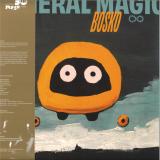
Editions Mego presents Bosko, landing exactly 30 years after the initial General Magic flights into the fantastic; the legendary first Mego release, a collaboration with Pita whereby all sounds were harnessed from the buzzing, drinking, humming sounds of fridges MEGO 001 General Magic & Pita and a 12” with Elin called Die Mondlandung (The Moon Landing) MEGO 002 which embarked on a minimal techno template so austere and strange it was one of the historic progenitors of austere and wonky rhythms alongside Sakho and other European explorers.
The initial return of the playful and mystical Austrian outfit General Magic came with the 20th year anniversary vinyl reissue of their classic debut Frantz eMEGO 010. A record so audacious and playful it still baffles as much as it entertains. At some point whilst working on this reissue GM’s Ramon Bauer and Andi Pieper were spurred on to rummage around with ideas and tools once more and after more than two decades of inactivity sonic sorcery was conjured once again. Live shows in honour of Peter Rehberg were performed in Vienna and London. Softbop, a limited risograph collaboration with Tina Frank came with the first new recordings as a digital download came out discreetly online. The first full length album following Rechenkönig in 2000 MEGO 032 “Nein Aber Ja” released in 2023 on Finlay Shakespeare’s GOTO Records on CD and cassette. An ongoing series of mix tapes online further highlights their interests encapsulating a new found angle on electronic mayhem. All of these elements retain the wildly eclectic and ecstatic glow that only they can harness and hand out to an unprepared world.
Now, we have General Magic’s second official full length comeback recording, Bosko. The new album is initially notable prior to the needle hitting the wax or the cursor identifying a track due to the artwork. Made by long term collaborator Tina Frank, this is Frank’s first analogue artwork, with a painting of a happy/nervous machine thing hovering in a landscape of no discernible identity. It’s quasi science fiction hovering amongst the potential for fun. Suited to the music? Natürlich.
Bosko sees Bauer and Pieper update and reframe their original investigations with a fresh supply of head scratching, heart racing tunes that hit the inexplicable with a wild mesh of drums, pianos, synthetic voices and all manner of immaterial sonic play. Startling sonics shock the ears on Club Duchamp which sounds like a conversation between synthetic adult ants in an environment still in development. Elfer features vocals supplied by a female-ish voice who, whilst grappling melody, has trouble executing a firm identity. Noorenhalt catapults along a mainframe of syncopation so unwieldy it feels like the voice, which is utterly alien, provides the only comfort. Seite 5 inhabits a fuzzy zone where a synthetic Horn of Jericho type ambience competes with rhythms never quite sure of who they are. Rise of the Ombré raises the spectral dread. Is this Science Fact? Absolutely nothing within Bosko is predictable.
The amount of change in the miasma of existence and the things we touch in order to make things has shifted so exponentially we are at the point where minds are starting to glaze over. All of this makes the return of the always original, always surprising, always fresh and exciting General Magic totally in tune with the artificial intelligent apocalyptic age we currently inhabit. The tools may have changed but the wonderfully warped gaze of Bosko offers a fresh new vision of perplexing funk and robotic punk.
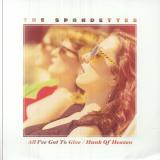
Canadian disco-soul outfit The Spandettes were in sparkling form when they laid down their stunning covers of Lemuria's Hawaiian groove classics 'All I've Got to Give' and 'Hunk of Heaven.' Both now appear on this limited-edition double 7", which will bring some summer heat to any set you play. Fronted by three powerhouse female vocalists, the cultured band blends lush harmonies with irresistible rhythms as they revive a couple of free-soul gems for a new generation of ears. 'All I've Got to Give' first appeared on a sold-out P-Vine 7" back in 2015 and is a sentimental swooner that is super loved up, while 'Hunk of Heaven', taken from the debut album Spandex Effect, here makes its debut on 45rpm. It's a more upbeat and swooning funk gem with gorgeous vocals.


![Shawty Pimp - Still Comin' Real [Cassette Version]](https://www.deejay.de/images/l/1/7/338717.jpg)