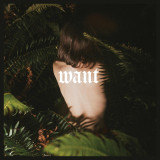
Originally part of an exhibition curated by Elysia Borowy last September, Scott Grooves' contribution to After The Dance transcends the dancefloor, exploring experimental expressionism in visual arts and electronic music. Critiquing capitalist culture and drawing from afrofuturism, his work prompts reflection on consumerism and futuristic themes. The CD release features deep ambient pieces that caccaompnied six thought-provoking installations: Sweet Dreams Anakin, Foot Work, Vinyl, For All-Dee People, Yellow Sun Bricks, and Found Sound. It shows another side to the deep house don's work and is just as essential.
quête:grav
A group of three disillusioned teenaged punks find themselves
transported into a terrifying alternate universe in The Devil's Egg, a new
fantasy rock opera from Missouri music renegades The Hooten Hallers
Throughout 13 spellbinding tracks, the music flows through a rainbow of musical
genres from R&B and metal to punk and prog rock. Captivating audiences with
their high-energy romps for nearly 20 years, the satisfying vocal pairing of John
Randall 's gravel and Andy Rehm 's falsetto, along with Kellie Everett 's low
woodwinds, weave between basslines and melodies to round out one of modern
music's most unexpected power trios. While musically diverse, the rock opera's
coming- of- age storyline ties it all together, conjuring the science fiction of
Stranger Things and the folklore of the Coen brothers to transport characters
through an epic and transformative quest. In the end, the kids form unusual
alliances to attempt their escape, allowing The Hooten Hallers to take listeners
on their wildest, most cinematic journey yet.
Lebanon oud master Rabih Abou-Khalil's stunning 1996 album 'Arabian
Waltz' is appearing here on vinyl for the first time."Arabian Waltz is the
pinnacle of Rabih Abou-Khalil's achievement as a composer and arranger
It is a sublime fusion of jazz, Middle Eastern traditional music, and Western
classical. In addition to Abou-Khalil on oud (the Arabic lute), Michel Godard on the
tuba and the serpent (the tuba's antique kinsman), and Nabil Khaiat on frame
drums, the album also features the Balanescu String Quartet instead of the usual
trumpet or sax. The presence of the Balanescu might seem to pose a dilemma
for the composer: traditional Middle Eastern music uses no harmony but a string
quartet is all about harmony. Abou- Khalil achieves a compromise by generally
writing the string parts in unison (or in octaves), in effect using the quartet as a
single voice, but also letting the quartet split up to play parts in unison with the
other instruments or to provide ornamentation. Without surrendering jazziness at
all, the presence of the strings makes possible a wondrous atmosphere, almost
as if one is listening to the soundtrack of a classy movie set in Beirut or
Damascus during the '40s. This feeling is greatest on "Dreams of a Dying City"
with its brooding tuba and cello motifs and grave, repeated rhythms. "The Pain
After" starts with an impressive tuba solo that turns into a long interlude for tuba
and string quartet; sad, slow music that sounds like one of Beethoven 's late
quartets. Then Abou- Khalil finally enters on oud, bringing a sustained note of
wistfulness. Fortunately, beside the darker numbers lie the propulsive drama of
"Arabian Waltz" and the bobbing and weaving quirkiness of "Ornette Never
Sleeps." Abou- Khalil is known for experimenting with the possibilities his guest
musicians bring to his style. In this case, the guests have inspired the host to
reach a new height and maybe even a new style. This recording suits every fan of
world music, jazz, classical, or just good music." - Kurt Keefner
Bringing together the undisputed talents of Nigerian percussionist Aleke Kanonu and soul legend from Alabama, O.C. Tolbert, this 12' created quite the buzz when it was released in New York in 1982. Shops and leading DJs were clamouring for it, but short supply saw it disappear into obscurity. The A-side, 'Happiness' is an uptown style Gospel ballad where Tolbert's gravelly, soulful voice channels years of hurt an pain. The B-side, 'Nwanne, Nwanne, Nwanne', is an Afrobeat disco monster that rattles along on the back of Kananu's awesome percussion skills. Both tracks were written and produced by Jack Taylor, a producer, songwriter and purported gangster from Harlem and released on his own label. This reissue comes courtesy of the good folk of PMG, purportedly cool guys, based in Austria. - Peter Moore,
OTOROKU is proud to reissue Evan Parker's first solo LP "Saxophone Solos". Recorded by Martin Davidson in 1975 at the Unity Theatre in London, at that time the preferred concert venue of the Musicians' Co-operative, Parker's densely woven and often cyclical style has yet to form; instead throaty murmurs appear under rough hewn whistles and calls - the wildly energetic beginnings of an extraordinary career. Reissued with liner notes from Seymour Wright in an edition of 500. "The four pieces across the two sides of Saxophone Solos - Aerobatics 1 to 4 - are testing, pressured, bronchial spectaculars of innovation and invention and determination. Evan tells four stories of exploration and imagination without much obvious precedent. Abstract Beckettian cliff-hanging detection/logic/magic/mystery. The conic vessel of the soprano saxophone here recorded contains the ur-protagonists: seeds, characters, settings, forces, conflicts, motions, for new ideas, to delve, to tap and to draw from it story after story as he has on solo record after record for 45 years. 'Aerobatics 1-3' were recorded on 17 June 1975, by Martin Davidson at Parker's first solo performance. This took place at London's Unity Theatre in Camden. 'Aerobatics 4' was recorded on 9 September the same year, by Jost Gebers in the then FMP studio in Charlottenburg, Berlin. Music of balance and gravity, fulcra, effort, poise and enquiry. Sounds thrown and shaken into and out of air, metal and wood. It is - as the titles suggest - spectacular." - Seymour Wright, 2020.
Repress in soon. Dead Moon’s first record! Originally released in 1988. Dead Moon were a band that existed outside of the constraints that time & style usually impose on artists. An authentic mix of psychedelic rock, punk, blues, country, & every other American music worth a damn. This LP features all time classics such as "Graveyard" ( A 13th Floor Elevators type vibrating psychedelic song), "Don't Burn The Fires" & "I Hate The Blues". Lo - fi as hell. Remastered from the original tapes. We are very proud to make this LP available on vinyl once more.
CM008 by Mirko Felicioli, Magma Moods a project inspired by a Vulcano. A concept in which we decided to press our first colored record. Mirko decided to title the EP Mons Gibel, one of the many acronyms by which the Etna Volcano has been named over the centuries, but also where Mirko has been living for 30 years. His beloved city of Catania, Sicily. "We all have a visceral connection with this gentle giant; we are all somewhat its children."
- A1: Uncle Arthur
- A2: Sell Me A Coat
- A3: Rubber Band
- A4: Love You Till Tuesday
- A5: There Is A Happy Land
- A6: We Are Hungry Men
- A7: When I Live My Dream
- A8: Little Bombardier
- A9: Silly Boy Blue
- A10: Come And Buy My Toys
- A11: Join The Gang
- A12: She’s Got Medals
- A13: Maids Of Bond Street
- A14: Please Mr. Gravedigger
- A15: Rubber Band
- A16: The London Boys
- A17: The Laughing Gnome
- A18: The Gospel According To Tony Day
- A19: Love You Till Tuesday
- A20: Did You Ever Have A Dream
- A21: When I Live My Dream
- A22: Let Me Sleep Beside You
- A23: Karma Man
- A24: In The Heat Of The Morning
- A25: London Bye Ta-Ta
- A26: When I’m Five
- A27: Ching-A-Ling
- A28: Sell Me A Coat
- Teilen
green 2x12"[35,71 €]
David Bowies bahnbrechendes Debütalbum erlebt mit einer Neuauflage ein pulsierendes Revival und bietet exklusive Tracklisten, die alte und neue Fans begeistern werden.
Kritiker der damaligen Zeit äußerten sich wie folgt: Der NME lobte Bowies frischen Sound als „durch und durch sehr erfrischend“ und pries ihn als „ein sehr vielversprechendes Talent“. Melody Maker lobt das Album als „eine außergewöhnlich lohnende Sammlung“ mit „exzellenter“ Produktion und zeigt sich überrascht, dass Bowie die Popszene noch nicht stärker beeinflusst hat. Disc & Music Echo schwärmt unterdessen von dem Album, beschreibt es als „ein bemerkenswertes, kreatives Debütalbum eines 19-jährigen Londoners“ und bezeichnet Bowie als „ein neues Talent, das Aufmerksamkeit verdient“. Mit solch aufschlussreichen Kritiken verspricht diese Neuauflage, Bowies frühes Erbe wiederzubeleben und sein visionäres künstlerisches Schaffen einer neuen Generation von Zuhörern vorzustellen.
- A1: Uncle Arthur
- A2: Sell Me A Coat
- A3: Rubber Band
- A4: Love You Till Tuesday
- A5: There Is A Happy Land
- A6: We Are Hungry Men
- A7: When I Live My Dream
- A8: Little Bombardier
- A9: Silly Boy Blue
- A10: Come And Buy My Toys
- A11: Join The Gang
- A12: She’s Got Medals
- A13: Maids Of Bond Street
- A14: Please Mr. Gravedigger
- A15: Rubber Band
- A16: The London Boys
- A17: The Laughing Gnome
- A18: The Gospel According To Tony Day
- A19: Love You Till Tuesday
- A20: Did You Ever Have A Dream
- A21: When I Live My Dream
- A22: Let Me Sleep Beside You
- A23: Karma Man
- A24: In The Heat Of The Morning
- A27: Ching-A-Ling
- A28: Sell Me A Coat
- Teilen
- A25: London Bye Ta-Ta
- A26: When I’m Five
cloudy green 2x12"[34,87 €]
David Bowies bahnbrechendes Debütalbum erlebt mit einer Neuauflage ein pulsierendes Revival und bietet exklusive Tracklisten, die alte und neue Fans begeistern werden.
Kritiker der damaligen Zeit äußerten sich wie folgt: Der NME lobte Bowies frischen Sound als „durch und durch sehr erfrischend“ und pries ihn als „ein sehr vielversprechendes Talent“. Melody Maker lobt das Album als „eine außergewöhnlich lohnende Sammlung“ mit „exzellenter“ Produktion und zeigt sich überrascht, dass Bowie die Popszene noch nicht stärker beeinflusst hat. Disc & Music Echo schwärmt unterdessen von dem Album, beschreibt es als „ein bemerkenswertes, kreatives Debütalbum eines 19-jährigen Londoners“ und bezeichnet Bowie als „ein neues Talent, das Aufmerksamkeit verdient“. Mit solch aufschlussreichen Kritiken verspricht diese Neuauflage, Bowies frühes Erbe wiederzubeleben und sein visionäres künstlerisches Schaffen einer neuen Generation von Zuhörern vorzustellen.
Cassette[14,71 €]
Sliding between the bodies in the street, cutting across the contrails that bisect our sky, Wand find melody and the anxiety beats as they hum the soundtrack for a new gravitational center. Seeking connections against the plan of niche interest and anonymity, Vertigo is the sound of slippage, rocks of contradiction (in soft focus); feet lost, regained, lost again, a multi-chromatic swaying, more automatic, associative, directed, in time. Determining to work backwards (or at least insideout) this time, Wand recorded everything in their own studio; pieces cut from improvisations and reshaped, writing from within the performance, without the woodshed. Unconsciously, in the shadow of themselves, and turning round and round (and round), they kept finding that empty space and playing what it implied. Everybody took on a new position in addition to the old one. It was intuitive, strangely ego-less . . . going somewhere they"d never been and not knowing what they were doing, but committing and recommitting, unafraid to eject in a constant positive forward momentum.
Vinyl[30,46 €]
Sliding between the bodies in the street, cutting across the contrails that bisect our sky, Wand find melody and the anxiety beats as they hum the soundtrack for a new gravitational center. Seeking connections against the plan of niche interest and anonymity, Vertigo is the sound of slippage, rocks of contradiction (in soft focus); feet lost, regained, lost again, a multi-chromatic swaying, more automatic, associative, directed, in time. Determining to work backwards (or at least insideout) this time, Wand recorded everything in their own studio; pieces cut from improvisations and reshaped, writing from within the performance, without the woodshed. Unconsciously, in the shadow of themselves, and turning round and round (and round), they kept finding that empty space and playing what it implied. Everybody took on a new position in addition to the old one. It was intuitive, strangely ego-less . . . going somewhere they"d never been and not knowing what they were doing, but committing and recommitting, unafraid to eject in a constant positive forward momentum.
When Mano asked Gebrüder Teichmann to do a remix for Joãozinho Morgado, the King of Drums (O Rei dos Tambores) the two brothers couldn´t get more excited:
Starting from a love for dirty fast Kuduro beats those two pale potatoes, who spent years in dark Berlin basement underground clubs have been infected by energetic Angolan rhythms.
During their stays and musical collaborations in Luanda, they soon found Semba, Kazukuta, Kilapanga, Rumba and Merengue and all that fantastic musicians and music of the 60´s and 70´s golden age of Angolan music. Morgadinho was originally recorded at Gravisom studio in Lisbon, where Joãozinho Morgado orchestrated a groovy jam session with the Turma da Bênção project by Conjunto Angola 70 & Paulo Flores. Joãozinho was accompanied by Botto Trindade (Solo Guitar), Pirika Duia (Viola Ritmo), Mayo Bass (Viola Bass) and Galiano Neto (Percussion). The session was coordinated by Armando Gobliss.
Following a ten-year hiatus, multi-instrumentalists Rafael Anton Irisarri and Benoît Pioulard return with »How to Color a Thousand Mistakes«, their third LP together as Orcas. Building on the electronic minimalism of »Orcas« (2012) and the Twin Peaks-inspired haze of »Yearling« (2014), the duo have expanded their sound and vision into a full-spectrum ensemble.
In the time since their last major collaboration, Irisarri and Pioulard have done plenty on their own, while also traversing significant life changes: relocation from Seattle to New York, separation and divorce, illness, hospitalizations, and the loss of siblings, parents, and friends. Yet from these tribulations, they gleaned inspiration to reconstruct their lives, creating music with new collaborators and partners. Recorded in a variety of studios and cities including Brooklyn, Cambridge, Oxford, Seattle, and upstate New York, the resulting album, under the tutelage of UK producer James Brown (Arctic Monkeys, Kevin Shields, Nine Inch Nails), is a patiently-crafted beast, equally inspired by impressionism, British new wave, and dream pop.
With Irisarri’s guidance and Brown’s encouragement, Pioulard brings his velvety voice to its harmonized peak on songs like »Wrong Way to Fall« and the Durutti Column-indebted »Fare«. Where his most recent solo albums for Morr Music (»Sylva« and »Eidetic«) navigated foggy forests of ambient pop and stacked tape loops, here his characteristic blur shifts into focus with a unique degree of clarity and confidence. »How fare against balance do I / Navigate my errors?«, Pioulard sings in a heartbreaking tenor, echoing the album’s broader themes of introspection, grief, loss, trial and trauma.
Lead single, »Riptide«, is a summary of Pioulard’s life changes and personal upheavals in the past decade, »flitting eastward toward a yen deep in the past« and learning to glide through the tumult of ocean waves, as a metaphor for the punches one takes in pursuit of grace. Its towering, key-changing midsection arrives with the monumental drumming of Slowdive’s Simon Scott, a long-time friend and cohort who appears on most songs in the set. Scott’s quintessentially English, jazzier approach offers a balance of force and restraint as the backdrop for Irisarri’s majestic guitars, analog synth lines, and Martin Heyne’s Fender Rhodes counterpoints.
Second single, »Next Life«, began as a sketch by Scott, and reached its final form in the hands of Pioulard and Irisarri, at a point that each had endured major concurrent losses, finding a commonality in the need to gaze over the horizon while acknowledging the unavoidable bittersweetness of letting go – not only of people, but of routines, places, and expectations. It’s one of Orcas’ most nuanced pieces, with a mid-tempo, sunset glow that unfolds into a sparkling, slide-guitar finale as it disappears in the rear view.
On third-act highlight, »Bruise«, Scott is doubled on the drum kit by MONO’s Dahm Majuri Cipolla, whose Liebezeit-influenced metronomy anchors a nimble bass groove from Andrew Tasselmyer (of Hotel Neon), and some of the album's most syncopated, spaced-out interplay, courtesy of Puerto Rican guitar player Orlando Méndez (a childhood friend of Irisarri’s). Originally a droney, fingerpicked guitar demo, »Bruise« is the most storied composition here, having gone through almost a dozen versions and lyrical edits, with Brown distilling hours of improvised performances into the final arrangement.
Throughout »How to Color a Thousand Mistakes«, Irisarri uses his deep well of production experience to paint the stereo field with meticulously designed textures, exemplified on the slow burn of »Heaven’s Despite« and the heady rush of »Swells«. As a mixing and mastering engineer with Black Knoll, he has built a client list that reads as a who’s-who of modern, forward-thinking composition, including Temporary Residence, All Saints Records, and Ghostly International, among many others.
As with previous collaborations, Irisarri and Pioulard bring disparate styles and specialties to the table, but with an interpersonal dynamic that transcends friendship into brotherhood, their open-minded workflow and mutual respect are evident at every turn. »How to Color a Thousand Mistakes« brims with tight, complex art rock songwriting, masterful production, and sonic versatility, informed by a plethora of genres and tonal hues. The title might promise answers, but the gravitational center of the album is the dawning realization that, as you reckon with the infinite whims of the cosmos, there could be none.
2024 Repress
The initial release on the Rave 2 The Grave label was a sign of things that came later - 2 rave classics get the R2TG treatment, back on a limited press